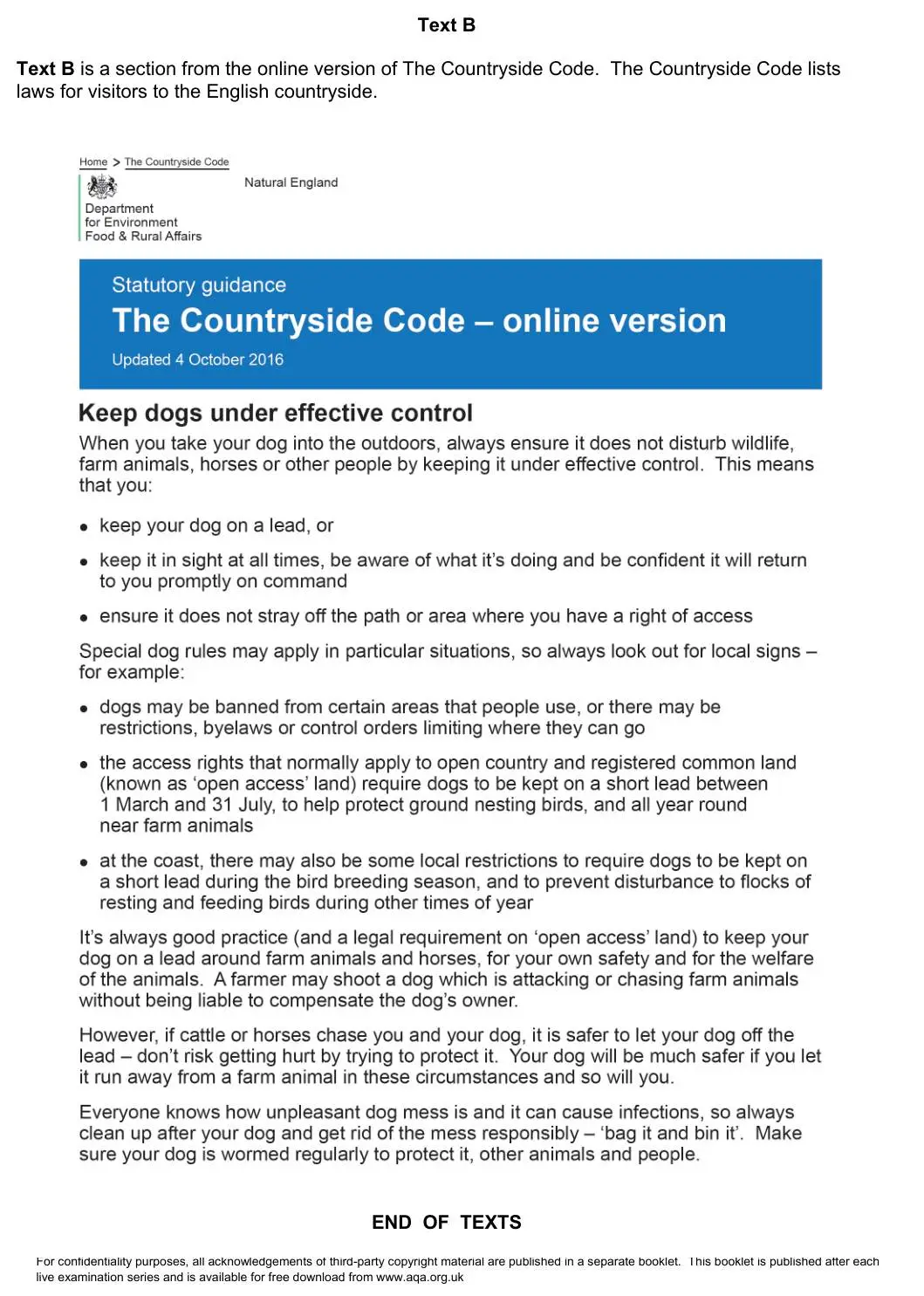
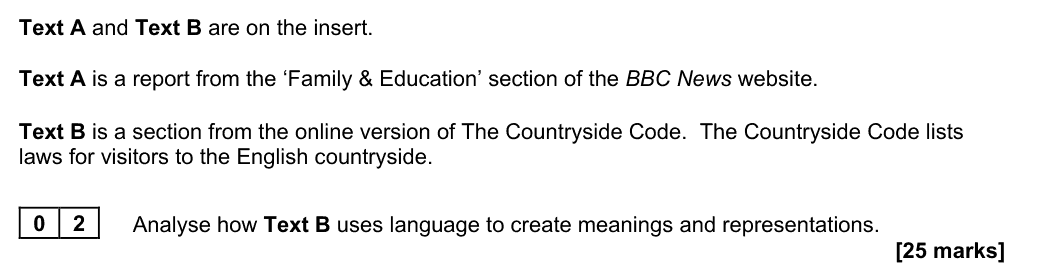
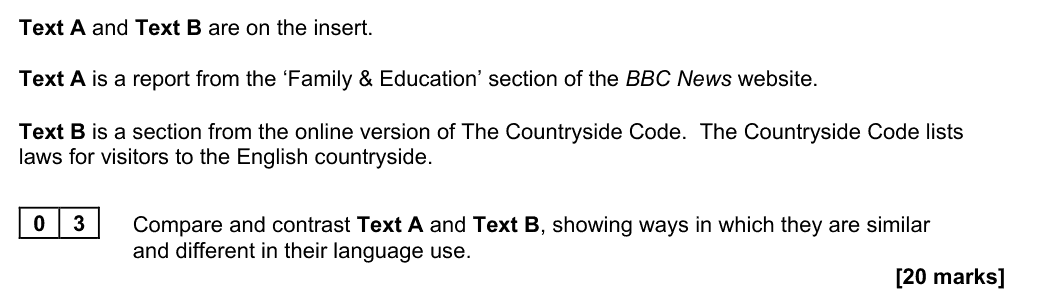
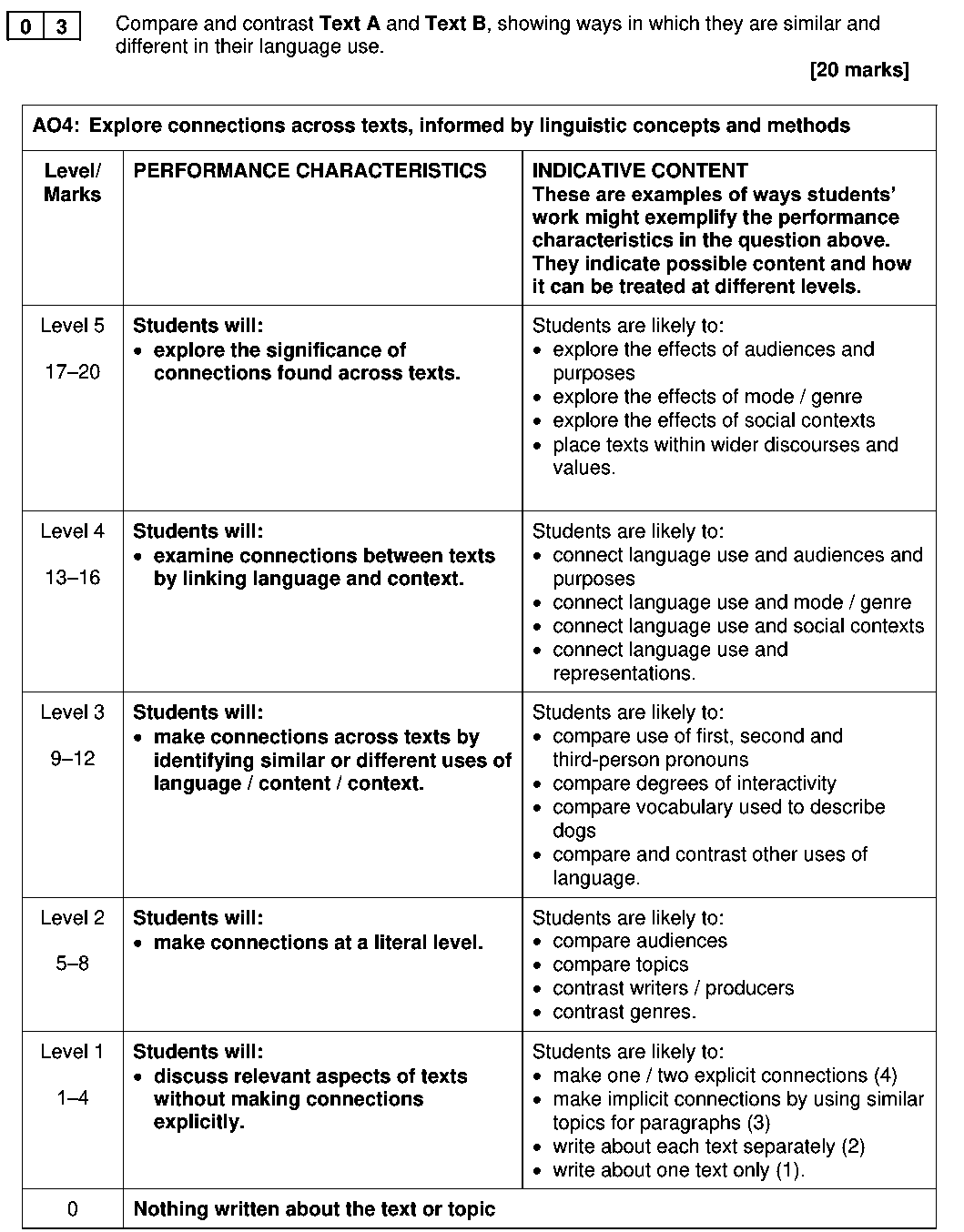
Text A (insert)
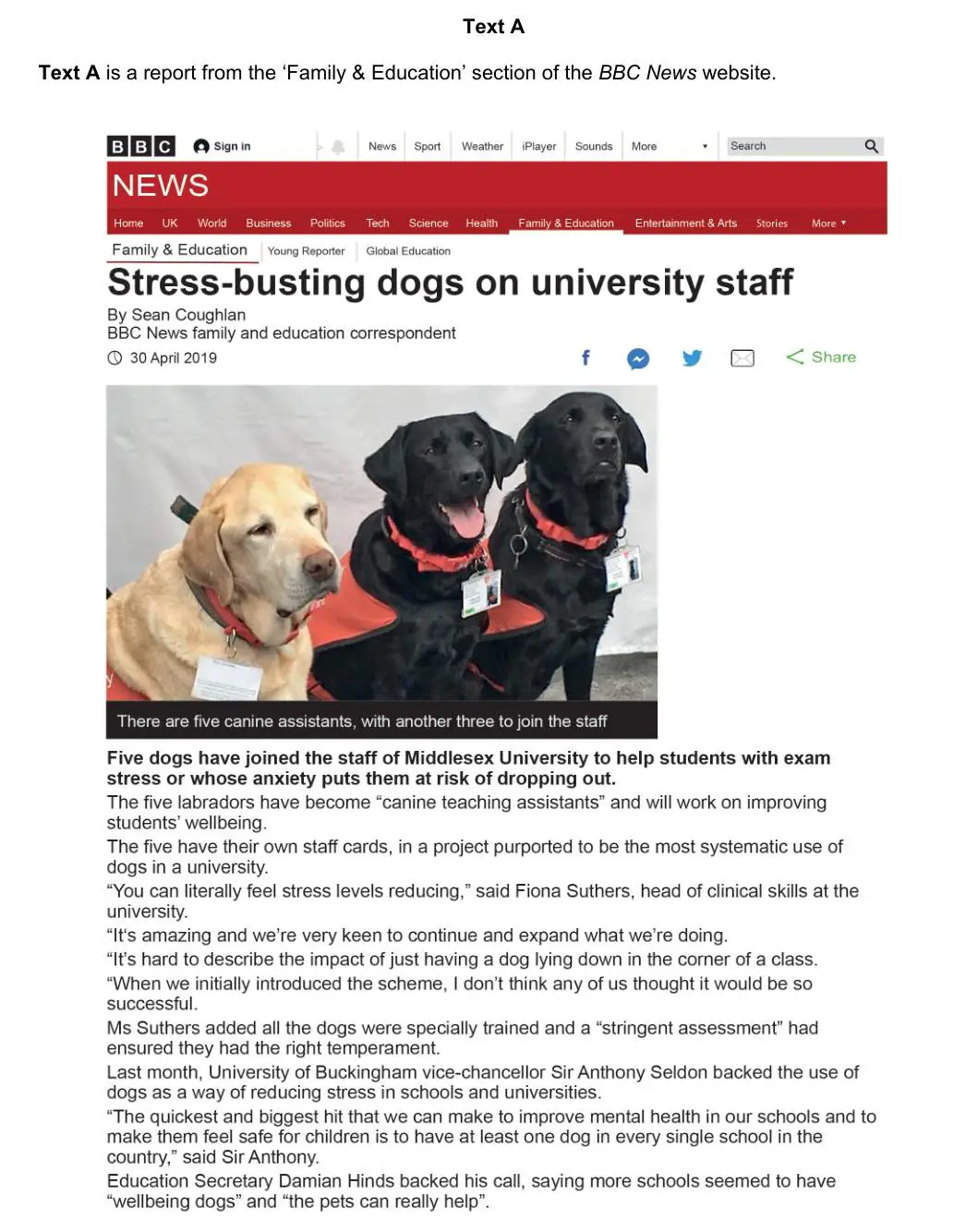
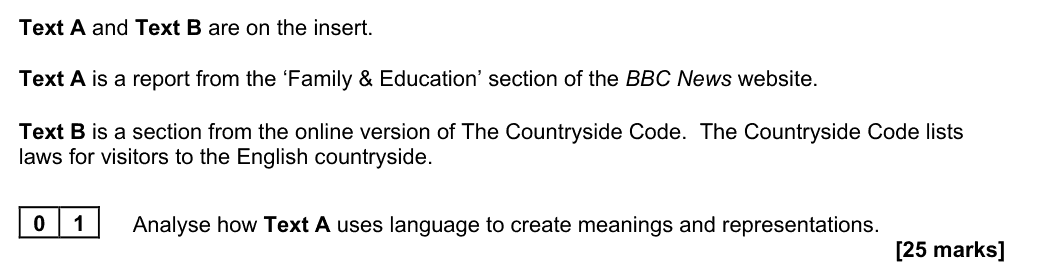
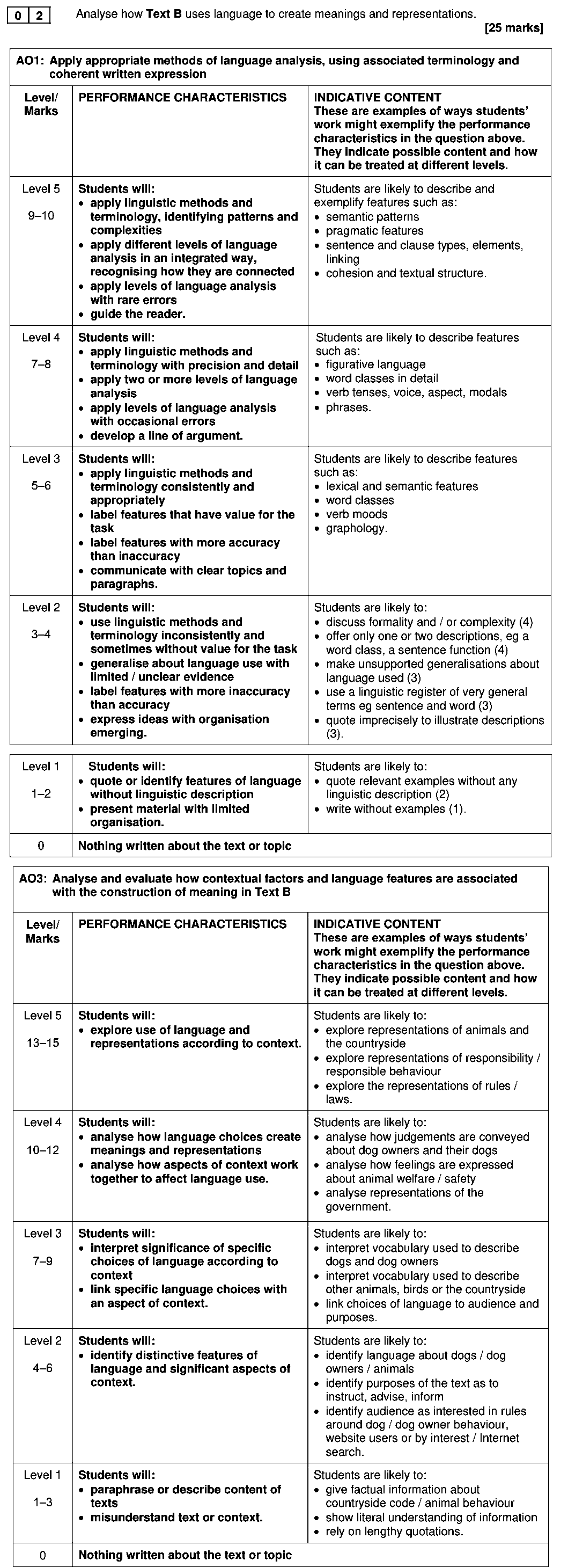
Mark scheme, including the levels and indicative content
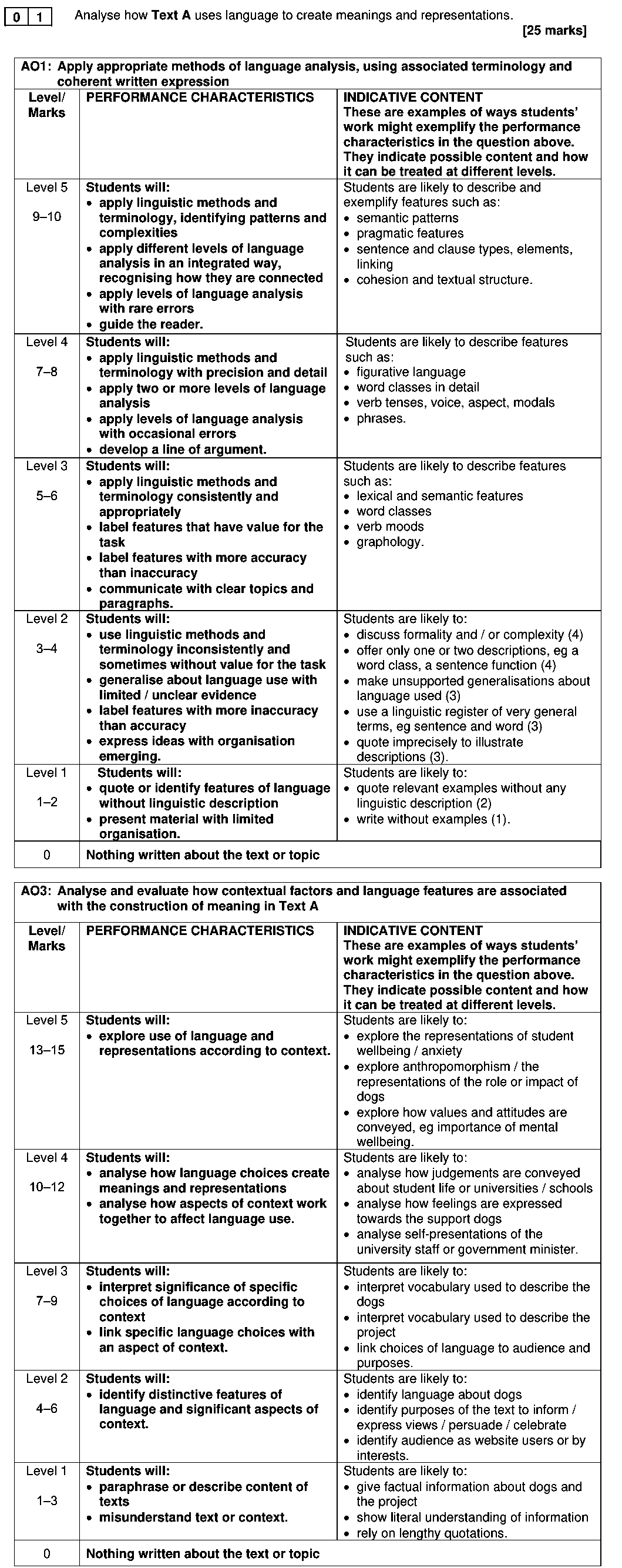
Examiner's comment
With regards to AO1 in this question, those students achieving the higher marks were precise in their identification and accurate labelling of language features. Common terms used included: noun phrase, pre-modifying adjective, superlative, first person subject pronoun, second person subject pronoun, first person plural pronoun, modal verb, main clause, subordinate clause and complex sentence. Students who achieved lower marks tended to use less precise terminology such as: adjective, pronoun, word and sentence. Students who were awarded marks in the top band were also aware of patterns; that is to say, they recognised how several language features can work together to create meanings and representations. Some of these key representations included: • The role of the dogs • The impact of the dogs • The dogs as members of staff • The staff at the university • Students • Anxiety and mental health issues • Middlesex University.
Notes from the mark scheme and report
- AO1 10 + AO3 15
- top band explores representations of student wellbeing and anxiety, anthropomorphism of the dogs as 'canine teaching assistants' and values about mental health
- Level 4 analyses judgements about universities, feelings towards the dogs and self-presentation of staff and the minister
- precise labels (first person plural pronoun, pre-modifying adjective, superlative, subordinate clause) and patterns rewarded over 'adjective', 'word'
- report's general section notes precision is rewarded more than range
- Texts/data: Text A: BBC News website report 'Stress-busting dogs on university staff' (Middlesex University, 2019)