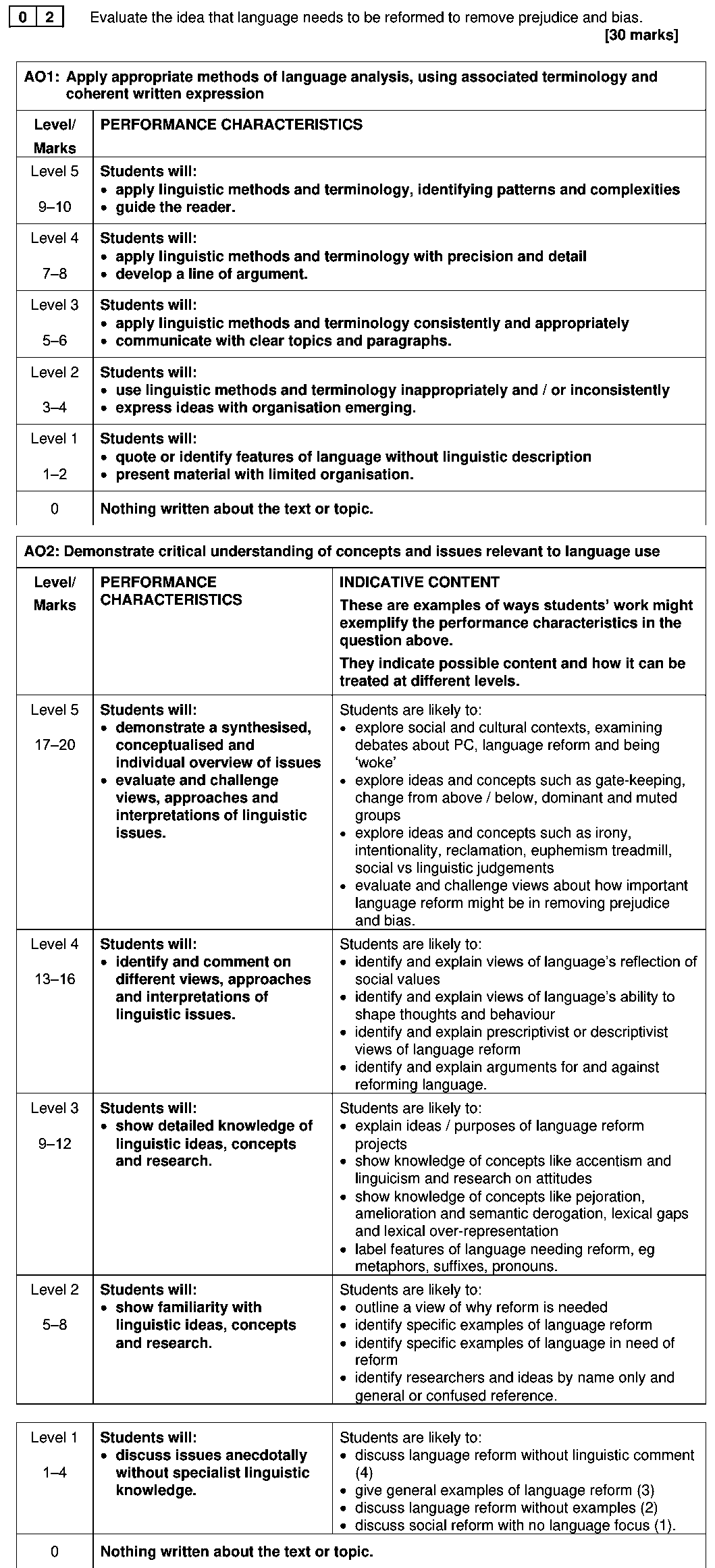
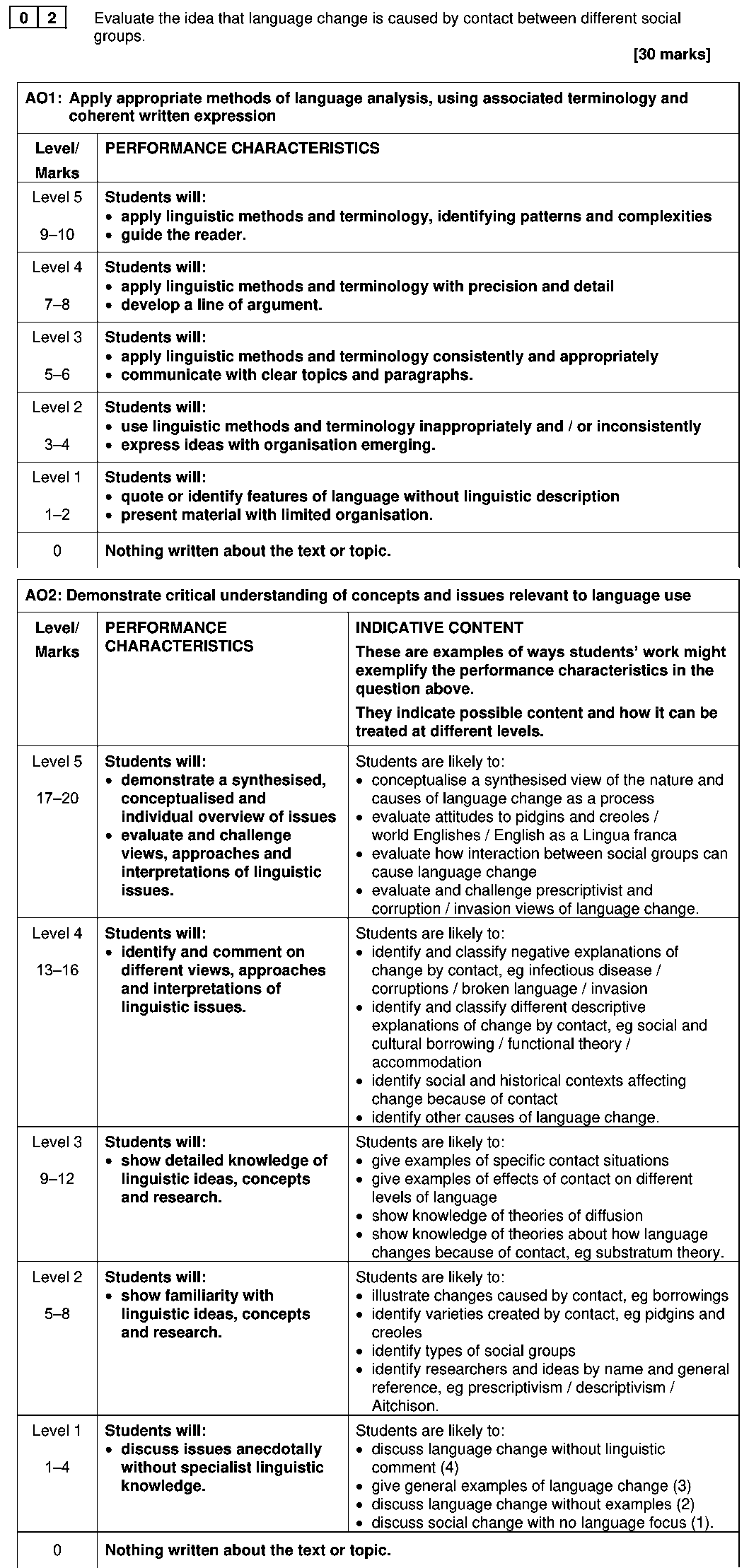
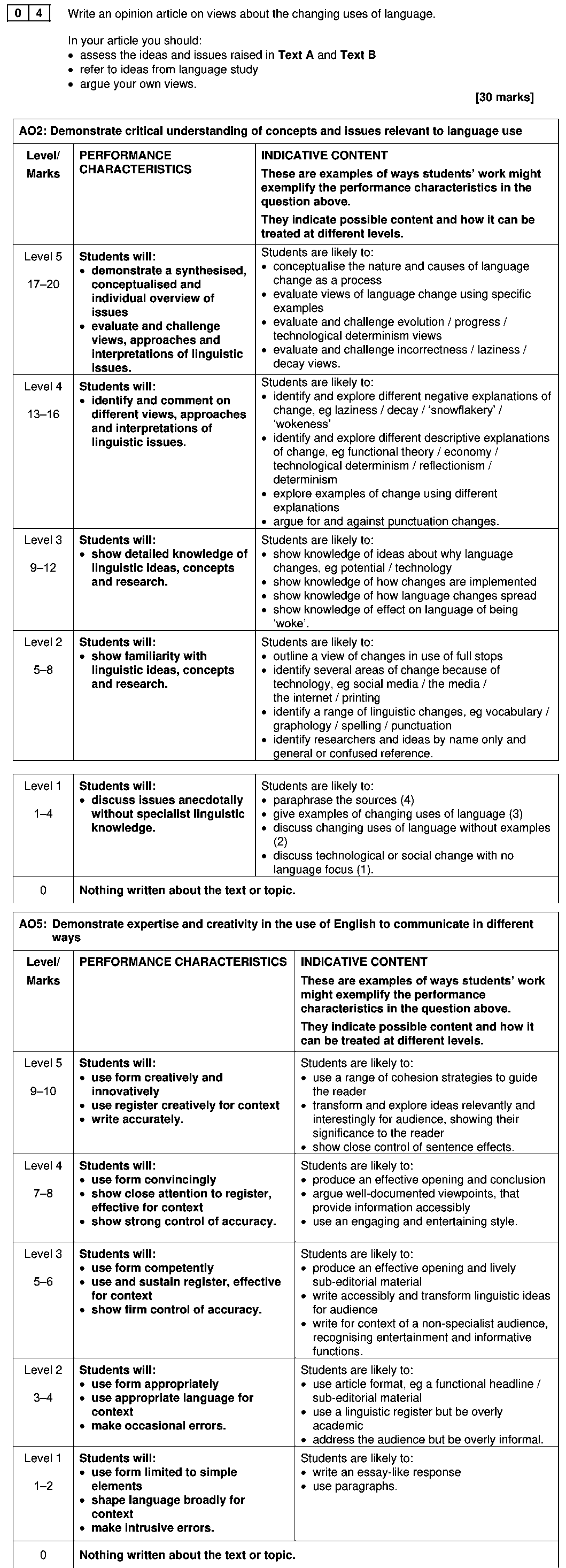
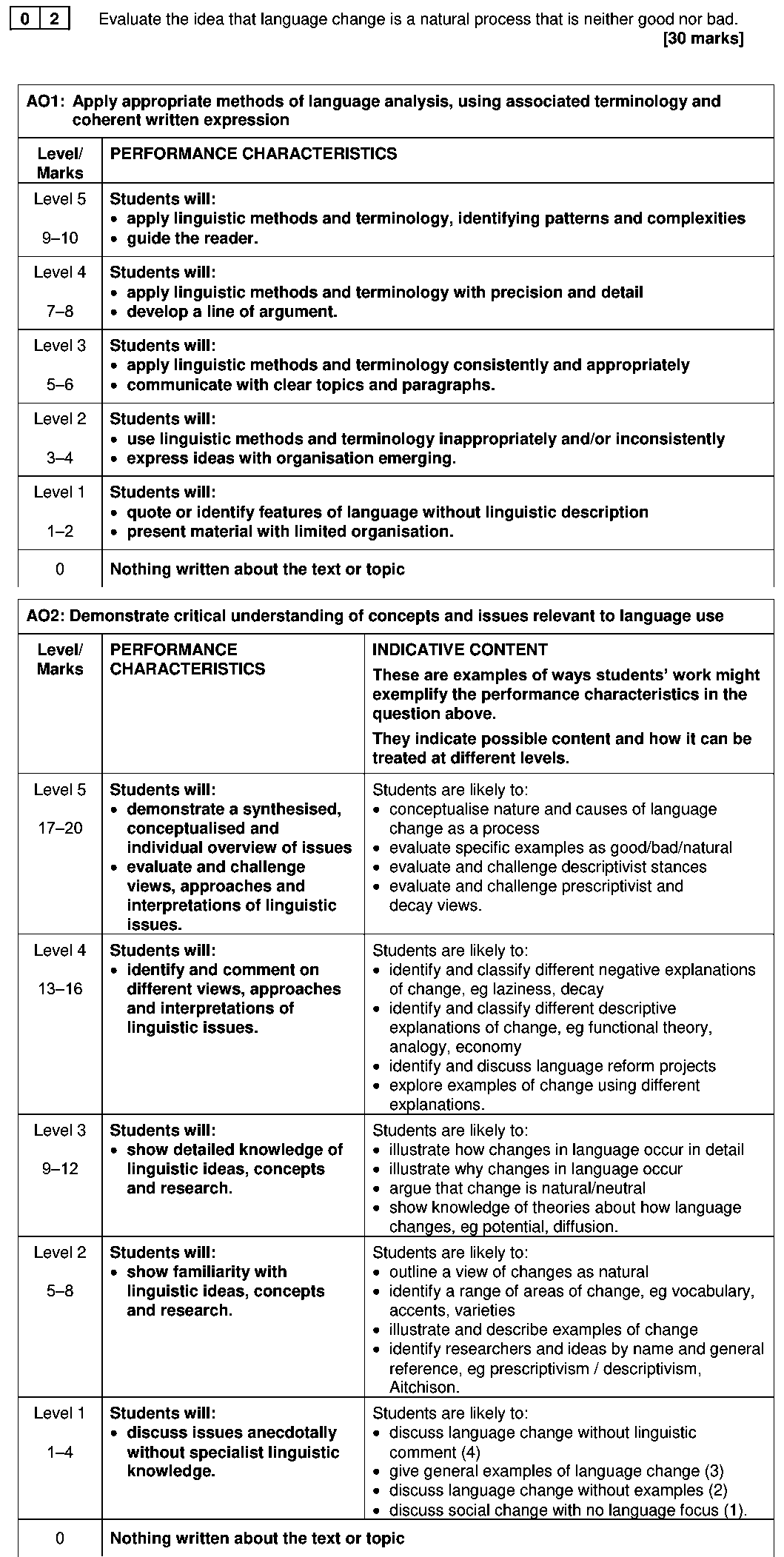
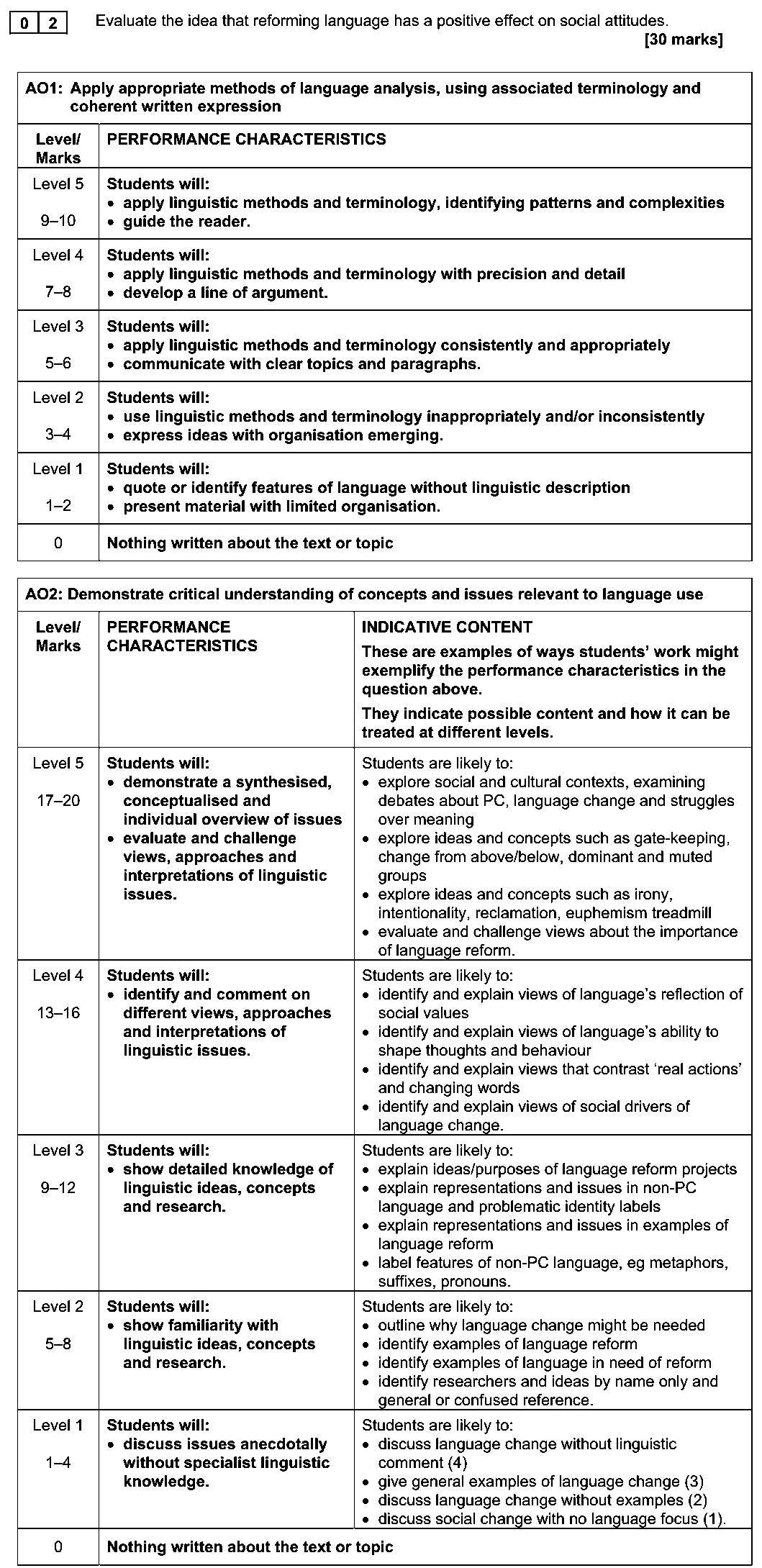
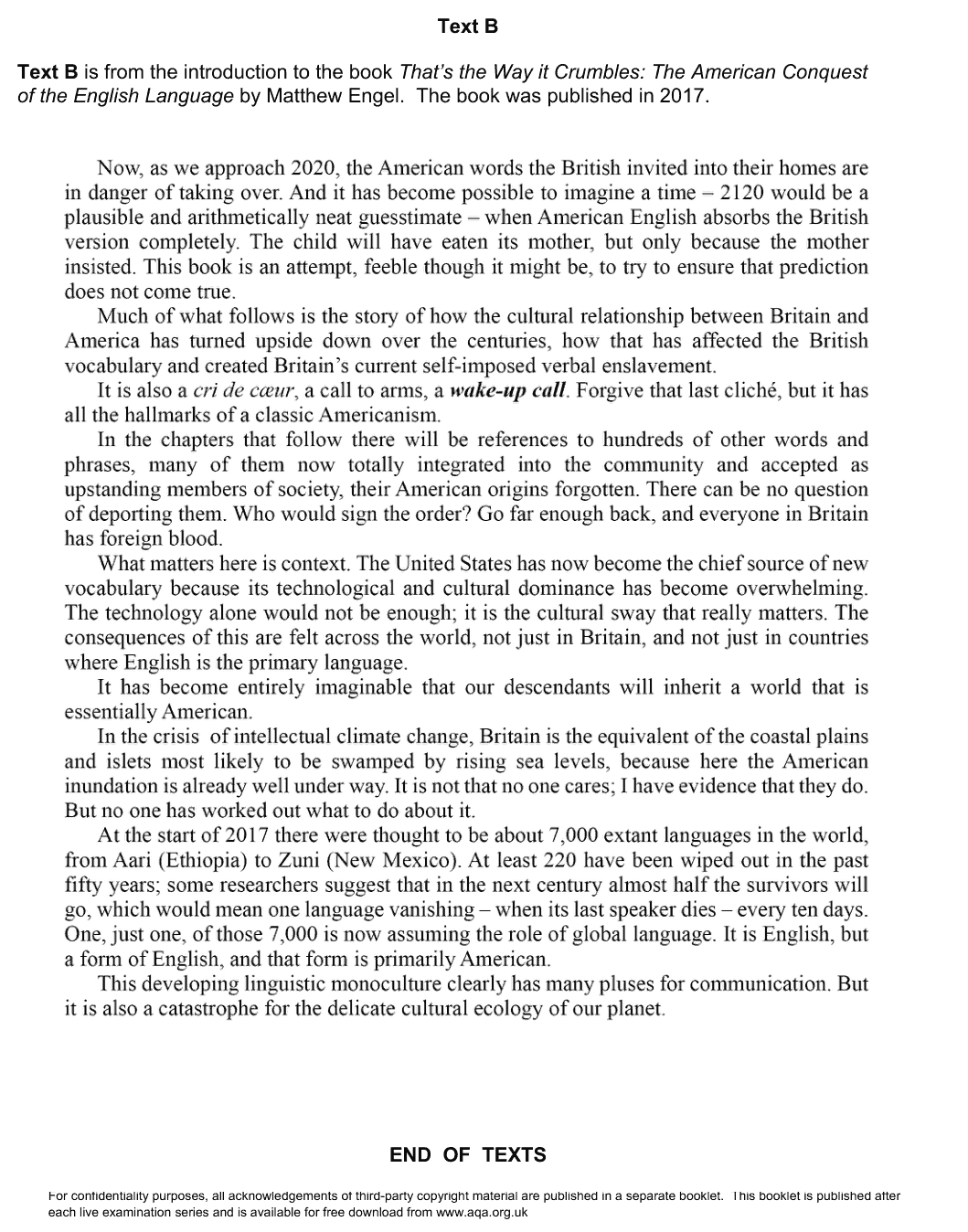
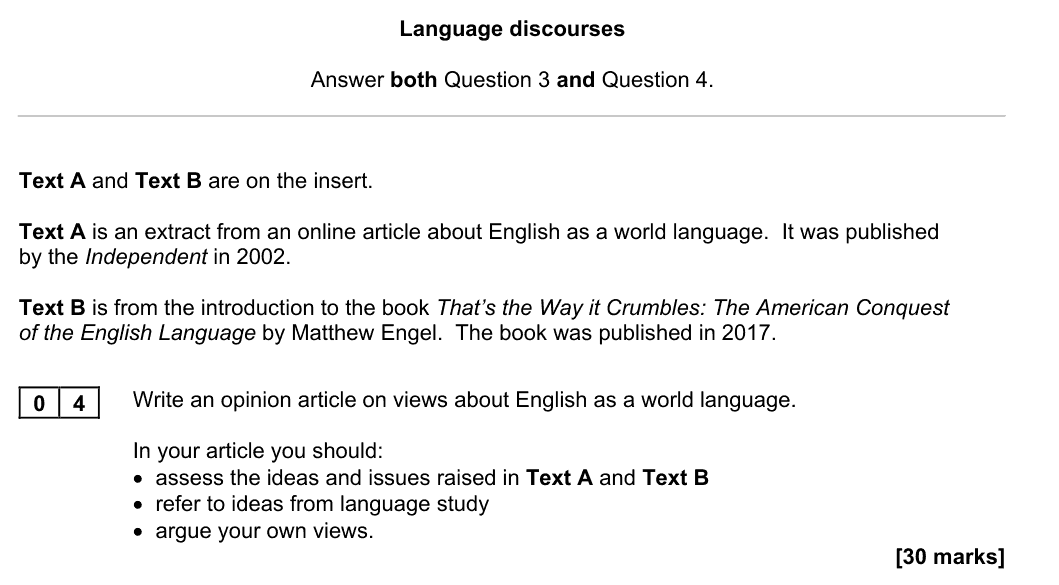
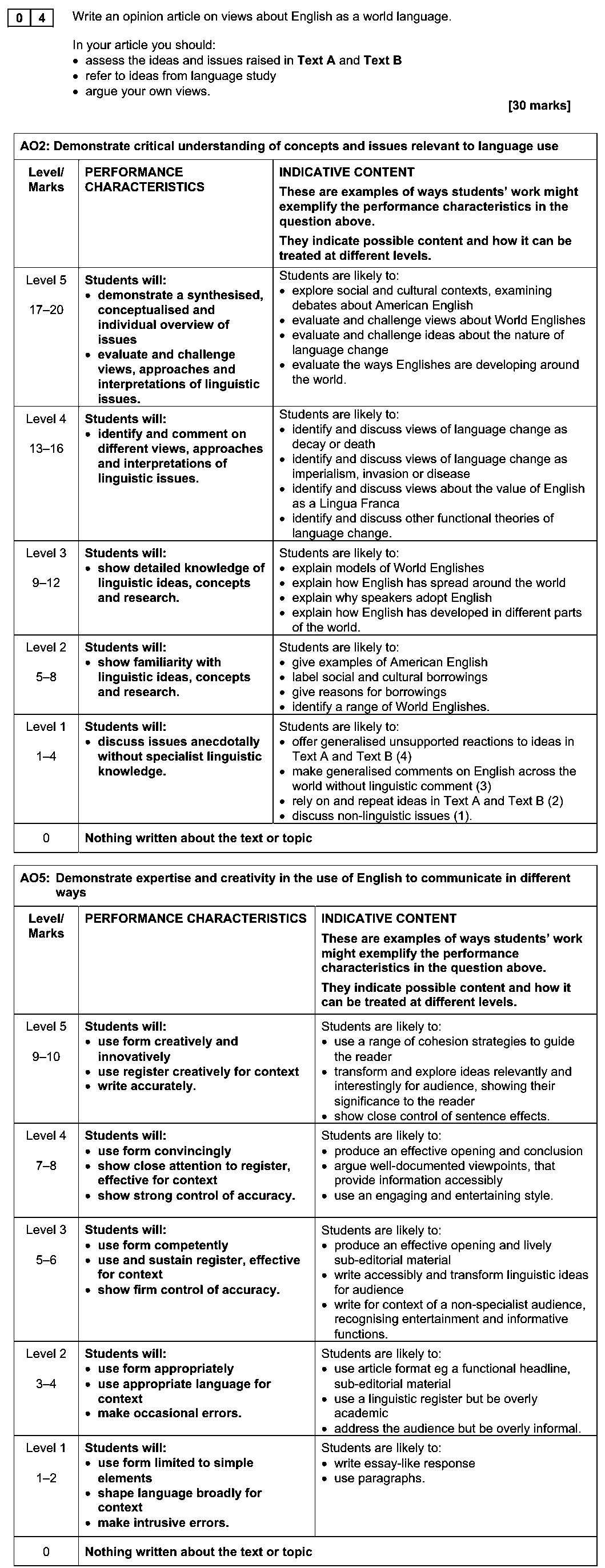
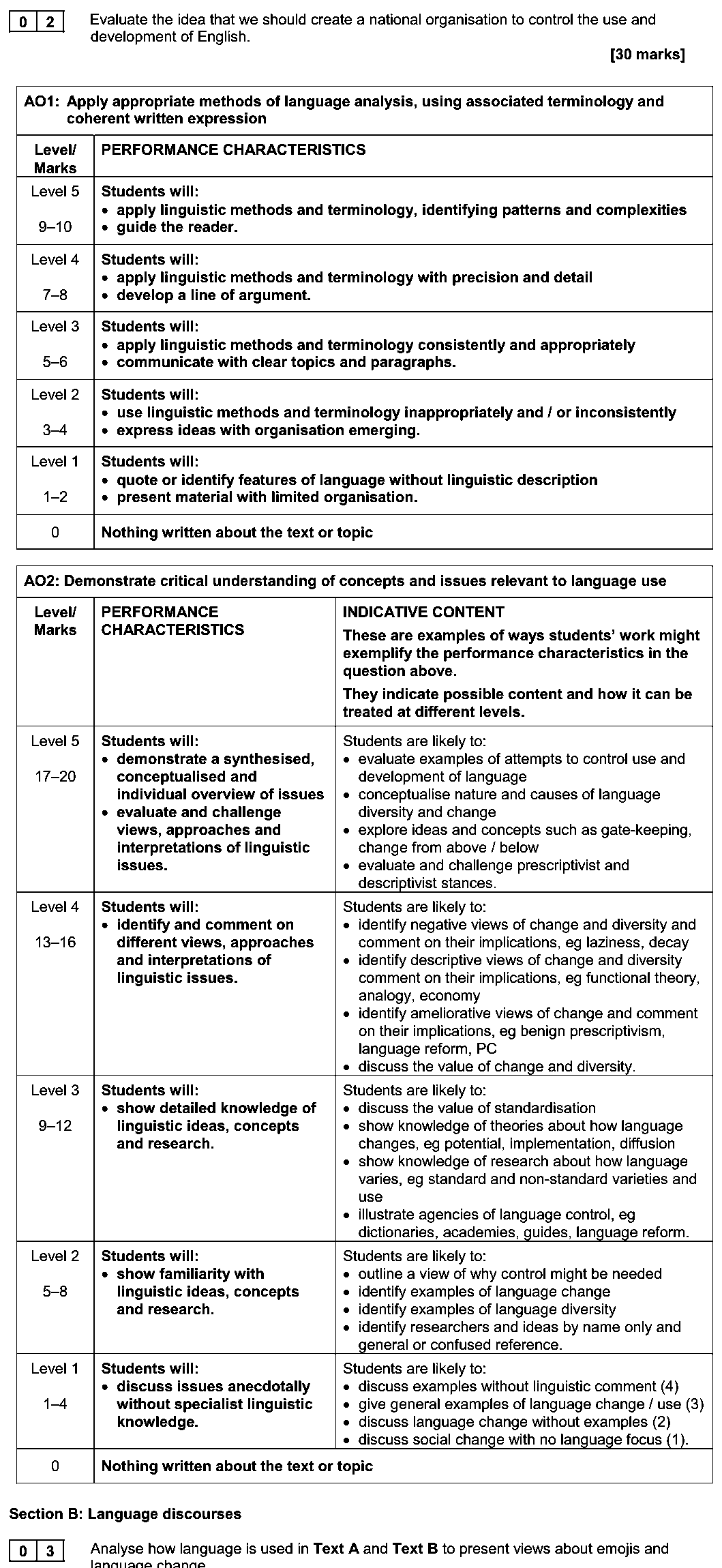
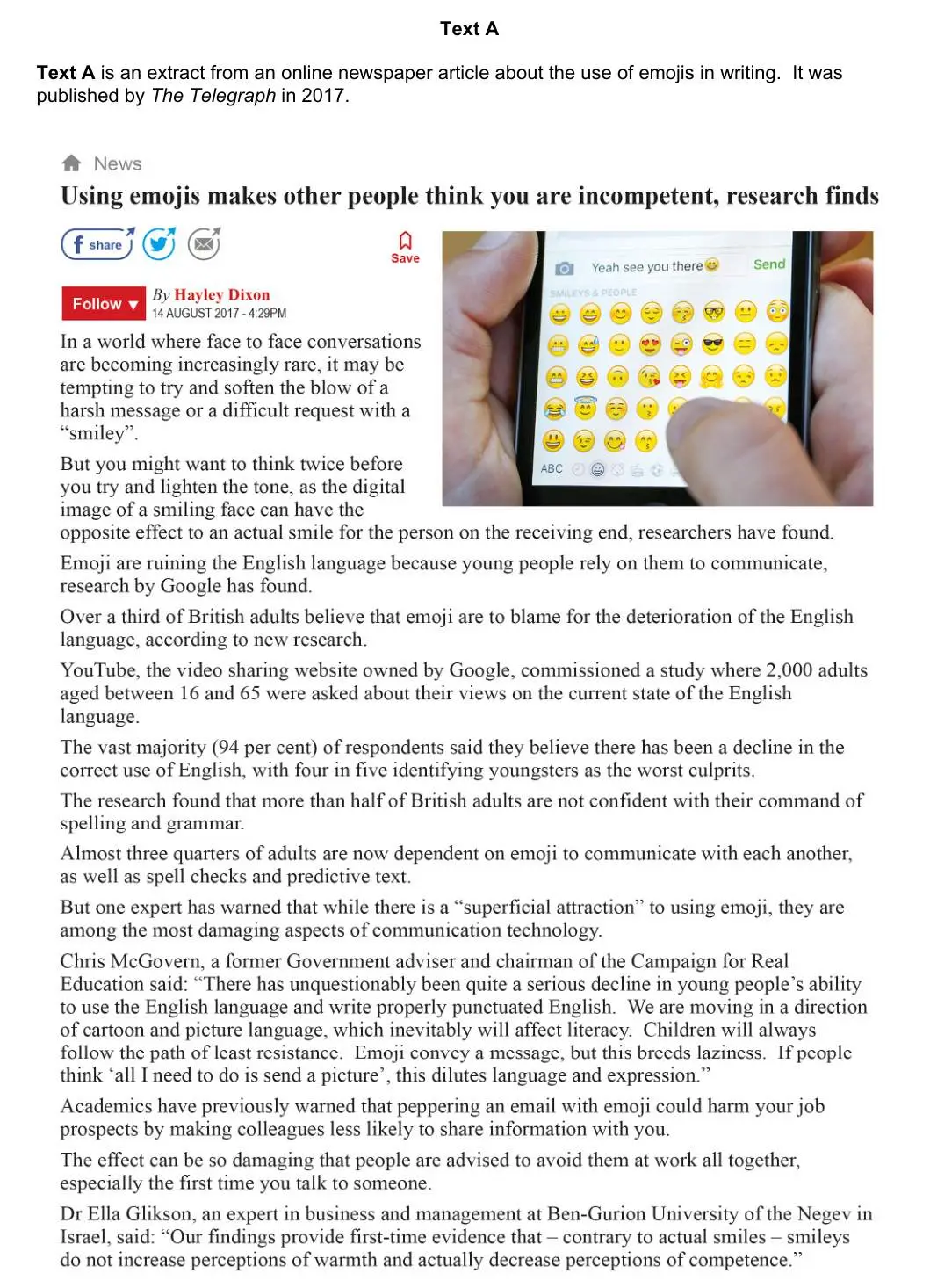
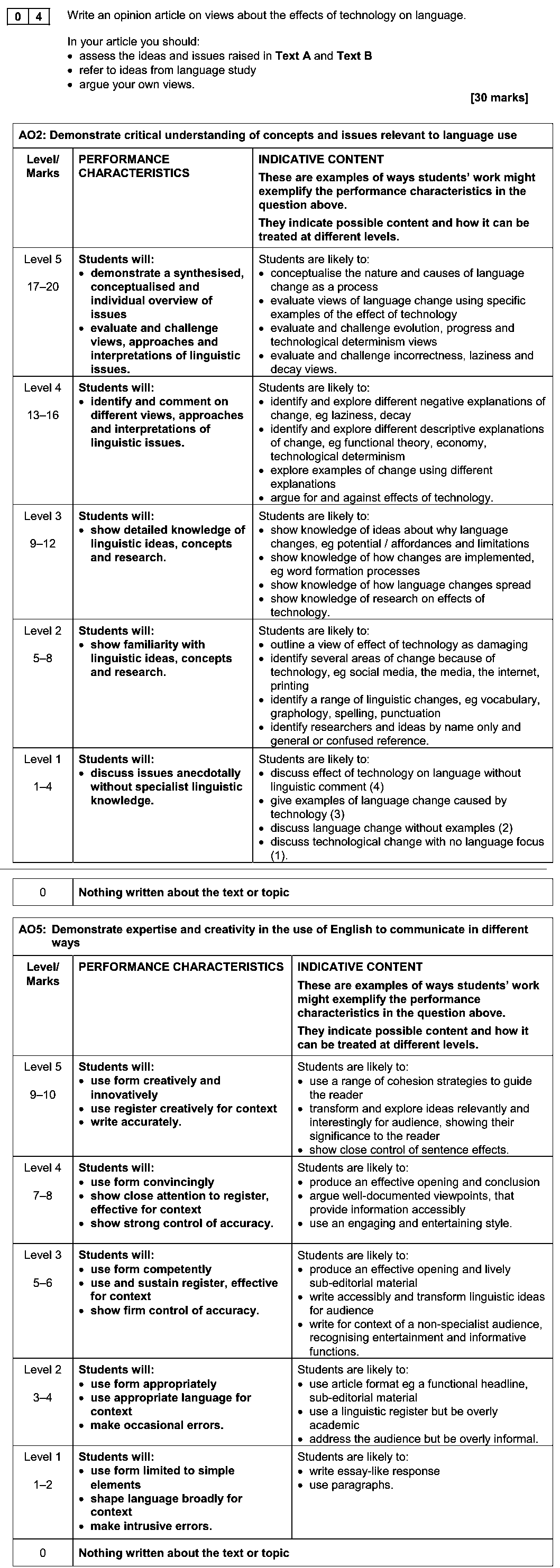
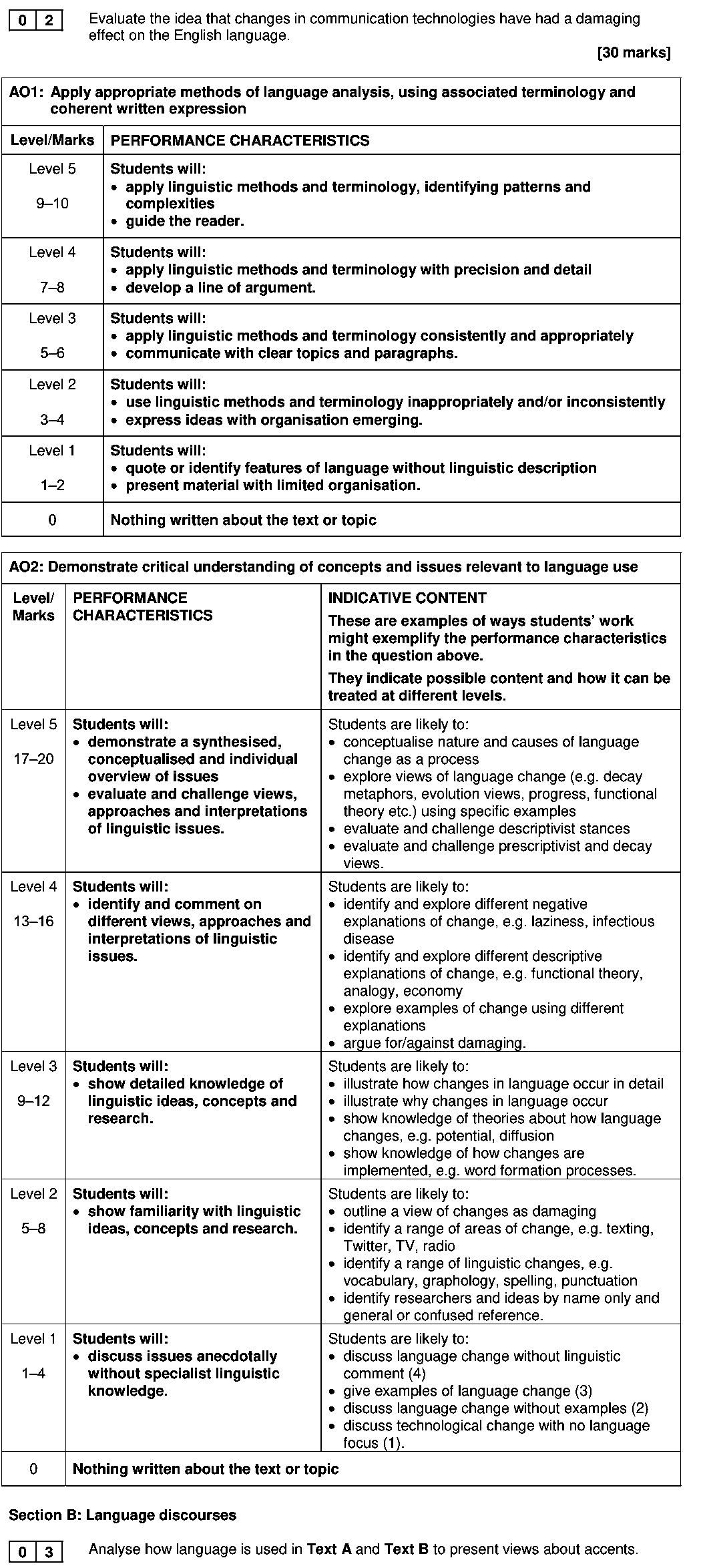
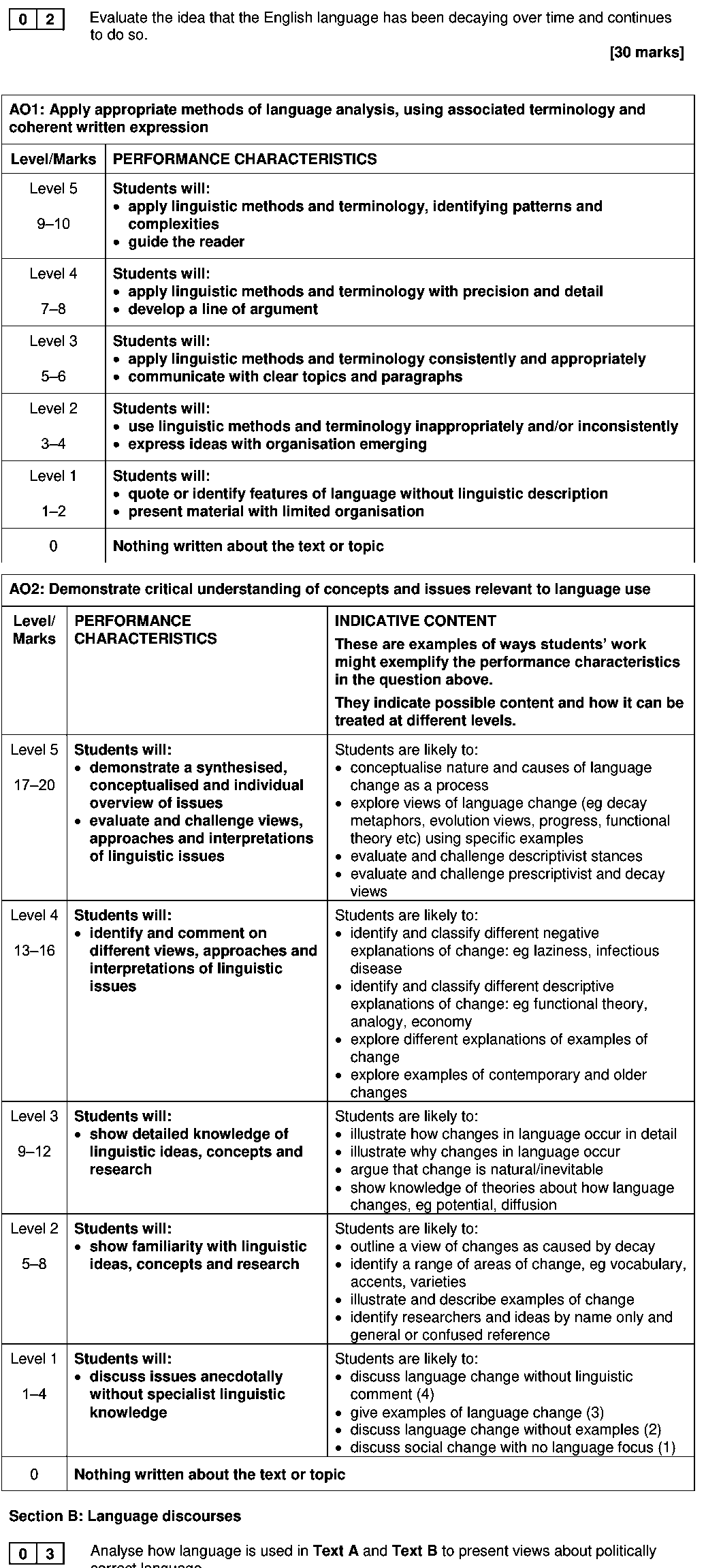
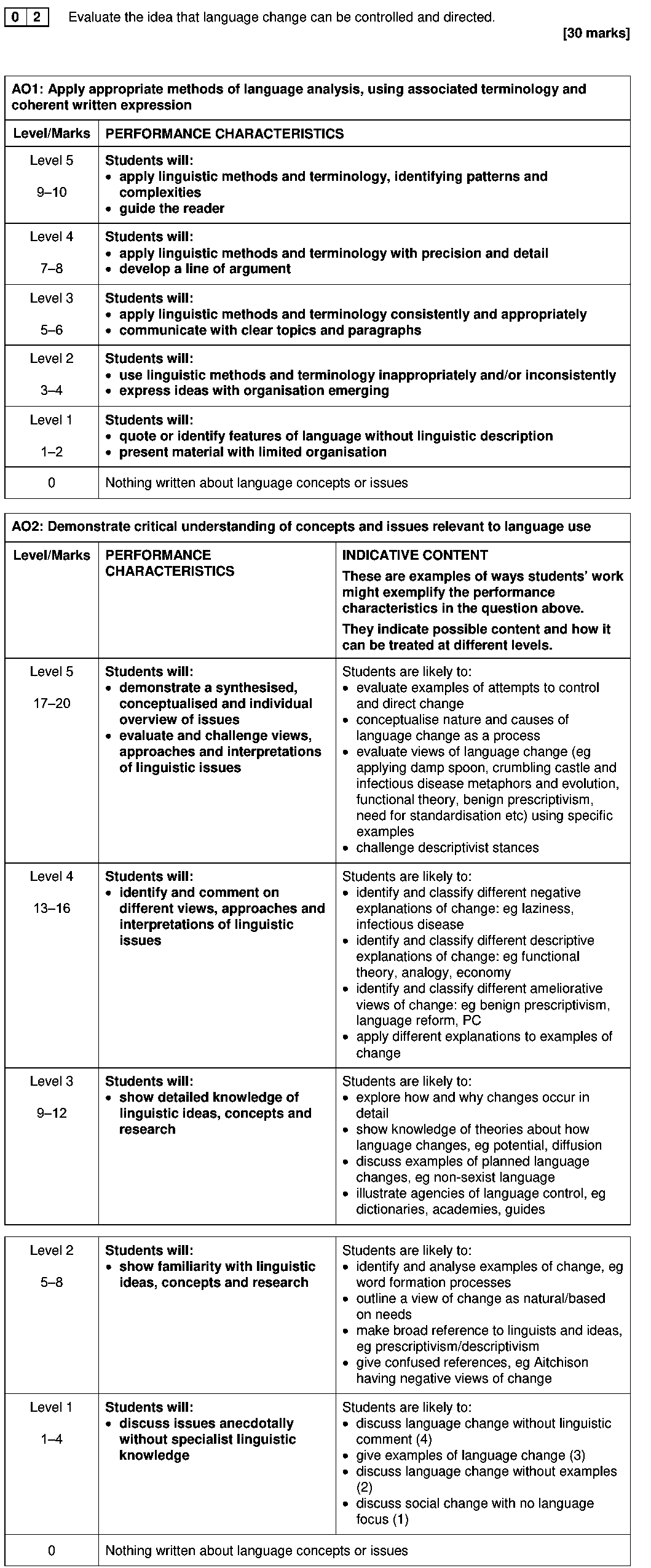
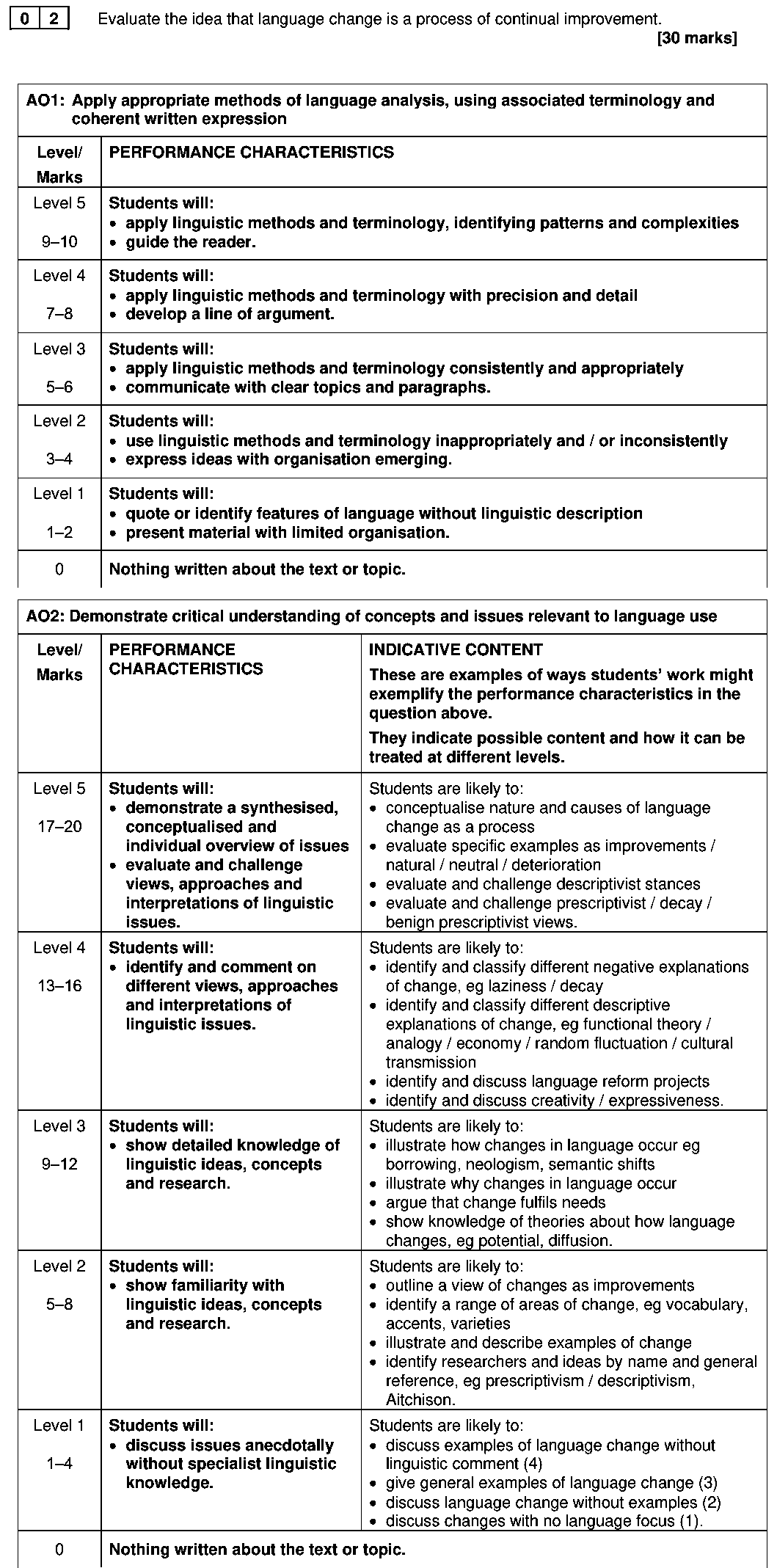
Mark scheme, including the levels and indicative content
Examiner's comment
Evaluate the idea that language change is a process of continual improvement. What students did well Students did well when they: • explored what ‘improvement’ in language might actually mean • evaluated specific changes as improvements, deteriorations or simply changes • evaluated the metaphor of language evolution • interpreted Crystal’s tides metaphor with examples • considered Deutscher’s ideas of economy and creativity as drivers of change • challenged descriptivist stances • explored random fluctuation theory as a challenge to the idea of improvement • looked at functional explanations of language change to enable communication • examined cultural transmission and sub-stratum explanations of change • examined metaphors of language change as decay, laziness, invasion, infection • evaluated language reform and benign prescriptivism as attempts to improve how language represented society and individuals • evaluated the effectiveness of politically correct or woke language and illustrated Pinker’s Euphemism Treadmill • assessed whether reclamations were improvements • explored and evaluated the creation of pidgins and creoles • evaluated changes caused by English as a colonial or global language • weighed up the advantages and disadvantages of standardisation • evaluated the process of dialect levelling • evaluated the effect of new technologies from the printing press to the mobile phone • assessed the emergence of Multi-cultural London English • assessed borrowings, especially Americanisms • analysed specific examples from different perspectives. How students did less well Students did less well when they: • equated descriptivism with the idea that language change is a process of improvement • veered off onto previous questions • tacked on a link to the question after a lengthy factual discussion • gave historical accounts of the development of English without discussion of improvement • wrote at length about Caxton, Lowth, Swift, standardisation, the Bible without addressing the question clearly • thought the Euphemism Treadmill showed the continual improvement of language • believed Jean Aitchison held prescriptivist views characterised by her three metaphors • gave confused or simple rote explanations of Aitchison’s characterisations • thought Robert Lane Greene held declinist views.
Notes from the mark scheme and report
- AO1 10 + AO2 20
- top band conceptualises change as a process, evaluates specific changes as improvement, neutral or deterioration, and challenges descriptivist and prescriptivist/decay/benign prescriptivist views
- Level 4 classifies explanations (functional, analogy, economy, random fluctuation, cultural transmission), reform and creativity
- ER: credited Crystal's tides, Deutscher, euphemism treadmill, MLE, standardisation
- errors: equating descriptivism with improvement, thinking the euphemism treadmill shows improvement, calling Aitchison a prescriptivist, thinking Robert Lane Greene is a declinist
- Texts/data: Essay topic: whether language change is a process of continual improvement