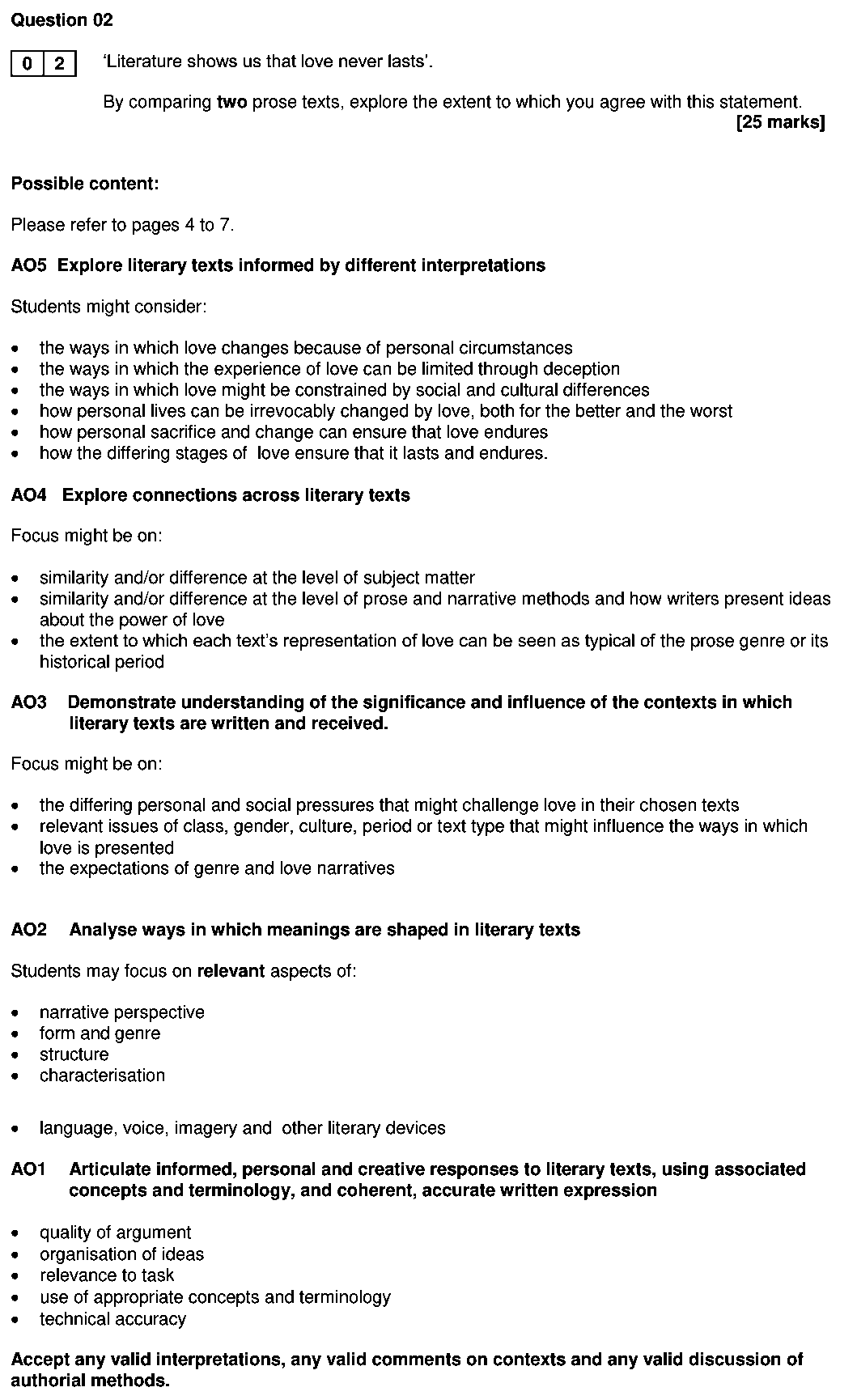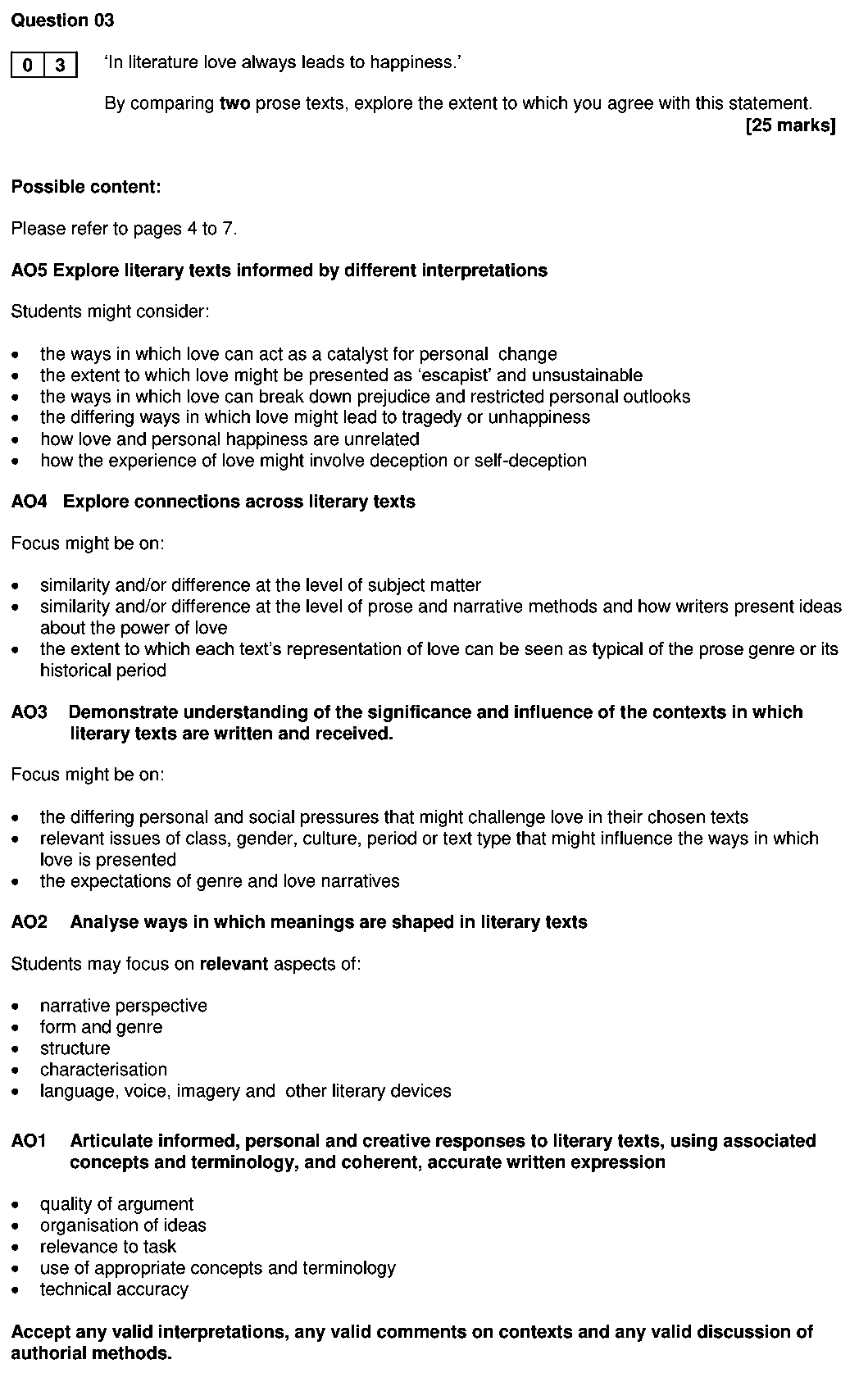
Mark scheme, including the levels and indicative content
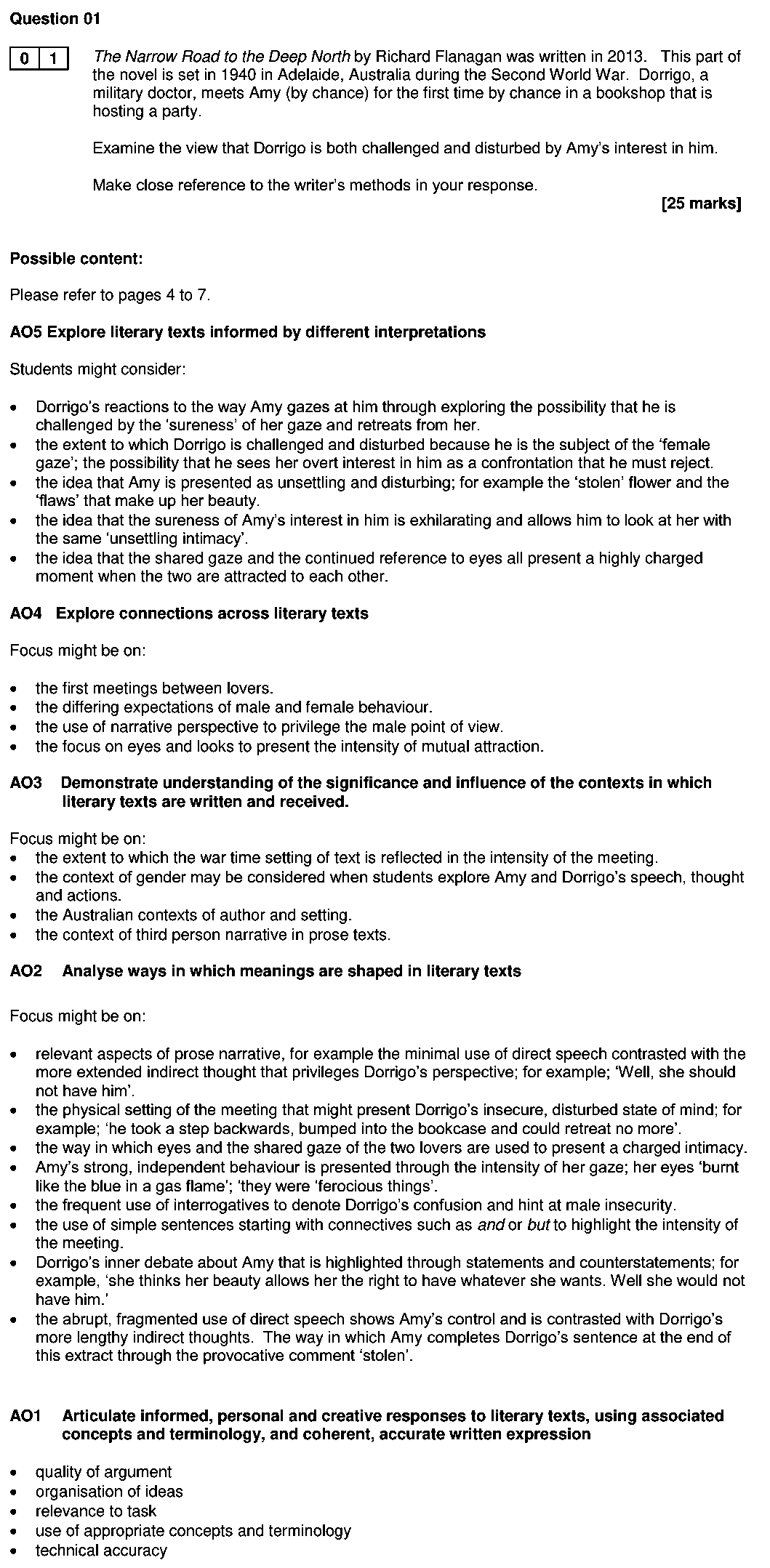
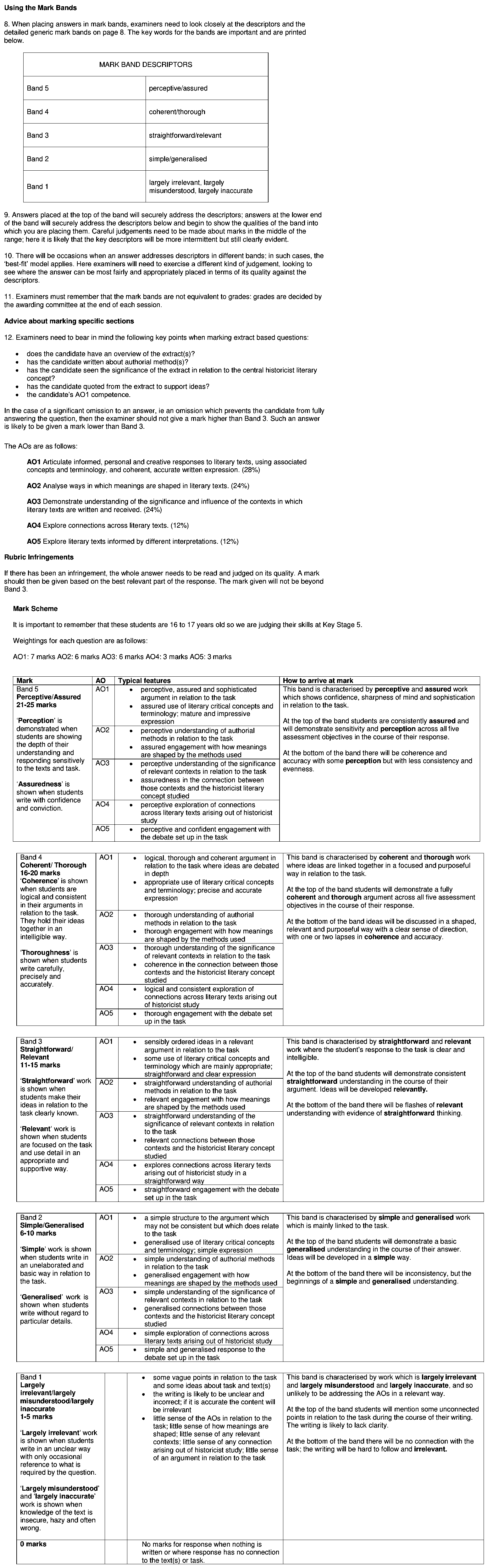
The general mark scheme (assessment objectives and bands)
Examiner's comment
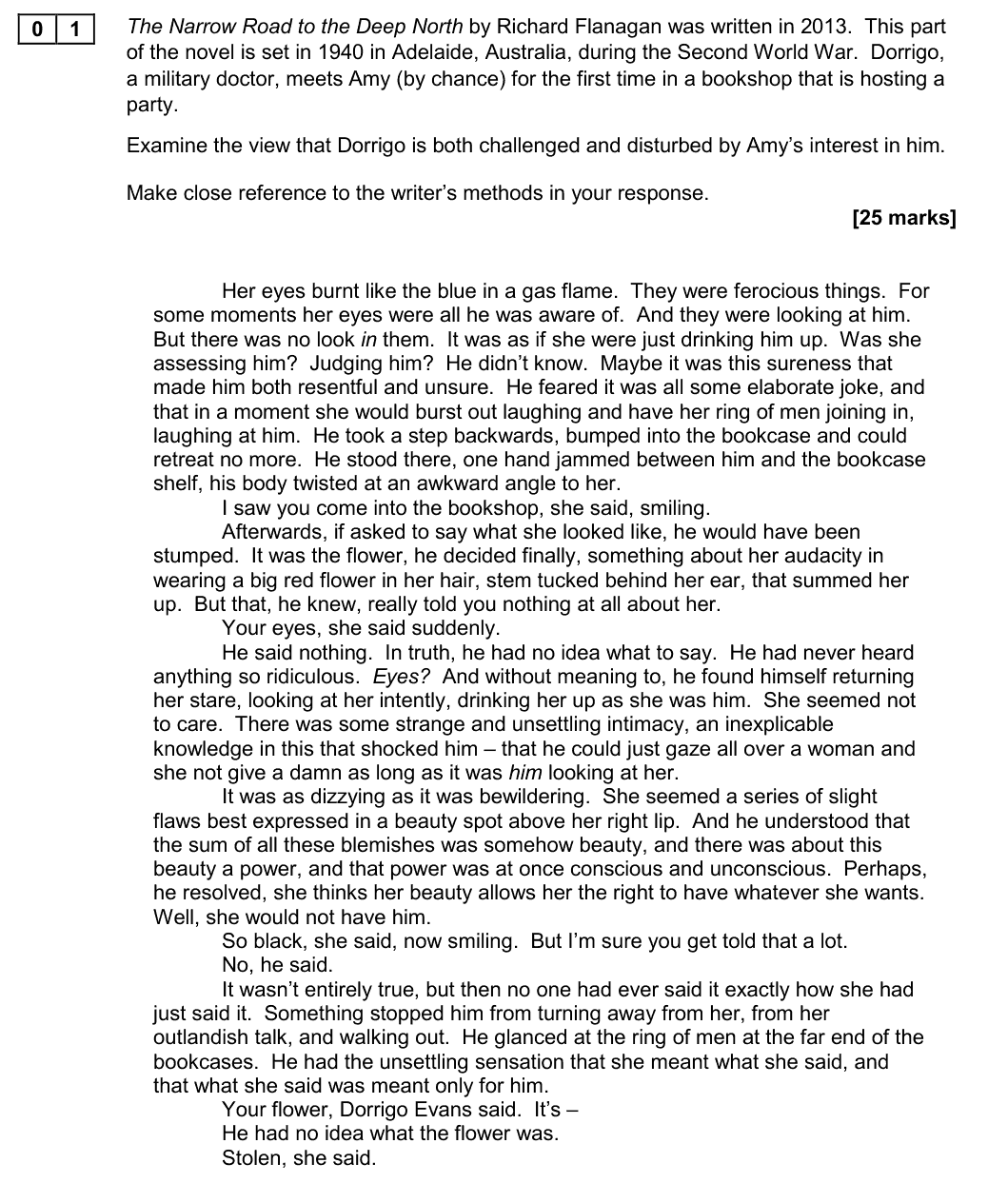
The unseen extract (from The Narrow Road to the Deep North by Richard Flanagan) engaged the interest of the vast majority of students. Most found the introductory material helpful, and some used it to help advance plausible ideas about the military backdrop to the story and the main character, who is a military doctor. The best of such answers not only used this context, but also anchored their observations in textual detail. Strong answers: • commented on figurative language with precision; • explored how a range of features worked together to create effects and shape meaning; • commented on structural elements of the passage, such as the symmetry between Dorrigo noticing Amy’s eyes at the start and Amy commenting on Dorrigo’s towards the end; • explored the complexities of the characterisation and commented on the reciprocal nature of the attraction between the two characters; • commented on the narrative point of view, exploring how it was third person, but appreciated how it privileges the perspective of Dorrigo; • explored the effects of the author adopting this viewpoint and how it creates effects and shapes the reader’s response to characters and events. Less able answers: • speculated on the meaning and effects of figurative language in fanciful ways, typically reading too much into the opening simile about Amy’s eyes which ‘burnt like the blue in a gas flame’, or into the image of the red flower that Amy wore in her hair (which was sometimes viewed unconvincingly as poppy-like symbol of remembrance); • picked words, phrases or images out in isolation from the sentences and paragraphs from which they came, partially or wholly misreading in the process; • viewed the characters in broad terms, sometimes over-using the terms ‘disturbed’ or ‘challenged’ from the question without much understanding, and overlooking the subtleties of the passage; • considered the use of point of view incorrectly, or bluntly argued that the use of third person made the narrator’s stance necessarily distant; • used context digressively or unconvincingly, for example, when too much was read into Flanagan’s use of language drawn from warfare, such as ‘retreated’, claiming, with insufficient evidence, that each character represented a side in the Second World War.
Notes from the mark scheme and report
- Focus: character: Dorrigo's response to Amy's interest
- Unseen text printed
- unseen extract: Richard Flanagan, The Narrow Road to the Deep North (2013), set in Adelaide in 1940
- debate 'both challenged and disturbed'
- credited: third person privileging Dorrigo's view, indirect thought vs Amy's clipped speech, eyes and shared gaze (symmetry of start and end), the 'stolen' flower, reciprocal attraction, wartime and gender contexts
- weaker answers over-read the gas-flame simile or saw the flower as a poppy, quoted words in isolation, repeated the question's terms, said third person made the narrator distant, or read the characters as sides in WW2
- MS preface repeats 'by chance'