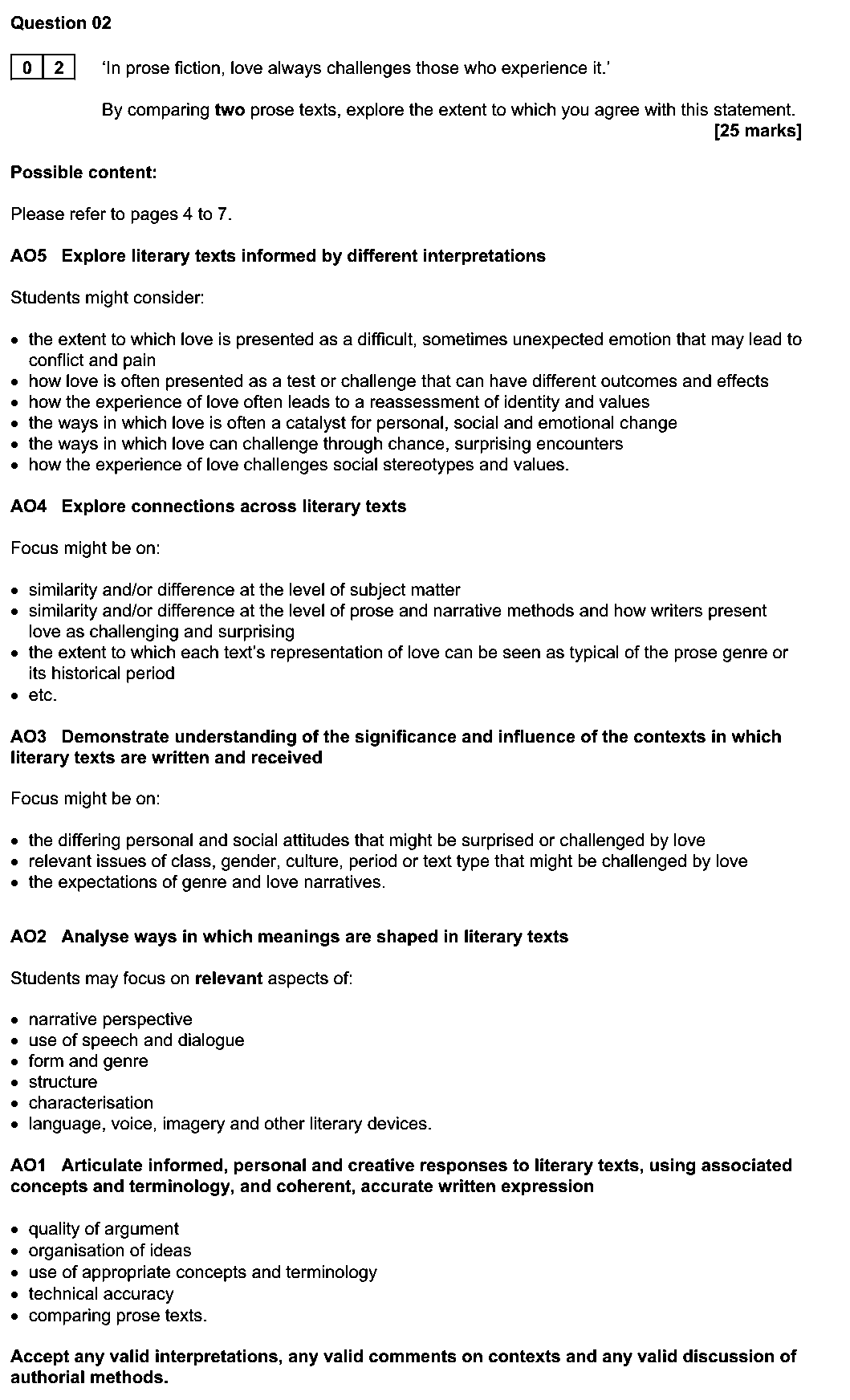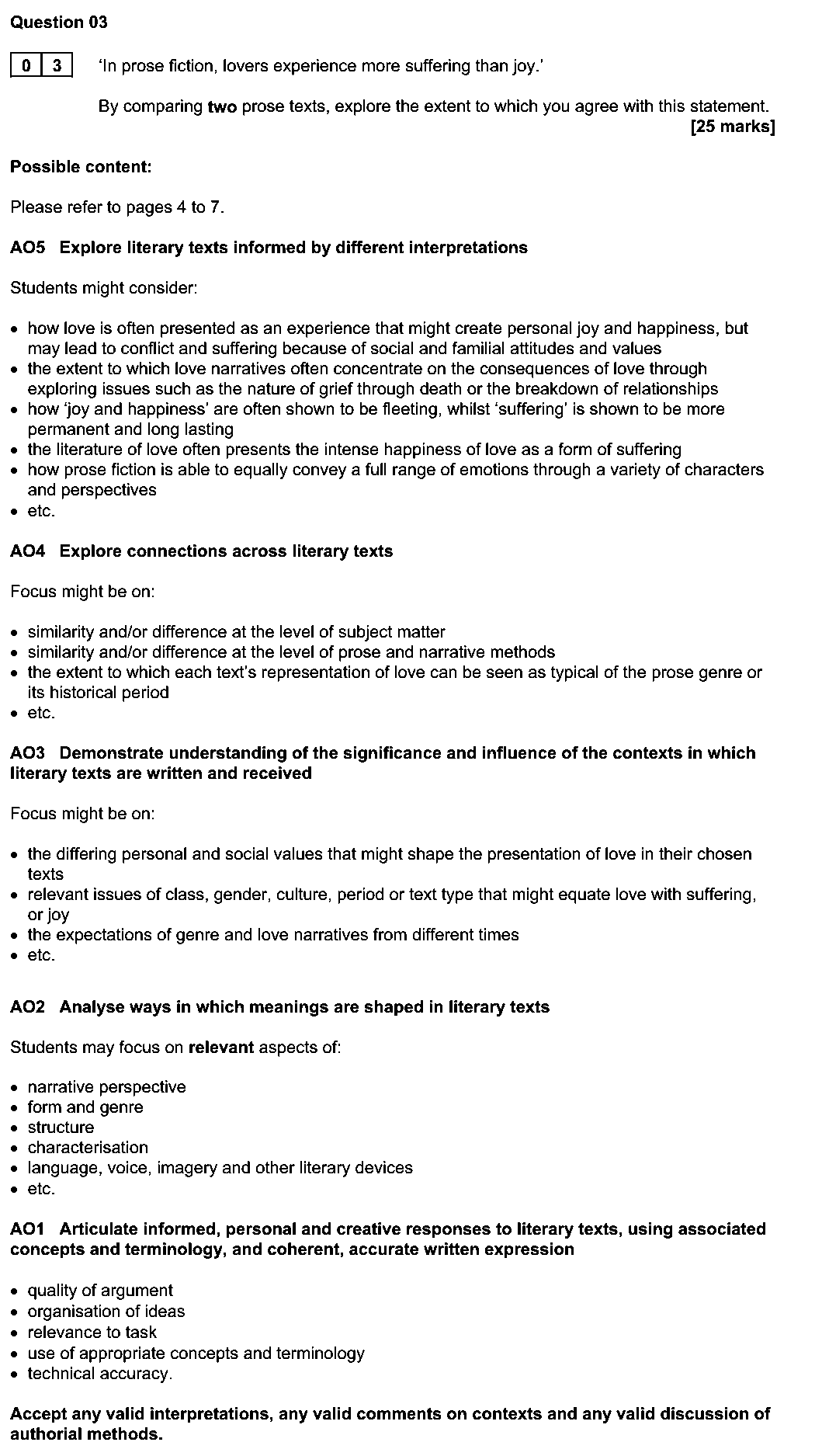
Mark scheme, including the levels and indicative content
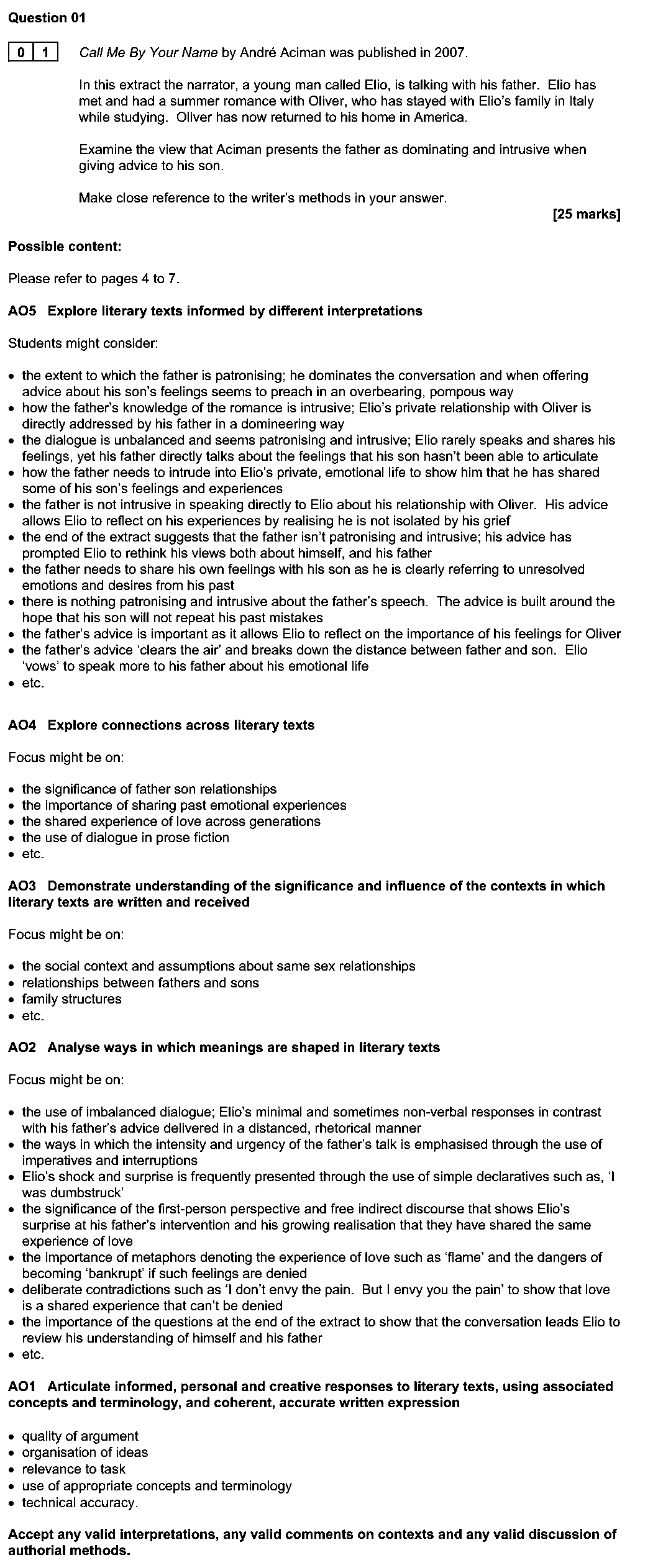
The general mark scheme (assessment objectives and bands)
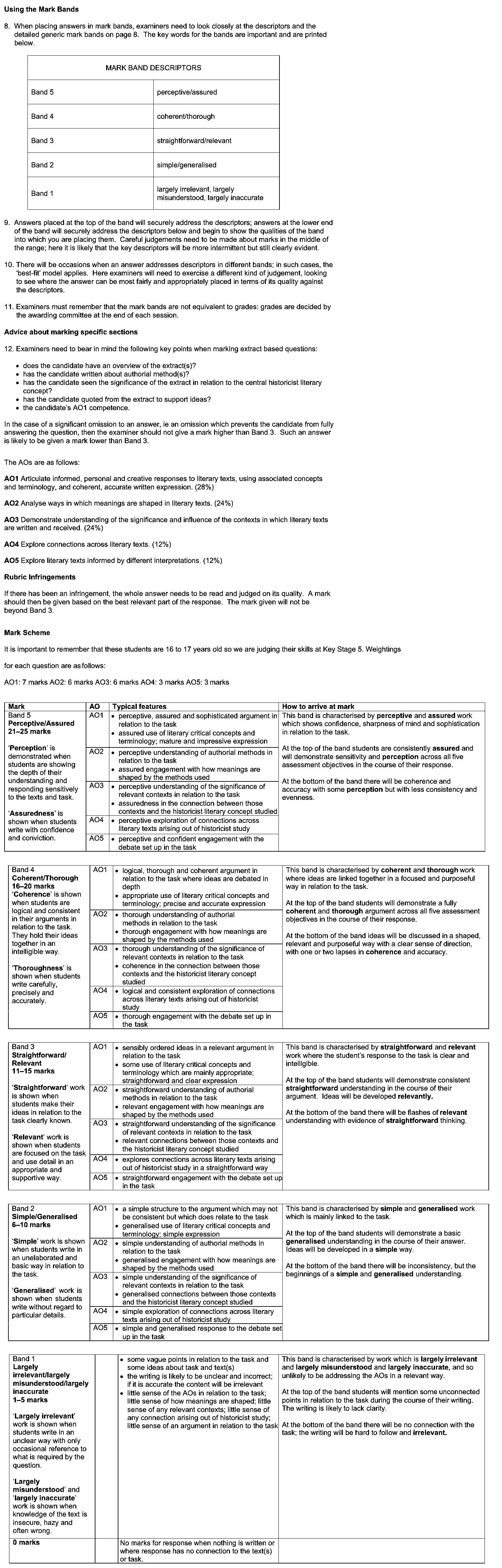
Examiner's comment
Most students found the extract from Call Me by Your Name by André Aciman to be accessible and yet there were complexities to stretch and challenge the more able too. Attention to the structure of the extract was instructive. The extract is narrated from Elio’s perspective and focuses on Elio’s father’s one-sided conversation with his son, where he attempts to offer Elio advice on his summer romance with Oliver. Most students readily engaged with the debate on the idea that Elio’s father is dominating and intrusive when giving his son advice. All students were able to consider the dynamics of the father-son relationship, although only higher-level students could consider the presentation of the relationship through considering the narrative perspective of Elio. Only a minority considered Elio’s sexuality in a developed manner; those that did were able to use the context of social attitudes as a tool for considering the father’s thoughts and actions. The given view seemed to provoke some very unsubtle reading of the father’s actions and language – some suggesting an abusive/coercive approach that was supported by simple textual reference such as ‘touched my hand’. Better work balanced the debate; but sometimes this approach became a little mechanical making the student ‘hedge their bets’ on interpretation. The best responses addressed the view by simply having the confidence to offer their own interpretations reacting to the key words of the given view. More successful students: had read the extract carefully and could fully engage with the task because they understood the whole extract rather than fragmented detail; always grasped and commented on the narrative perspective of the extract; were fully aware that the reader’s view of the father is through the lens of the son Elio; used context as a subtle literary tool; could consider the typicality/atypicality of the father’s presentation; could reflect on gender and sexuality; explored the debate in a genuine rather than mechanical way. Less successful students: failed to read or understand the question fully; used word level analysis and so offered some unconvincing interpretations; were confused over names and locations suggesting that they did not carefully read the preamble; over valued the effect of punctuation; made digressive references to other texts; made little or no reference to Aciman or his prose narrative methods; made inaccurate or sweeping assertions about context.
Notes from the mark scheme and report
- Focus: relationship: father giving advice to his son
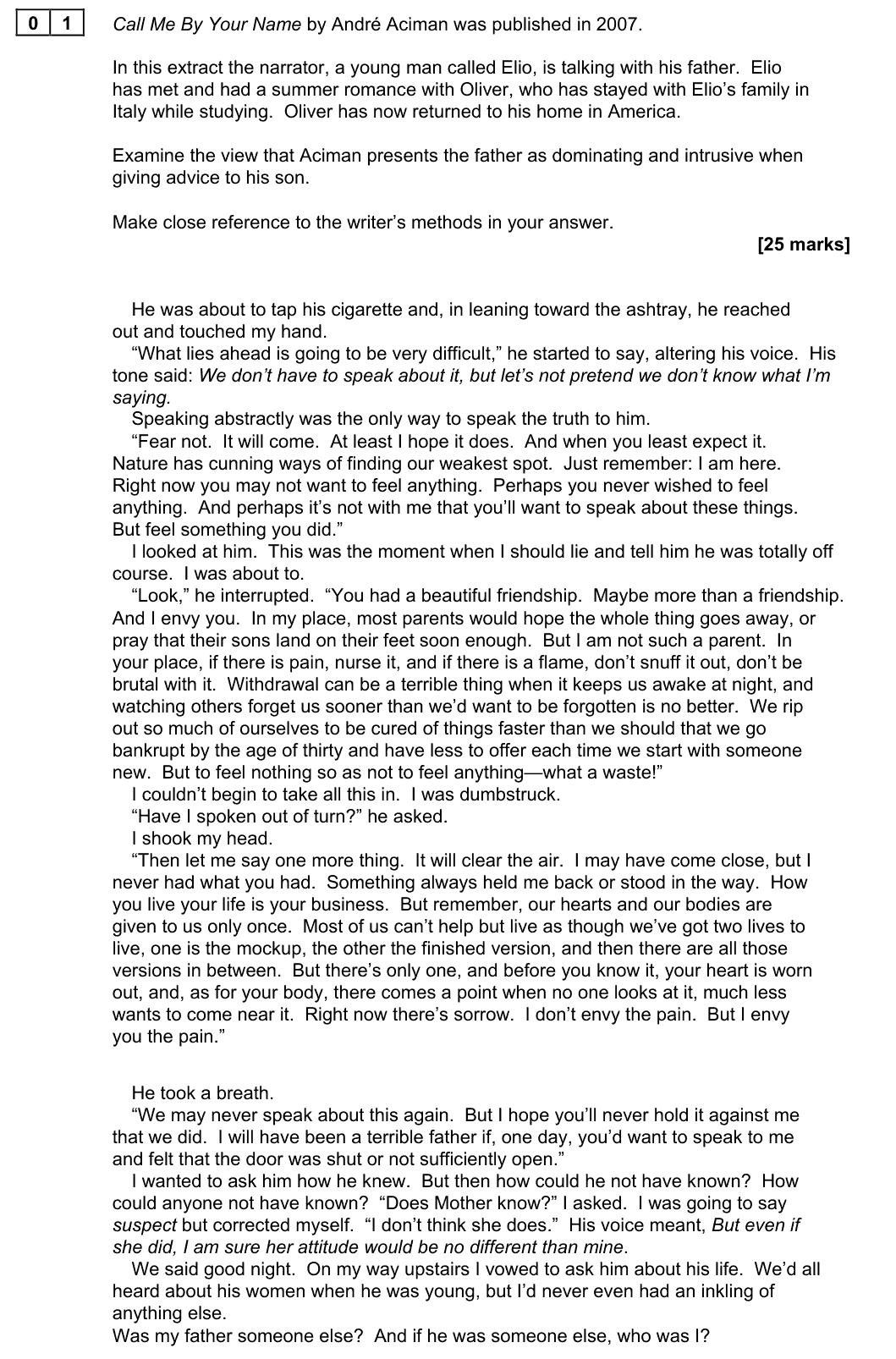
- Unseen text printed
- unseen extract: André Aciman, Call Me By Your Name (2007), Elio's father advises him after Oliver leaves
- debate 'dominating and intrusive'
- credited: first-person narration so the father is seen through Elio's eyes, one-sided dialogue with imperatives and interruptions vs Elio's silence ('I was dumbstruck'), 'flame' and 'bankrupt' metaphors, 'I envy you the pain', closing questions, context of attitudes to same-sex relationships
- weaker answers read the father as abusive or coercive from 'touched my hand', balanced the debate mechanically, confused names from the preamble, over-valued punctuation or digressed to other texts