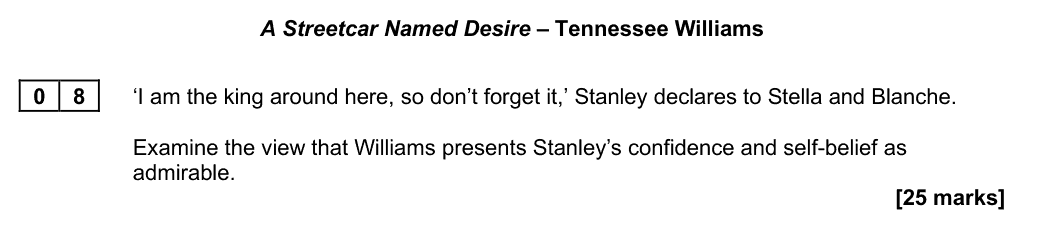
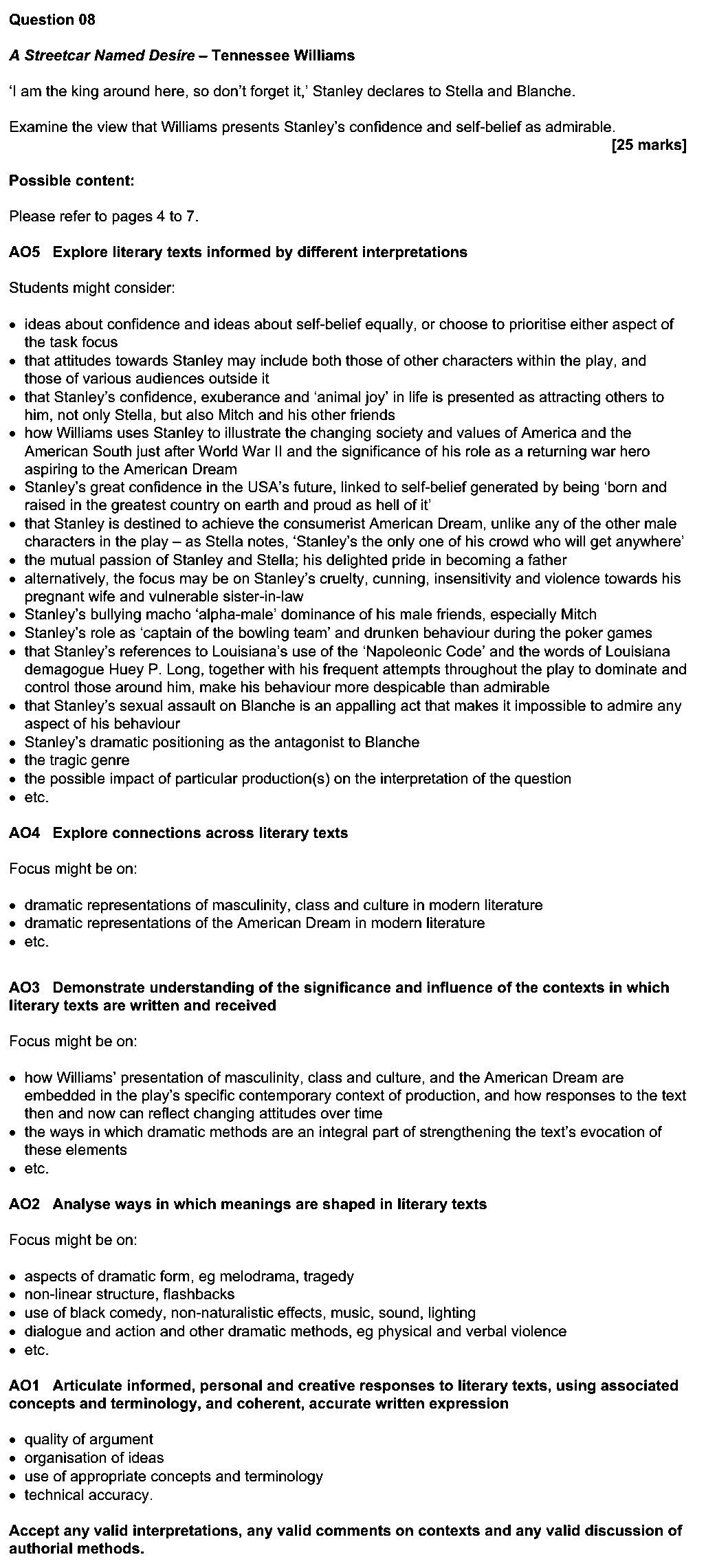
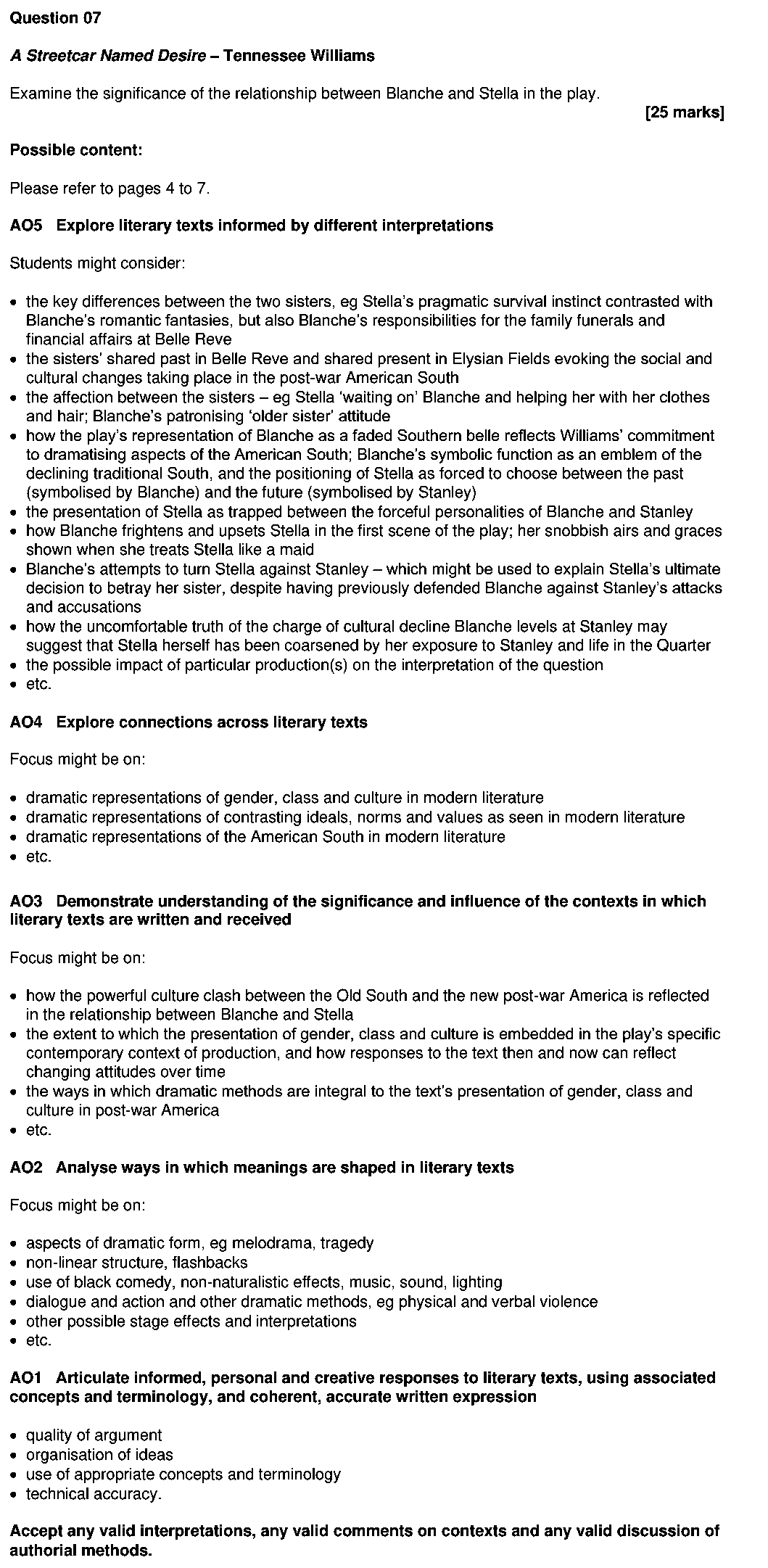
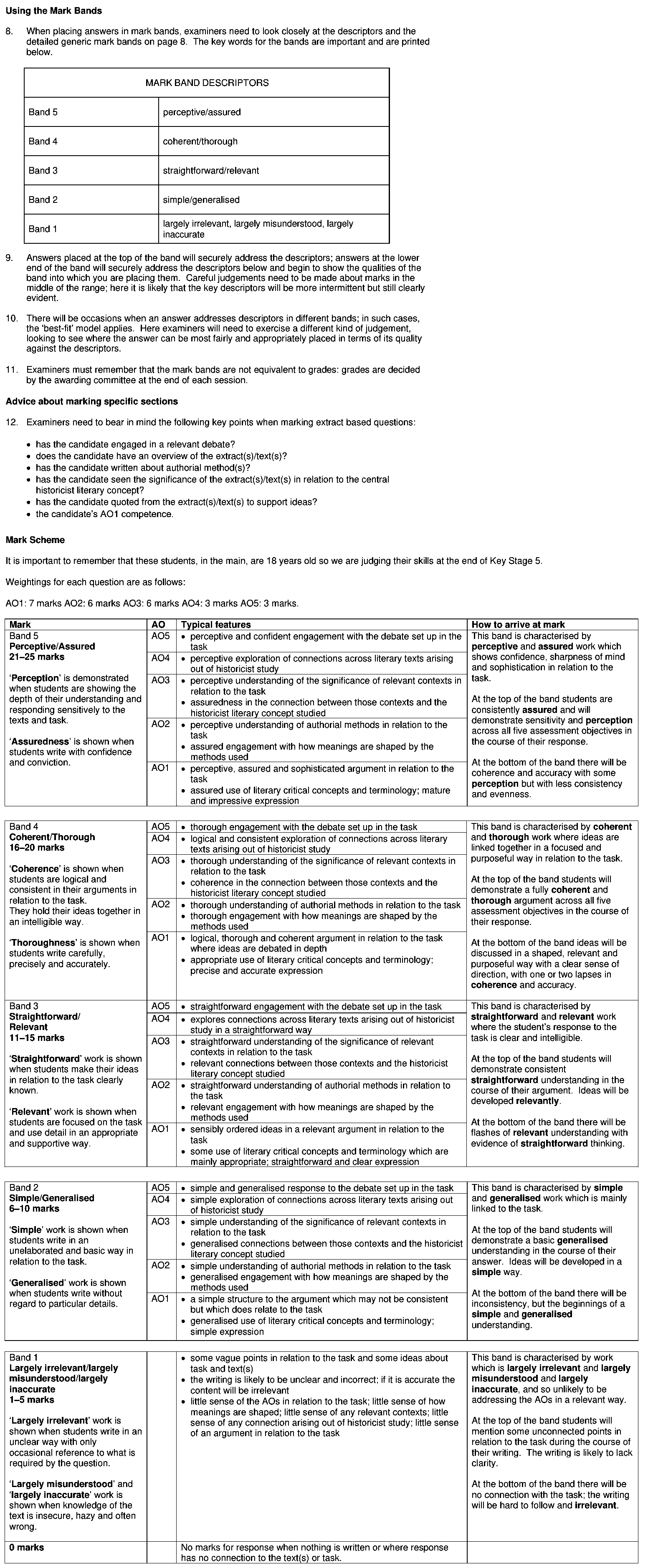
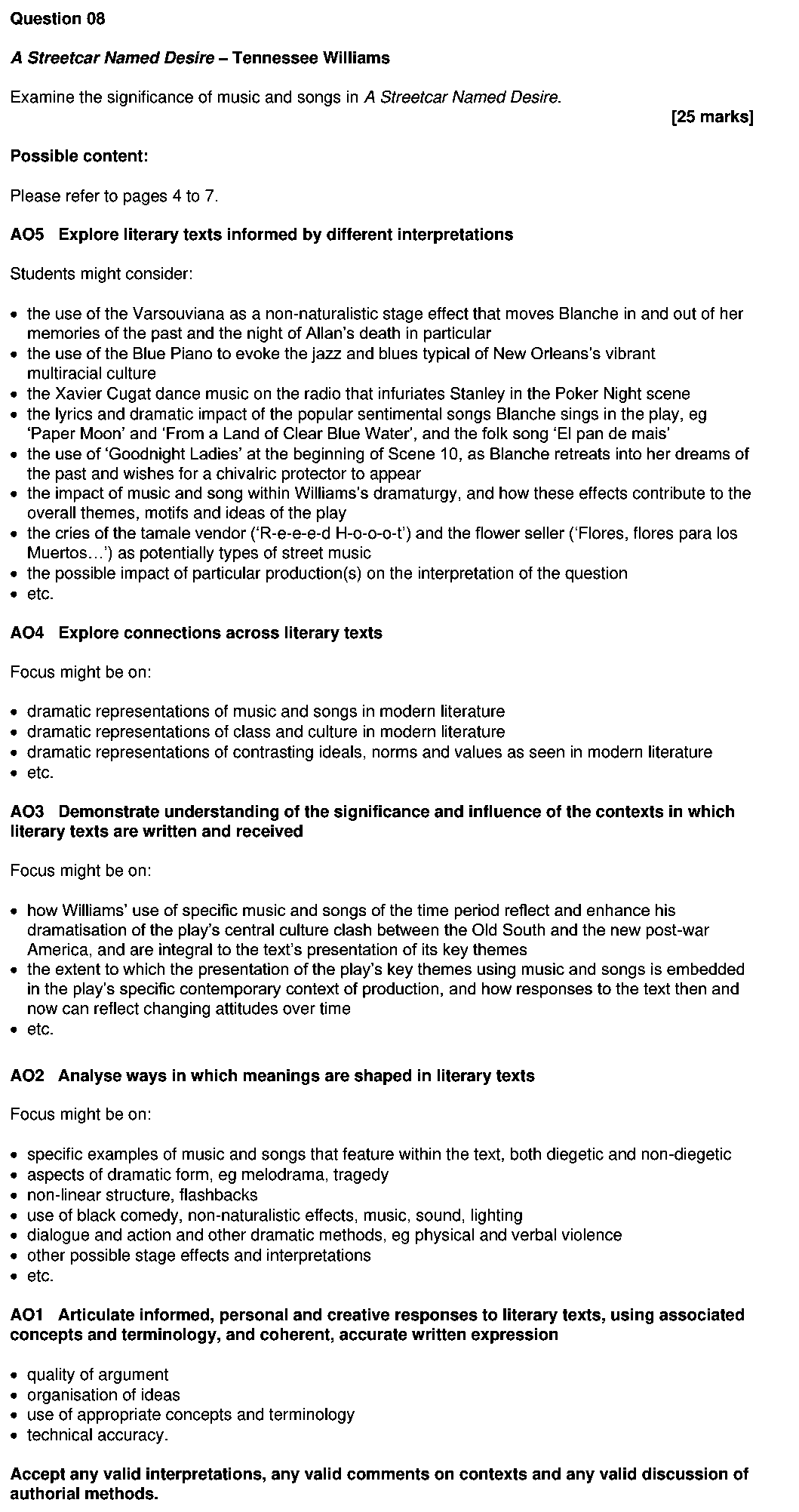
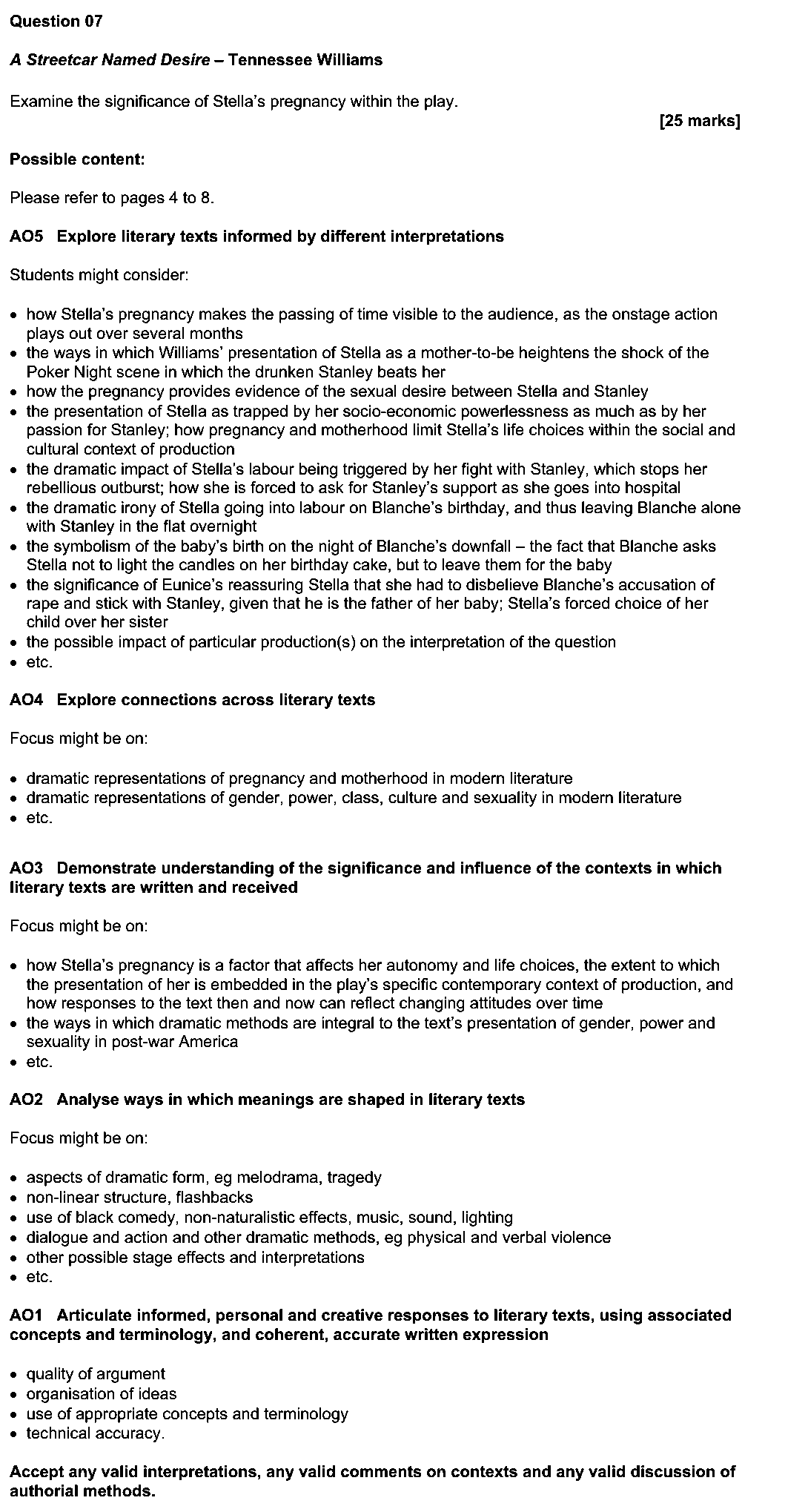
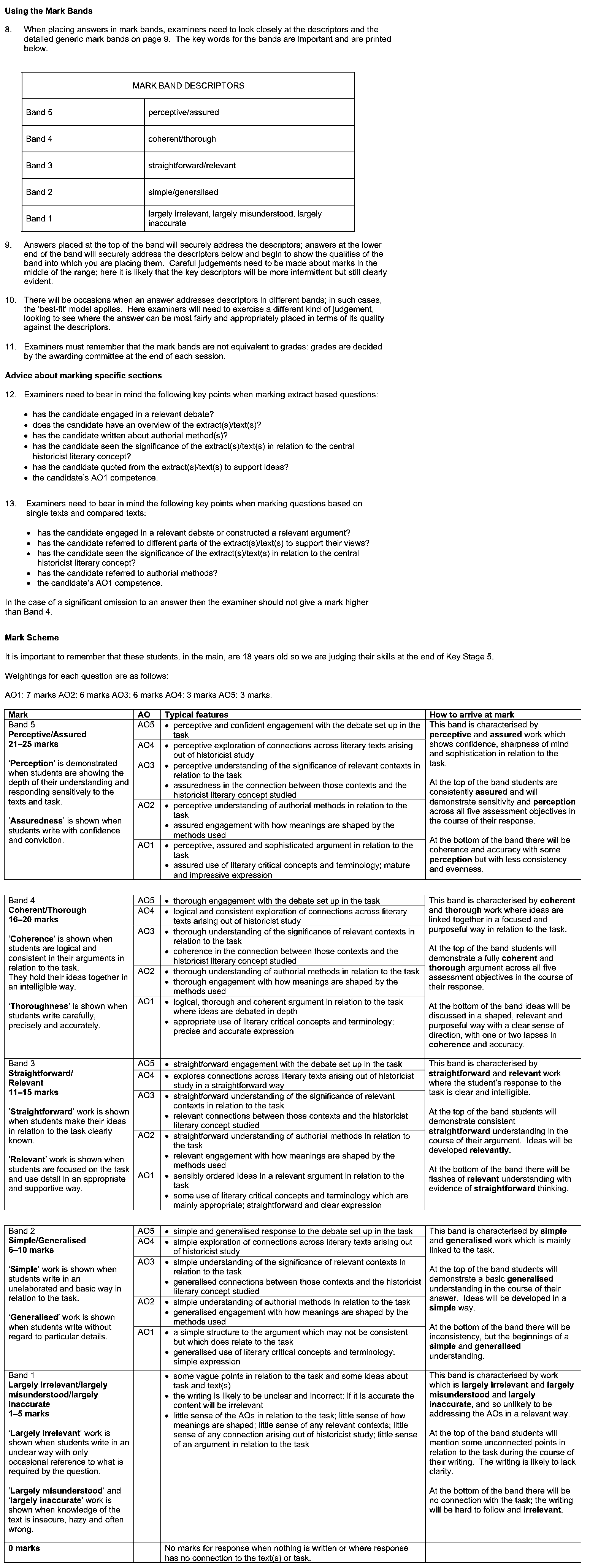
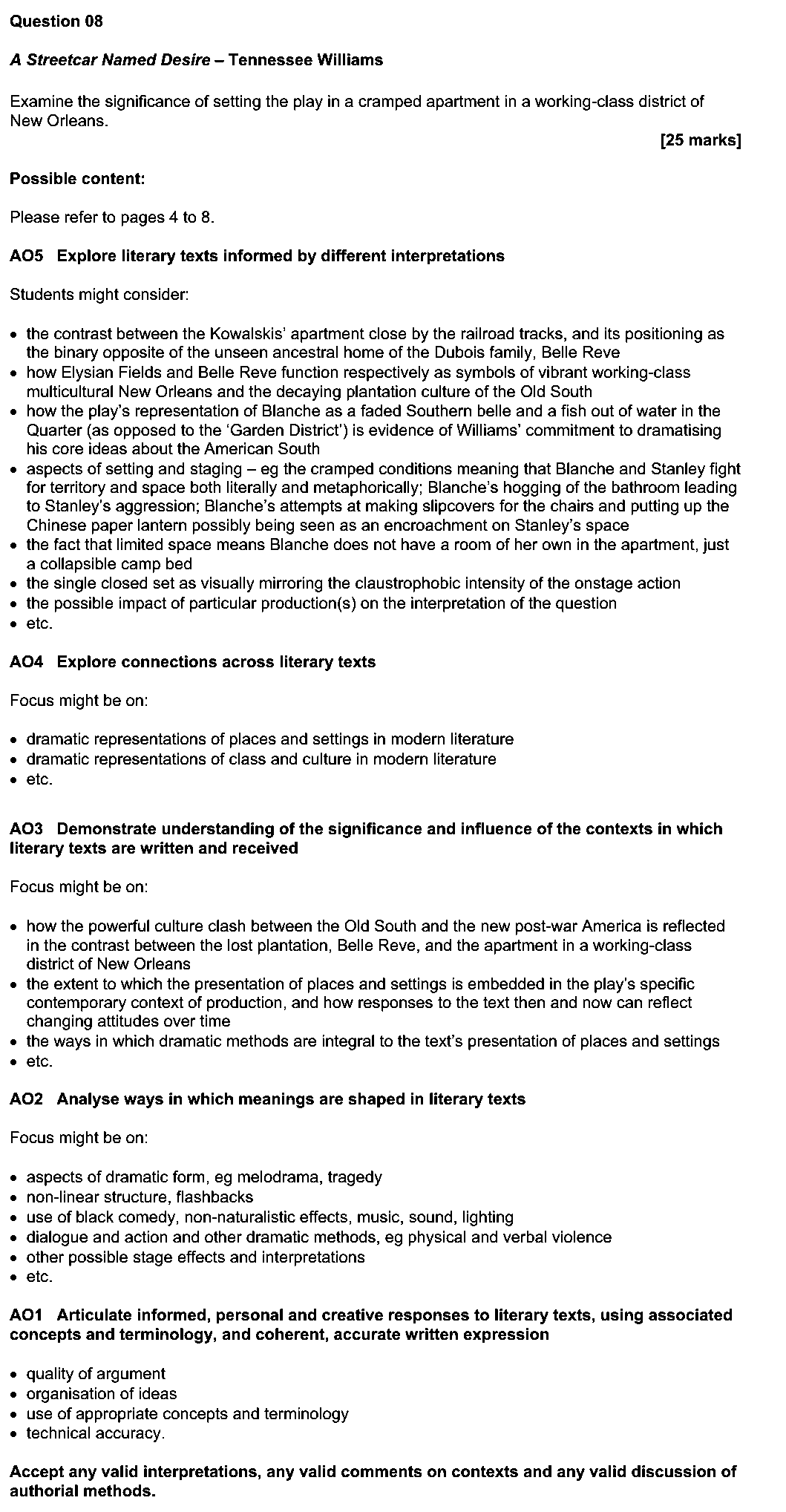
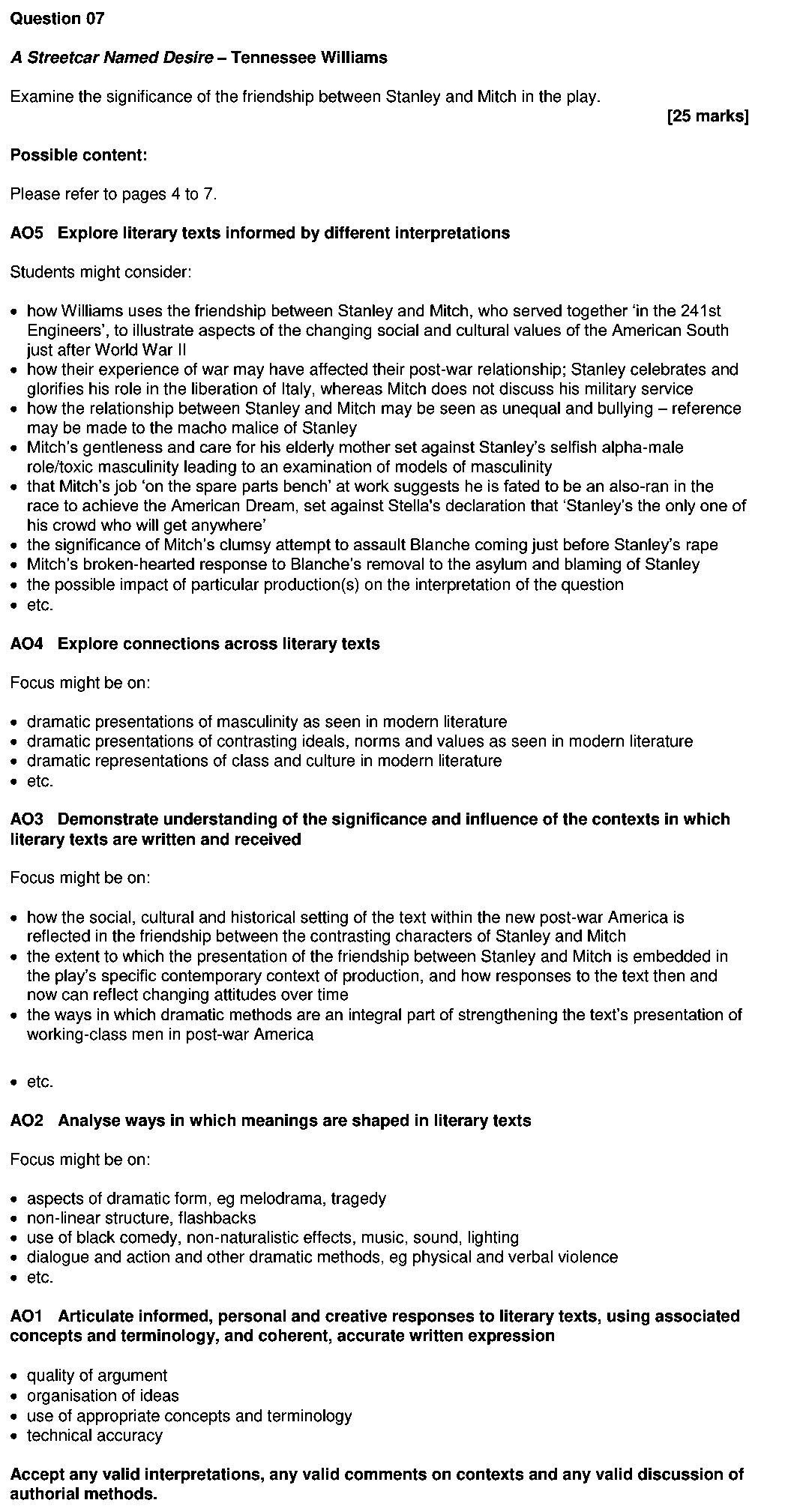
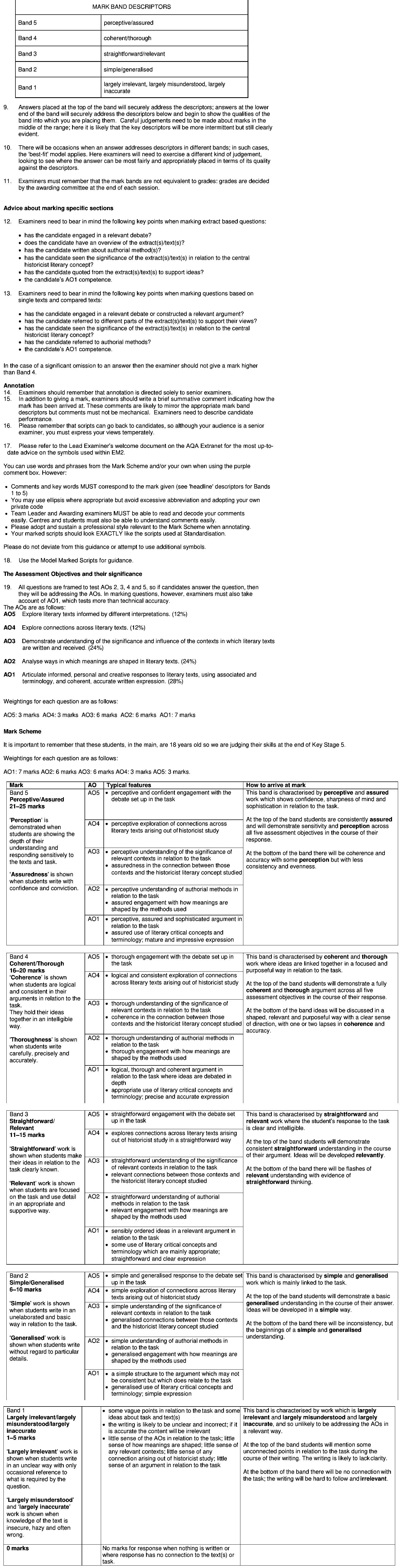
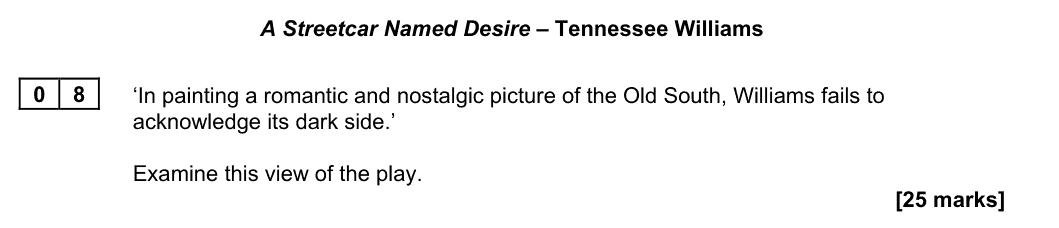
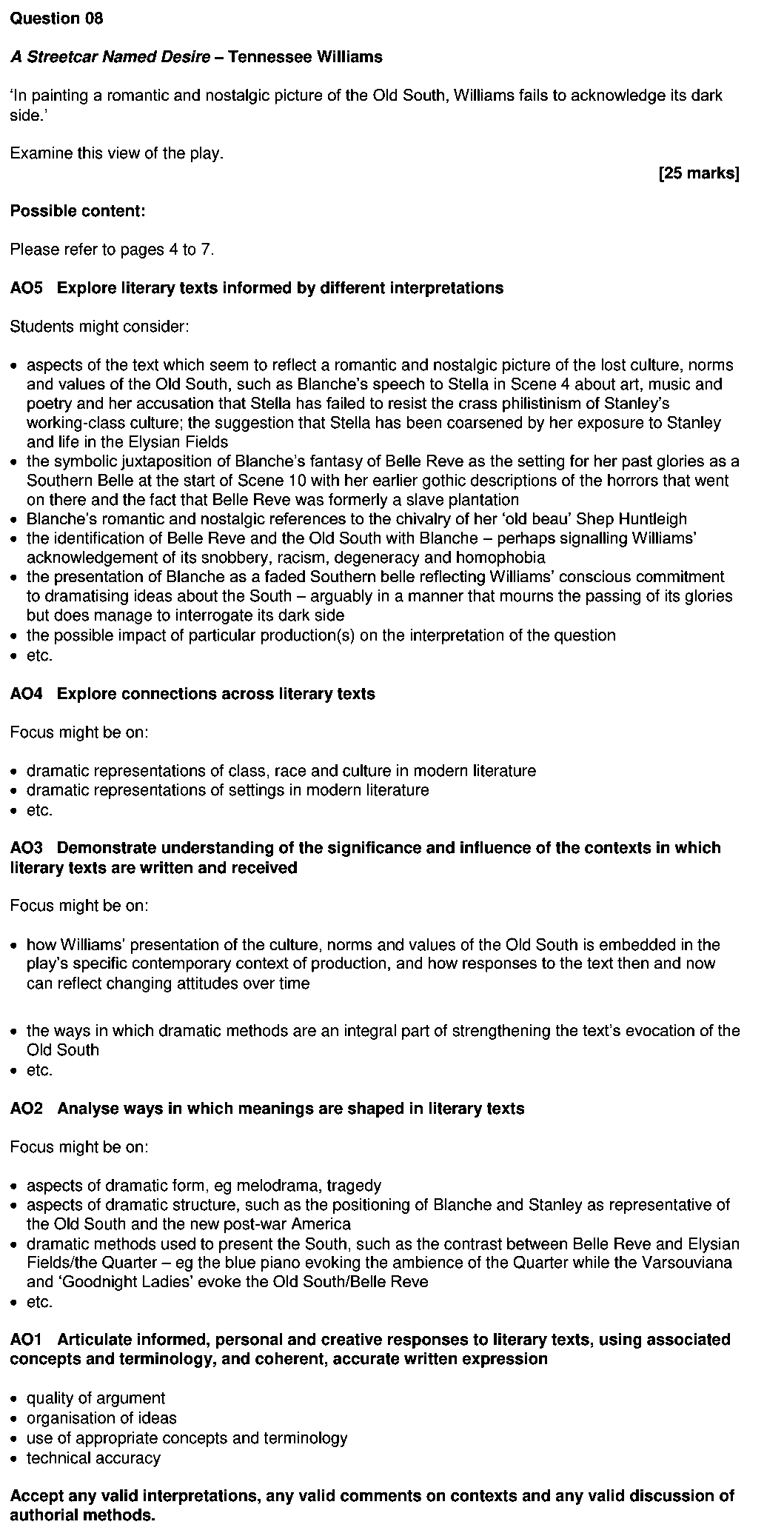
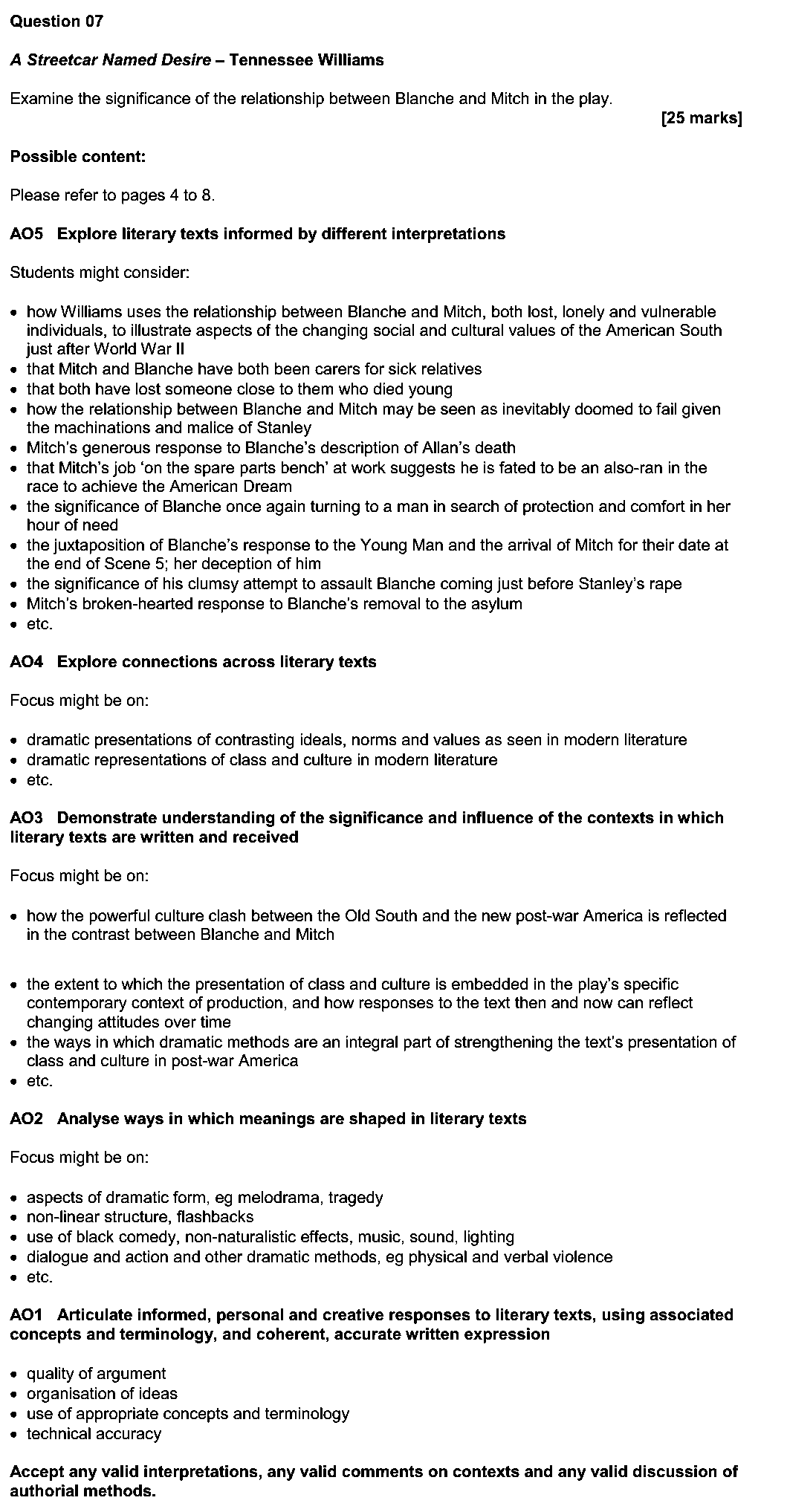
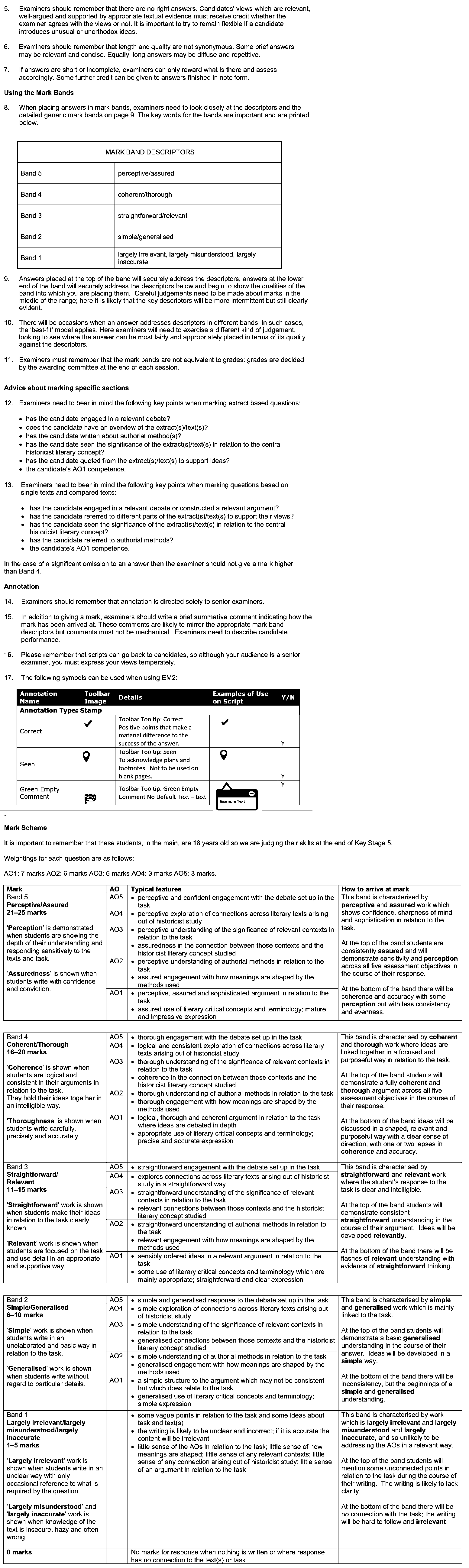
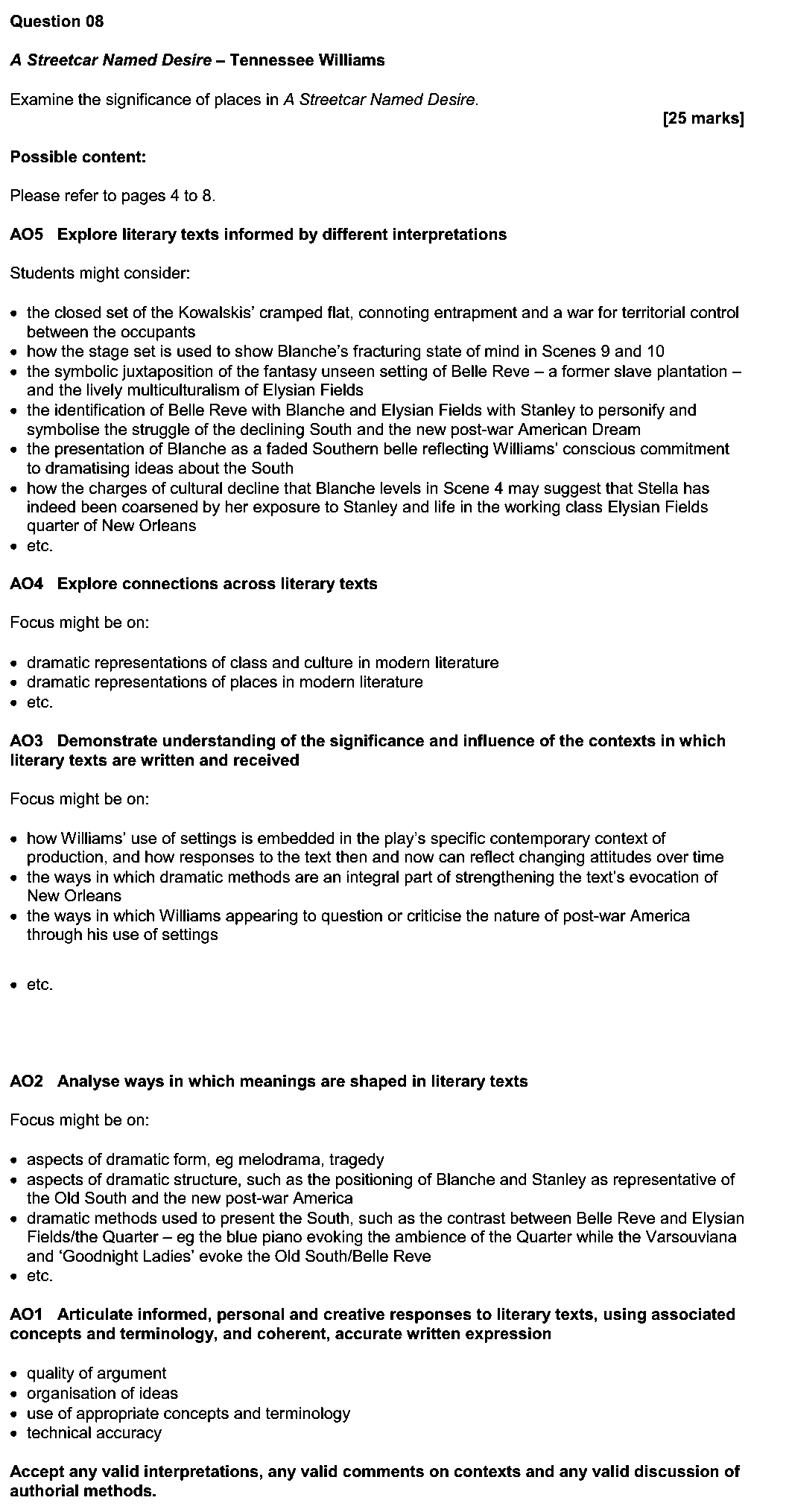
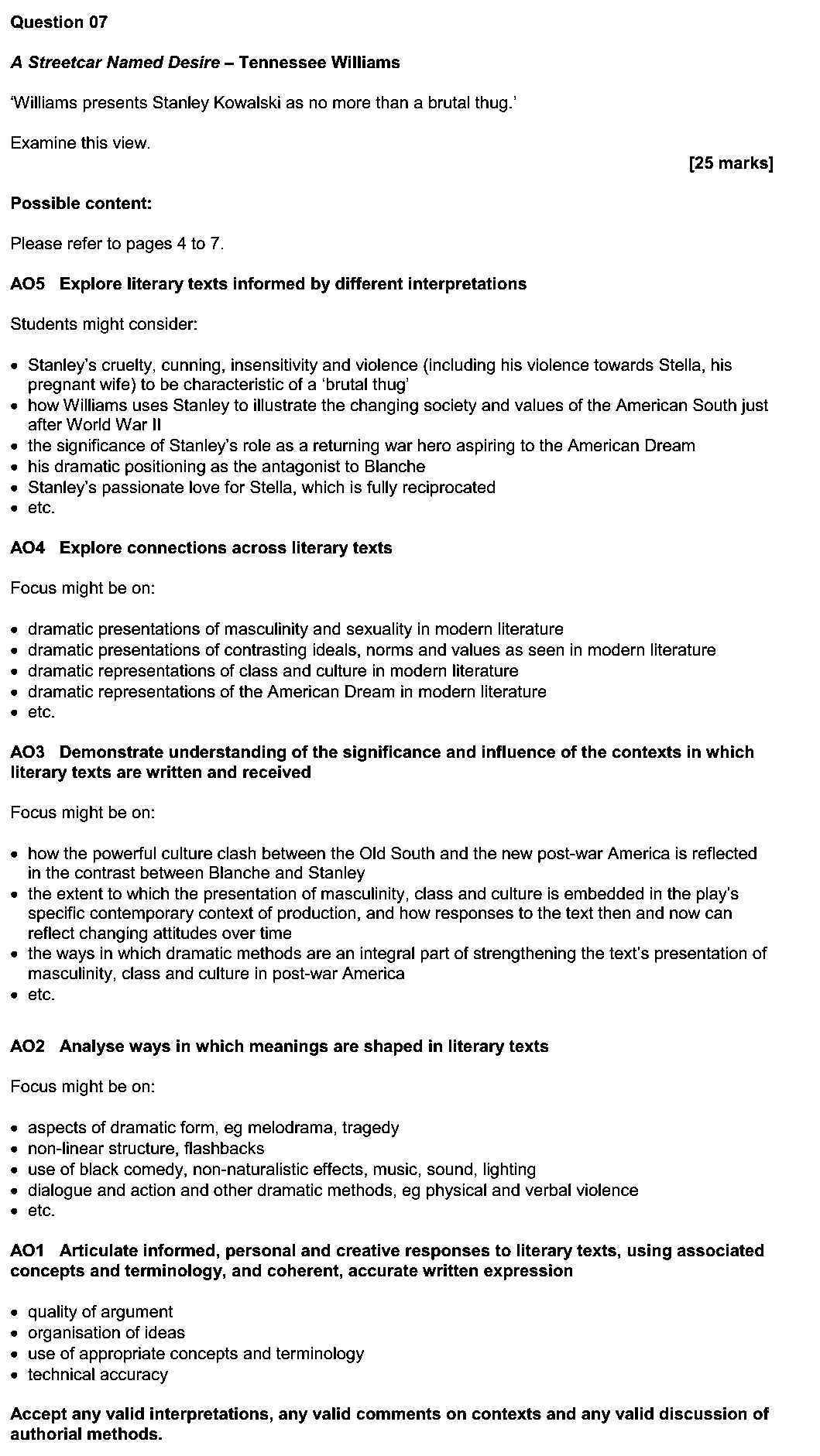
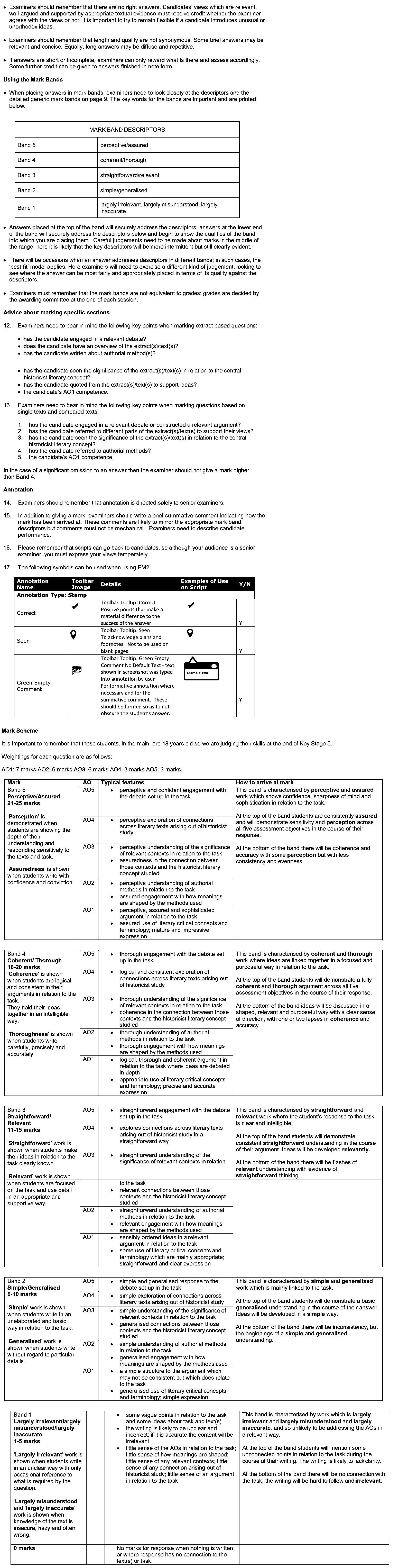
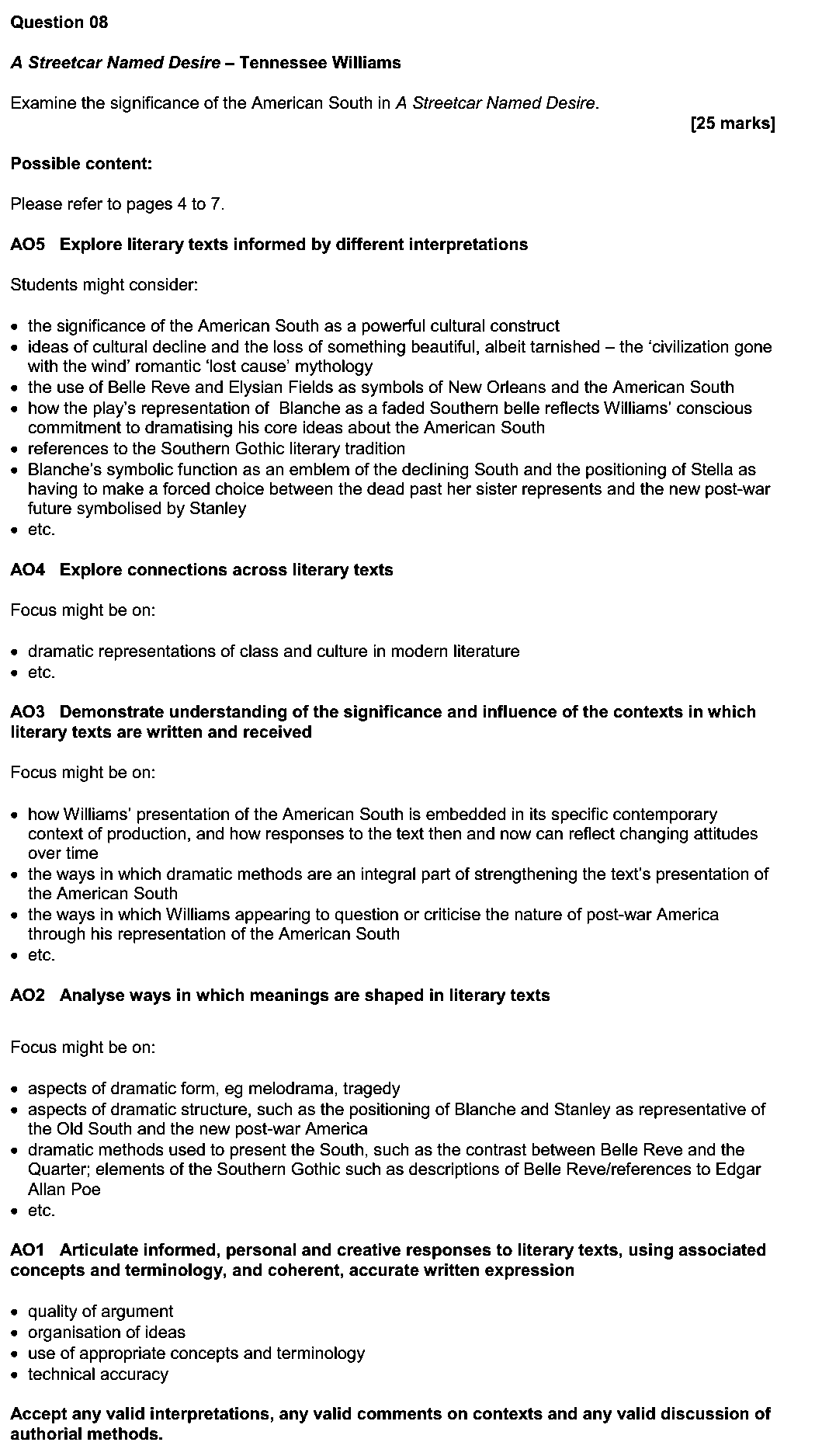
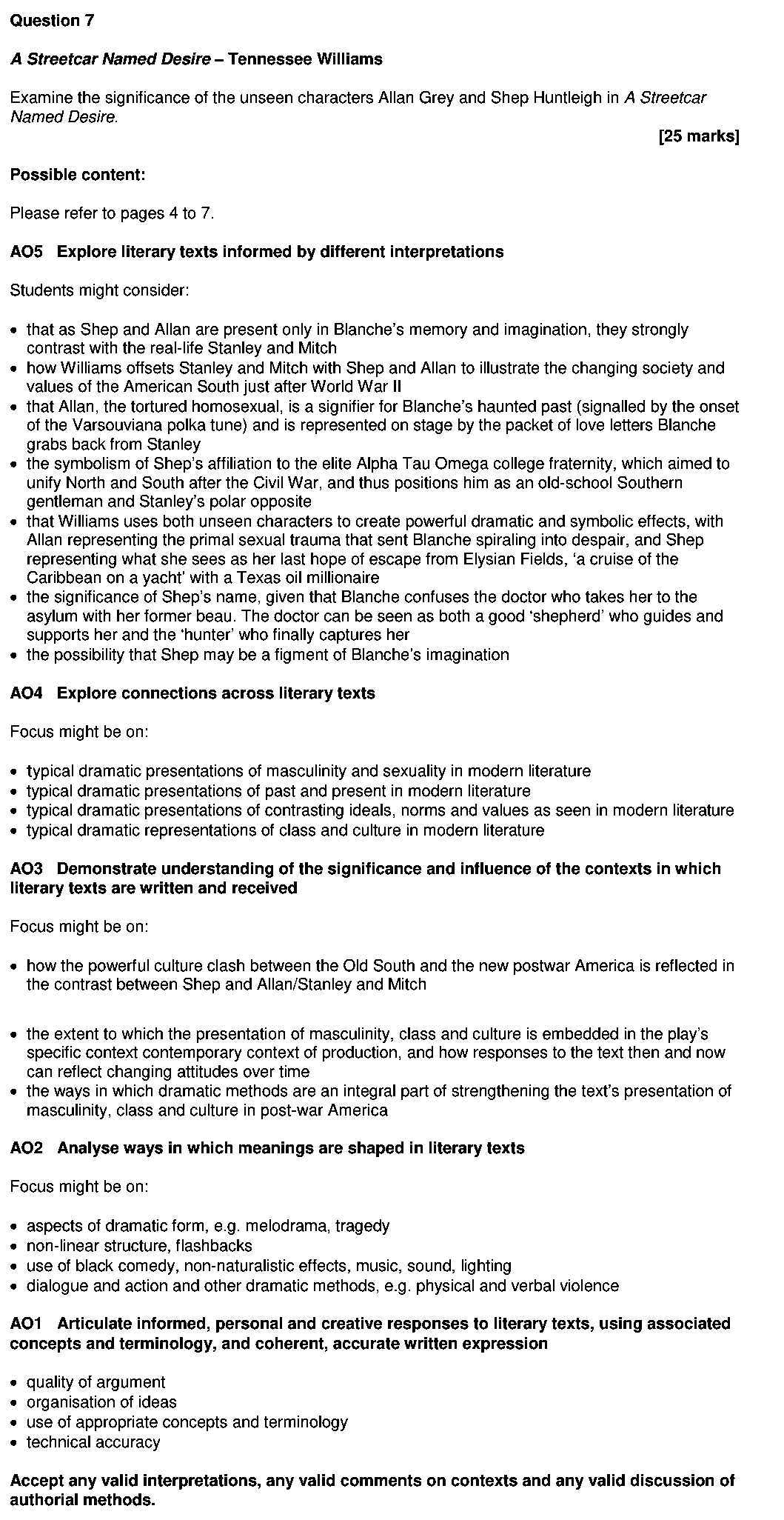
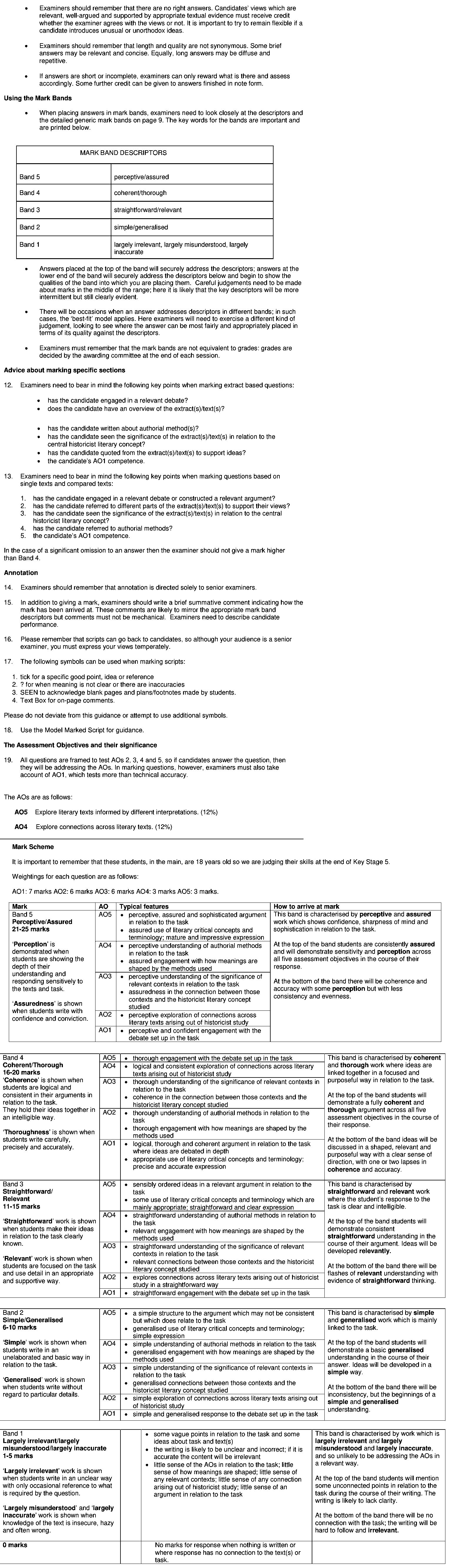
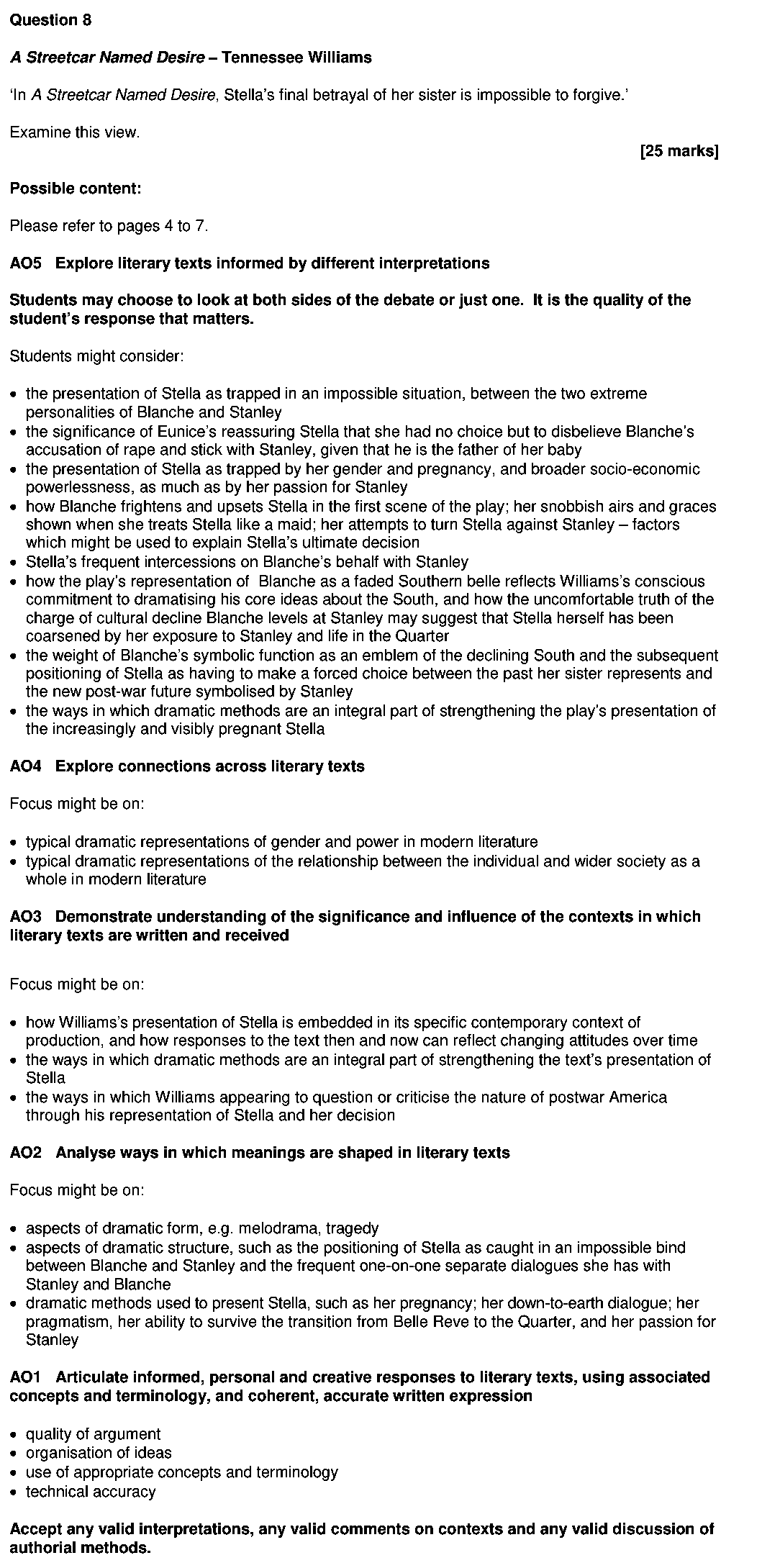
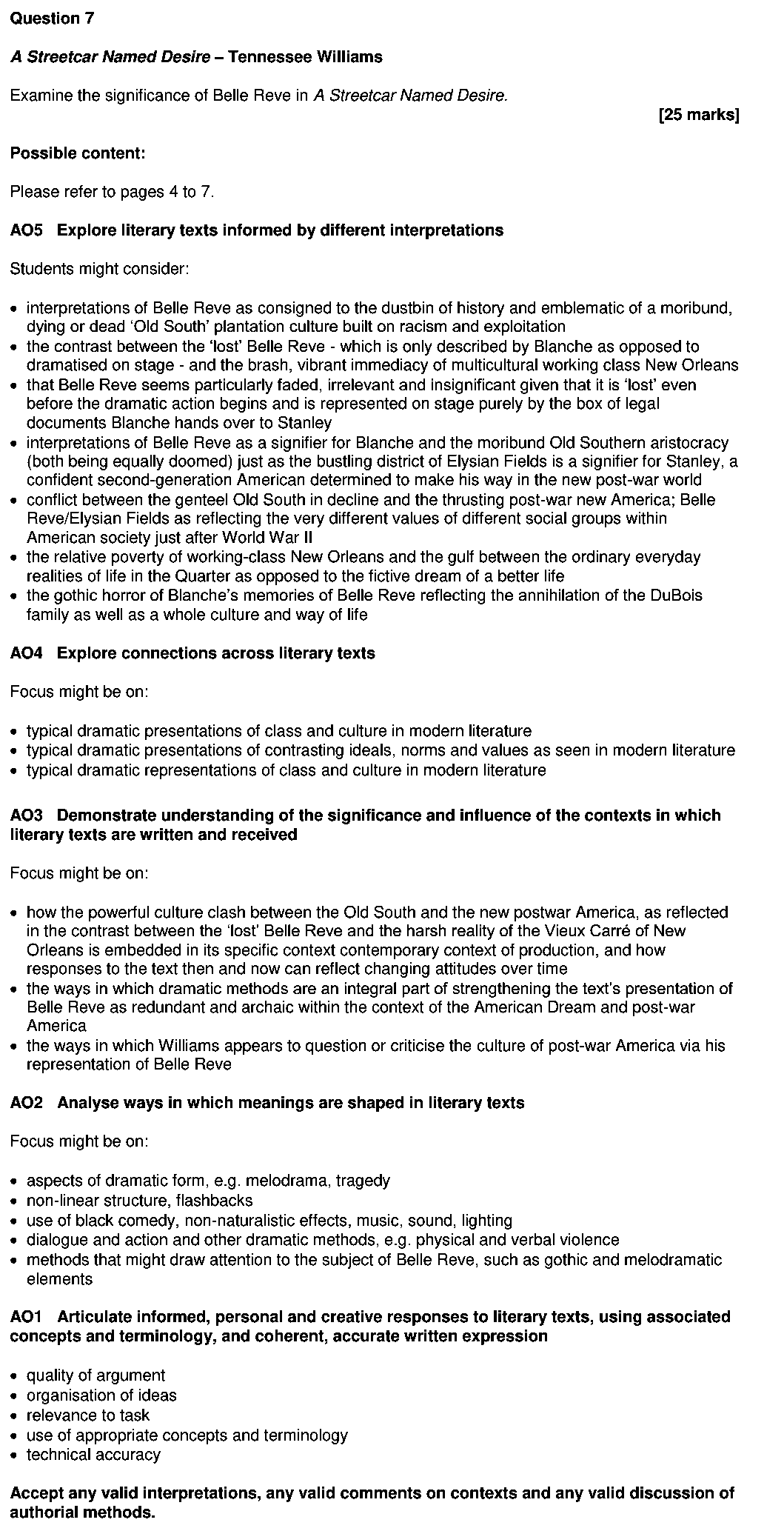
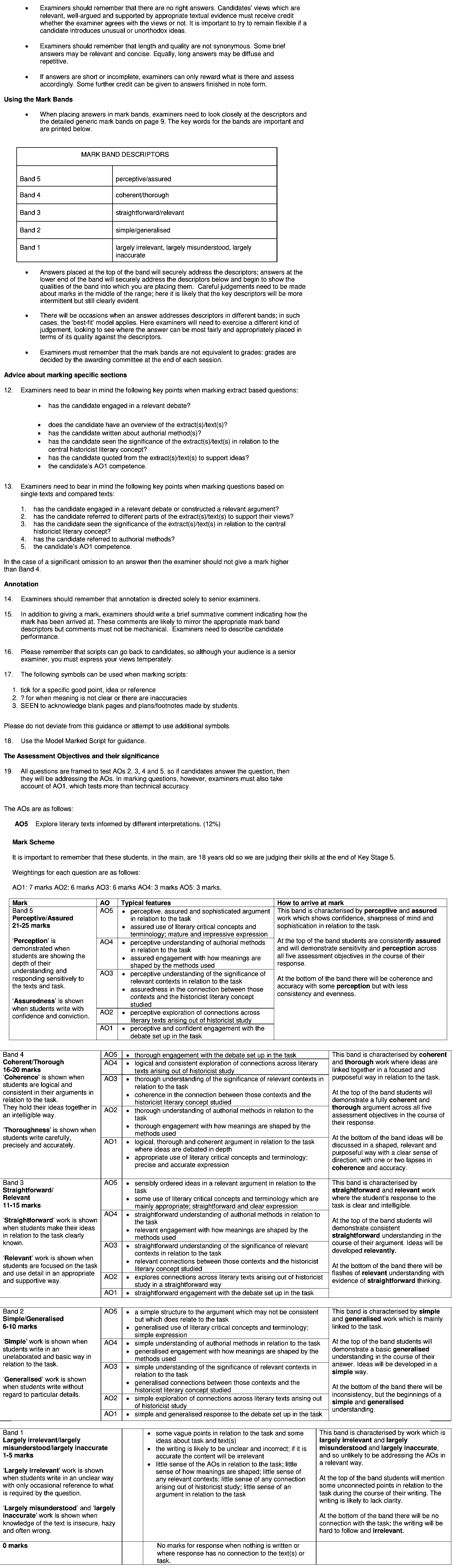
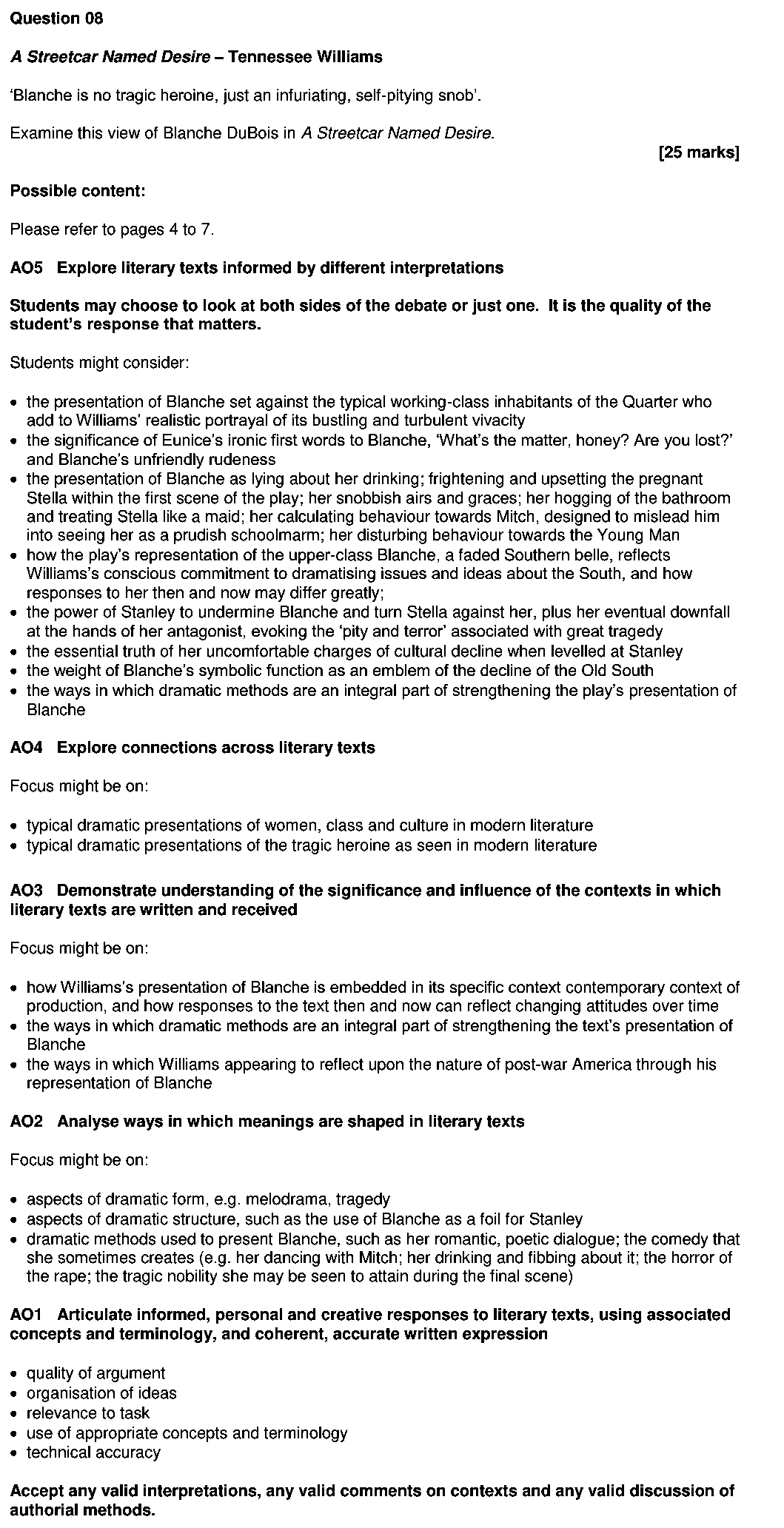
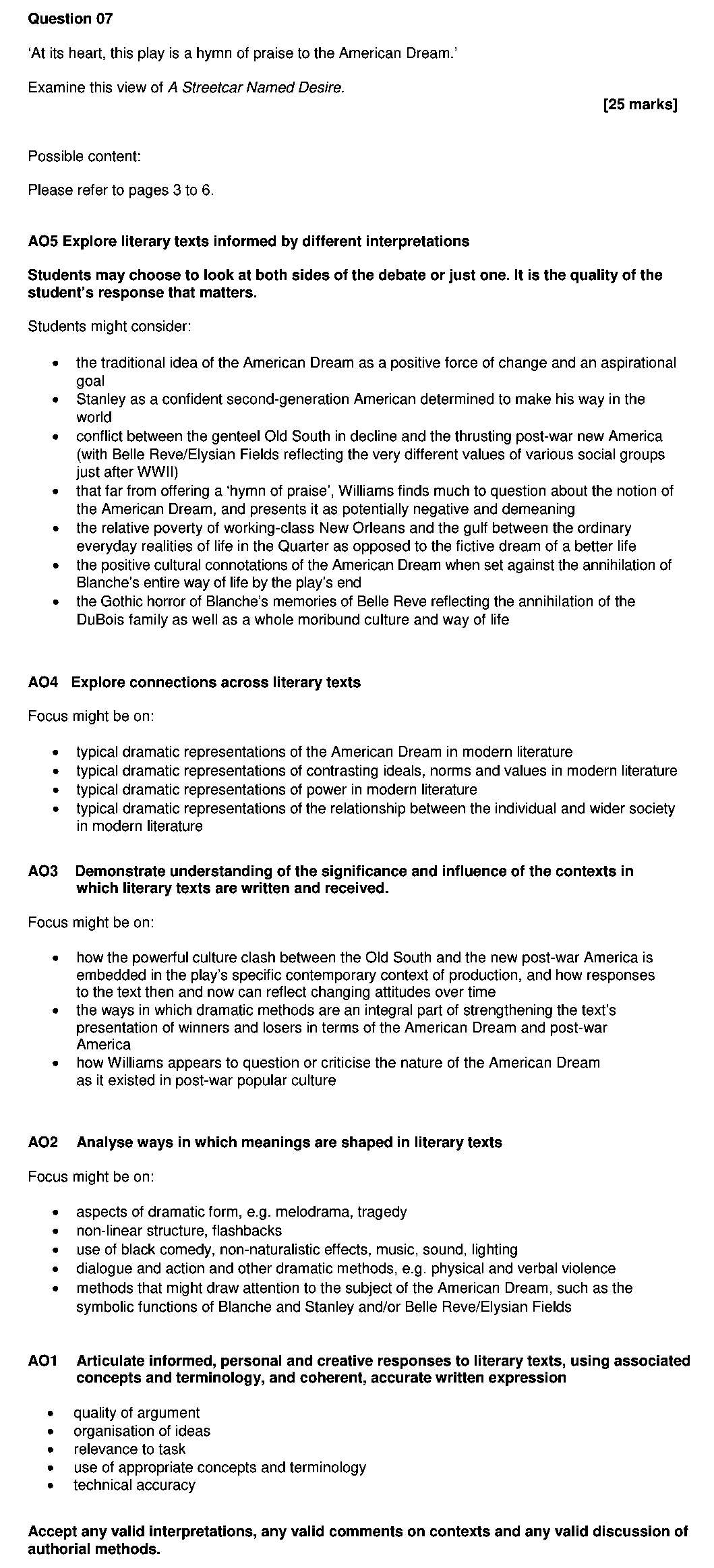
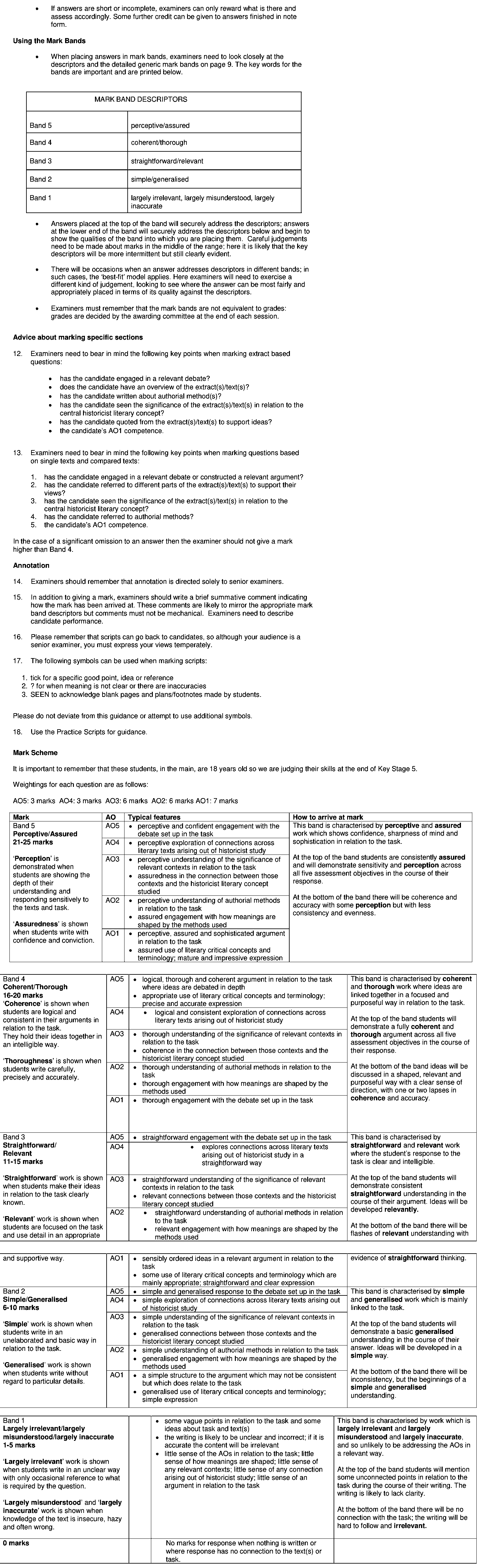
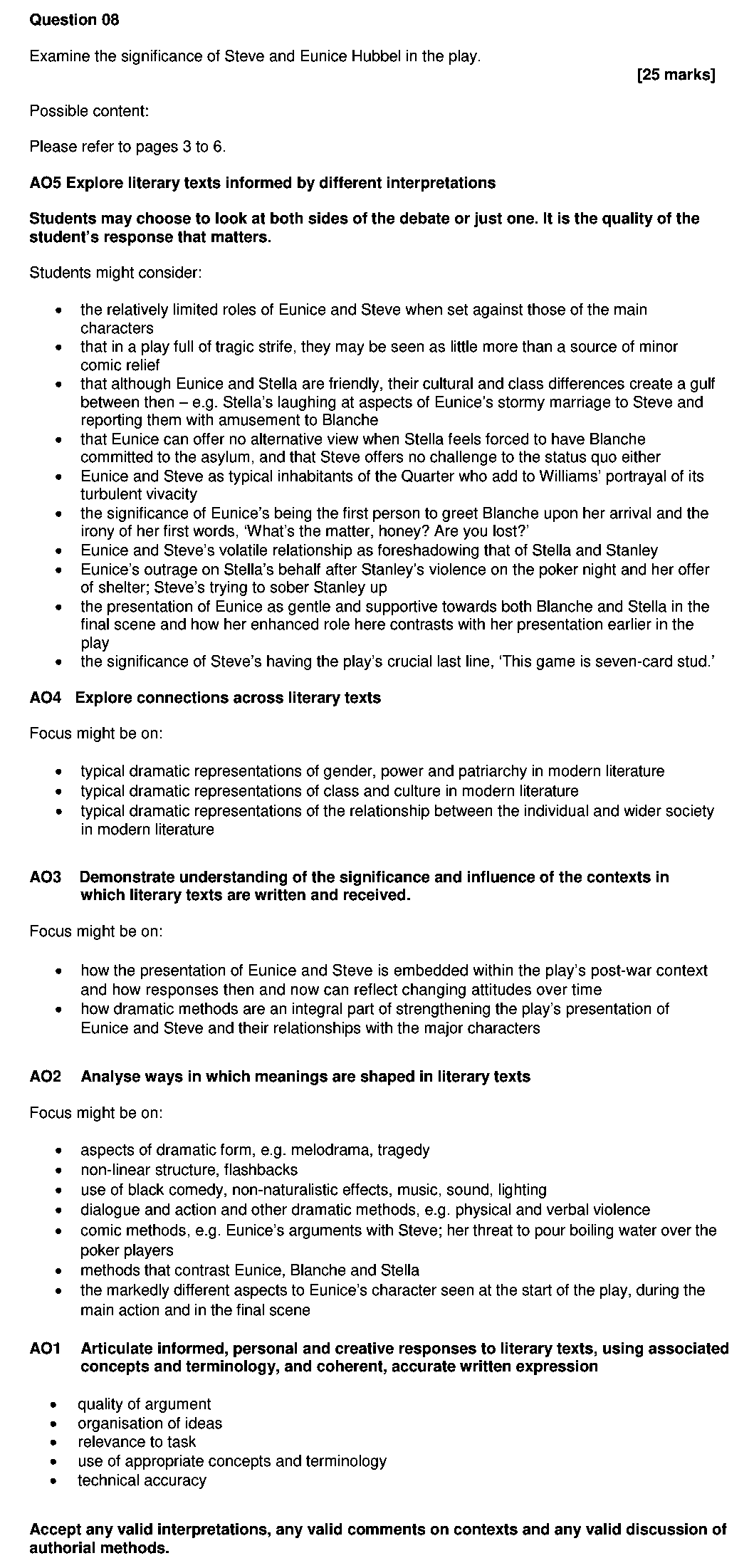
Mark scheme, including the levels and indicative content
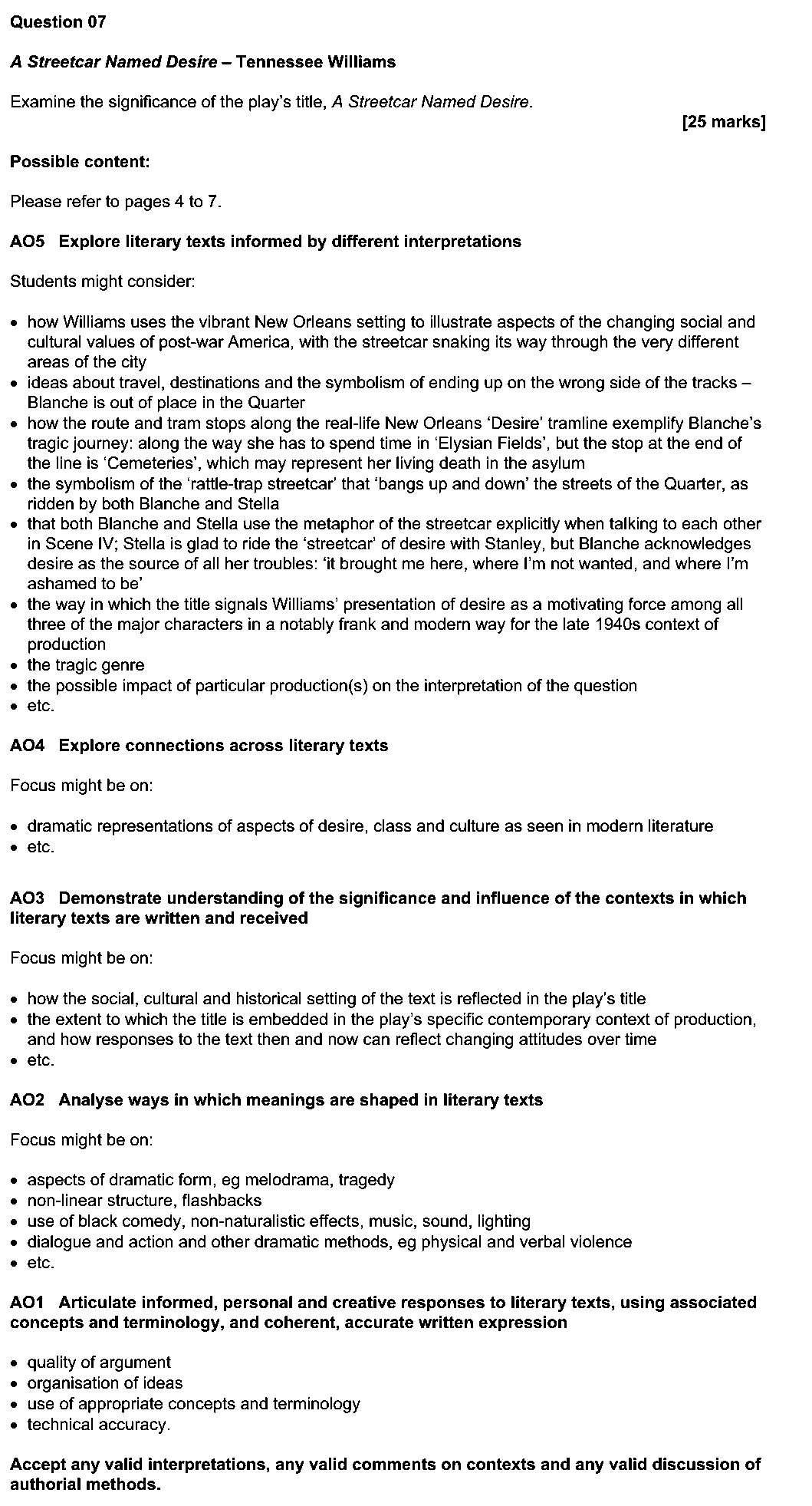
The general mark scheme (assessment objectives and bands)
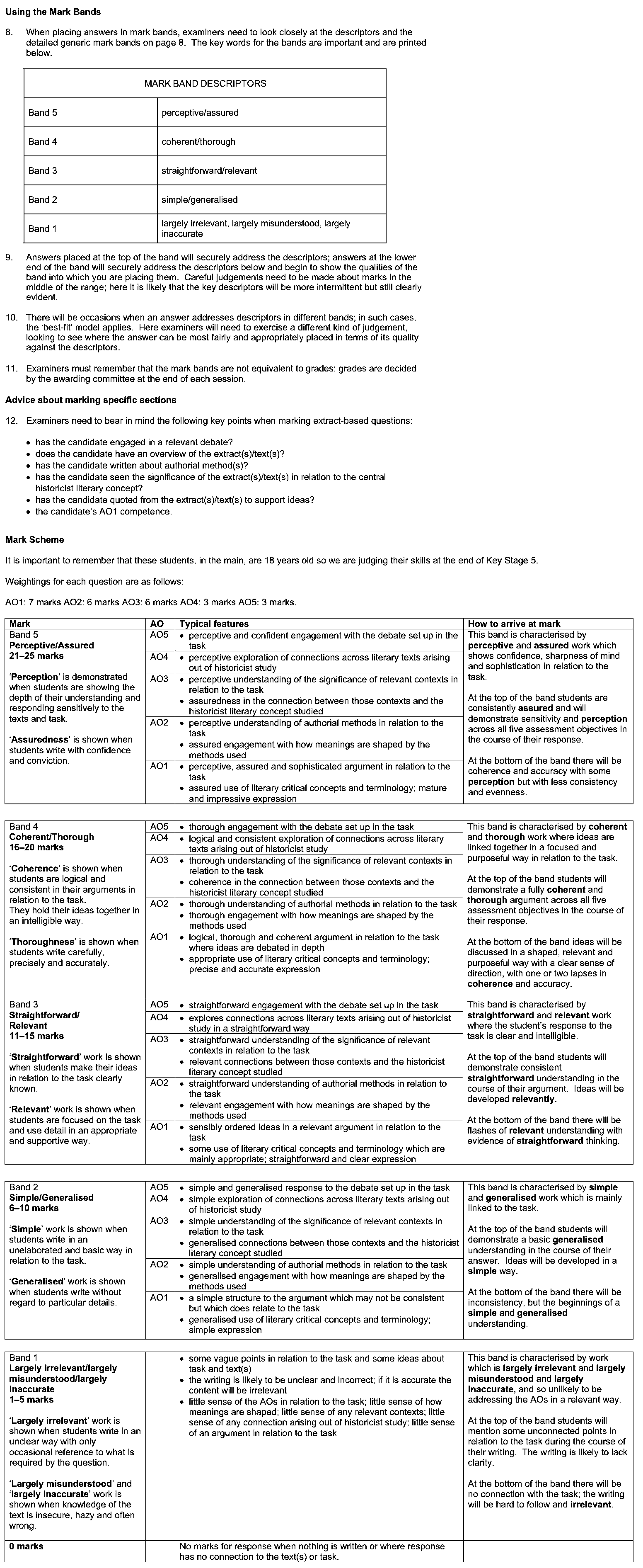
Examiner's comment
Better answers: ● looked at the implications of the title and applied it to a conceptualised understanding of the play as a whole ● used the key word ‘significance’ as a springboard for debate ● chose their illustrative points wisely, and linked them clearly and specifically to the title Less effective answers: ● spelled the dramatist’s name incorrectly in an Open Book examination ● did not address the key word ‘significance’ ● wrote very generally about characters as if they were real and criticised their behaviour in ways that suggested a weak grasp of the contexts of production and reception ● asserted that Williams’ homosexuality automatically meant that he was oppressed and lived in fear, when the most cursory knowledge of the dramatist’s life would strongly suggest otherwise ● wrote about elements of Williams’ biography, eg the tragic history of his sister Rose, and made unsubstantiated and simplistic assertions irrelevant to the text and task ● wrote inaccurately about the contexts of the play ● failed to write about elements of genre and performance ● tended to ‘go through’ a checklist of minor lexical and even grammatical points that did not focus on Williams as a dramatist.
Notes from the mark scheme and report
- Focus: title
- Open book, no extract
- credited: the streetcar route from Desire to Cemeteries via Elysian Fields as Blanche's tragic journey, the rattle-trap streetcar, Blanche and Stella's use of the metaphor in Scene 4 ('it brought me here'), desire as destructive force, New Orleans and post-war change
- weaker answers ignored 'significance', treated characters as real, or made unsubstantiated biographical claims about Williams