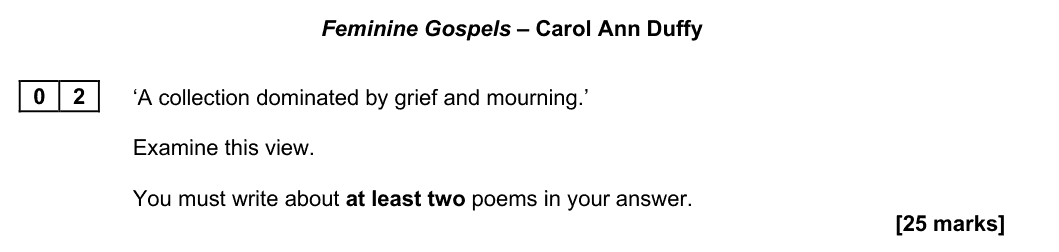
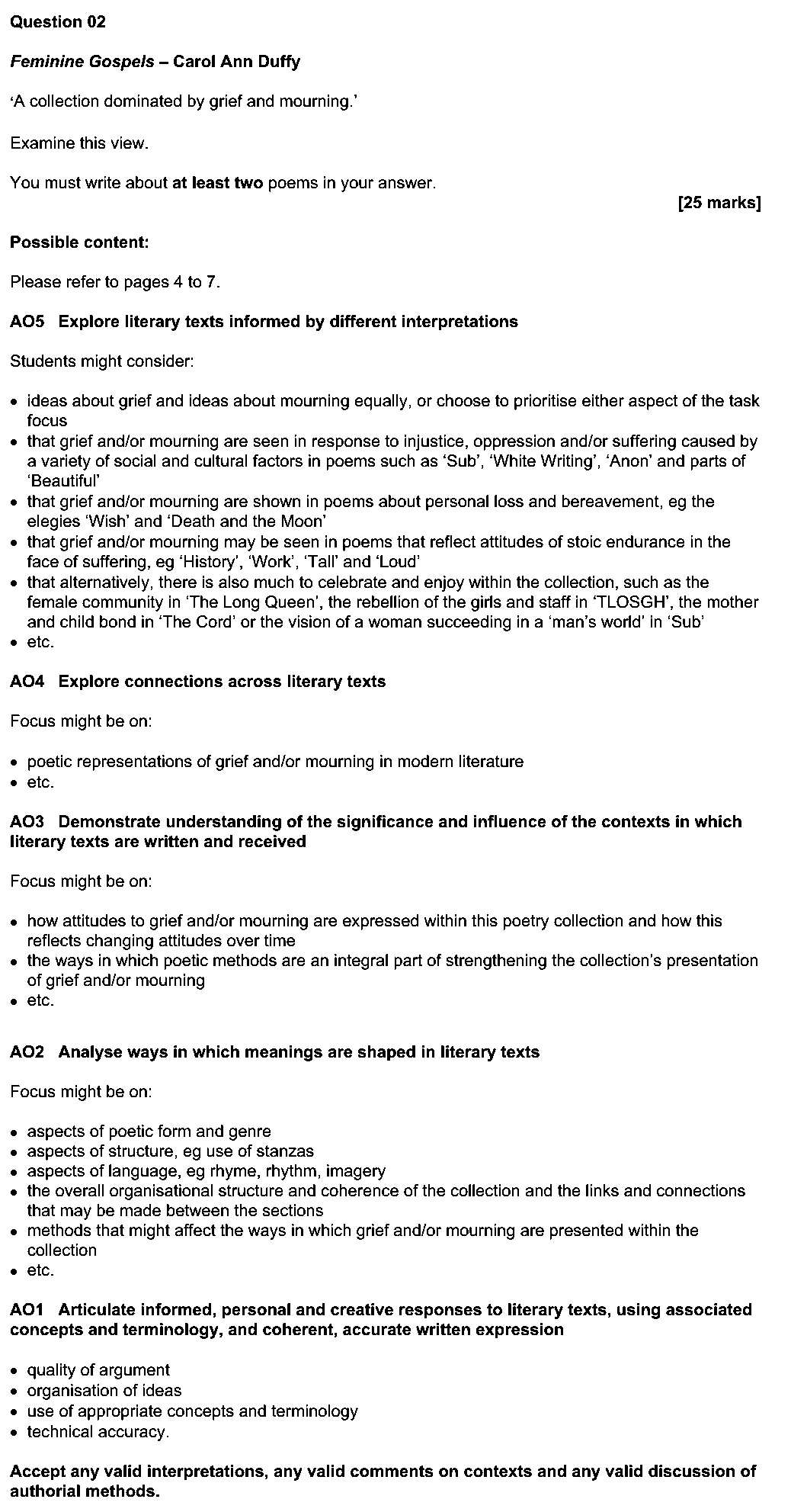
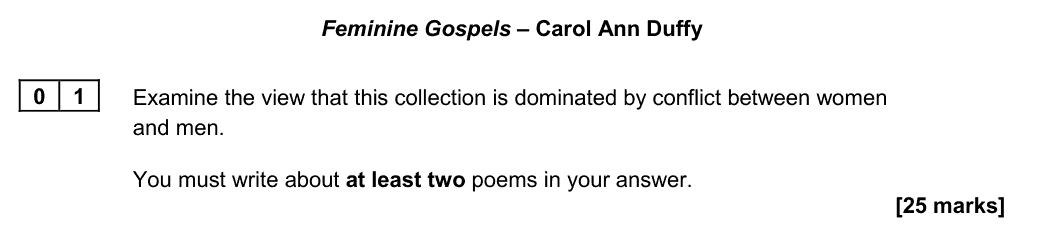
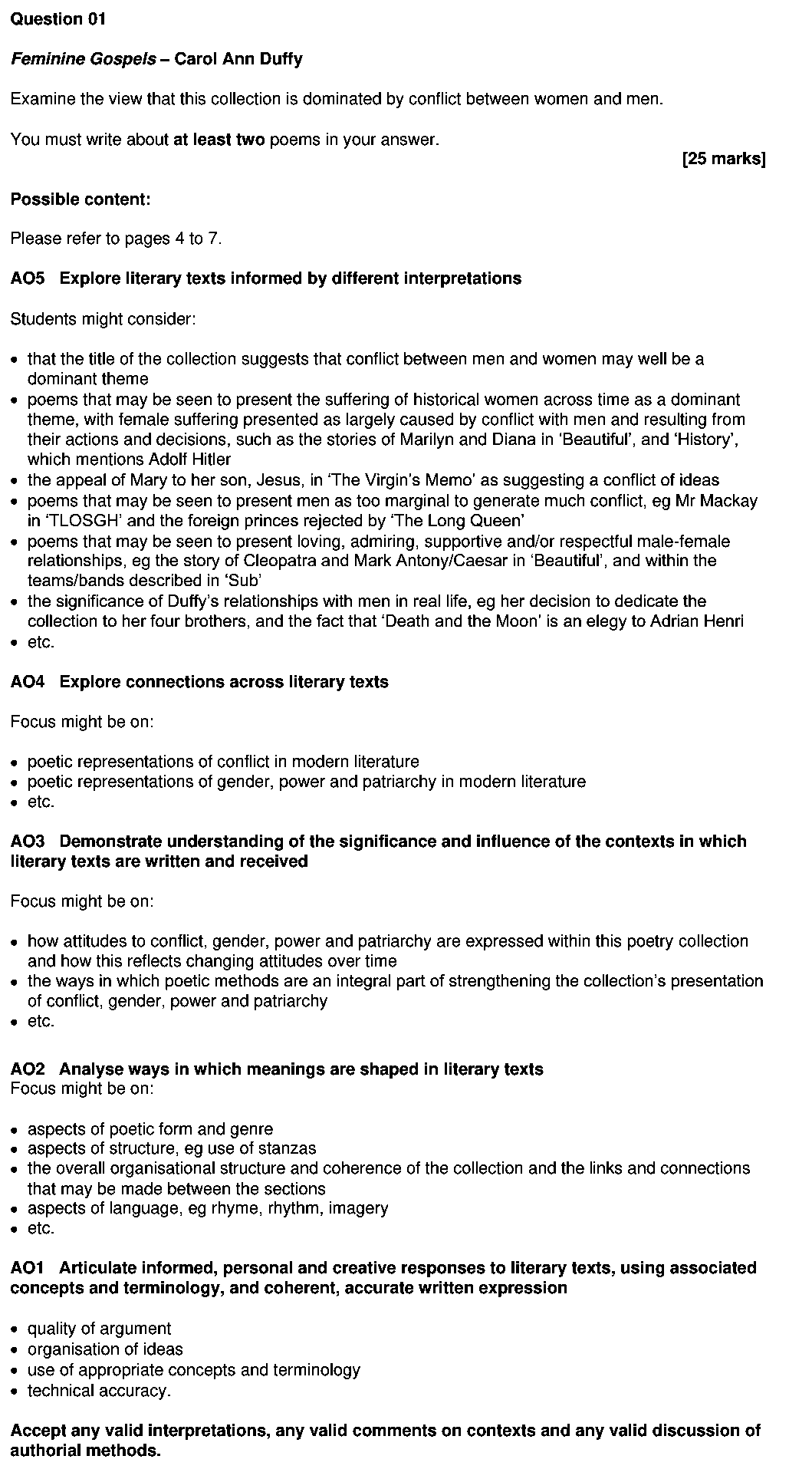
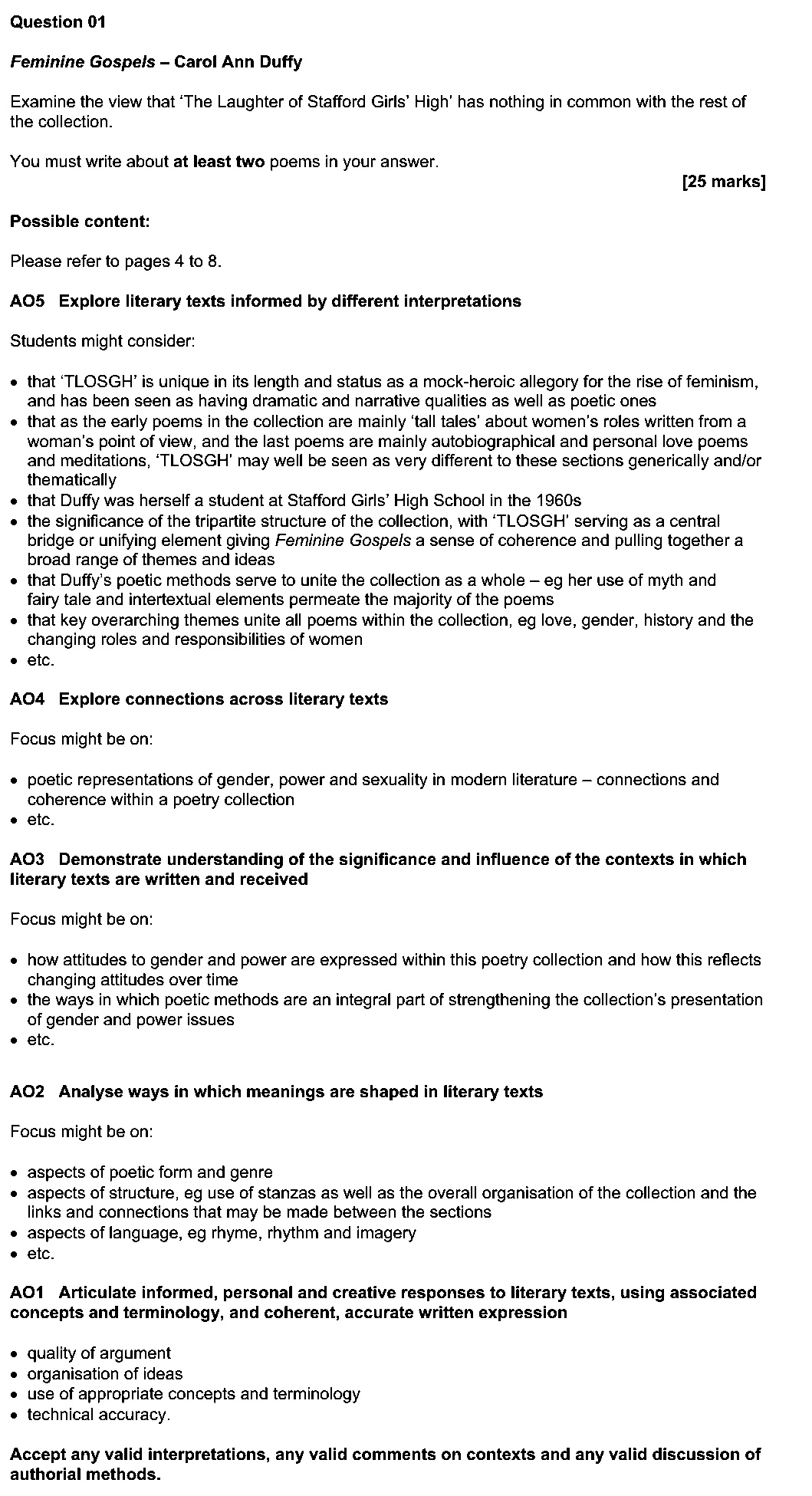
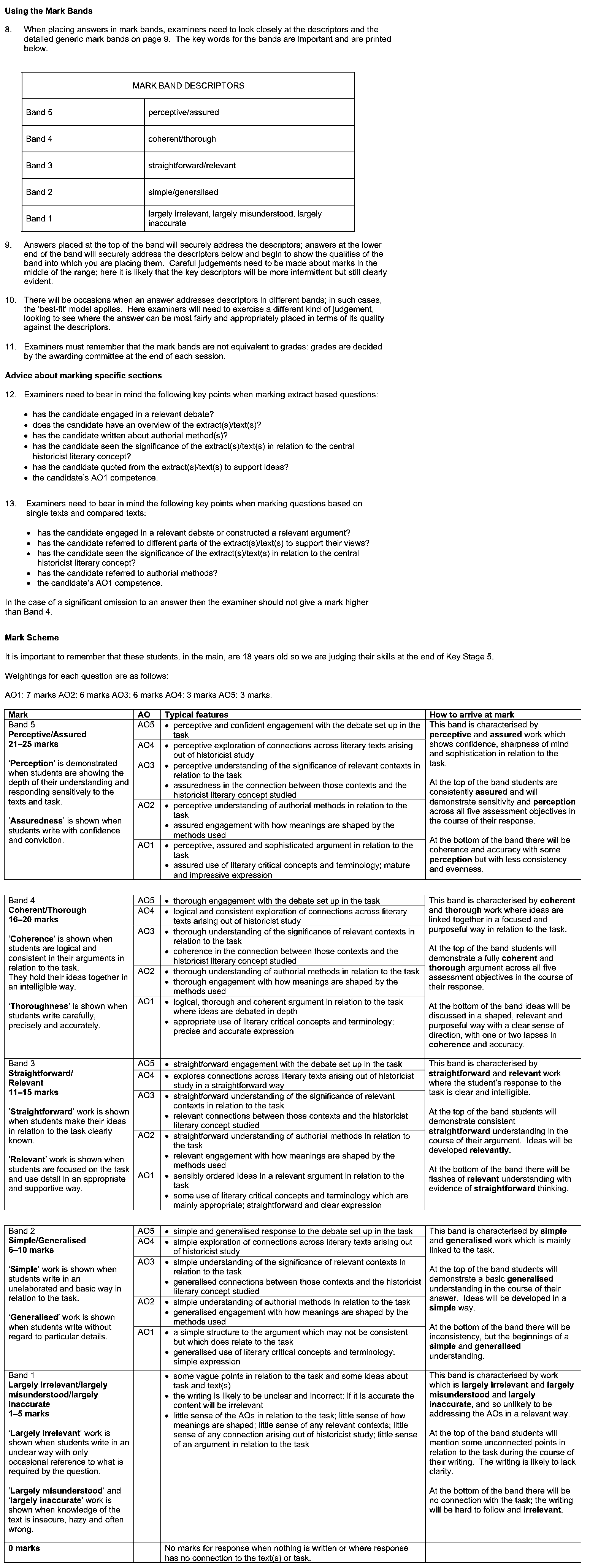
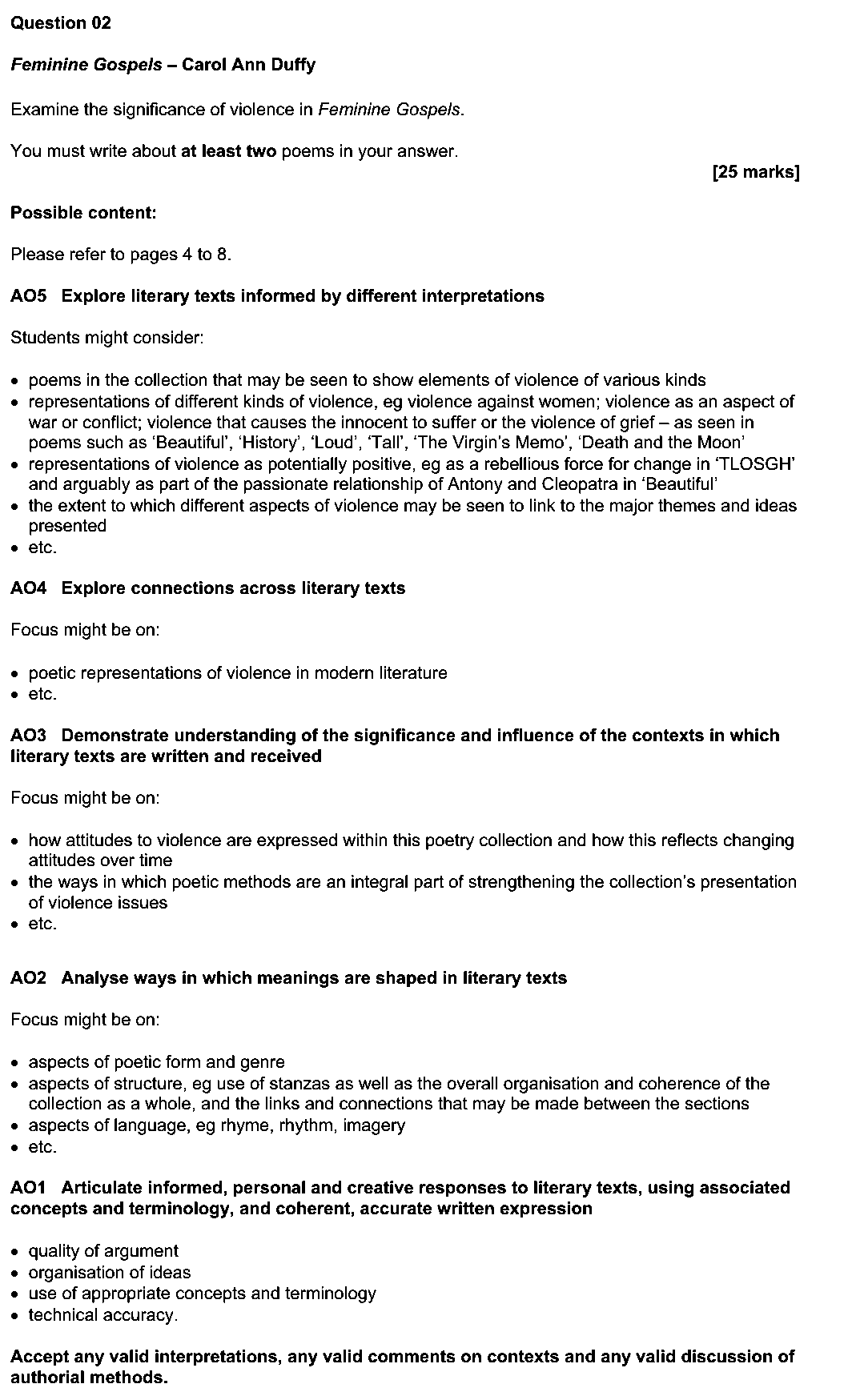
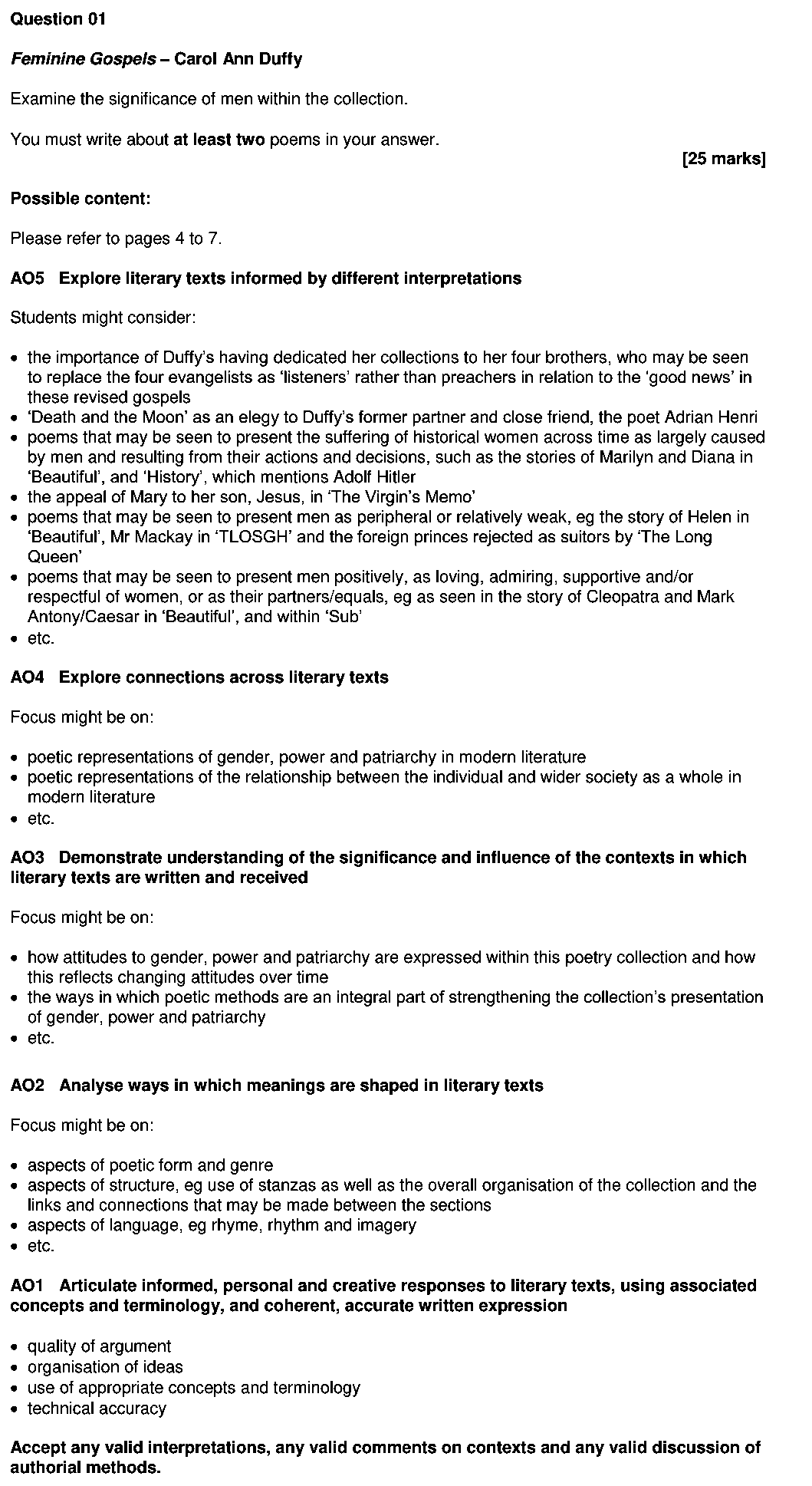
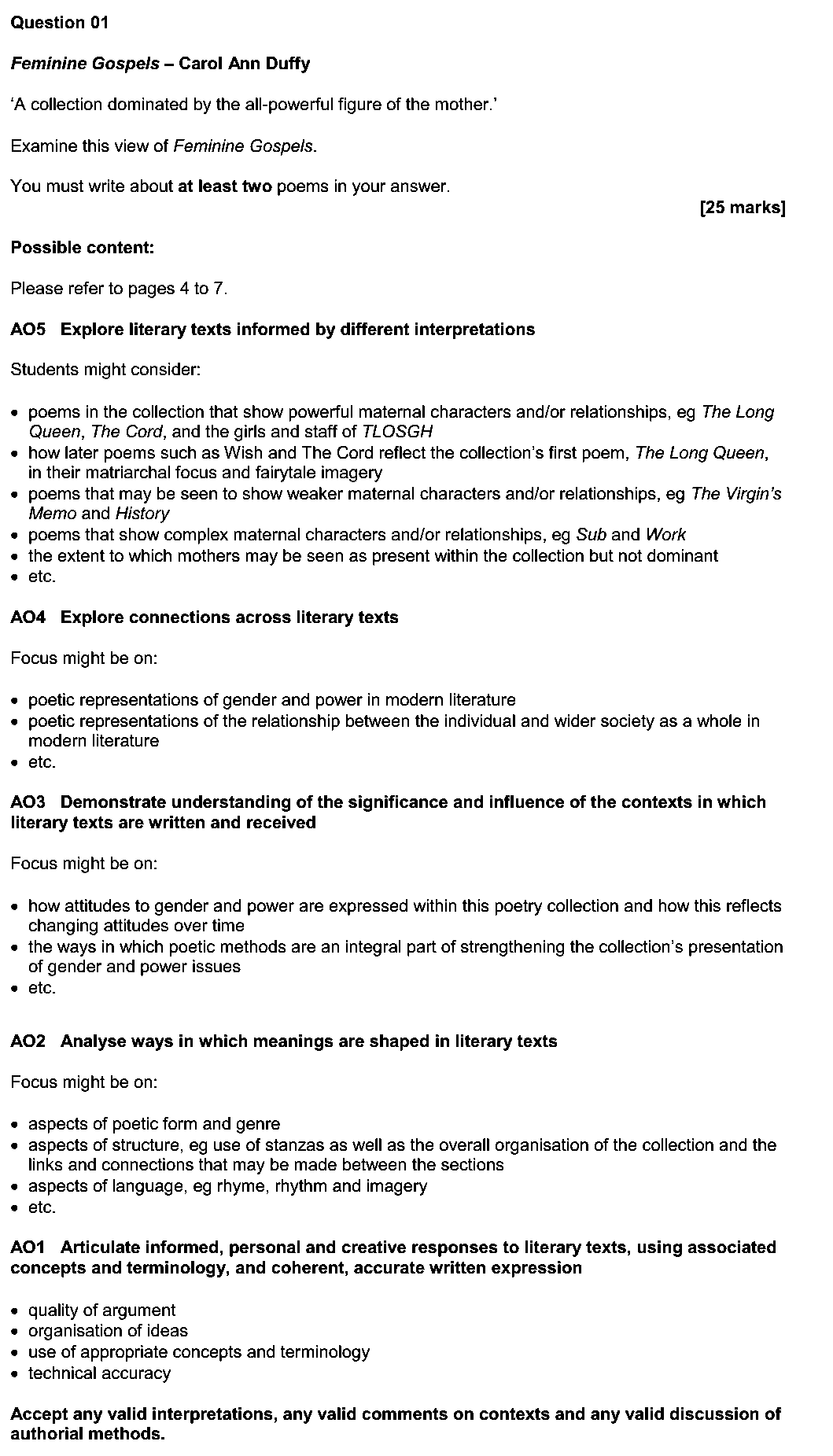
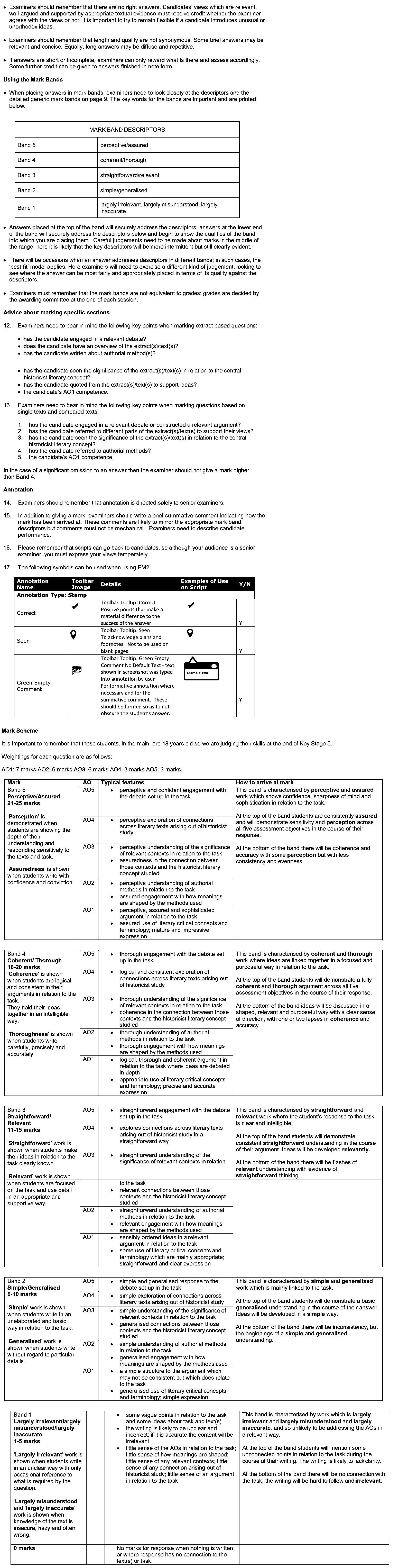
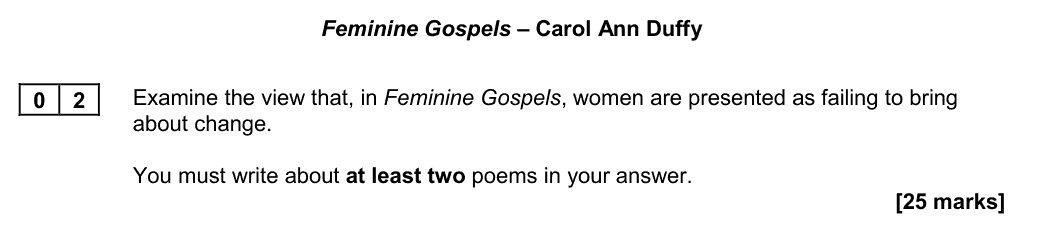
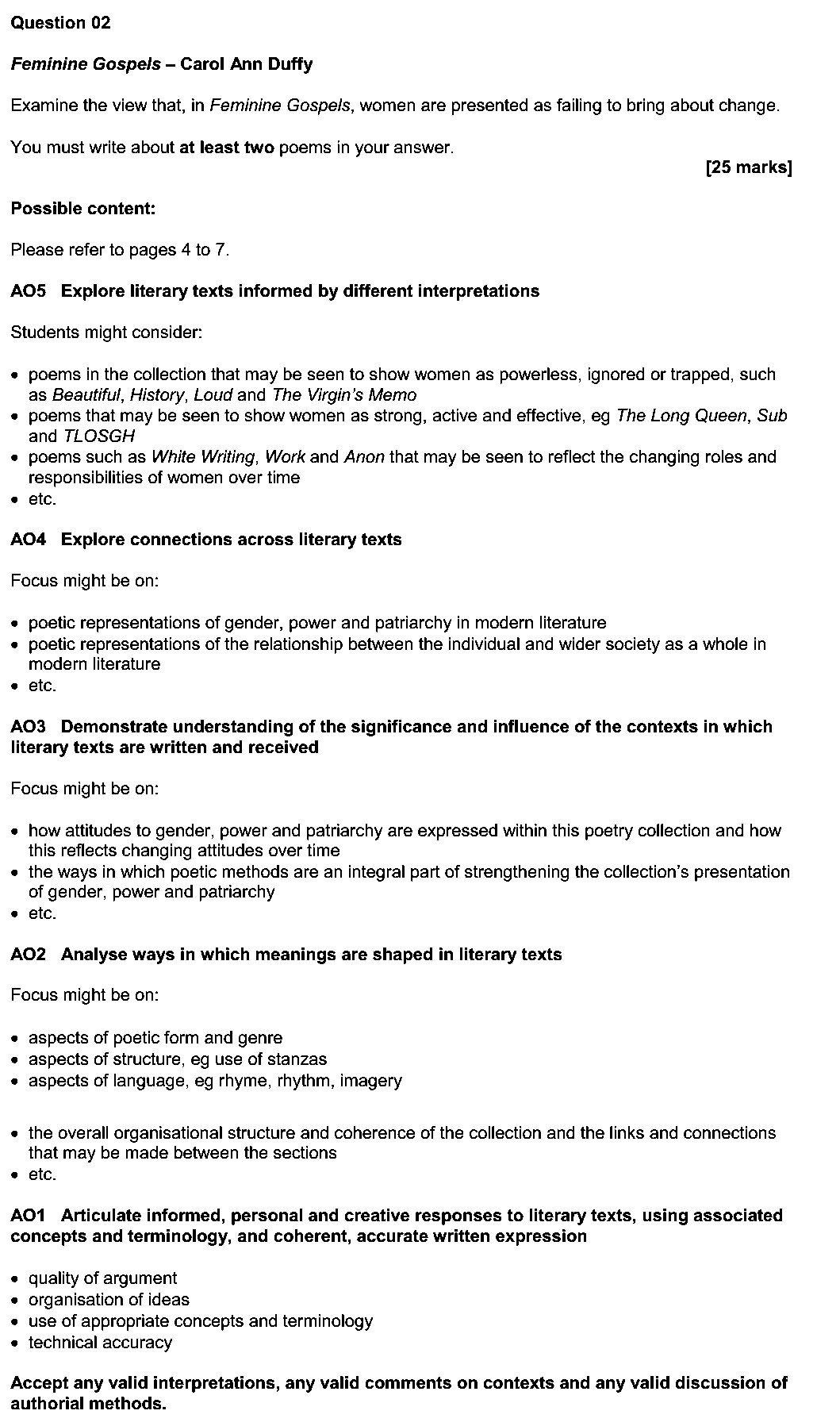
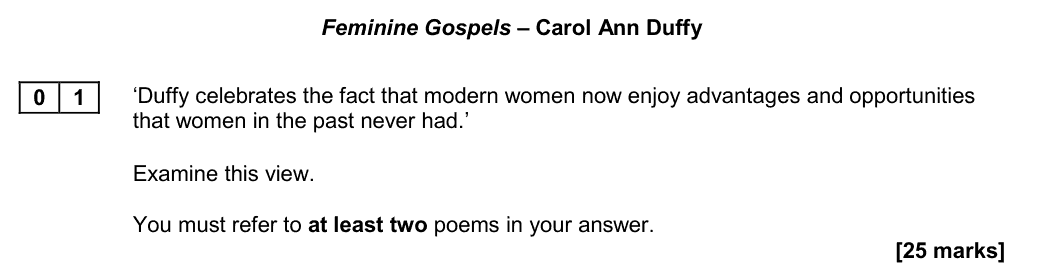
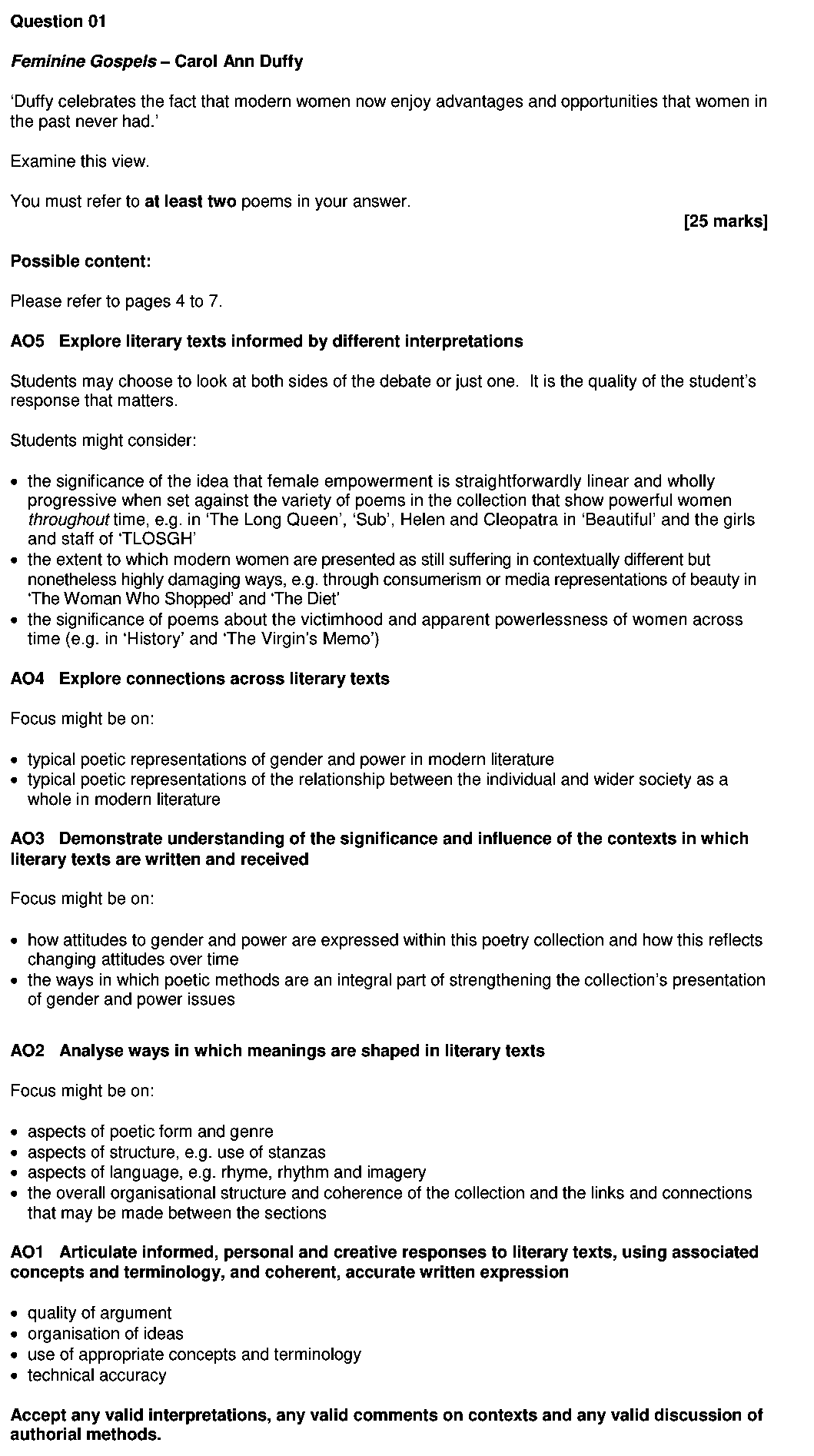
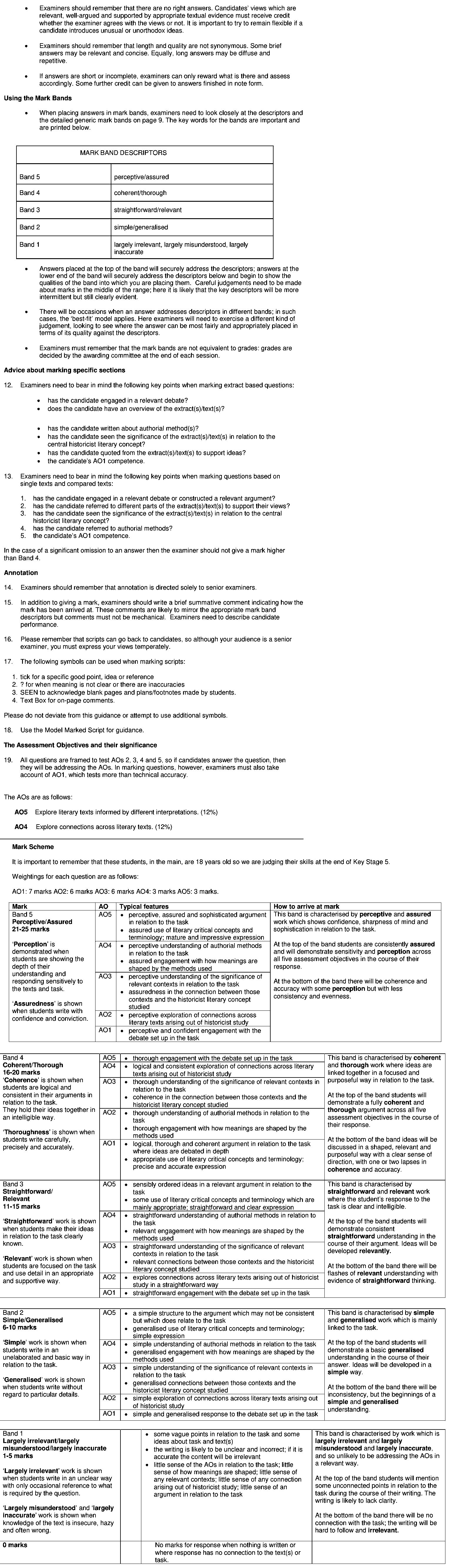
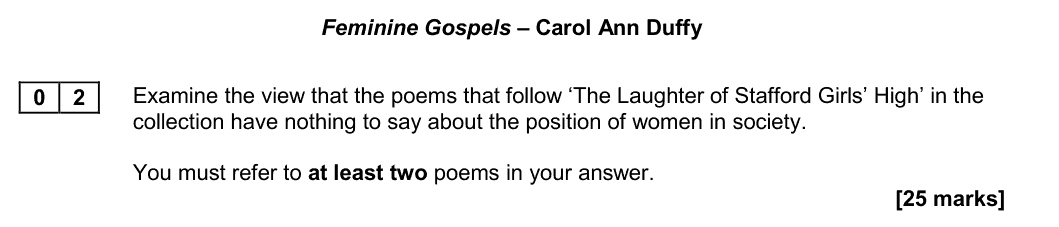
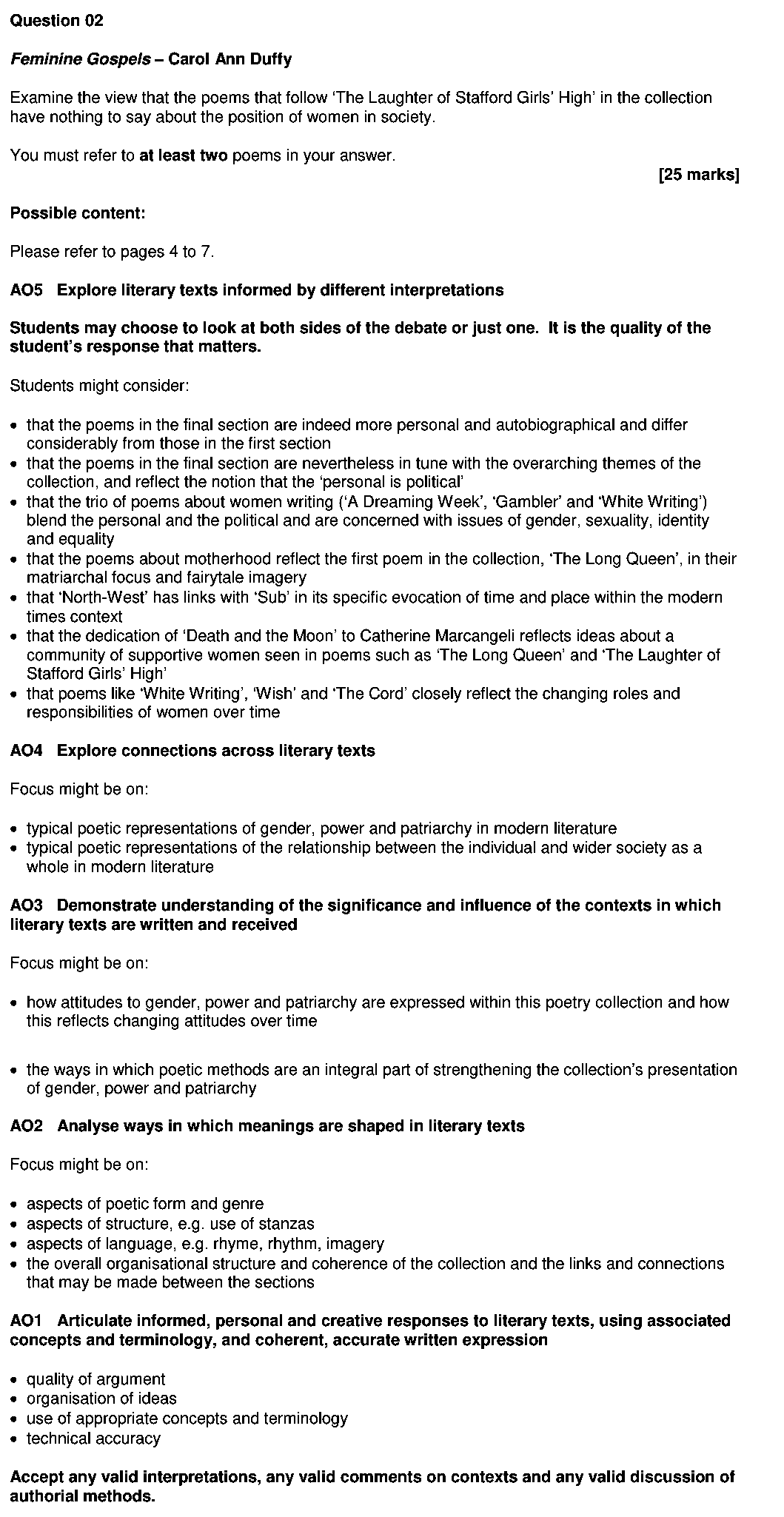
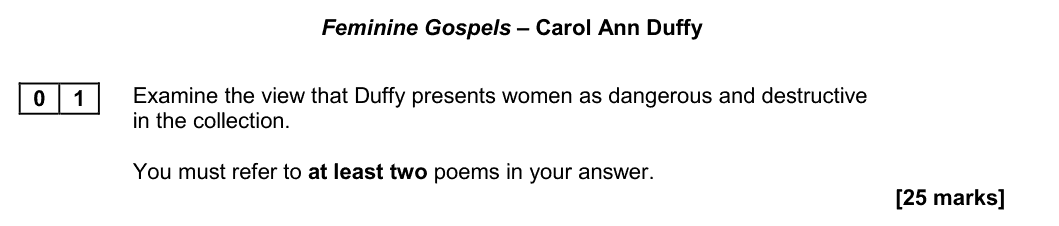
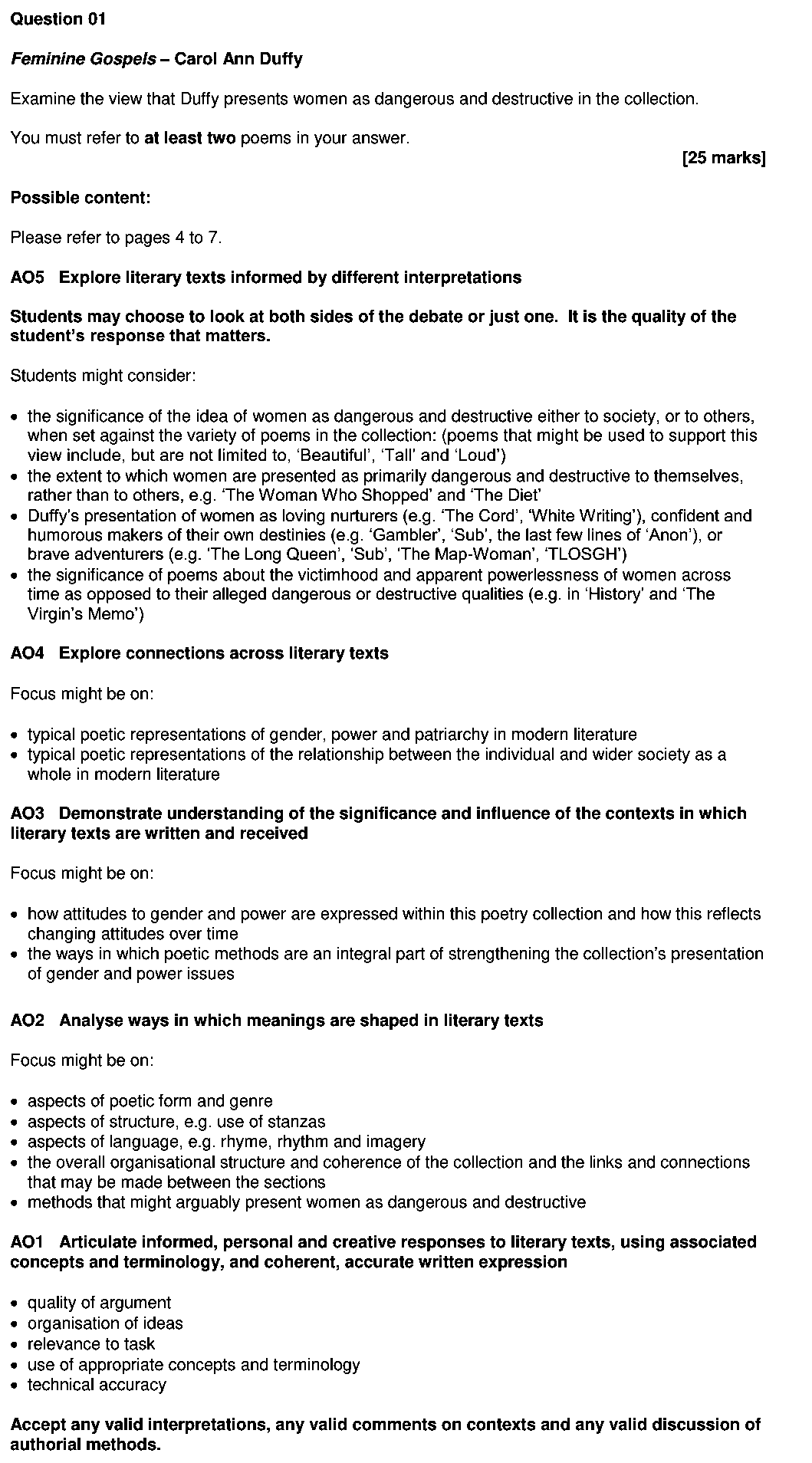
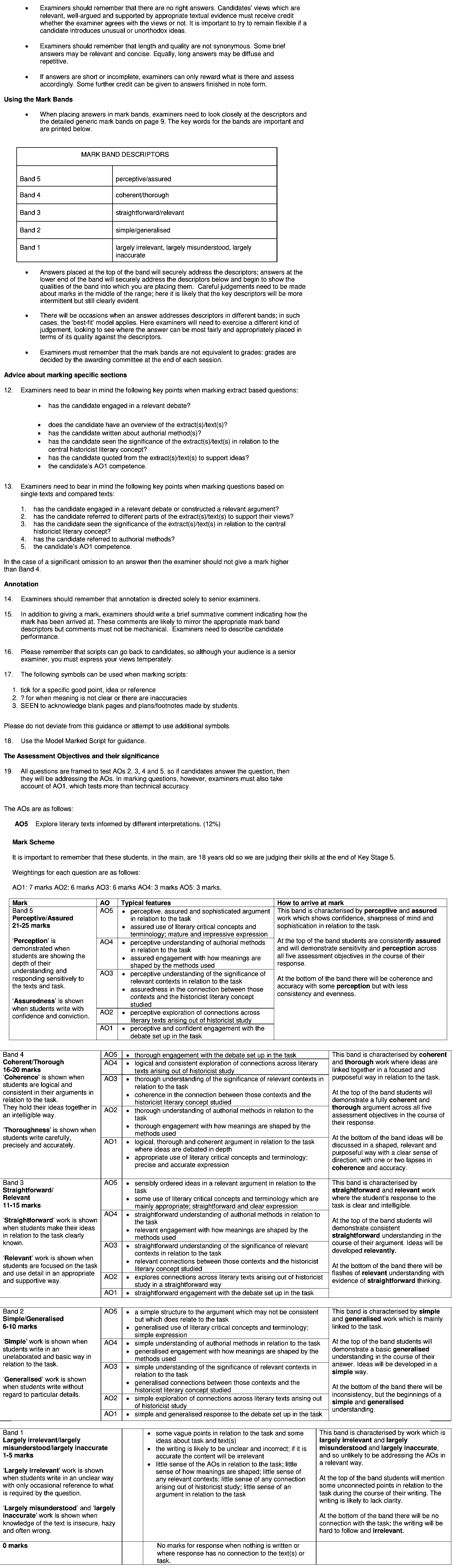
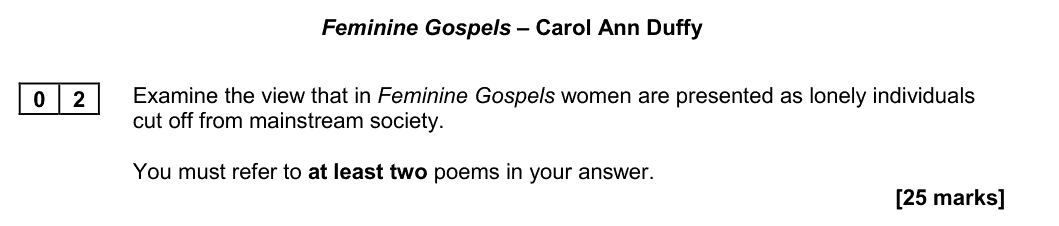
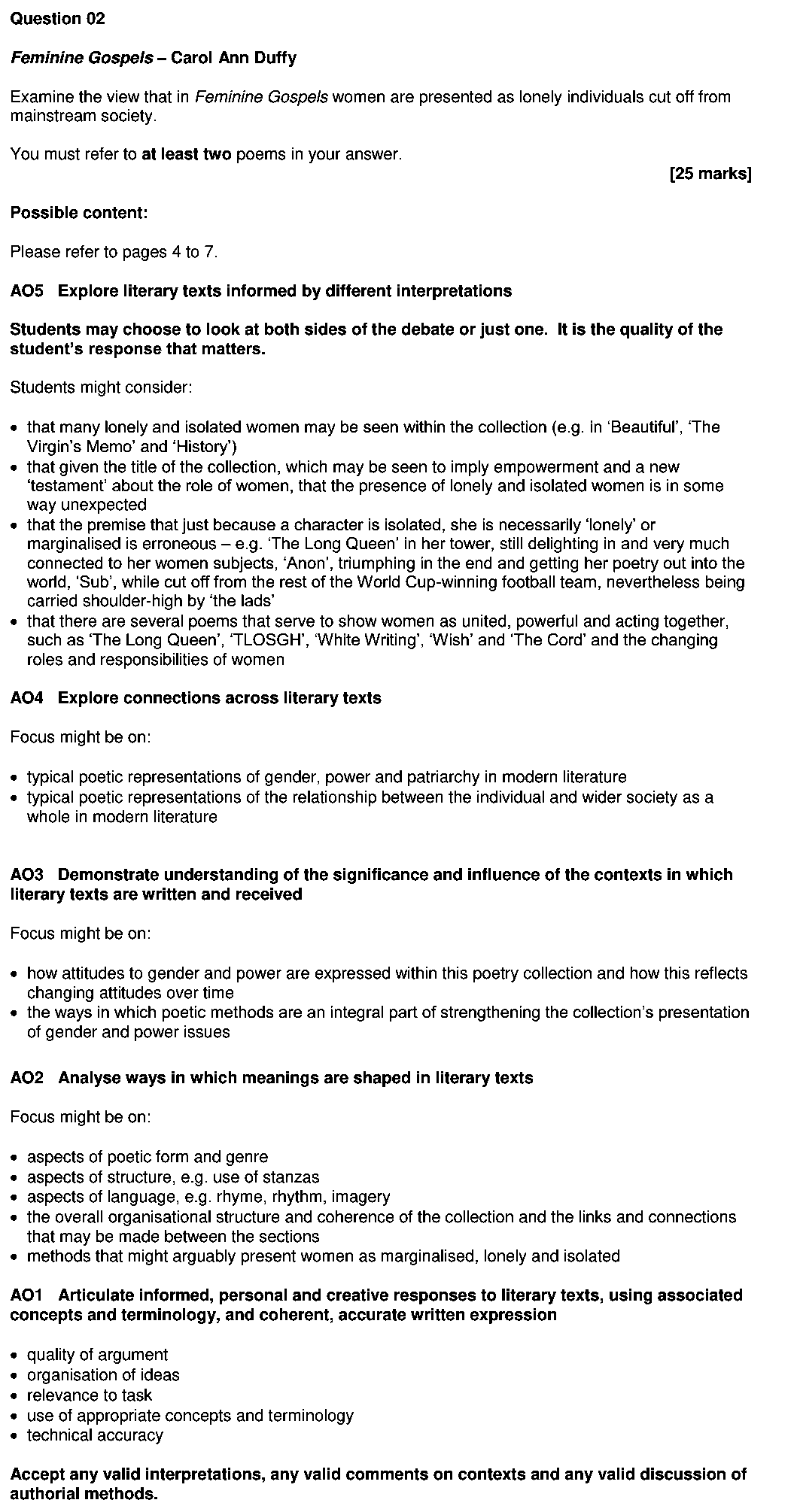
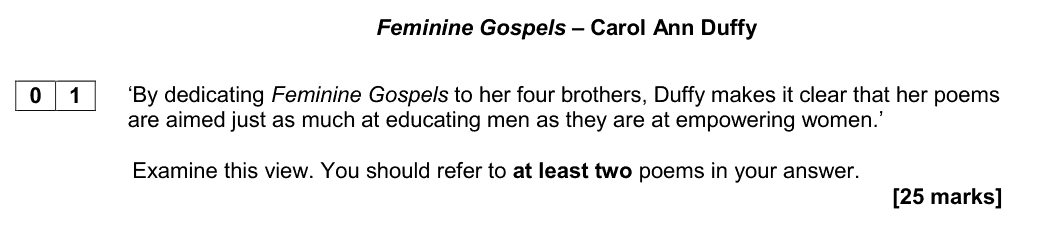
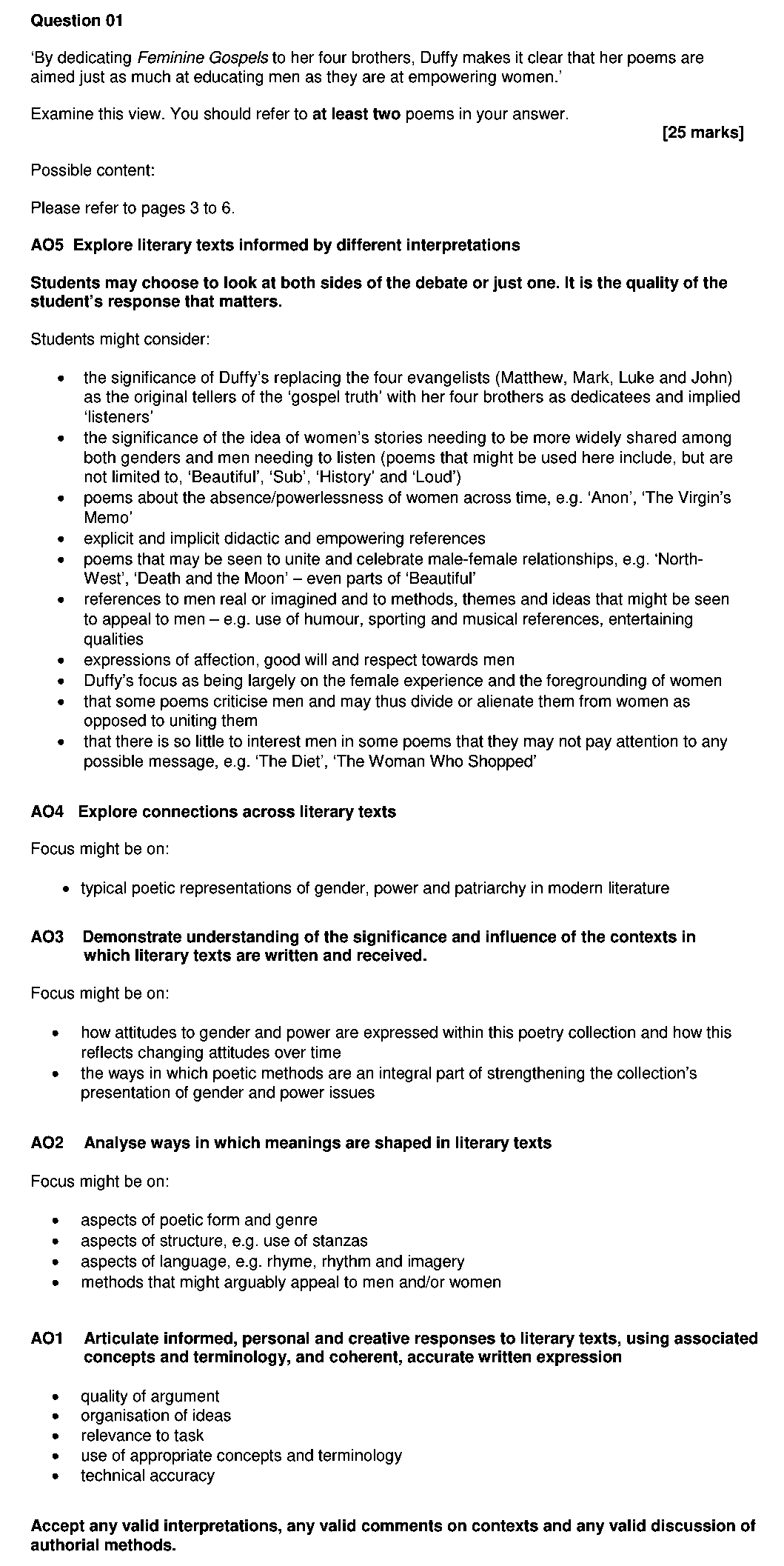
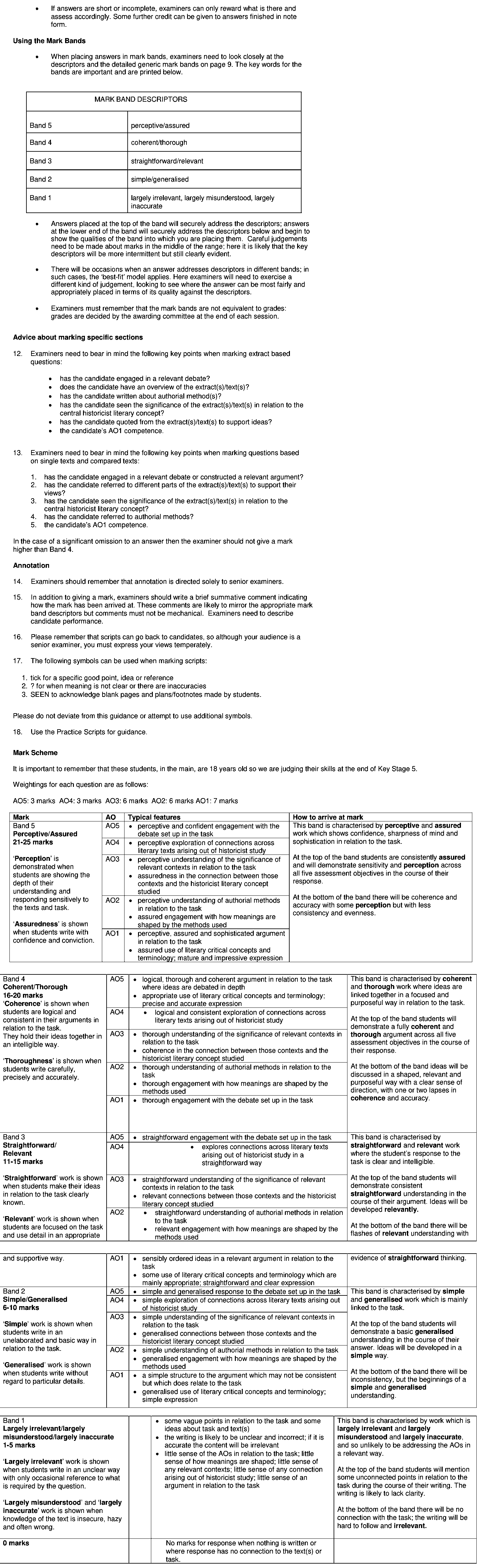
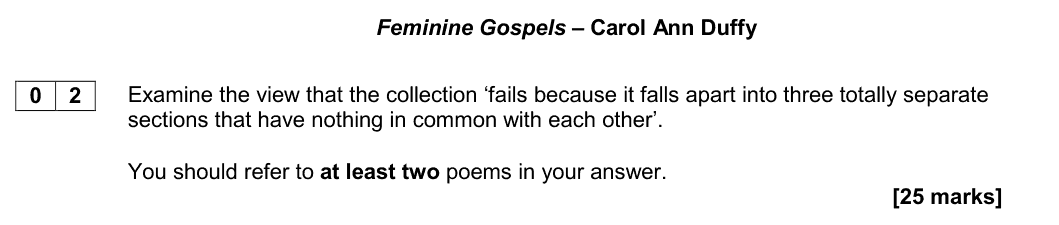
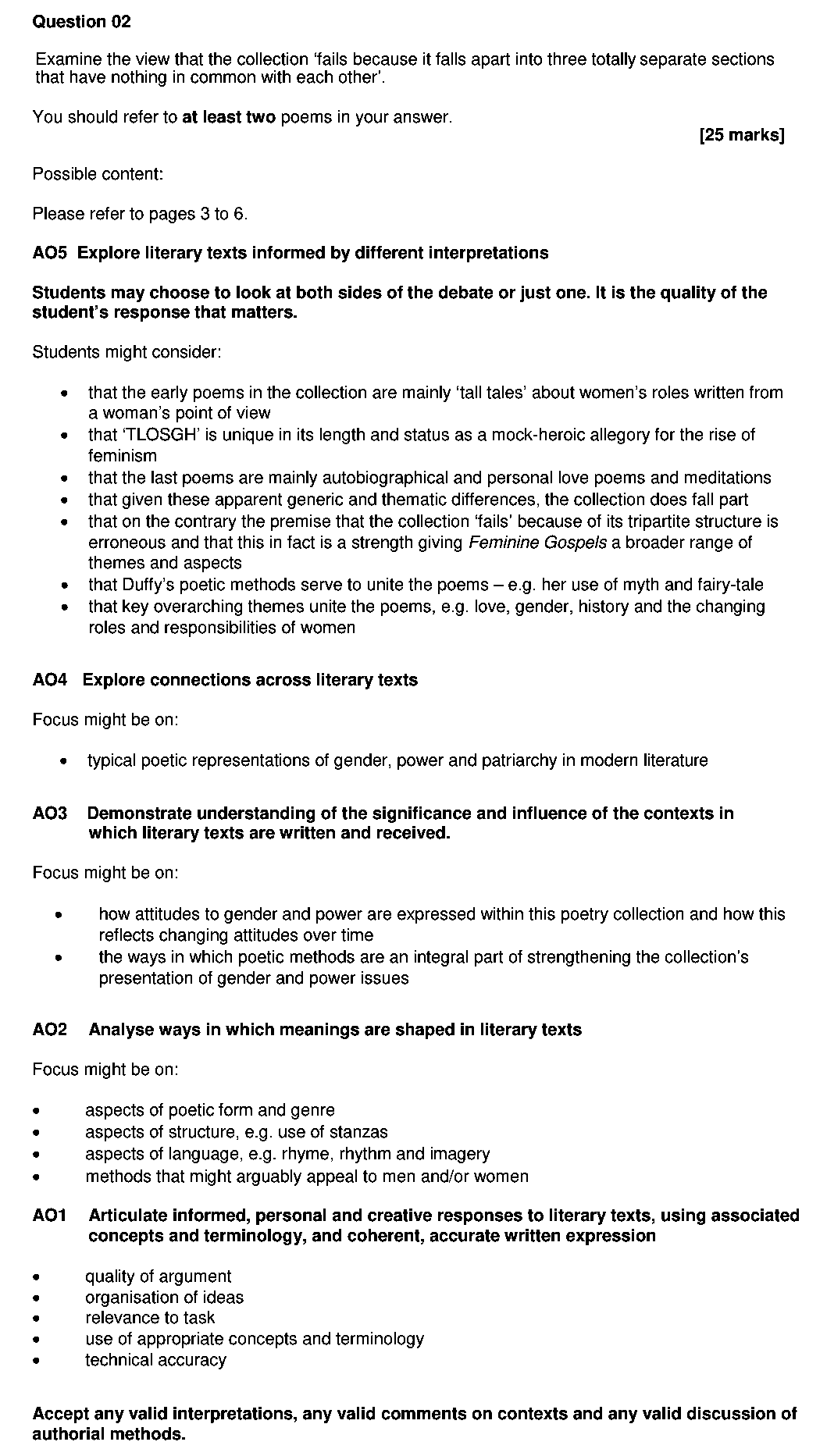
Mark scheme, including the levels and indicative content
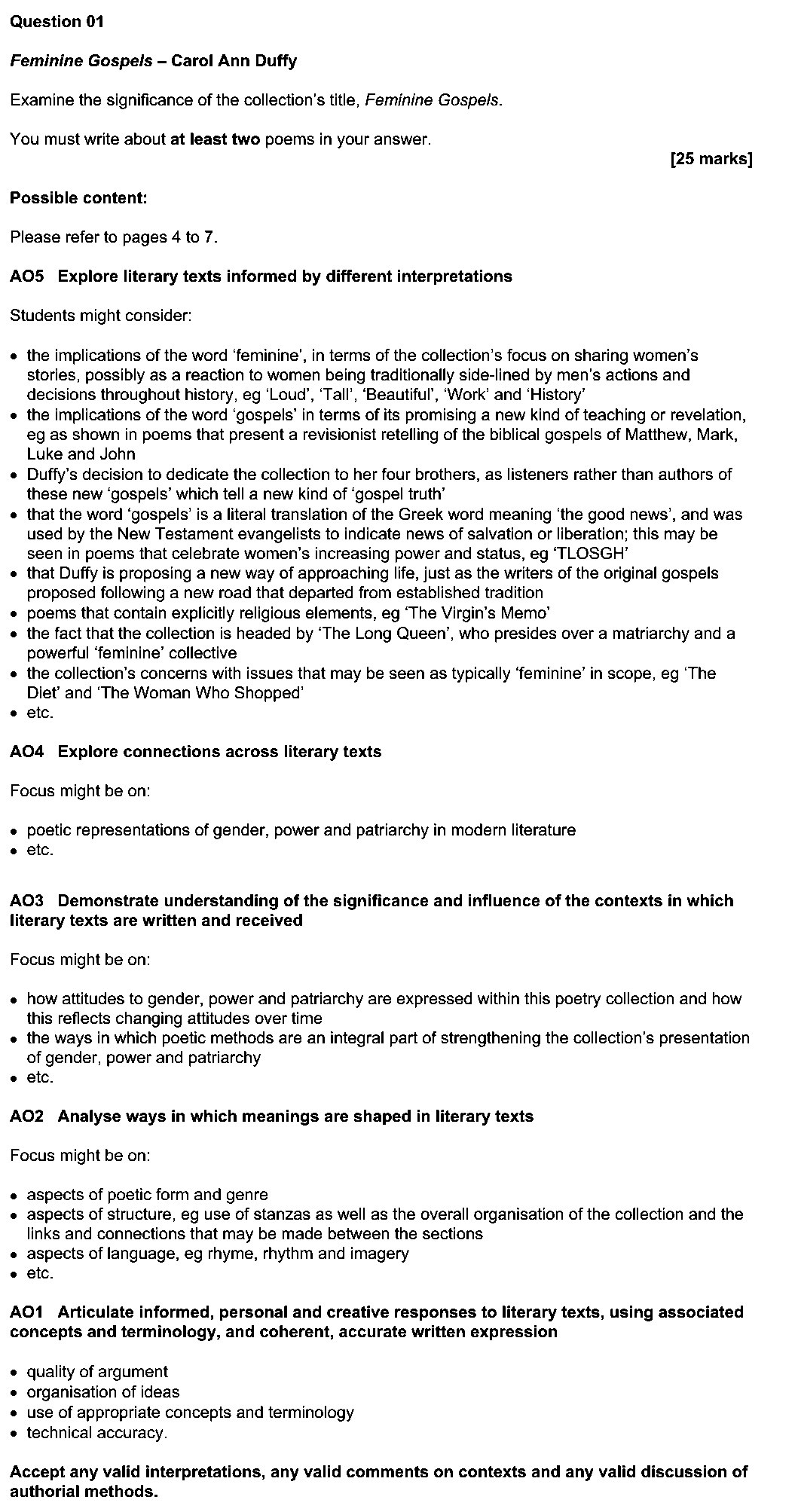
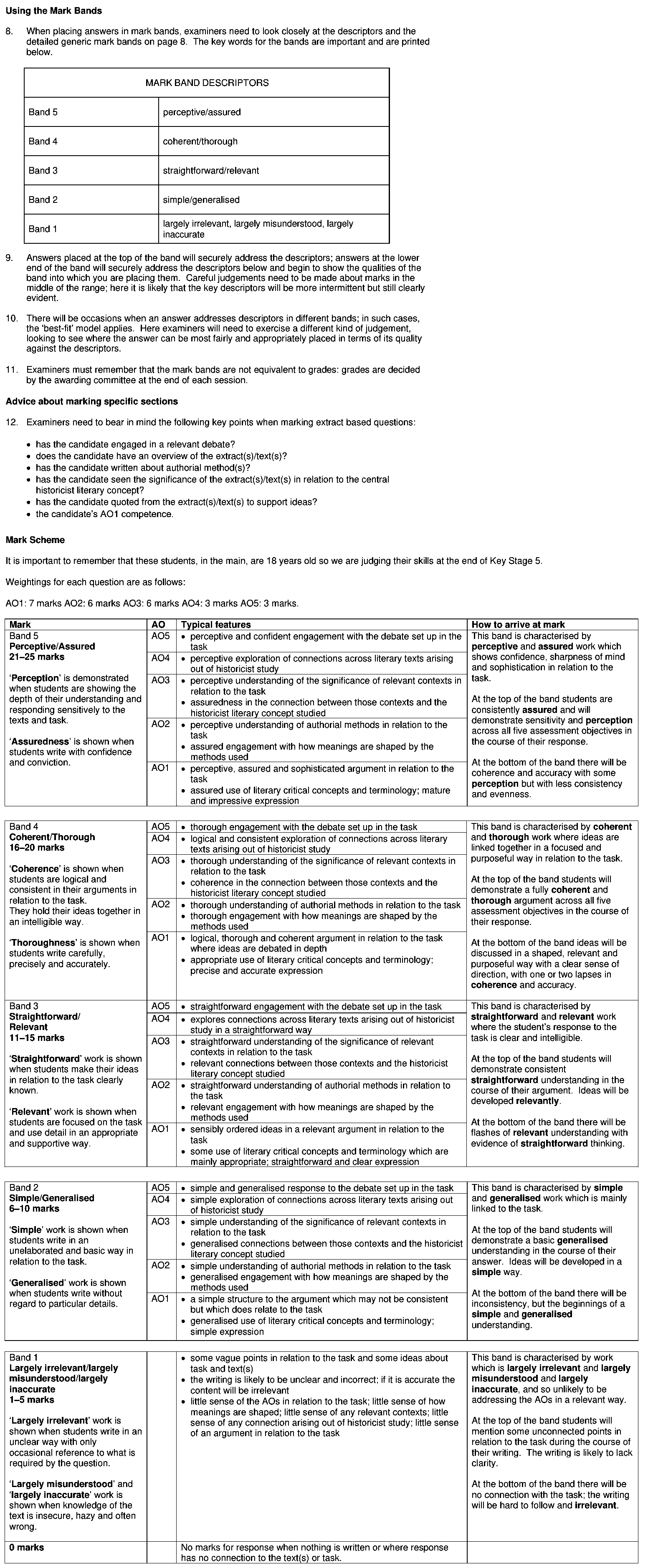
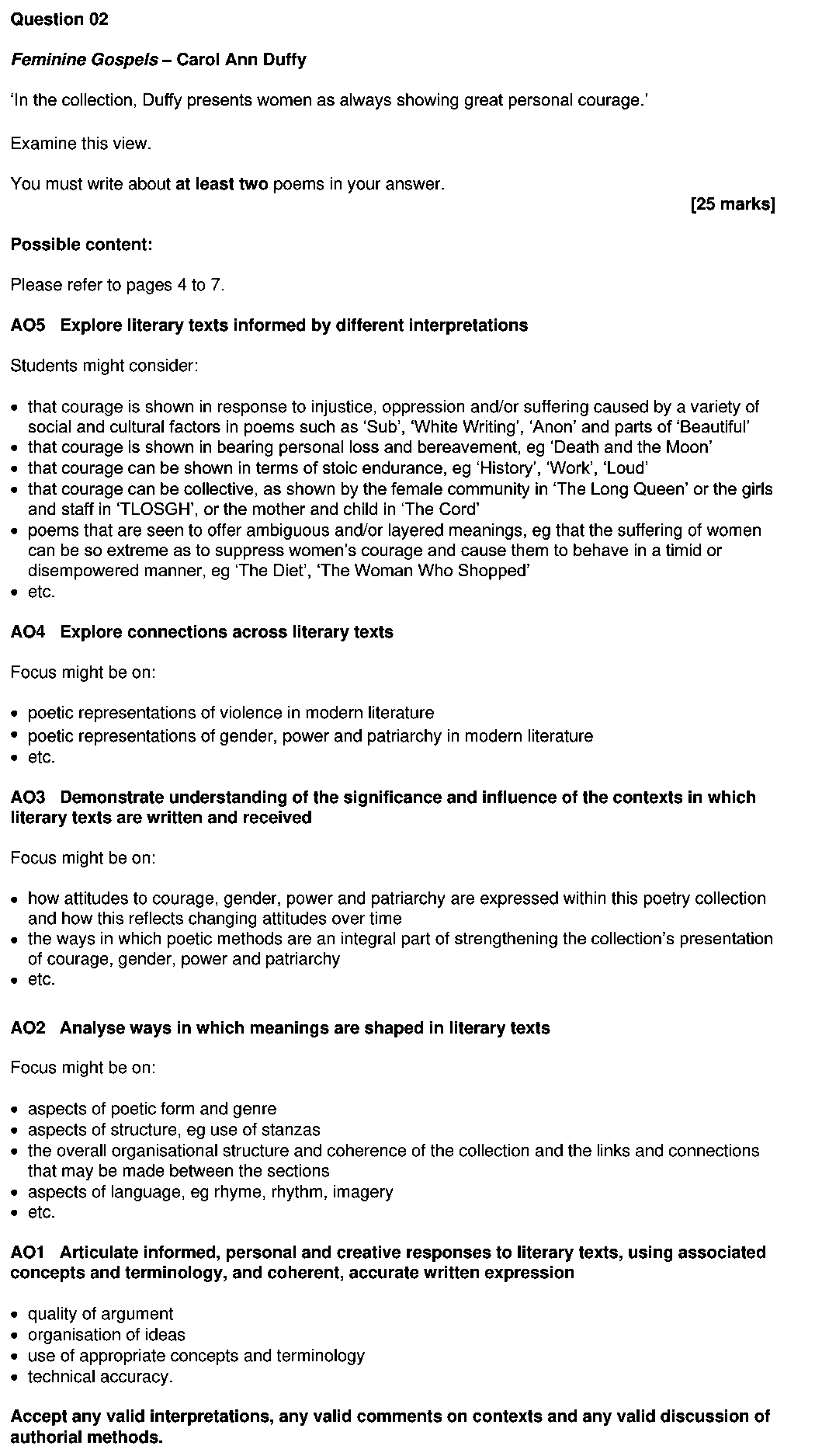
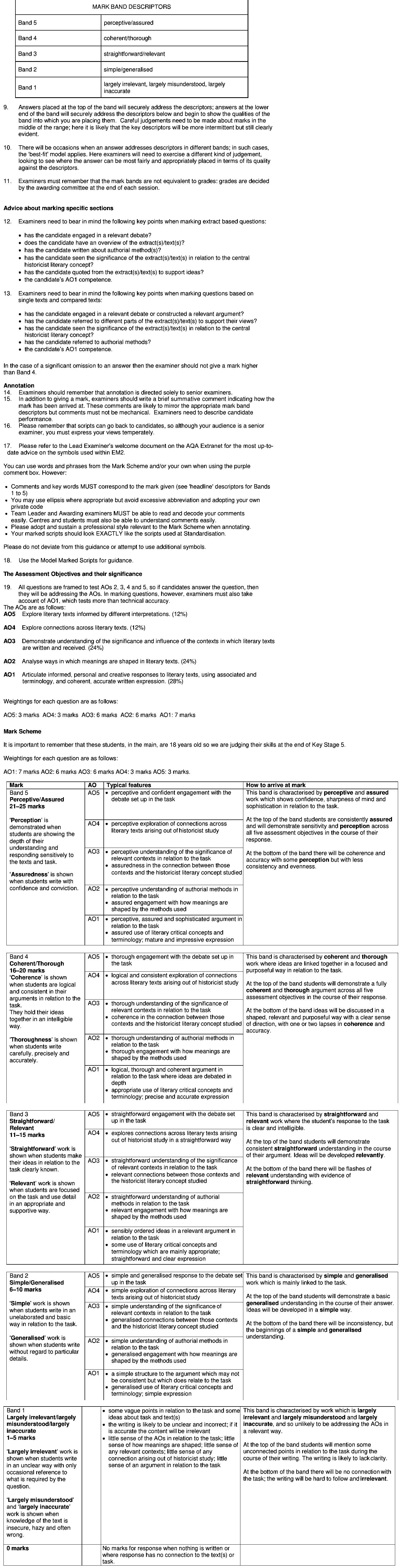
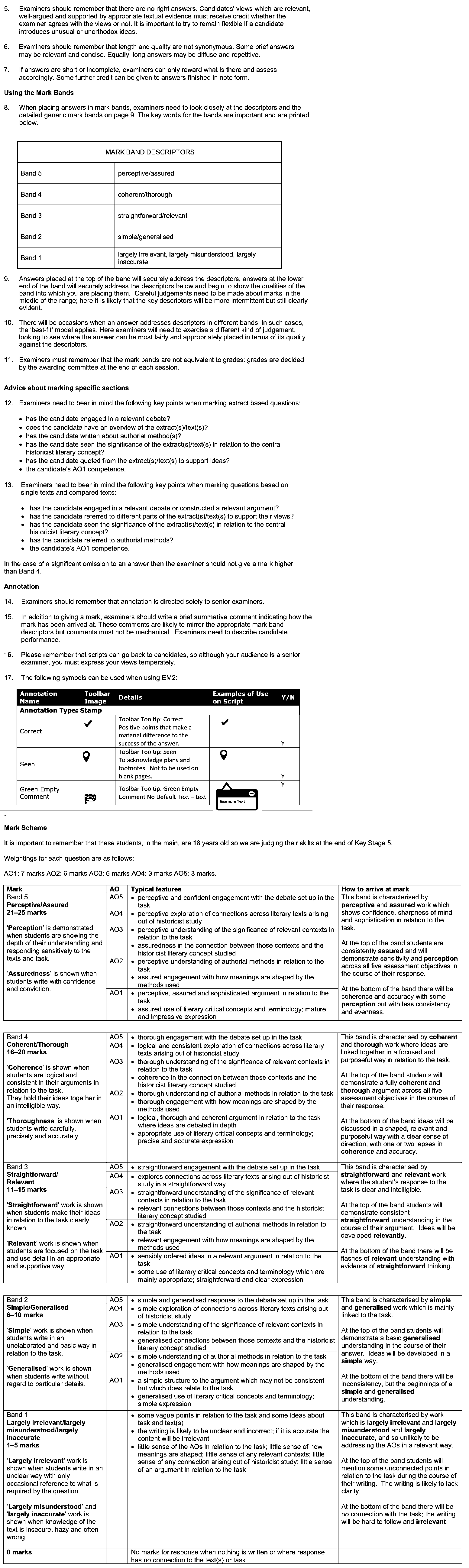
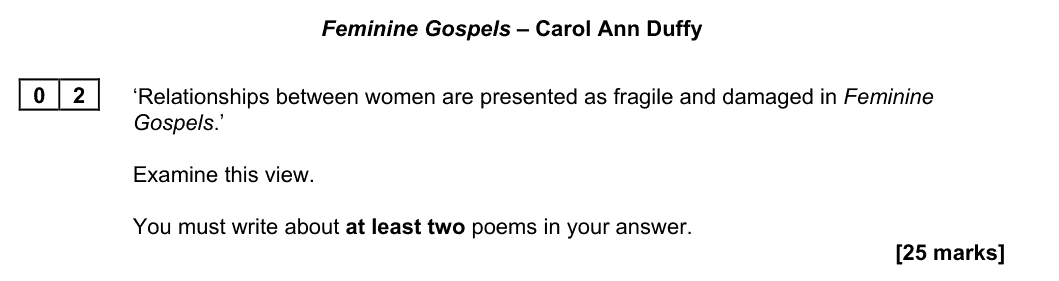
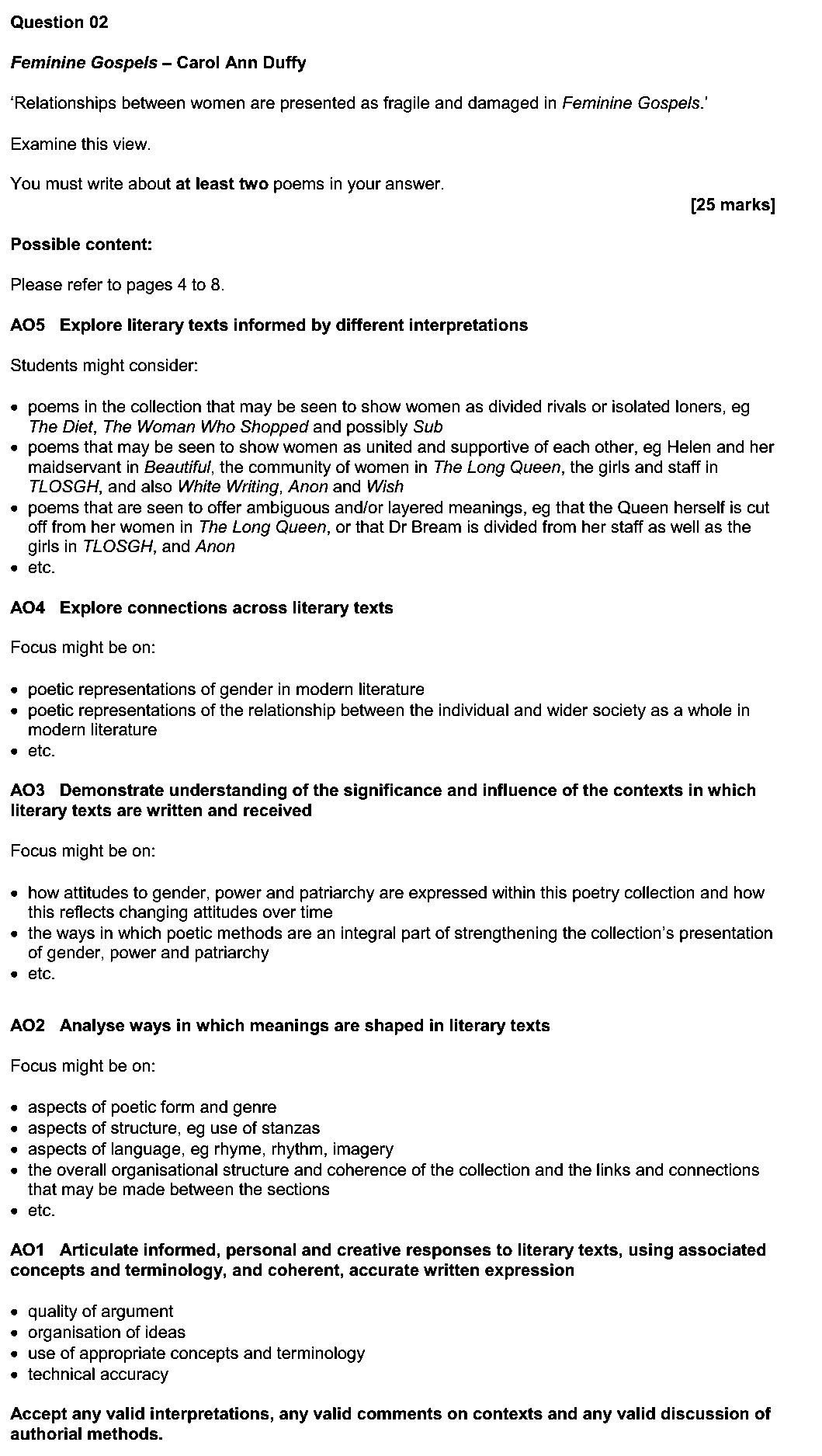
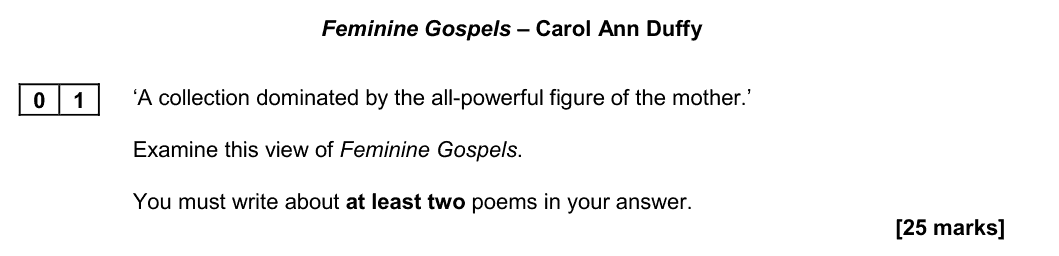
The general mark scheme (assessment objectives and bands)
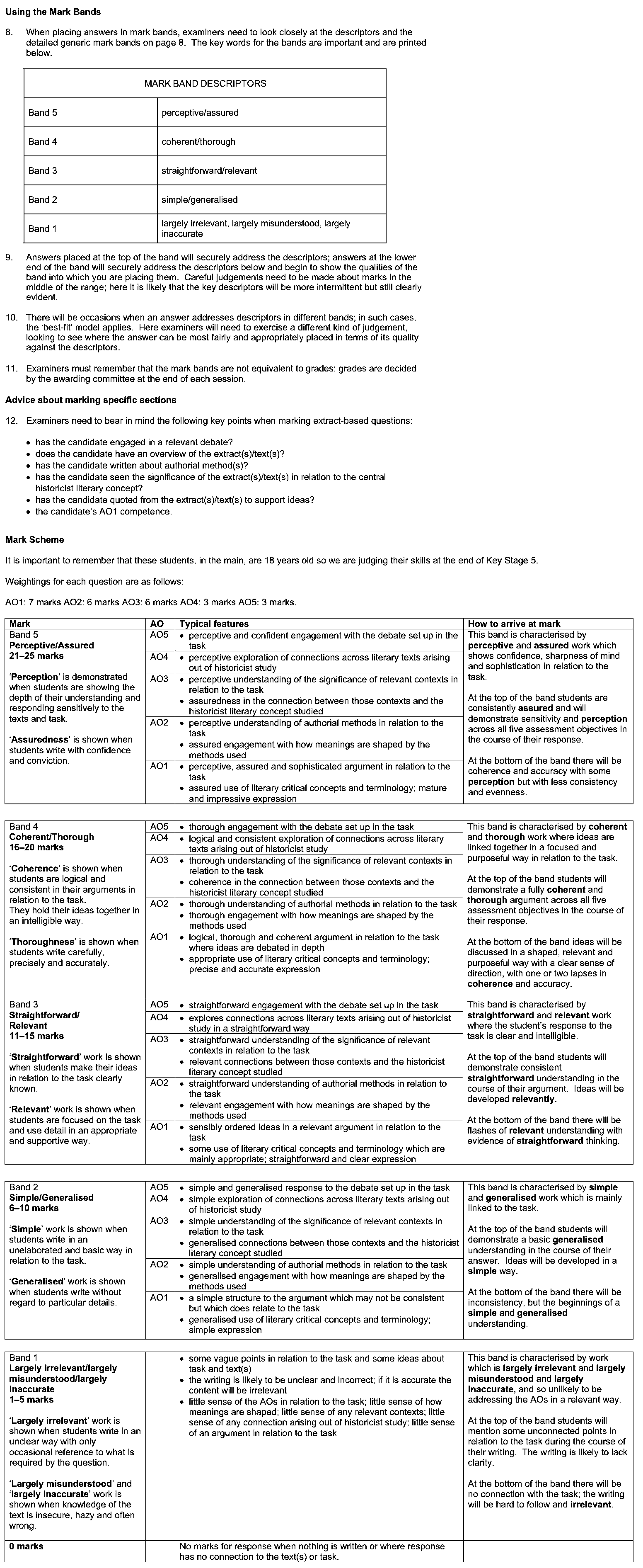
Examiner's comment
Both poetry set texts are collections, not anthologies. Some students used these terms interchangeably, showing a failure to understand that poets plan, design and structure their texts just as carefully as novelists and dramatists do. These collections are coherent bodies of work put together by the poets themselves; anthologies are much broader representative selections put together by editors. The implications here are profound in terms of what students can say about the overall design and purpose of Feminine Gospels and Skirrid Hill. Better answers: ● looked at the implications of the title and applied it to a conceptualised understanding of the collection as a whole ● used the key word ‘significance’ as a springboard for debate ● chose their illustrative poems wisely, and linked them clearly and specifically to the title Less effective answers: ● spelled the poet’s name and/or the collection’s title incorrectly in an Open Book examination ● referred to the collection as an ‘anthology’ ● wrote about poems in a simplistic, assertive or descriptive manner without linking the discussion to the task ● ‘went through’ the chosen poems very generally, and often at great length, before claiming ‘so this shows …’ in an abrupt and unconvincing final sentence ● used a generalised ‘checklist’ approach which isolated minor lexical and even grammatical points that were then stated to ‘prove’ the given view correct or incorrect.
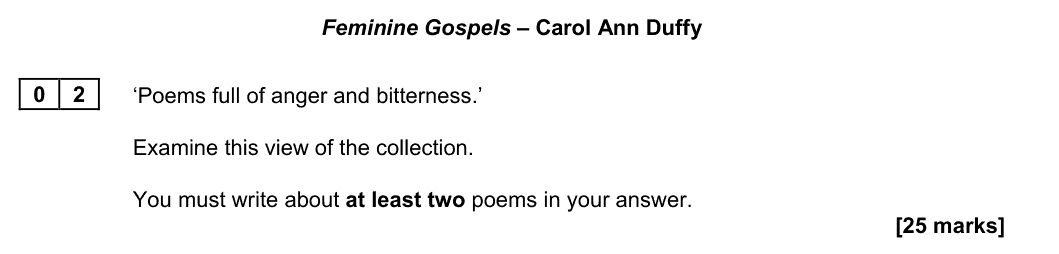
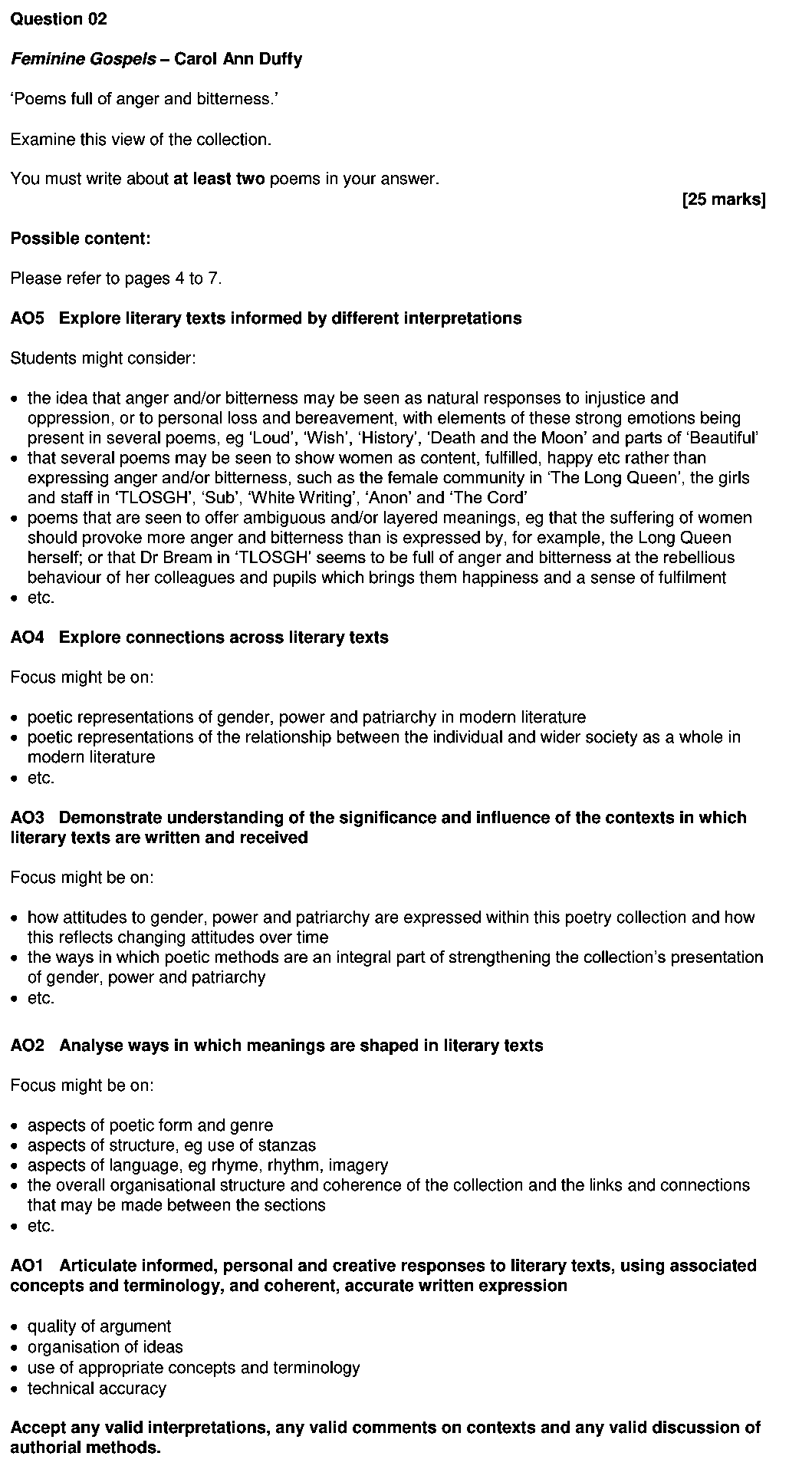
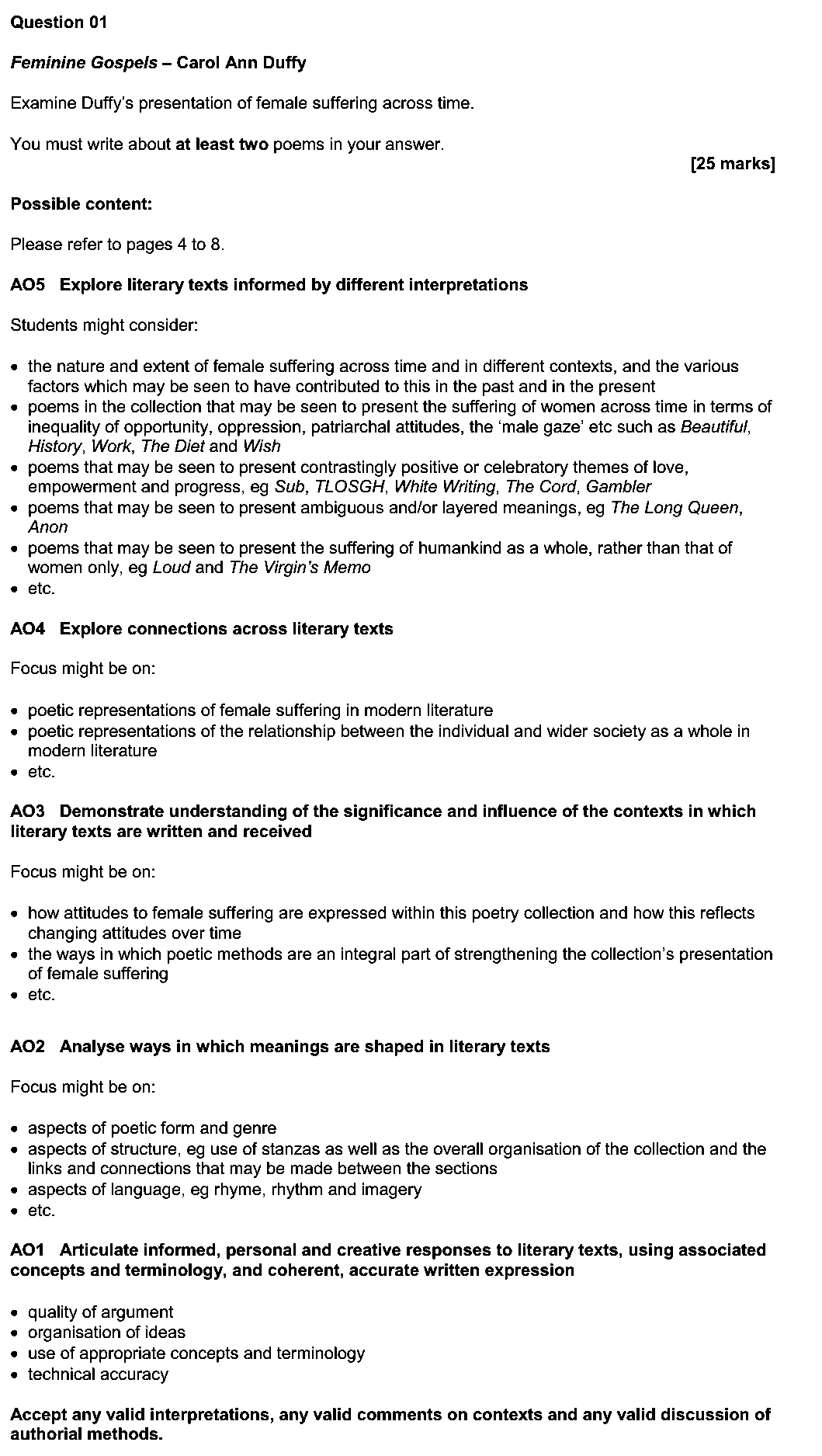
Notes from the mark scheme and report
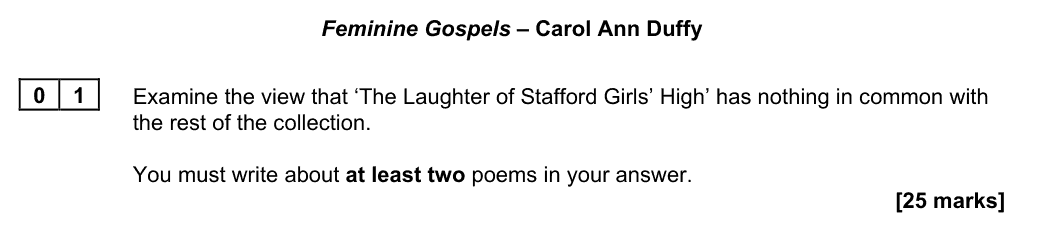
- Focus: title
- Open book, no extract
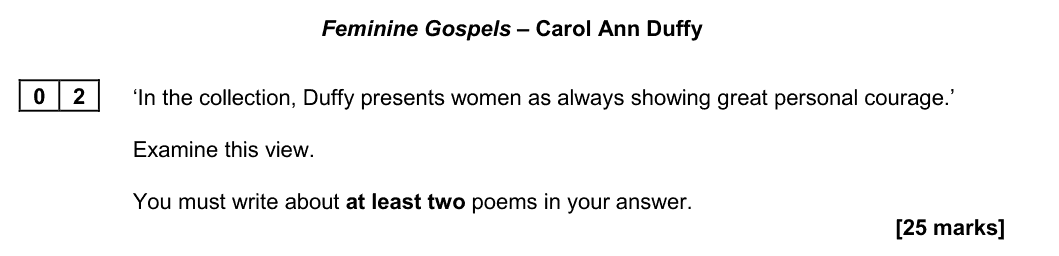
- at least two poems
- credited: 'feminine' as sharing women's stories sidelined by history ('Loud', 'Tall', 'Beautiful', 'Work', 'History'), 'gospels' as good news and revisionist teaching (TLOSGH, 'The Virgin's Memo'), dedication to Duffy's four brothers as listeners, 'The Long Queen' heading the collection
- use 'significance' as springboard for debate and link poems to the title
- weaker answers called it an 'anthology', were descriptive, or used a lexical checklist