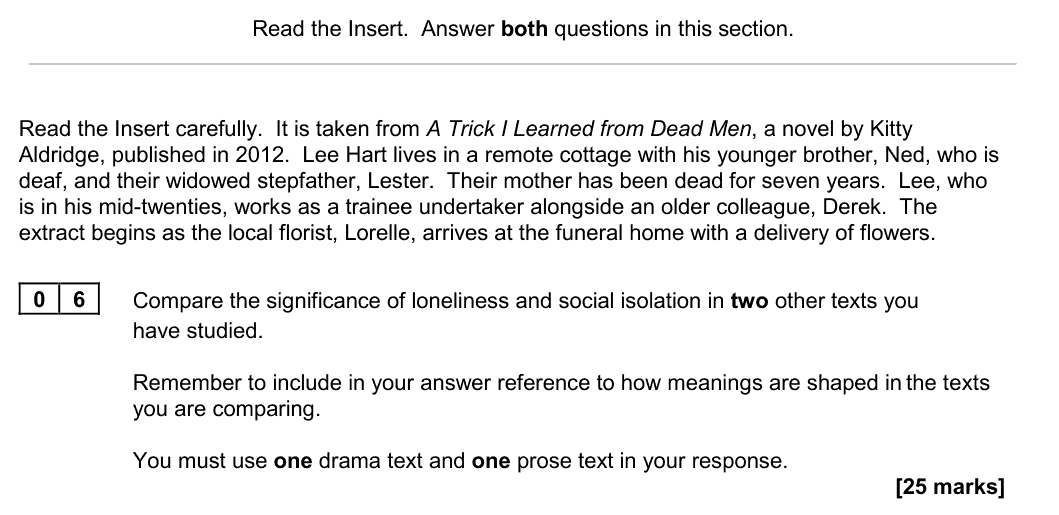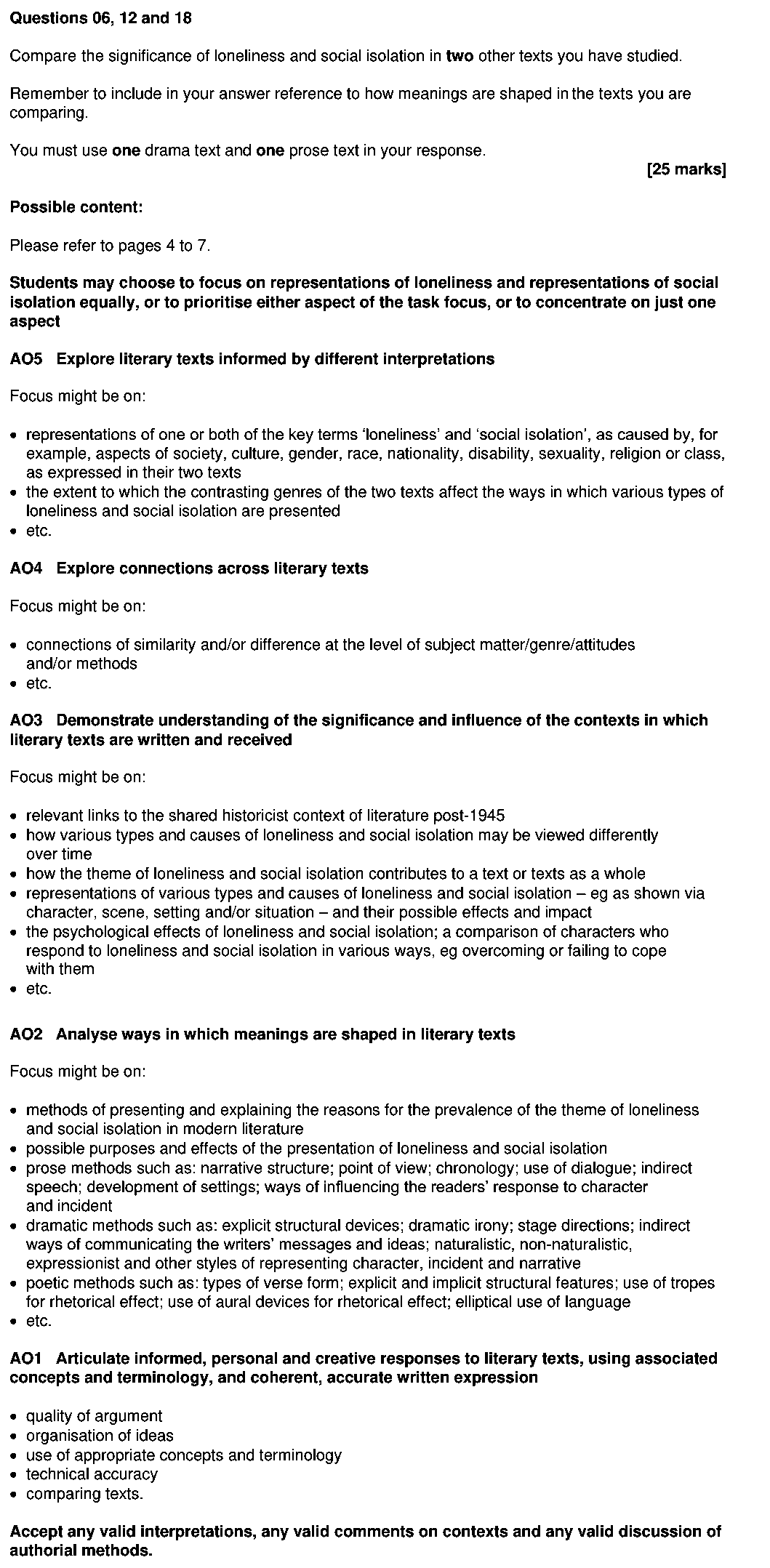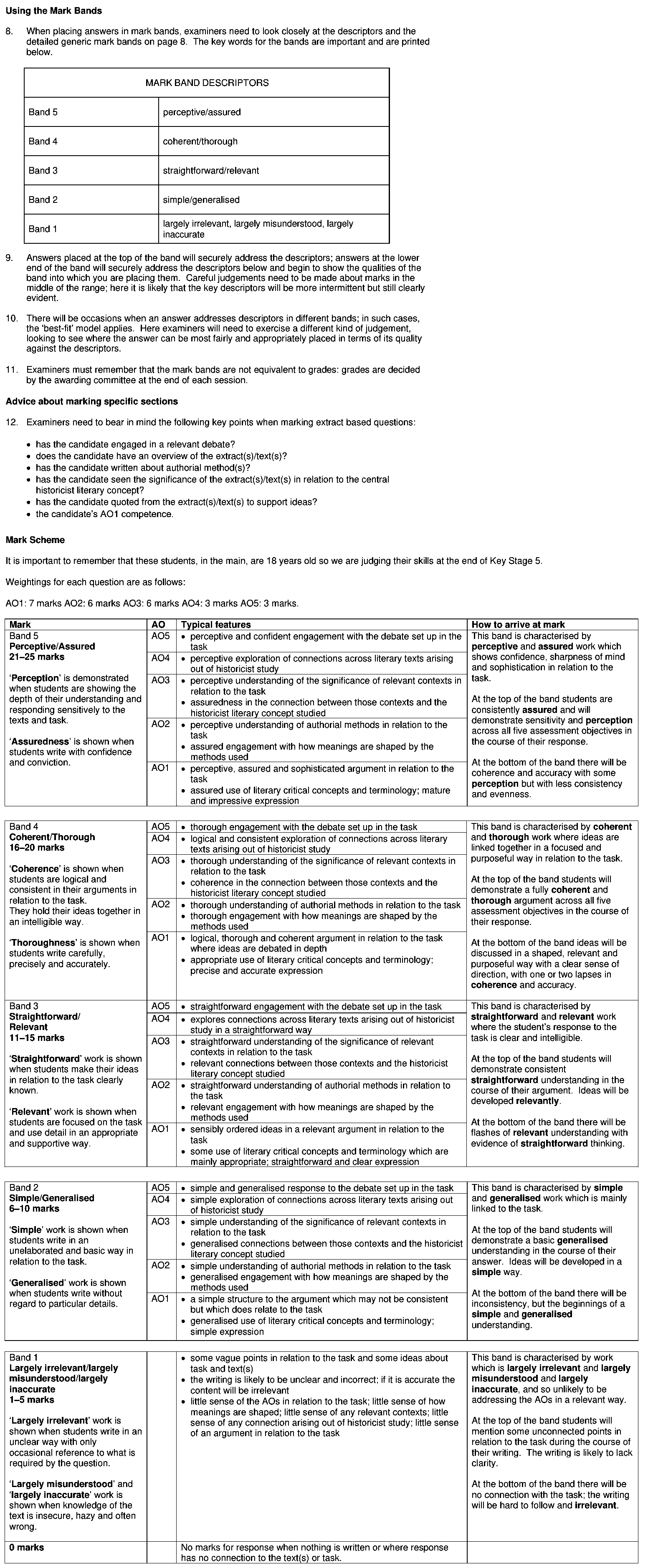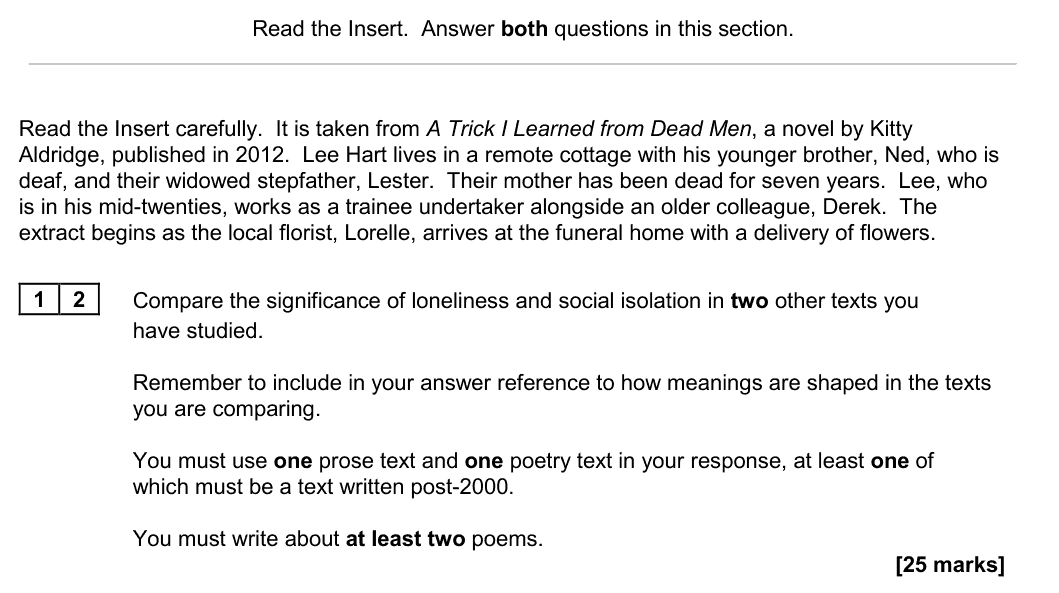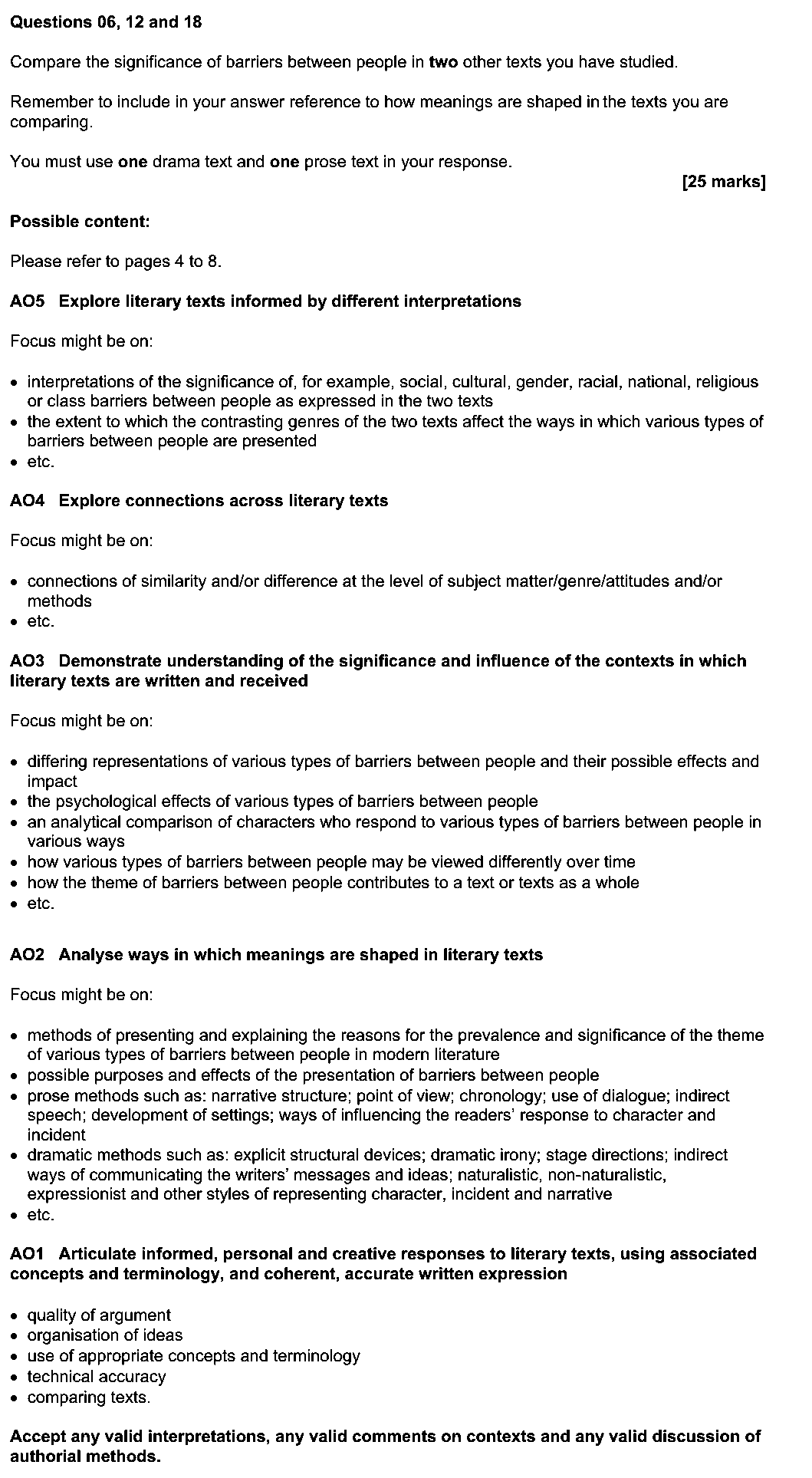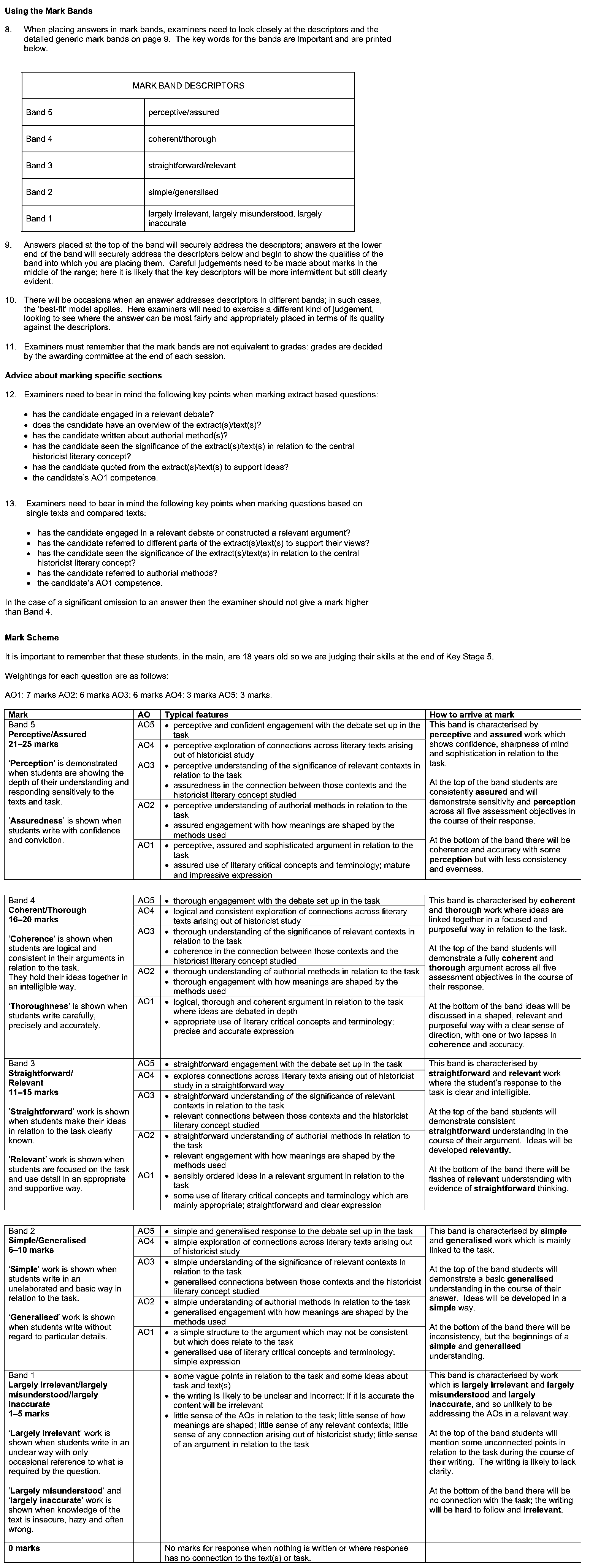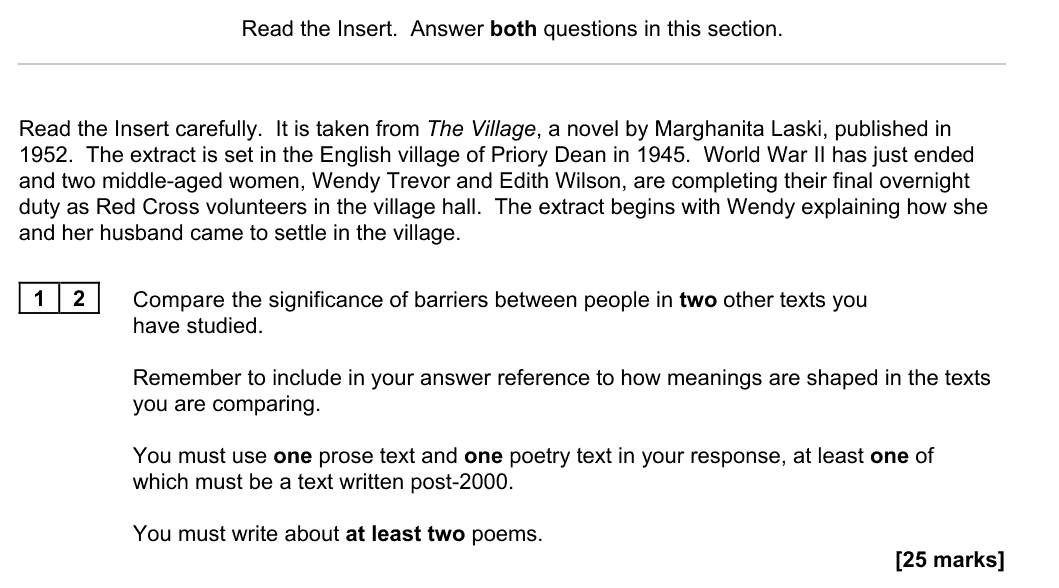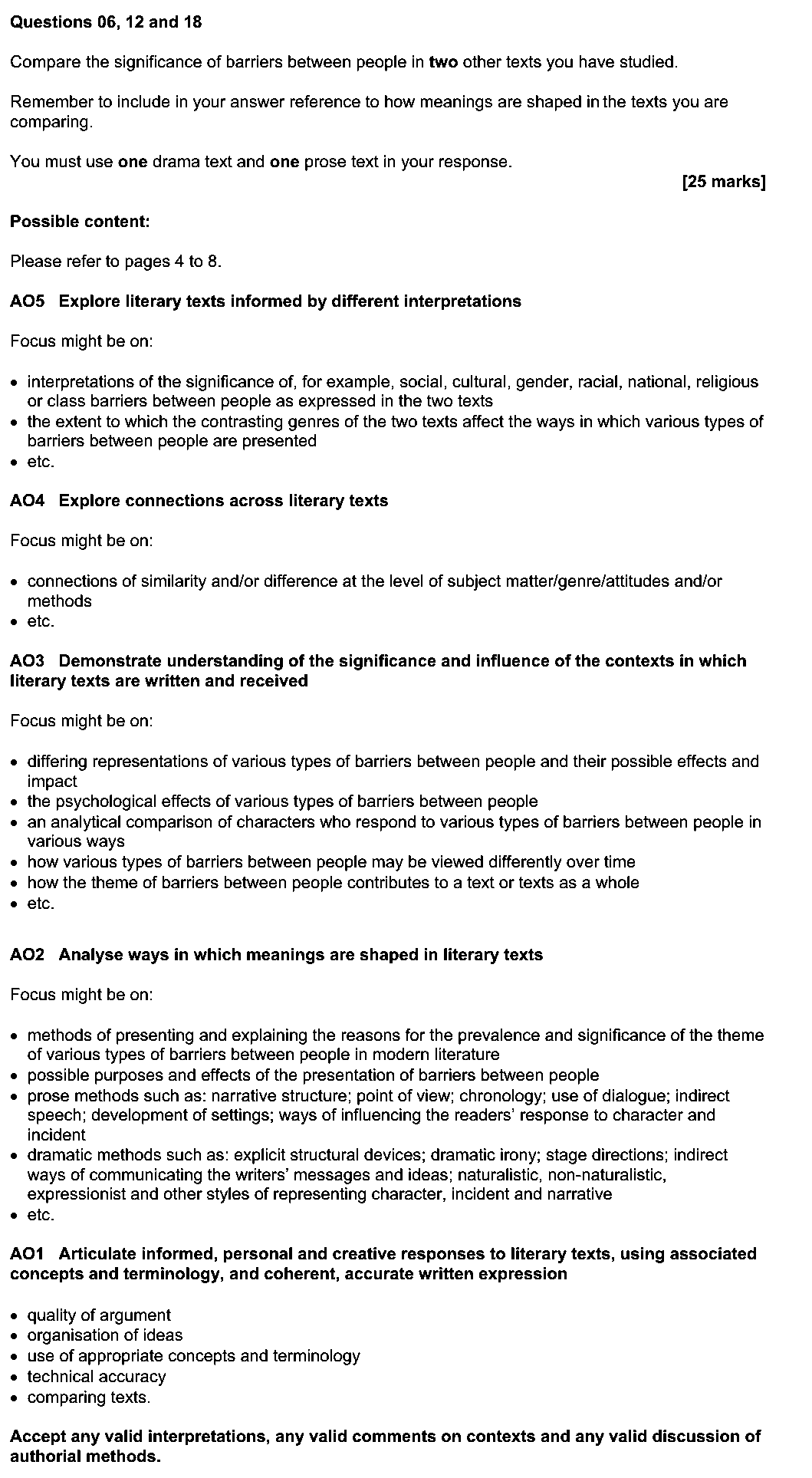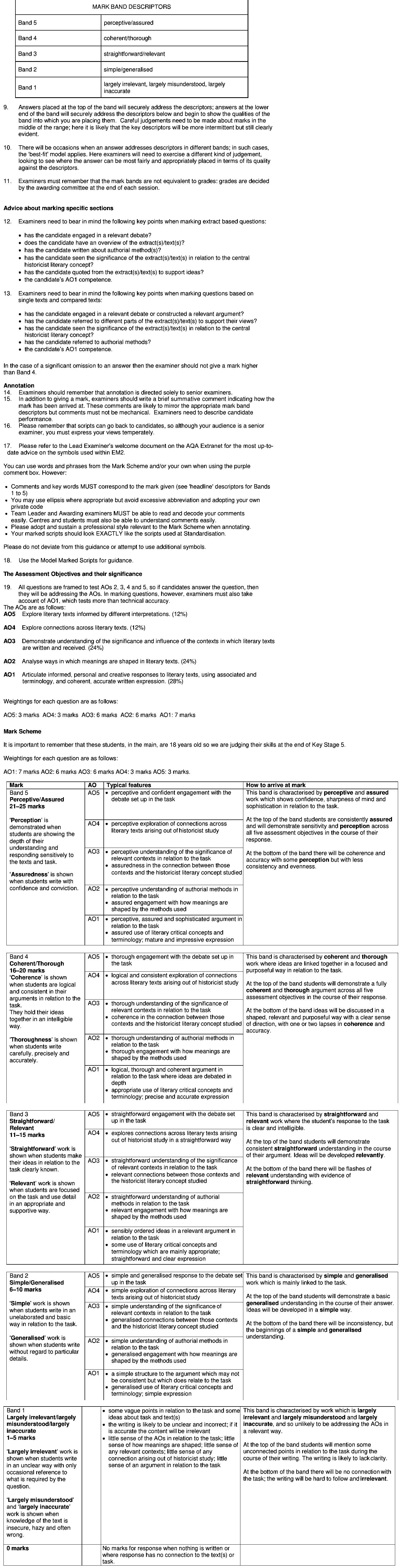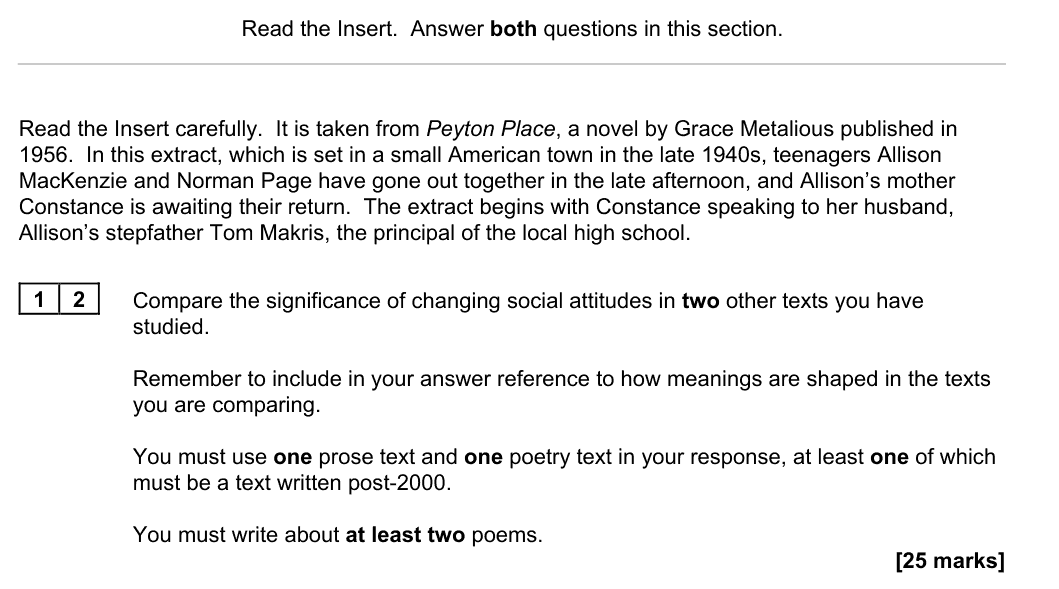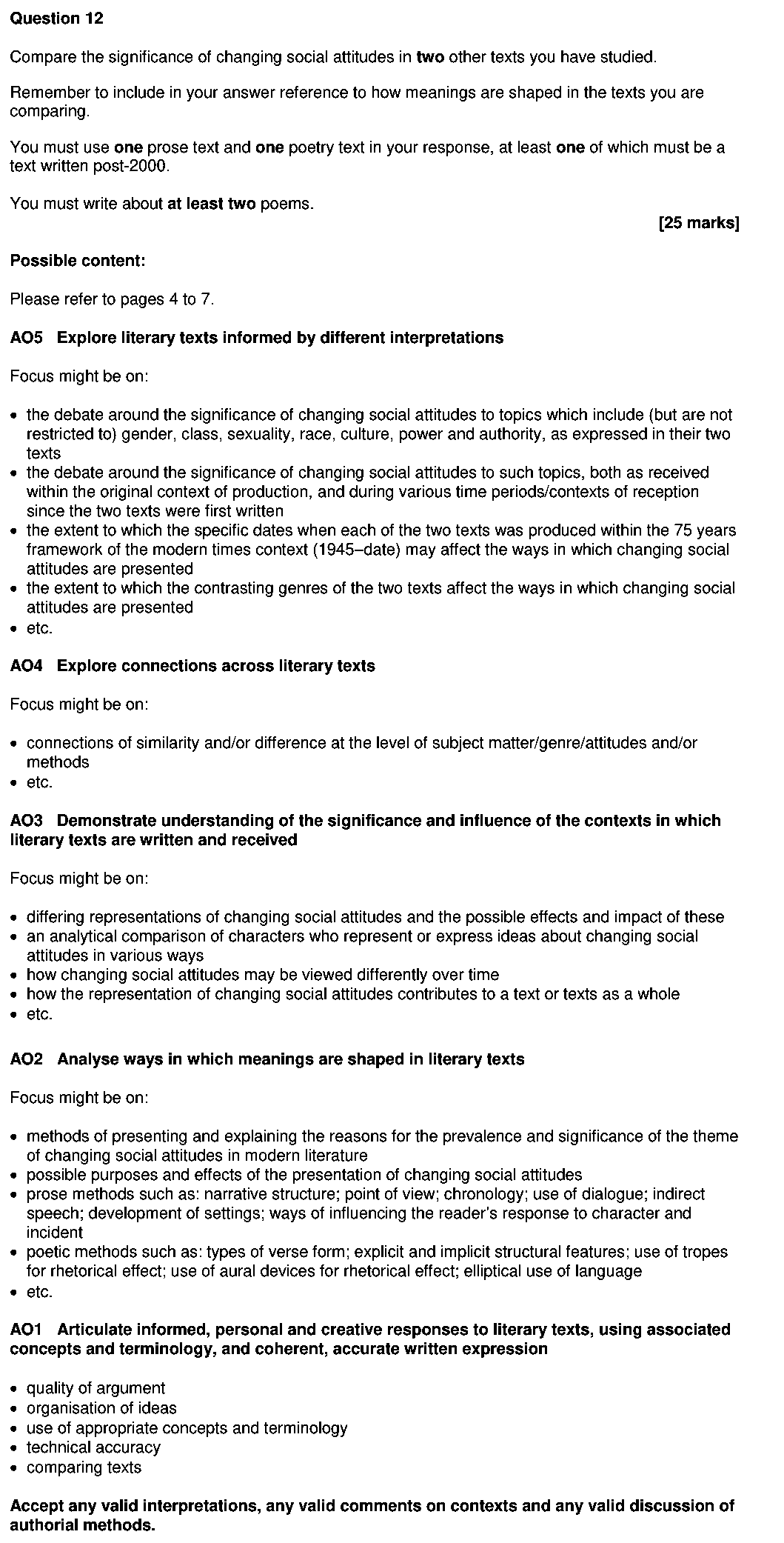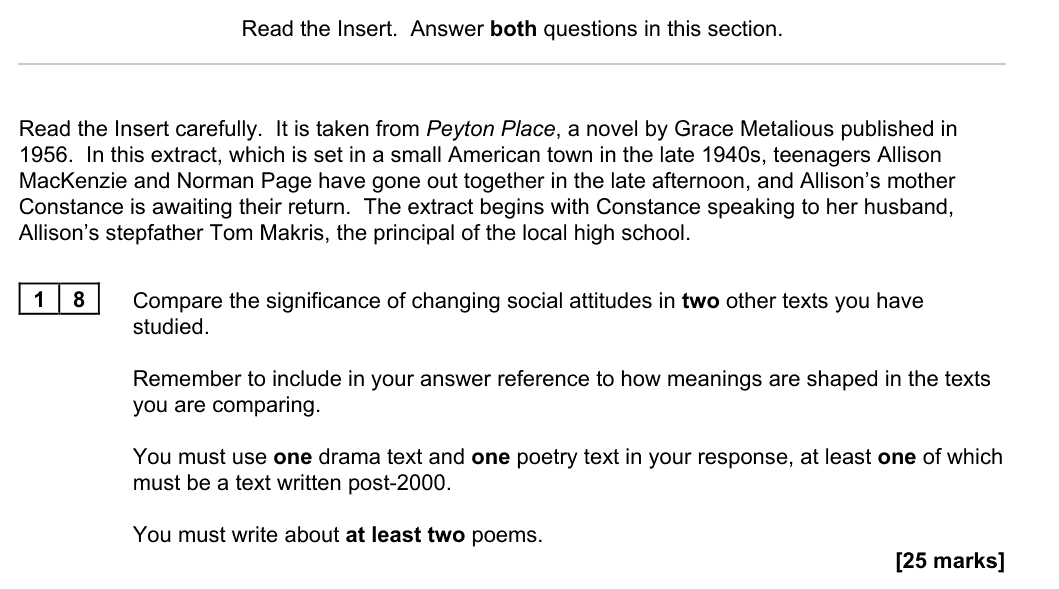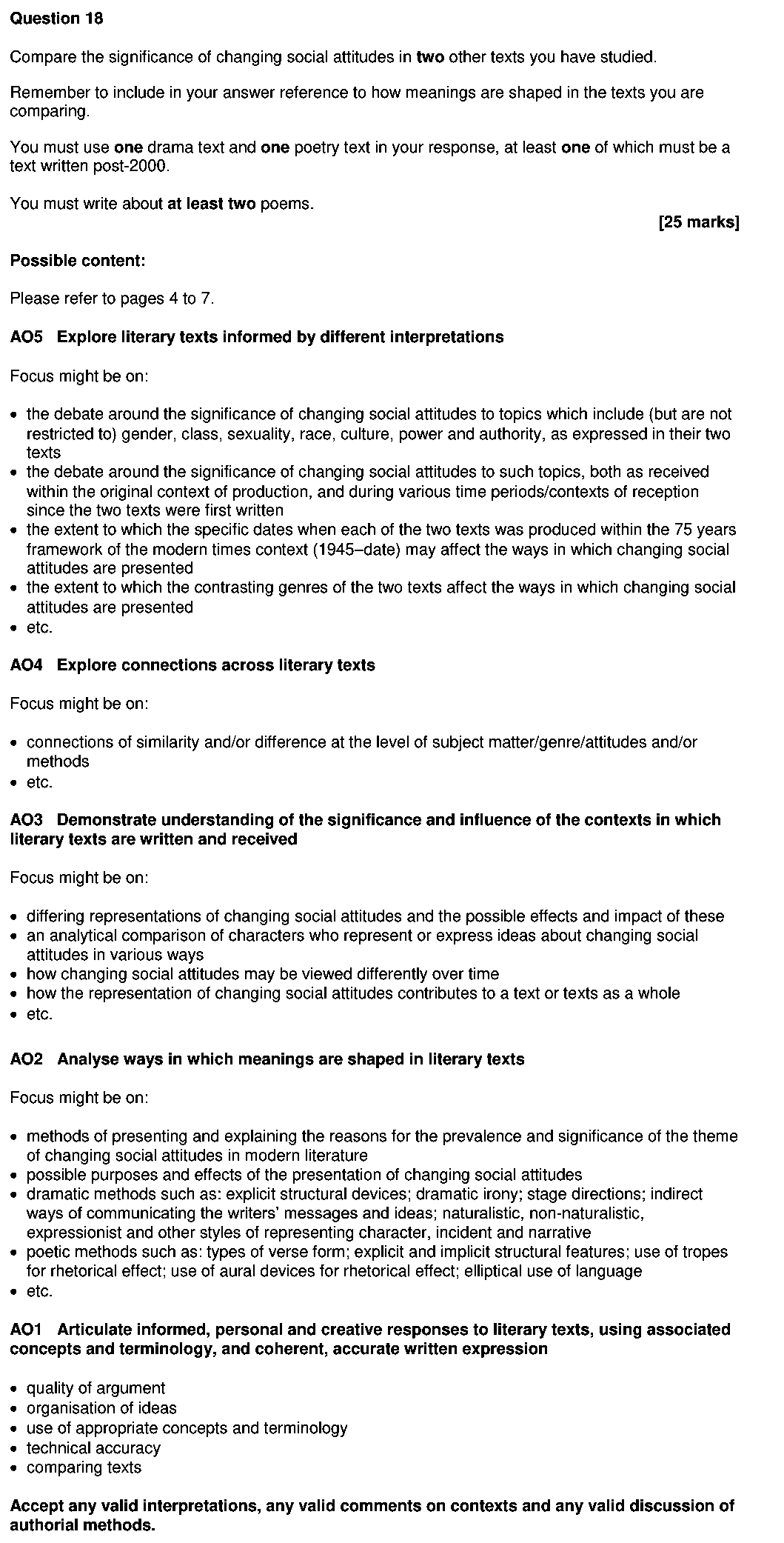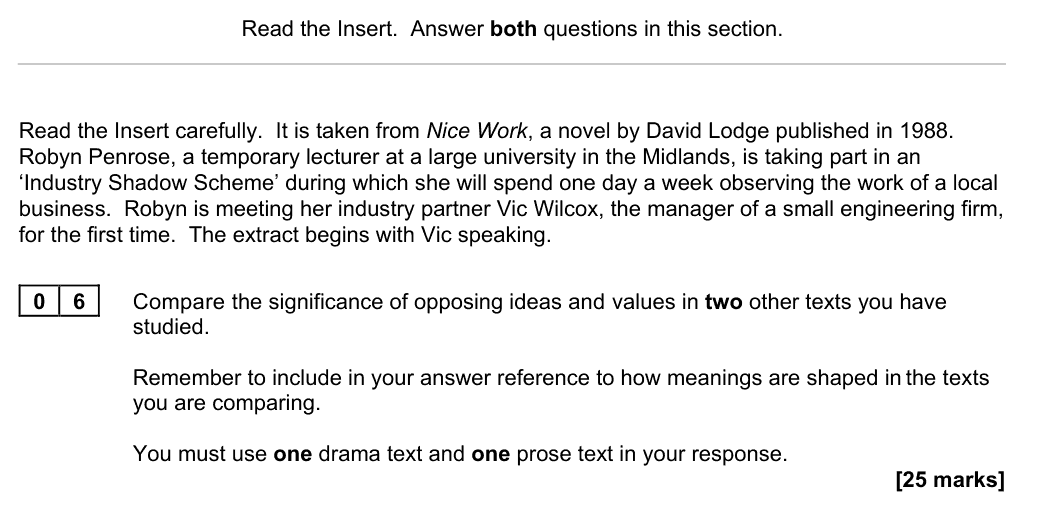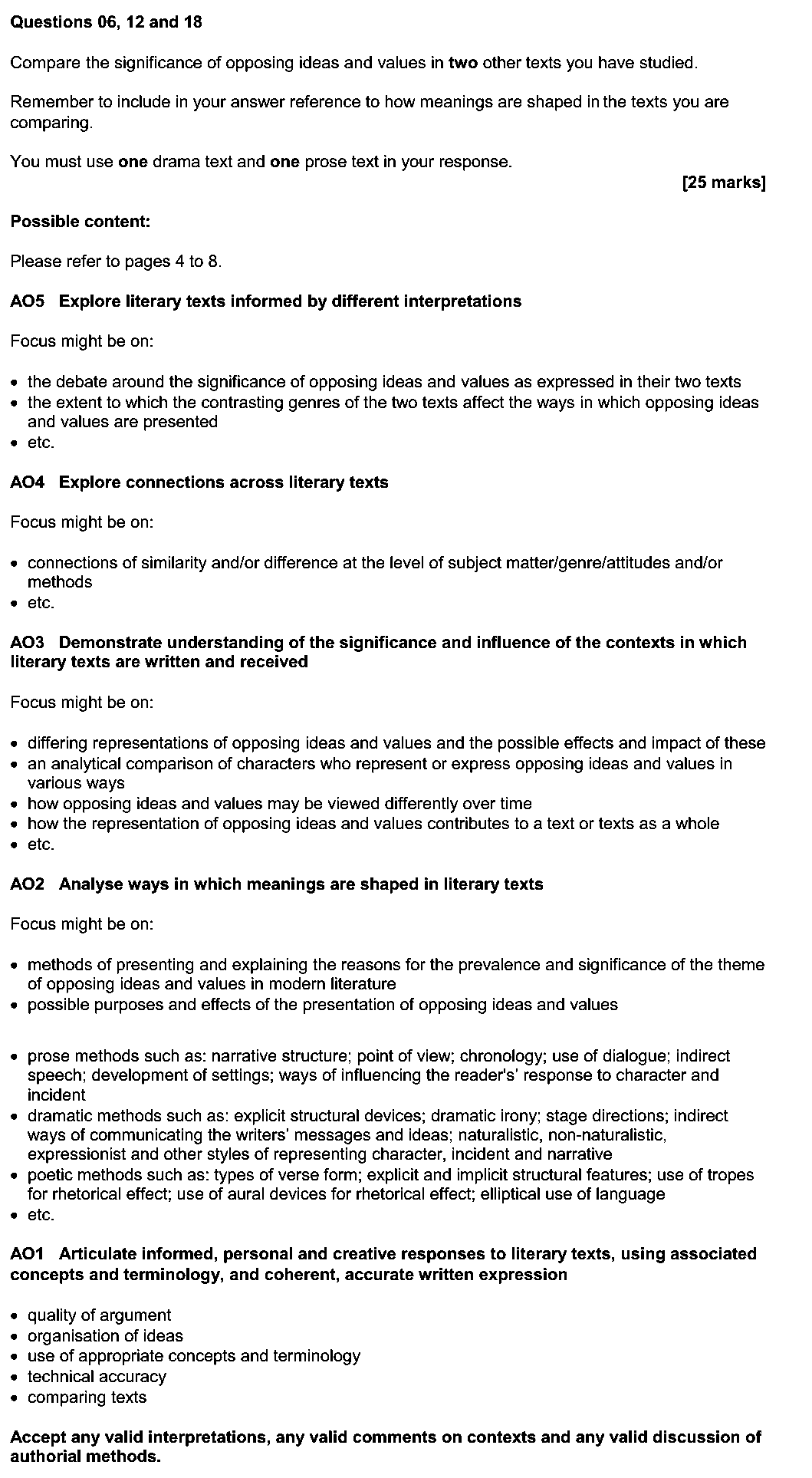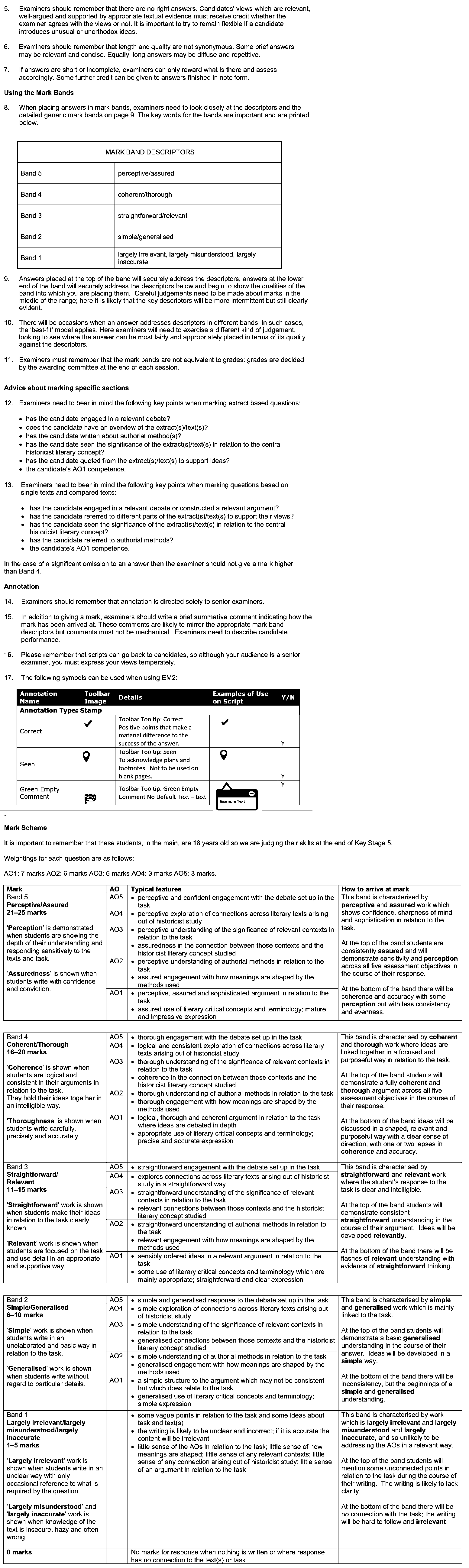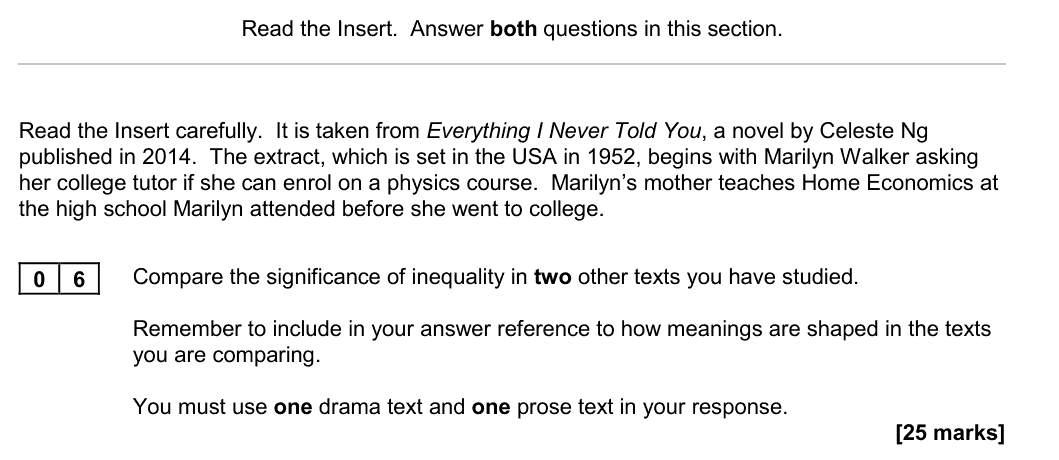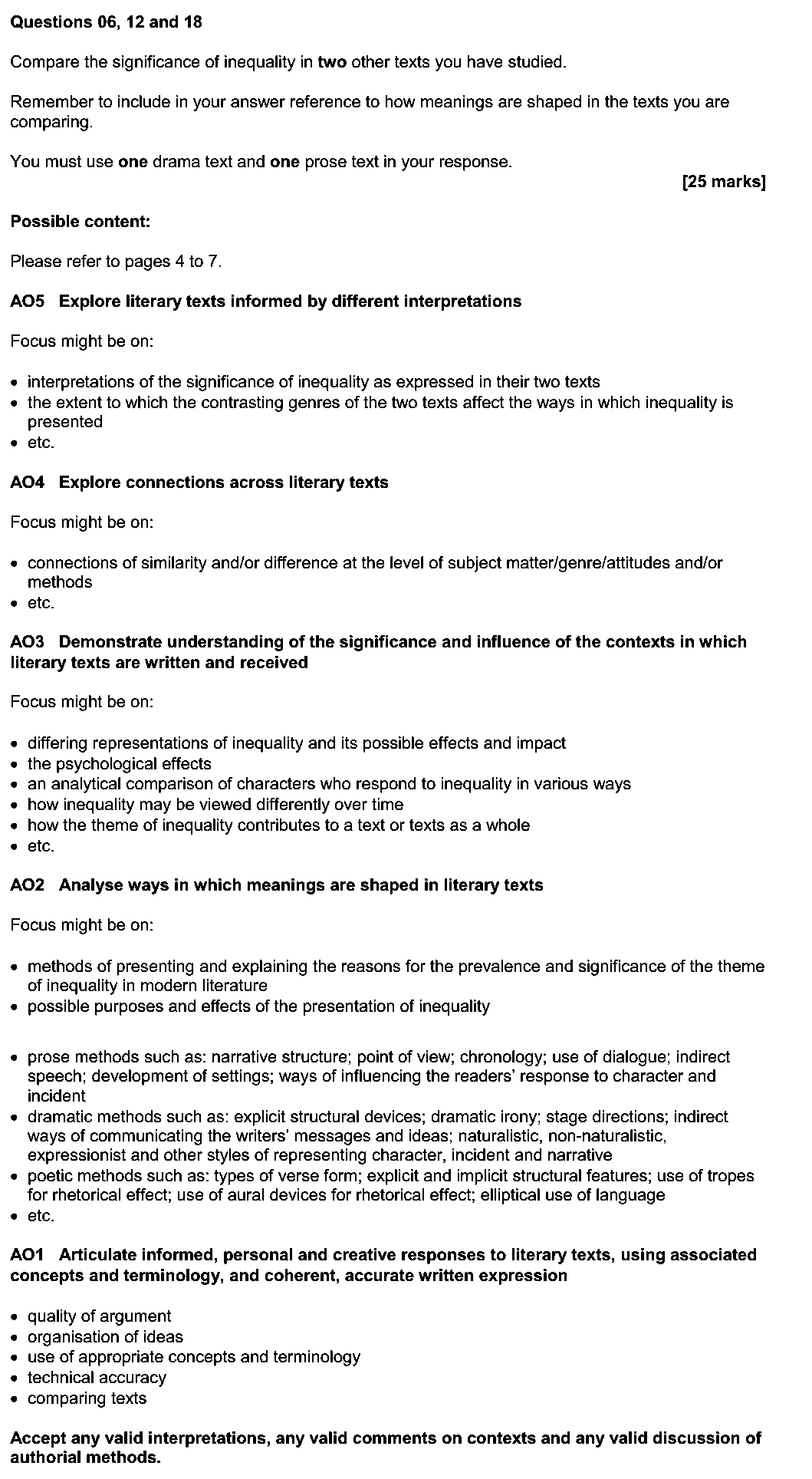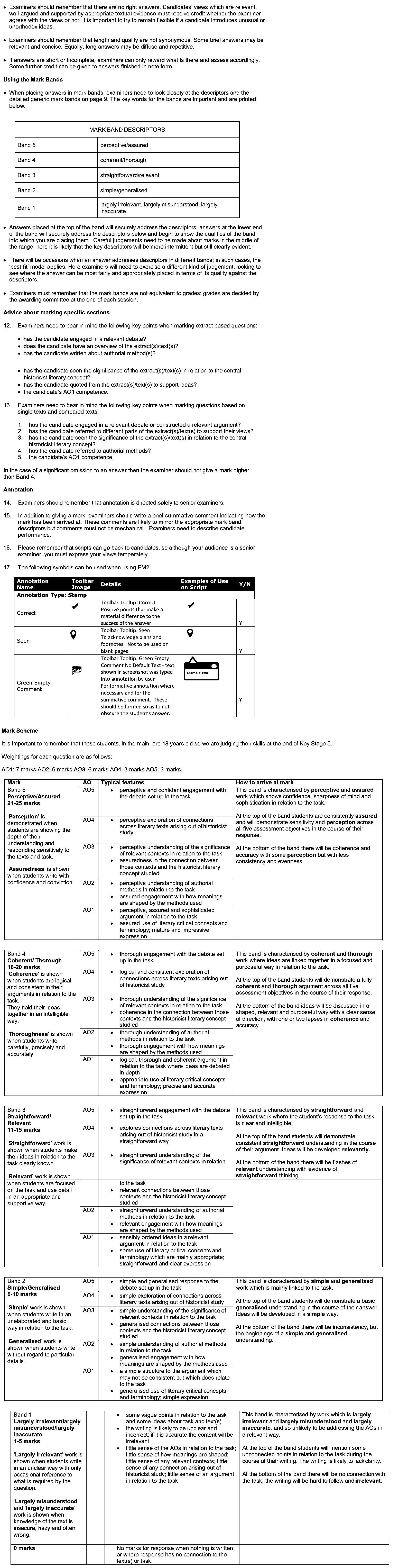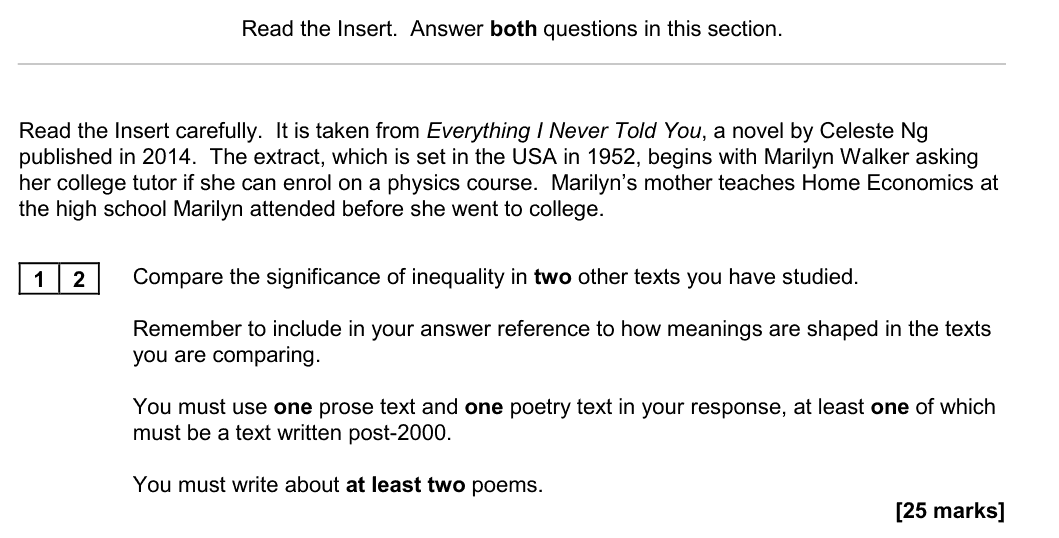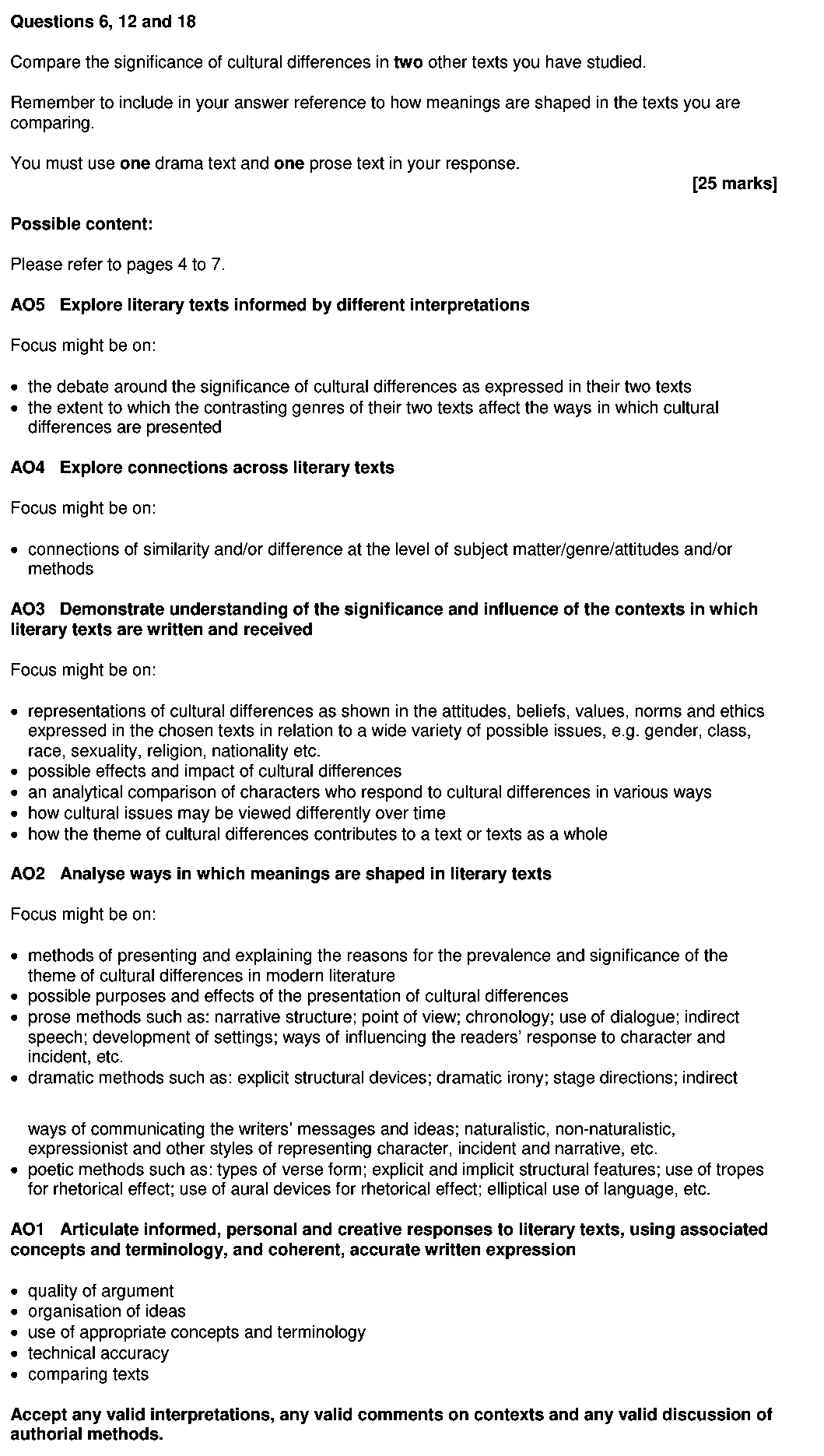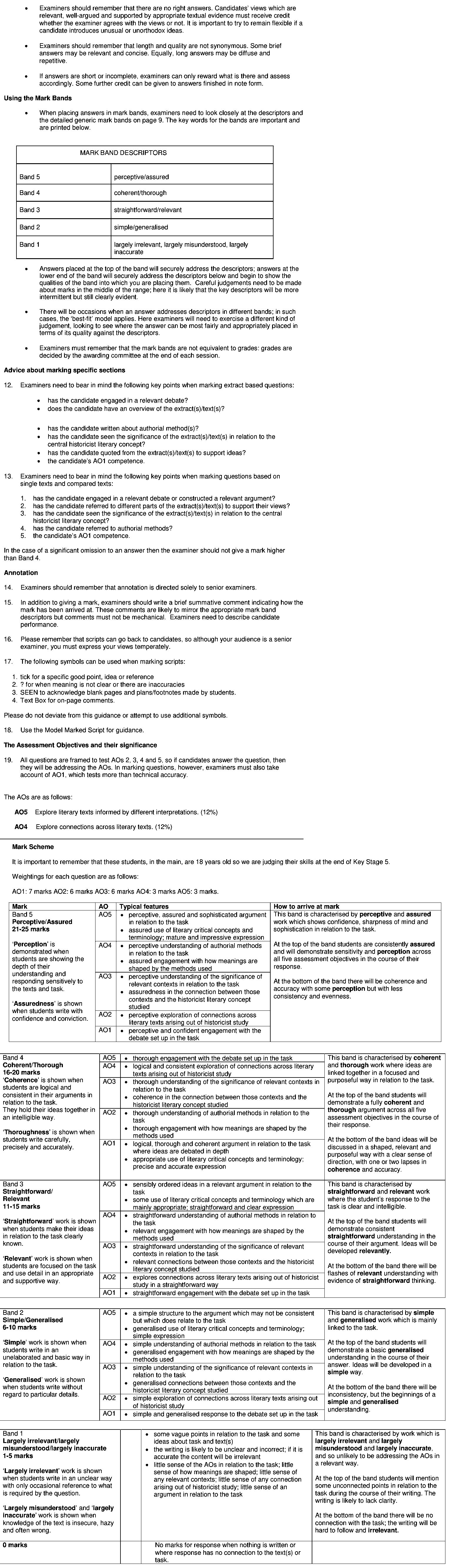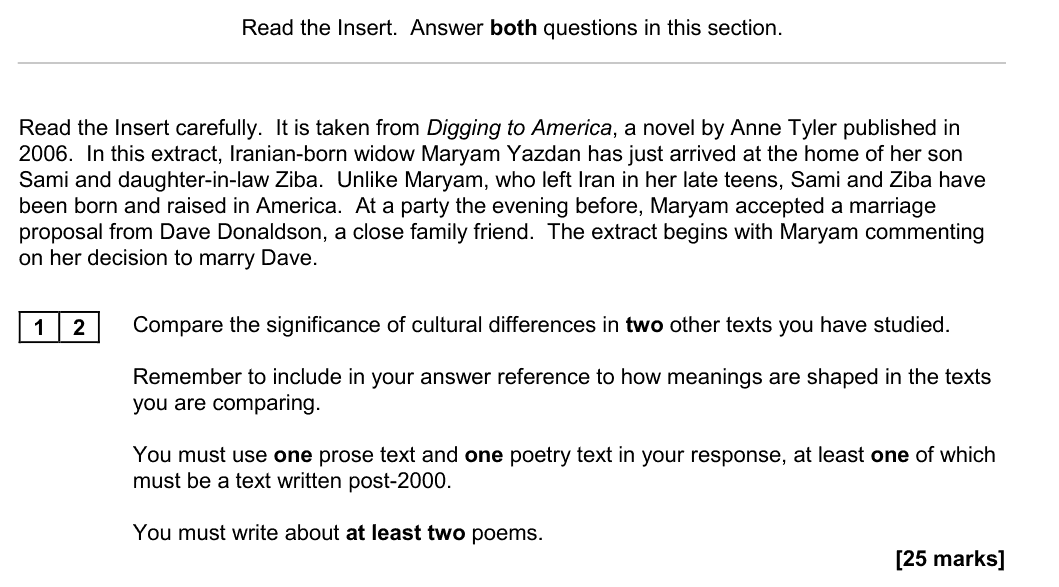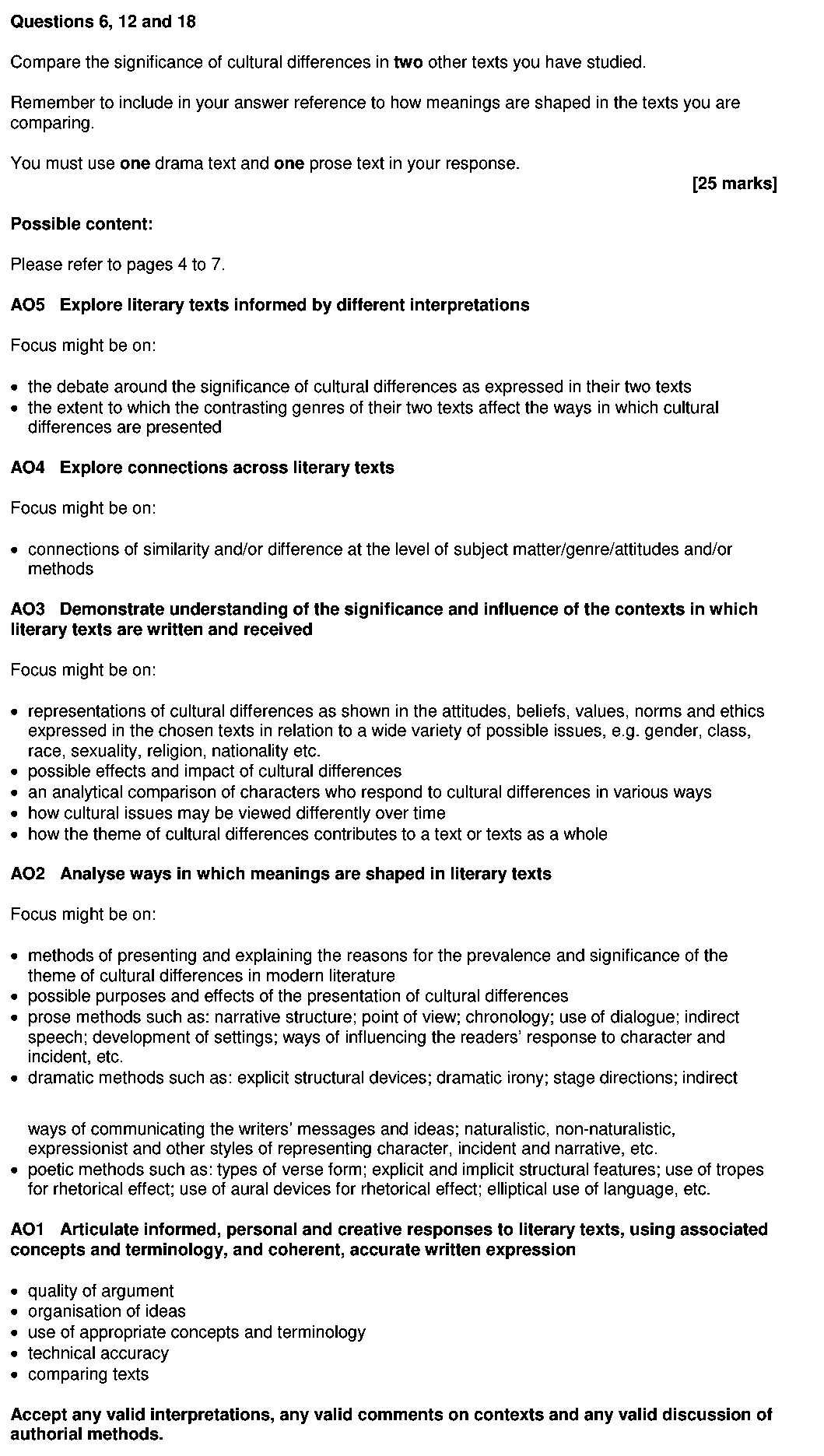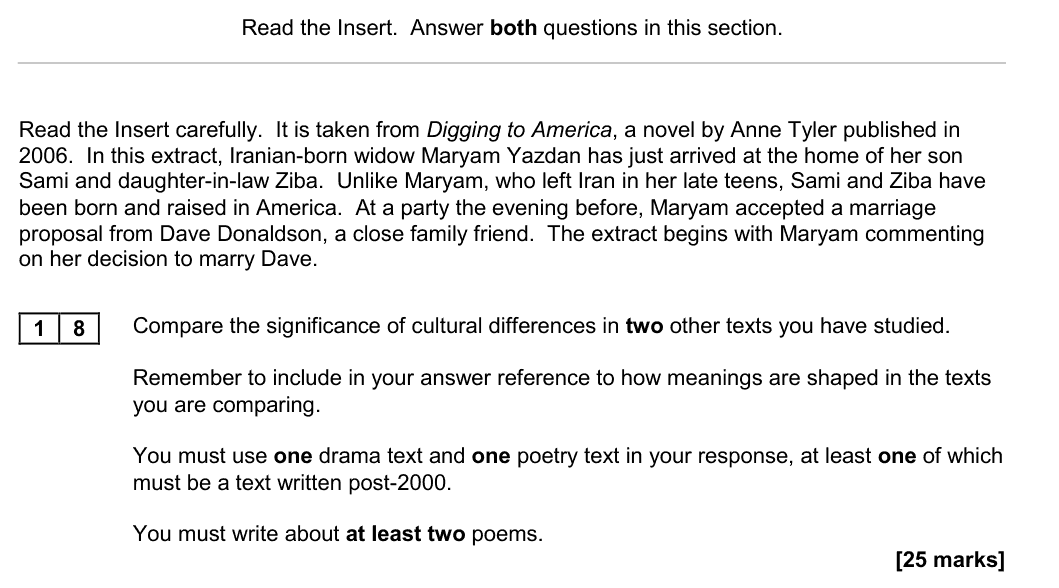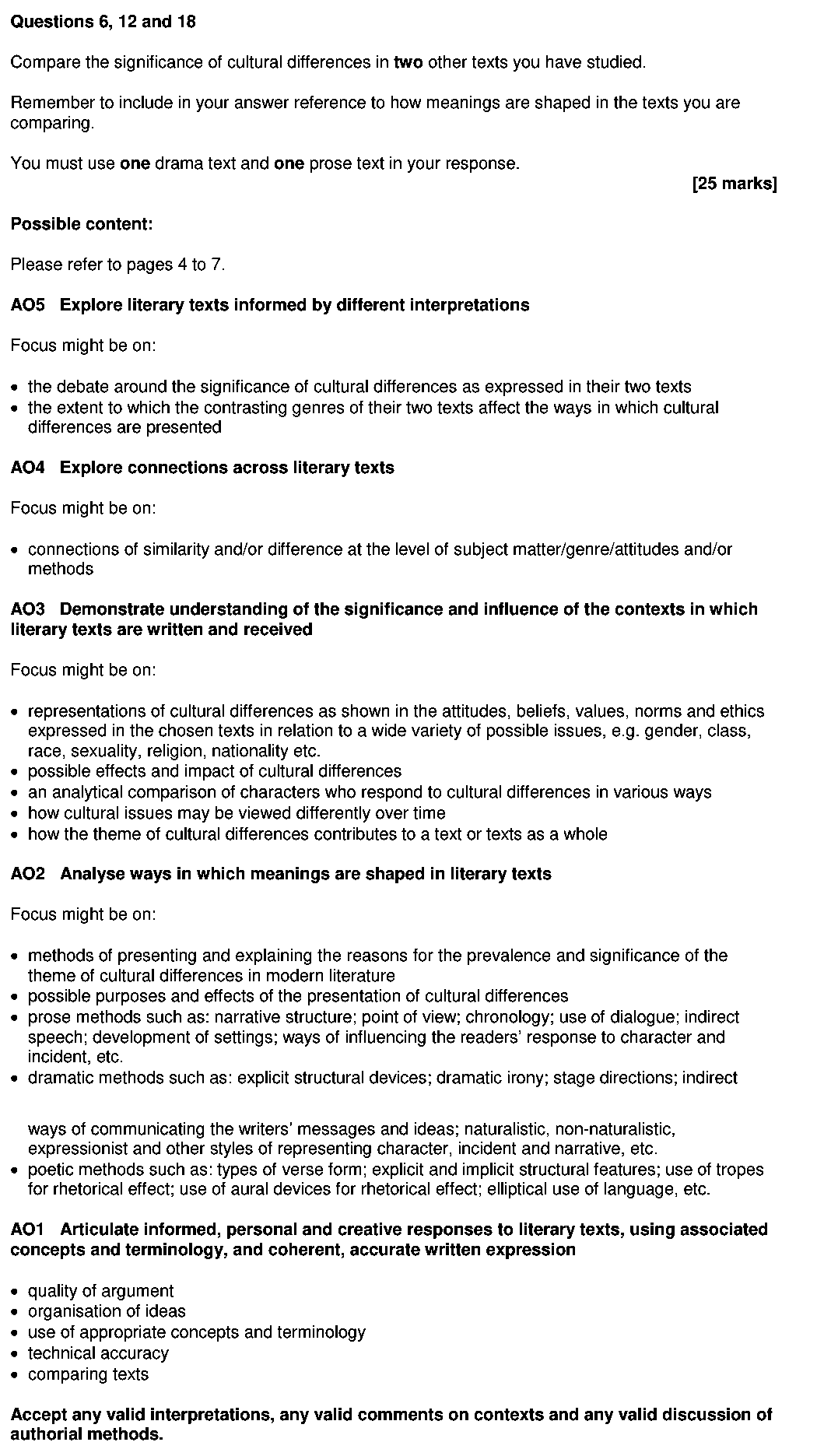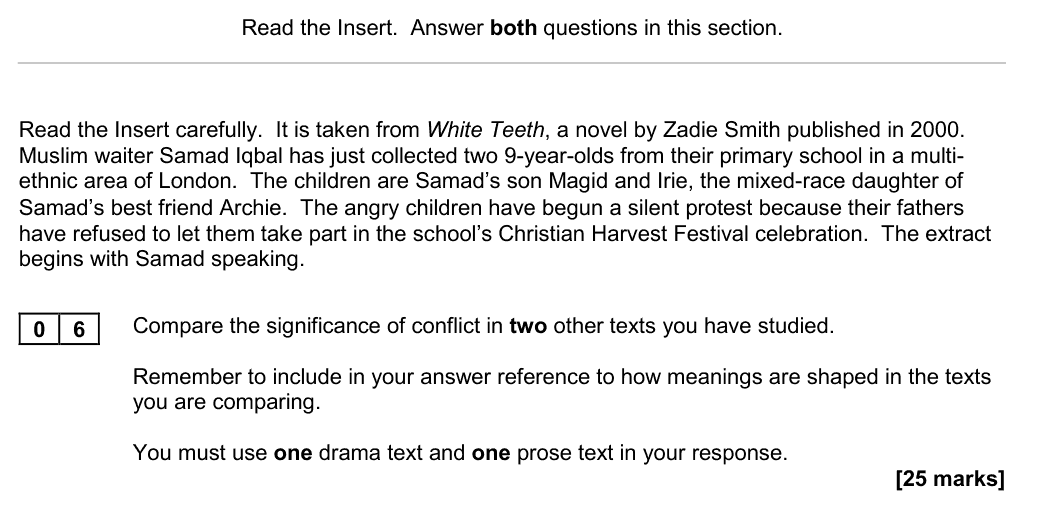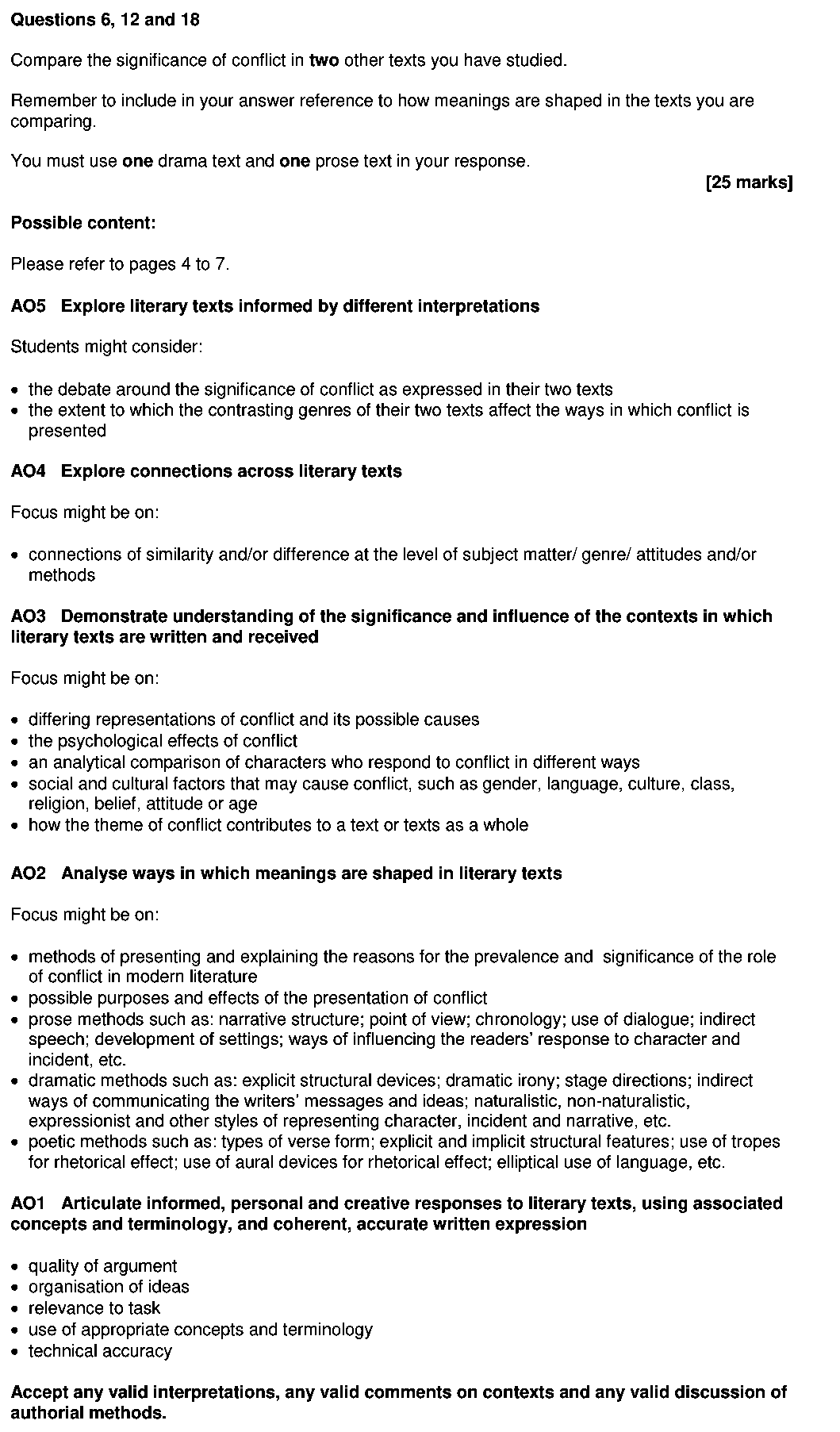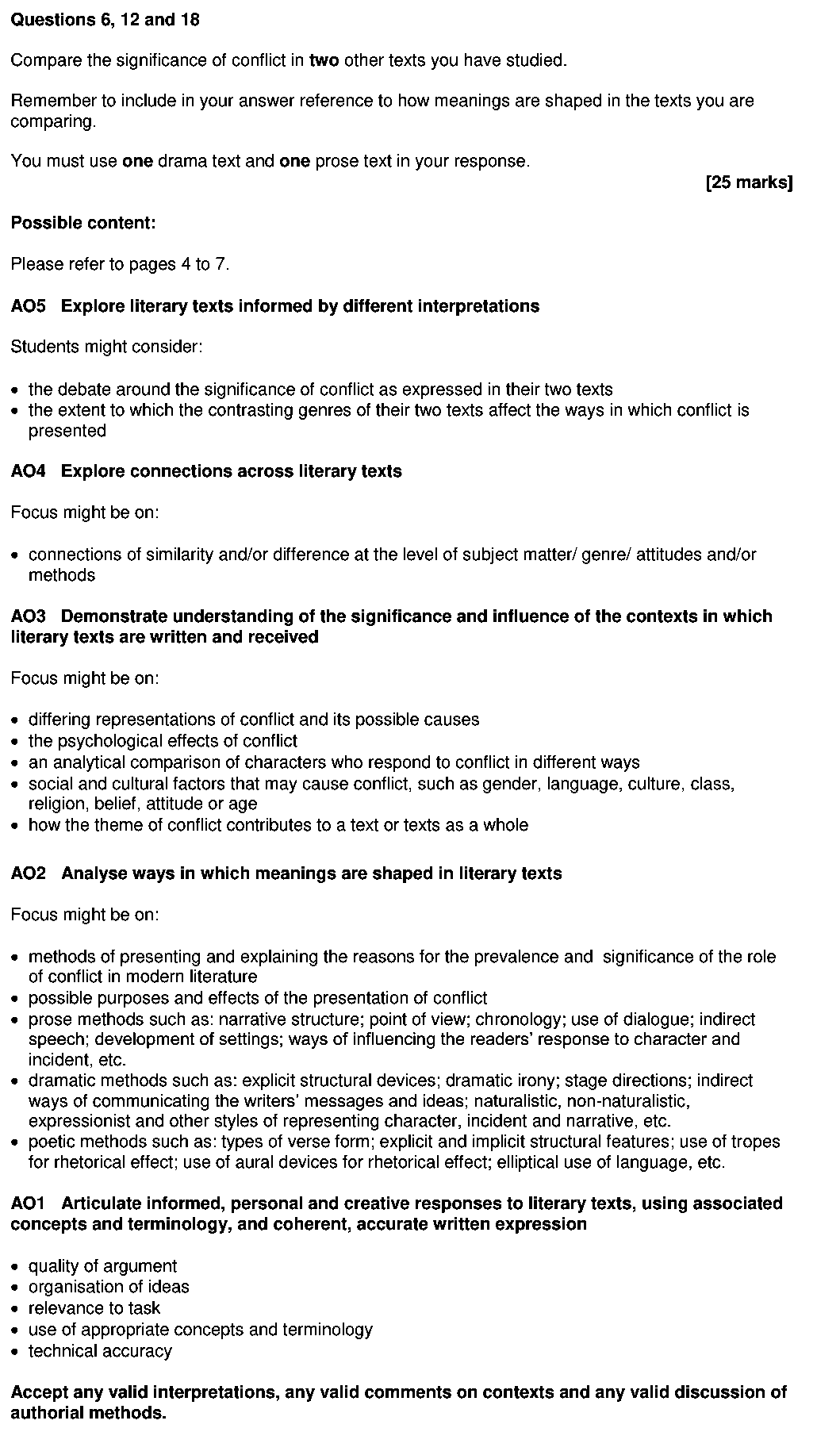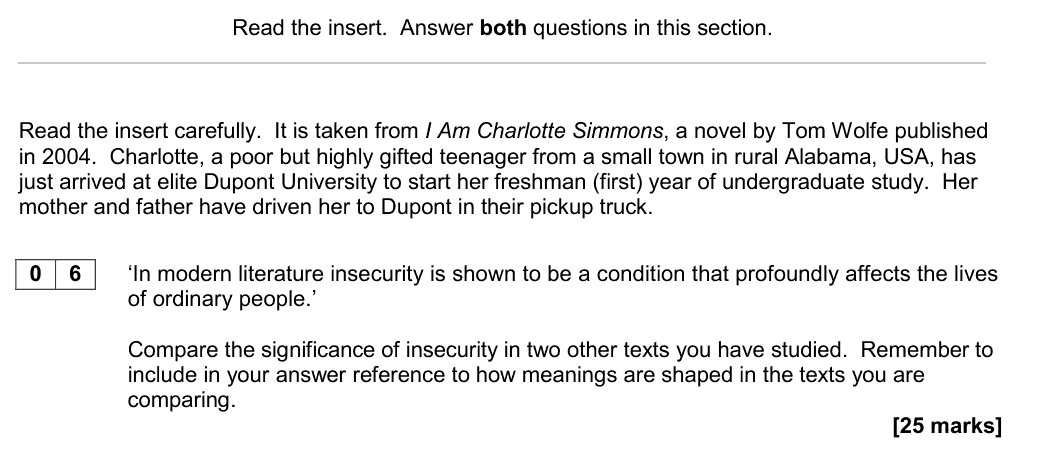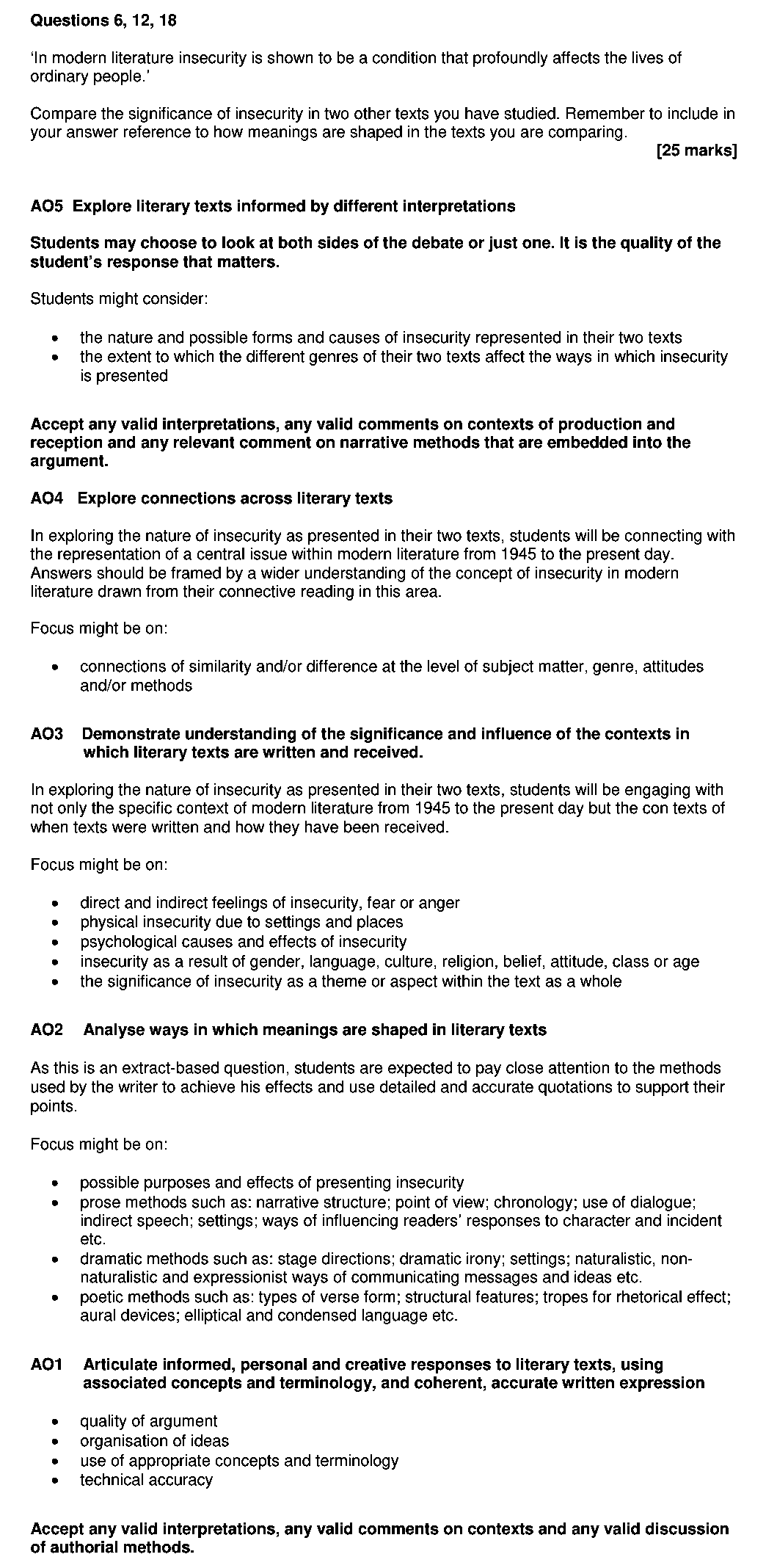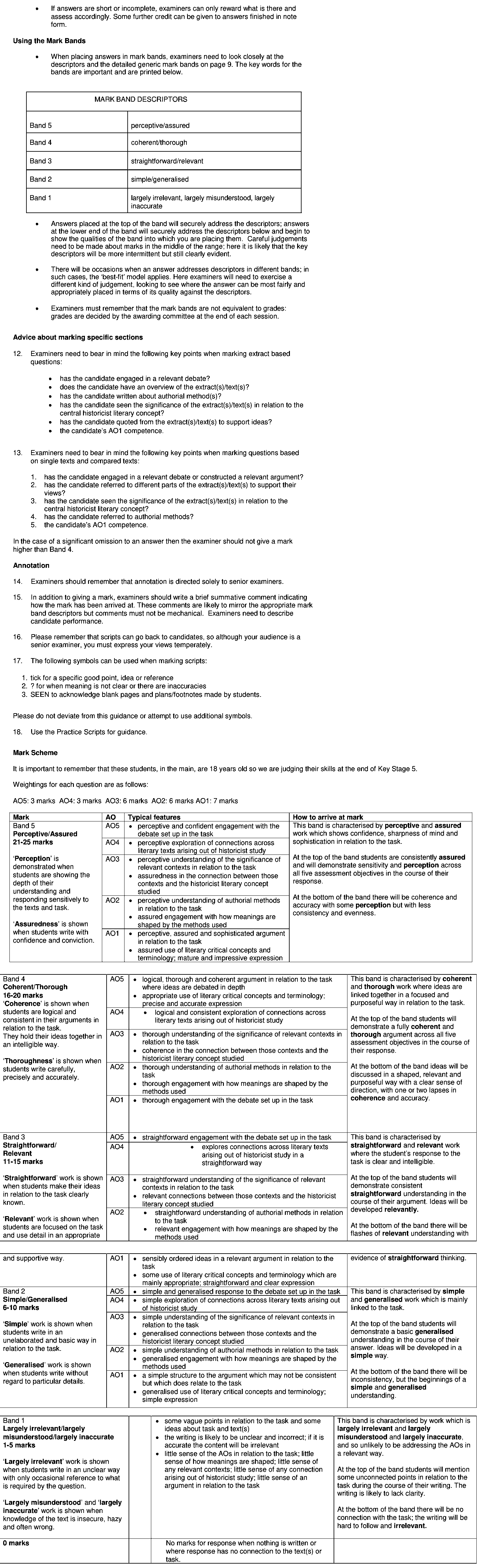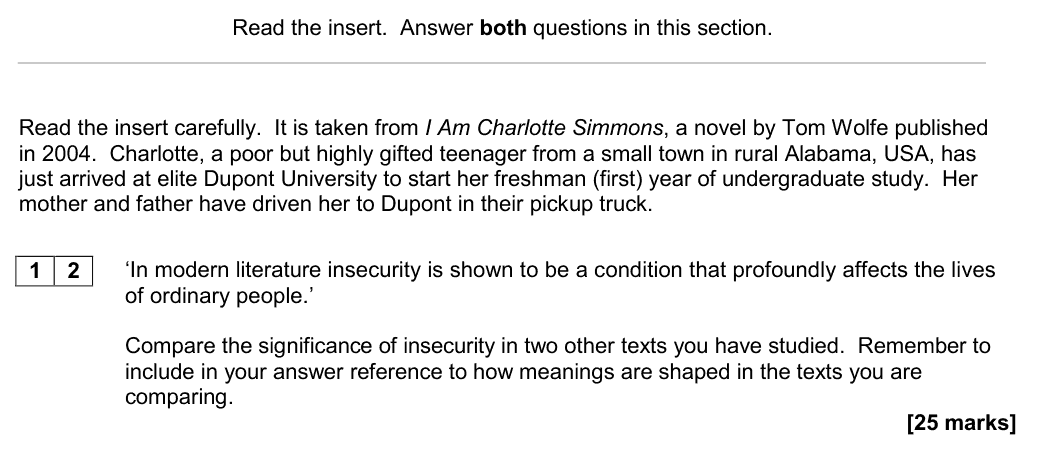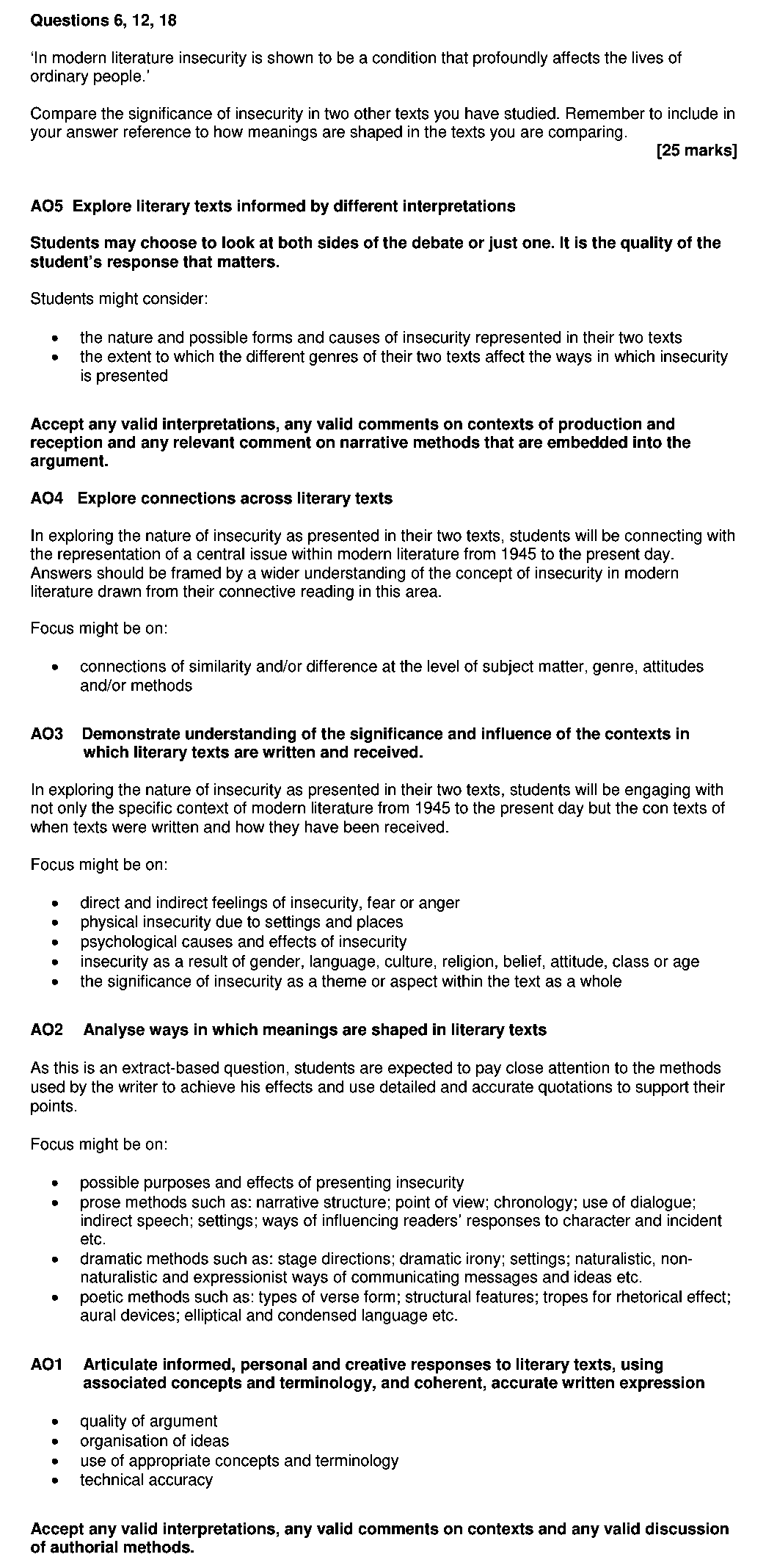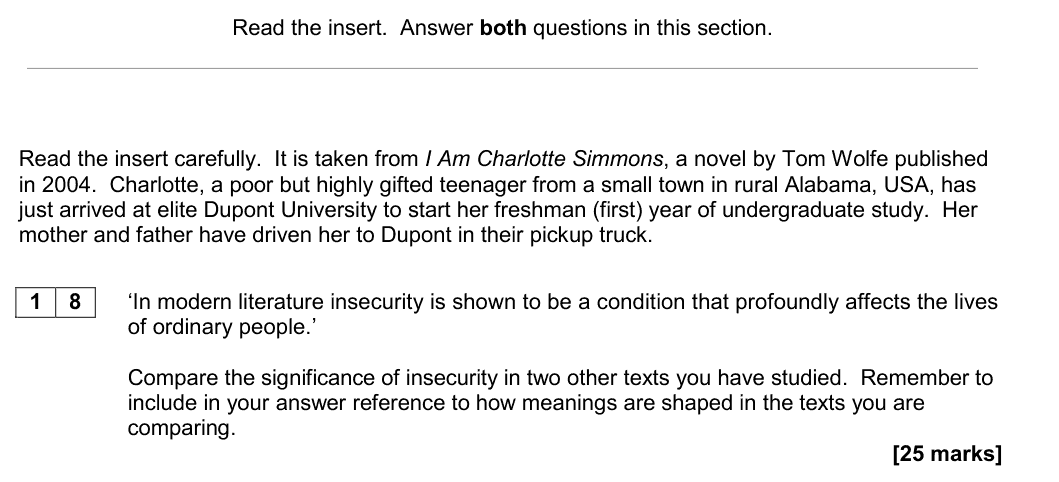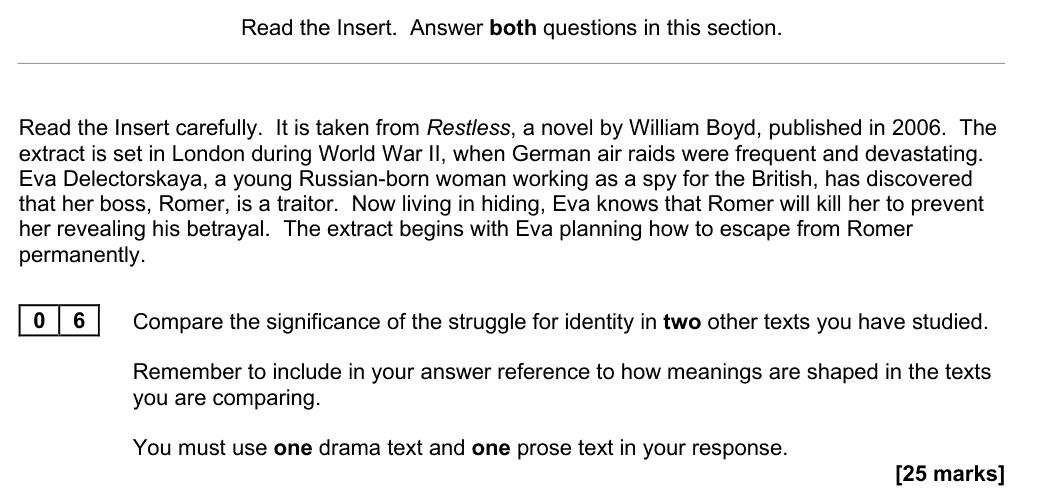
Mark scheme, including the levels and indicative content
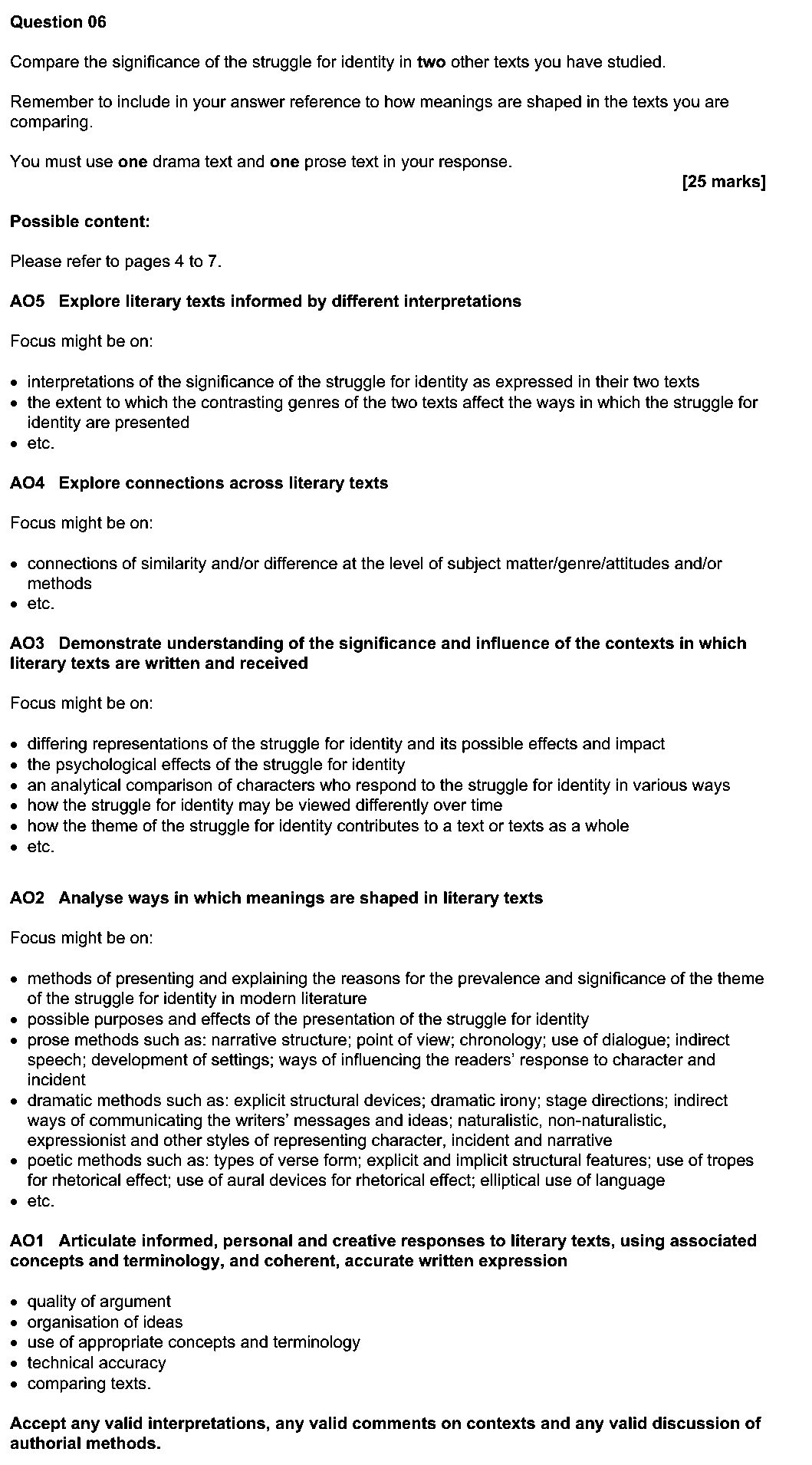
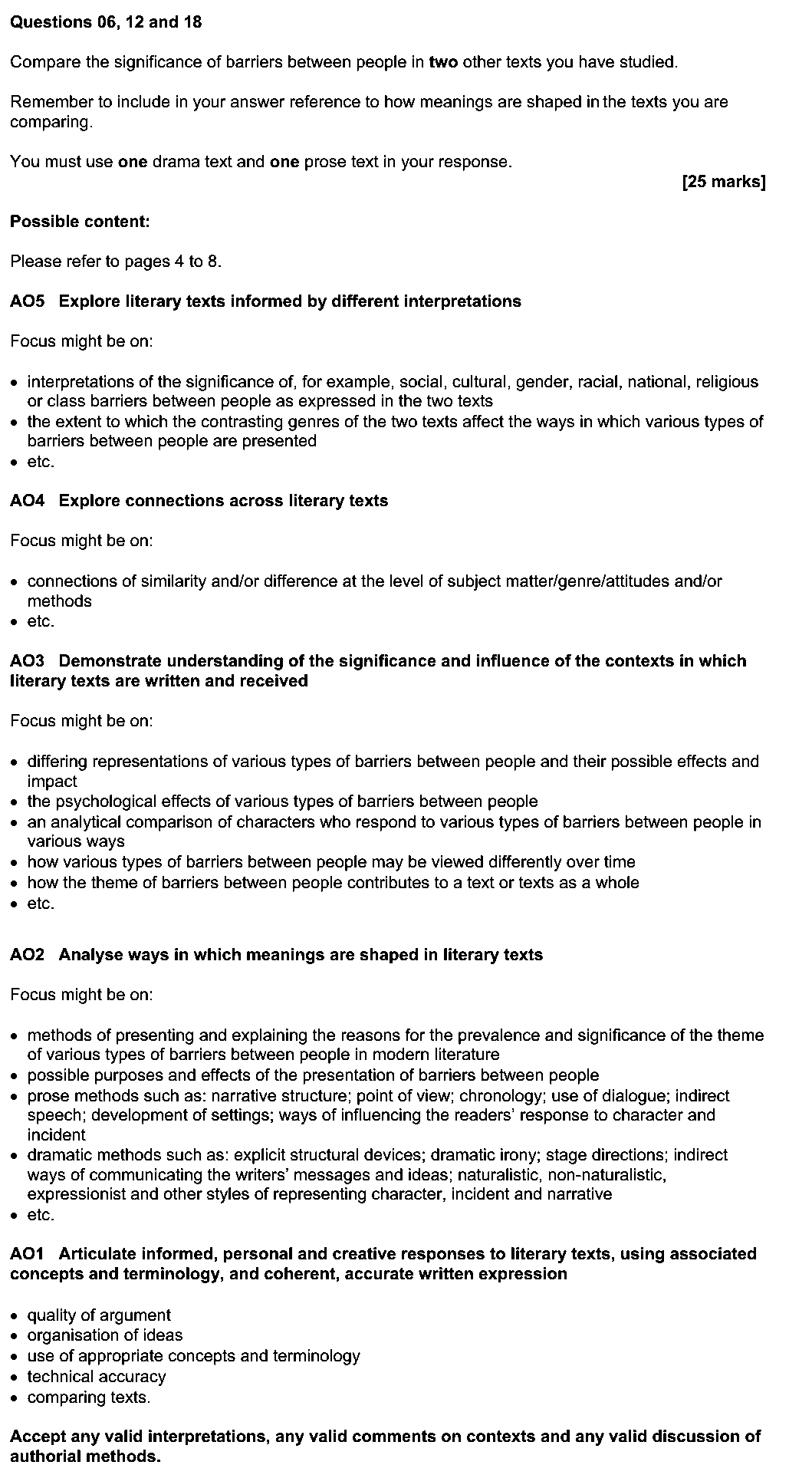
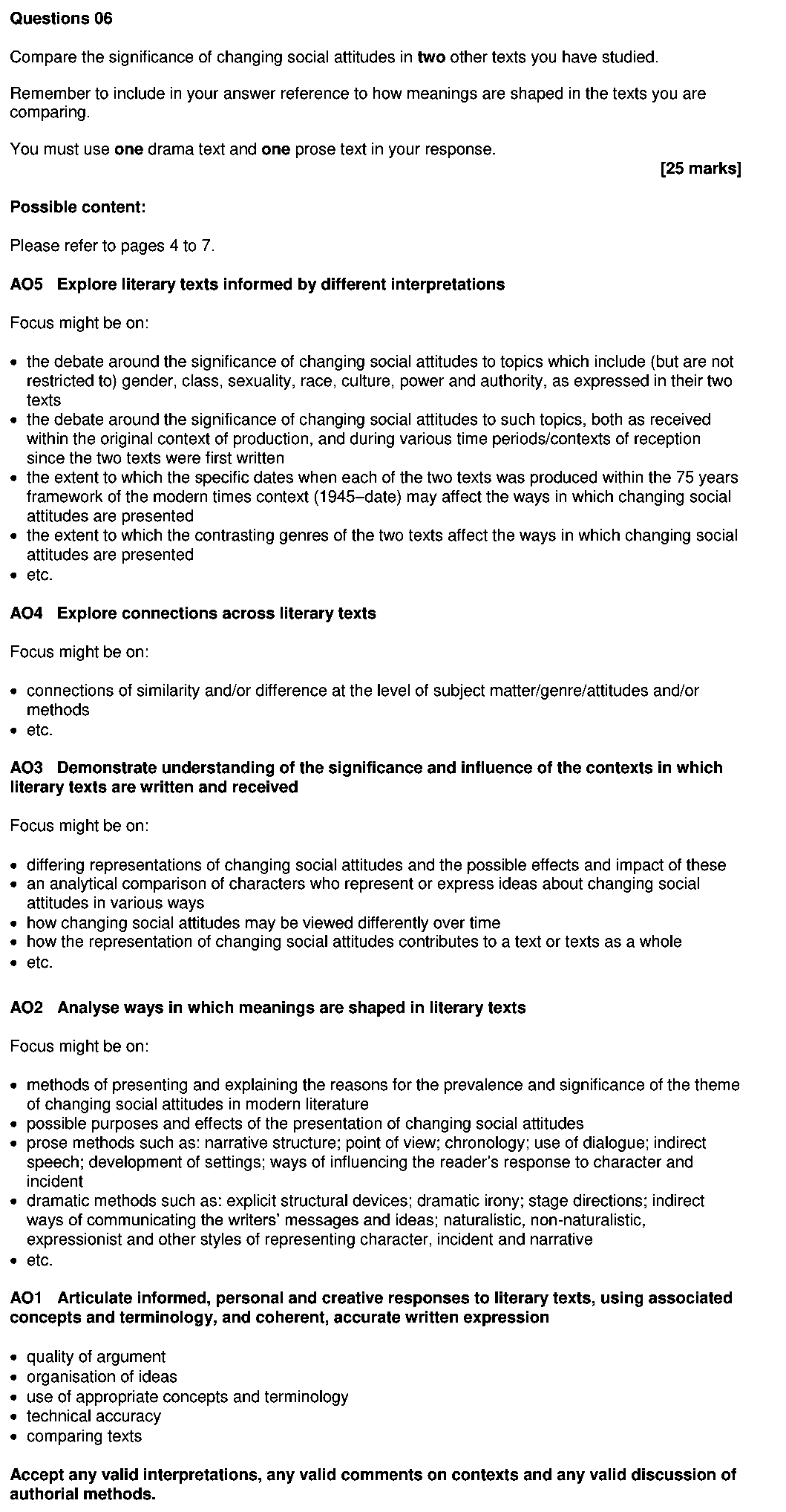
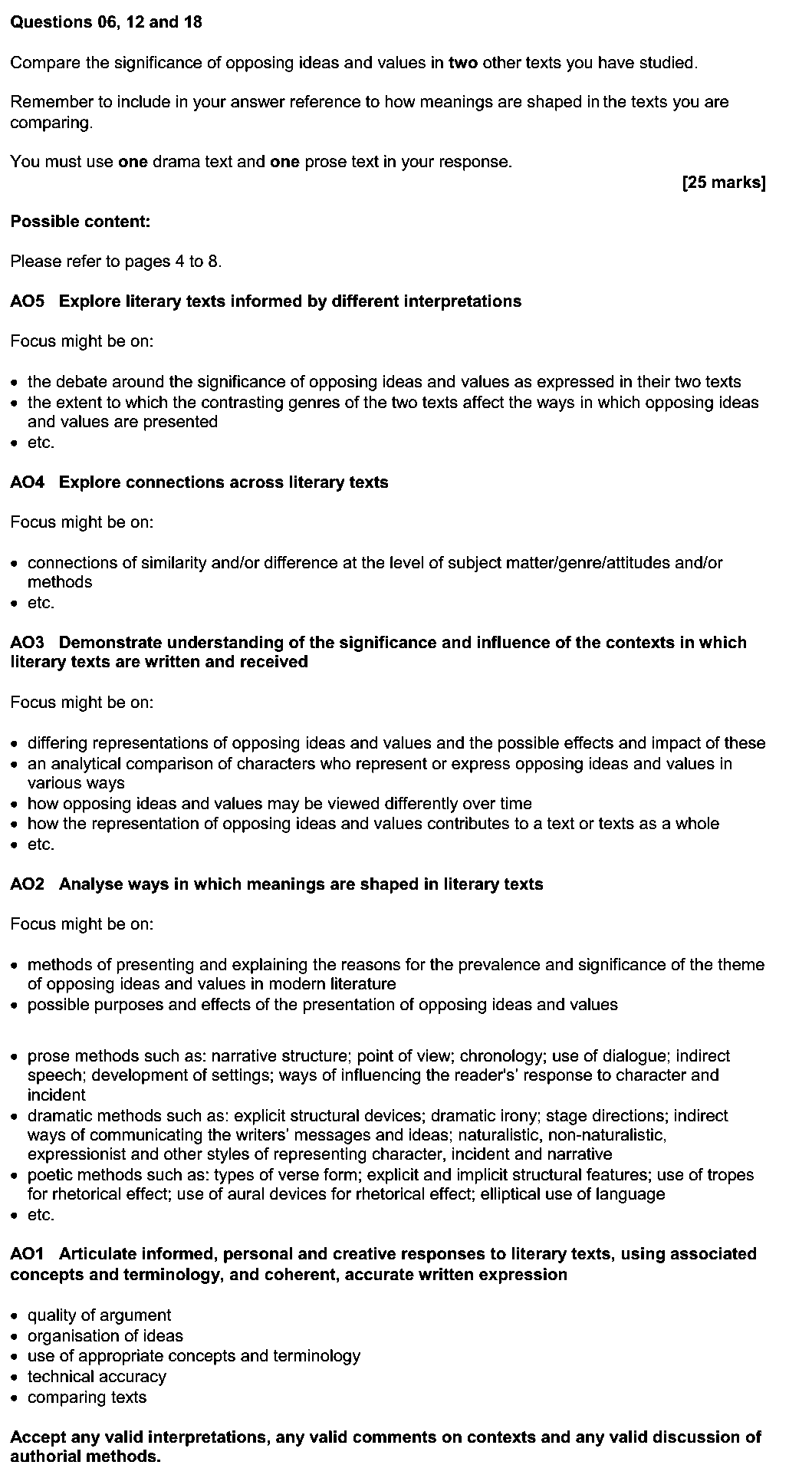
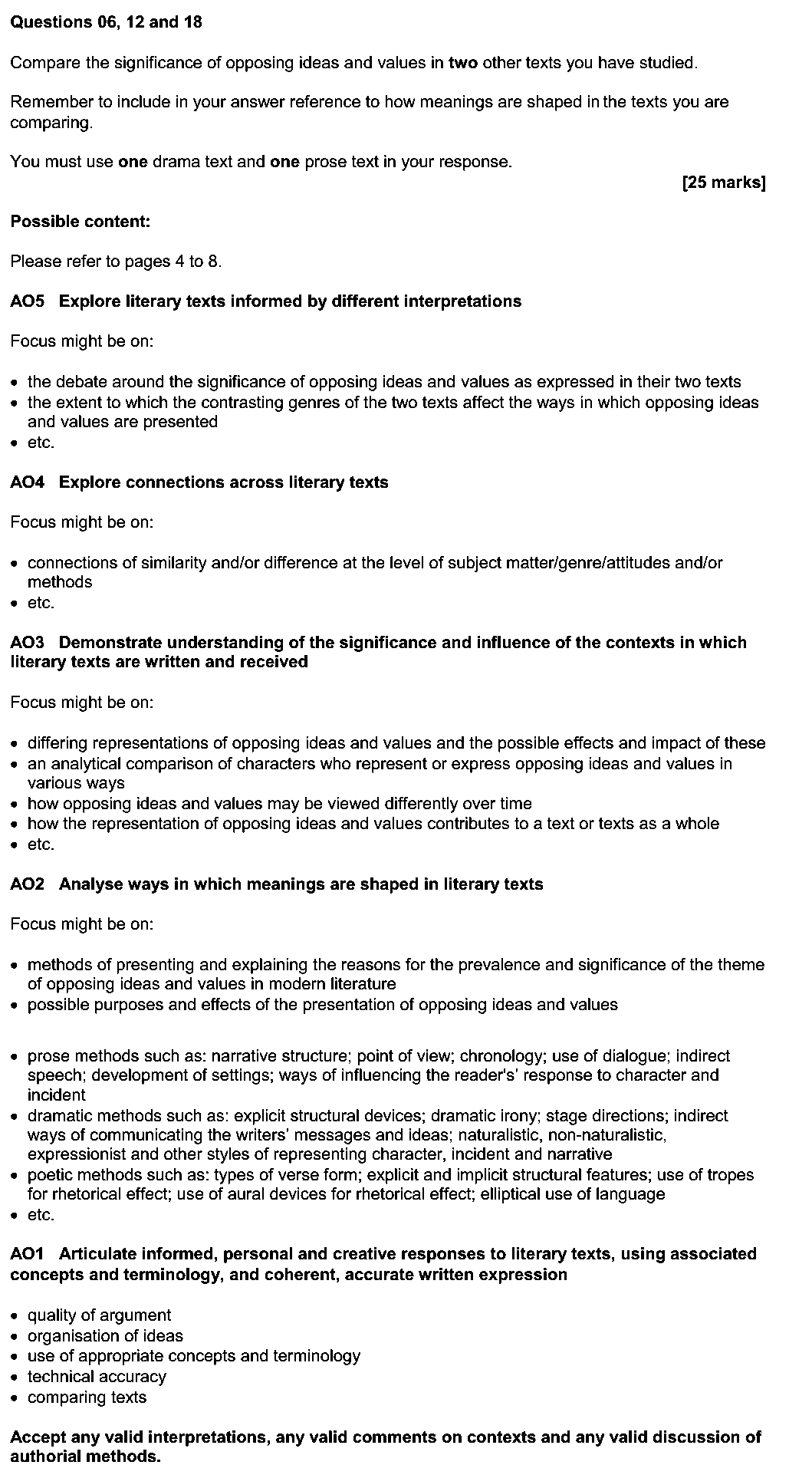
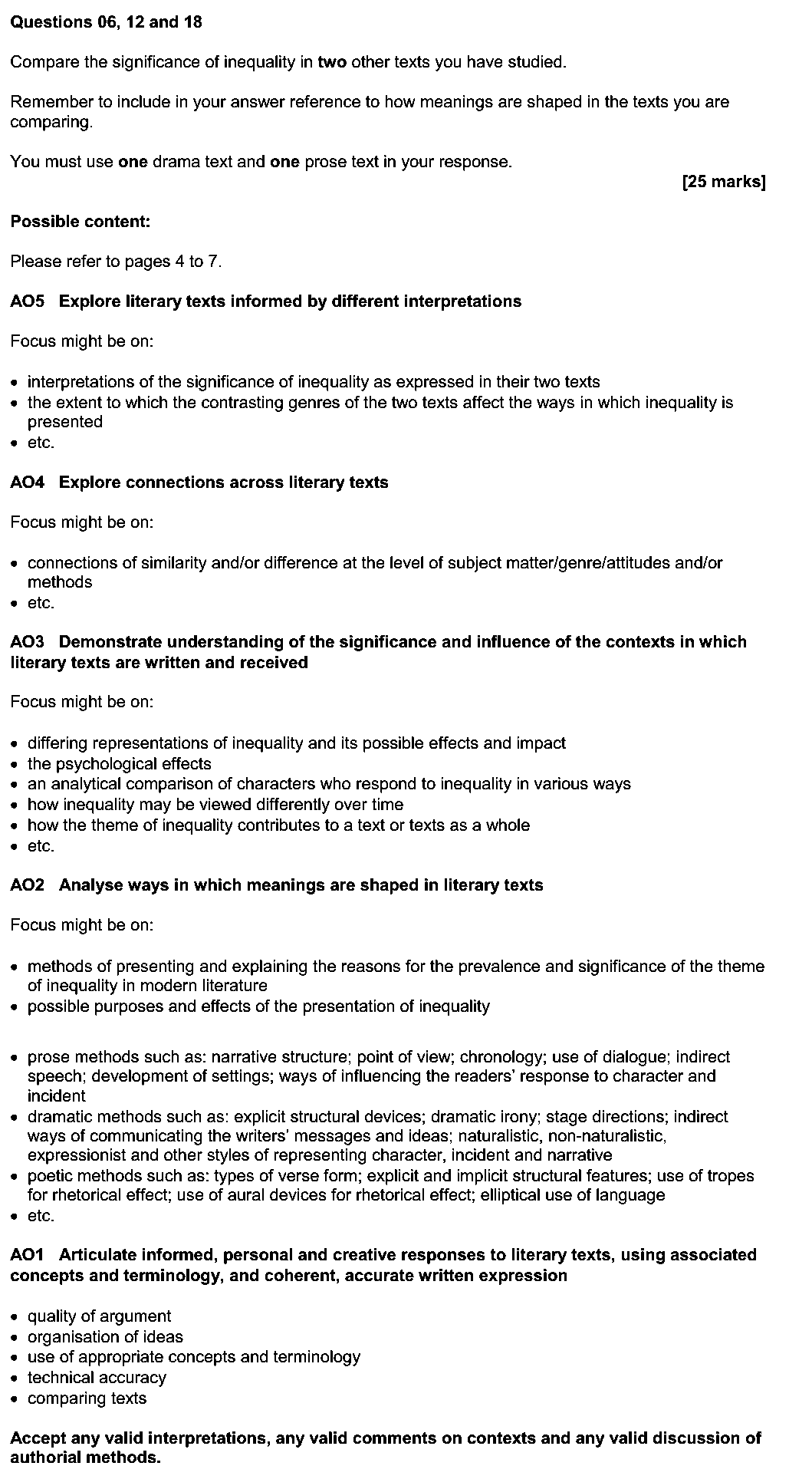
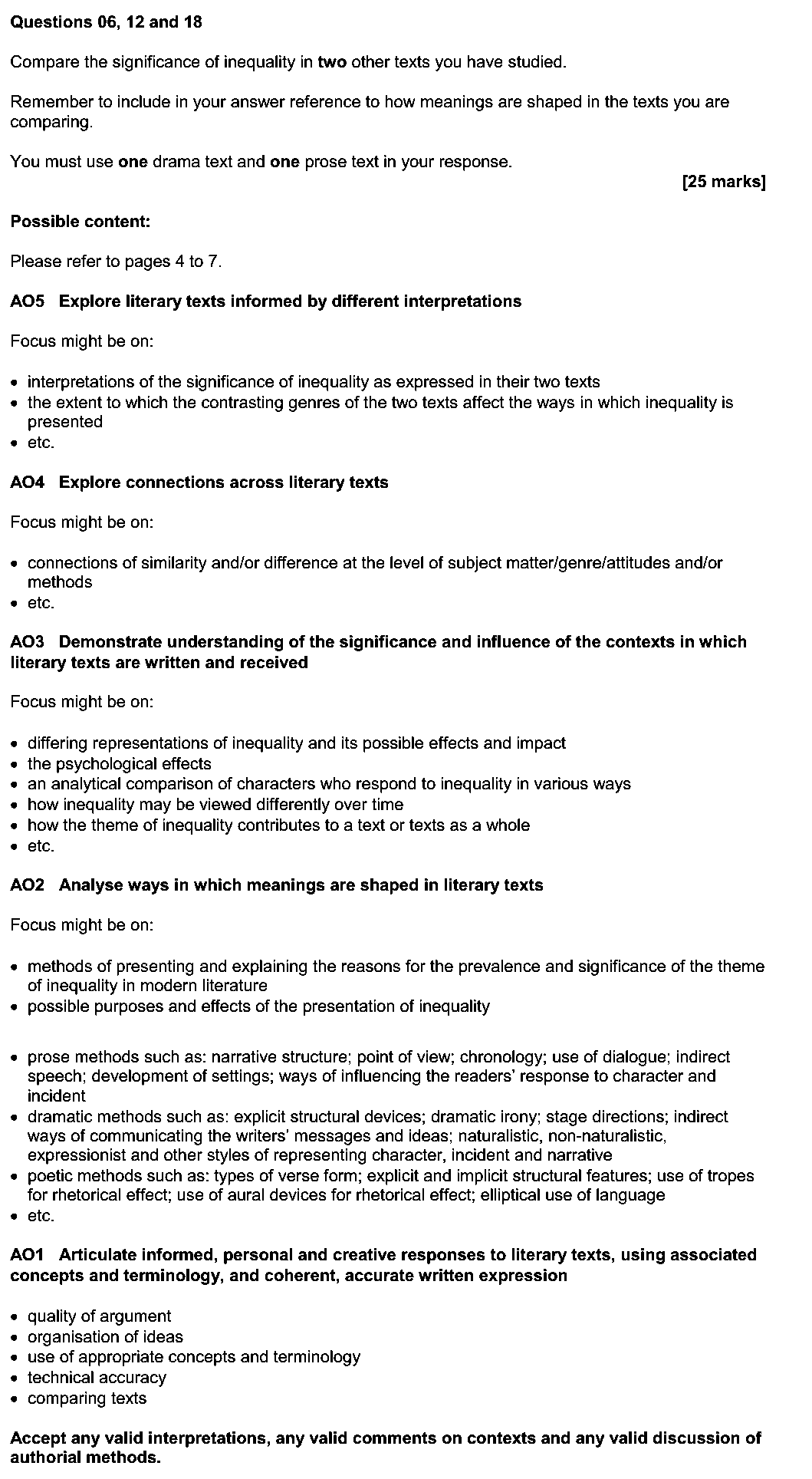
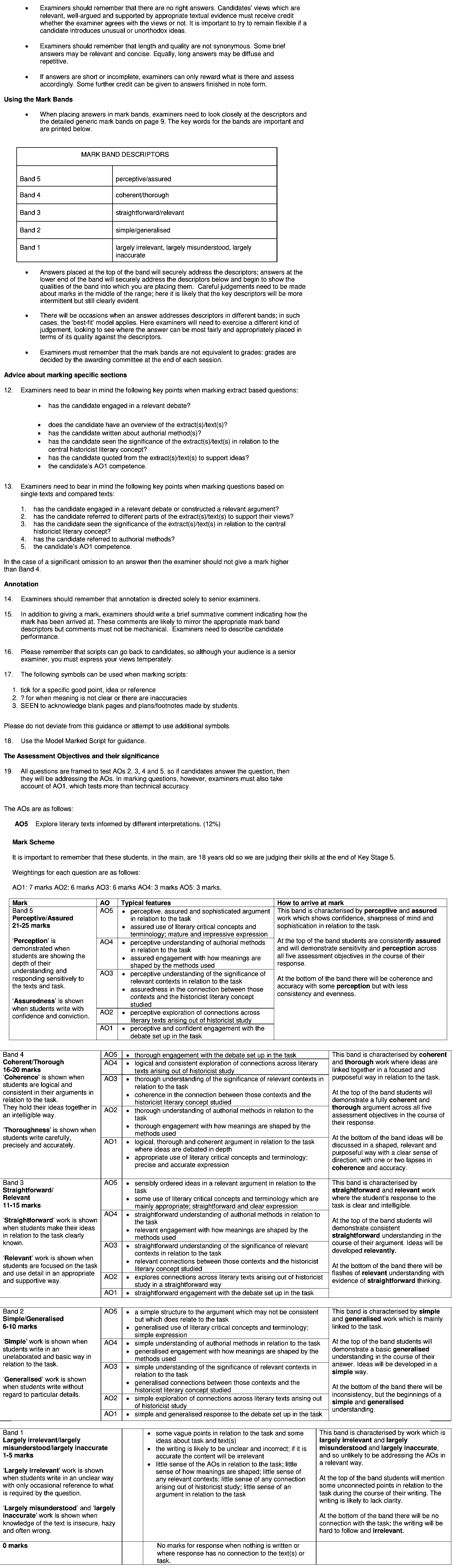
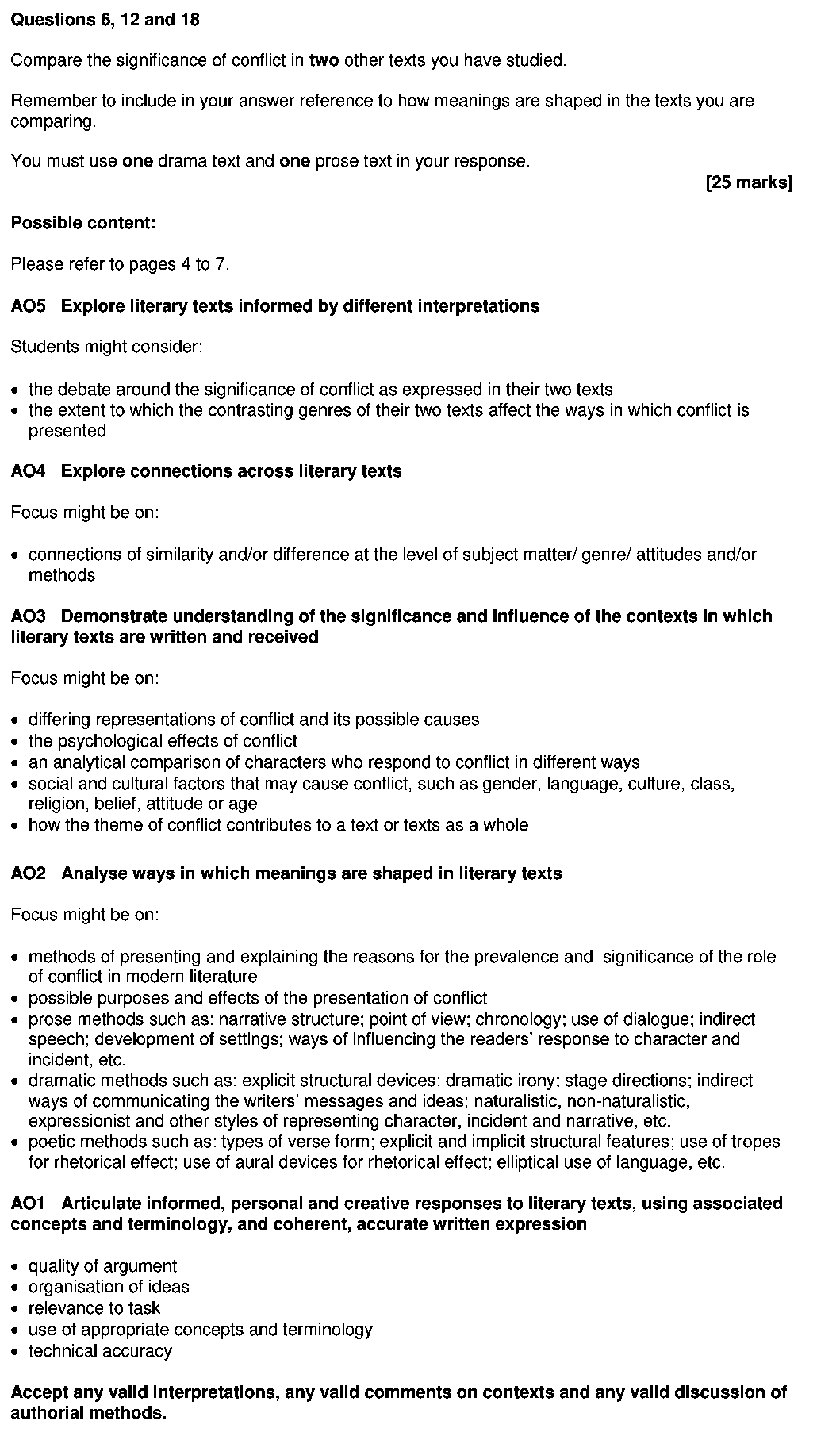
The general mark scheme (assessment objectives and bands)
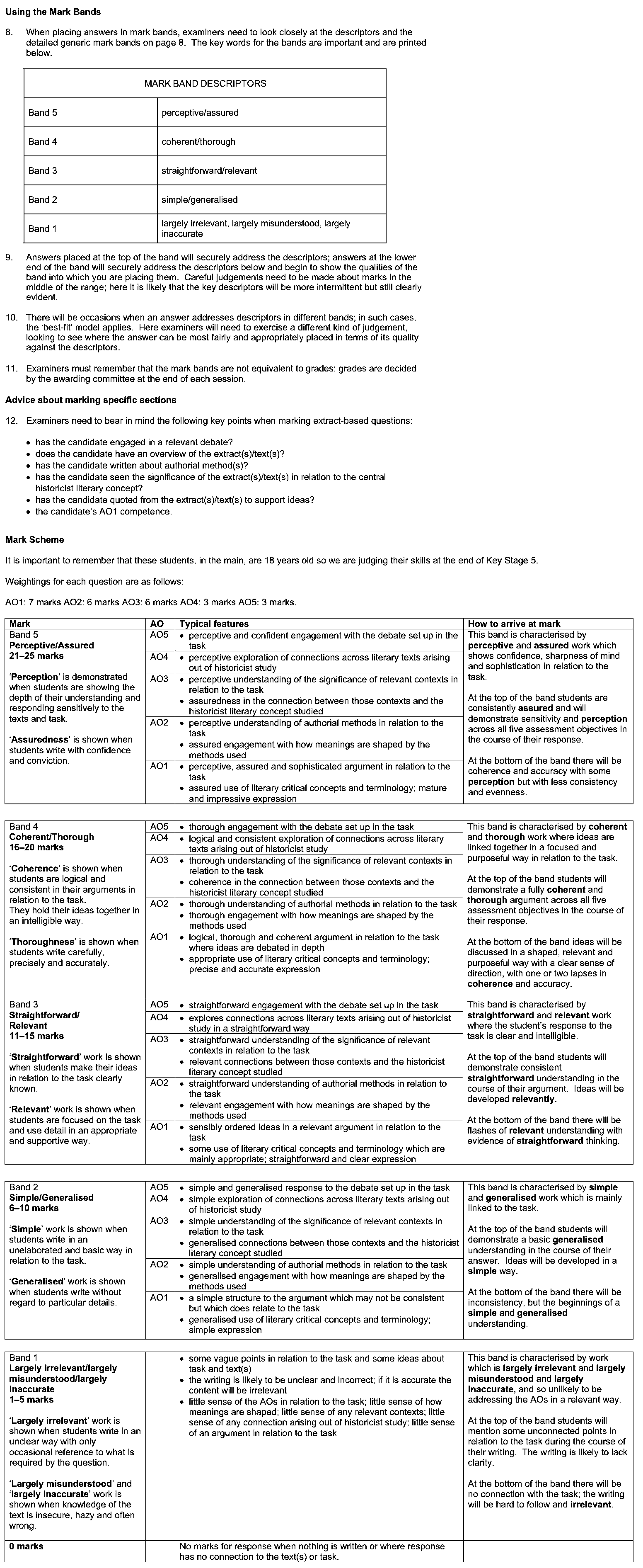
Examiner's comment
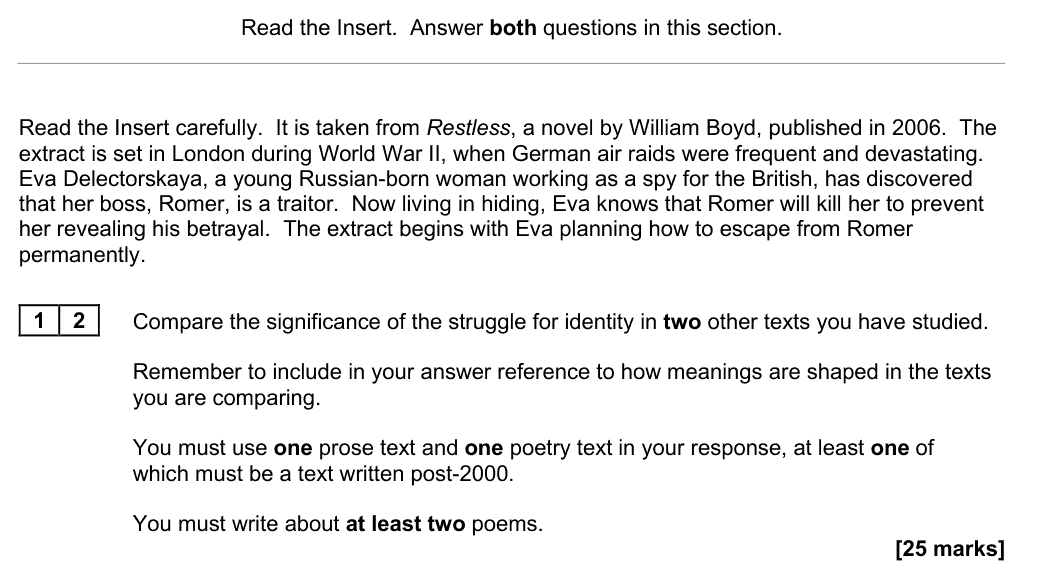
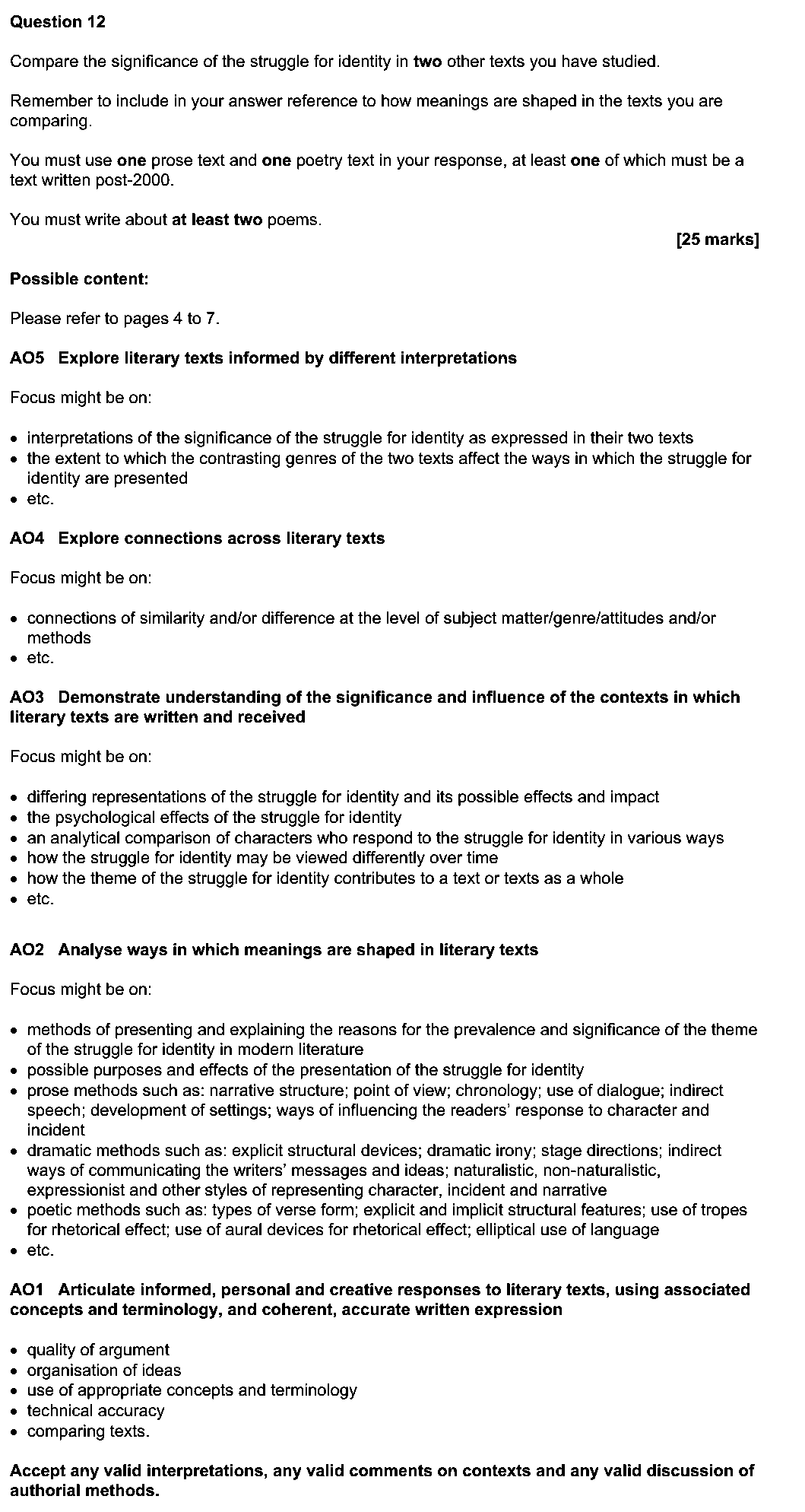
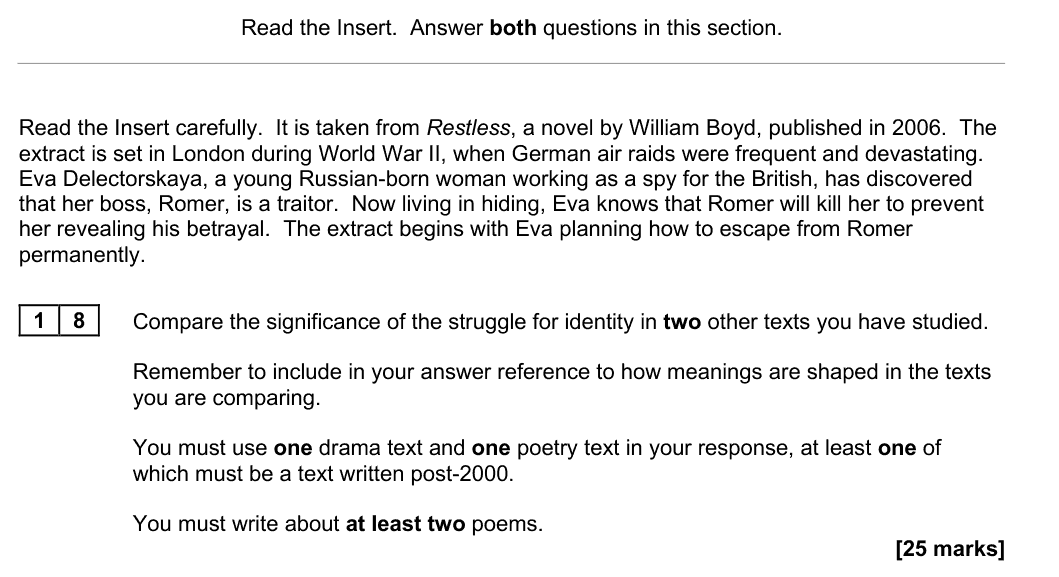
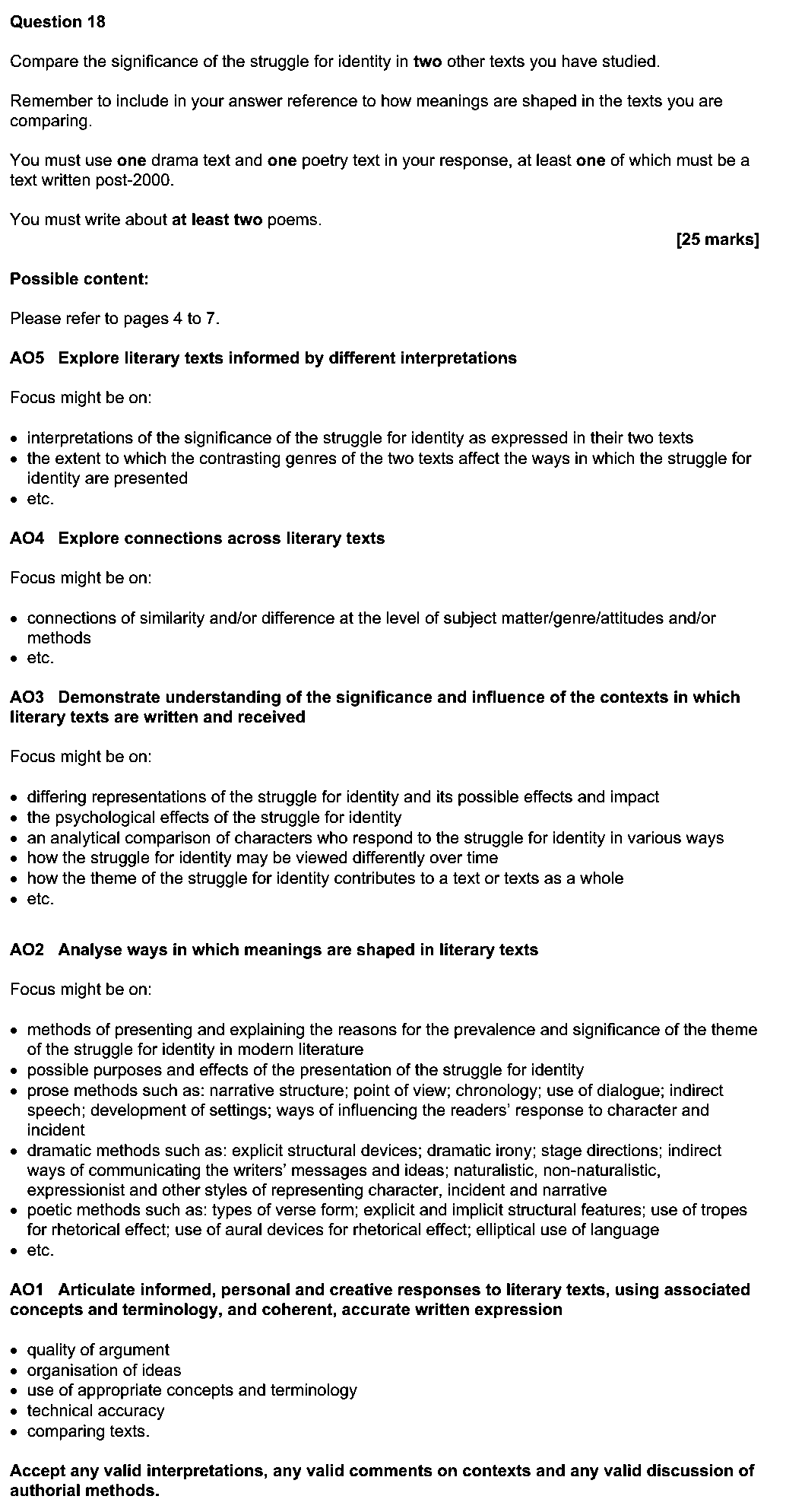
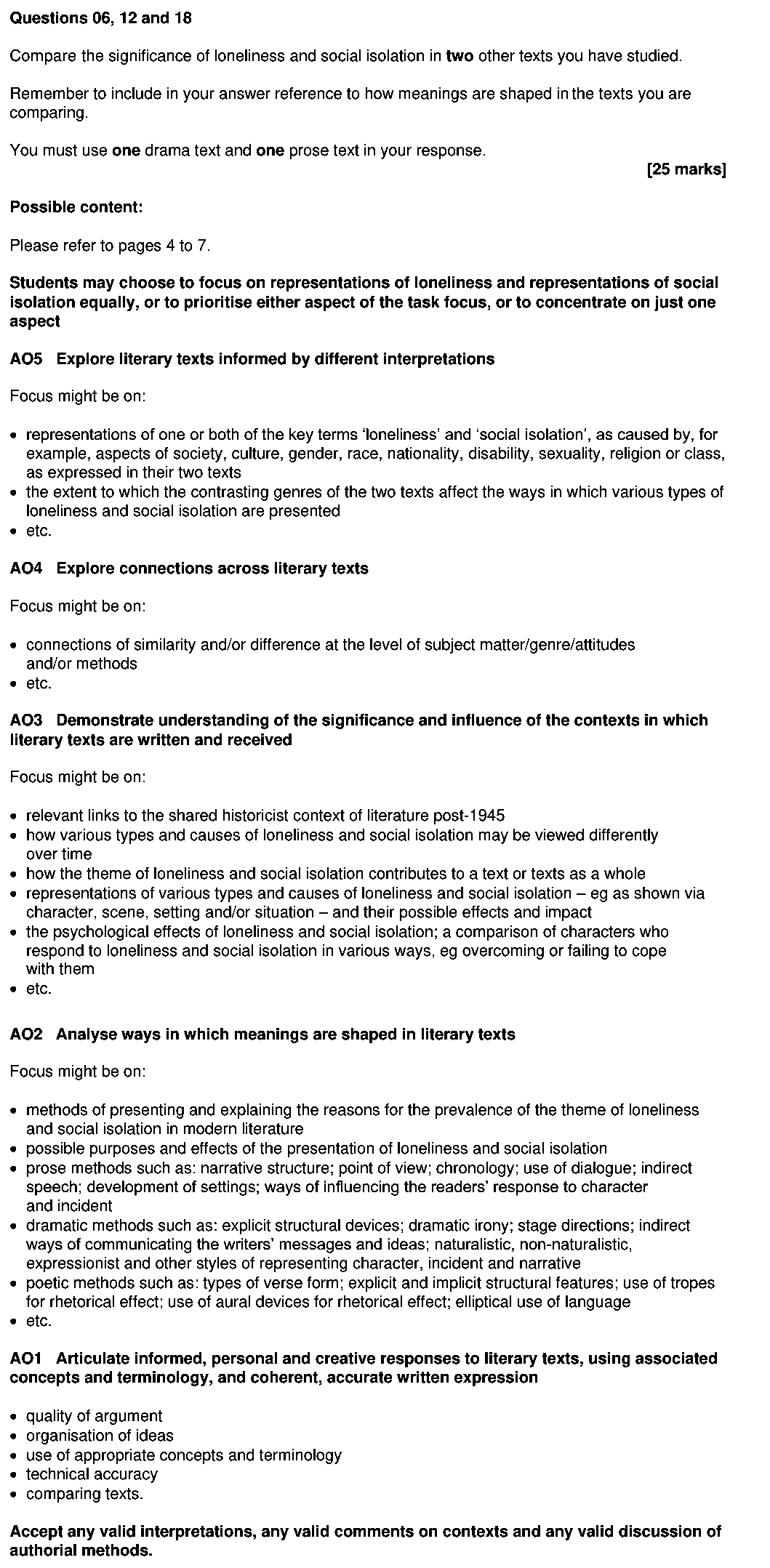
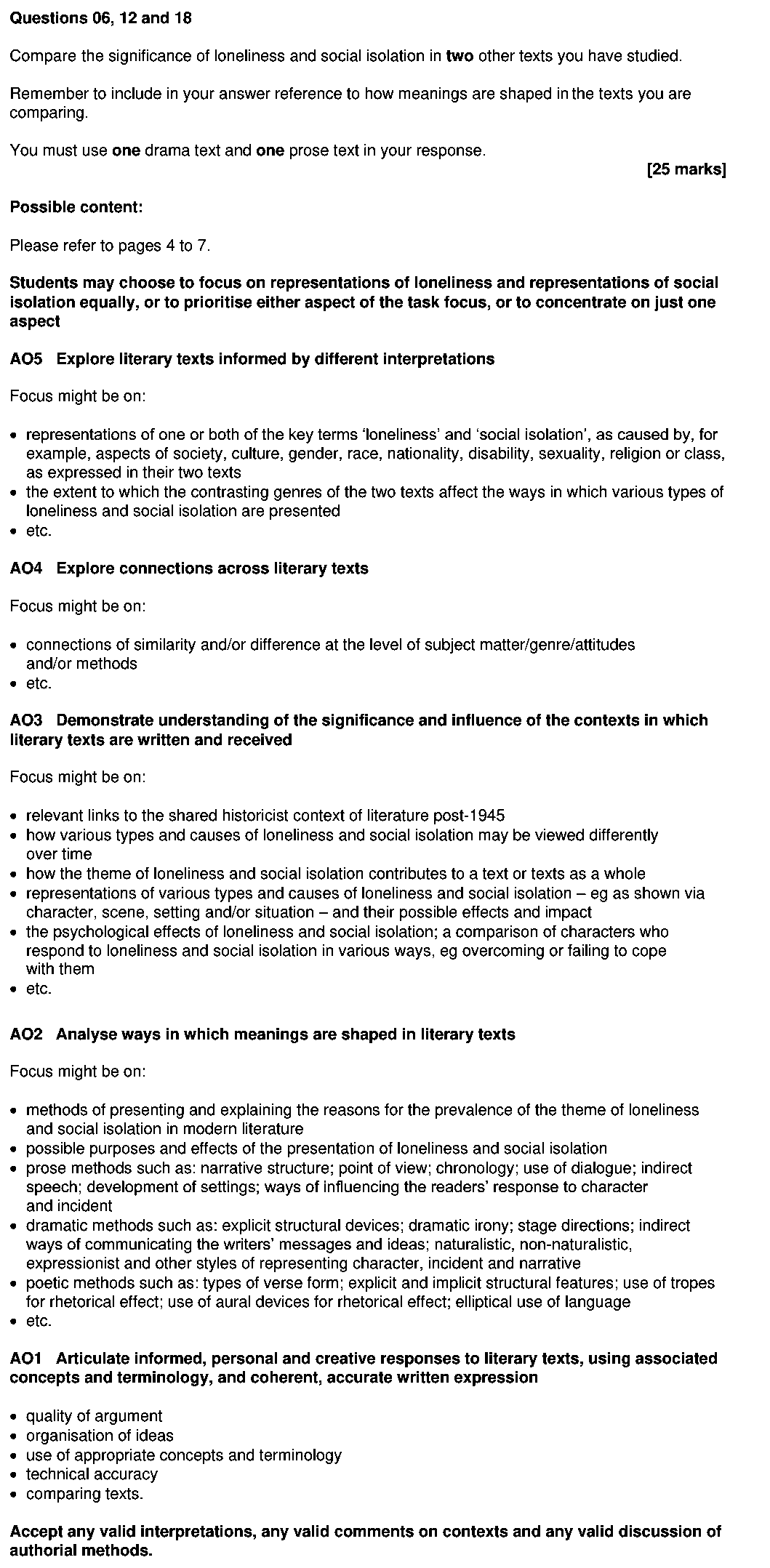
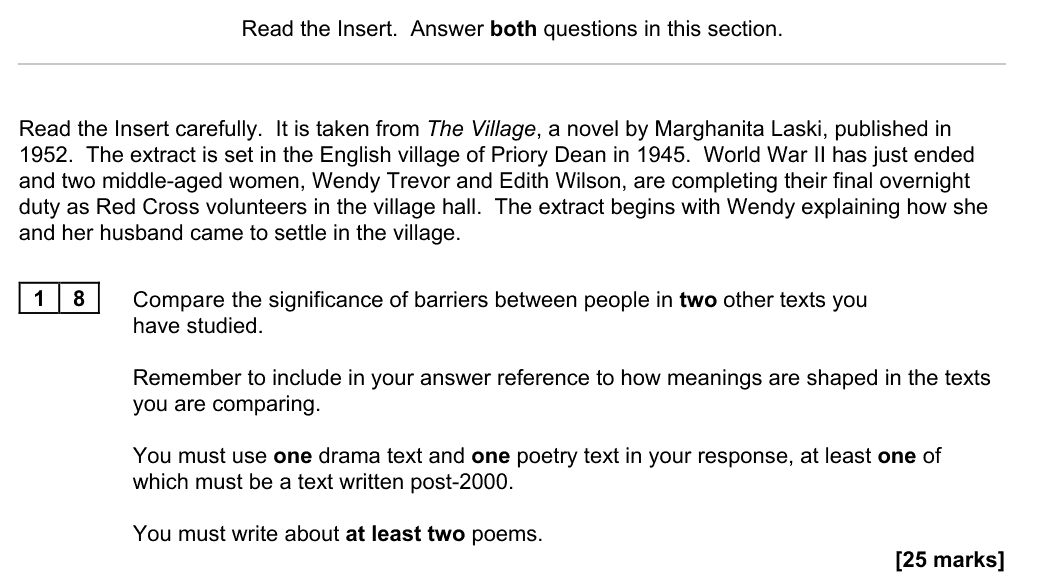
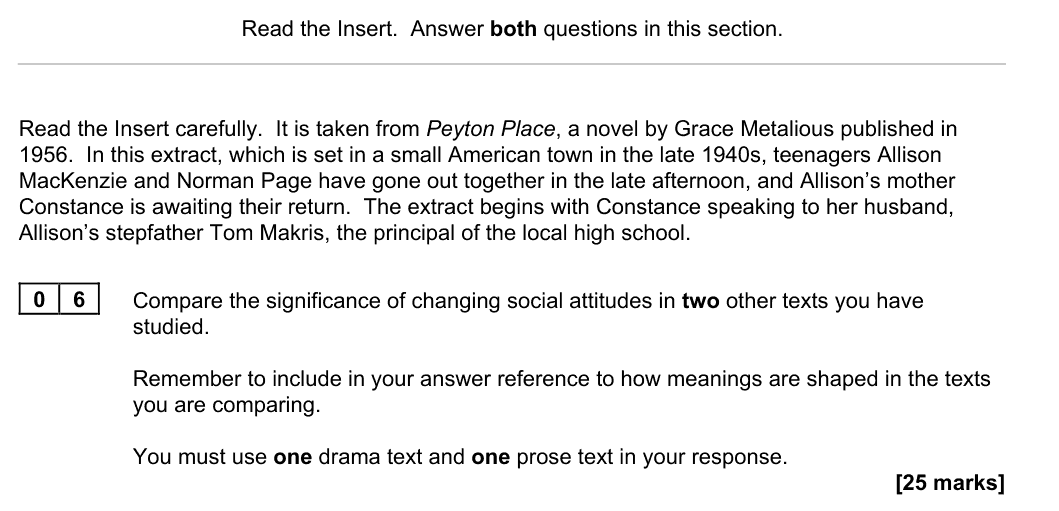
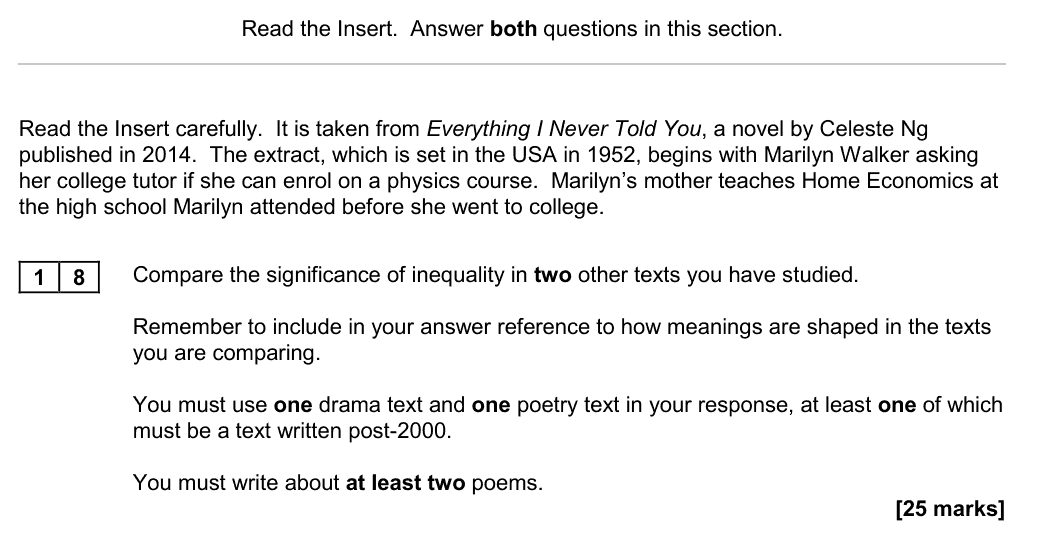
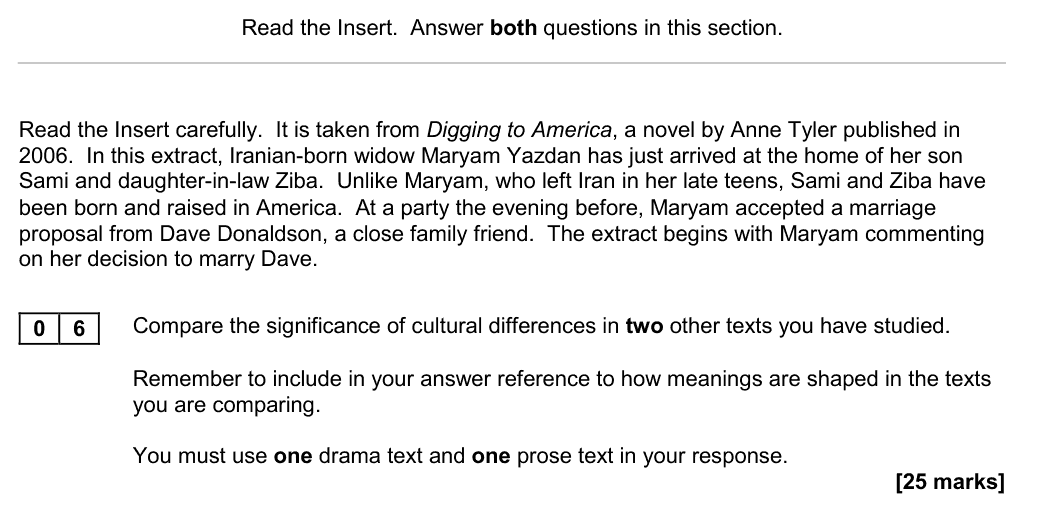
In Paper 1, two out of three tasks involve explicit comparison. In Papers 2A and 2B, one out of three tasks is explicitly comparative. The NEA task is also explicitly comparative. In stark contrast, Specification B never asks students to compare one text with another. There are other kinds of comparison involved in Specification A tasks too, of course, such as explicit or implicit comparison within the shared contexts to establish typicality or atypicality. To connect texts successfully within the framework of this question, students must remember that they have been instructed to compare the presentation of the given theme – the struggle for identity - across two texts from different genres. Sometimes even relatively strong candidates did not take full advantage of exploring these differences, and the weakest responses almost always insisted, often very unconvincingly, that their comparative set texts dealt with the given theme in ‘very similar’ ways. Many students defaulted to using the connective ‘similarly’ before going on to make a point that actually pointed to a major difference between the texts. When comparing any two of the three genres of poetry, prose and drama, it is crucial to analyse how they differ. There is no point in asserting that two texts are similar simply because they both deal with the same given theme – all the comparative set texts must do so, or the question could not have been set. The focus of the response must be on presentation, not merely content; the how as much as the what. Previous reports have stressed the importance of being able to explore specific poetic, dramatic and prose methods so that an understanding of how writers operate can be established by the student. Successful responses tend to be marked by an awareness and understanding of the genre under discussion, and that poets, dramatists and novelists have different ways of working. Examiners understand that like is not being compared with like here, so a novelist’s or dramatist’s methods may need more exposition and reference than those of a poet. The challenge for students is to demonstrate that different terminology and different metrics will be needed to measure the effects of different genre methods. Many students connected texts by putting texts side by side and going from one to the other in a linear fashion. However, the best responses were fully comparative where detailed similarities and differences were closely explored. The latter is a higher order skill that opens up the higher reaches of the mark scheme. Better students worked through thoughtfully developed links between their texts that focused on how the writers’ poetic, narrative or dramatic methods worked to illuminate the theme of the struggle for identity. Crucially, they also clearly identified the nature of this topic as shown within their texts, eg in relation to the role of women, sexuality, class, race. Less able students tended to off-load preconceived ideas about context and typicality without successfully relating them to the given theme – and/or their responses failed to clarify exactly how and where the struggle for identity was to be seen within their chosen texts. At times, a bolted-on contextual overlay swamped the chosen texts, with some students losing focus that this examination is in English Literature (not history, politics, psychology or sociology). Potted histories of various waves of feminism or the struggle for civil rights, for example, are not asked for or required. When exploring their comparative set texts in an Open Book examination, accurate textual detail is crucial; well-chosen aspects of authorial method must form the bedrock of any successful comparison. Students who adopt a lexical approach to AO2 often self-penalise. Writing two or three paragraphs about, for example, the impact on the audience of Tennessee Williams’s use of alliteration in a single stage direction from A Streetcar Named Desire is not a productive mode of literary analysis. Moreover, it is remarkable how many of the students who choose this unhelpful ‘dissection’ approach inevitably do not succeed in getting the basics right; there were numerous over-confident identifications of a specific part of speech in which ‘the adjective’ was in fact a noun, pronoun or adverb. The resultant display is not of knowledge and understanding but the exact opposite. AQA’s Teaching Guide to AO2 offers a clear way into thinking about the different ways in which meaning is shaped across the three different genres. https://www.aqa.org.uk/resources/english/as-and-a-level/english-literature-a/teach/teaching- guide-ao2 More successful comparative set text answers: ● look at both texts with the question focus of the struggle for identity in mind ● sustain a comparative approach ● support relevant readings with specific textual details ● analyse poetic, dramatic and/or prose methods by linking them to meaning, in a tentative fashion where necessary ● apply context in a considered way, again being suitably tentative rather than assertively definitive ● show awareness of typicality in the literature of modern times. Less successful comparative set text answers: ● work through the texts a narrative/descriptive manner, often losing sight of the specific task focus of the struggle for identity ● leave ideas undeveloped and unsupported ● assert over-confident, generalised and speculative interpretations ● describe poetic, dramatic and/or prose methods in isolation, with no reference to meaning, or simply assert an unconvincing link to an alleged meaning ● label methods and word classes inaccurately ● make sweeping, simplistic or inaccurate statements about context and/or typicality in the literature of modern times. Some students used an ornate style of writing which was presumably felt to be ‘academic’, but which, in its convoluted syntax and elaborate (and often inaccurate) word choices, actually impeded the clear communication of meaning. With two texts to consider and an argument to build, comparisons are best constructed with the tools of clear AO1 in a way that signals the argument to the reader and guides them accordingly: ● introductions and conclusions ● clean sentences ● clear paragraphs ● paragraphs that begin with topic sentences that relate back to the central theme ● discourse markers to signal similarity and difference. On the whole, however, many excellent comparative essays were seen that analysed how each text represented the theme of changing social attitudes in terms of attitudes, beliefs, values, norms and ethics. Truly original and fascinating connections were traced across the chosen texts in relation to a wide variety of possible issues and areas that might give rise to changing social attitudes, including gender, class, race, sexuality, religion and mental health. Some students compared how specific characters within their texts respond to the struggle for identity in various ways, and acknowledged how these may be viewed very differently over time. As with this type of very open question in previous examination series, the best answers here were simply outstanding and illuminated the chosen comparative texts in innovative, complex and fascinating ways.
Notes from the mark scheme and report
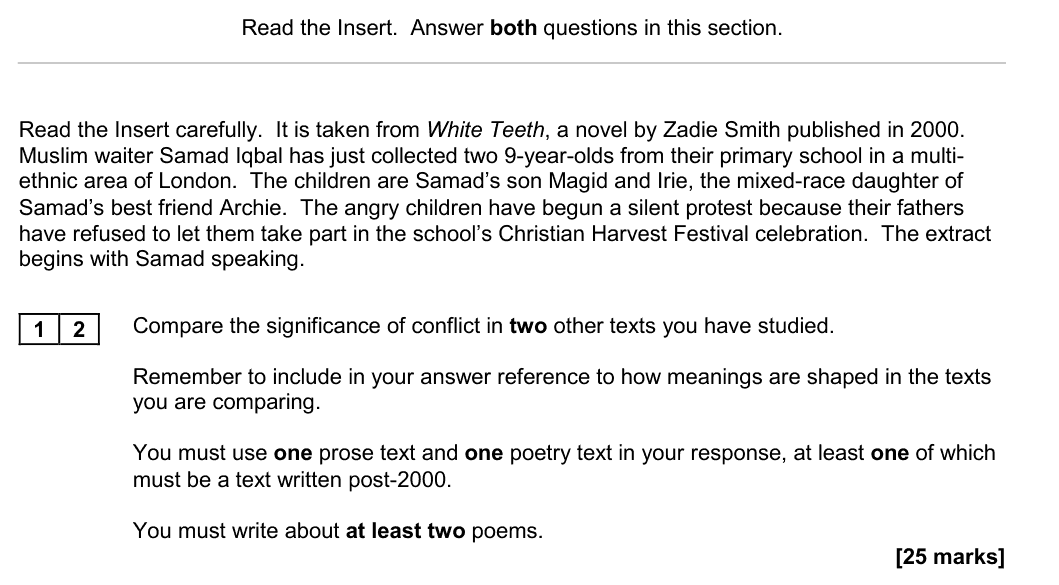
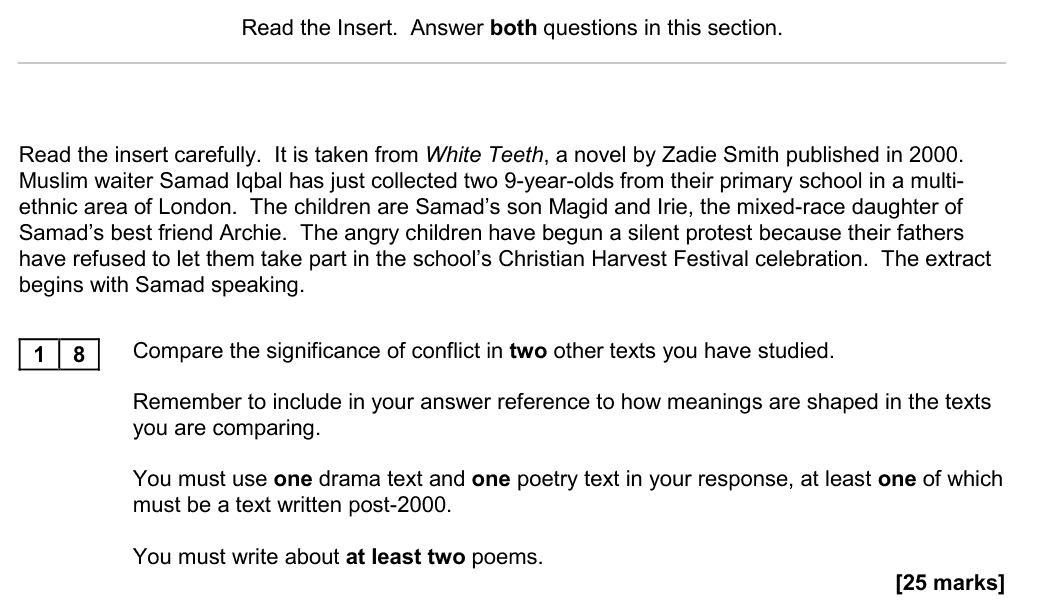
- Focus: theme: the struggle for identity
- Open book, no extract
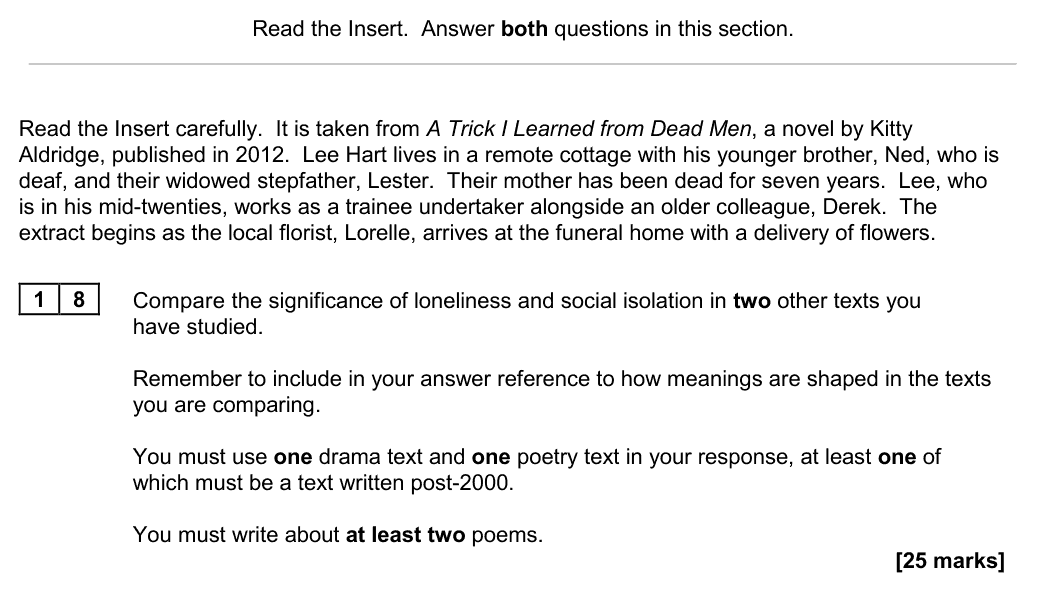
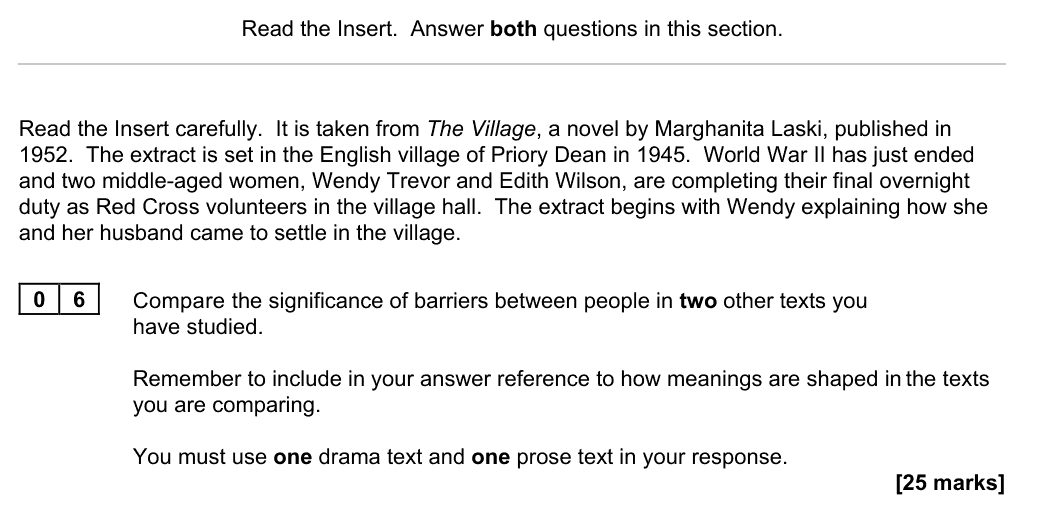
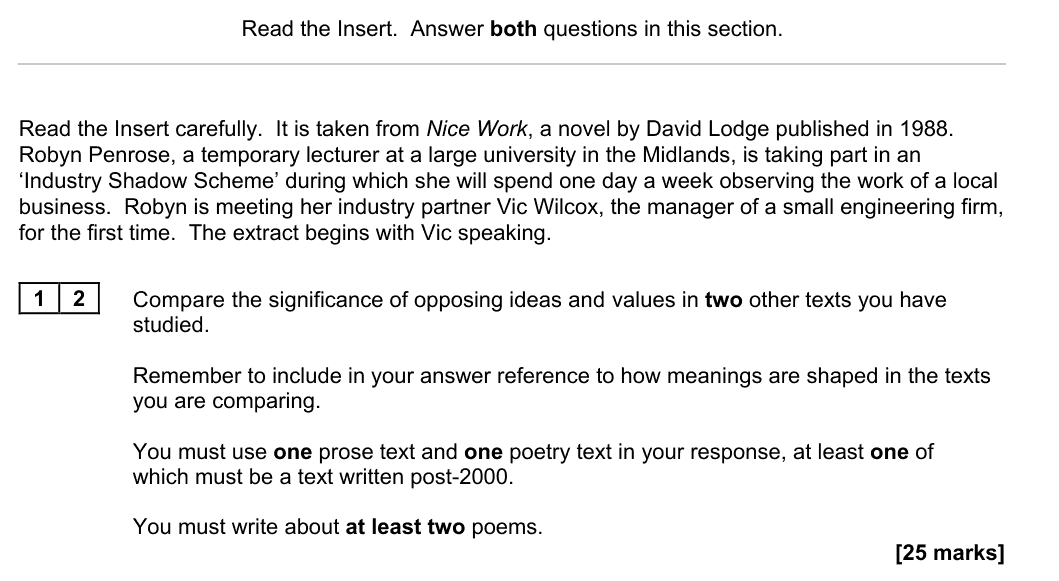
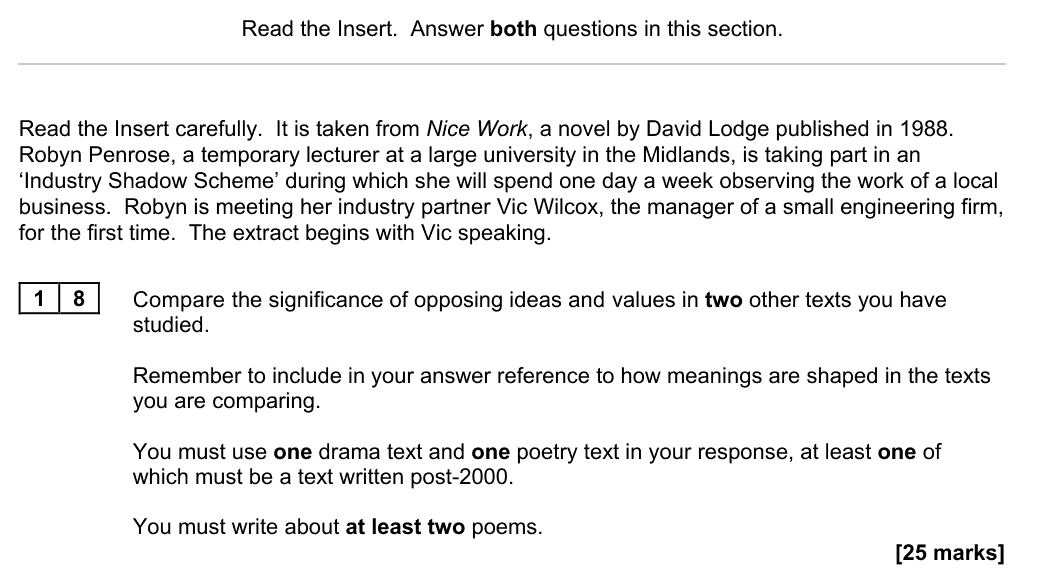
- must use one drama text and one prose text
- compare presentation (the how) across genres and explore differences, including differences of time
- identify how and where the struggle for identity appears (gender, sexuality, class, race)
- avoid bolted-on context, lexical dissection and an ornate style