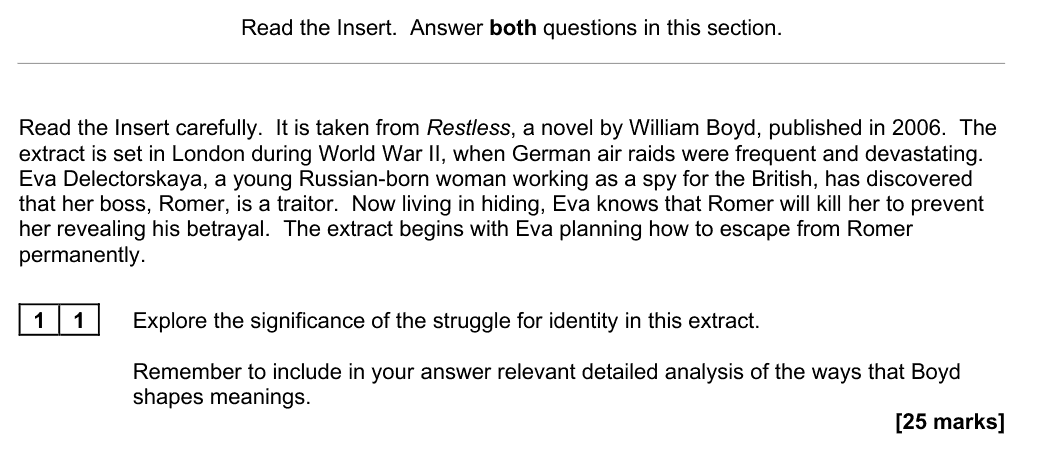
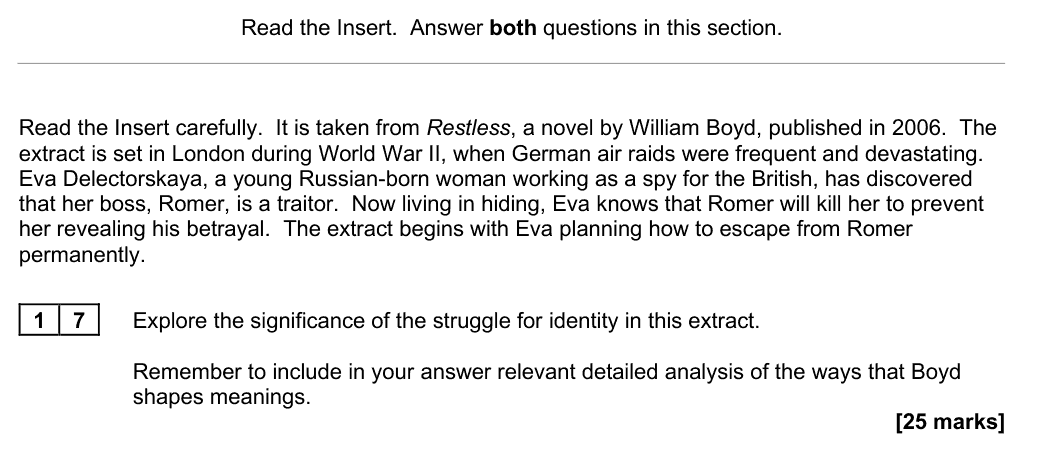
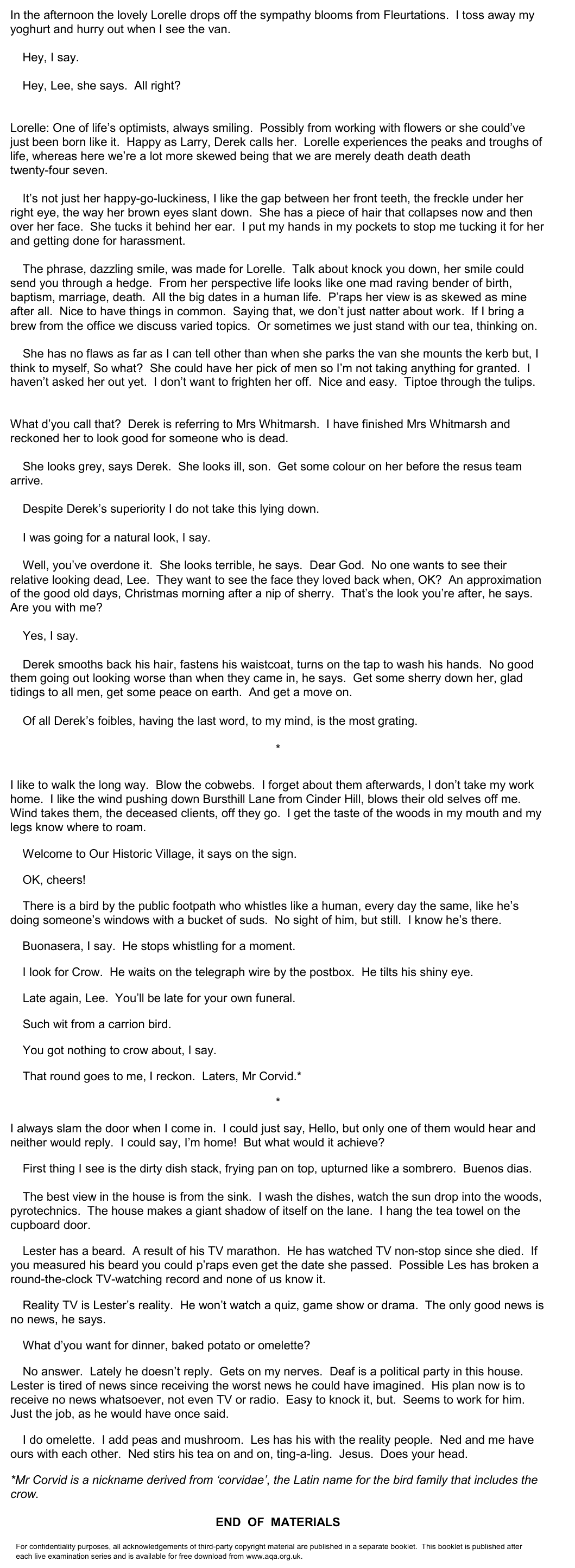
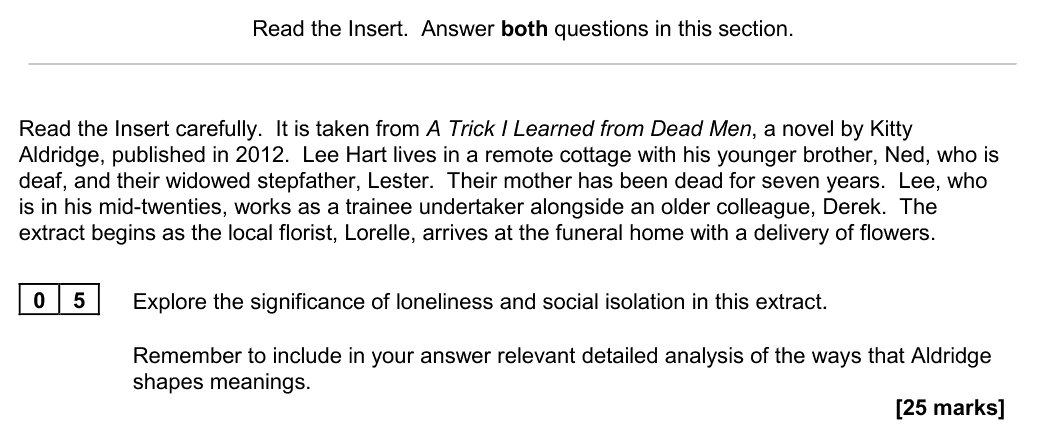
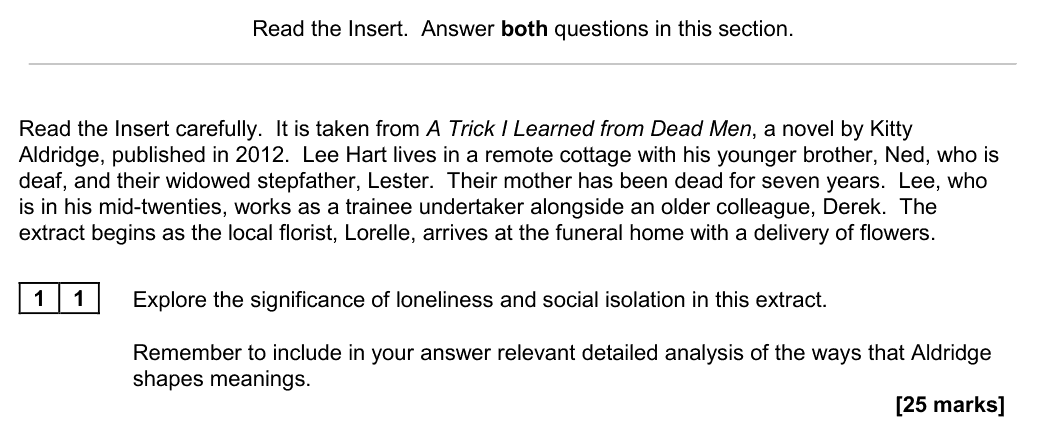
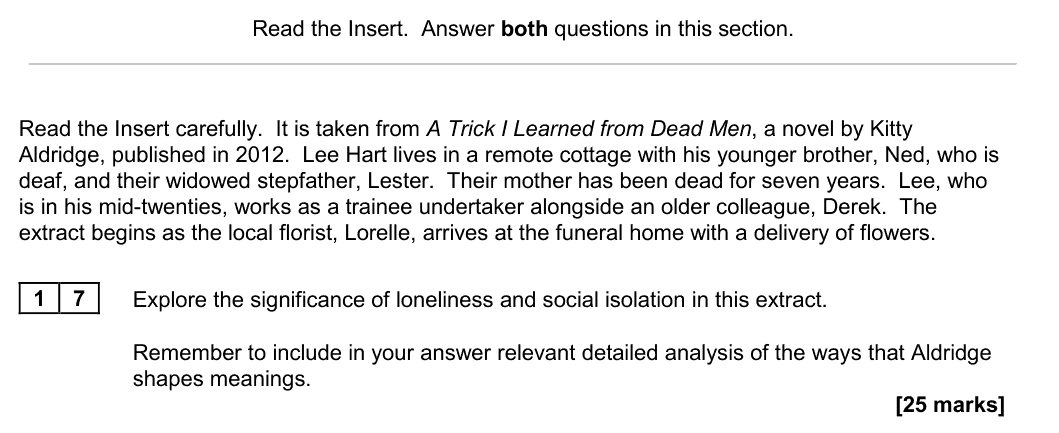
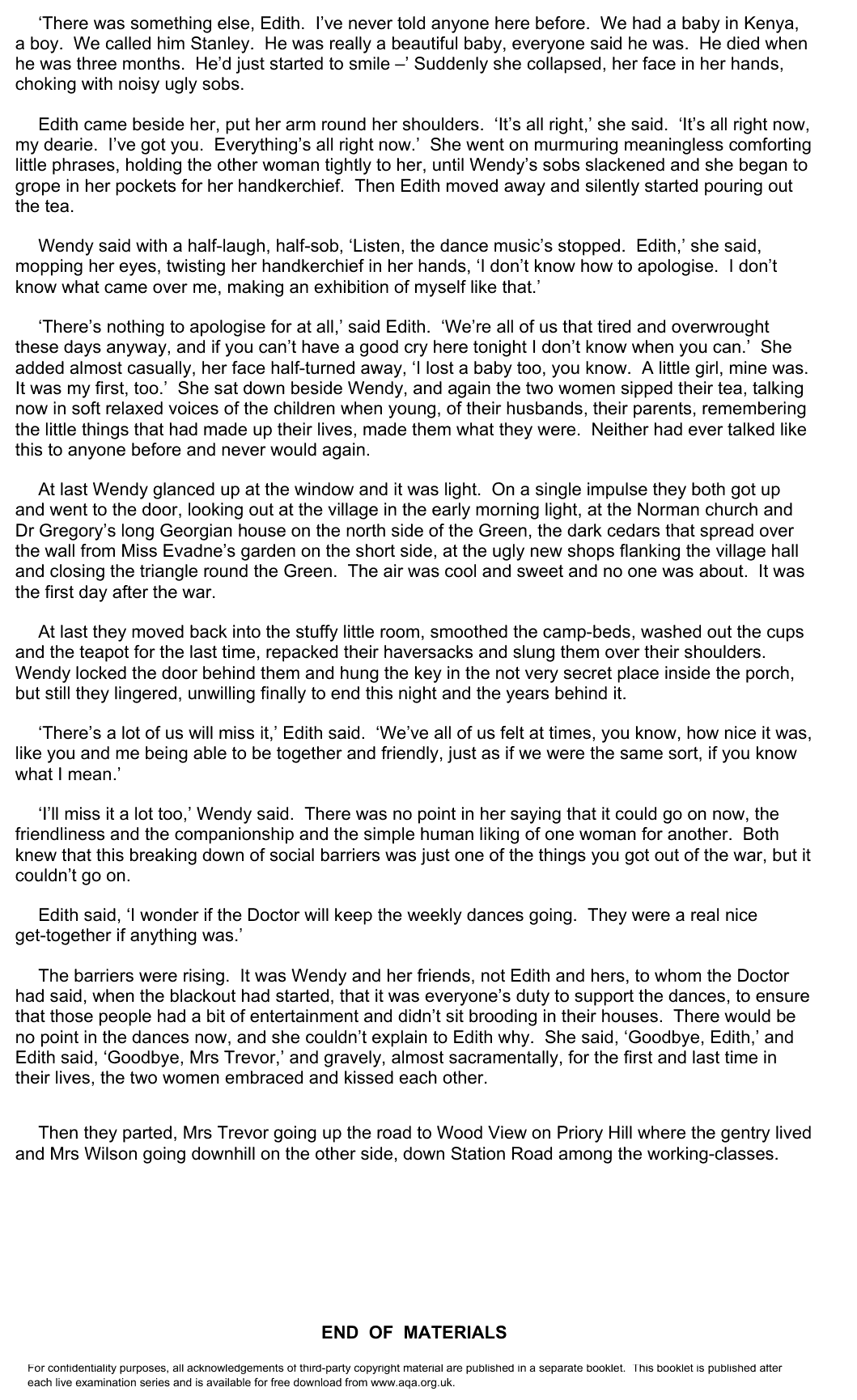
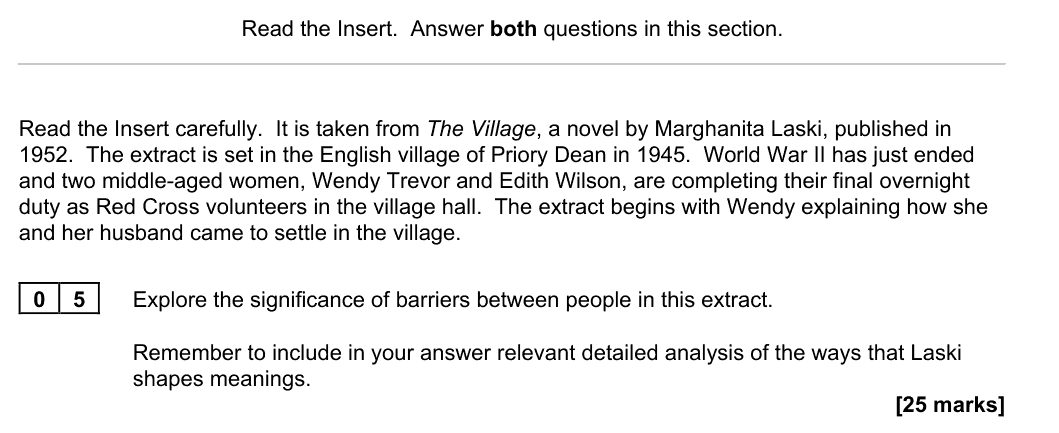
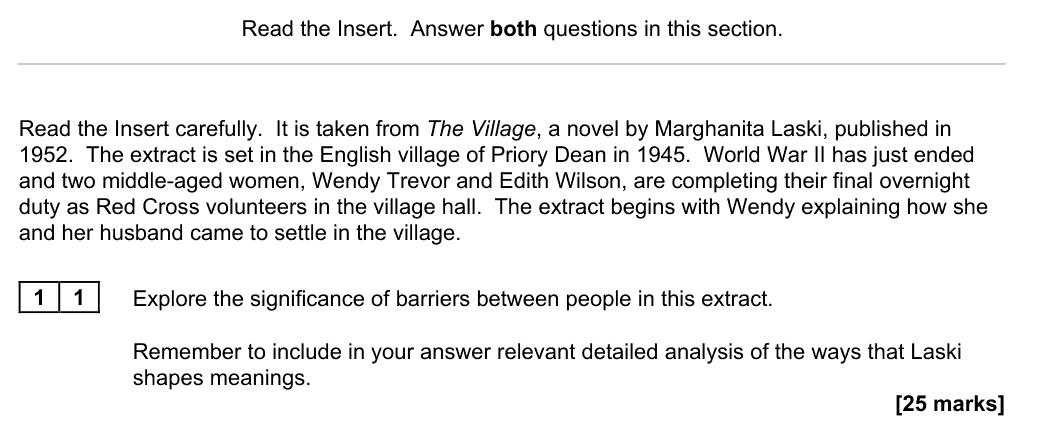
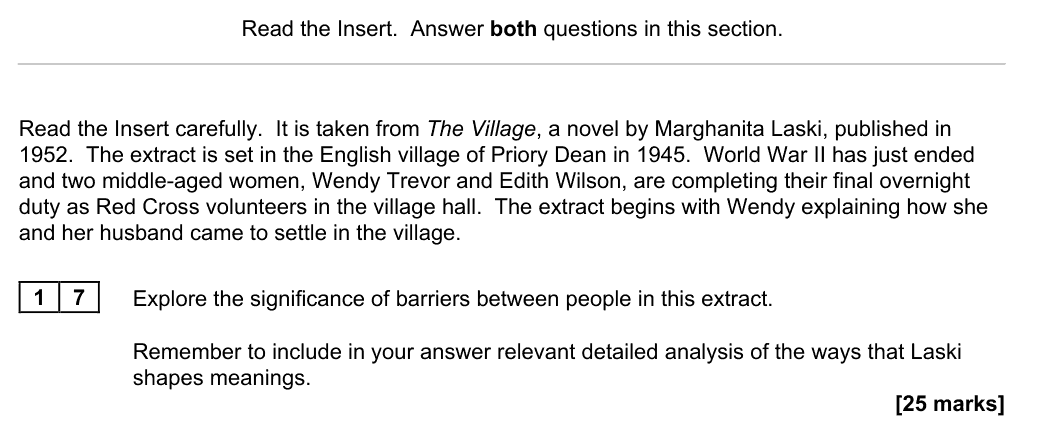
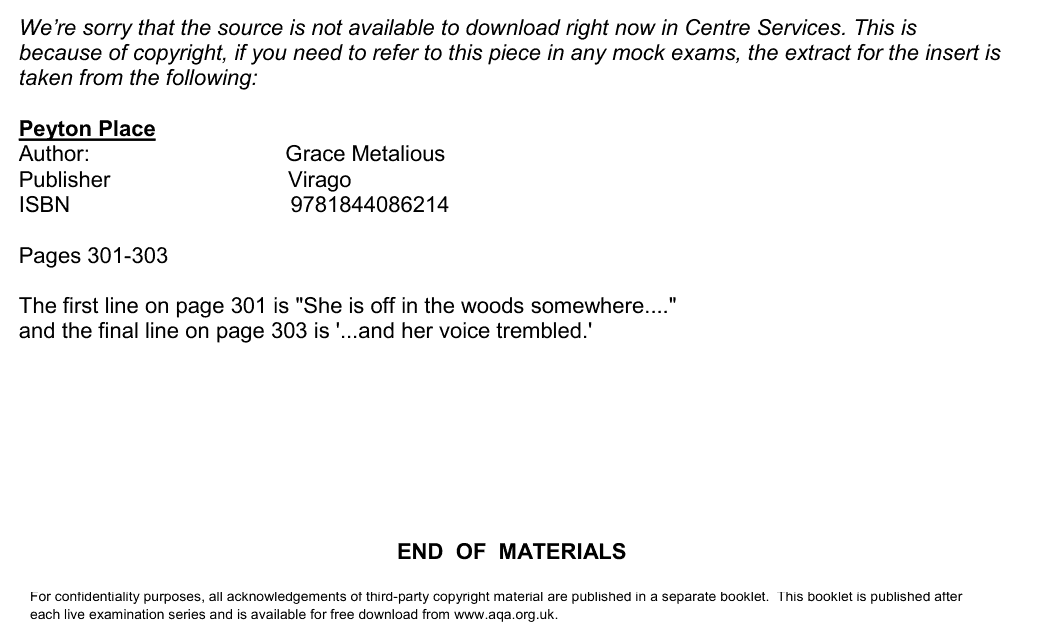
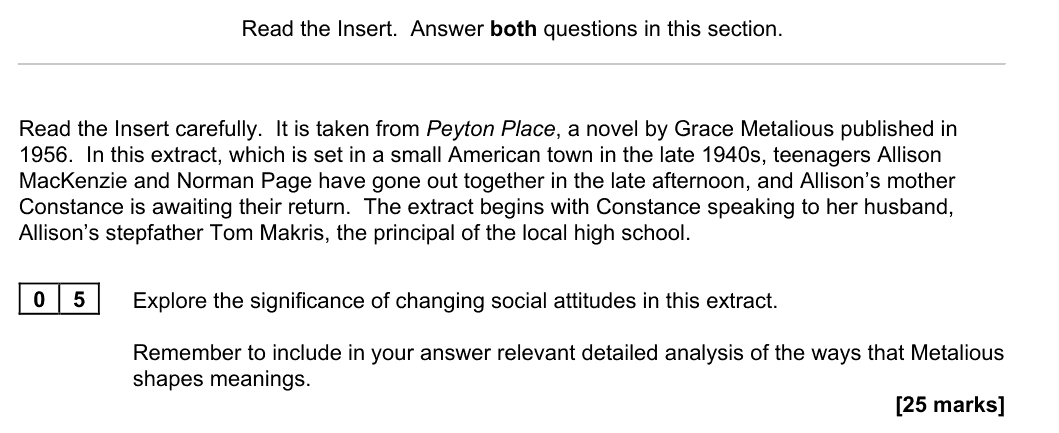
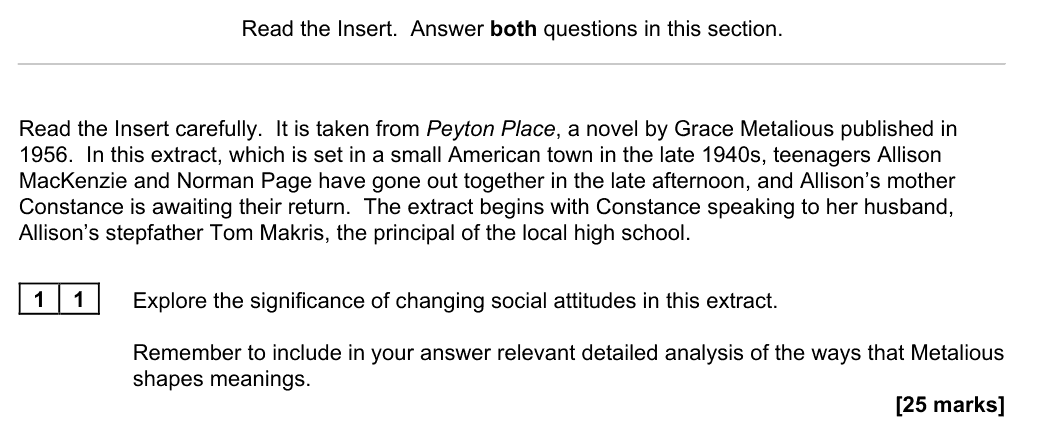
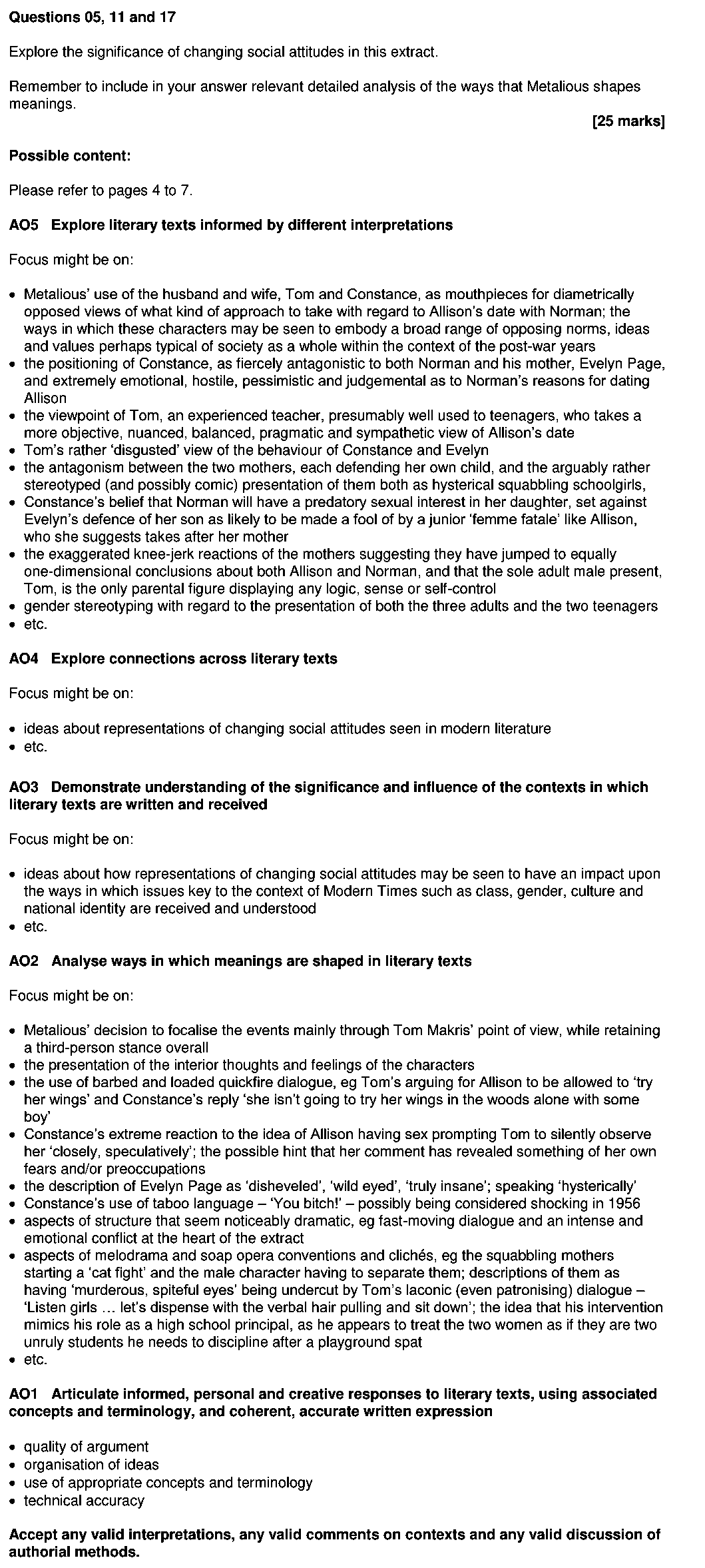
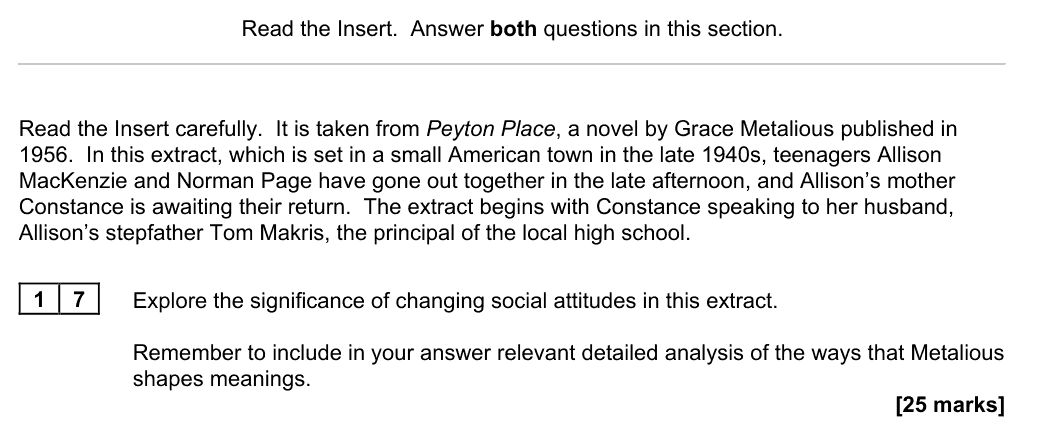
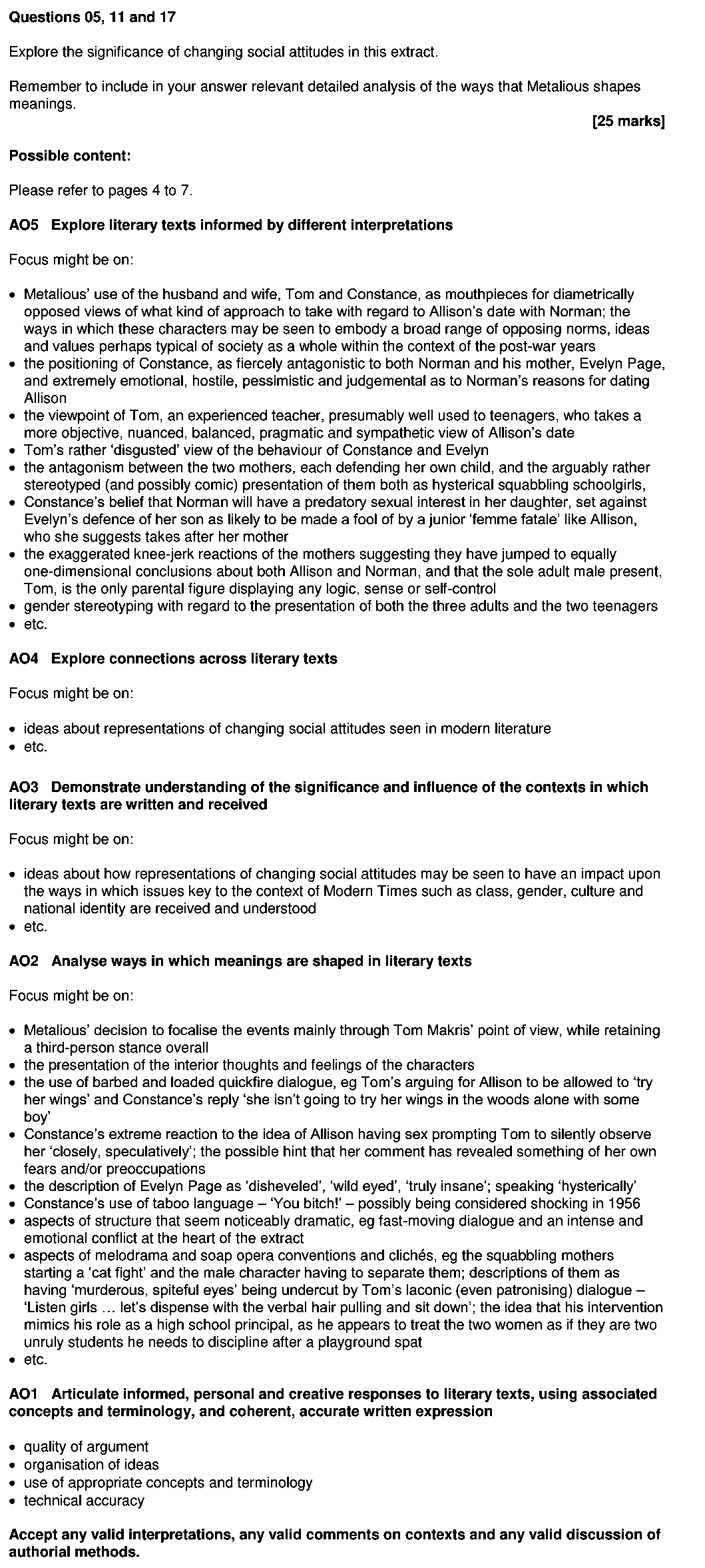
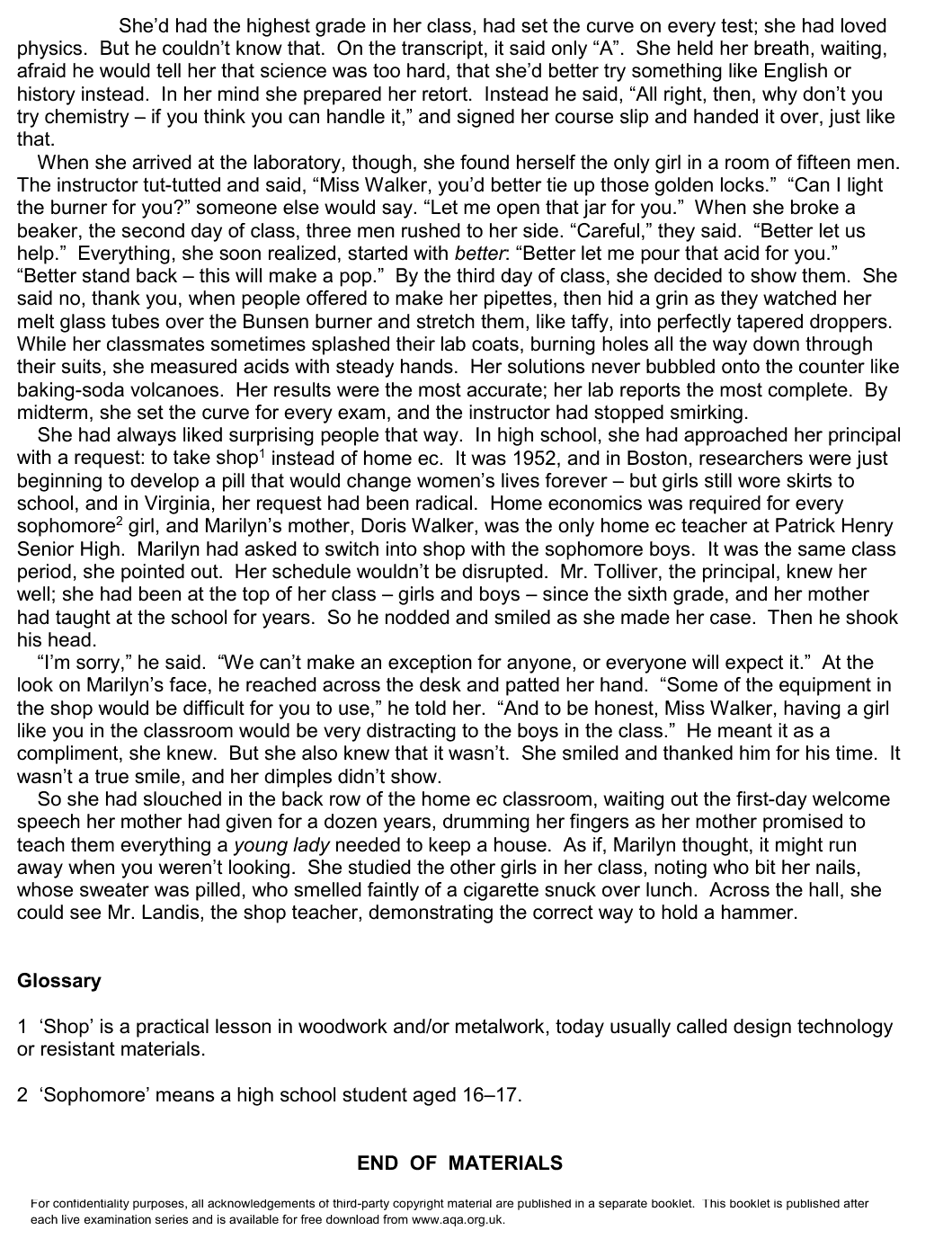
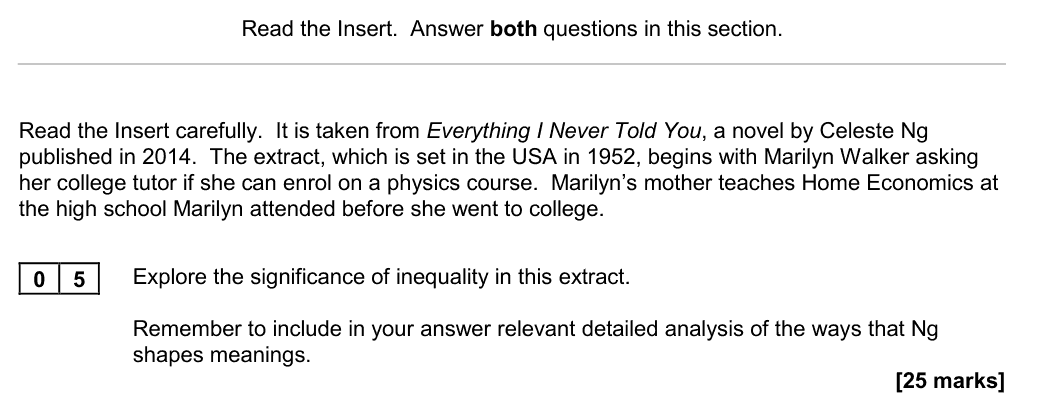
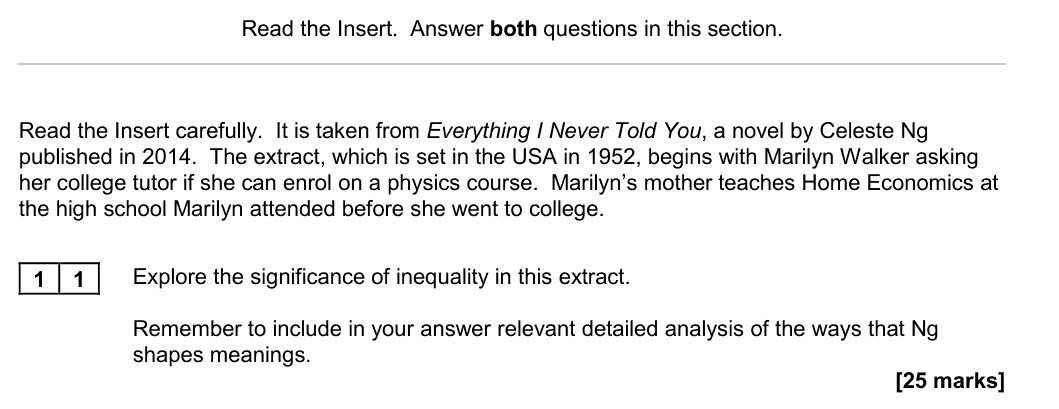
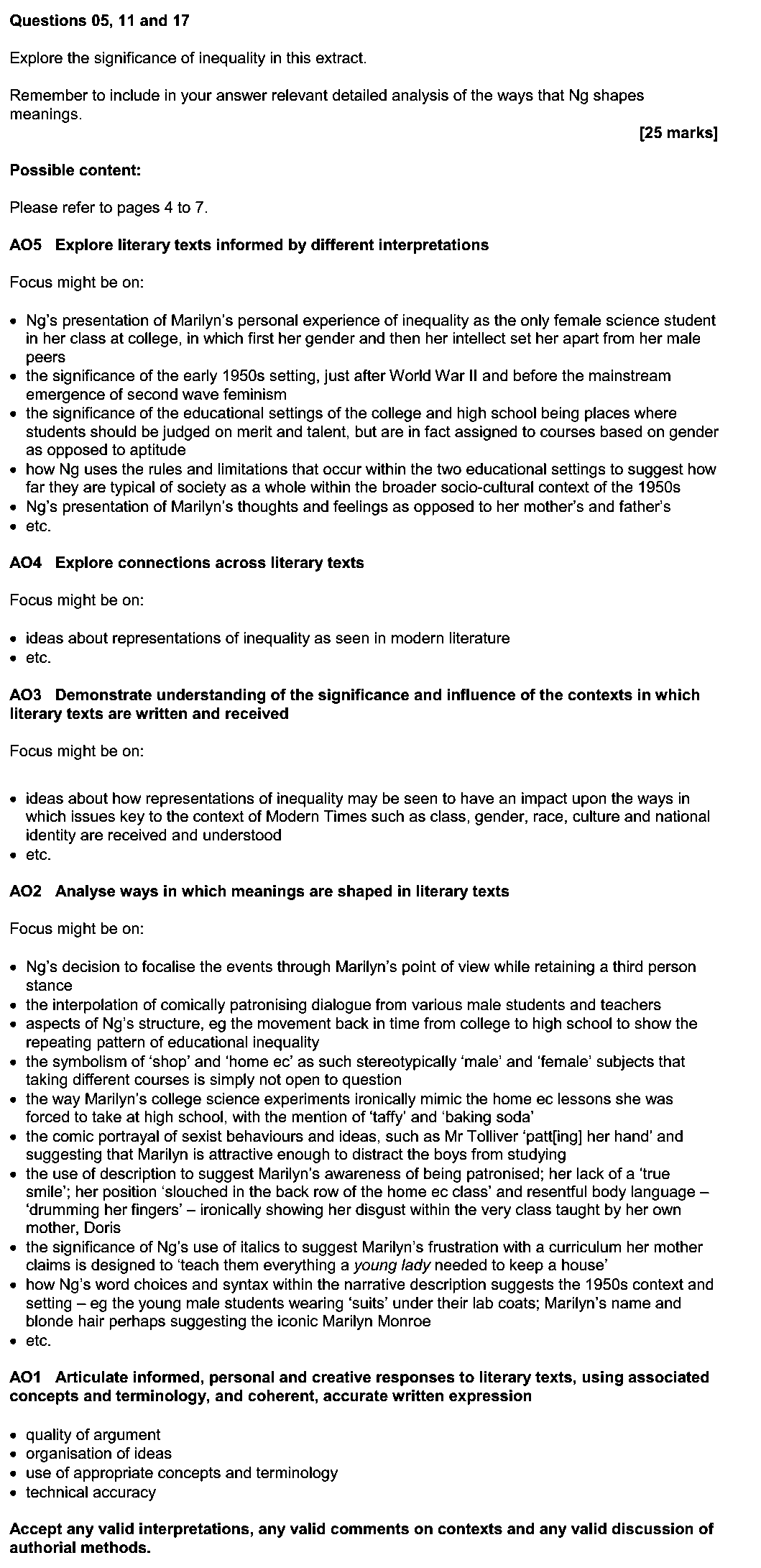
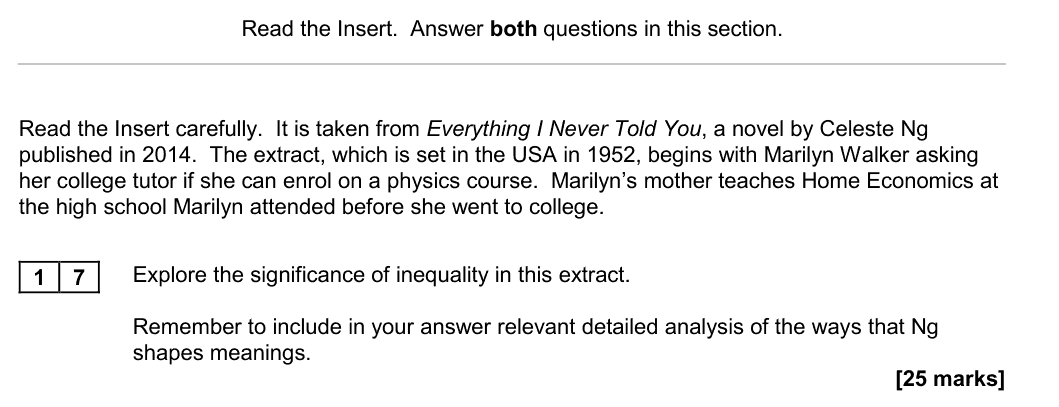
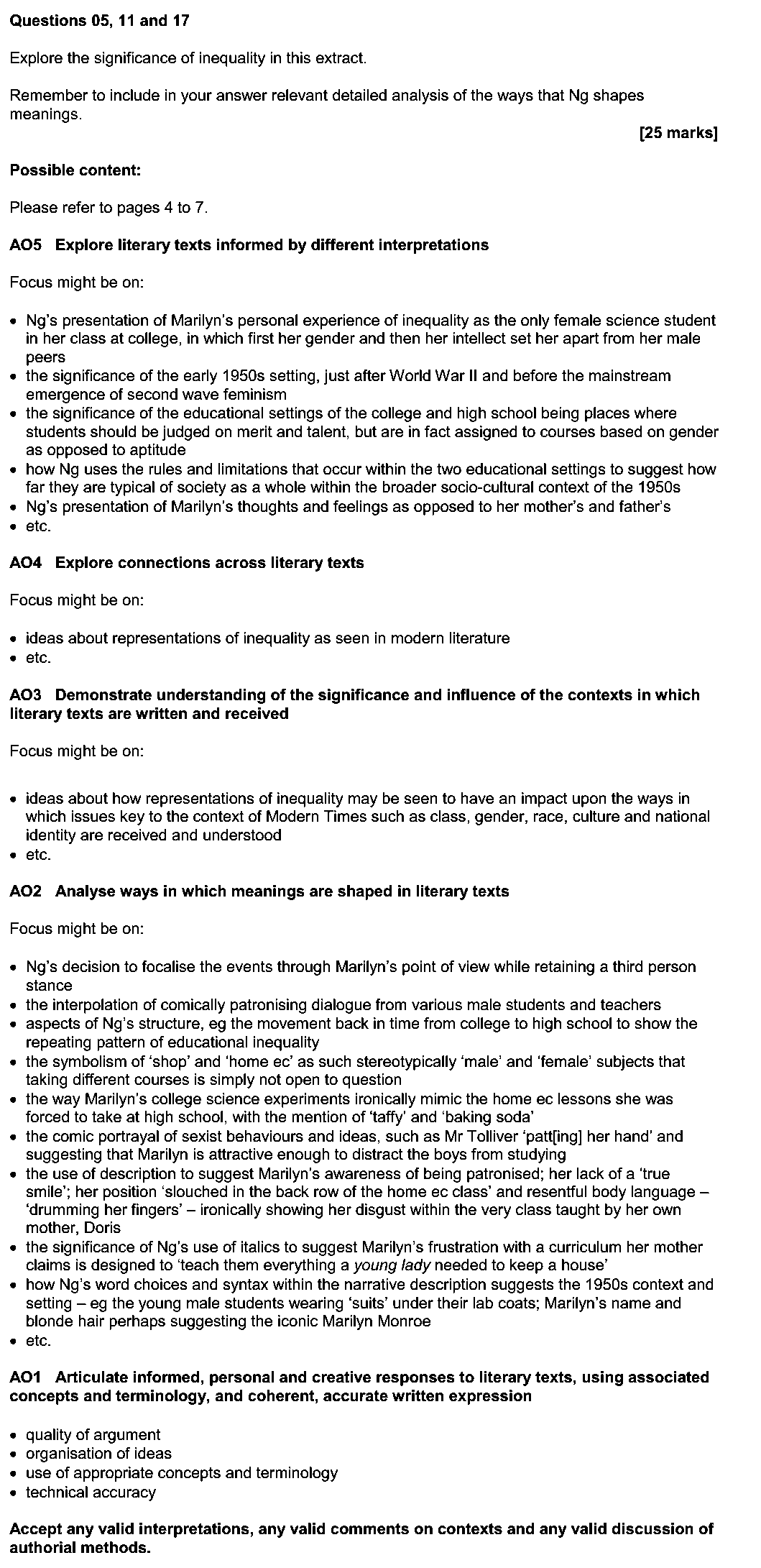
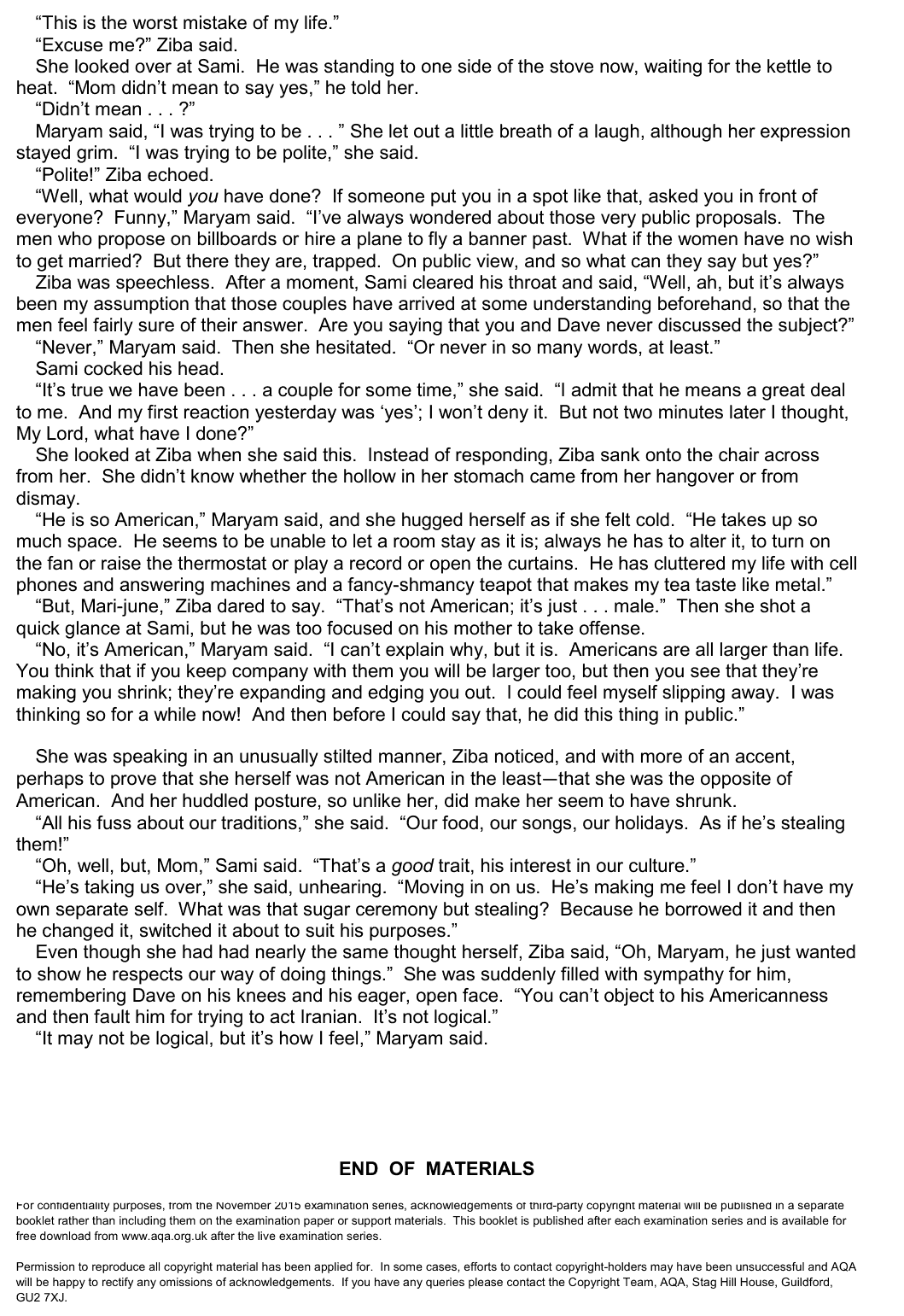
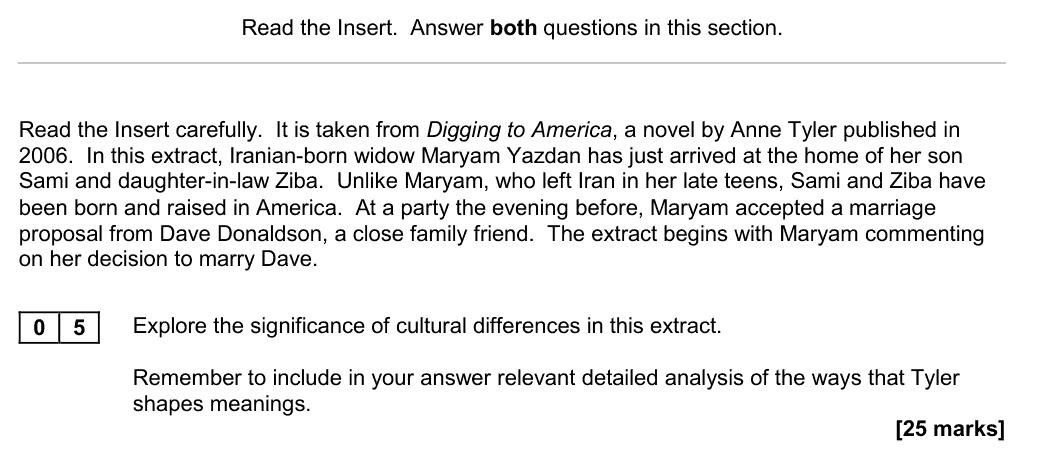
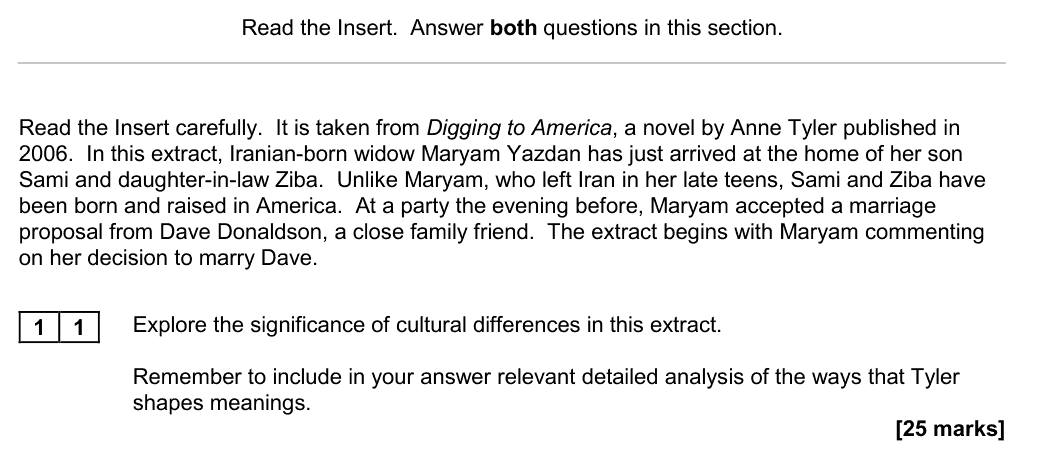
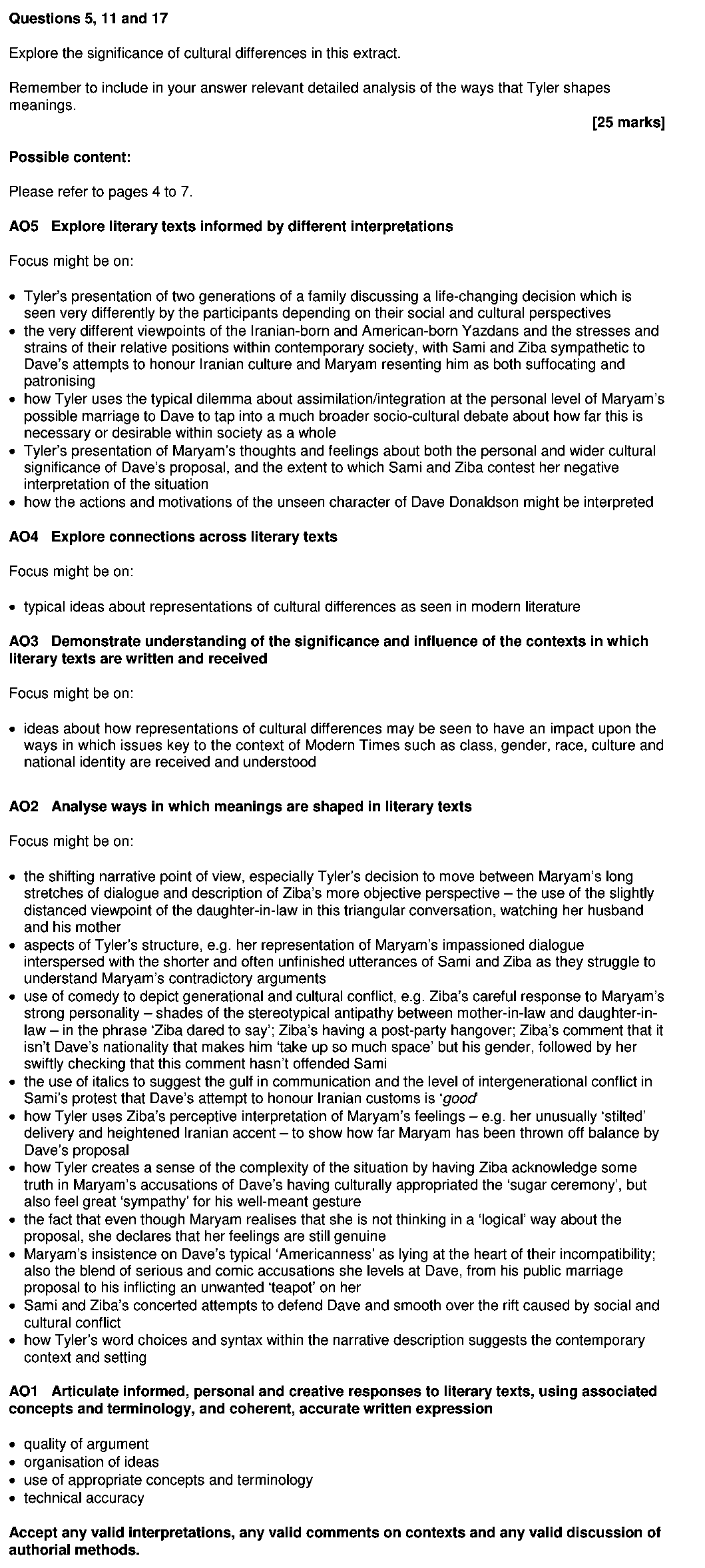
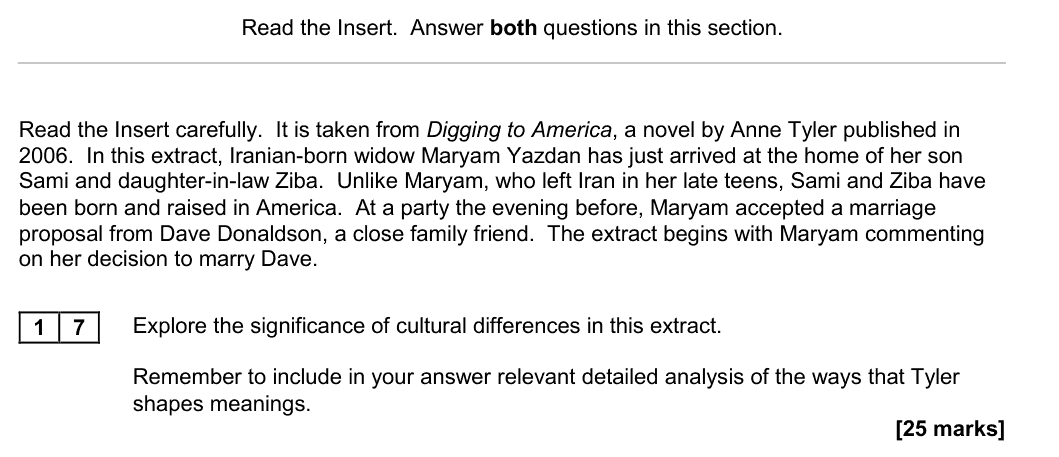
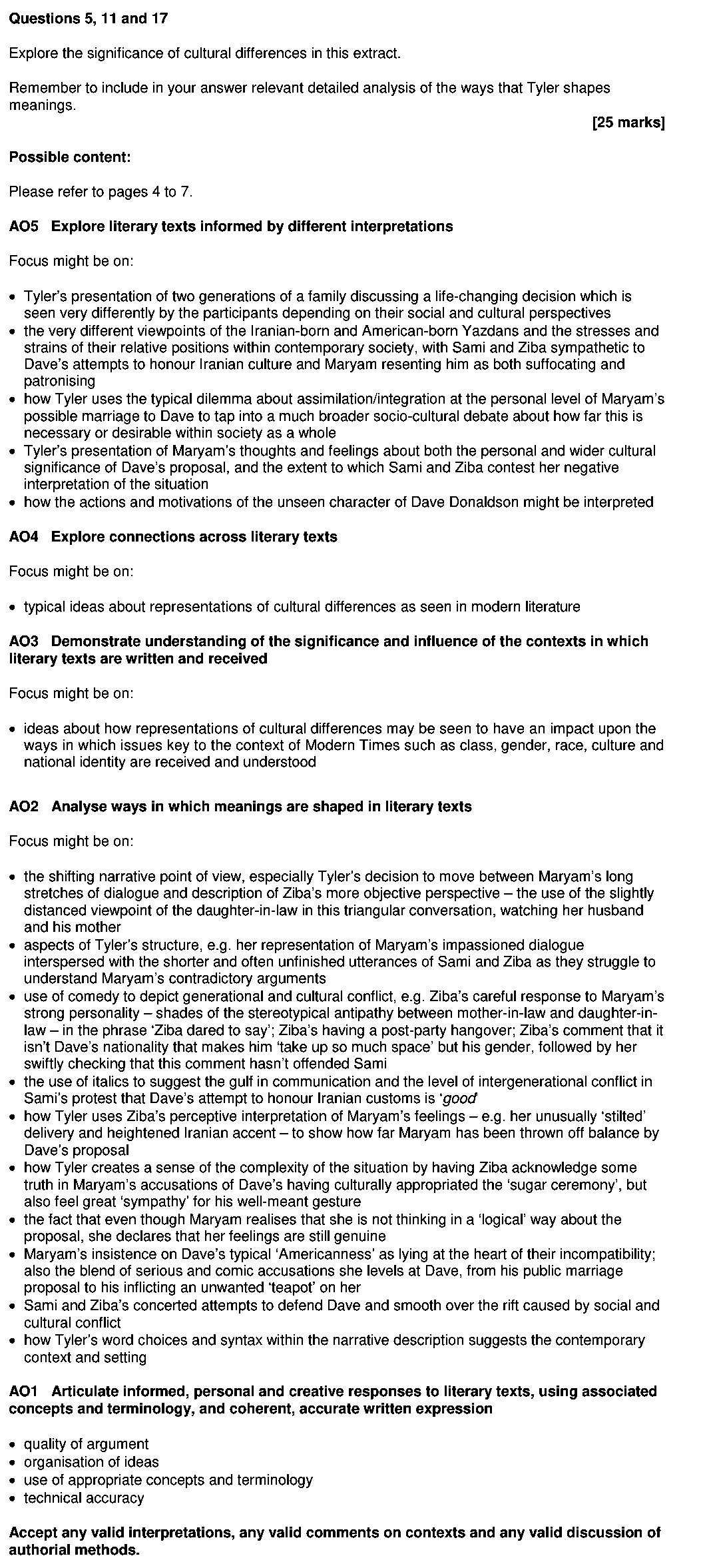
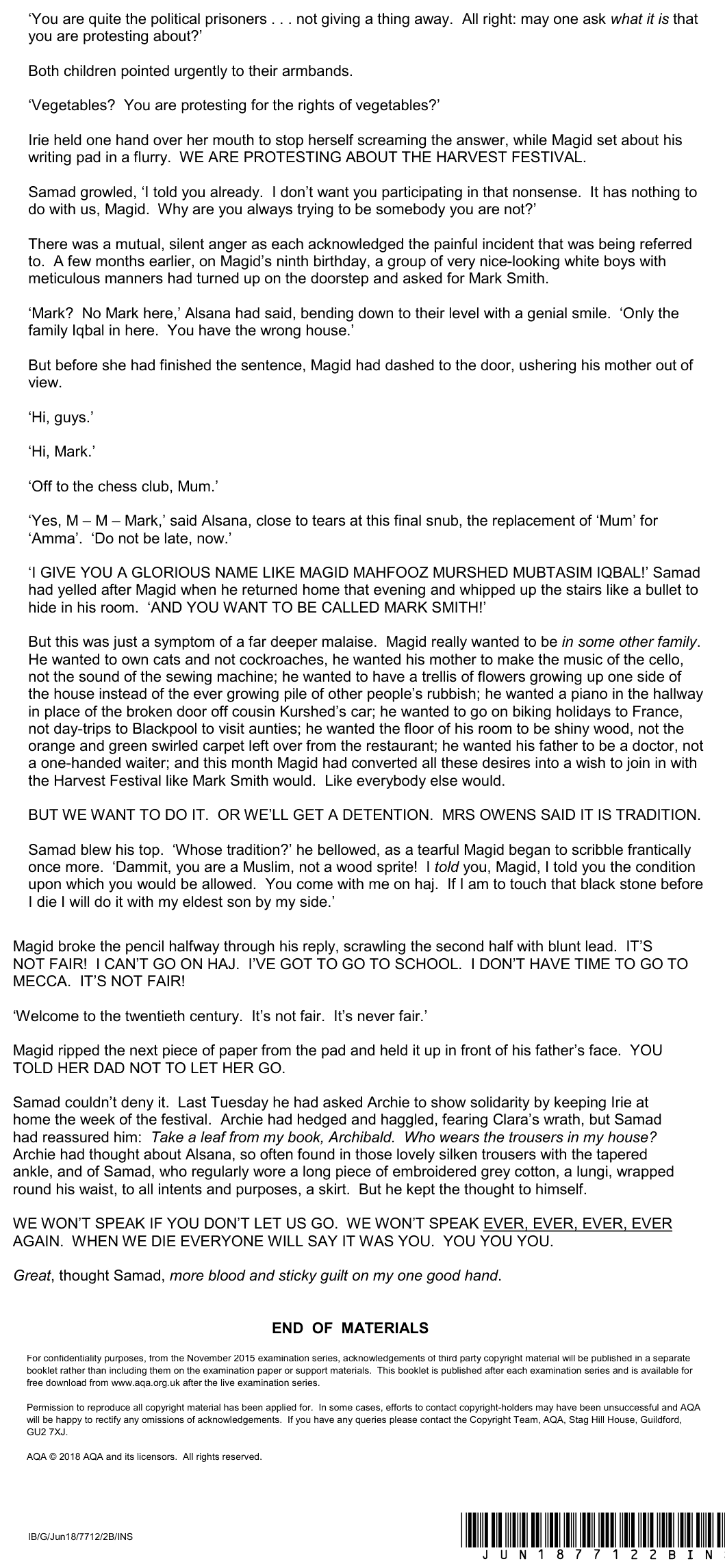
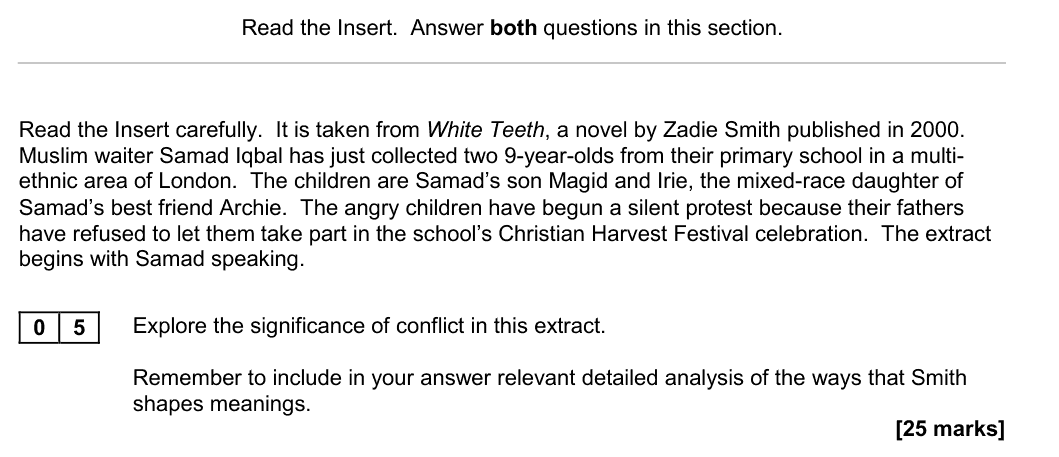
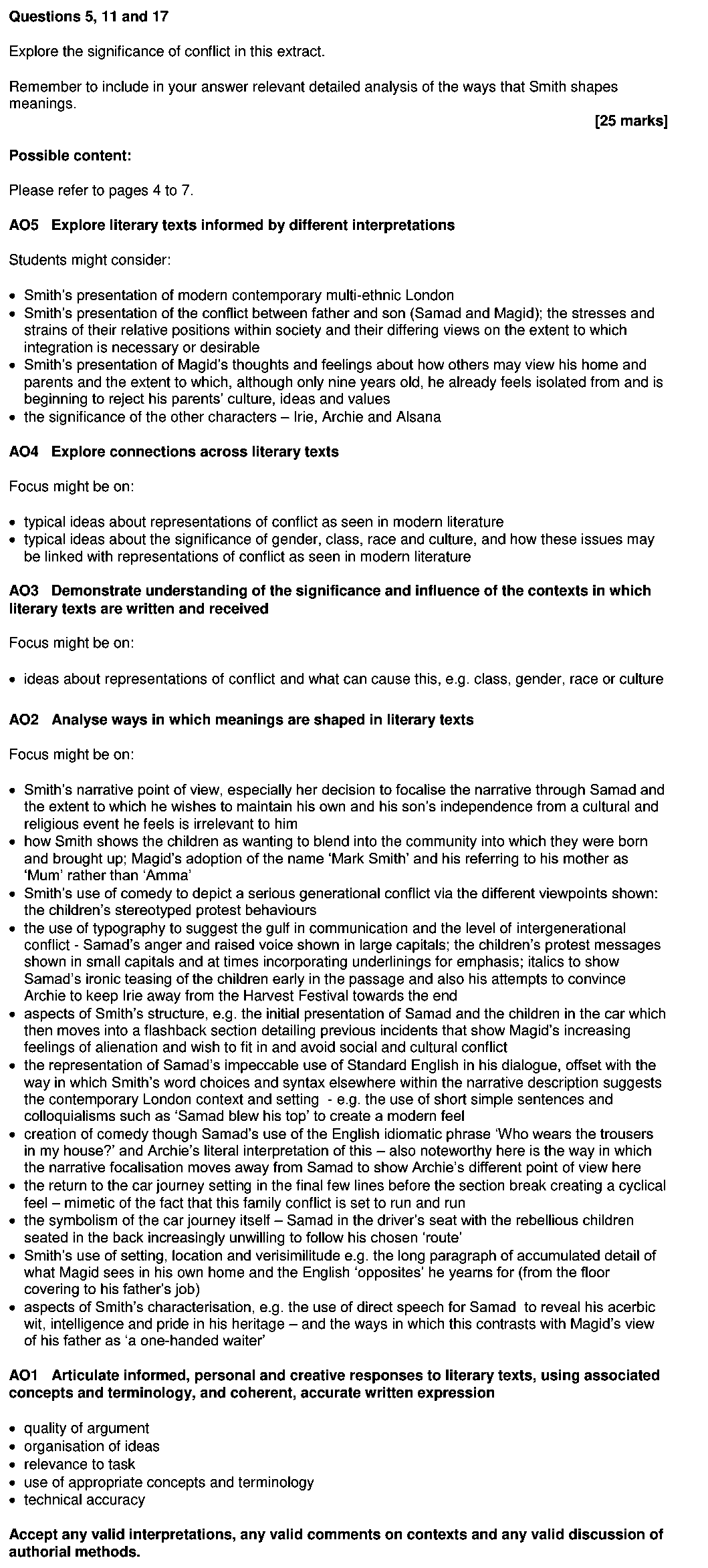
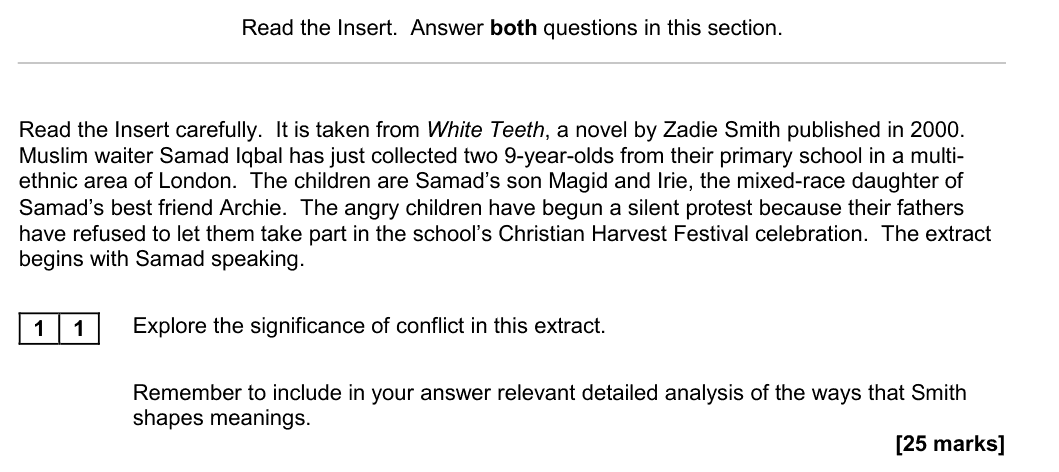
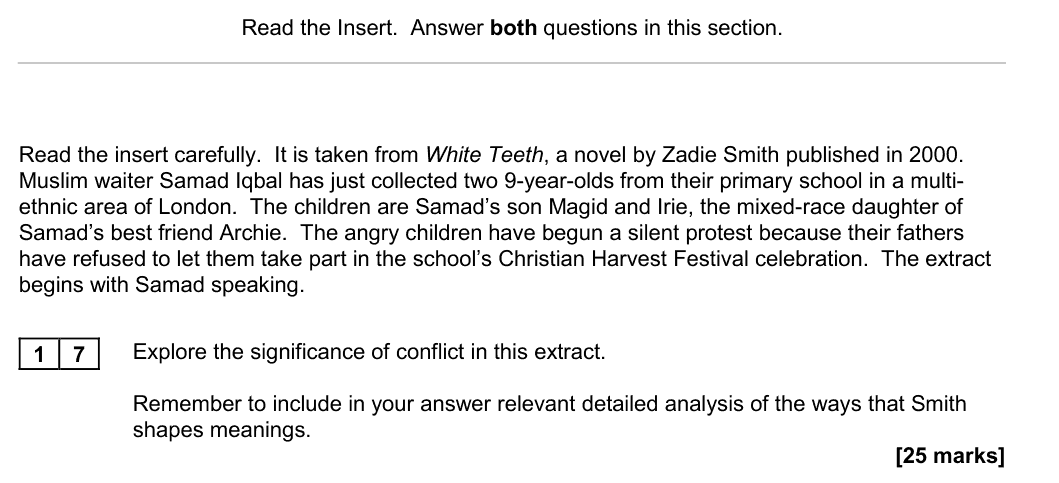
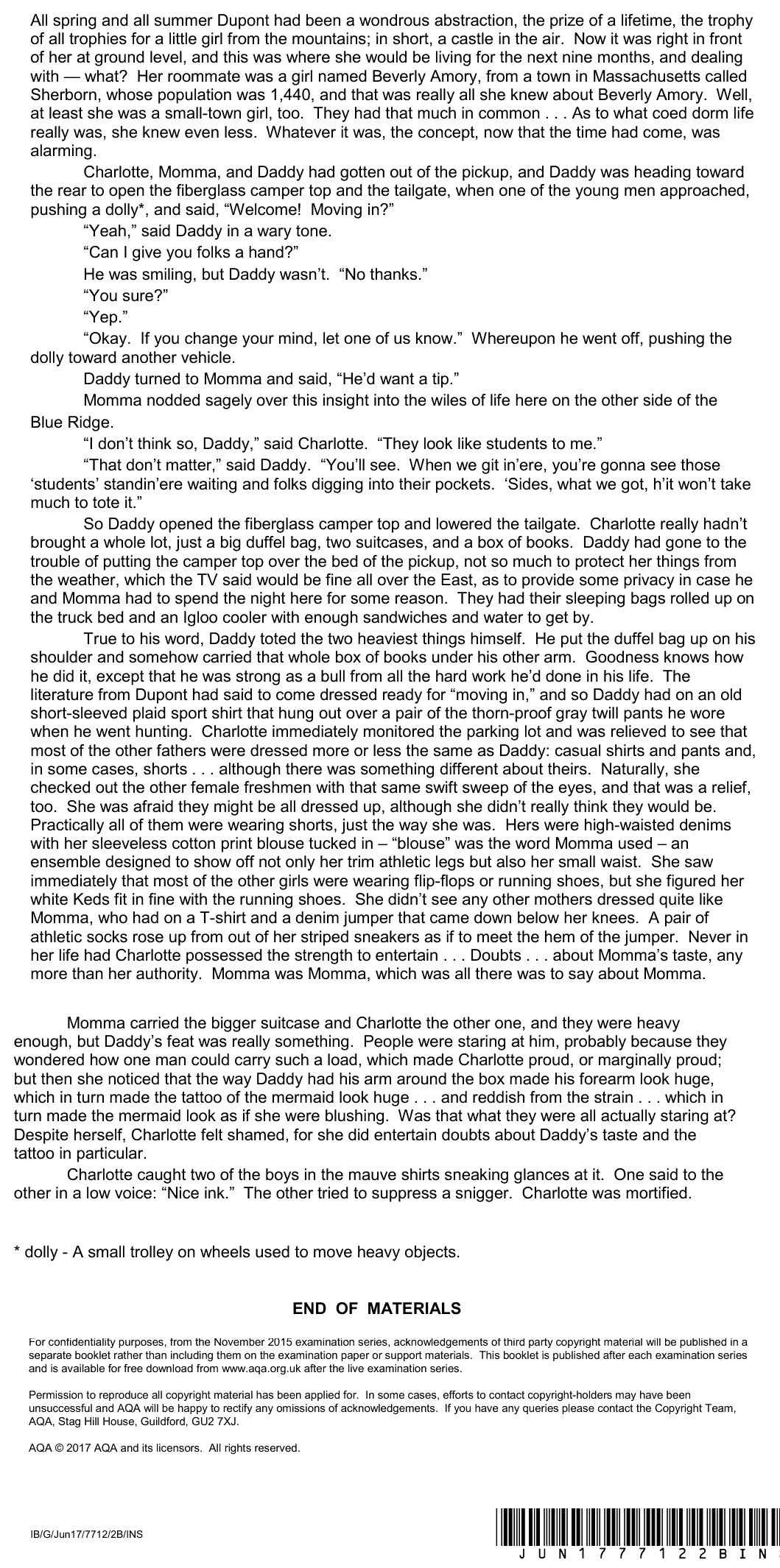
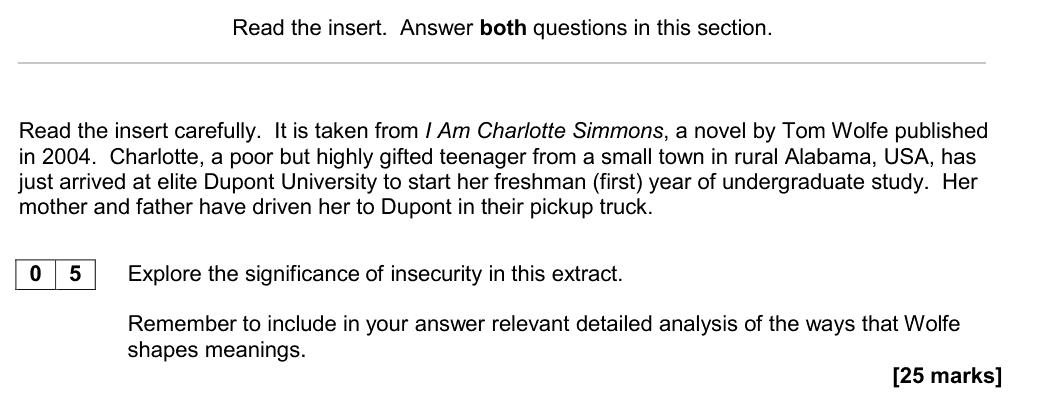
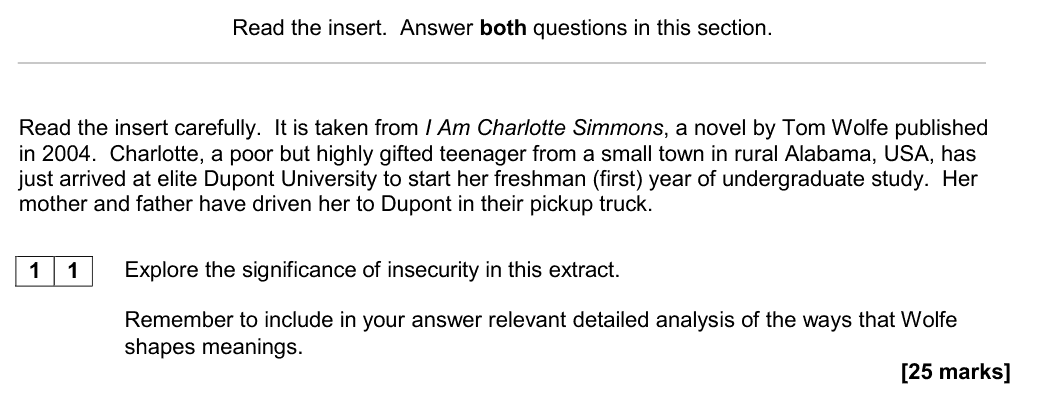
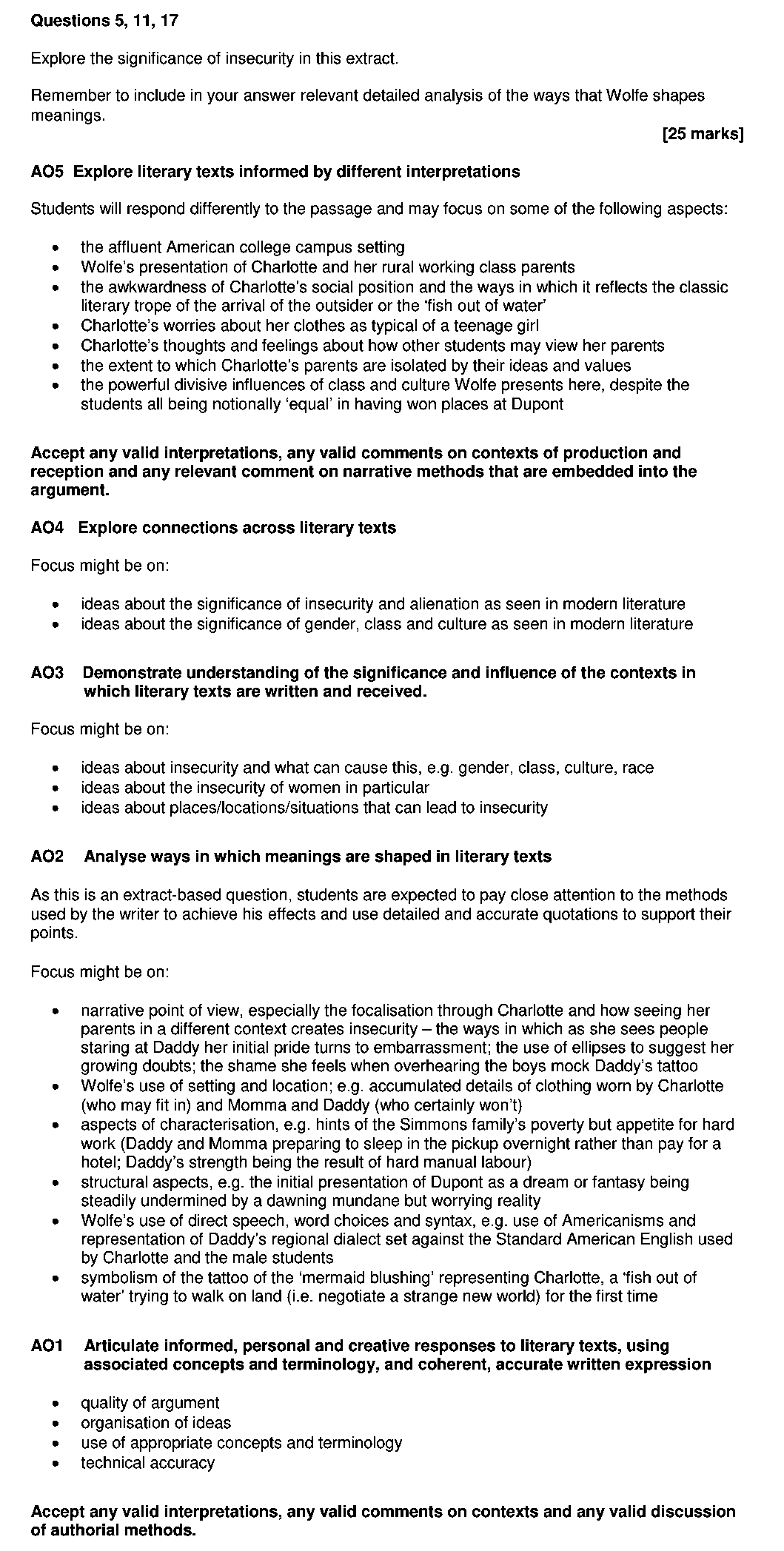
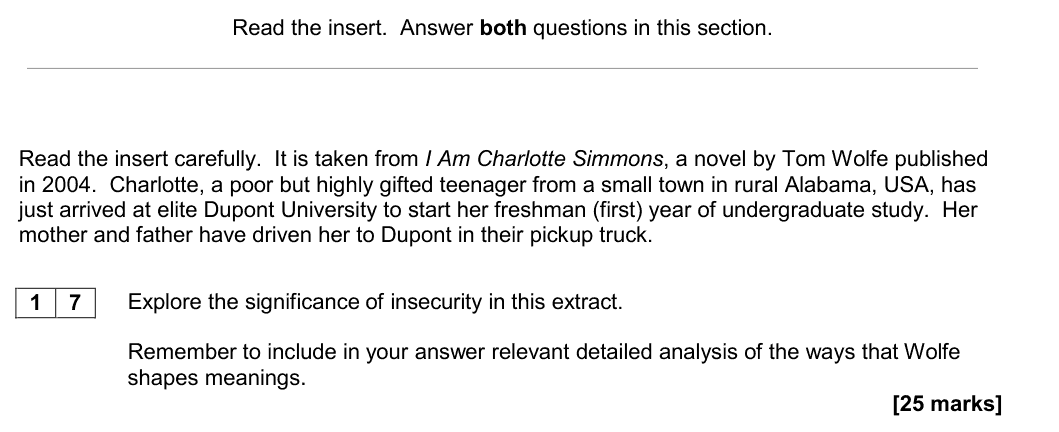
The extract (insert)
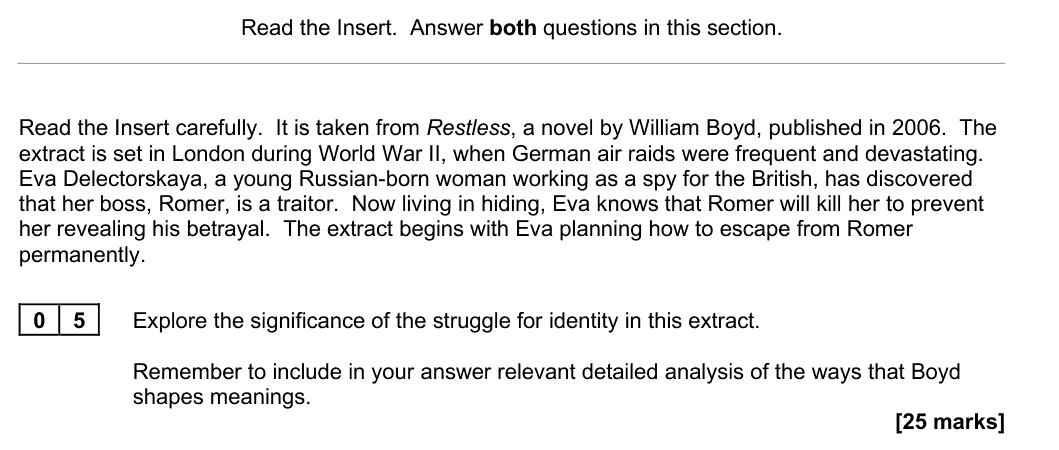
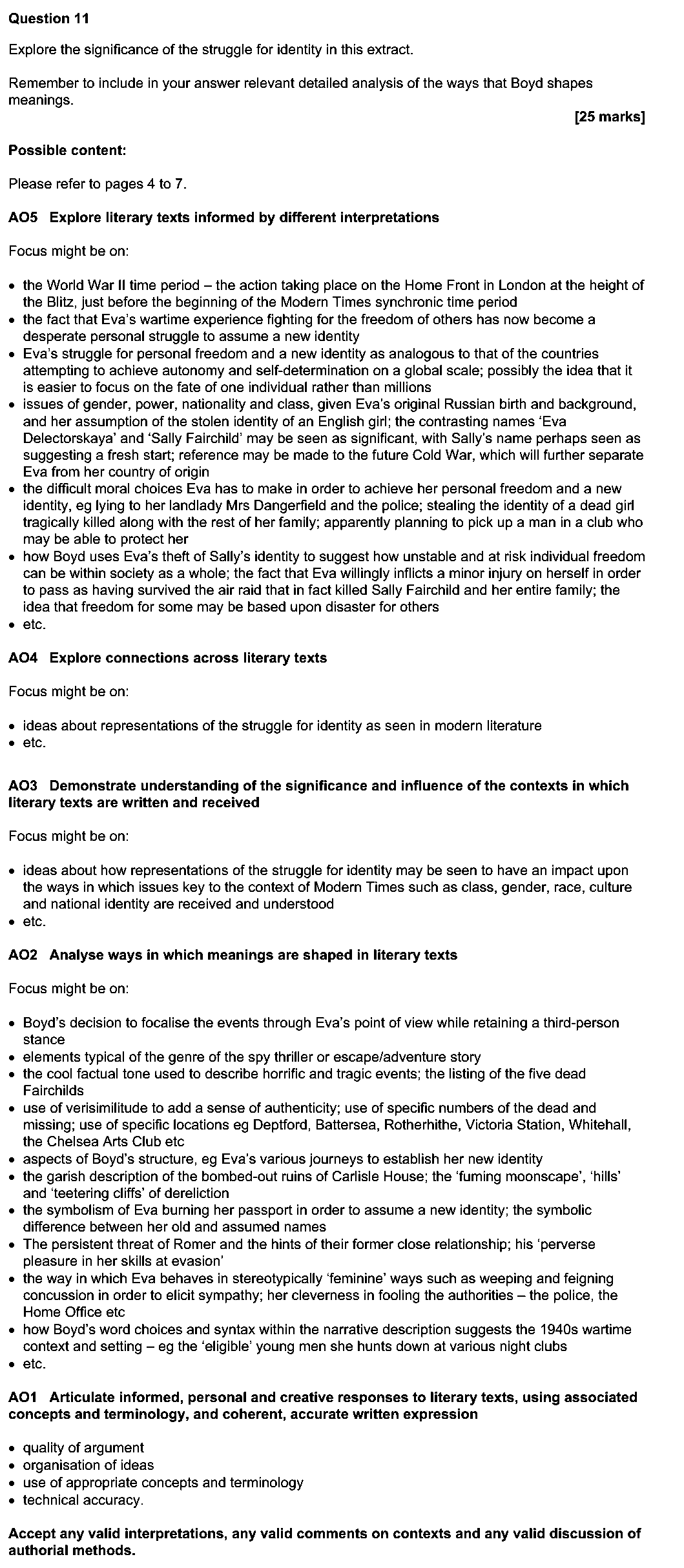
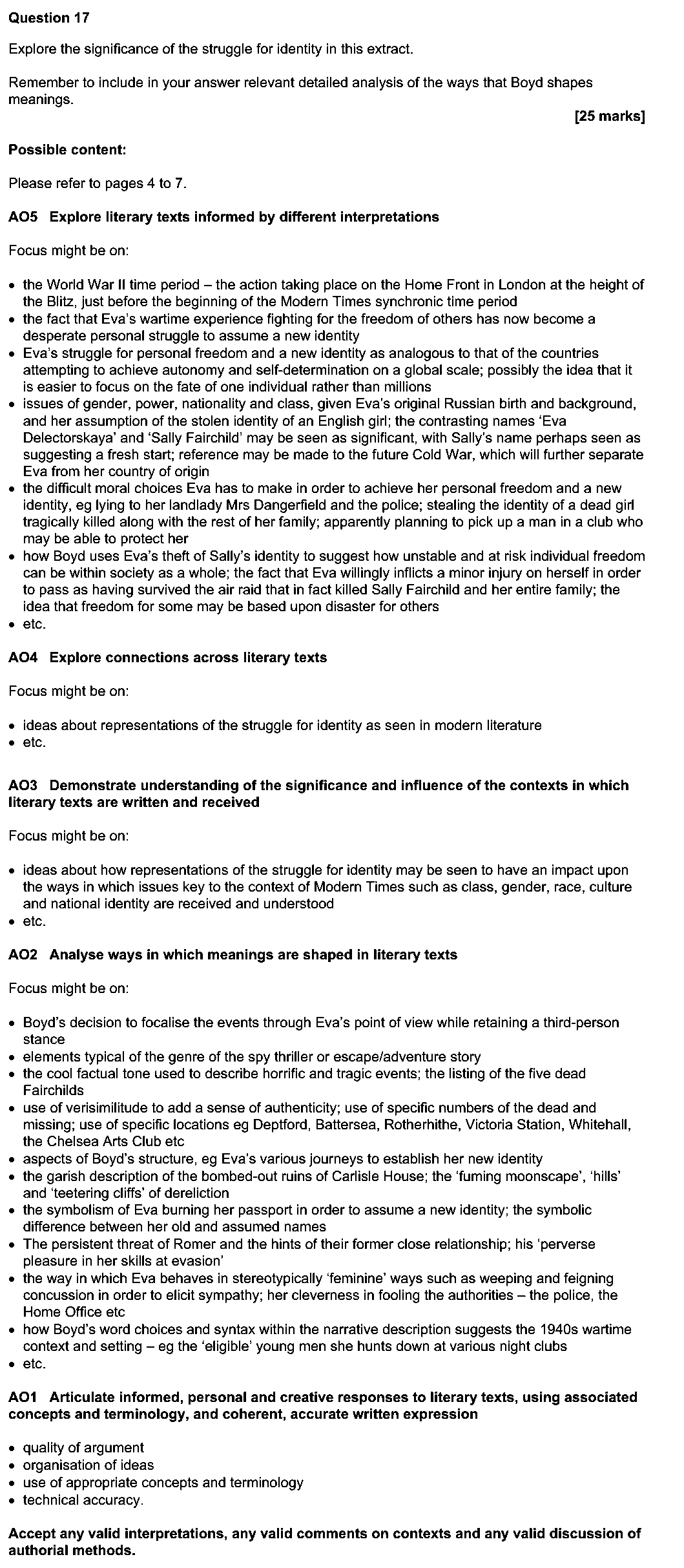
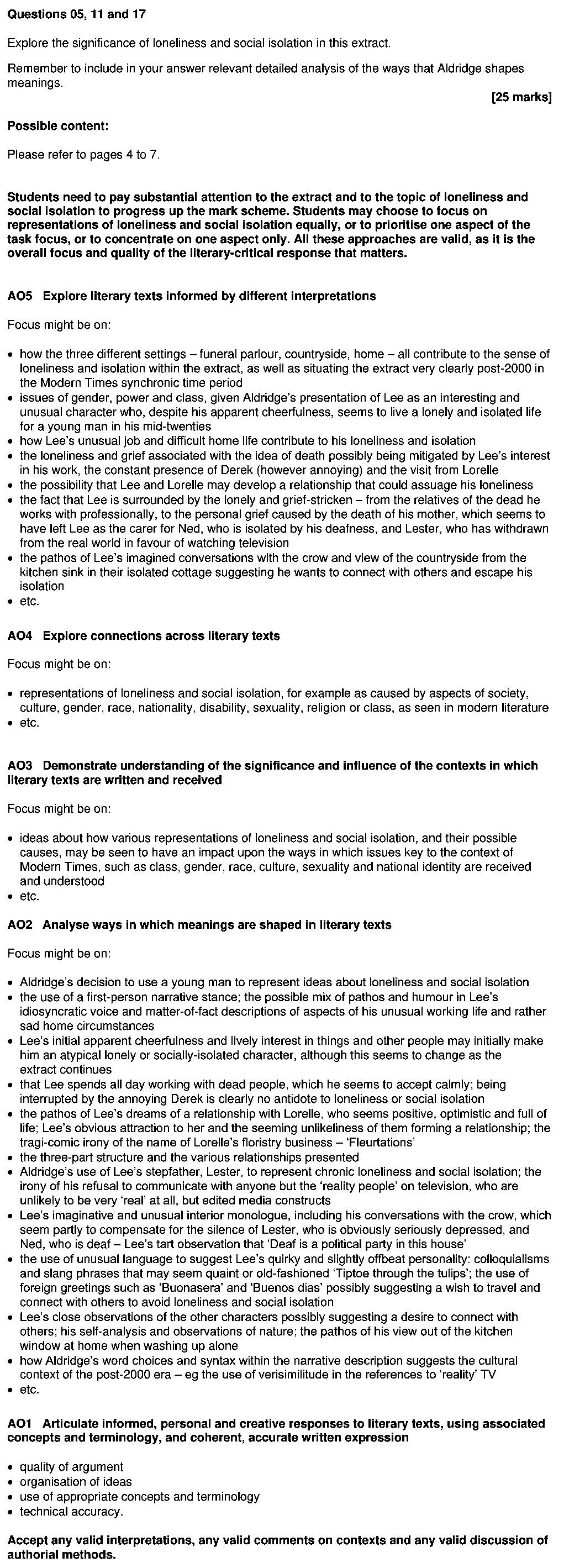
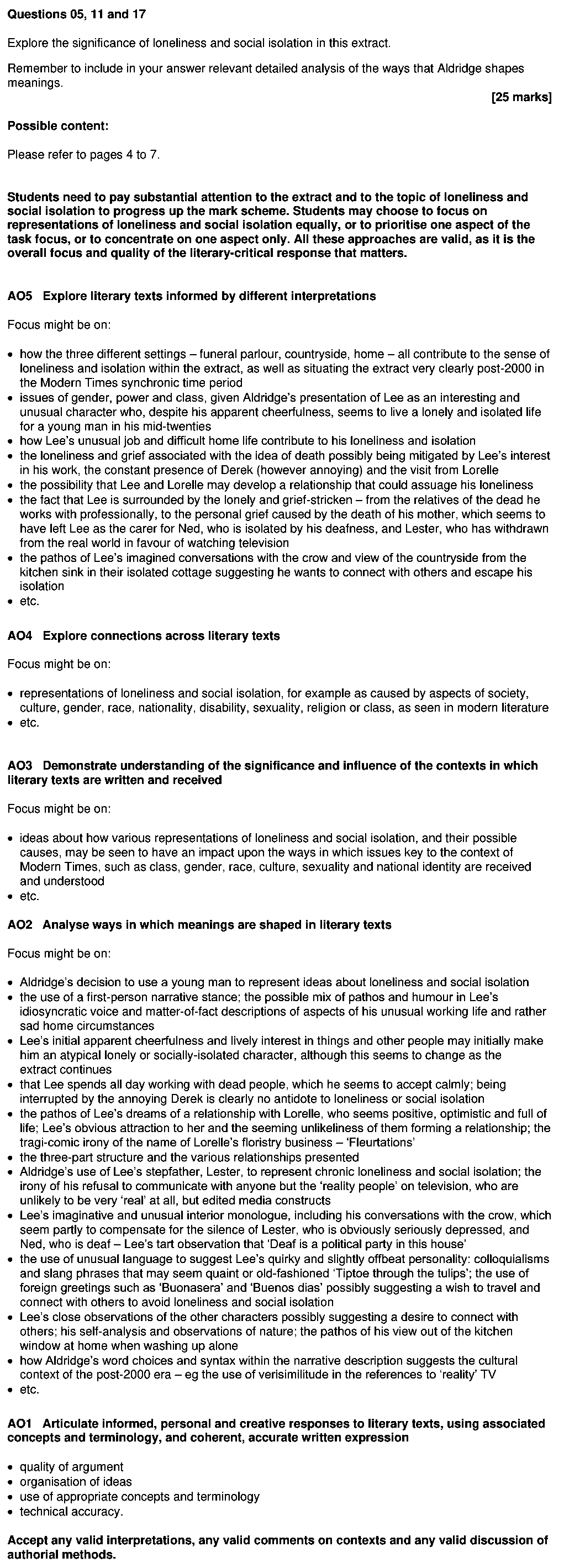
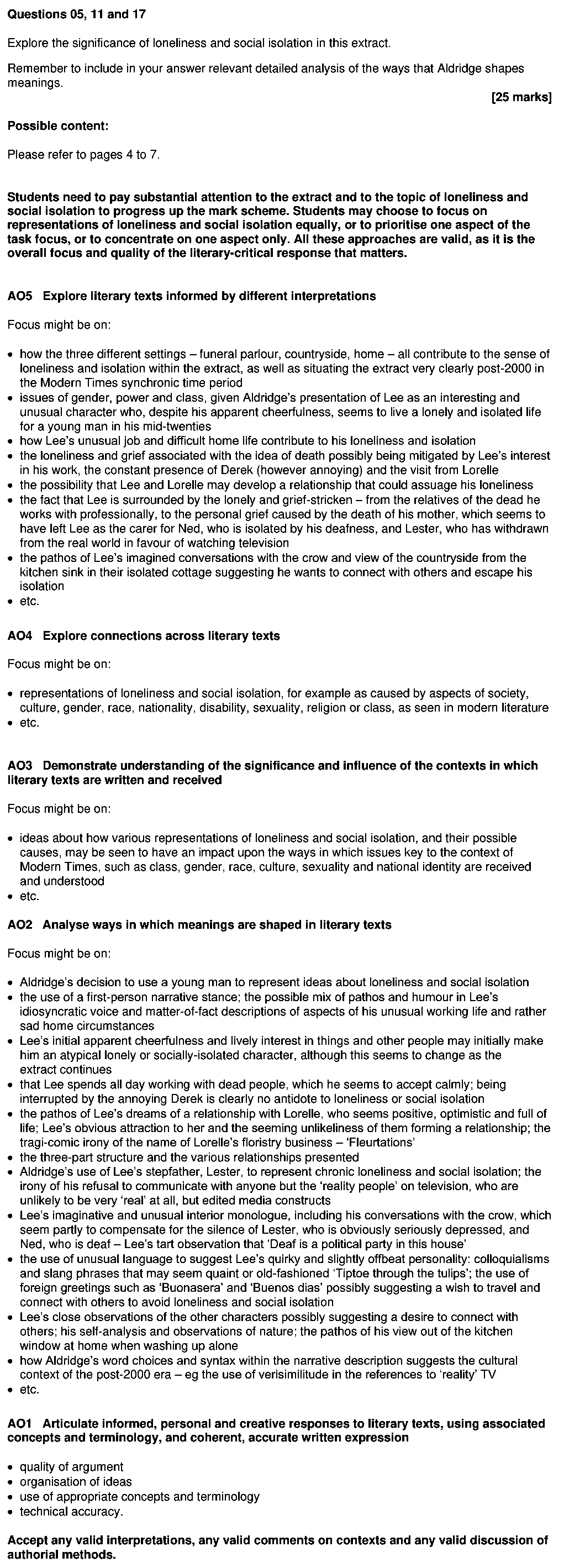
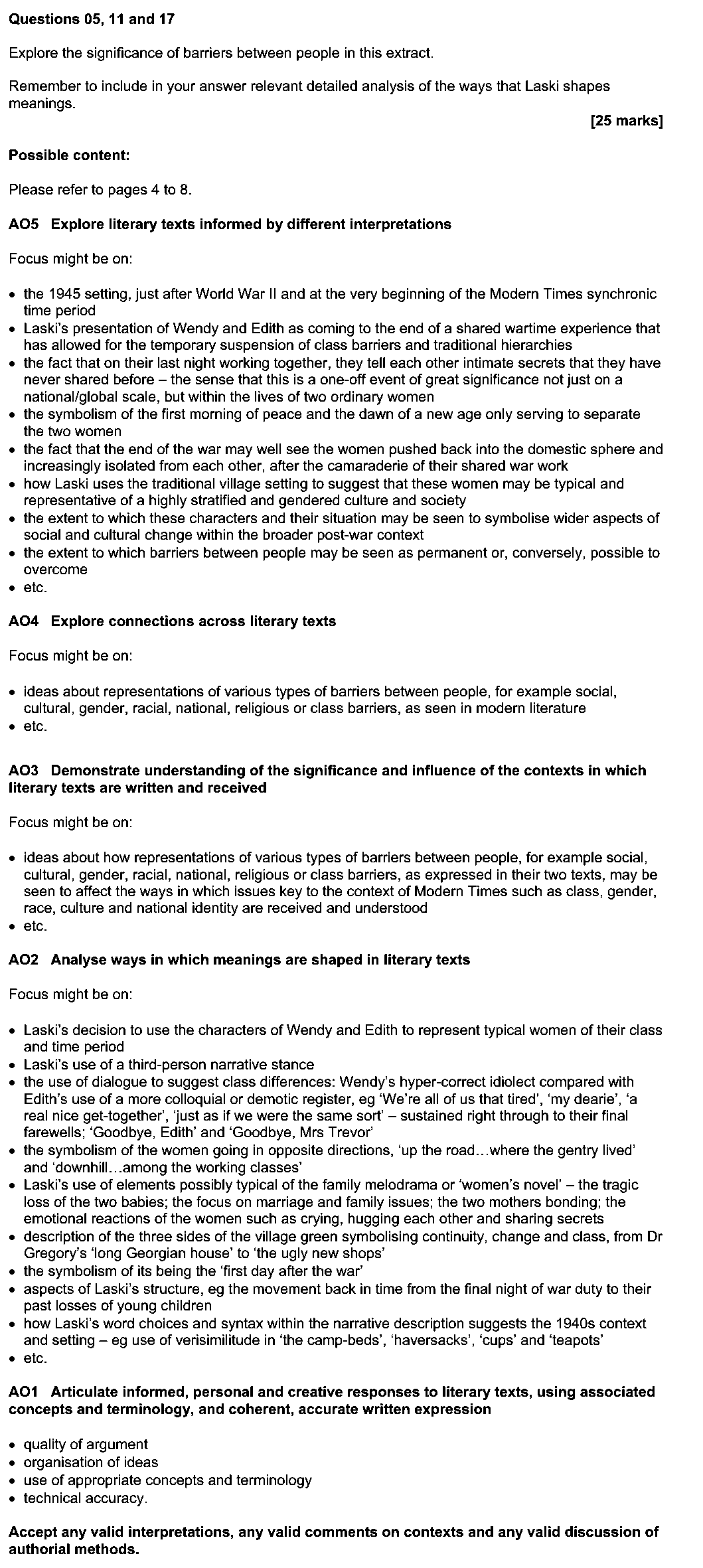
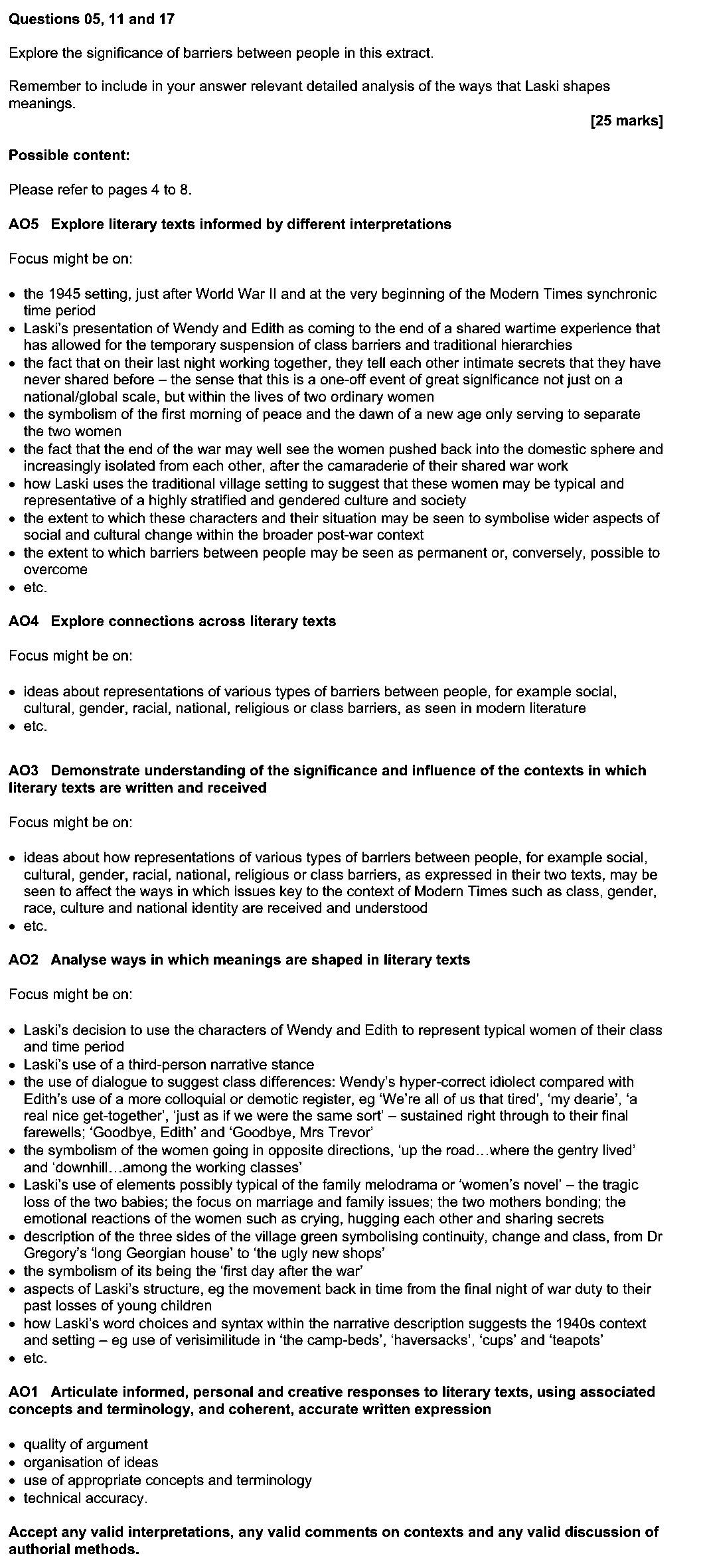
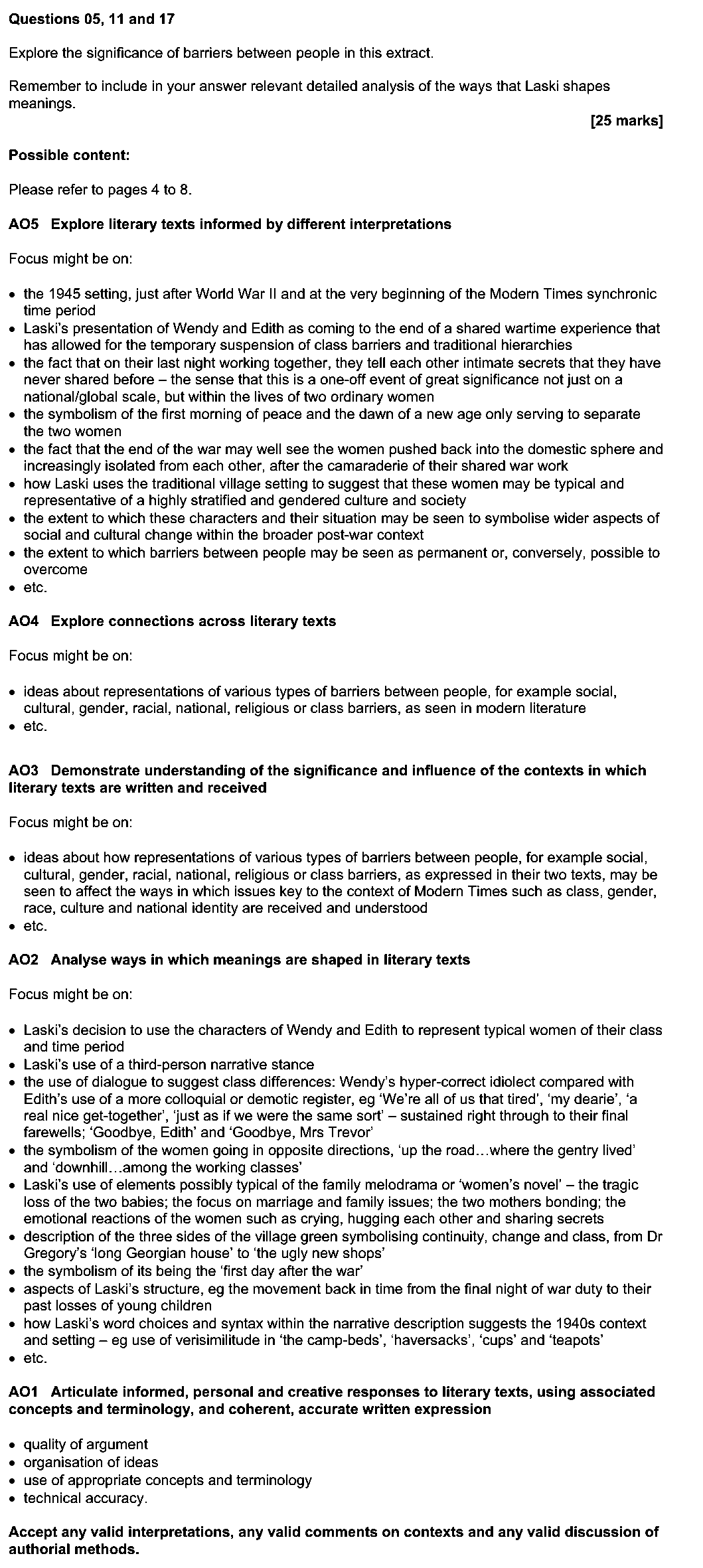
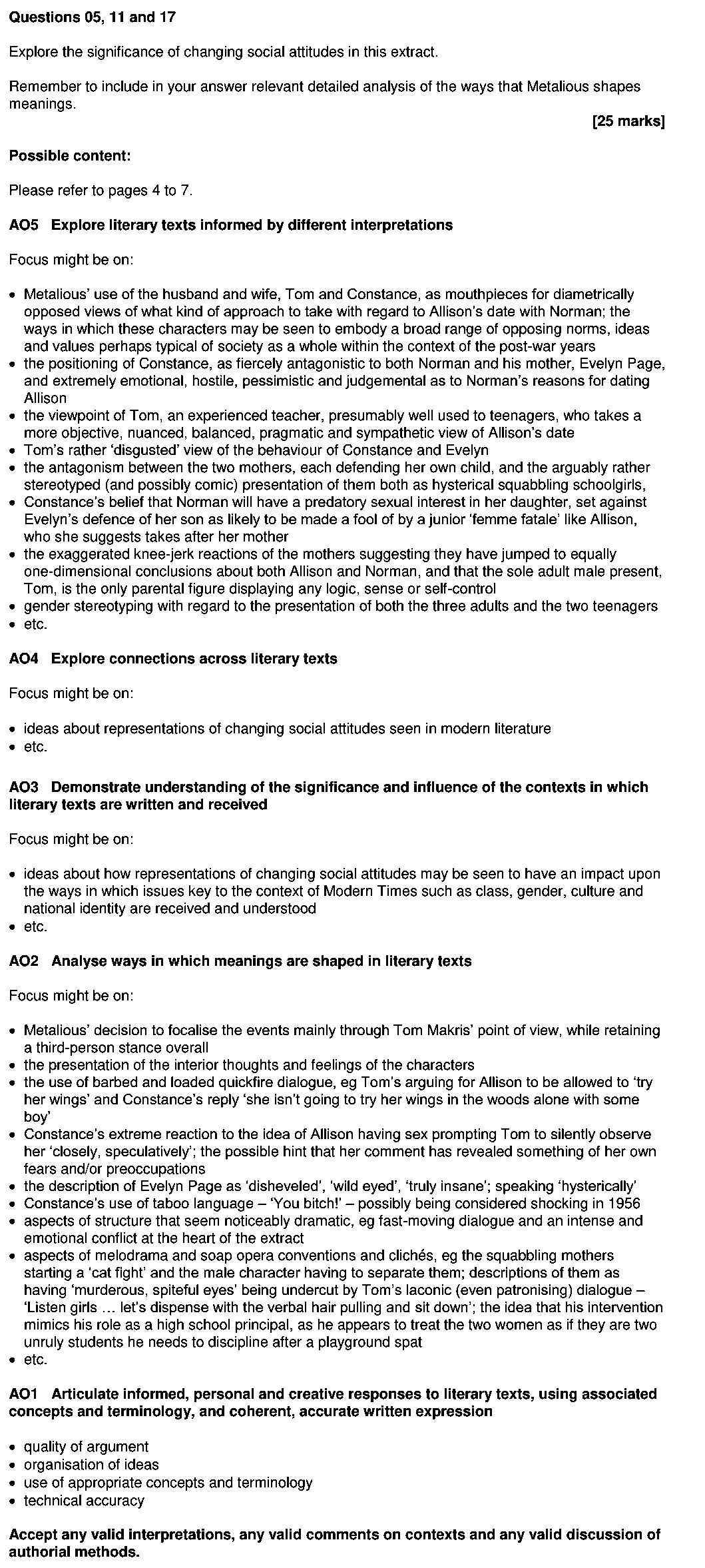
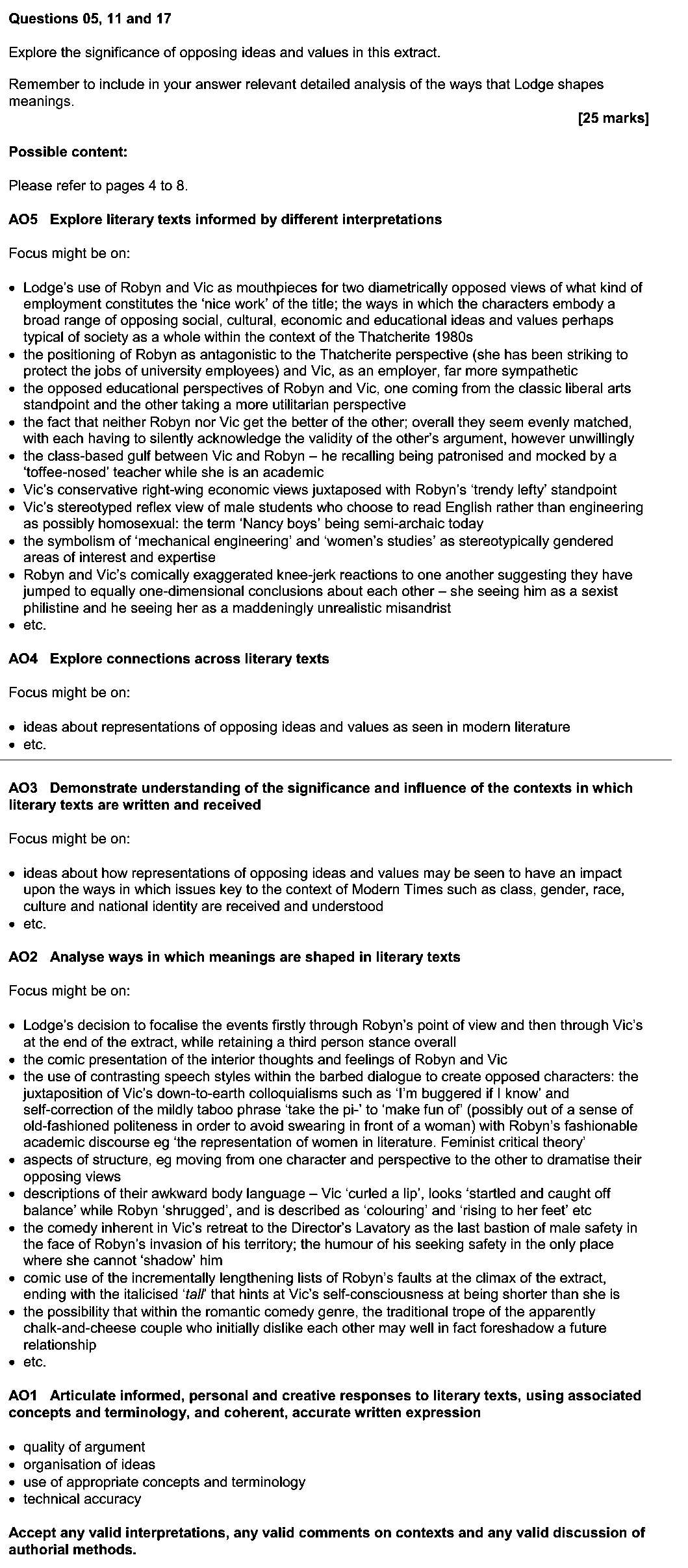
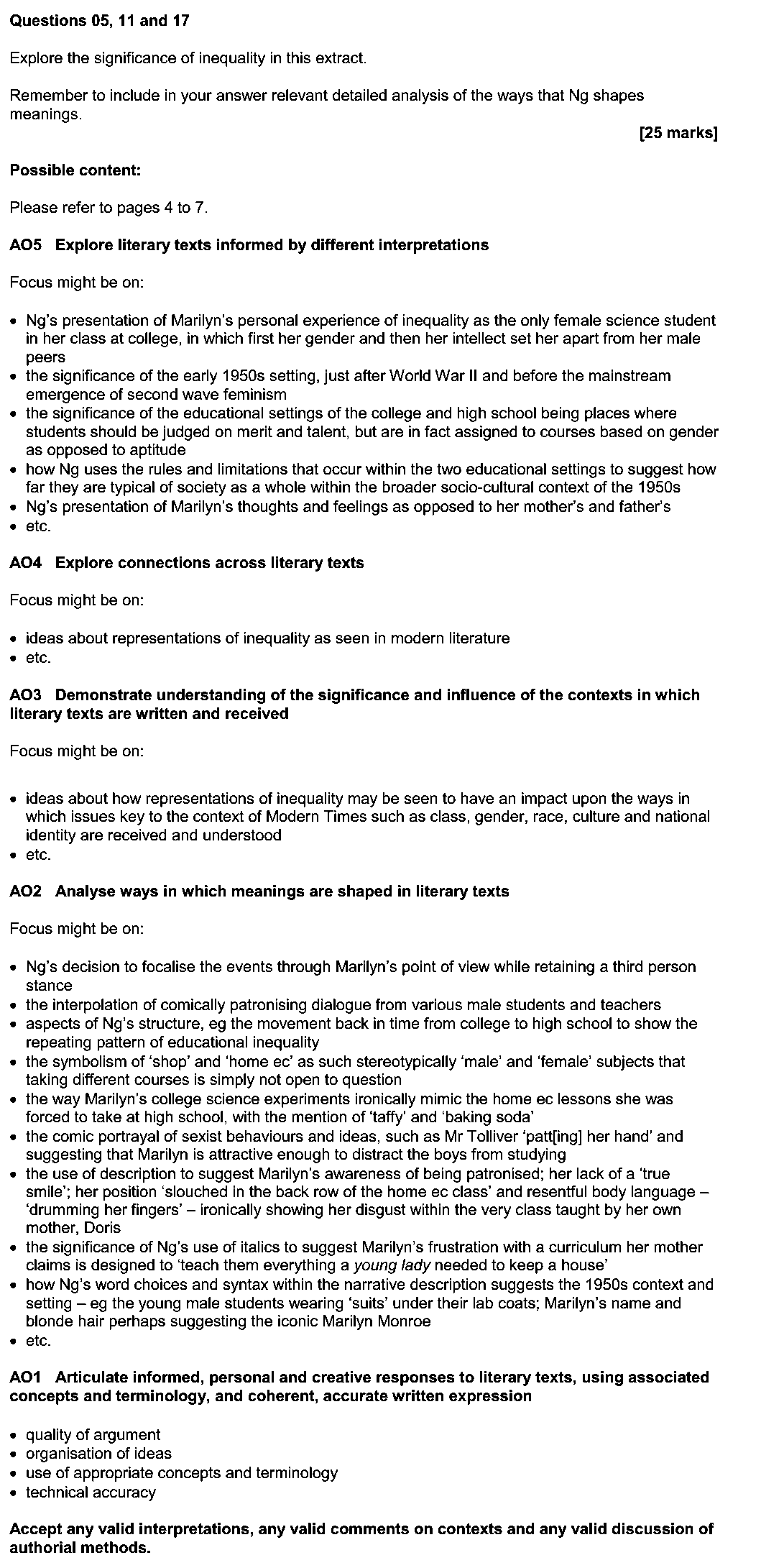
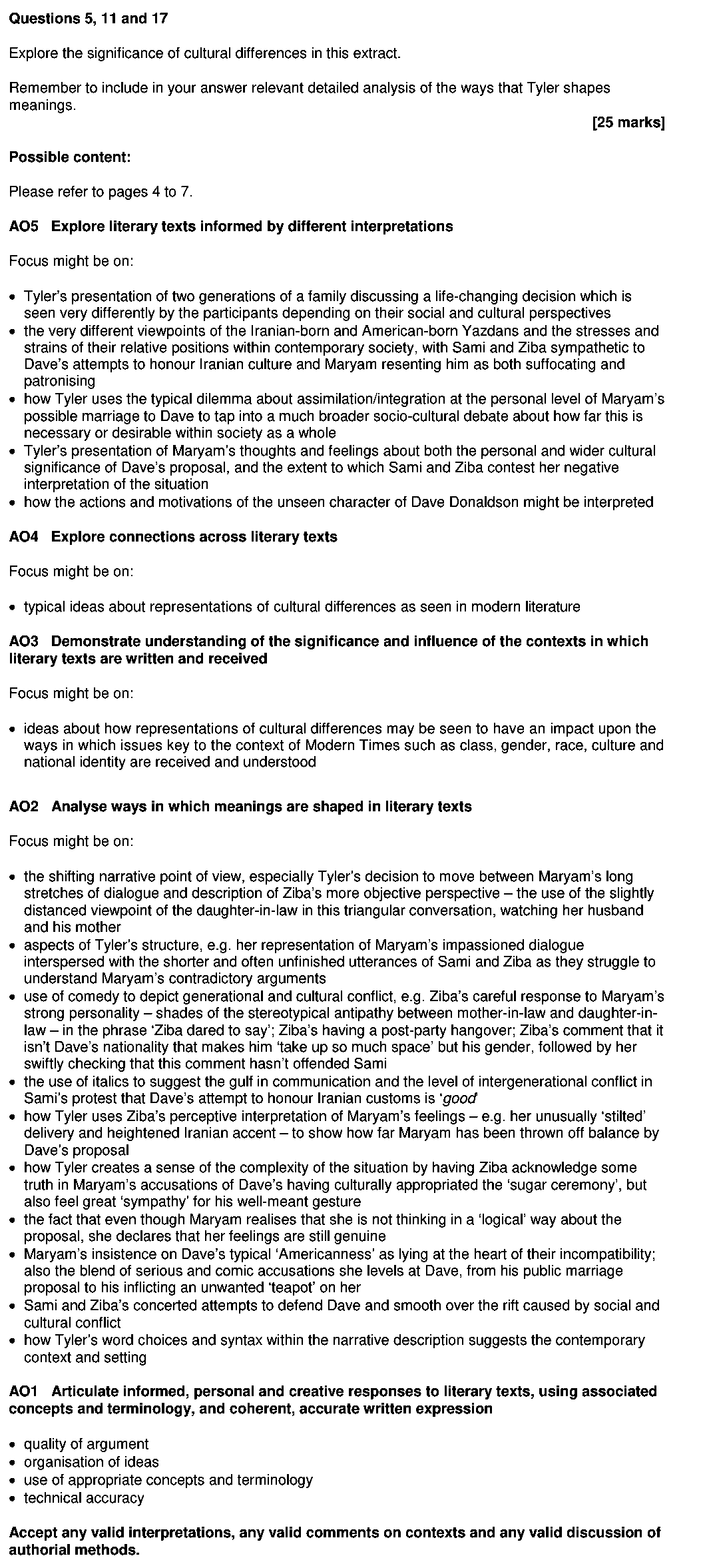
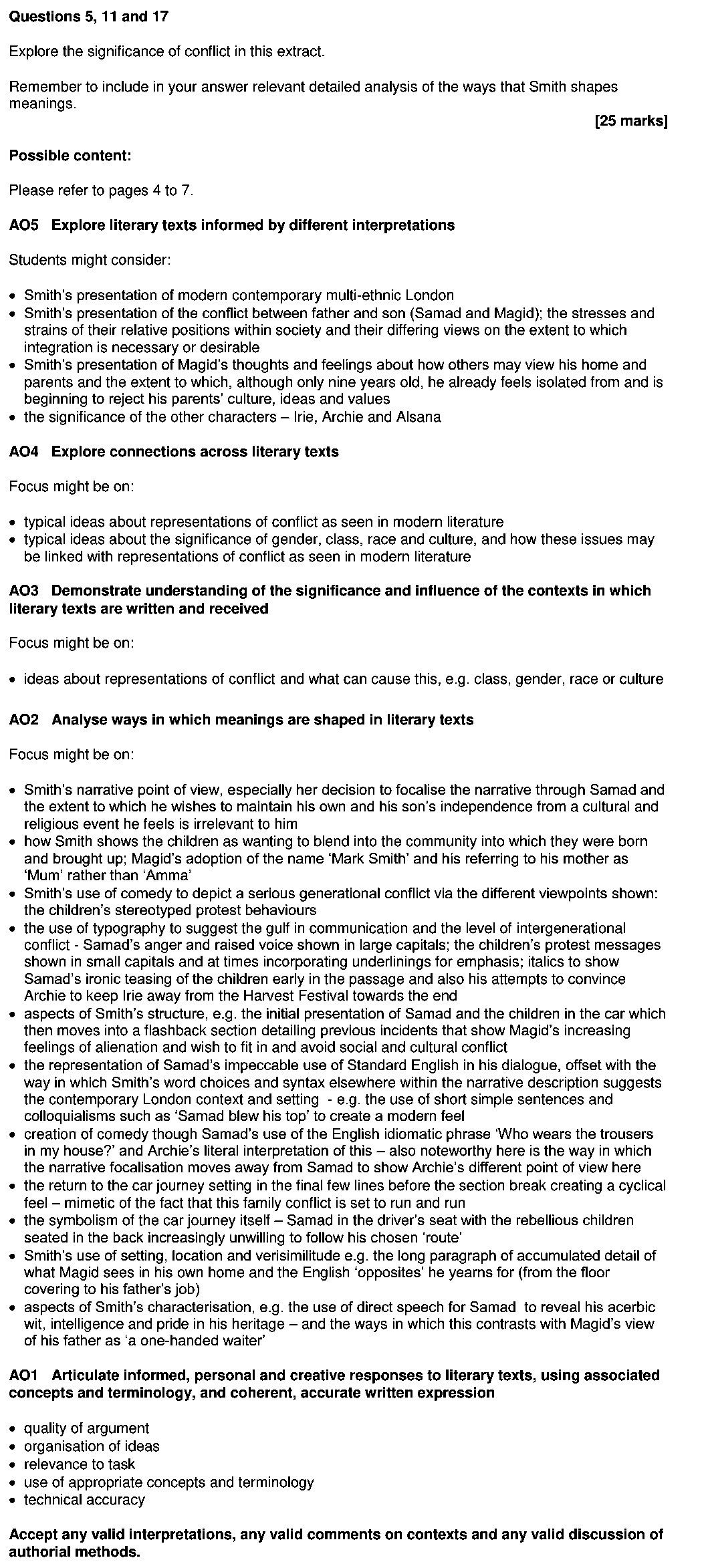
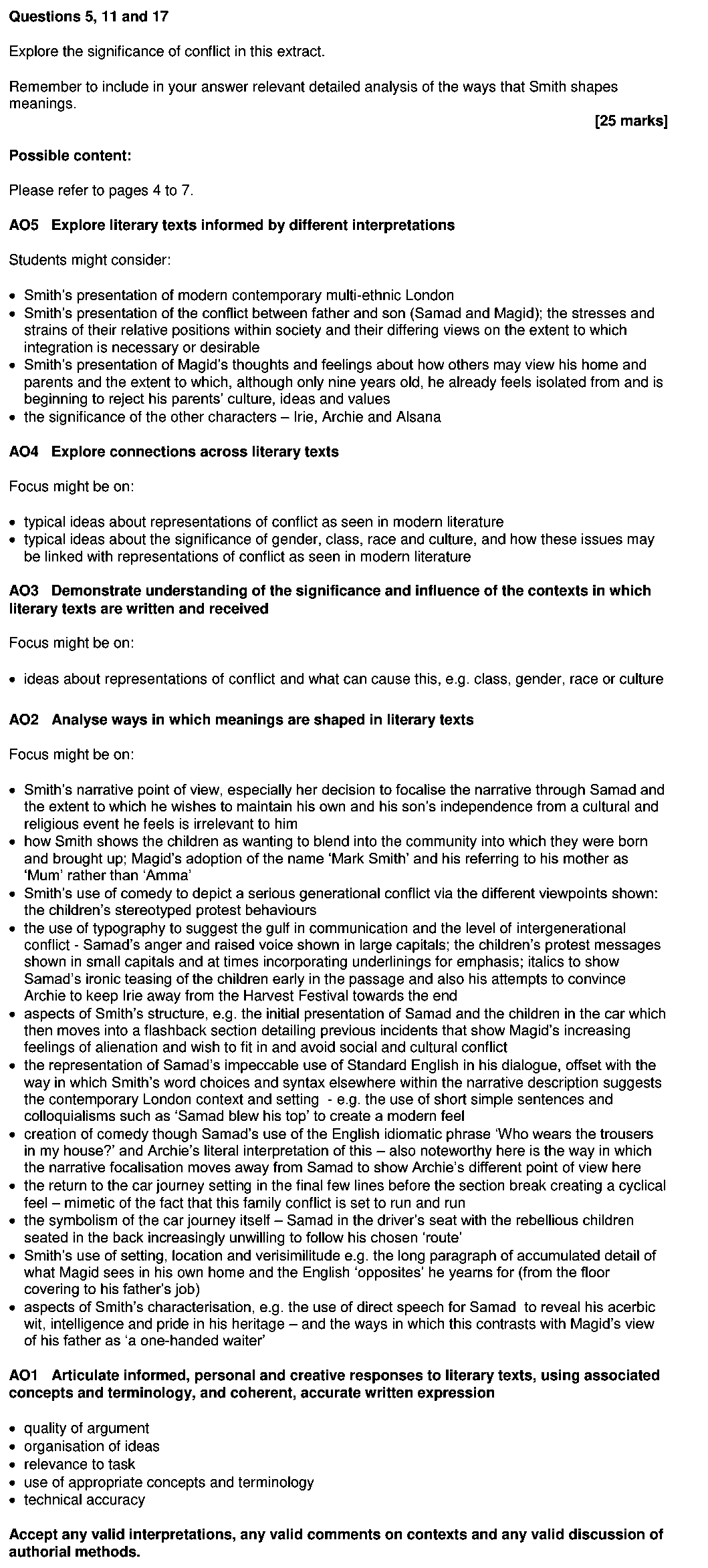
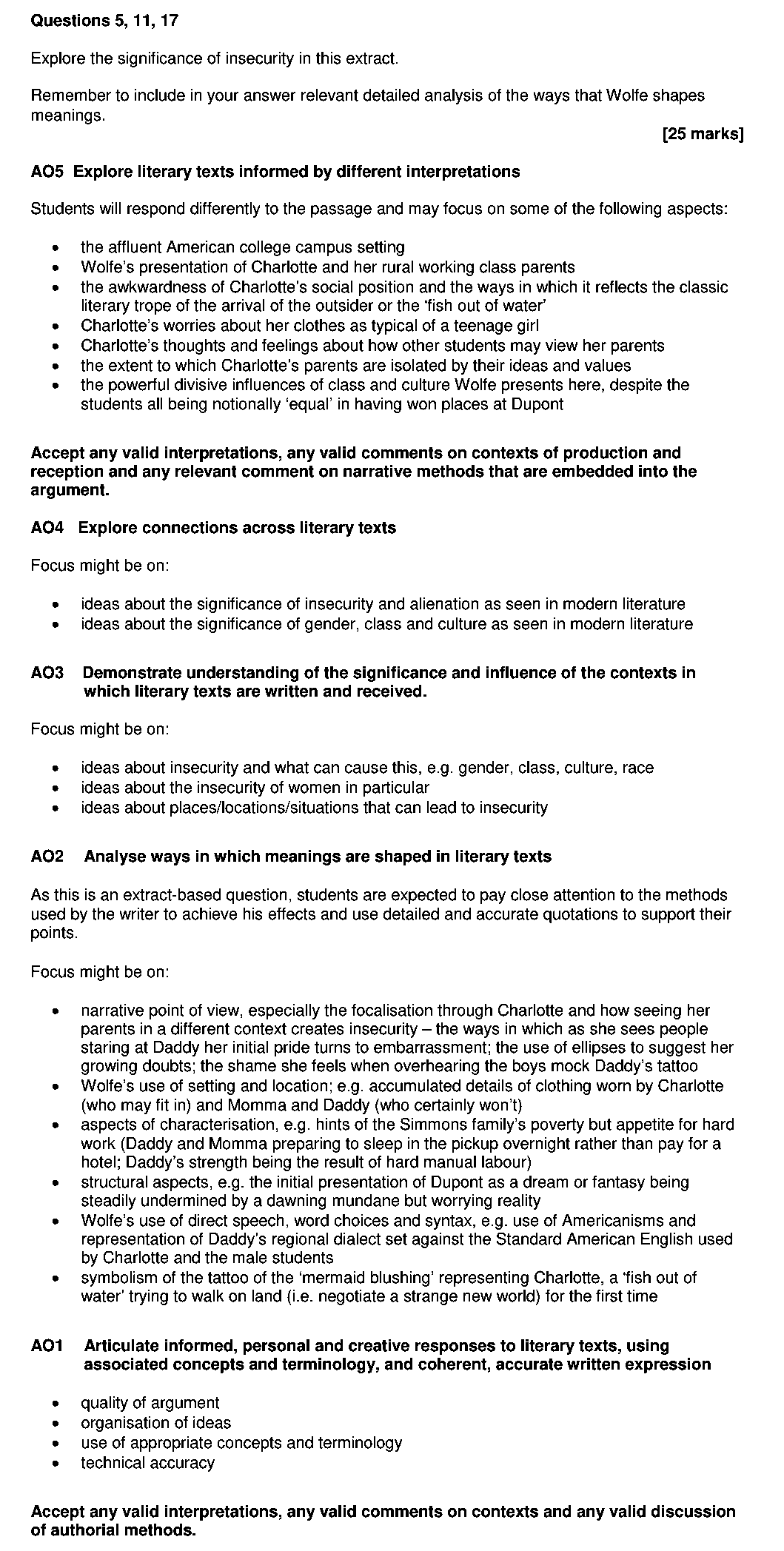
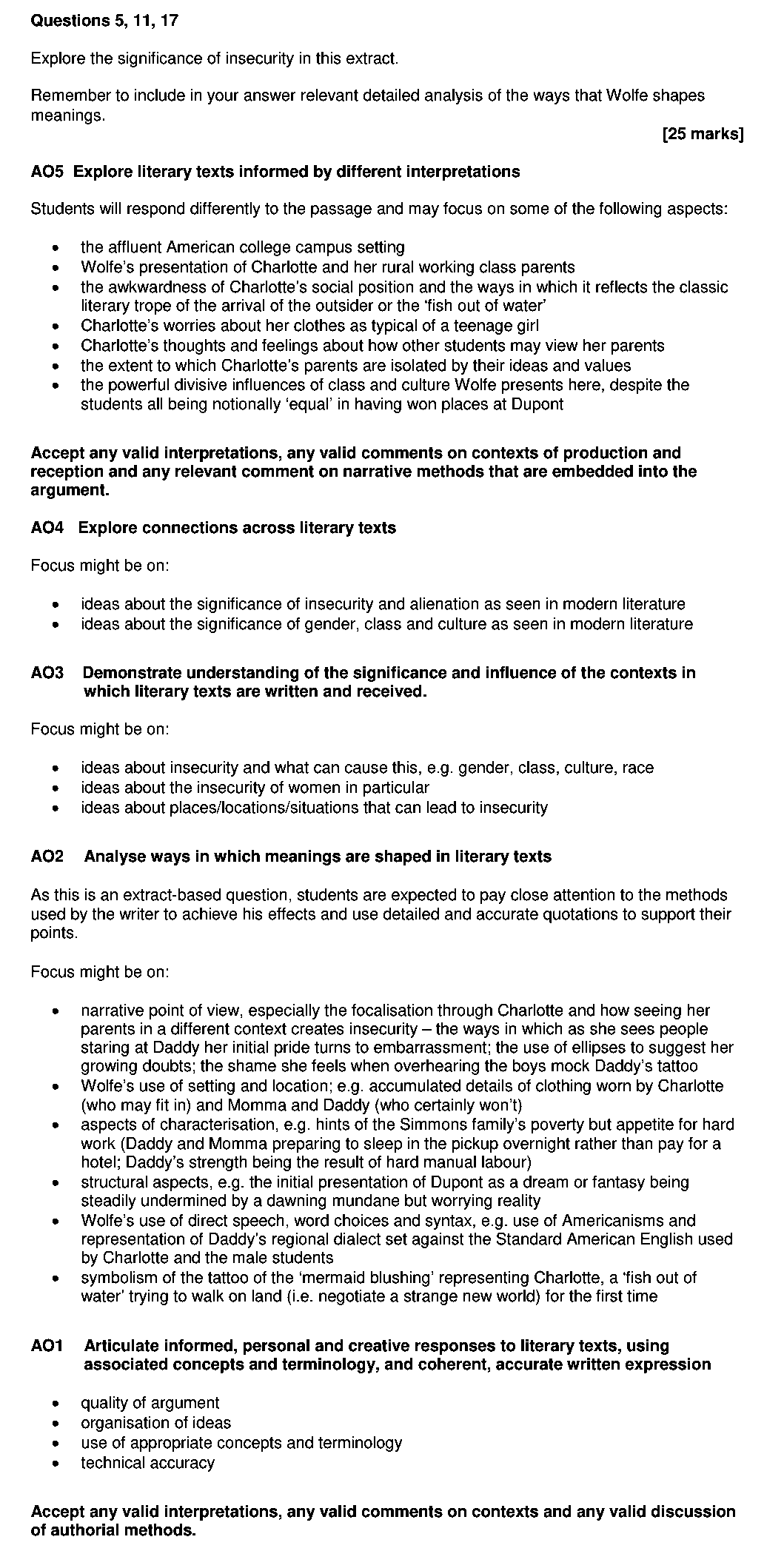
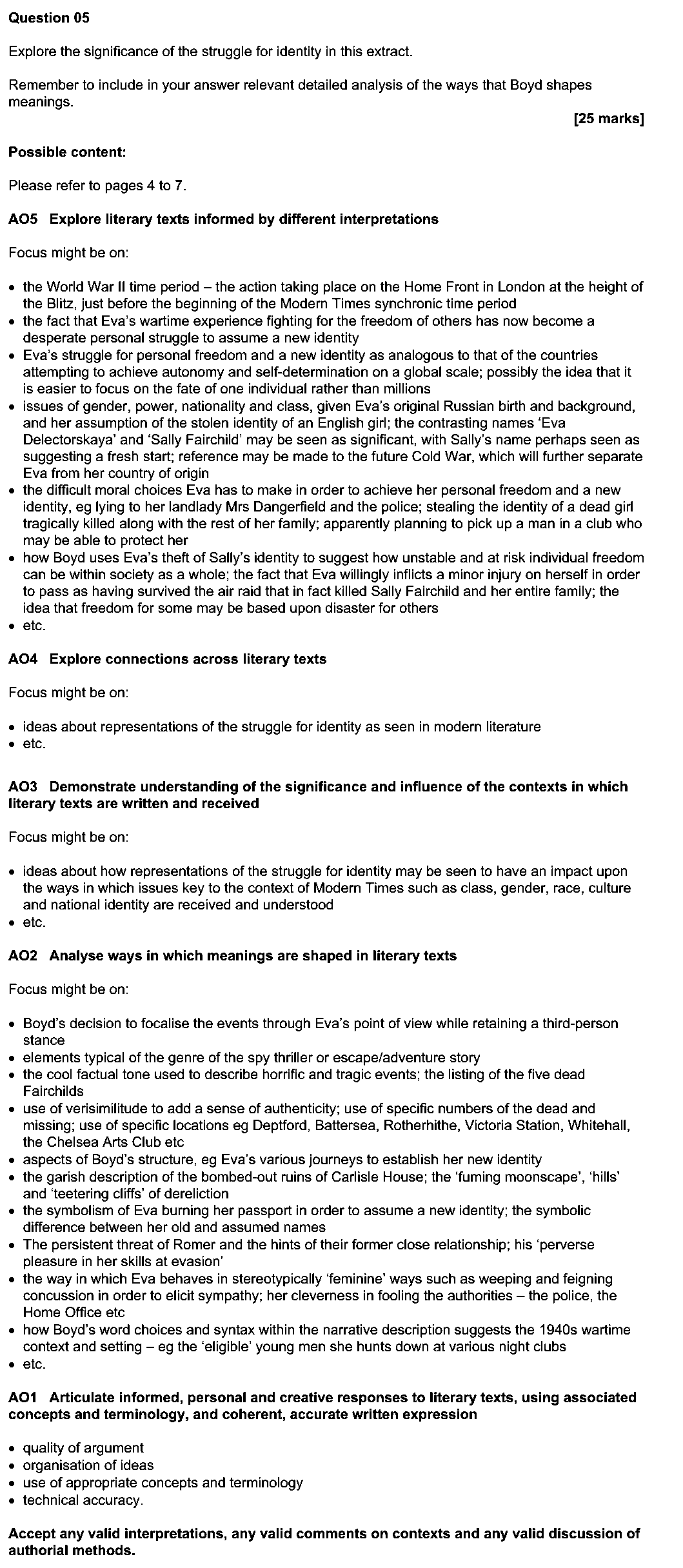
Mark scheme, including the levels and indicative content
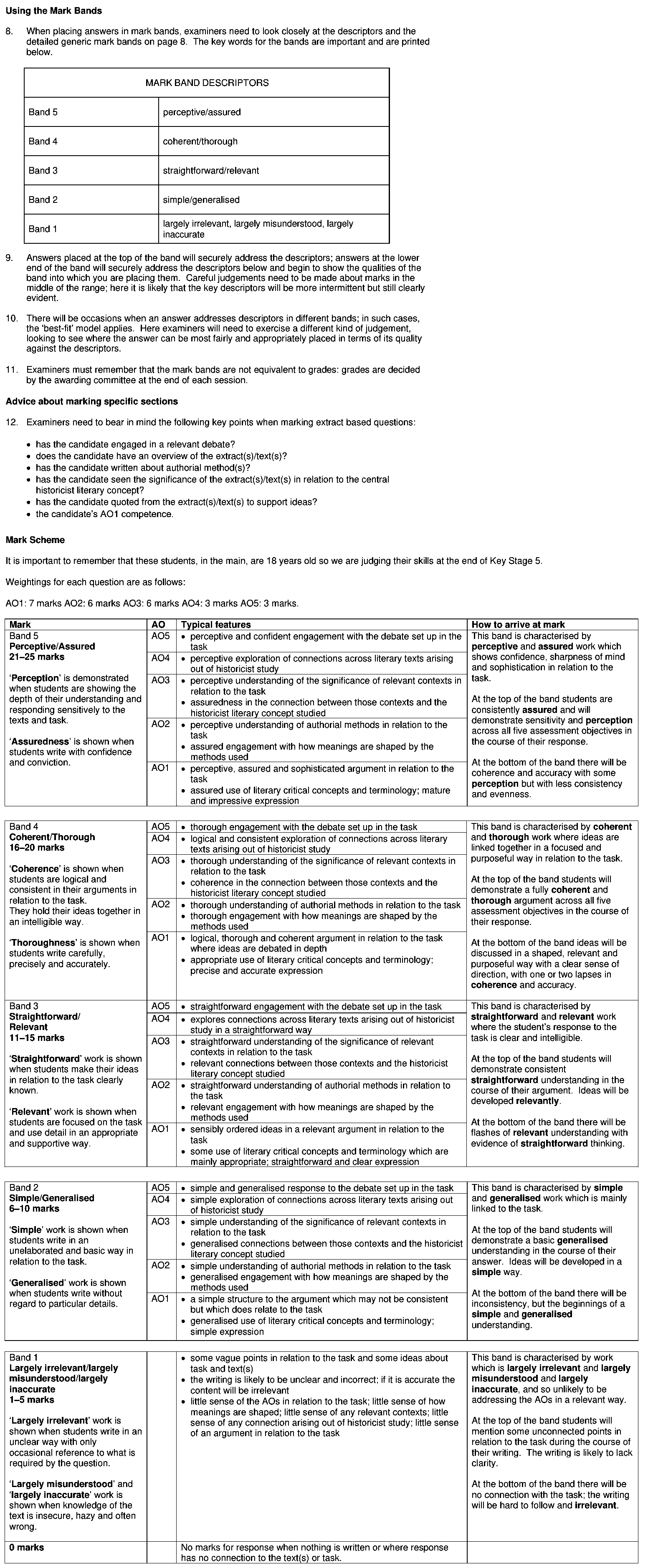
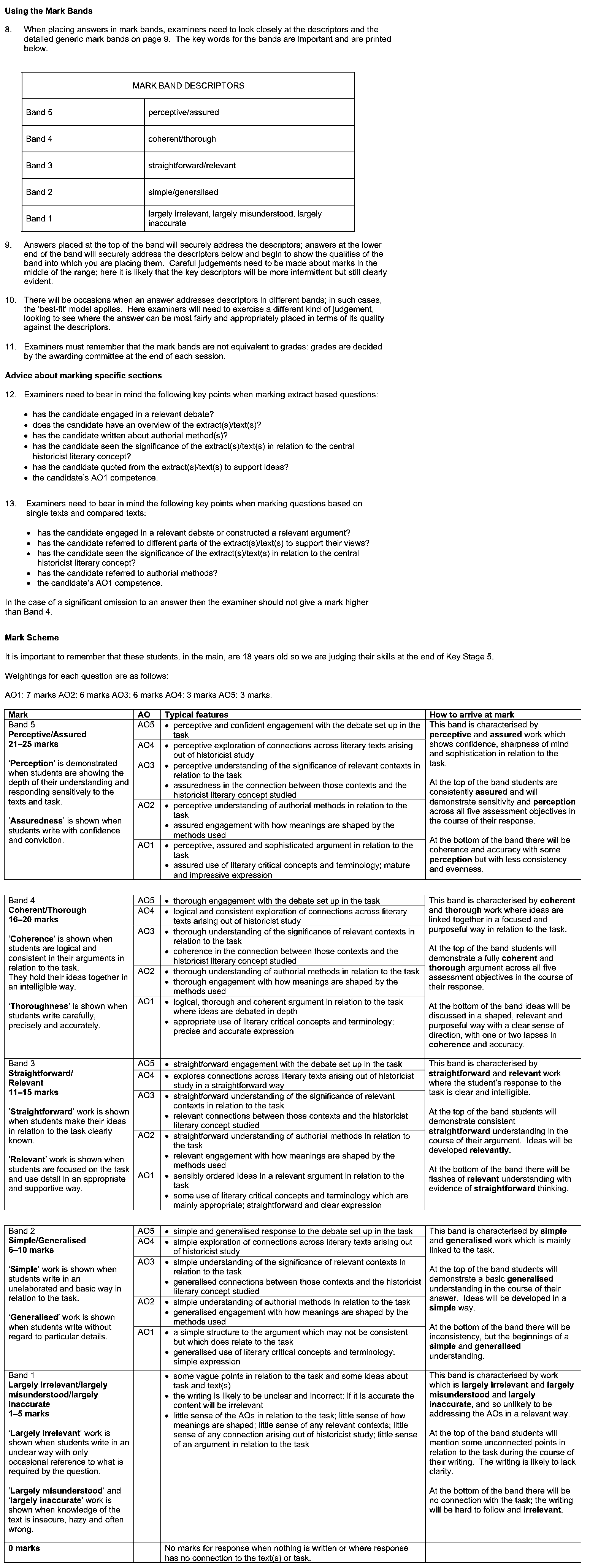
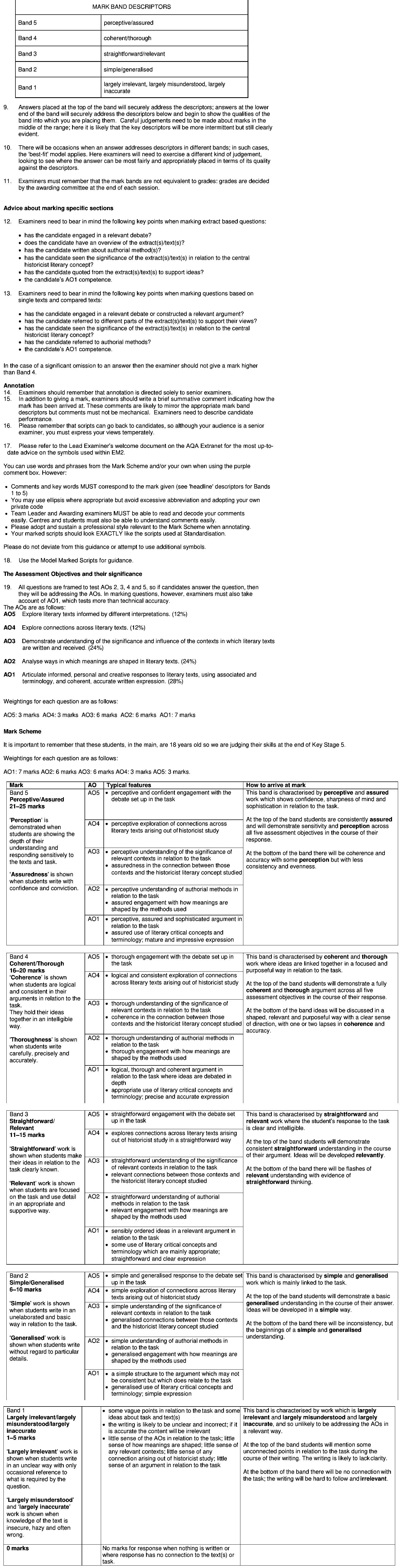
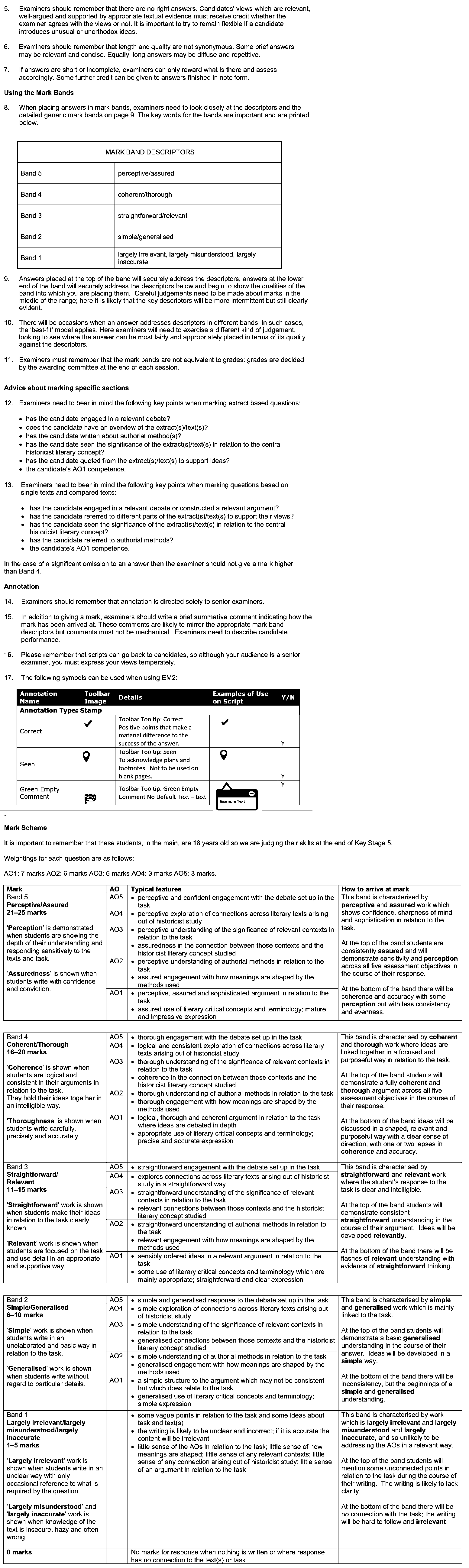
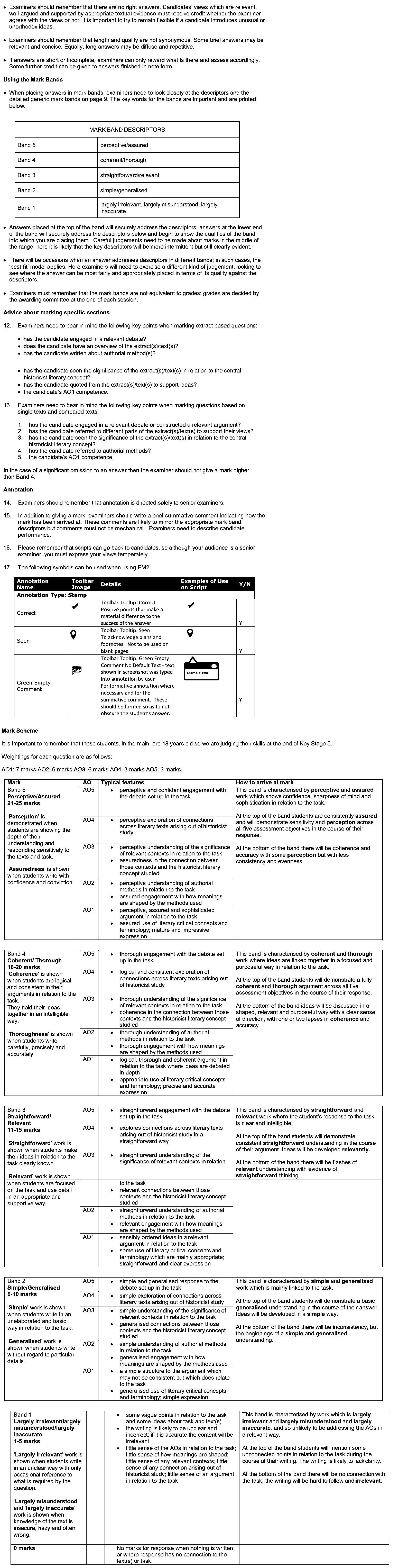
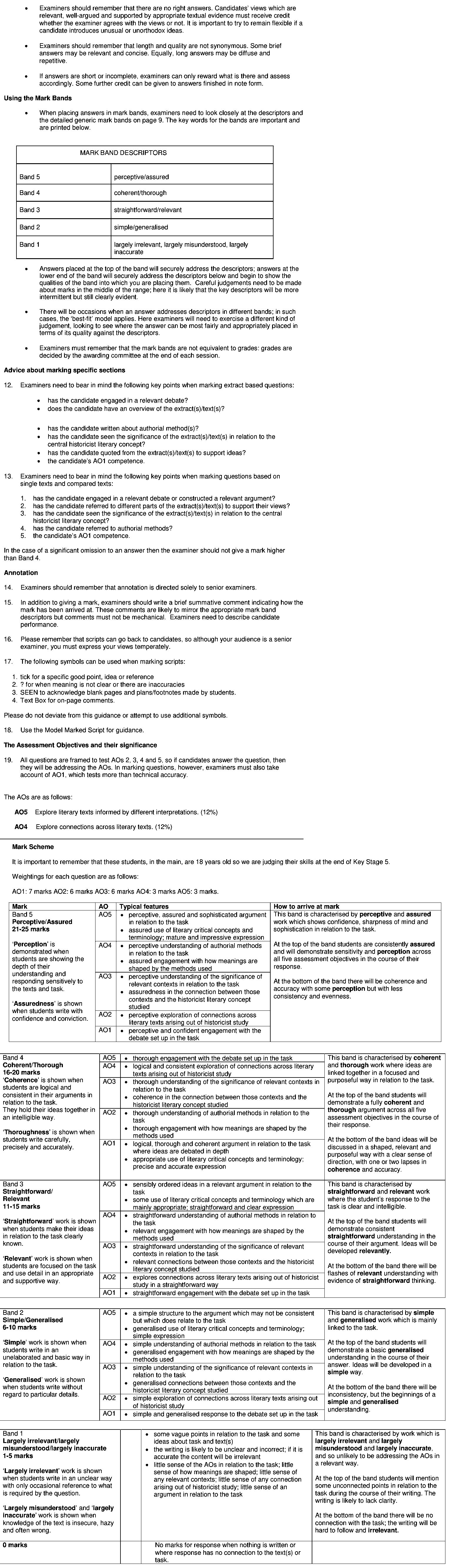
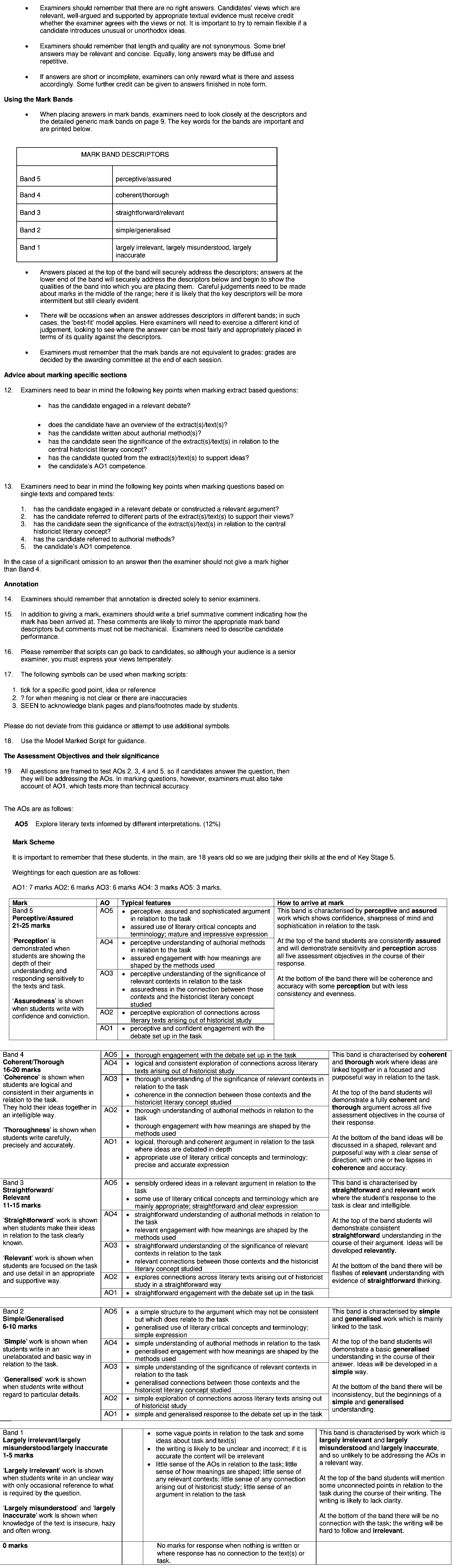
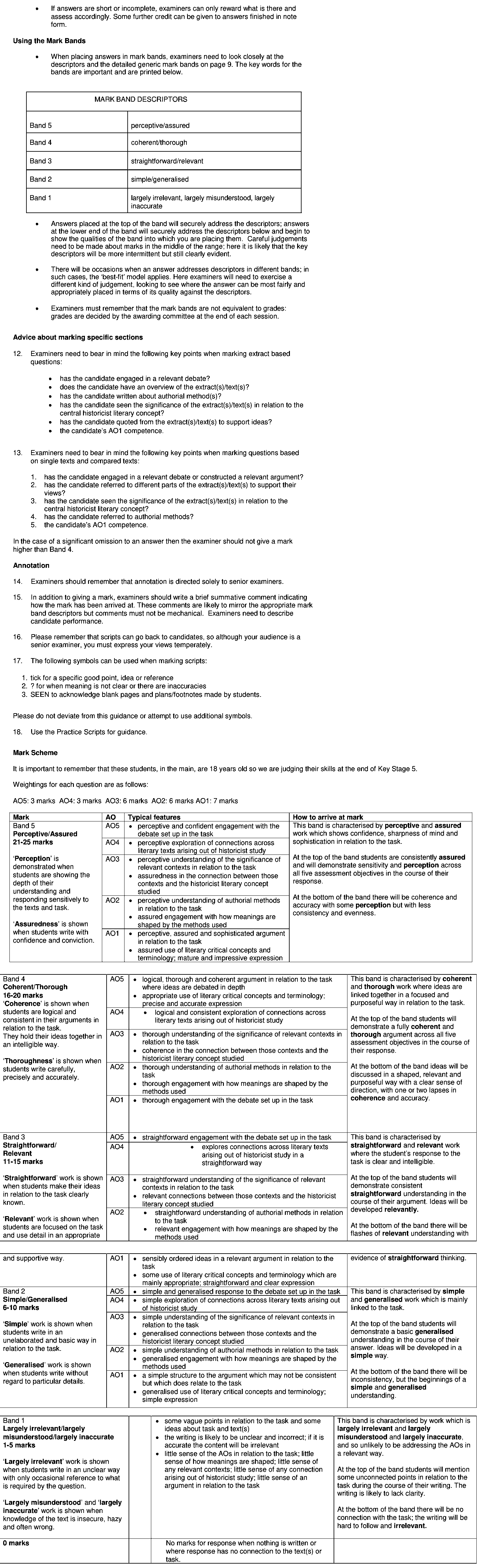
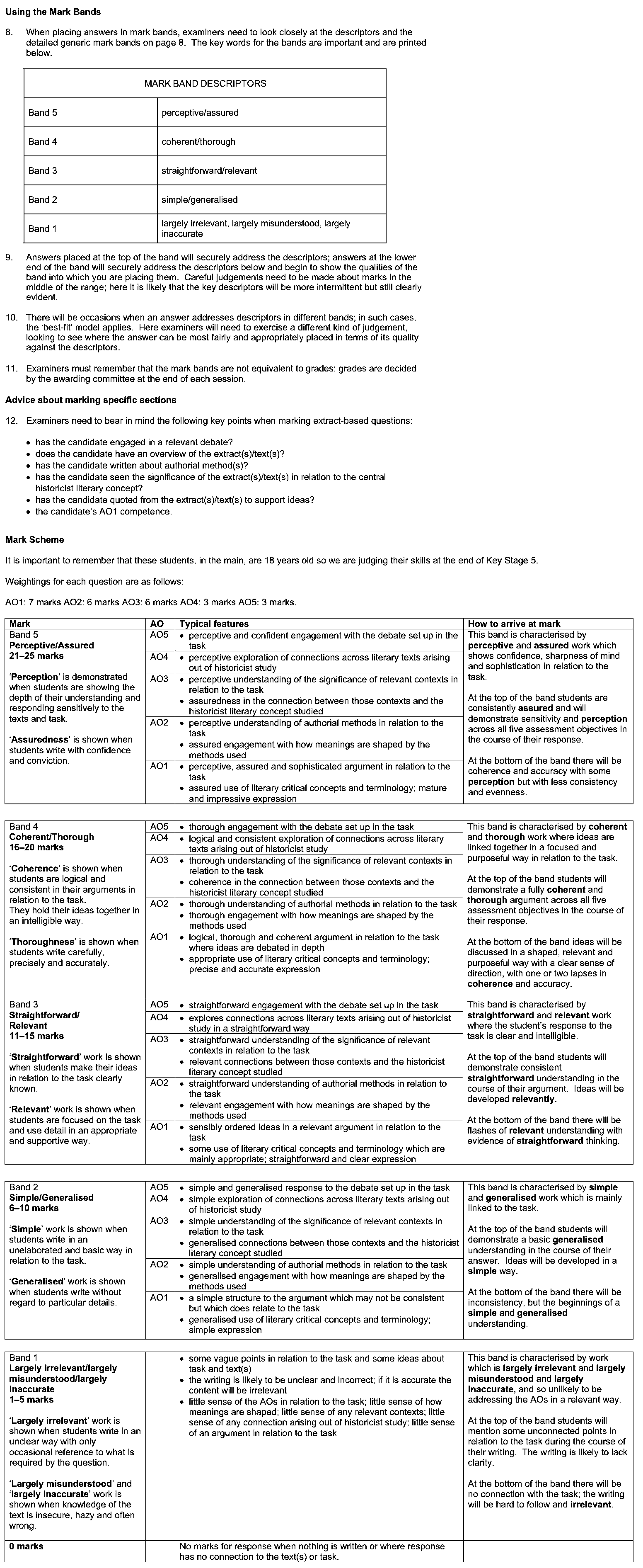
The general mark scheme (assessment objectives and bands)
Examiner's comment
The unseen prose extract has been chosen with a clear beginning and end to enable more thorough analysis. The key words of the given view are intended as a lens through which to view to the extract. Therefore, there is every reason to spend a substantial amount of time analysing the extract given in the light of the stated theme: in this series the struggle for identity. As the extract is always from a novel published after 1945, it is particularly important to write about prose narrative. Precise relevant references to aspects of narrative methods are encouraged. Essential to success in this question is for students to have undertaken sufficient practice in unseen critical analysis, and to avoid irrelevant references to other texts when instructed to write about the significance of the given theme of loneliness and social isolation ‘in this extract’. Whereas less effective responses to William Boyd’s Restless (2006) tended to paraphrase the extract via a ‘narrative-with-text’ approach plus attendant feature-spotting, better responses engaged enthusiastically and skilfully with this text and found plenty of illuminating things to say about her narrative methods. Some writing of exceptionally high quality was seen here, especially when students correctly identified the genre of the text as a historical spy thriller. Better answers, while acknowledging that the extract is only a tiny part of a much longer text, wrote well about its internal structure and cohesion, eg the beginning, development and denouement of the scene. Weaker answers made assertions that showed a basic misunderstanding of the nature of the task, such as claiming that Boyd began writing ‘in media res’ when actually AQA had selected the extract, or stating that his purpose was, for example, ‘to explore male mental health’ through his writing. Clearly the theme of the struggle for identity was selected by AQA for the purposes of this examination and not by Boyd himself nearly twenty years ago. The best answers commented effectively on Boyd’s use of a third-person narrative point of view often focalised through his central protagonist, Eva Delectorskaya. Students who were unable to recognise Boyd’s viewpoint were disadvantaged from the outset, since correctly ascertaining this opened up the overall tone of the extract. It was always a problem to get back on track when this core aspect of the text was misunderstood. Too many students asserted that Boyd’s third-person narrative stance necessarily ‘distanced’ both the reader and (oddly) himself from Eva – a simplistic cliché that showed a lack of close reading. Eva’s thoughts, ideas and actions are tracked throughout the extract; the reader follows her every step of the way from the bombed-out ruins of the East End to the posh cafés of the West End. Readers are capable of empathising with and understanding the motivations and actions of fictional protagonists without the first-person narrative voice being employed. One wonders why any writer would use the third-person stance if it was as useless and retrograde as some students claimed. Less able students with an insecure grasp of context and typicality tended to assert that when Boyd wrote the novel in 2006, he must have been thinking about the aftermath of 9/11, or indeed any major world event or conflict situation they could think of that took place after or around 2000. This type of comment shows a very limited grasp of the contexts of production and reception. Urging protagonist Eva to get a job and become a feminist, or to stop drinking alcohol and trying to find a man, suggested that Boyd’s character was being seen as a real person rather than as a fictional construct; while wondering if Boyd the writer ‘could not identify with Eva because he is a man’ was equally irrelevant and limited. Students who put context before text placed themselves at a disadvantage by making speculative claims that Boyd predicted the 2017 #MeToo movement or the arrival of immigrants from Eastern Europe in the 2000s. Asserting that Boyd was ‘really’ writing about issues from his own day was digressive and impossible to substantiate in their responses. Had they analysed the extract as part of a historical novel set during World War II, their answers would have been far more pertinent, relevant and insightful. More successful extract-based answers: ● look at the whole extract in detail with relevant reference to the presentation of the set topic and its significance – and understand that in this specification, ‘significance’ does not mean ‘relative importance’, but is an invitation to create a sharply focused argument about the possible meanings encoded in the set topic (see also below for more about this key term) ● sustain focus on the extract and the writer’s narrative methods ● make considered and accurate use of contextual factors arising out of the text ● show awareness and understanding of the typicality of the set topic within this shared context. Less successful extract-based answers: ● make sparse use of the extract, or neglect parts of it, or impose one narrow view upon it and attempt to prove its ‘correctness’ ● do not pay attention to the writer’s narrative methods ● write about the characters as though they are real people ● describe or paraphrase the extract ● make inaccurate, unsubstantiated, irrelevant and/or sweeping assertions about context.
Notes from the mark scheme and report
- Focus: theme: the struggle for identity
- Unseen text printed
- unseen prose: extract from William Boyd, Restless (2006)
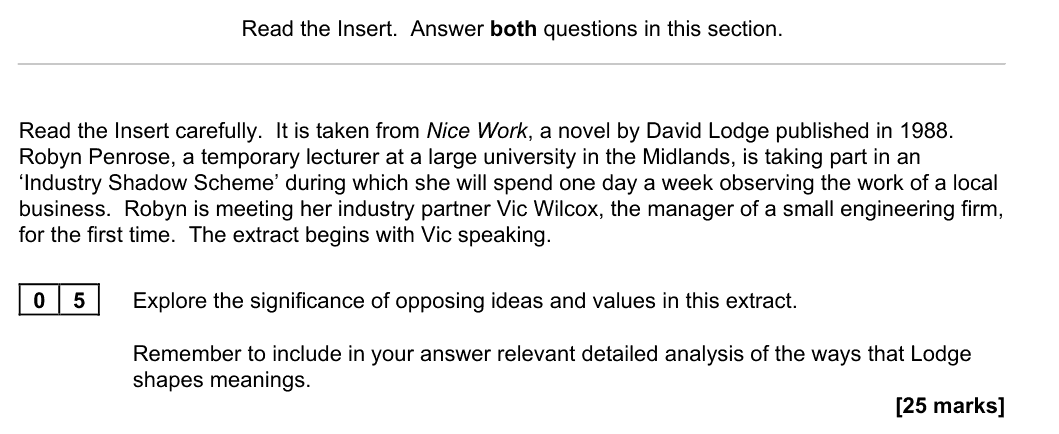
- insert is copyright-removed (only a reference to pages 290-292)
- credited: Blitz setting, Eva's wartime struggle becoming a personal struggle for a new identity, Russian-born Eva taking the stolen English identity of Sally Fairchild, moral choices (lying, stealing), historical spy thriller genre, third-person narration focalised through Eva
- common errors: claiming third person 'distances' the reader, 'in media res', linking it to 9/11 or #MeToo, treating Eva as real
- report wrongly names the theme 'loneliness and social isolation' once and calls Boyd 'her'