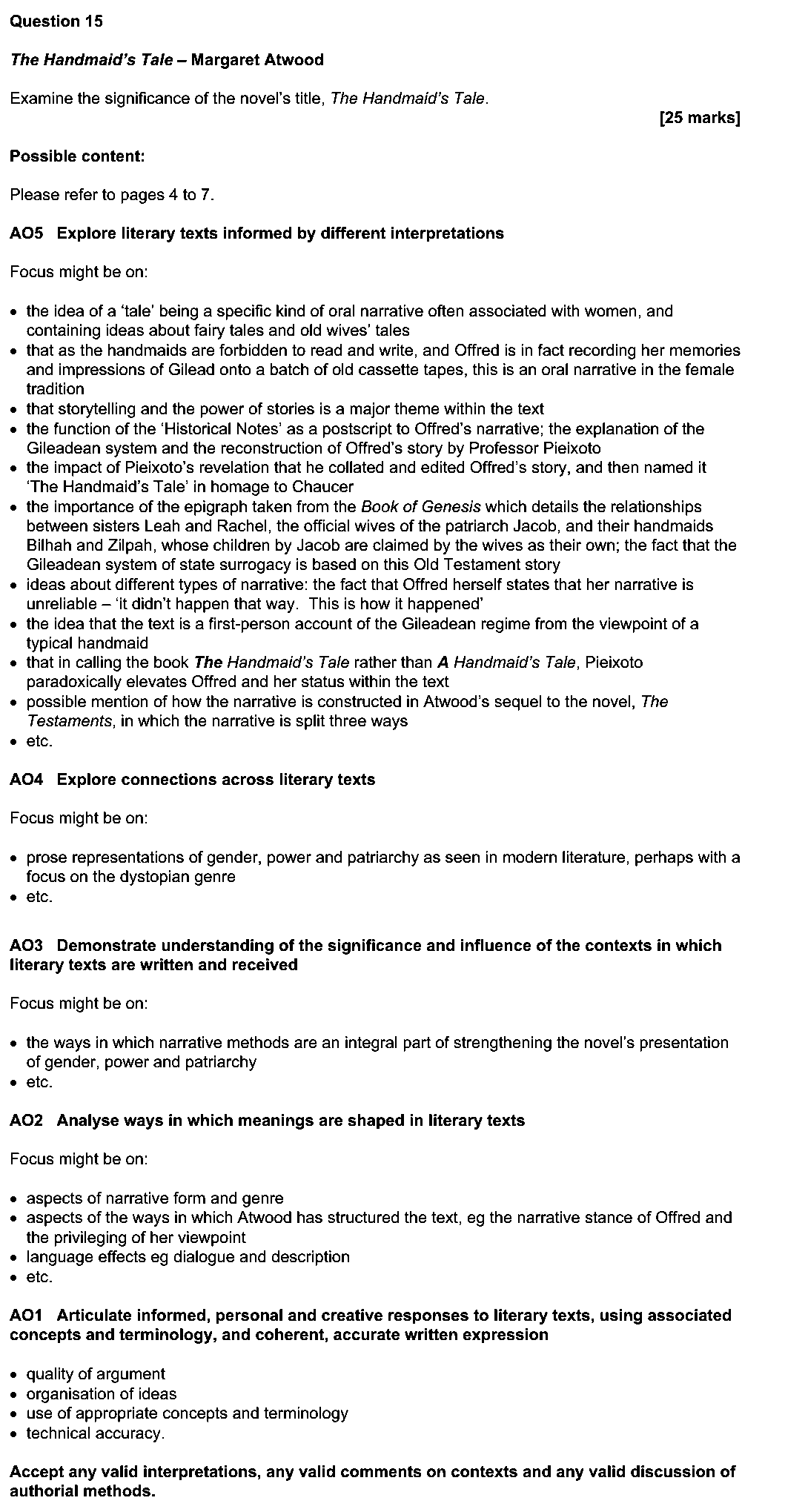
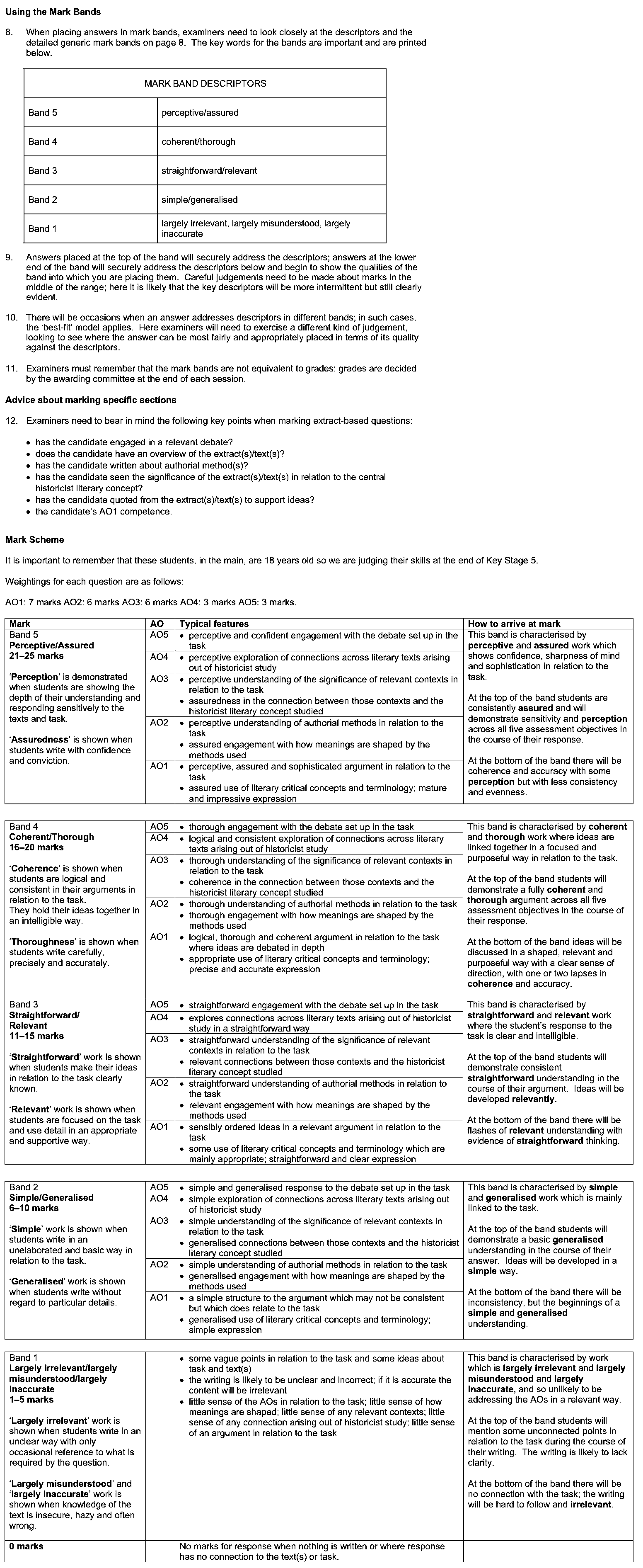
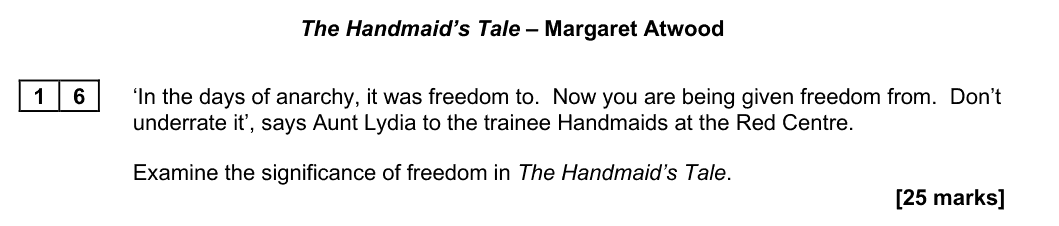
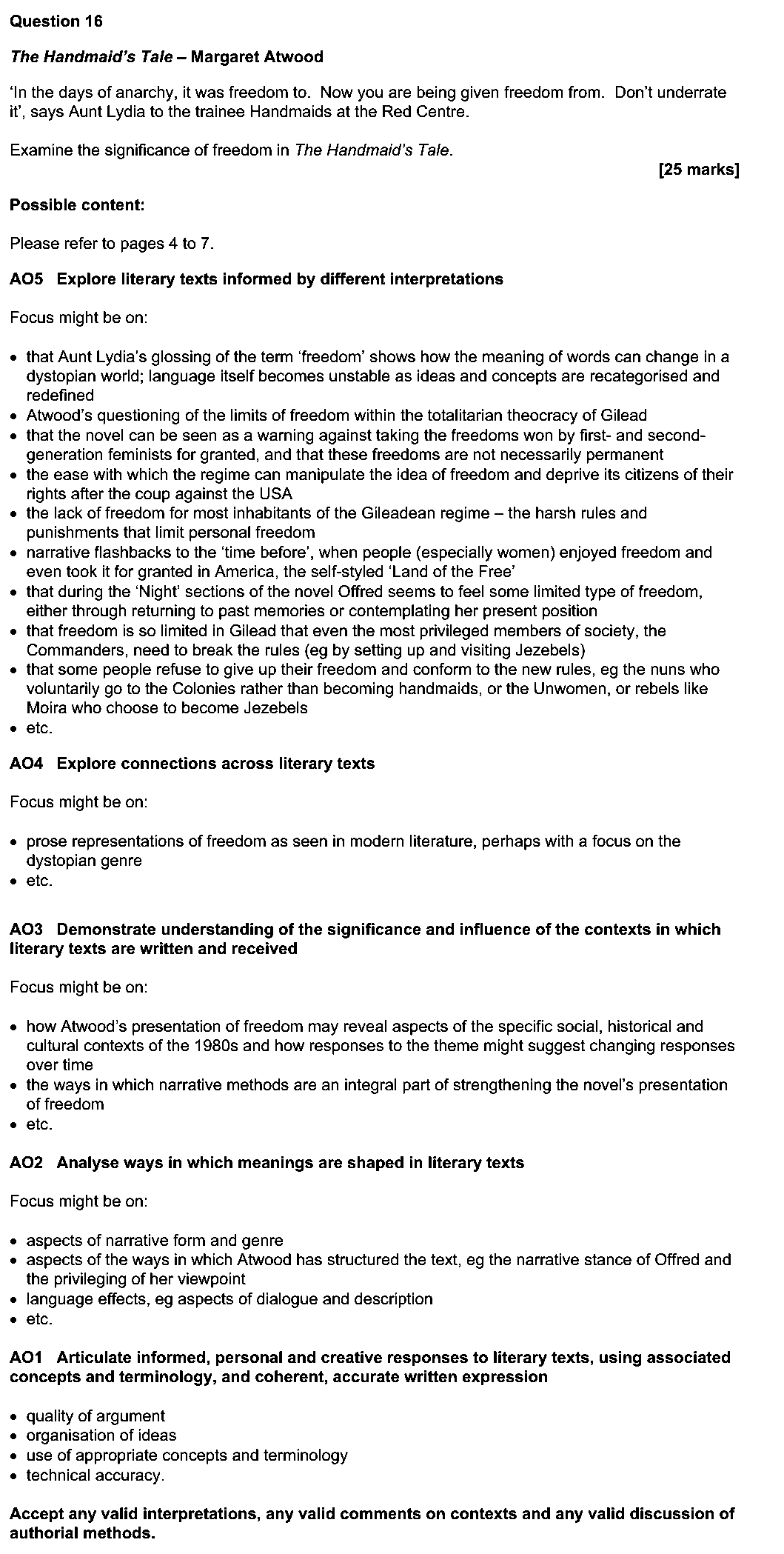
The Handmaid’s Tale – Margaret Atwood ‘In the days of anarchy, it was freedom to. Now you are being given freedom from. Don’t underrate it’, says Aunt Lydia to the trainee Handmaids at the Red Centre. Examine the significance of freedom in The Handmaid’s Tale.
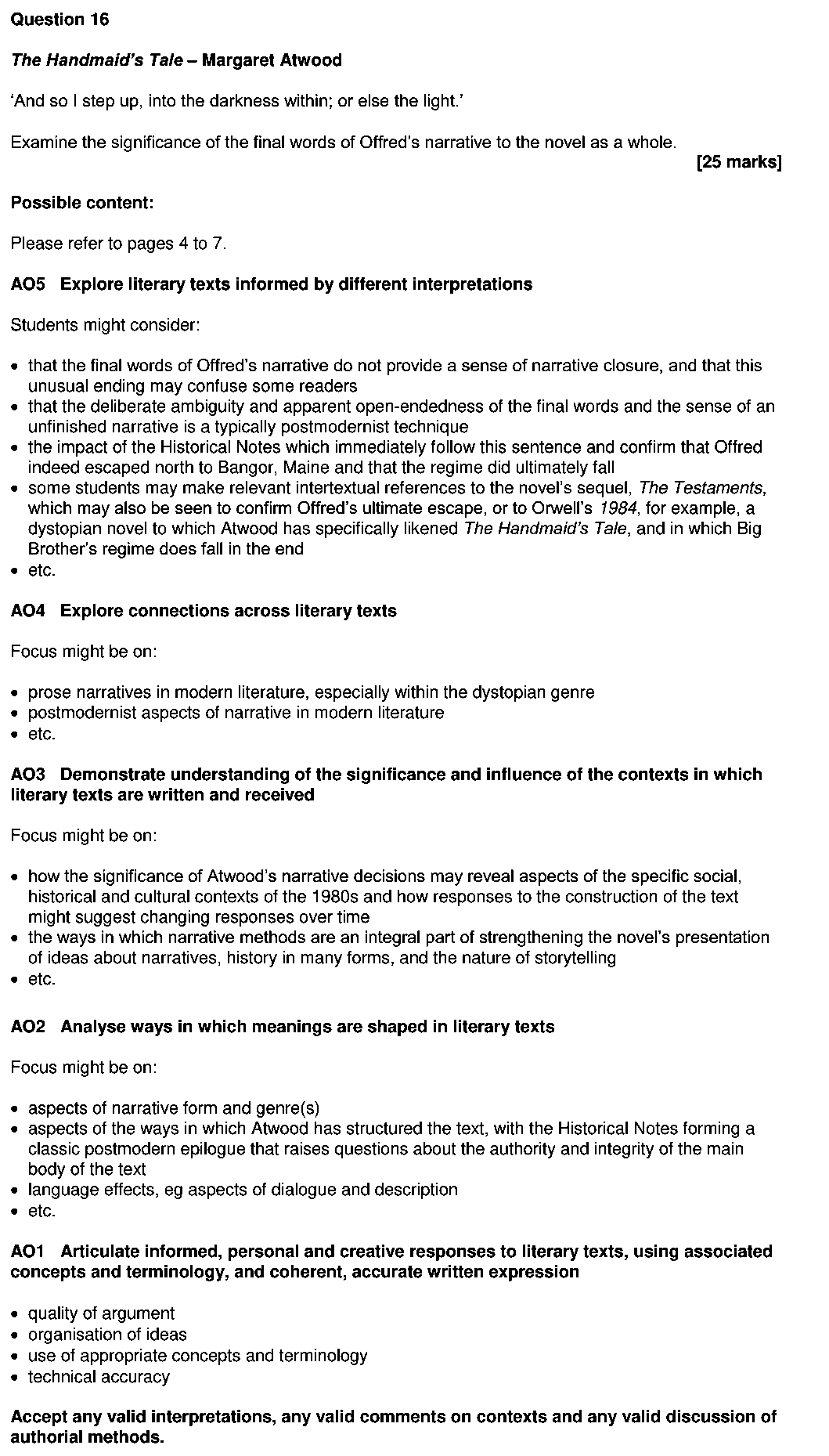
The Handmaid’s Tale – Margaret Atwood ‘And so I step up, into the darkness within; or else the light.’ Examine the significance of the final words of Offred’s narrative to the novel as a whole.
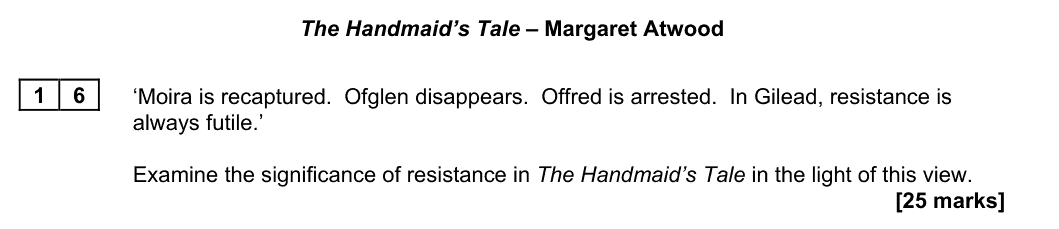
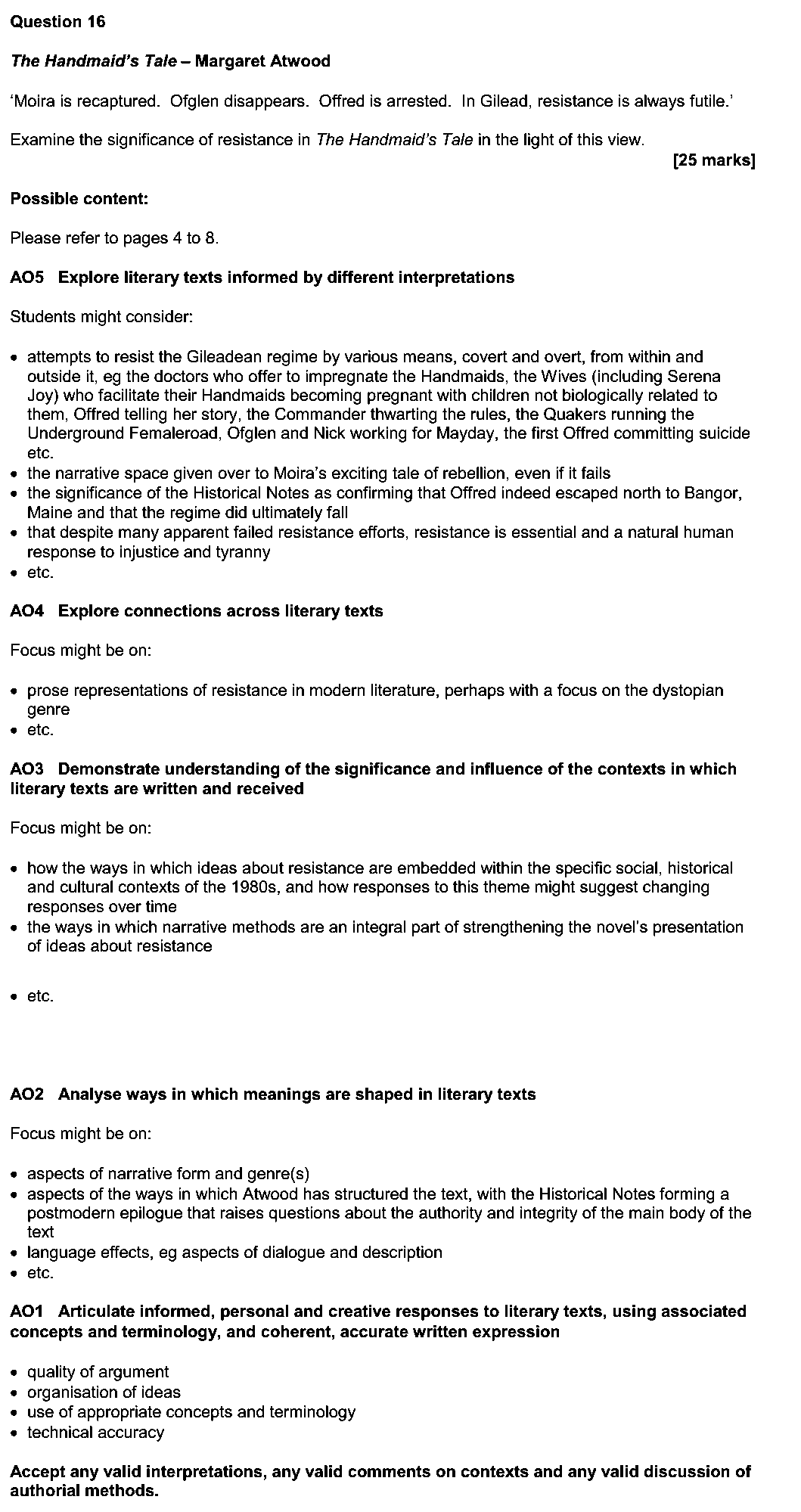
The Handmaid’s Tale – Margaret Atwood ‘Moira is recaptured. Ofglen disappears. Offred is arrested. In Gilead, resistance is always futile.’ Examine the significance of resistance in The Handmaid’s Tale in the light of this view.
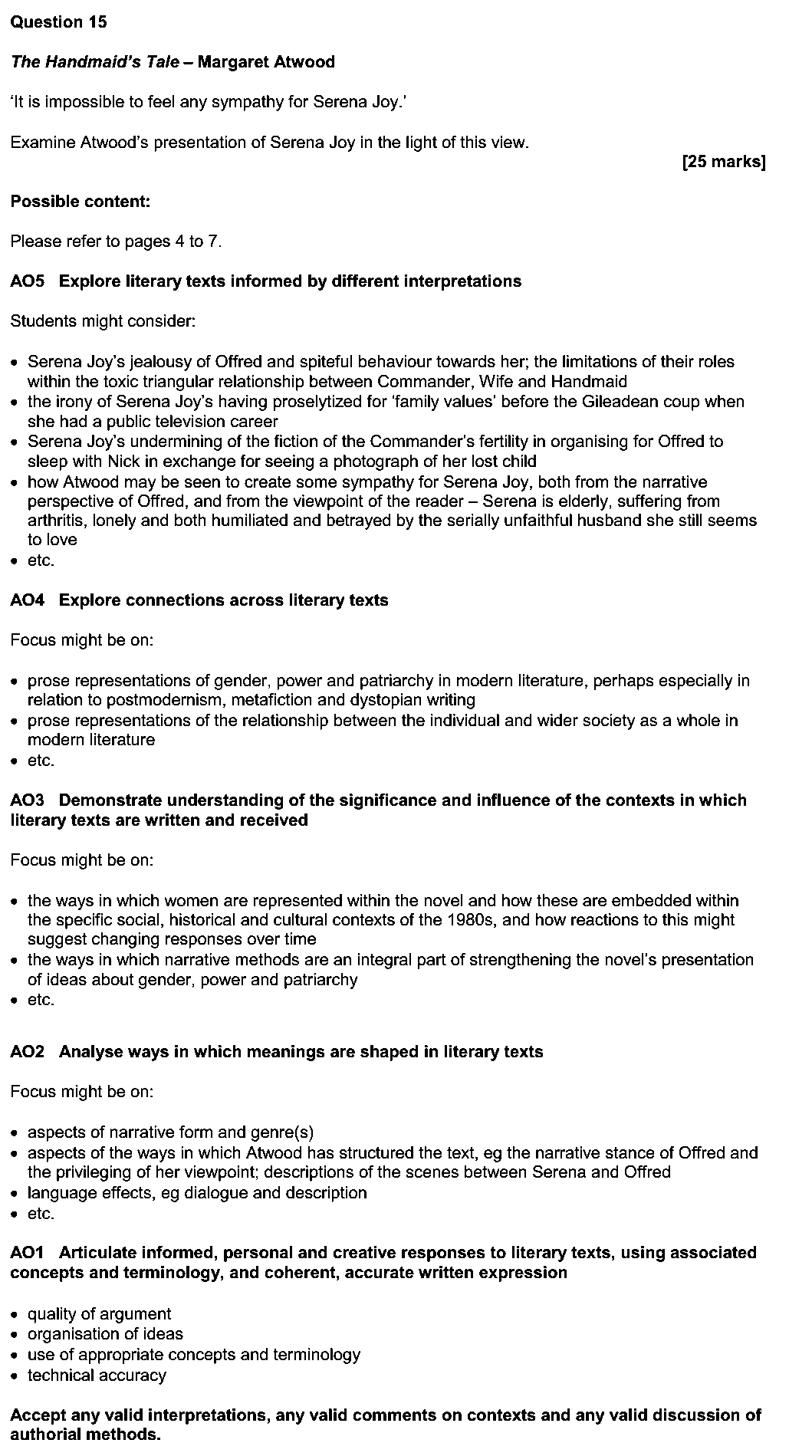
The Handmaid’s Tale – Margaret Atwood ‘It is impossible to feel any sympathy for Serena Joy.’ Examine Atwood’s presentation of Serena Joy in the light of this view.
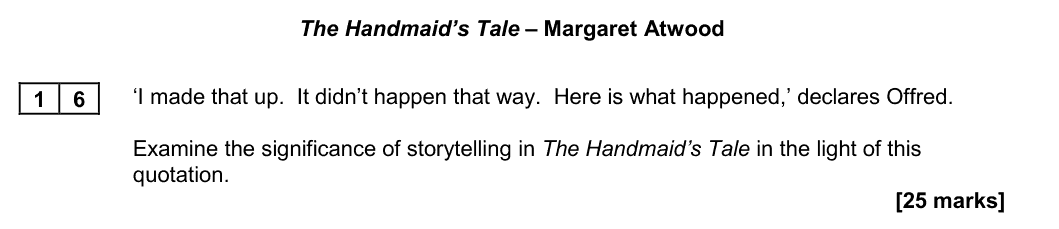
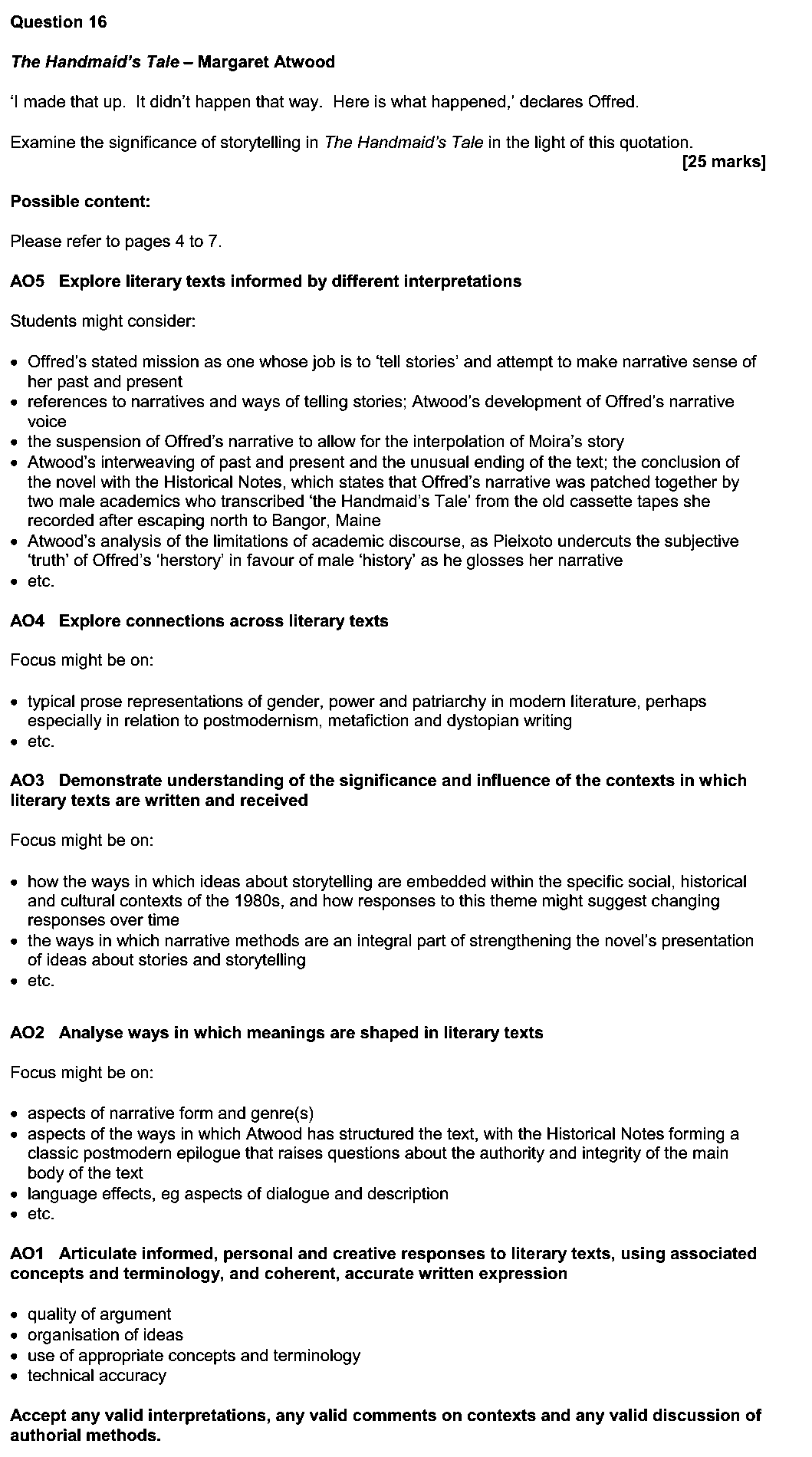
The Handmaid’s Tale – Margaret Atwood ‘I made that up. It didn’t happen that way. Here is what happened,’ declares Offred. Examine the significance of storytelling in The Handmaid’s Tale in the light of this quotation.
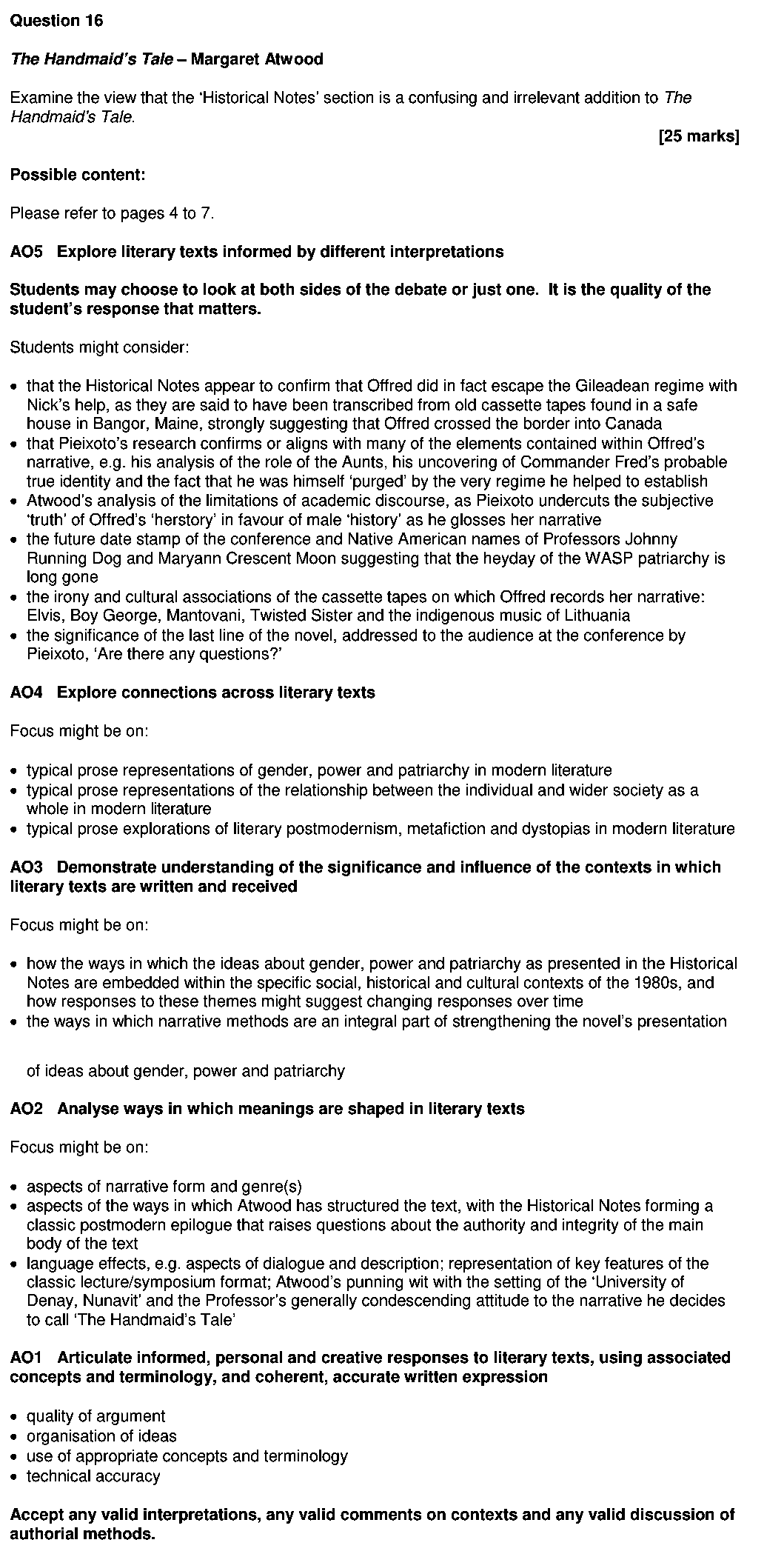
The Handmaid’s Tale – Margaret Atwood Examine the view that the ‘Historical Notes’ section is a confusing and irrelevant addition to The Handmaid’s Tale.
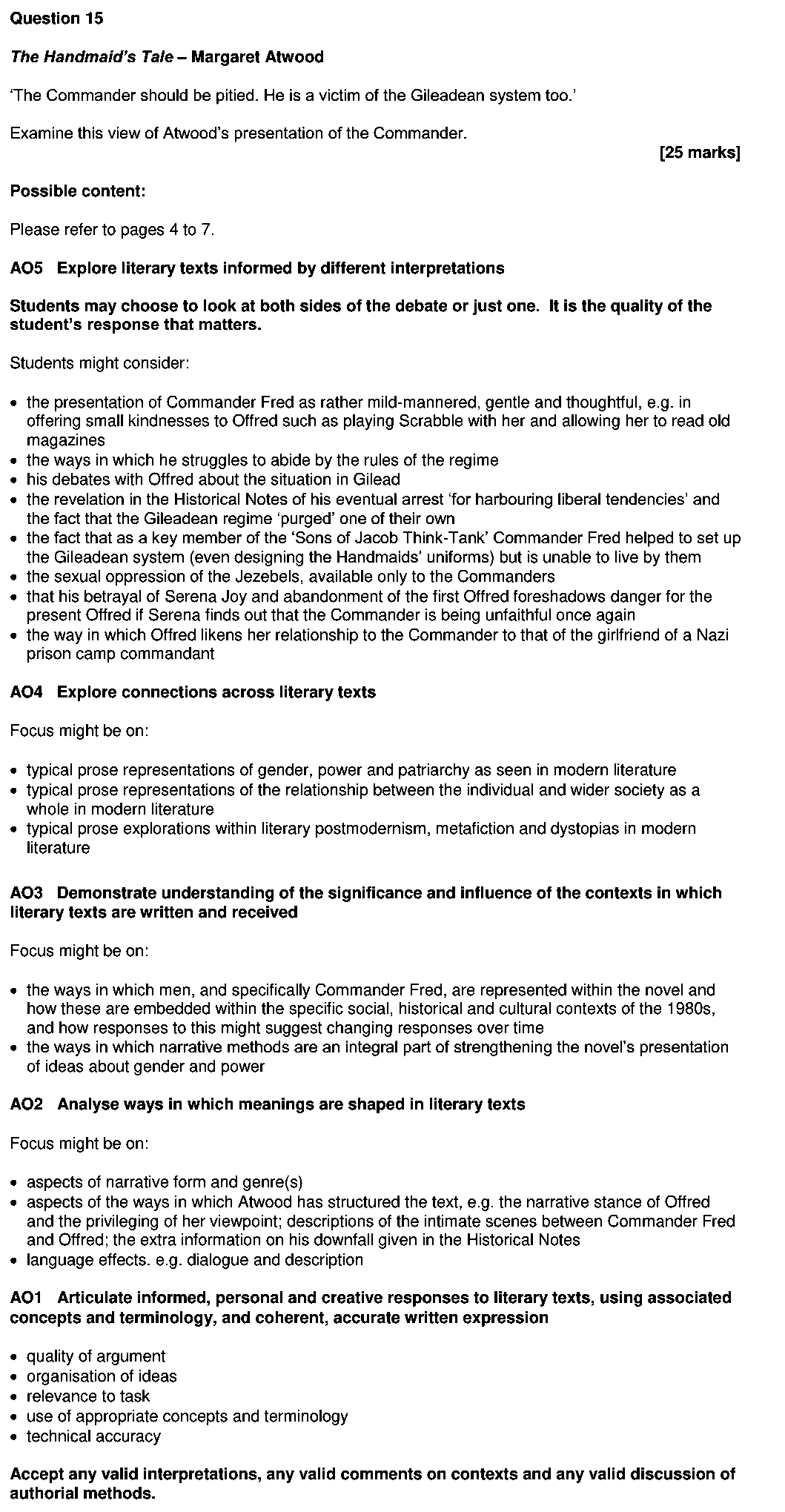
The Handmaid’s Tale – Margaret Atwood ‘The Commander should be pitied. He is a victim of the Gileadean system too.’ Examine this view of Atwood’s presentation of the Commander.
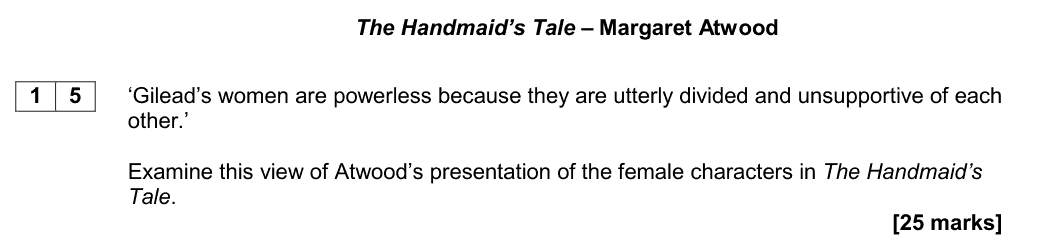
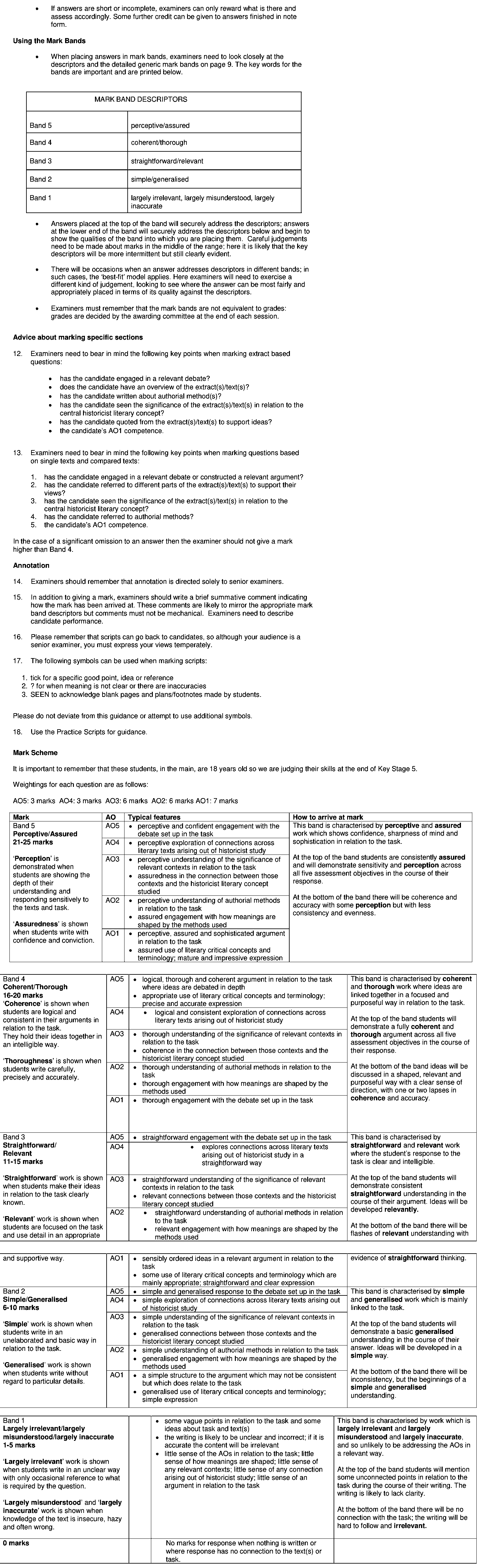
The Handmaid’s Tale – Margaret Atwood ‘Gilead’s women are powerless because they are utterly divided and unsupportive of each other.’ Examine this view of Atwood’s presentation of the female characters in The Handmaid’s Tale.
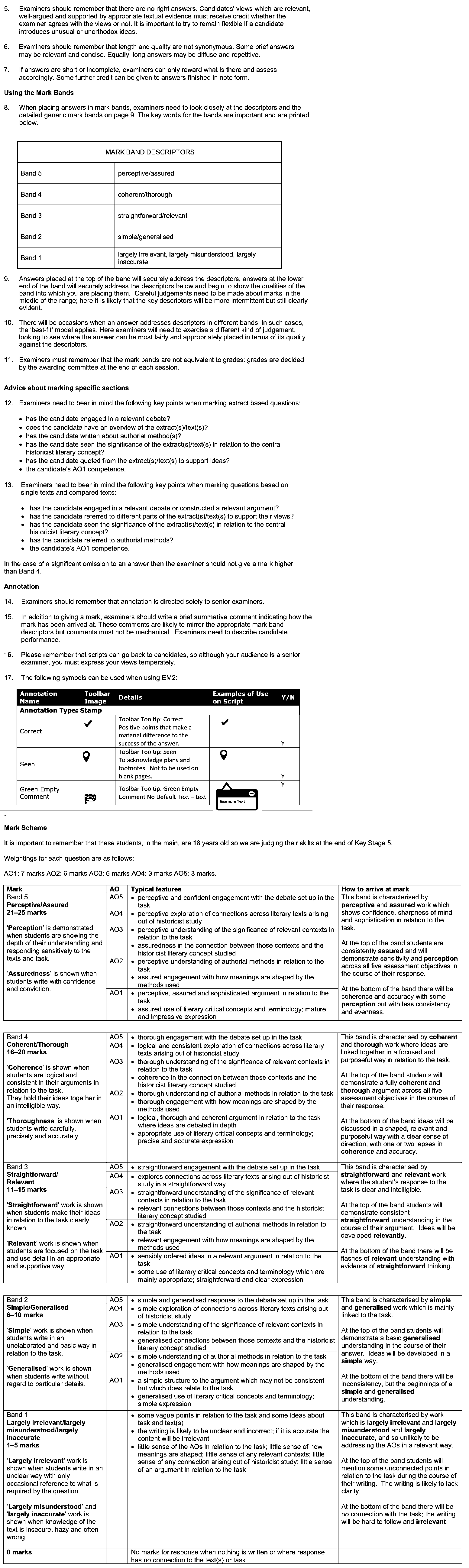
Tap a question to zoom it. The texts and extracts open above it; the mark scheme (with its levels and indicative content) and the examiner's comment open underneath.
June 2025 · Paper 2B · Q1525 marksSet text essay
Mark scheme, including the levels and indicative content
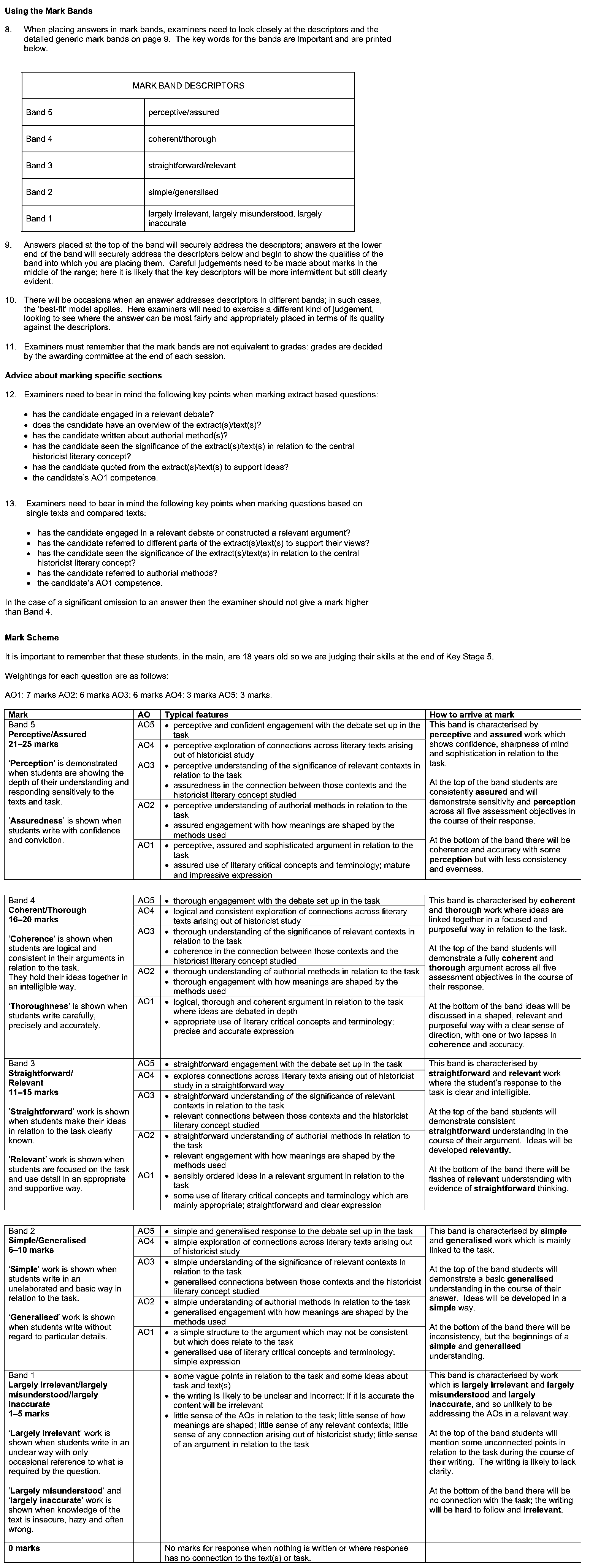
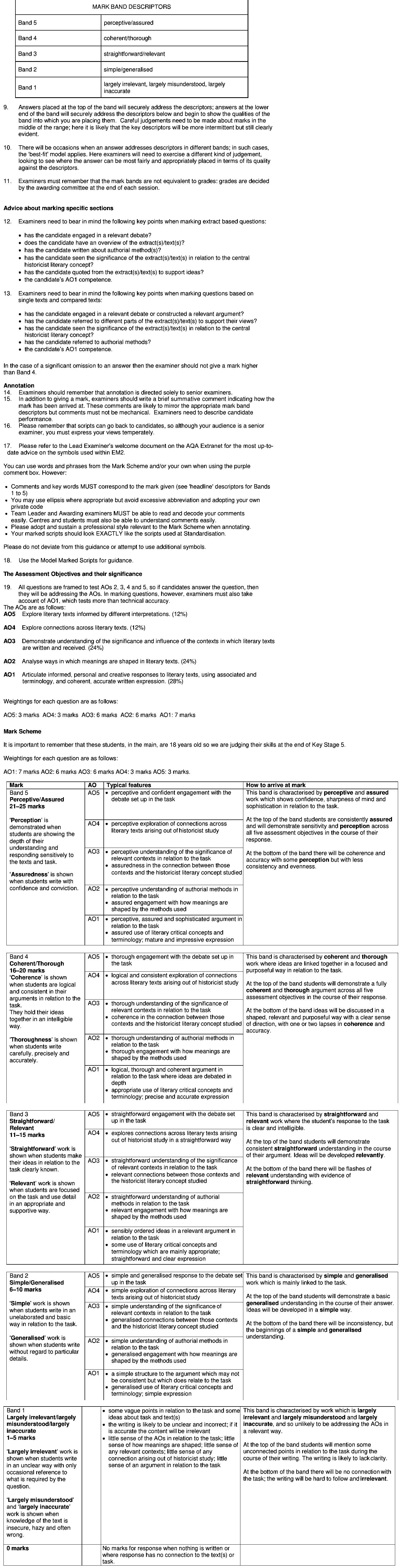
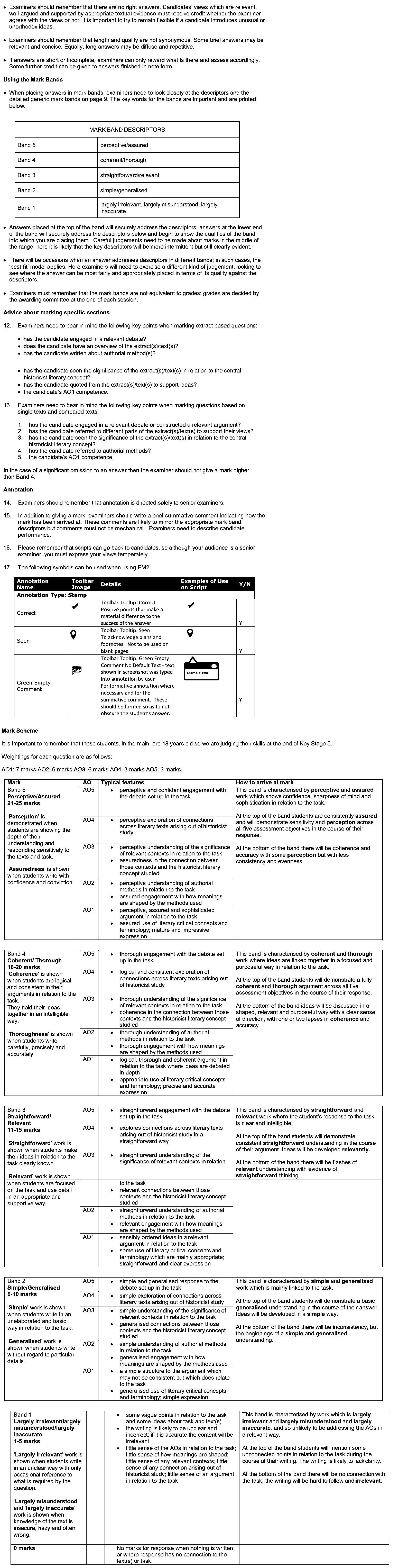
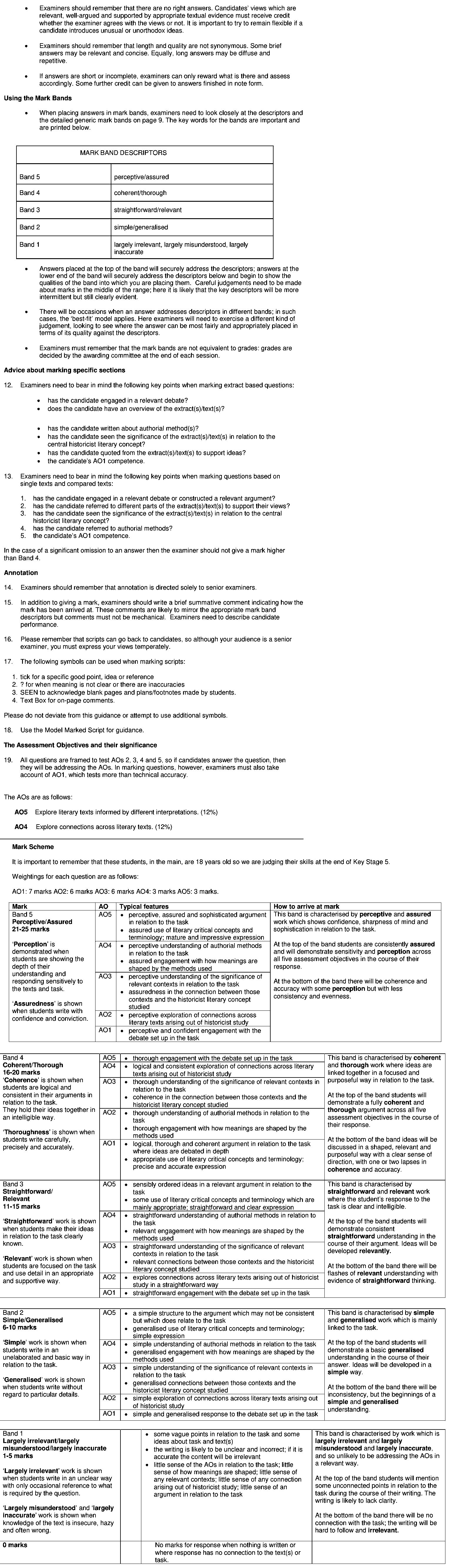
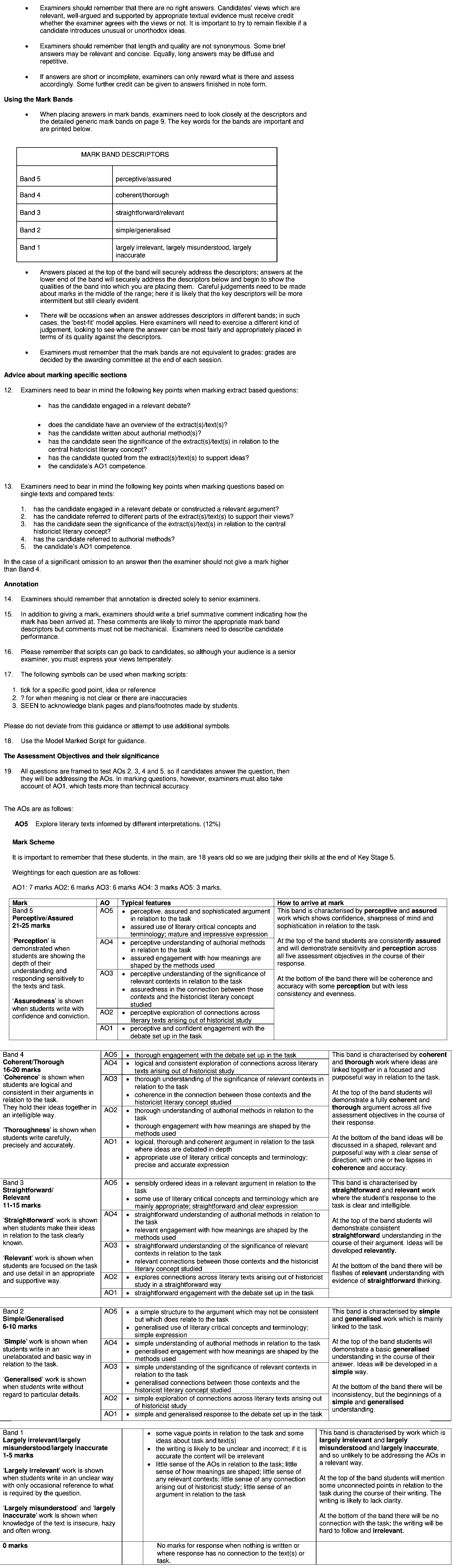
The general mark scheme (assessment objectives and bands)
Examiner's comment
Better answers: ● looked at the implications of the title and applied it to a conceptualised understanding of the novel as a whole ● used the key word ‘significance’ as a springboard for debate ● chose their illustrative points wisely, and linked them clearly and specifically to the title ● wrote well about Atwood’s narrative methods and the dystopian genre. Less effective answers: ● spelled the writer’s name incorrectly in an Open Book examination ● adopted a list-like and generically descriptive approach which did not address the key word ‘significance’ ● did not look in detail at Atwood’s narrative methods and the dystopian genre.
Notes from the mark scheme and report
Focus: title
Open book, no extract
credited: 'tale' as female oral narrative (old wives' tales), Offred's tapes, power of storytelling, Pieixoto naming it in homage to Chaucer in the Historical Notes, Genesis epigraph of Rachel, Leah and their handmaids
use 'significance' as springboard and link points to the title
weaker answers were list-like and descriptive or ignored narrative methods and dystopia
June 2025 · Paper 2B · Q1625 marksSet text essay
Mark scheme, including the levels and indicative content
The general mark scheme (assessment objectives and bands)
Examiner's comment
Better answers: ● showed clear understanding of the significance of freedom in the novel ● examined how various characters’ experienced freedom (and of course the lack of it) to illuminate a strong debate ● wrote well about Atwood’s narrative methods and the dystopian genre. Less effective answers: ● spelled the dramatist’s name incorrectly in an Open Book examination ● wrote in a descriptive way about what happens to various characters as if they were real people rather than fictional constructs ● drifted into a generalised discussion of Gilead’s oppressive nature ● did not address the key word ‘significance’ ● did not look in detail at Atwood’s narrative methods or the dystopian genre.
Notes from the mark scheme and report
Focus: theme: freedom
Open book, no extract
credited: Aunt Lydia's 'freedom to' and 'freedom from' and the instability of language in dystopia, limits of freedom in a theocracy, warning about losing feminist freedoms, flashbacks to the time before, Offred's limited freedom at Night
weaker answers treated characters as real or drifted into Gilead's oppression generally
report's 'dramatist' slip for Atwood
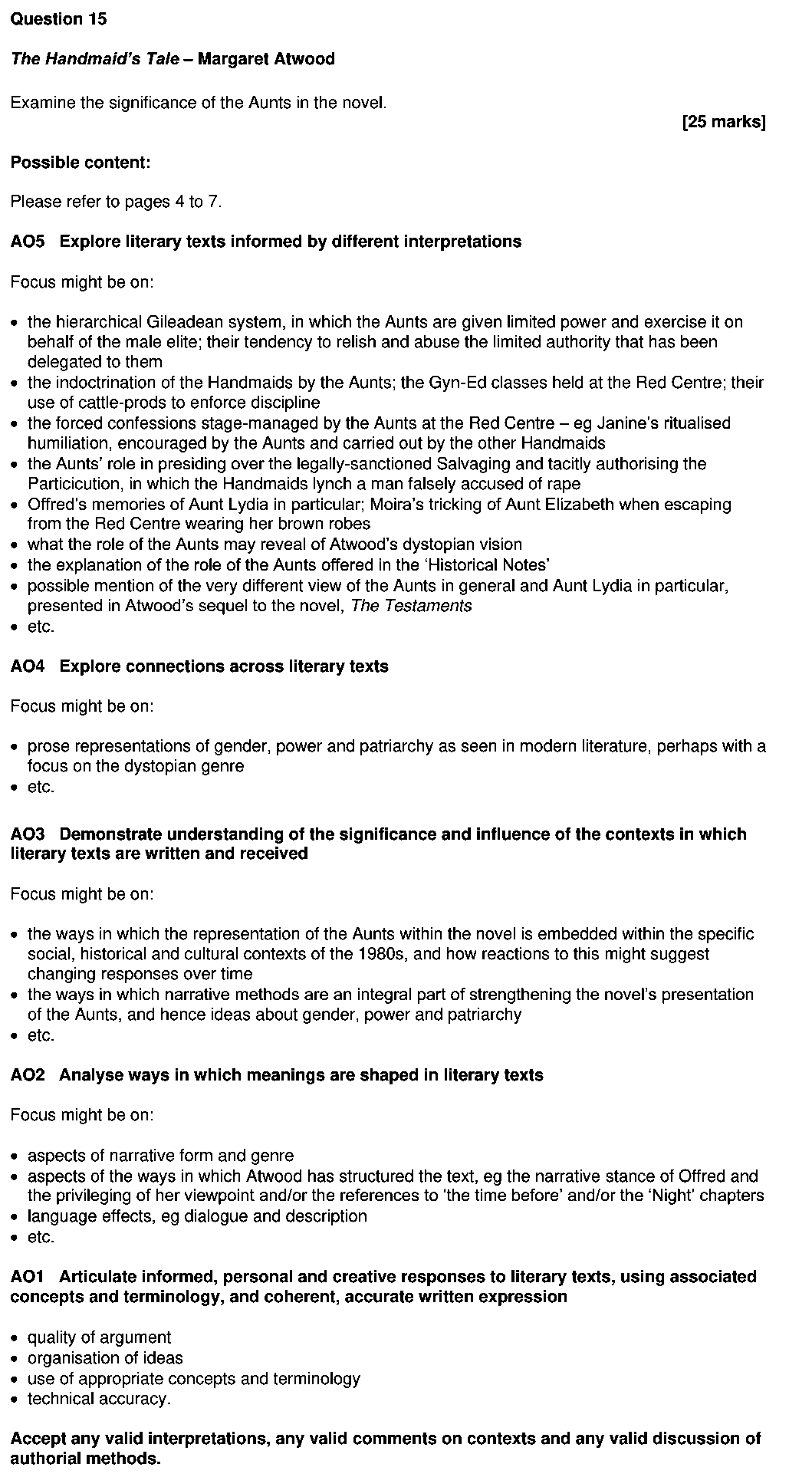
June 2024 · Paper 2B · Q1525 marksSet text essay
Mark scheme, including the levels and indicative content
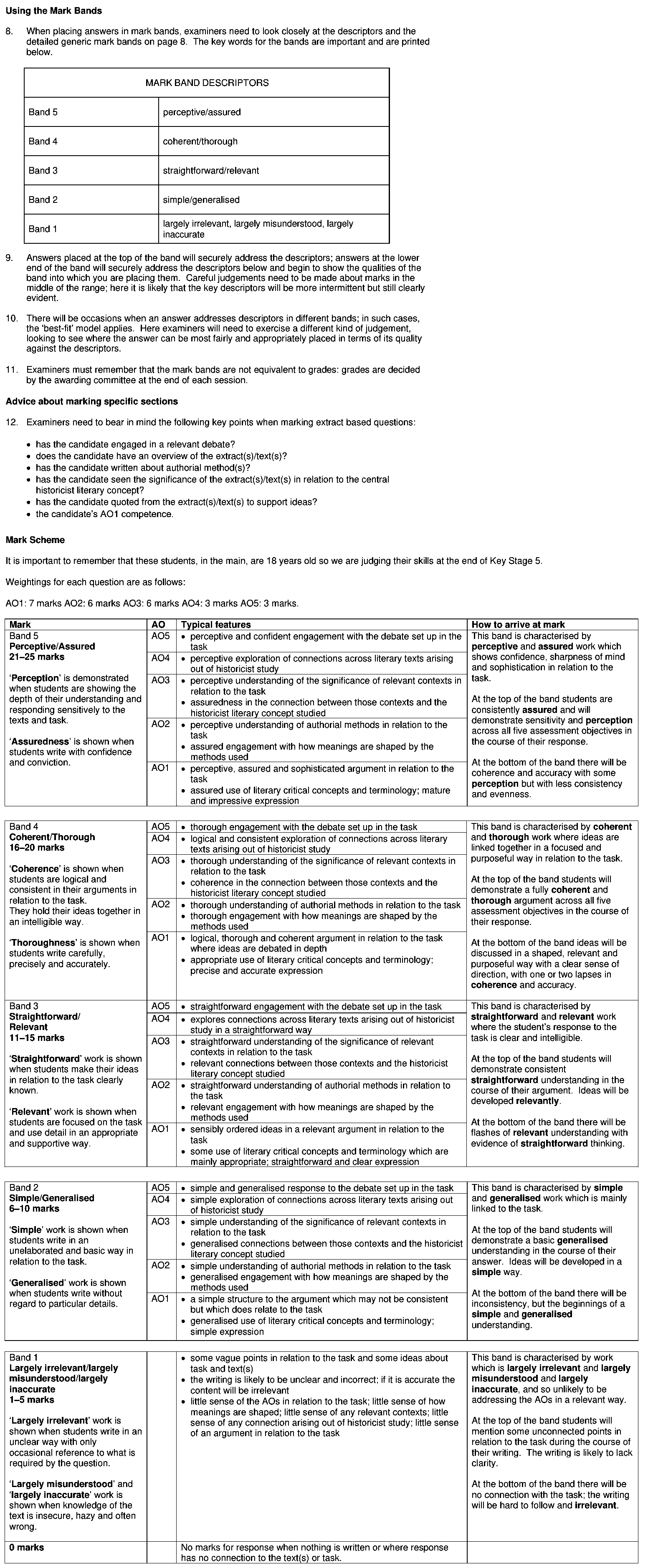
The general mark scheme (assessment objectives and bands)
Examiner's comment
Better answers: ● analysed the various functions, purposes and meanings of the Aunts and some of the key events and characters associated with their role within the regime and in particular as the Red Centre ● linked the representation of the Aunts’ regime at the Red Centre to Atwood’s representation of Gilead’s attempts to control its citizens ● saw the Aunts as typical of the political corruption of the dystopian genre ● wrote well about Atwood’s narrative methods. Less effective answers: • persistently inserted a redundant extra ‘t’ into the novelist’s surname and misspelled ‘Margaret’ in an Open Book examination • were hazy about the various functions, purposes and meanings of the Aunts • adopted a listy and generically descriptive approach which outlined what Aunt Lydia, in particular, was like within the novel but did not address the key word ‘significance’ • asserted that the Red Centre run by the Aunts had once been a high school gymnasium, when in fact it was situated within what was once the gymnasium of Harvard University • did not look in detail at Atwood’s narrative methods.
Notes from the mark scheme and report
Focus: character: the Aunts
Open book, no extract
credited: the Aunts' delegated power exercised for the male elite, indoctrination and cattle prods at the Red Centre, Janine's humiliation, presiding over the Salvaging and Particicution, Aunt Lydia, Moira's escape in Aunt Elizabeth's robes, the Historical Notes, The Testaments
weaker answers described Aunt Lydia without addressing 'significance' or called the Red Centre a high school gym
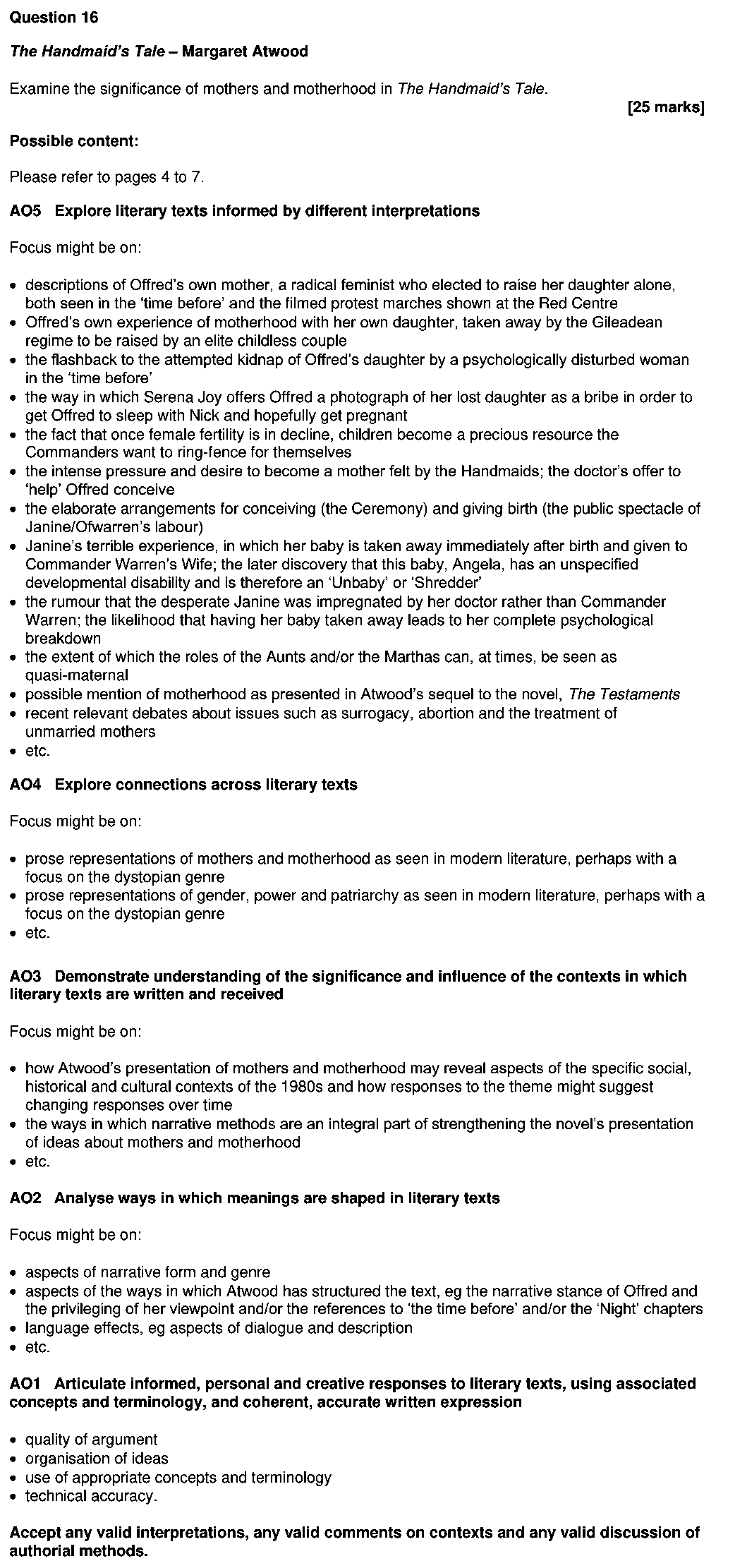
June 2024 · Paper 2B · Q1625 marksSet text essay
Mark scheme, including the levels and indicative content
The general mark scheme (assessment objectives and bands)
Examiner's comment
Better answers: ● showed clear understanding of the significance of motherhood ● examined how various characters experience motherhood to illuminate a strong debate ● analysed the various functions, purposes and meanings of mothers and motherhood in Gilead ● wrote well about Atwood’s narrative methods and the dystopian genre. Less effective answers: ● persistently inserted a redundant extra ‘t’ into the novelist’s surname and misspelled ‘Margaret’ in an Open Book examination ● were hazy about the significance of motherhood and struggled to write about it in depth ● wrote in a descriptive way about what happens to various female characters as if they were real people rather than fictional constructs ● drifted into a generalised discussion of Gilead’s oppressive nature ● did not address the key word ‘significance’ ● did not look in detail at Atwood’s narrative methods or the dystopian genre.
Notes from the mark scheme and report
Focus: theme: mothers and motherhood
Open book, no extract
credited: Offred's feminist mother, Offred's lost daughter and Serena Joy's photograph bribe, children as a resource in Gilead, the Ceremony and Janine's birth, pressure on Handmaids to conceive
weaker answers treated characters as real or drifted into Gilead's oppression generally
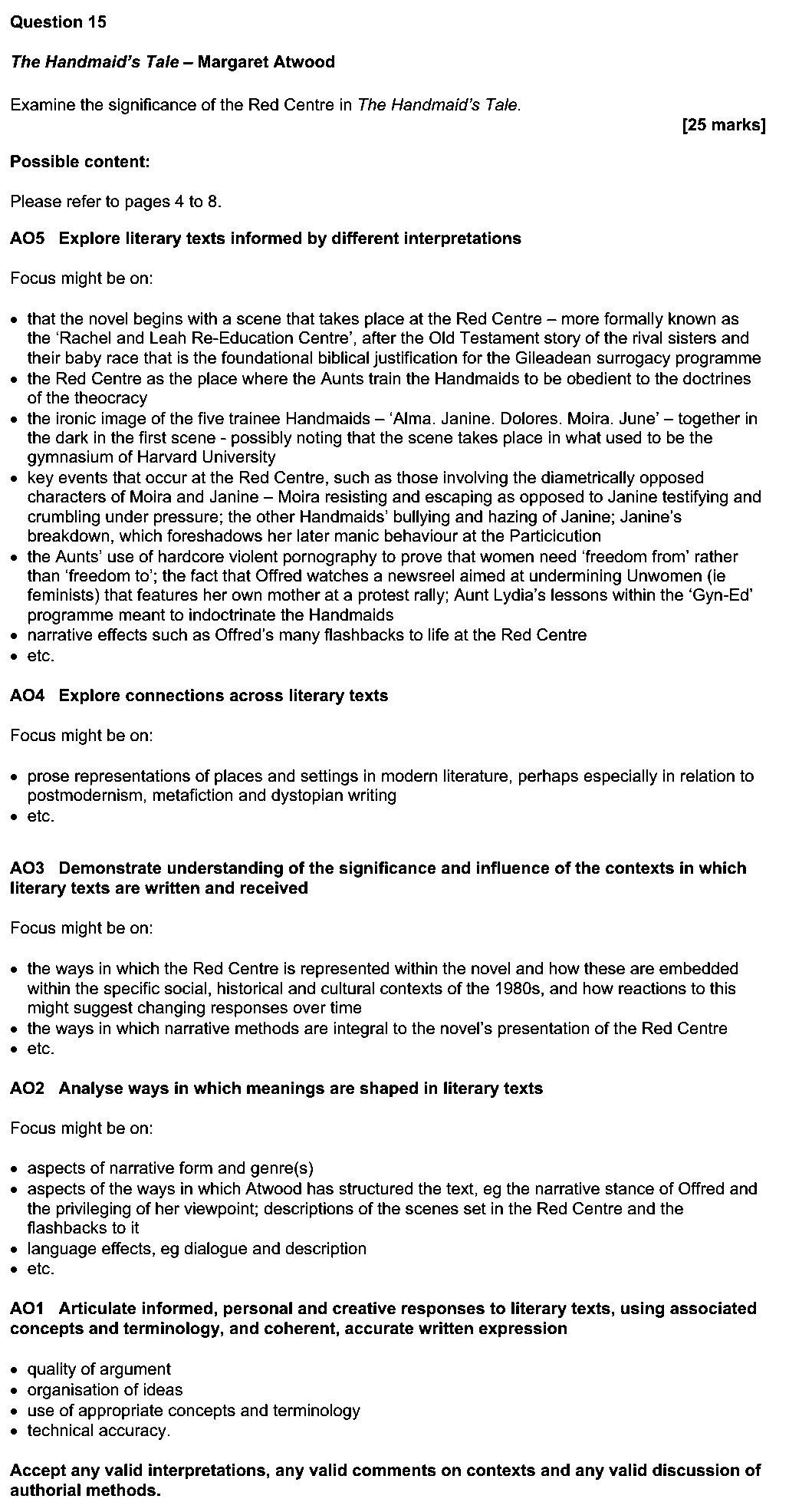
June 2023 · Paper 2B · Q1525 marksSet text essay
Mark scheme, including the levels and indicative content
The general mark scheme (assessment objectives and bands)
Examiner's comment
Better answers: • analysed the various functions, purposes and meanings of the Red Centre and some of the key events and characters associated with it, eg the Aunts, Moira’s escape, and the denunciation of Janine • linked the representation of the Red Centre to Atwood’s representation of Gilead’s attempts to control its citizens • saw the institution as typical of the corruption of the dystopian genre • wrote well about Atwood’s narrative methods. Less effective answers: • persistently inserted a redundant extra ‘t’ into the novelist’s surname and misspelled ‘Margaret’ in an Open Book examination • were hazy about the various functions, purposes and meanings of Red Centre • adopted a listy and generically descriptive approach which ‘went through’ various elements of the description of the Red Centre in Chapter 1, but did not address the key word ‘significance’ • asserted that the Red Centre had once been a high school gymnasium, when in fact it was situated within what was once the gymnasium of Harvard University • did not look in detail at Atwood’s narrative methods.
Notes from the mark scheme and report
Focus: setting: the Red Centre
Open book, no extract
credited: Rachel and Leah Re-Education Centre as training in obedience, the opening scene in the former Harvard gymnasium, Moira's escape vs Janine's breakdown, the Aunts' indoctrination, typical dystopian control
weaker answers misspelled Atwood, described Chapter 1 without addressing 'significance', or called it a high school gym
June 2023 · Paper 2B · Q1625 marksSet text essay
Mark scheme, including the levels and indicative content
The general mark scheme (assessment objectives and bands)
Examiner's comment
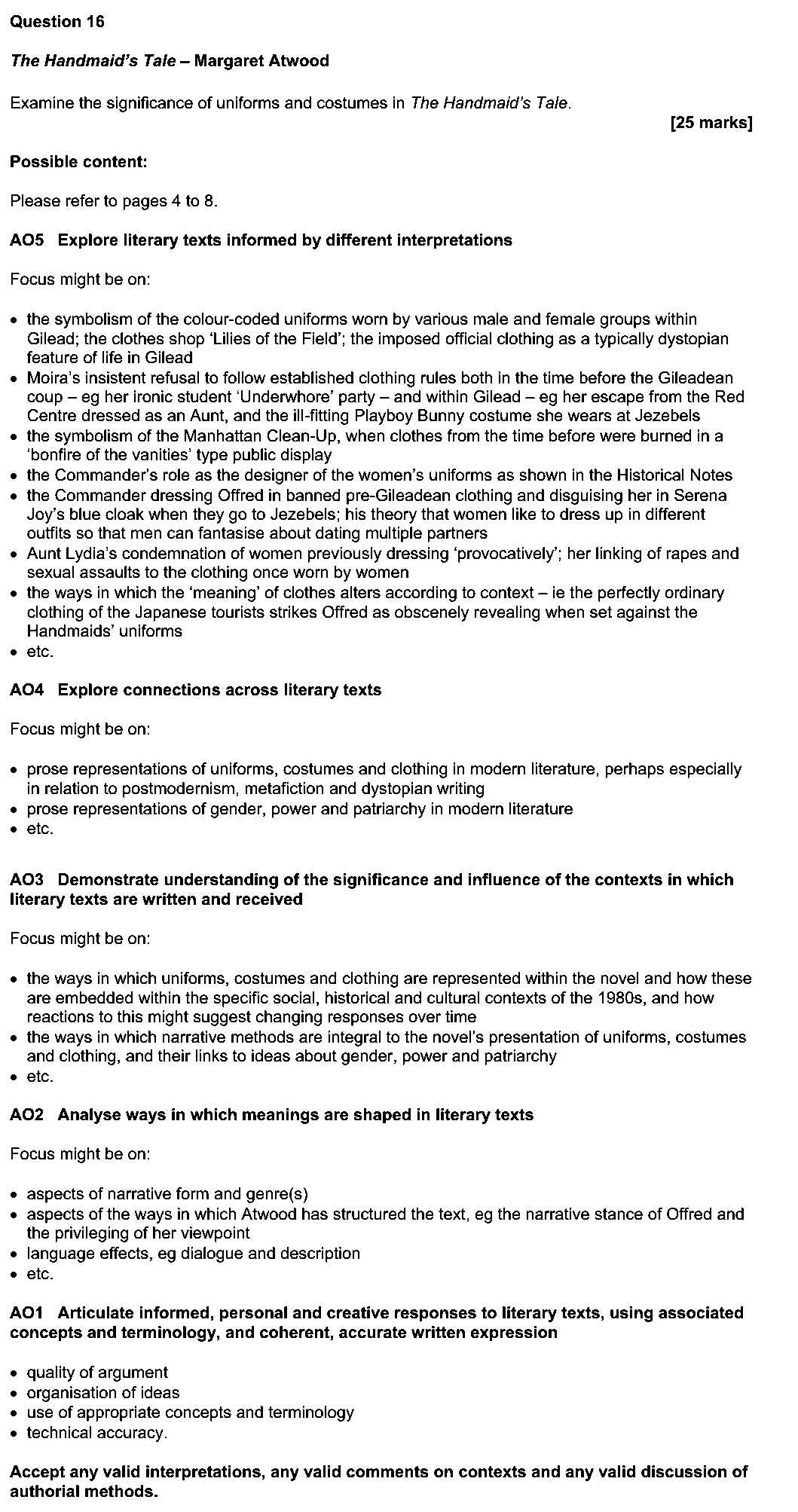
Better answers: • analysed the various functions, purposes and meanings of Gilead’s uniforms and costumes • analysed the symbolism and possible meanings of clothing as a marker of individuality and/or conformity • wrote well about Atwood’s narrative methods and the dystopian genre. Less effective answers: • persistently inserted a redundant extra ‘t’ into the novelist’s surname and misspelled ‘Margaret’ in an Open Book examination • listed and described various uniforms and costumes with only a hazy idea of what they might signify • drifted into a generalised discussion of Gilead’s oppressive nature • did not address the key word ‘significance’ • did not look in detail at Atwood’s narrative methods or the dystopian genre.
Notes from the mark scheme and report
Focus: theme: uniforms and costumes
Open book, no extract
credited: colour-coded uniforms as dystopian control, Moira's defiant costumes, the Manhattan clean-up, the Commander as designer of uniforms, Jezebels costume, clothes as marker of individuality or conformity, meaning changing with context (Japanese tourists)
weaker answers listed and described costumes or drifted into Gilead's oppression in general
June 2022 · Paper 2B · Q1525 marksSet text essay
Mark scheme, including the levels and indicative content
The general mark scheme (assessment objectives and bands)
Examiner's comment
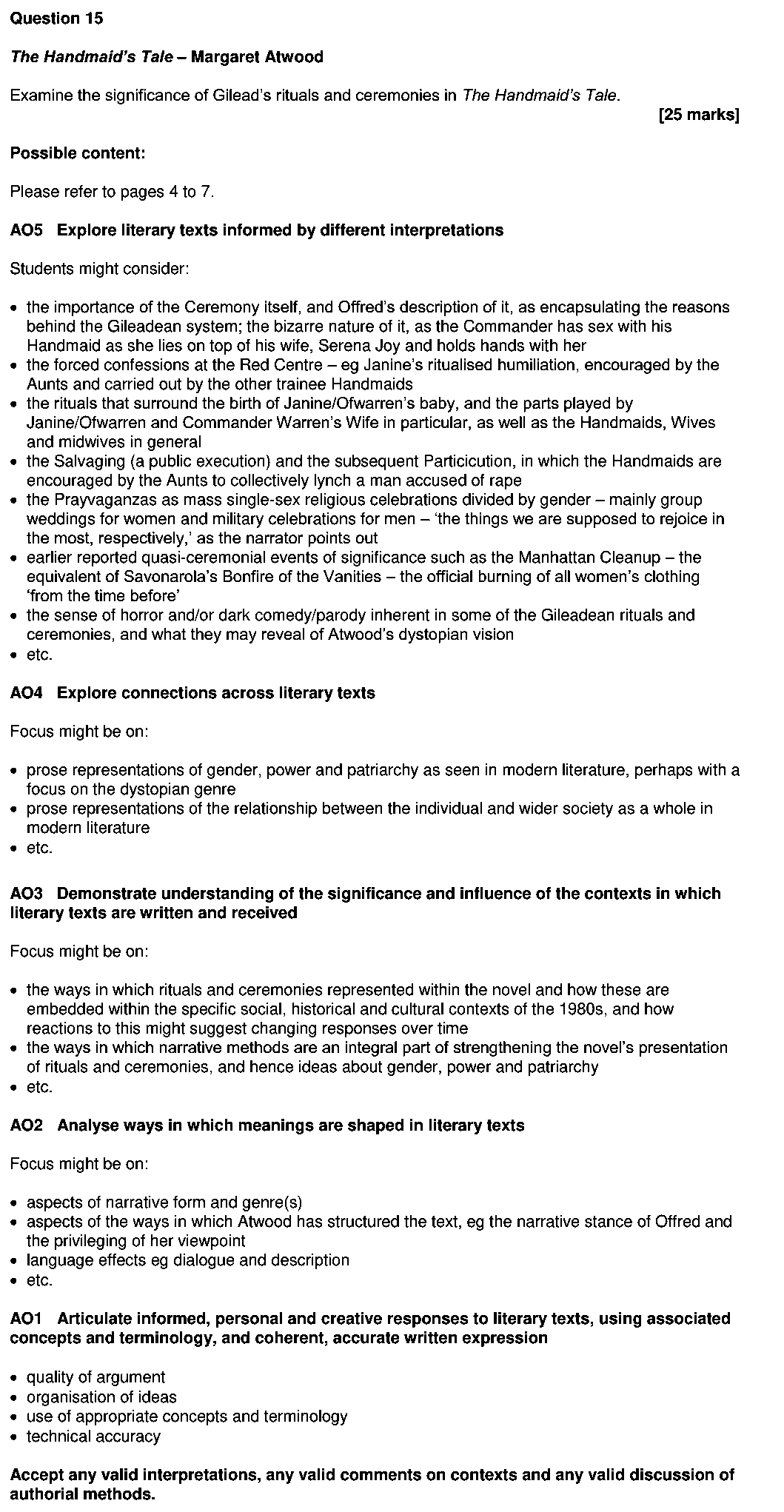
More effective answers: • analysed the various purposes and meanings of the Ceremony itself, along with rituals such as the shopping trips, births and stylised greetings, as well as the impact of public ceremonies like the Prayvaganza and the Salvaging, plus the terrifying Particicution and the denunciation of Janine at the Red Centre • linked the rituals and ceremonies to Atwood’s representation of Gilead’s attempts to control its citizens • saw the rituals and ceremonies as typical of the dystopian genre • wrote well about Atwood’s narrative methods. Less effective answers: • were hazy about what the rituals and ceremonies were • adopted a listy and generically descriptive approach which ‘went through’ various rituals and ceremonies but did not address the key word ‘significance’ • did not look in detail at Atwood’s narrative methods.
Notes from the mark scheme and report
Focus: theme: Gilead's rituals and ceremonies
Open book, no extract
credited: the Ceremony, Janine's denunciation at the Red Centre, the birth, Salvaging and Particicution, Prayvaganzas, as Gilead's means of control and typical of dystopia
weaker answers were hazy on the rituals, listed them without addressing 'significance', or ignored narrative methods
June 2022 · Paper 2B · Q1625 marksSet text essay
Mark scheme, including the levels and indicative content
The general mark scheme (assessment objectives and bands)
Examiner's comment
More effective answers: • discussed the final words of Offred’s narrative in terms of its openness and ambiguity • linked the final words to Atwood’s representation of Offred’s narrative as possibly unfinished, and the fact that it is followed by the Historical Notes • analysed how Professor Pieixoto undercuts Offred’s narrative by imposing a male version of ‘history’ • compared Offred’s last line with the last line of the whole novel, Pieixoto’s address to the conference delegates, ‘Are there any questions?’ • wrote well about Atwood’s narrative methods and the dystopian genre. Less effective answers: • were hazy about what Offred’s last words might mean • drifted into a generalised discussion of Offred’s character and what had happened leading up to her arrest • did not address the key word ‘significance’ • did not look in detail at Atwood’s narrative methods or the dystopian genre.
Notes from the mark scheme and report
Focus: structure: ending of Offred's narrative
Open book, no extract
credited: openness and ambiguity of the last words, unfinished narrative followed by the Historical Notes, Pieixoto imposing a male version of history, comparison with 'Are there any questions?'
weaker answers drifted into Offred's character or the events before her arrest and ignored narrative methods
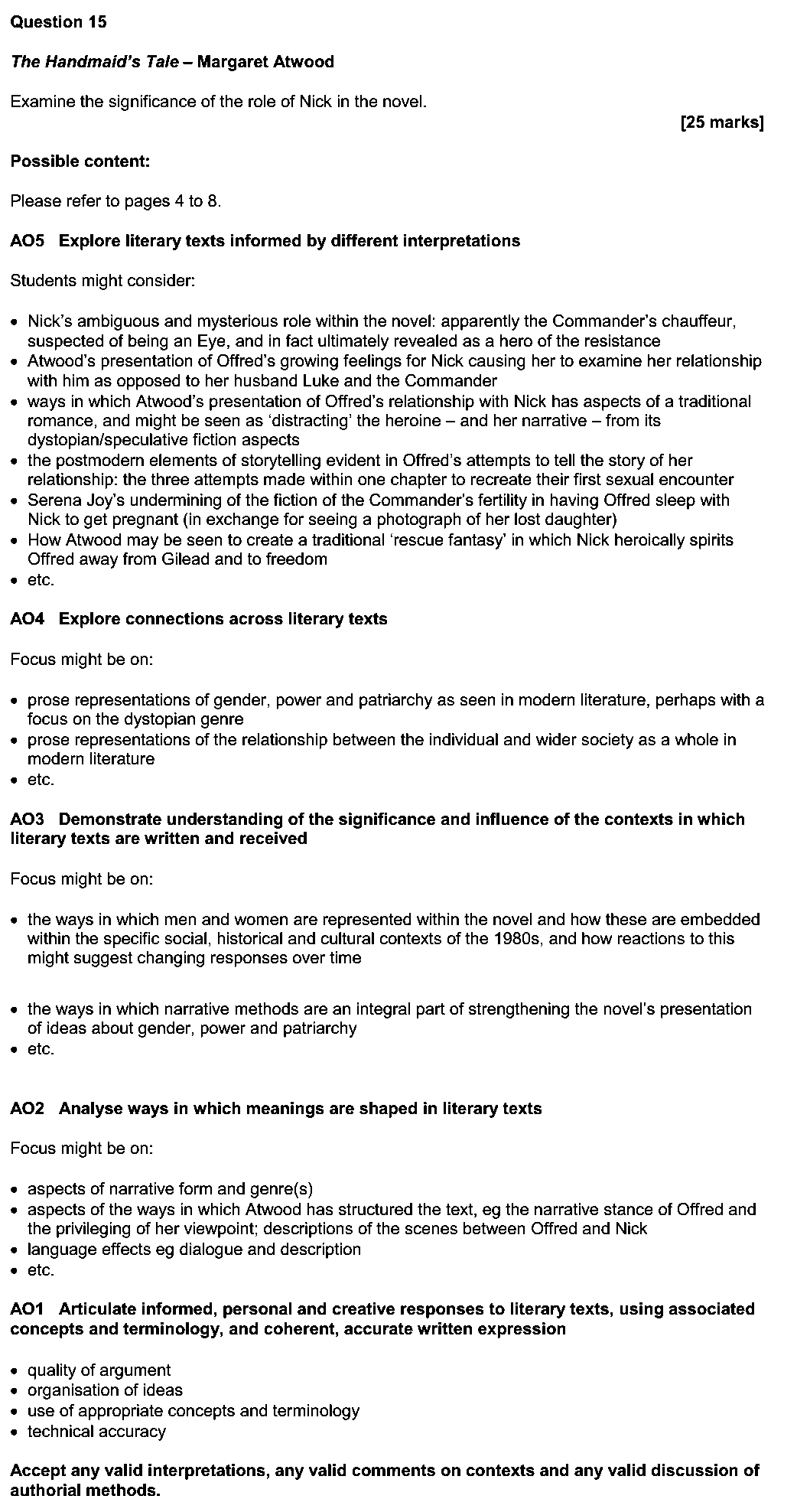
November 2021 · Paper 2B · Q1525 marksSet text essay
Mark scheme, including the levels and indicative content
The general mark scheme (assessment objectives and bands)
Notes from the mark scheme and report
Focus: character: Nick
Open book, no extract
significance of Nick
MS credits: ambiguous role as chauffeur, suspected Eye and finally resistance hero, Offred's feelings compared with Luke and the Commander, romance elements possibly distracting from the dystopia, three versions of their first encounter as postmodern storytelling, Serena Joy's arrangement, the 'rescue fantasy' ending
papers dated June 2021
no examiners' report
November 2021 · Paper 2B · Q1625 marksSet text essay
Mark scheme, including the levels and indicative content
The general mark scheme (assessment objectives and bands)
Notes from the mark scheme and report
Focus: theme: resistance
Open book, no extract
view that resistance in Gilead is always futile
MS credits: covert and overt resistance (doctors, Wives, Offred telling her story, the Commander, Underground Femaleroad, Ofglen and Nick in Mayday, the first Offred's suicide), space given to Moira's failed rebellion, Historical Notes confirming Offred's escape and the regime's fall, resistance as natural response to tyranny
papers dated June 2021
no examiners' report
November 2020 · Paper 2B · Q1525 marksSet text essay
Mark scheme, including the levels and indicative content
The general mark scheme (assessment objectives and bands)
Notes from the mark scheme and report
Focus: character: Serena Joy
Open book, no extract
view that Serena Joy deserves no sympathy
MS credits: jealousy and spite towards Offred in the triangle of Commander, Wife and Handmaid, irony of her pre-coup 'family values' TV career, arranging Offred and Nick in exchange for a photograph of Offred's child, vs sympathy for her age, arthritis, loneliness and betrayal by an unfaithful husband
no examiners' report for this series
November 2020 · Paper 2B · Q1625 marksSet text essay
Mark scheme, including the levels and indicative content
The general mark scheme (assessment objectives and bands)
Notes from the mark scheme and report
Focus: theme: storytelling
Open book, no extract
significance of storytelling ('I made that up')
MS credits: Offred's mission to tell stories and make sense of past and present, her narrative voice, interpolation of Moira's story, interweaving of past and present, Historical Notes revealing tapes transcribed by male academics, Pieixoto's 'history' glossing her 'herstory'
no examiners' report for this series
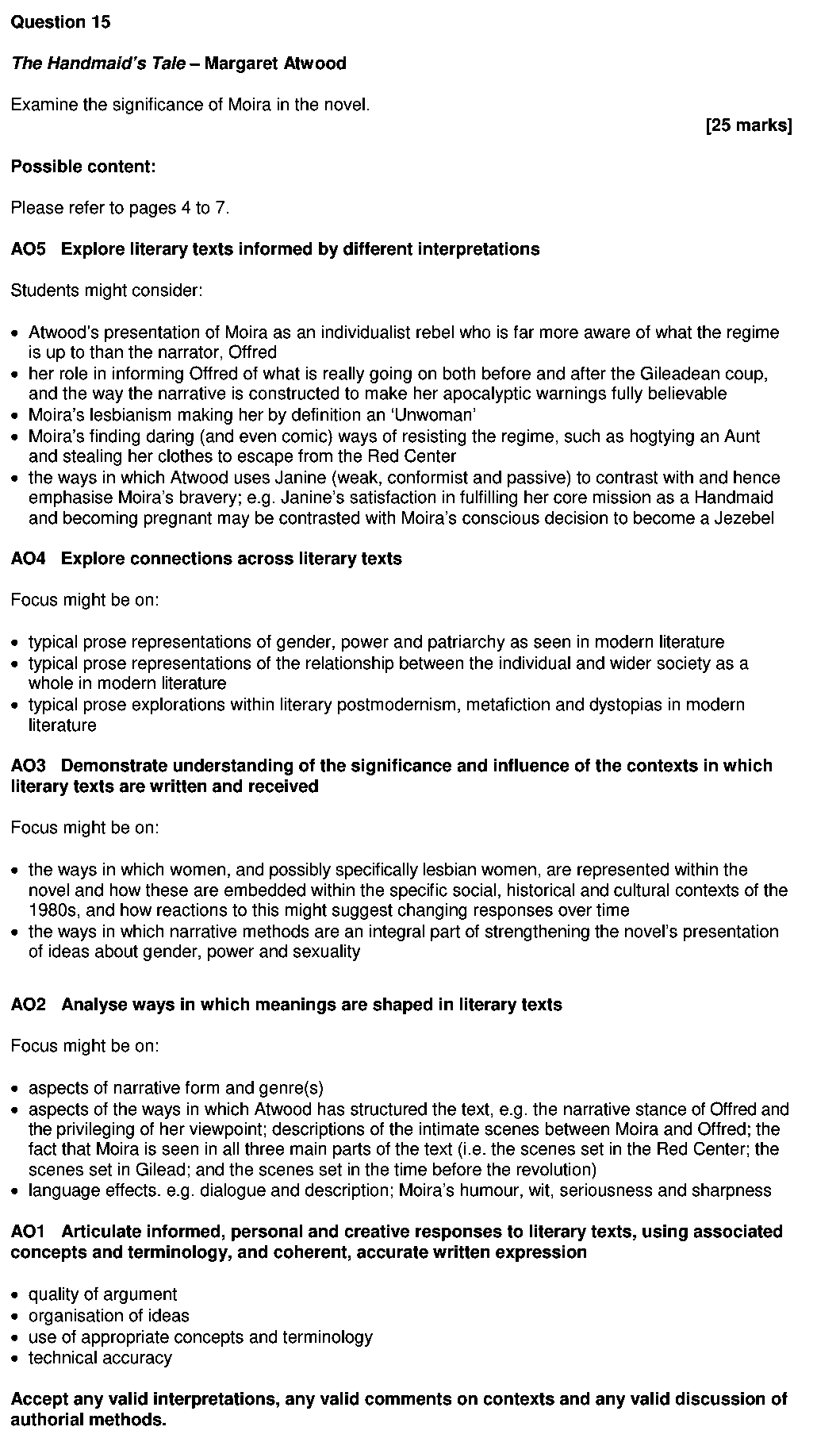
June 2019 · Paper 2B · Q1525 marksSet text essay
Mark scheme, including the levels and indicative content
The general mark scheme (assessment objectives and bands)
Examiner's comment
Many effective responses were seen to this very popular Atwood question, which focused on the writer’s presentation of Moira. Less successful responses tended to ‘go through’ a rather listy and generic character study or digress into writing about Offred, but on the whole most responses were clear and well-focused. Good work was seen on Atwood’s presentation of Moira as an individualist rebel who is far more aware of what the regime is up to than the narrator, and her role in informing Offred of what is really going on both before and after the Gileadean coup. Many students saw Moira’s lesbianism and feminism as significant in making her, by definition, a Gileadean ‘Unwoman’. They also saw the humour and excitement in her resistance to the regime. Some very astute responses analysed how Atwood uses Janine to emphasise Moira’s bravery, such as Janine’s satisfaction in fulfilling her core mission as a Handmaid and becoming pregnant, set against Moira’s conscious decision to become a Jezebel.
Notes from the mark scheme and report
Focus: character: Moira
Open book, no extract
significance of a character
very popular
credited: Moira as individualist rebel aware of the regime, informing Offred before and after the coup, lesbianism and feminism making her an 'Unwoman', daring and comic resistance (escape from the Red Center), contrast with conformist Janine, decision to become a Jezebel
weaker answers wrote listy character studies or drifted to Offred
June 2019 · Paper 2B · Q1625 marksSet text essay
Mark scheme, including the levels and indicative content
The general mark scheme (assessment objectives and bands)
Examiner's comment
While this Atwood task attracted fewer responses than Question 15, those who chose it tended to write very well about the function of the Historical Notes in this postmodern text. The way in which the Historical Notes confirm that Offred escaped the regime was analysed with skill and perception, as was the extent to which Pieixoto’s research confirms or aligns with many of the elements contained within Offred’s narrative. Atwood’s analysis of the limitations of academic discourse, as Pieixoto undercuts the subjective ‘truth’ of Offred’s ‘herstory’ in favour of male ‘history’, was written about extremely well. Likewise, the significance of the last line of the novel, addressed to the audience at the conference by Pieixoto, ‘Are there any questions?’ was discussed very effectively.
Notes from the mark scheme and report
Focus: structure: the Historical Notes
Open book, no extract
view that the Historical Notes are a confusing and irrelevant addition
fewer answers than Q15 but strong
credited: Notes suggest Offred escaped (tapes found in Bangor, Maine), Pieixoto's research confirms her narrative and the Commander's identity and purge, critique of academic discourse with male 'history' glossing her 'herstory', future conference setting, final line 'Are there any questions?', function in a postmodern text
June 2018 · Paper 2B · Q1525 marksSet text essay
Mark scheme, including the levels and indicative content
The general mark scheme (assessment objectives and bands)
Examiner's comment
A lot of good answers were seen in response to this popular Atwood question, which focused on the writer’s complex presentation of the Commander. Less able students tended to dismiss the Commander’s suffering as negligible before digressing away from the central premise of the question to explain why the female characters were in fact the only ones with any legitimate claim to the reader’s sympathy. Better answers explored Atwood’s presentation of the Commander as a rather mild-mannered and thoughtful man who struggles to abide by the rules of the regime. Good writing was seen on the Commander’s debates with Offred about the situation in Gilead and the apparent revelation in the Historical Notes of his eventual arrest ‘for harbouring liberal tendencies’. The best students saw the significance of the Commander’s role in setting up the Gileadean system as a member of the ‘Sons of Jacob Think-Tank’, his sexual exploitation of the Jezebels, his betrayal of Serena Joy and his willingness to put Offred in danger through their illicit affair.
Notes from the mark scheme and report
Focus: character: the Commander
Open book, no extract
view that the Commander should be pitied as a victim of Gilead
credited: mild-mannered kindnesses (Scrabble, magazines), struggle to obey the rules, debates with Offred, arrest for 'liberal tendencies' in the Historical Notes vs his role in the Sons of Jacob Think-Tank, exploitation of the Jezebels, betrayal of Serena Joy, endangering Offred
weaker answers dismissed his suffering and digressed to sympathy for the women
June 2018 · Paper 2B · Q1625 marksSet text essay
Mark scheme, including the levels and indicative content
The general mark scheme (assessment objectives and bands)
Examiner's comment
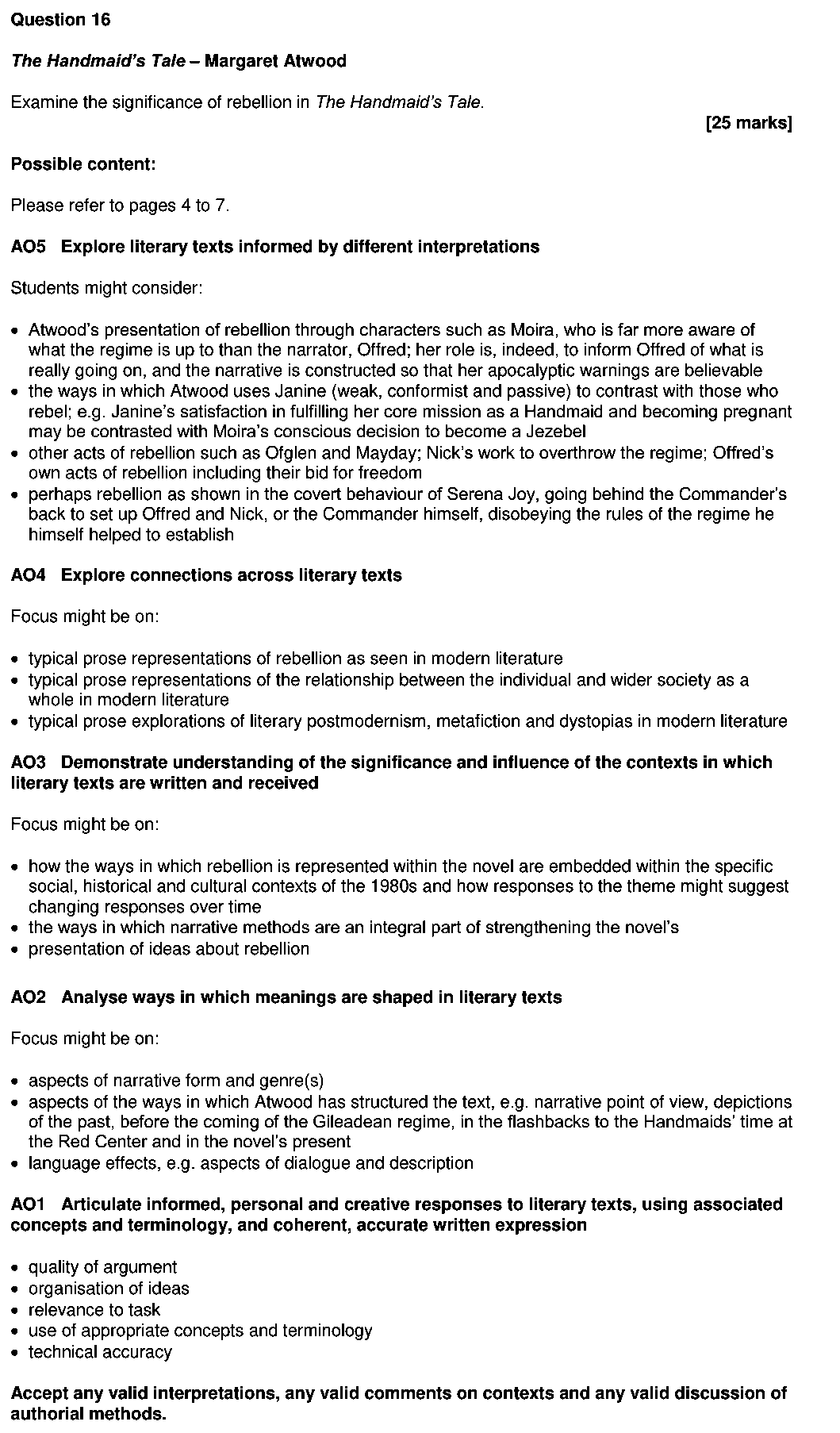
The students who chose this question tended to write well about rebellion through exploring Atwood’s presentation of characters such as Moira, Ofglen and Nick as well as through examining Offred’s own acts of rebellion, both internal and external. Better answers also considered the significance of rebellion as shown in the subversive behaviour of Serena Joy, who goes behind the Commander’s back to set up Offred and Nick, or the Commander himself, who disobeys the rules of the regime he helped to establish. The small minority of students who asserted that rebellion was ‘insignificant’ in so far as it is apparently ineffective for much of the novel demonstrated a fundamental misunderstanding of what ‘significance’ means in the context of an examination question such as this. The term is not merely a synonym for ‘importance’ or ‘success’, but an invitation for the student to set up their own agenda for debating how, where and why the given topic sheds light on the overarching concerns of the text.
Notes from the mark scheme and report
Focus: theme: rebellion
Open book, no extract
significance of rebellion
credited: Moira, Ofglen and Mayday, Nick, Offred's internal and external acts, Janine as conformist contrast, Serena Joy setting up Offred and Nick, the Commander breaking his own rules
a minority wrongly argued rebellion was 'insignificant' because it fails, misreading 'significance' as importance or success
June 2017 · Paper 2B · Q1525 marksSet text essay
Mark scheme, including the levels and indicative content
The general mark scheme (assessment objectives and bands)
Examiner's comment
A lot of good answers were seen in response to this, by far the more popular Atwood question. While weaker candidates found it difficult to explain why the women were divided and tended to resort to a general description of the social structures within the Gileadean theocracy, others found many and varied aspects of the text to discuss. In support of the given view, profitable avenues explored included the presentation of women as hostile, jealous and antagonistic towards each other both personally and as members of different groups, and the ways in which the regime encourages women’s division and separation. To contest the given view, students worked well when analysing the strong and supportive bond that develops between Offred and Ofglen, the longstanding friendship of Offred and Moira, the unity found among the members of Mayday, instances of unlikely alliances being forged between rivals like Offred and Serena Joy, and the trainee Handmaids whispering together in the dark at the Red Center, in defiance of the patrolling Aunts.
Notes from the mark scheme and report
Focus: theme: division and solidarity among women
Open book, no extract
view that Gilead's women are powerless because divided
credited: hostility between individuals and groups (Wives, Handmaids, Marthas, Econowives), regime enforcing separation (clothing, Salvaging, Particicution), and against: Offred and Ofglen, Offred and Moira, Mayday, Offred and Serena Joy alliance, whispering at the Red Center
weaker answers could not explain why women were divided and described Gilead's social structure
June 2017 · Paper 2B · Q1625 marksSet text essay
Mark scheme, including the levels and indicative content
The general mark scheme (assessment objectives and bands)
Examiner's comment
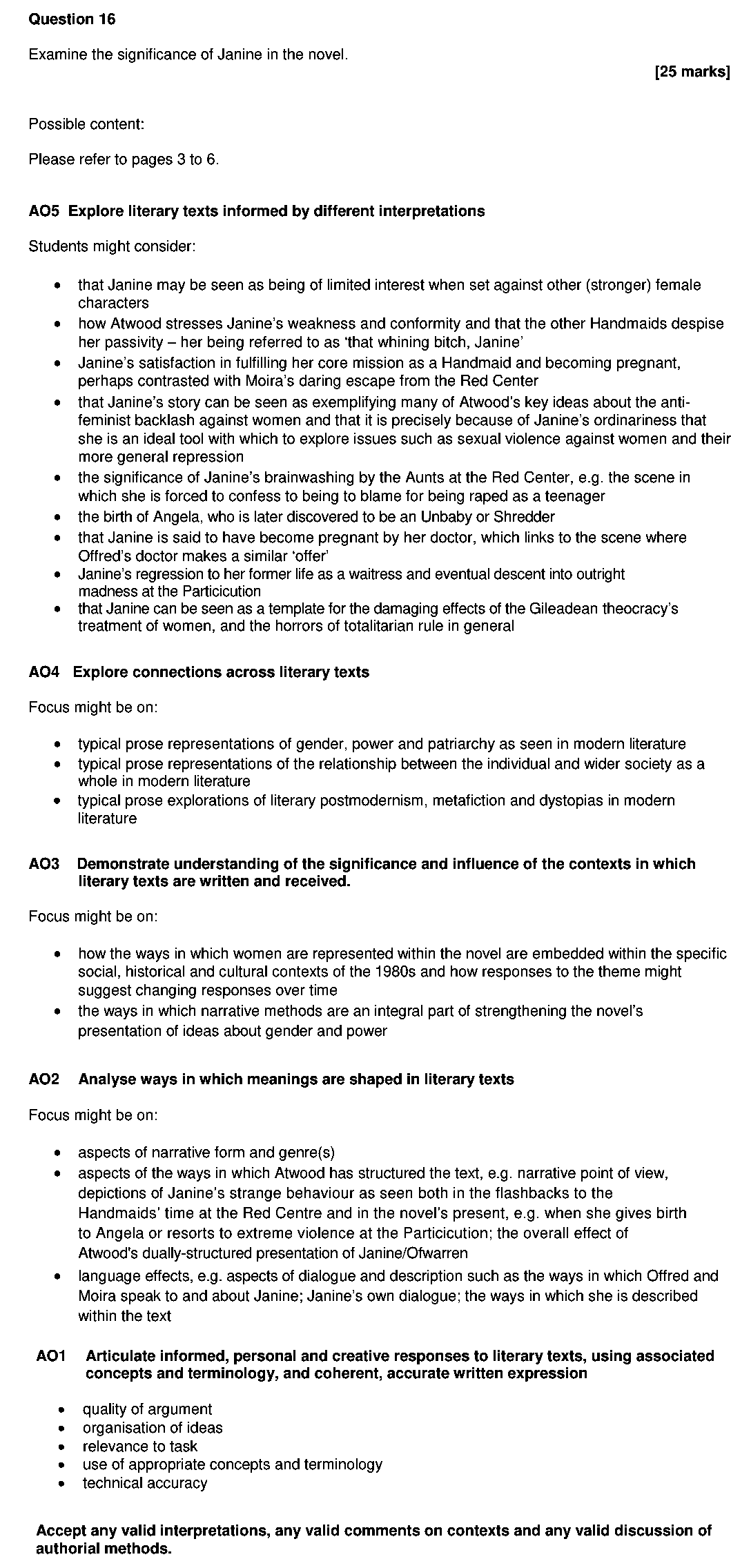
The relatively few students who chose this question tended to write well about Janine, seeing how her weakness and conformity is significant within the world of the novel. Her satisfaction in fulfilling her core mission as a Handmaid and becoming pregnant was contrasted effectively with Moira’s daring escape from the Red Center and the significance of her brainwashing was usually examined in some detail. Other key parts of Janine’s story considered included the birth of baby Angela and her ultimate descent into madness. The best answers made reference to the fact that Janine can be seen as exemplifying the horrors of totalitarian rule.
Notes from the mark scheme and report
Focus: character: Janine
Open book, no extract
significance of a minor character
credited: Janine's weakness and conformity, contrast with Moira's escape, brainwashing and confession at the Red Center, pregnancy and birth of Angela (an Unbaby), descent into madness, Janine as exemplifying the horrors of totalitarian rule and the anti-feminist backlash
few students chose it but most wrote well
Work with an AQA English Literature A tutor
Essays stuck in the middle bands, or not sure what the examiners want from an analysis? Book a trial lesson with a specialist AQA English Literature A tutor.