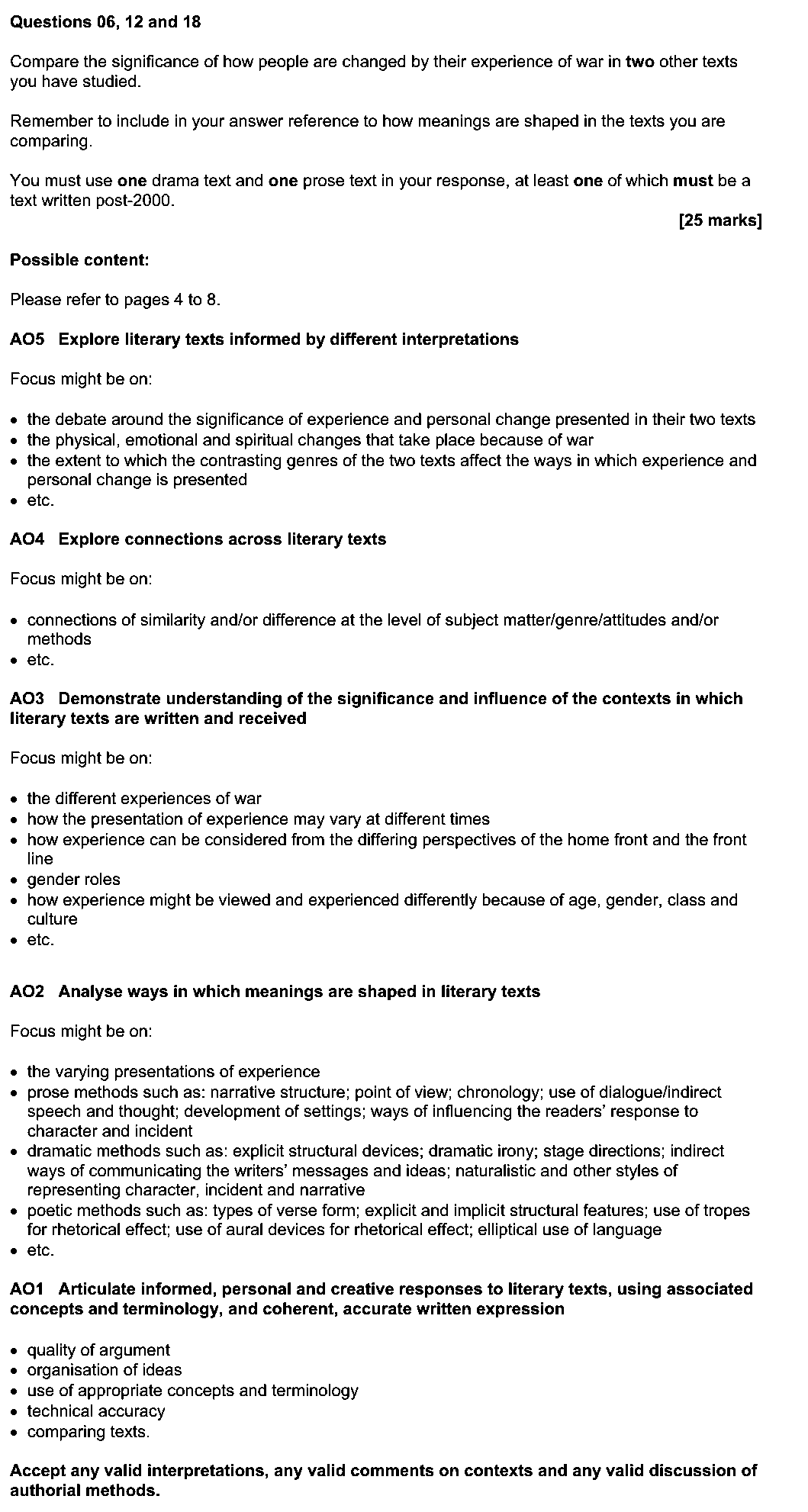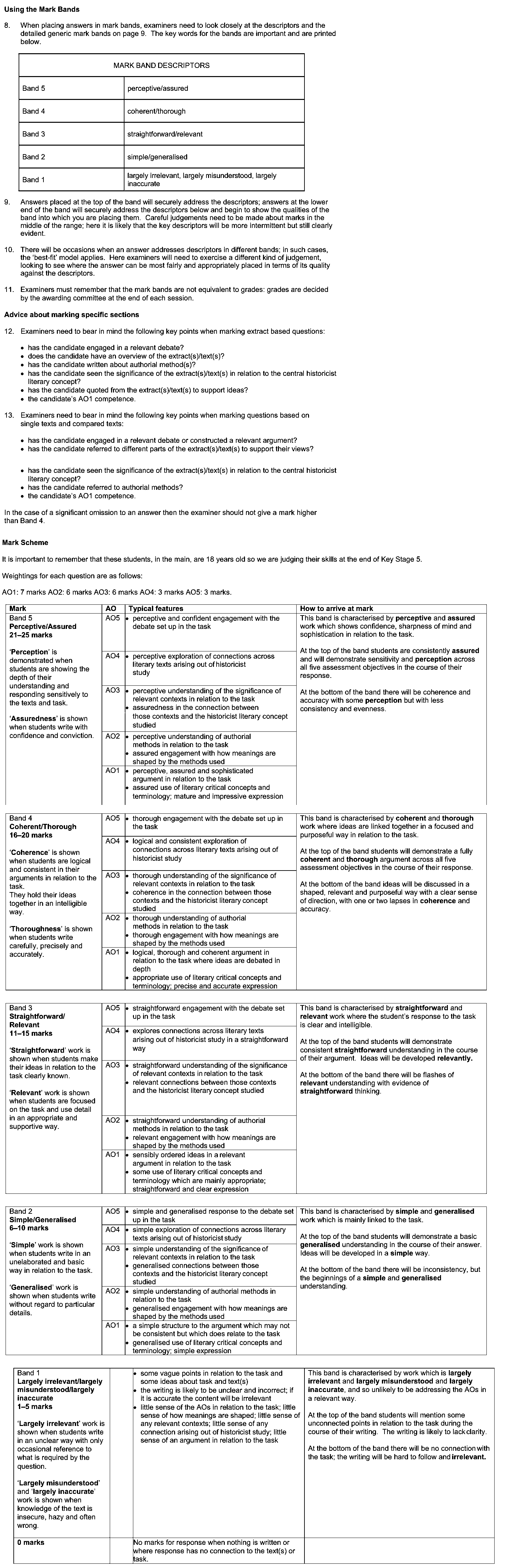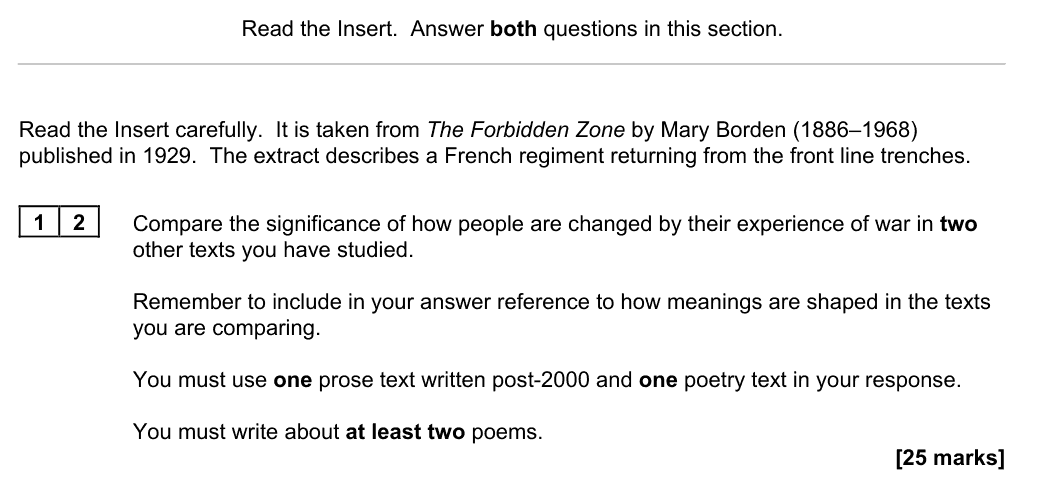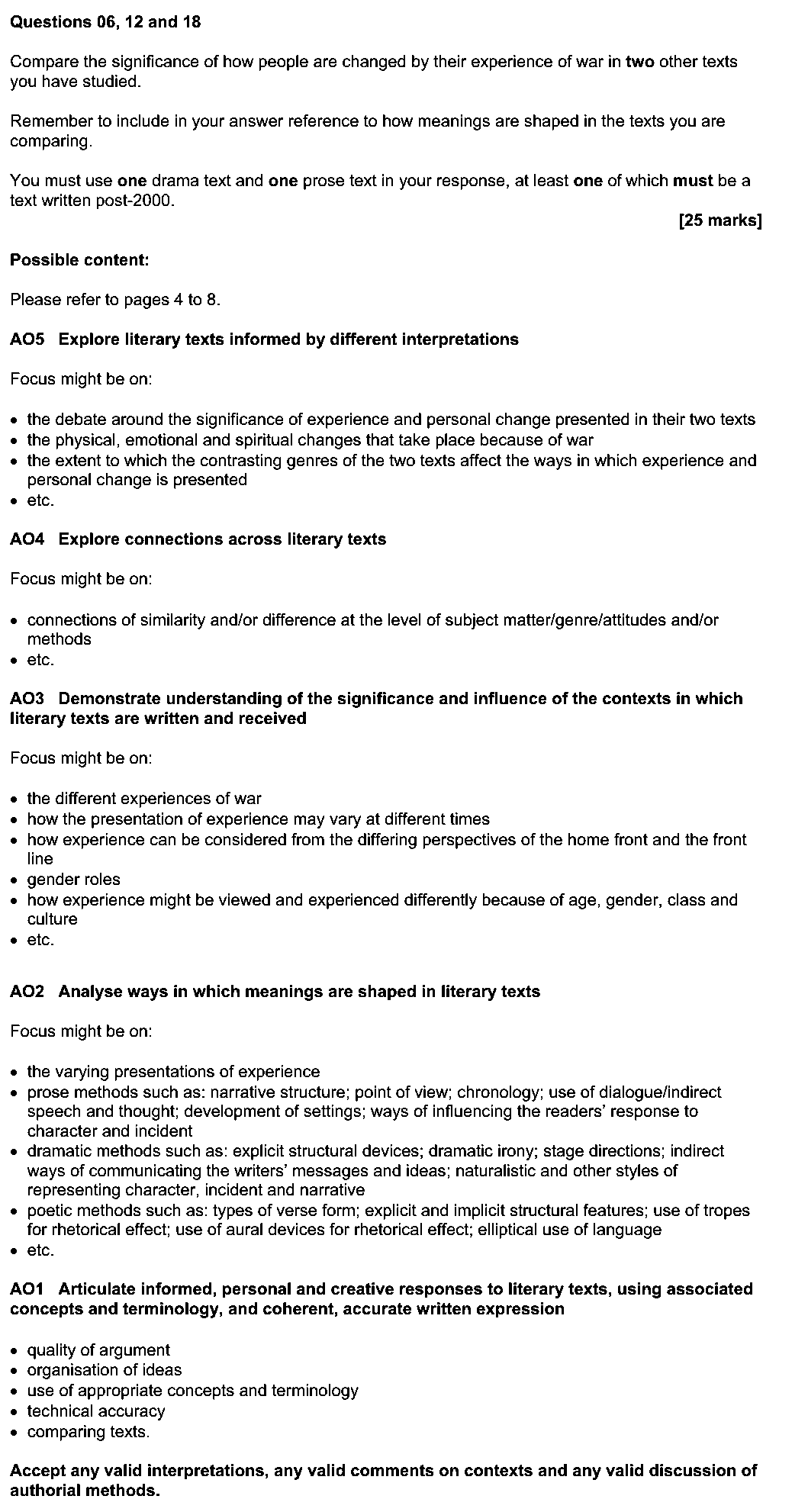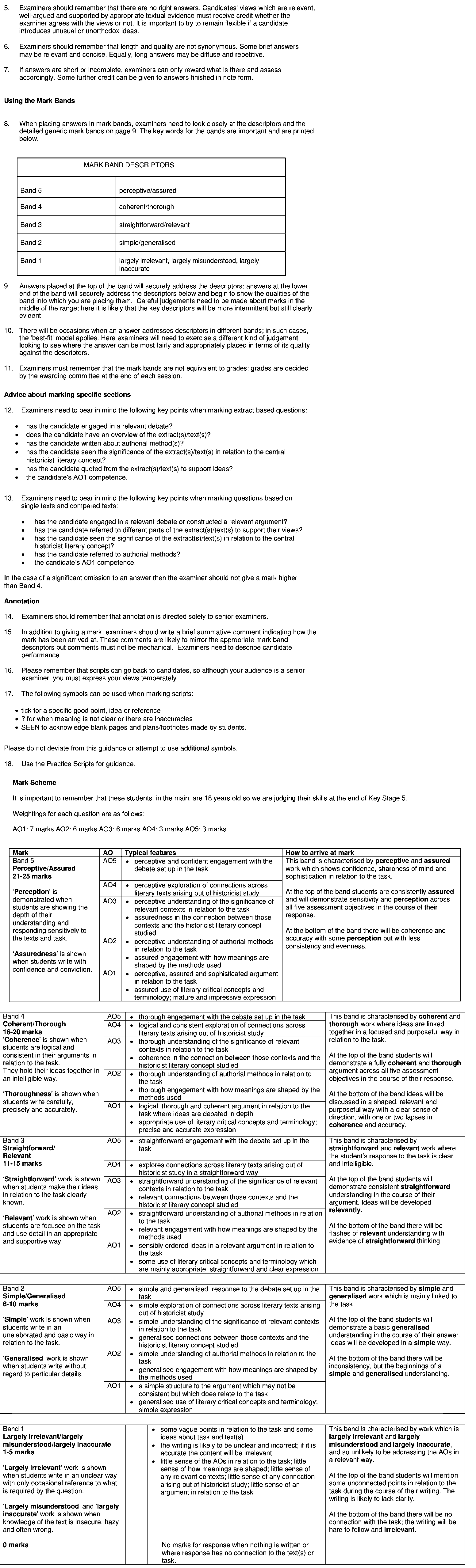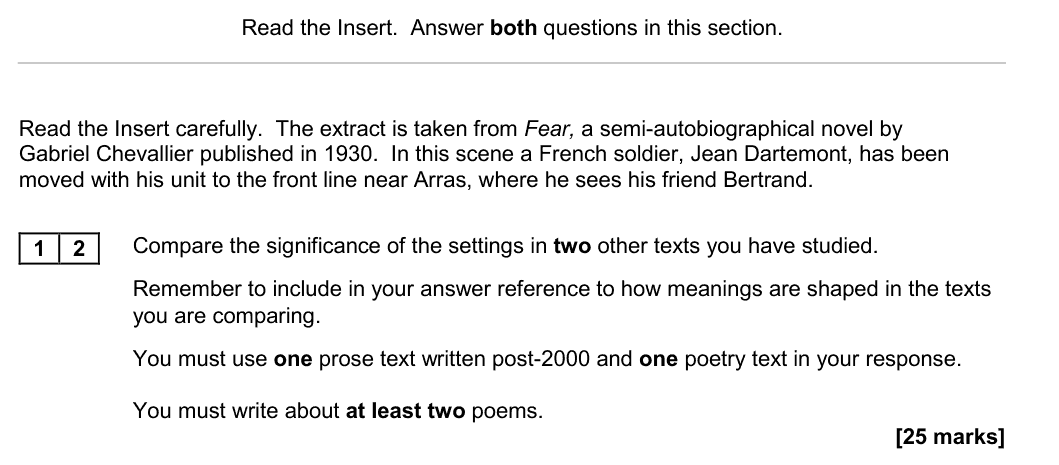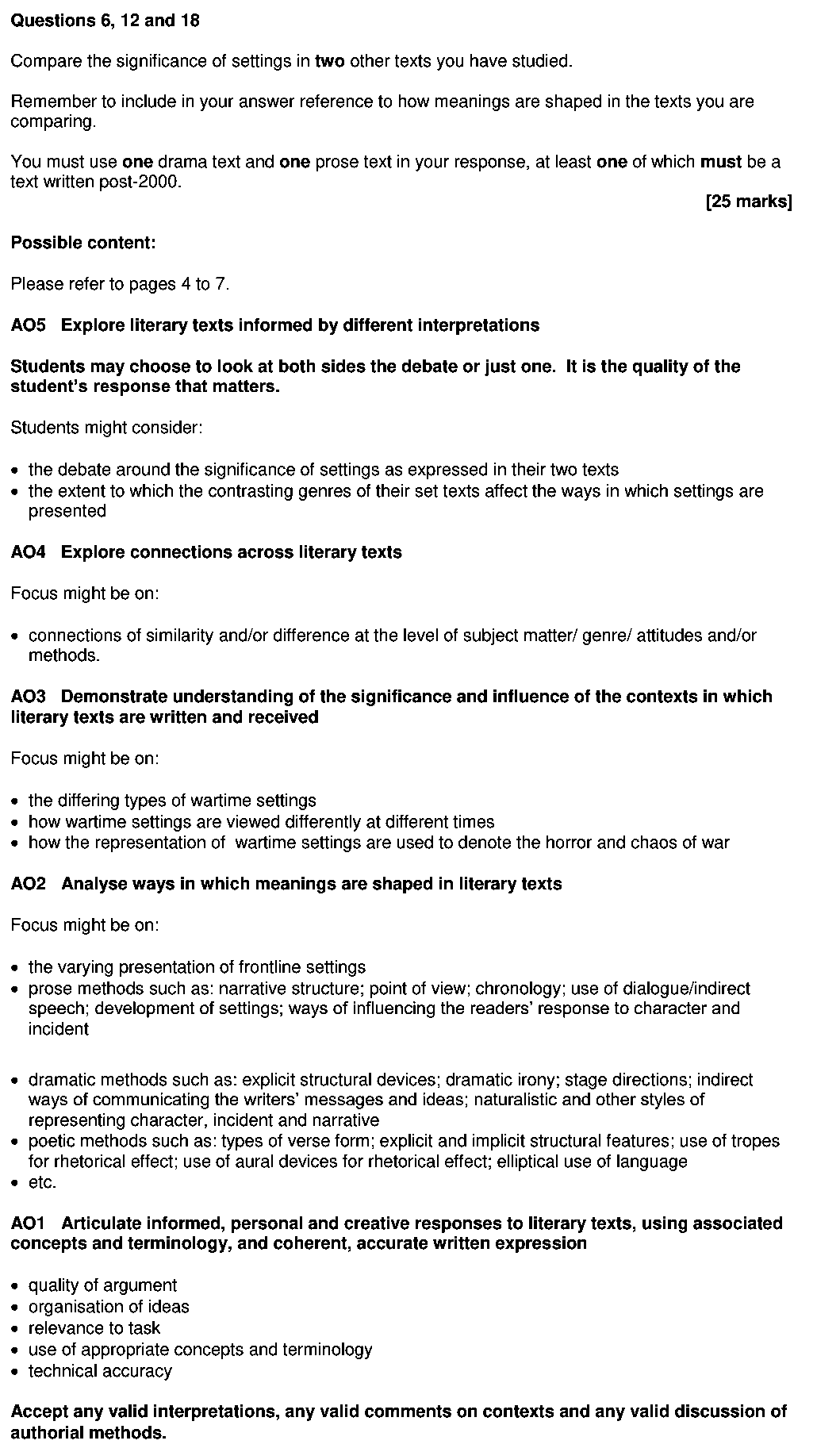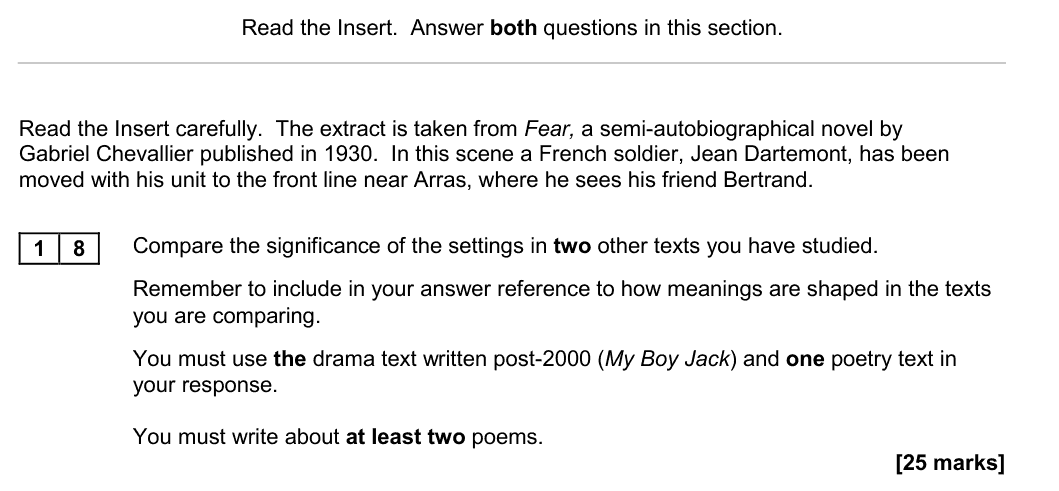
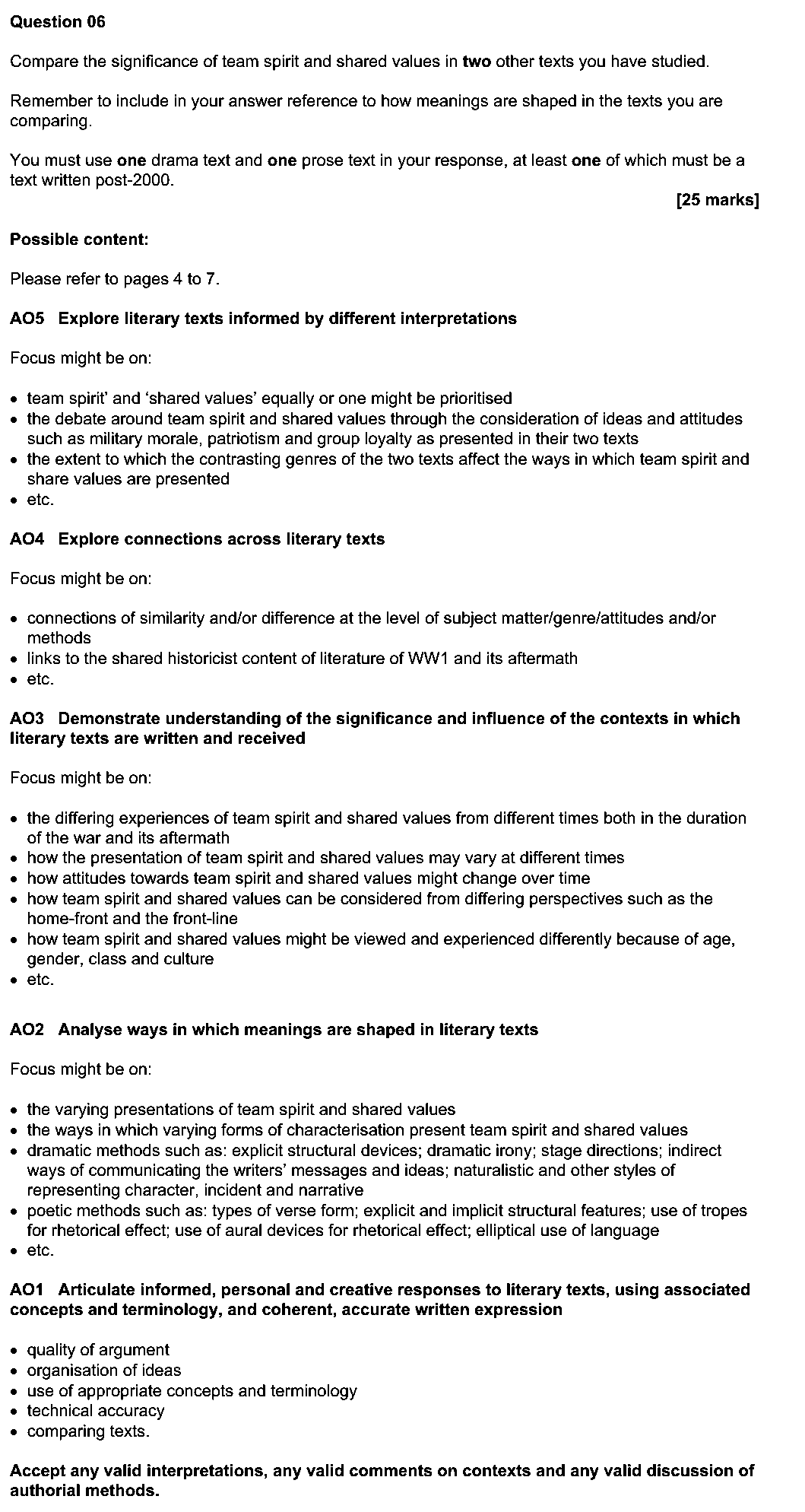
Mark scheme, including the levels and indicative content
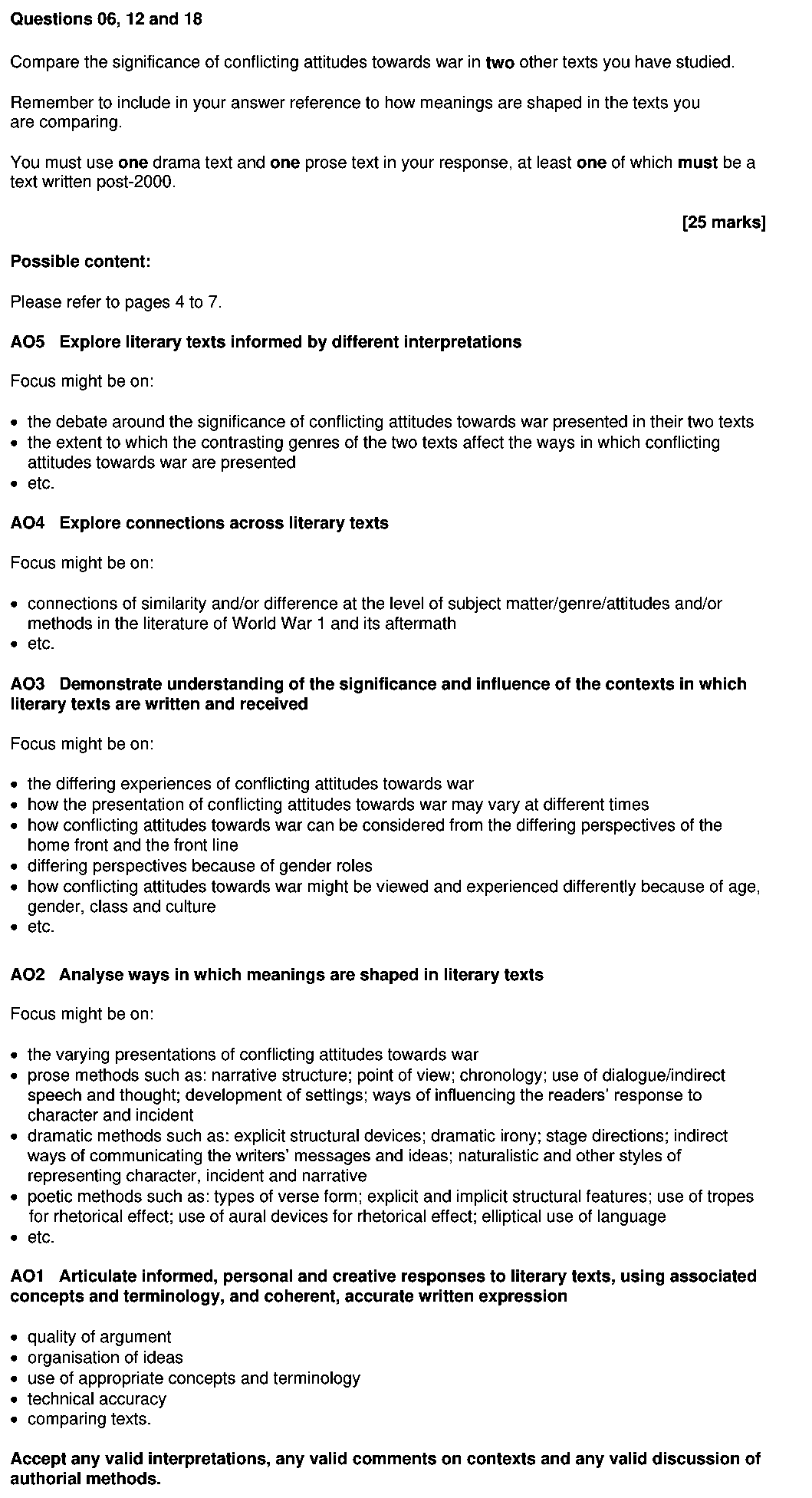
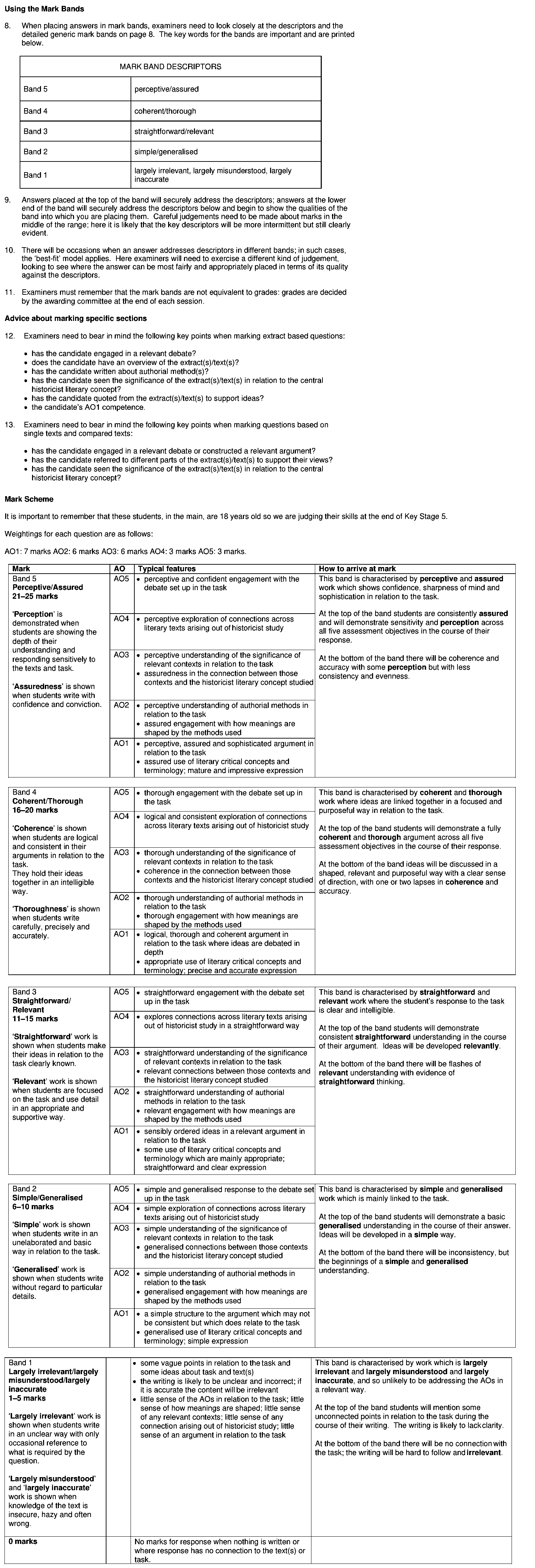
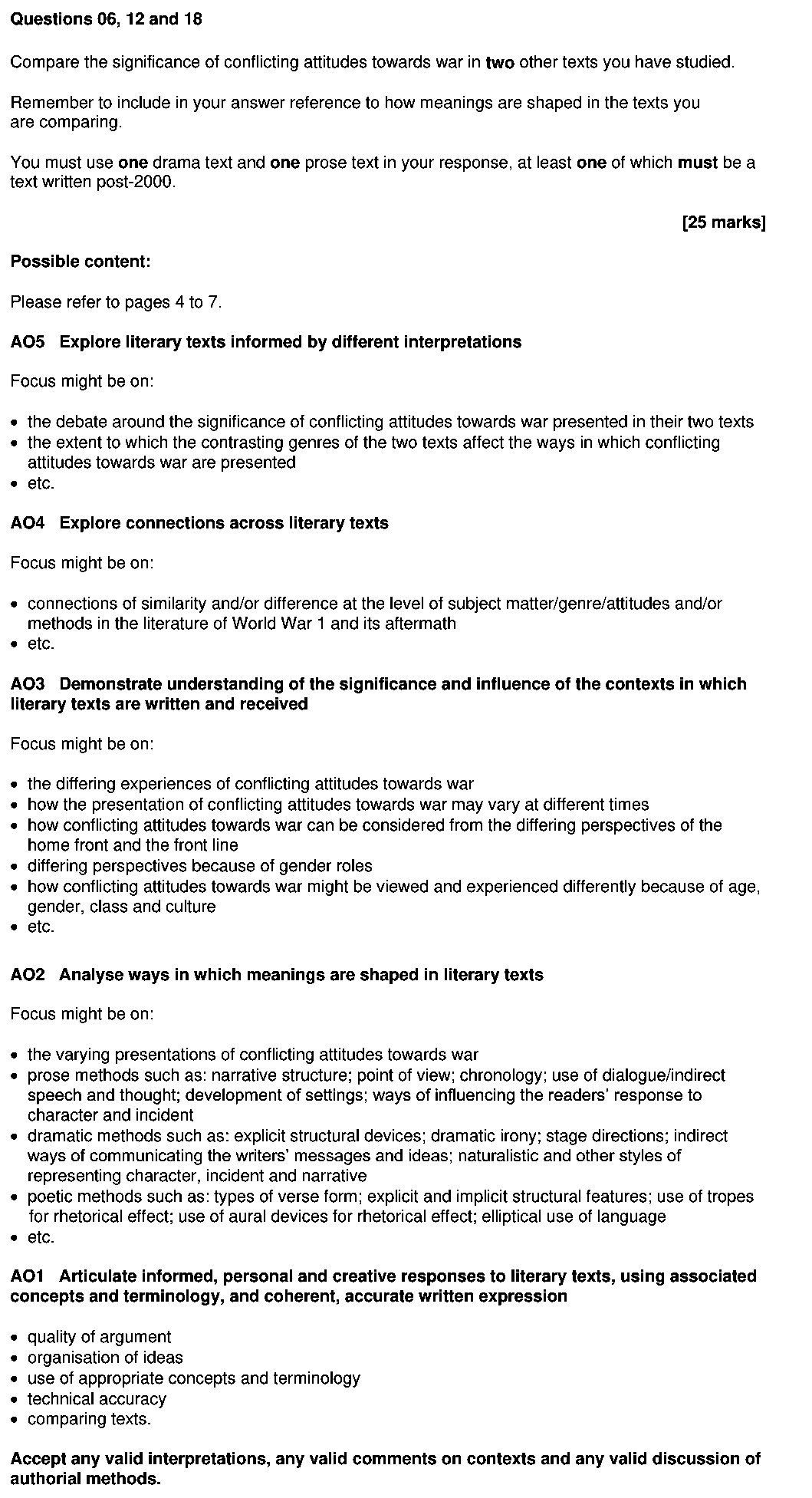
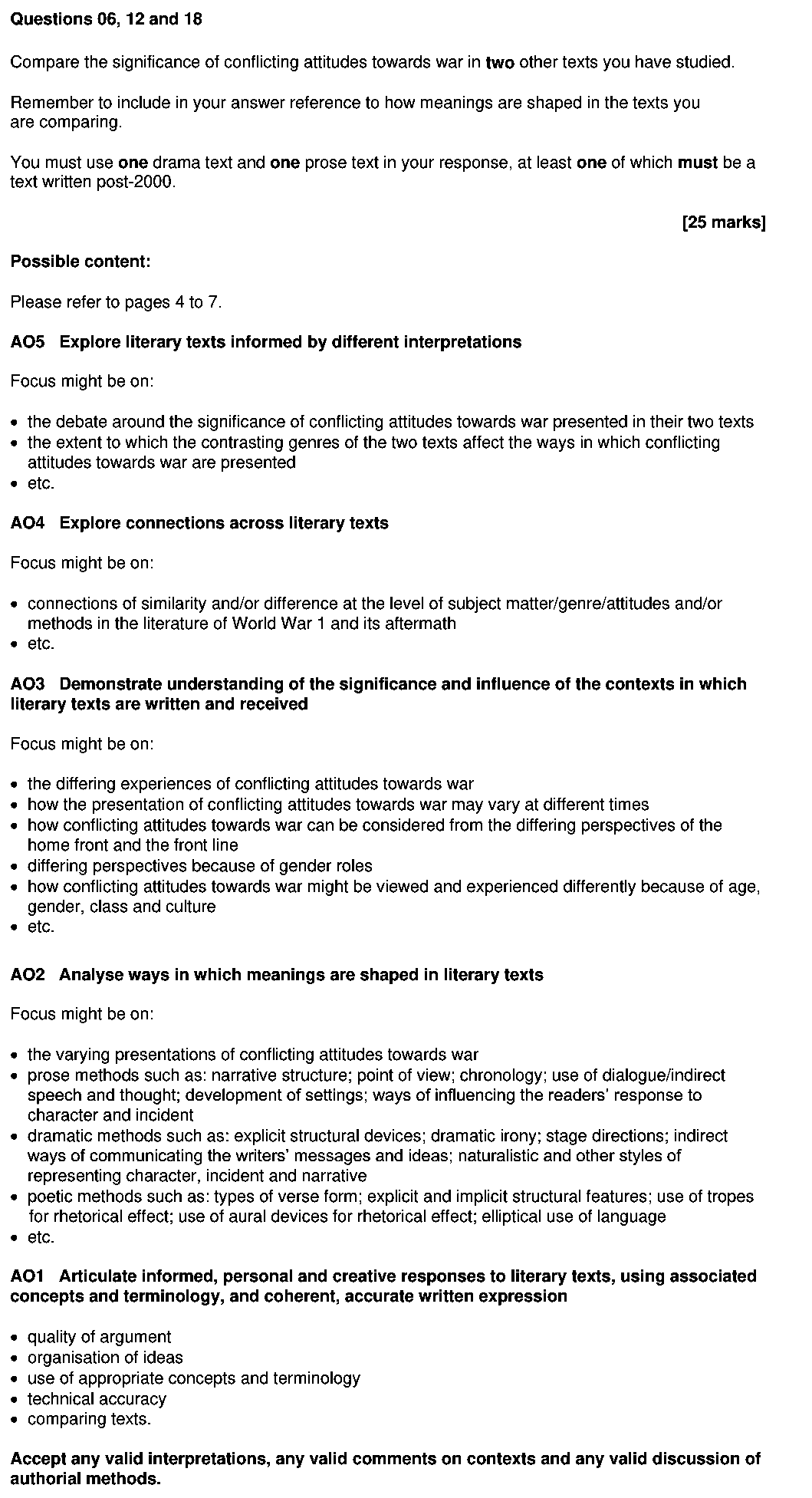
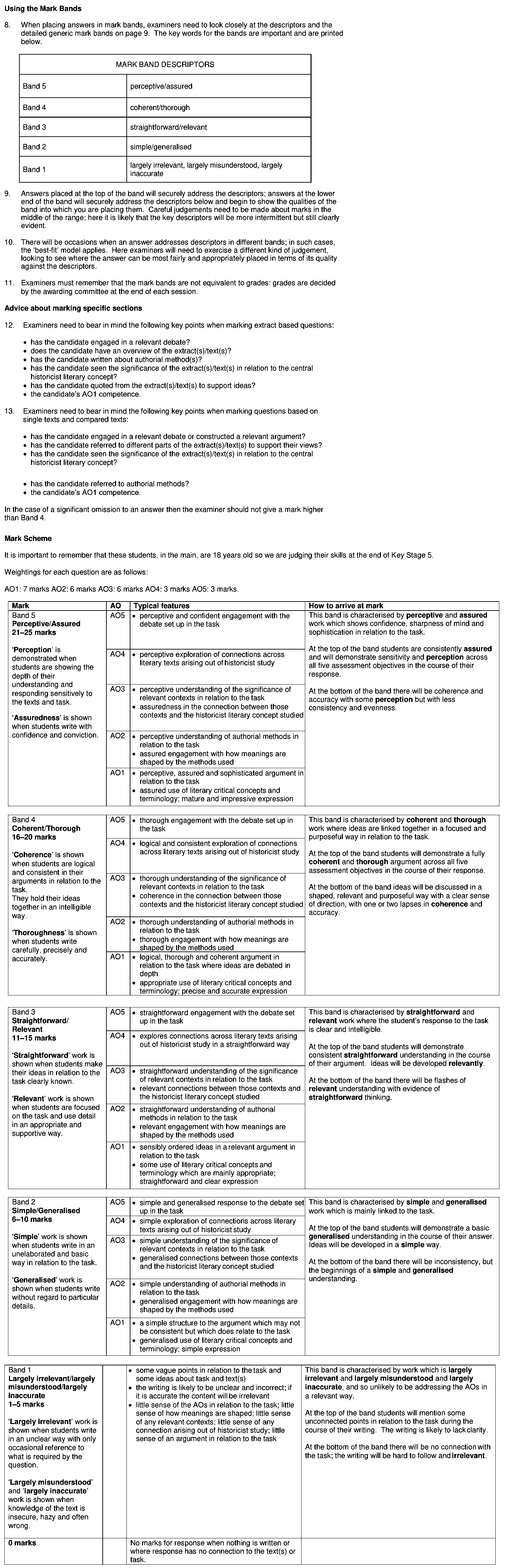
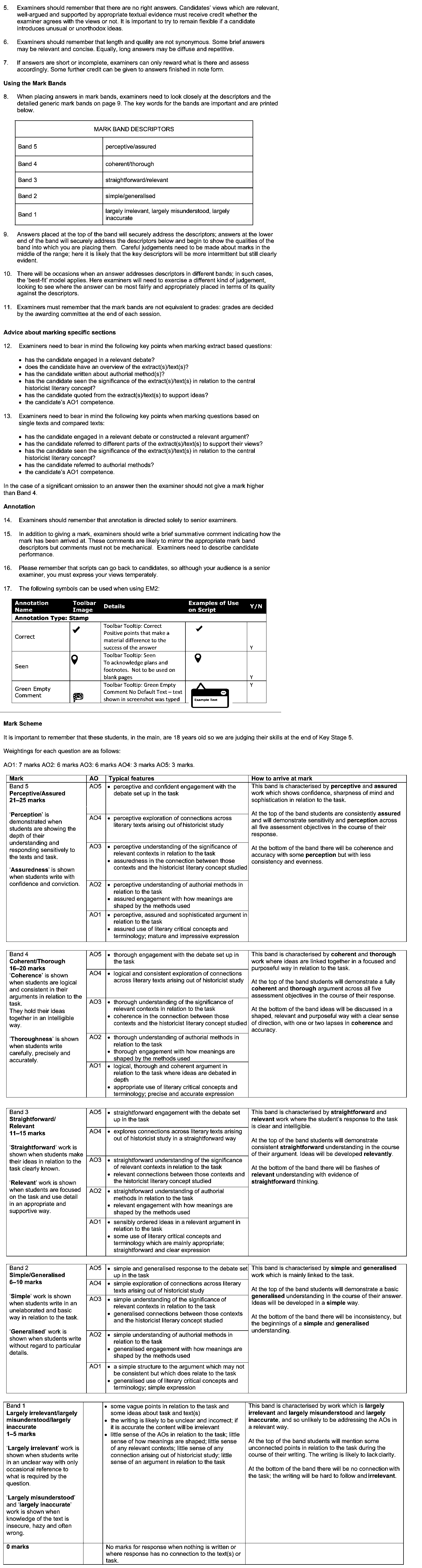
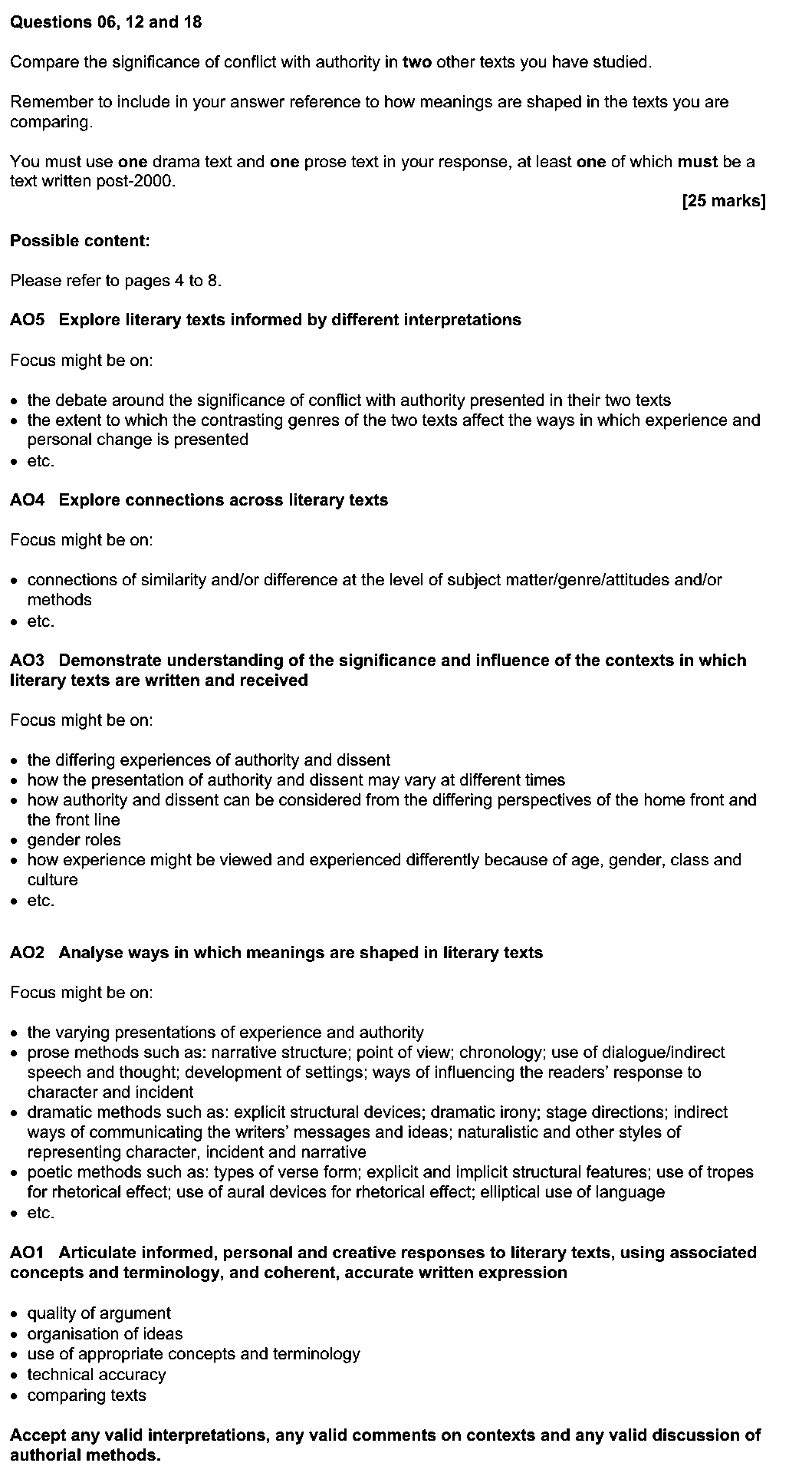
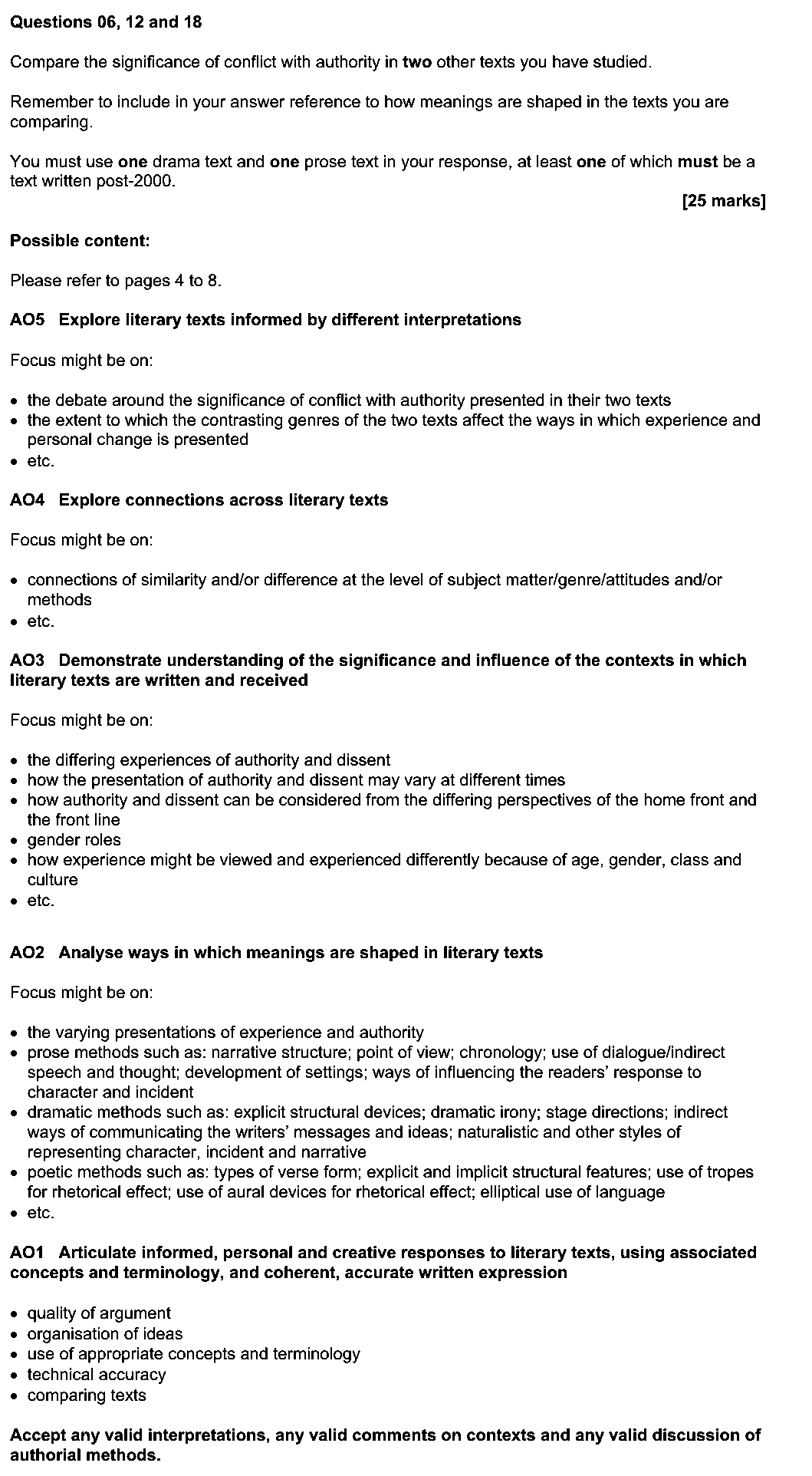
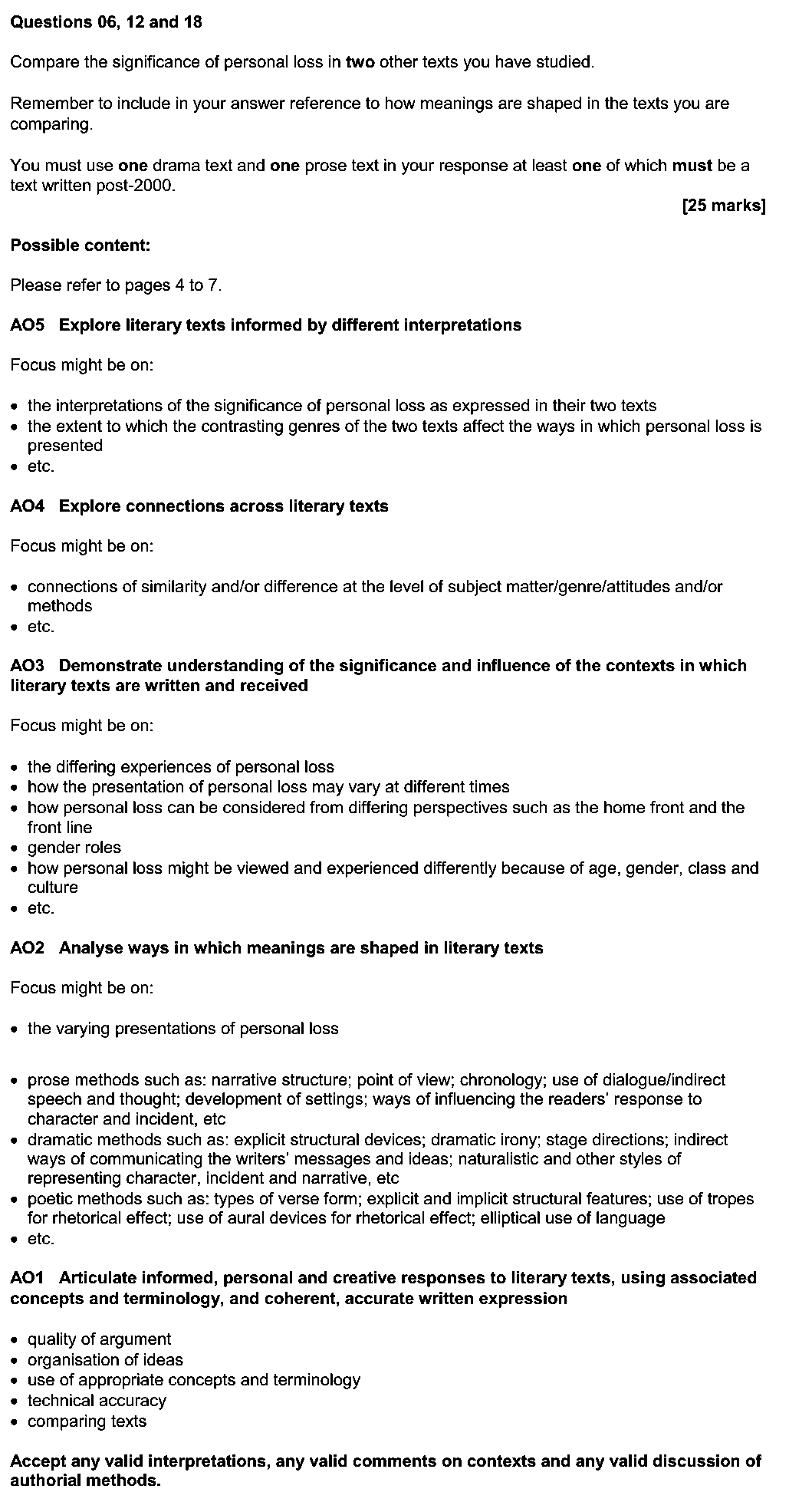
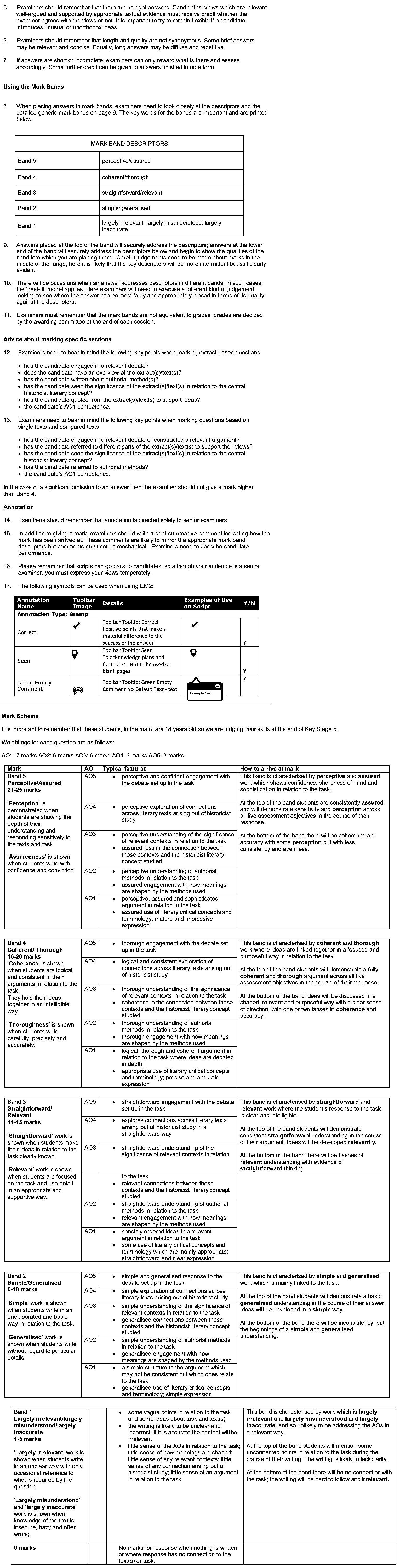
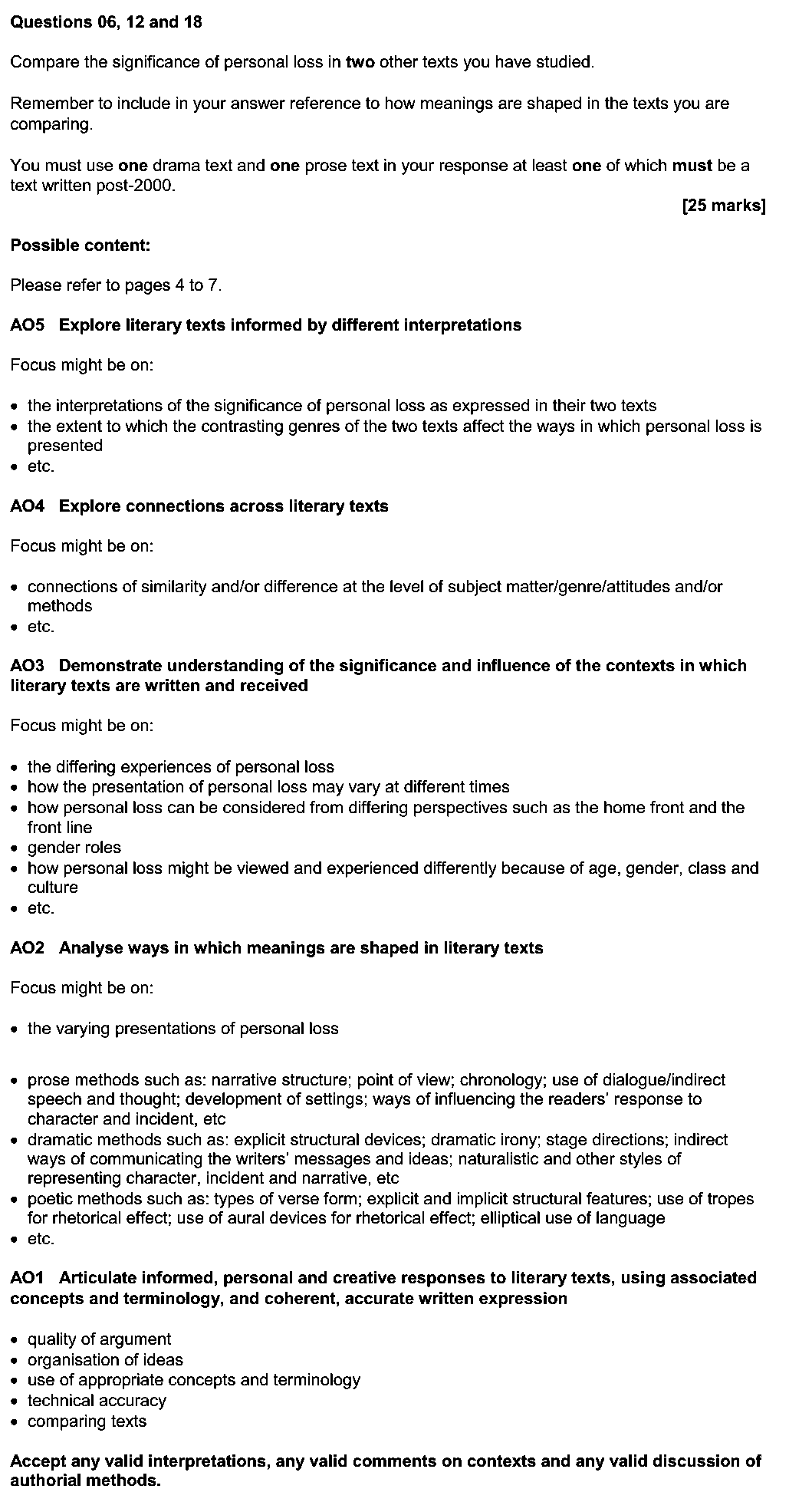
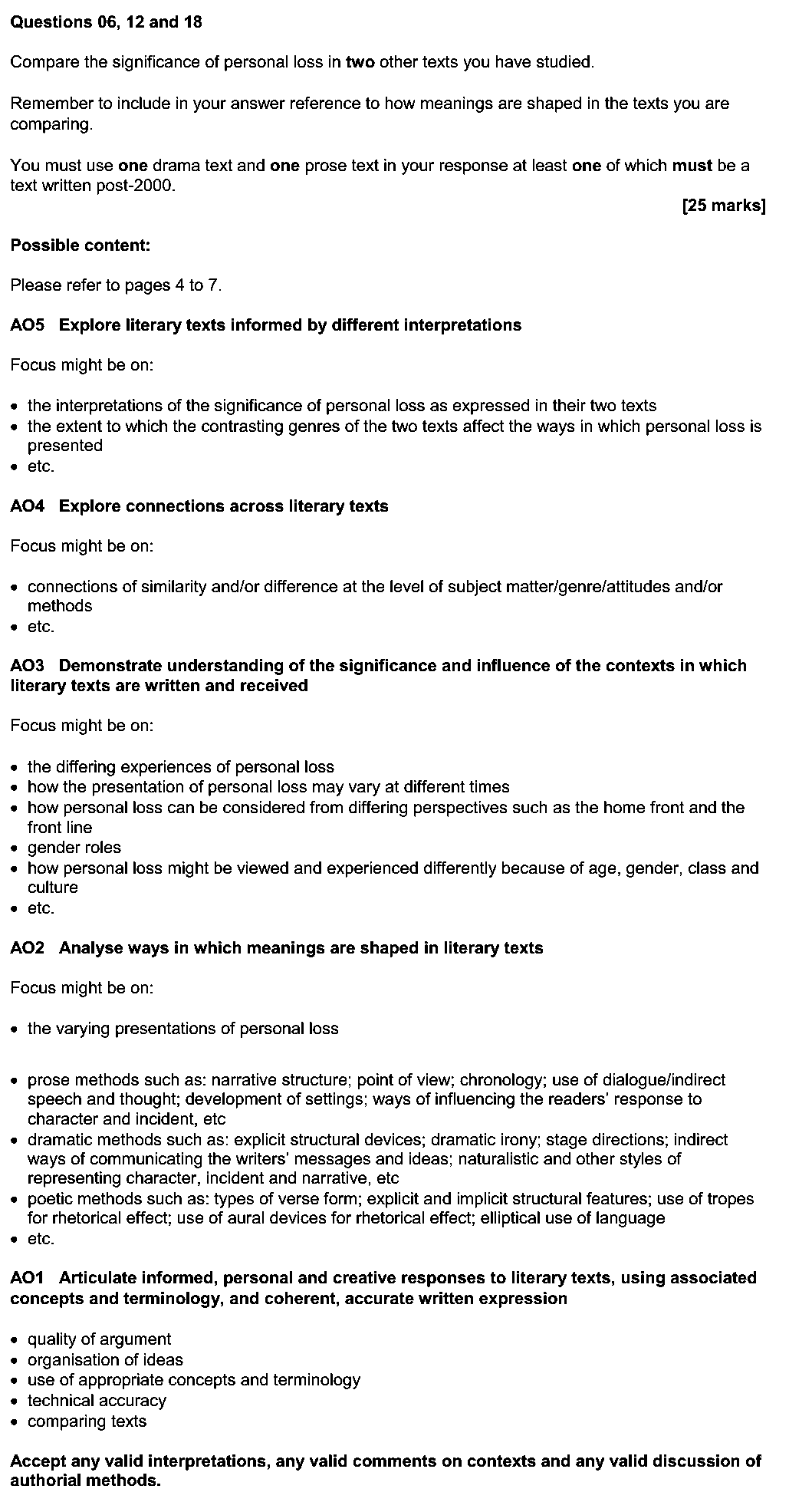
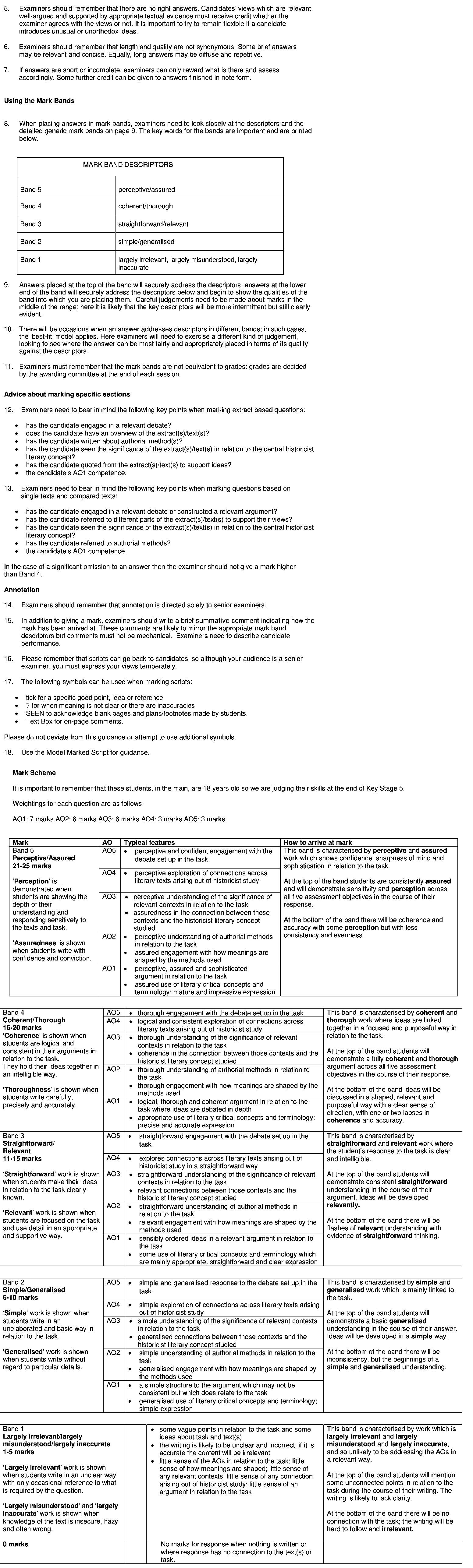
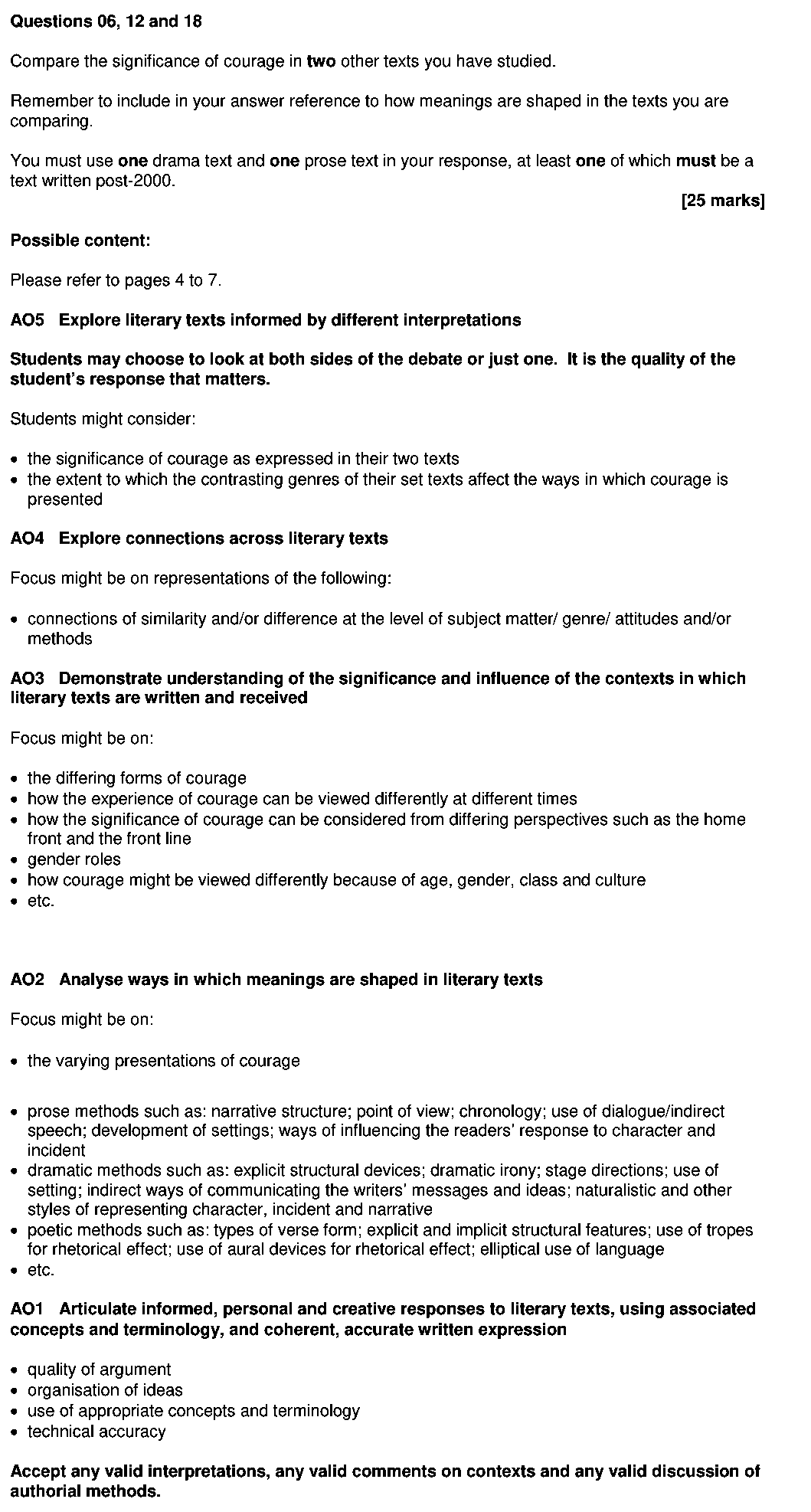
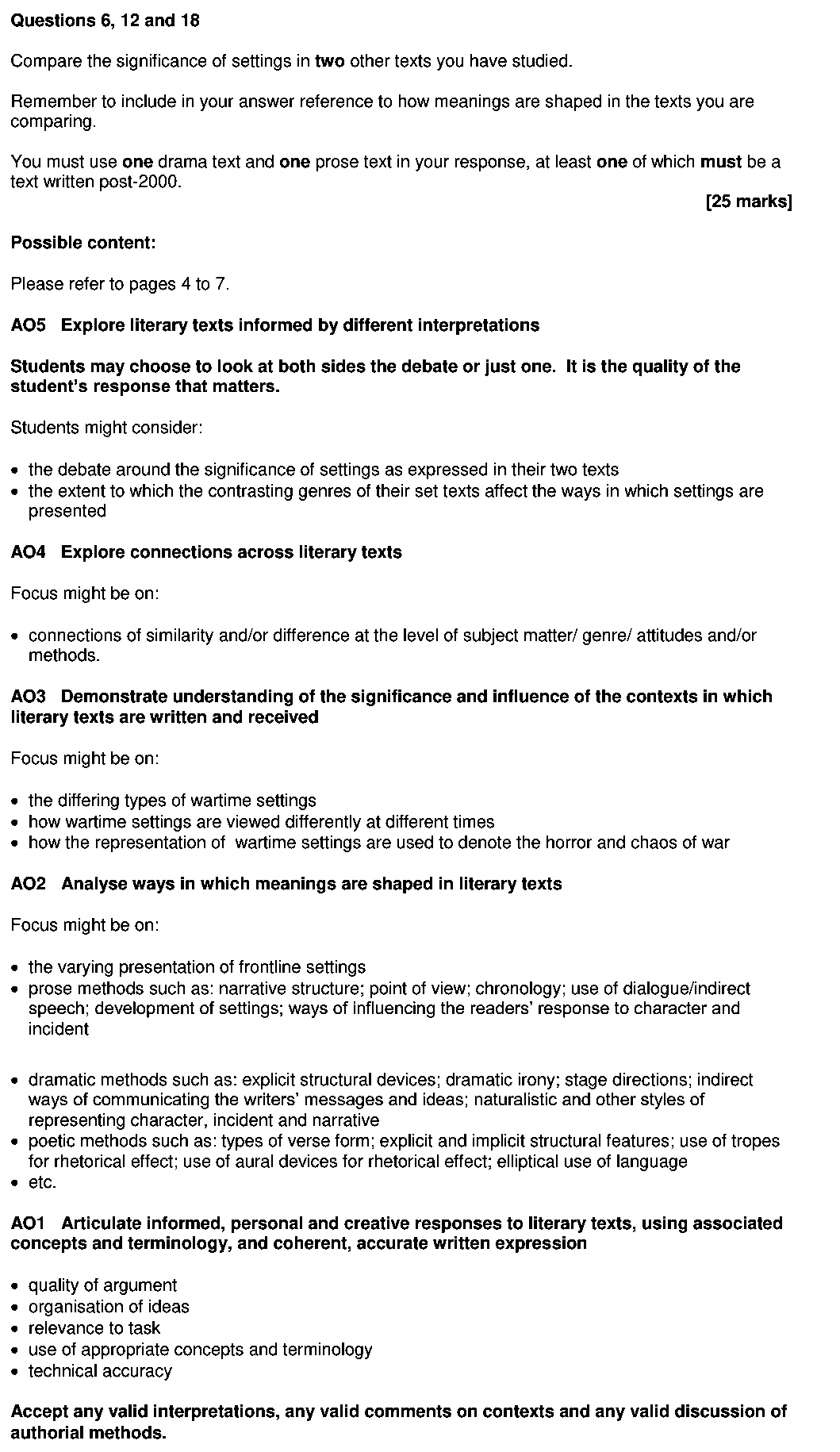
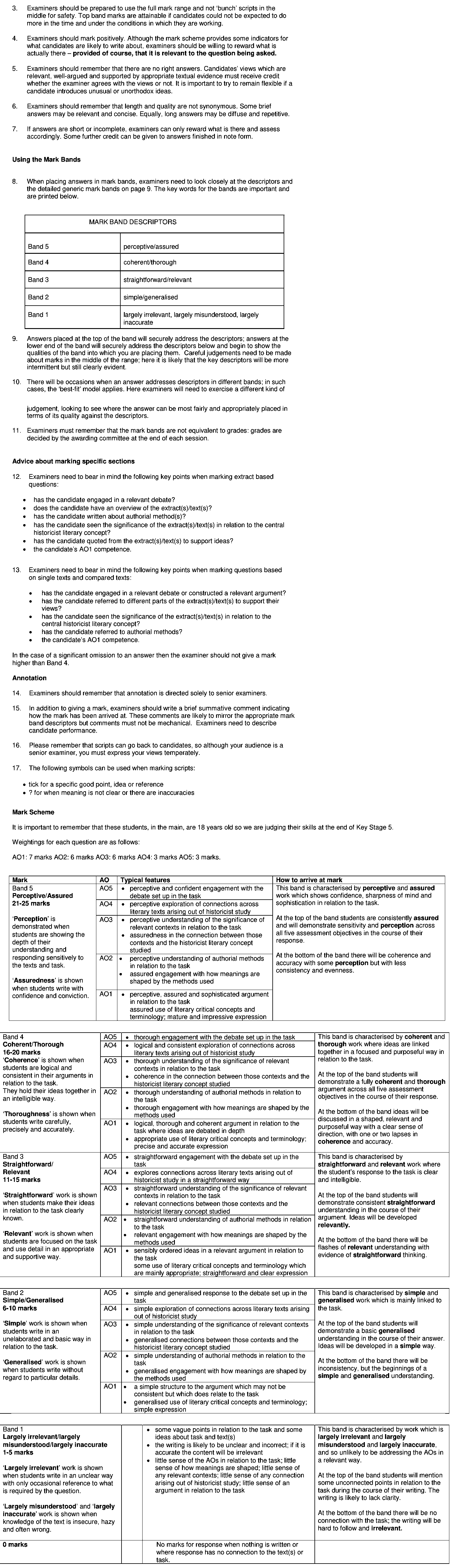
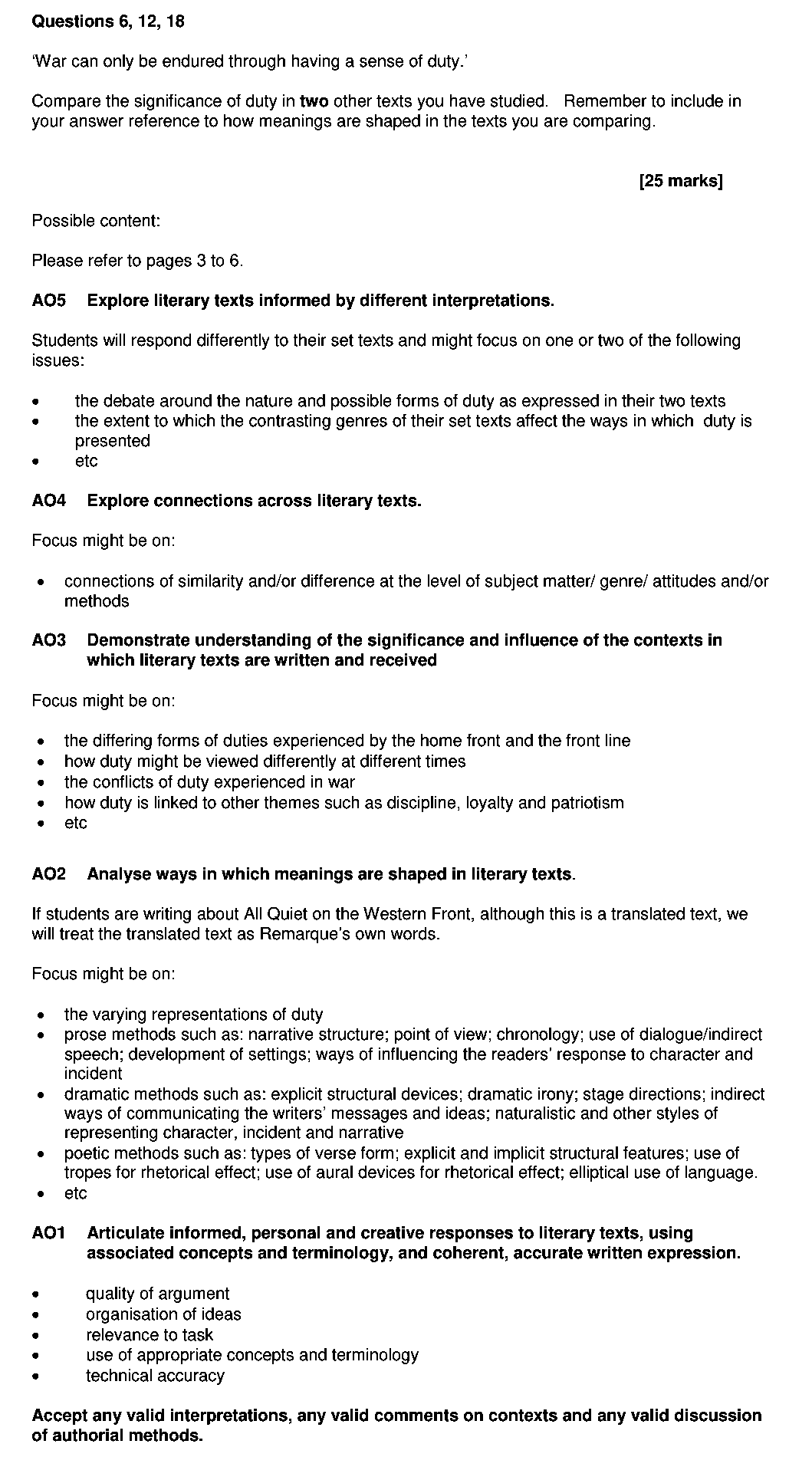
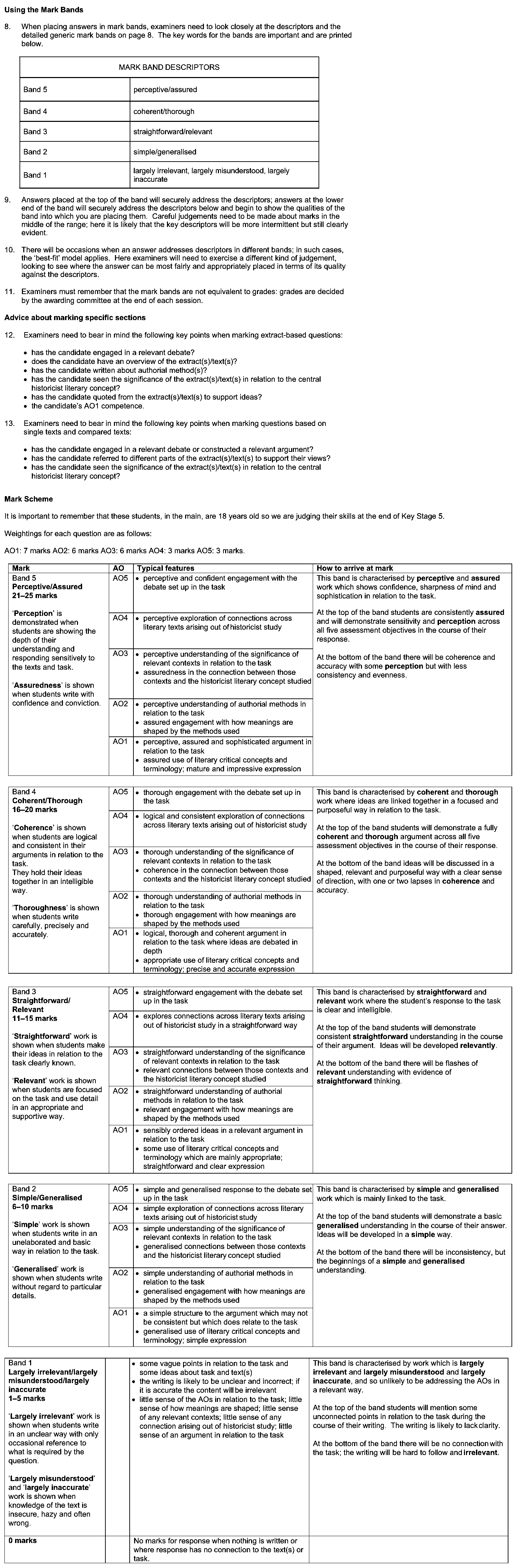
The general mark scheme (assessment objectives and bands)
Examiner's comment
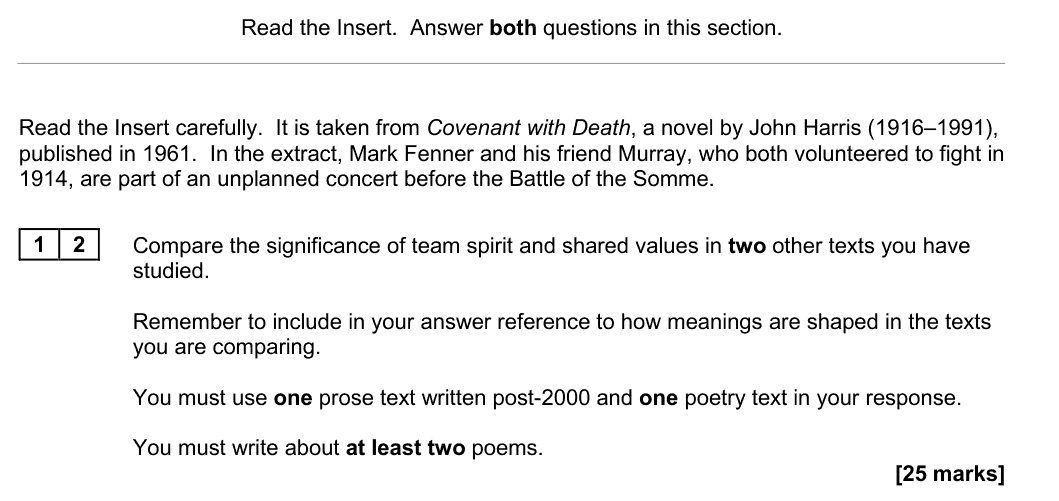
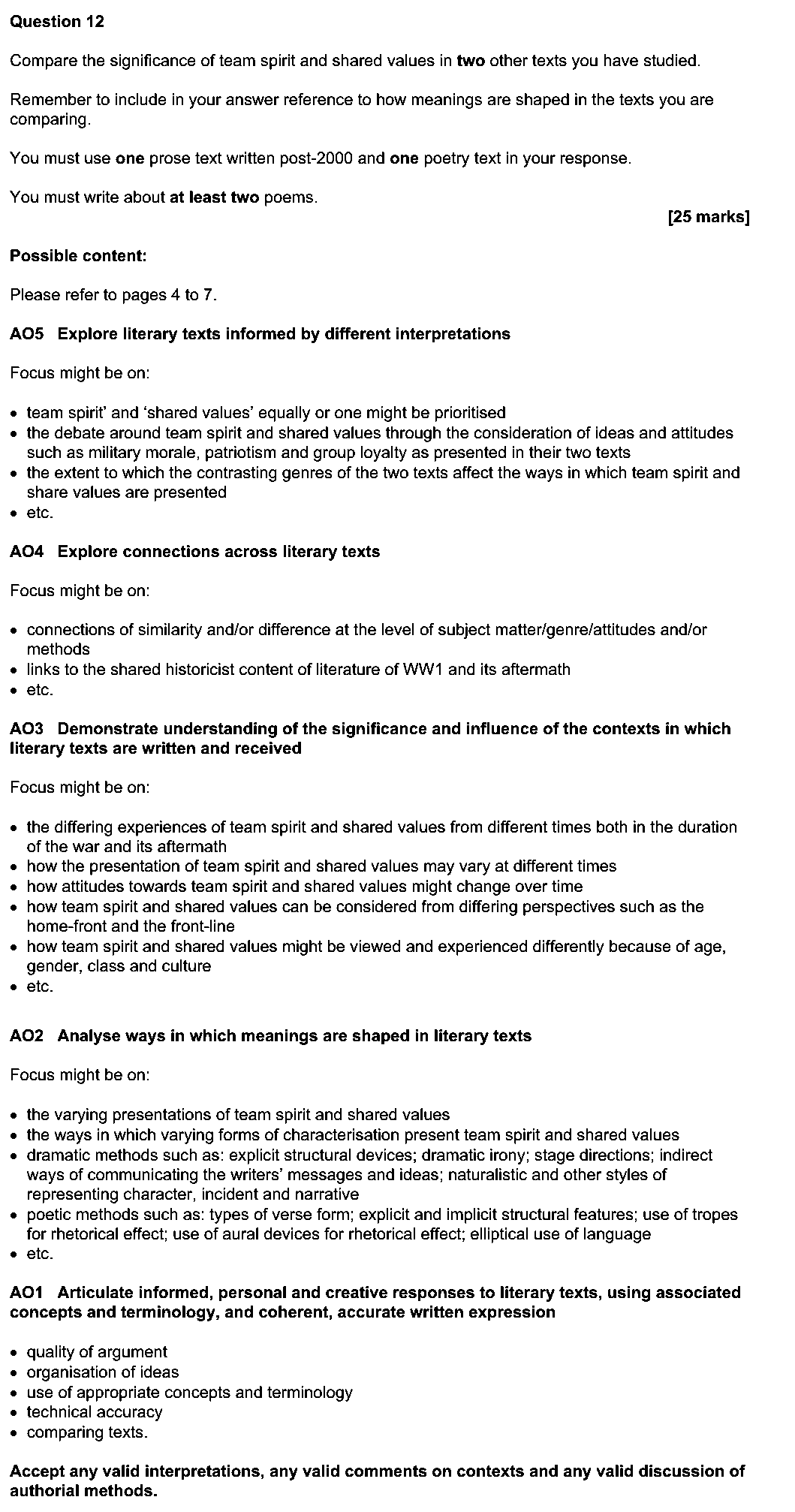
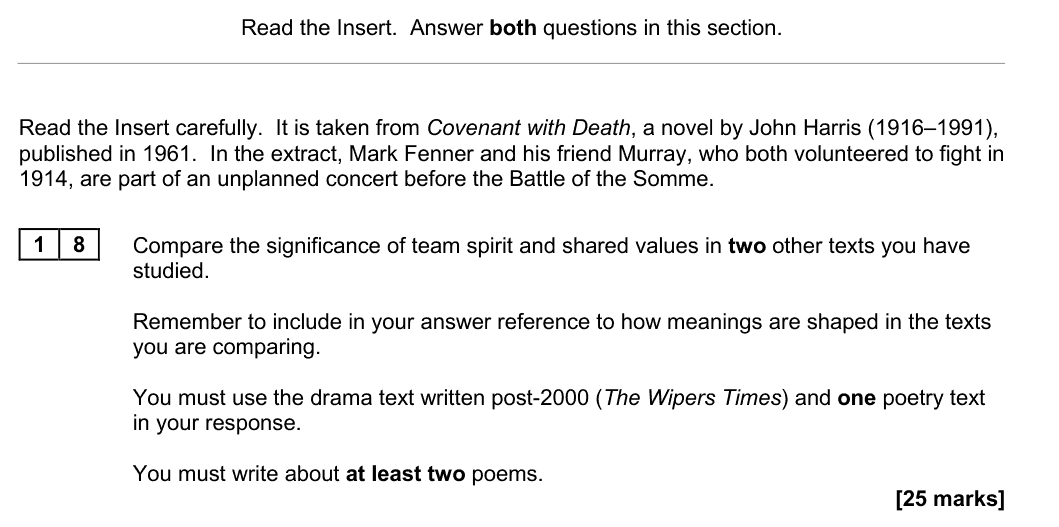
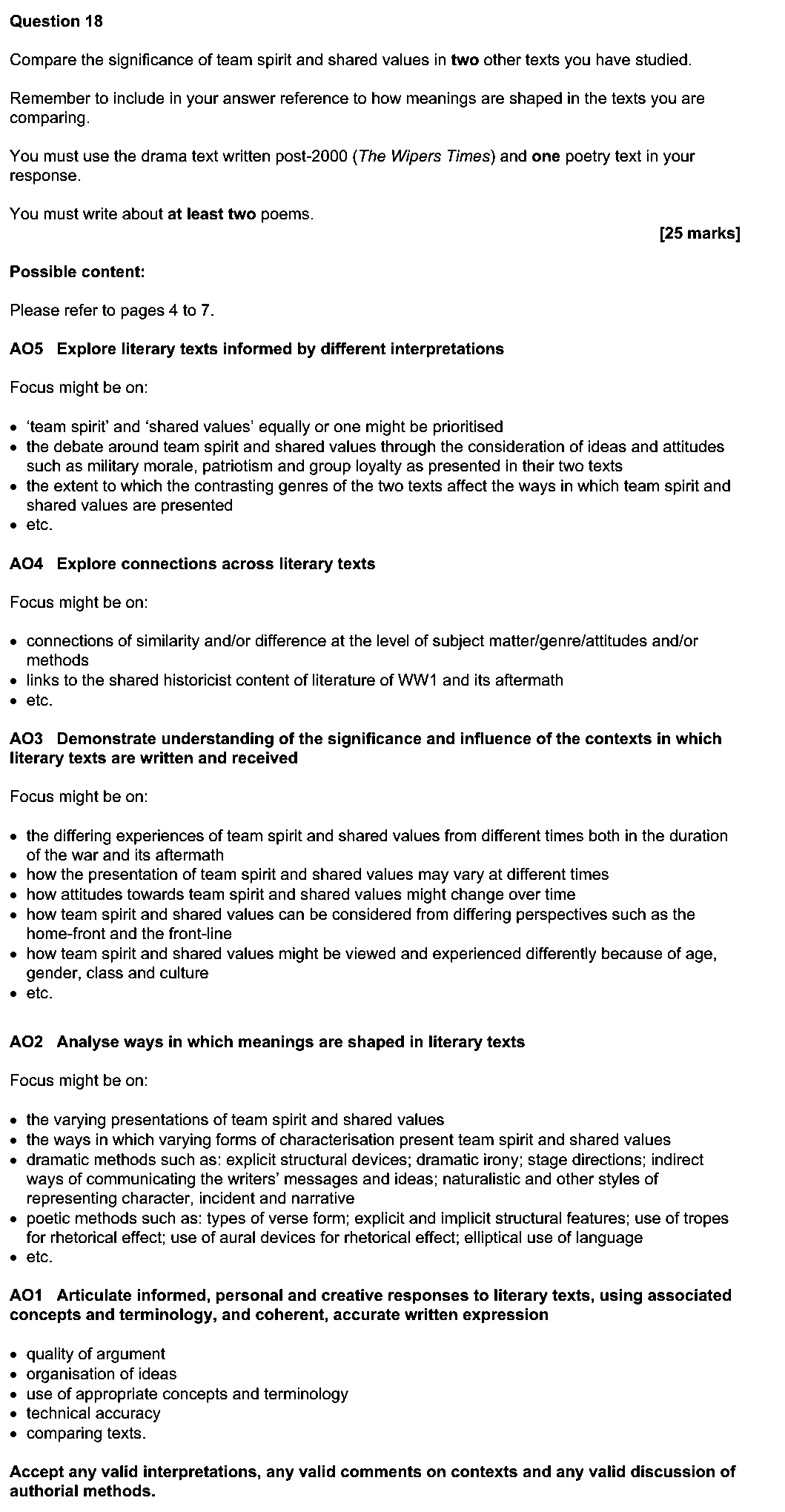
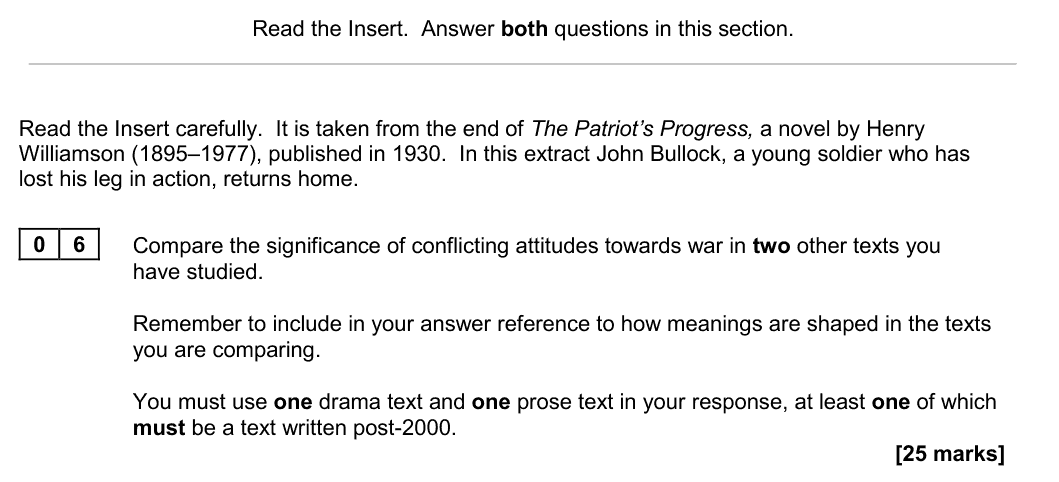
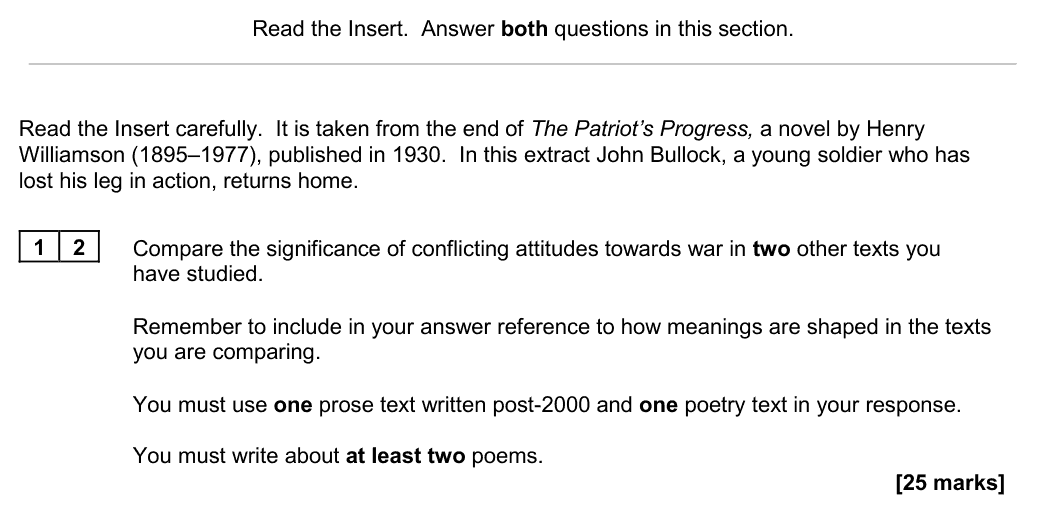
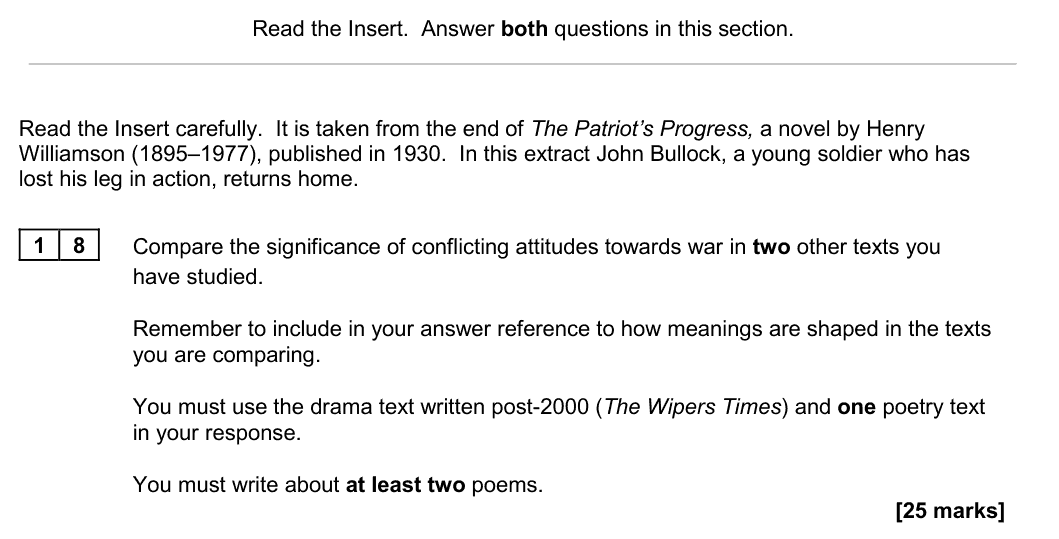
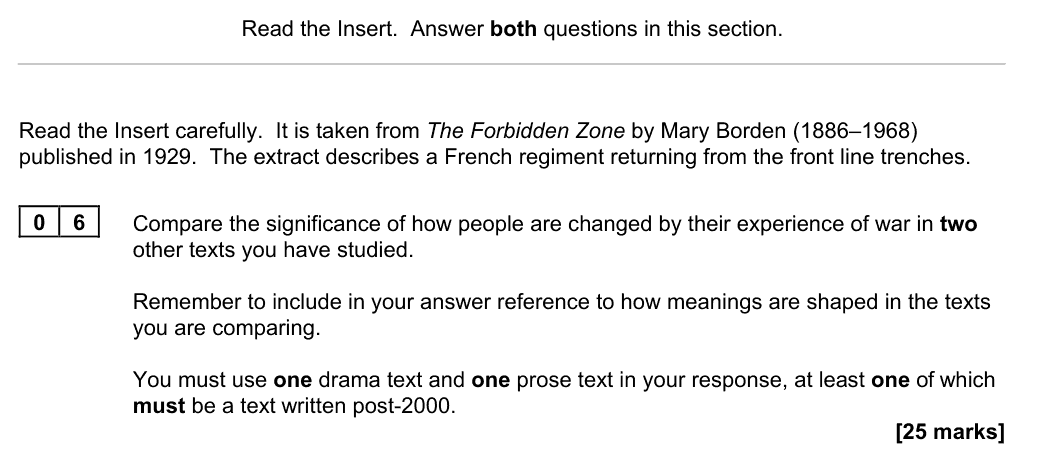
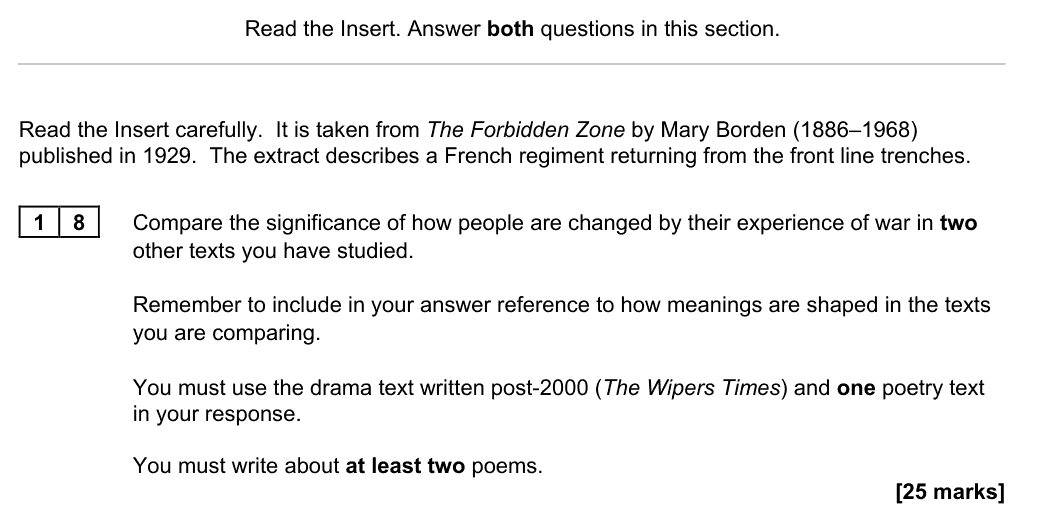
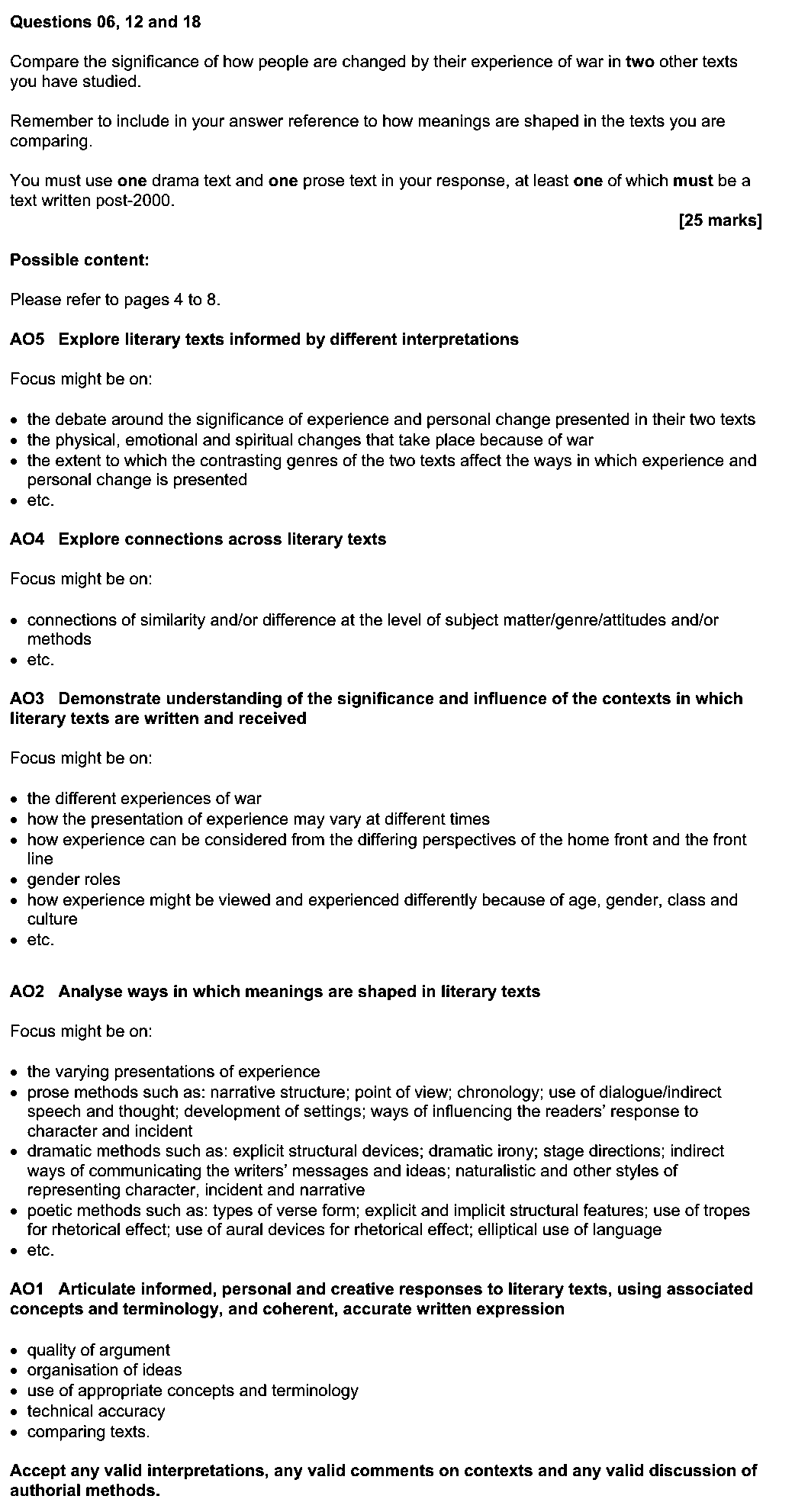
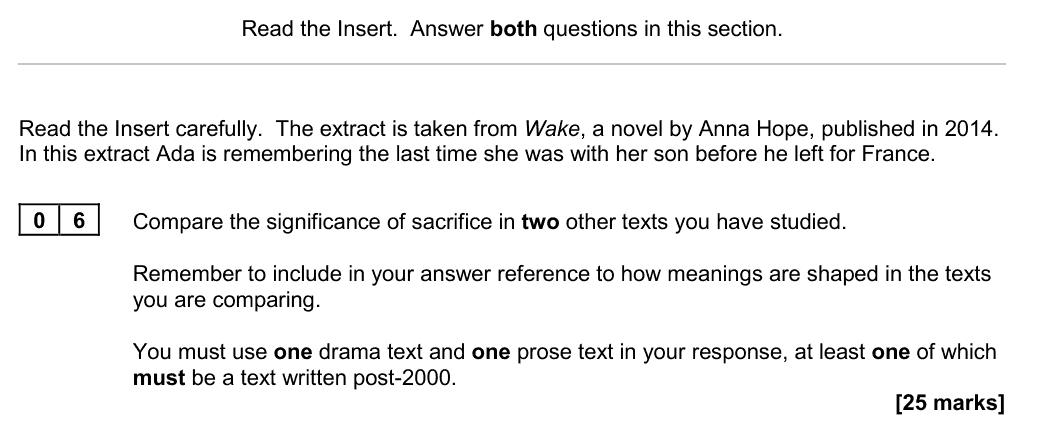
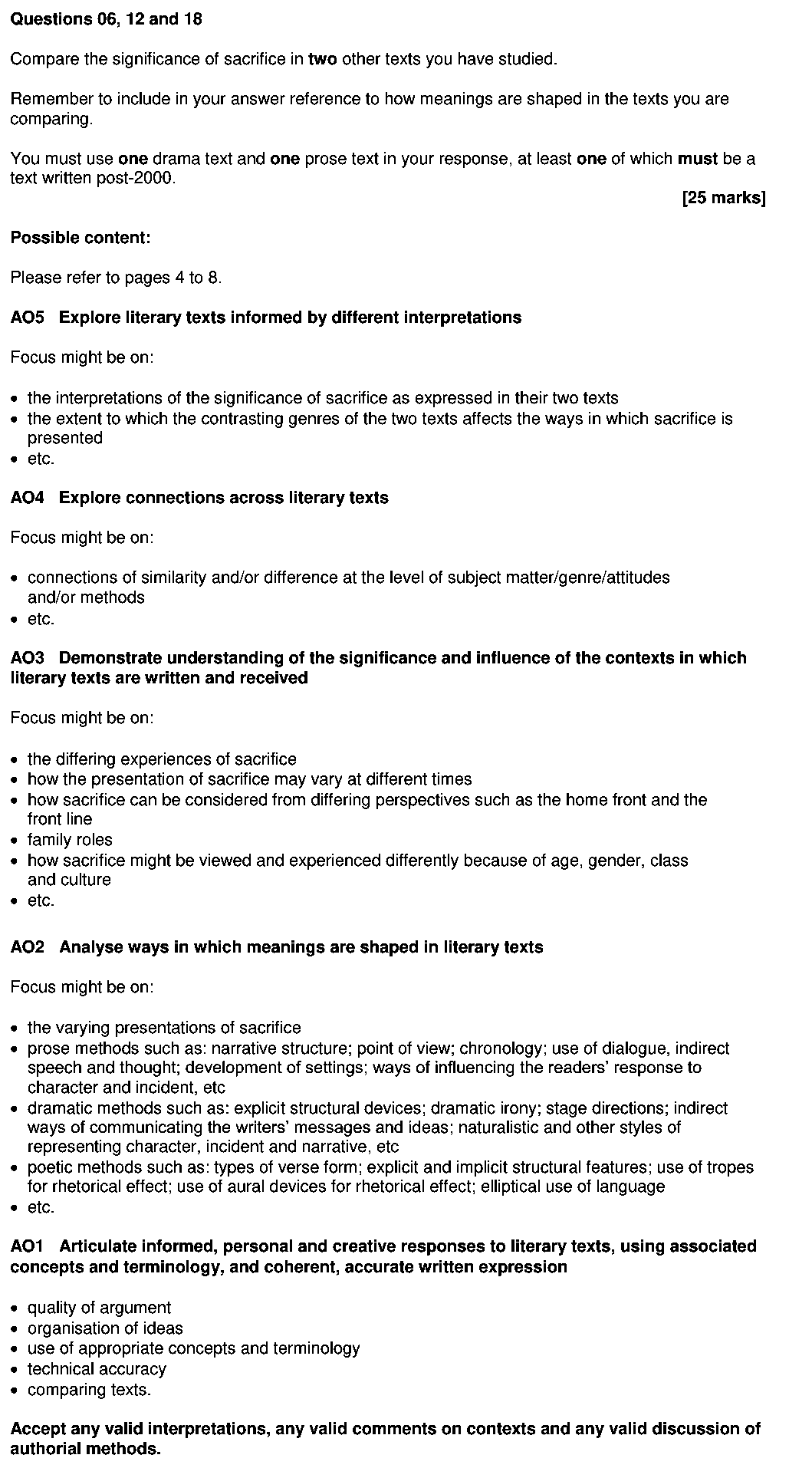
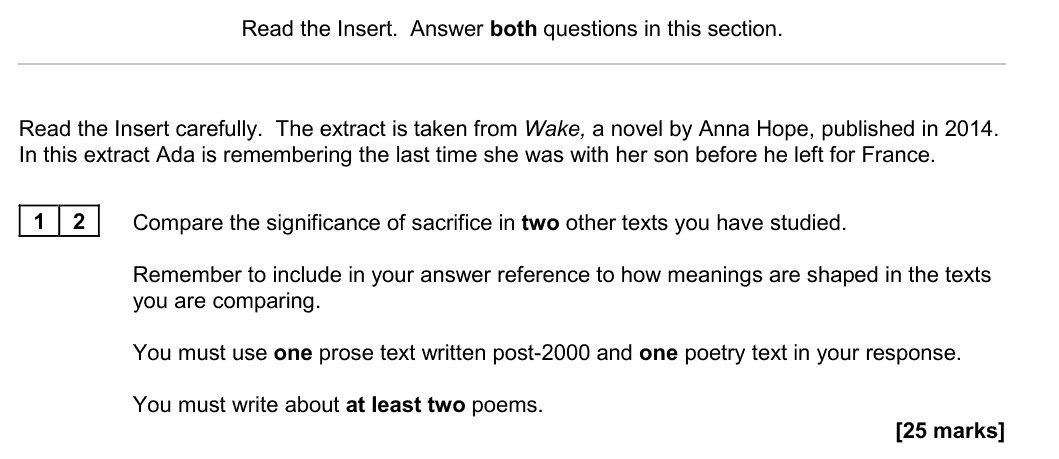
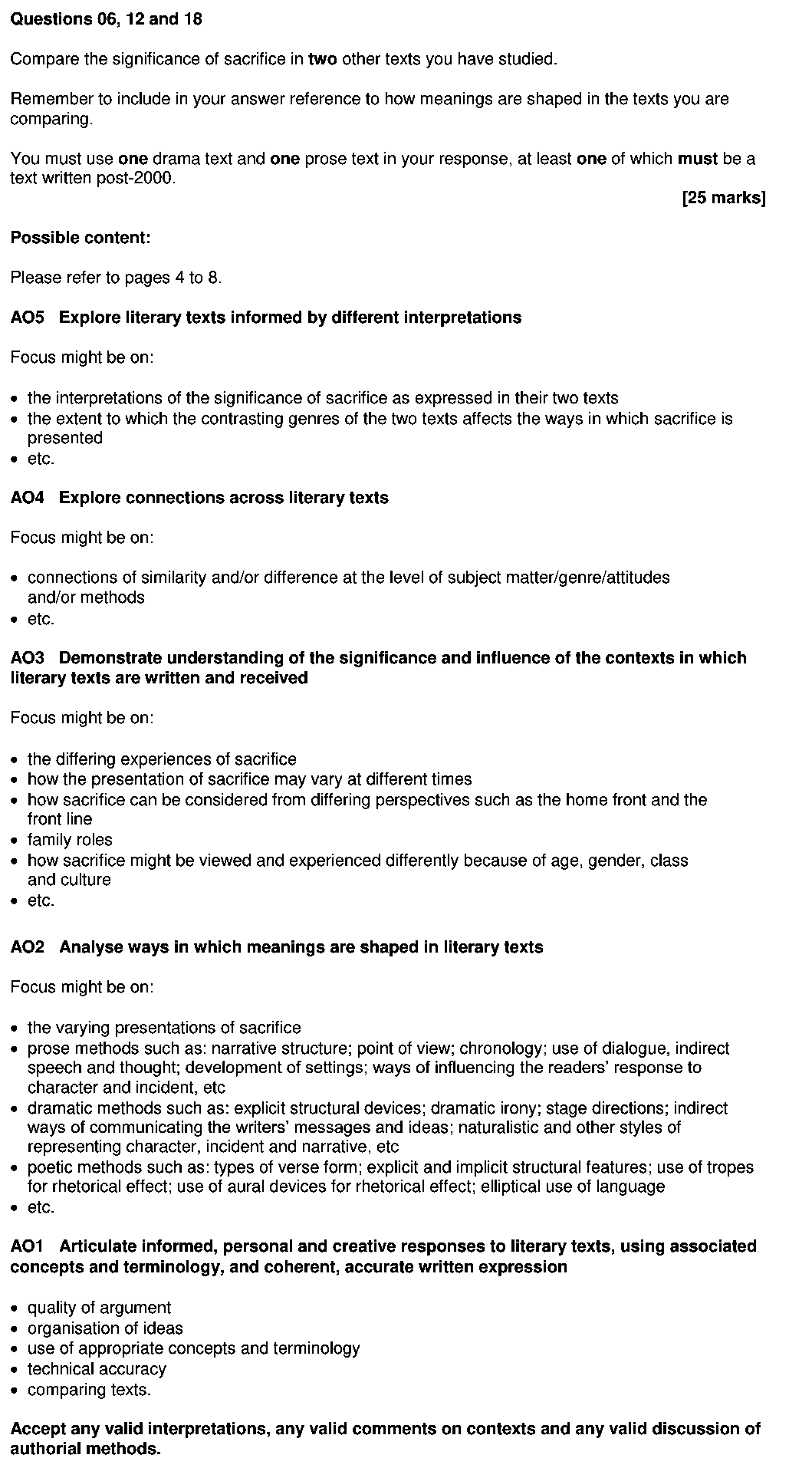
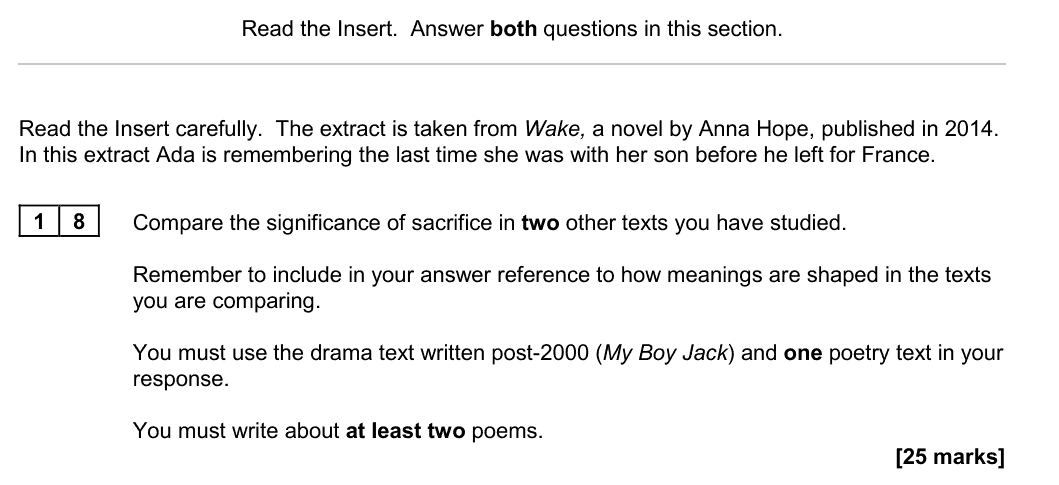
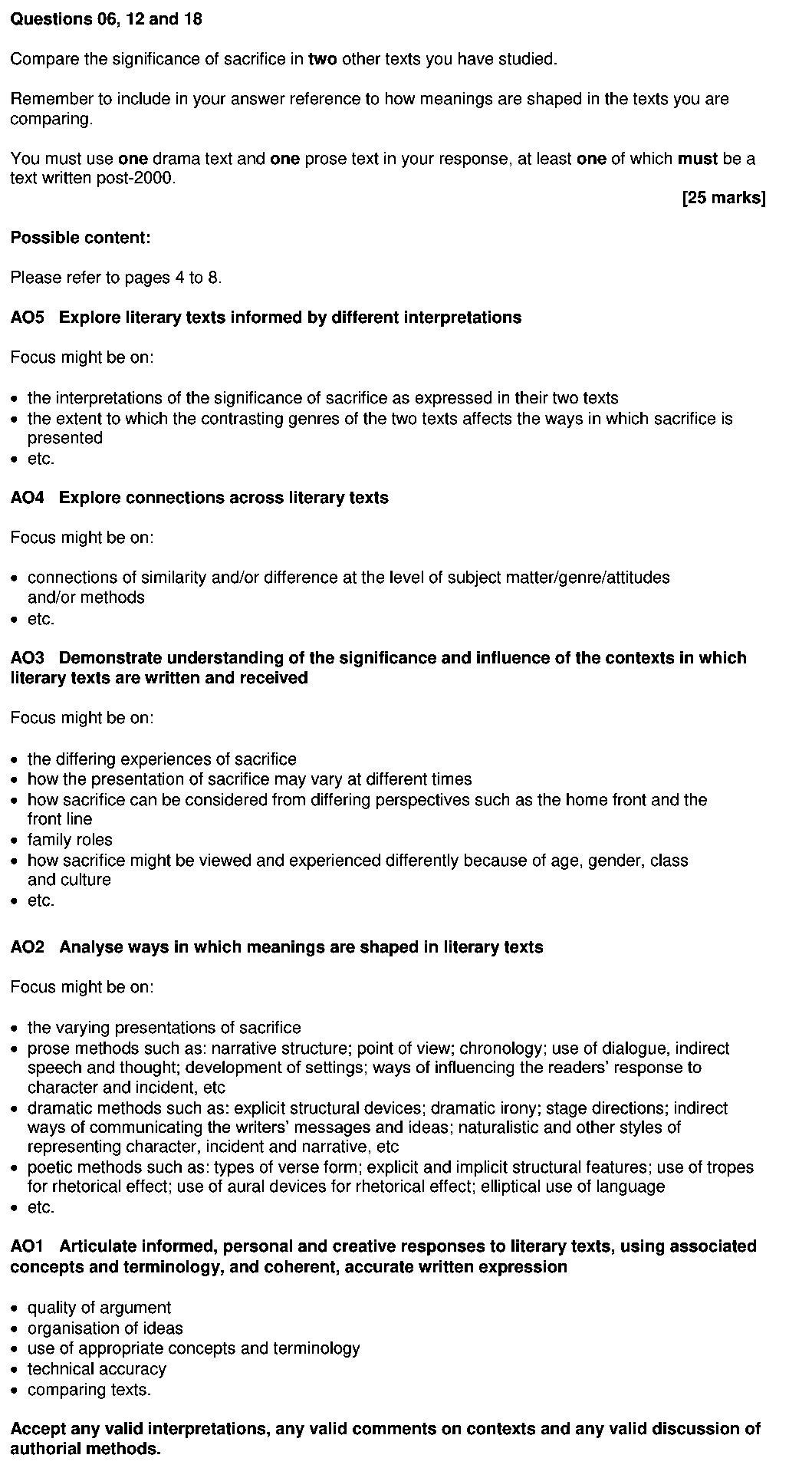
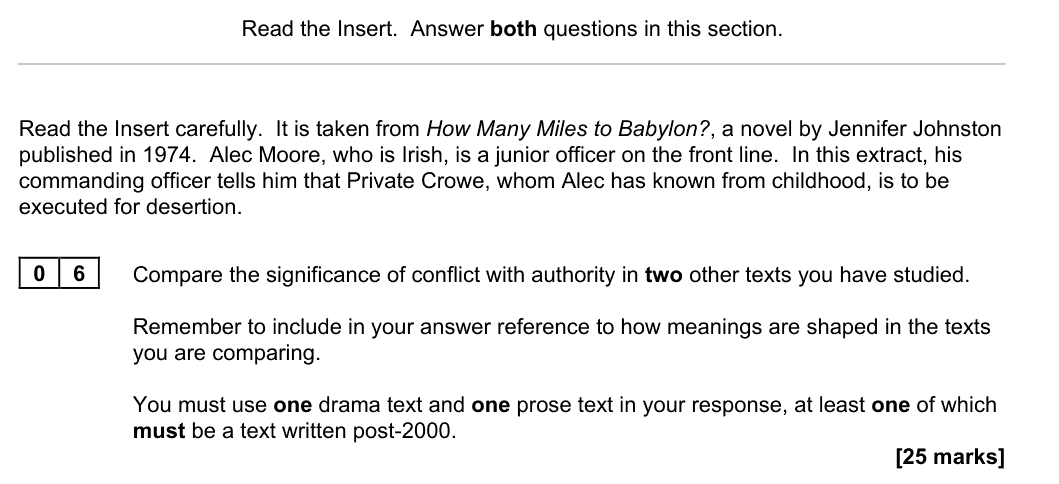
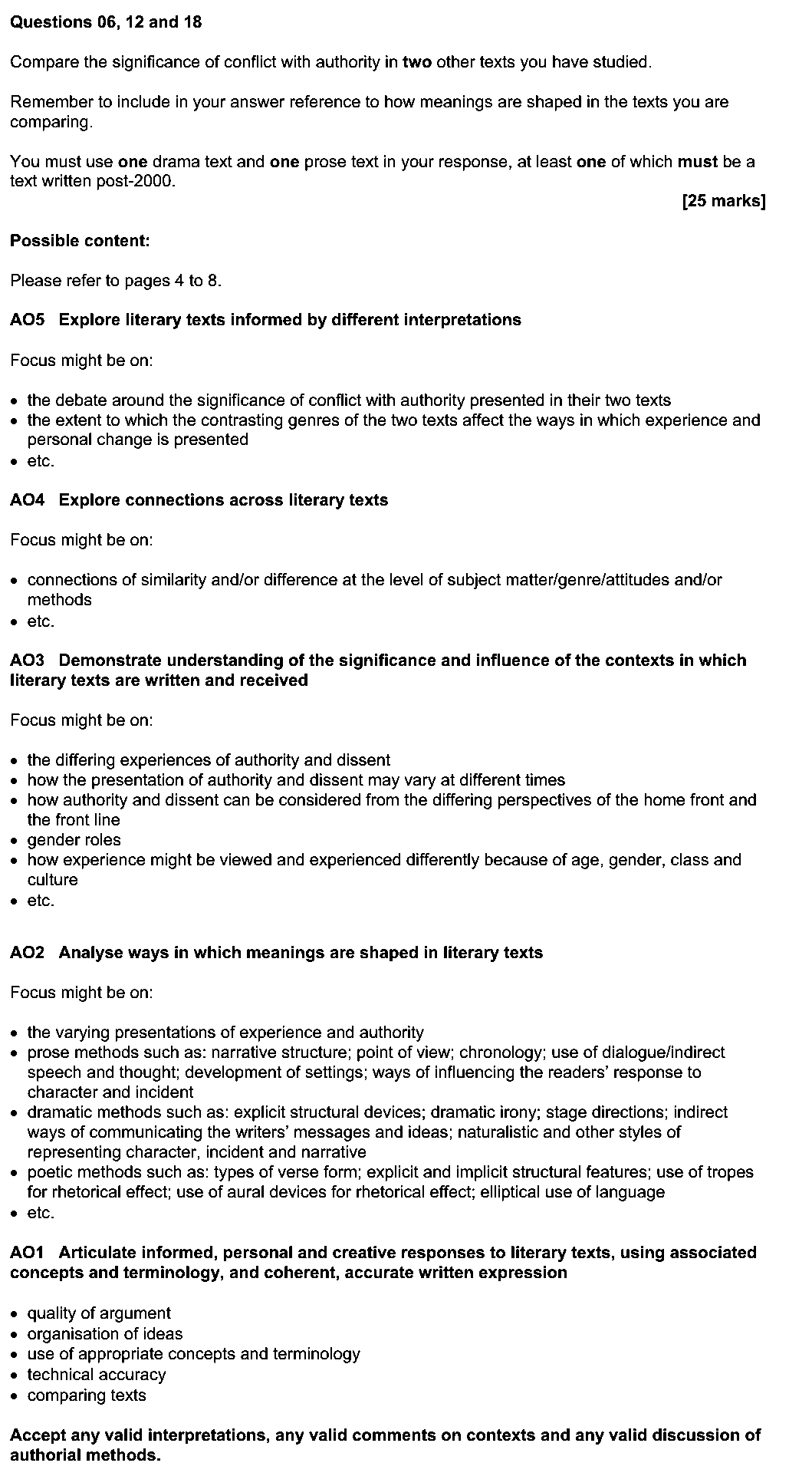
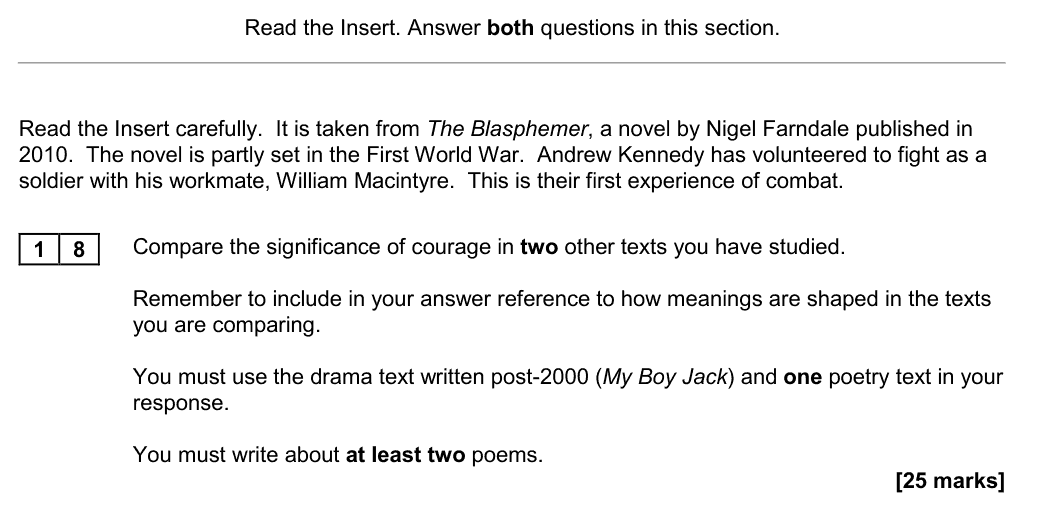
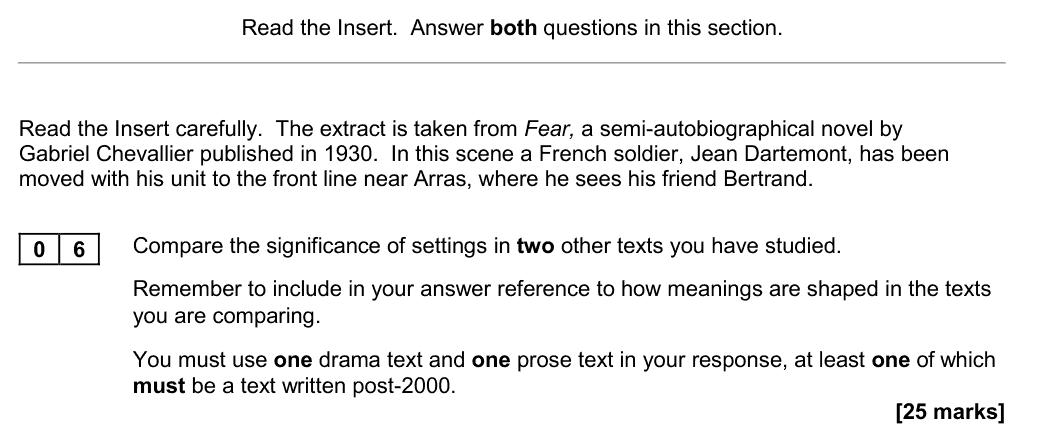
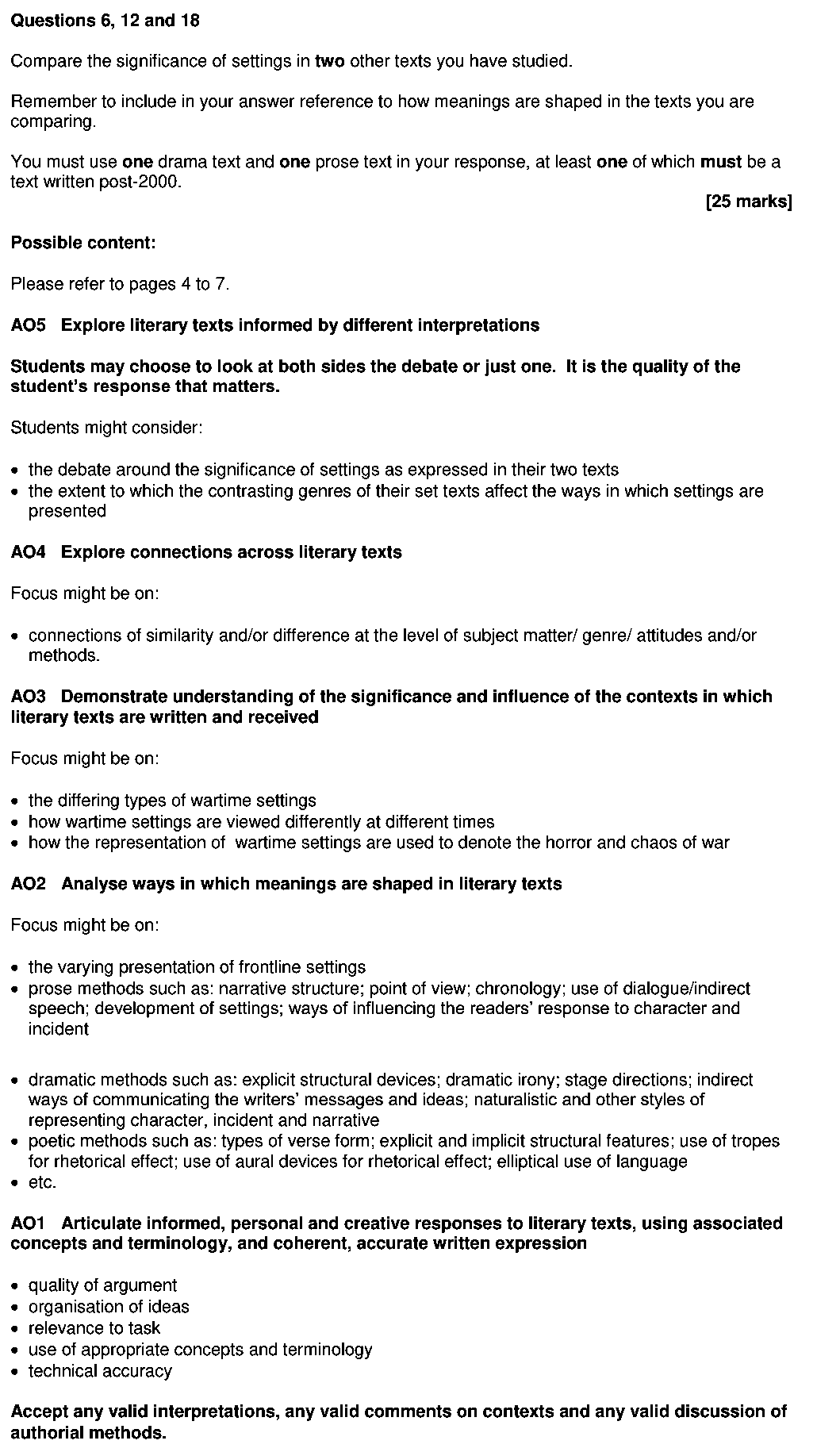
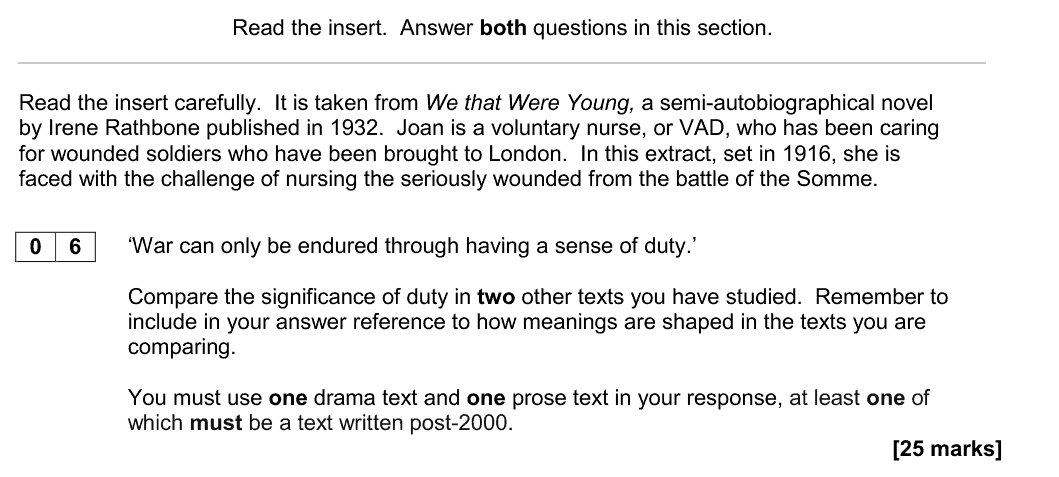
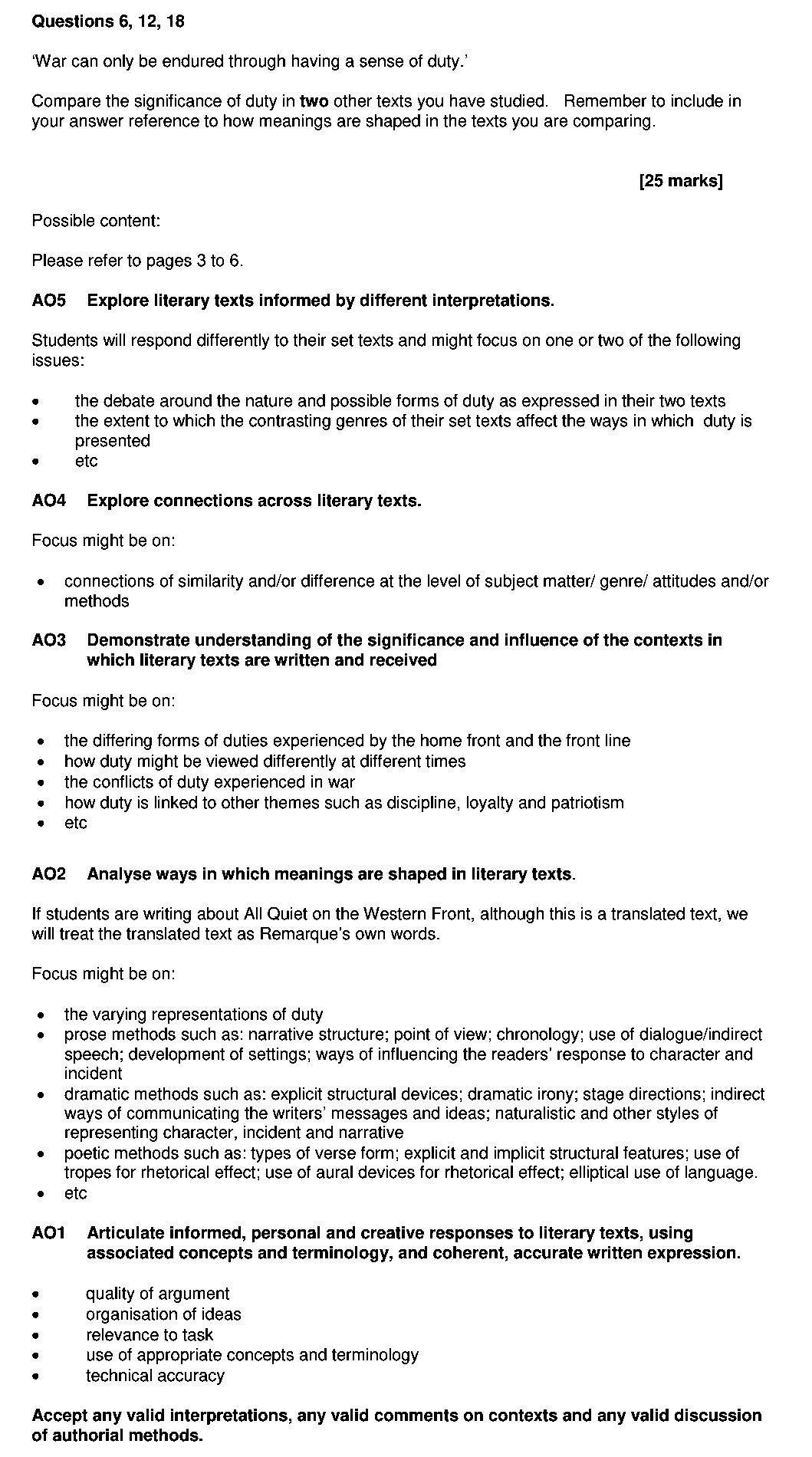
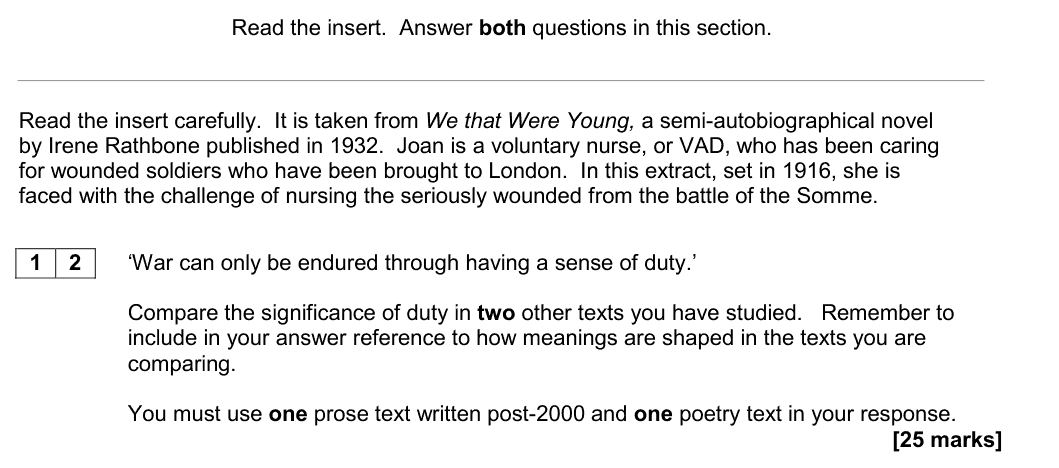
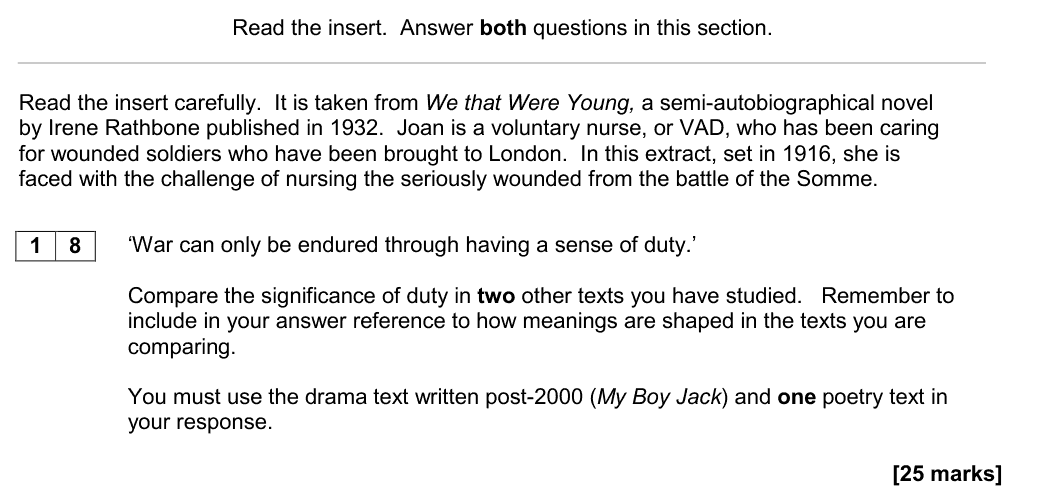
In Paper 1, two out of three tasks involve explicit comparison. In Papers 2A and 2B, one out of three tasks is explicitly comparative. The NEA task is also explicitly comparative. In stark contrast, Specification B never asks students to compare one text with another. There are other kinds of comparison involved in Specification A tasks too, of course, such as explicit or implicit comparison within the shared contexts to establish typicality or atypicality. A clear understanding of the task was key to success in this comparative element of section B. Students were asked to compare the significance of team spirit and shared values across two texts from different genres. Well-prepared students clearly familiar with the unchanging format of this task. Successful comparisons explored differences, not just similarities. They considered how the given theme was presented in both texts, focusing on the differing genres and literary methods. Weaker responses relied on content similarities and narrative paraphrasing, ignoring genre differences. Understanding 'significance' is crucial for considering genres, methods, and contexts that create meaning. Successful students used precise literary language appropriate to poetry, drama, and prose. Less successful work often focused on word-level analysis and misapplied poetic terms to drama and prose. Work that was less successful tended to focus more on demonstrating knowledge and understanding of the chosen texts, rather than selecting material relevant to 'team spirit and shared values'. These efforts often involved treating the two texts separately through extensive sections on each individual text, using brief discourse markers such as 'similarly' or 'on the other hand'. In contrast, more thoughtful work seamlessly integrated discussions of both texts and purposefully analysed well-chosen textual details to construct a convincing comparison. To achieve higher marks, students should establish comparative links by thoughtfully and precisely selecting textual details, rather than attempting to demonstrate familiarity with their texts through narrative-driven work that may become digressive. The chosen theme of ‘team spirit and shared values’ was accessible to the majority of students. Importantly, many students produced responses that focused on how ‘team spirit and shared values’ differed and could became a source of conflict. Such work considered conflict within the military hierarchy where ‘team spirit and shared values’ were often very different. The dramatic conflict between Hibbert and Stanhope in Journey’s End was often purposefully considered as Sherriff’s way of presenting the necessity of ‘team spirit’ on the front-line. In The Wipers Times ‘shared values’ was often explored through considering the conflict between Roberts and the military hierarchy represented by Howfield who opposes the newspaper and states that ‘The battlefield is not the place for humour’. Students also compared how presentations of ‘team spirit and shared values’ differ because of time. These responses purposely compared early and later war poetry through a comparison with characters such as Raleigh or Stanhope from Journey’s End, or Burns and Sassoon from Regeneration. Students also successfully compared the differing presentations of home-front and front-line values. Such work considered the ’team spirit’ presented in Jessie Pope’s poetry or the lack of ‘shared values’ that soldiers experience when they are away from the front-line in Regeneration or Birdsong. Successful work shows that understanding different contexts can help explore meaning in a precise and nuanced way. However, many students discuss context in a way that becomes digressive and moves away from close textual analysis. For instance, discussing ‘the shared values’ represented in propaganda and jingoism should be integrated into an analysis of the characterisation of Howfield in The Wipers Times or Hamilton’s poem The Jingo-Woman. Less successful students often focused on individual words rather than considering form and structure. This led to assertive interpretations based on sometimes inaccurate linguistic analysis. In this work there was also a tendency to misapply poetic analysis to other genres. AQA’s Teaching Guide to AO2 offers a better method for understanding how meaning is constructed across genres. https://www.aqa.org.uk/resources/english/as-and-a-level/english-literature-a/teach/teaching-guide-ao2 More successful comparative set text answers: • consider the given view through comparing the two chosen texts • move fluently between texts often exploring difference rather than just similarity • carefully select relevant textual details to support ideas • have a secure understanding of poetic, dramatic and/or prose methods • always link literary analysis to meaning • integrate an understanding of context into literary analysis • can consider how texts may shape meaning in a more tentative fashion when necessary • show awareness of typicality in the literature of WW1 and its aftermath. Less successful comparative set text answers: • lose sight of the given topic and resort to narrative paraphrase • tend to unload ideas often leading to digressive work which can be rushed and incomplete • tend to be assertive and are not supported by well-chosen references • can only ‘feature spot’ sometimes inaccurately and can only link methods to meaning in an assertive unconvincing way • make generalised references to context and typicality that lead to assertive, inaccurate arguments. Secure AO1 is essential when comparing two texts using a central argument. Students who effectively used these AO1 tools often gave more successful responses: • clear introductions and conclusions that focus on the keywords and frame the response • clear paragraphing to build structured comparison • purposeful discourse markers to highlight comparative thinking • clear succinct expression that avoids imprecise, overlong sentences • clear use of topic sentences to guide a purposeful argument. still took the opportunity to use My Boy Jack as they were able to compare the text with the post-2000 novels A Long Long Way or Life Class. Those who chose The Wipers Times as the post-2000 text could chose texts such as Regeneration, All Quiet on the Western Front or Birdsong. Many students purposefully compared the ‘shared values’ of the home-front and the front-line. Through precise consideration of Sassoon’s characterisation in Regeneration, students were able to explore the conflict between protesting against the conduct of the war and his duty towards his men.
Notes from the mark scheme and report
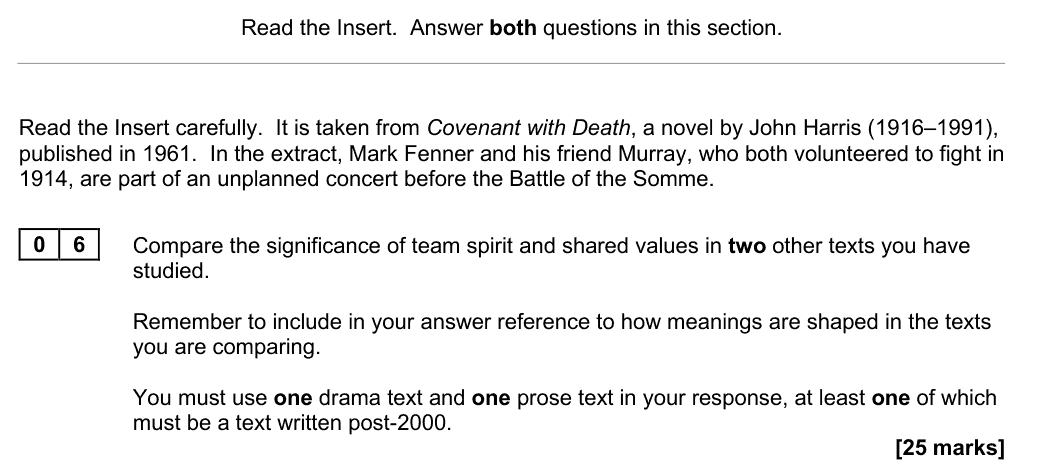
- Focus: theme: team spirit and shared values
- Open book, no extract
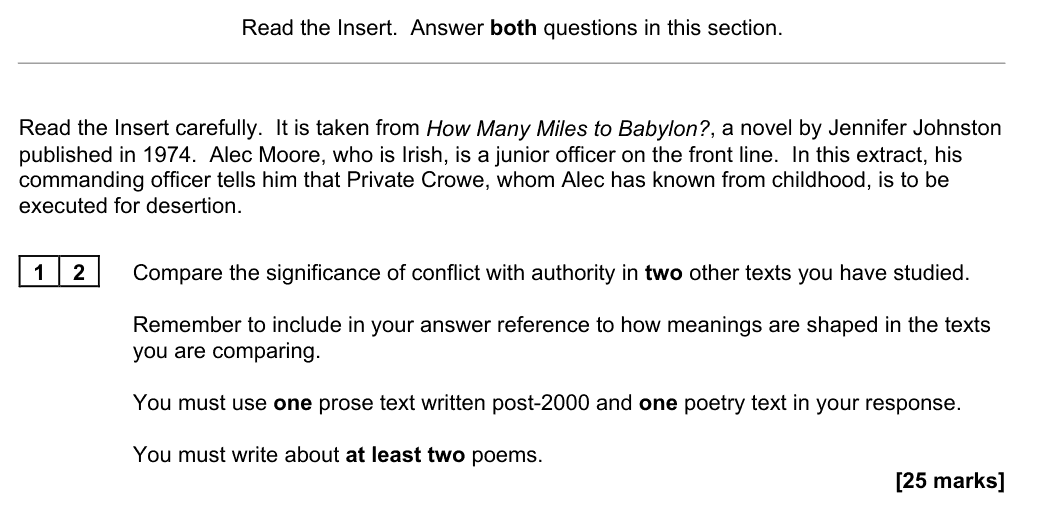
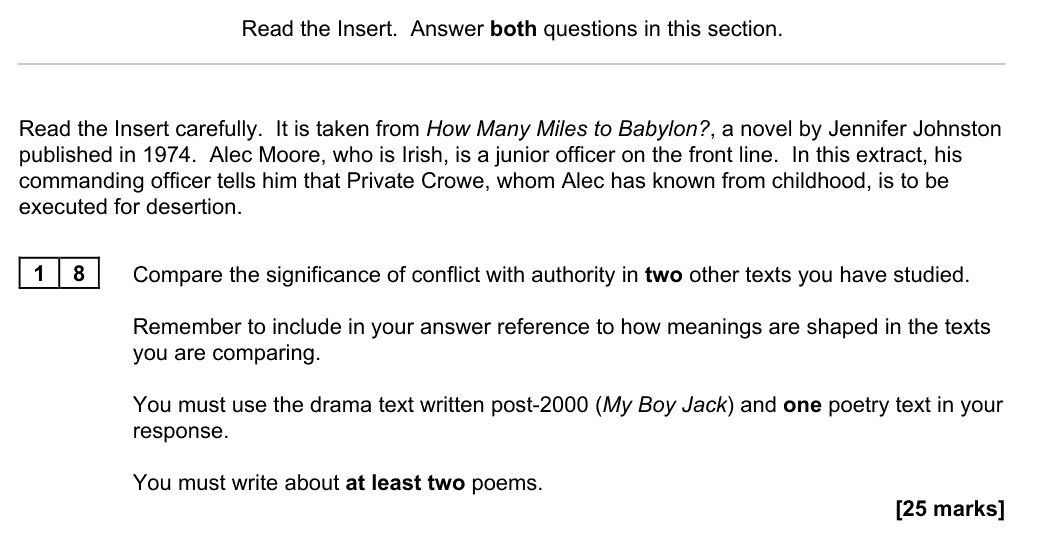
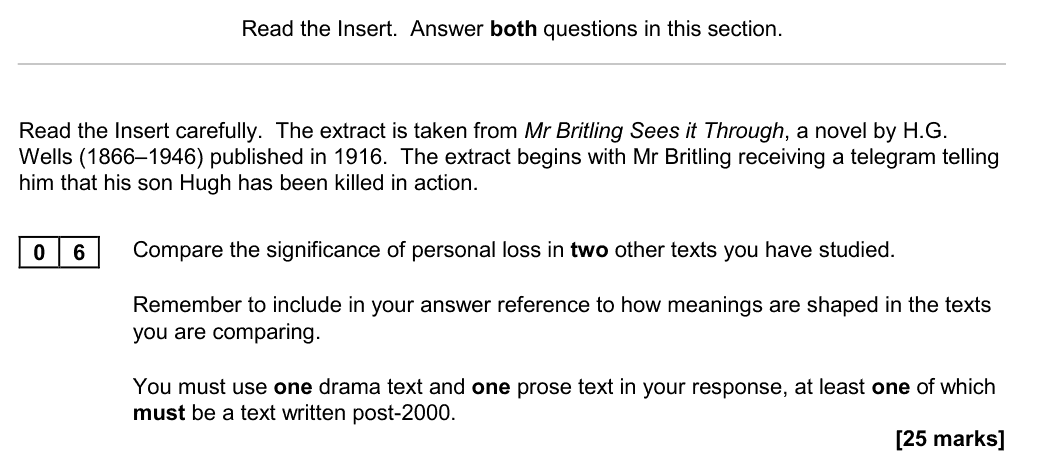
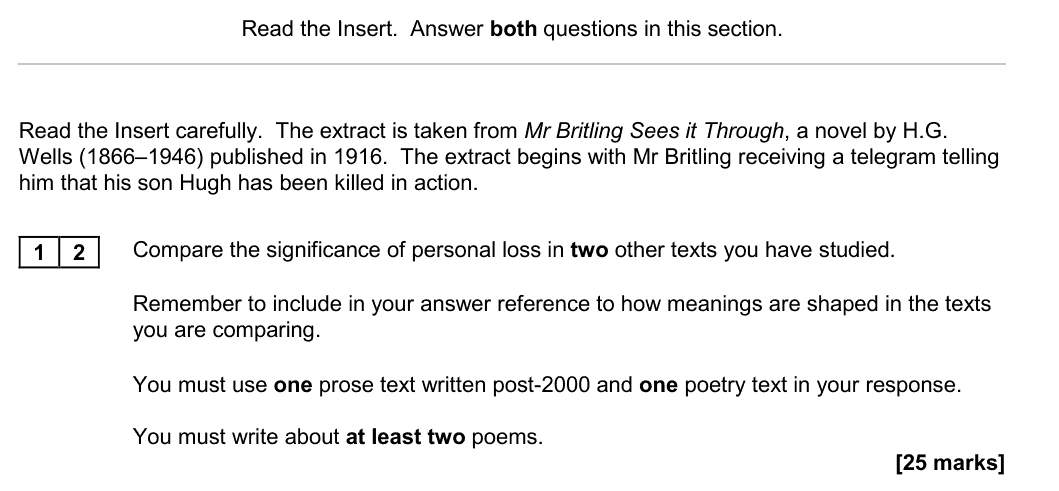
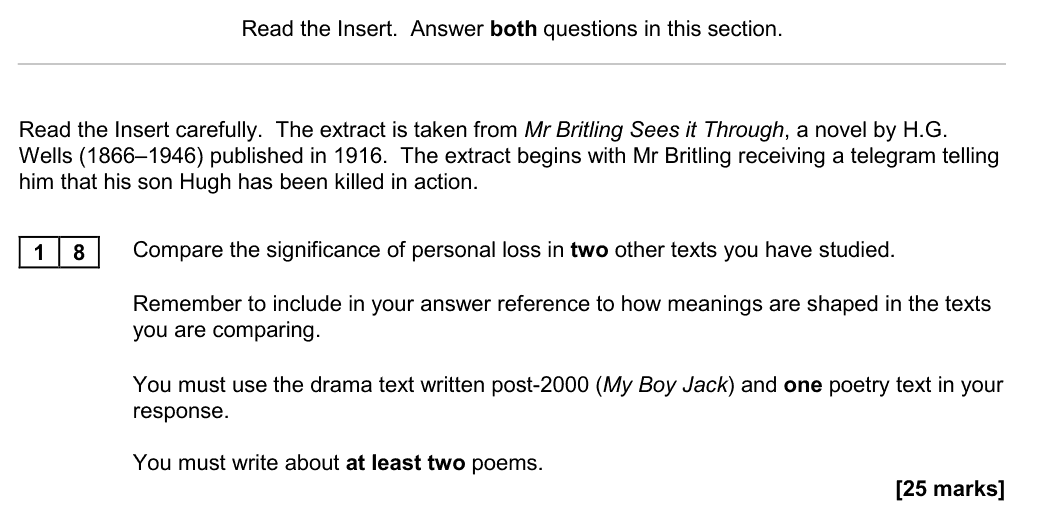
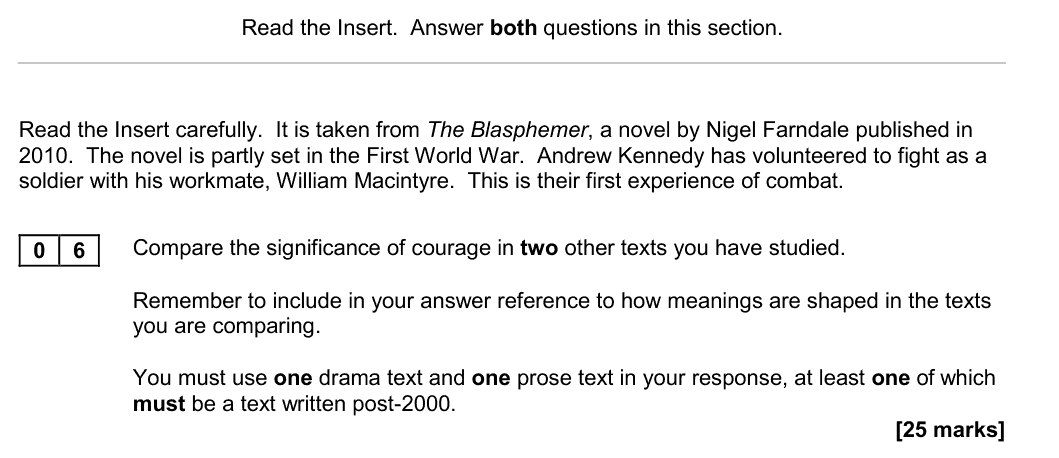
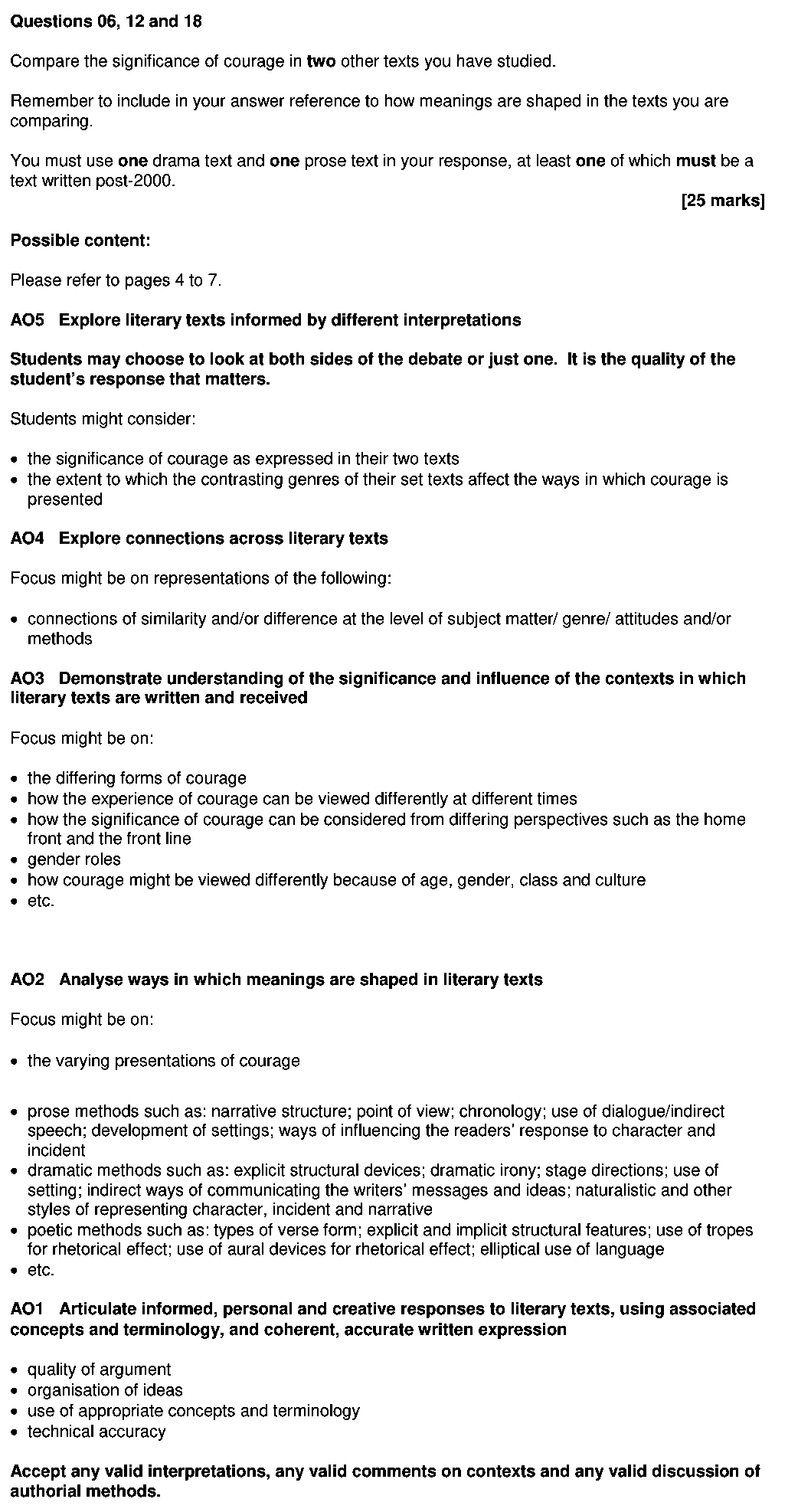
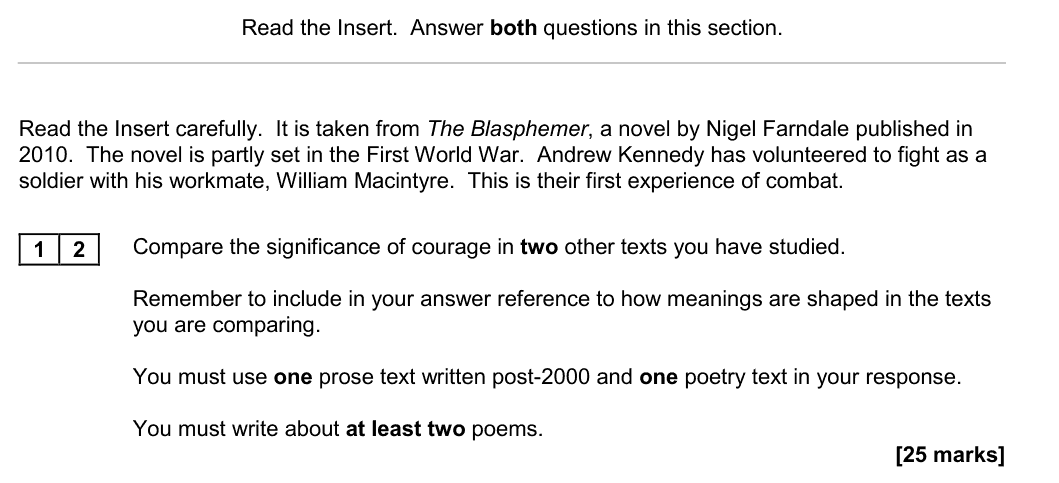
- two other texts: one drama and one prose, at least one written post-2000
- compare differences and genre methods, including how team spirit and values conflict
- report: My Boy Jack with A Long Long Way or Life Class, or The Wipers Times with Regeneration, All Quiet on the Western Front or Birdsong
- Sassoon torn between protest and duty to his men
- weaker answers treated texts separately, paraphrased or misapplied poetic terms