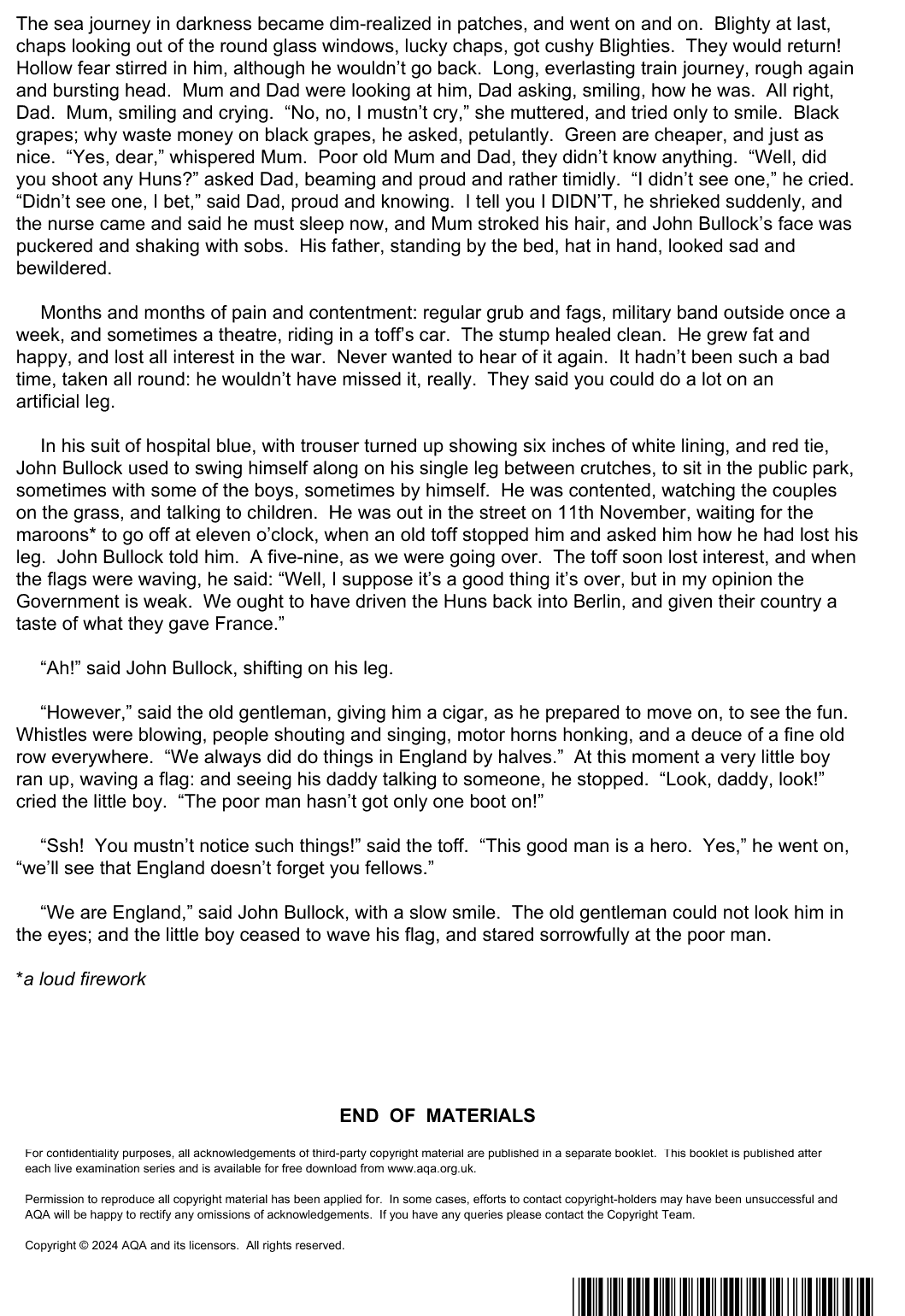
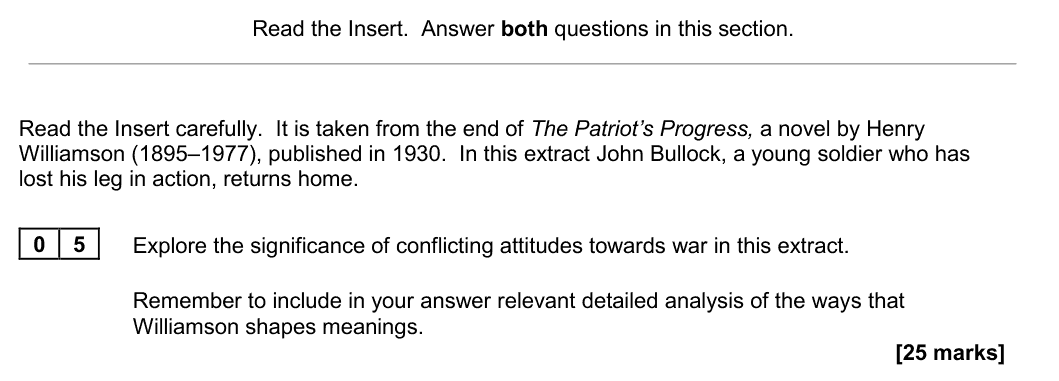
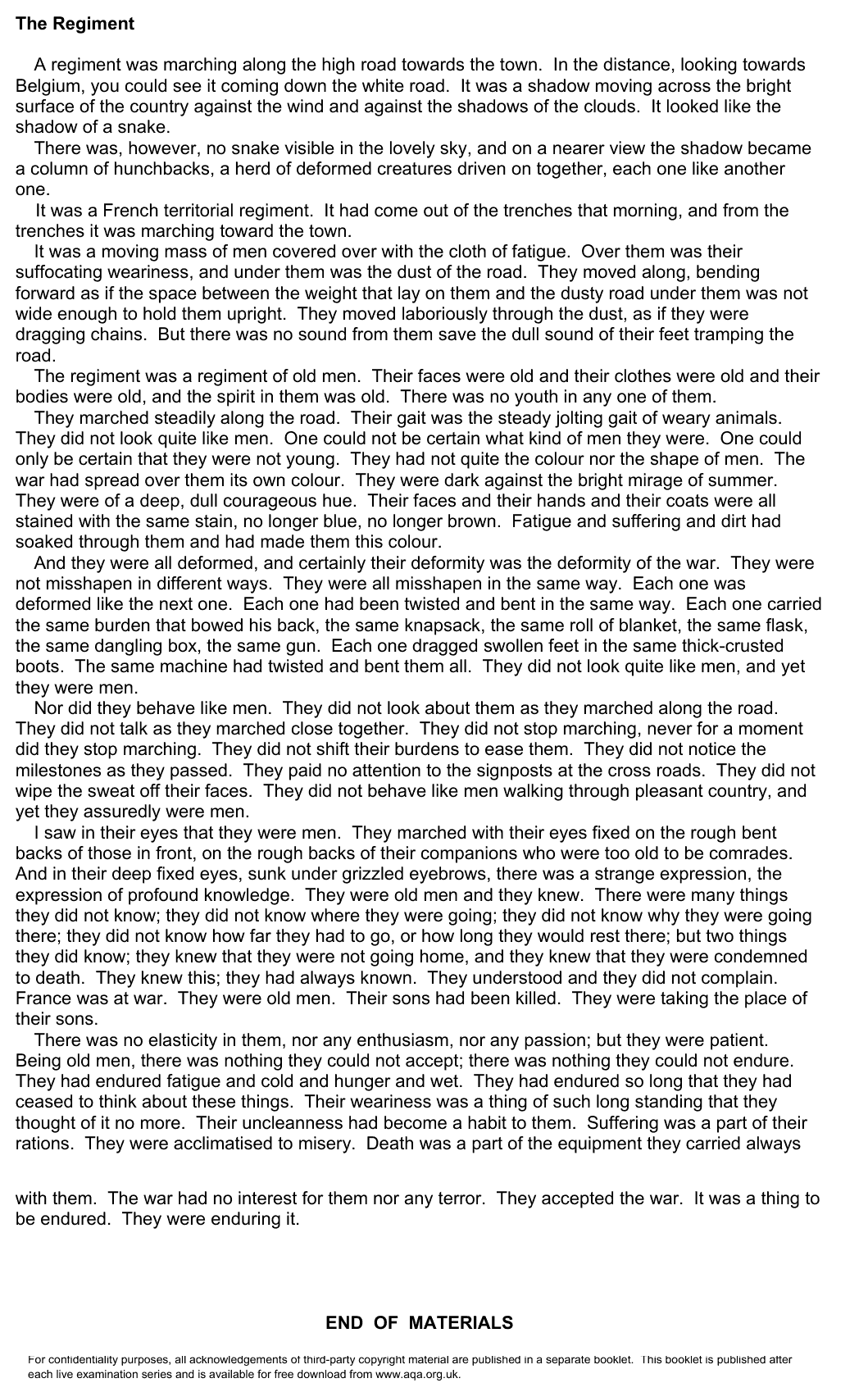
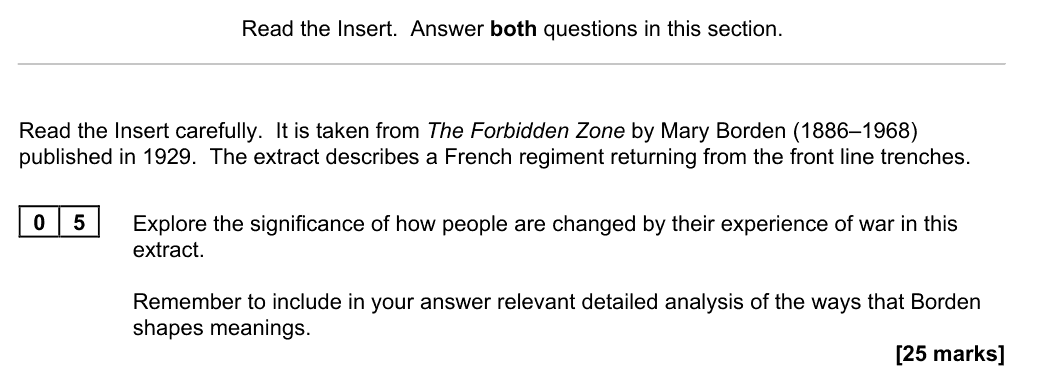
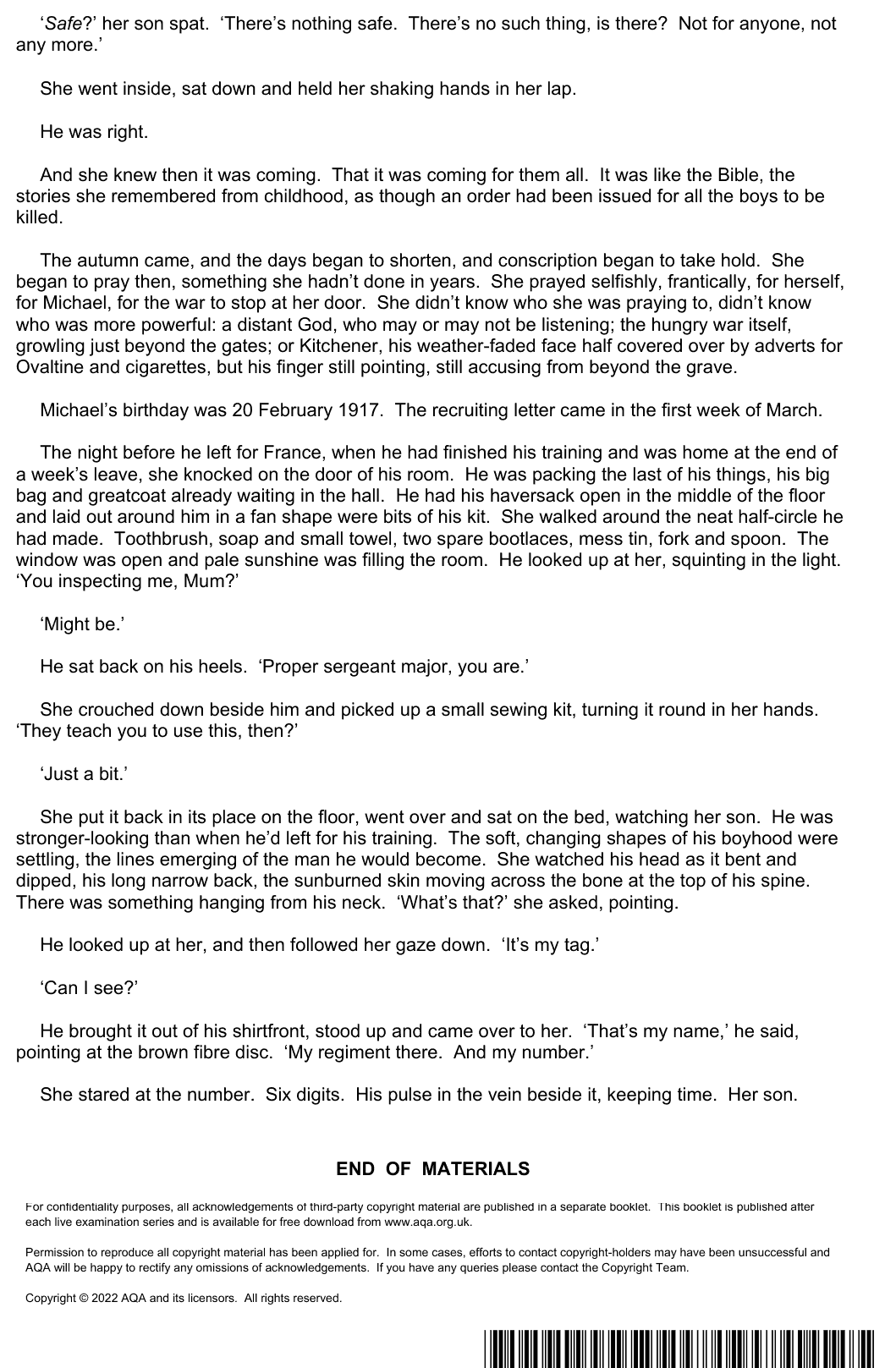
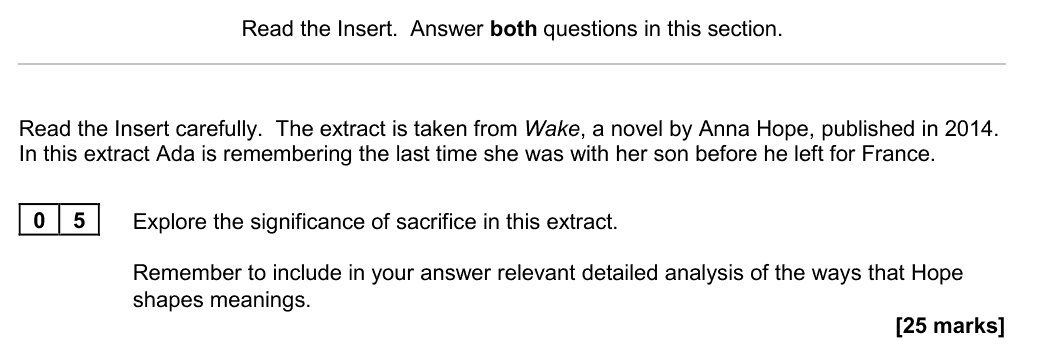
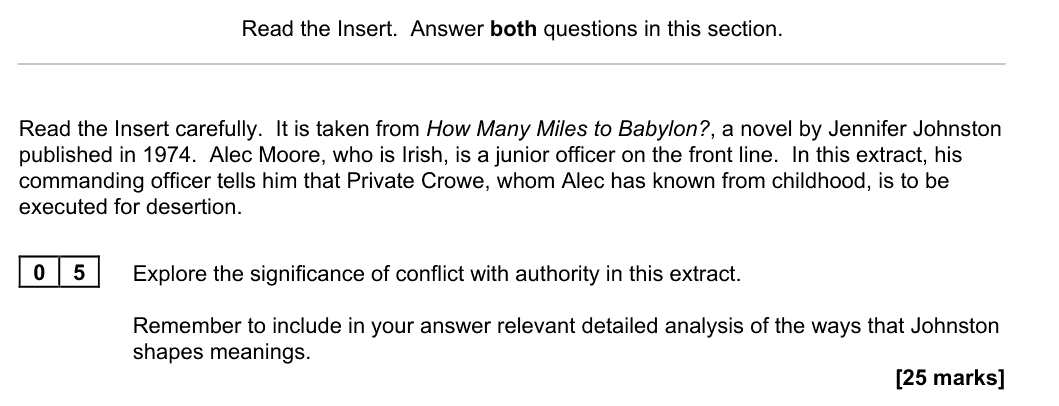
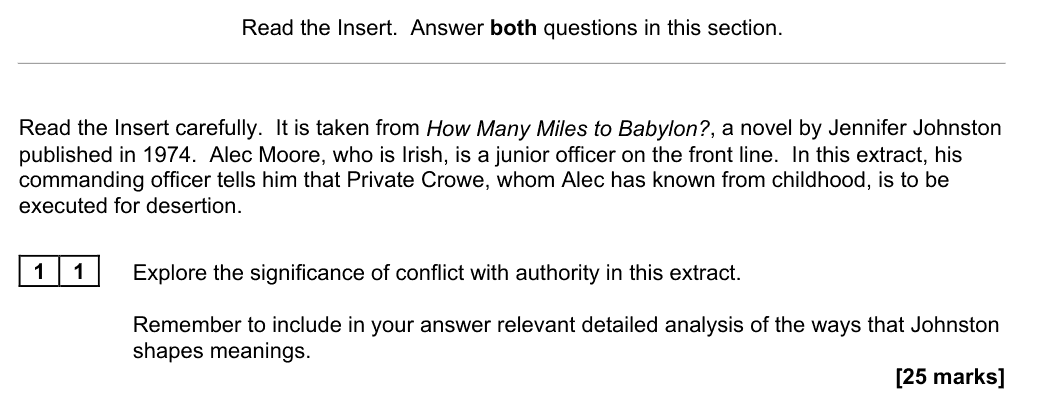
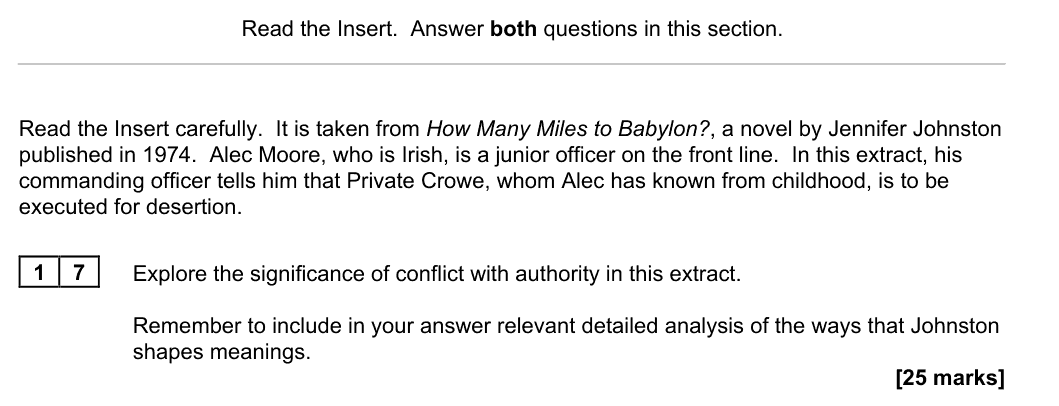
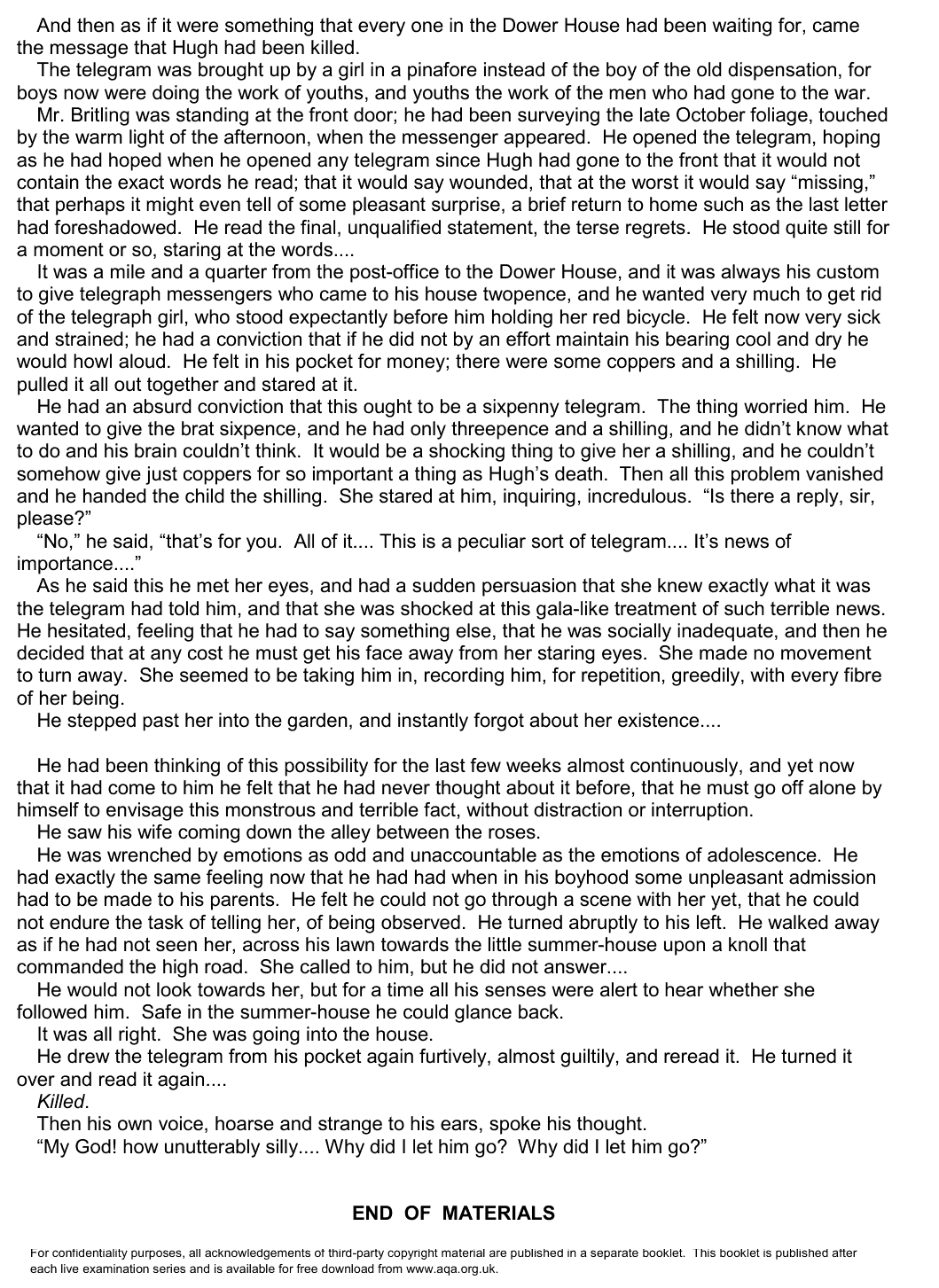
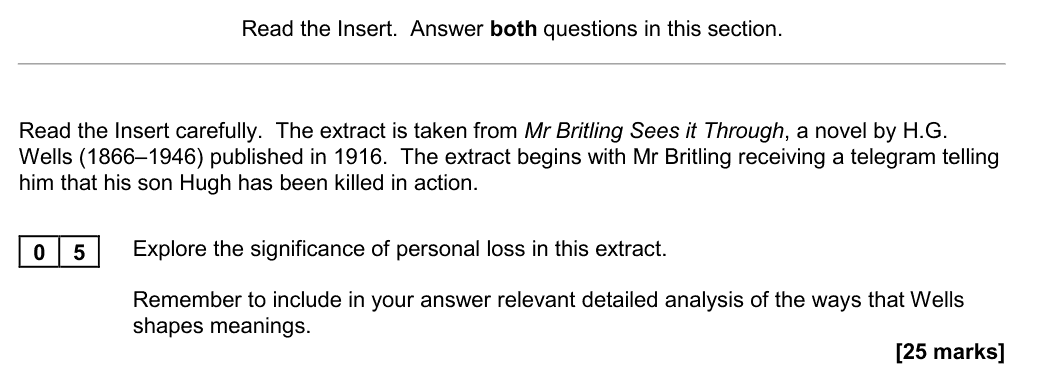
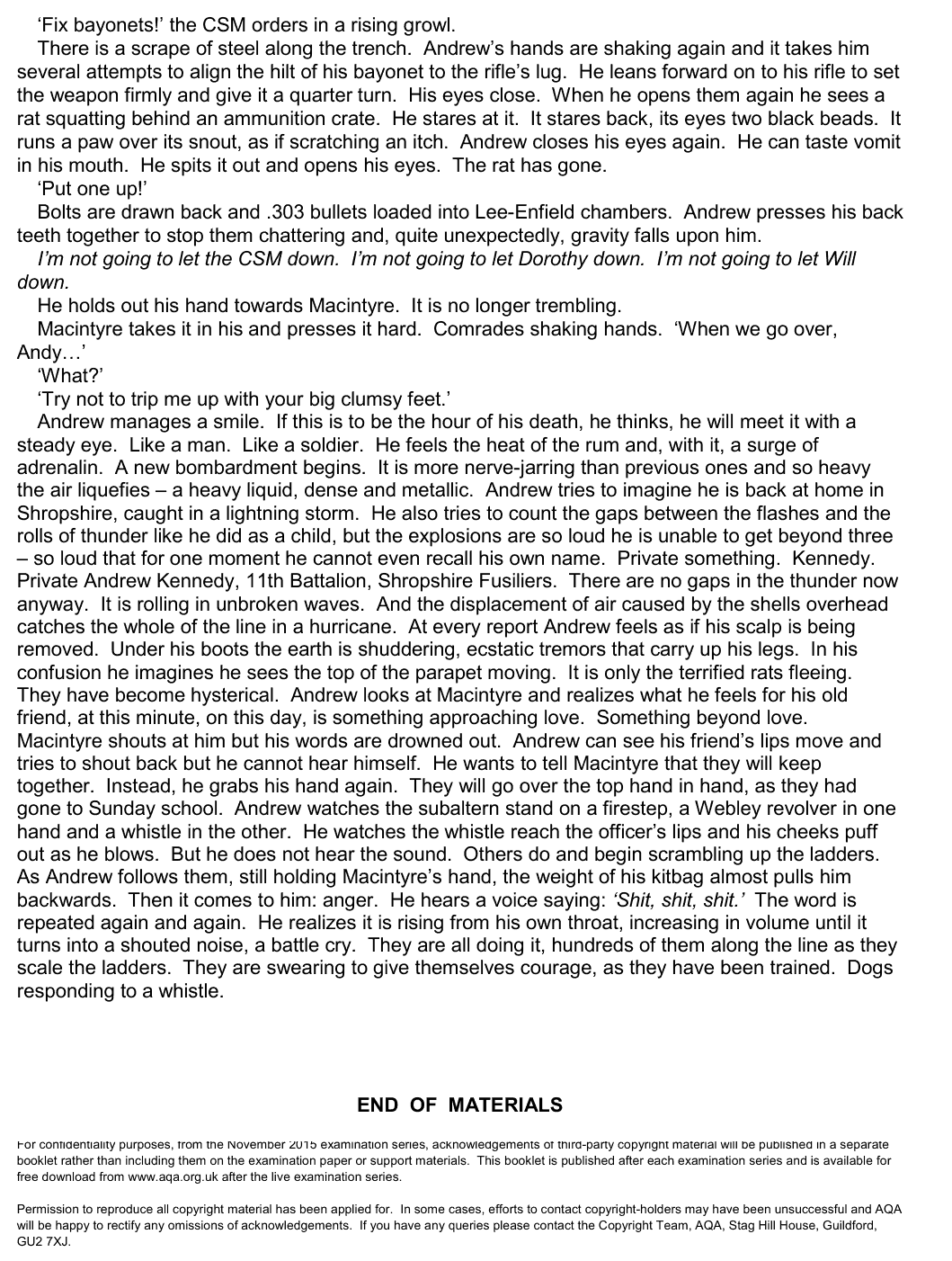
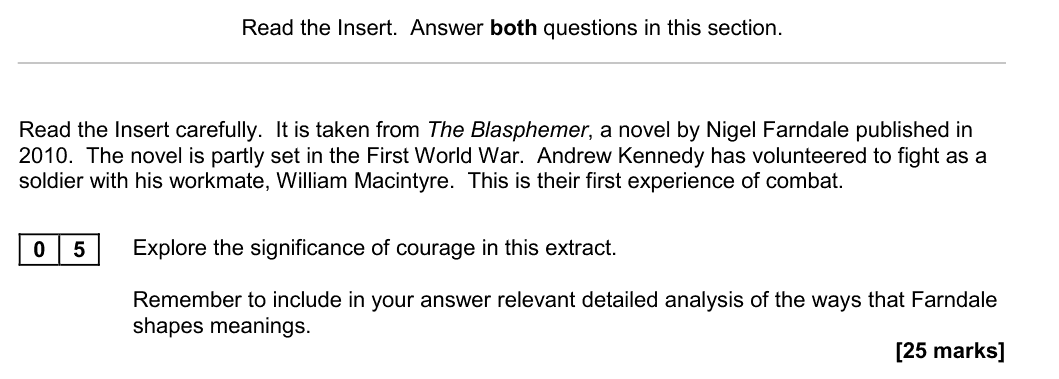
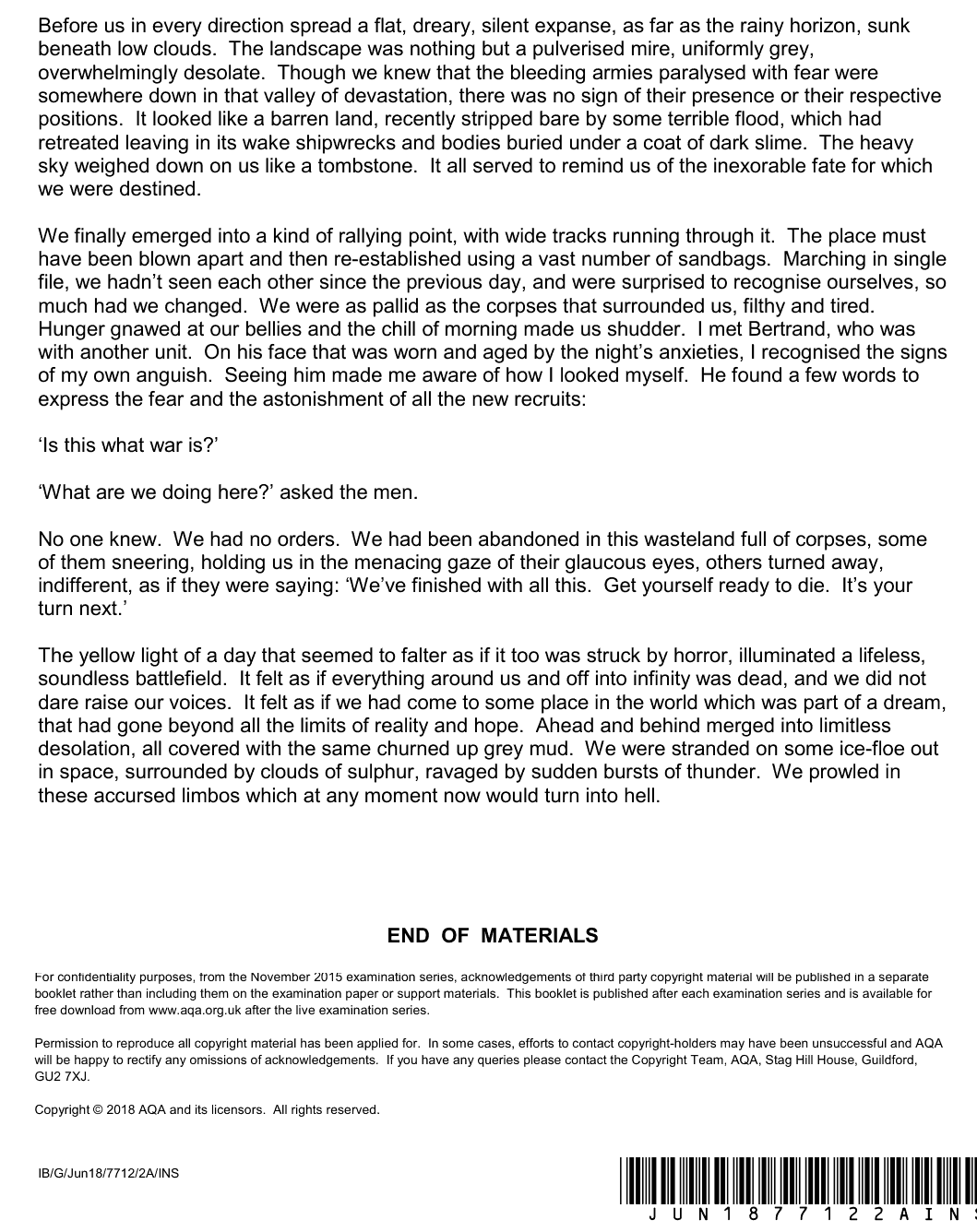
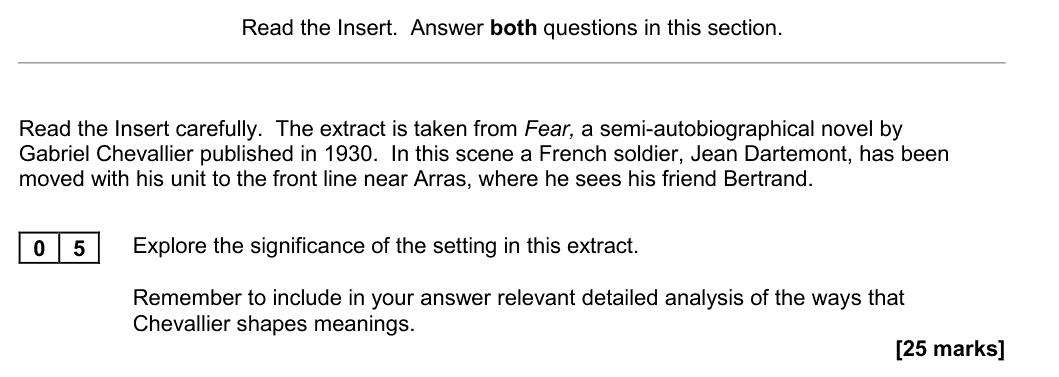
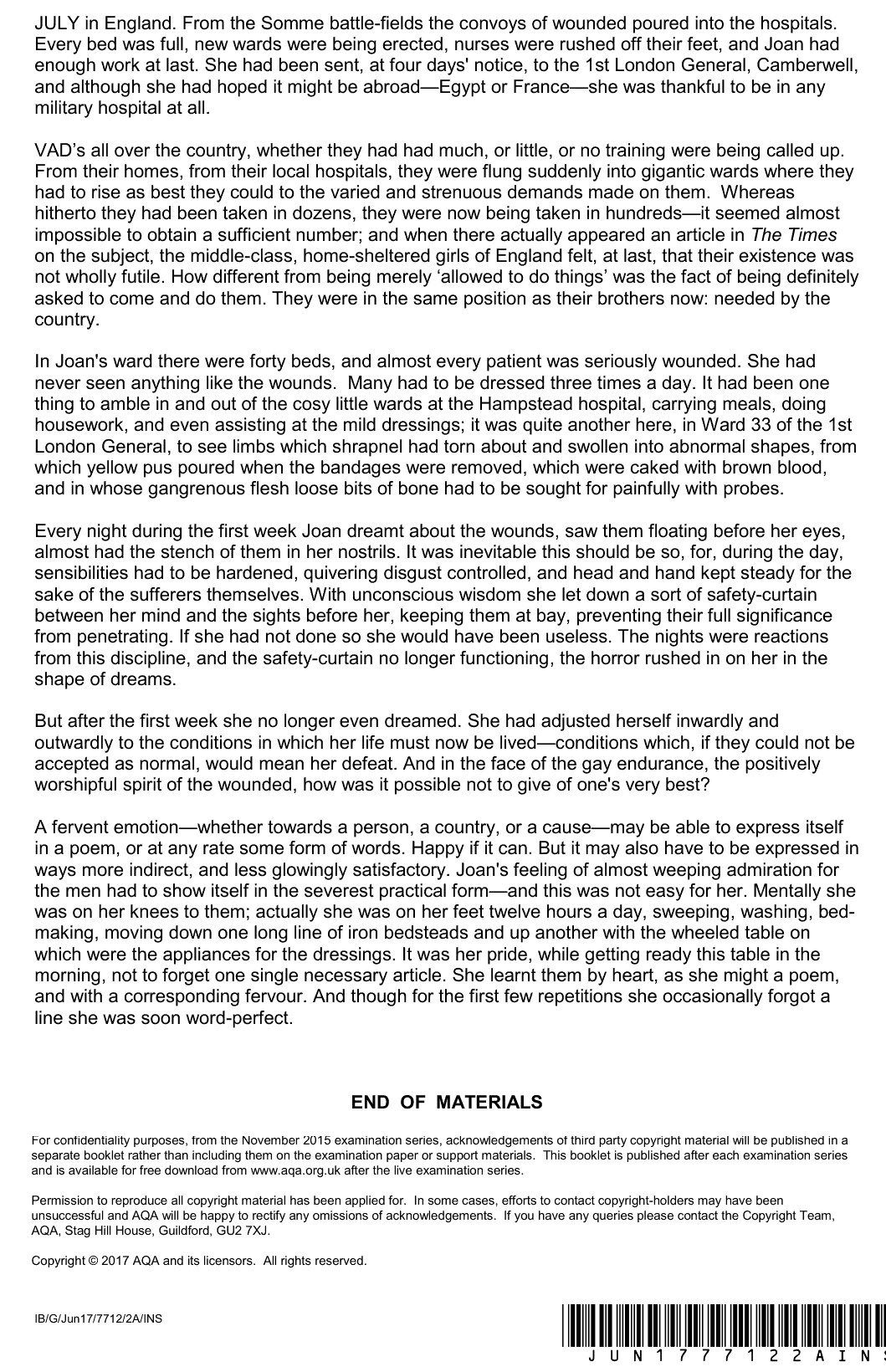
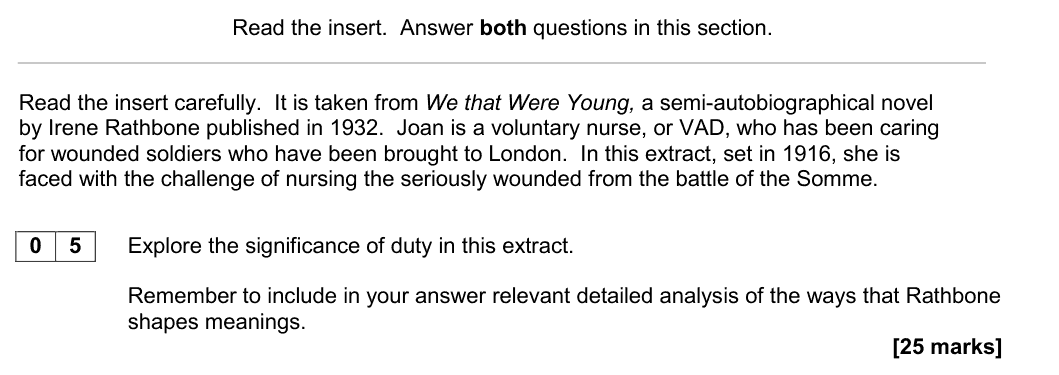
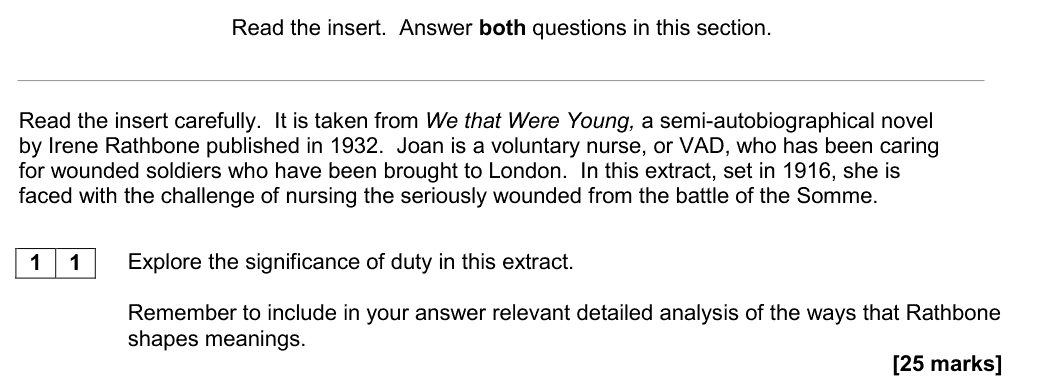
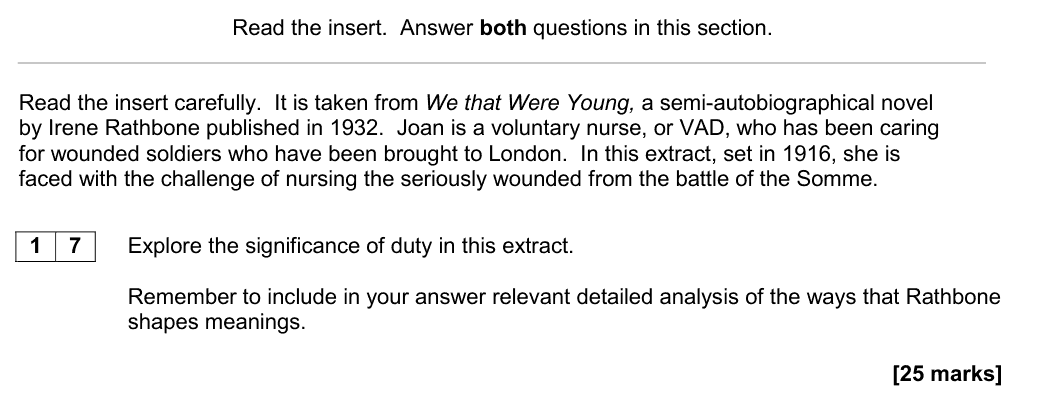
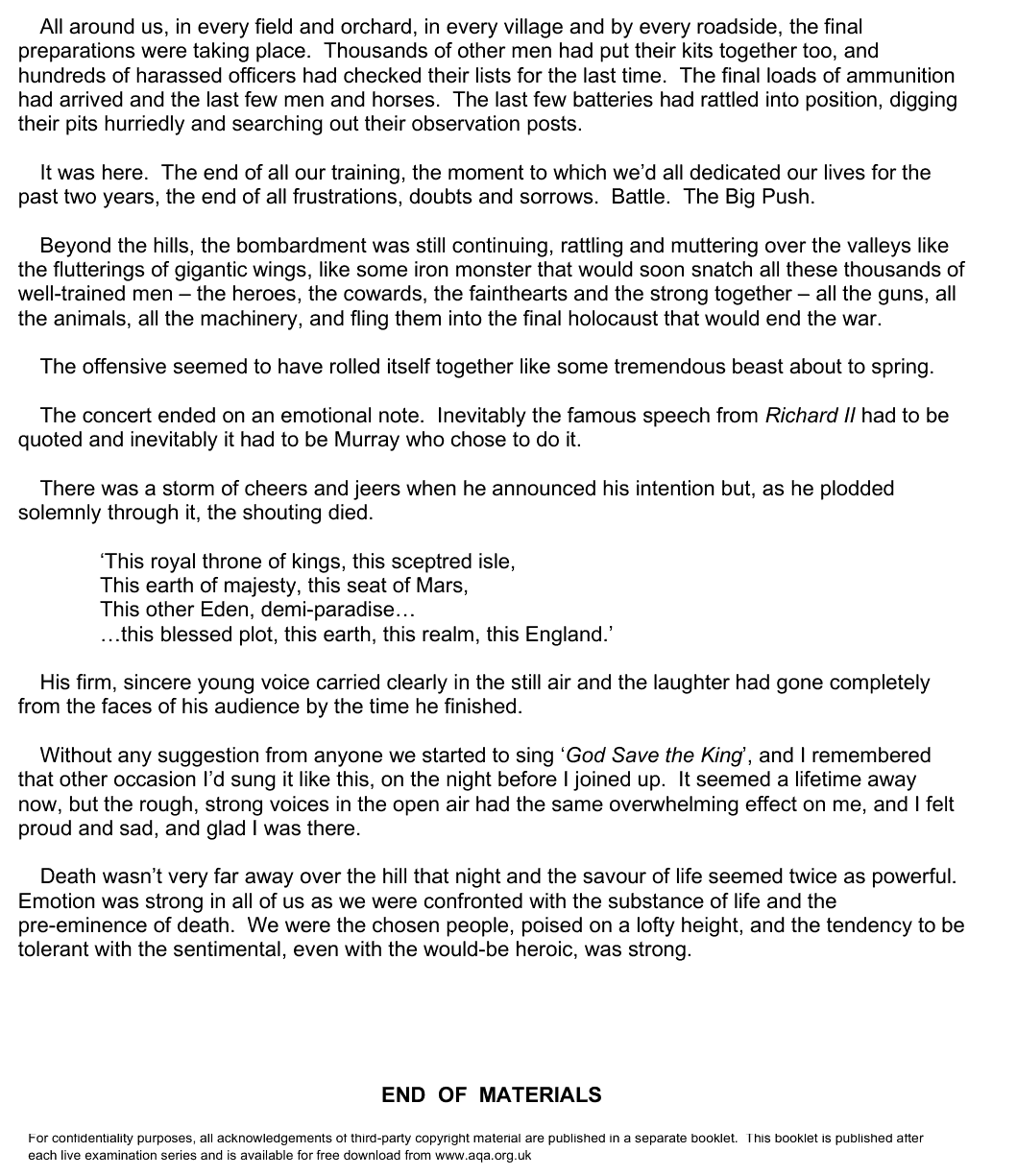
The extract (insert)
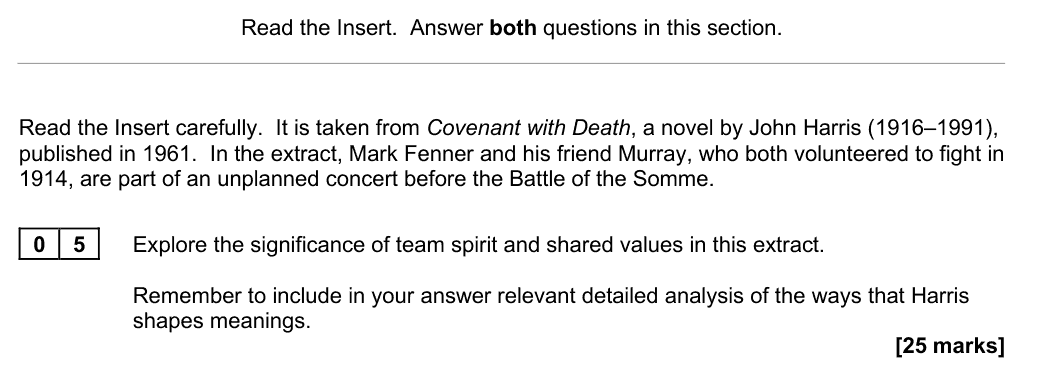
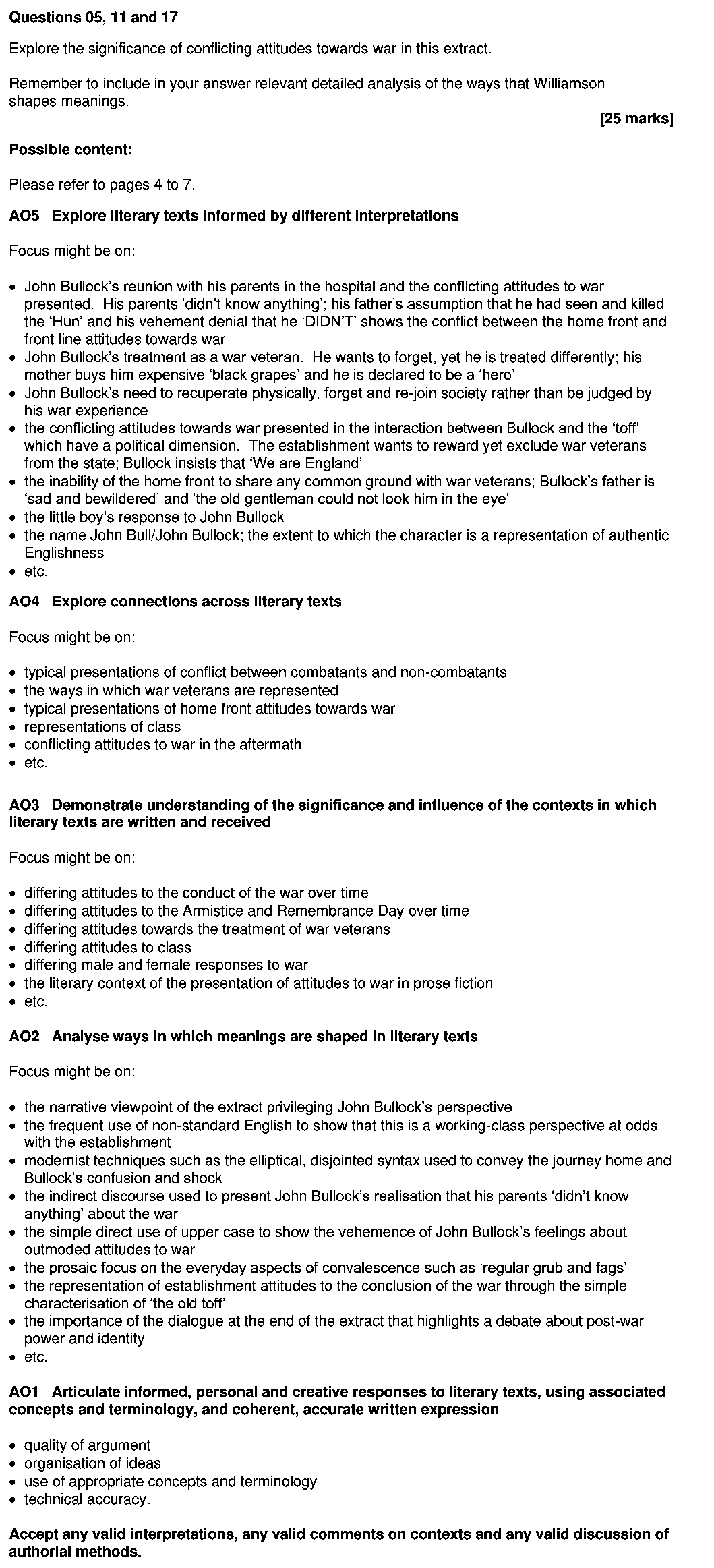
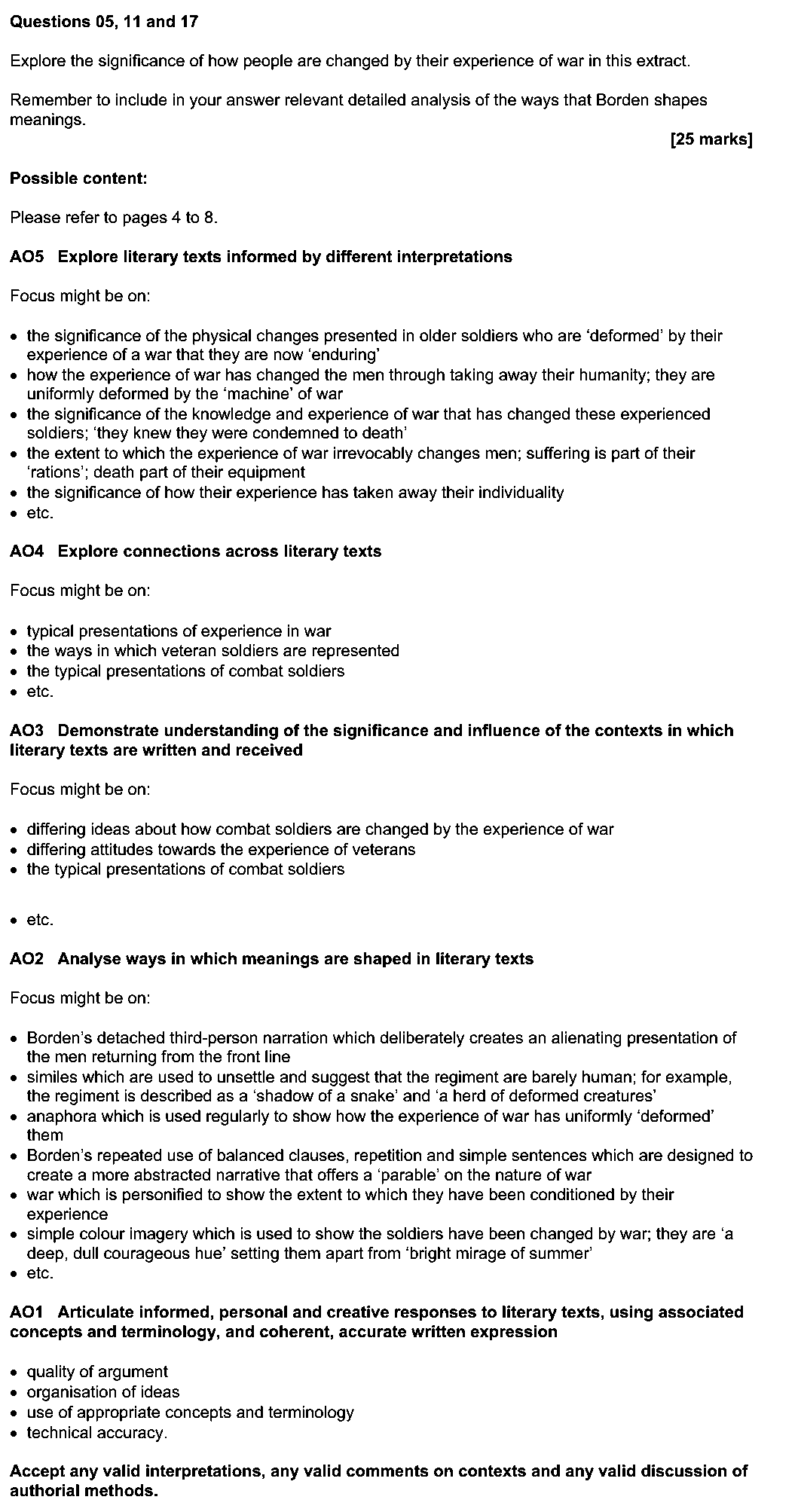
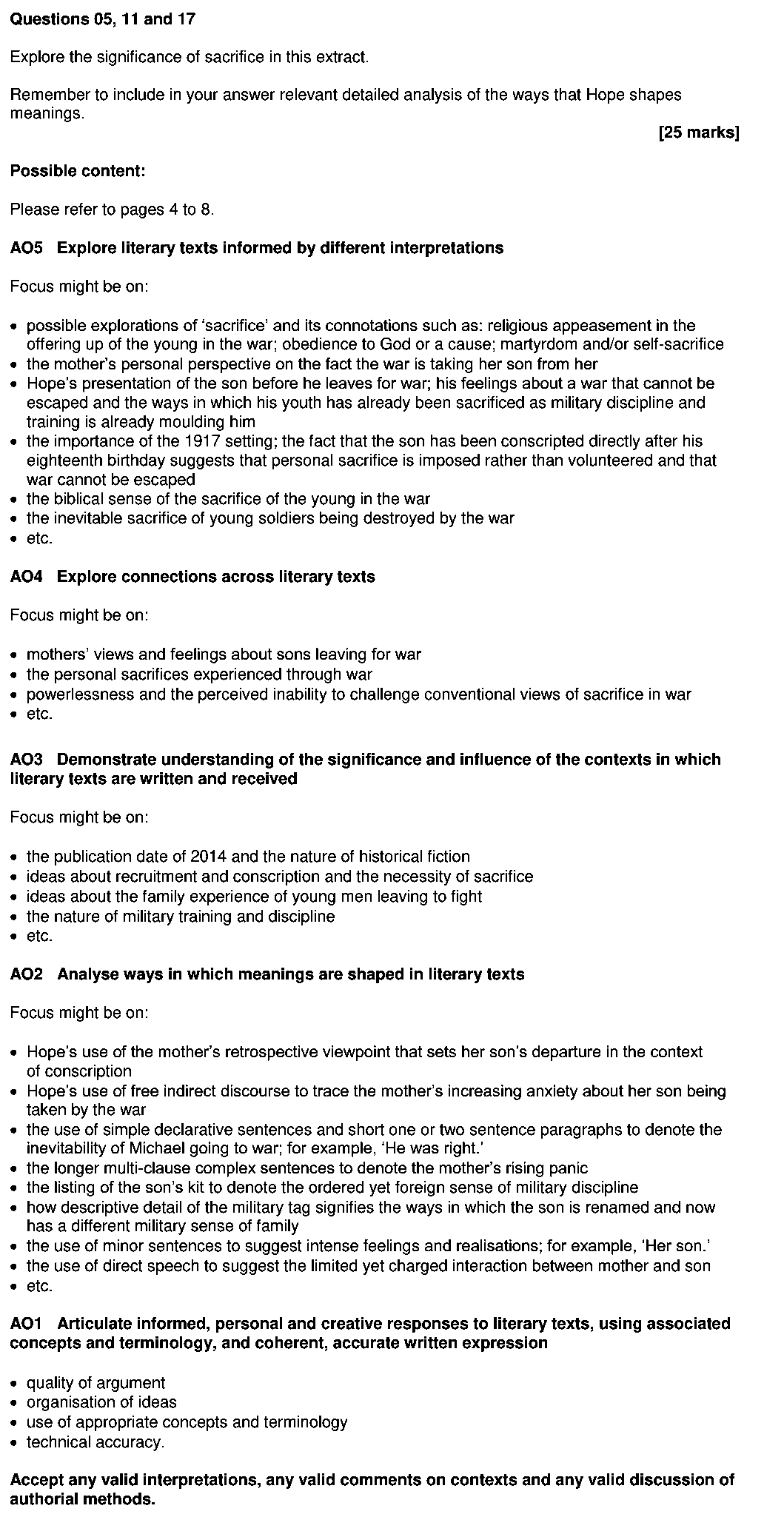
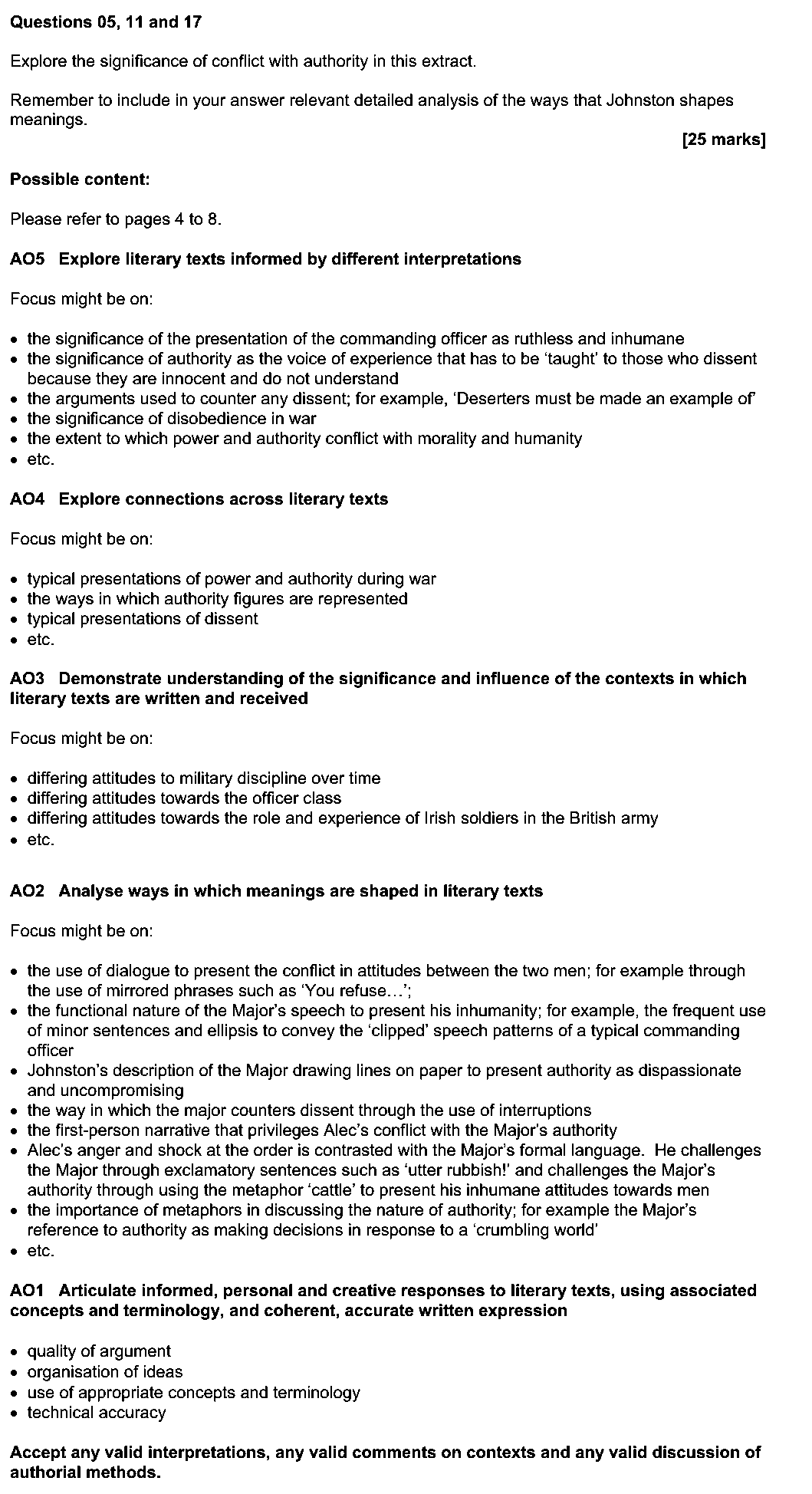
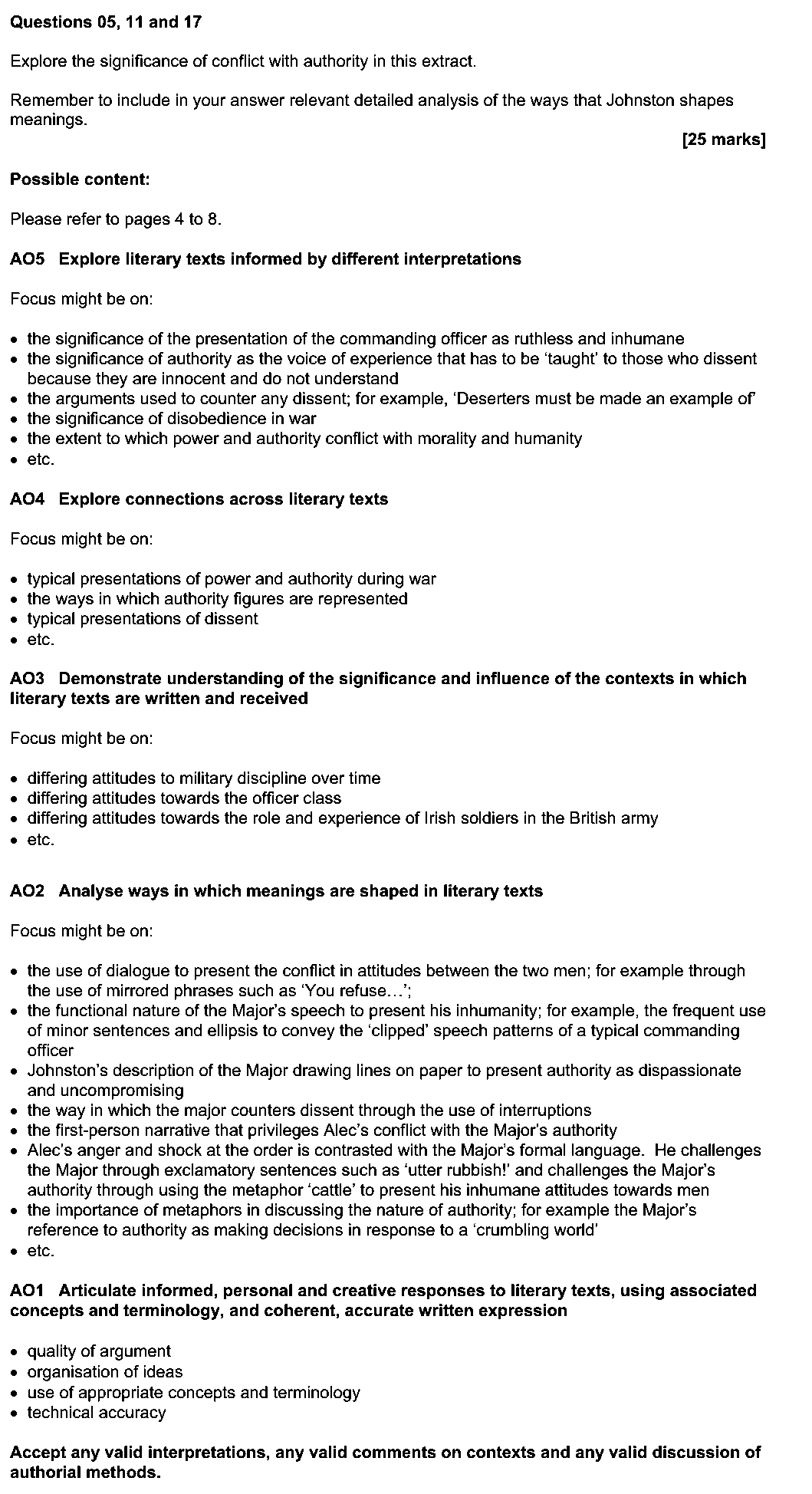
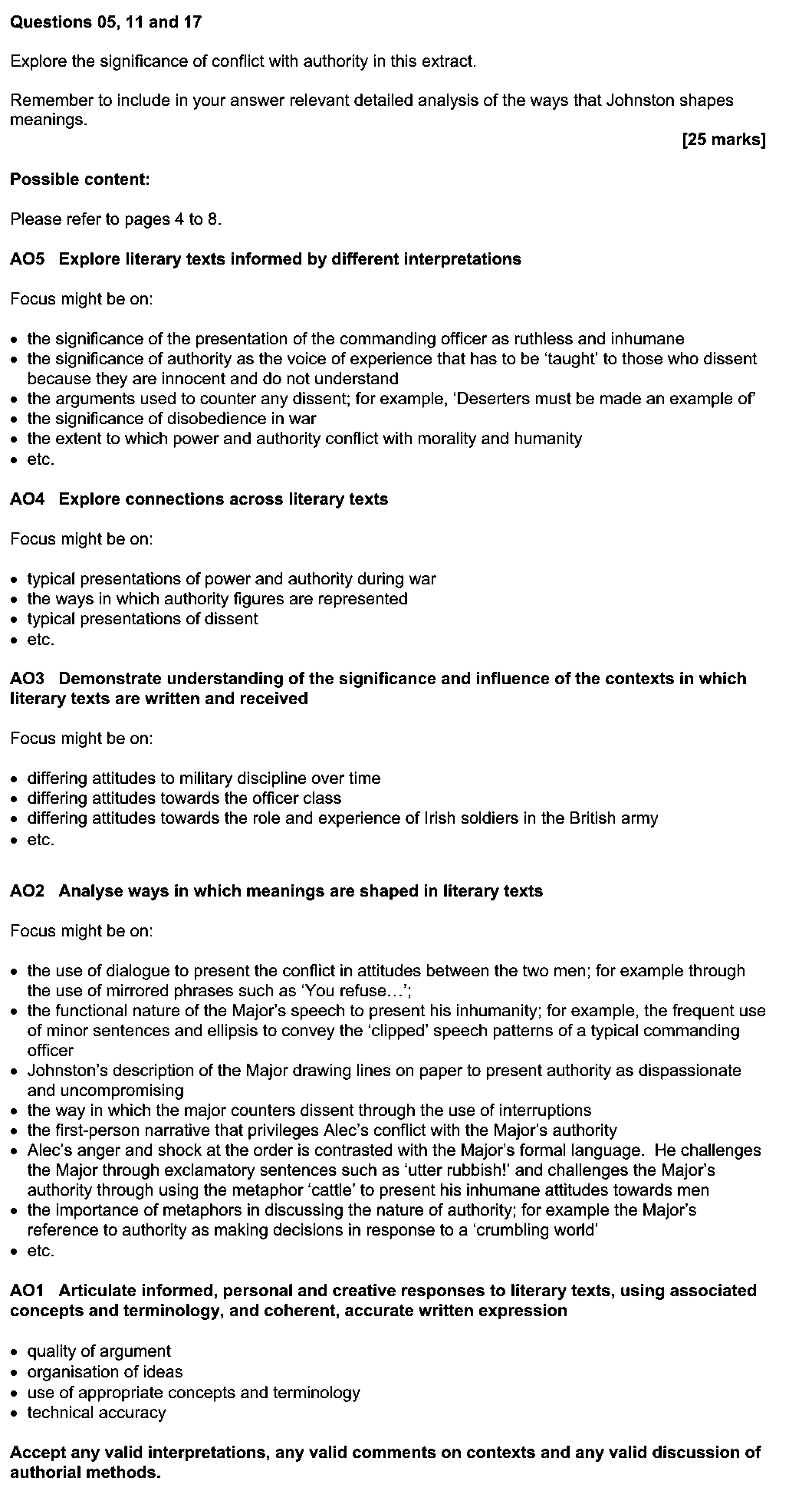
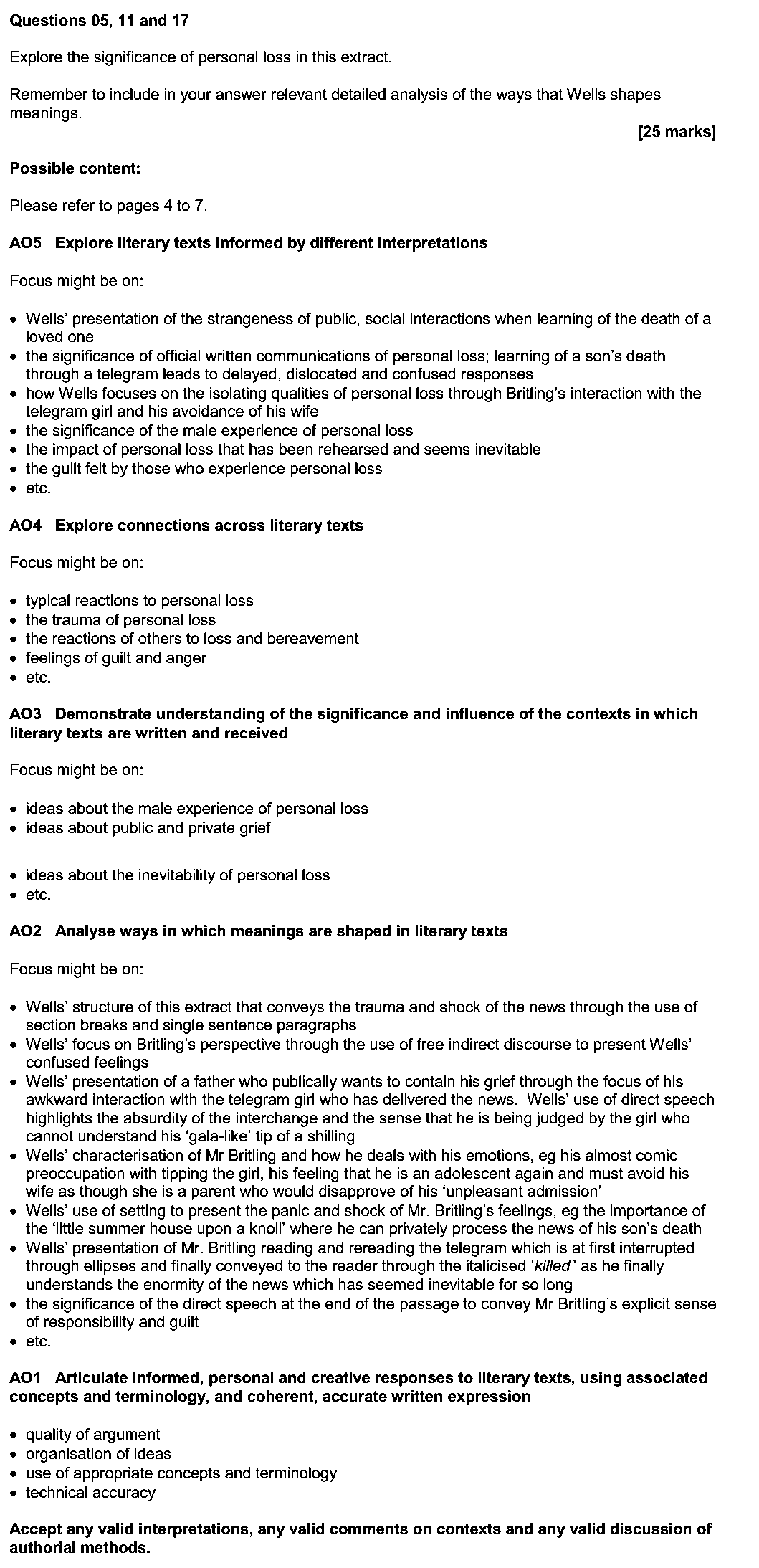
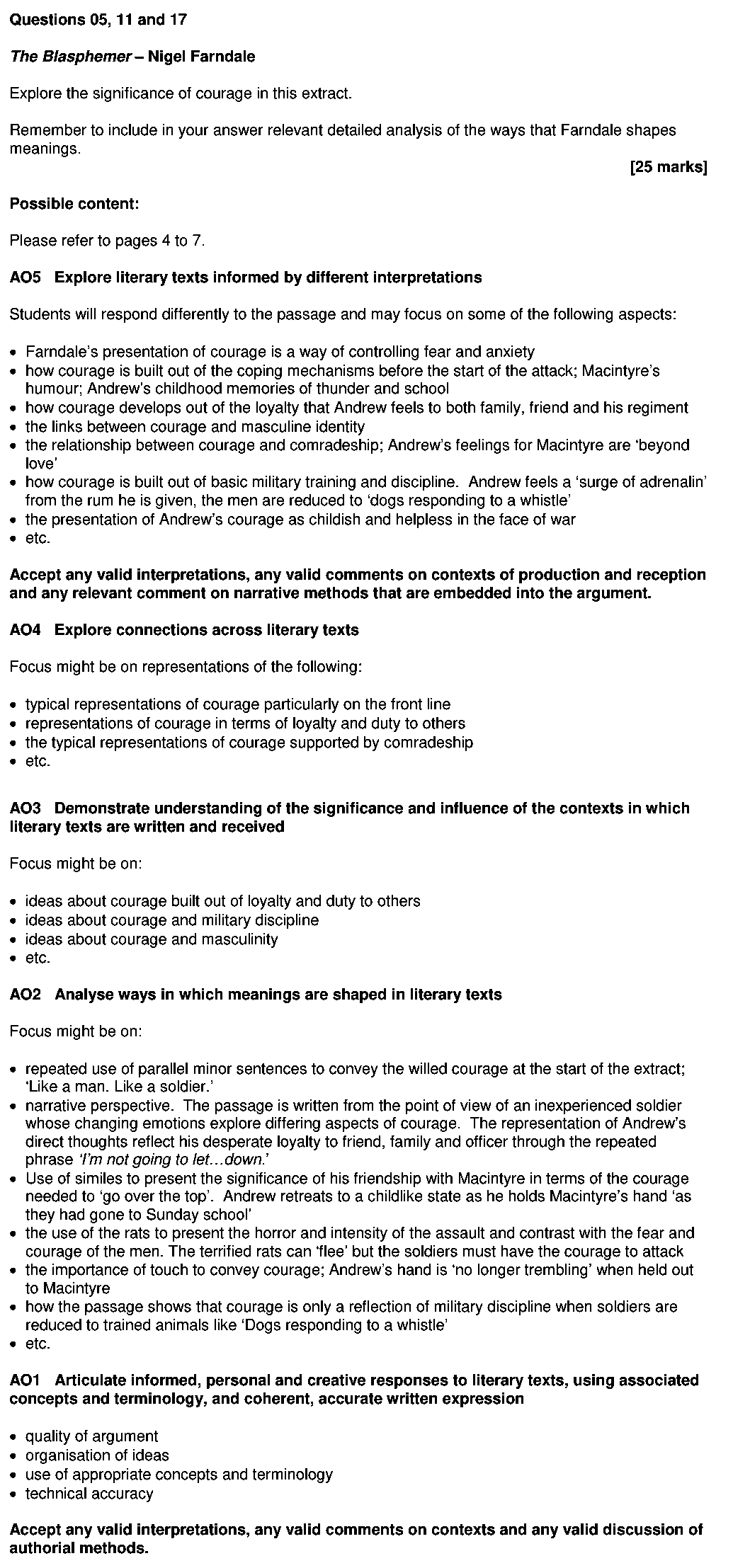
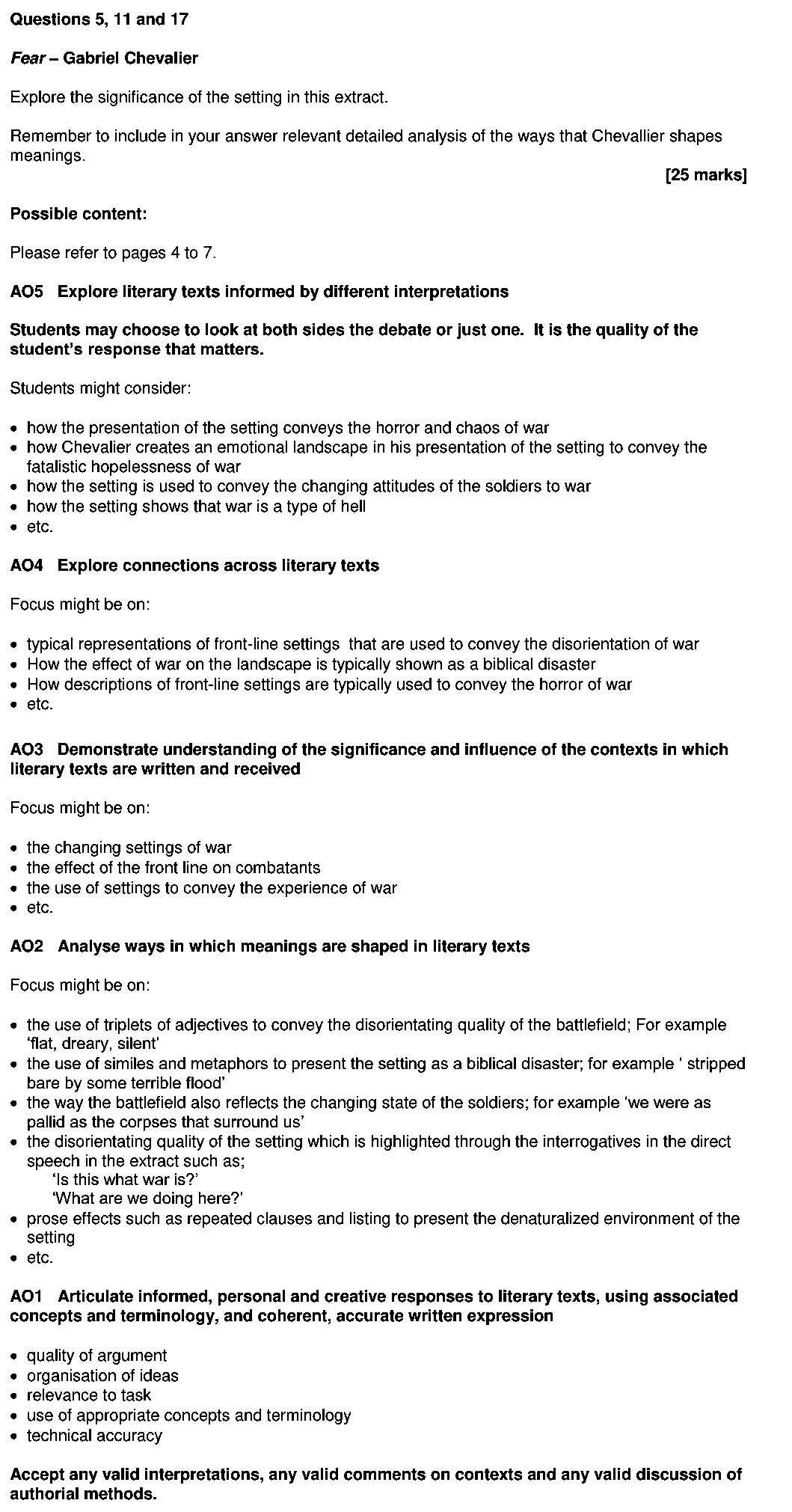
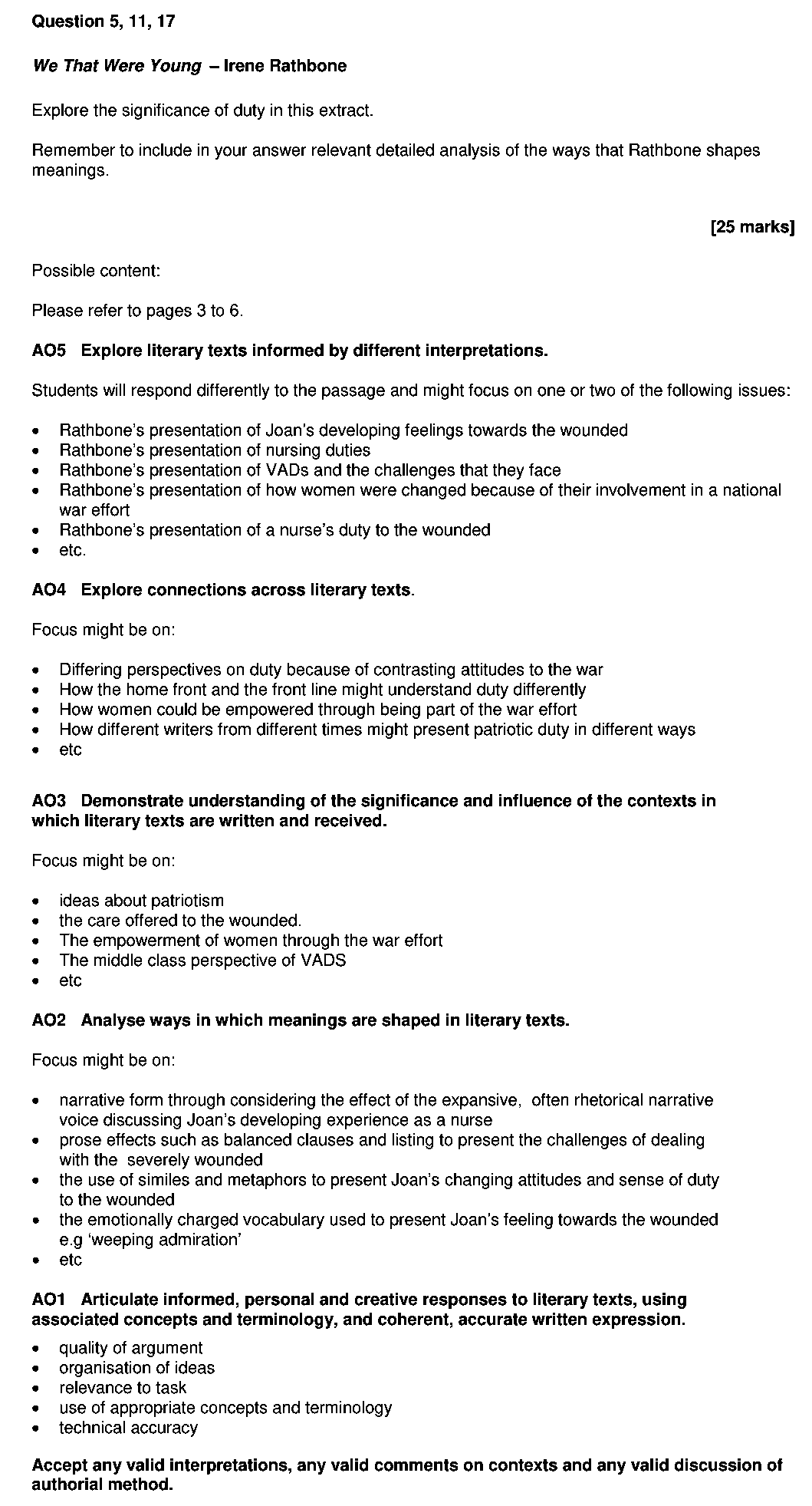
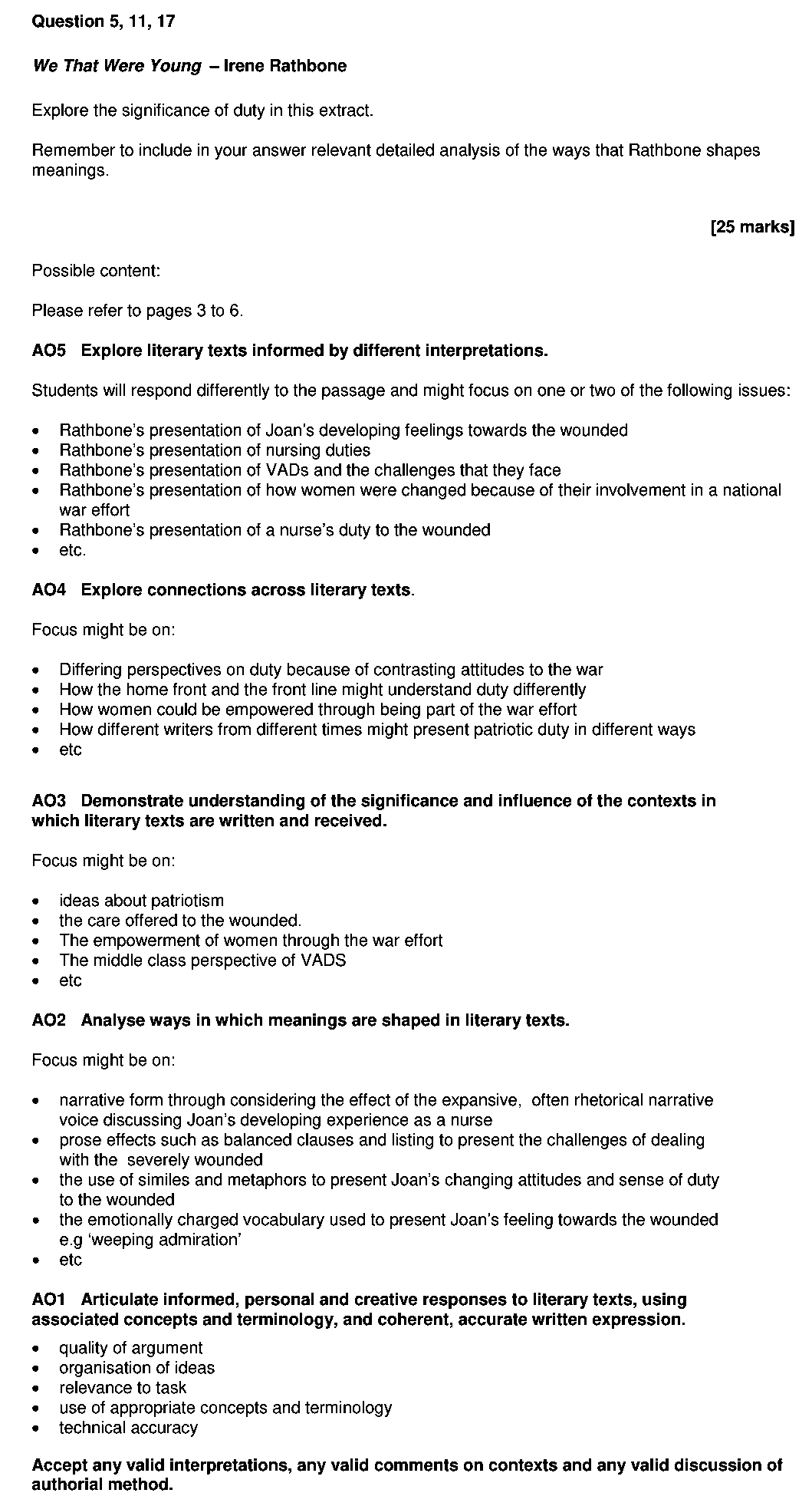
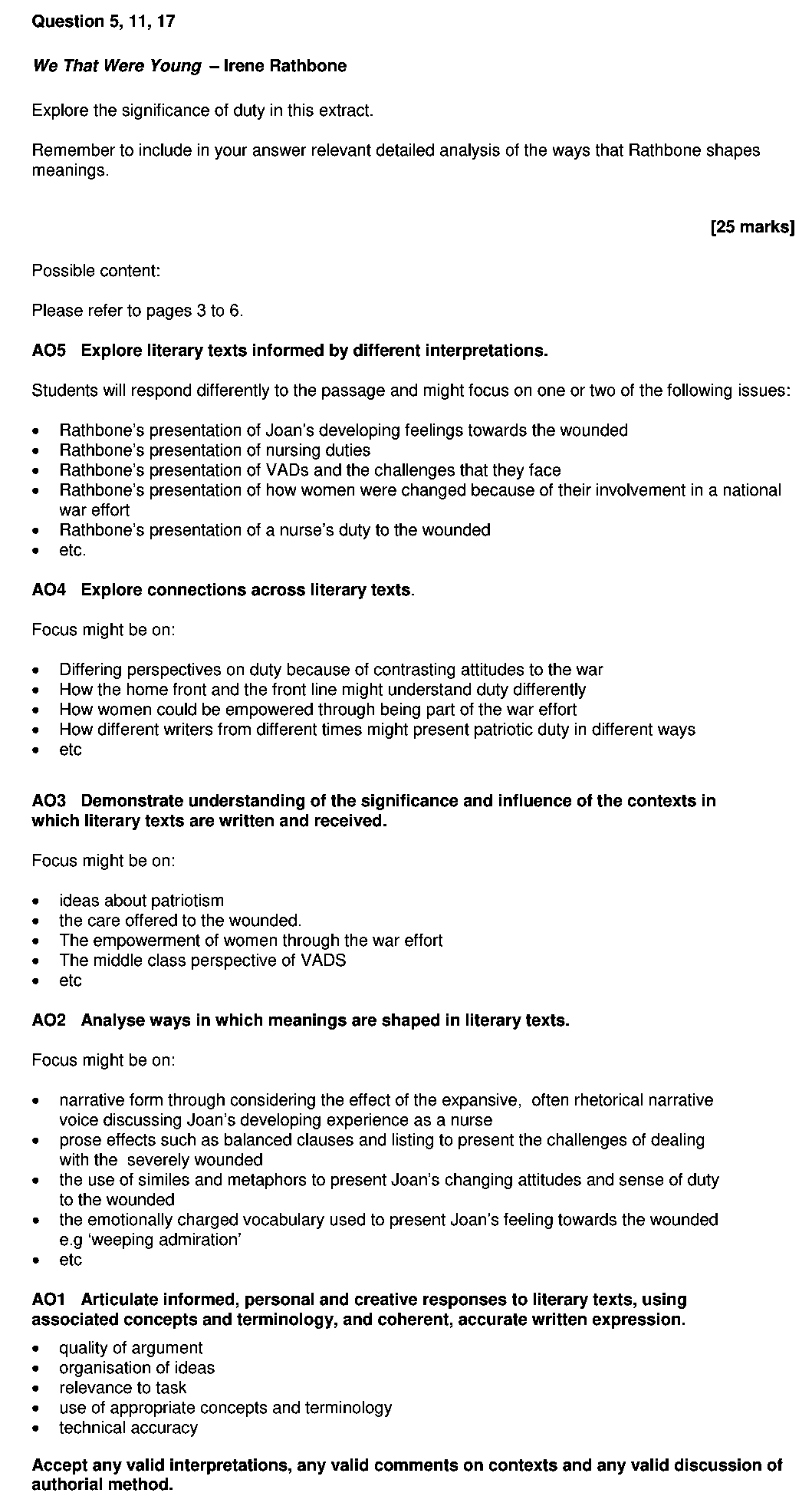
Mark scheme, including the levels and indicative content
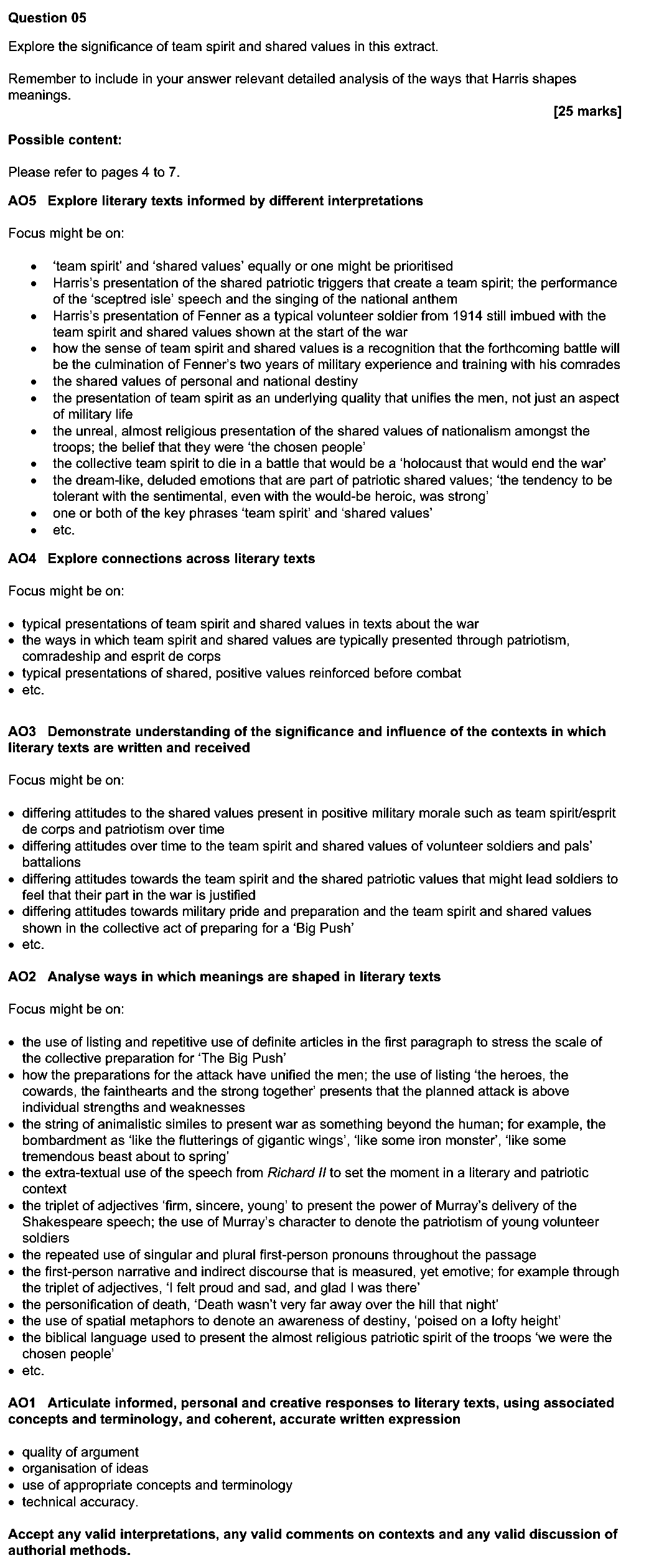
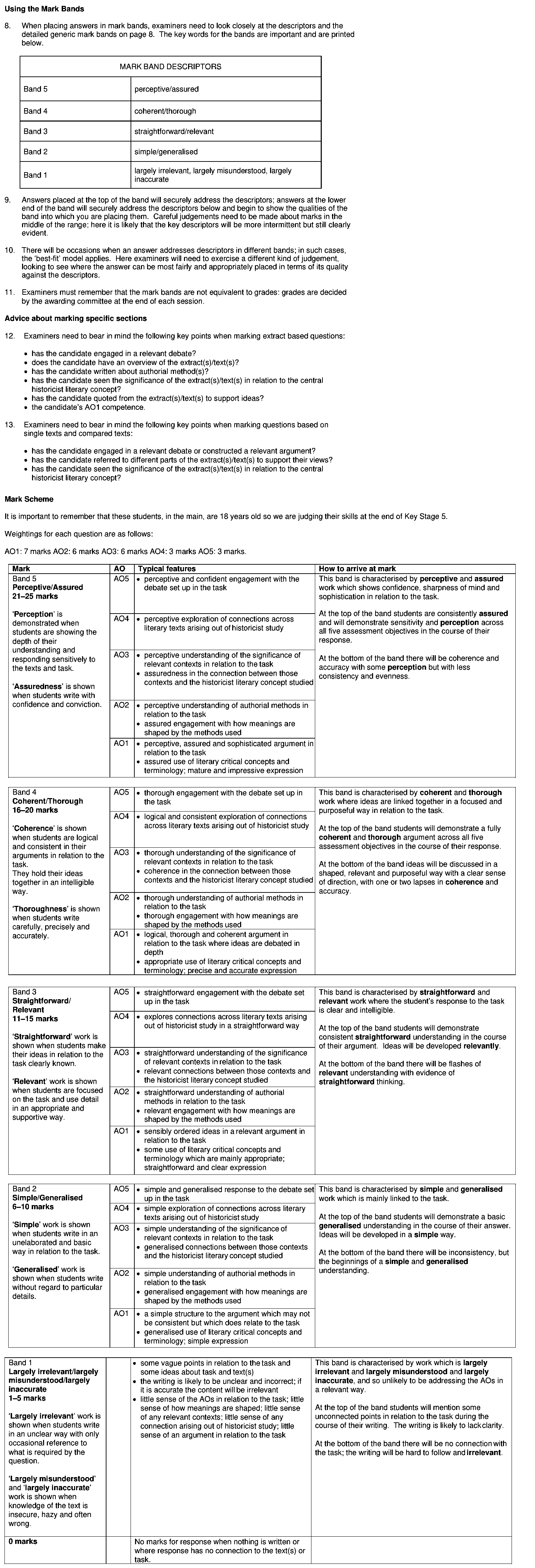
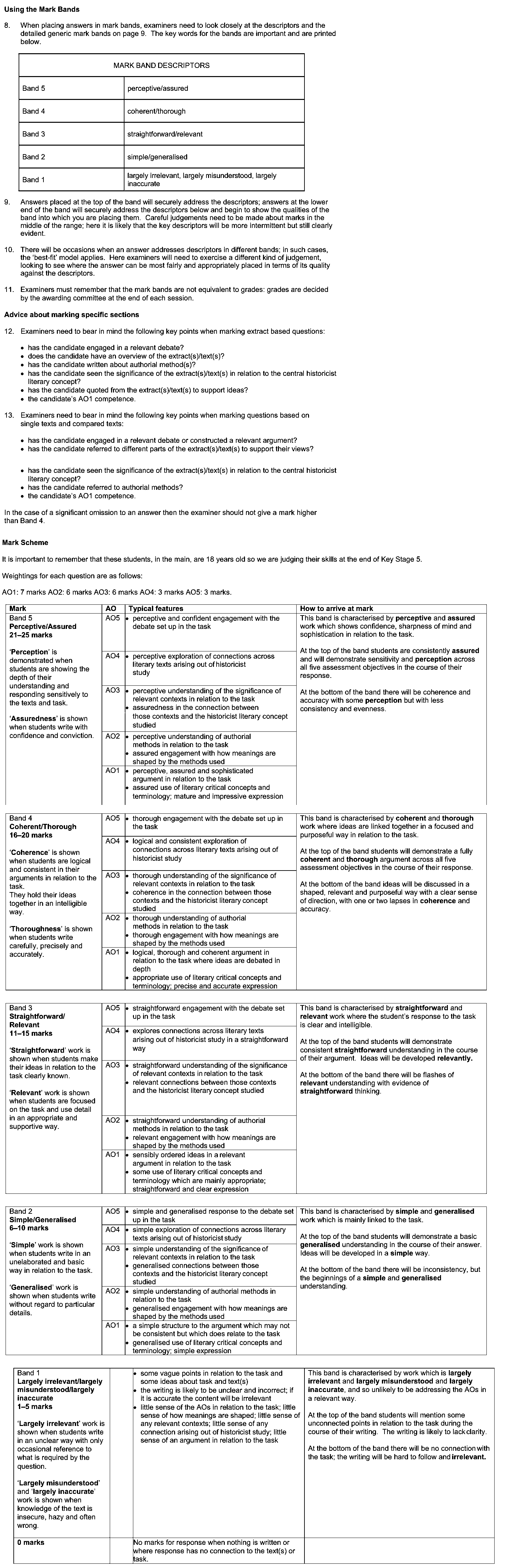
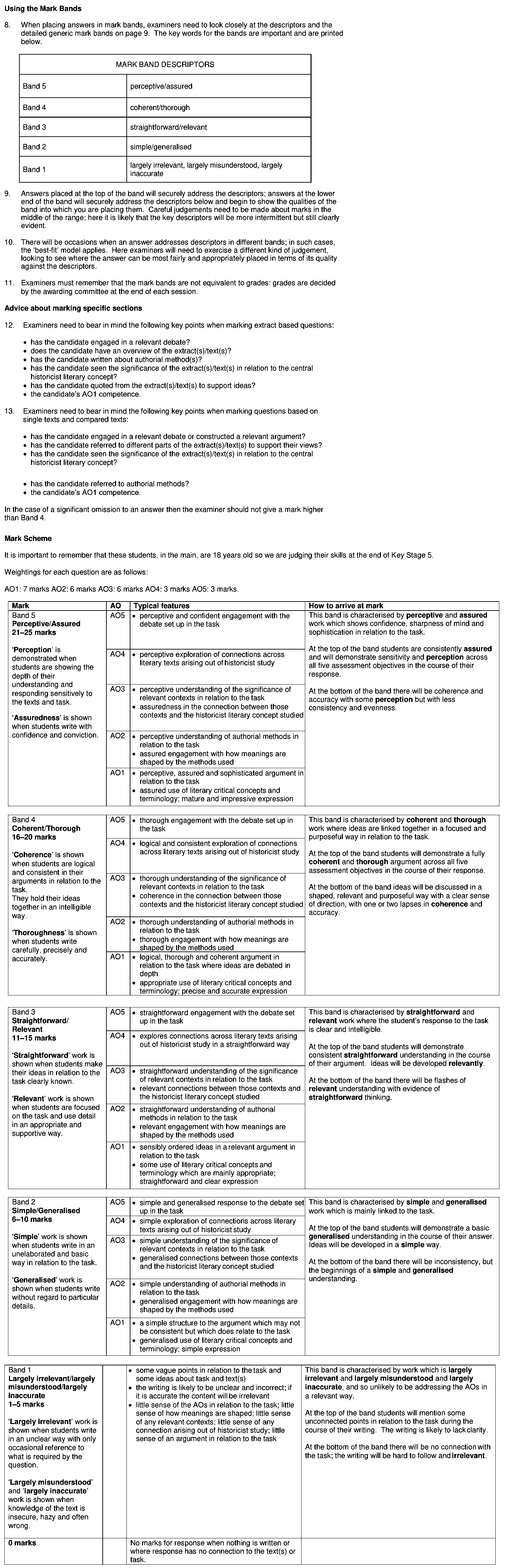
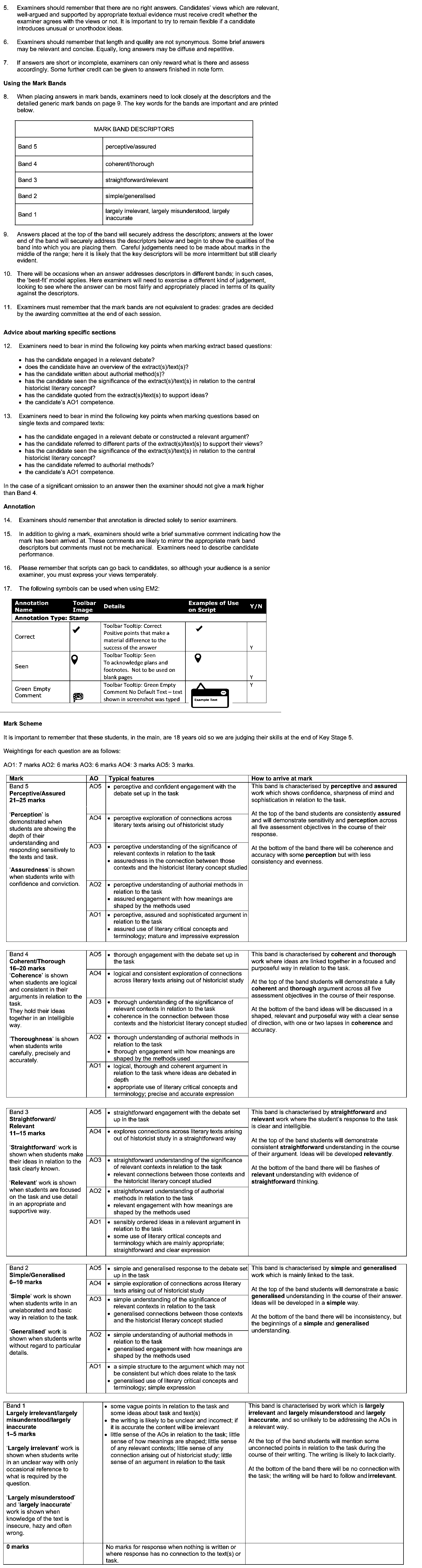
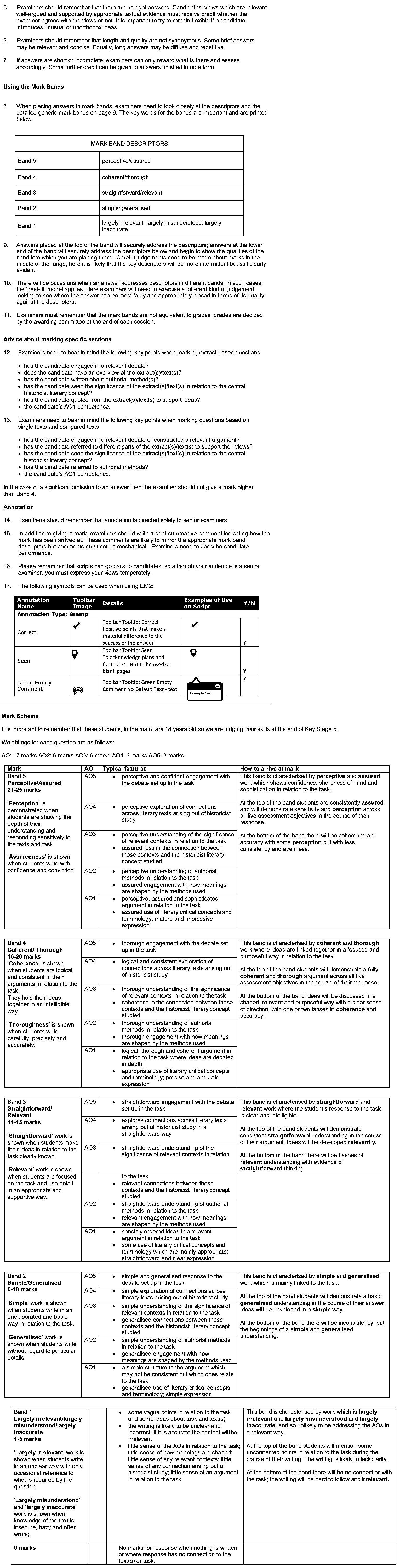
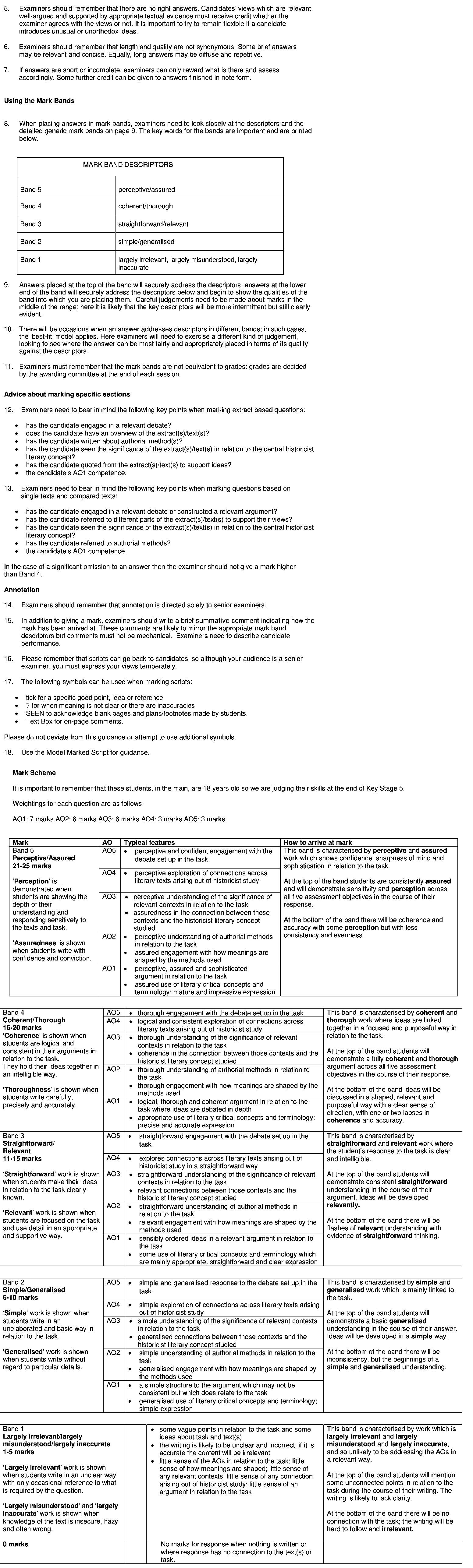
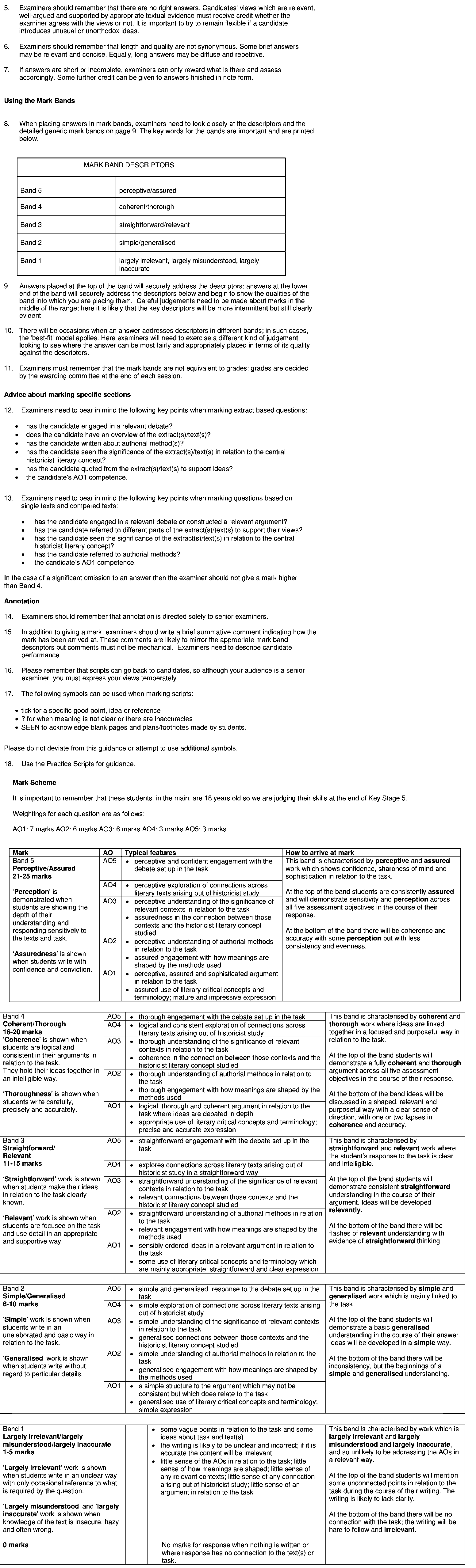
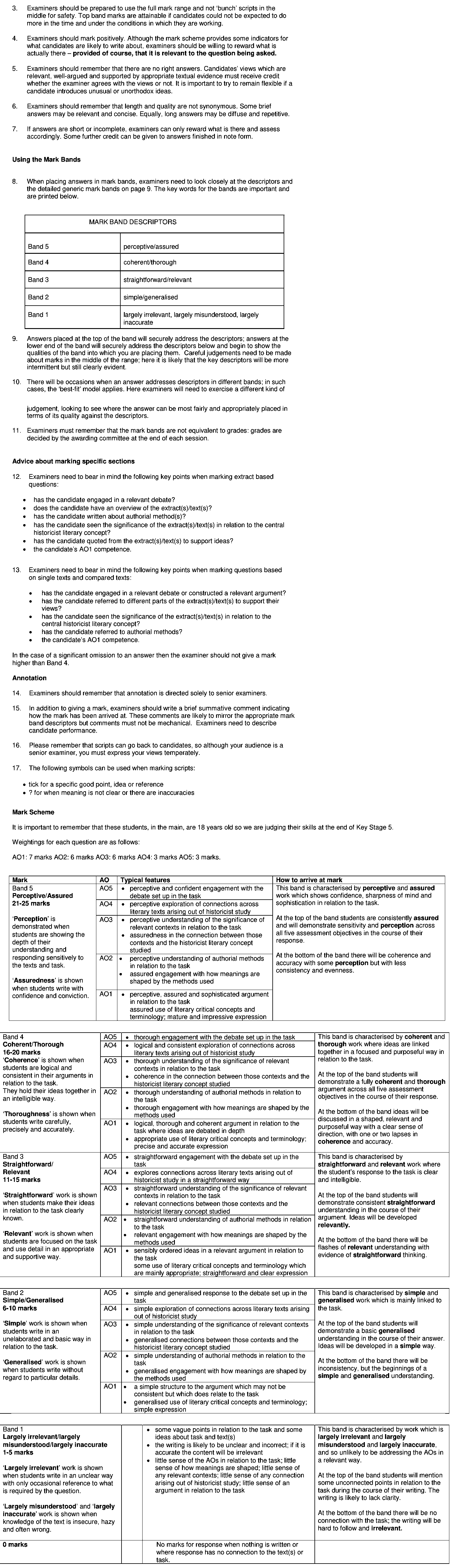
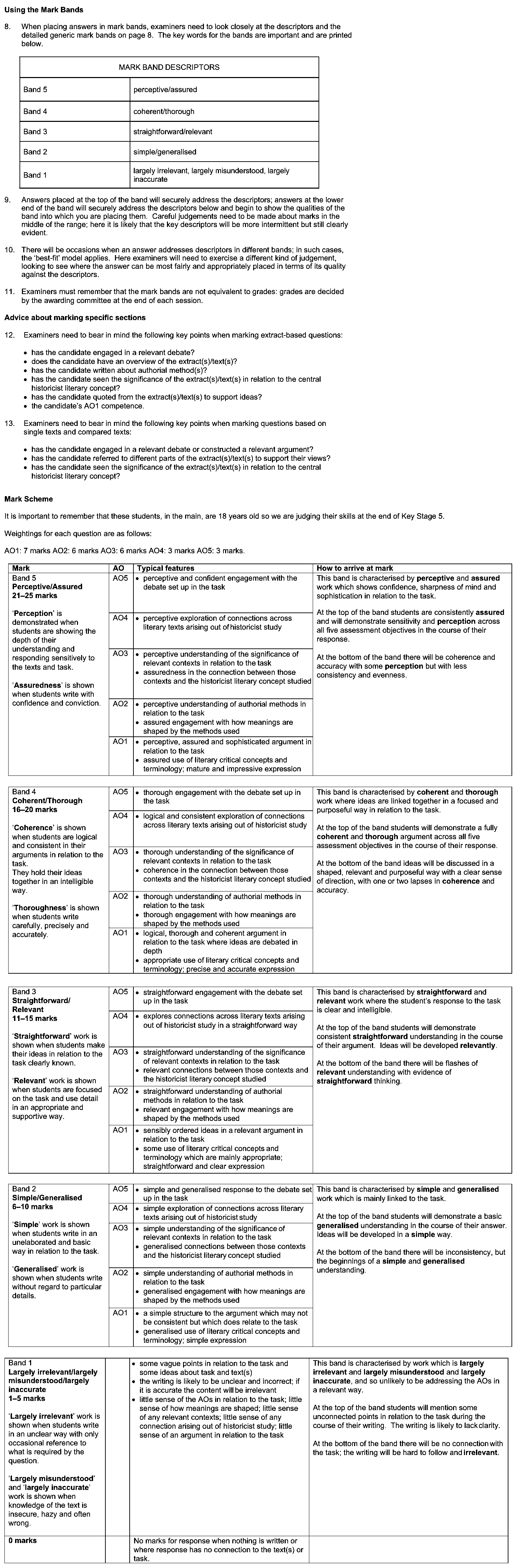
The general mark scheme (assessment objectives and bands)
Examiner's comment
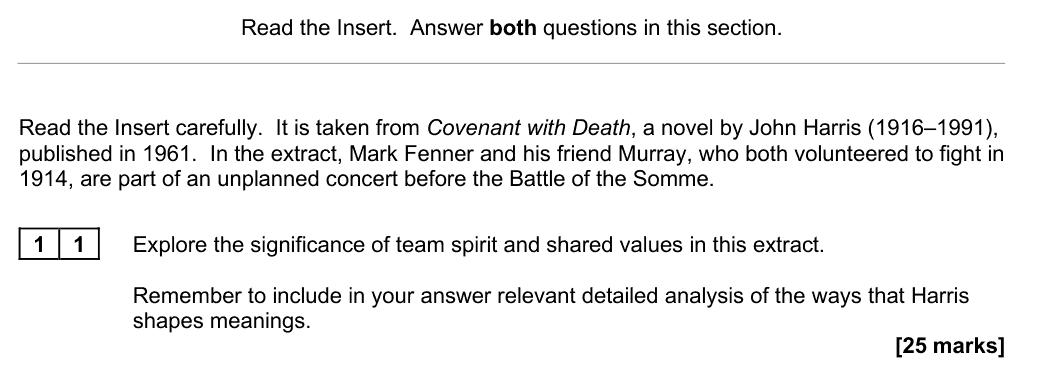
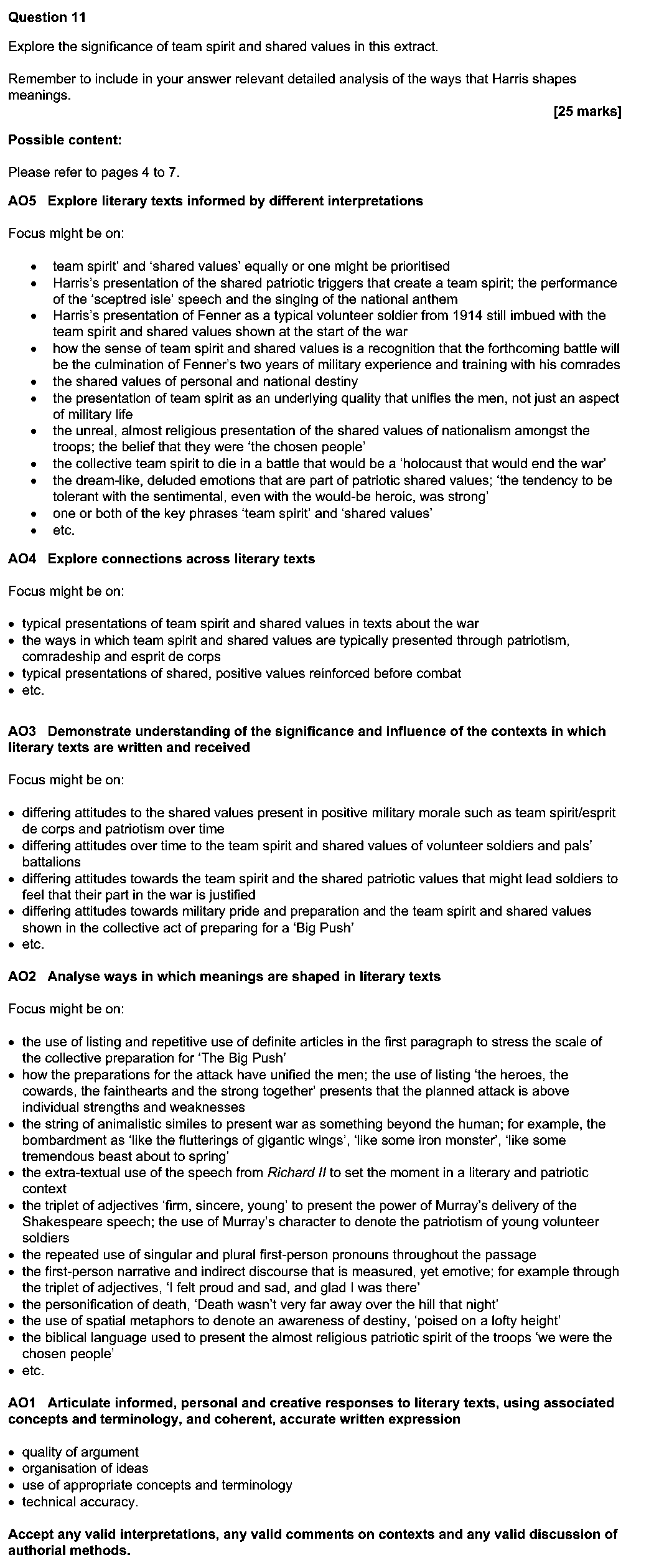
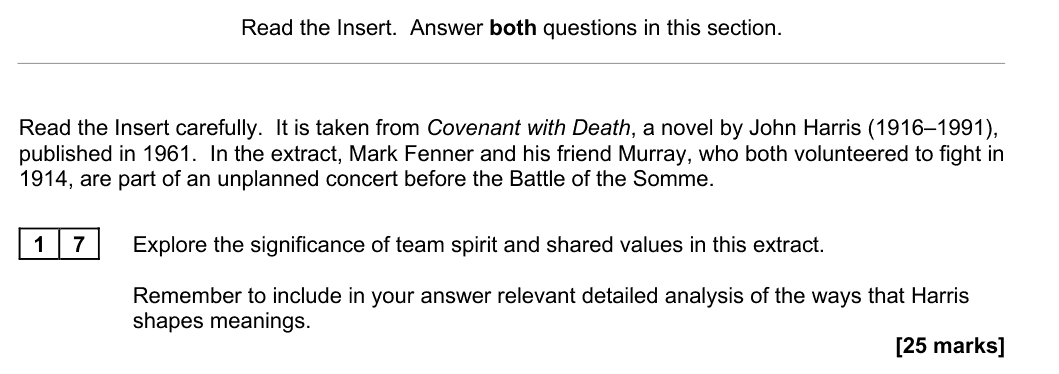
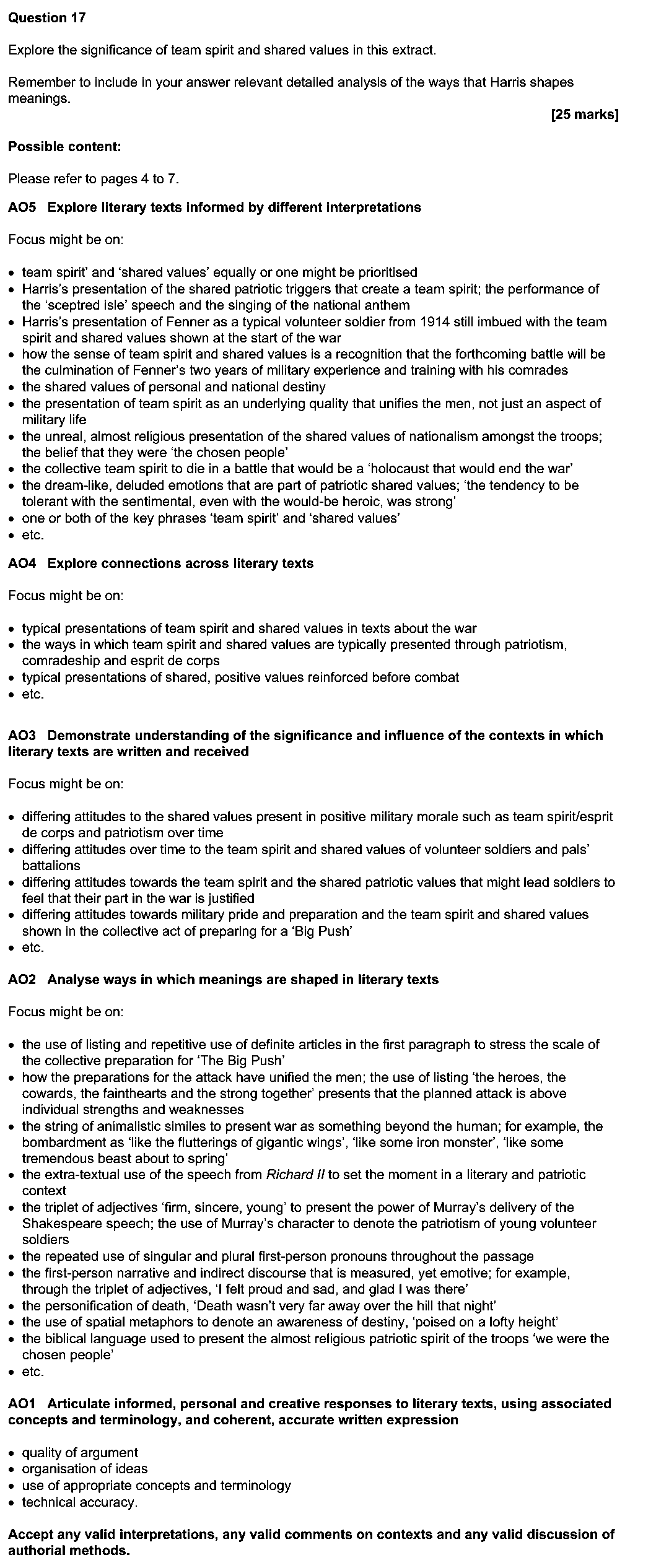
The unseen extract was selected to allow students to fully engage with prose methods. The extract was deliberately accessible in terms of length; well prepared students would have time to read, reread and plan before writing. This question always requires students to engage in ‘relevant detailed analysis’ as a way of discussing how the writer shapes meaning when considering the keywords of the given view which in this series was team spirit and shared values. Clear focus on the given view allows students to structure a reading that doesn’t just ‘go through’ the extract with paraphrase and list-like analysis of prose methods. Full engagement with the given view encourages a more selective, thorough approach that allows the student to draw together literary analysis and contextual knowledge in a cohesive way. Successful students clearly benefit from exam practice that builds effective time management through focused reading and planning. Careful reading of the question and the preamble is crucial. Reading the preamble helps the student consider the context of the time of setting and publication. Examiners noted that many students grasped the significance of a writer born in 1916 growing up in the inter-war years and who had adult experience of the second World War. Students alert to the 1961 publication date were able to consider the literary context and the revisionary approach to a war that allowed for the massive casualties experienced during the Battle of the Somme. Careful reading of the preamble also allowed students to consider the men who ‘volunteered’ together in pals divisions and the impact of mass casualties on their communities. The best work always considered ‘team spirit’ and ‘shared values’ precisely and did not conflate the two. ‘Team spirit’ was explored through considering rhetorical patterns that stressed the collective nature of the immense preparation for battle through repetition of number and adjectives. Repetition of clauses and listing was seen to reinforce the collective nature of ‘team spirit’. Many confident students considered ‘shared values’ to underpin the military discipline of ‘team spirit’ and discussed the presentation of patriotism and national pride in the extract. The use of the Richard II speech allowed students to consider pastoral, spiritual imagery that they thought was typical of early war sentiments. Some sophisticated responses considered the biblical echoes of the narrator’s sense that they were ‘the chosen people, poised on a lofty height’. The singing of ‘God Save the King’ was carefully considered; many could comment on the significance of collective act of singing, others considered how important the anthem was an act of patriotism and how engrained it was in Edwardian England. Less able students tended to treat the text in isolation and were unable to consider many of the contextual prompts highlighted in the preamble. More assertive responses engaged with the given view through criticising the naïve patriotic attitudes of the author. Some students recognised the 1960s context of publication and felt that the patriotism presented in the extract was atypical of the time. More successful students confidently considered narrative form and recognised the irony and pathos embedded in the presentation of ‘team spirit’ and ‘shared values’ before the historical tragedy of The Battle of the Somme. This work carefully considered the significance of the retrospective first person narrative and explored the imagery with more subtlety. These responses explored how ‘team spirt’ was merely subsumed into a vast mechanised war that was represented through the simile of the ‘iron monster’. Less able students misread the imagery and concluded that this was the force that the soldiers would need to fight against. More assured students recognised that this was ‘The Big Push’ that had been promised as an offensive that would win the war. Confident students explored the true nature of ‘team spirit’ through focusing on specific verb choices; men were mere commodities that would be ‘snatched’ and ‘flung’ into ‘the final holocaust’. Again, the most sophisticated responses explored the religious notion of ‘holocaust’ and sensibly considered the extract in the wider context of the novel’s title, Covenant with Death. More successful extract-based answers • always explored the extract through considering the significance of ‘team spirit and shared values’ • never treated the extract in isolation; had a secure overview of prose structure and perspective as well as using varying contexts to consider the significance of team spirit and shared values’ • did not see prose methods as a simple check list, but through engaging with ‘significance’ purposely considered how the writer shaped meaning. Textual detail was chosen carefully and analysis served to develop an argument rather than as an end in itself • integrated contextual knowledge into the argument rather than using it as an add-on. Always considered the extract and the topic within the shared context of the option • communicated with clarity with an appropriate literary register. Less successful extract-based answers • frequently lost sight of the significance of ‘team spirit and shared values’ and ‘went through’ the extract in a decontextualised way noting prose methods without considering how they shape meaning • either treated the text in isolation, or discussed context in a digressive way which led the student away from the extract • tended to ‘feature spot’ prose methods and sometimes produced over-elaborate readings based on the use of punctuation or misapplied poetic terminology such as ‘volta’ to a prose text • did not read carefully and produced misreadings to support over-assertive ideas • did not communicate clearly and sometimes adopted an over-elaborated style of writing perhaps to create an academic register. Students need to be reminded that the best work communicates complex ideas simply.
Notes from the mark scheme and report
- Focus: theme: team spirit and shared values
- Unseen text printed
- unseen prose extract from John Harris 'Covenant with Death' (1961): volunteers Mark Fenner and Murray at a concert before the Somme
- use the preamble (pals battalions, 1961 revisionist view, author born 1916)
- keep 'team spirit' and 'shared values' distinct
- credited: repetition and listing of collective preparation, Richard II 'sceptred isle', 'God Save the King', 'the chosen people', irony and pathos of the retrospective first-person narrator, 'iron monster' and 'final holocaust', the title
- weaker answers treated the extract in isolation, misread the 'iron monster', feature-spotted or applied 'volta' to prose