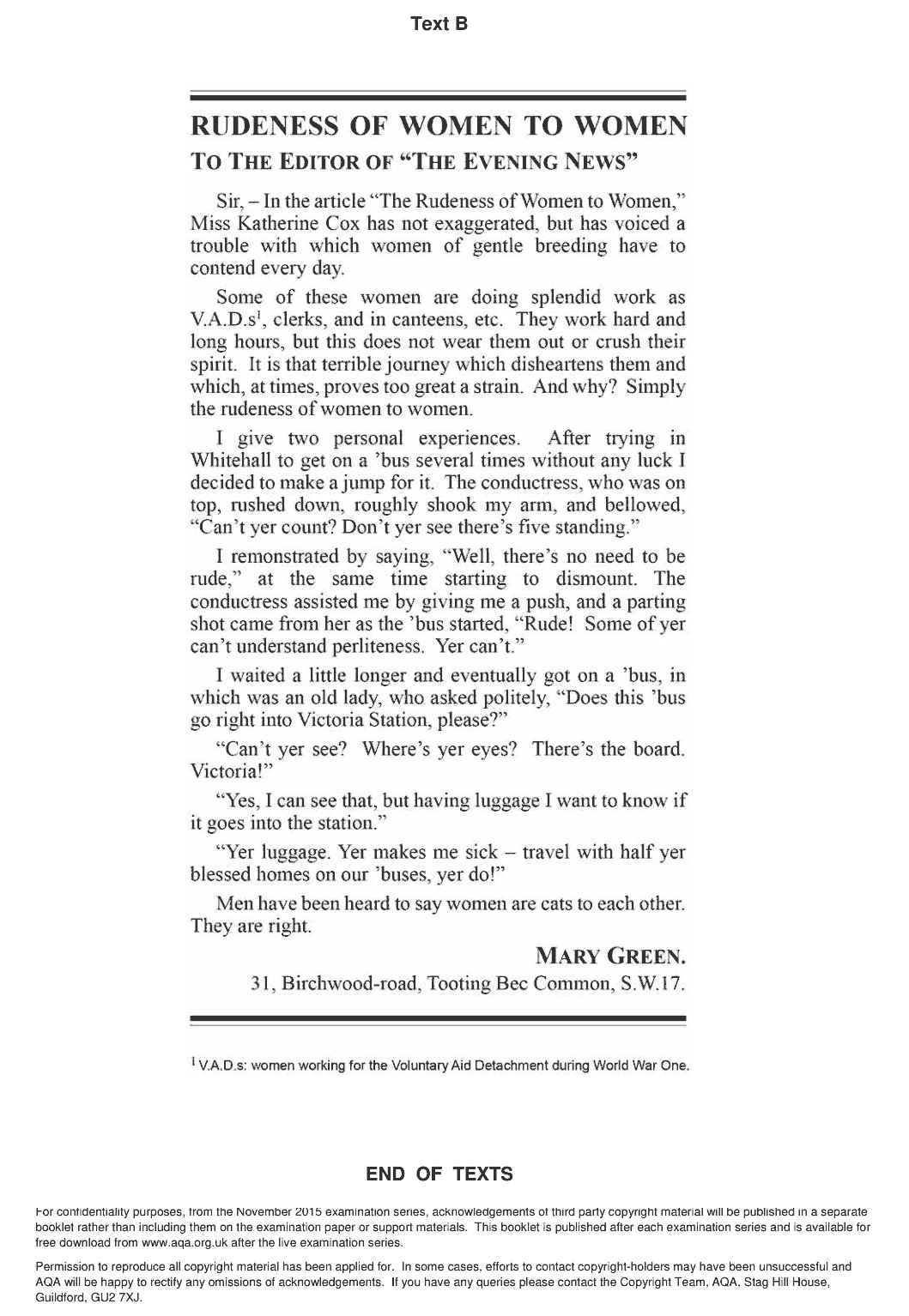
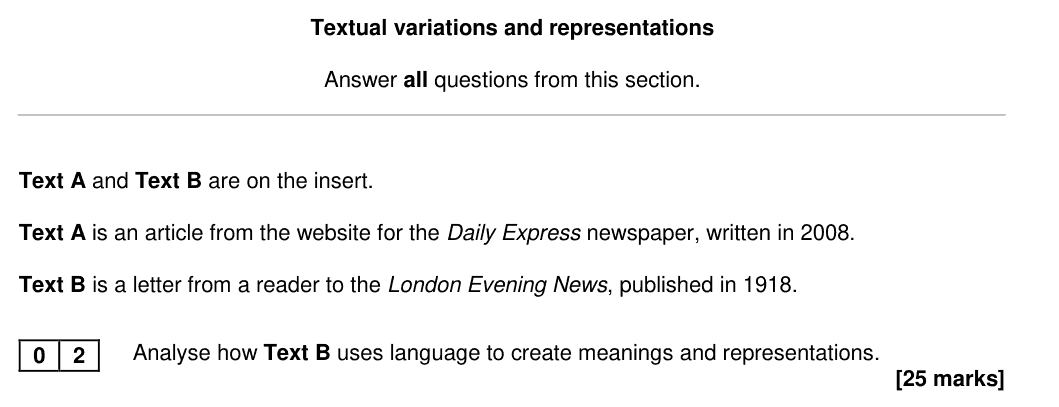
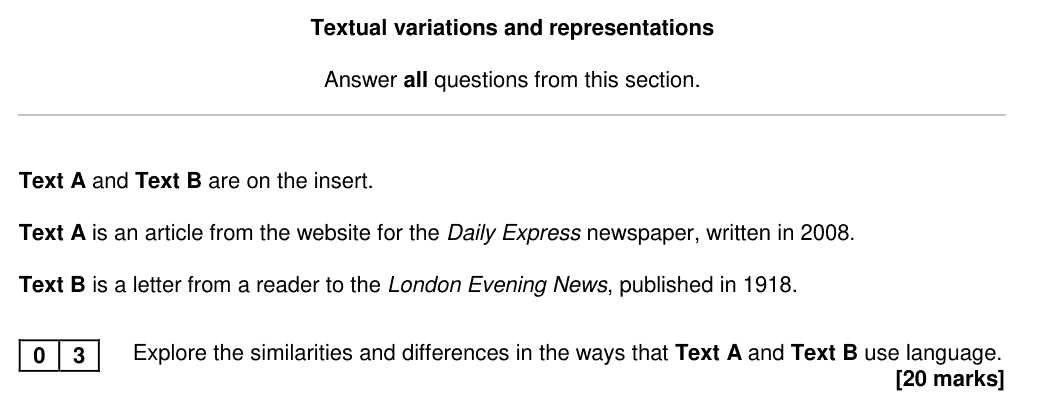
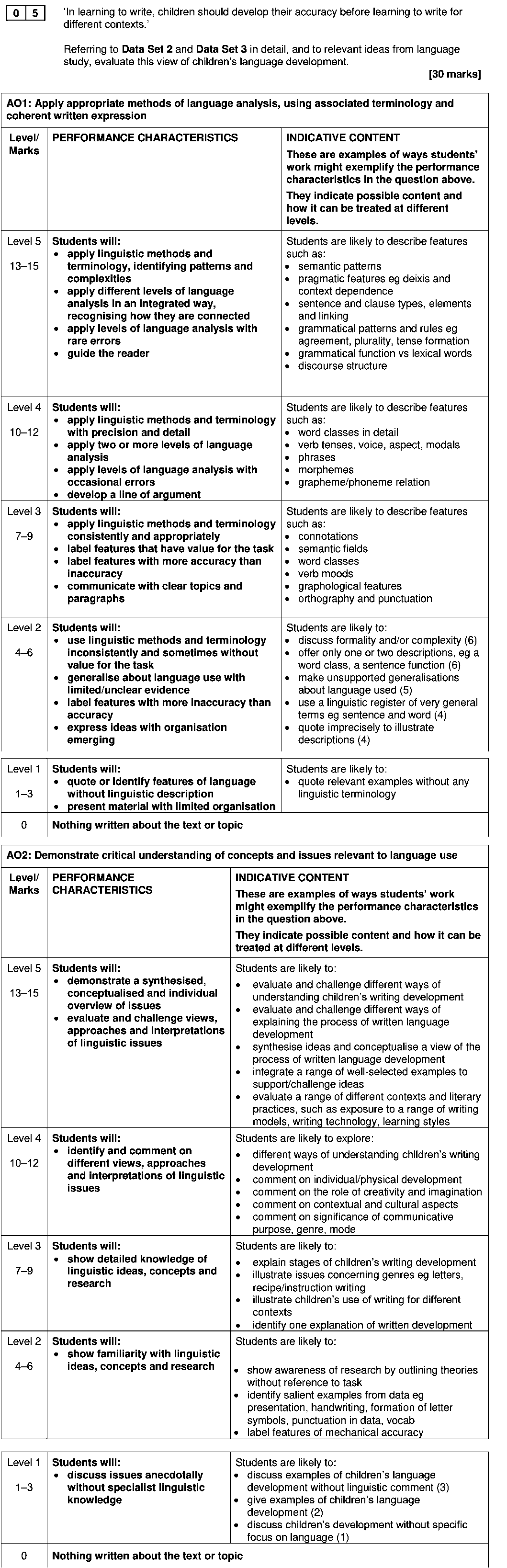
Text A (insert)
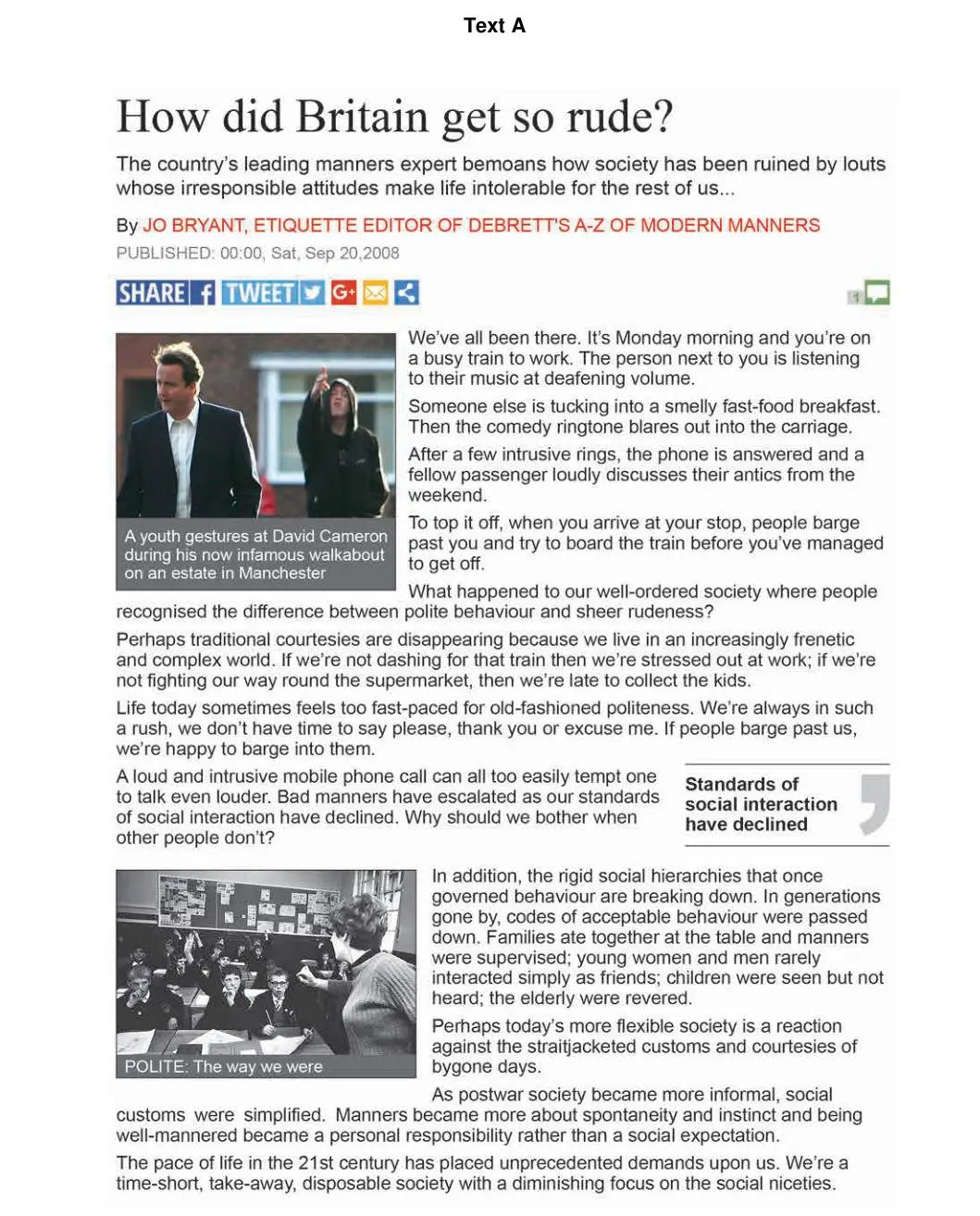
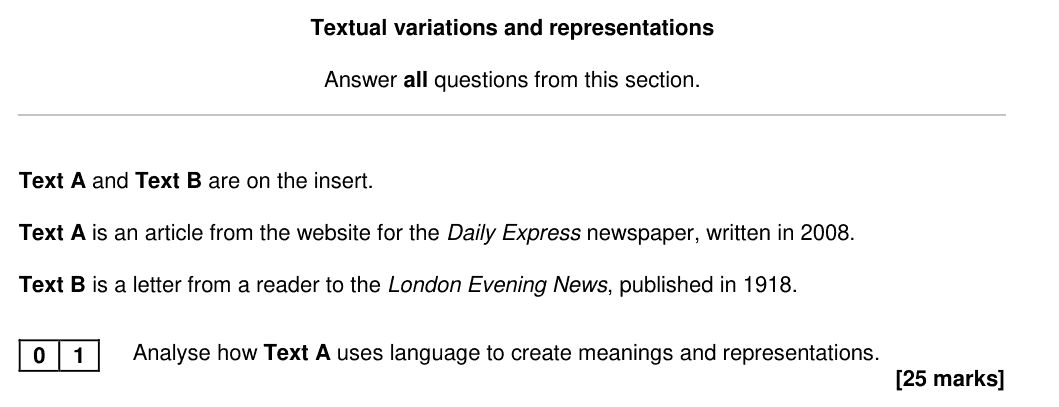
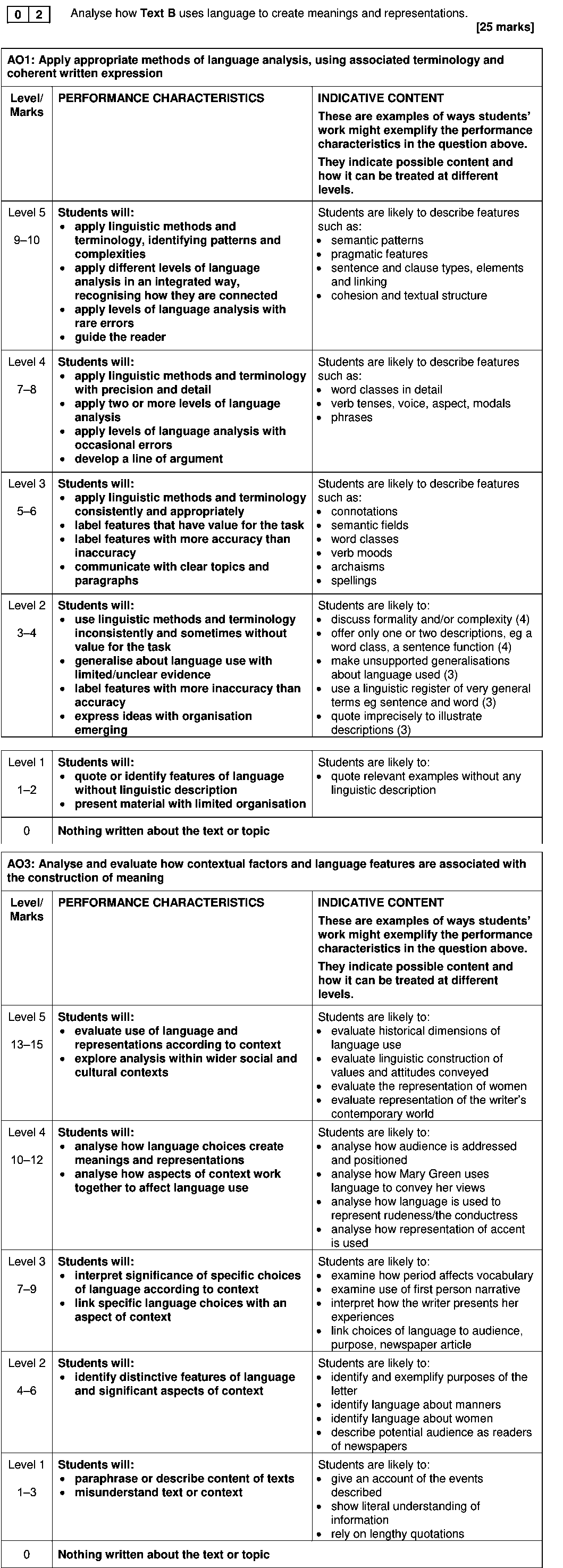
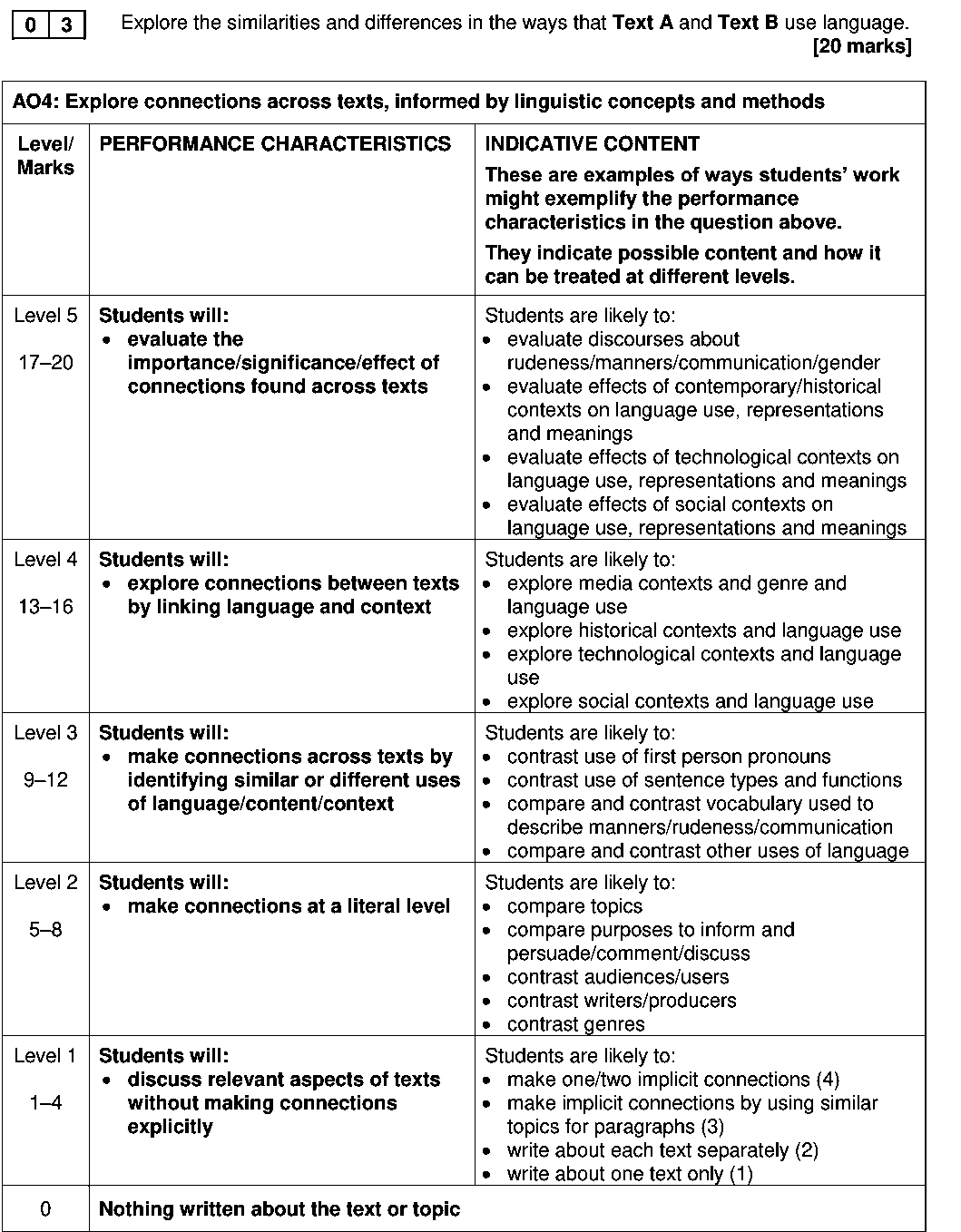
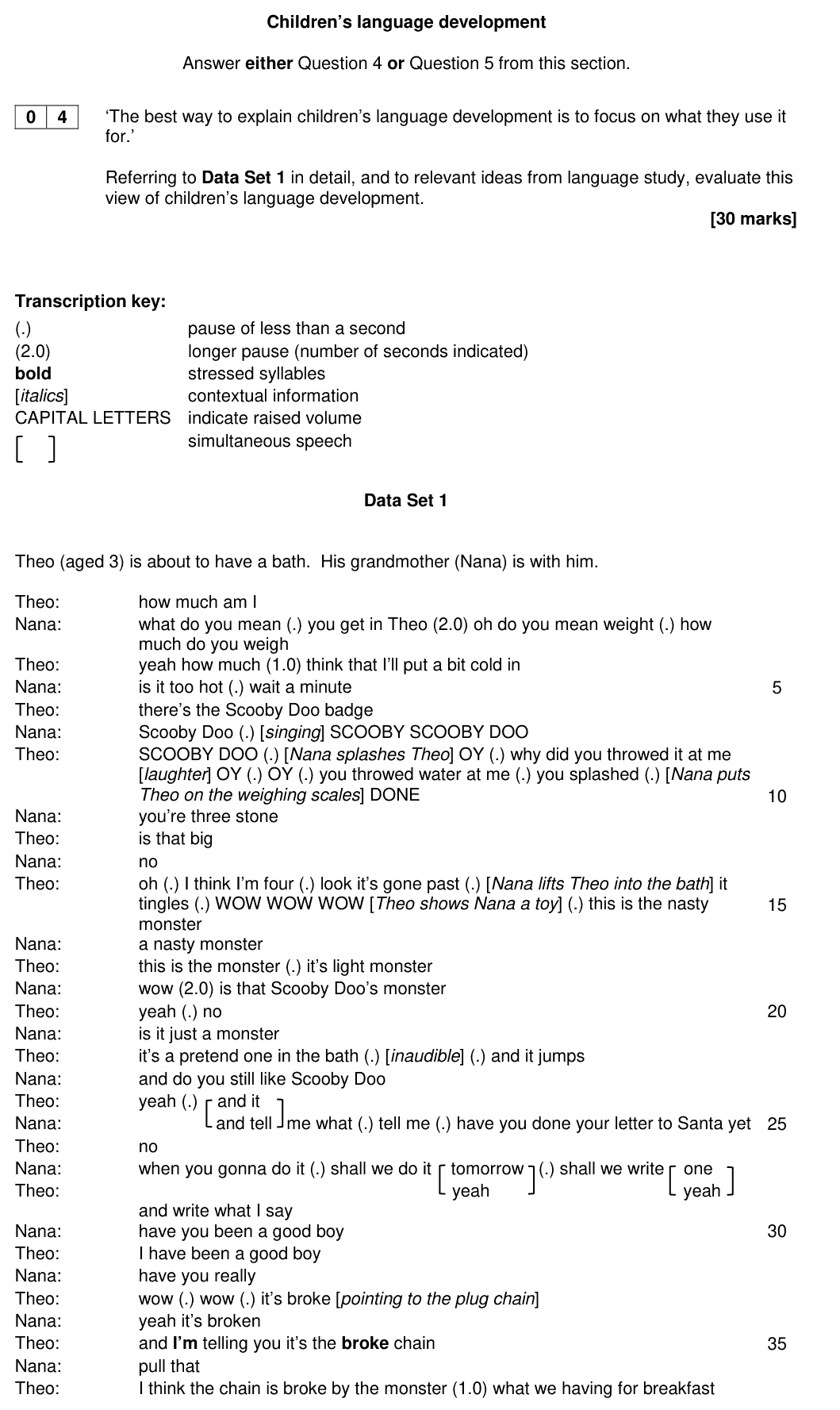
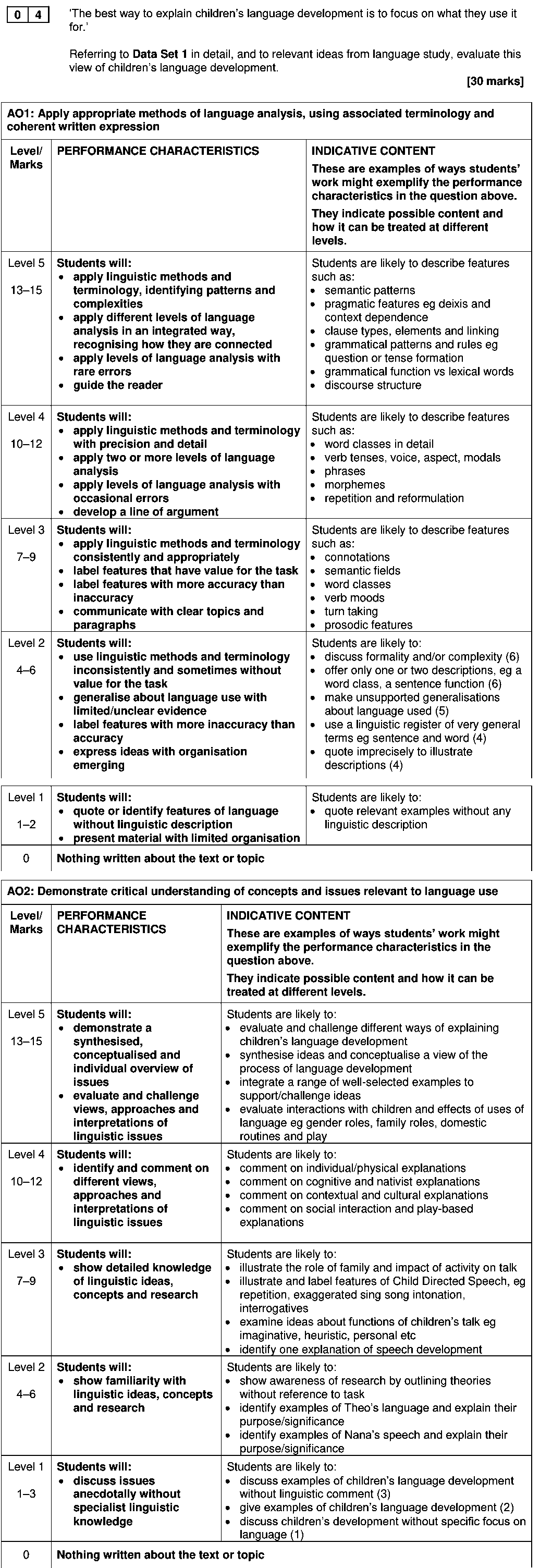
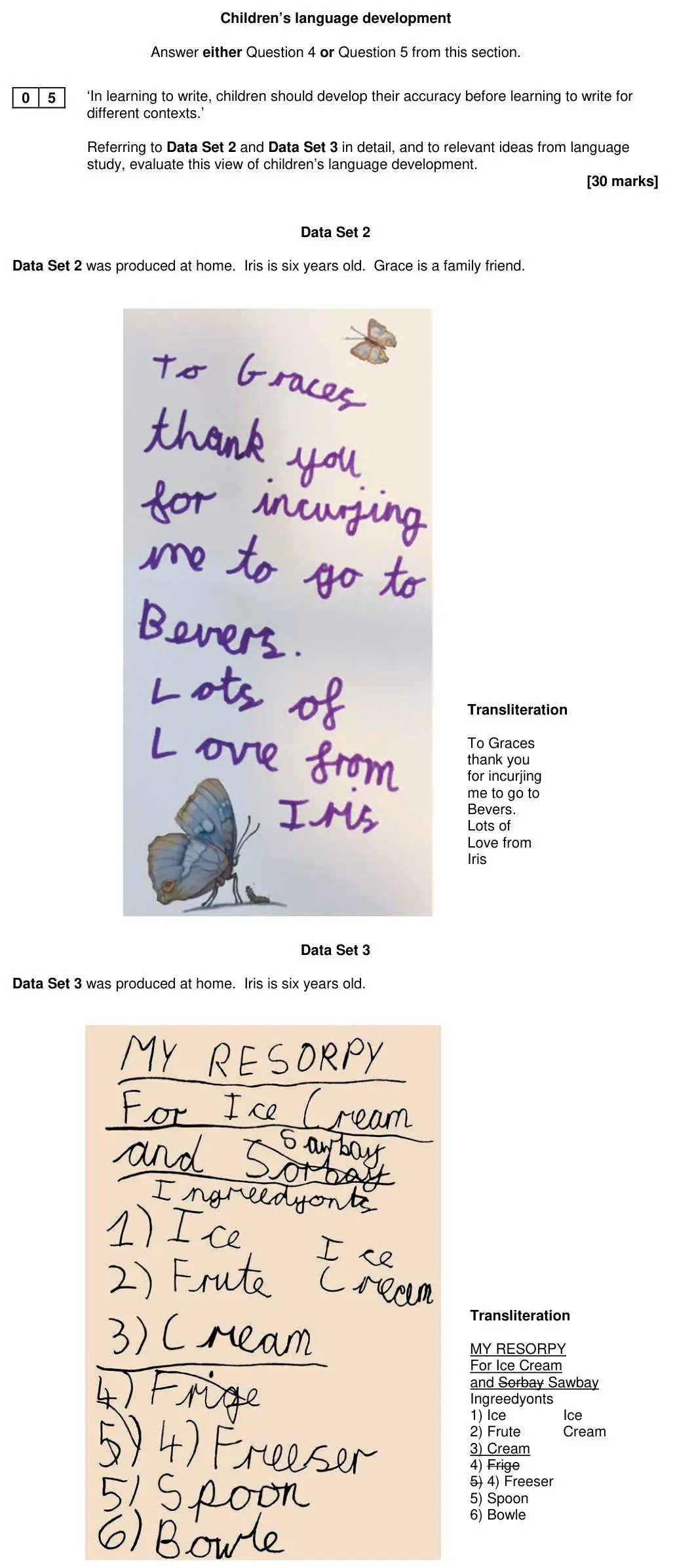
Mark scheme, including the levels and indicative content
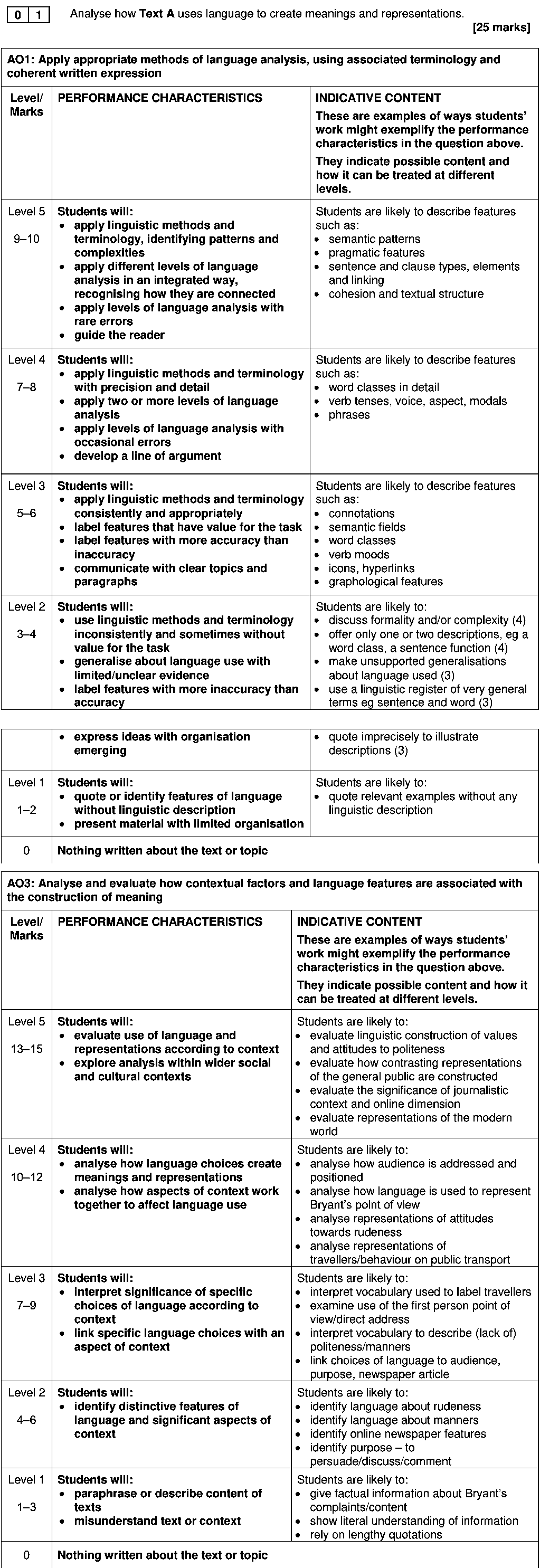
Examiner's comment
This question asked students to consider an online newspaper article entitled ‘How did Britain get so rude?’ from the Daily Express in 2008. This opinion piece evaluated the causes of perceived rudeness in modern society and ways in which this differed from past generations. Most students were confident in discussing the online nature of the article and the technological affordances that come with being online. Many students used their opening paragraph to orientate themselves into writing about the text. Whilst this is not problematic in itself, it can lead to two issues: students might then neglect to discuss context in the remainder of the response or they might tend towards a more generalised overview. When providing this initial overview, students were perhaps more confident discussing the purpose than the audience. Students worked hard to comment on who was most likely to read the article in terms of age, class and political affiliation whilst recognising that the online nature of the text would potentially broaden the audience. Whilst young people were not the focus of the text itself, many students successfully discussed the choice of modern image with a disrespectful ‘youth’ gesturing rudely to David Cameron and how this might effectively exclude young people as potential readers of the article, since they were being separated from both the writer and readers of the article as potentially blameworthy. This text offered scope to take a range of possible approaches. There were some clear analyses seen of the representation of modern society, rudeness, social class, young people, commuters, the negative effect of technology and society in the past. The strongest responses often drew out comparisons between the past and present as well as the perceived perpetrators and victims of the rudeness. Many students were also able to identify the way in which the writer was represented as a voice of authority and the audience positioning that went on throughout. Students often examined the means by which Bryant aligned herself with the reader. This was when students were able to tie in the identification of first person plural pronouns and rhetorical questions with audience positioning. There was also perceptive comment on the effect of descriptive and evaluative adjectives linked to the senses adding to the audience’s immersion in the off putting commuting experience. When labelling language within the text, students were most assured when discussing word classes. Graphology for this question allowed for quite rich comparison of the juxtaposition of the two images with some astute discussion of the representation of disrespect embodied in the young person who was willing to abuse even the (then) prime minister. Students were then also able to align this reading to the assumed audience of the text. Students seemed aware that analysis needed to move to two language levels or more to move to level 4 for AO1 and there was a clear effort made to do this. Those students who moved to level 5 were often able to identify patterns across the text in terms of semantic fields, lexical choices or grammatical constructions. As with the responses in summer 2017, some students ambitiously focused on more complex grammatical structures and discourse labelling since there was an awareness that this characterised level 5 responses for AO1. Whilst this was sometimes a highly successful approach with quite tightly focused and specific analysis, examiners found that some students had actually hampered the response by inaccurate labelling of these more complex features and an absence of discussion of those features which would have placed the student securely in L3 or L4. More successful answers: Integrated the language labelling with the comments being made about meaning and representation rather than separating feature spotting and context comments. Explored grammatical structures in the light of representation (for example, the use of conditional clauses and asyndetic listing to reflect the fast-paced lifestyle or the syntactic parallelism and juxtapositions to demonstrate the contrast between past and present). Provided precise labelling of word classes and recognised patterns in use of these across the text as a whole (for example, use of the dynamic verb ‘barge’ in three separate places and the connotations of this word). Identified the shift in attitude through the text, moving from despair about modern society to later realisation that the way in which people behaved in the past was confining, explored really well by those students who analysed the meaning of the adjective ‘straightjacketed’ towards the end of the text. Identified clause types with precision and noted when sentence structures were particularly important in enhancing the meaning. The most popular example of this was ‘We’ve all been there’. This sentence allowed for identification of the simple declarative sentence but also enabled more confident students to discuss the cataphoric reference in the adverb ‘there’ which encouraged the reader to find out where. Could cluster examples to demonstrate patterns across the text (for example semantic patterning) to make comments about representation in the text as a whole.
Notes from the mark scheme and report
- AO1 10 + AO3 15
- top band evaluates values and attitudes to politeness, contrasting representations of the public and the modern world, and the journalistic online context
- credited: Bryant's authoritative voice and 'we' positioning, rhetorical questions, asyndetic listing and conditionals for the frenetic pace, repeated 'barge', the shift to 'straitjacketed' past, the image of a youth gesturing at Cameron
- ambitious but inaccurate clause labelling lost marks that secure L3/L4 features would have earned
- Texts/data: Text A: Daily Express online opinion article (2008) 'How did Britain get so rude?' by Jo Bryant of Debrett's