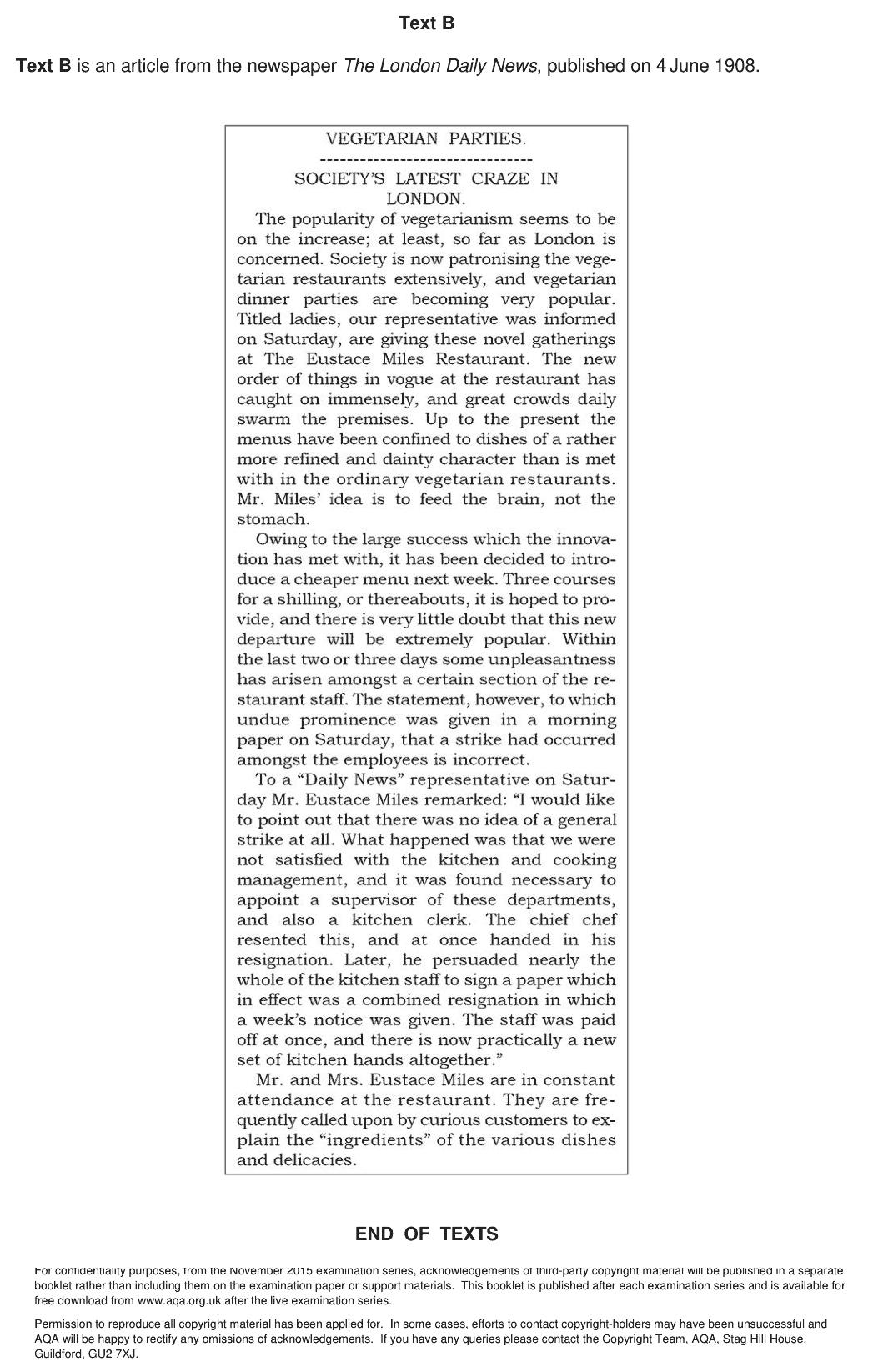
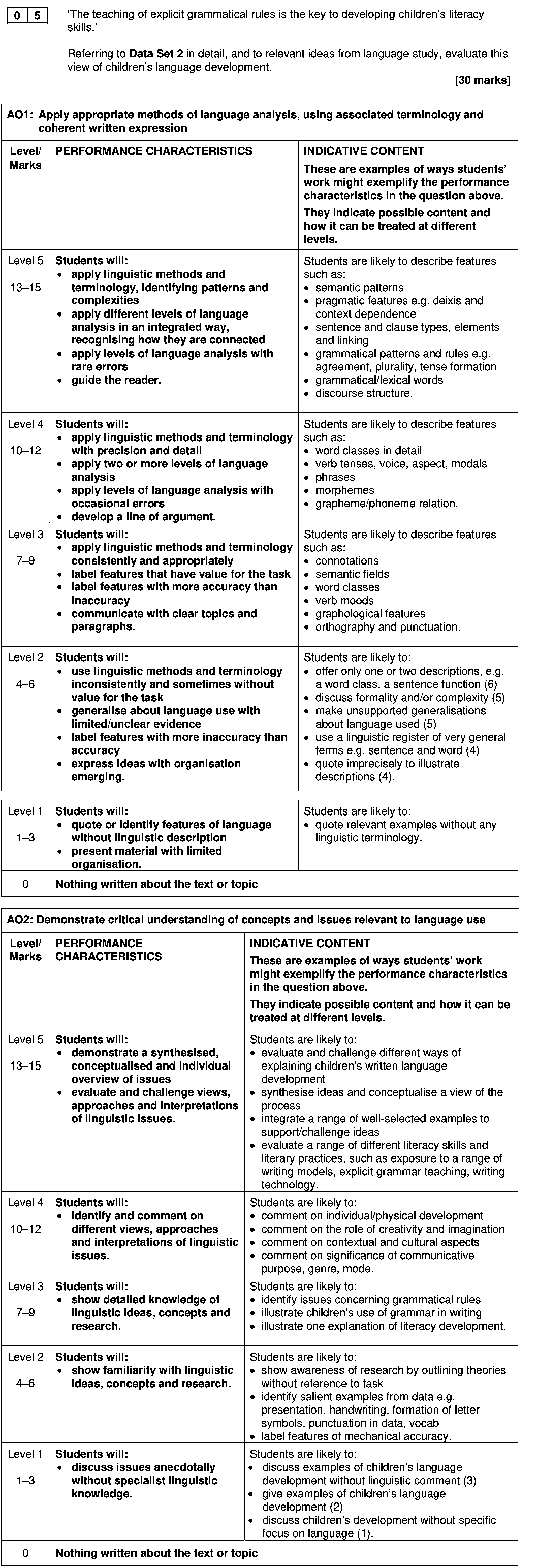
Text A (insert)
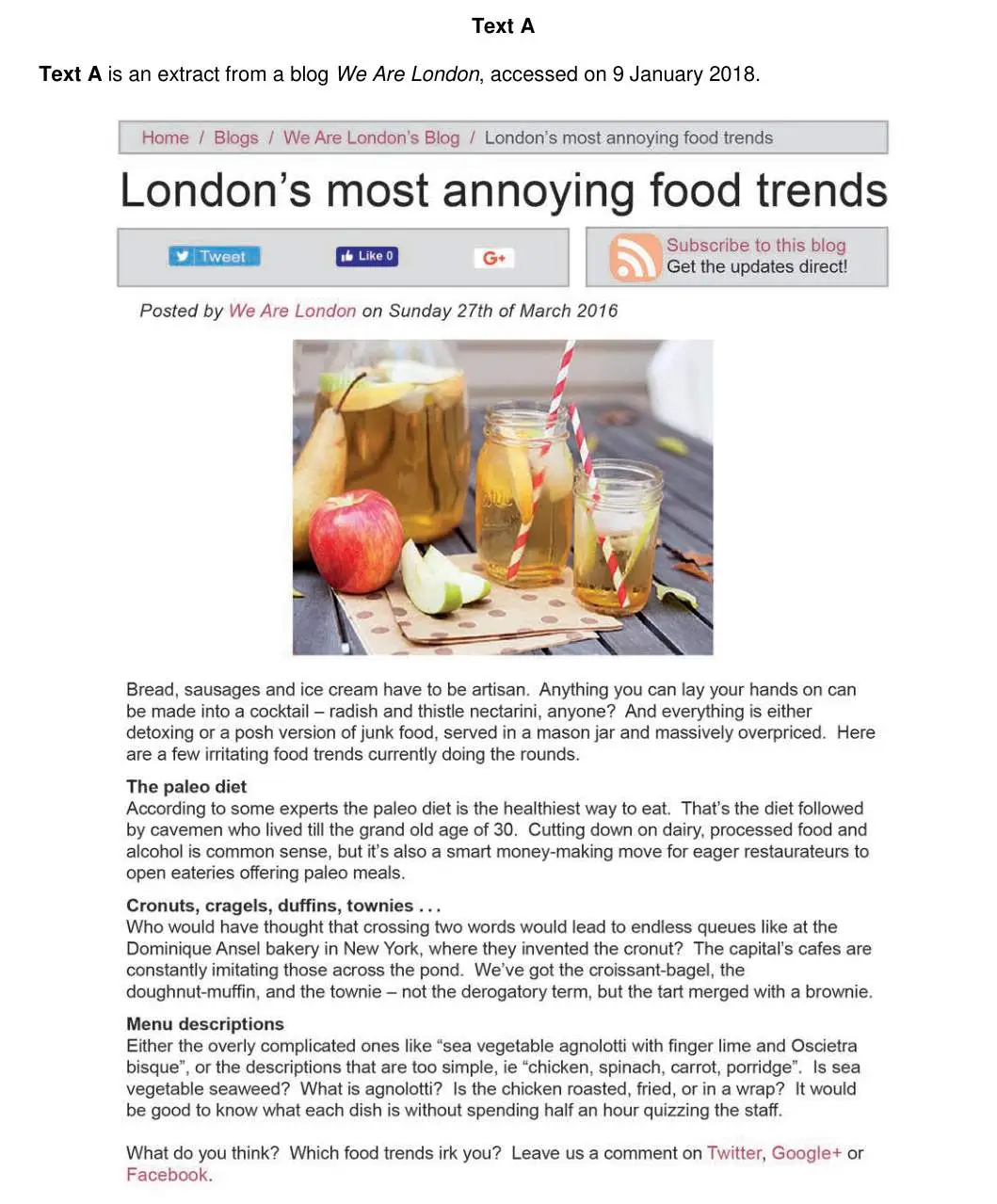
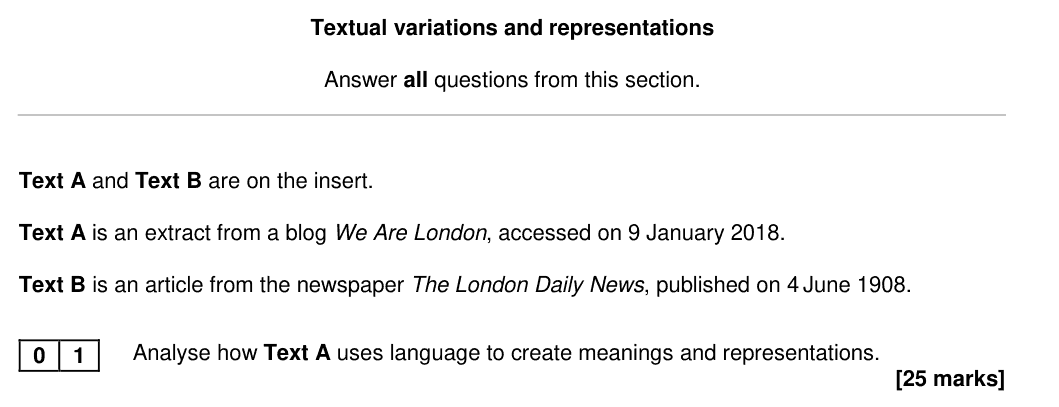
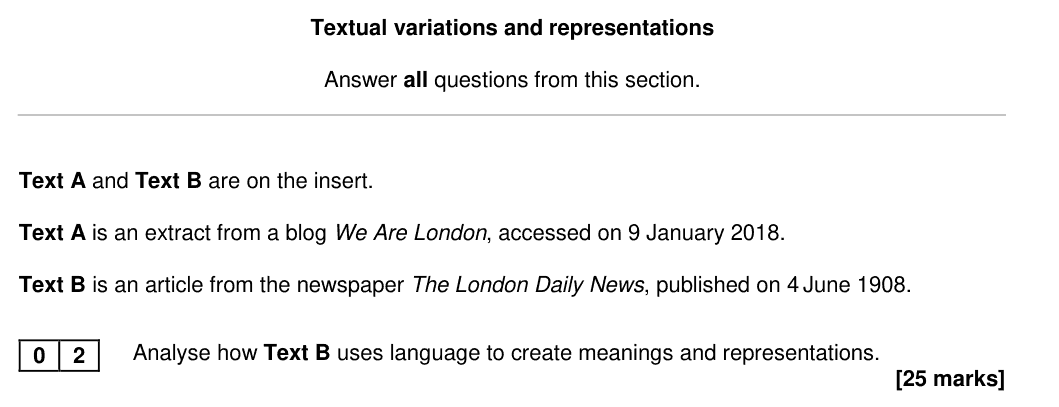
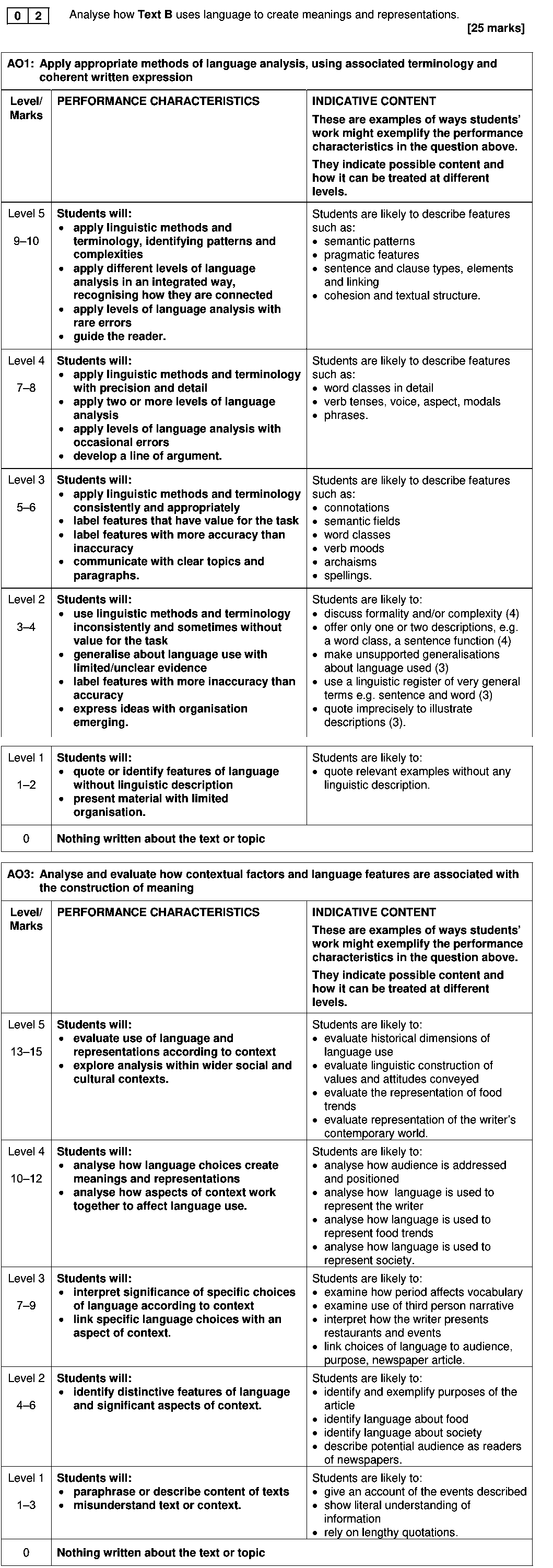
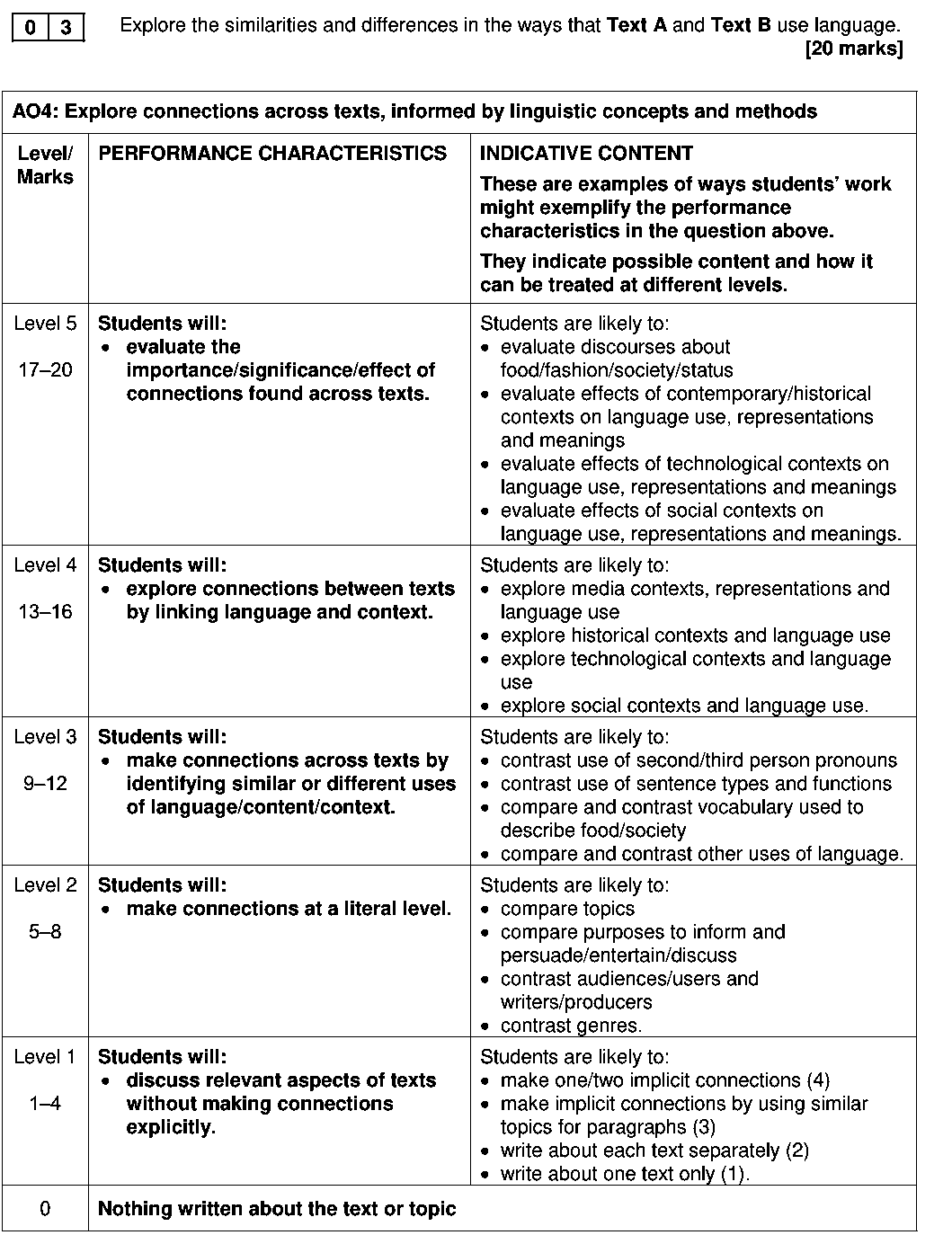
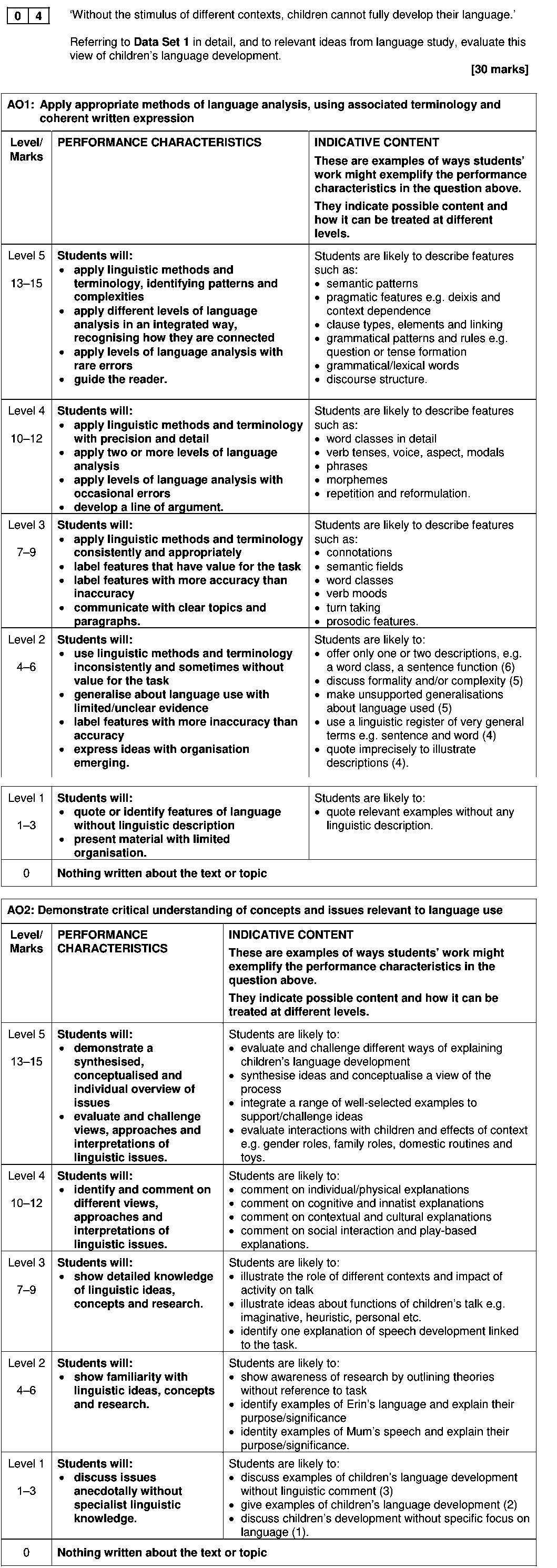
Mark scheme, including the levels and indicative content
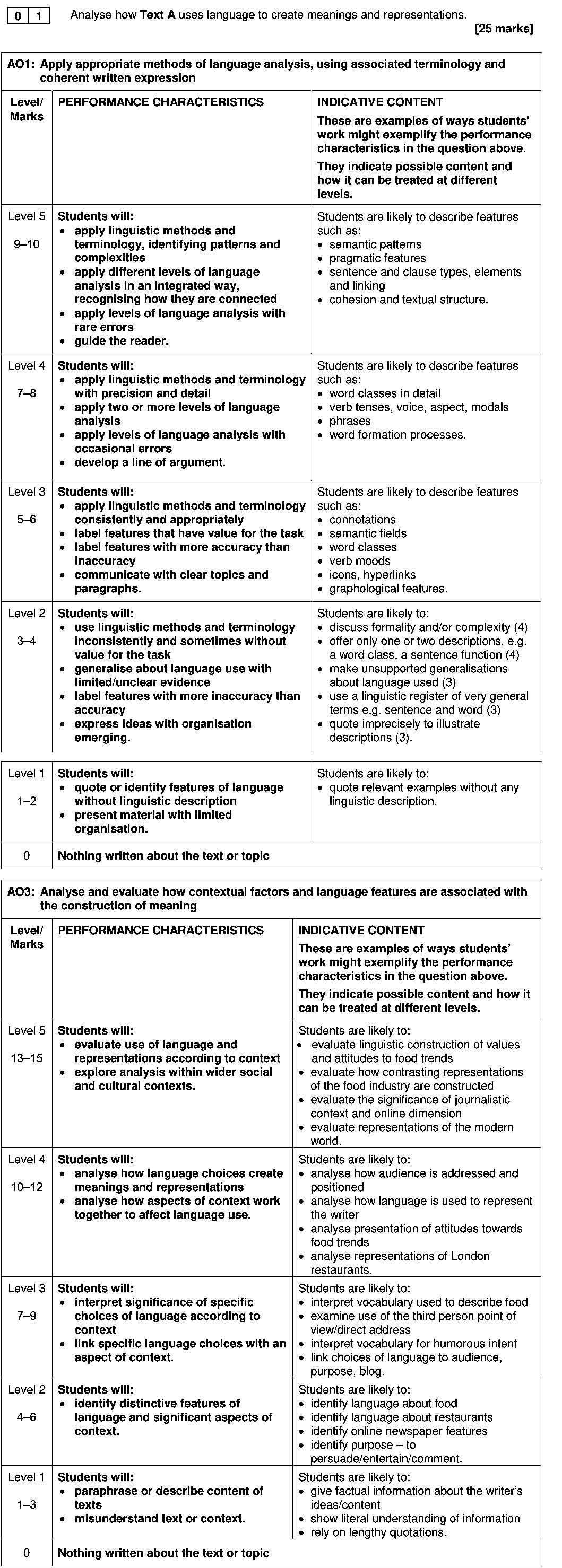
Examiner's comment
Text A took the form of an extract from a blog, ‘We are London’, from 2018. The blog post was an opinion piece which identified a range of recent food trends emerging from the capital city. The text proved to be accessible to all with few students encountering difficulty in making meaningful comments about audience, purpose, genre and language content. A good number of students moved beyond this to consider a range of representations. Indeed, responses to this question were the strongest across the whole paper. A large number of students attained either level 4 or 5 marks across both assessment objectives. Students were able to discuss with confidence the way in which the food trends were negatively presented. Many students also moved on to discuss how the audience was positioned to share the writer’s negative perspective. The most effective responses saw students considering the wider social contexts from which the text had emerged and evaluating the impact of these on the language used. Students commented confidently on the online nature of the text and were able to make insightful points about the potential interactivity of the blog. More successful students made connections between language use and this interactivity (for example, use of imperatives to encourage readers to respond to the opinion piece). Associated with this was a keen awareness from many students about how the graphology worked alongside text to create cohesion and reinforce meanings. AO1 There are ten marks available for AO1 for question 1 and it was pleasing to see a wide range of features being addressed. Most students correctly identified sentence functions and word classes. There was increasing confidence in applying language terms with precision and detail. Most commonly identified were superlative adjectives, proper nouns, neologisms/blends, pre-modifying adjectives, and use of interrogatives. Students appeared to be well versed with the level descriptors from previous mark schemes so were also attempting to comment on patterns across the data and grammatical constructions. Cohesive features such as juxtaposition, anaphoric referencing and repeated grammatical structures were often discussed with confidence. Occasionally, students were so keen to comment on sentences or clauses that this hampered meaningful comment. There were also occasions when this grammatical focus led to less accurate discussion of the language being identified. AO3 Students clearly understood that discussion of representations within the data often characterises level 4 responses for AO3. Students therefore often approached the question with a plan to identify and explore two or three representations. Responses covered the way that the writer, food trends, London restaurants, food trend followers and readers were represented. It is worth remembering that simply using the word ‘represent’ does not guarantee more developed comment which is needed to reach the level 4 band. In order to comment on representation successfully, students needed to focus on interpretation and analysis. The most effective responses did this successfully and also considered how these representations linked to modern society (particularly in relation to social media and influence). More successful answers: • precisely identified and explored the impact of a range of word classes (for example, proper noun ‘London’ and superlative adjective ‘most annoying’) • were able to explore and evaluate the wider social context of the competitive nature of the food industry in the light of social media. Often this was developed further by exploring how London emulated America as part of a wider global trend • linked language comments closely to context and audience interpretation. For example, the list of blend words was sometimes identified as echoing the repetitive nature of new food types appearing • identified patterns across the text and posited reasons why they might be there. For example, the repeated use of questions through the text could serve to highlight the writer’s confusion over food trends • analysed how language was used to position the reader alongside the writer against those who follow the food trends • analysed how humour was constructed, with a particular focus on representation of the Paleo diet and the sarcastic nature of the noun phrase ‘grand old age of 30’ • demonstrated a pragmatic awareness tied in to how the audience was being positioned. For example, some students identified the nuances of the question ‘Which food trends irk you?’ which presupposes reader agreement that food trends are in fact annoying. Areas for further consideration: • responses which focused primarily on graphological features often remained relatively straightforward and limited in links made to representations • some students were working to comment on clausal elements and not then mentioning those language points which they could have done more accurately and confidently • exemplification was sometimes too lengthy, with full sentences being written out to demonstrate a word class. While the examples might have contained an example, it was difficult for examiners to discern whether the student knew which word was right • students sometimes needed to have considered the word in the context of the sentence. For example, the words ‘irritating’ and ‘annoying’ operated as pre-modifying adjectives within this text but a fair number of students labelled these as verbs.
Notes from the mark scheme and report
- AO1 10 + AO3 15
- top band evaluates values and attitudes to food trends, contrasting representations of the food industry, the online/journalistic context and the modern world
- credited: superlative 'most annoying', blends (cronut, townie) as a list echoing endless trends, repeated questions, sarcastic 'grand old age of 30', presupposition in 'Which food trends irk you?', imperatives inviting comments, London emulating America
- errors: 'irritating'/'annoying' labelled as verbs, over-long quotations, graphology-led answers stayed limited
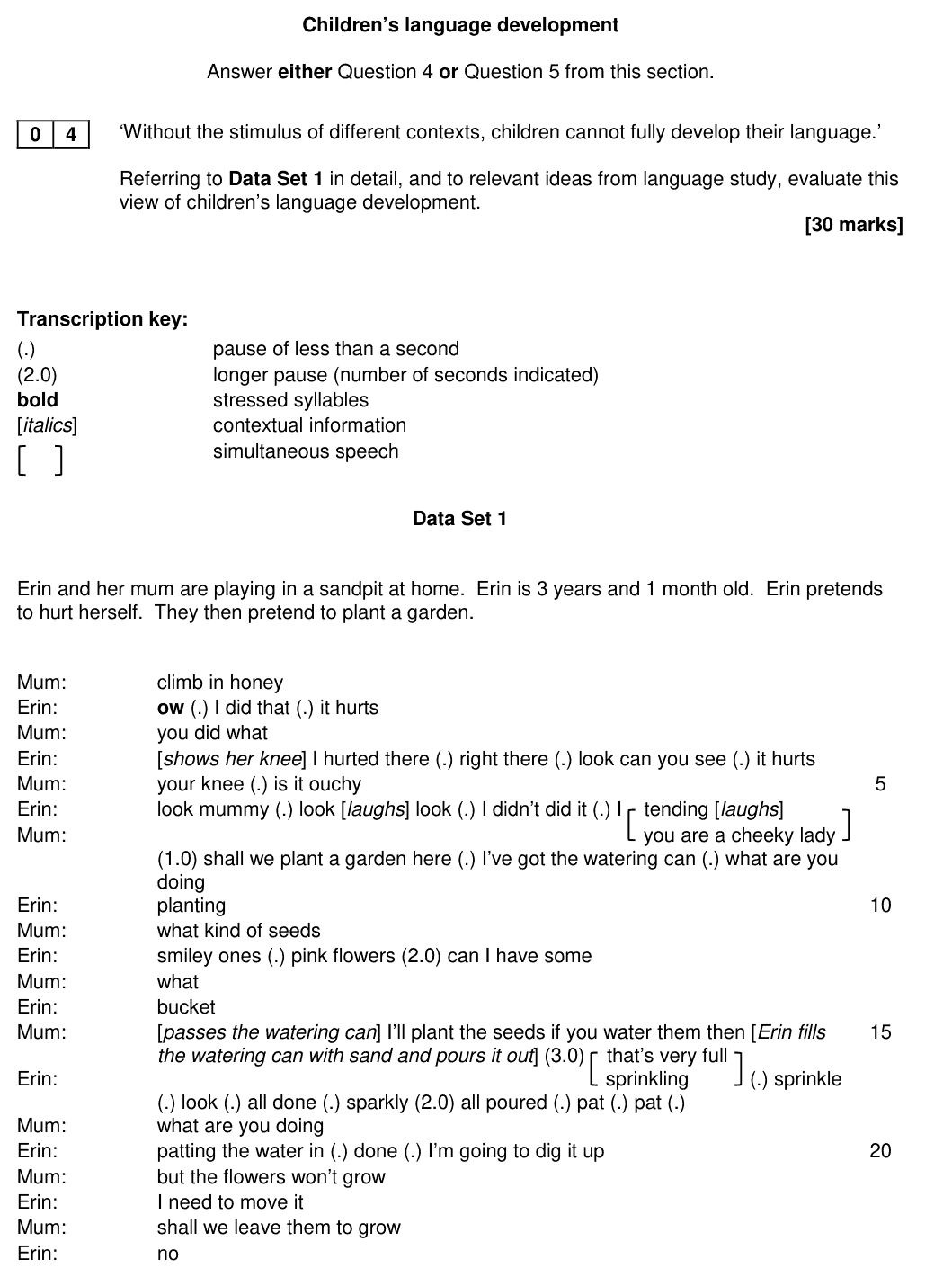
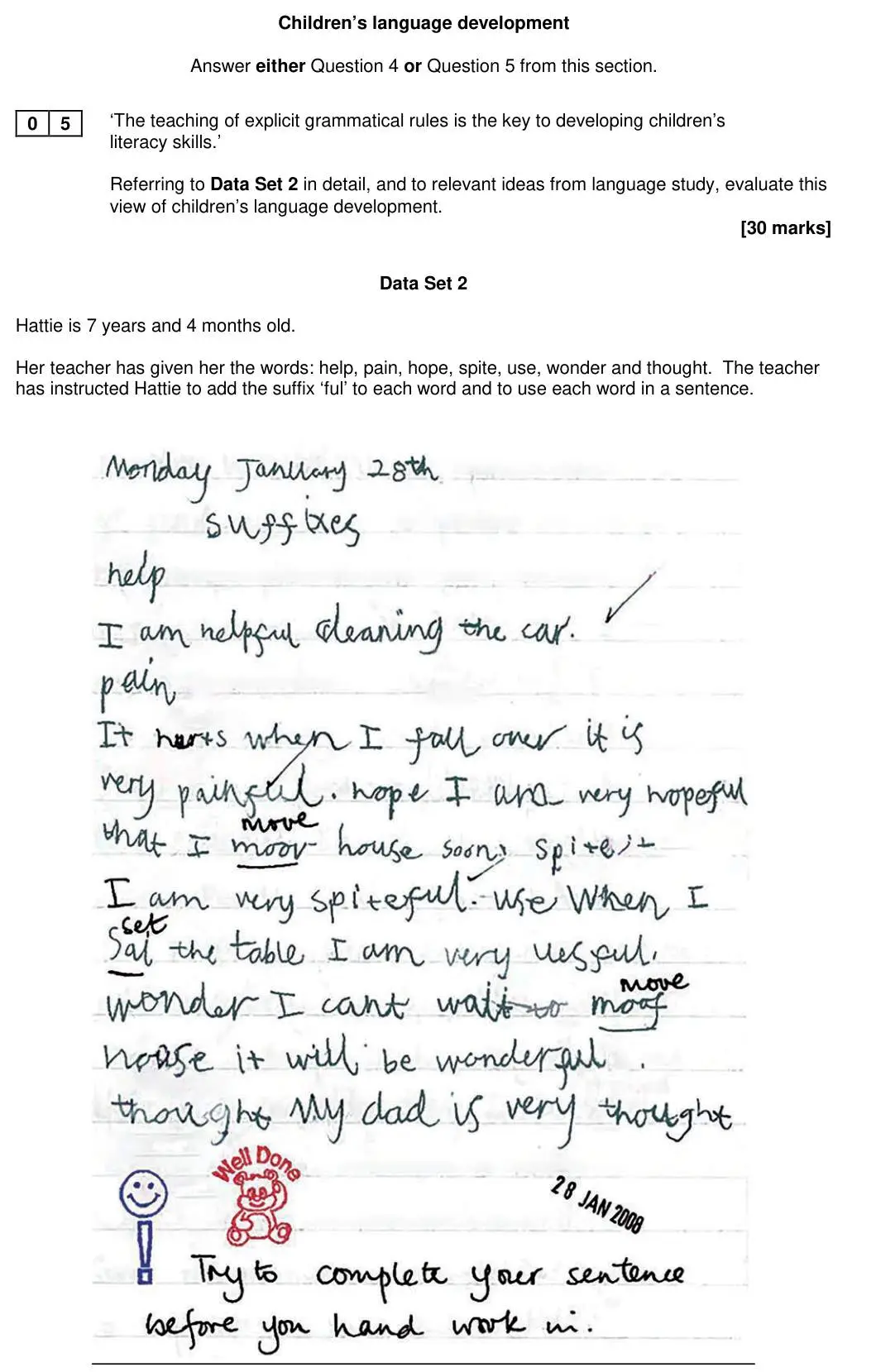
- Texts/data: Text A: We Are London blog post (2016) 'London's most annoying food trends'