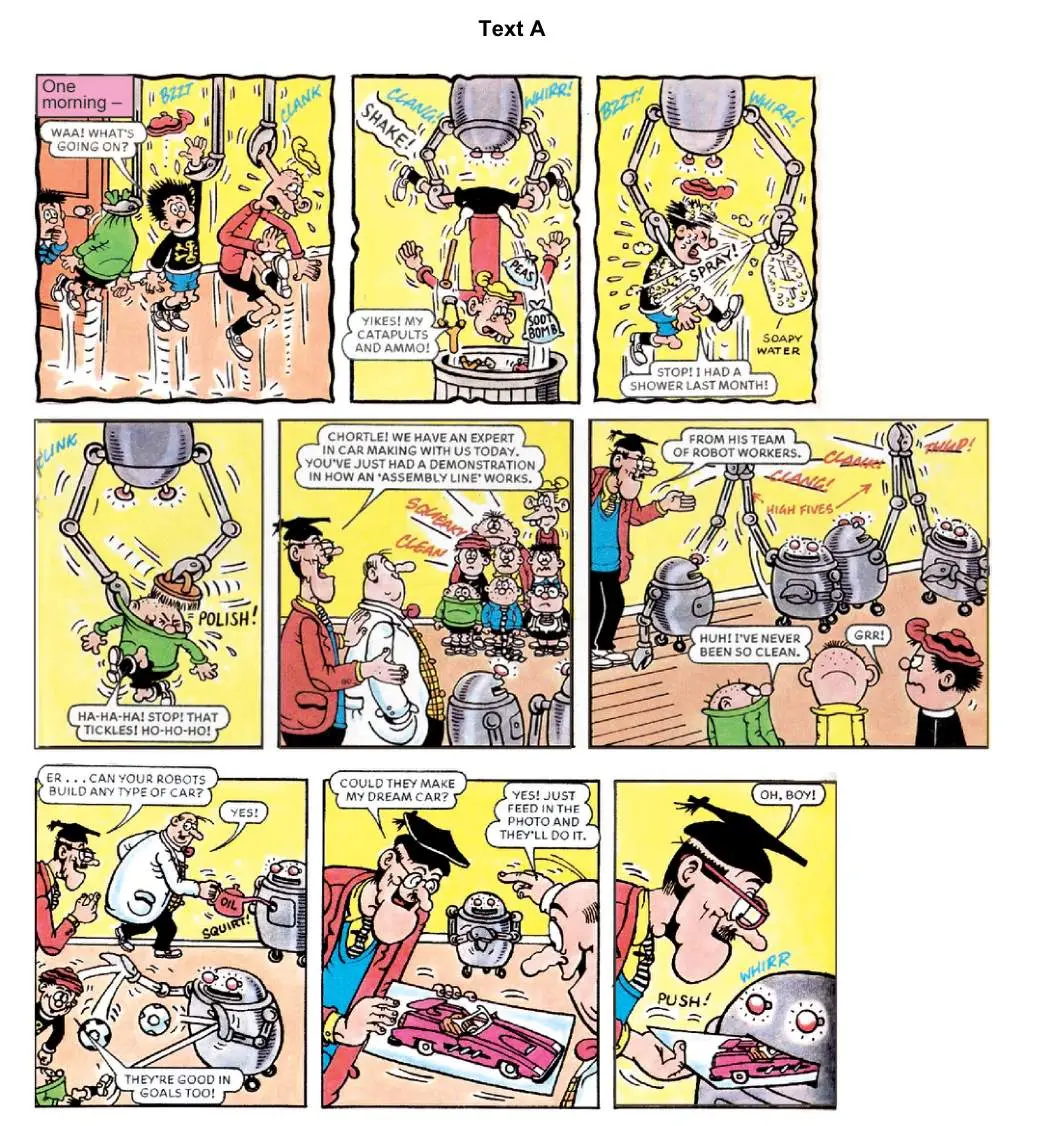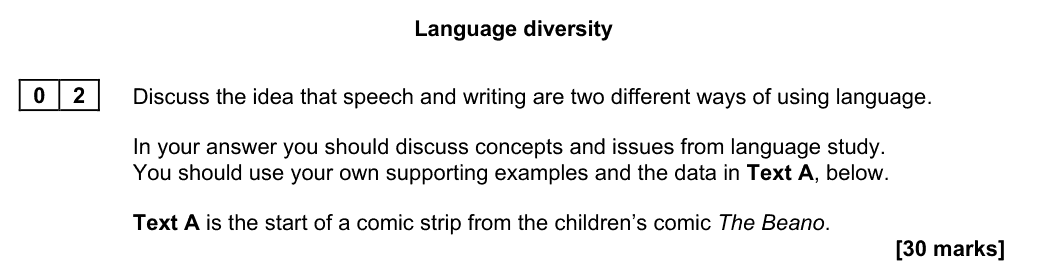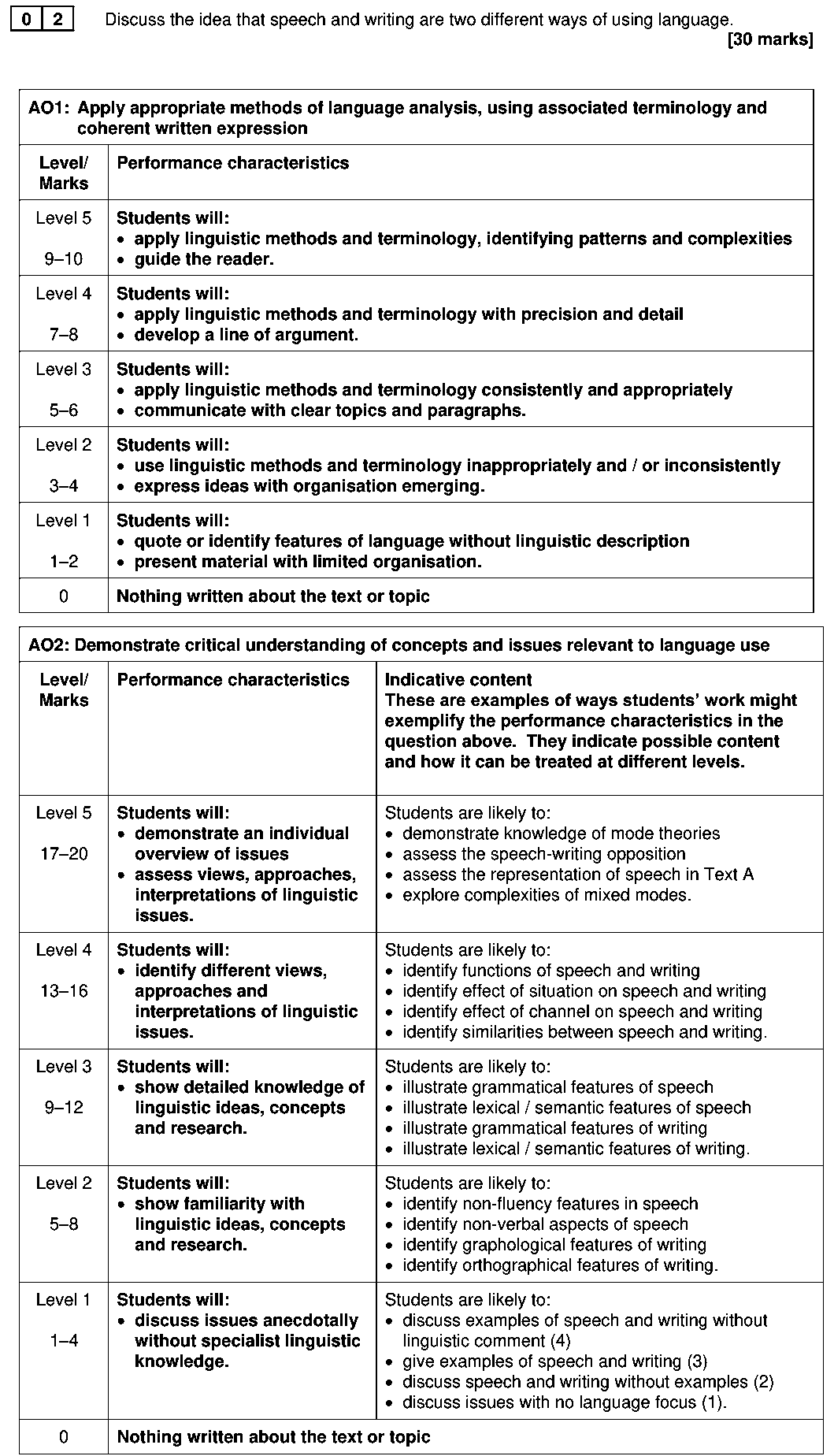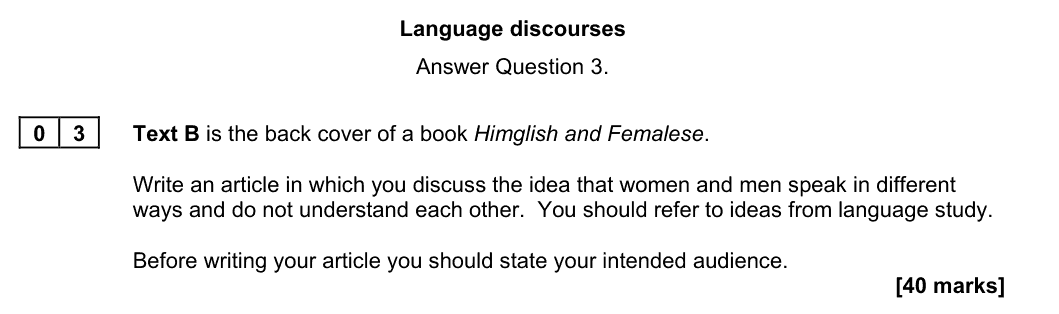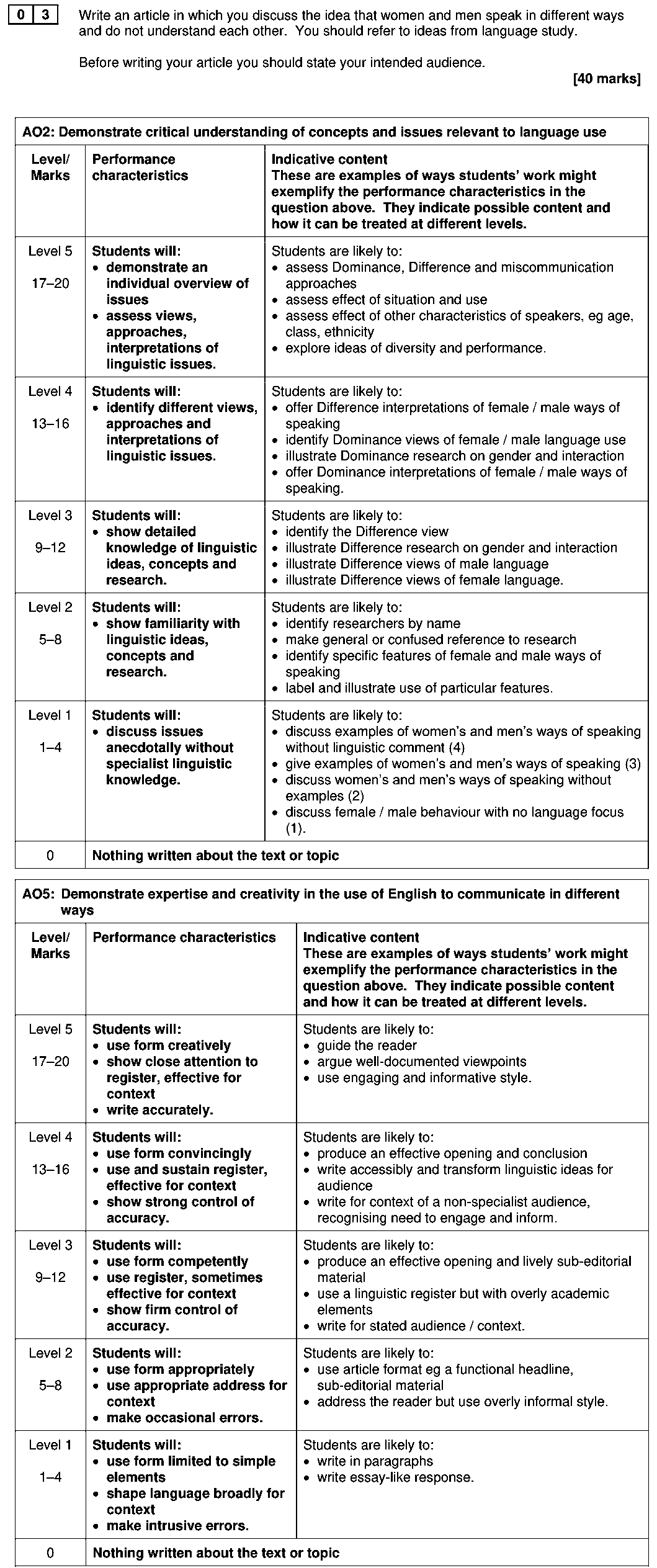
Mark scheme, including the levels and indicative content
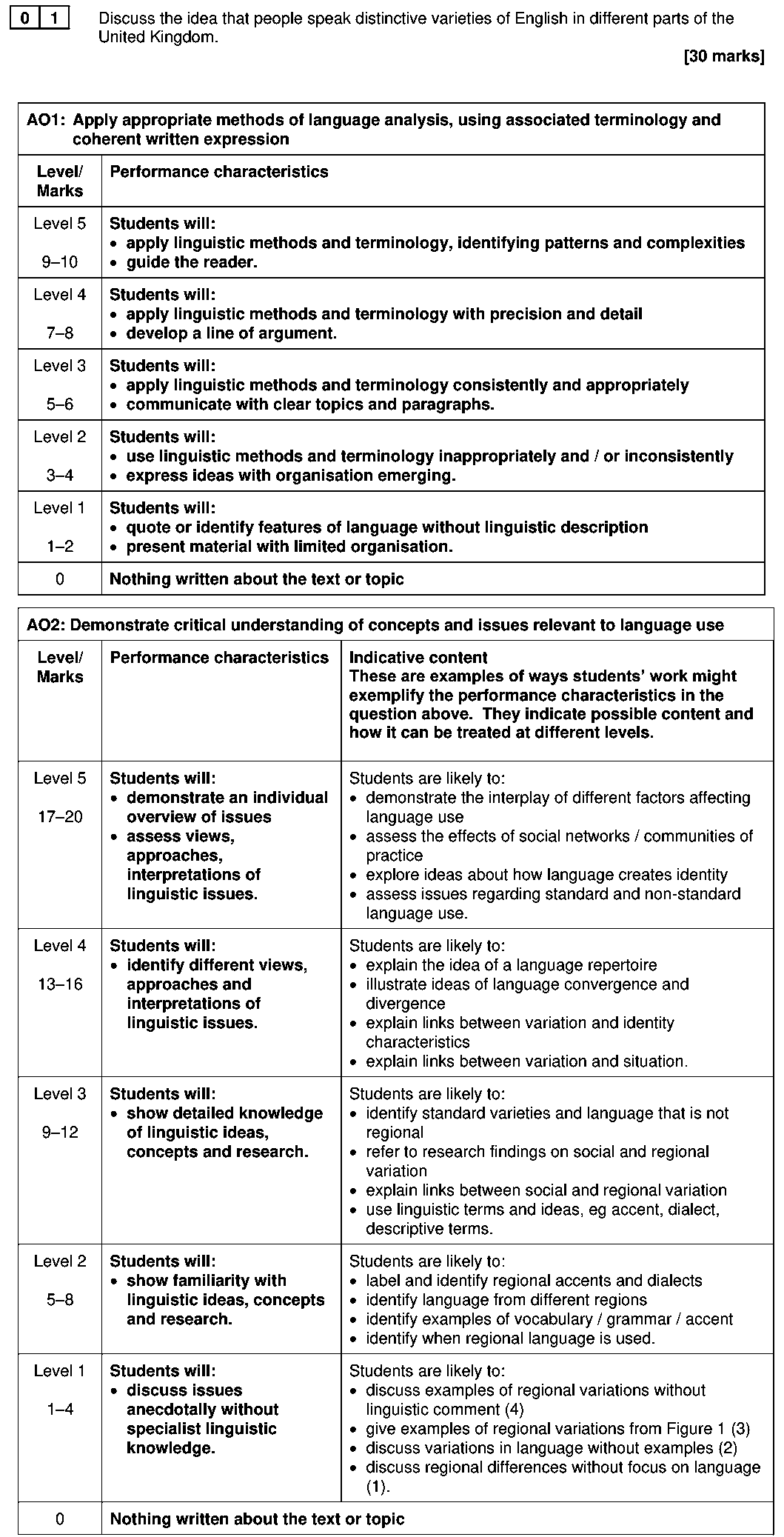
Examiner's comment
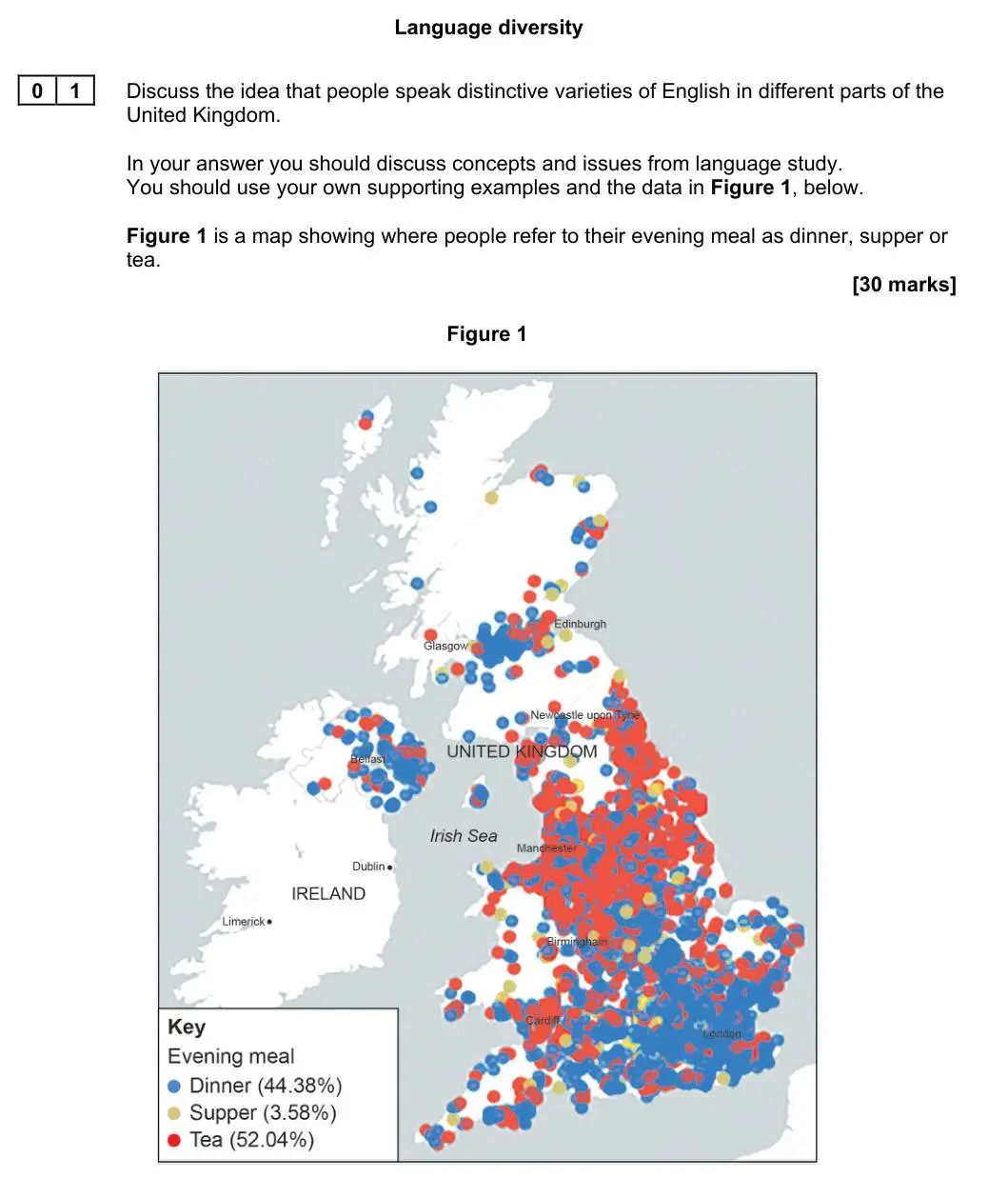
In this series, students were asked to ‘discuss the idea that people speak distinctive varieties of English in different parts of the United Kingdom.’ The data provided was a dialect map looking at the three words (dinner, supper or tea) that people used to describe their evening meal. The vast majority of students were able to move beyond the dialect map to consider wider issues relating to dialect and regional varieties of English, including accents. A range of relevant theorists were covered, with Labov’s work in New York and Martha’s Vineyard proving to be very popular. Cheshire’s work in Reading, Gary Ives in Bradford, Trudgill’s Norwich study and Rob Drummond’s study of MLE and MUBE also featured in many responses. Some students struggled to find the balance between making a range of points and demonstrating a detailed understanding of ideas in this question. Little credit can be given for listing a series of theorists and better answers selected a smaller number of practitioners and covered their findings in more detail, linking back to the idea of distinctive varieties of English. Most students were able to see that while the question initially directed students to consider regional varieties of English, they were also able to move beyond this to consider the impact of class and other non-regional factors such as occupational or situational variation. At the highest level of the mark scheme, students were able to take a more conceptual approach and discuss ideas of performativity and group identity, seeing how a range of factors intermingled to create individual linguistic identities. More successful answers: • used terminology accurately and illustrated their argument with specific examples from study or their own experience • selected relevant theorists and showed detailed understanding of their work, linking concepts and ideas to arrive at a conclusion about how important geography was in forming the linguistic choices of an individual • built and developed an argument, rather than treating the ideas and concepts covered as existing in isolation from each other • moved beyond geographical variation to consider how gender, social class, age, occupation and a plethora of other variables combine to create the ways that individuals speak. Less successful answers: • made vague references to language studies or miscredited findings (for example, Labov carried out work in Cheshire) • made little attempt to develop a clear and focused line of argument • wrote briefly and sometimes inaccurately, with answers limited to the springboard data and with no development beyond this.
Notes from the mark scheme and report
- AO1 10 + AO2 20
- top band shows the interplay of factors (class, age, gender, occupation), social networks and communities of practice, identity and standard vs non-standard use
- Level 4 explains repertoire, convergence and divergence
- credited: Labov (New York, Martha's Vineyard), Cheshire, Ives, Trudgill, Drummond on MLE/MUBE
- listing theorists earns little, fewer studies in more detail is better
- weaker answers miscredited studies or stayed with the map
- Texts/data: Figure 1: UK map of words for the evening meal (dinner, supper, tea)