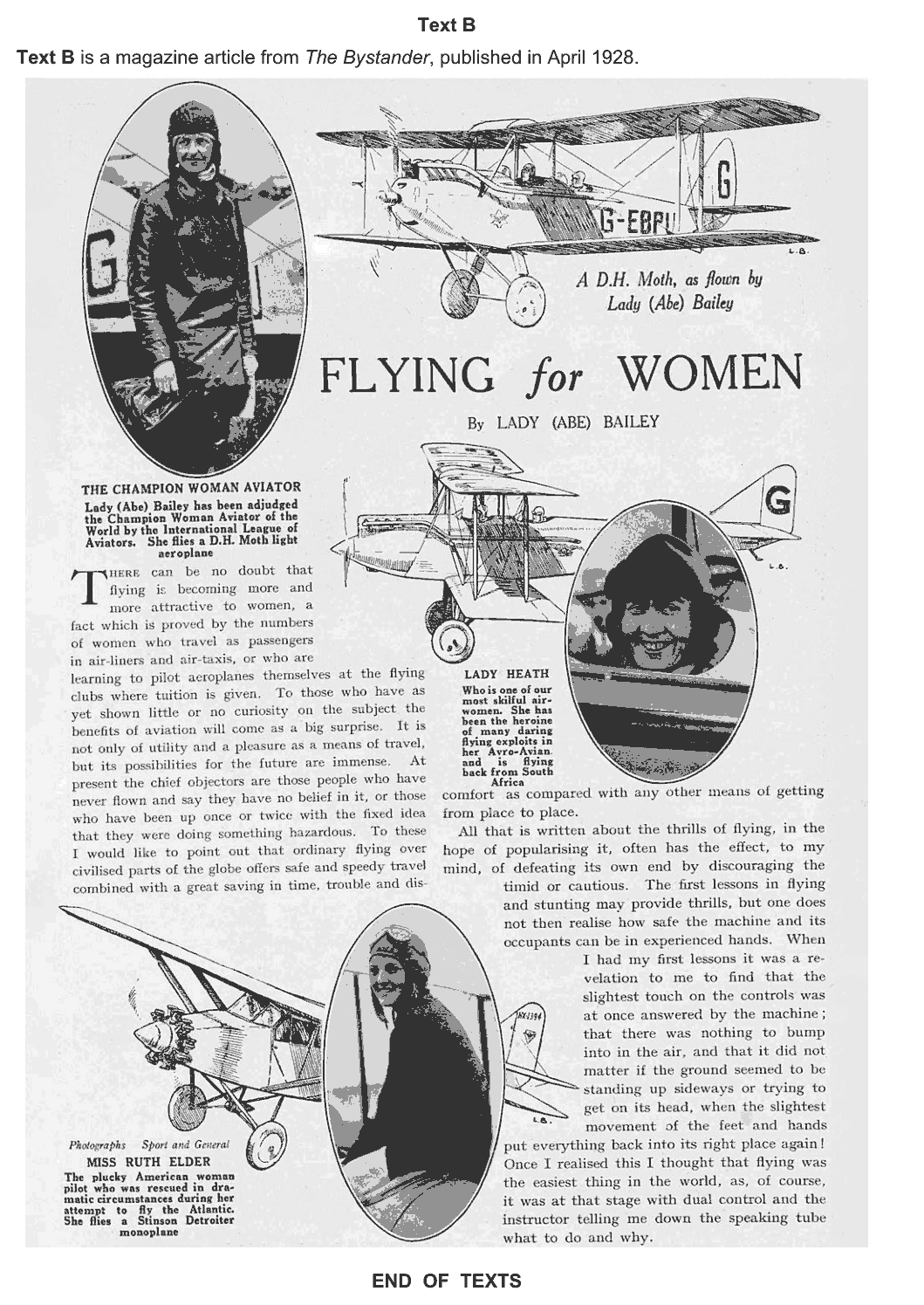
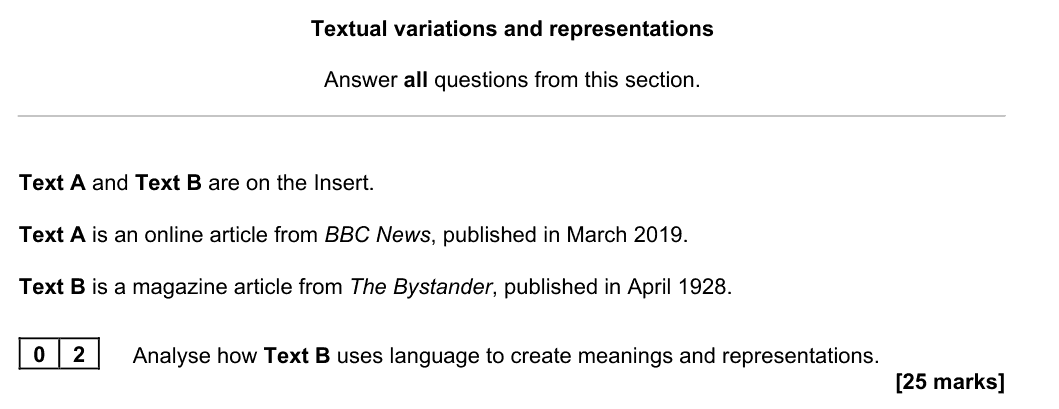
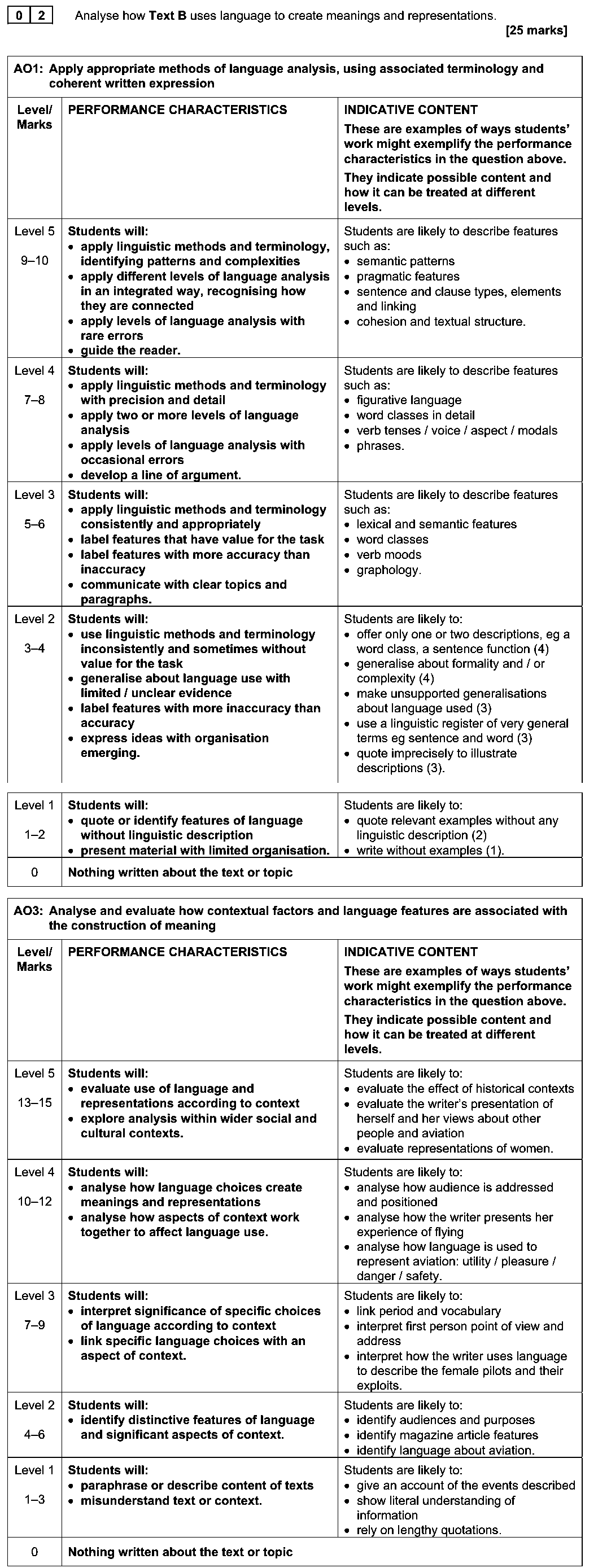
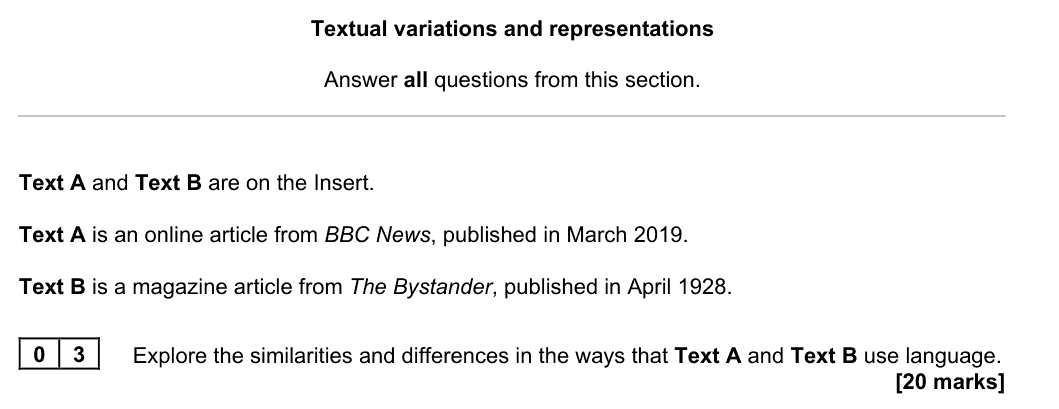
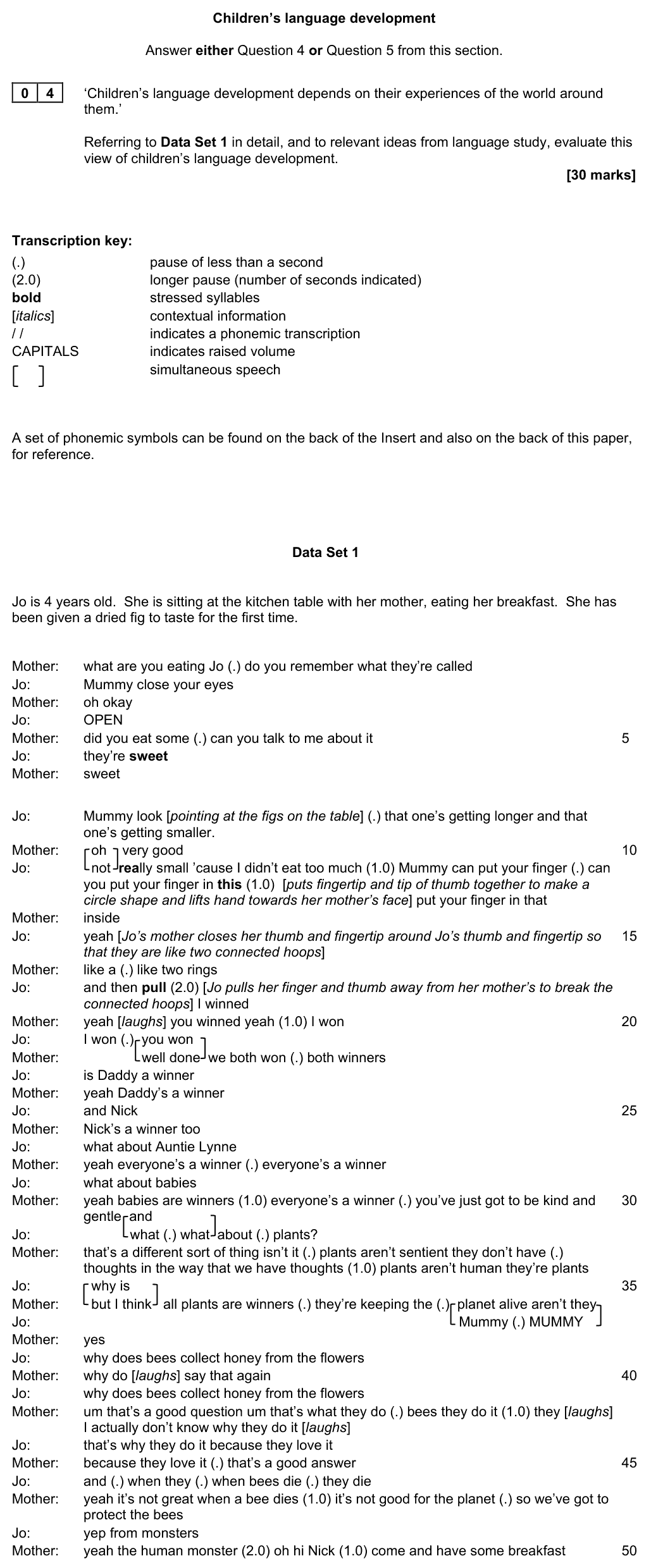
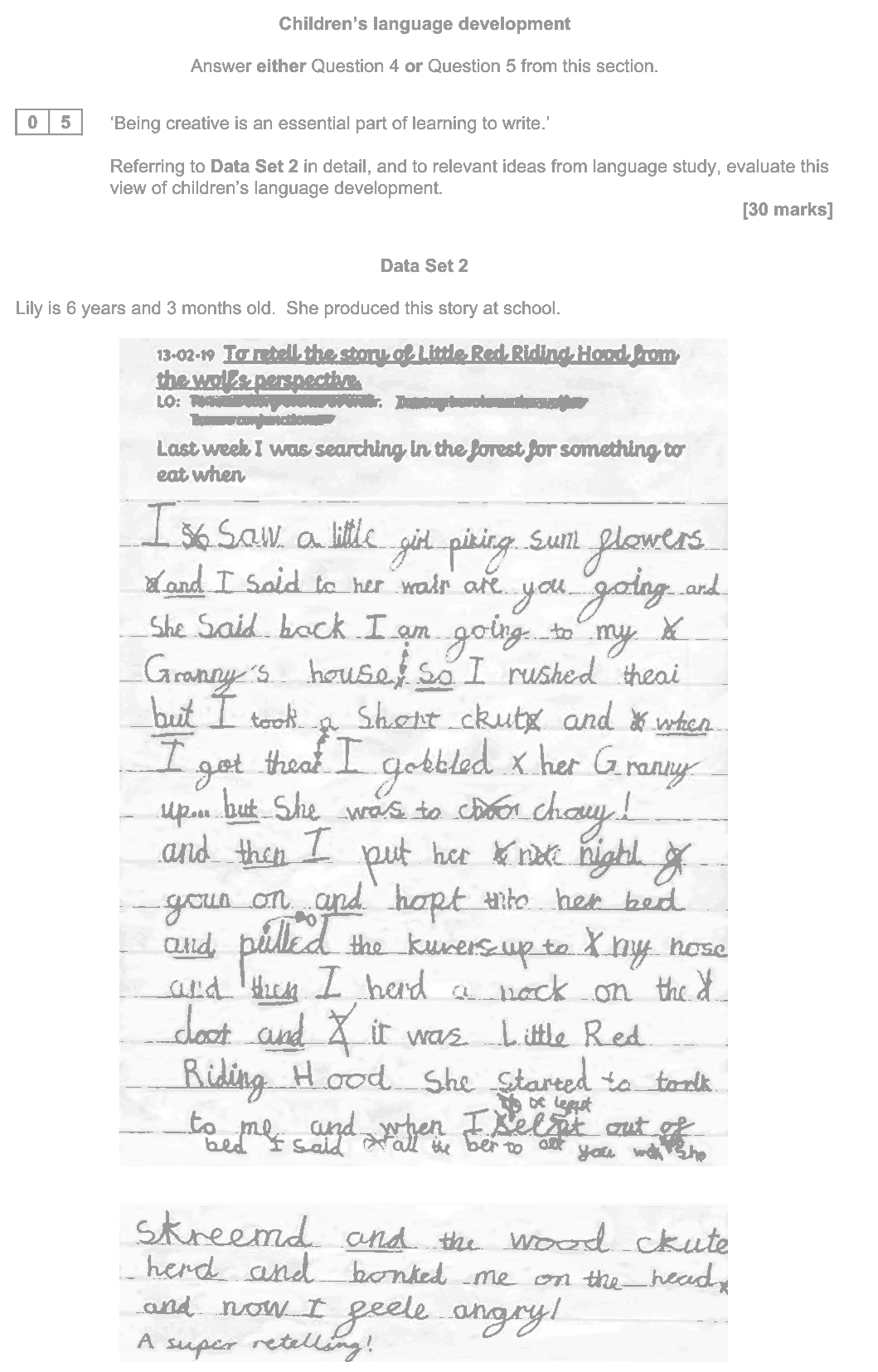
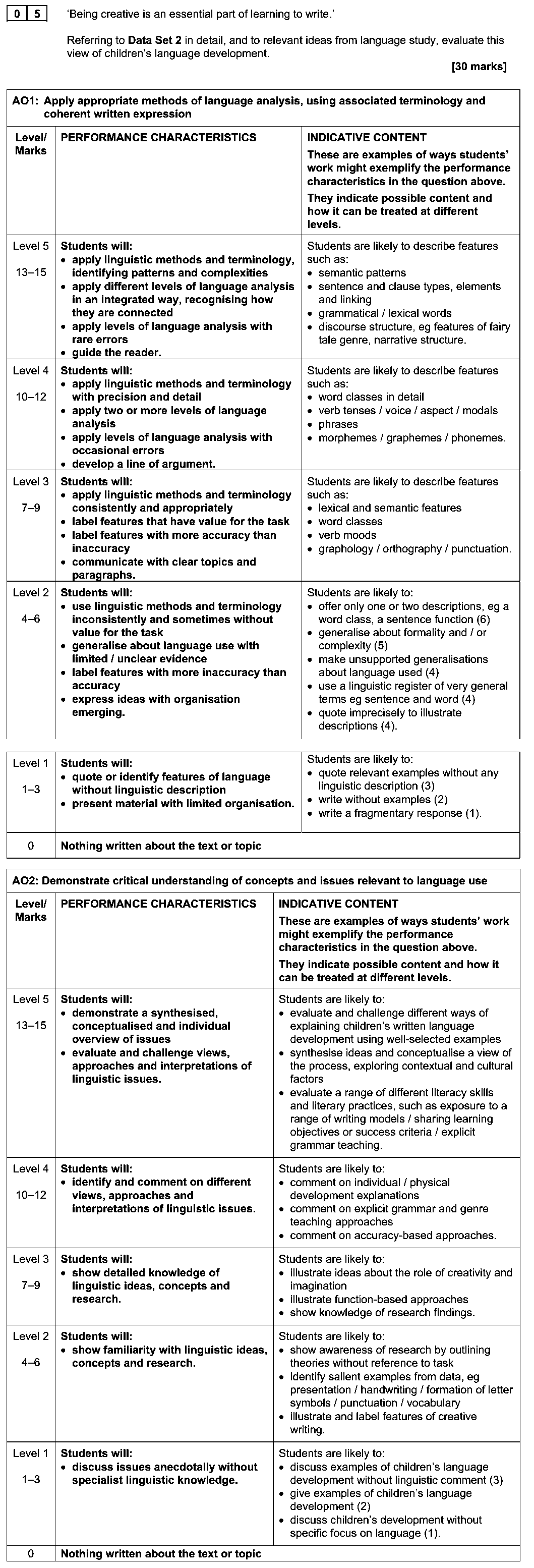
Text A (insert)
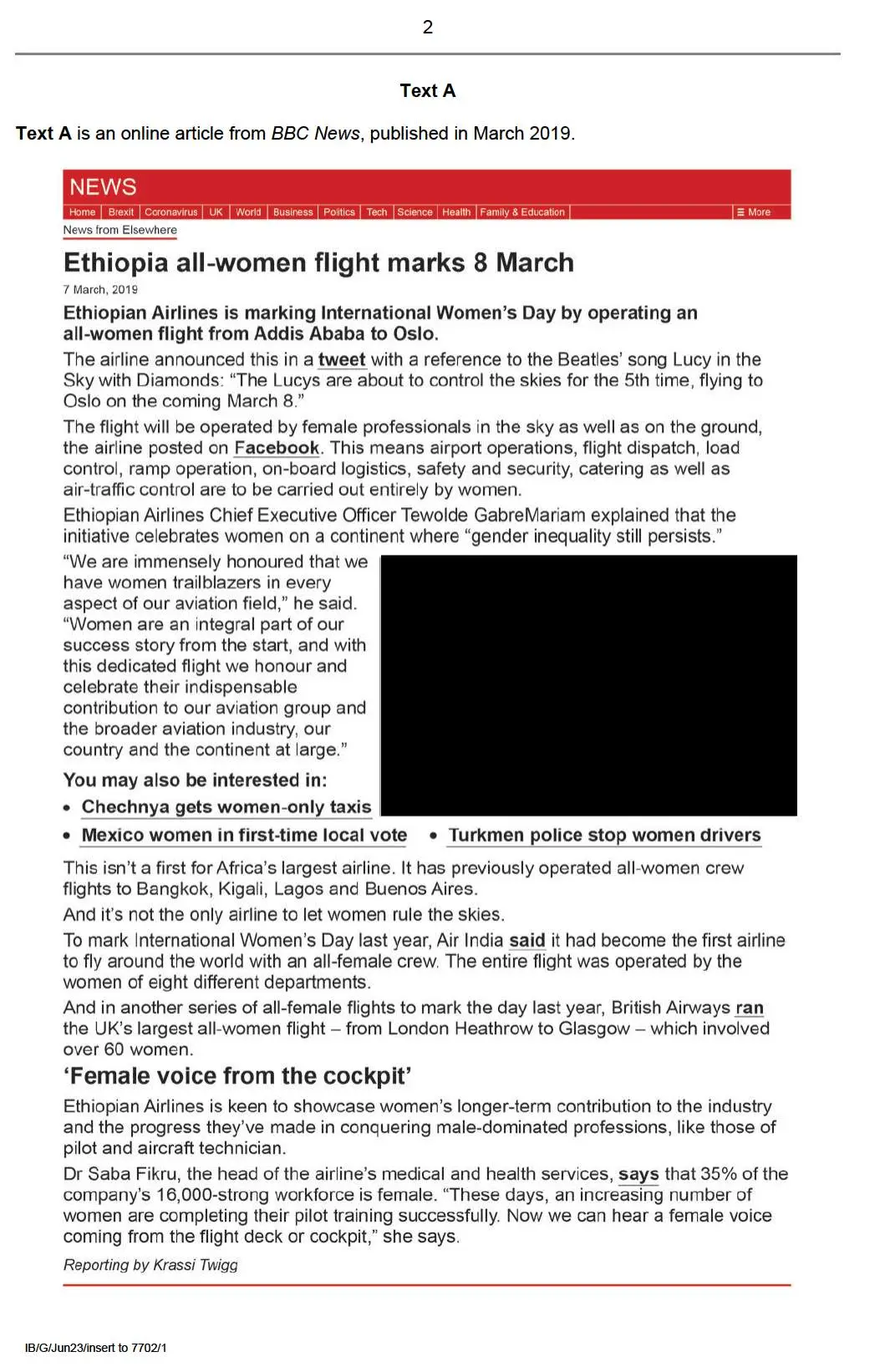
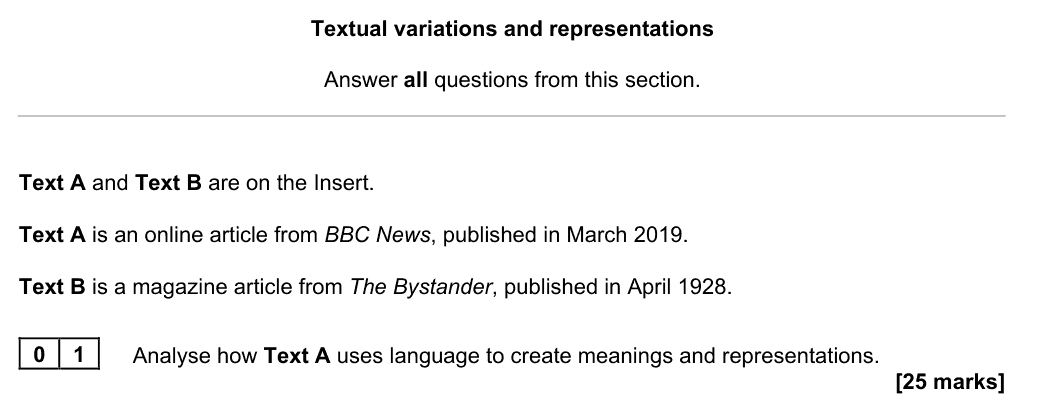
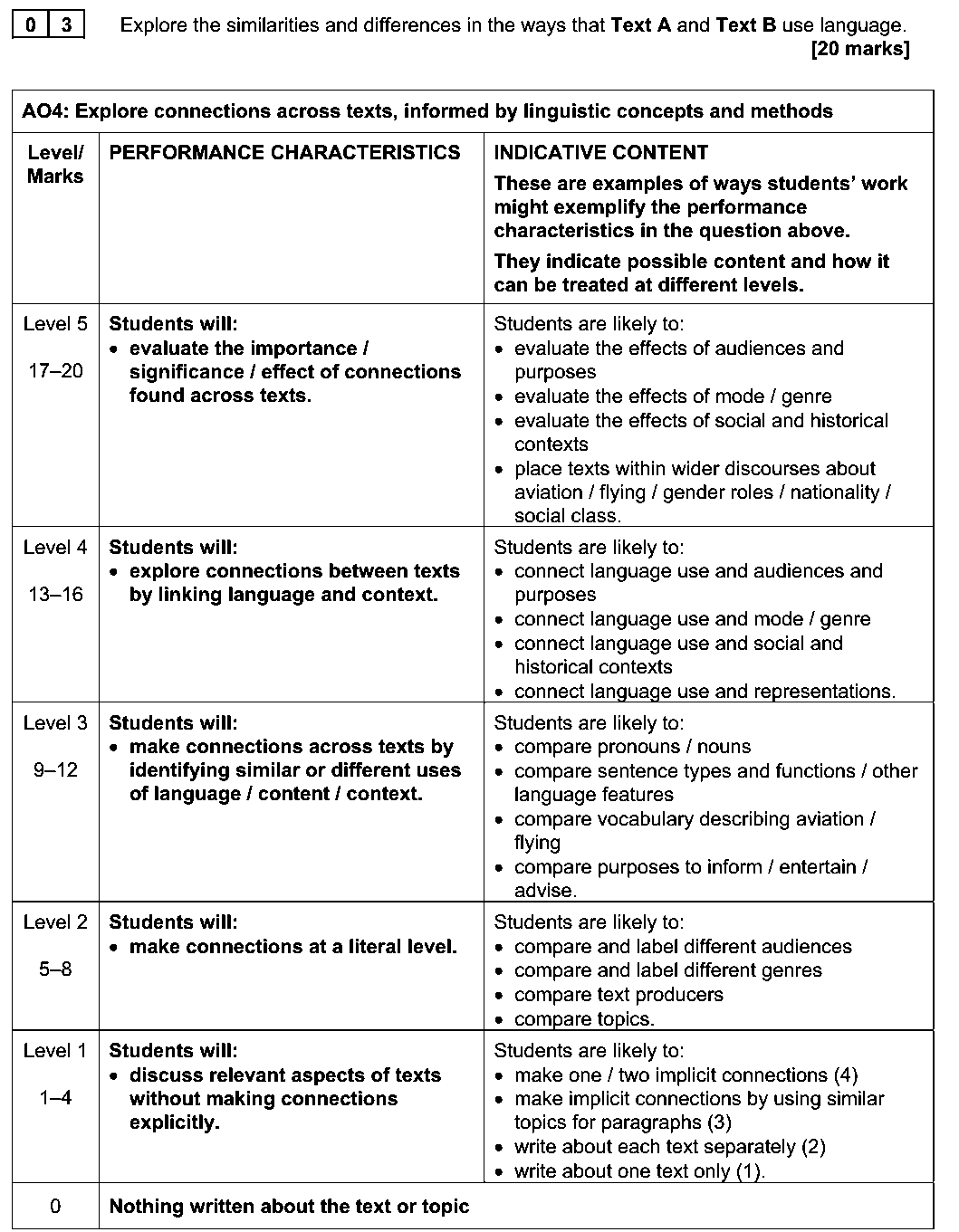
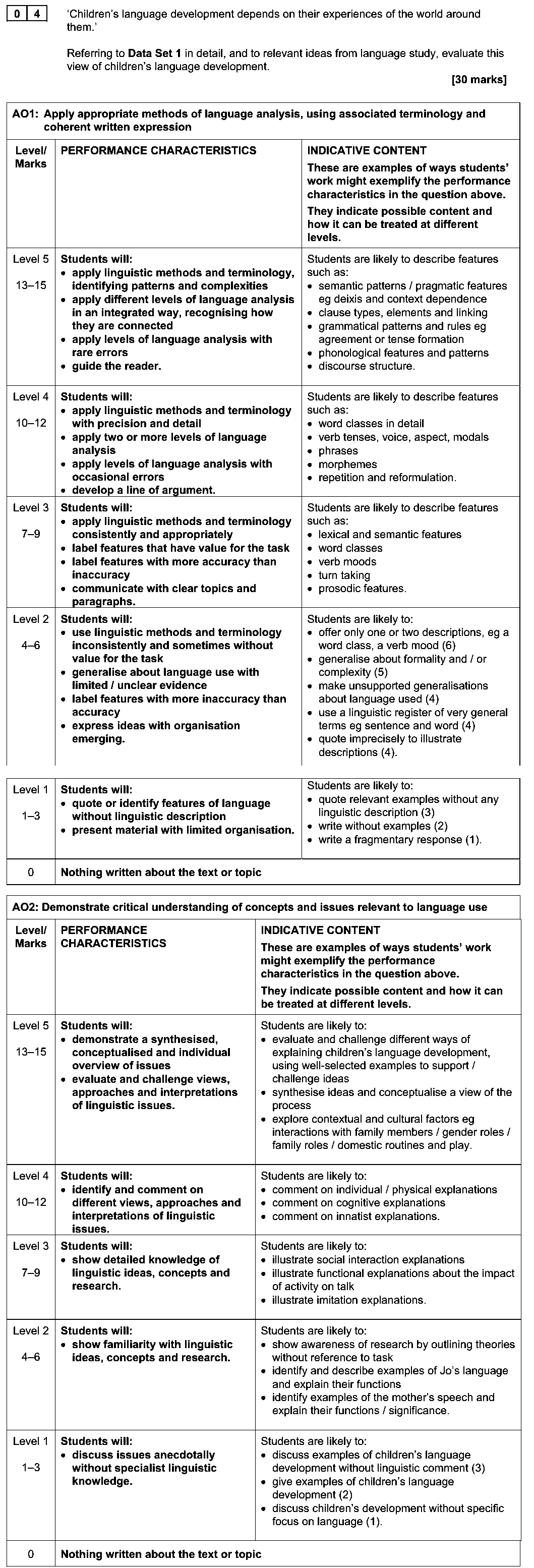
Mark scheme, including the levels and indicative content
Examiner's comment
Text A was an online BBC news article, focused on an Ethiopian Airlines flight that would be fully operated by women to coincide with International Women’s Day. This was an accessible text, with all but a very few students able to offer an interesting and developed discussion of audience, purpose, genre and language content. Many students were able to address ideas about how women were being presented in this text, discussing the positive representation of professional women within a traditionally male dominated profession. The most effective responses saw students exploring the journalistic context of the piece as an article published to coincide with International Women’s Day and therefore not perhaps reflective of the standard practices of the airline, and were also able to consider the self-representation of Ethiopian Airlines. Less developed responses tended to understand that the text was about women and considered this the sole representational focus. This rather narrow approach led to limited discussion of the different ways that women were presented within the text, or indeed other representations such as that of the airline. AO1 It was pleasing to see that most students were able to apply language terms with confidence. Students appeared to be well versed with the level descriptors and offered precise and accurate labelling of terms. Most commonly identified features included noun phrases, verb choices, adjectives and listing. Students made detailed and accurate reference to sentence and clause types, although there was less consideration of cohesive features than in previous series. Occasionally students focused solely on clause types and this hampered meaningful comment about textual meanings or representations. The strongest responses selected language features purposefully, with a view to discussing how language was used within the text. AO3 The majority of students showed a clear understanding of the positive representation of women in the text. Most students made some comment about the professional roles the women held within the airline and were able to discuss ideas about equality and changing opportunities for women. It is worth remembering that using the word ‘represent’ does not mean that ideas about representation are being addressed. Sometimes students used the term ‘represent’ when they were simply addressing the topic content. In order to comment on representations successfully, students needed to focus on interpretation and analysis. The strongest responses were able to do this, understanding the need to link language points to their discussion of textual meanings. More successful responses: • explored the significance of the BBC in producing this article and the implied support for International Women’s Day to stop gender inequality • noted that this was part of the BBC’s ‘news from elsewhere’ to suggest that this was not a major news story • responded to the whole text to consider the hyperlinks as evidence that gender inequality was a global issue • evaluated whether Ethiopian Airlines was genuinely celebratory and innovative in their support of International Women’s Day or whether they were promoting it for commercial purposes • analysed the implications of patriarchal attitudes behind verb choices such as ‘let’ in ‘it’s not the only airline to let women rule the skies’ • identified the semantic field of power in the pattern of verbs and discussed significant verb choices: ‘control’, ‘rule’ ‘conquering’, ‘operated’, ‘honour’, ‘celebrate’ • discussed the significance of active voice: ‘The Lucy’s are about to control the skies’ and passive voice: ‘the flight will be operated by female professionals’ Areas for development: • responses that treated the text as an online article focusing solely on mode/genre features did not address the topic and thus struggled to engage with textual meanings • some students overlooked the text producer and any significance associated with this • some students offered broad assumptions about ‘feminists’ as the sole audience for this article • some students offered valid discussion of the presentation of women in the text, but selected examples that did not support their comments • responses relying on graphological features or very few language details from the text remained straightforward, with general comments about meanings and representations • some students used terms generally, eg ‘word’, ‘lexis’, or identified ‘phrase’ or ‘clause’ without specifying which type of phrase/clause • terms were referred to precisely but without clear exemplification, eg identifying noun phrase or verb phrase and then quoting whole clauses or sentences • exemplification was sometimes unclear or relied on very lengthy quotes with minimal focus on language detail.
Notes from the mark scheme and report
- AO1 10 + AO3 15
- top band evaluates journalistic news language, Ethiopian Airlines' self-representation and representations of female professionals
- credited: BBC 'News from Elsewhere' framing, hyperlinks showing global inequality, commercial vs celebratory motives, patriarchal 'let' in 'let women rule the skies', power verbs (control, rule, conquering), active vs passive voice
- weaker answers treated women as the only representation, used 'represent' for mere topic, assumed a 'feminist' audience, focused only on online features, or labelled phrases/clauses without precise examples
- Texts/data: Text A: BBC News online article (2019) on Ethiopian Airlines' all-women flight for International Women's Day