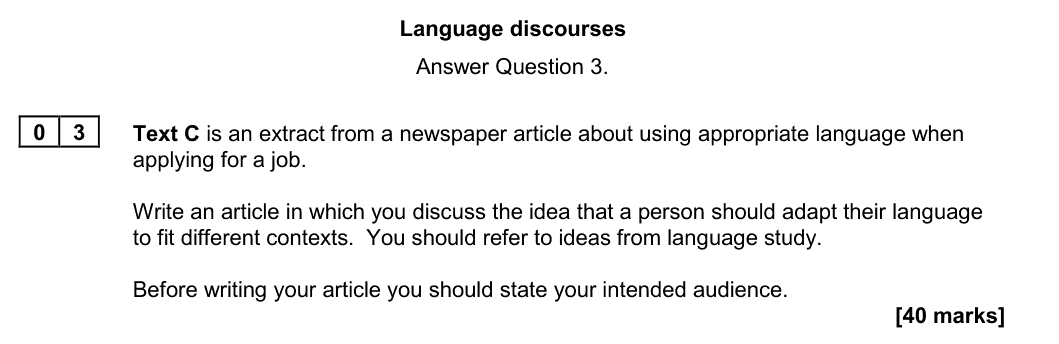
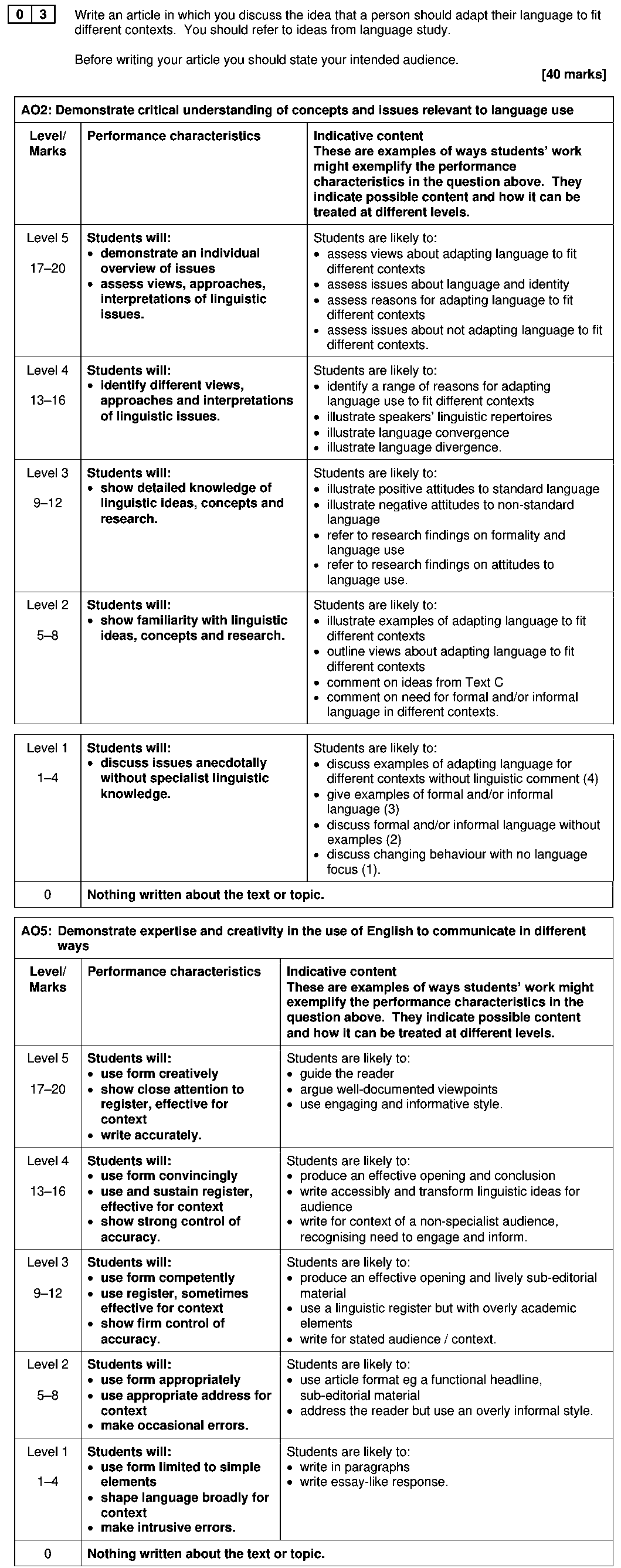
Text A (insert)
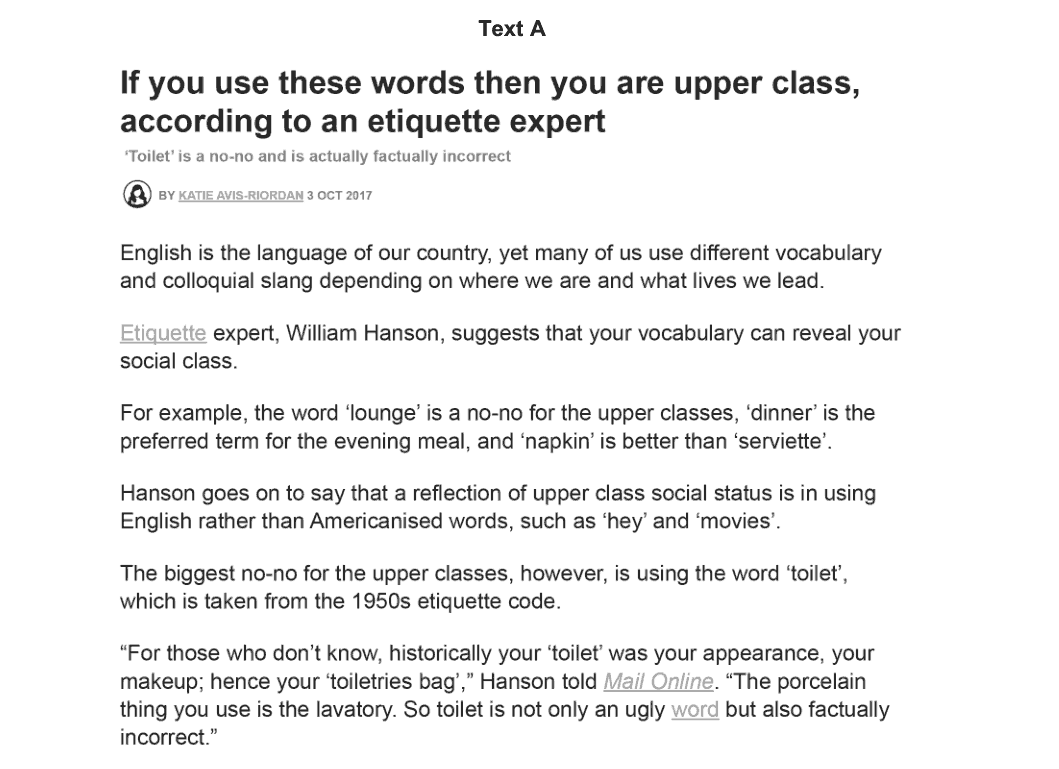
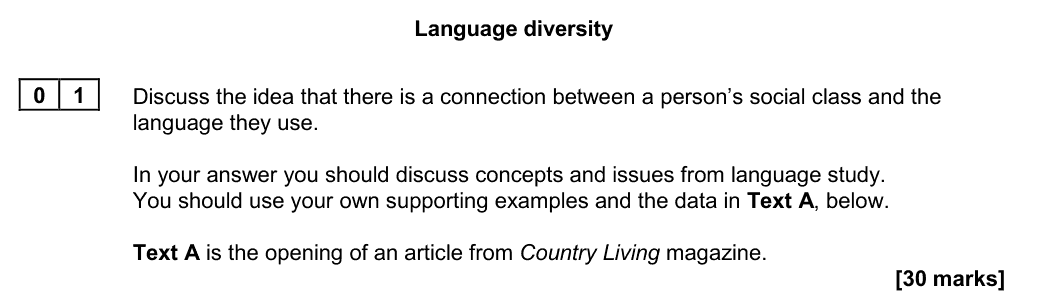
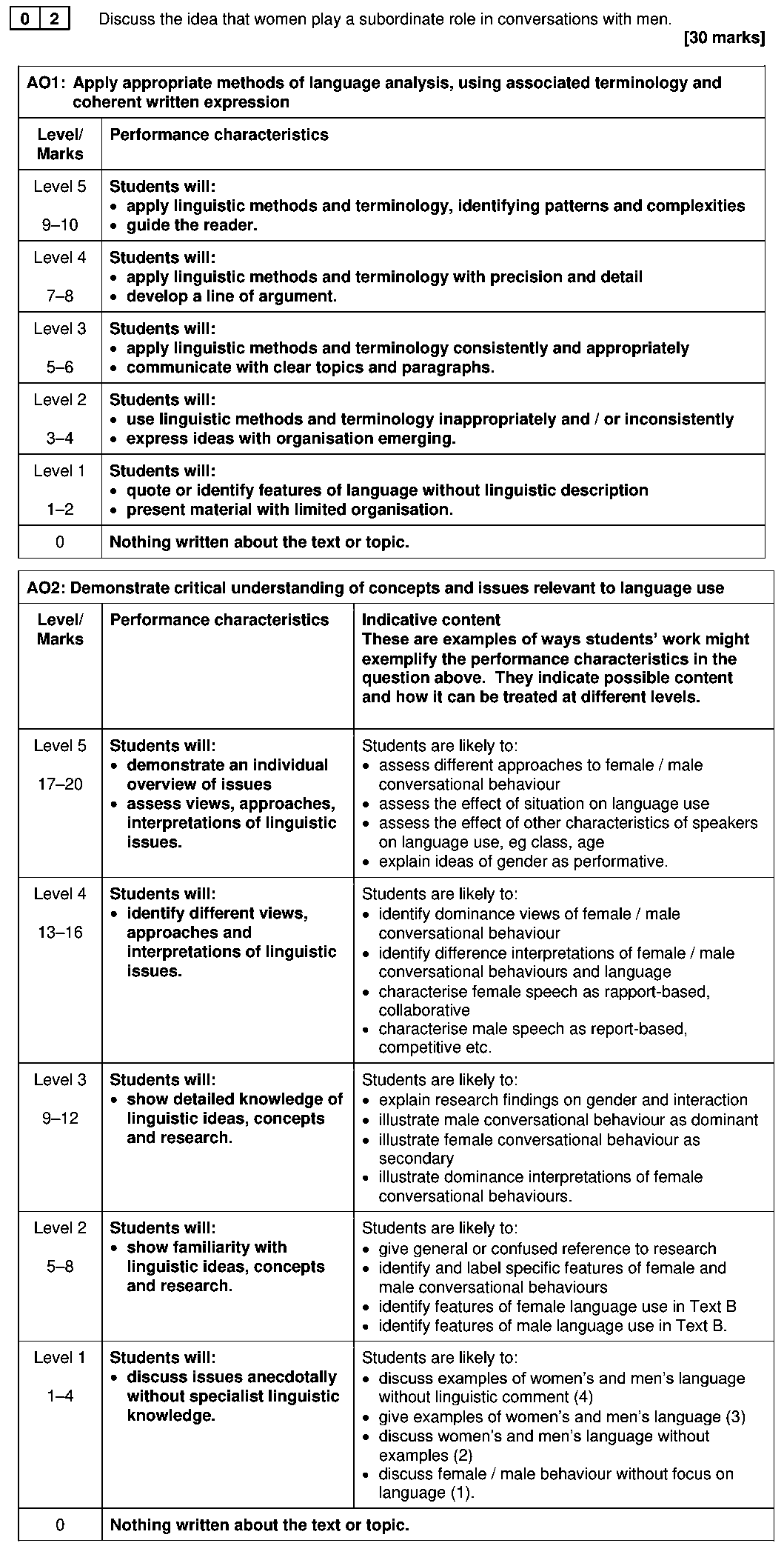
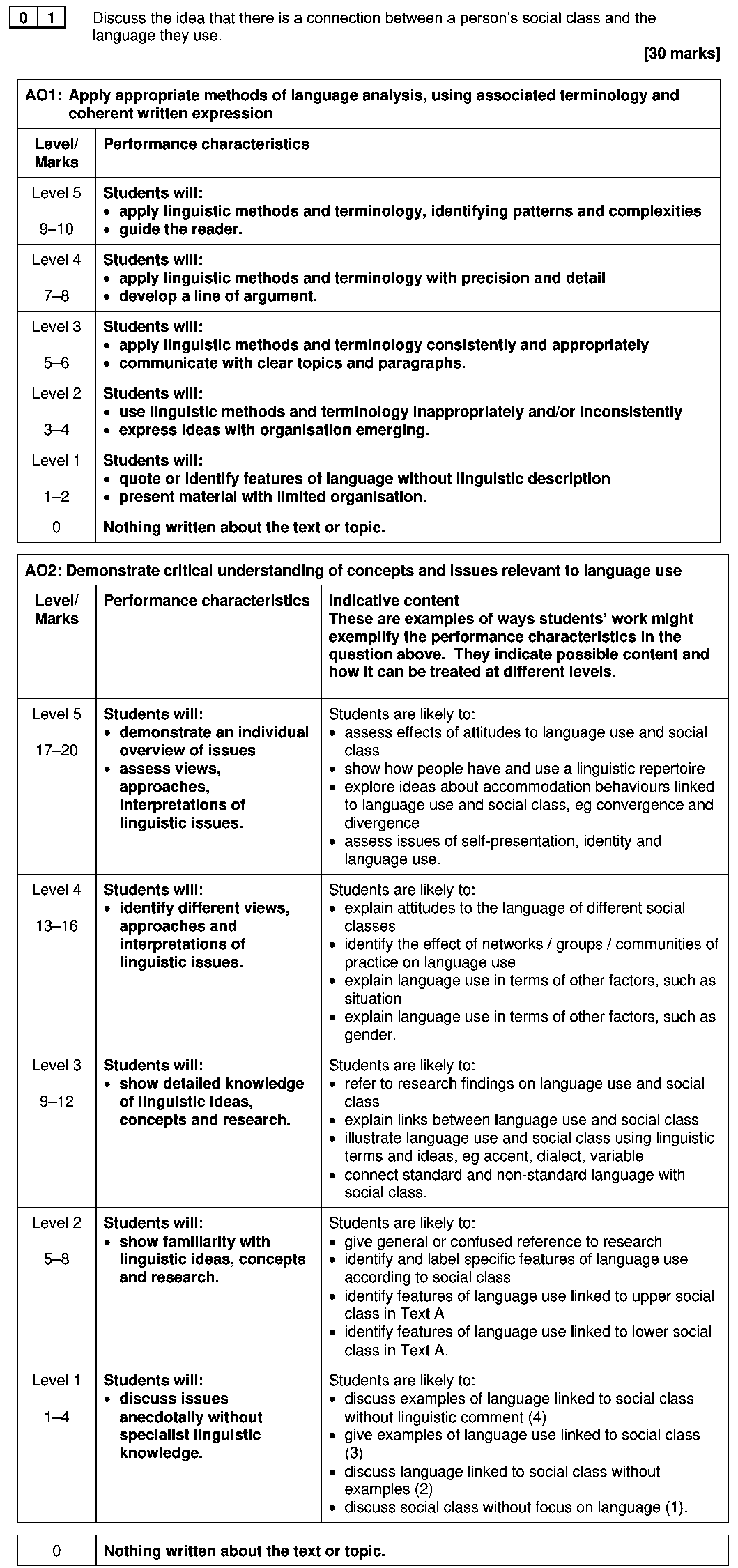
Mark scheme, including the levels and indicative content
Examiner's comment
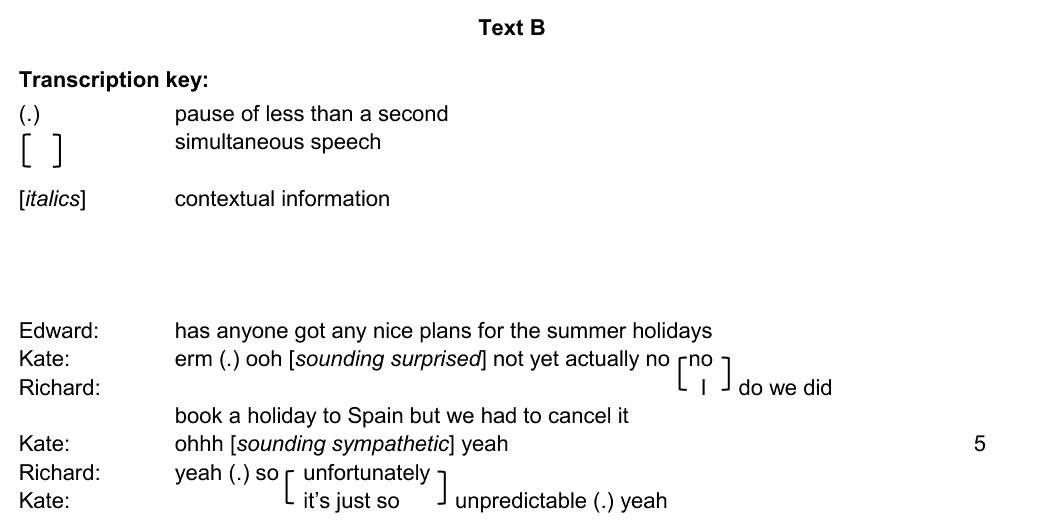
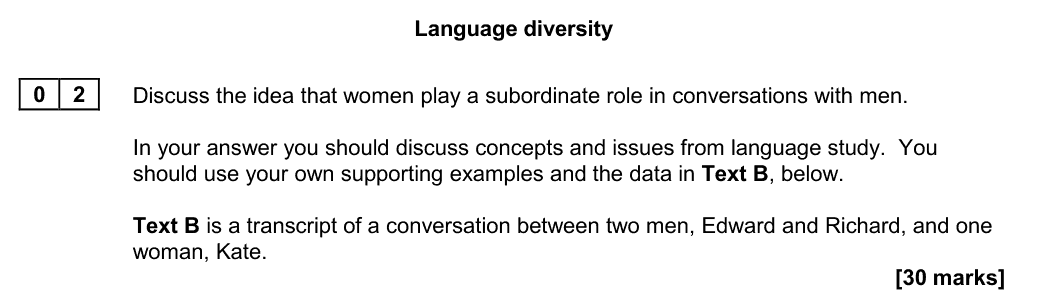
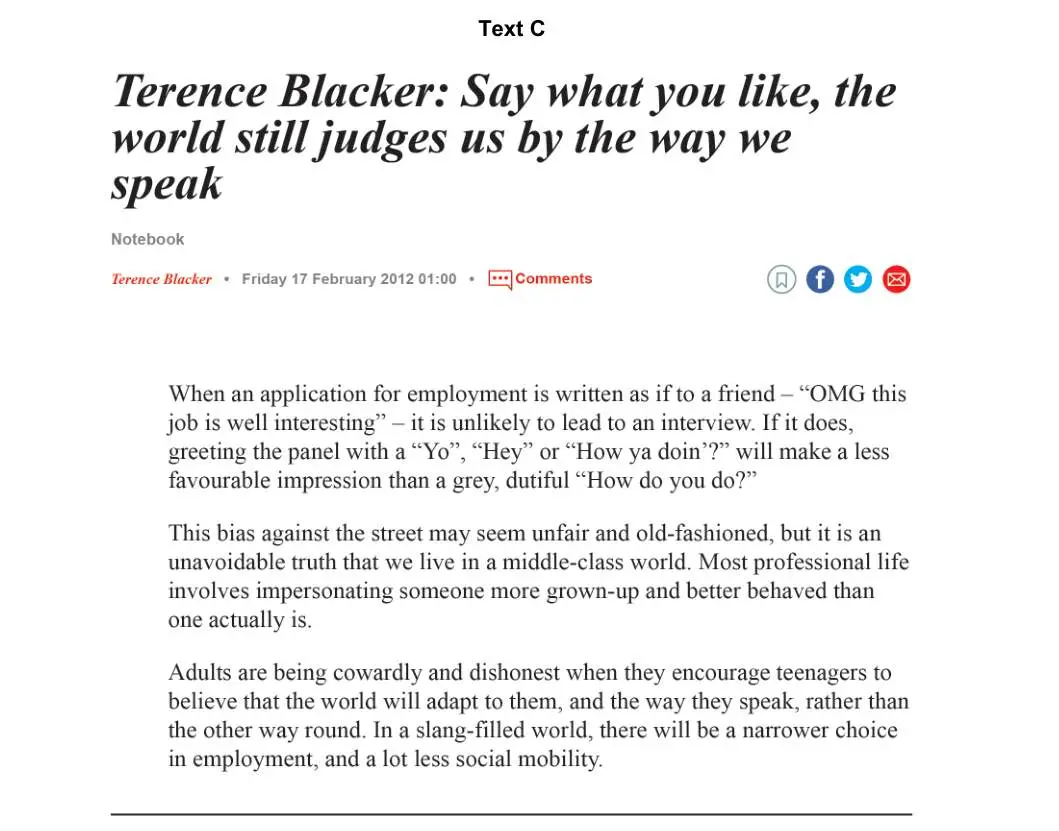
In this series, students were asked to ‘discuss the idea that there is a connection between a person’s social class and the language they use.’ The data provided was an article from Country Living, commenting on and offering examples of class and etiquette. The vast majority of students were able to move beyond the article to consider wider issues relating to language and class, often supported by an impressive range of theories and concepts. The work of Petyt, Cheshire, Eckert, Labov, Ives, Trudgill, Bernstein and Giles were all very popular, but students were credited for reference to a range of case studies, including more recent references to accent surveys, MLE, MUBE and the work of Drummond and Cole, for example. Better answers considered ideas such as code-switching, convergence/divergence, sociolect and idiolect and considered how views of accents and dialects impacted on notional views of class. Some students questioned the notion of class itself in 2024. Some students struggled to find the balance between making a range of points and demonstrating a detailed understanding of ideas in this question. Little credit can be given for name-checking a long list of theorists and better answers selected a smaller number of practitioners and covered their findings in more detail, linking back to the idea of distinctive varieties of English linked to class. At the highest level of the mark scheme, students were able to take a more conceptual approach and discuss ideas of performativity and group identity, seeing how a range of factors intermingled to create individual linguistic identities tied to different views of class. More successful answers: • used terminology accurately and illustrated their argument with specific examples from study or their own experience • selected relevant theorists and showed detailed understanding of their work, linking concepts and ideas to arrive at a conclusion about how different contextual factors influence perceptions of class and language • built and developed an argument, rather than treating the ideas and concepts covered as existing in isolation from each other • moved beyond prejudices about class and accent to consider how it could be useful to create group identity. Less successful answers: • made vague references to language studies or miscredited findings • made little attempt to develop a clear and focused line of argument, writing a series of vaguely connected paragraphs. • wrote briefly and sometimes inaccurately, with answers limited to the springboard data and with no development beyond this.
Notes from the mark scheme and report
- AO1 10 + AO2 20
- top band assesses attitudes to class and language, repertoires, accommodation (convergence/divergence) and self-presentation and identity
- Level 4 adds networks, communities of practice, situation and gender
- credited: Petyt, Cheshire, Eckert, Labov, Trudgill, Bernstein, Giles, Drummond, MLE/MUBE, questioning the notion of class today
- name-checking long lists earns little
- weaker answers stayed with the U/non-U word list in the article
- Texts/data: Text A: Country Living article on words that mark upper-class speech (etiquette expert William Hanson, 2017)