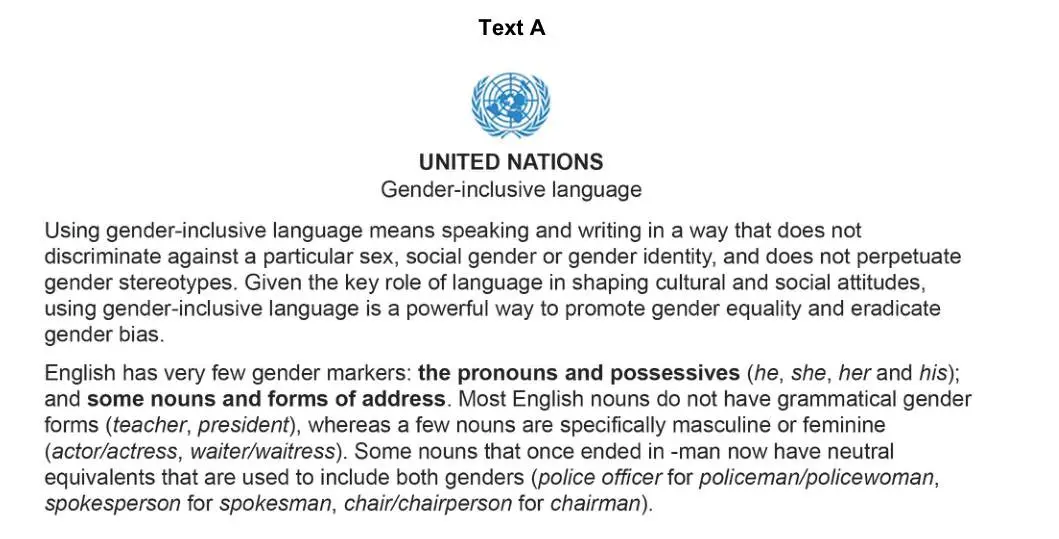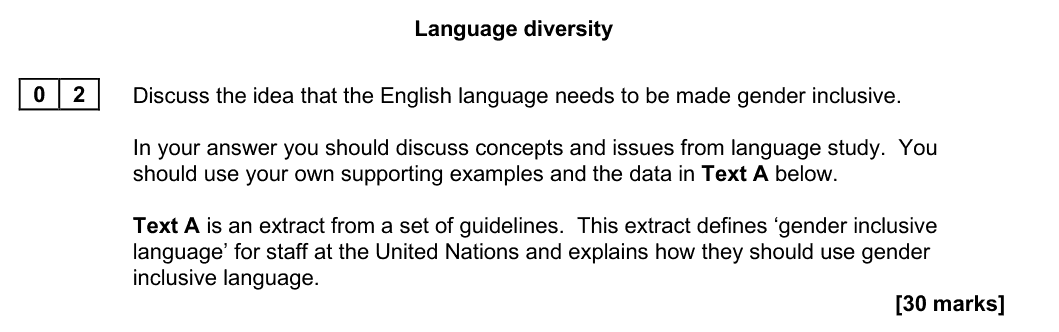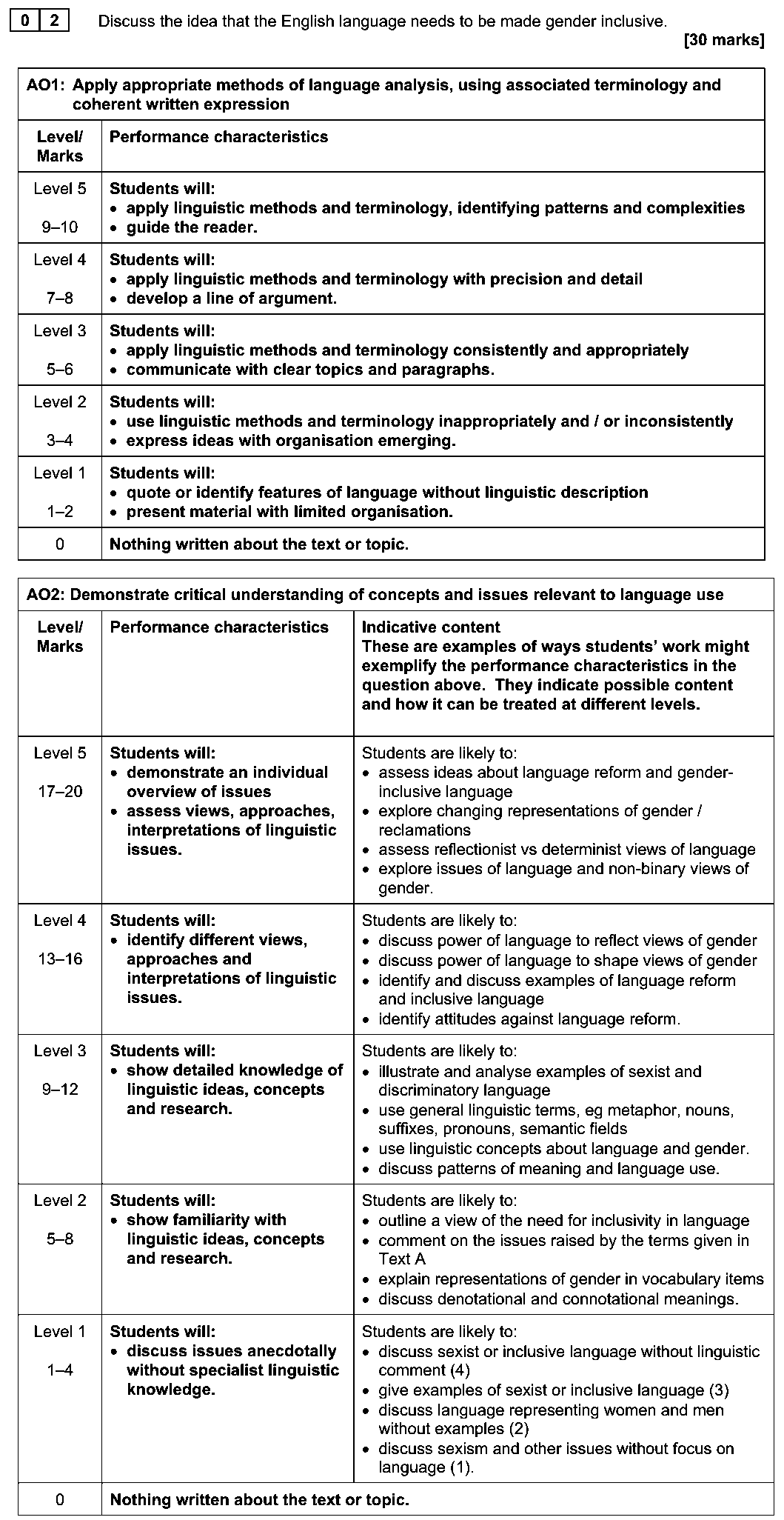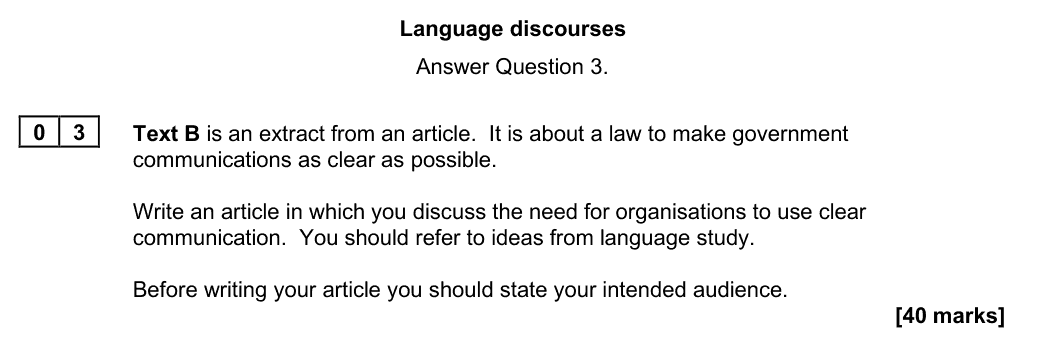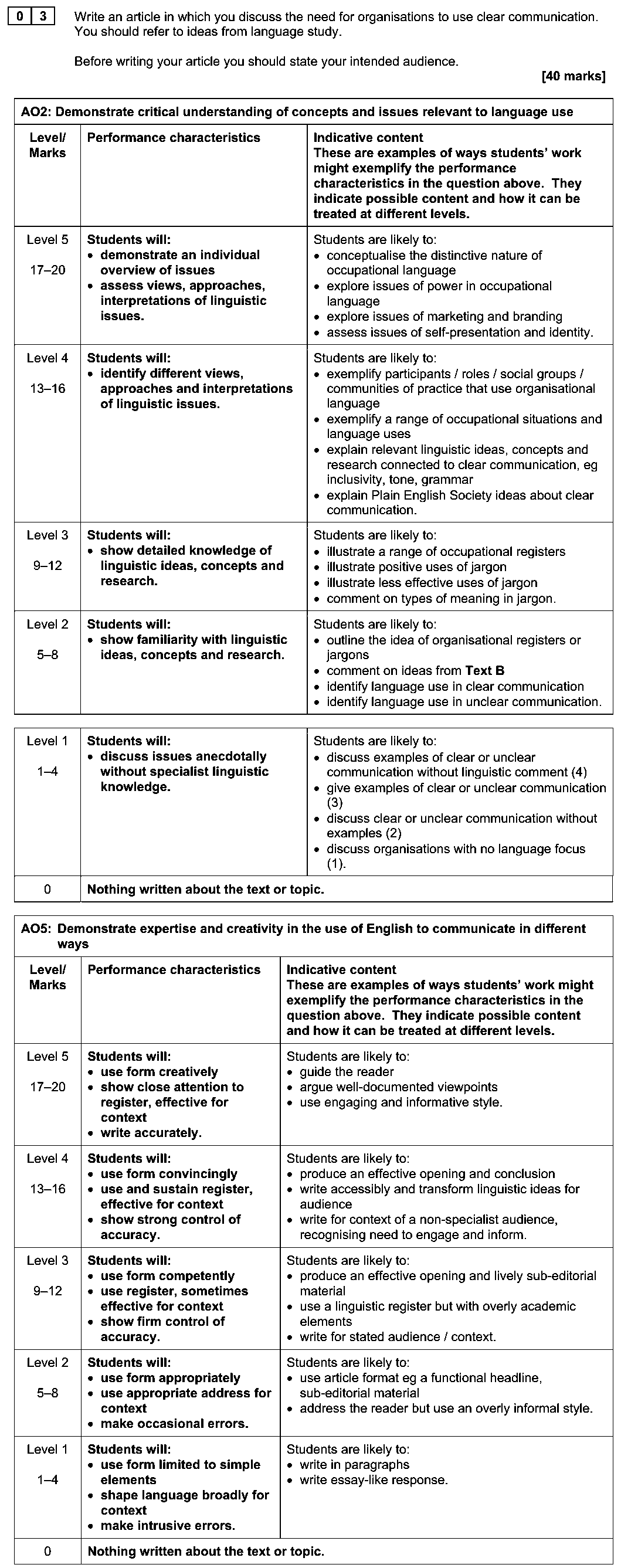
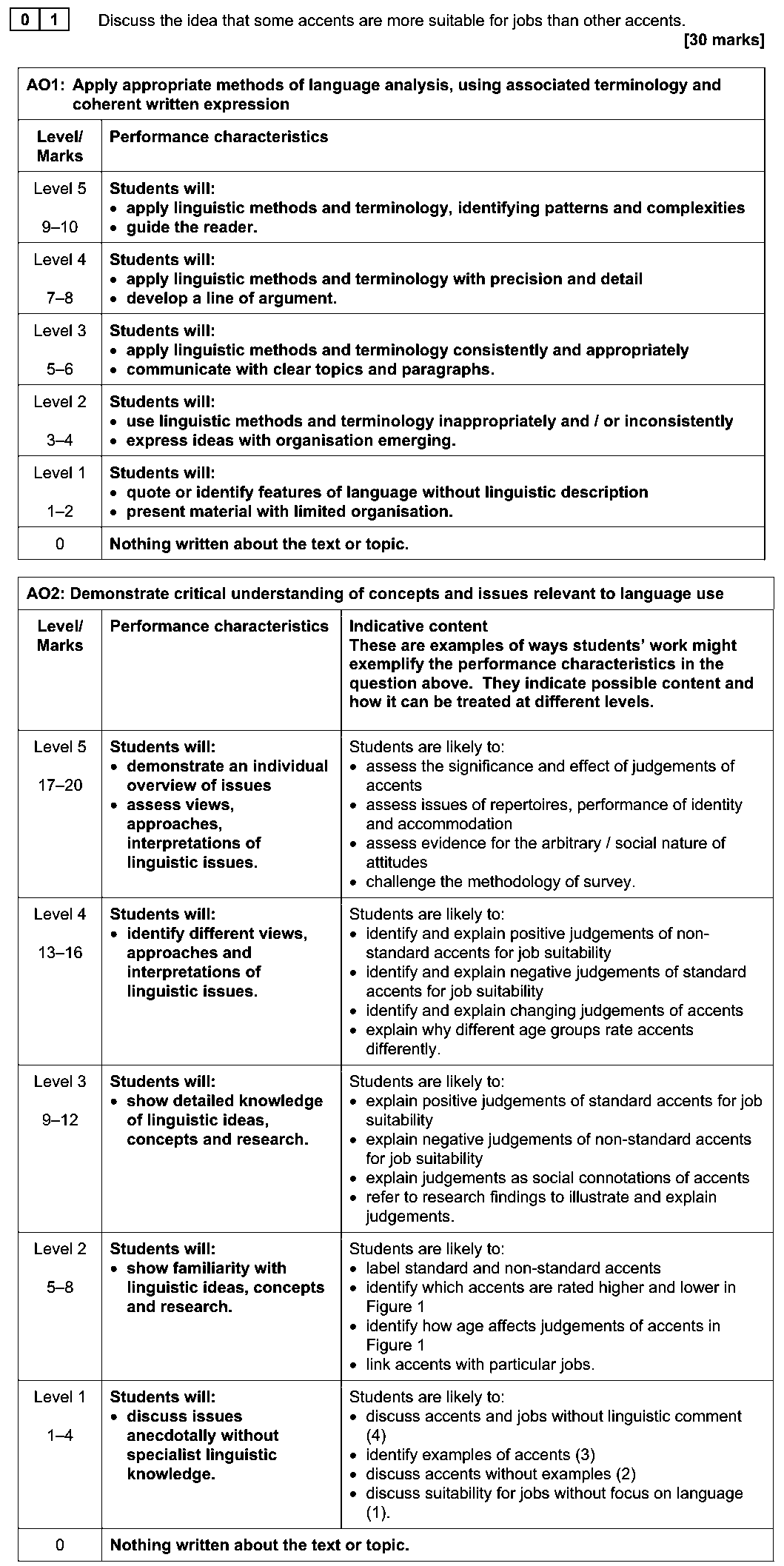
Mark scheme, including the levels and indicative content
Examiner's comment
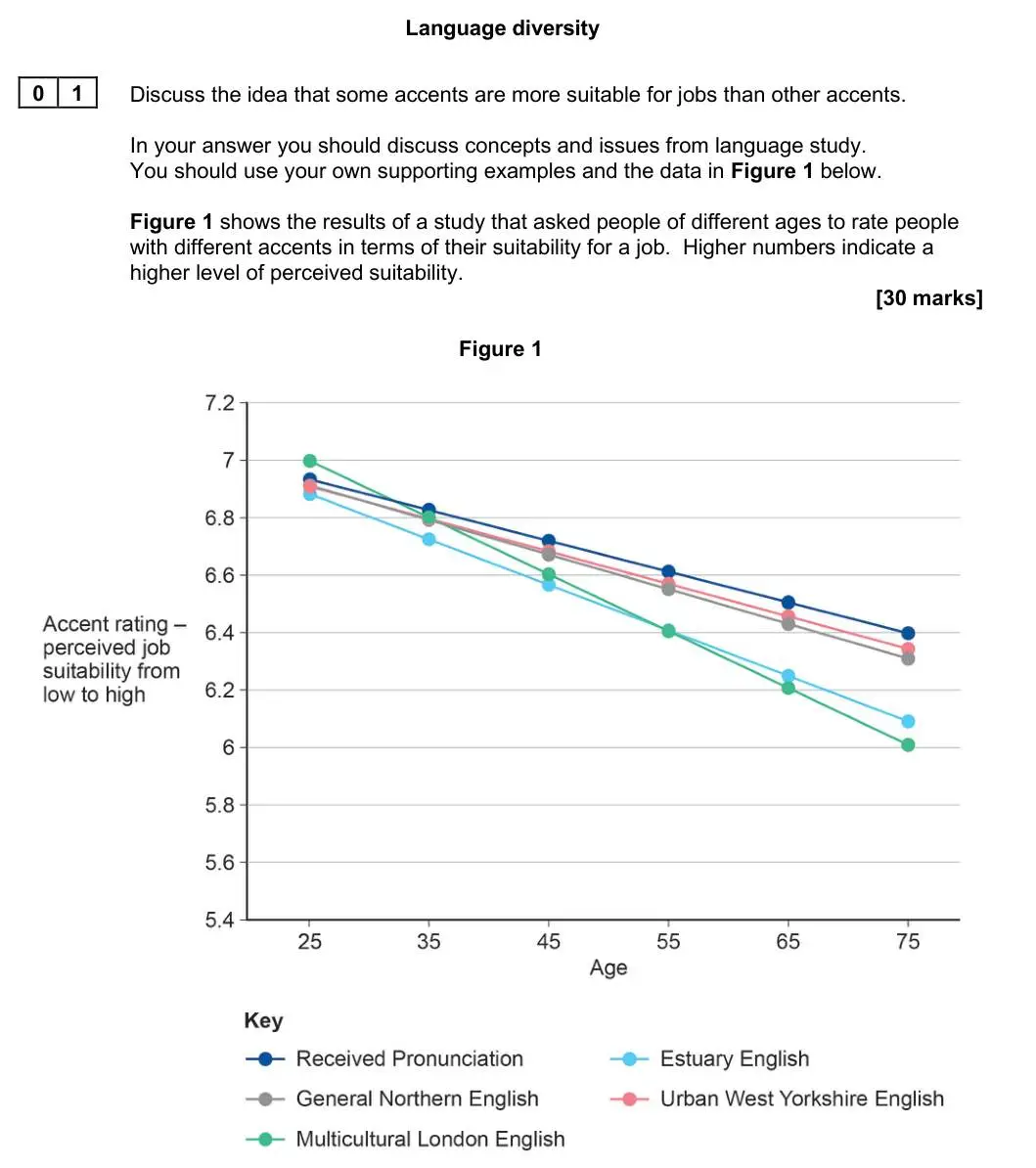
Discuss the idea that some accents are more suitable for jobs than other accents. How students did well Students did well when they: • referenced very familiar names in the fields of accent, such as Labov and Giles • explained Matched Guise research methodology and findings • referenced a range of different studies on the perception of accents • wrote about more contemporary approaches to accent study, highlighting the work of Drummond in particular, with links drawn between MLE and M(U)BE • explored the reasons behind MLE’s growing acceptance with younger people in the graph data • considered reasons for the spread of MLE beyond London • explored which accents were seen as more suitable for particular jobs • explored why different people might hold different views • considered how people might respond to this situation • identified attitudes to accents as social rather than linguistic. How students did less well Students did less well when: • thought that the ‘age’ reference in the stimulus material meant age of prospective candidate for a job, rather than the age of the person offering a point of view on an accent’s suitability for a role • never moved away from interpreting the stimulus data and wrote an answer entirely based on the provided graph.
Notes from the mark scheme and report
- AO1 10 + AO2 20
- top band assesses the effect of accent judgements, repertoires, accommodation and identity, the arbitrary social nature of attitudes and challenges the survey's method
- Level 4 explains why age groups rate accents differently
- credited: Giles, Labov, matched guise, Drummond, MLE/MUBE gaining acceptance among younger raters
- common error: reading 'age' as the job candidate's age rather than the rater's
- weaker answers only described the graph
- Texts/data: Figure 1: line graph of perceived job suitability of RP, General Northern, MLE, Estuary and Urban West Yorkshire accents by rater age