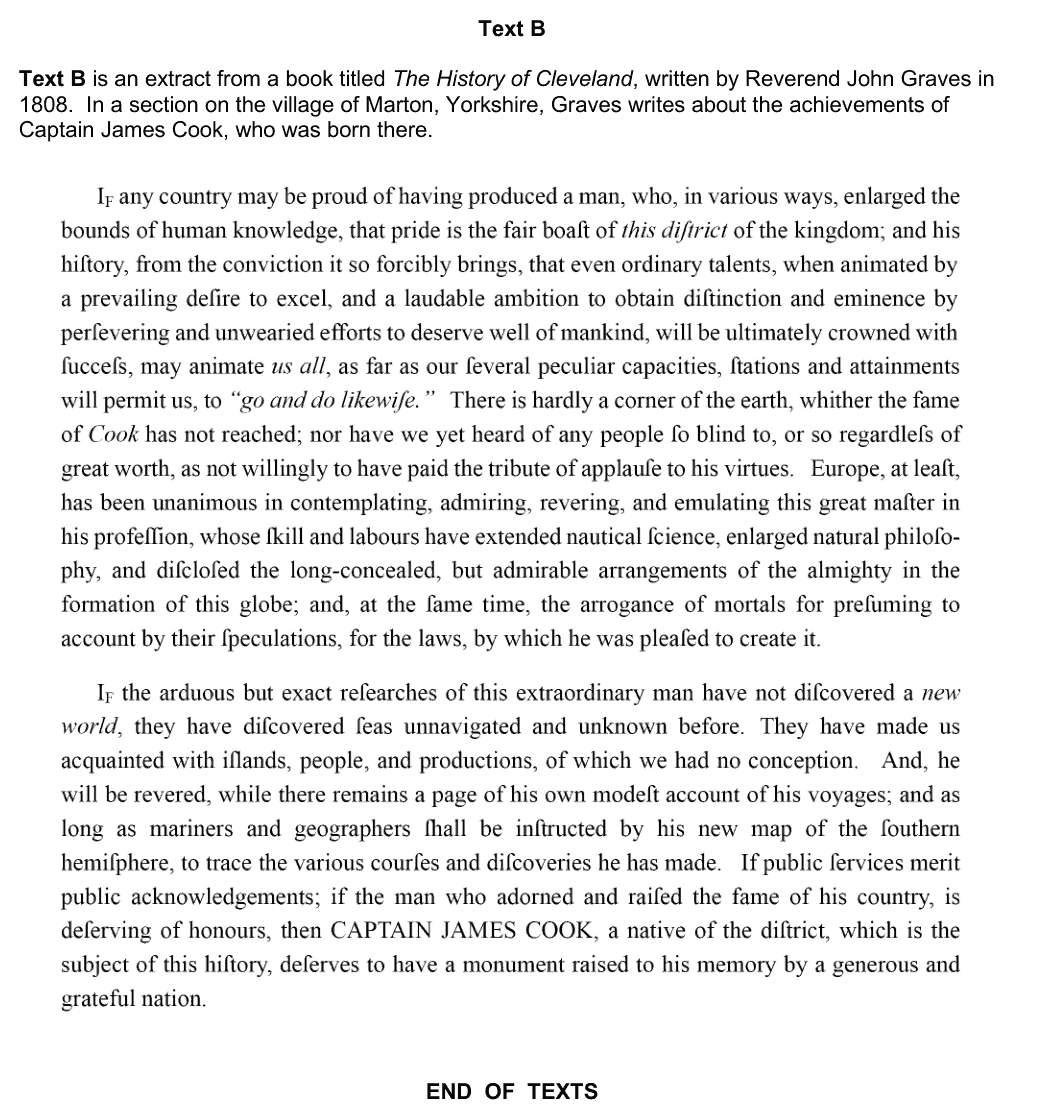
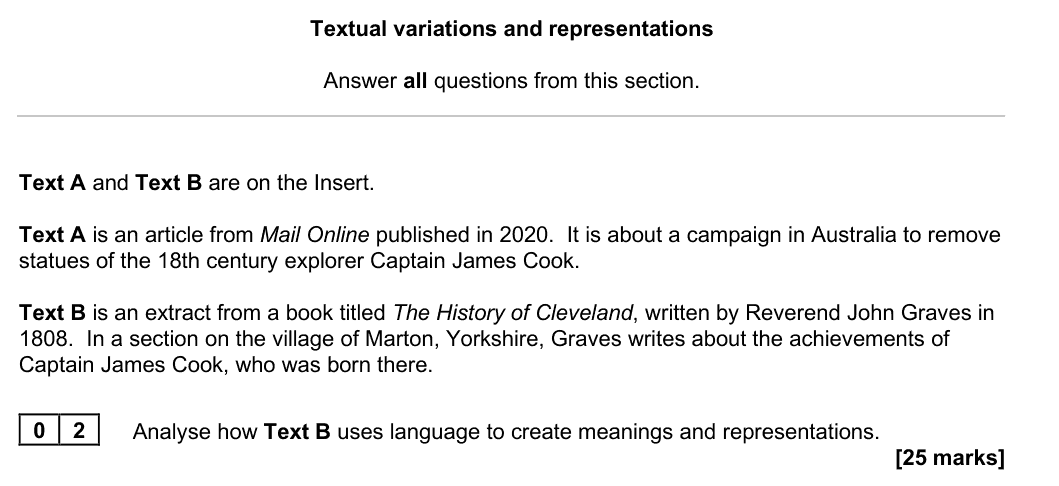
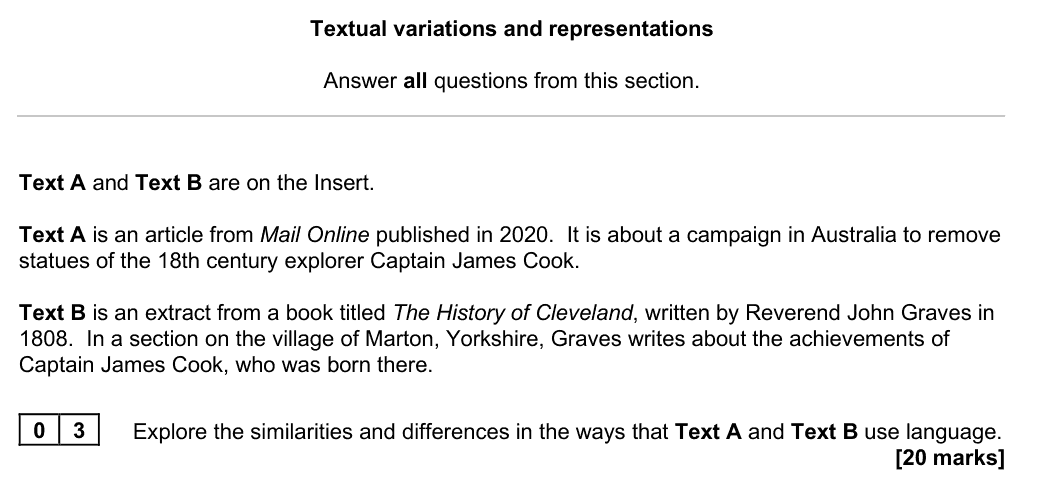
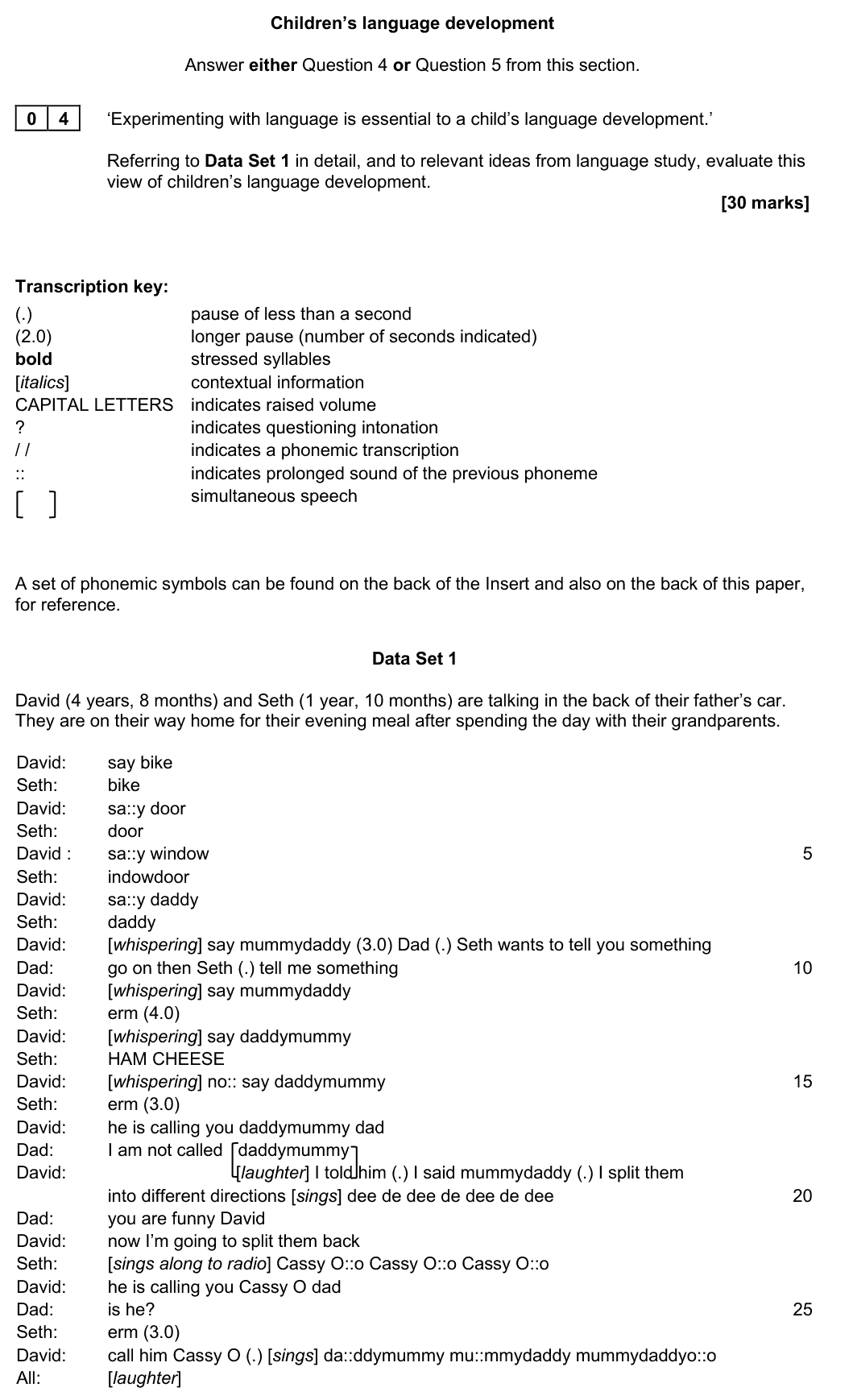
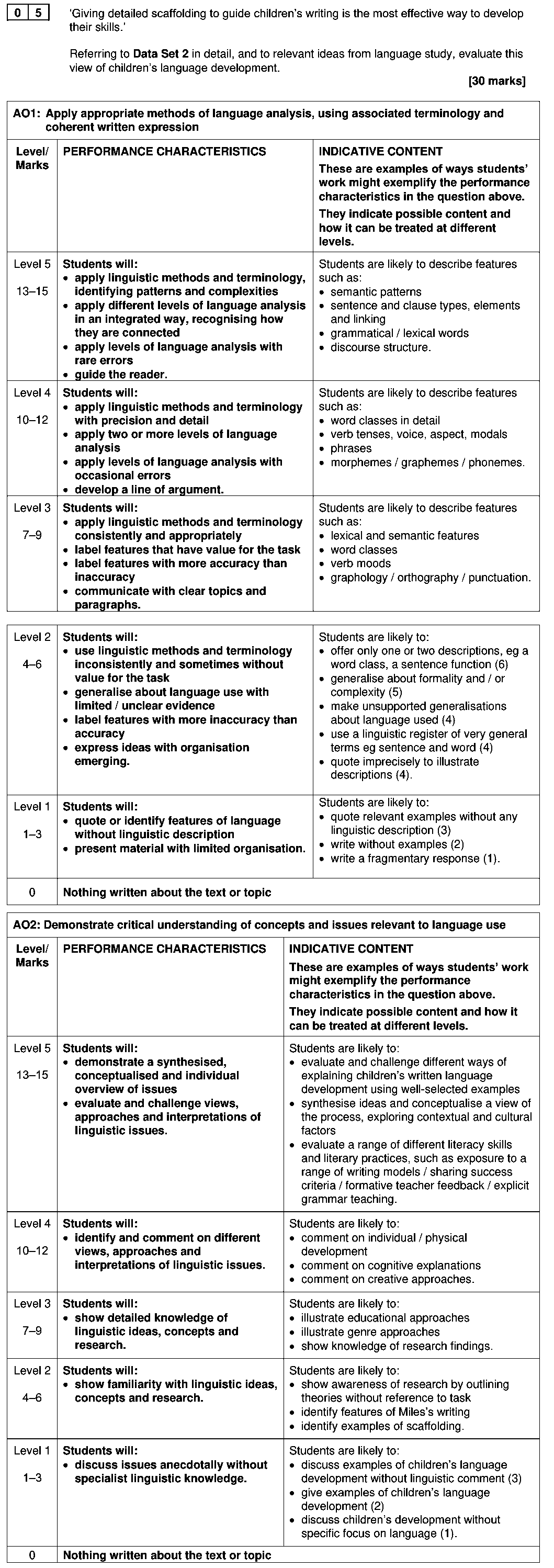
Text A (insert)
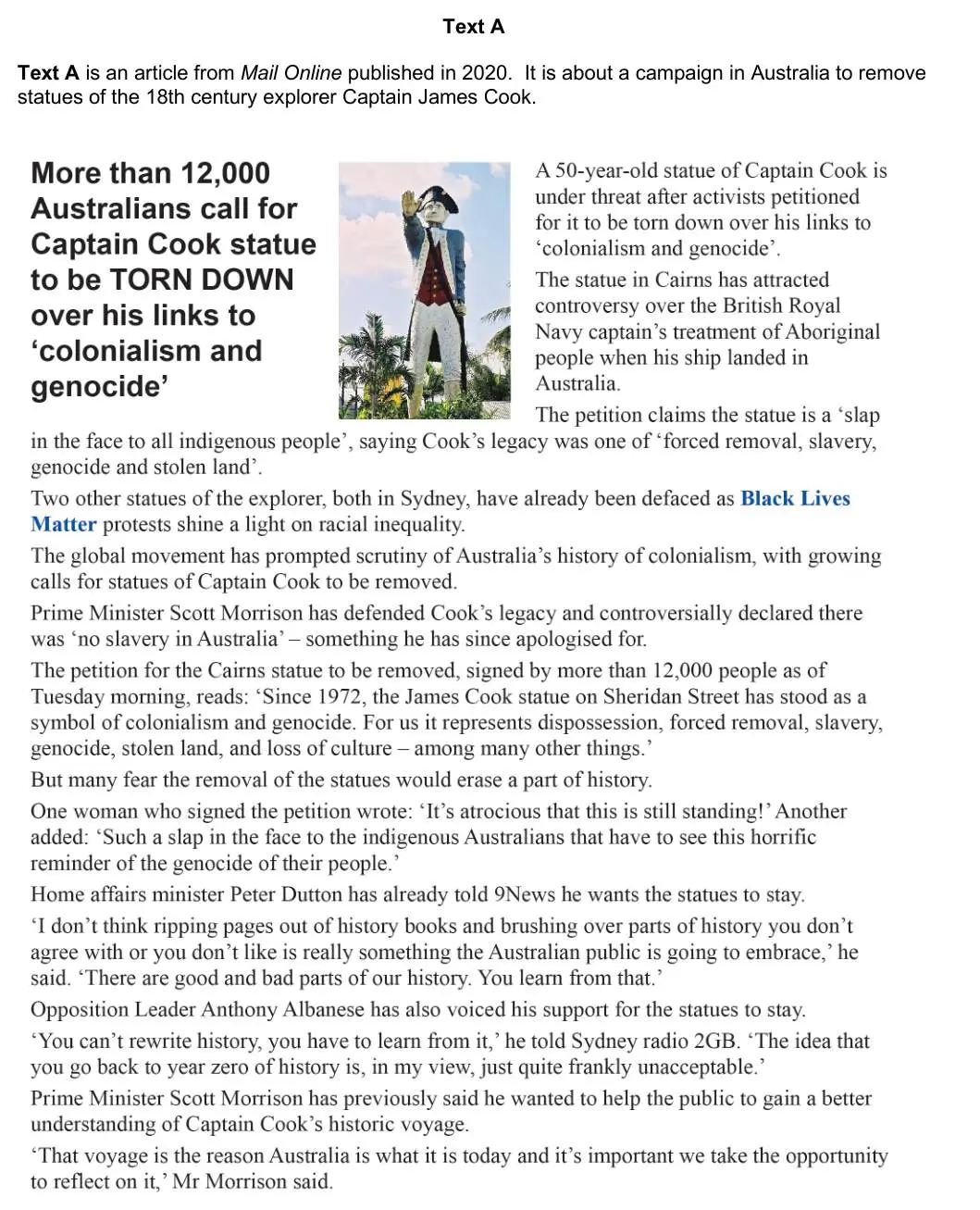
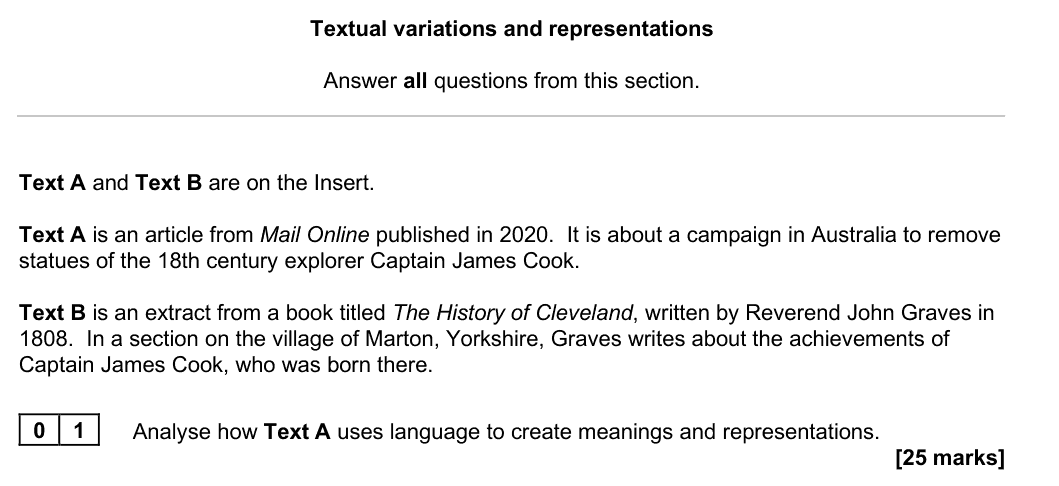
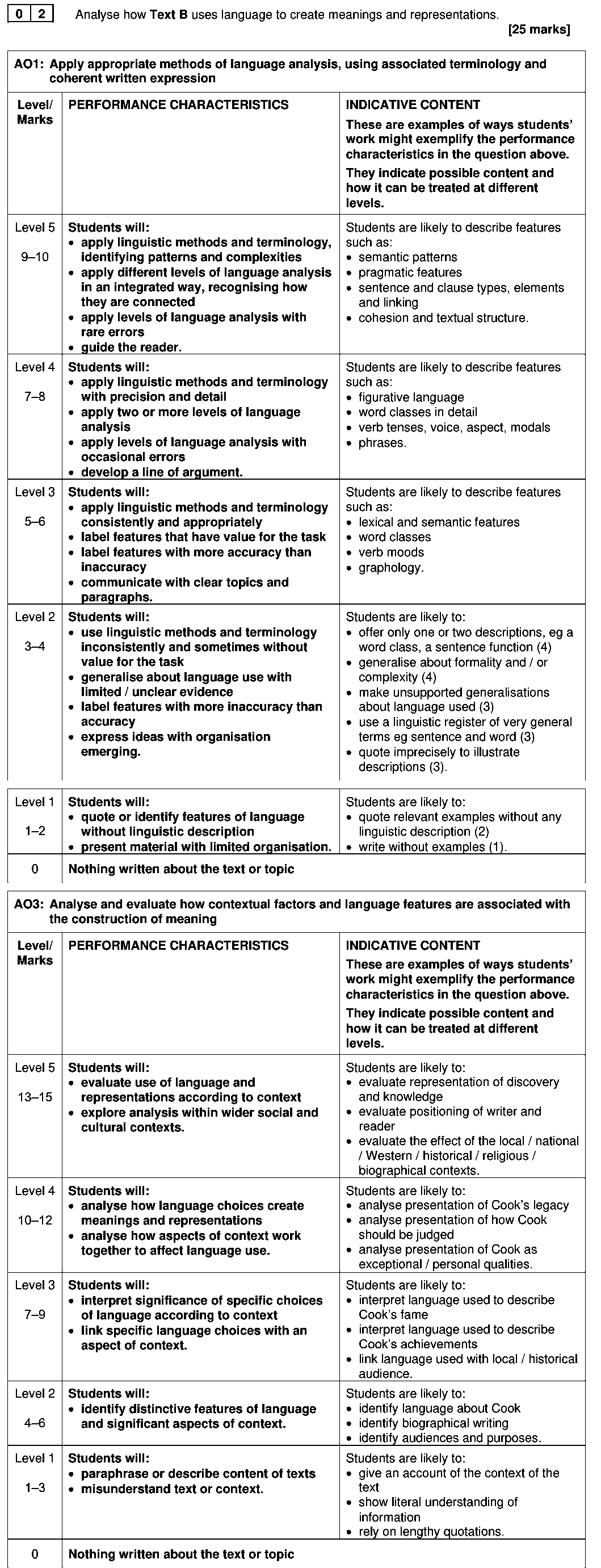
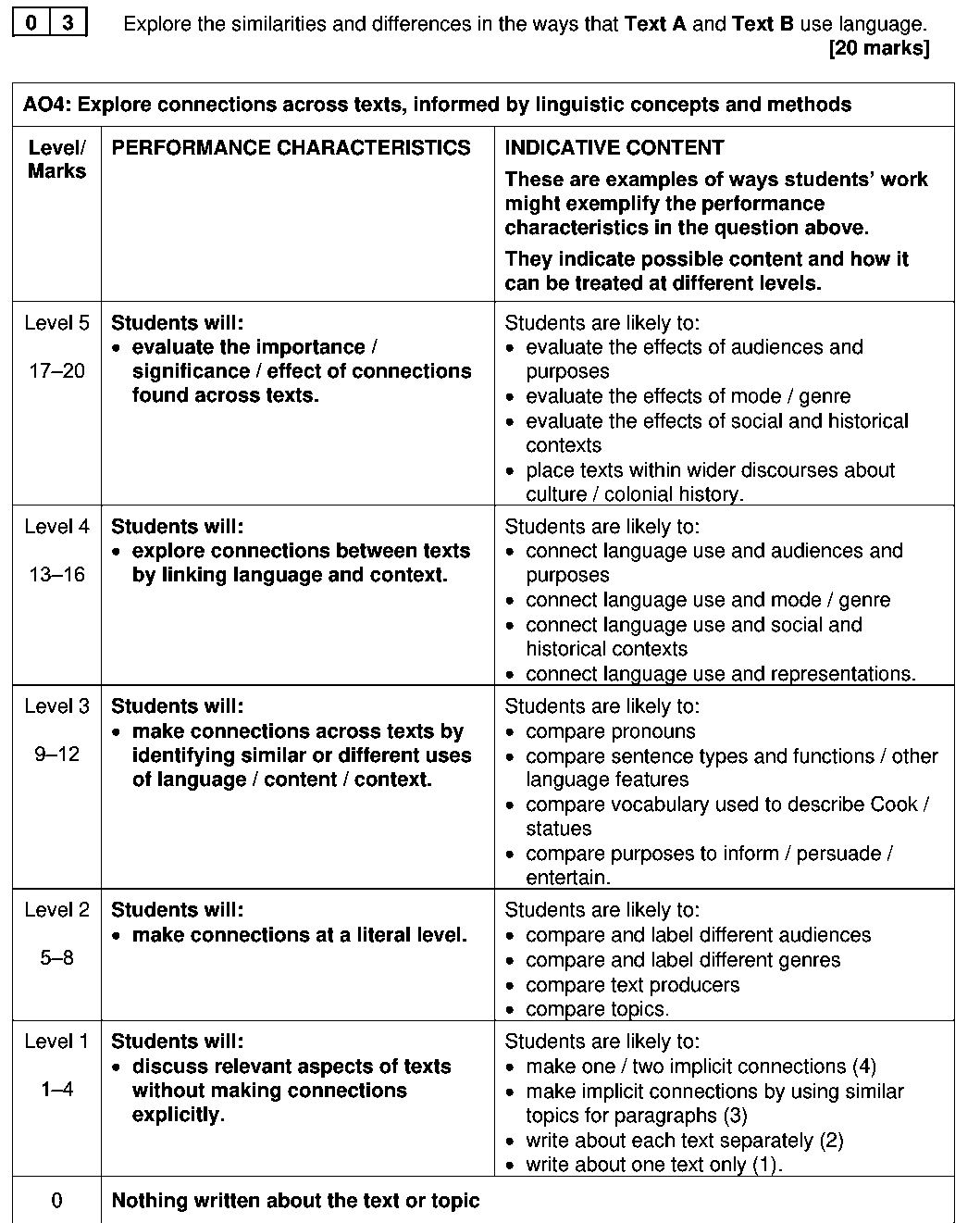
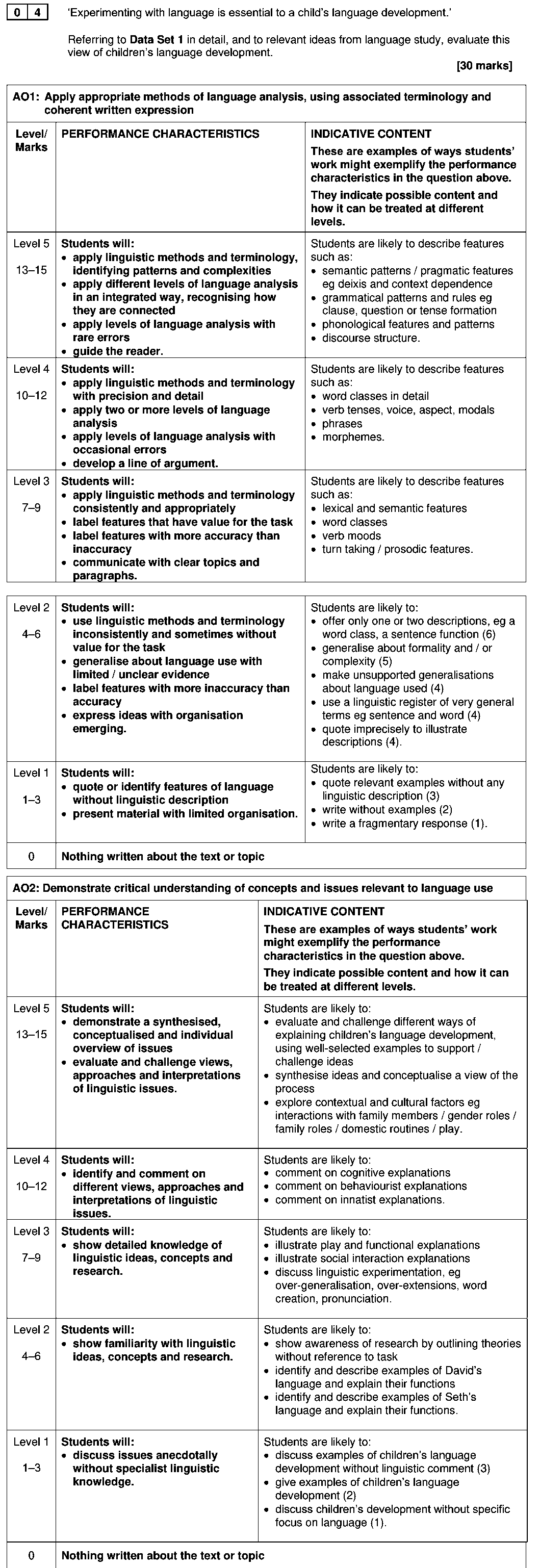
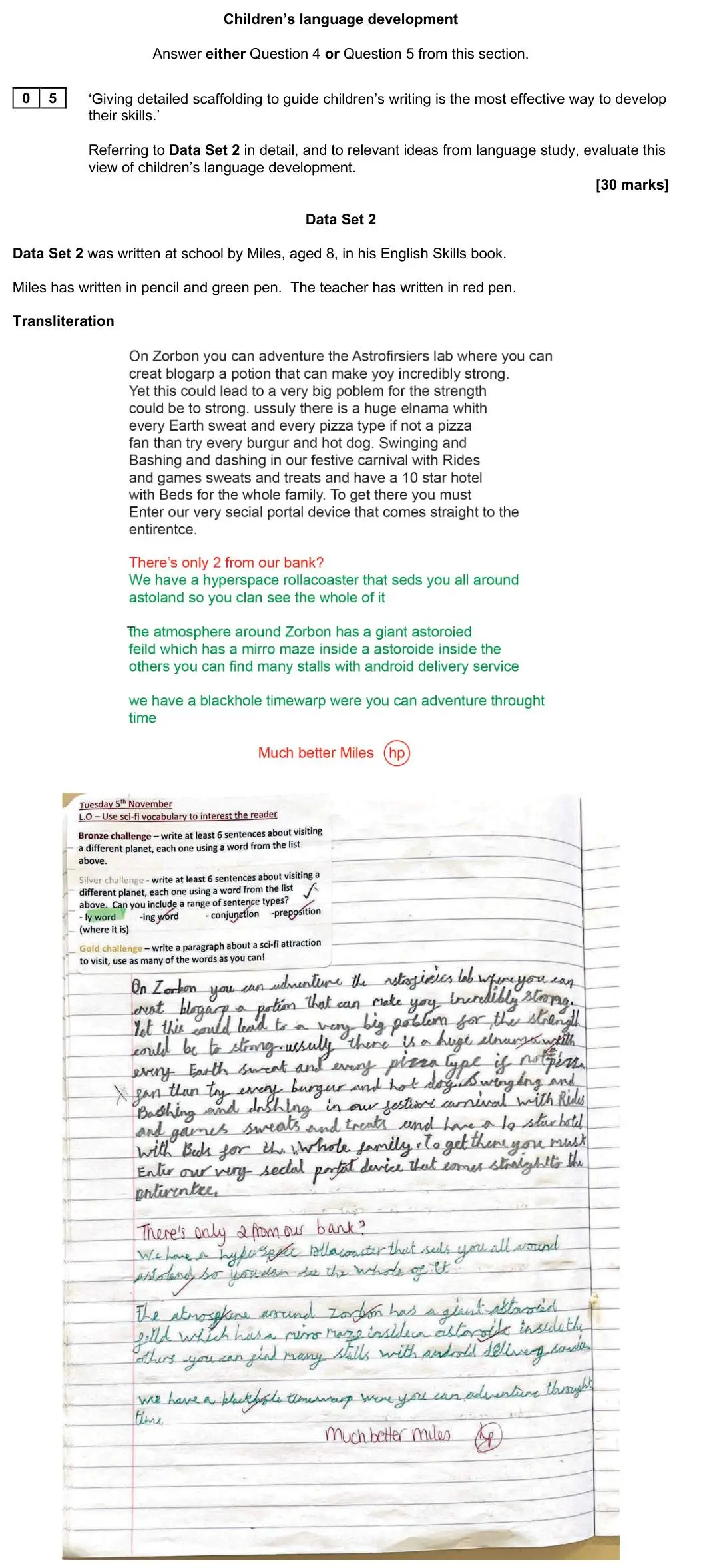
Mark scheme, including the levels and indicative content
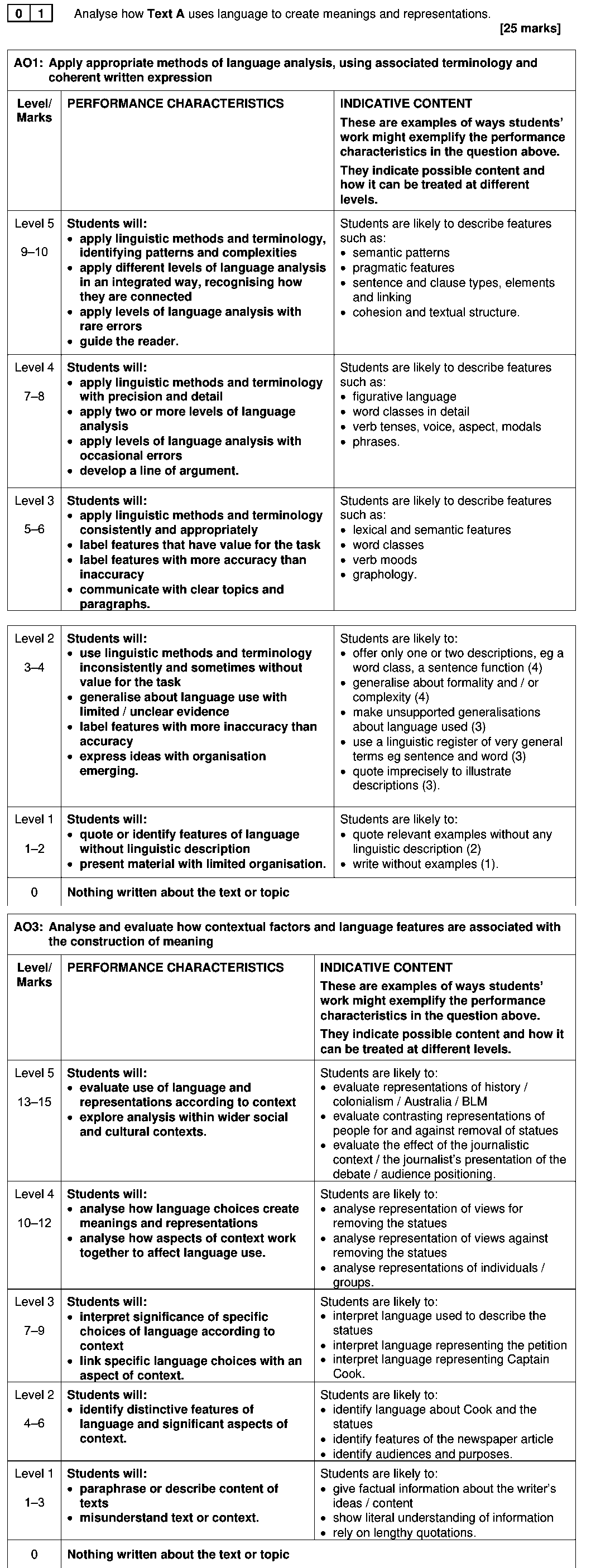
Examiner's comment
Analyse how Text A uses language to create meanings and representations. Text A is an article from Mail Online published in 2020. It is about a campaign in Australia to remove statues of the 18th century explorer Captain James Cook. How students did well Students did well when they: • were able to engage in detail with different representations of Cook, the protestors and people in support of keeping the statue. • explored ideas about power through analysis of the journalist’s descriptions of some of the different people within the text, such as referring to protestors generally, ‘one woman’, in comparison with the more respectful address of authoritative figures such as the Prime Minister. • engaged with specific language details that positioned the audience as rejecting the stance of protesters. • explored how material verbs were used, such as ‘torn down’, ‘two other statues…have already been defaced’, ‘ripping the pages’, suggesting the violence and irrationality of protestors. • explored how this audience positioning was emphasised through punctuation choices, such as enclosing abstract nouns ‘colonialism and genocide’ in inverted commas to cast doubt on the assertions about Cook’s role in these atrocities. • evaluated the journalistic context to consider whether Mail Online was being neutral, presenting bias subtly through their language choices, or if they were responding to the global social contexts of the time (BLM). • offered relevant and perceptive comments about wider cultural and social factors, referencing ideas about colonialism, rights of Indigenous people, British power and rule, as well as recent events such as BLM which may have driven this wave of protests. • supported these points with carefully chosen linguistic description, applying terms accurately and precisely to analyse and evaluate representations in detail. • referred to a wide range of features from the text, including noun phrases, verb choices, a variety of verb tenses and varied sentence and clause types. • were able to comment on how these language choices were used to shape textual meanings, such as the use of passive voice to place emphasis on the destruction of the statue. How students did less well Students did less well when they: • were led by AO1: this meant that they focused heavily on linguistic description, labelling features in detail but not engaging with textual meanings, contexts and representations. • followed the pattern of providing quotations with linguistic labels but with minimal discussion of the effect of these features. • focussed on the contexts of the text, referring to ideas about Captain Cook’s statue and the protestors in some detail, but lacking any linguistic description. • applied inaccurate labels to language features, frequently confusing word classes, for example describing ‘forced’ as a verb without considering its use within the noun phrase ‘forced removal’. • edited quotations from the text to fit their language descriptions. • described features as a ‘pattern’ without recognising patterning of features across the text. • were distracted by their own thoughts about colonialism or BLM, which led to some move away from analysis of language detail and features which created these ideas and representations within the text.
Notes from the mark scheme and report
- AO1 10 + AO3 15
- top band evaluates representations of Cook, colonialism, Australia and BLM and how the journalist positions the audience for and against removing the statues
- AO1-led answers that label features without discussing meanings and context stay low
- common errors: wrong word classes (eg 'forced' in 'forced removal'), editing quotations to fit a label
- Texts/data: Text A: Mail Online article (2020) on the campaign to remove Captain Cook statues in Australia