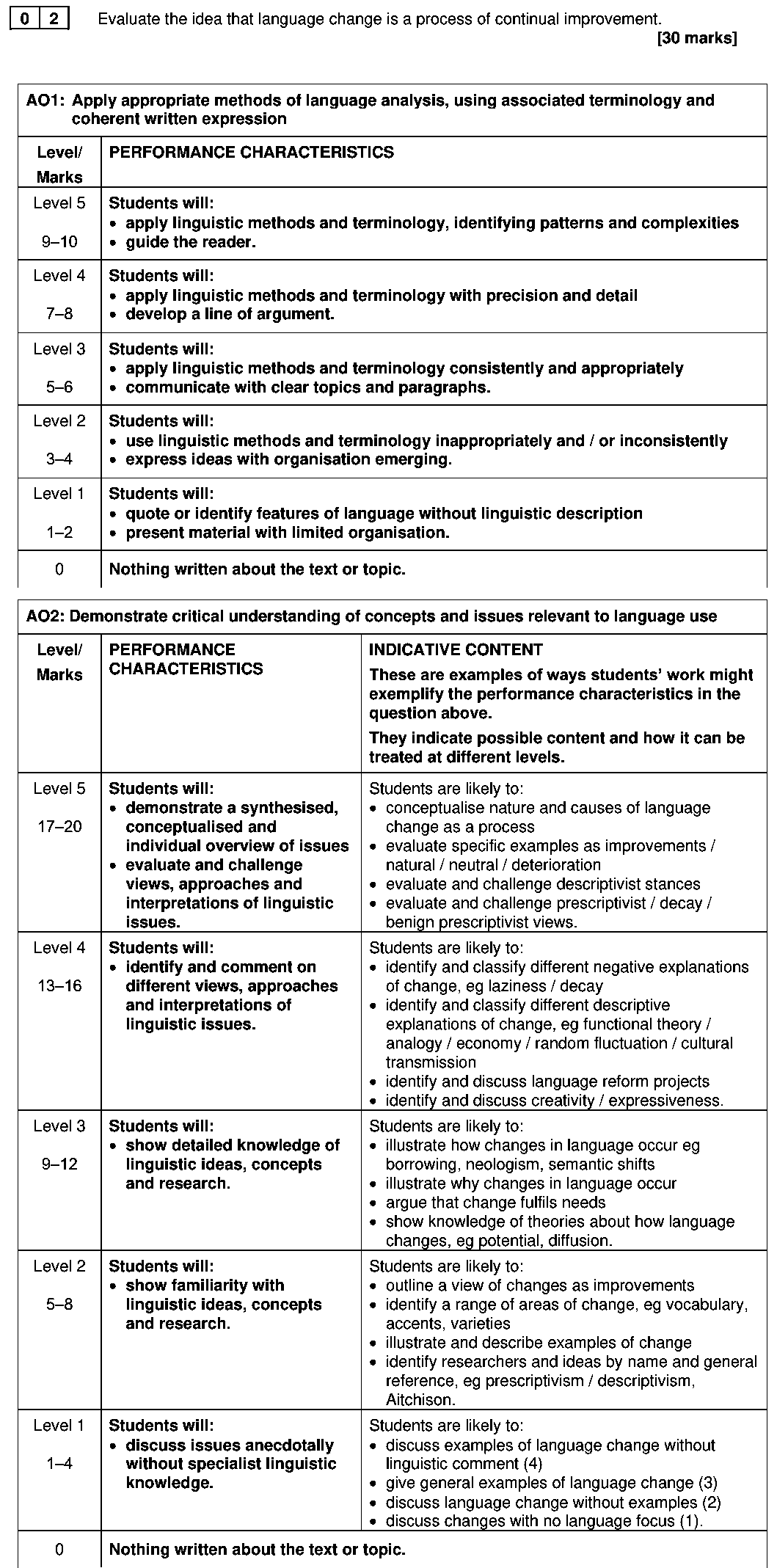
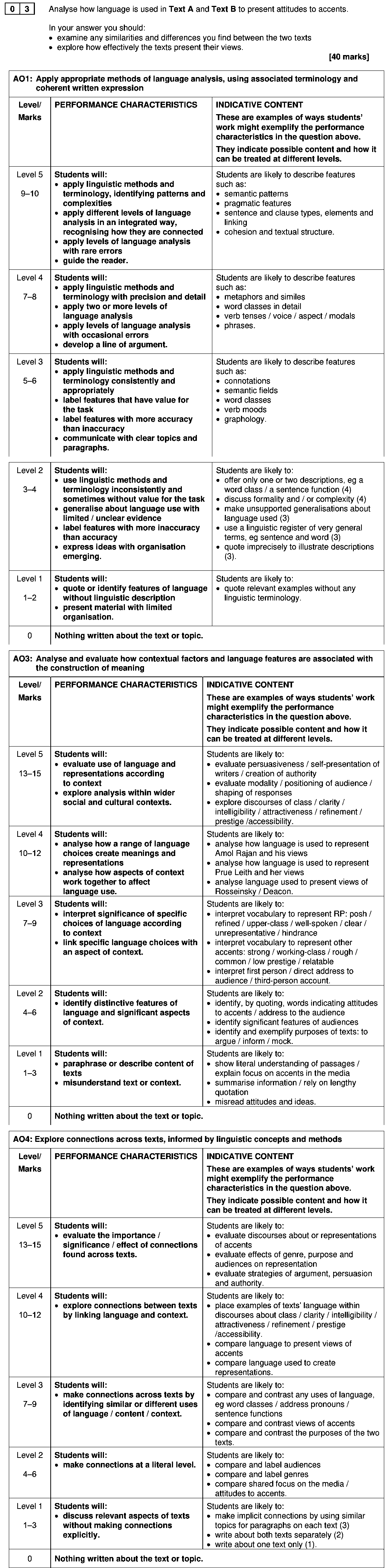
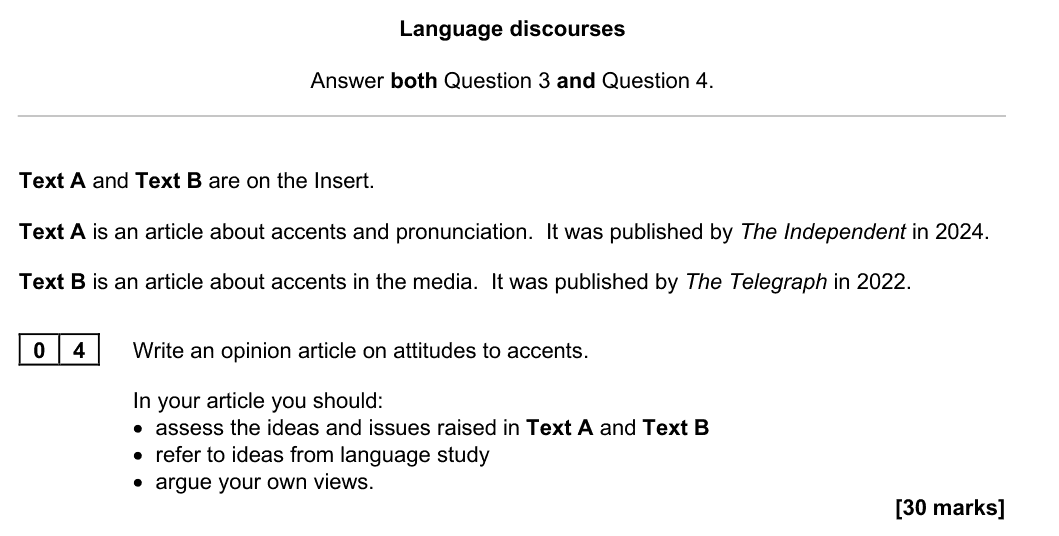
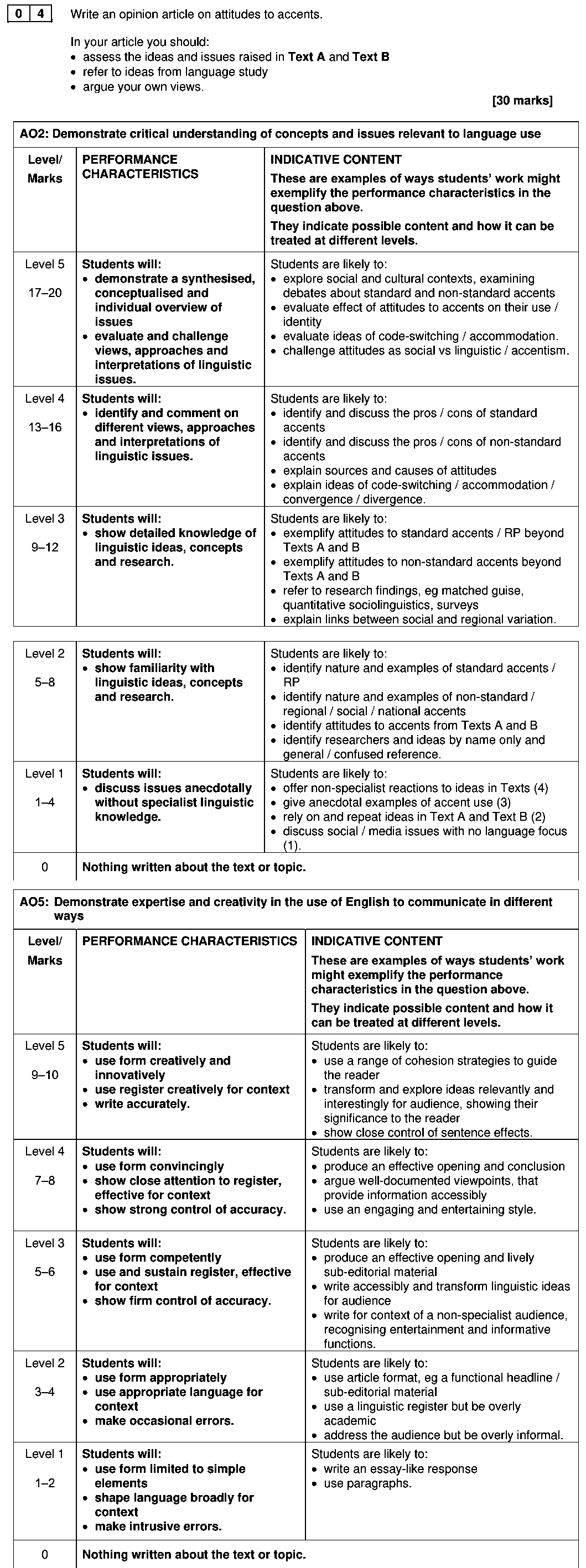
Mark scheme, including the levels and indicative content
Examiner's comment
Evaluate the idea that aspects of context determine how a person uses language. How students did well Students did well when they: • explored what context might mean and identified different types of contexts • examined the impact of immediate contextual factors such as audience, purpose, subject • considered wider social contexts such as gender, ethnicity, social class • paid attention to the implications of ‘determine’ • challenged the idea that language use was constrained by context • evaluated how far someone was free to use language as they wanted • explored ideas about performativity • explored how different aspects of context might work simultaneously • evaluated the relative effect of different aspects of context • examined the impact of audience, looking at ideas about audience design, accommodation and code-switching • looked at how mode affected language use, considering affordances, constraints and conventions • looked at how purposes affected language use • used occupational language as a way of considering a range of ways in which context affected language • explored accommodation theory • offered a critical view of dominance and difference explanations of the effect of gender on language • examined ideas of biological determinism critically • explored relationships between language and social class and group membership • examined the impact of regional, national and international contexts • looked at how social values affected language use, eg Polari • cited ideas about linguistic relativity and looked at how language was influenced by society and culture • examined how attitudes to language affected language use. How students did less well Students did less well when they: • devoted a lot of time to recounting older ideas and research about gender uncritically • recounted oft-cited studies (Jocks and Burnouts, Martha’s Vineyard, Ives’ Bradford study) spending time explaining the case study at the expense of discussing its significance in terms of the question.
Notes from the mark scheme and report
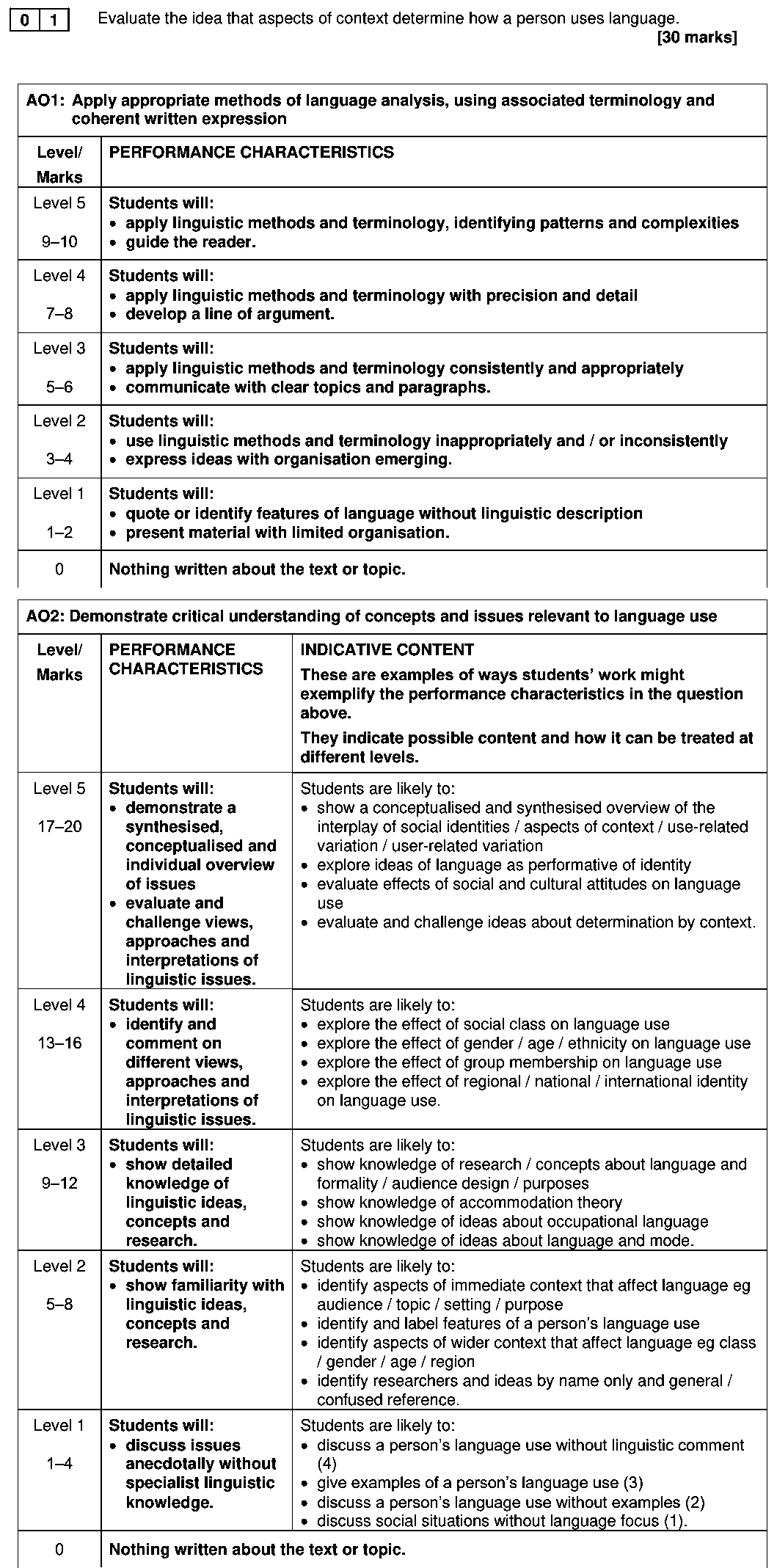
- AO1 10 + AO2 20
- top band synthesises the interplay of identities, context and use- vs user-related variation, explores performativity and challenges determination by context
- Level 4 explores class, gender, age, ethnicity, group and regional/national identity
- Level 3 uses audience design, accommodation, occupational language and mode
- ER: best defined 'context', weighed 'determine' and freedom of choice and considered several contexts acting at once
- weaker answers recounted older gender research uncritically or retold Jocks and Burnouts, Martha's Vineyard and Ives without linking to the question
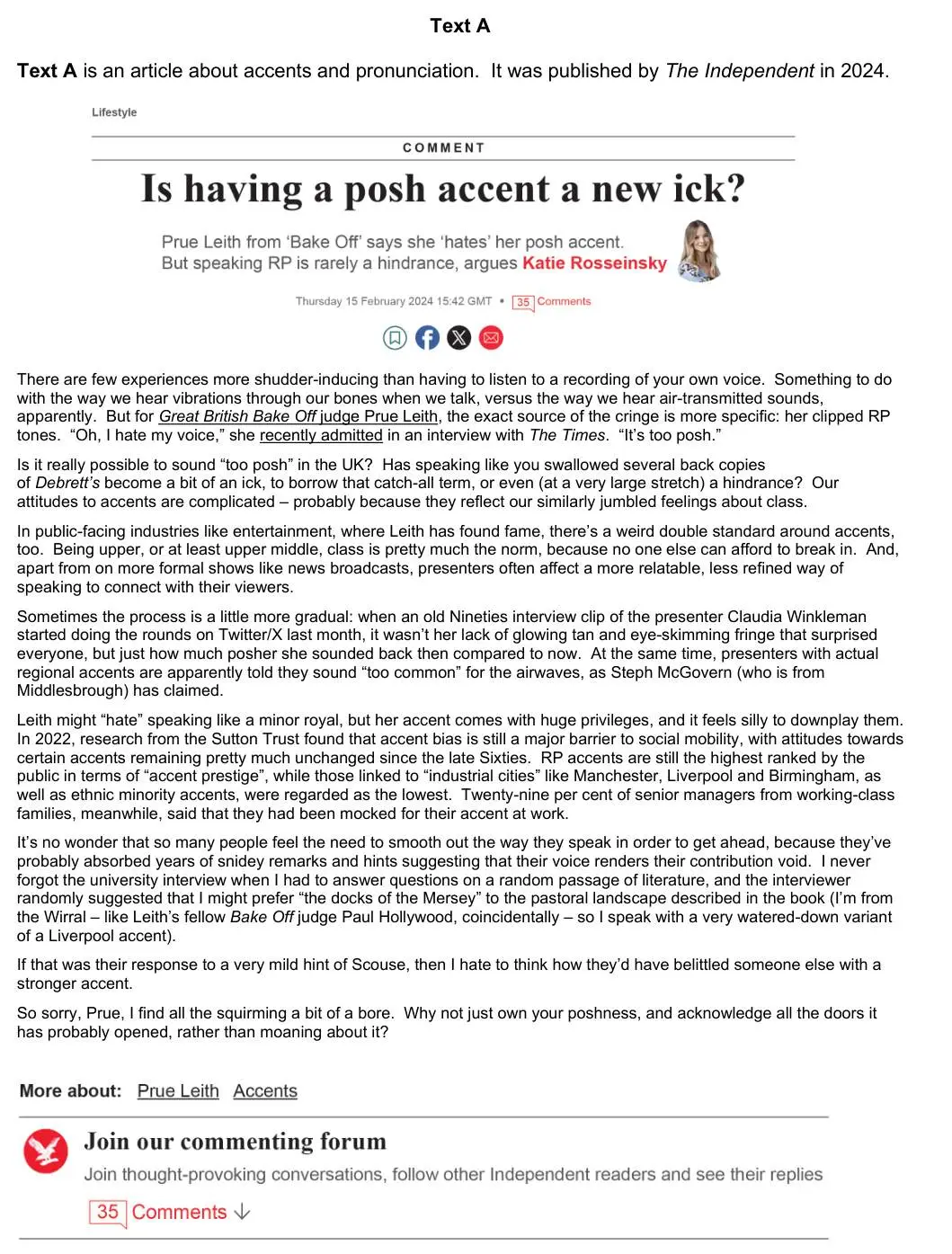
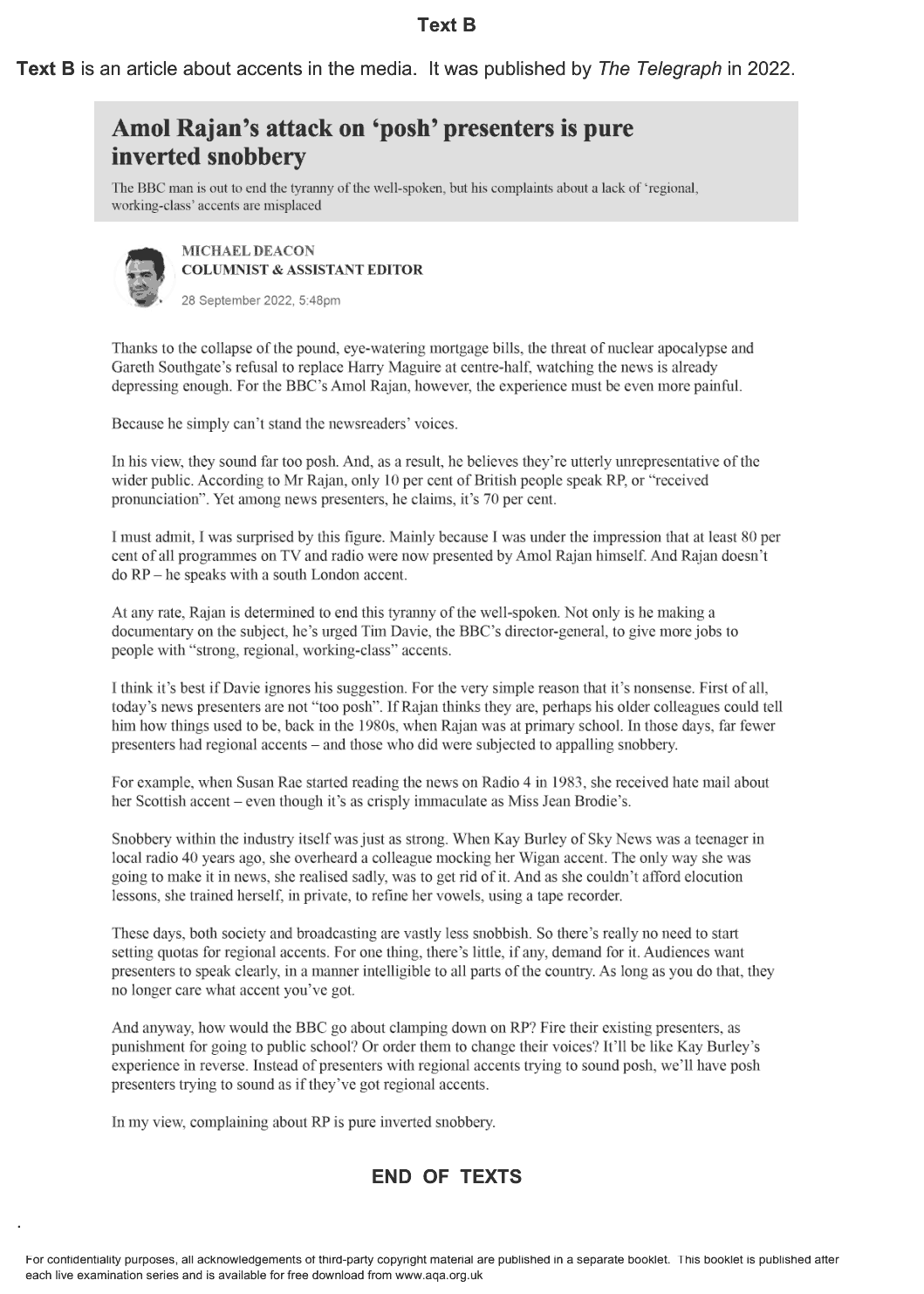
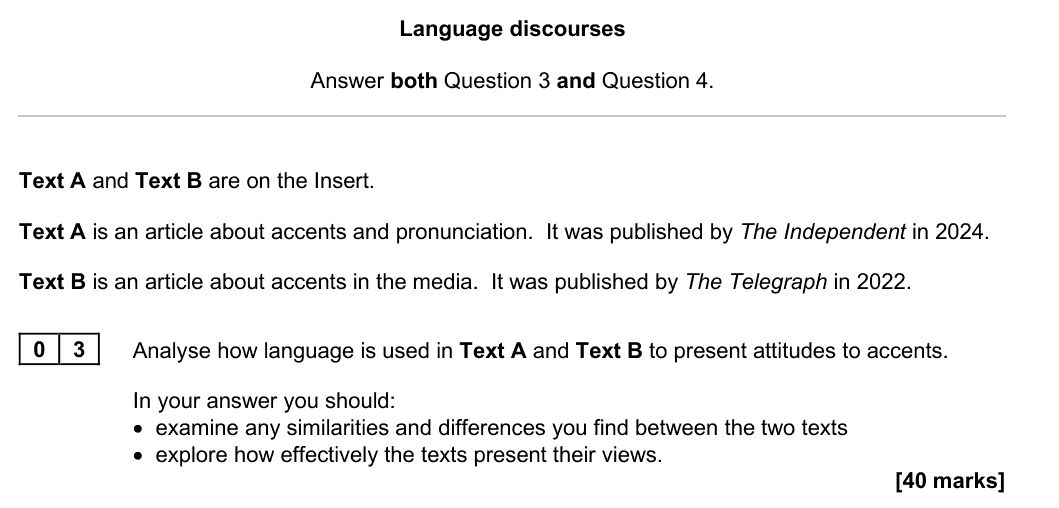
- Texts/data: Essay topic: whether aspects of context determine how a person uses language