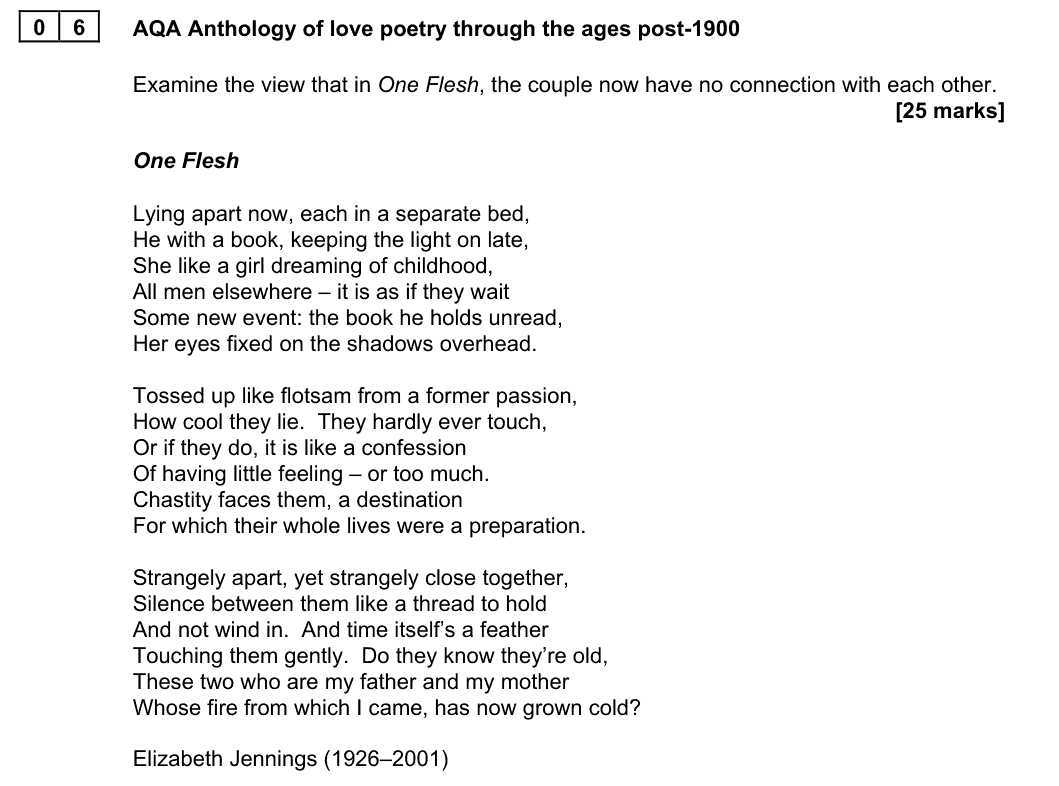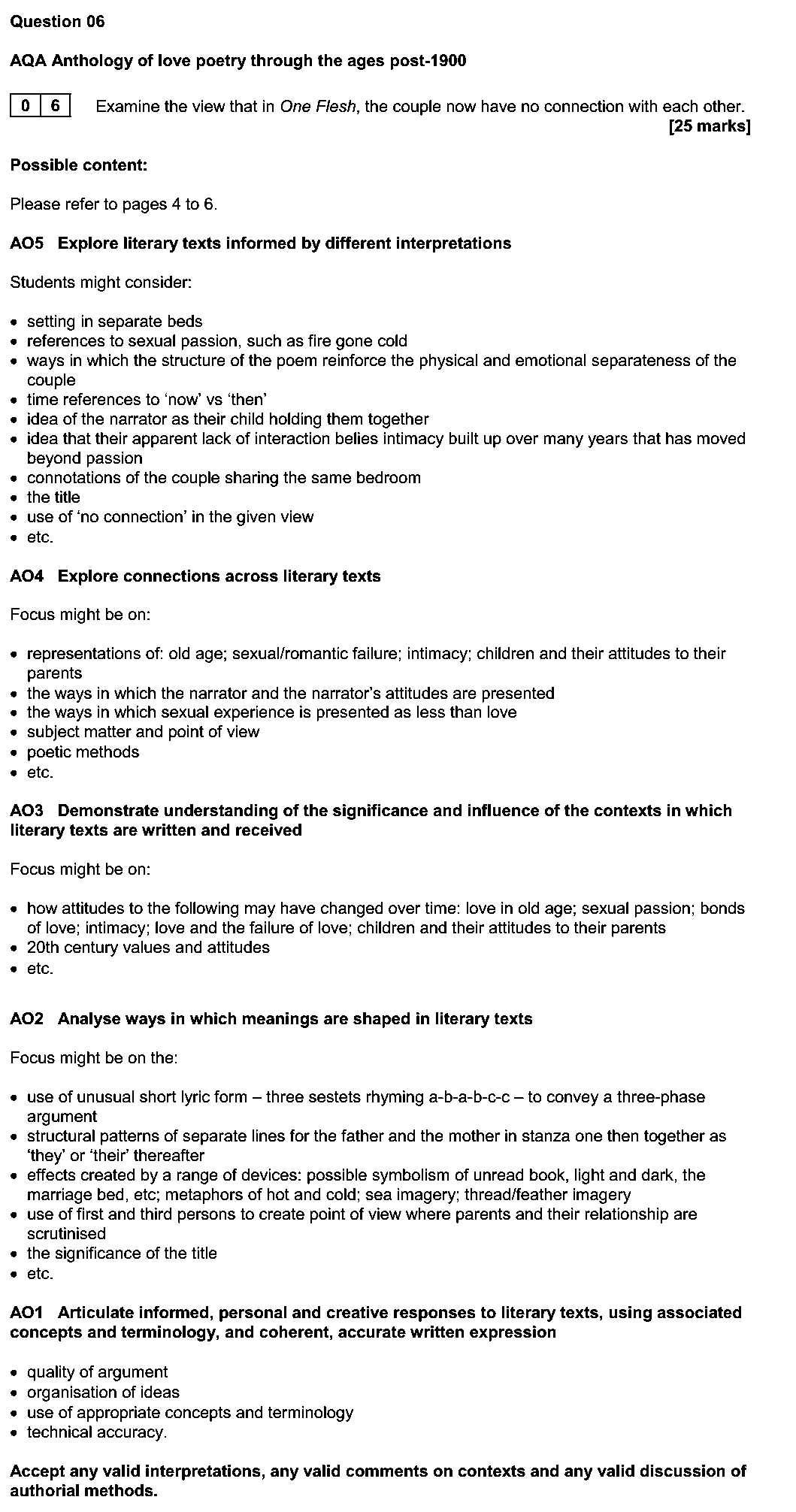
Mark scheme, including the levels and indicative content
The general mark scheme (assessment objectives and bands)
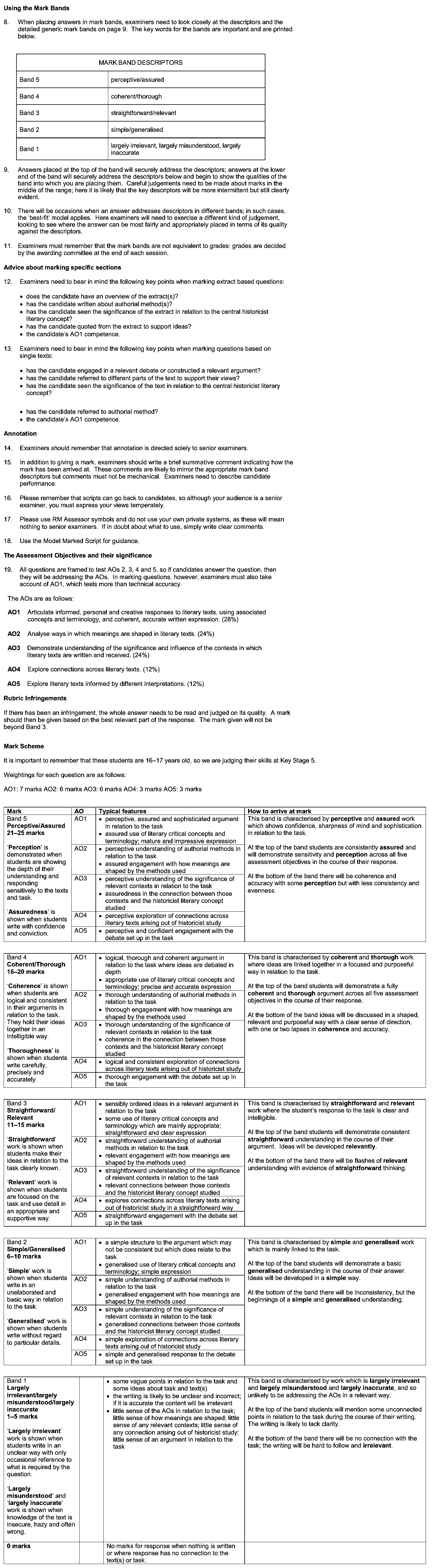
Examiner's comment
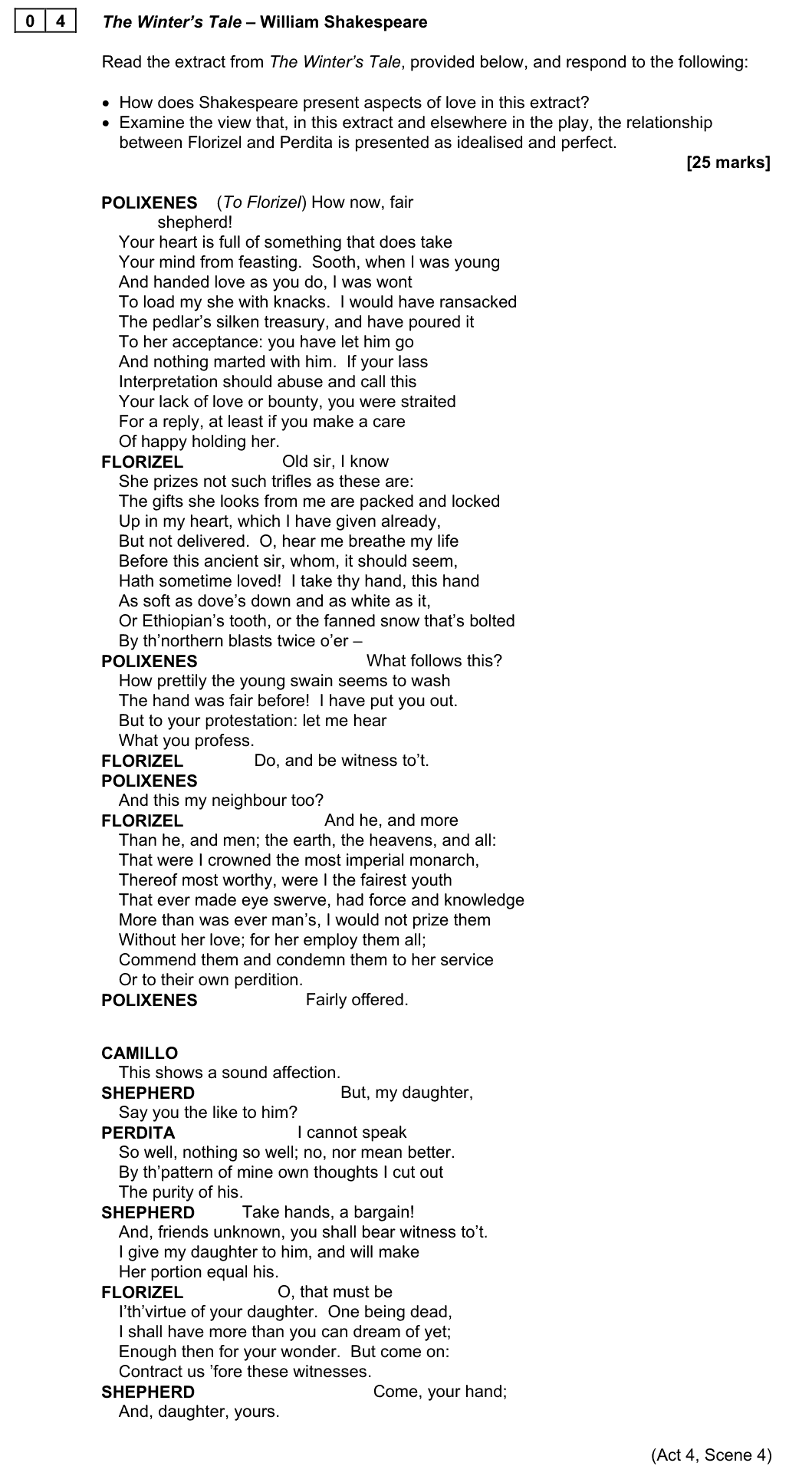
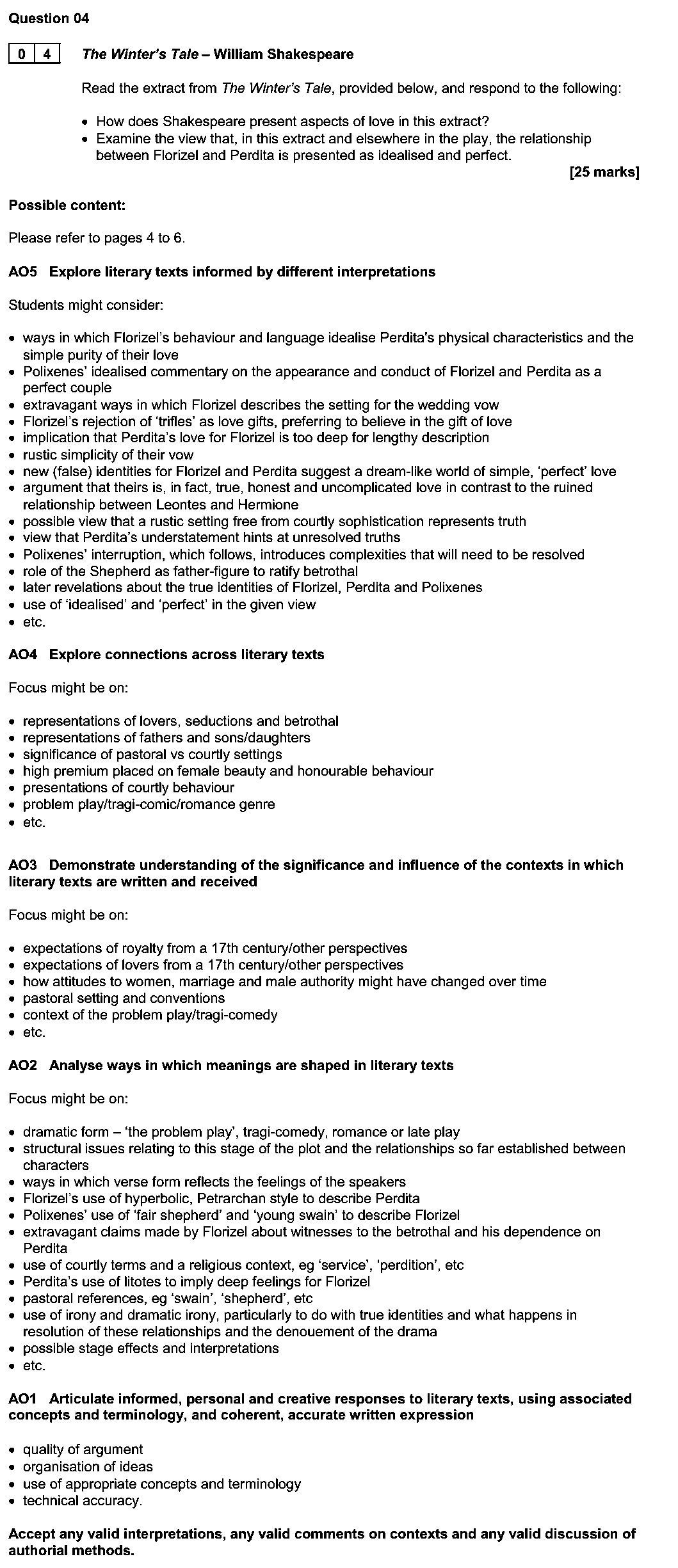
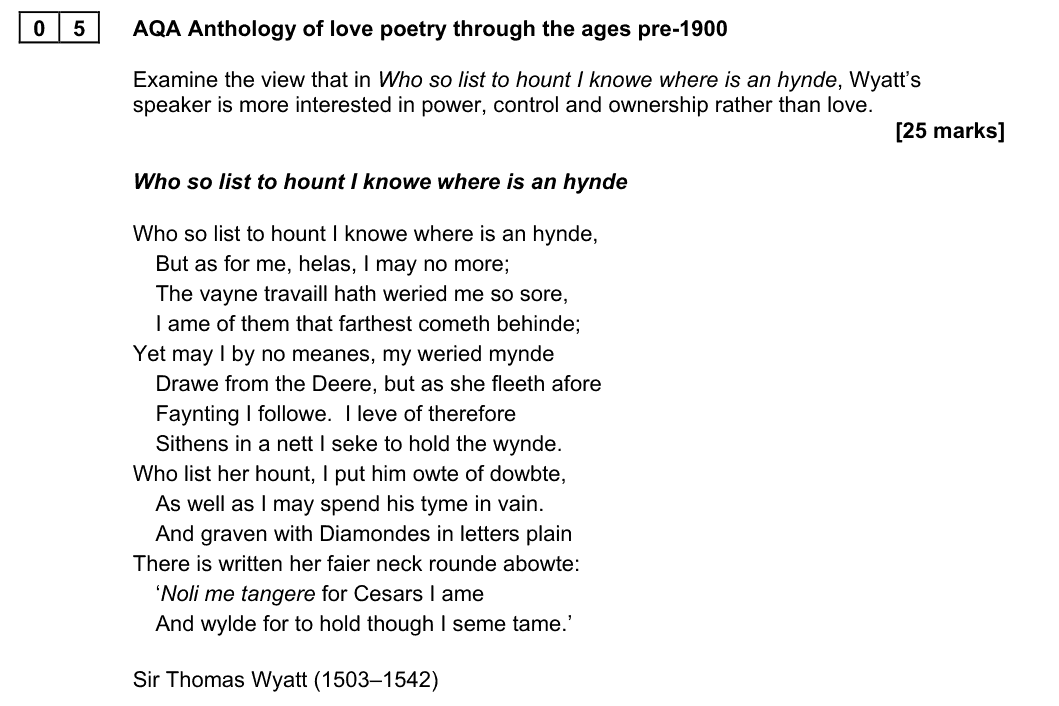
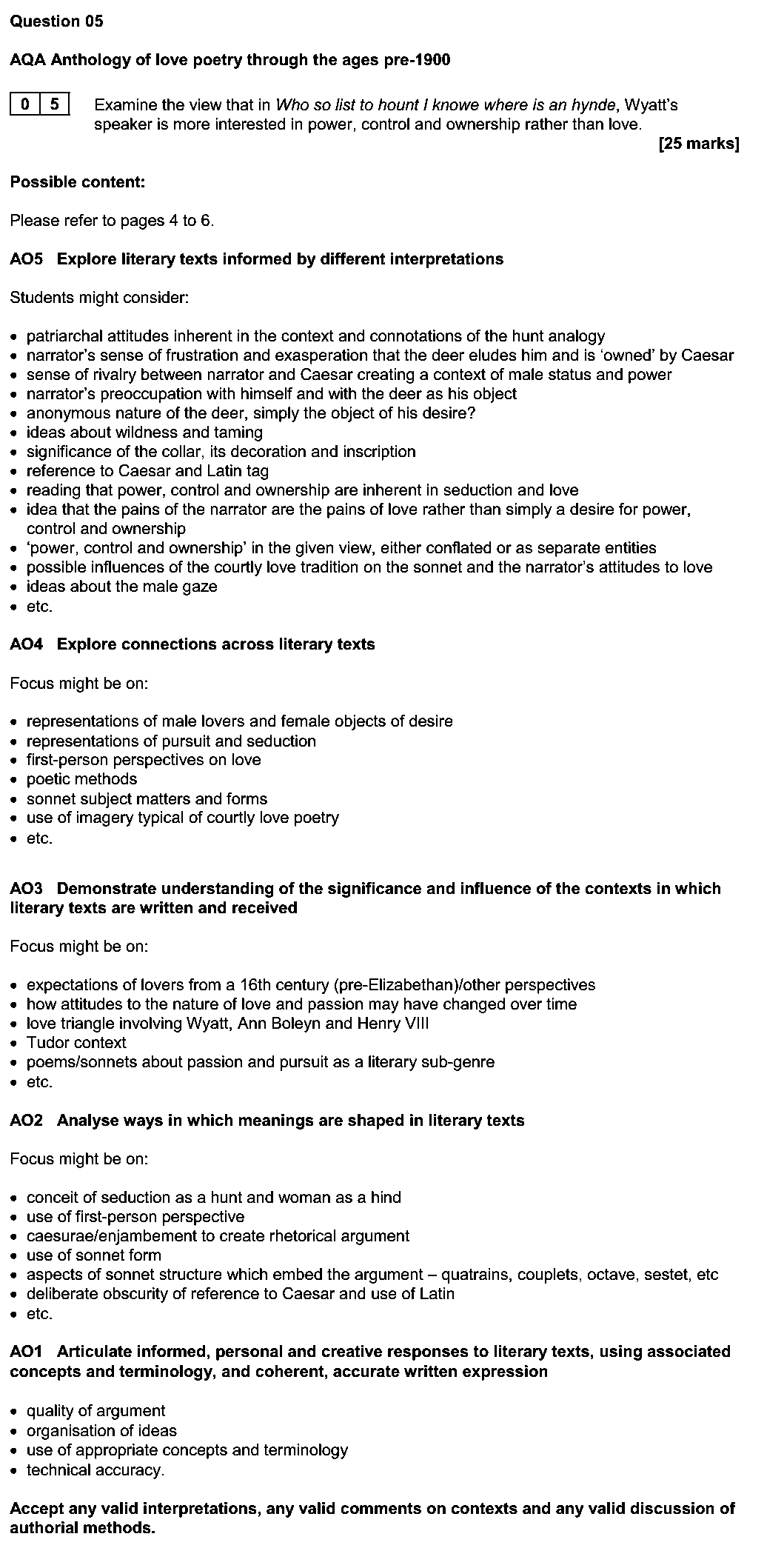
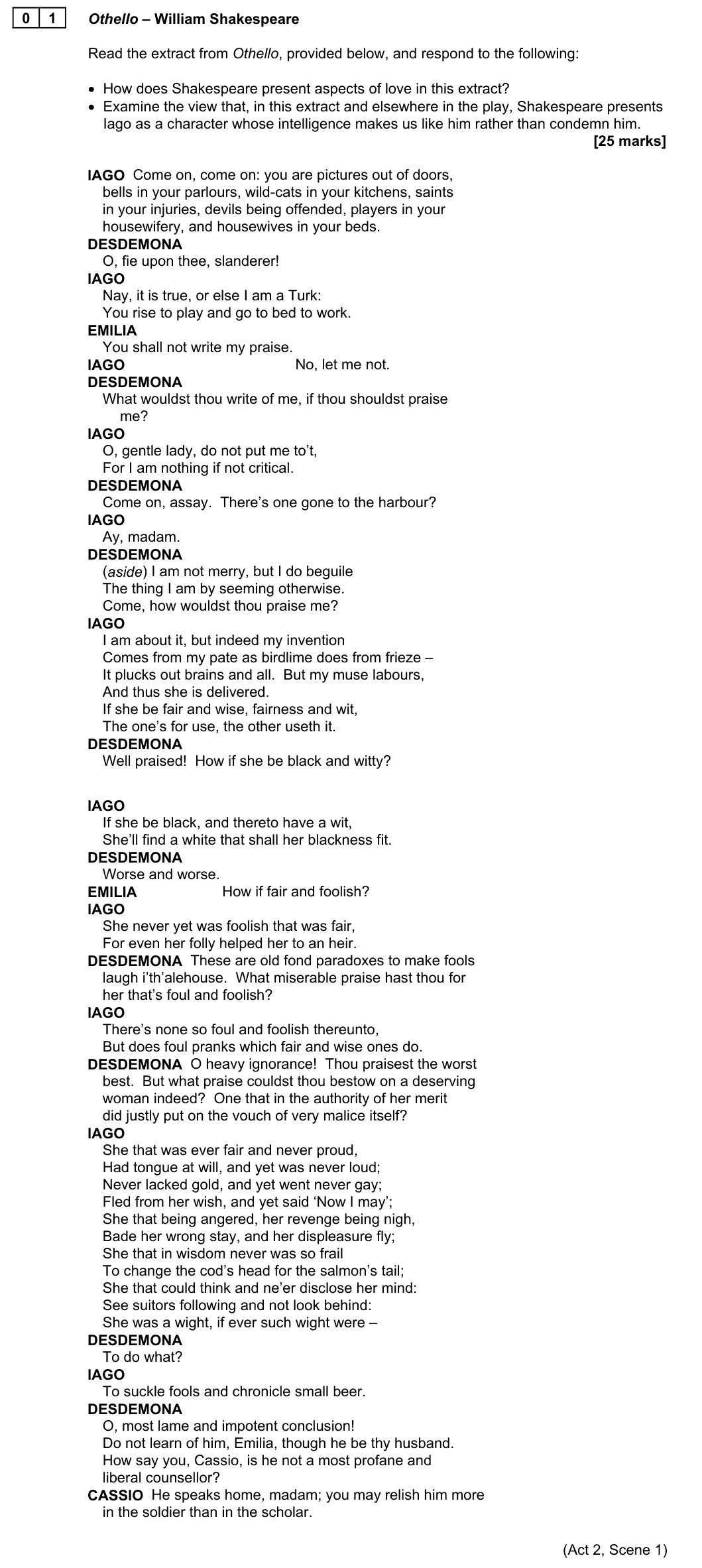
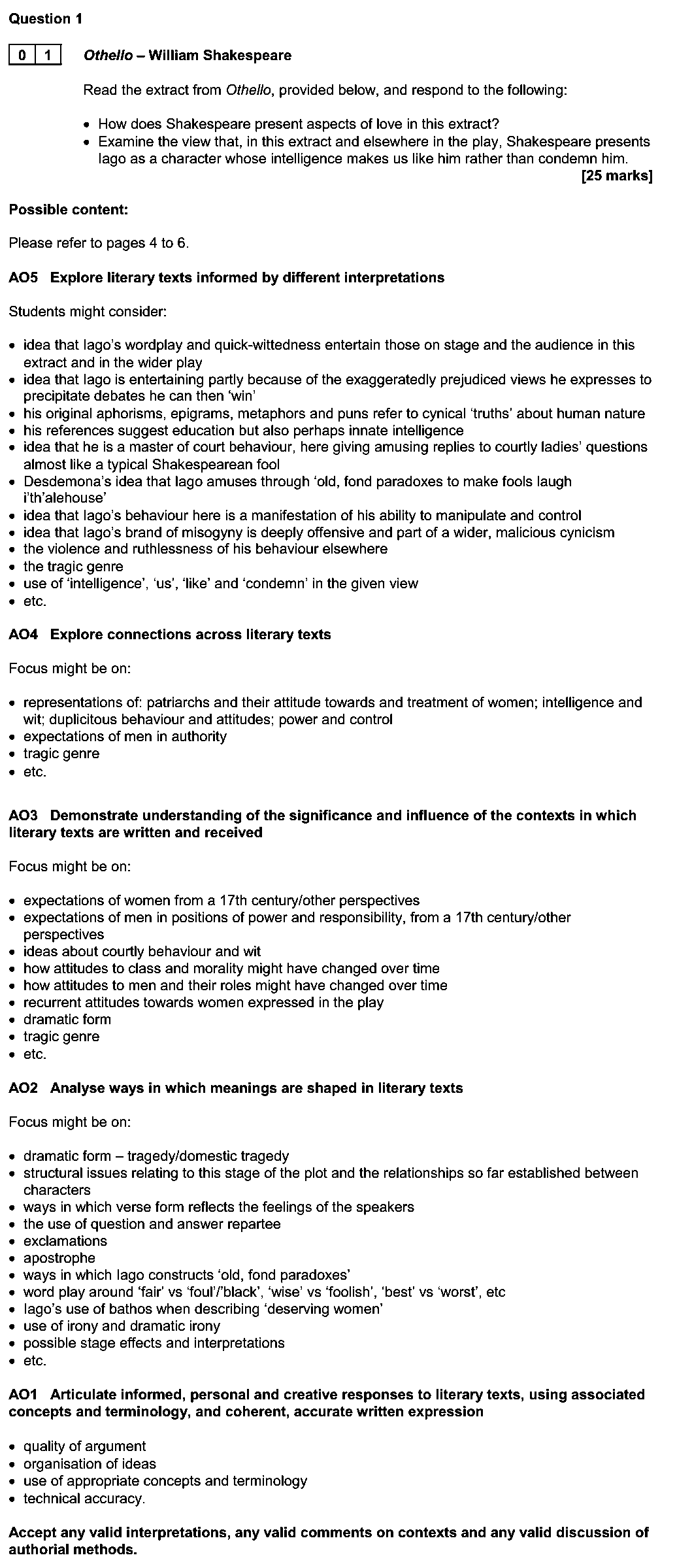
Othello Othello is by far the most popular Shakespeare text and this question yielded a full range of responses. Students welcomed the opportunity to write about Iago and the complexities of his Machiavellian shape-shifting. Those who used the question simply as a prompt to write about the presentation of Iago with little reference to the extract and the given view did less well. As always, the key words of the given view – ‘intelligence’, ‘like’ and ‘condemn’ – proved to be the main discriminators. Those who could discuss Iago’s intelligence using the extract, rather than simply relying on his language and behaviour elsewhere in the play, tended to do well. Students who engaged with Iago’s wit did so in various ways. One way was by fitting the extract into the narrative of Iago’s dissembling; appearing as friend and supporter while all the time plotting against Othello and Desdemona. Another way was to explore Iago’s clever use of imagery, puns, riddles and rhymes in his interaction with Desdemona and Emilia. The speech where he paints a portrait of a ‘deserving’ woman was a particularly rich source for those who could analyse his rhetorical skills. When it came to ‘like’ and ‘condemn’ students were quick to examine the misogyny underpinning Iago’s language and behaviour, as well as his duplicitousness and malice. Those who argued that Jacobean audiences might ‘like’ Iago for his patriarchal banter, but modern audiences ‘condemn’ Iago for his offensiveness, risked sounding a little too simplistic. New Historicism is interested in acknowledging social change and changing attitudes, but, at the same time might recognise that audiences then as now are made up of individuals with different attitudes and values. Those who looked at the first bullet in isolation explored the dysfunctions of the relationship between Emilia and Iago in the extract and elsewhere in the play, and the ways in which Desdemona intervenes on Emilia’s behalf. Some went on to link the fates of Emilia and Desdemona as wives who are starved of love and punished for the opposition to patriarchy.
Notes from the mark scheme and report
- Focus: character: Iago's intelligence; like vs condemn
- Extract printed
- extract Act 2 Scene 1 (Iago's misogynist banter with Desdemona and Emilia on arrival in Cyprus
- the 'deserving woman' rhymes)
- two bullets: aspects of love + view that Iago's intelligence makes us like rather than condemn him
- key words 'intelligence', 'like', 'condemn'
- MS credits question-and-answer repartee, 'old fond paradoxes', fair/foul/black wordplay, bathos of 'suckle fools and chronicle small beer'
- counter-view: offensive misogyny, malice and violence elsewhere
- ER: best found his intelligence in the extract, not only elsewhere
- Jacobean 'like' vs modern 'condemn' split risked being simplistic
- first bullet: Iago and Emilia's dysfunctional marriage