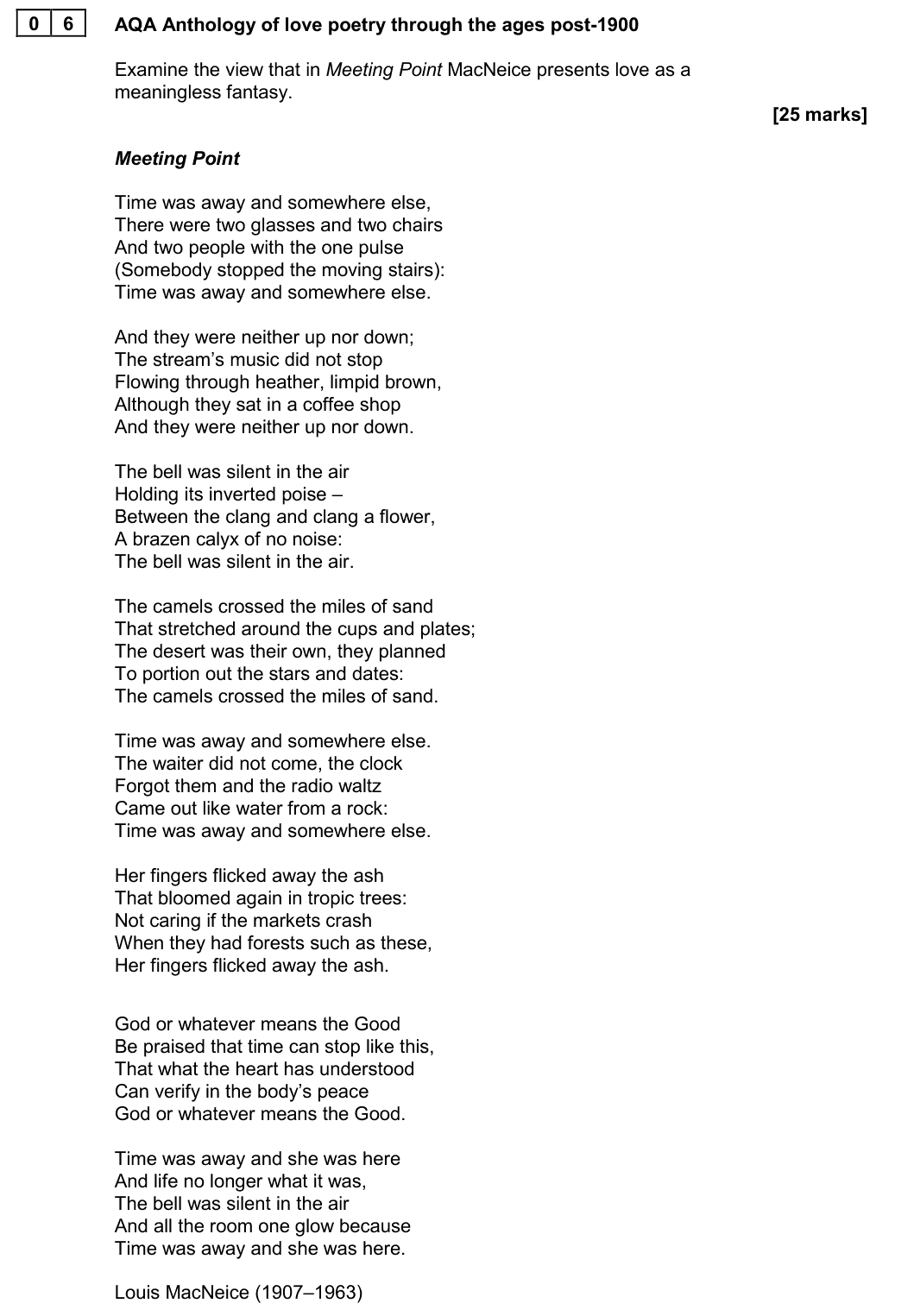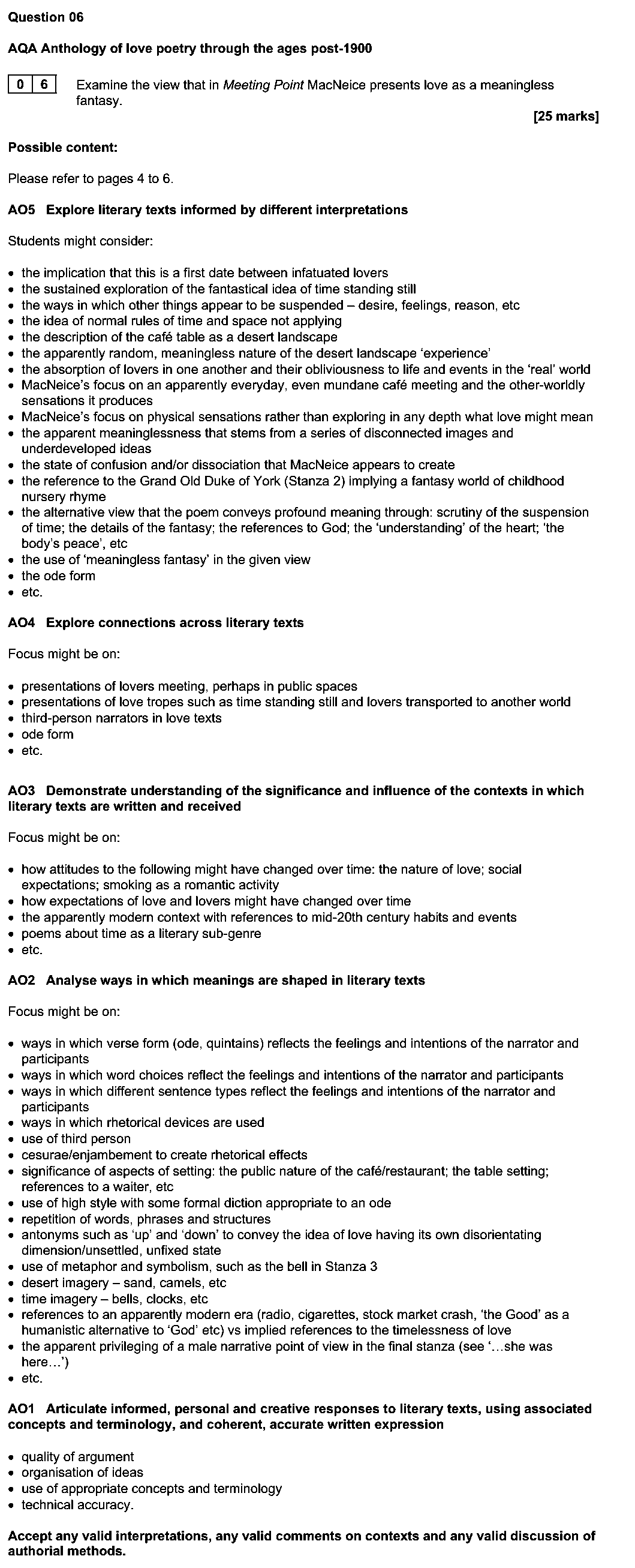
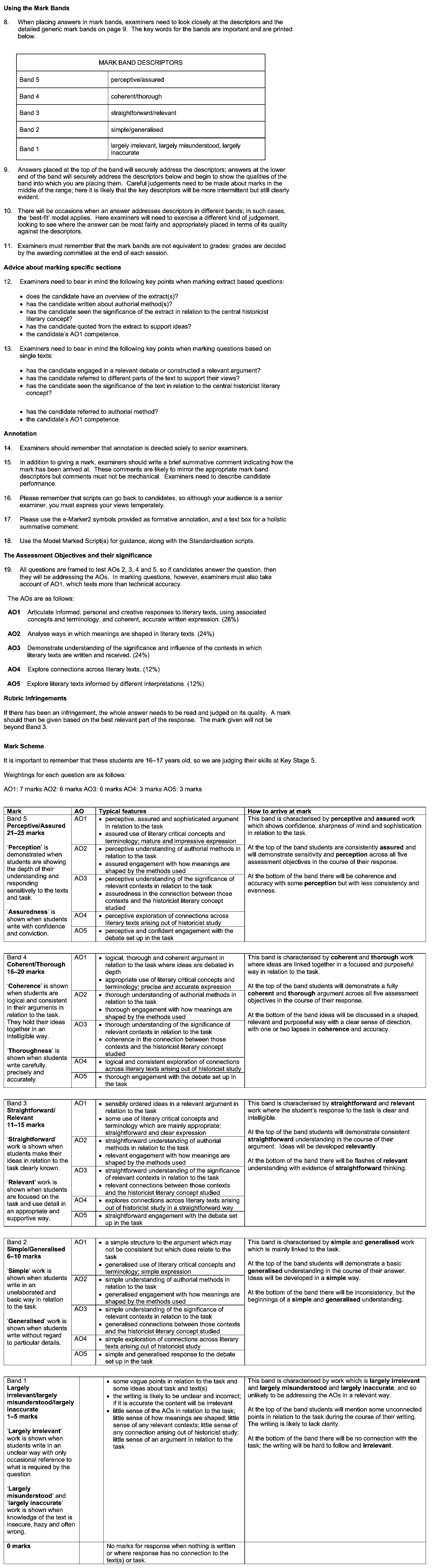
Mark scheme, including the levels and indicative content
The general mark scheme (assessment objectives and bands)
Examiner's comment
Othello Othello is by far the most popular Shakespeare text and this question yielded a full range of responses. Most saw this as interesting from the point of view of the narrative arc of the Othello Desdemona relationship and Iagoʼs attempts to corrupt the harmony between married partners. Many also saw the extract as a study in platonic love, and there were some interesting discussions about the closeness of these two characters with their shared military background and function, and how these influence their responses to one another. Some extended this approach into an exploration of homoerotic readings of the relationship between Iago and Othello. All such approaches were credited, as long as they were made relevant through scrutiny of the extract and engagement with the given view. The key words of the given view – ʻeasily turnsʼ, loving husbandʼ and ʻsuspicious foolʼ – were all central to the most successful answers. Many pursued a counter-argument based on how resistant Othello appears to be in this extract to Iagoʼs insidious suggestions about Desdemona and Cassio. Those who argued as such referred to the extract as Iago sowing the seeds of a transformation that really takes place later in the play. This involved references to the swearing of oaths between Iago and Othello, the significance of the handkerchief, Othelloʼs breakdown and the violence ensuing at the end of the play. Others agreed with given view, looking at the subtle ways in which Iago appears to be unsettling Othello despite the latterʼs protestations about Desdemonaʼs innocence. Looking closely at the extract involved scrutinising shorter exchanges between the two but also Iagoʼs jealousy speech and longest of Othelloʼs speeches. Structure is always a useful way into meaning and those who engaged with the opening and closing of the extract tended to do well in terms of getting to the heart of the extractʼs significance.
Notes from the mark scheme and report
- Focus: relationship: Iago turning Othello
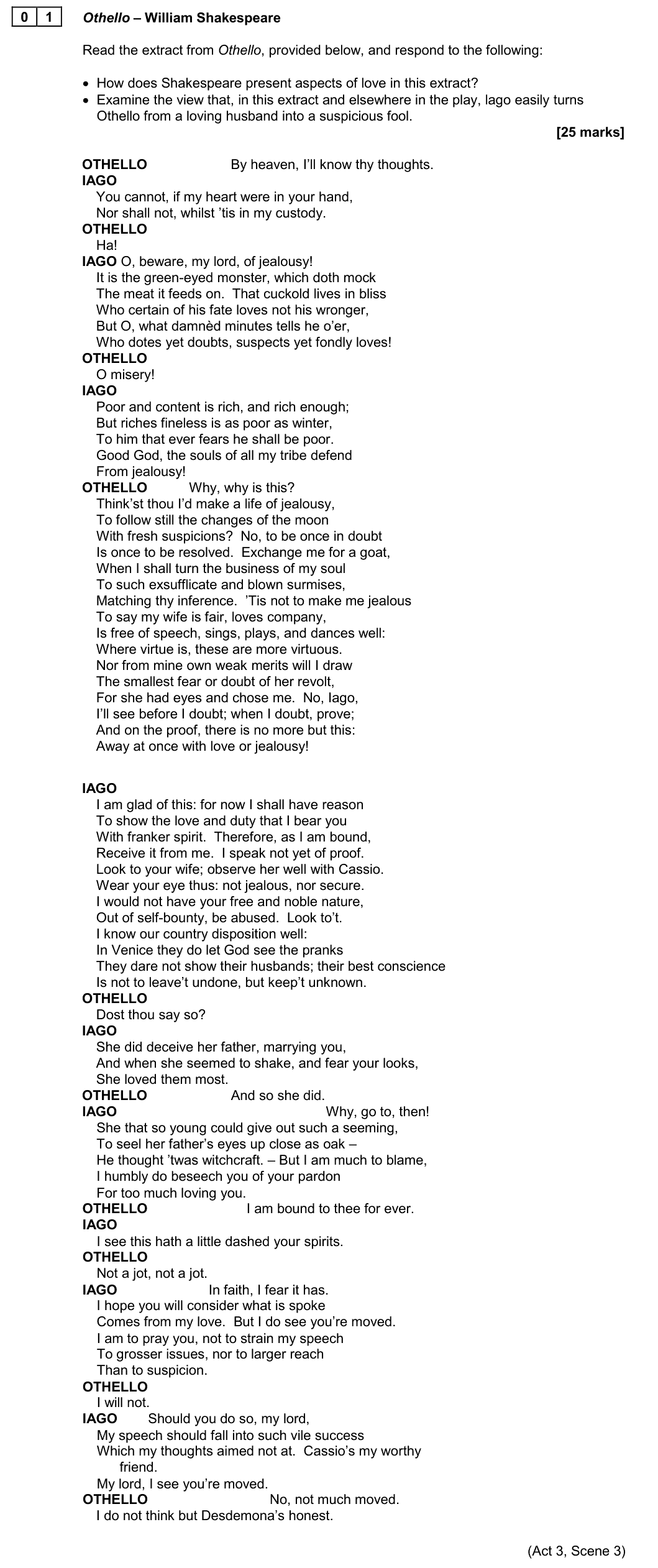
- Extract printed
- extract Act 3 Scene 3 (temptation scene: 'green-eyed monster'
- Othello demands proof, 'I am bound to thee for ever')
- two bullets: aspects of love + view that Iago easily turns Othello from loving husband into suspicious fool
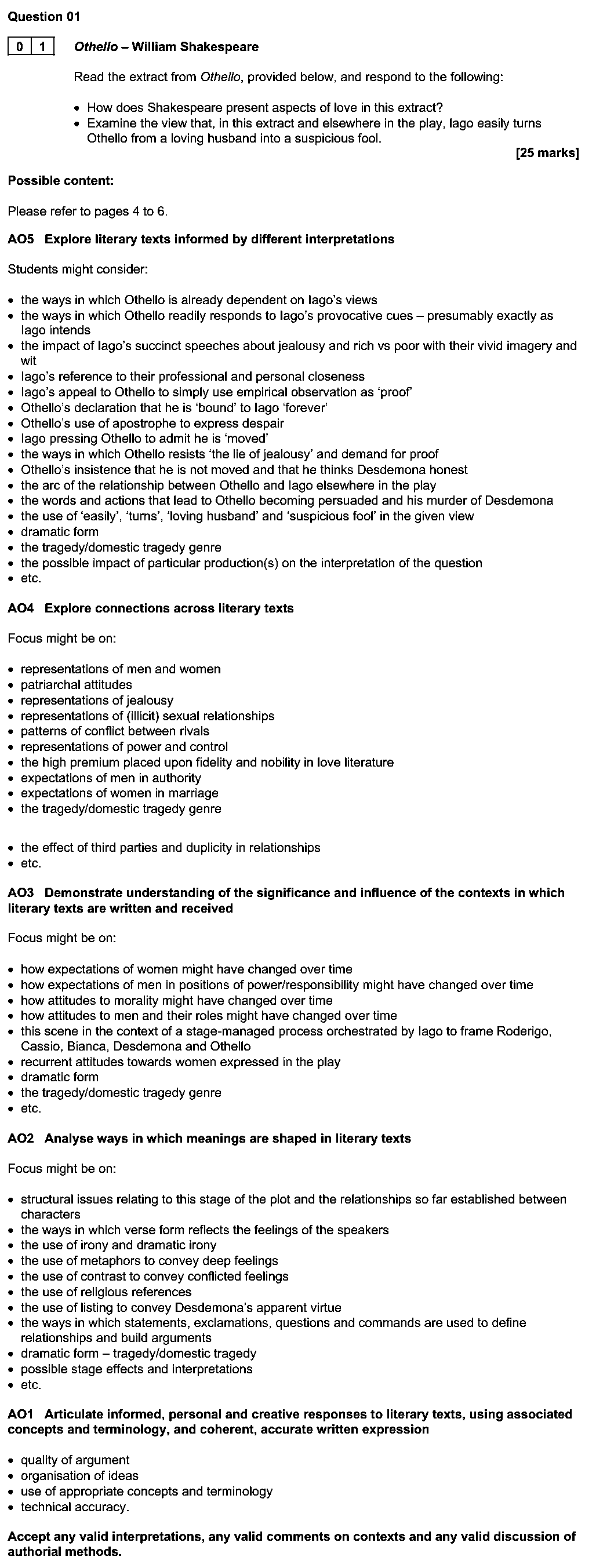
- key words 'easily', 'turns', 'loving husband', 'suspicious fool'
- MS credits Iago's jealousy and rich/poor aphorisms, his appeal to observation and Venetian wives' deceit, Othello's resistance and demand for proof vs signs he is 'moved'
- ER: platonic and military closeness (even homoerotic readings) credited if tied to the extract
- many counter-argued that Othello resists here and the seeds grow later (oaths, handkerchief, breakdown)
- best used the opening and close of the extract