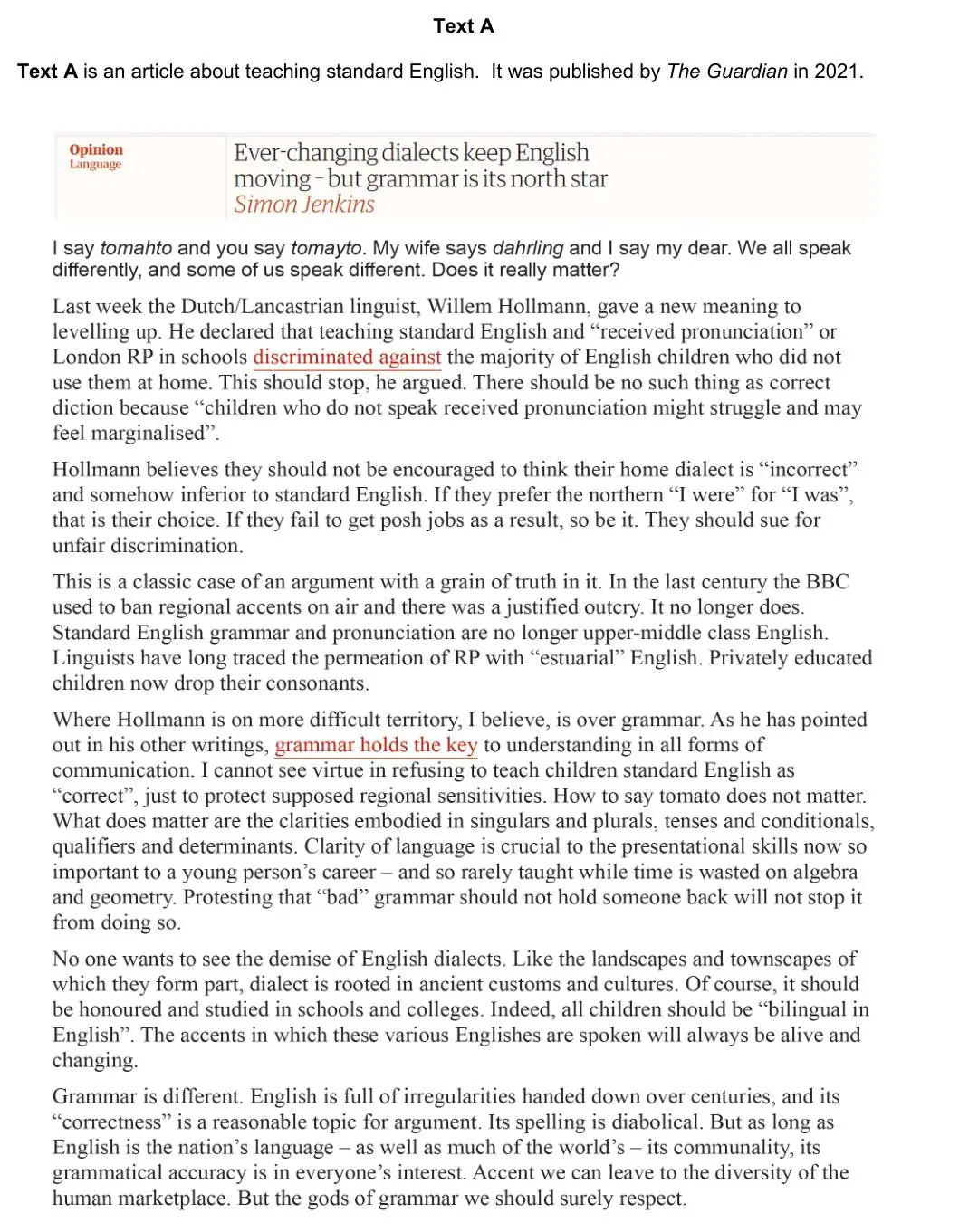
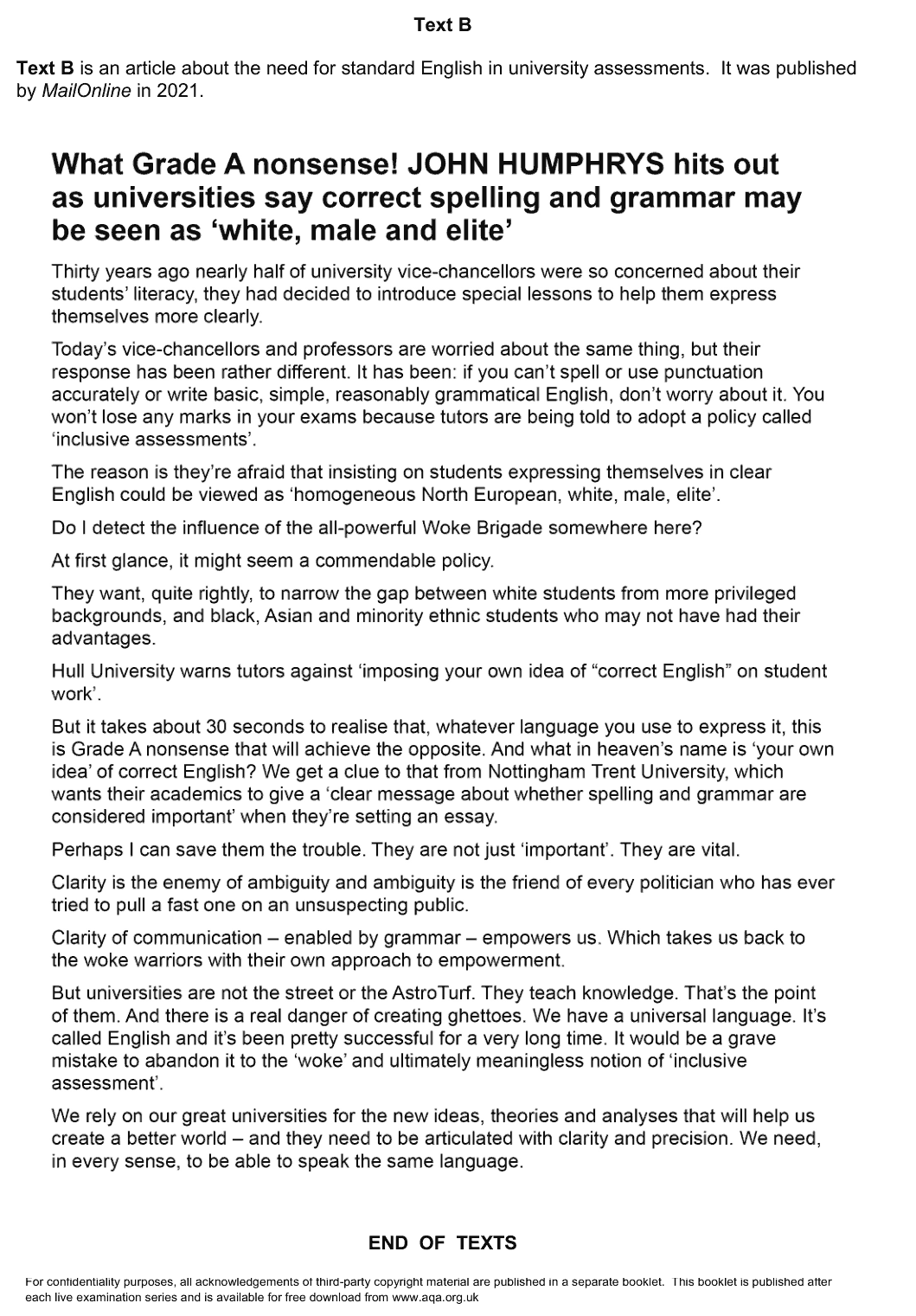
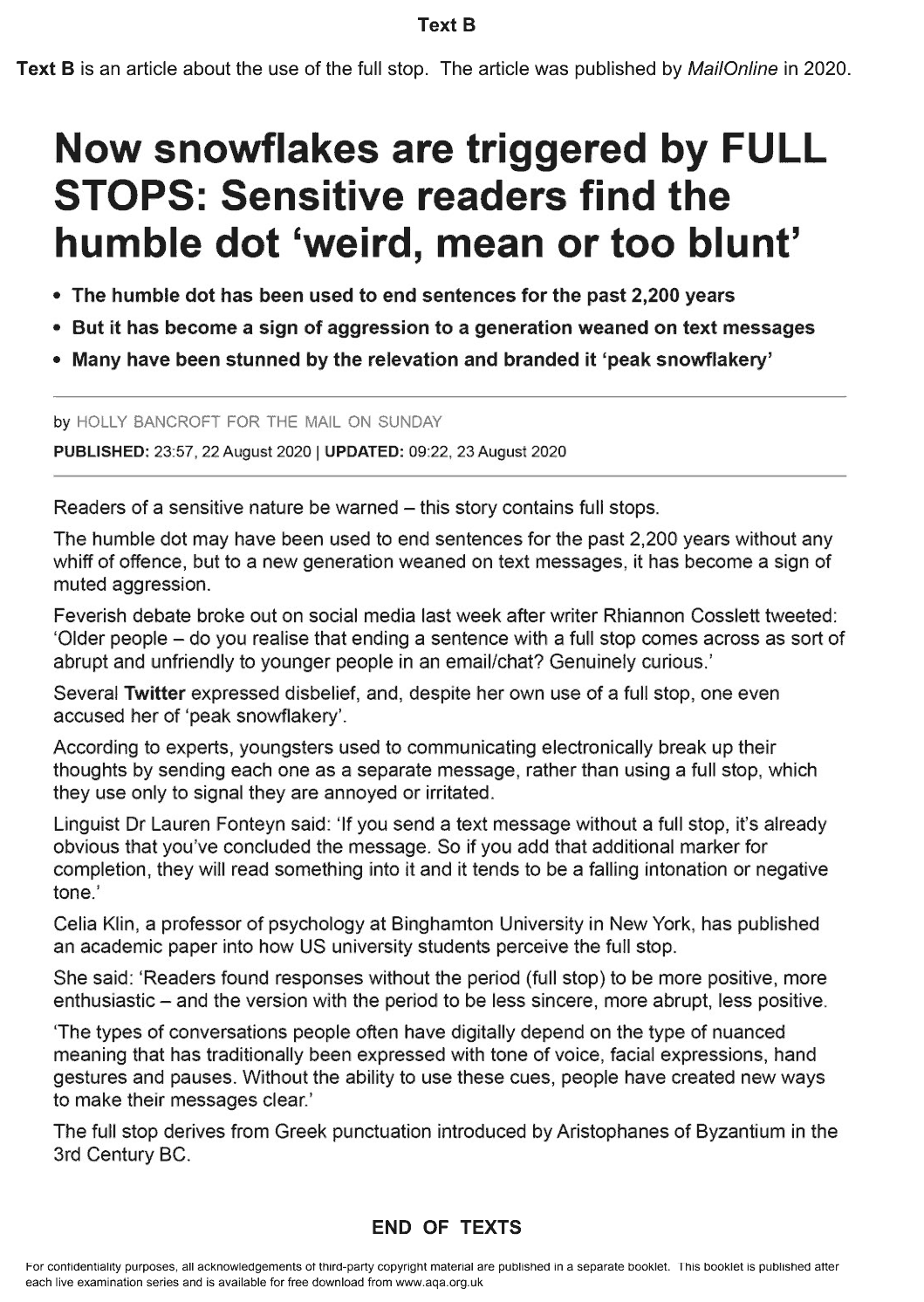
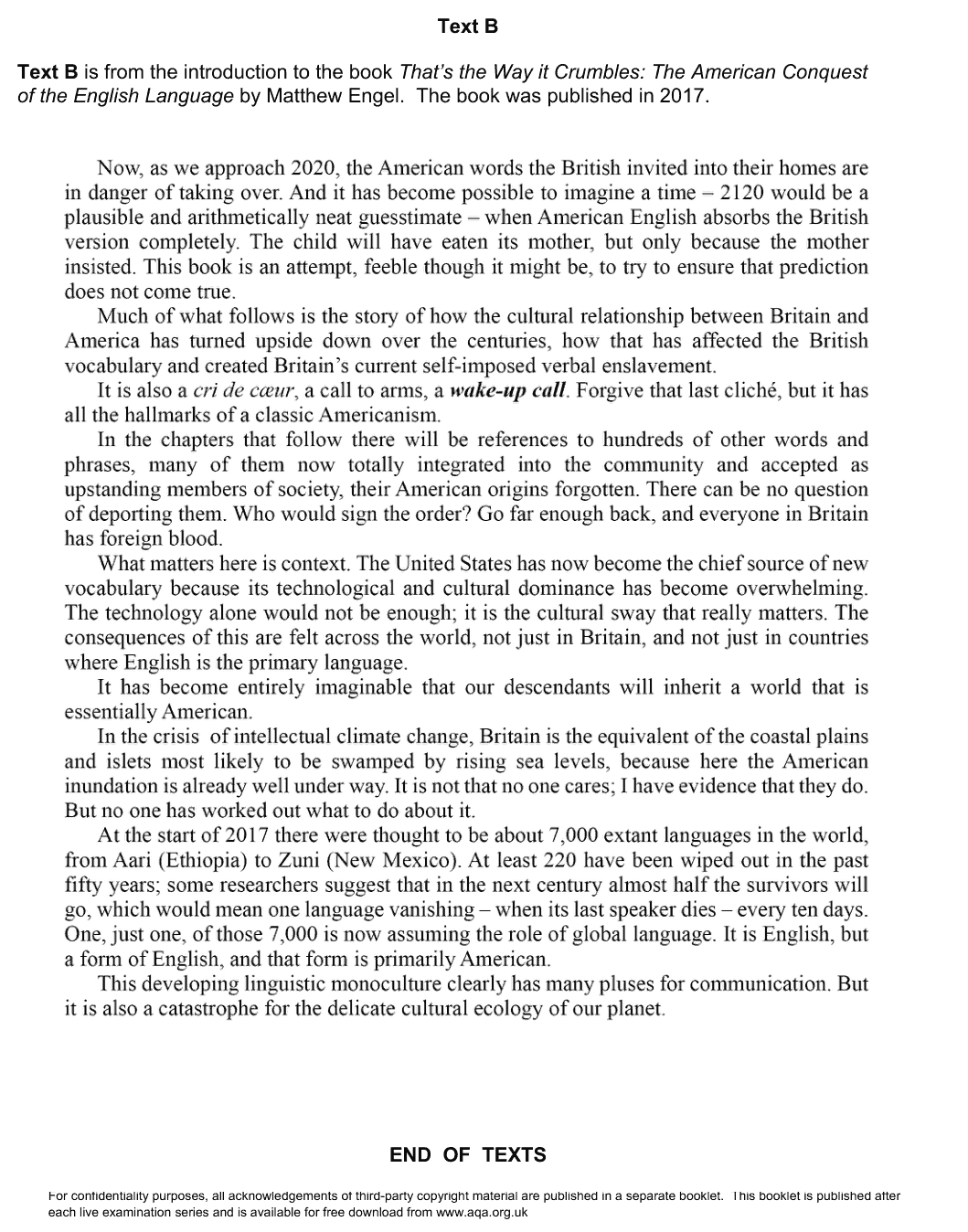
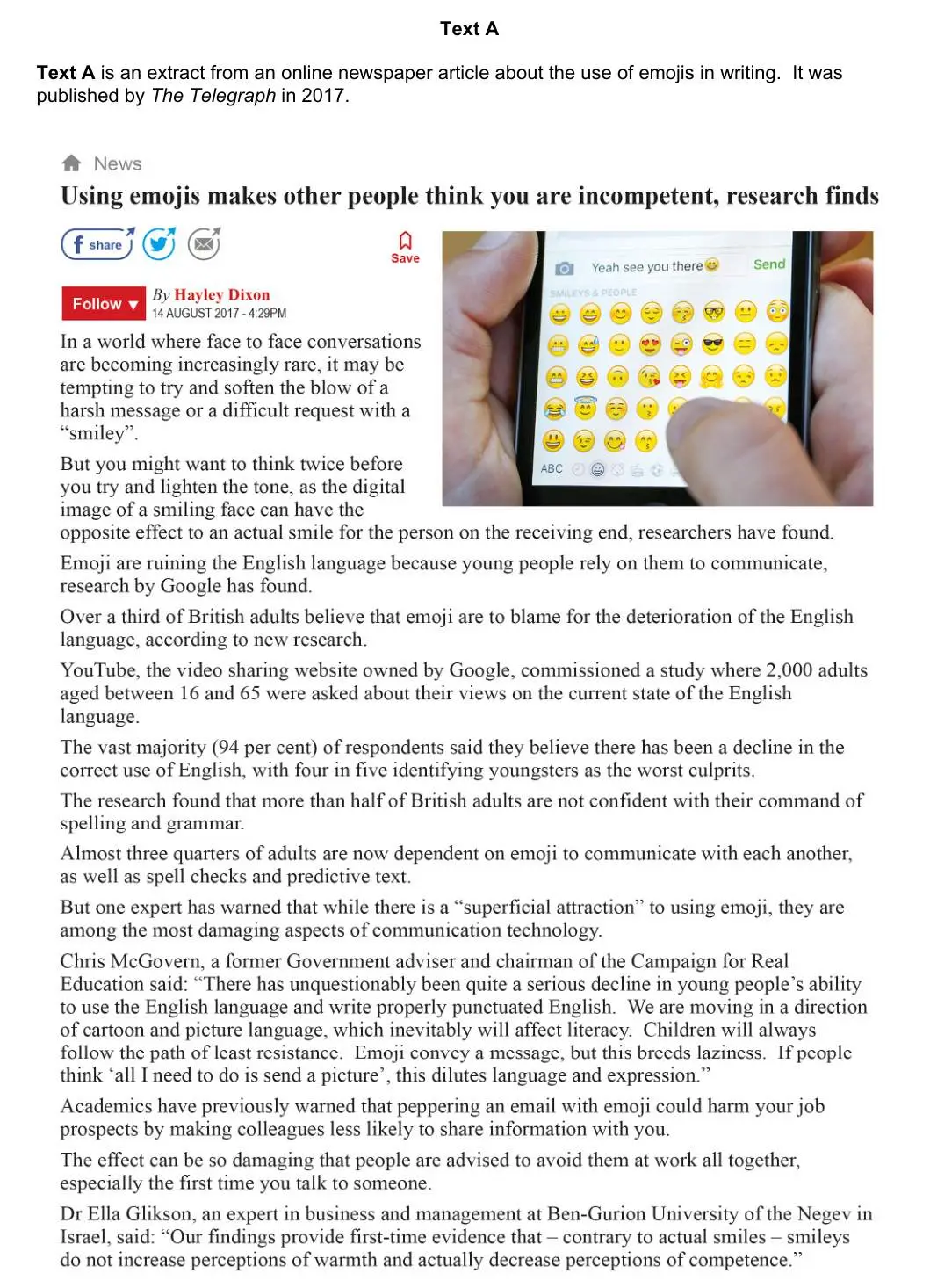
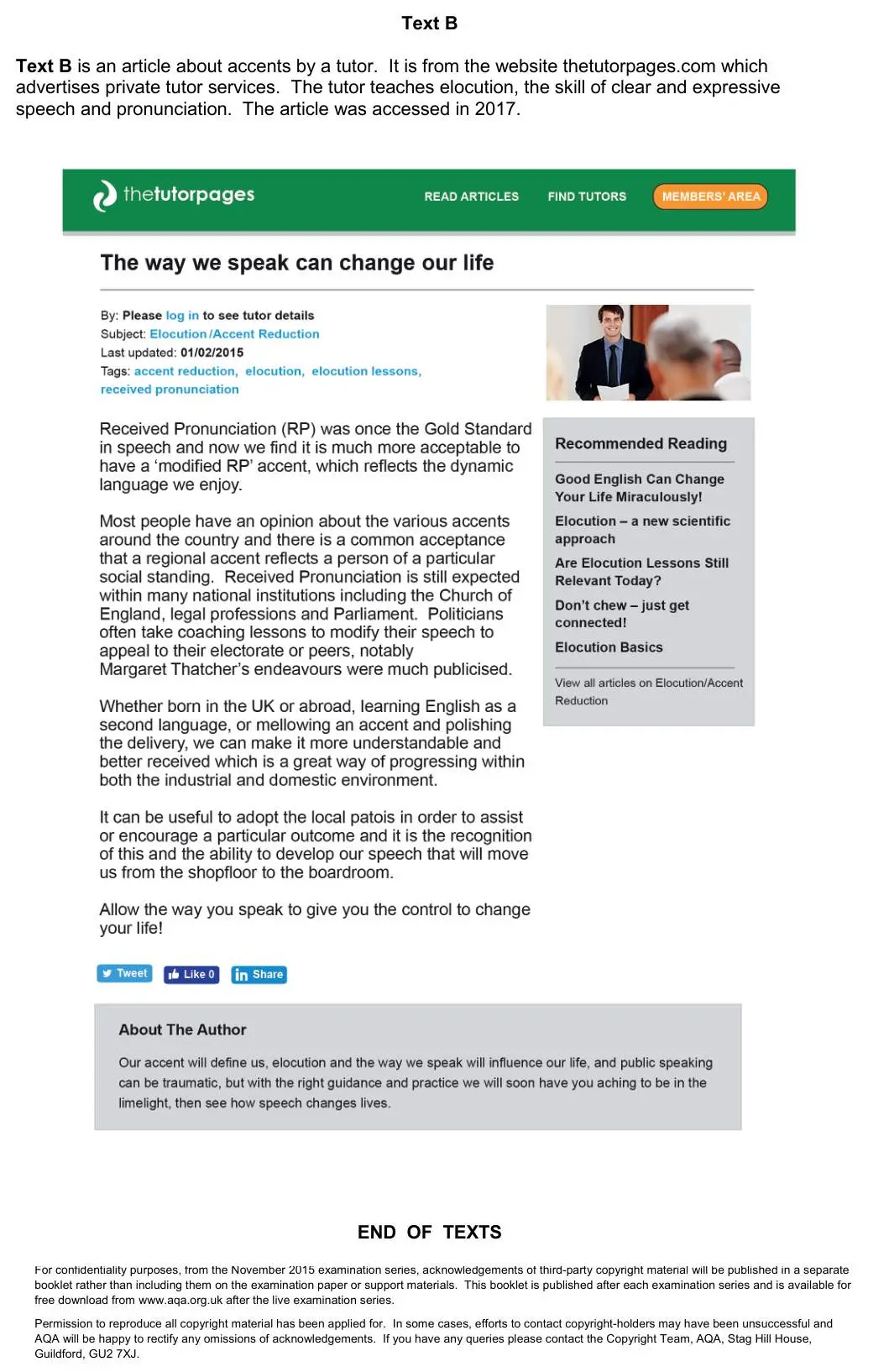
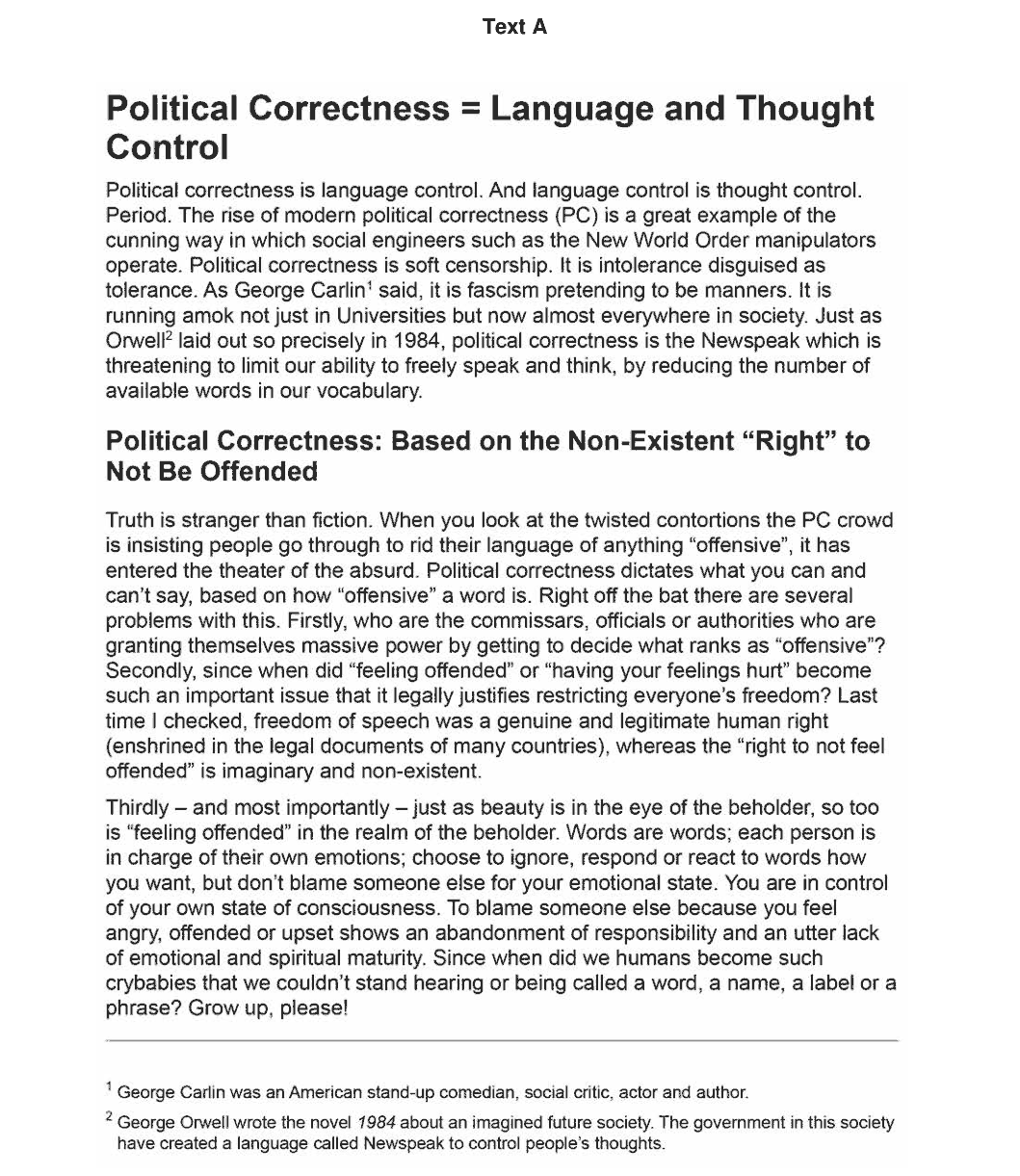
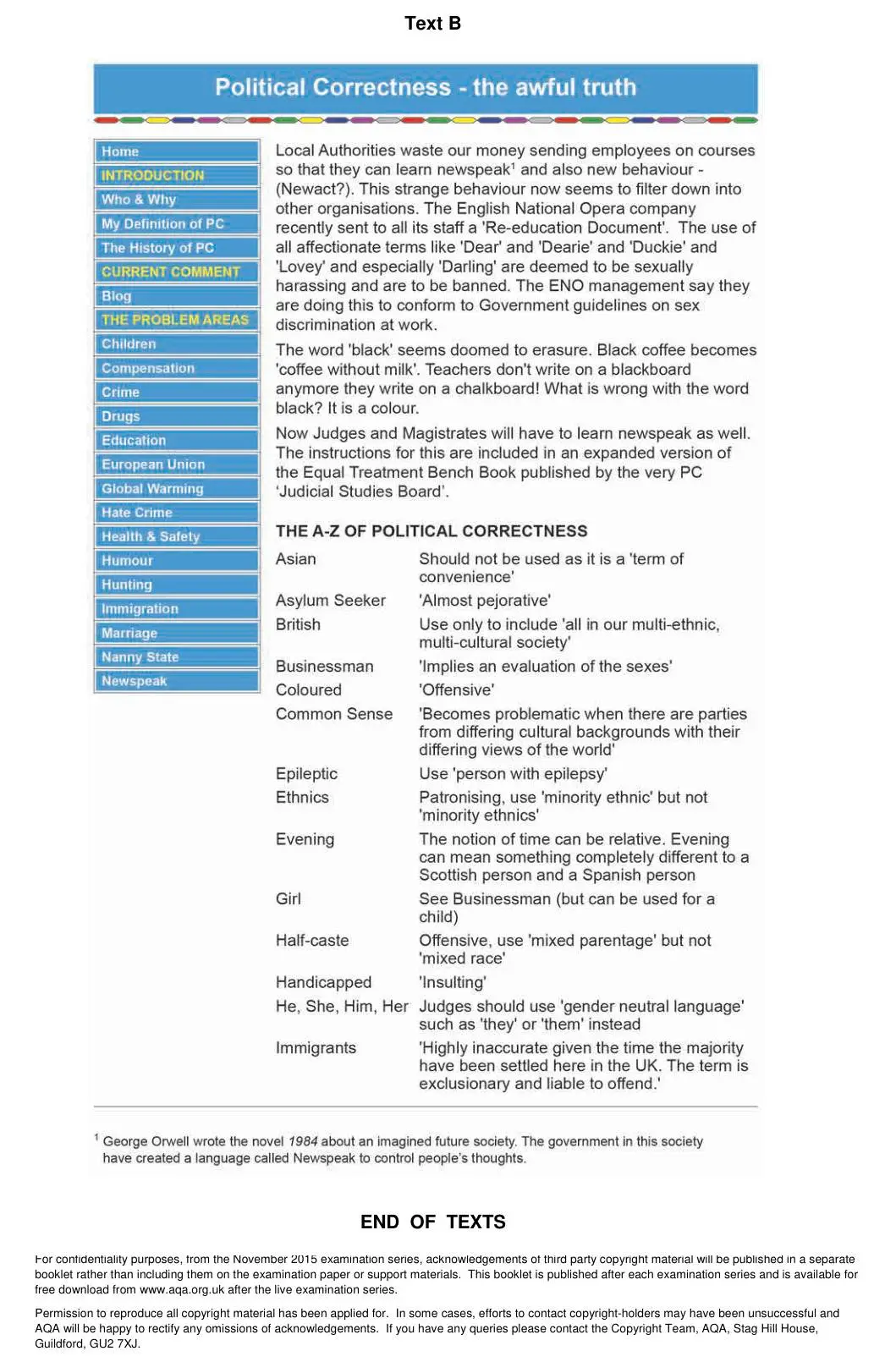
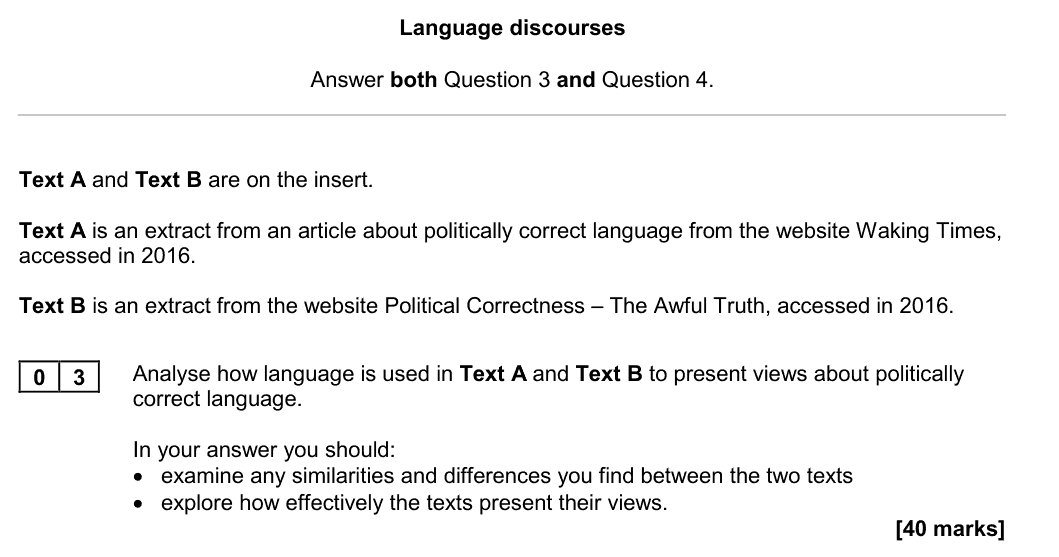
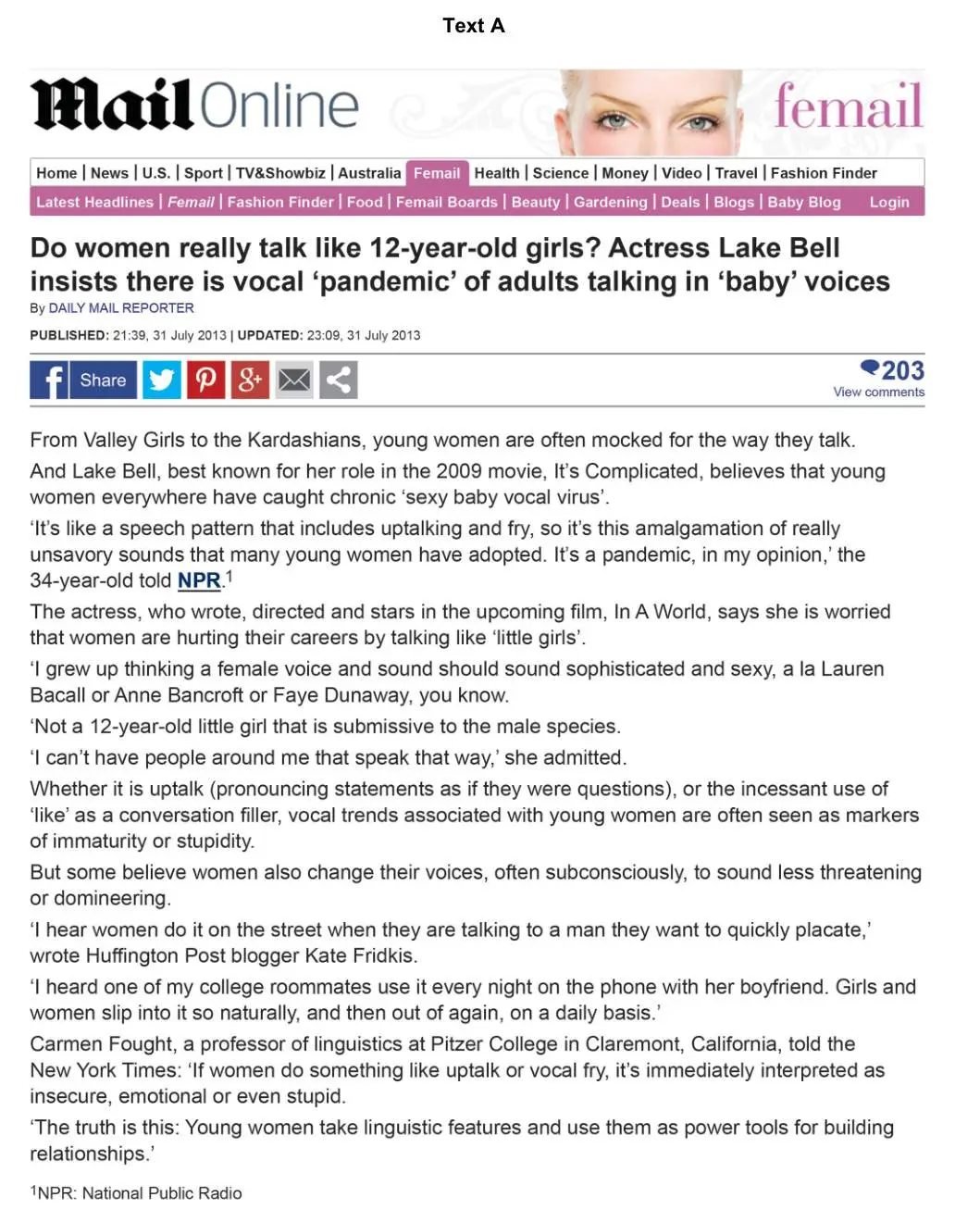
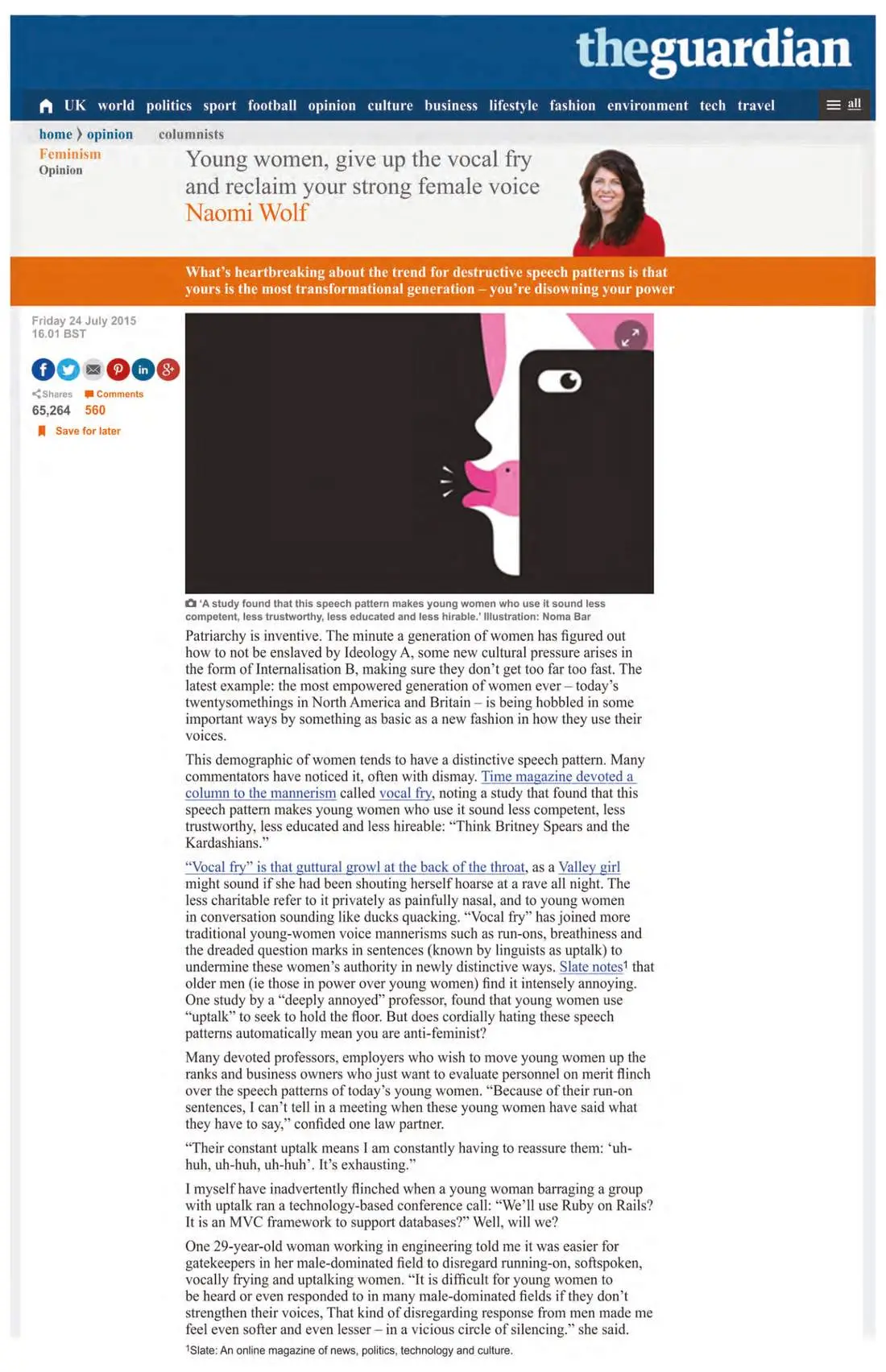
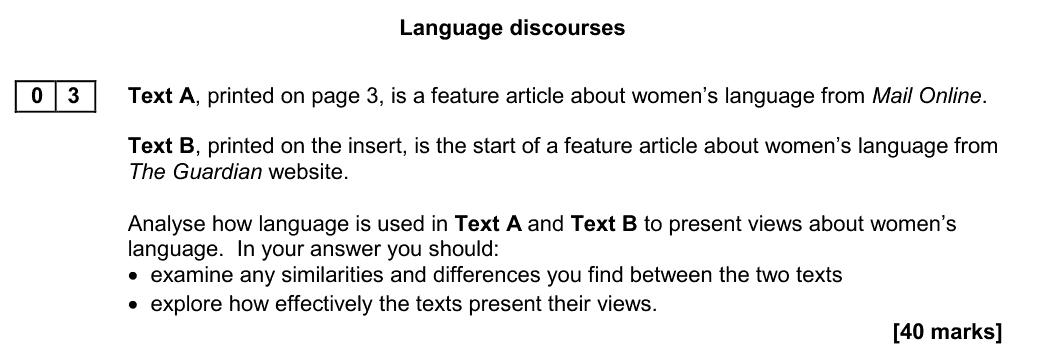
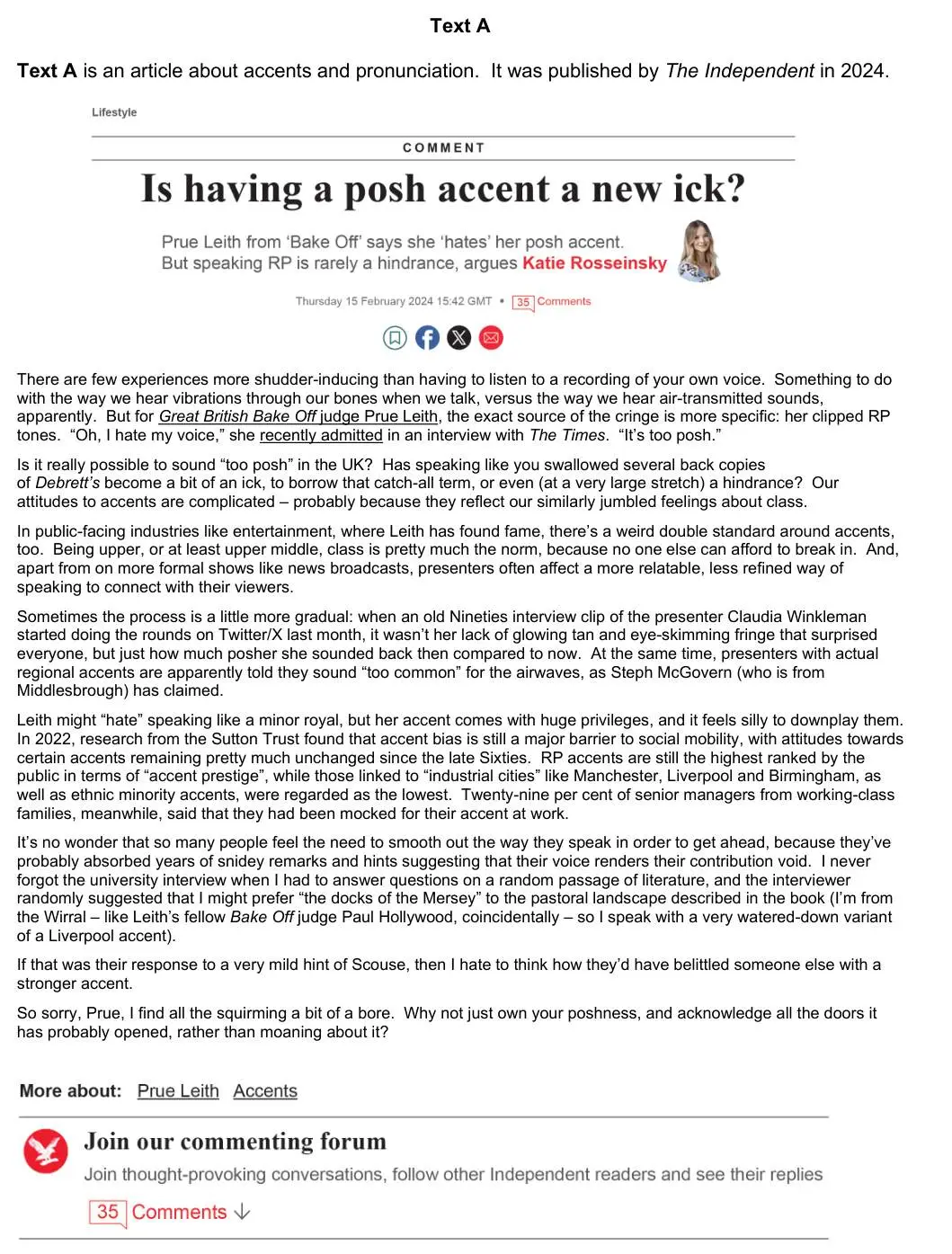
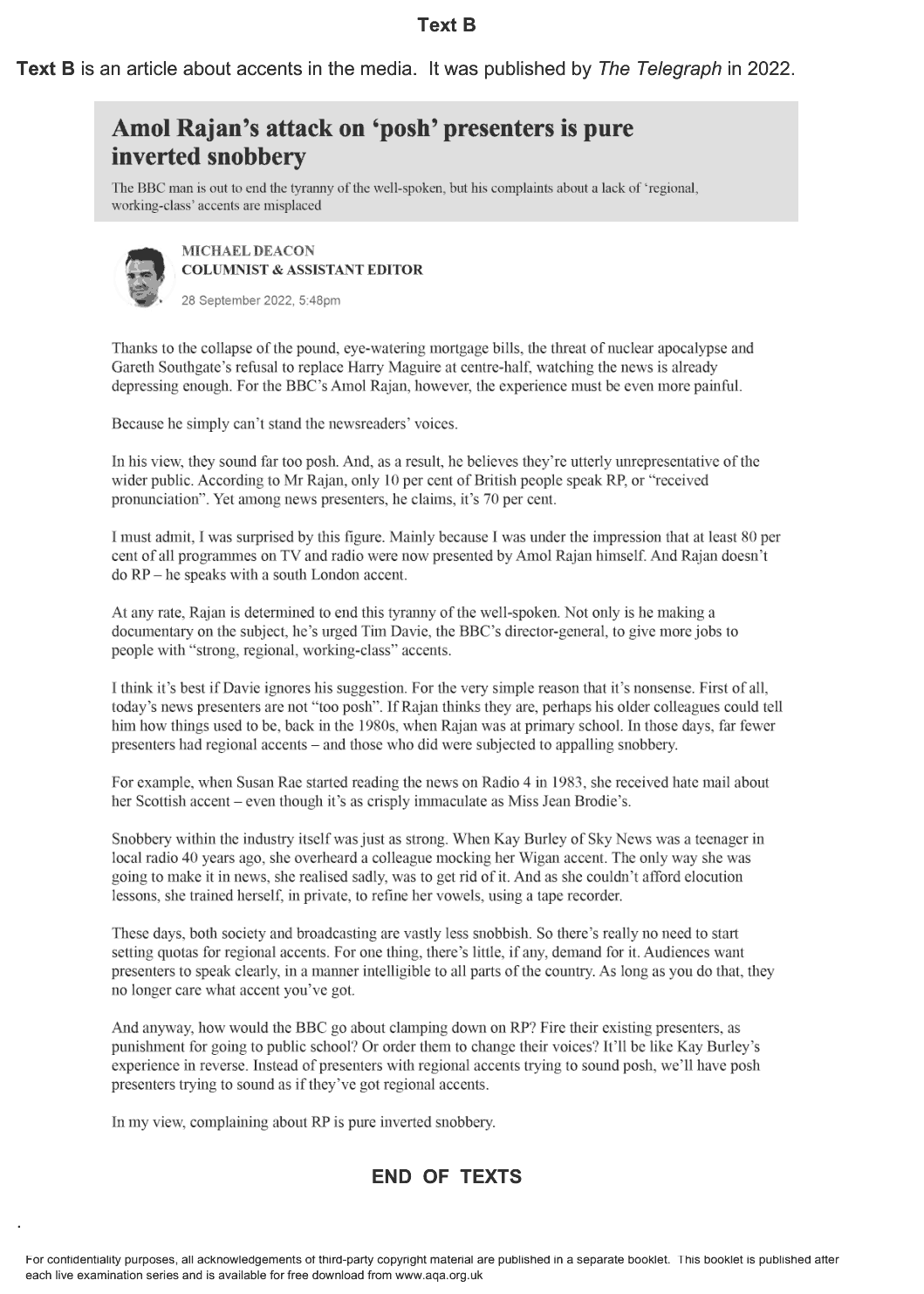
Text A (insert), Text B (insert)
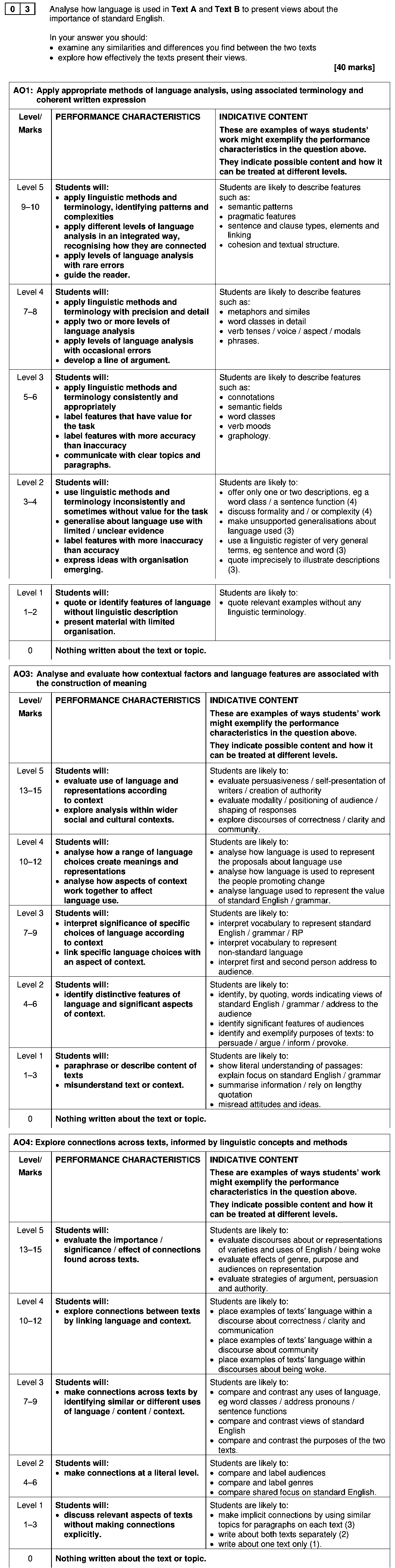
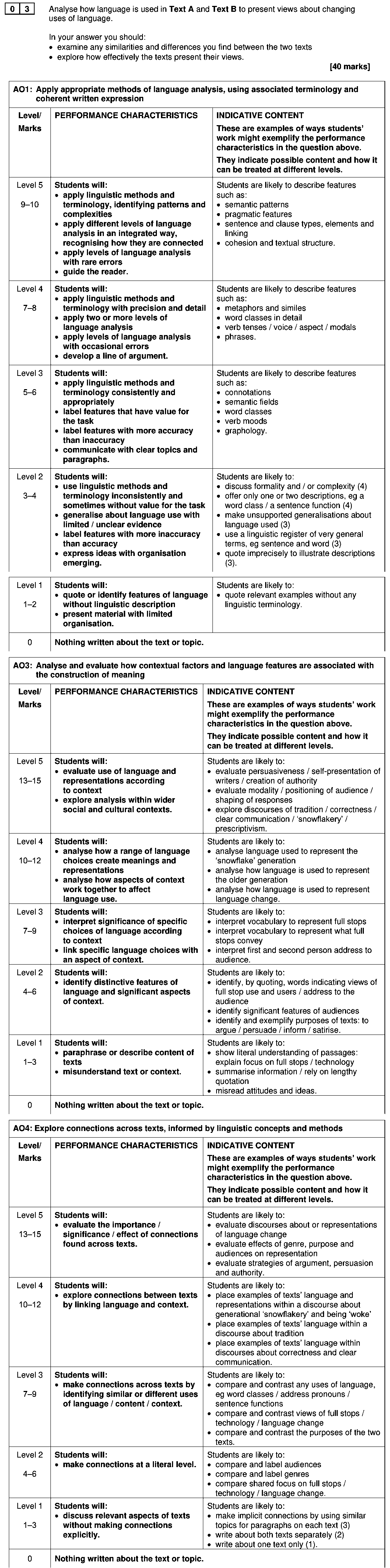
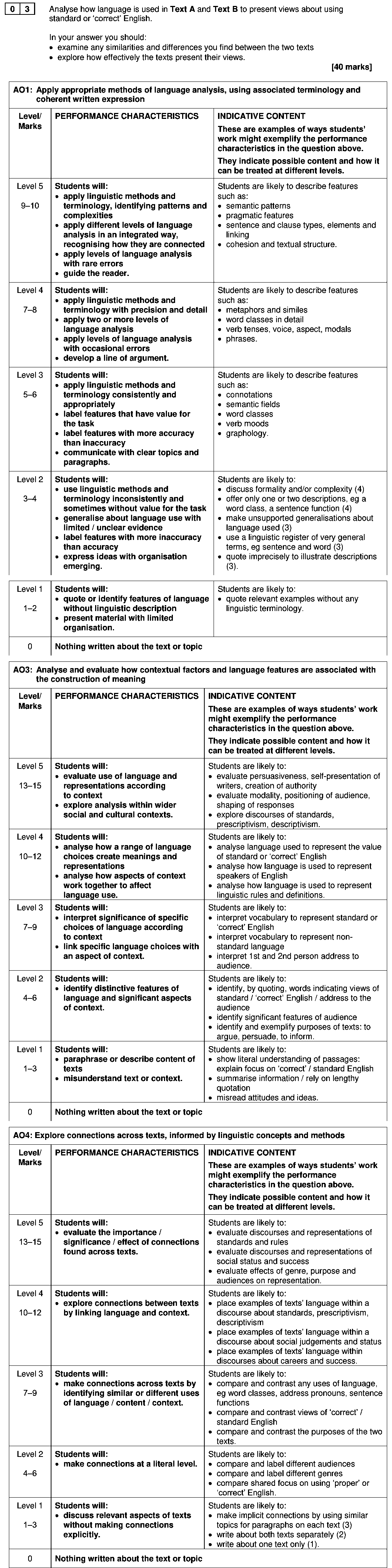
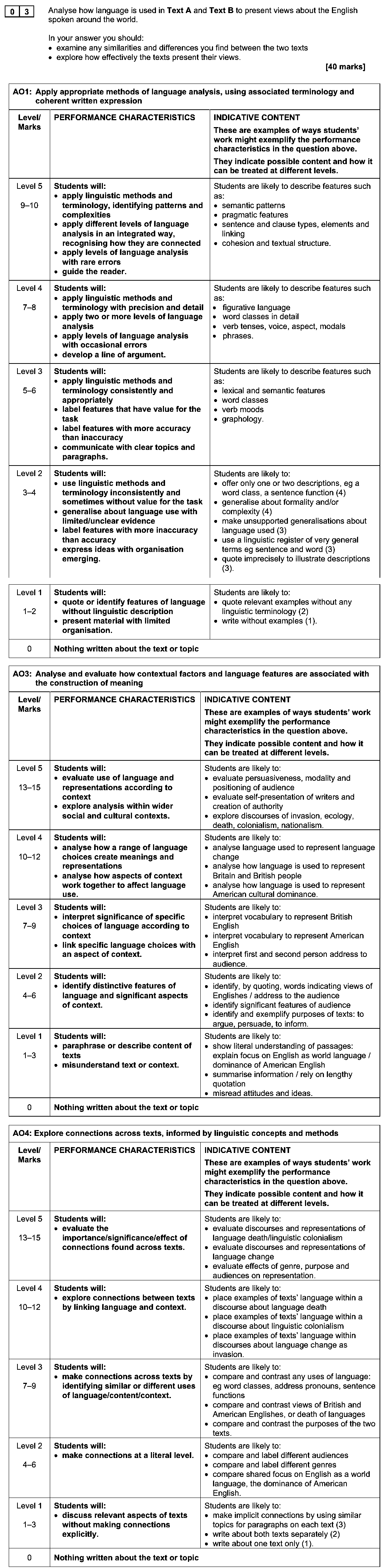
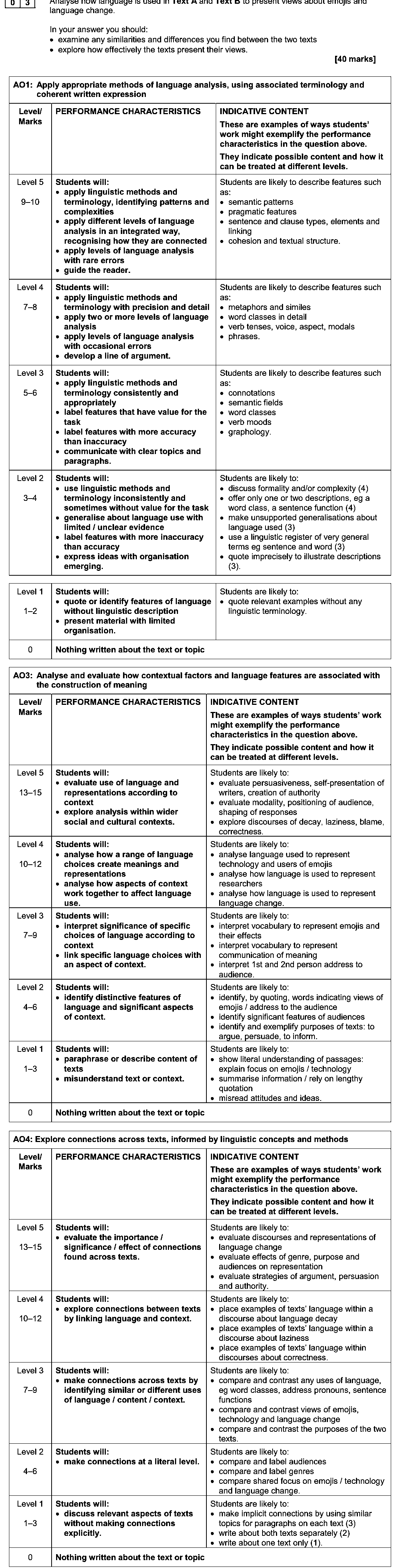
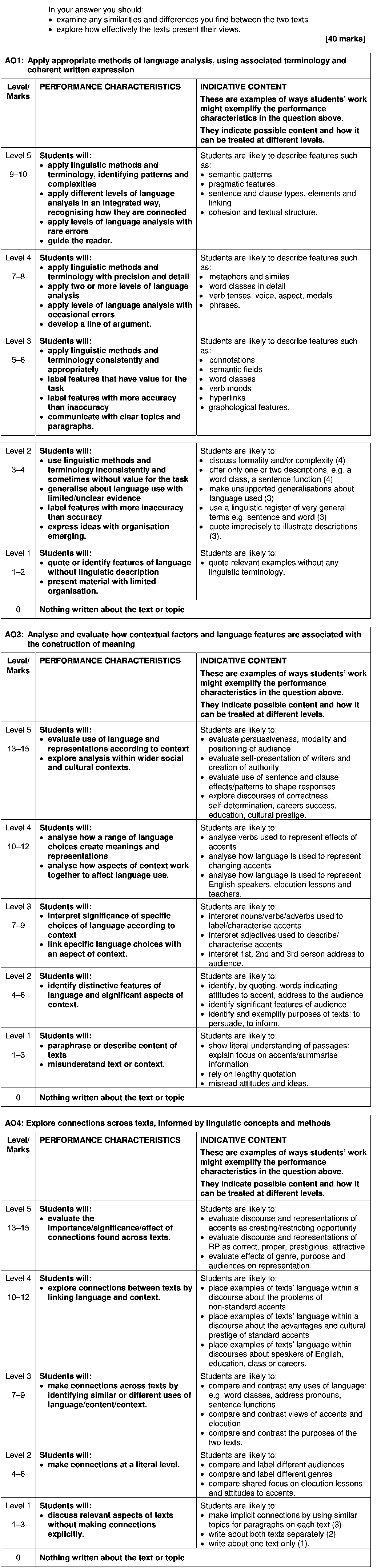
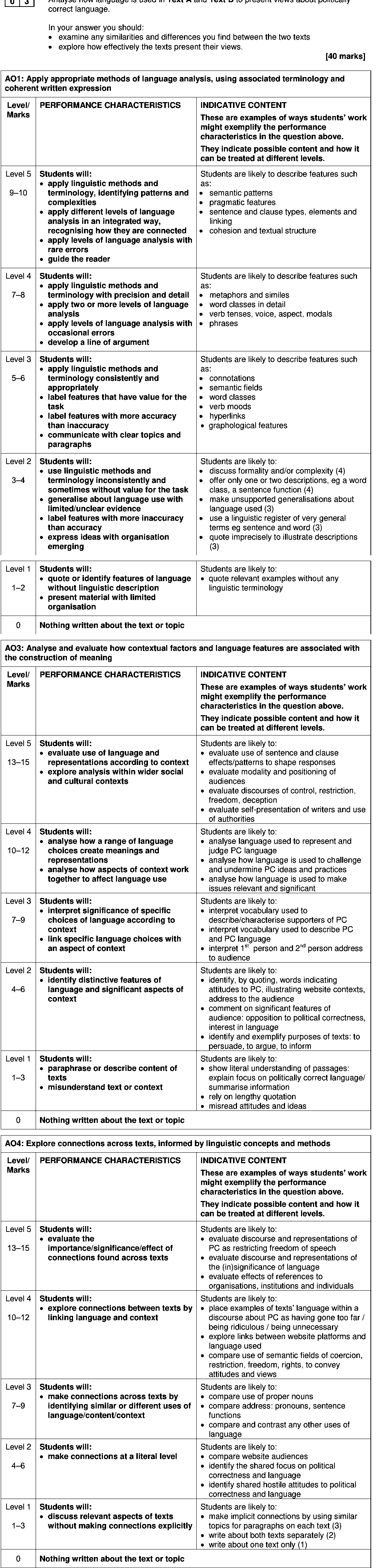
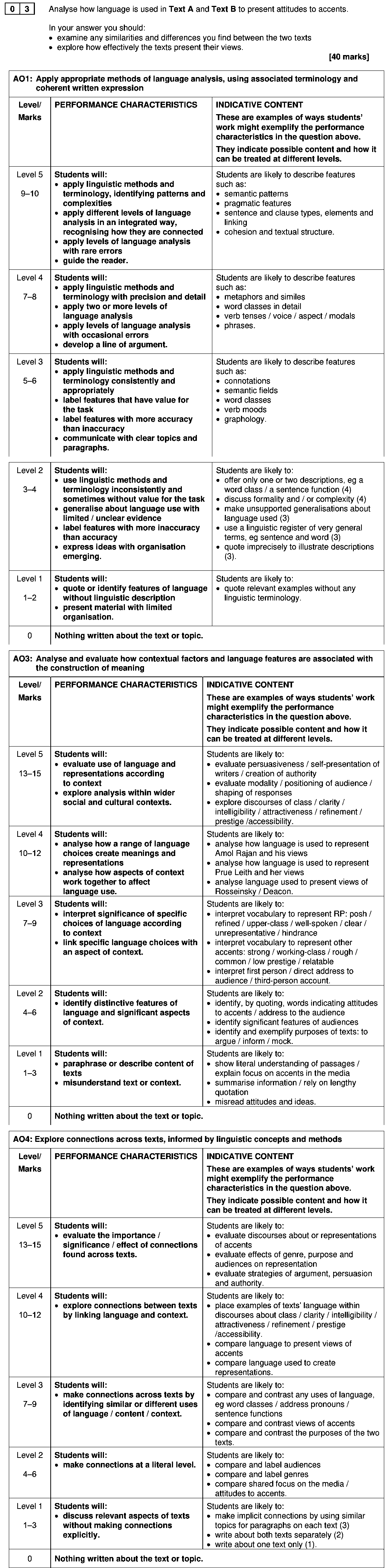
Mark scheme, including the levels and indicative content
Examiner's comment
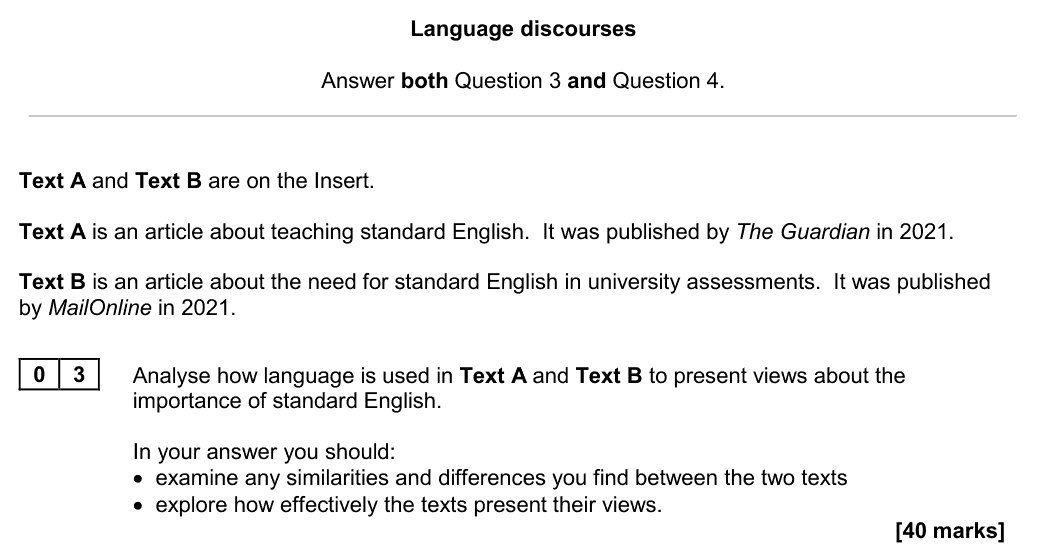
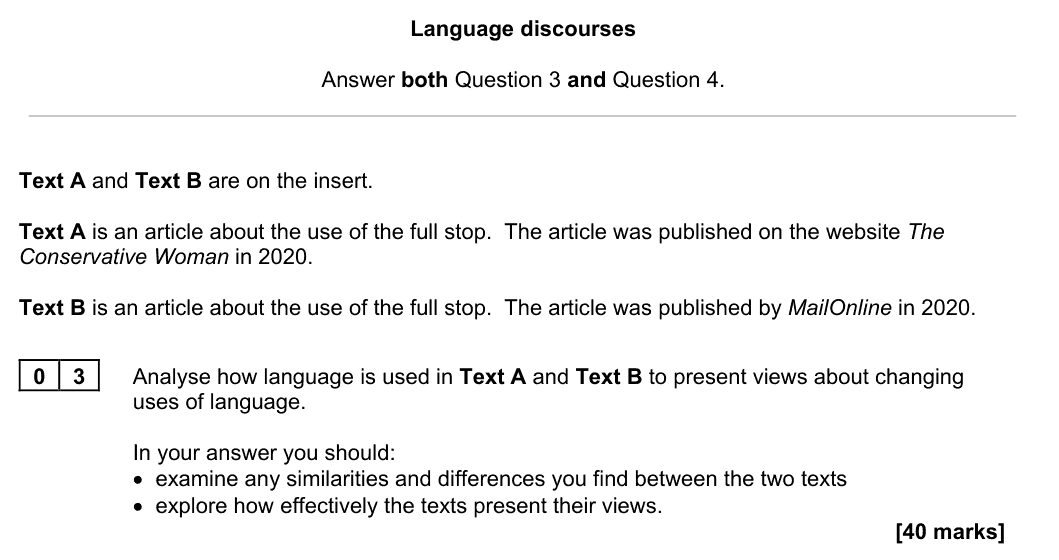
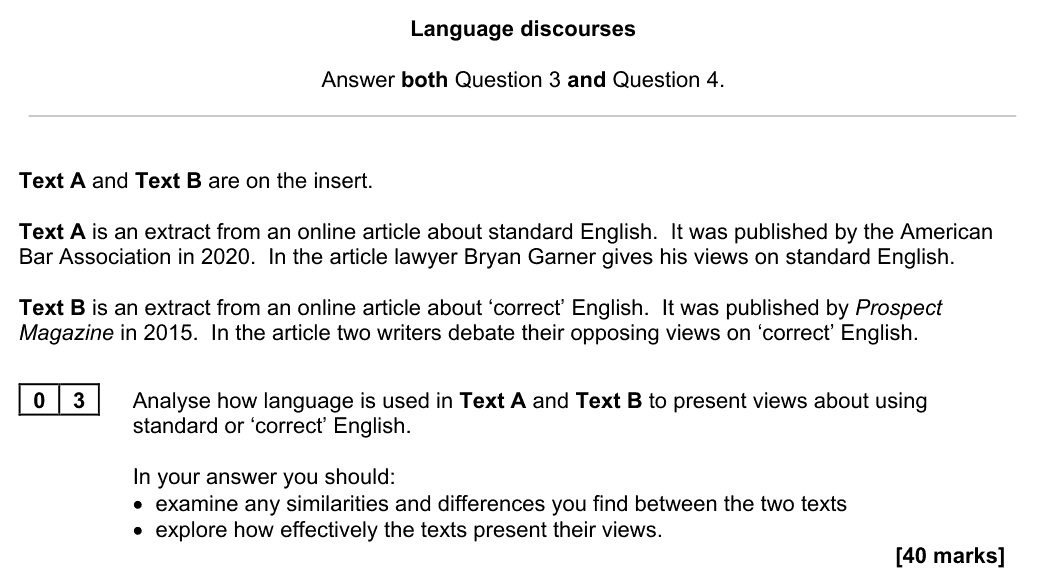
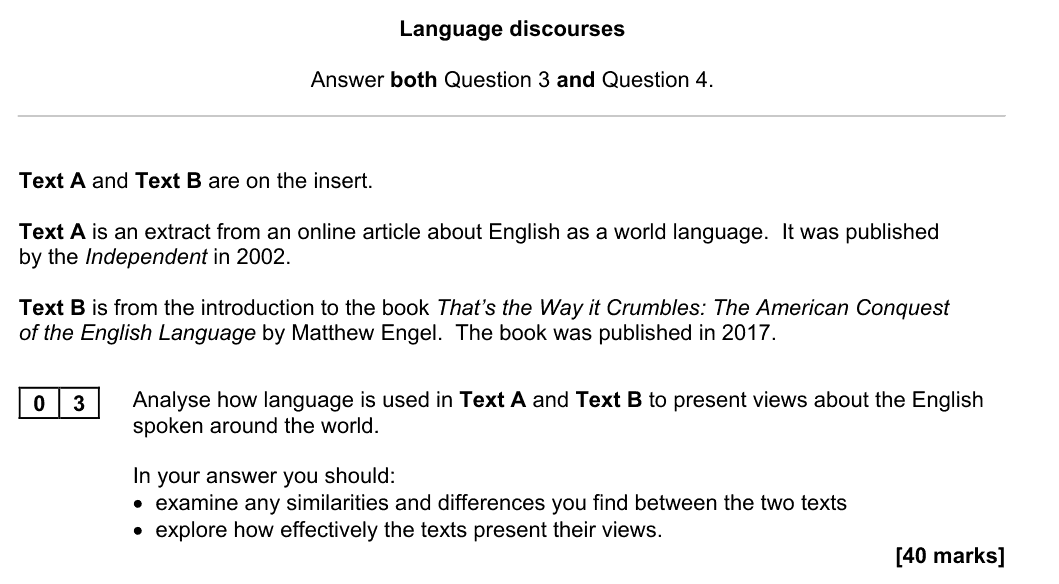
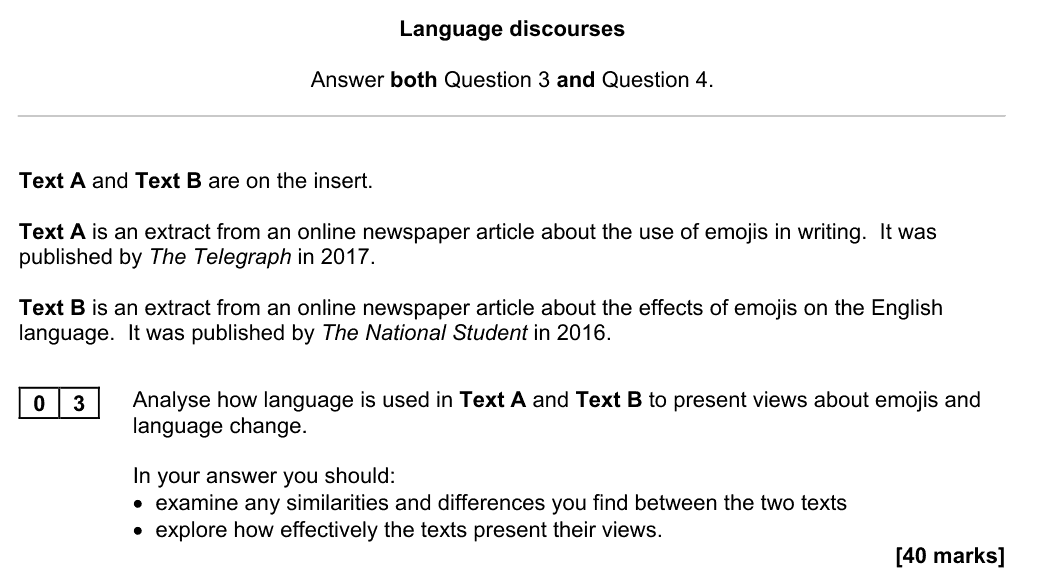
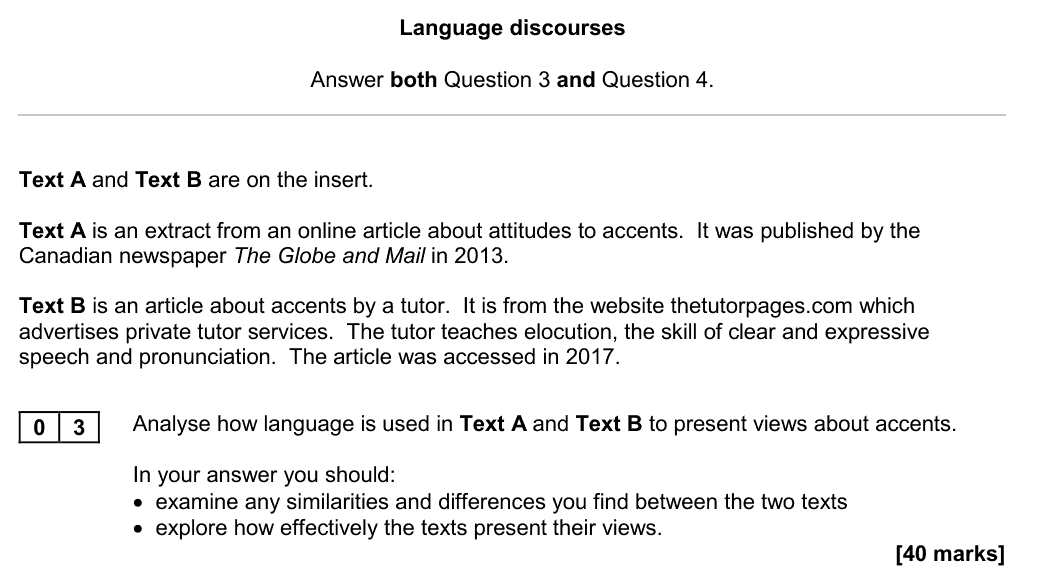
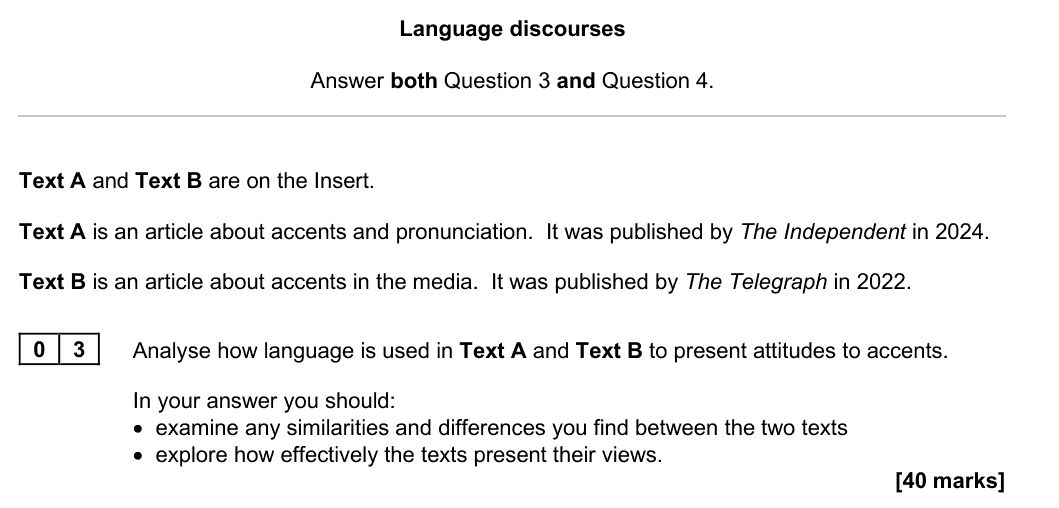
Analyse how language is used in Text A and Text B to present attitudes to accents. In your answer you should: • examine any similarities and differences you find between the two texts • explore how effectively the texts present their views. How students did well Students did well when they: • presented a fully integrated analysis comparing and contrasting the two texts • made use of AO1 linguistic analysis to facilitate AO3 analysis of meanings and representations • engaged closely with how the texts represented RP and regional accents • looked at how Text B drew on discourses of intelligibility, clarity, well-spokenness and accessibility • noted how both texts drew on discourses about accents and class, status and privilege • saw how the texts drew on binary oppositions to classify and evaluate accents: strong vs mild accents, rough vs smooth, refined vs unrefined and that accents were deemed to exist in a hierarchy • explained how people might have fallen out of love with posh accents or RP and found them cringeworthy and how RP might have become a hindrance, though it still opened doors • noted Rosseinsky’s view of regional accents as a barrier to social mobility and Deacon’s depiction of snobbery against regional accents in the past • explained how regional accents were seen as ‘too common’ and subject to snobbery while RP was seen as posh • compared how Rosseinsky and Deacon presented changes in attitudes over time • examined the idea that regional accents were a source of mockery • identified how some people in the media were seen to be adopting less posh sounding accents to sound more relatable • compared Leith’s hatred of her RP accent with Rajan’s criticism of its unrepresentative presence in the media • noted Deacon’s rejection of Rajan’s criticism about regional accents being under- represented • compared how the writers criticised Leith for complaining about her advantages from RP and Rajan for his inverted snobbery towards RP • compared how the writers presented their critiques of Prue Leith and Amol Rajan, looking at address and naming patterns • analysed how Text B othered and undermined Rajan’s views (In his view, According to Rajan, he believes, he claims) and compared how Text A belittled Leith’s woes (squirming, moaning, cringe) • analysed how Rosseinsky and Deacon presented their own views and arguments, noting how she saw an ongoing issue while he downplayed the issues nowadays • saw how they both treated attitudes to accents as part of wider social values • compared how Rosseinsky showed her annoyance with Leith’s unhappiness about an accent that gave her huge advantages with Deacon’s presentation of Rajan’s ‘inverted snobbery’ • analysed how the self-presentation of the writers and their positioning of the reader worked persuasively • analysed modality in the presentation of ideas and views • compared and evaluated the ways the articles began in their first paragraphs • analysed how Text B’s single simple sentence paragraphs emphasised the belittling and rejection of Rajan’s views • compared the use of challenging questions to end the articles. How students did less well Students did less well when they: • tried to force a prescriptivist v descriptivist schema on the newspapers, the writers and the texts • used the word discourse imprecisely, without full understanding of its significance in this section of the paper • wrote about the texts one at a time in separate paragraphs with at best implicit comparisons and minimal connections at the start and end of the essay • did not use any linguistic description to aid their analysis • focussed on linguistic description to the detriment of engaging with the texts’ meanings • used buzz words from previous mark schemes but without applying them effectively: modality, positioning, discourse • misread Rosseinsky’s judgement of RP, thinking she was in favour of it.
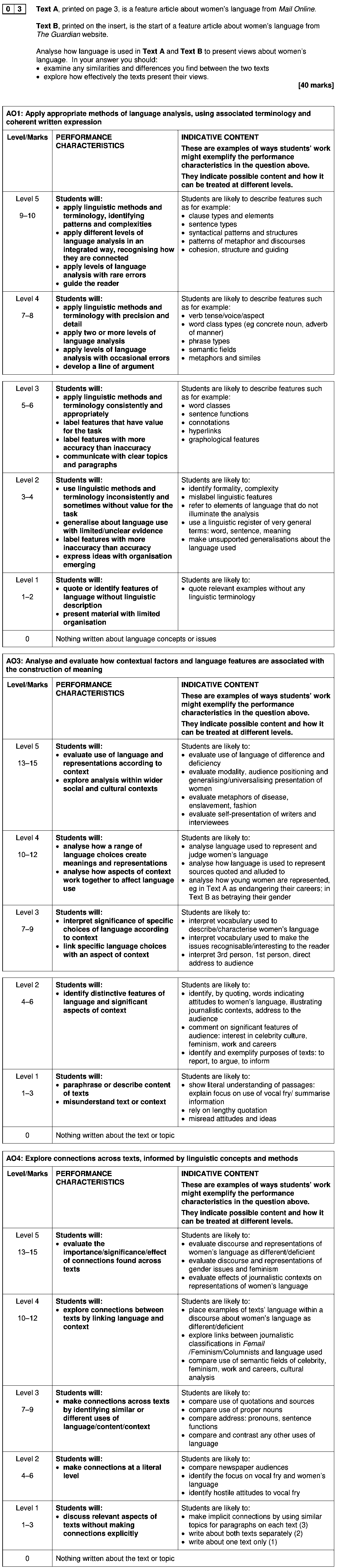
Notes from the mark scheme and report
- AO1 10 + AO3 15 + AO4 15
- top band evaluates persuasiveness, self-presentation, modality and positioning, and discourses of class, clarity, intelligibility, refinement and prestige
- Level 4 analyses representation of Leith, Rajan and the writers' own views
- ER: harder than 2024 as texts did not fit a prescriptivist/descriptivist schema
- best compared how Text A belittles Leith and Text B undermines Rajan's 'inverted snobbery'
- errors: forcing that schema, vague use of 'discourse', separate text-by-text paragraphs, misreading Rosseinsky as pro-RP, mislabelling verb phrase and post-modification
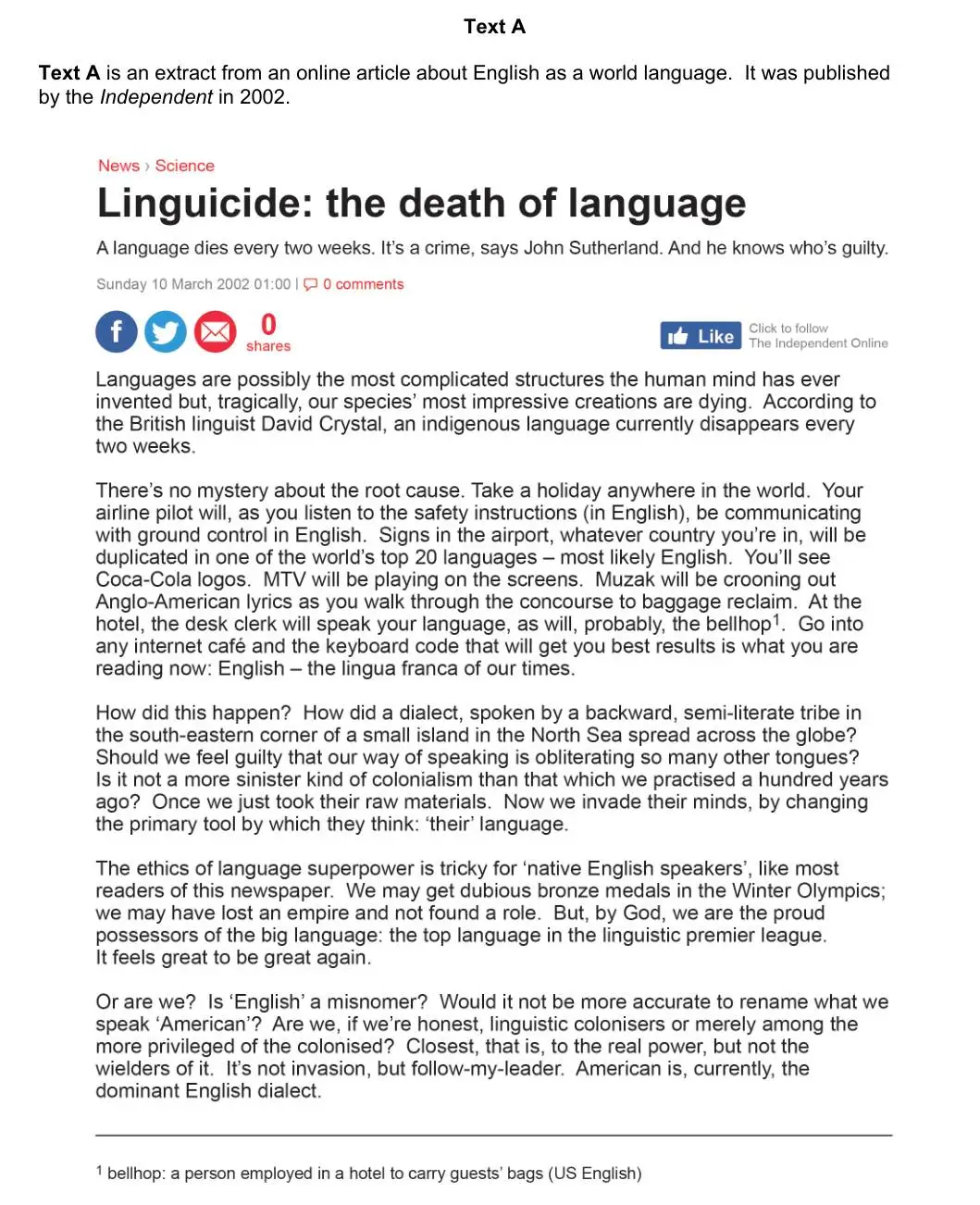
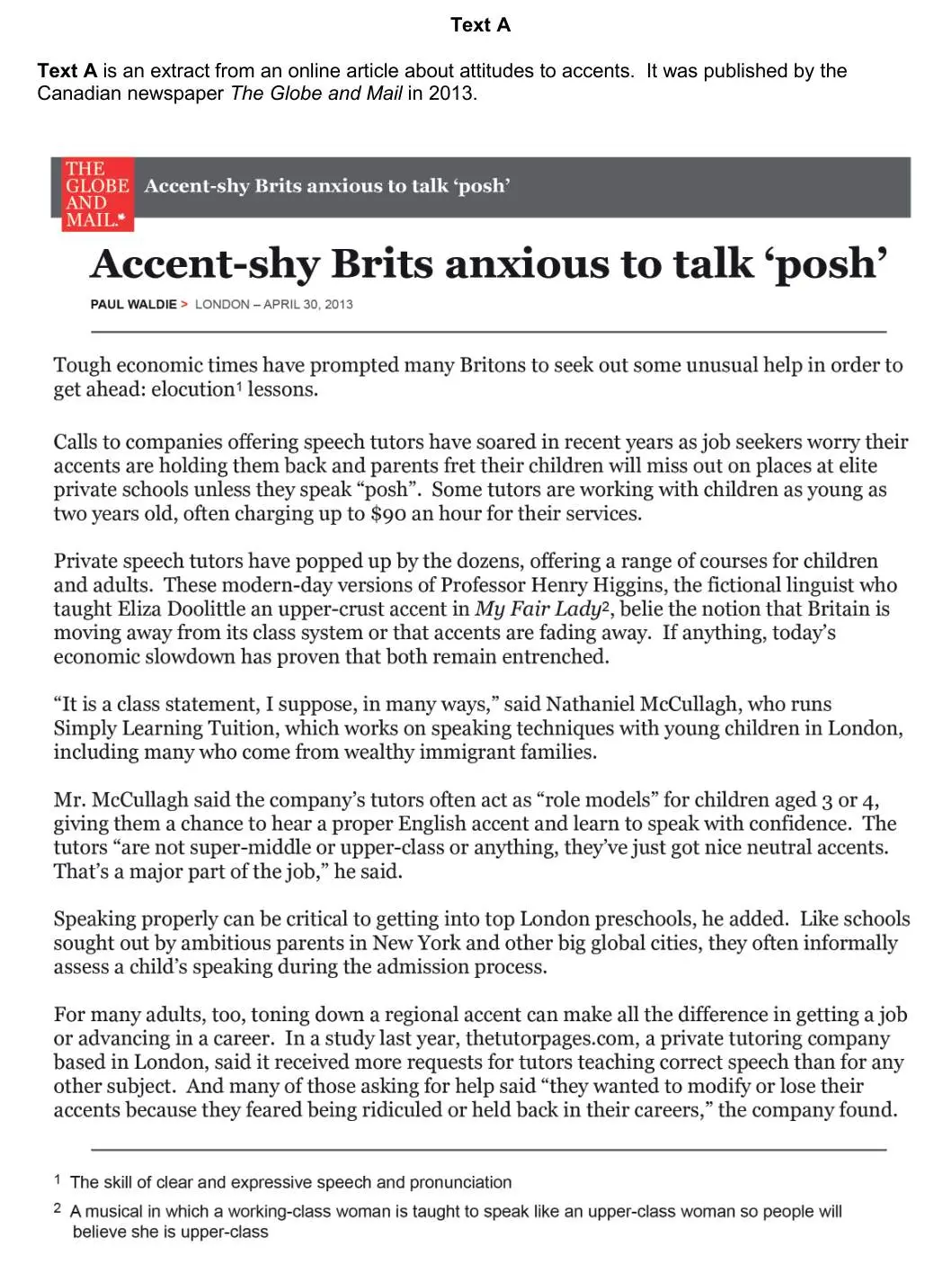
- Texts/data: Text A: Katie Rosseinsky, Independent 'Is having a posh accent a new ick?' (2024); Text B: Michael Deacon, Telegraph 'Amol Rajan's attack on posh presenters is pure inverted snobbery' (2022)