Examiner's comment
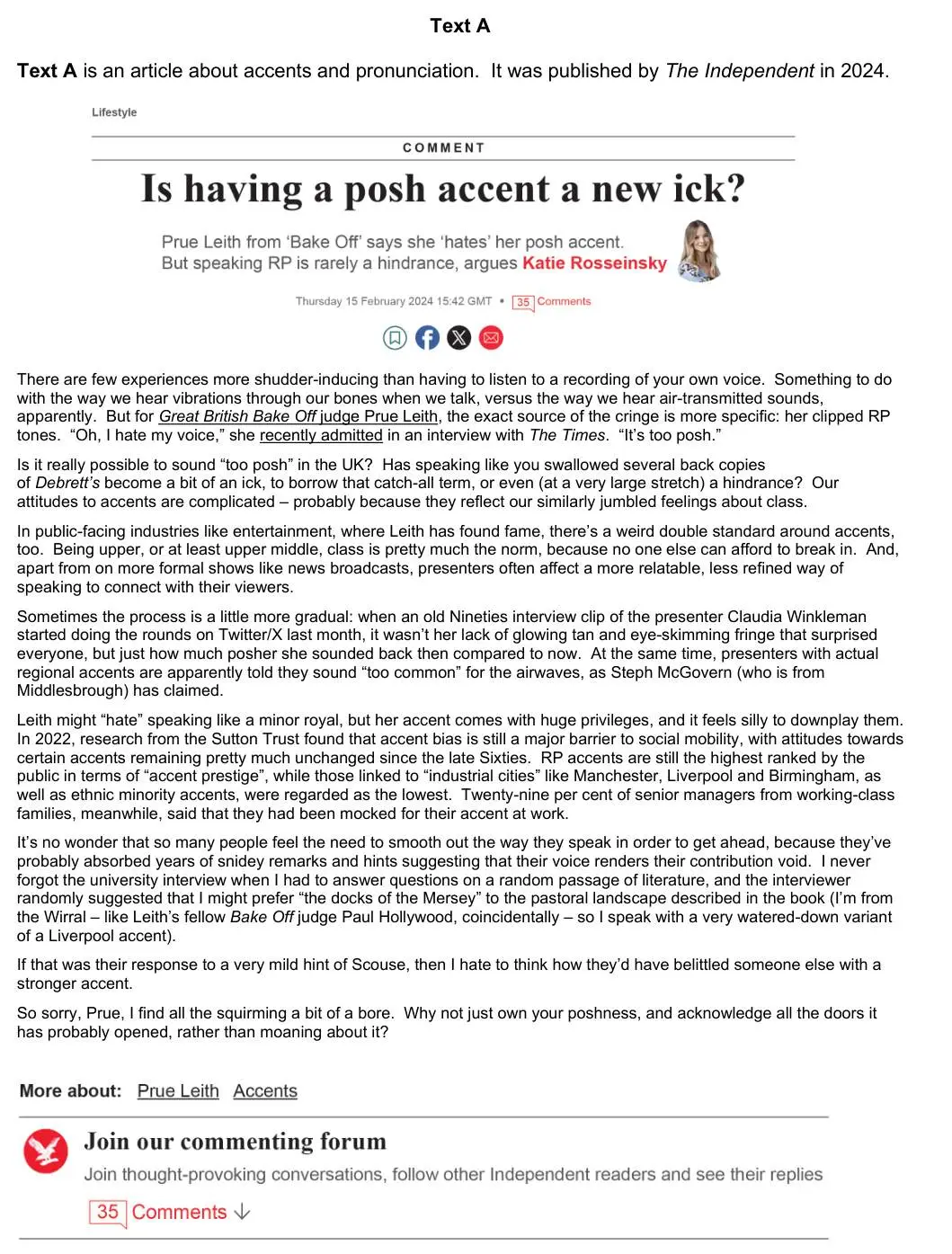
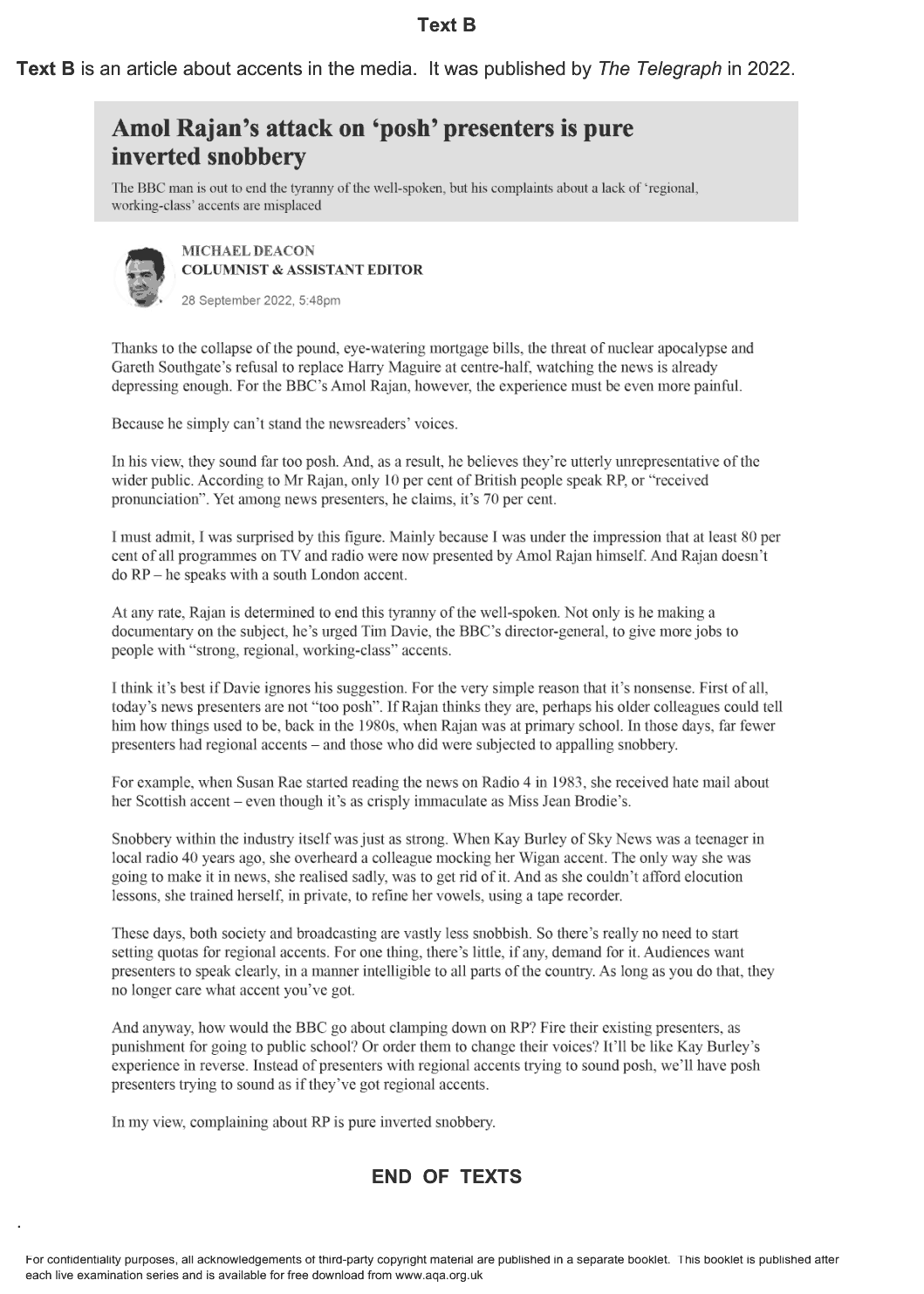
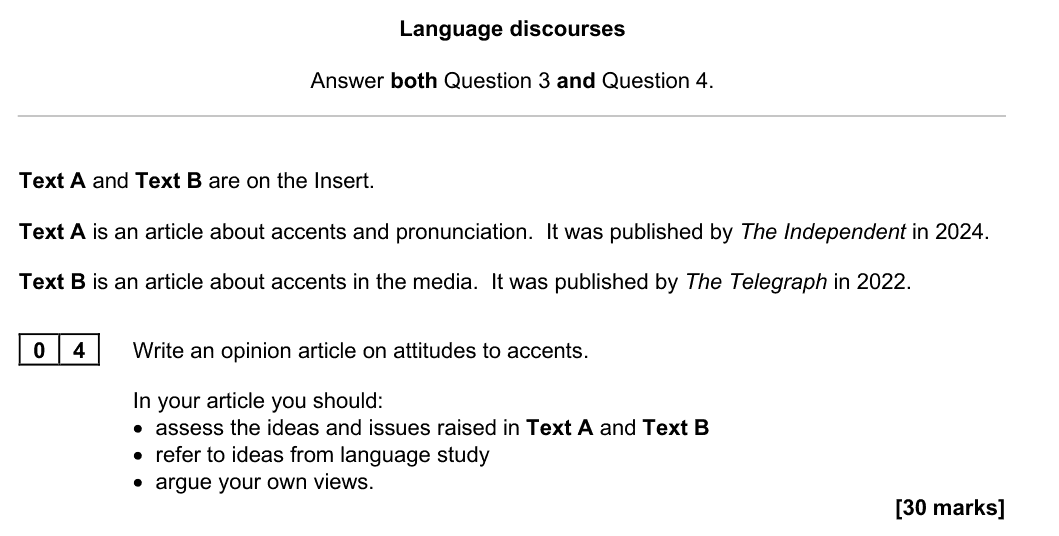
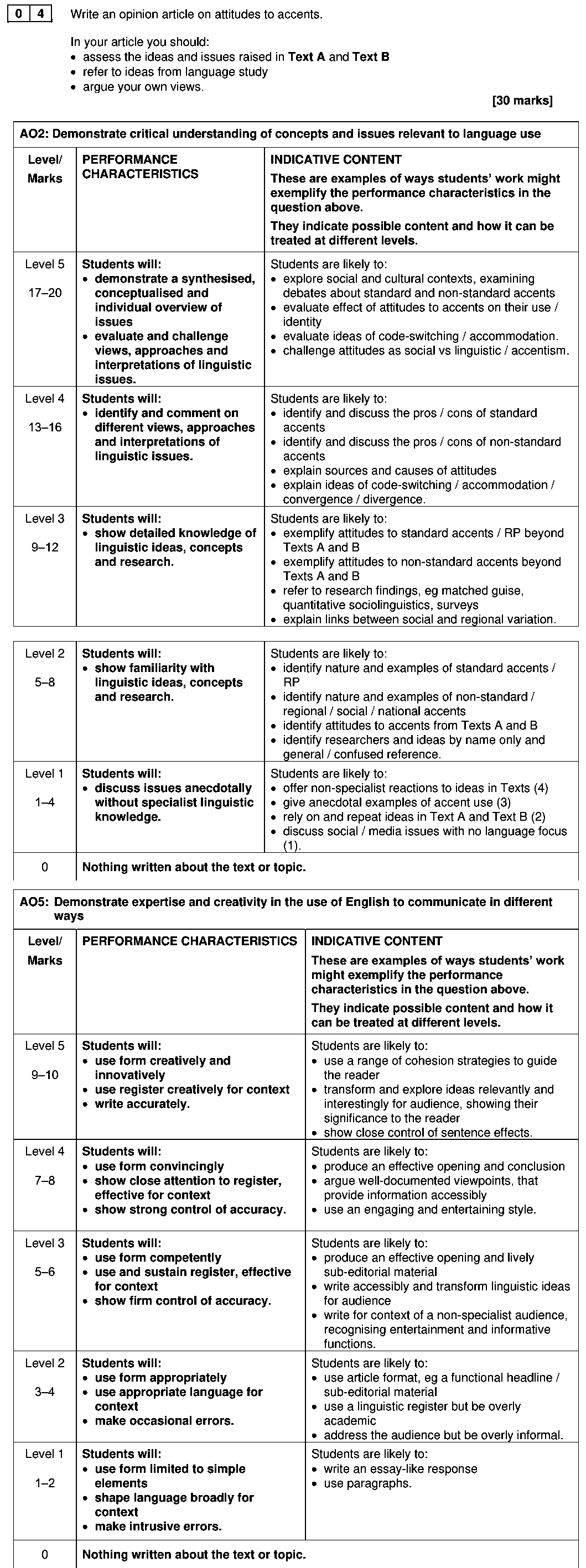
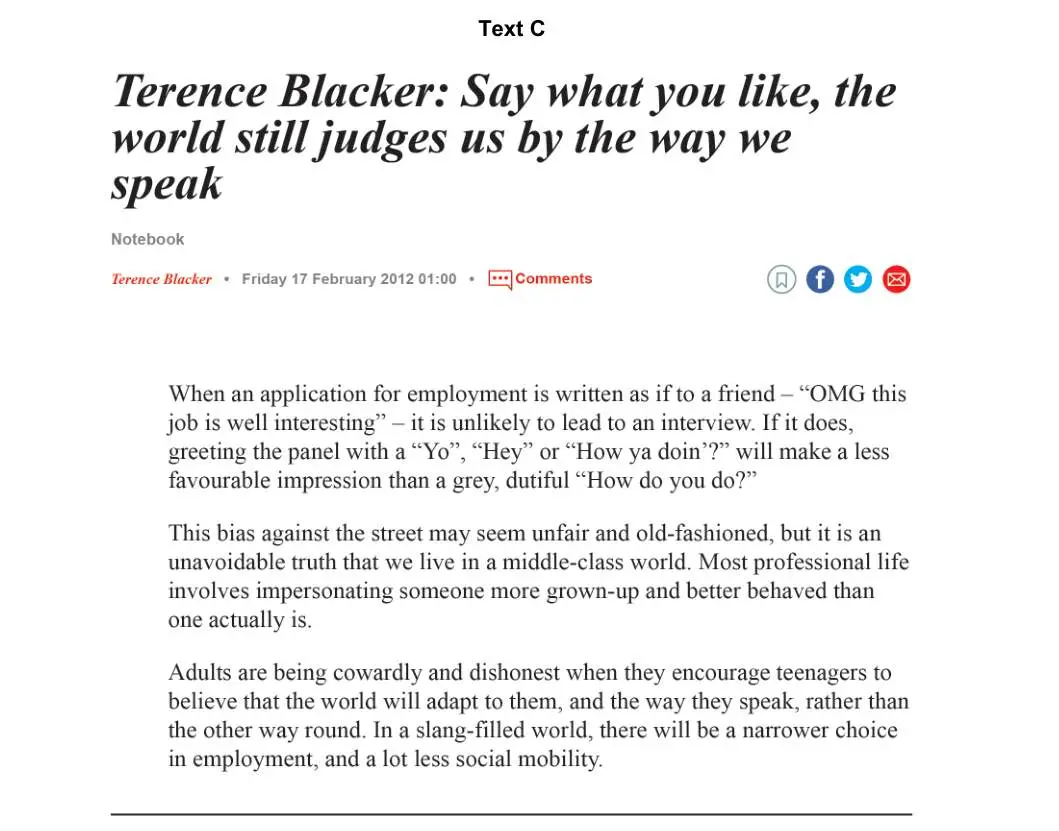
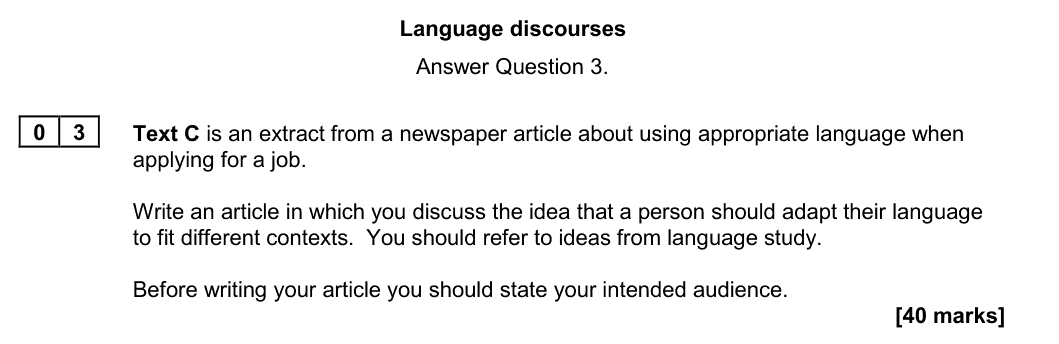
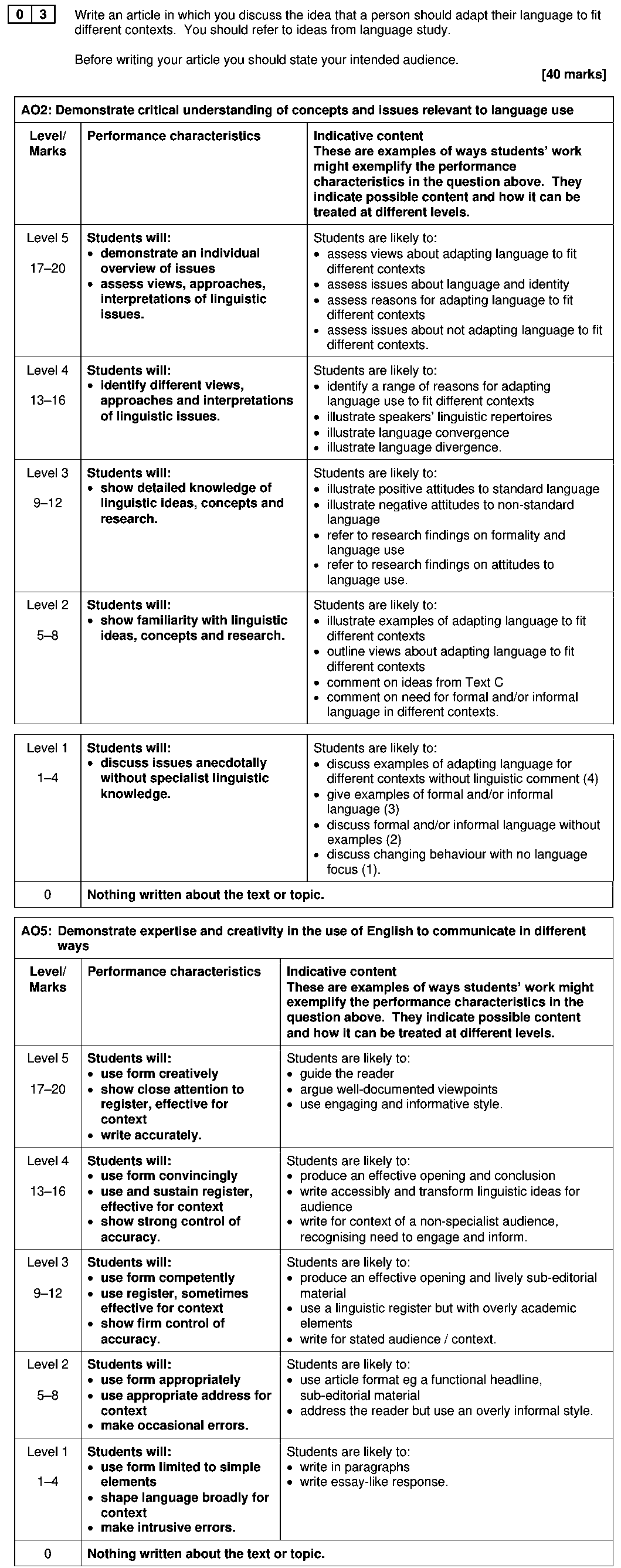
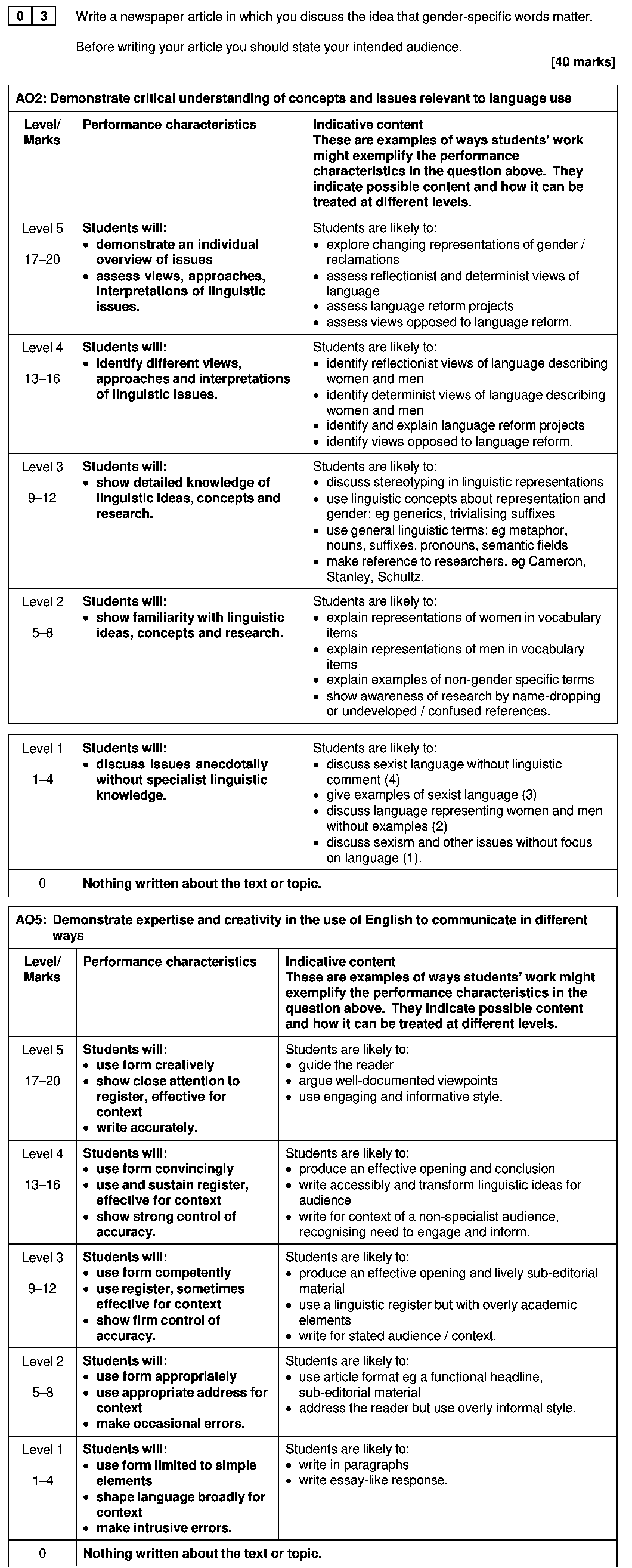
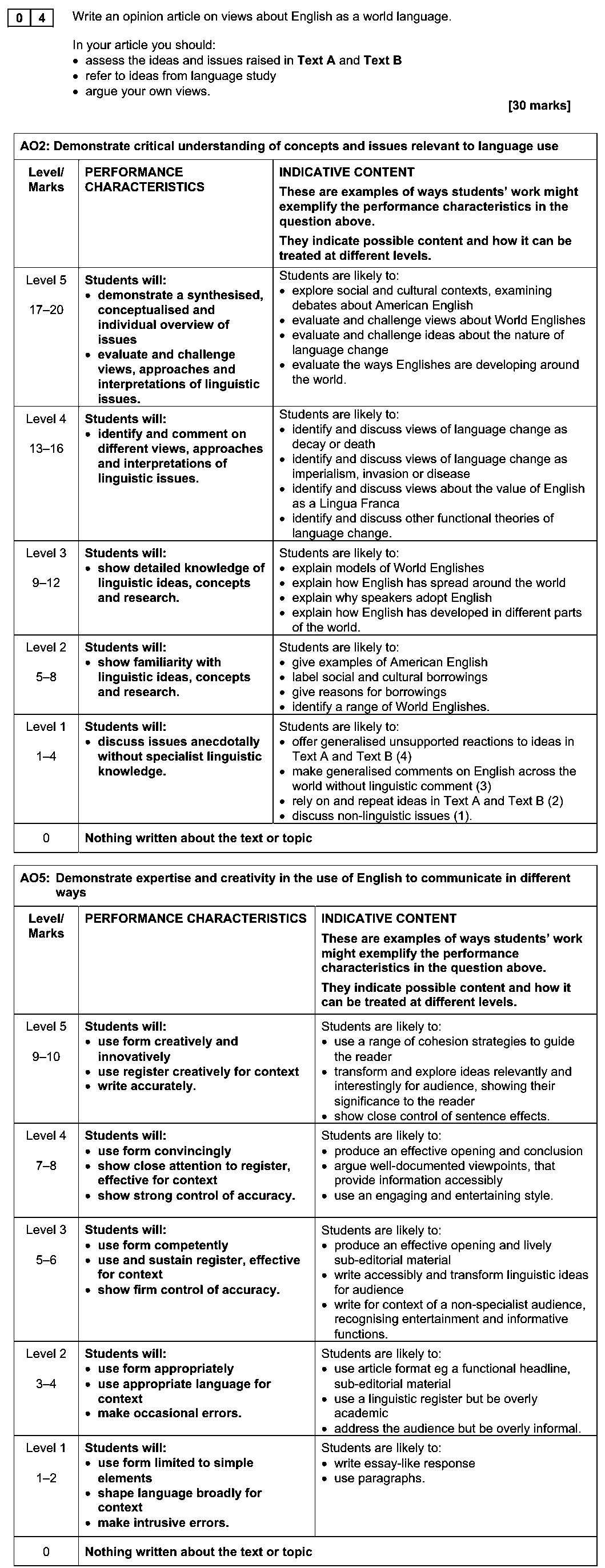
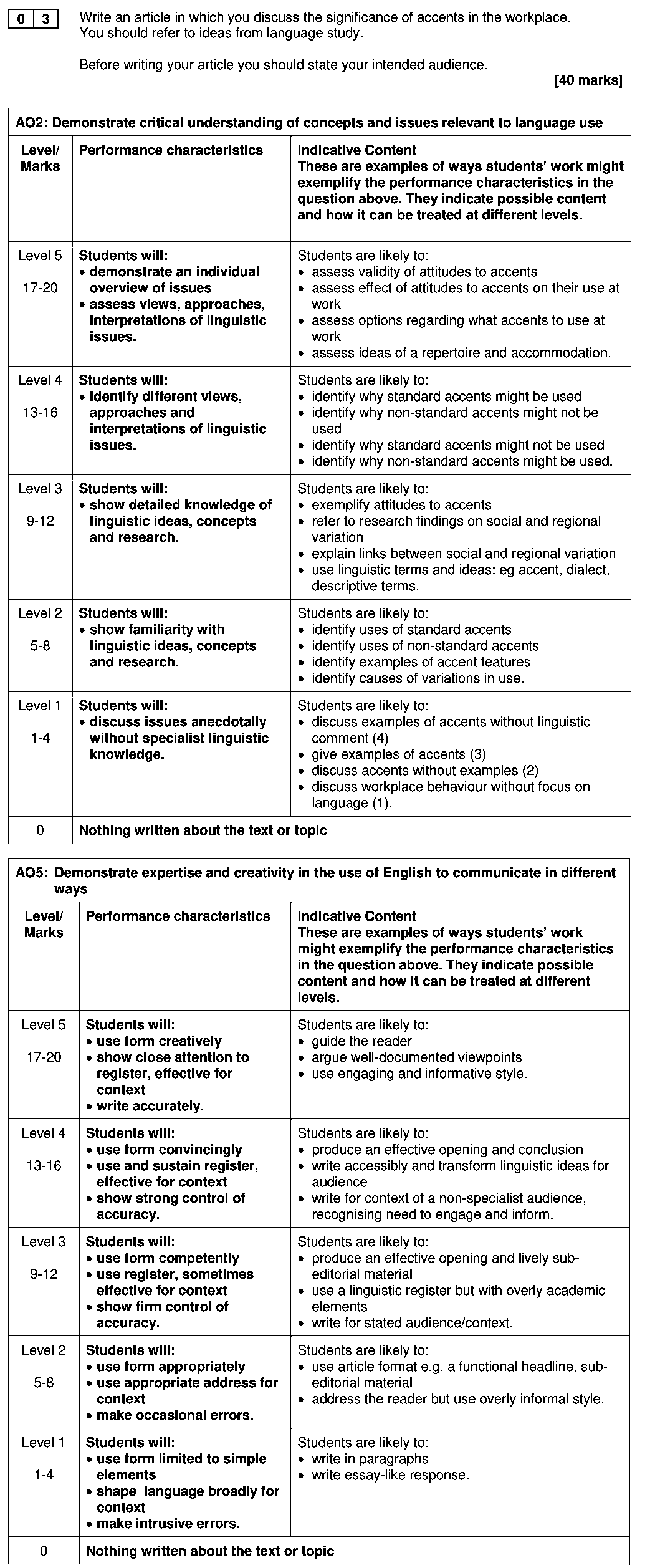
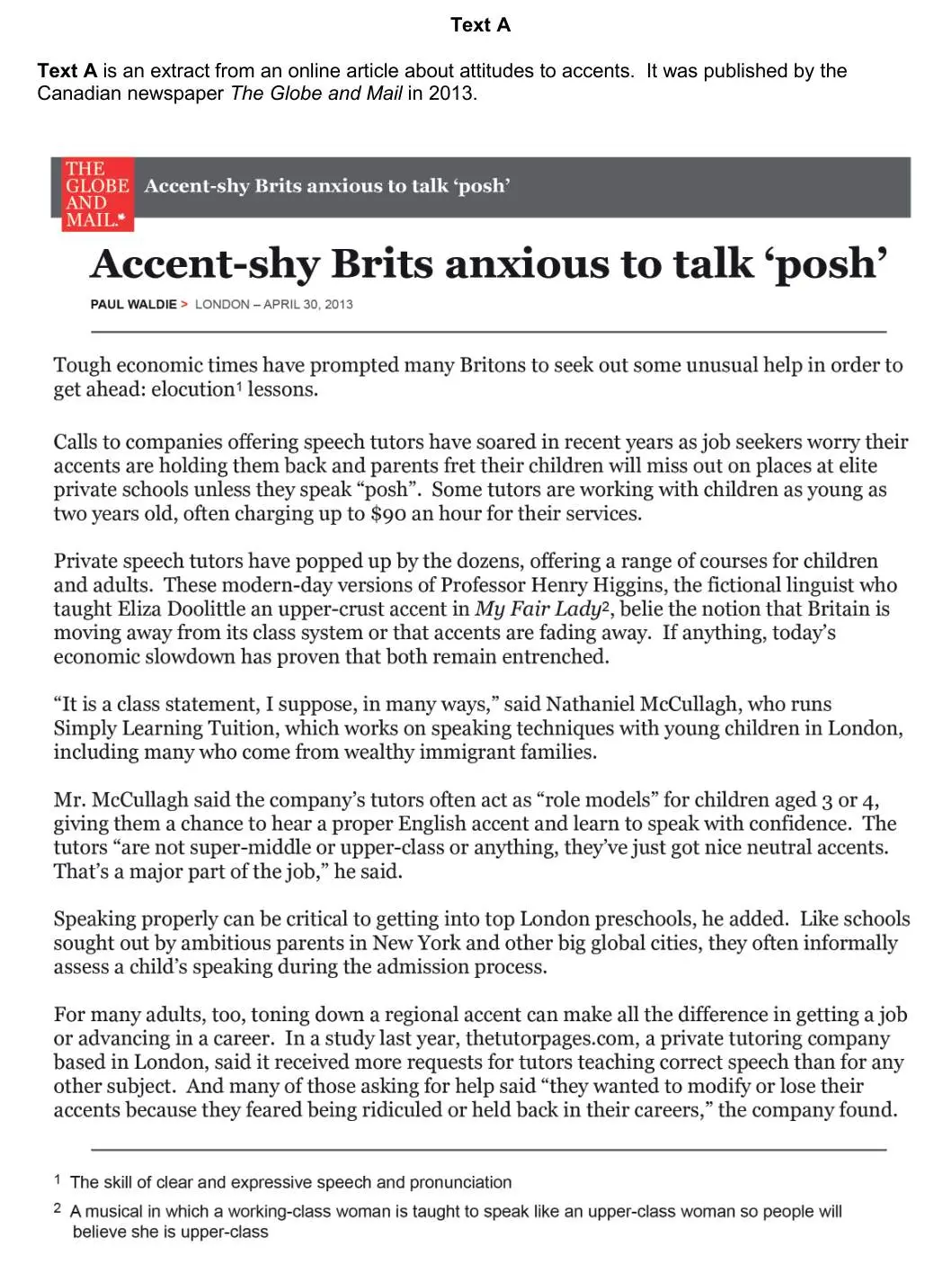
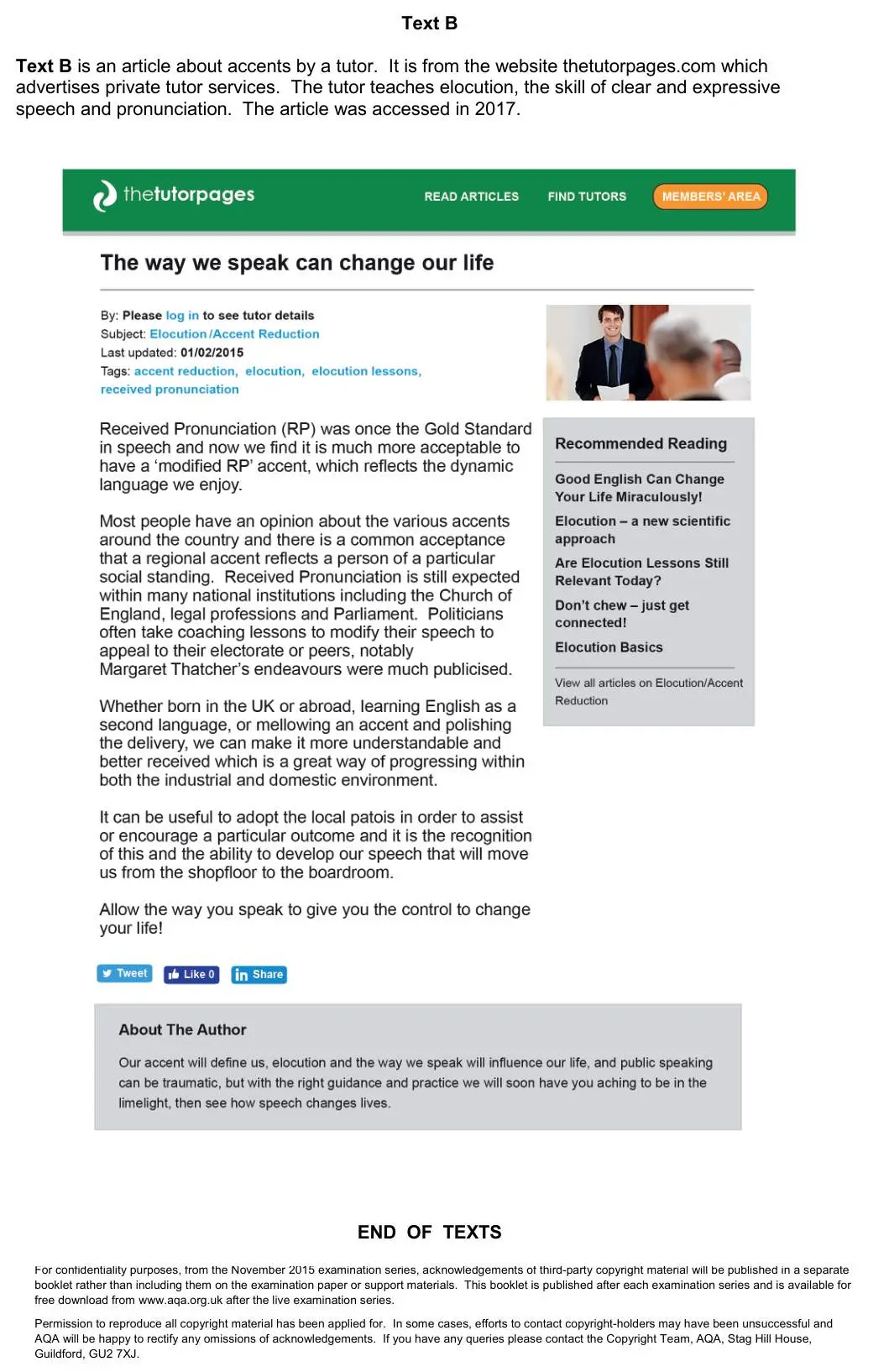
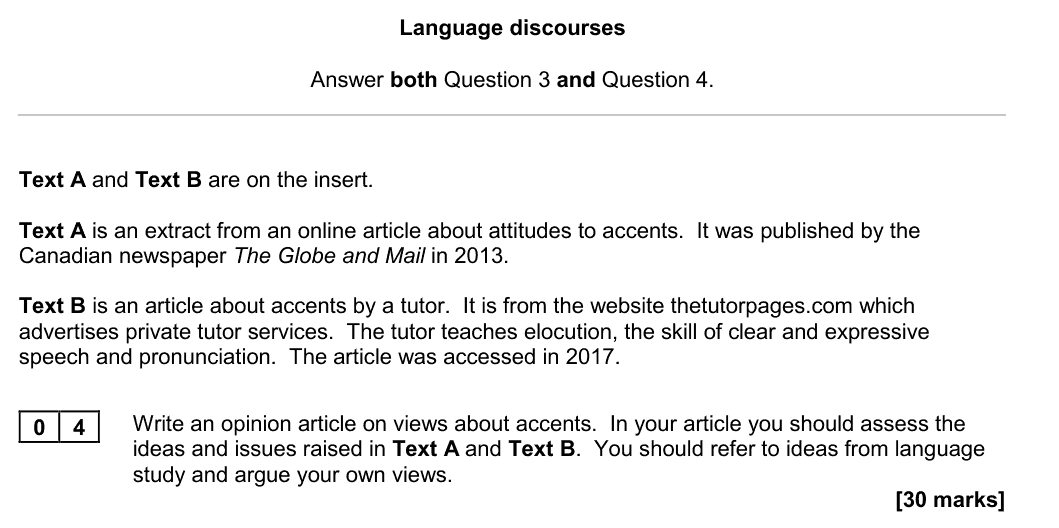
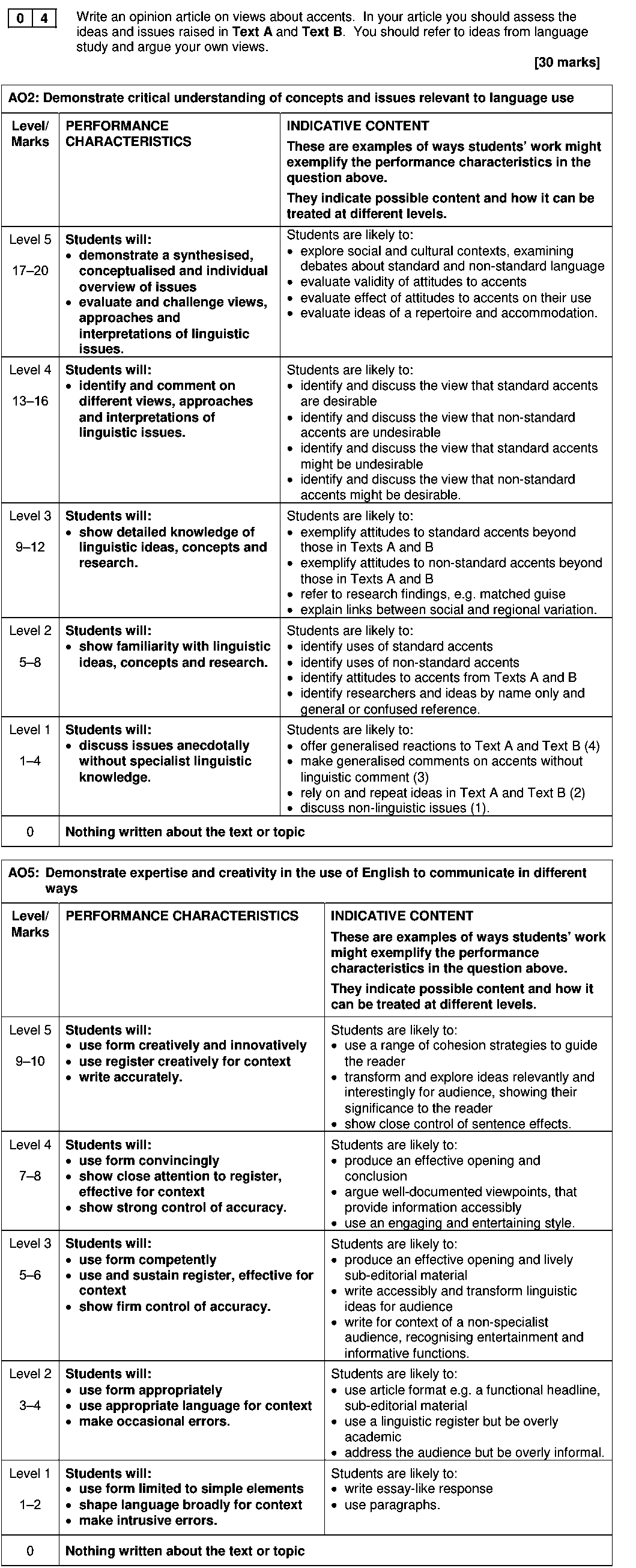
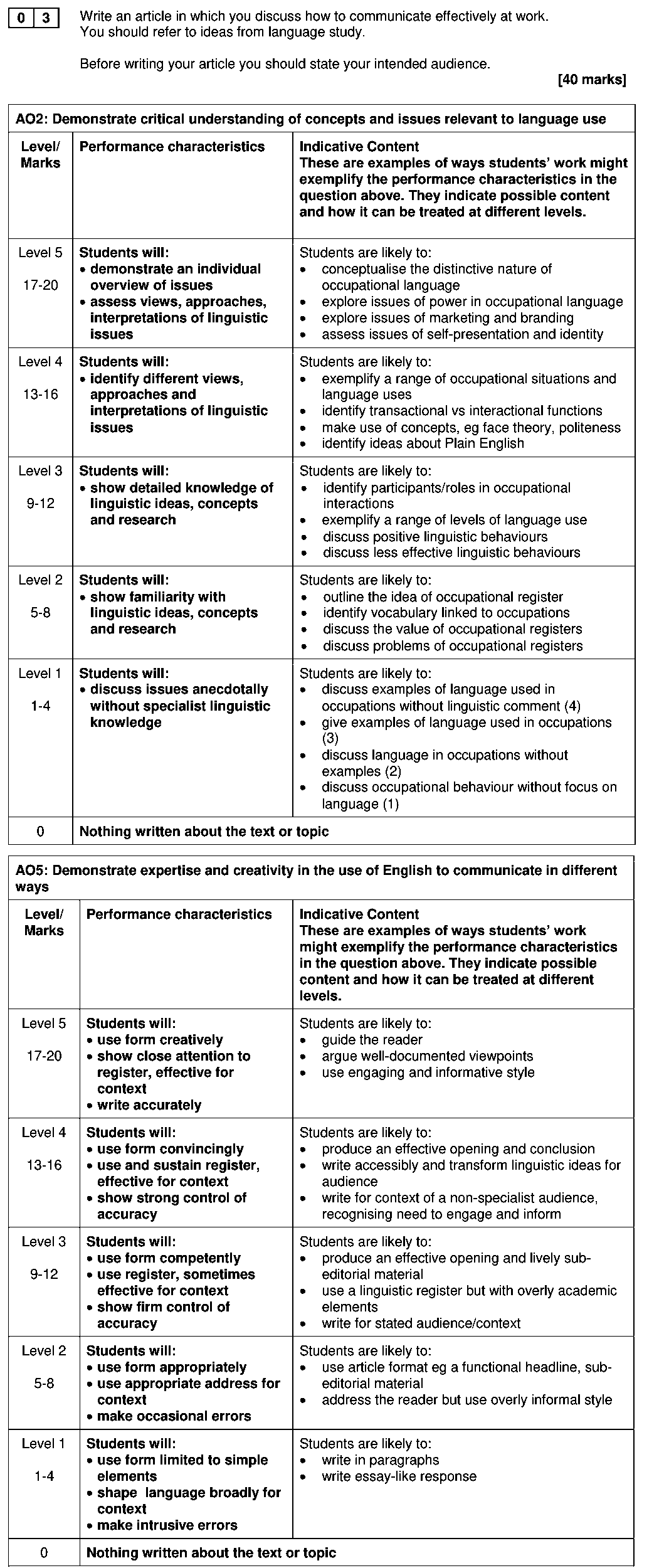
Students were given an article from the ‘Recruiting Times,’ which claimed that people with regional accents, specifically Birmingham (Brummie), were being discriminated against in job interviews. This prompted a lot of lively debate within responses, with most students challenging this notion as ‘unfair’ or ‘outdated’. This question requires students to write informatively, but for a different audience than questions 1 and 2. Most students were careful to state their audience/intended publication, with the Daily Mail and the Guardian remaining the most common choices. Others wrote a riposte for publication within the Recruiting Times, and some students wrote effectively for regional newspapers. Some students also wrote effectively for school leaver magazines. This resulted in some effective positioning of the author, especially when the persona adopted was a job-seeking regional language speaker, or as someone working in Recruitment writing for their ‘team.’ The most successful students wrote pieces which were fully believable, including paying close attention to register for their stated audience throughout, and with effective uses of headlines and other sub- editorial features. These students had evidently thought carefully about the conventions and ‘house style’ of their chosen publication, and responded well. Mid-performing students did this less effectively, but were able to use headlines and some sub-editorial features such as direct address or anecdote. There were some very creative uses of language, including the use of effective metaphors. These were sometimes extended, although they did at times appear a little laboured. Anecdotes were often well deployed, particularly illustrating examples of accent prejudice, although inauthentic quotation (e.g of celebrities, job applicants or, in some cases, researchers) and creation of new statistics to ‘support’ a view were much less helpful. Similarly, a small number of students struggled to maintain a measured tone. Whilst a degree of subjectivity is necessary to the piece, students must be reminded that their tone must be appropriate, and expletives and uses of crude language do little to support their argument. Although the question focus explicitly addressed ‘the significance of accents in the workplace,’ students were rewarded for a range of ideas relating to accents, accent prejudice, and occupational language. However, it is worth noting that those students who simply considered the nature of occupational language (e.g references to jargon studies, or occupational frameworks) struggled to keep an accent focus, and responses were less effective. The source data specifically referenced RP and Brummie, and these formed the focus of most students’ responses. Most students made good use of a range of Matched Guise studies, with effective reference to Giles, Giles and Powesland, Worcester College (Dixon, Mahoney and Cocks) and the University of Aberdeen. These studies enabled students to effectively consider accent prejudice, with more effective responses considering both positive and negative responses to specific accents. As in questions 1 and 2, those students who brought their own examples to their responses were more successful. A minority of students showed insecurity around RP, suggesting it was a ‘mainstream’ accent, or confusing it with Standard English. Similarly, some students showed insecurity with Labov’s New York stores study, wrongly asserting that RP is the standard accent of upper class America. Some students were able to connect their work on Matched Guise to justifications for the accent prejudice discussed in the text. For example, Geordies’ friendliness was often connected to work in call centres/customer facing roles, while RP was frequently connected with ‘business’. The most effective responses here considered international intelligibility. Some students were able to connect these stereotypes with ideas of power, with some effective discussions of French and Raven or Fairclough. Asymmetry was very well handled by most students who considered it, particularly when the focus remained on the way that stereotypes are perpetuated within occupations. The Army was an effective case study here, with some students considering the relationship between public schools and higher-ranking officers, and the impact this has on language use and representations. It was pleasing to see students taking ideas beyond theory into real-world social applications and implications, with some very effective discussions focused around class issues in contemporary society, or evaluating ideas of accent prejudice in a seemingly more diverse and equal society. More successful answers: • selected an appropriate target audience, and tailored their piece to their chosen publication and audience through register • clearly used subeditorial features • wrote in a measured but personal tone, maintaining this throughout • used ‘real life’ examples to support their ideas • clearly ‘glossed’ technical terms, or explained research or theorists in a helpful and engaging way • made explicit reference to learned knowledge. Less successful answers: • brought little or no new information to the response, relying heavily (sometimes exclusively) on the source data • showed confusion around Received Pronunciation, Standard English, or variations such as American English • struggled to consider the non-specialist audience, writing an essay-like response, or not maintaining awareness of the form beyond a headline • wrote in a similar style to questions 1 and 2, failing to target a non-specialist audience through register • struggled to maintain a measured tone.