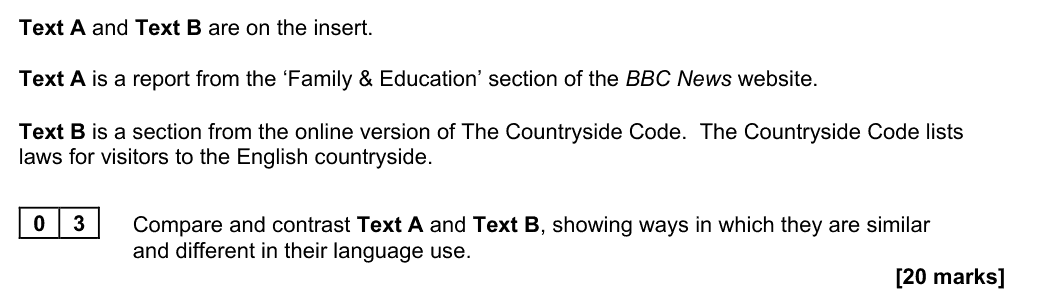
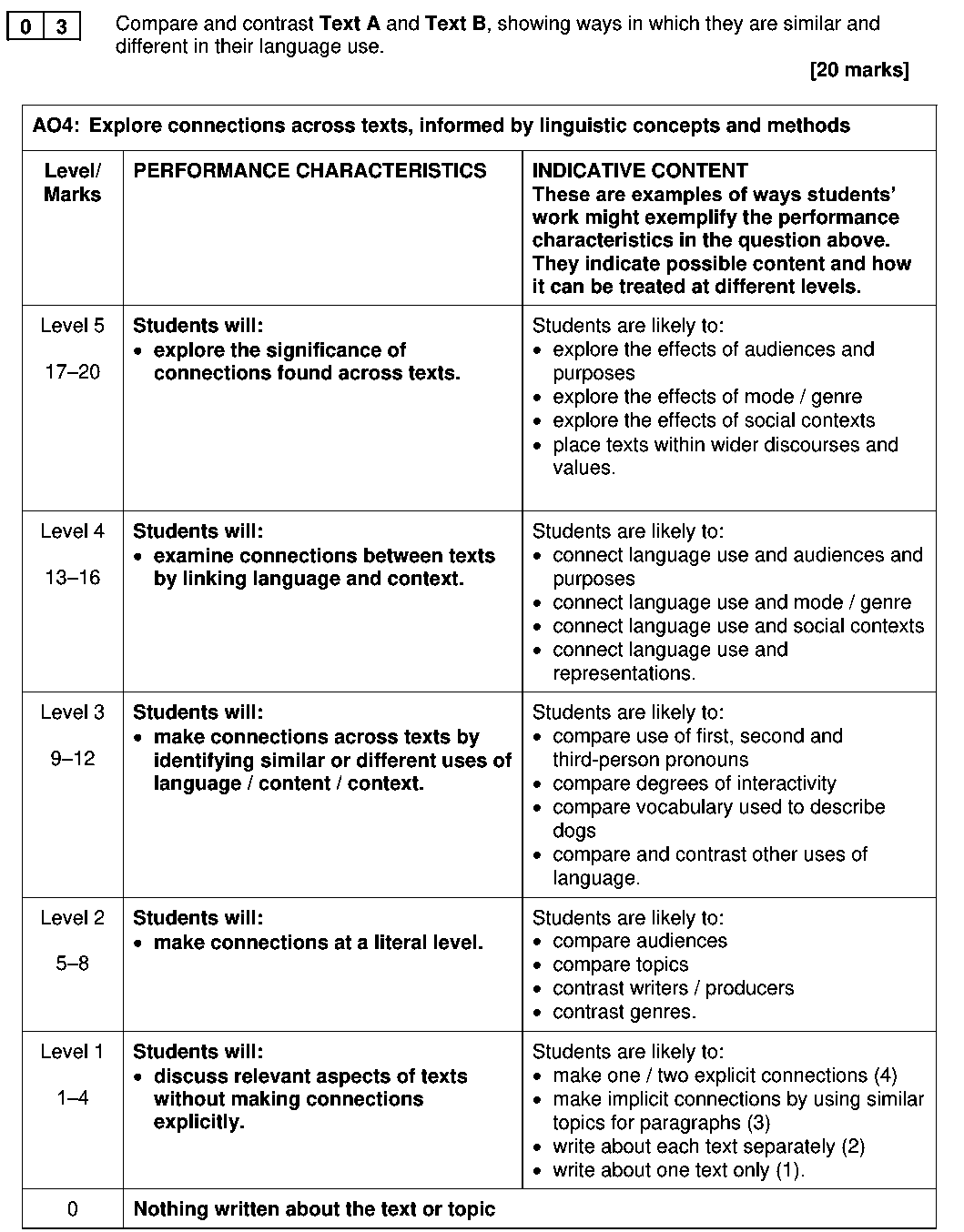
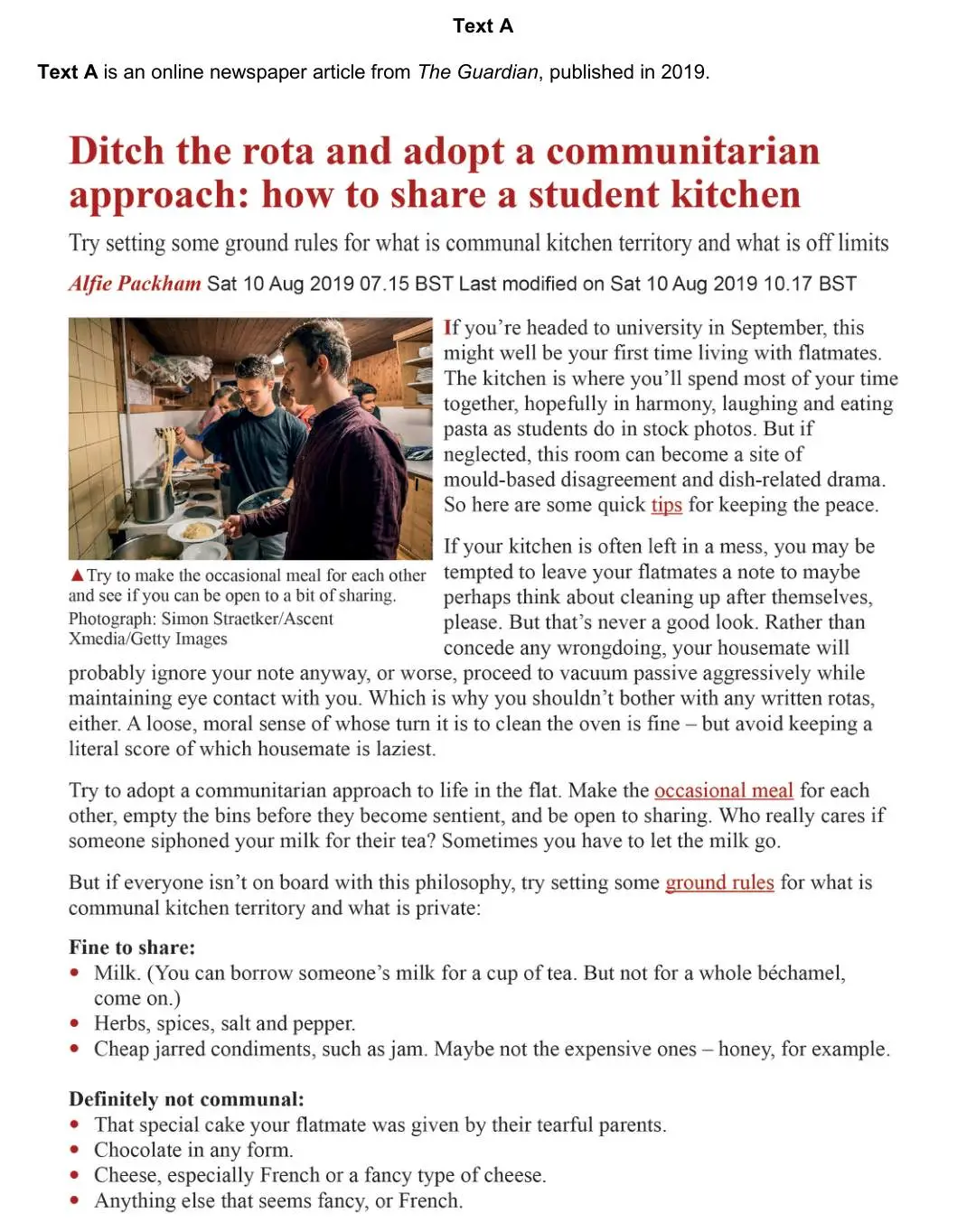
Examiner's comment
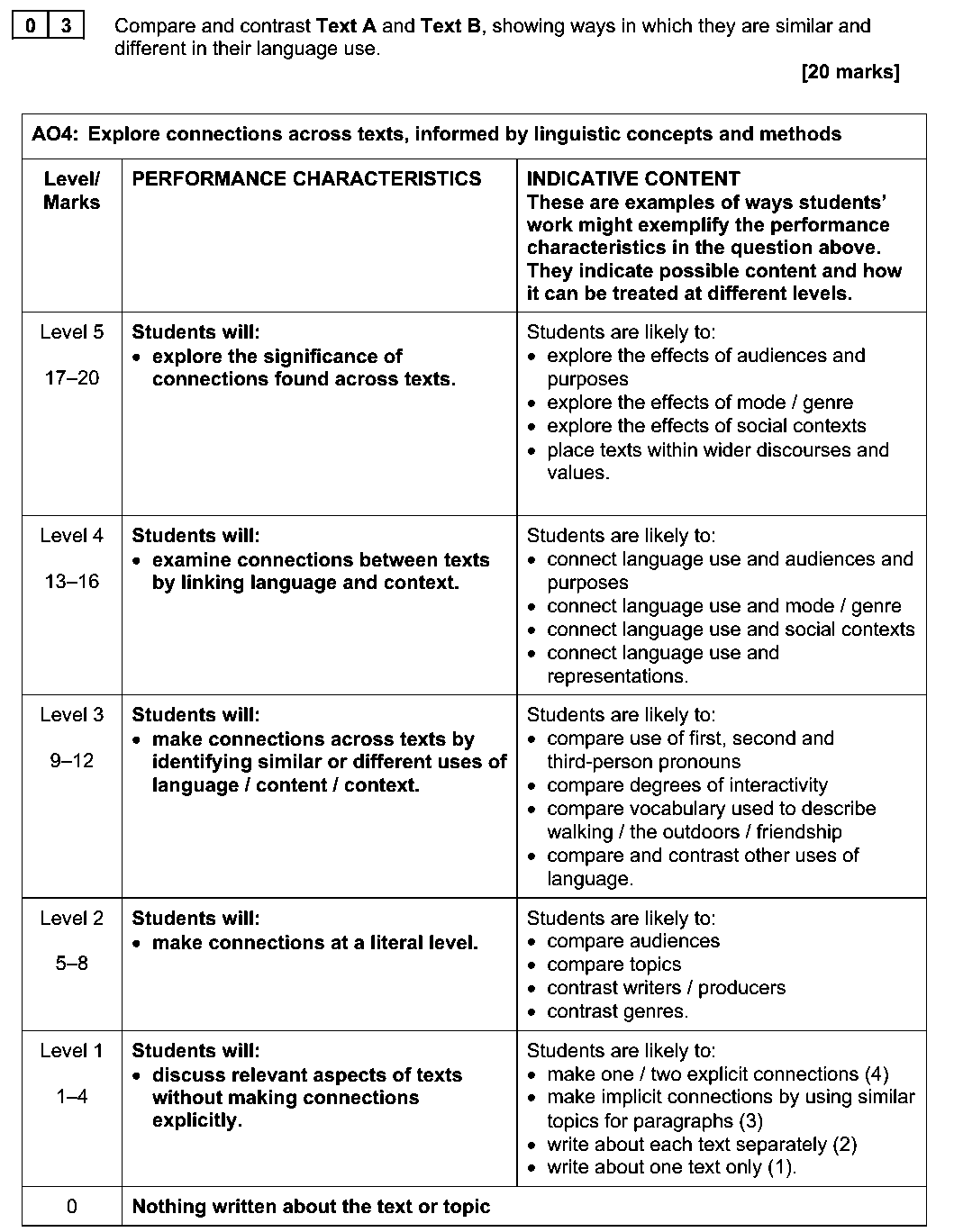
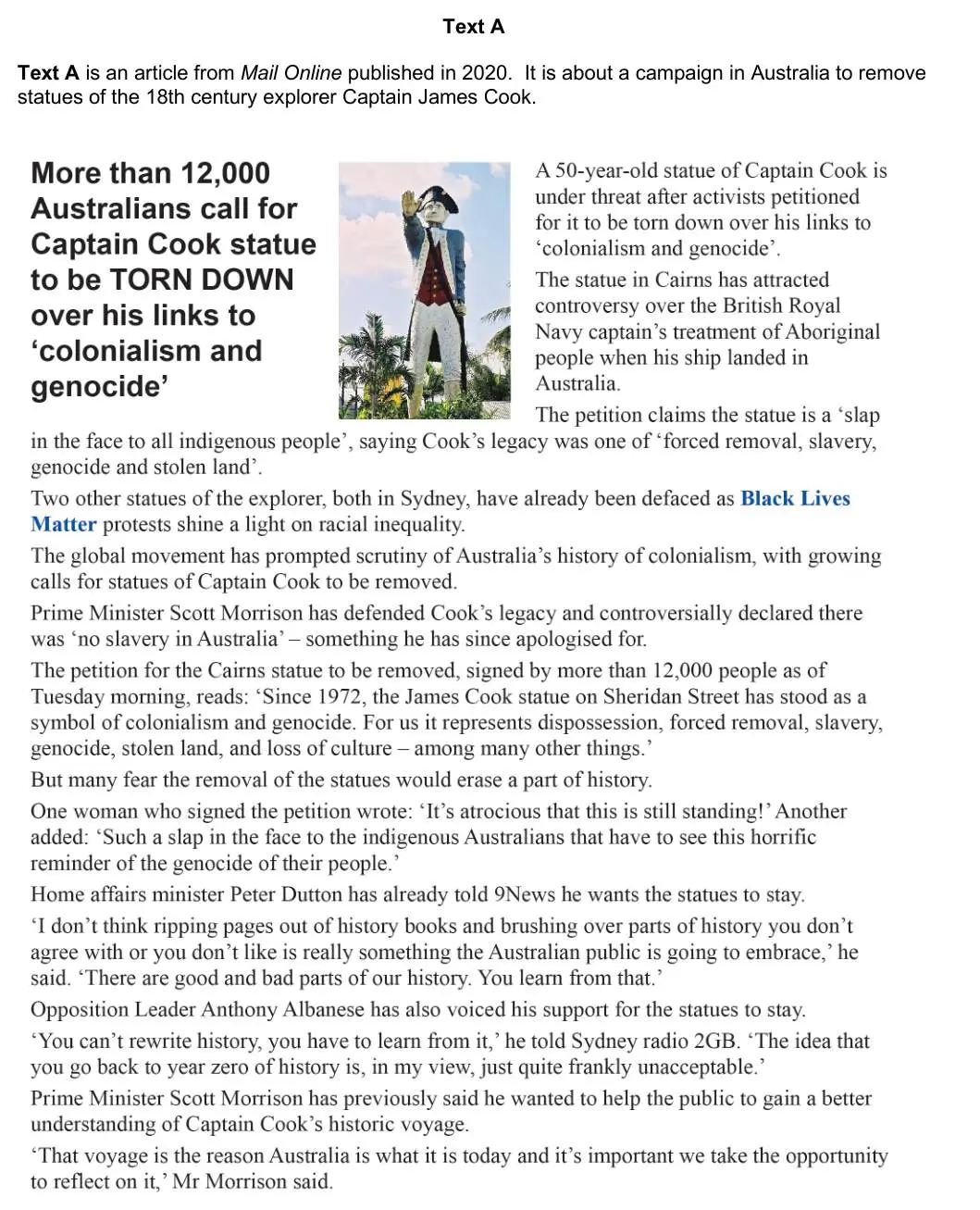
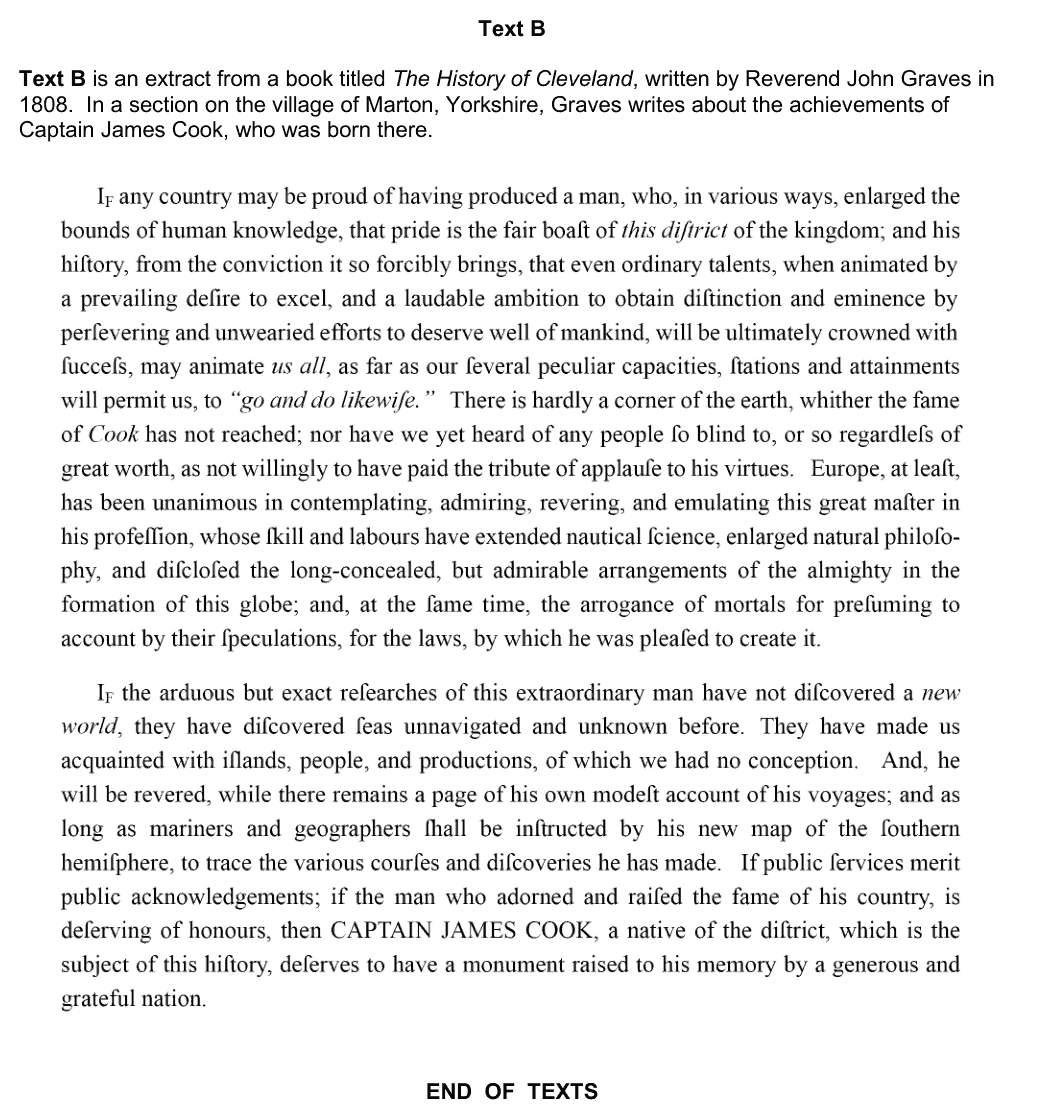
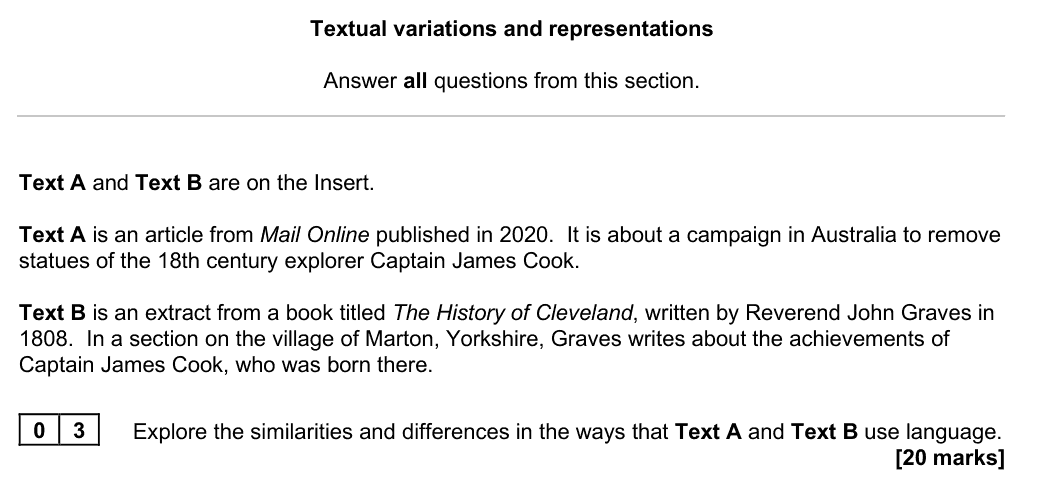
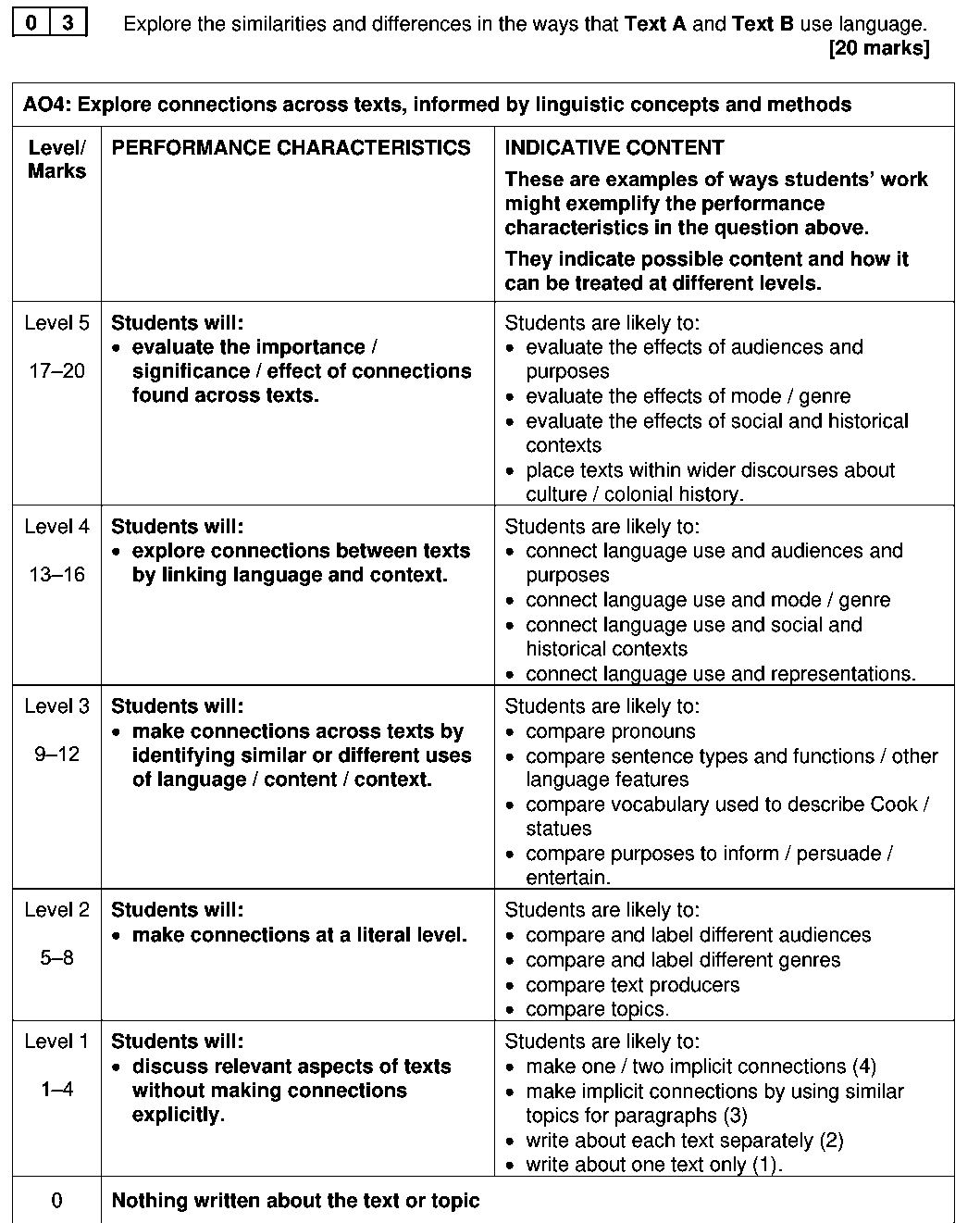
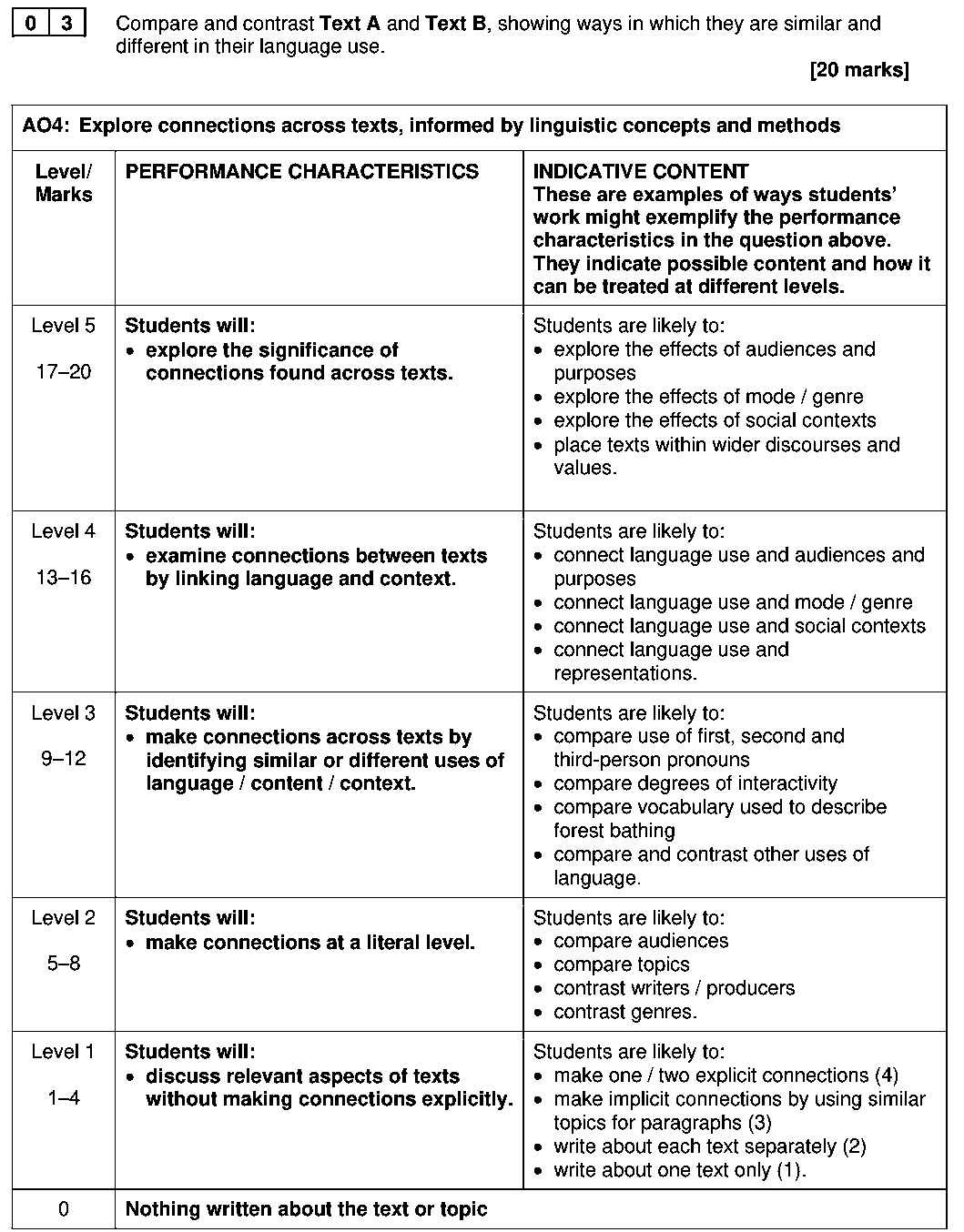
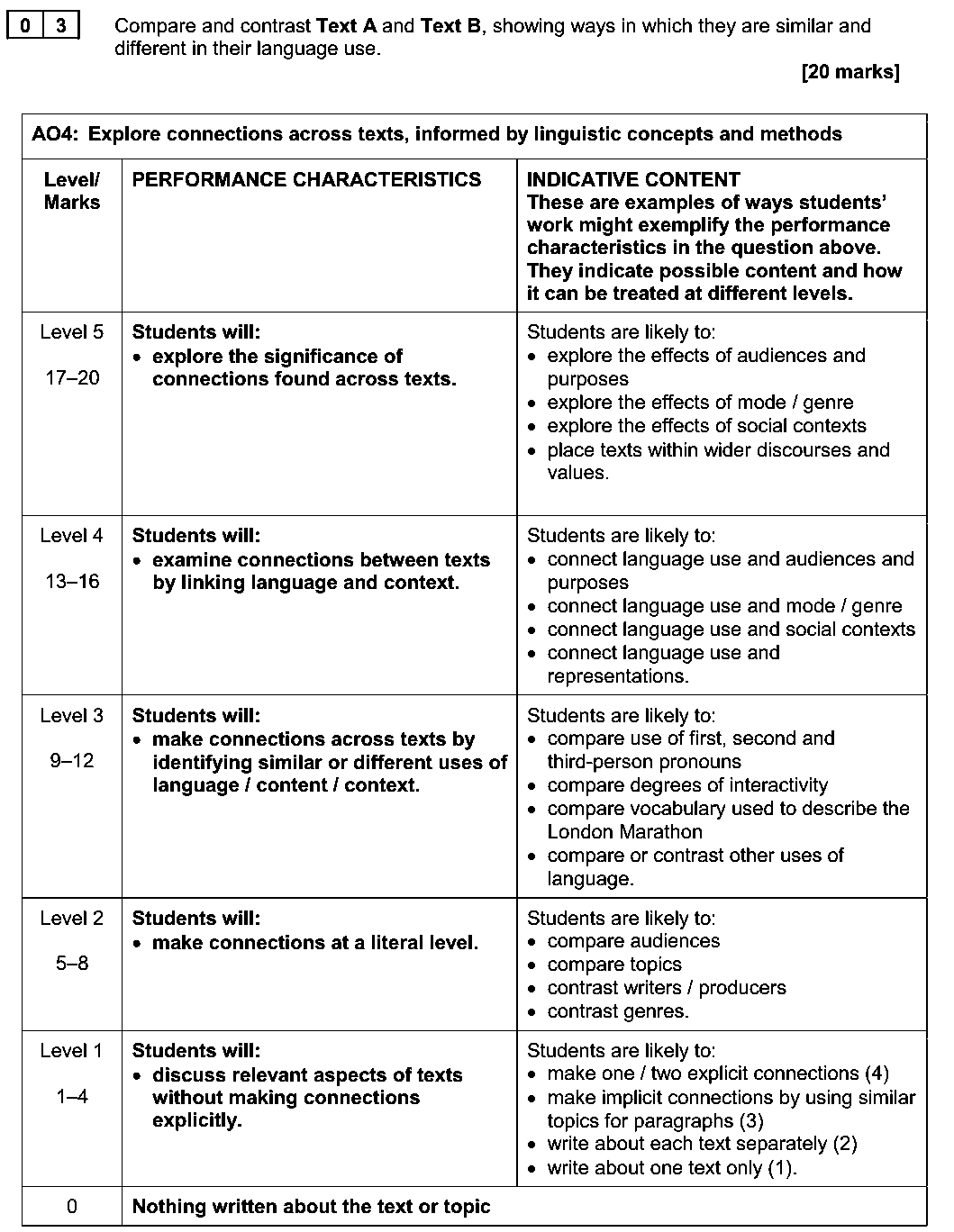
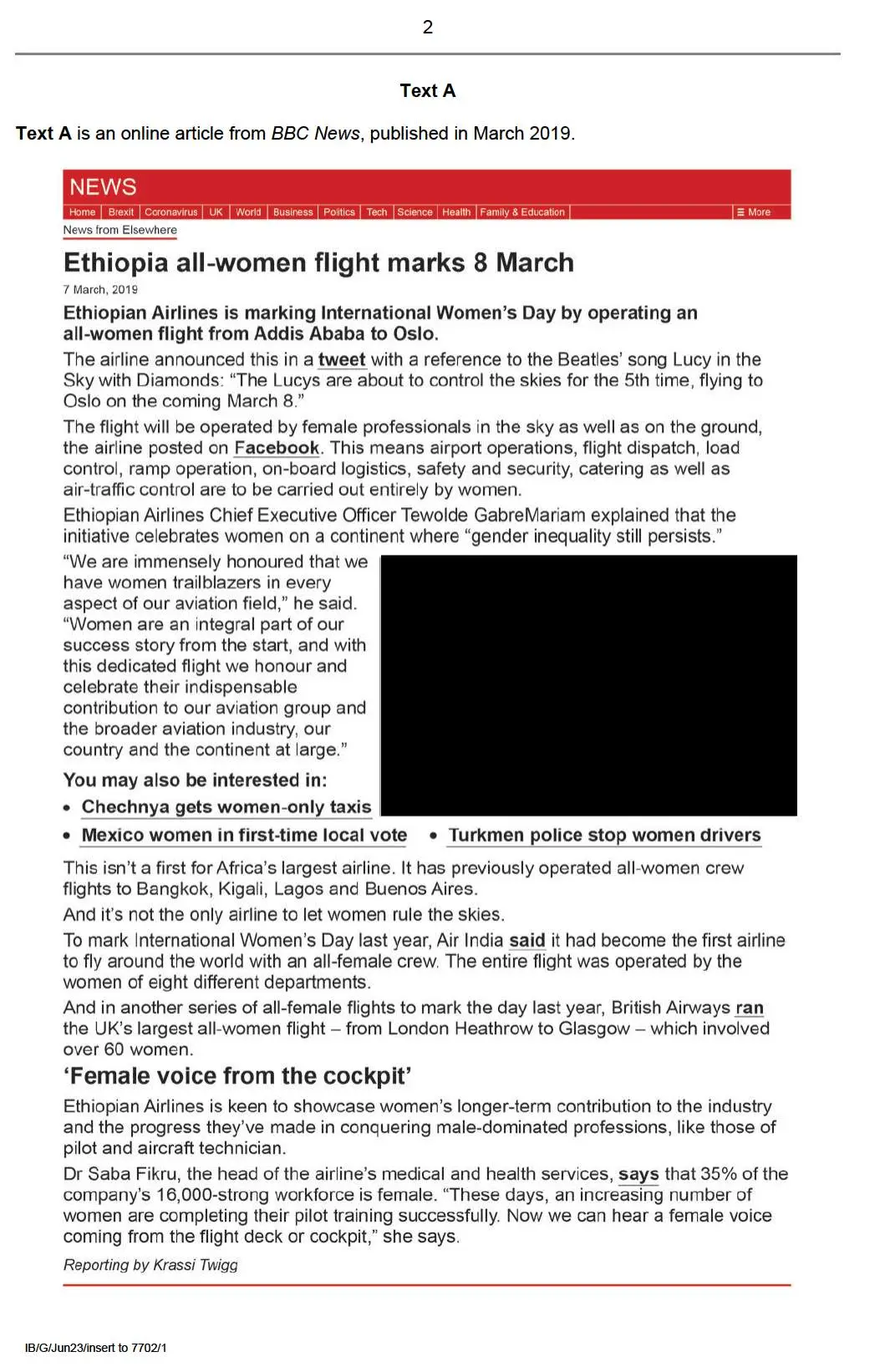
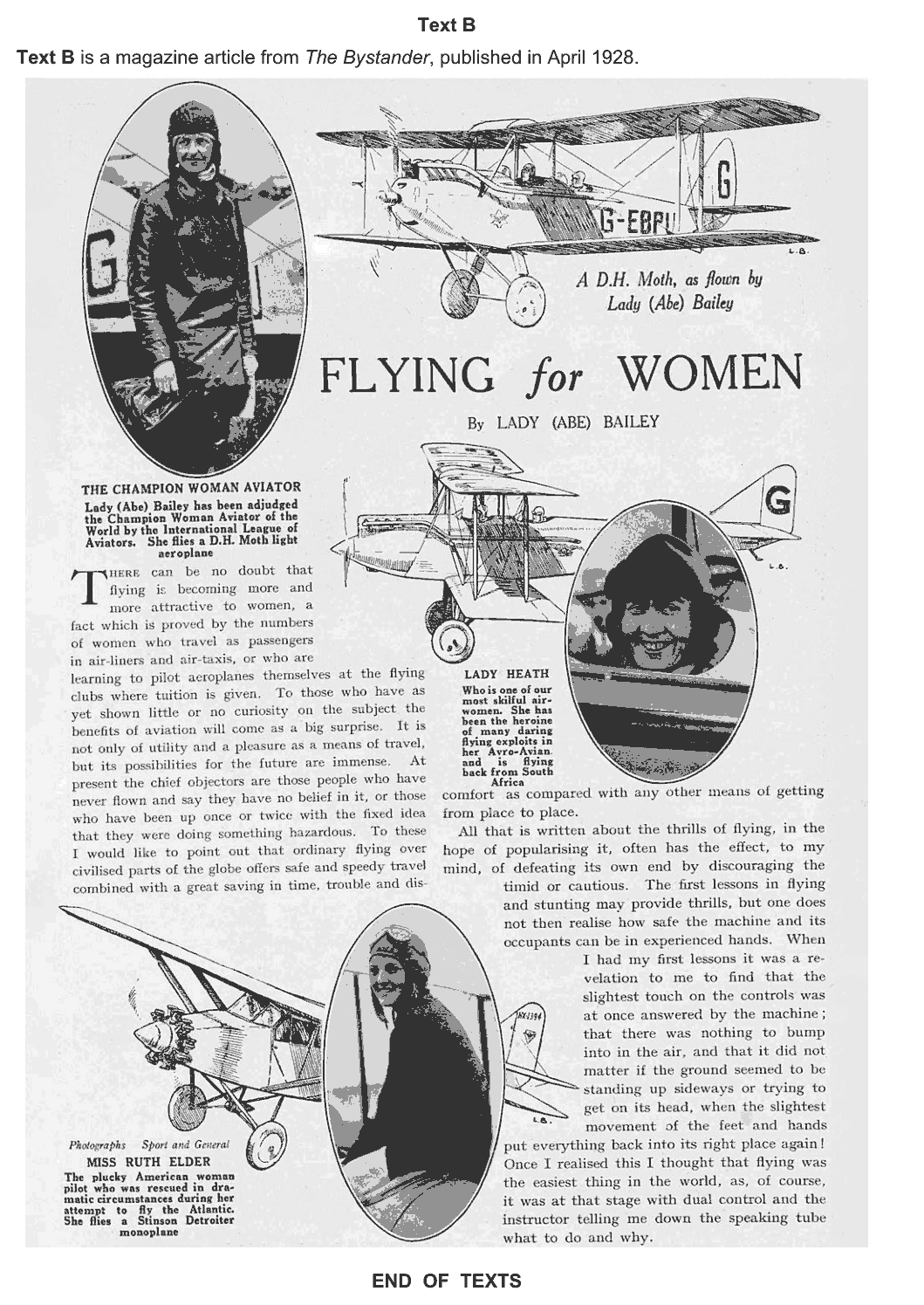
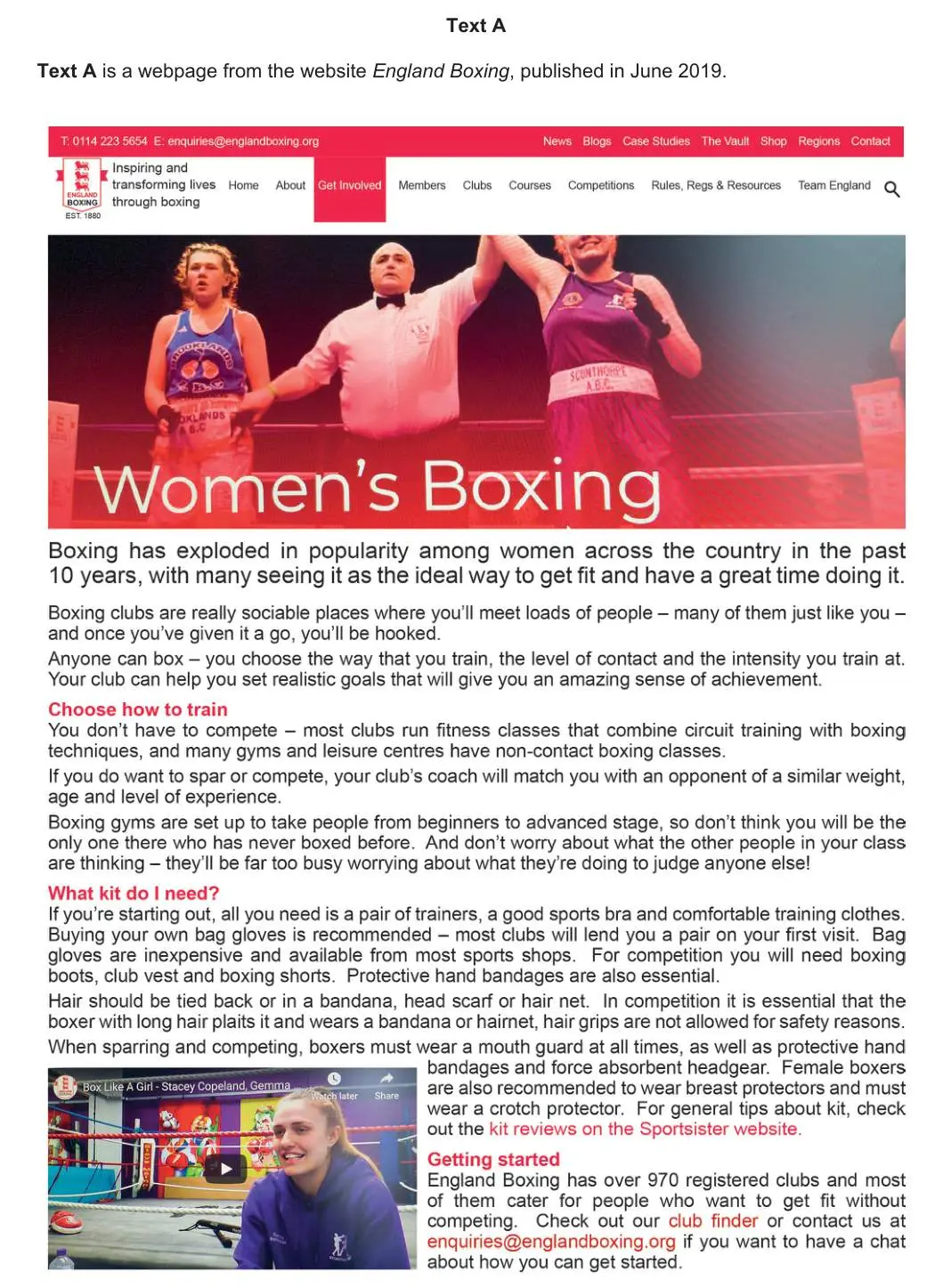
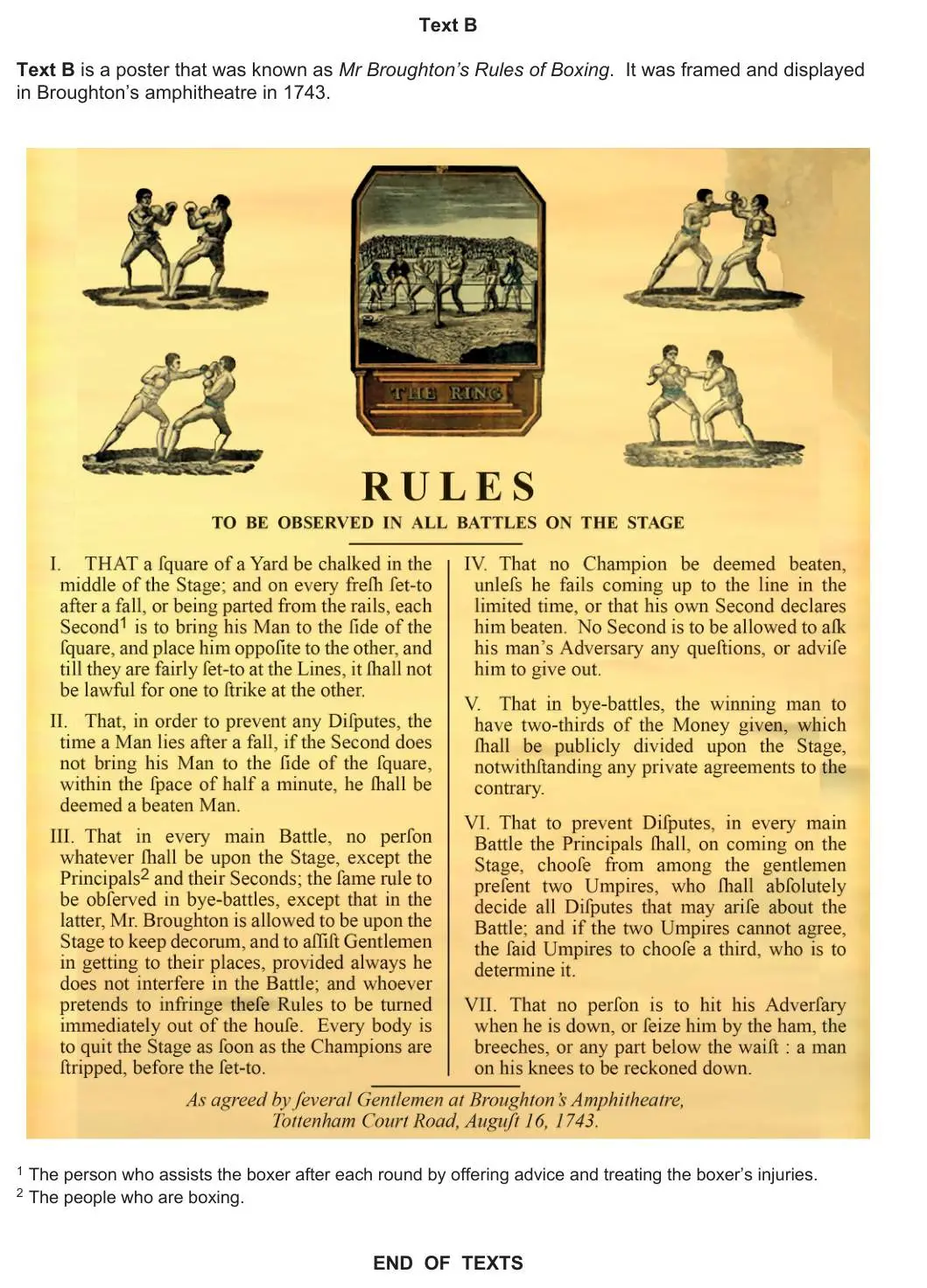
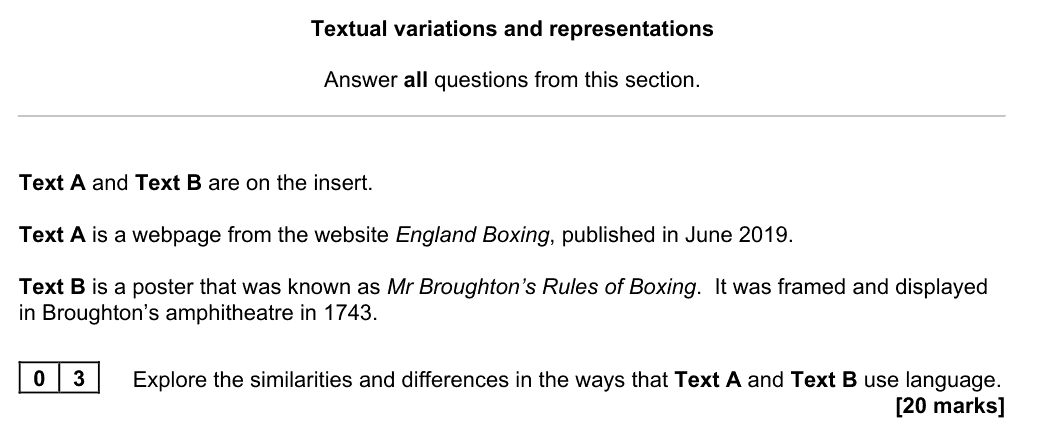
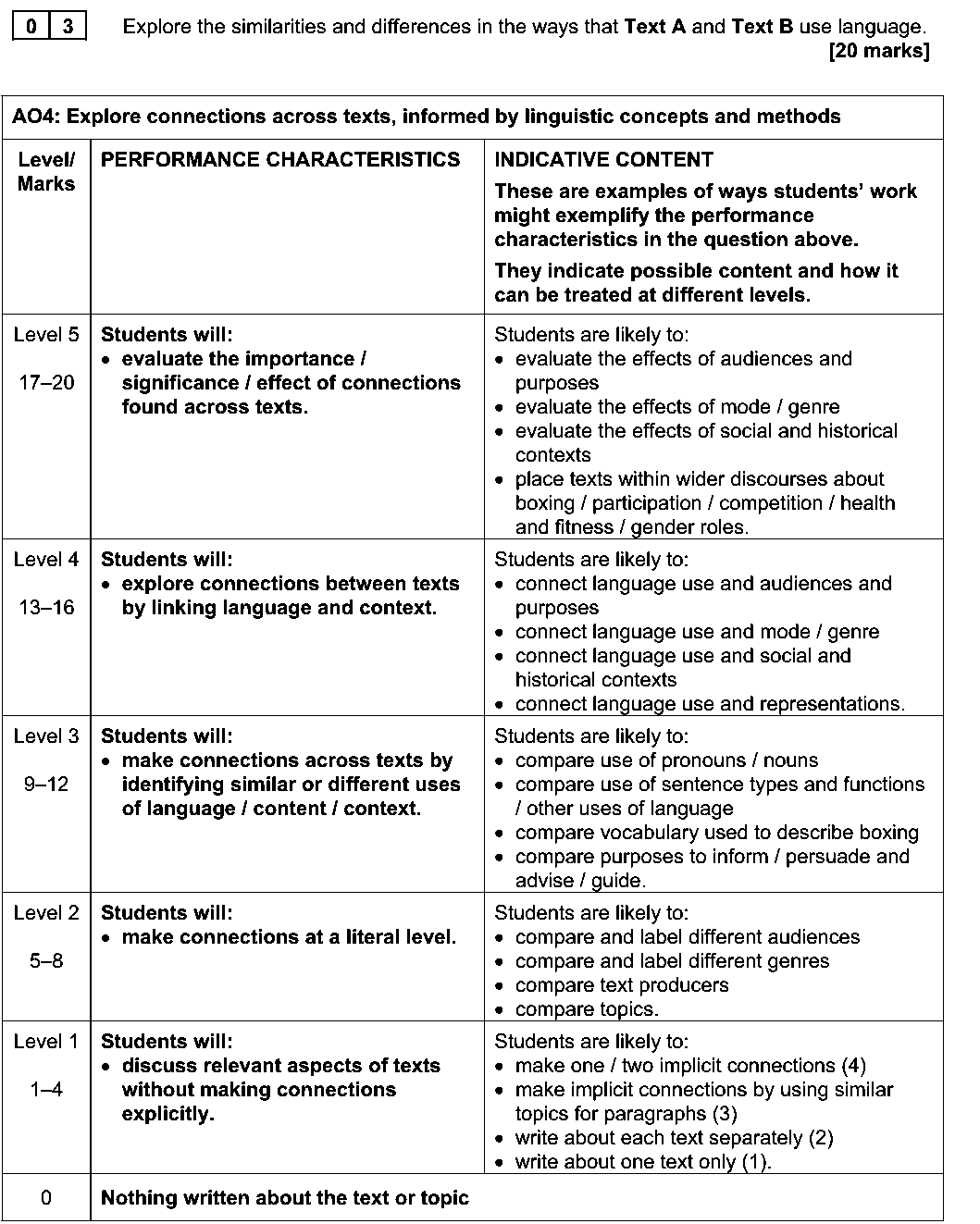
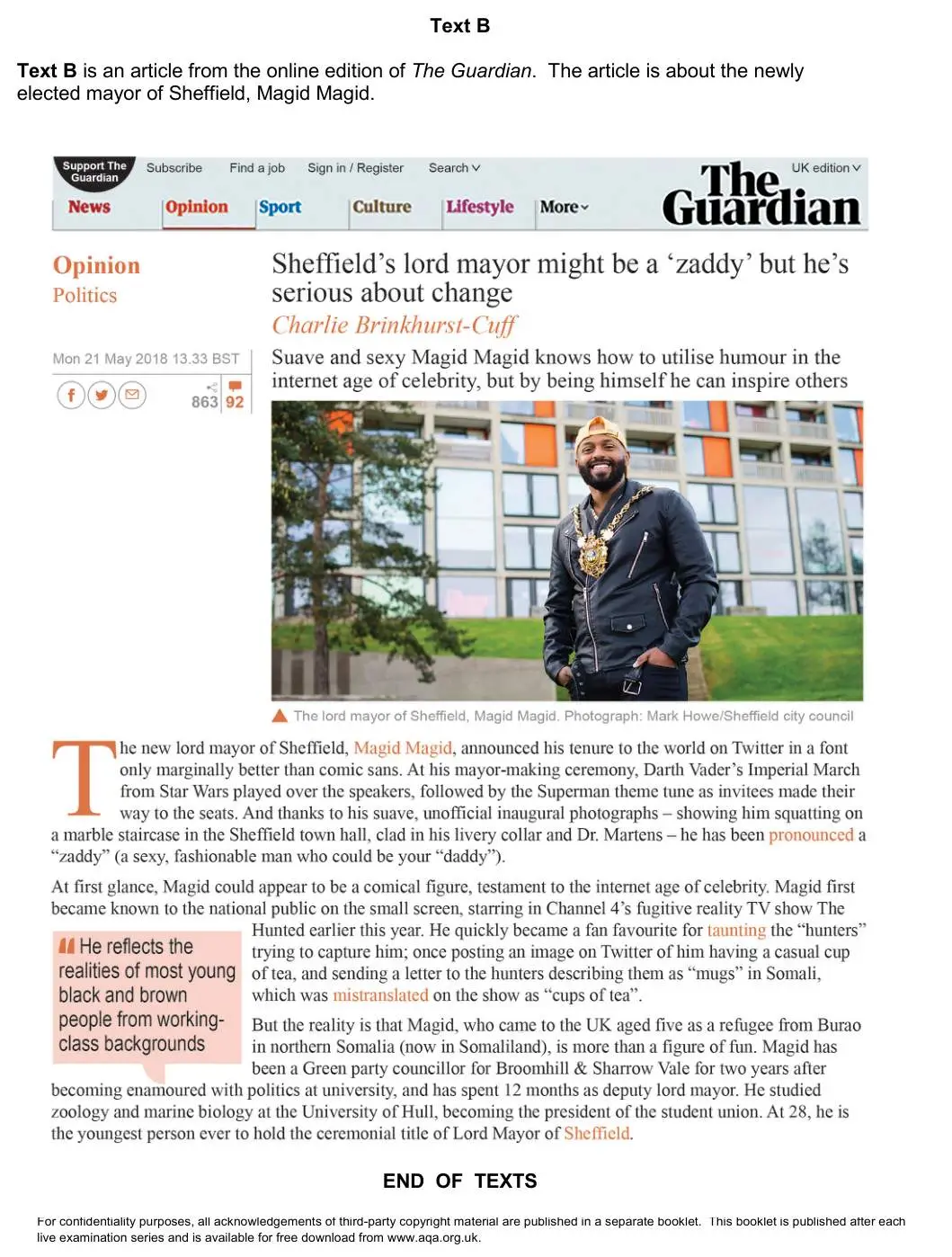
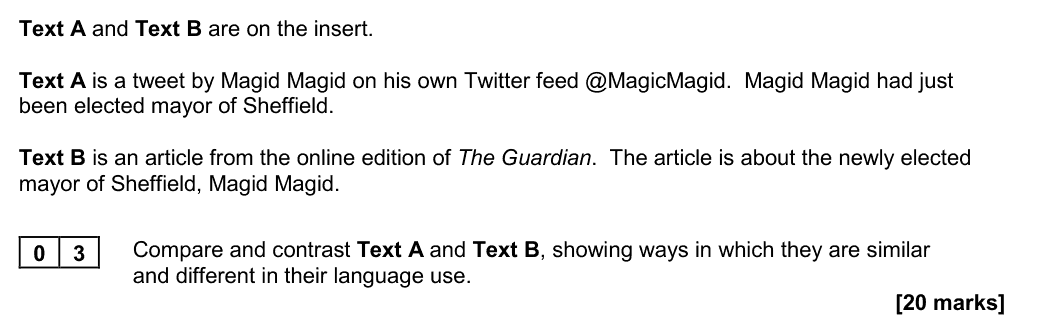
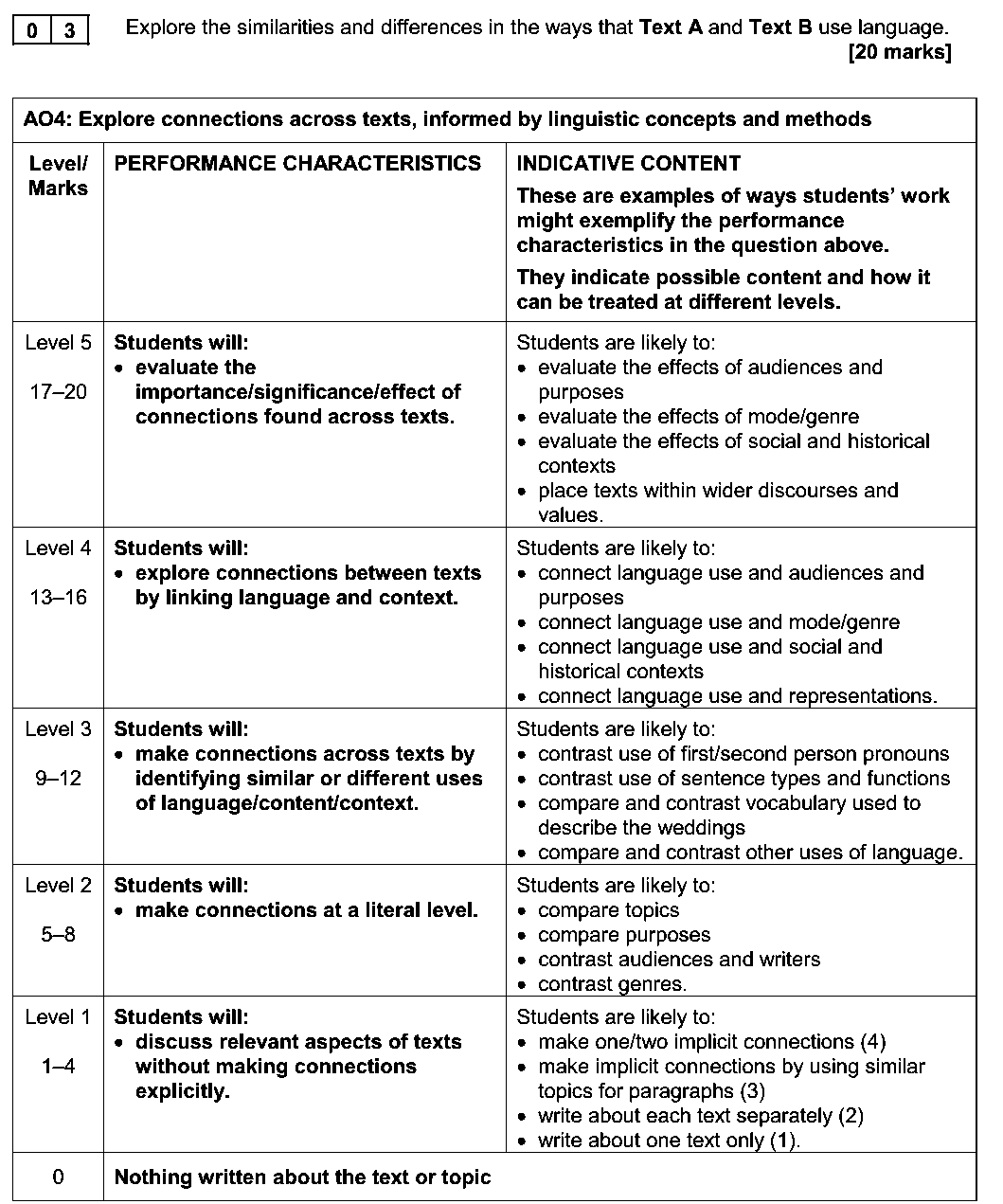
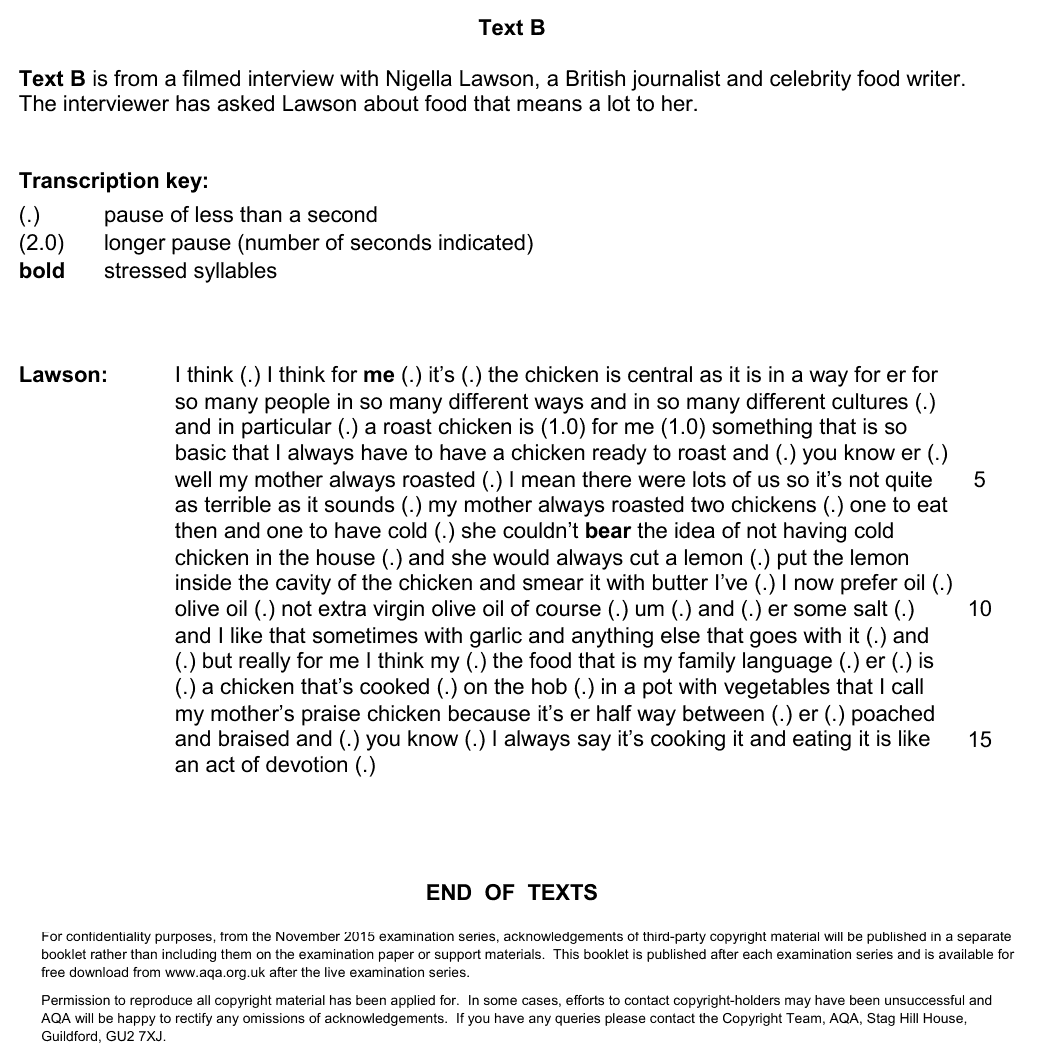
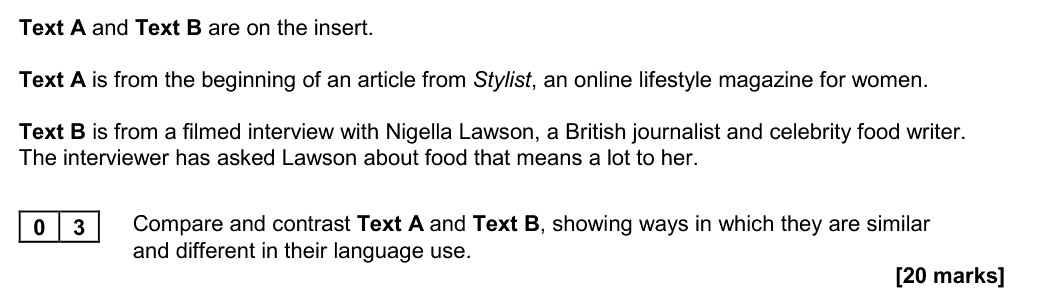
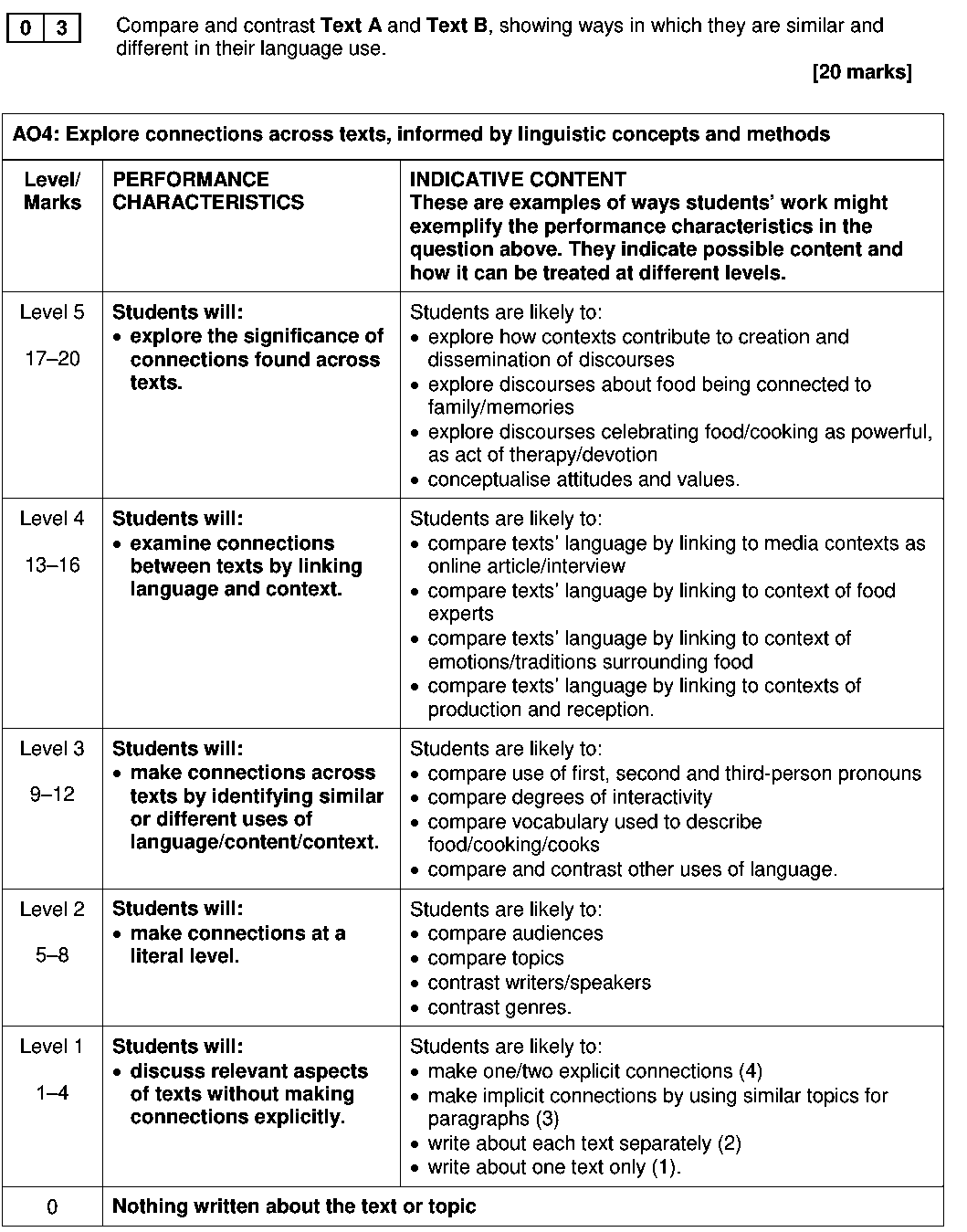
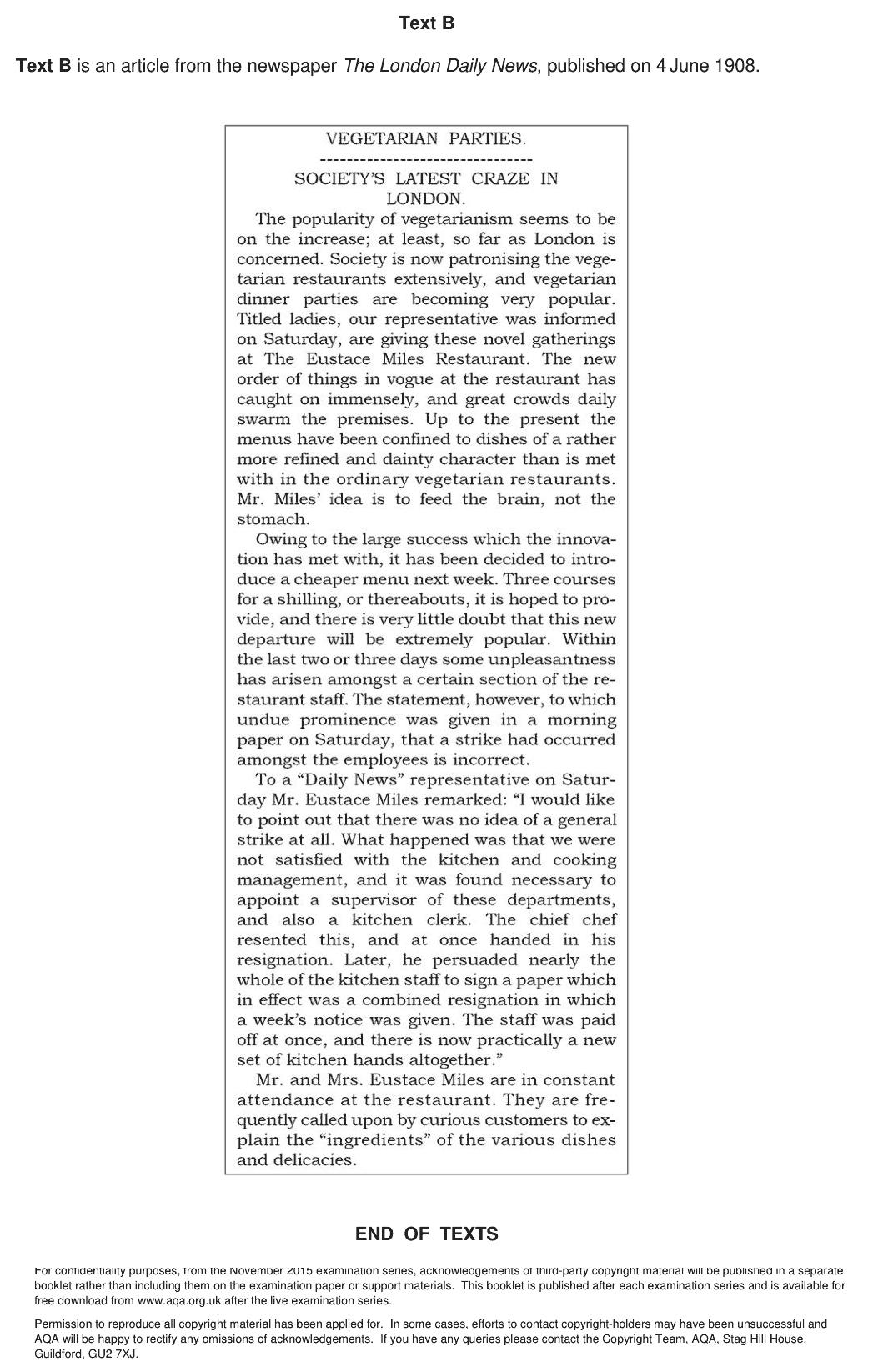
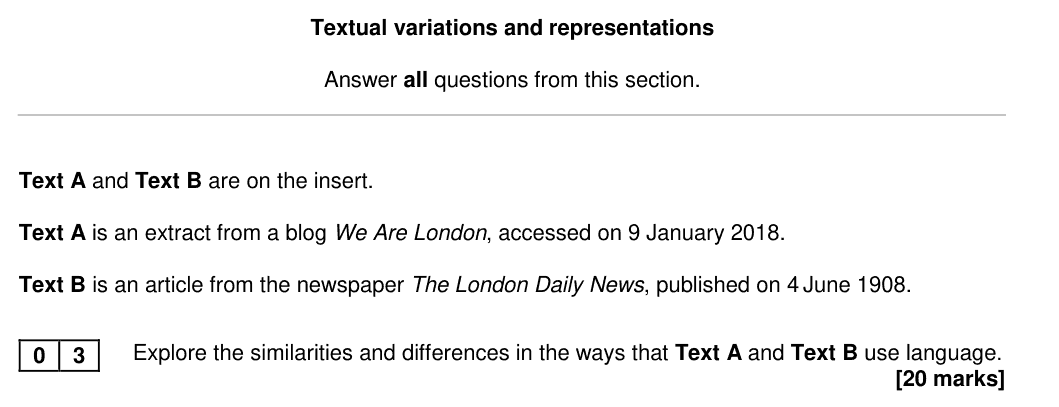
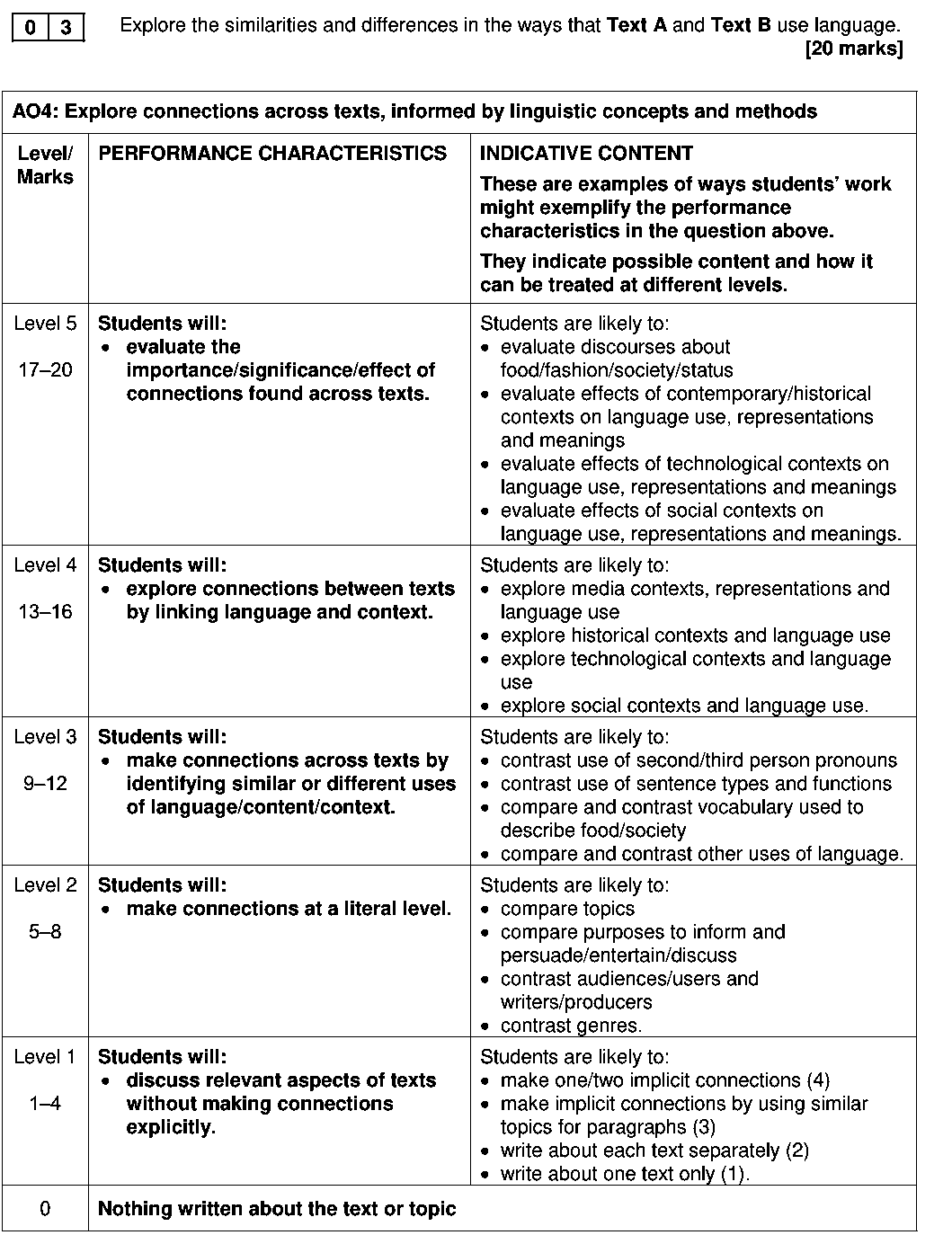
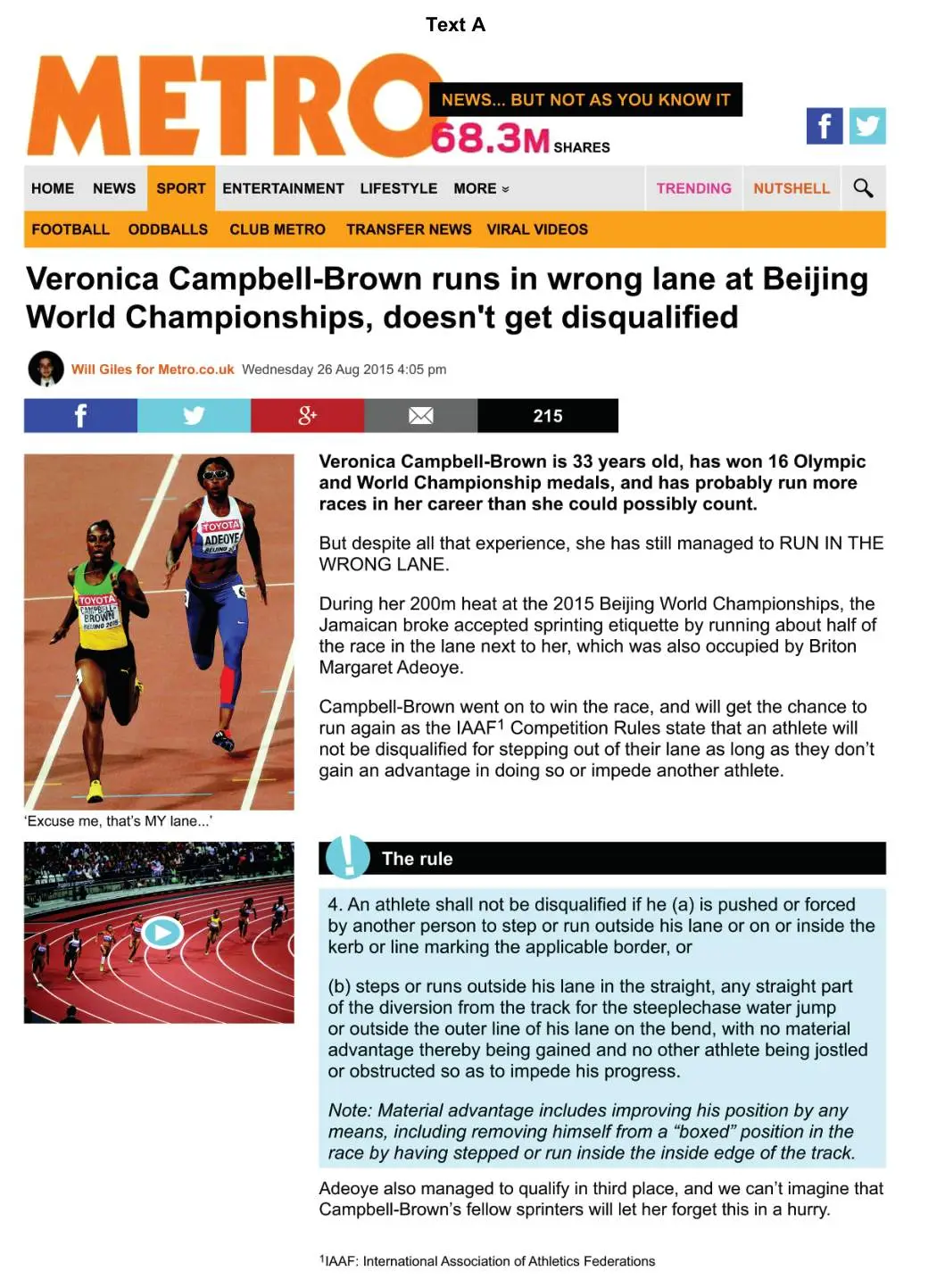
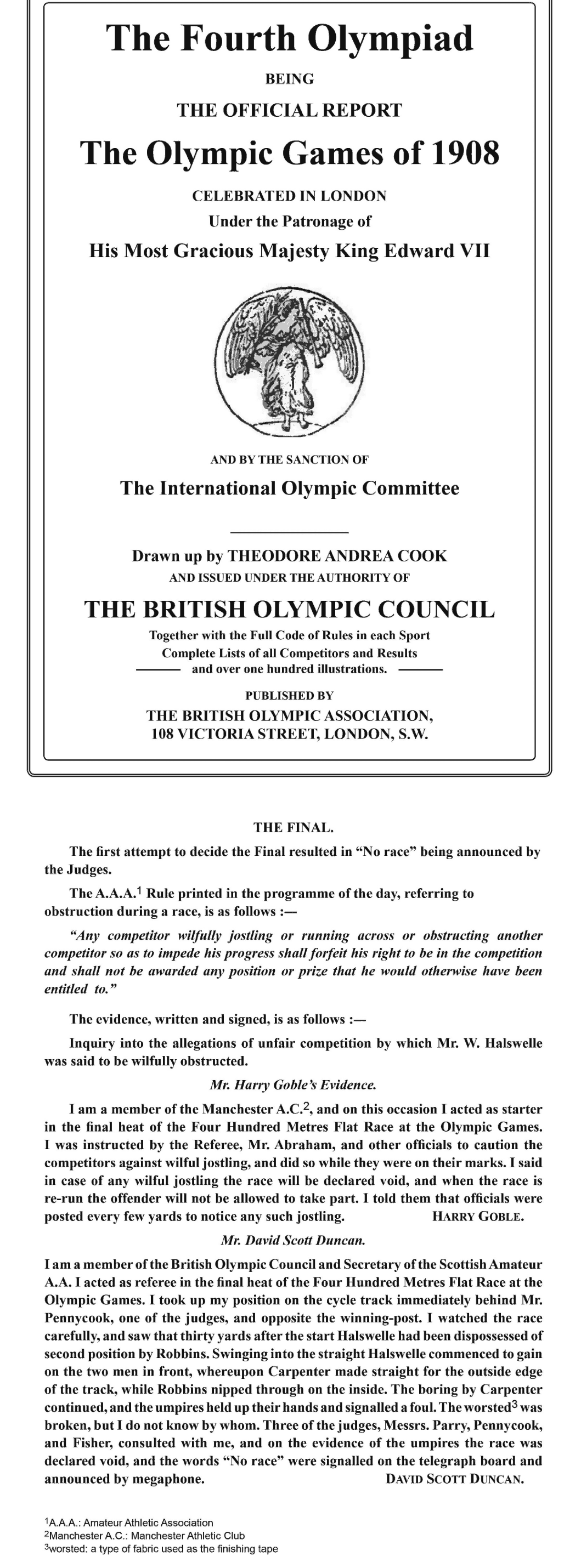
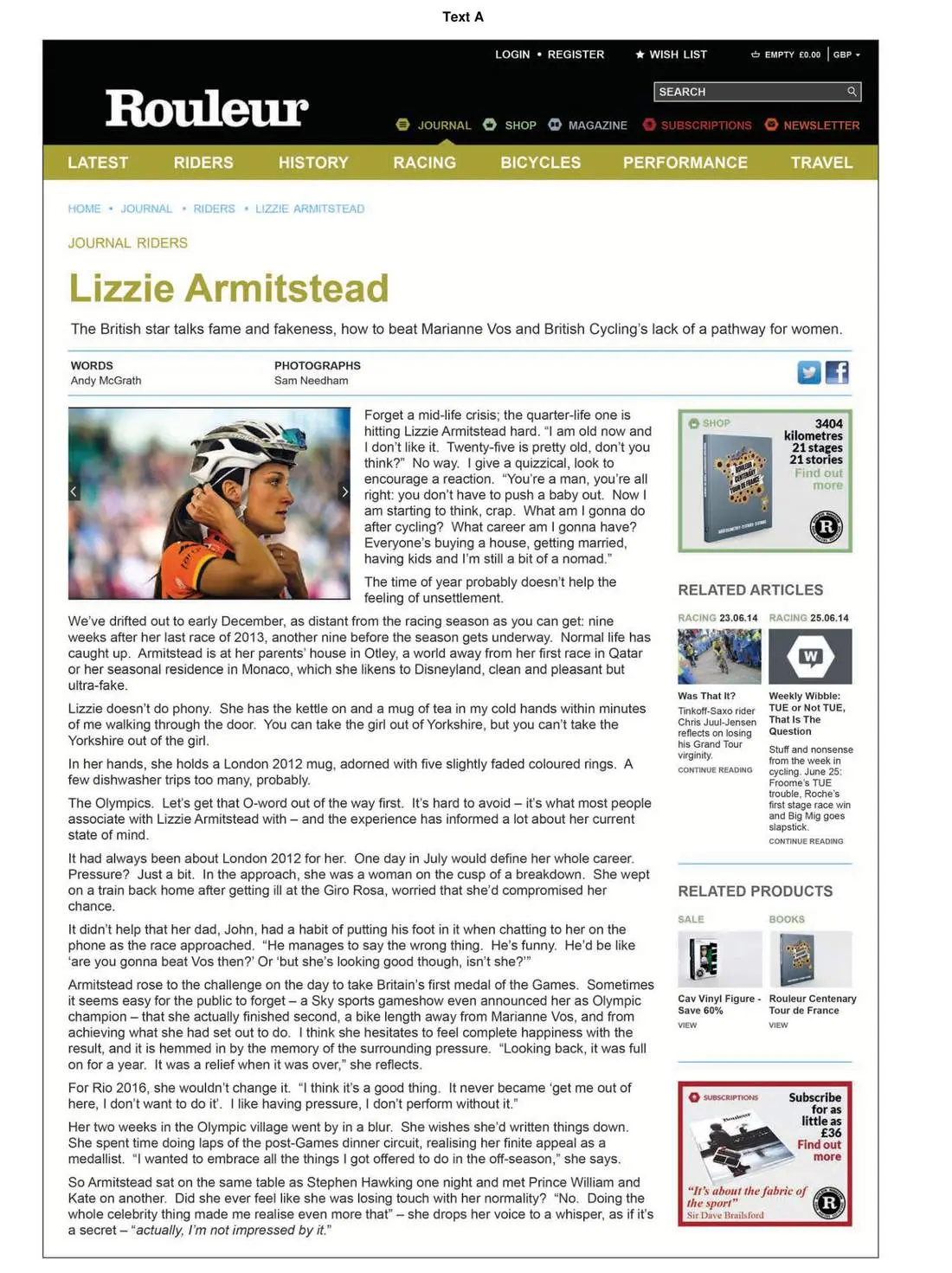
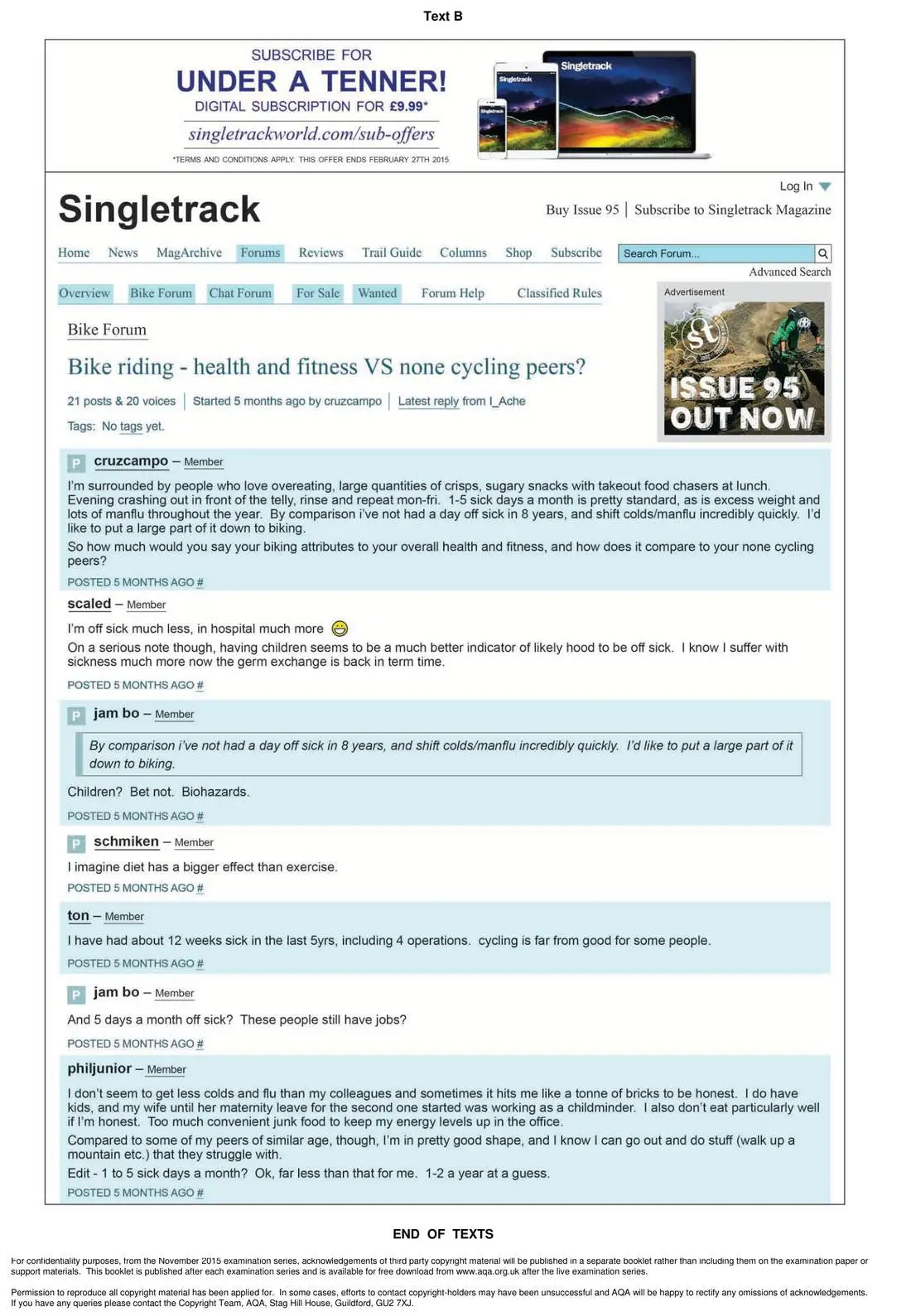
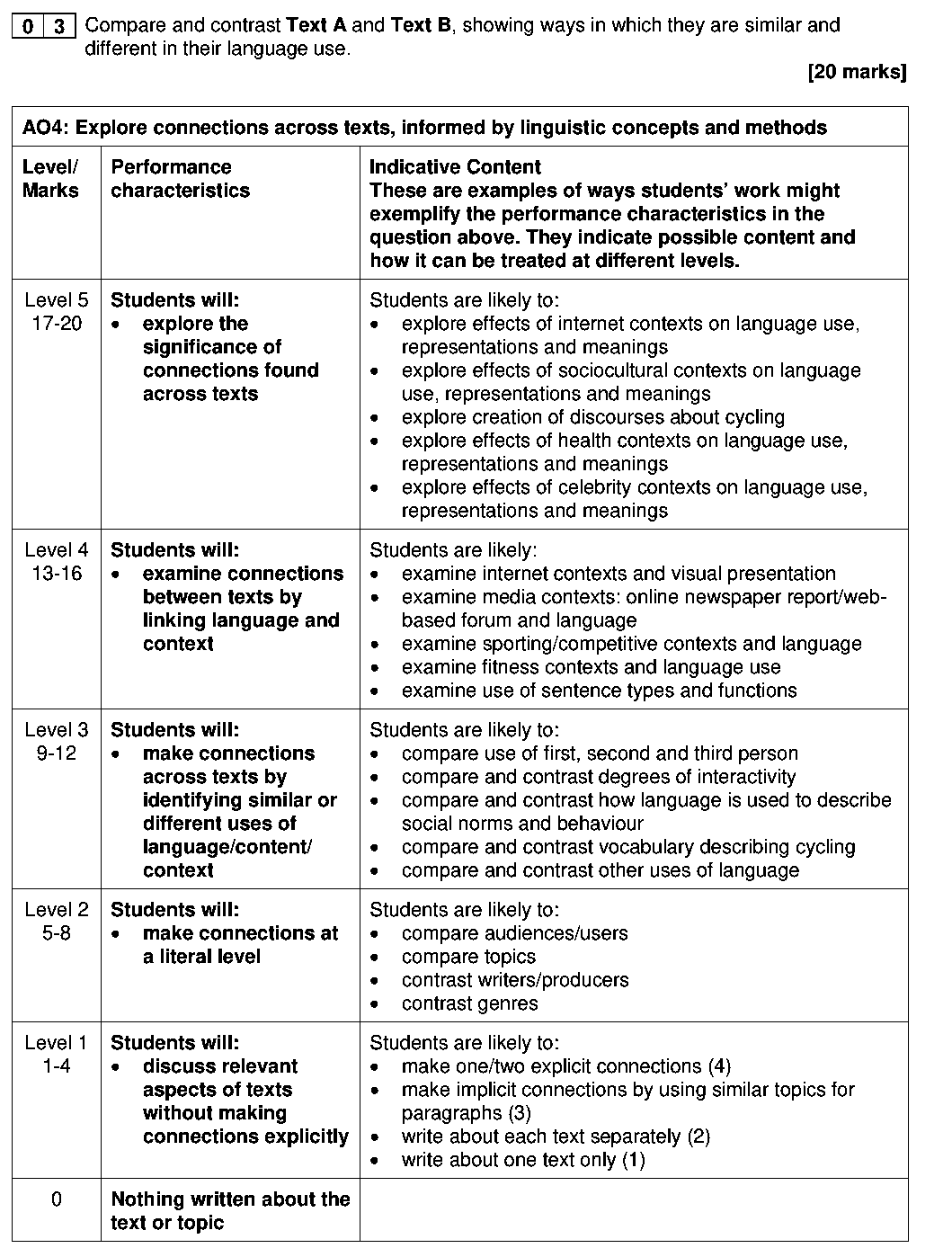
This question required students to consider similarities and differences between Text A and Text B, and examiners reported that responses to this compulsory question were often impressive. Indeed for some students, the quality of their analysis was sometimes better in this comparative response than it was in the individual text analysis. For example, students repeatedly discussed how humour was used in their comparison, when it had been overlooked in their initial response to Text A. This suggests that students are comfortable and confident when comparing data, and that they are experienced in structuring their responses around comparison. Examiners were very pleased to note that very few responses considered texts separately, the vast majority offered sustained comparison across the response. The better approaches to this question considered all aspects of the texts for comparison rather than only offering literal comparisons based on content and simple points about context. Examiners noted that once students began to consider language use alongside context, the quality of the response improved considerably. Occasionally students struggled to evidence points and this was problematic in terms of accessing the performance characteristics. Even when language features have been evidenced in questions 1 and 2, examples should also be offered for question 3, as examiners cannot look back at previous responses to check understanding and accuracy. Examiners noted that the very best responses to this question did not attempt to compare every aspect of the texts, but instead focused on representations and attitudes, covering 3 or 4 points in detail. This encouraged an evaluative response to the question rather than a list-like approach of similarities and differences. More successful answers: • discussed different attitudes towards the offence eg the light-hearted humour in Text A and the serious legal register of Text B • analysed the different approaches to representing the event i.e. Text A gave very little detail, relying on photograph and video evidence to enhance detail, whereas Text B gave lengthy detailed descriptions – this was often usefully linked to the age of the texts, and the different purposes • considered the differences caused by the ages of the texts, including discussion about technology and social media, visual detail, formality etc • commented on the use of speech in both texts eg the humorous caption in Text A and the first person narrative witness accounts in B • discussed the different attitudes towards gender in both texts, considering the focus on successful female athletes in Text A, and the absence of women in Text B - this was often linked to use of male pronouns in the rule sections • considered the different use and effect of official rules in both texts – in Text A to show an offence had not been committed, but in Text B to confirm one had • compared the difference in the genres of the texts, and offered language detail to support the discussion eg the graphological details of both texts, the use of headings etc • examined the differences in audience, their positioning and their attitudes i.e. the broad audience for Text A, encouraged to be part of the Metro community with ‘we’ suggesting shared criticism of Veronica Campbell-Brown, and the inclusive, but narrow audience, of Text B with a strong sense of the illegality of the athlete’s behaviour.