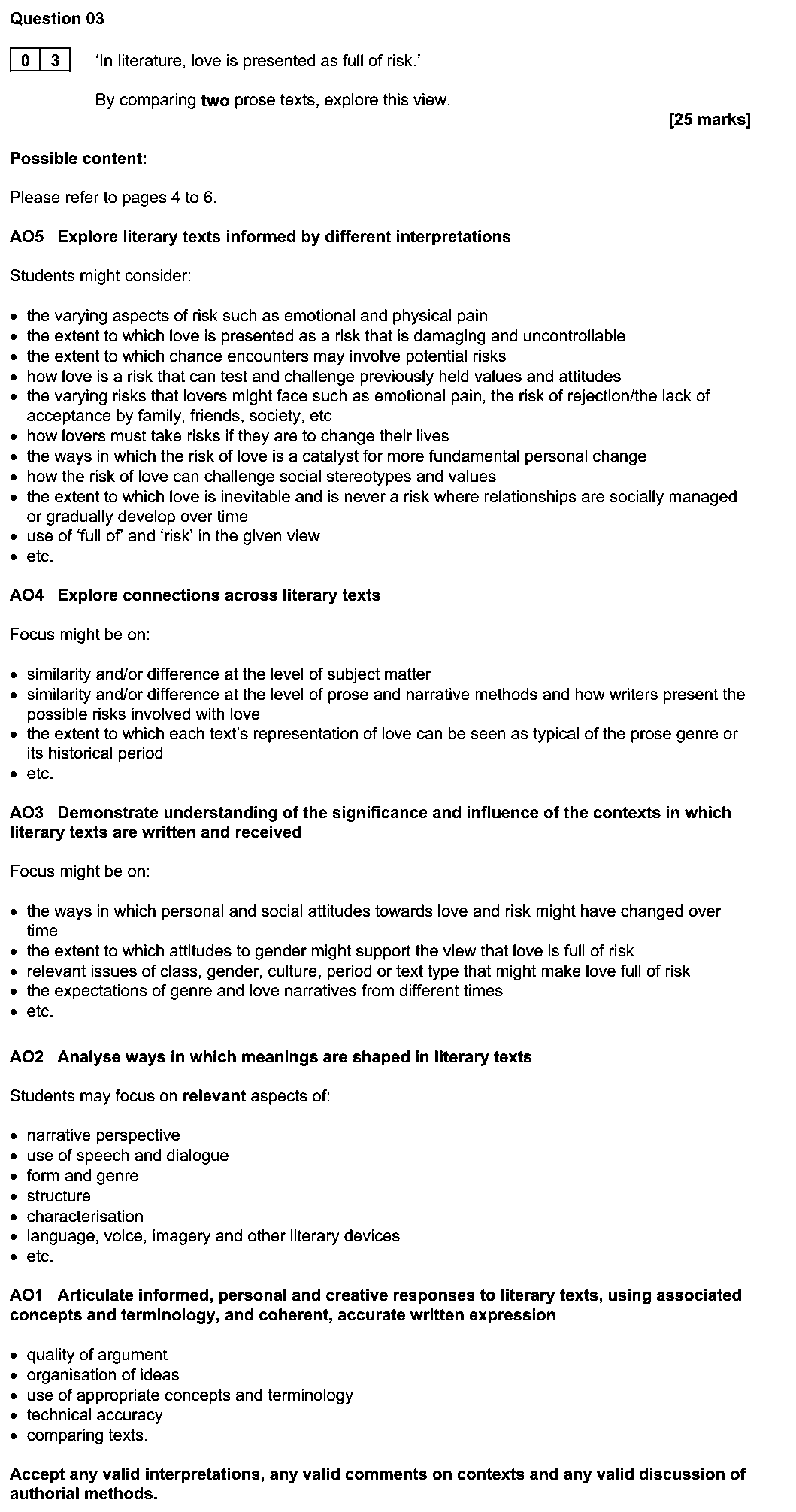
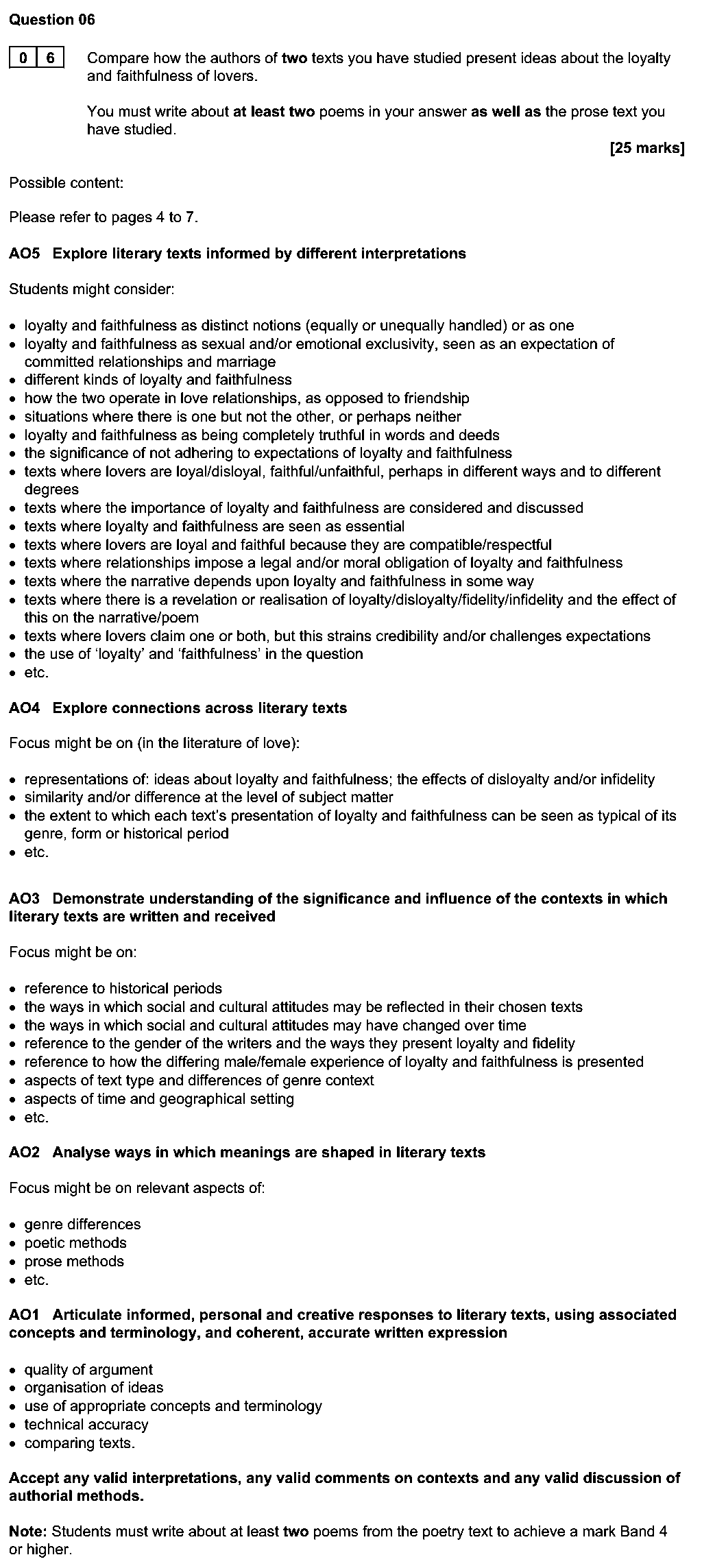
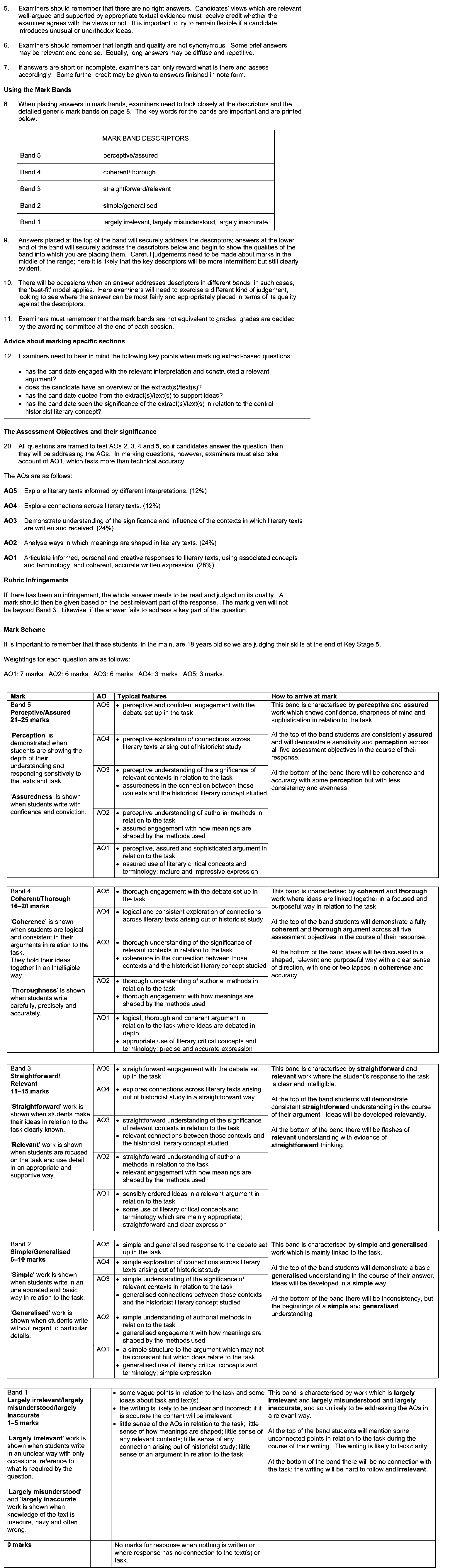
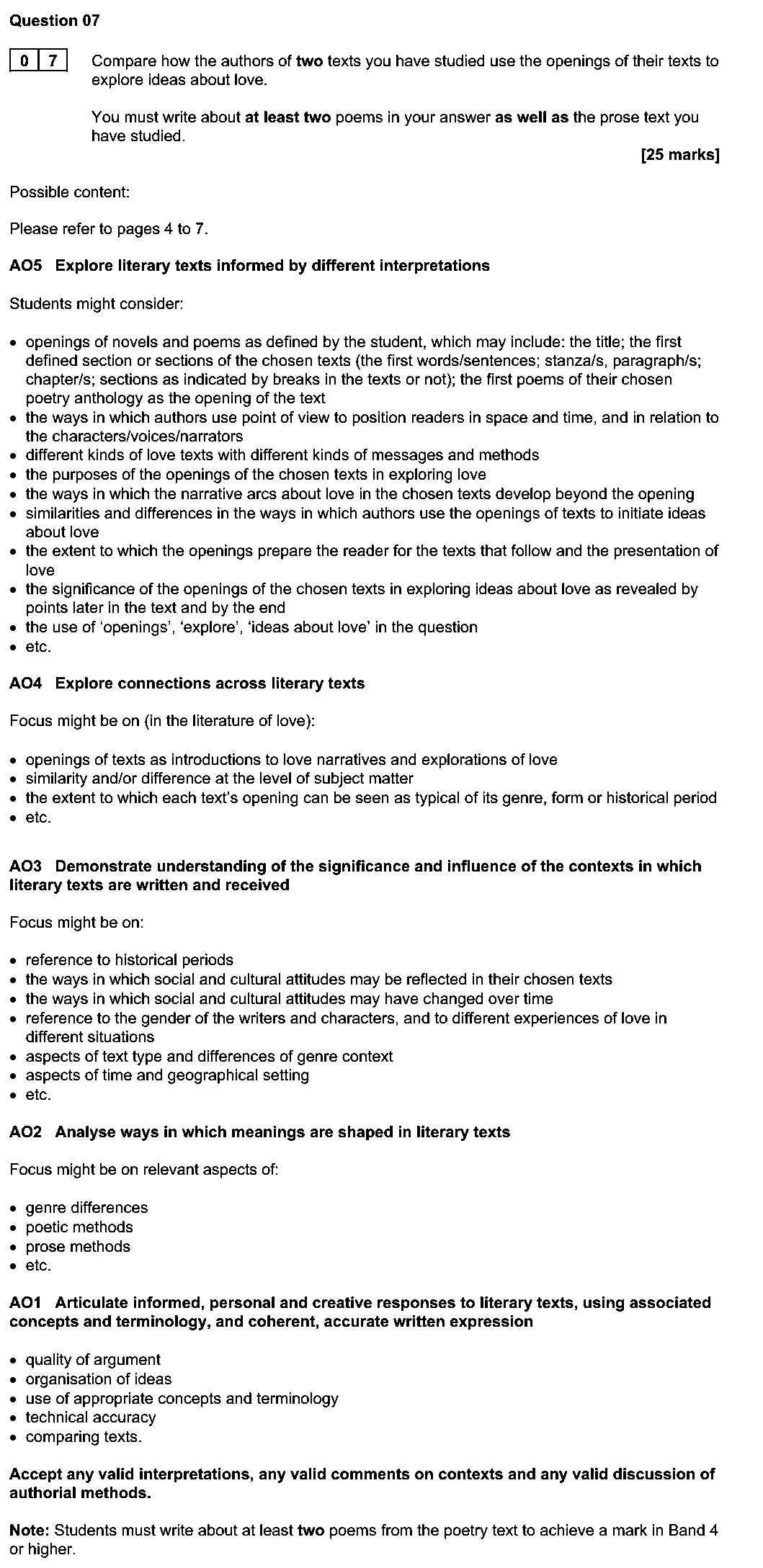
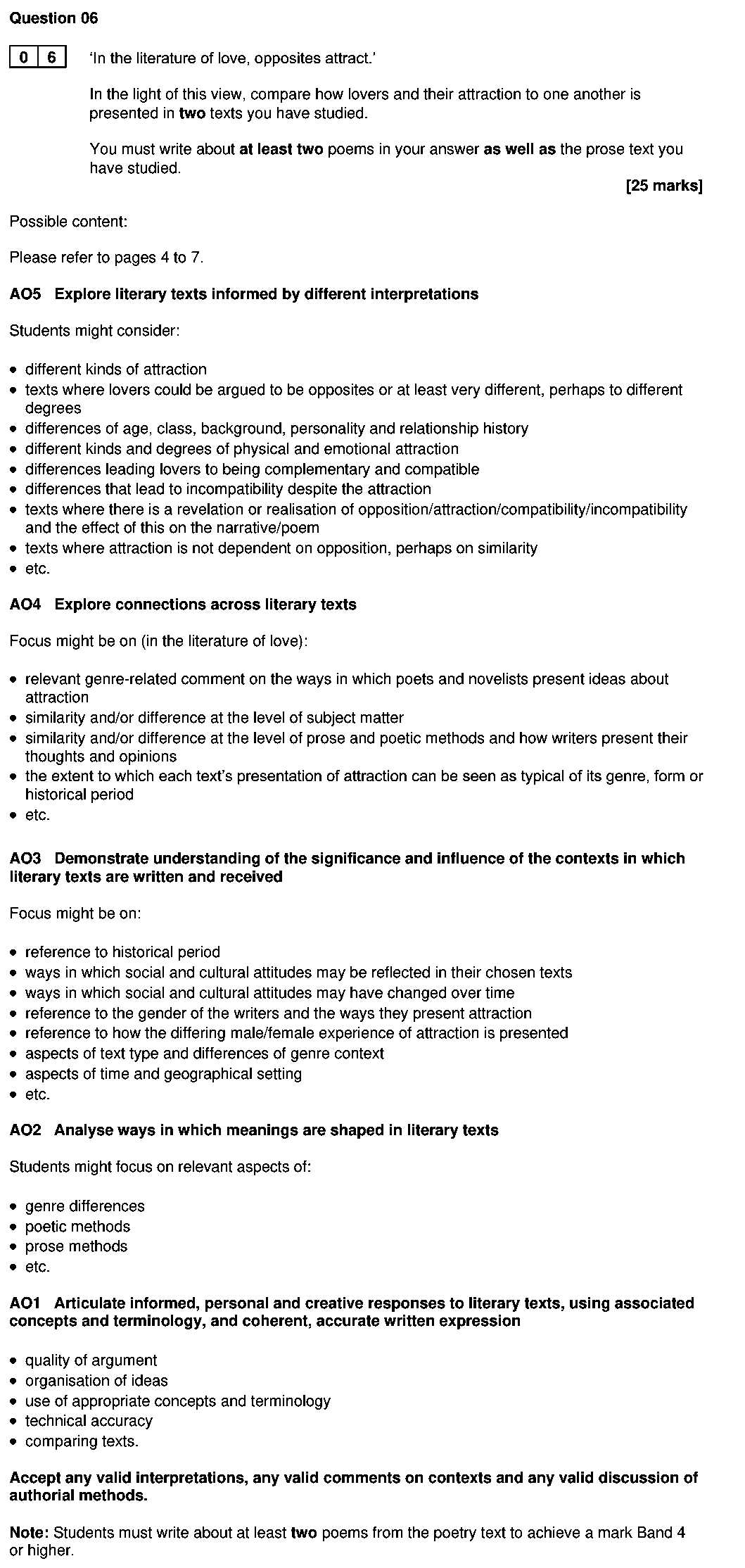
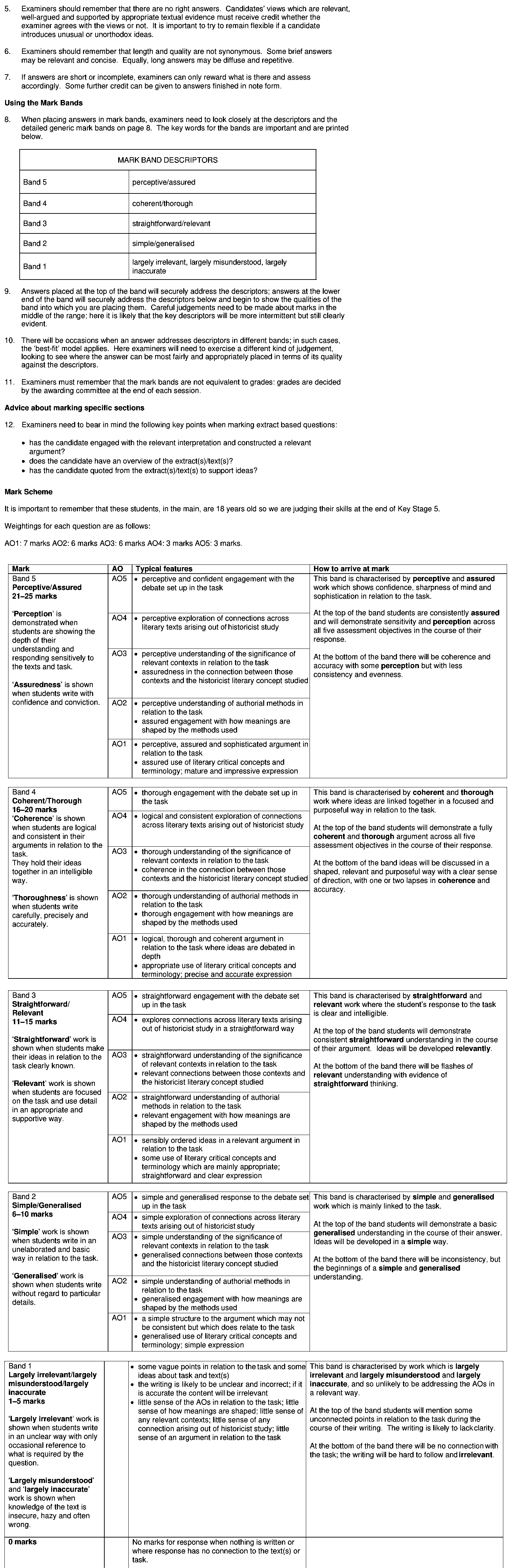
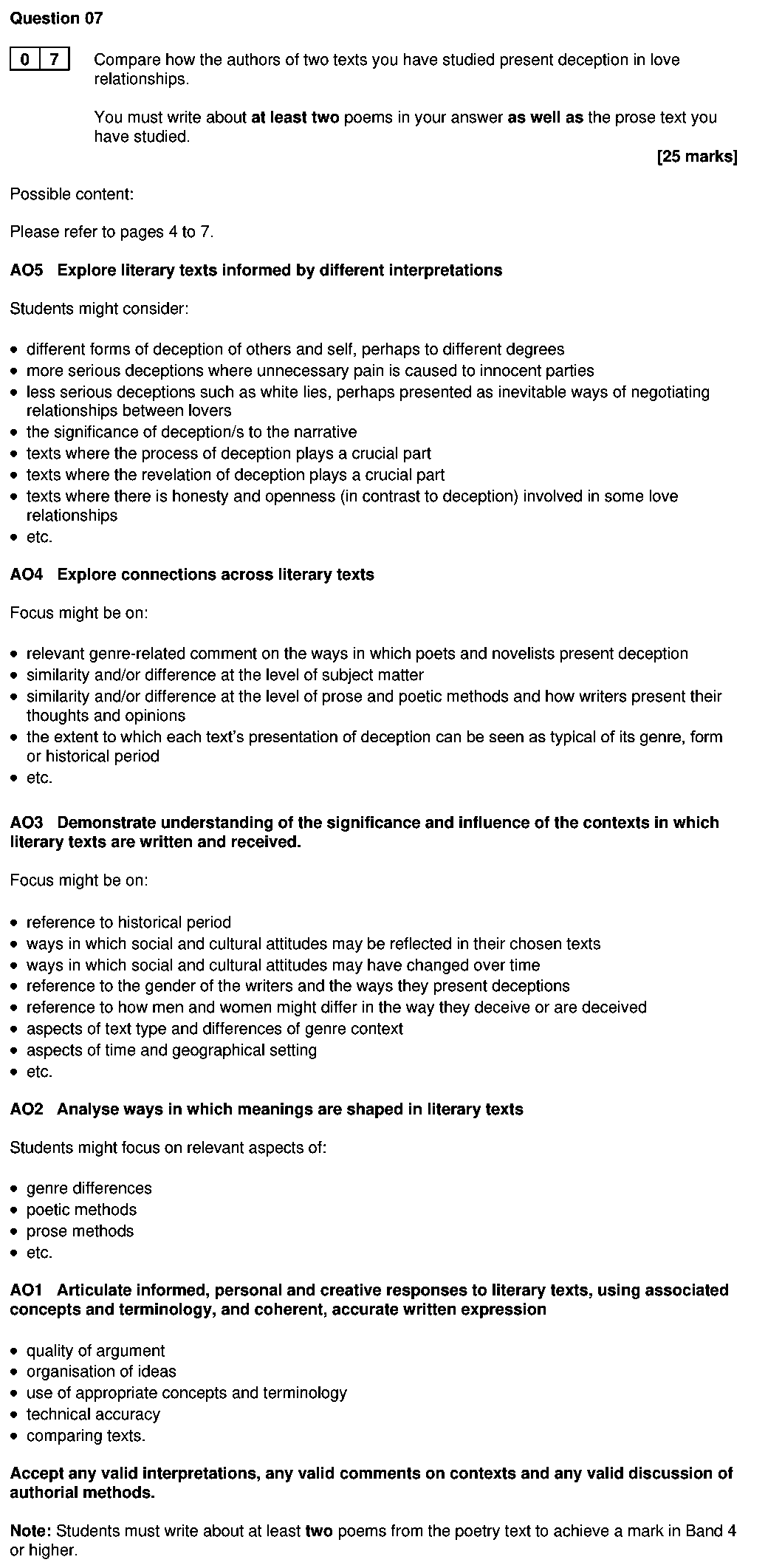
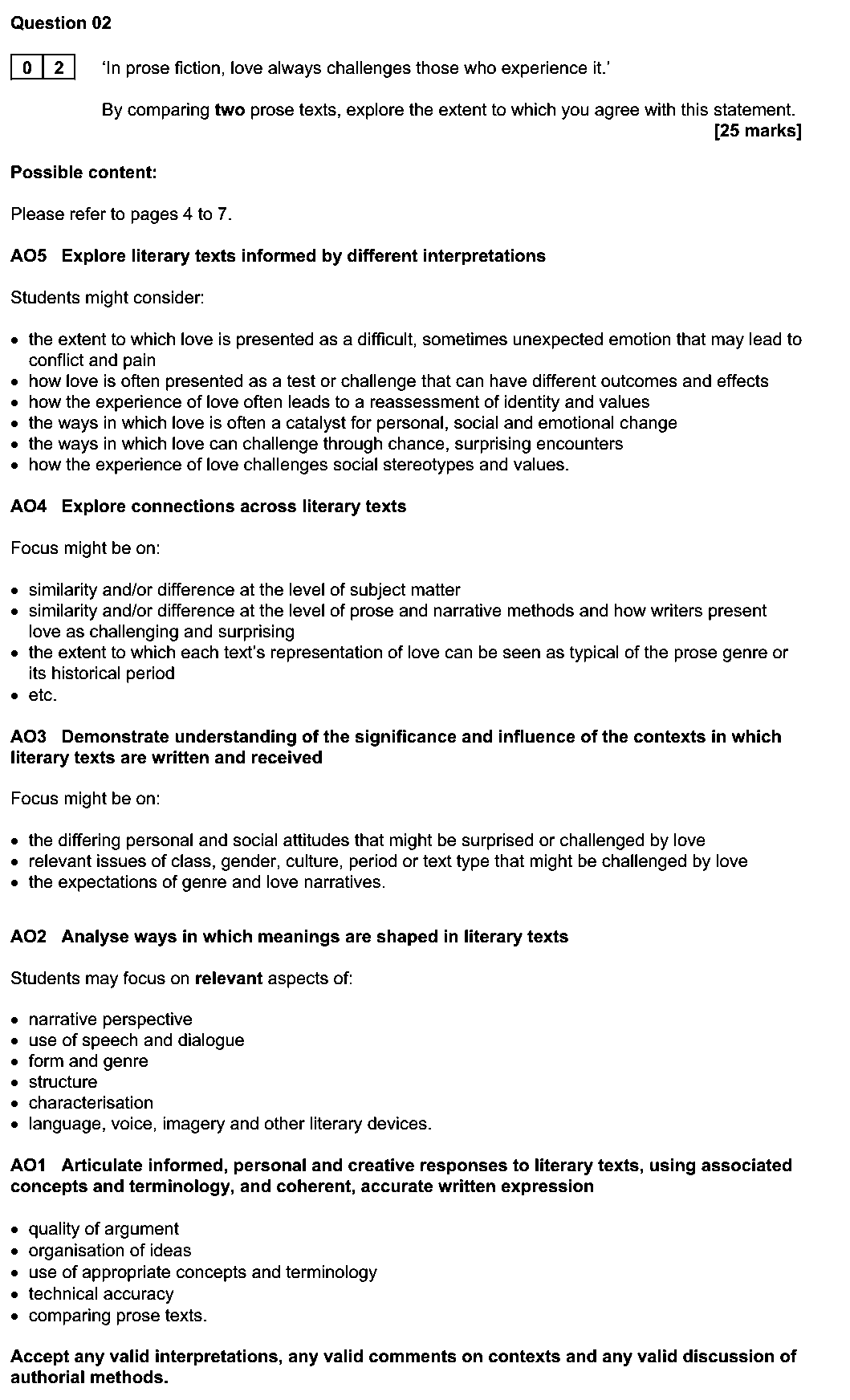
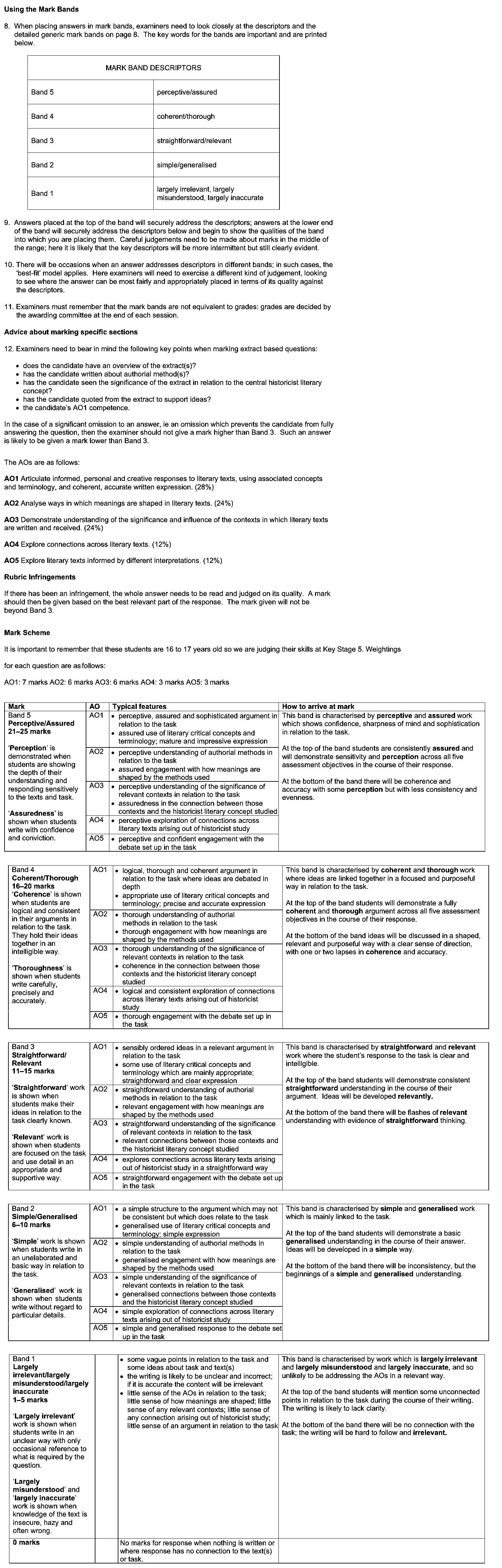
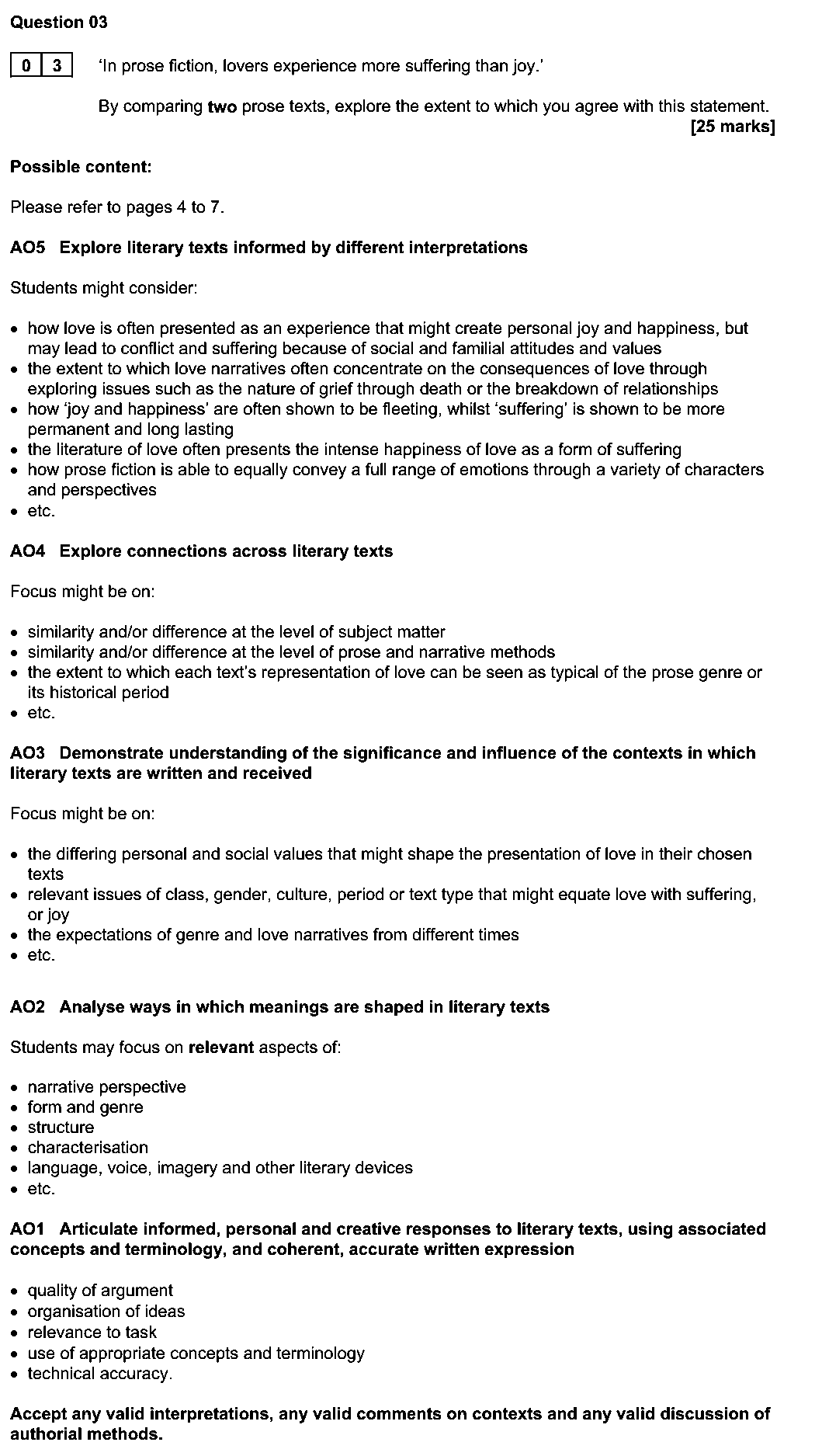
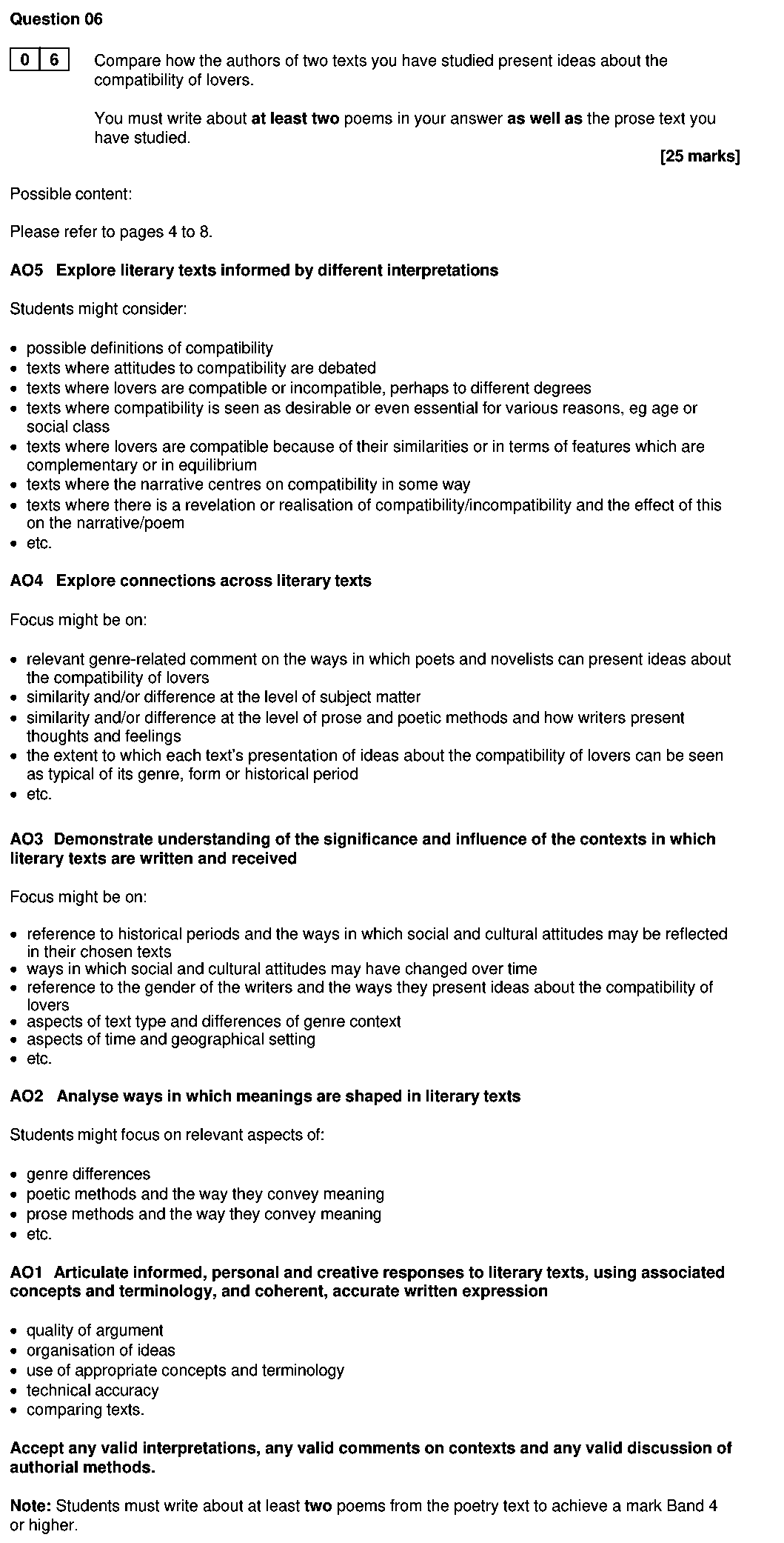
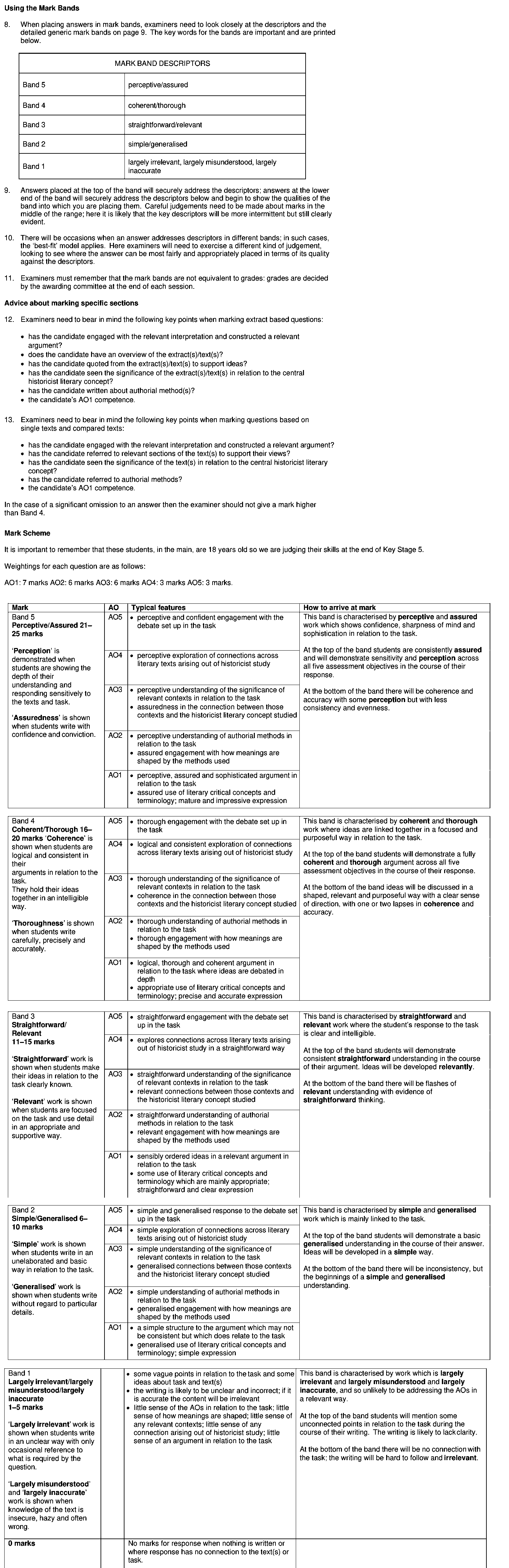
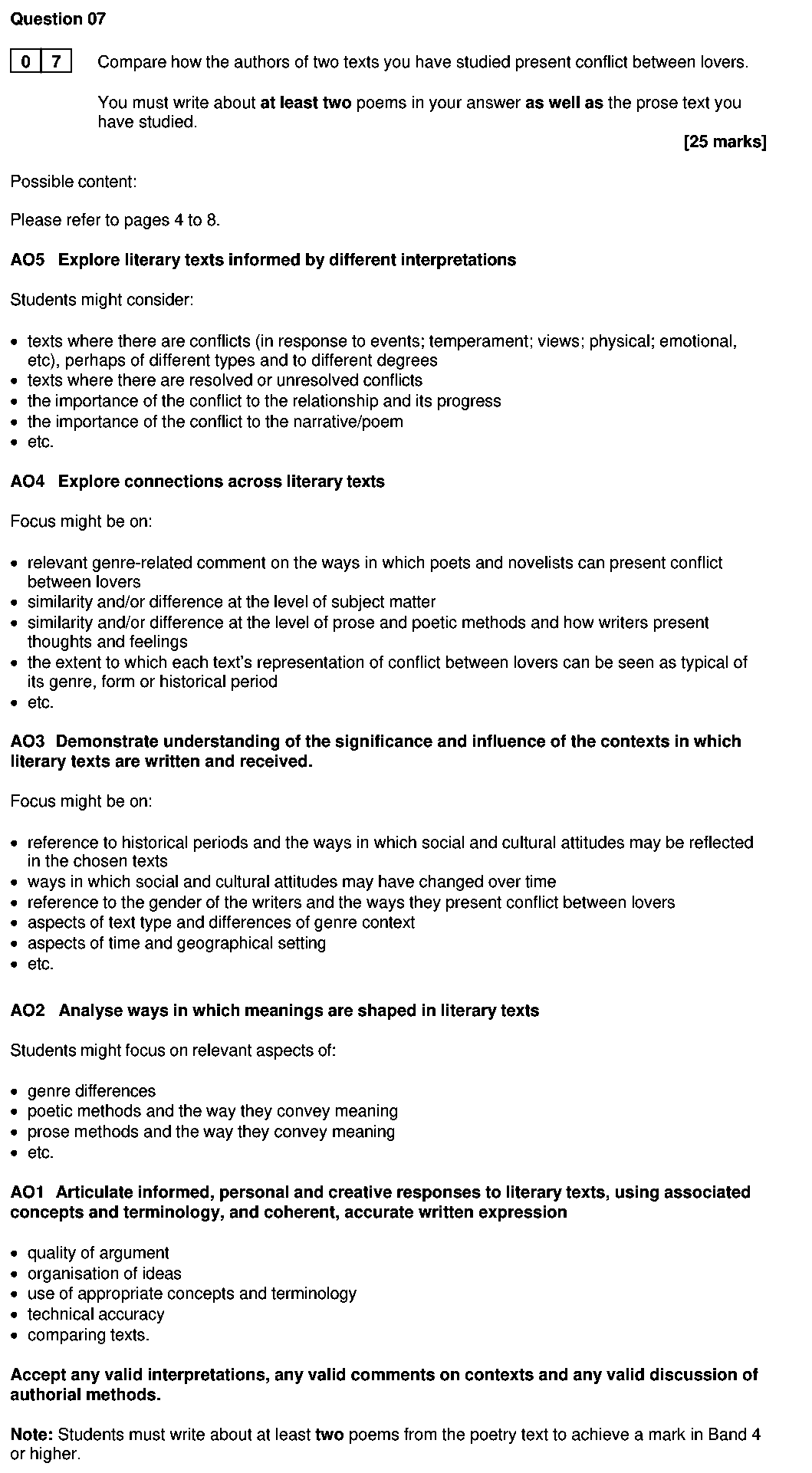
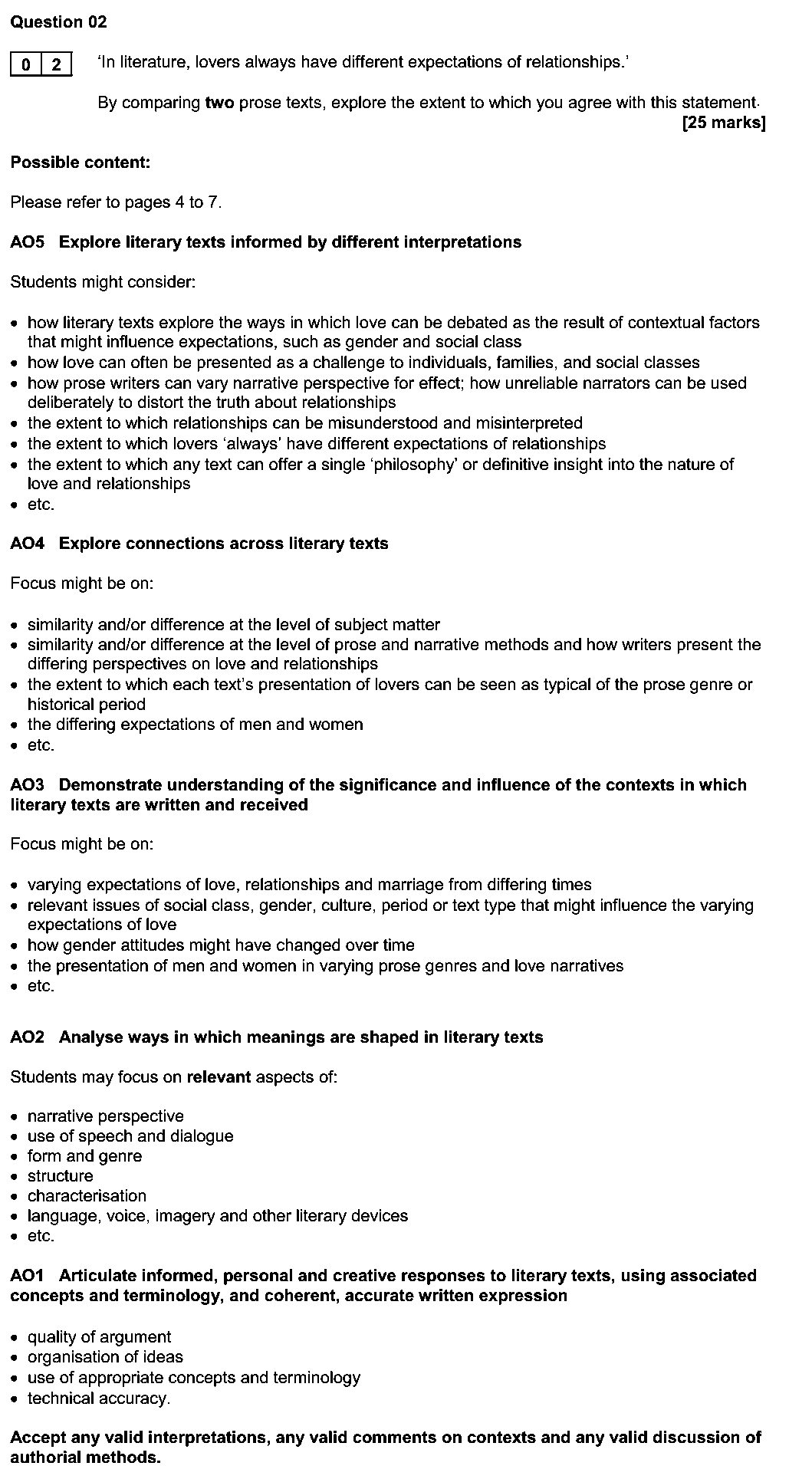
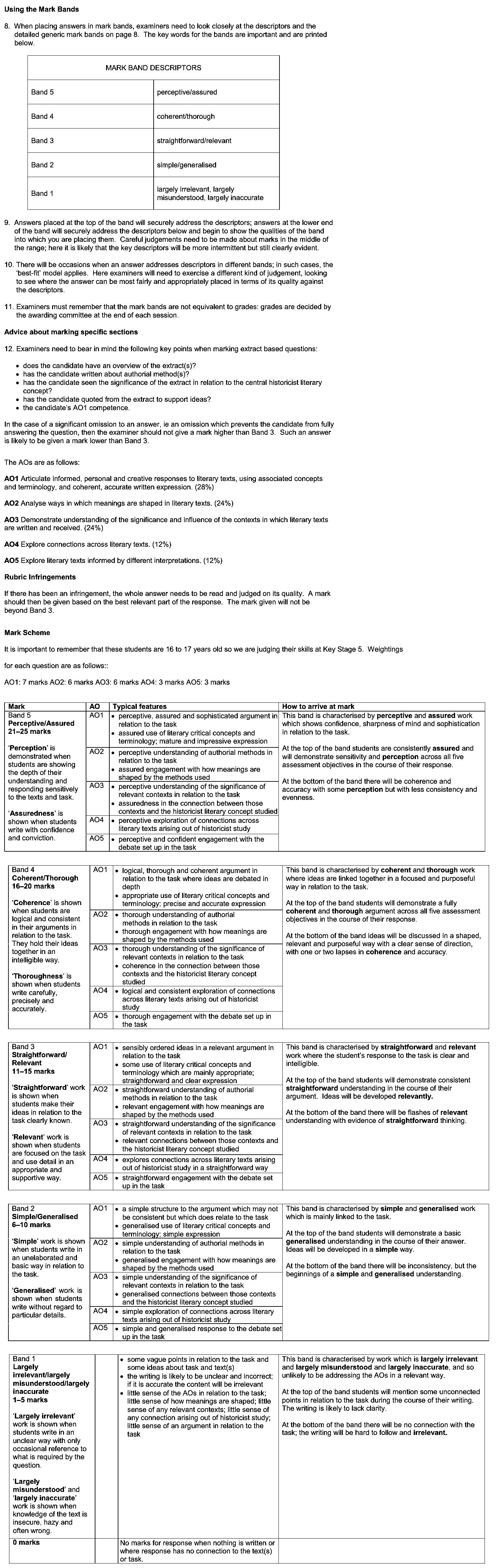
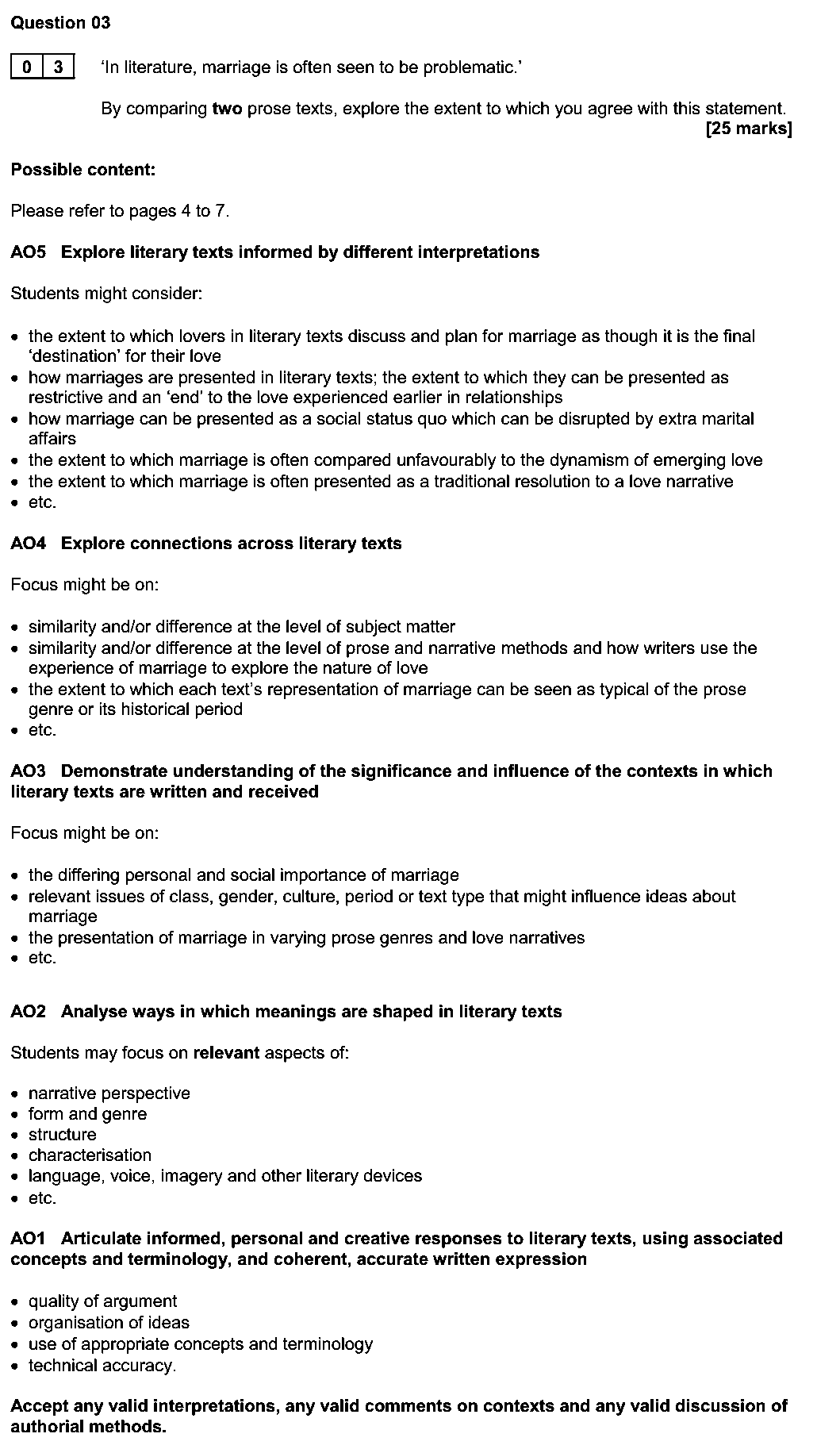
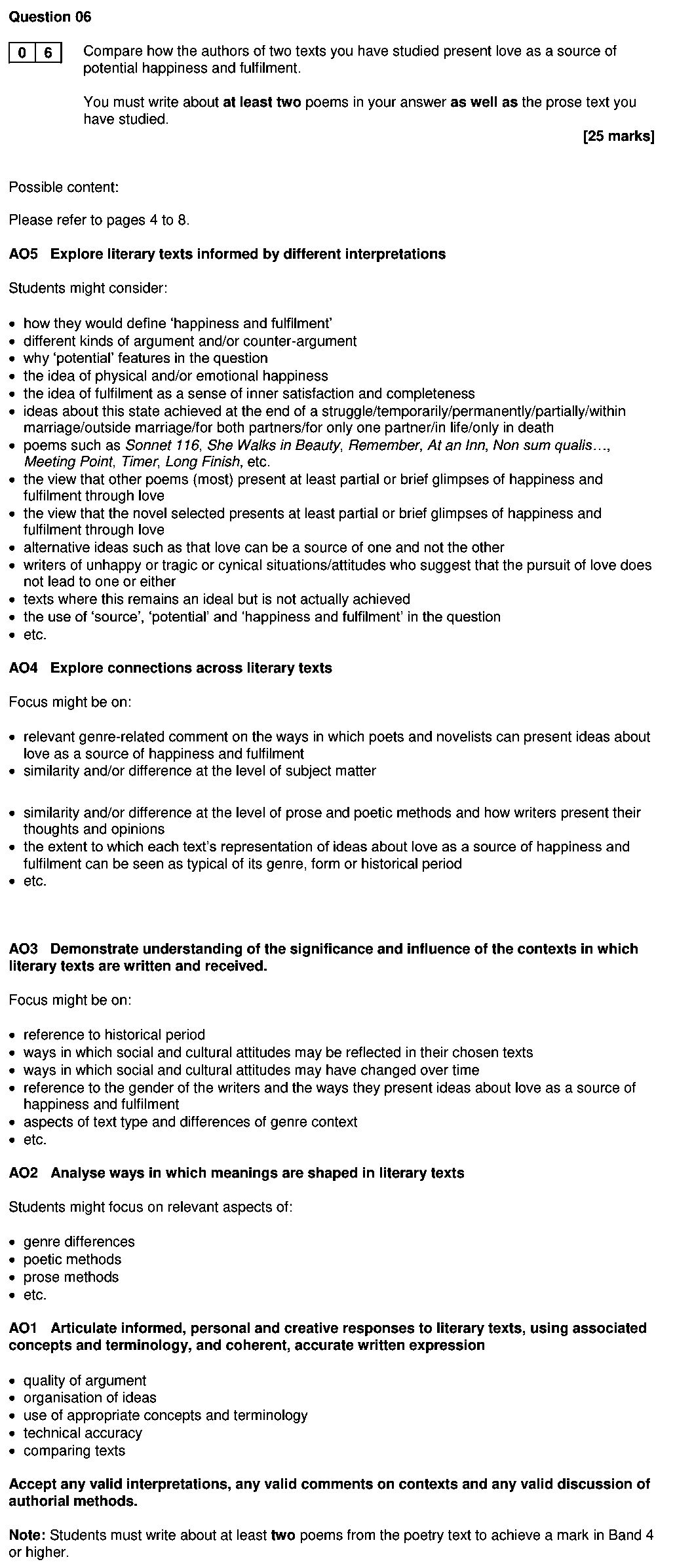
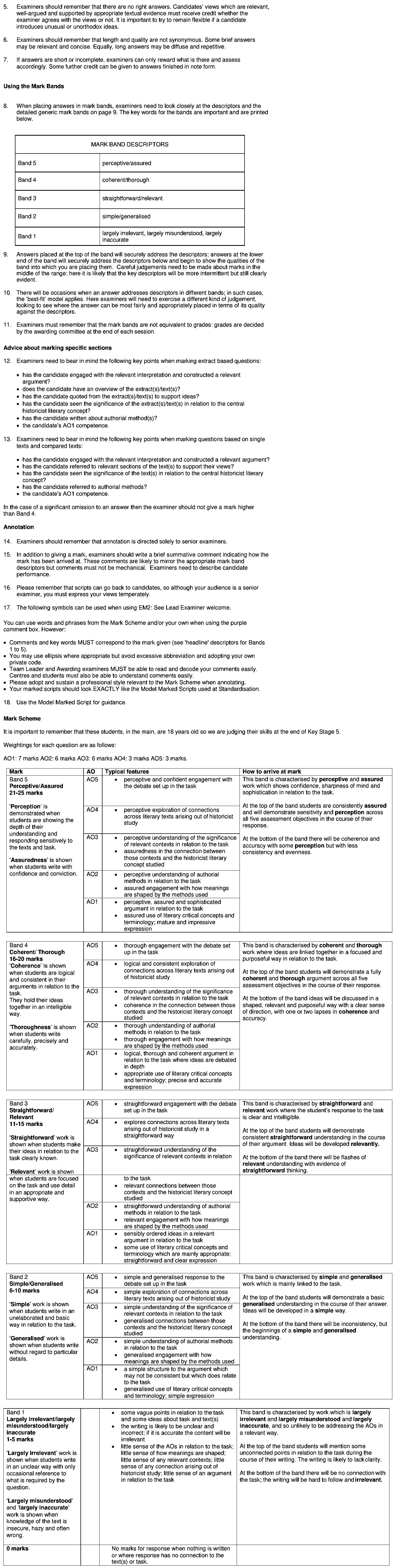
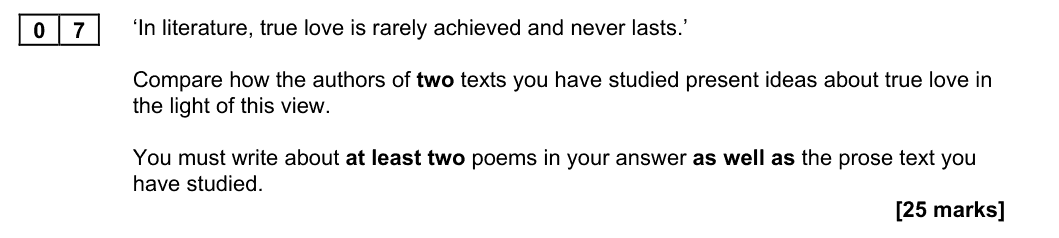
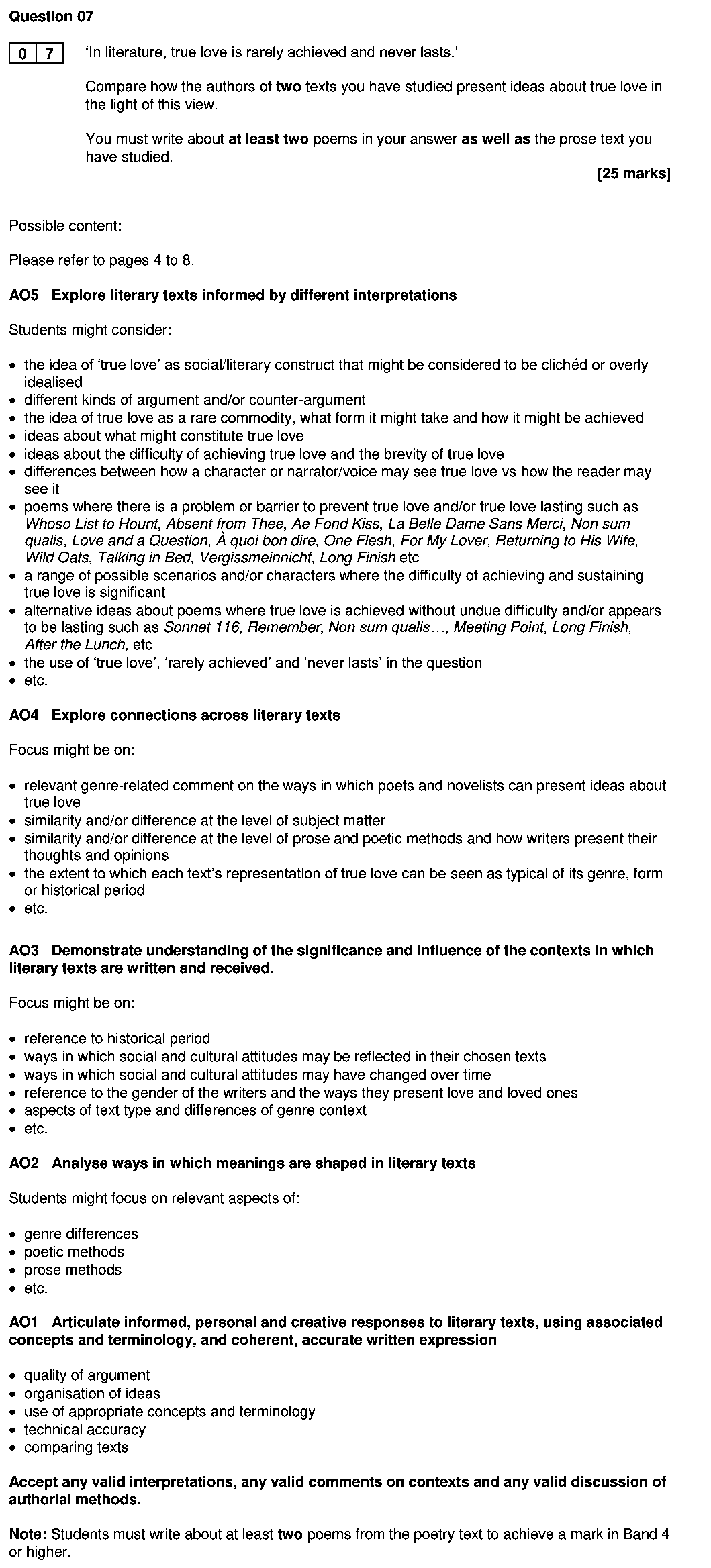
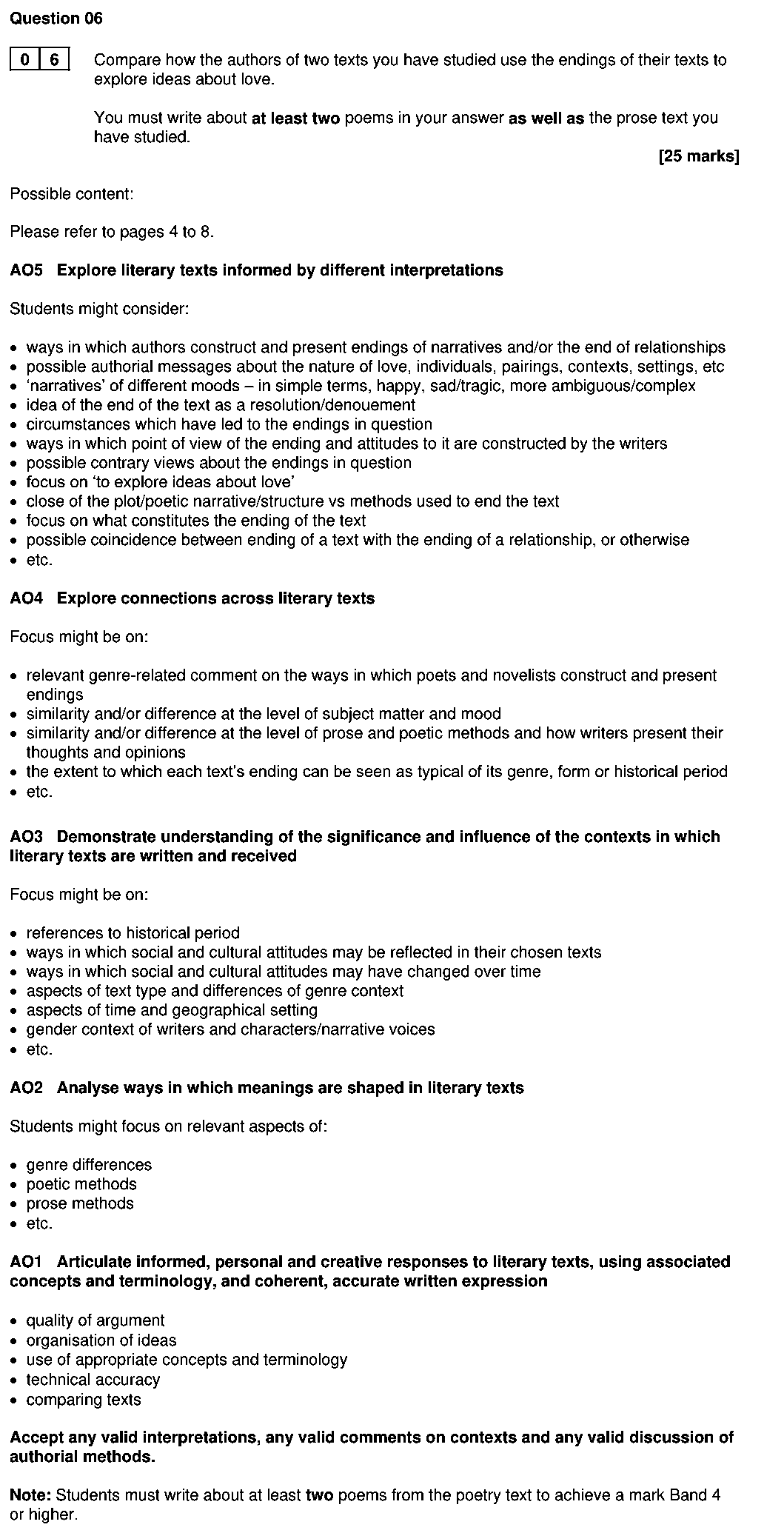
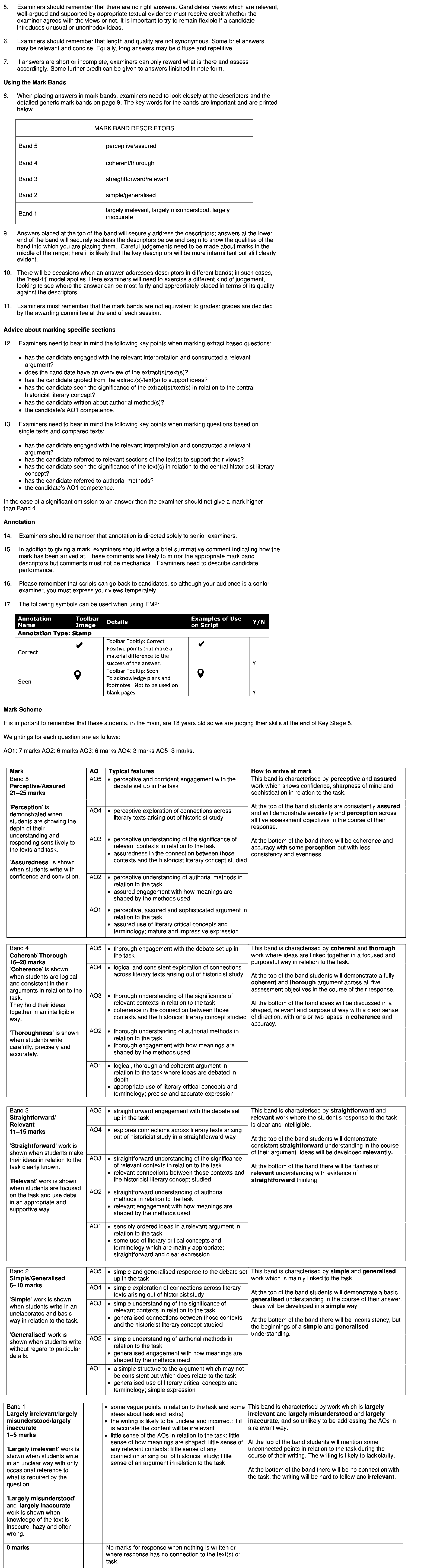
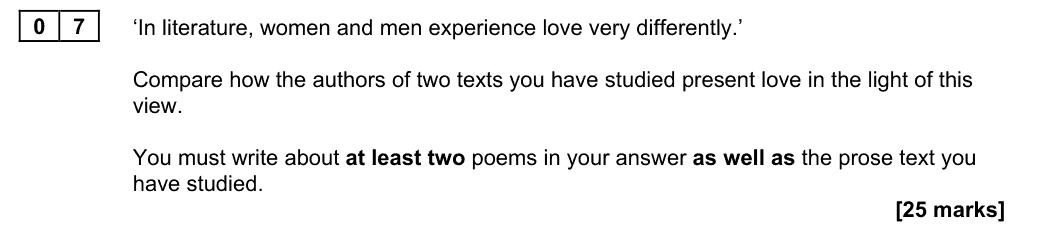
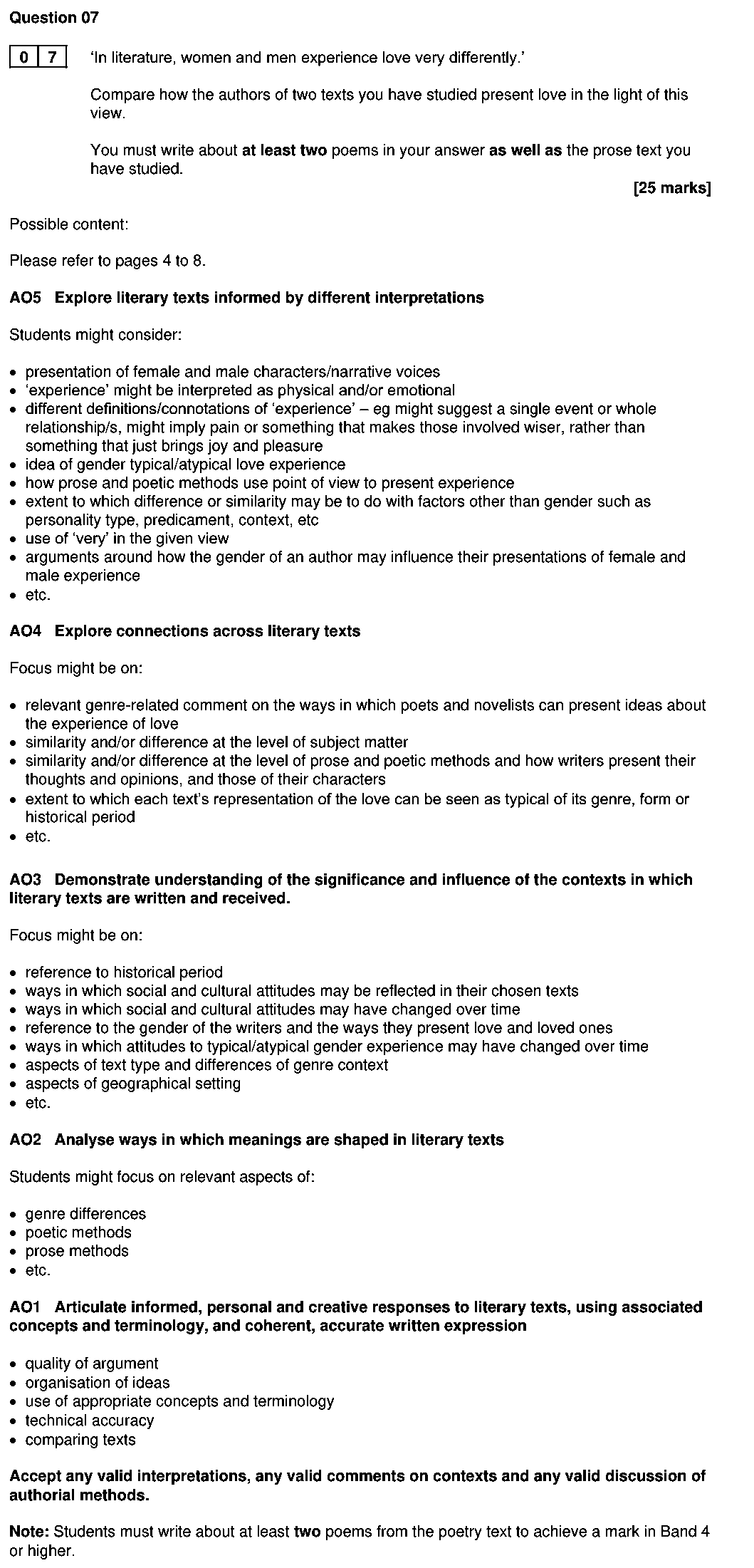
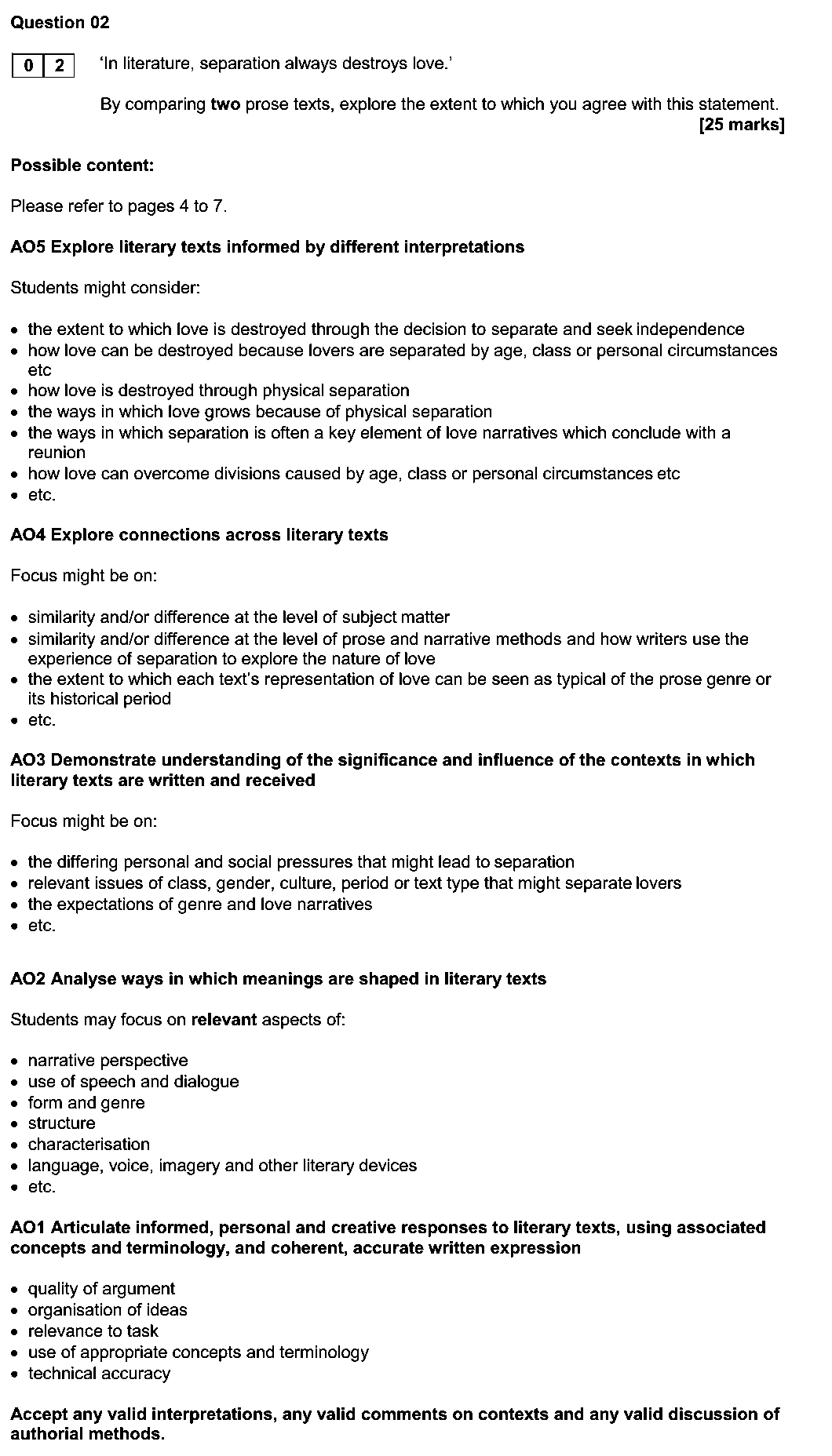
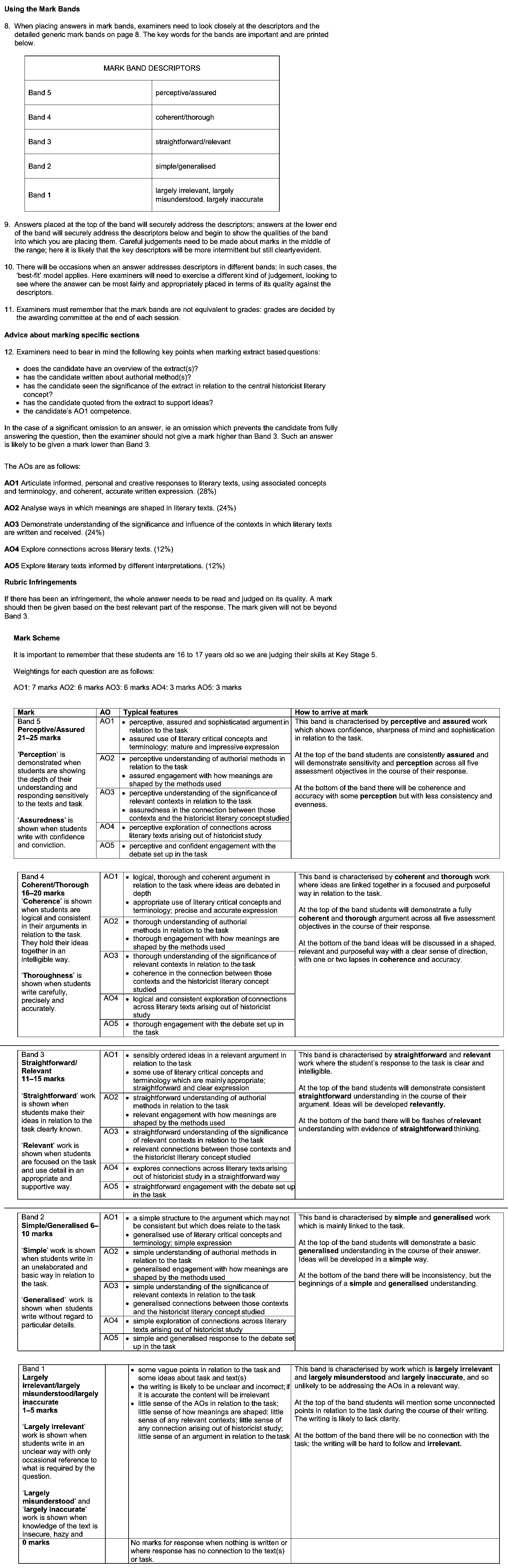
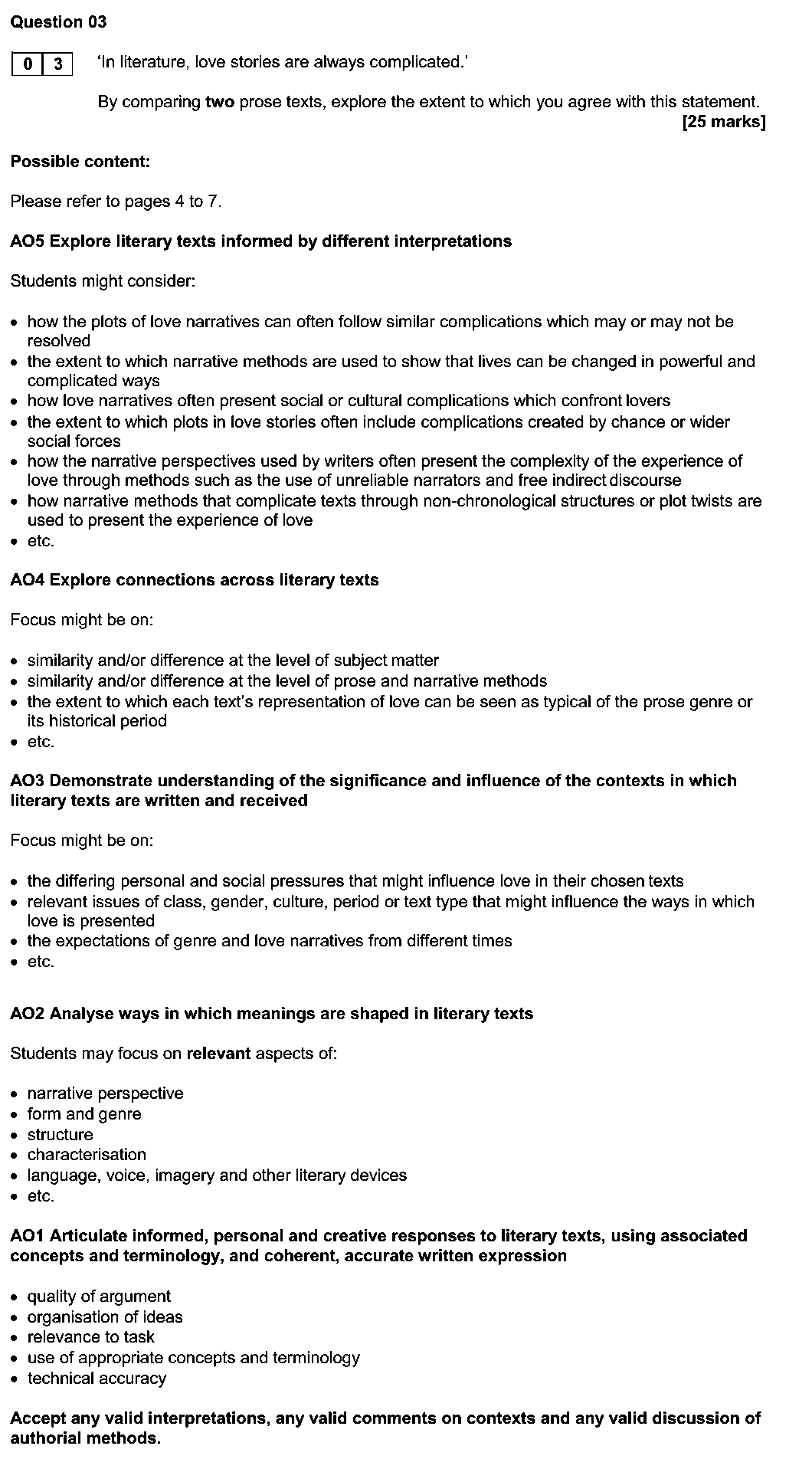
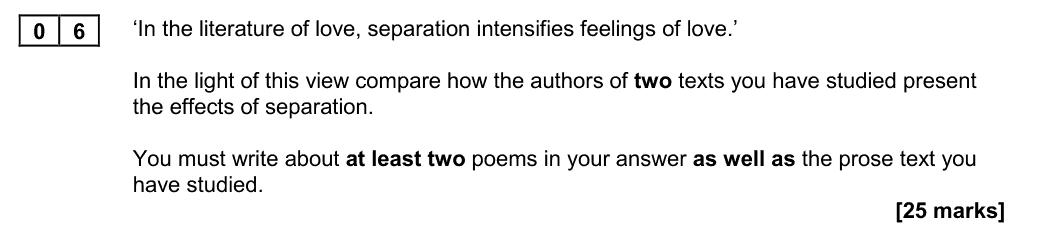
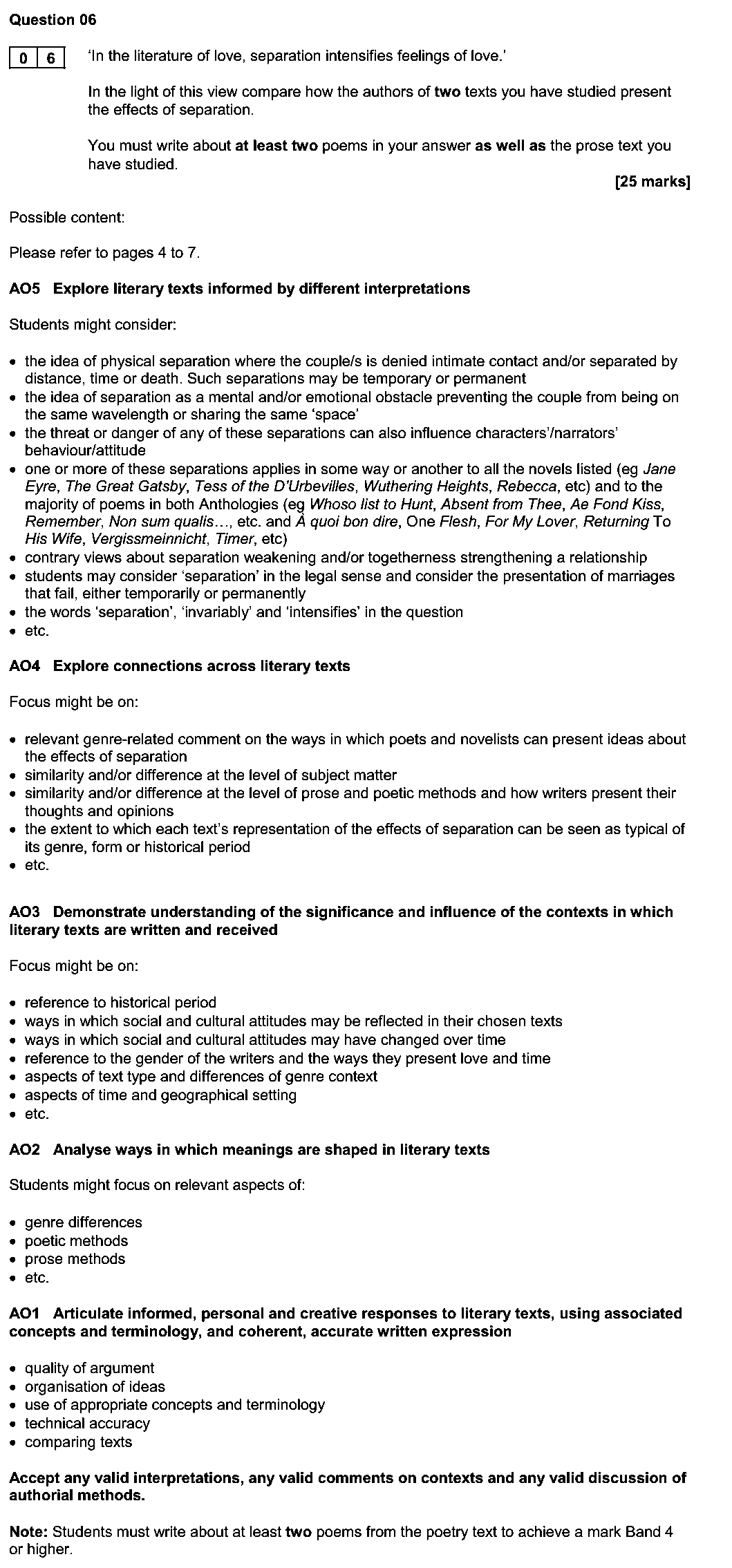
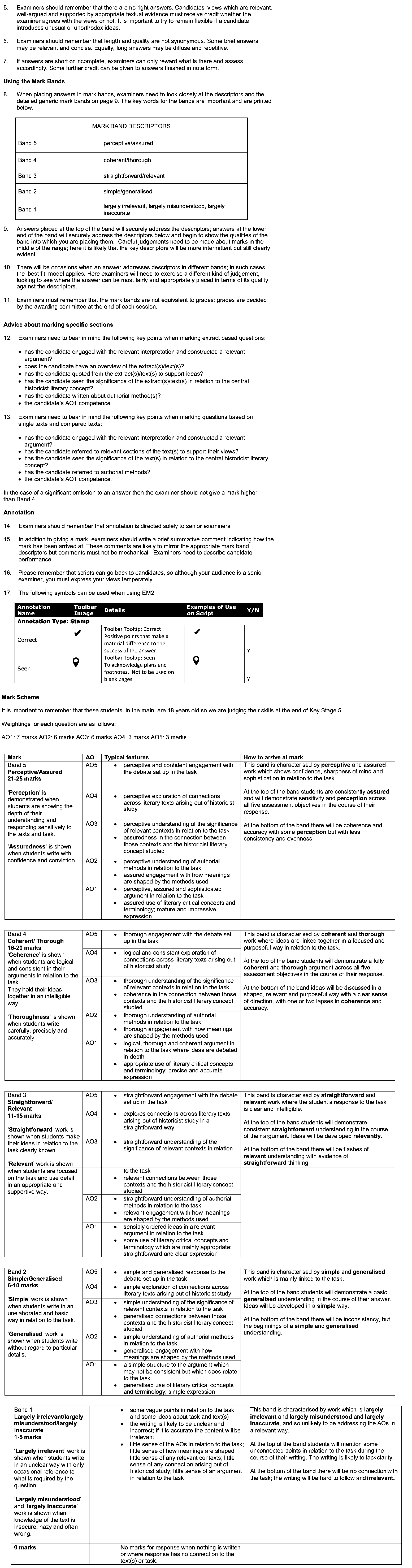
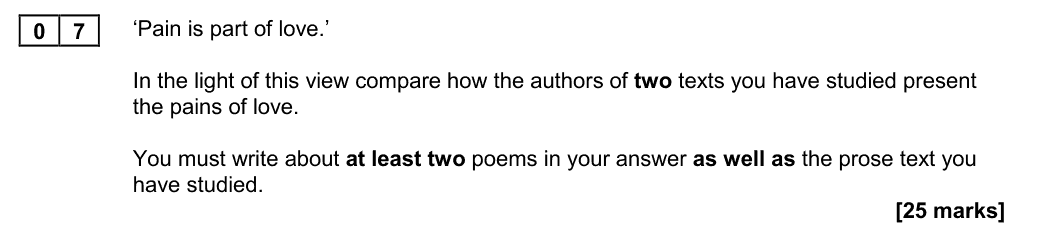
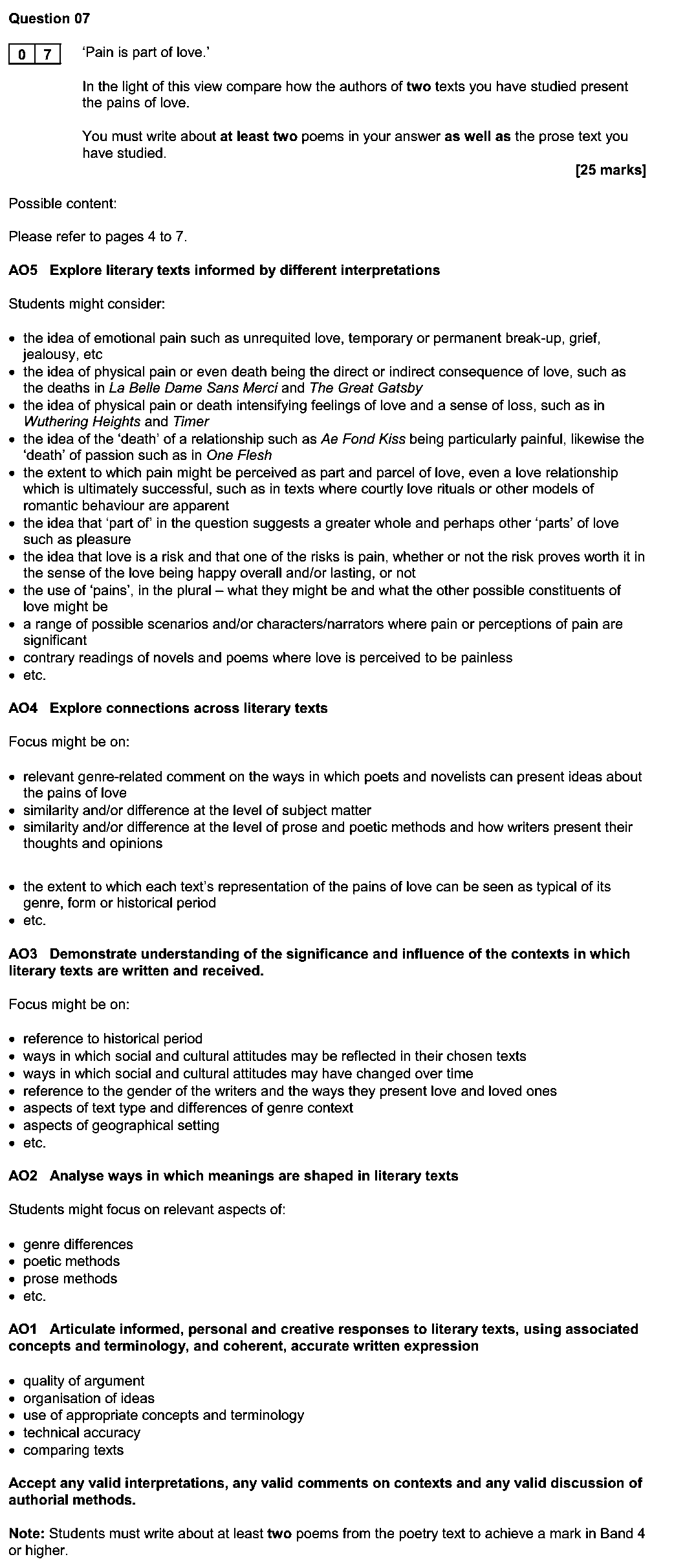
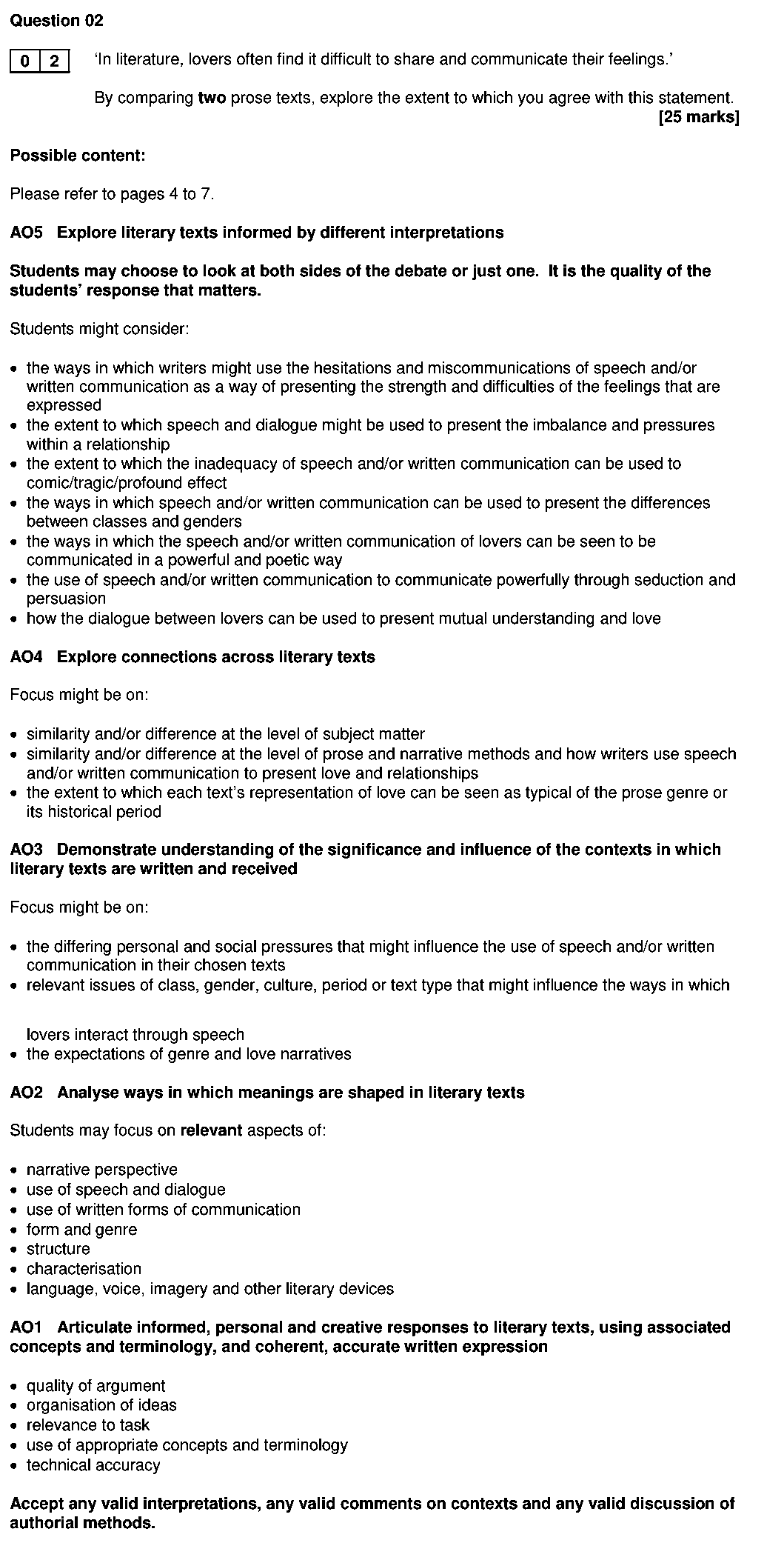
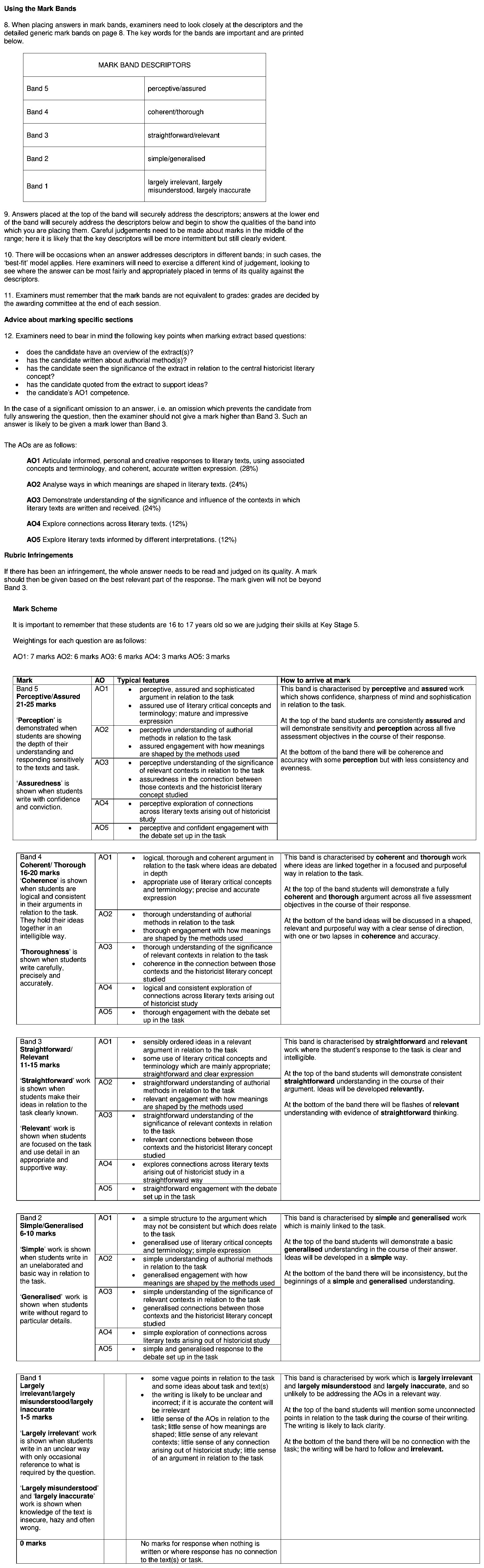
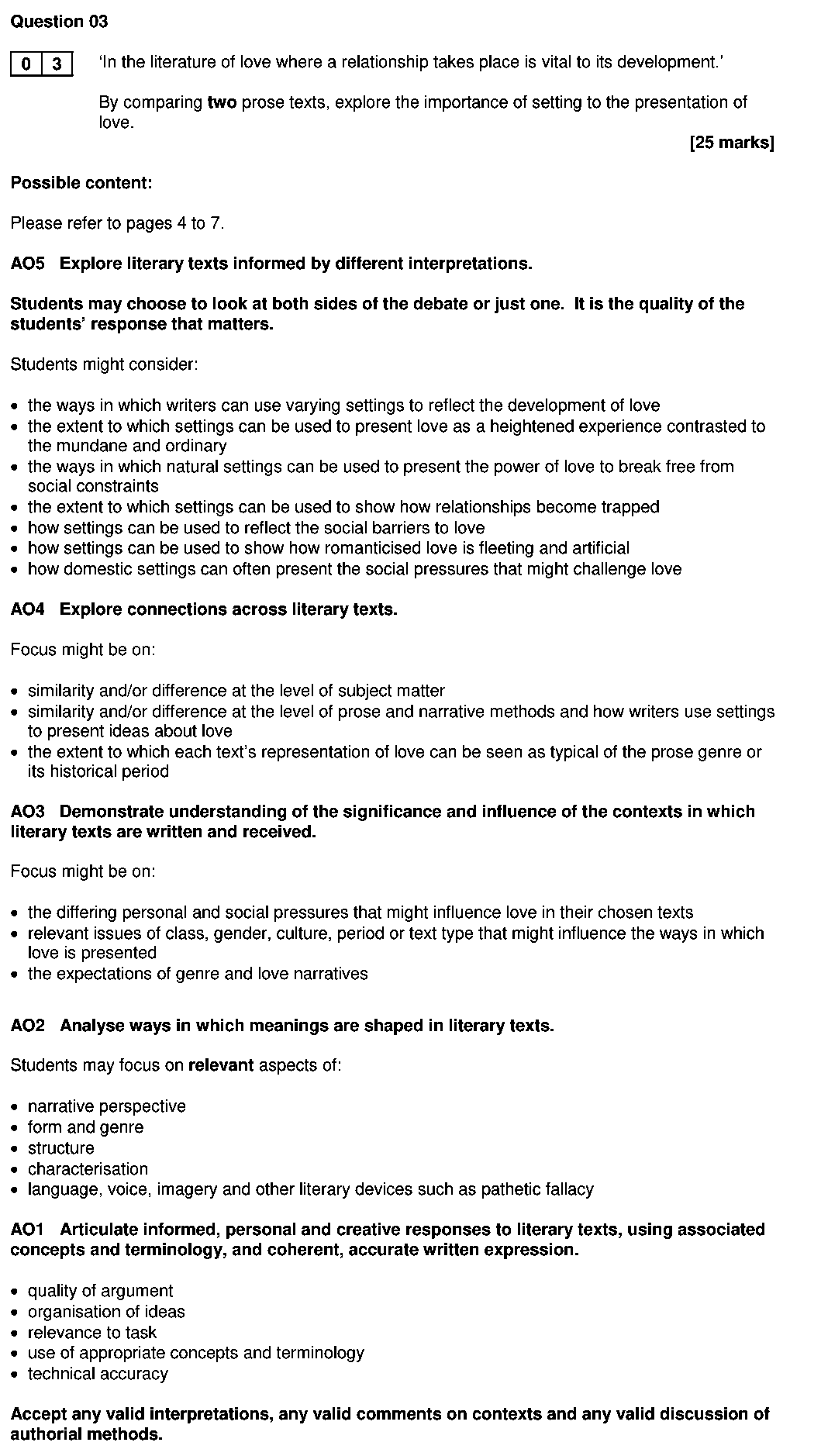
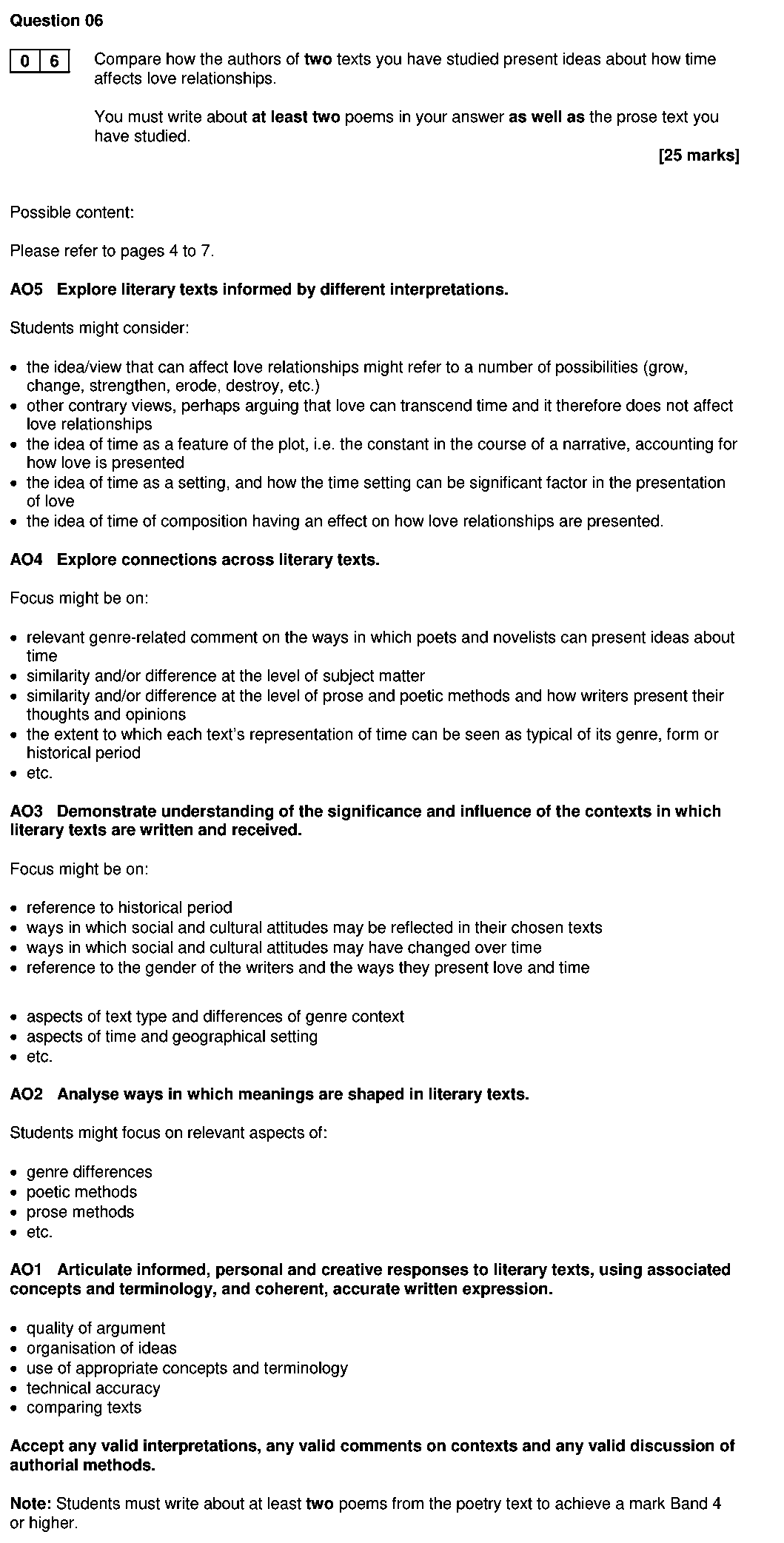
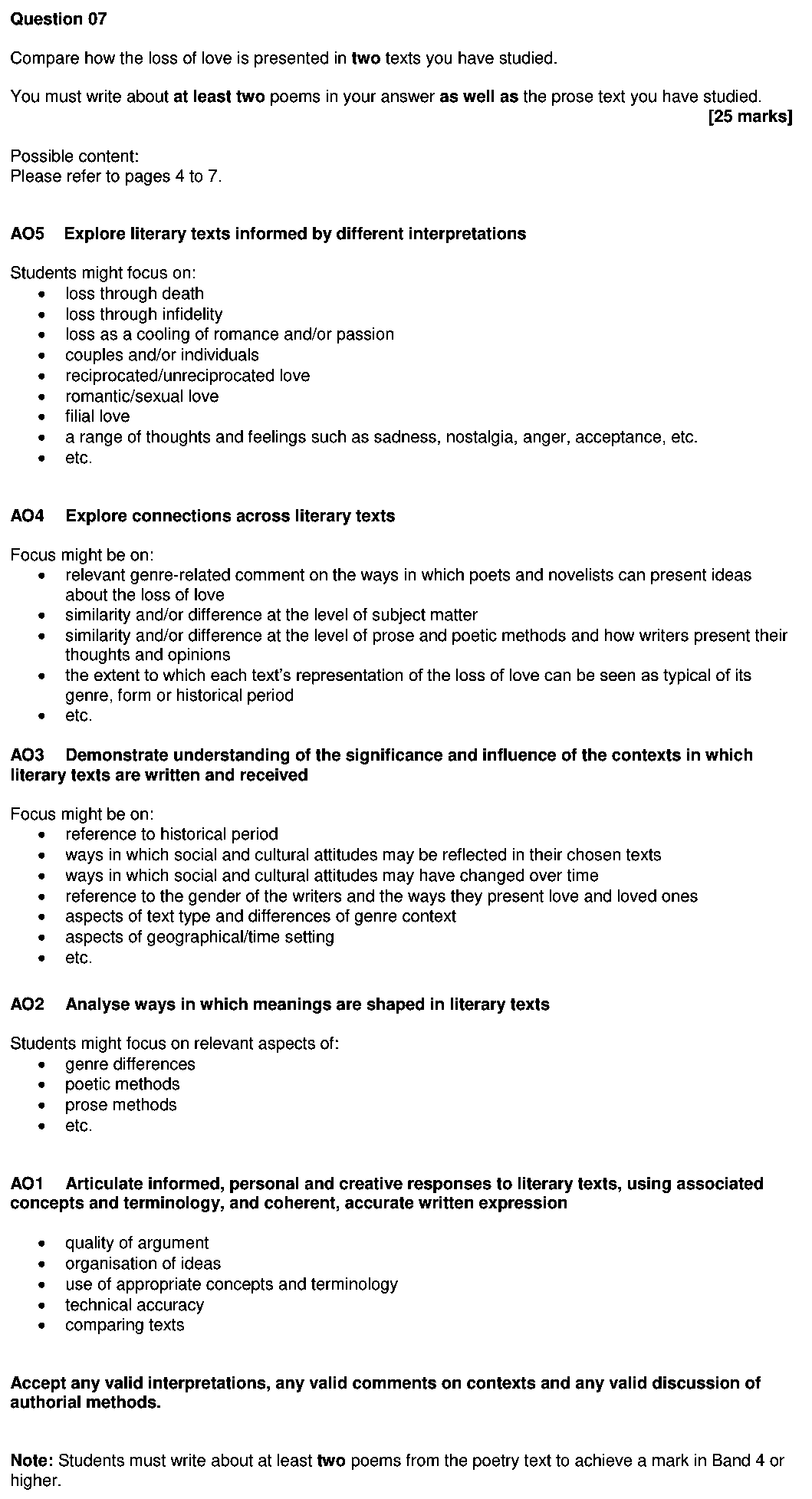
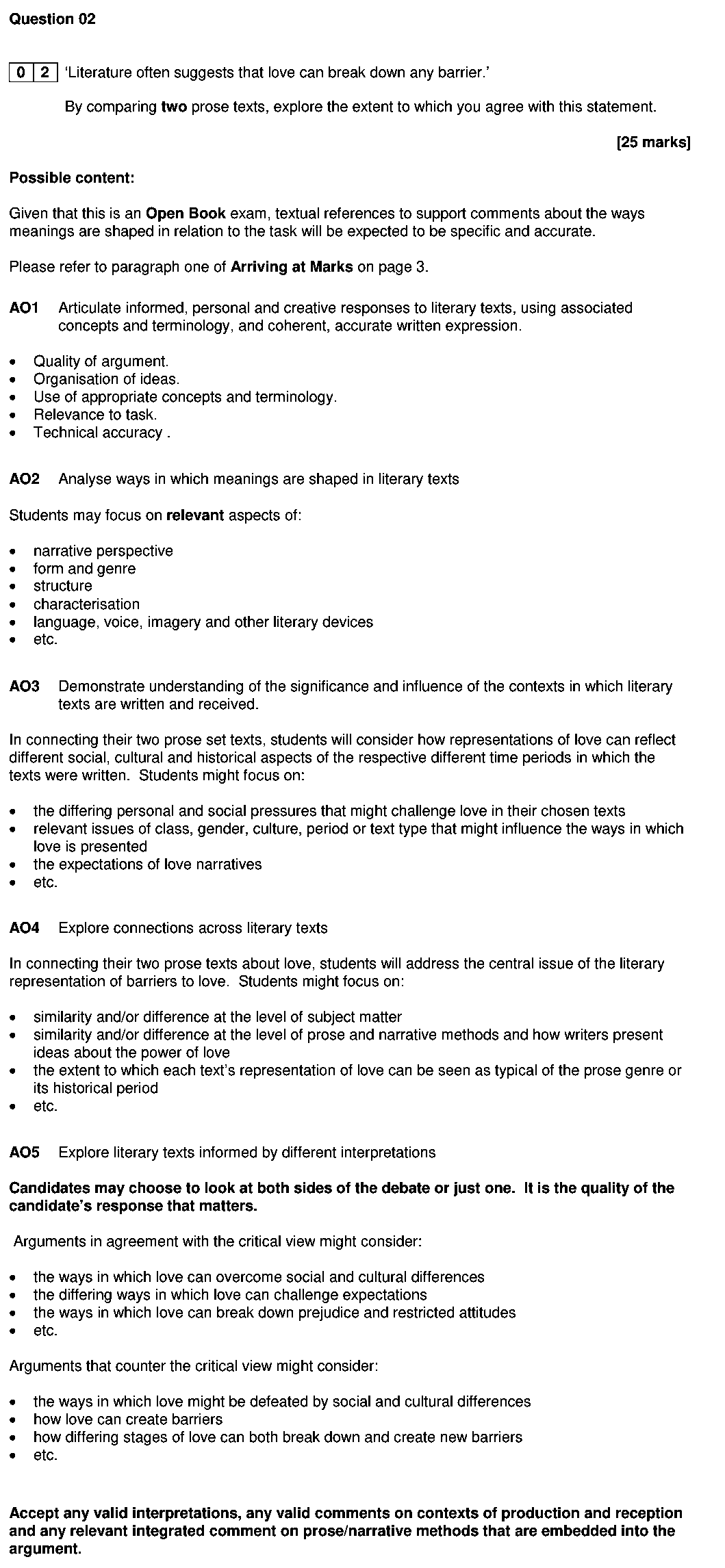
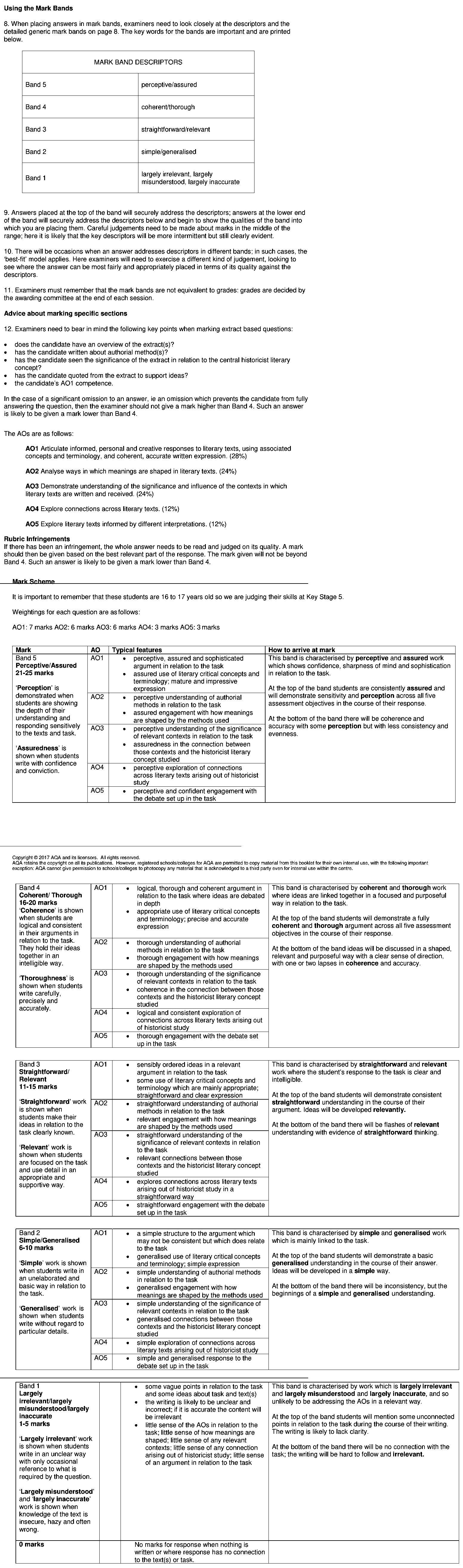
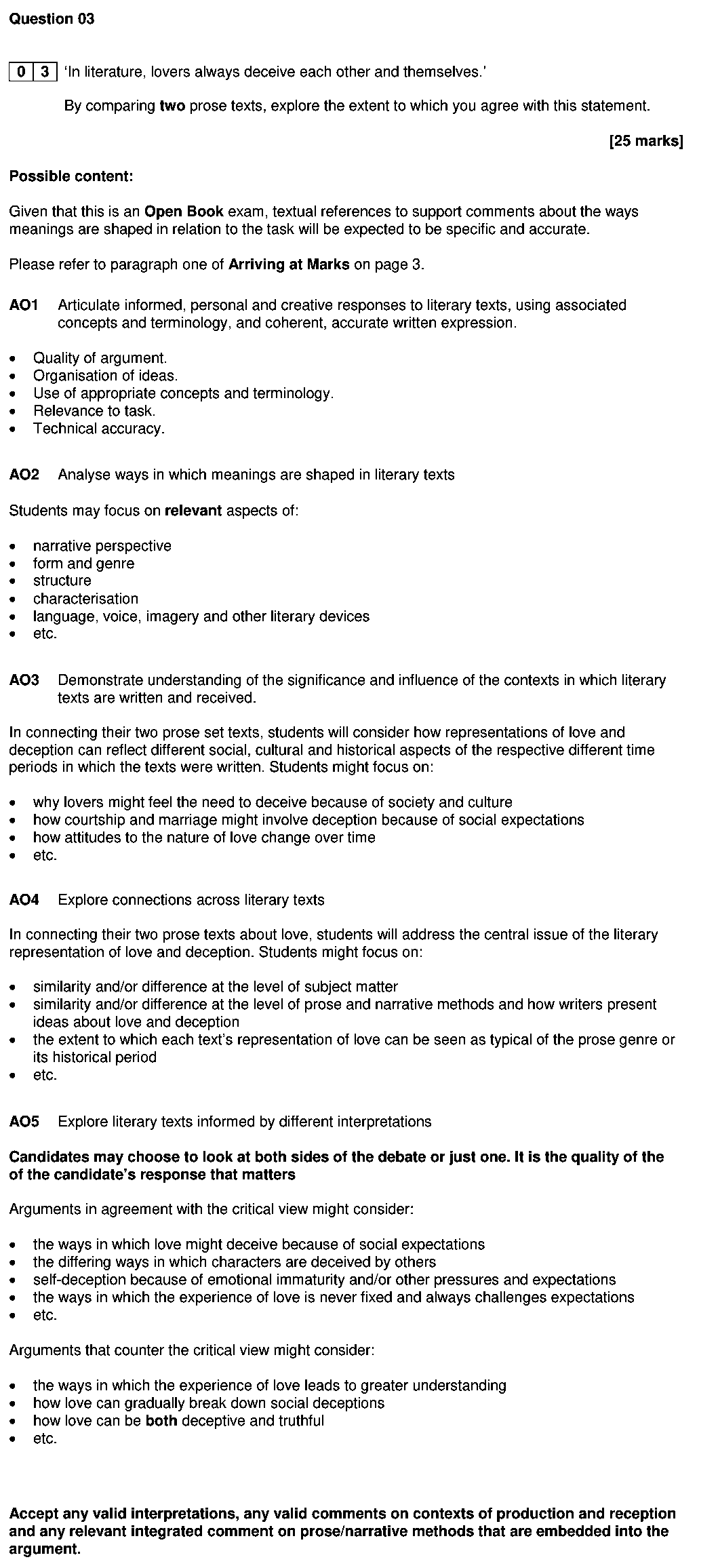
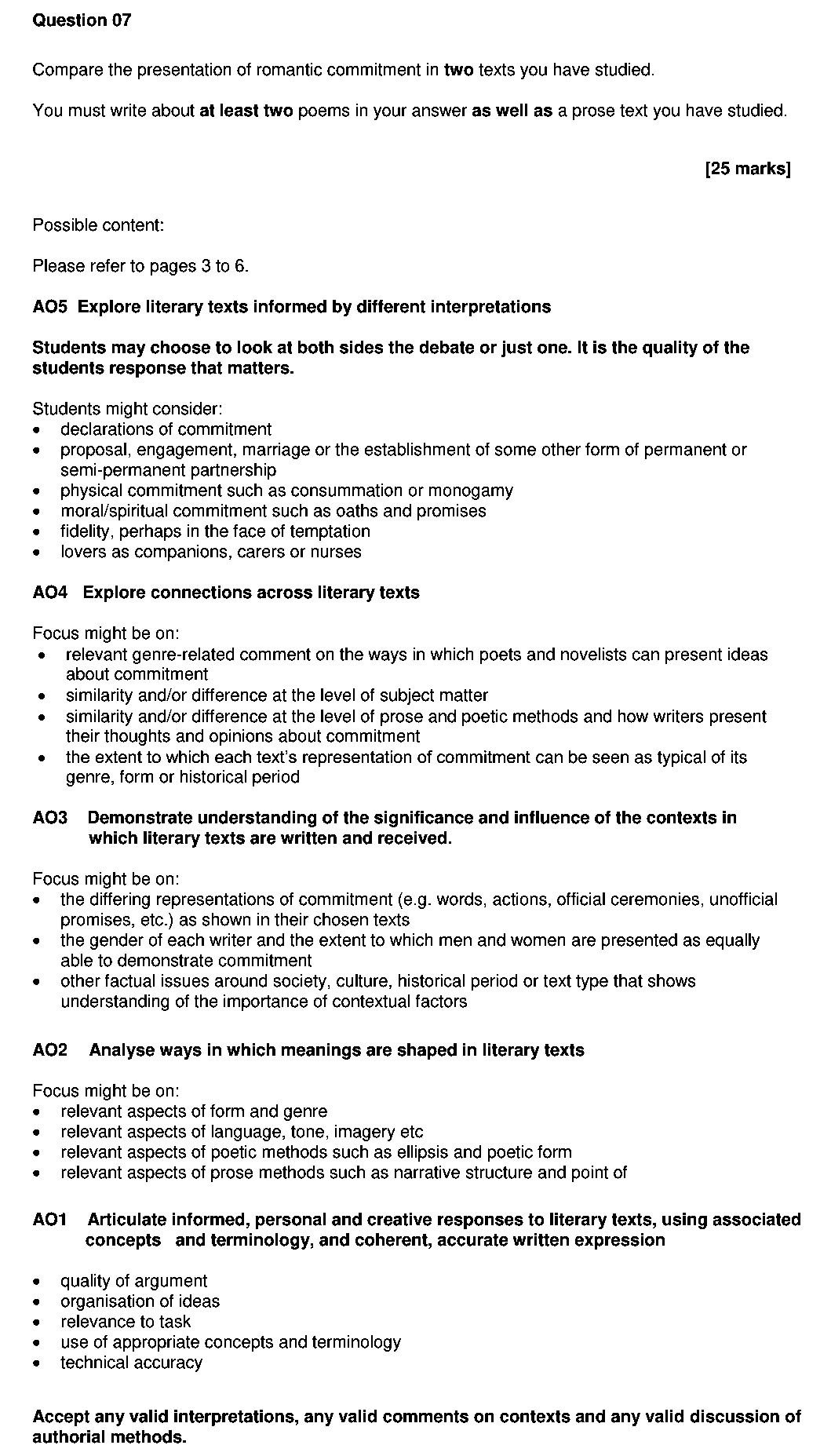
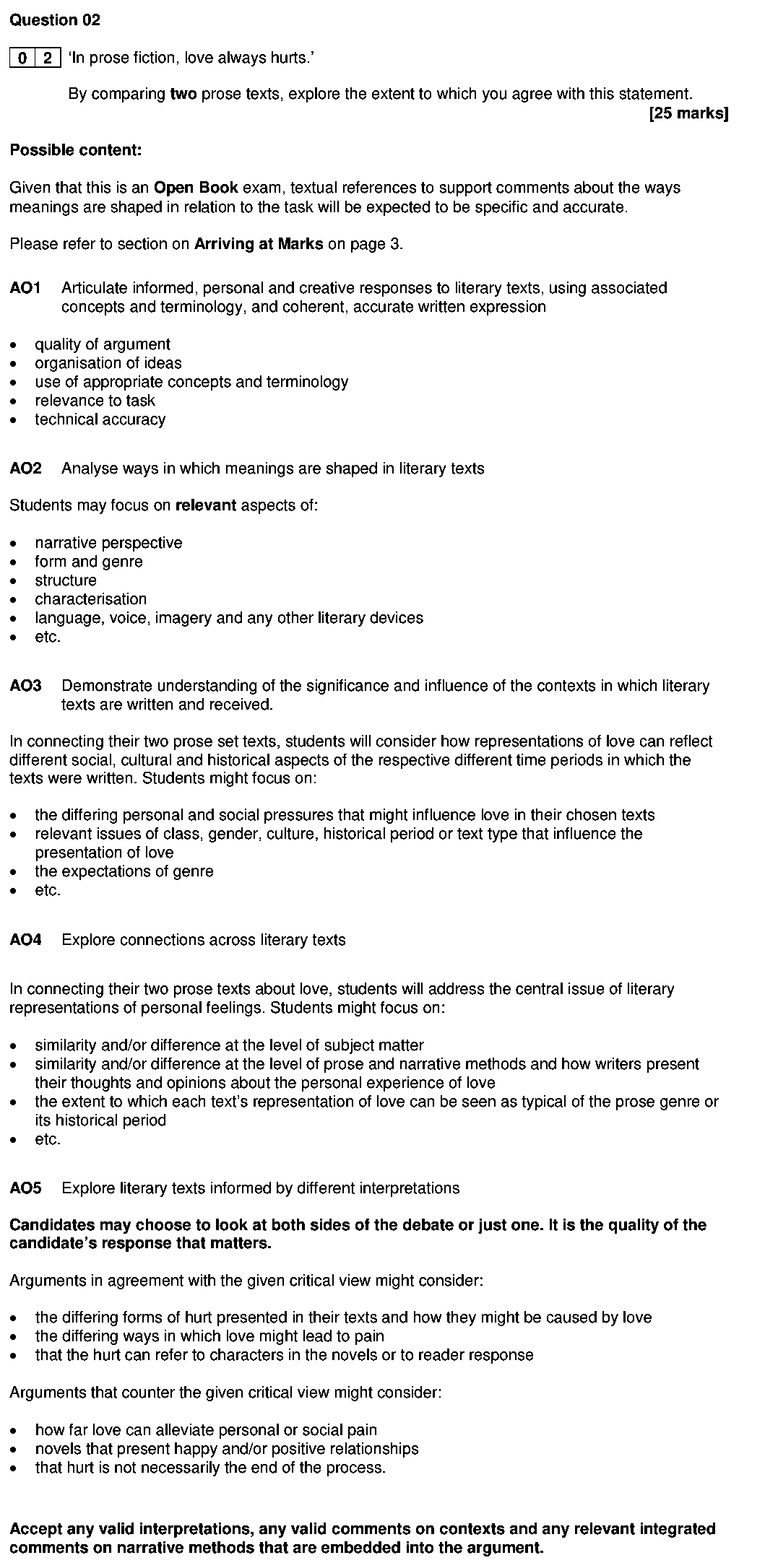
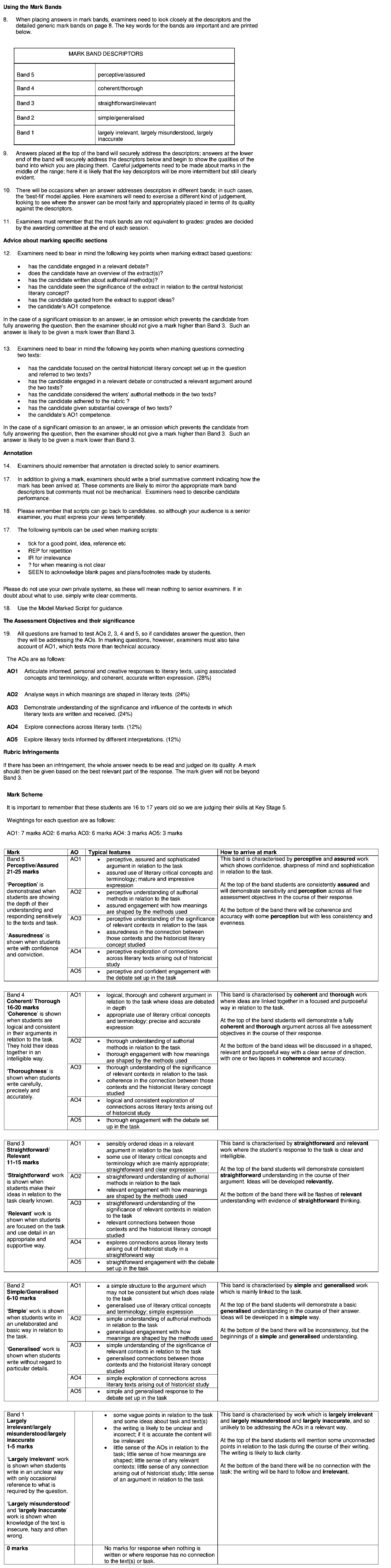
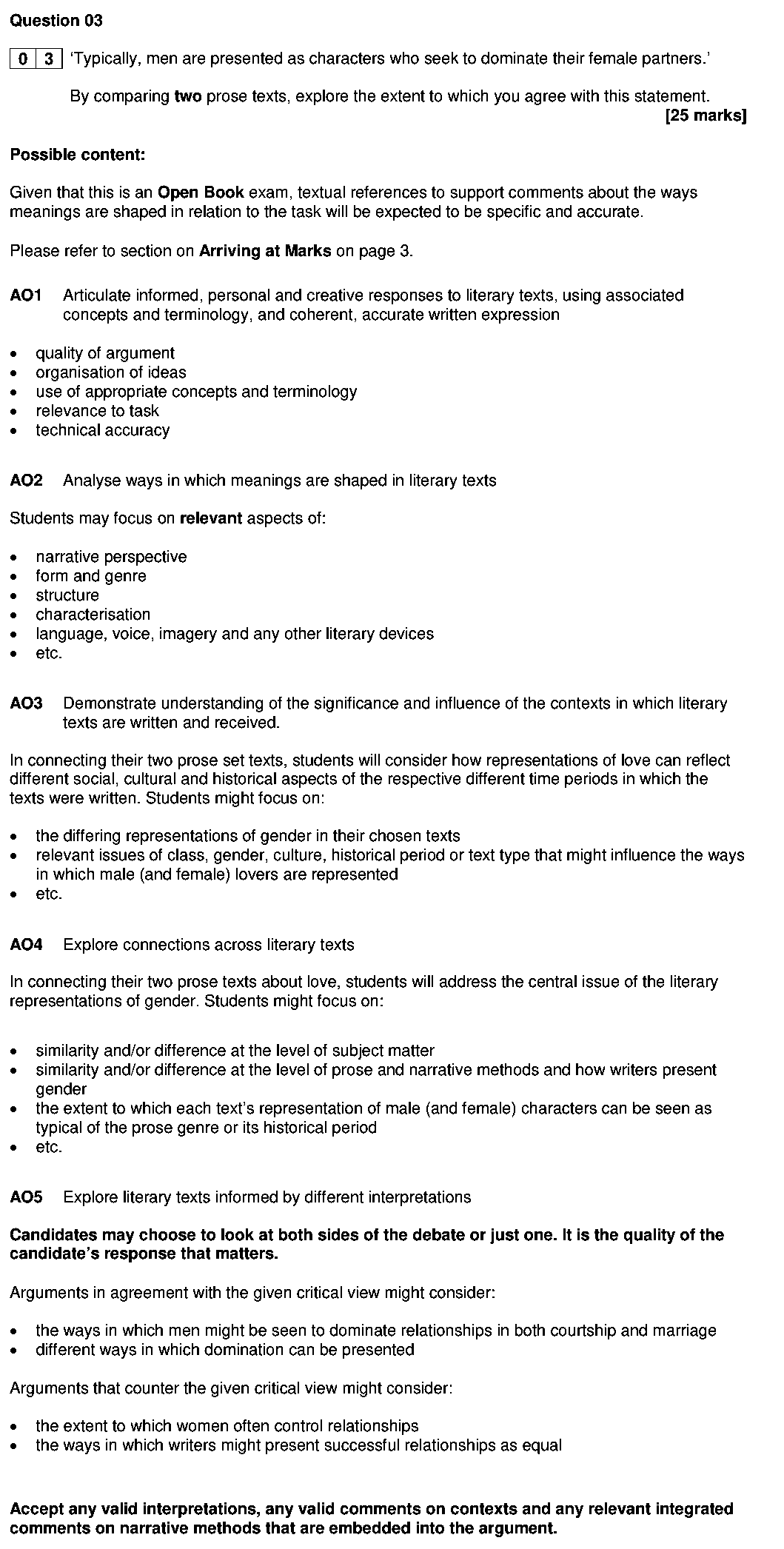
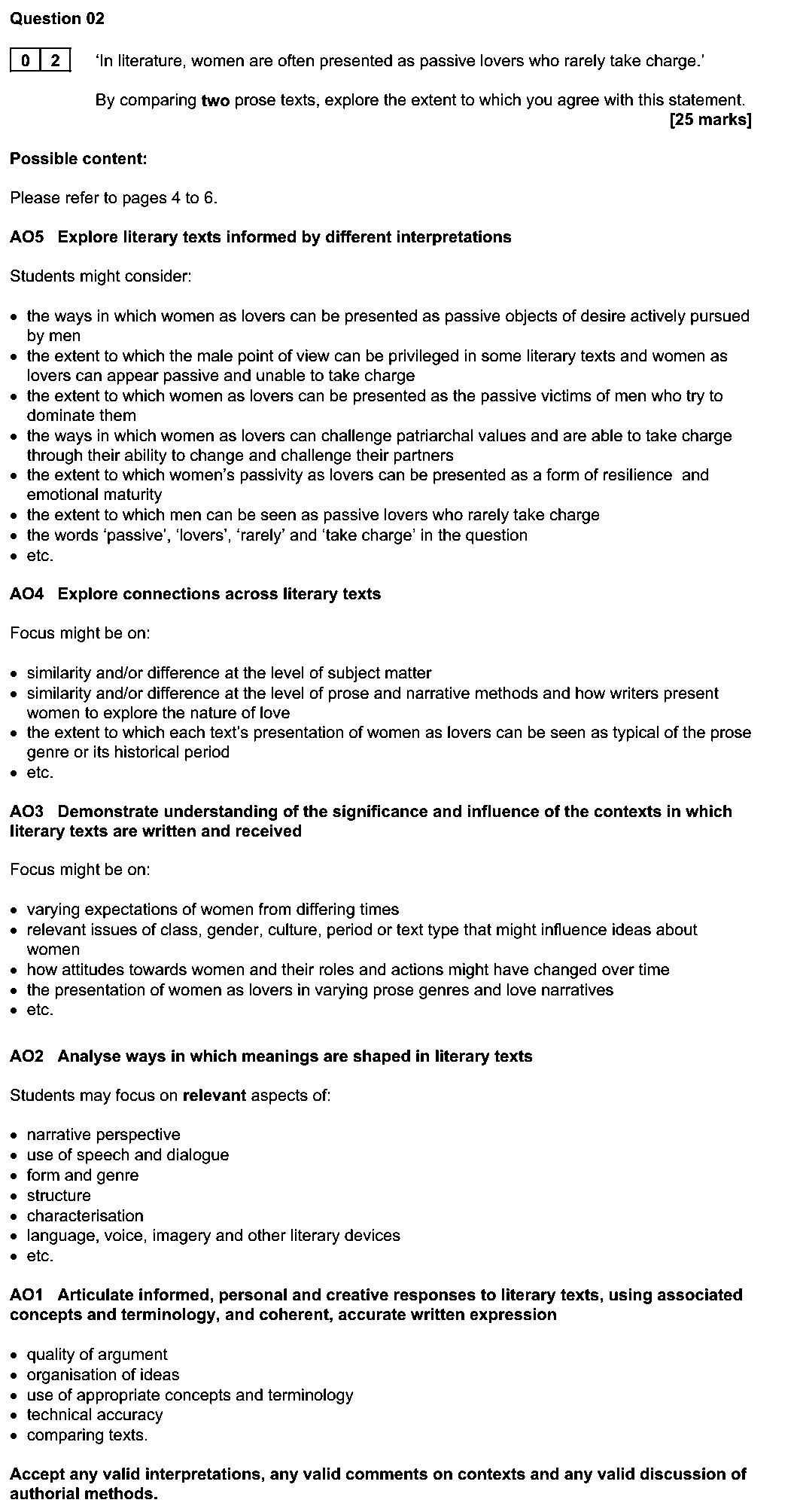
Mark scheme, including the levels and indicative content
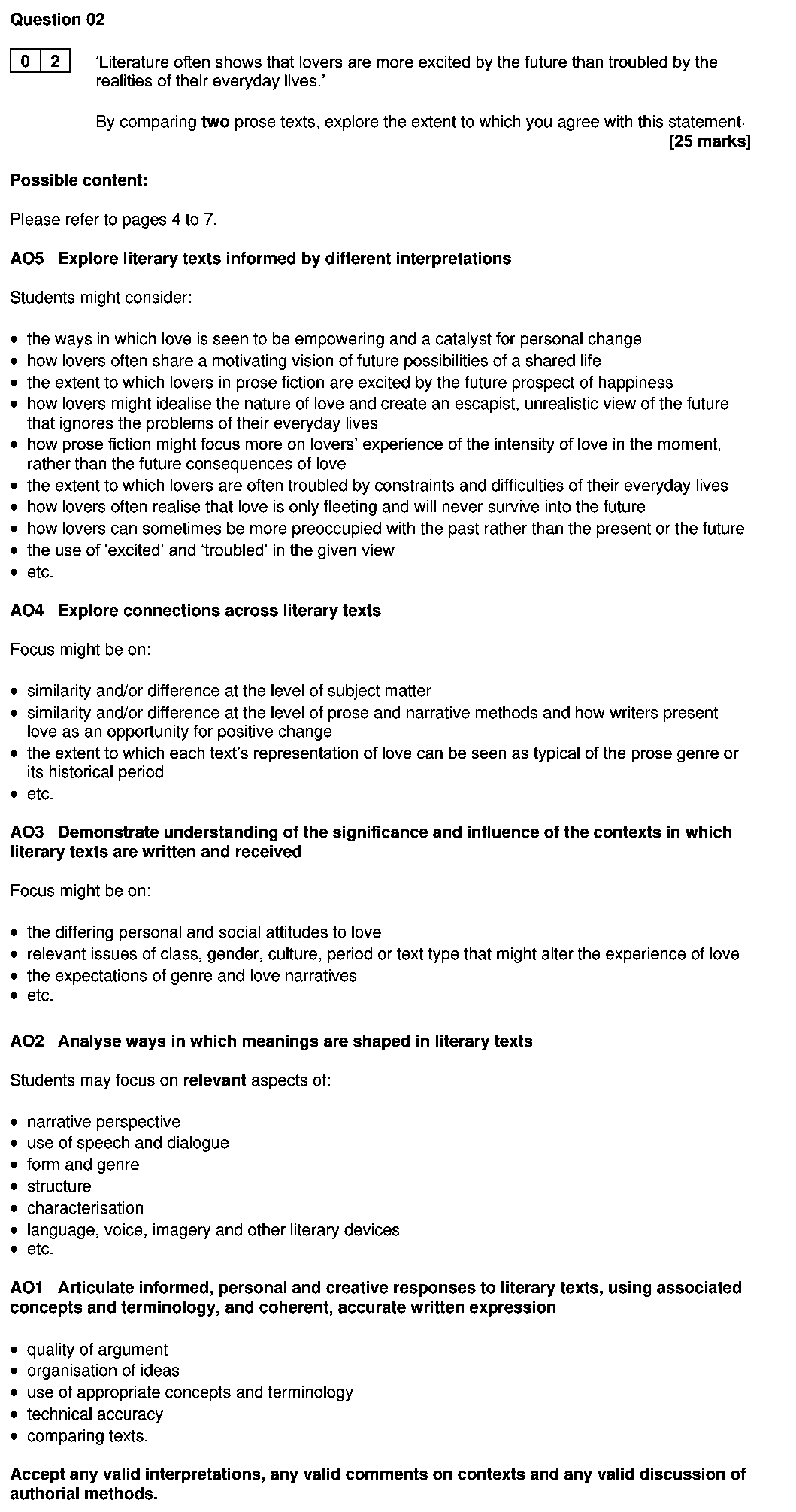
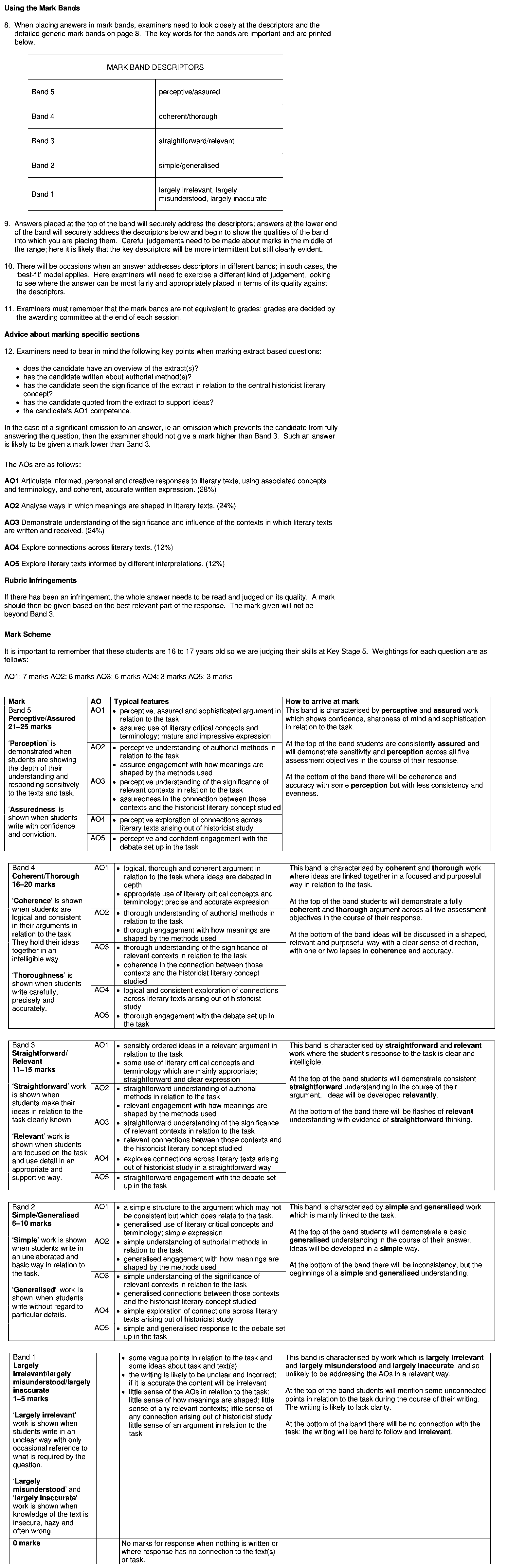
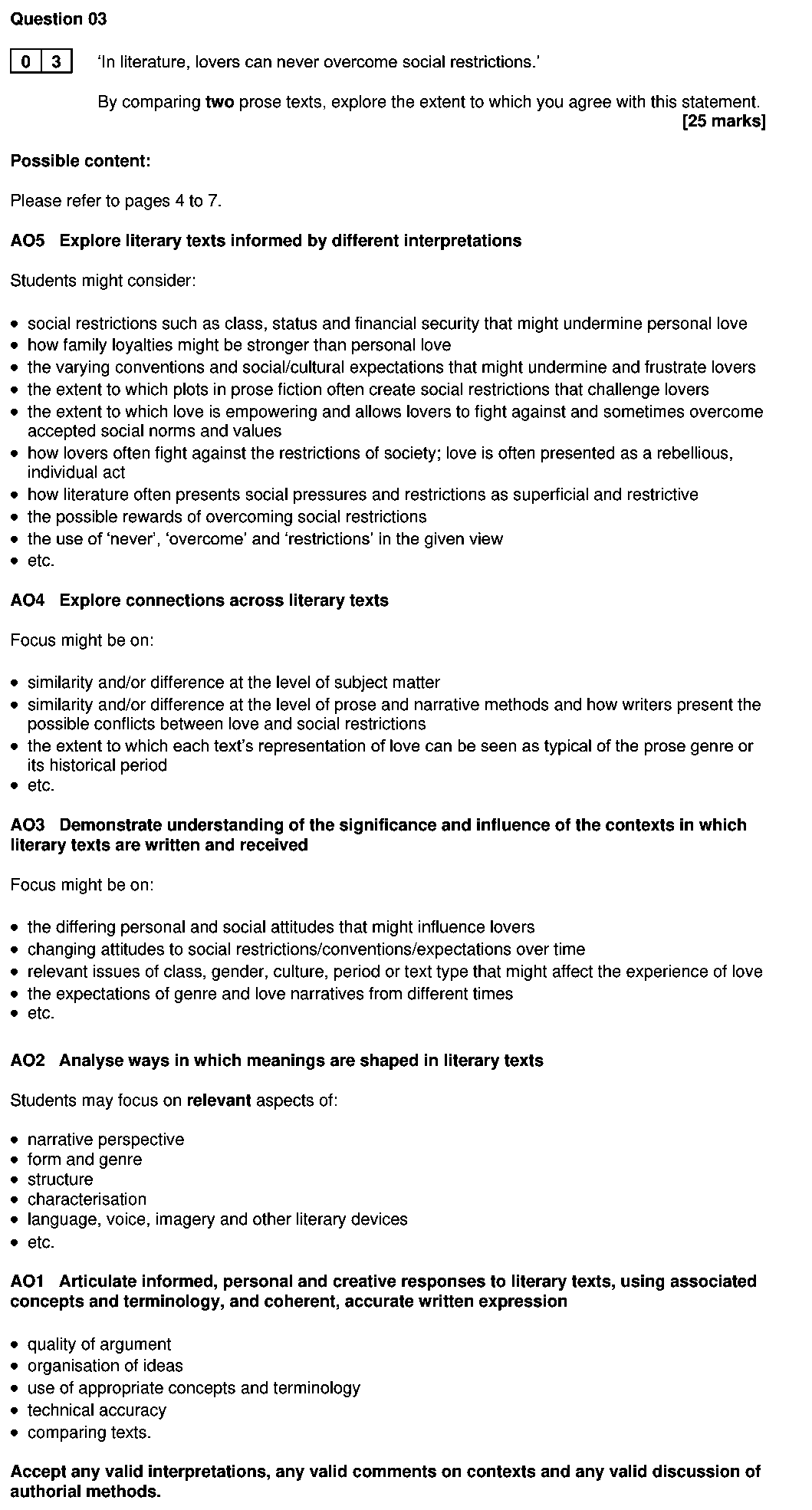
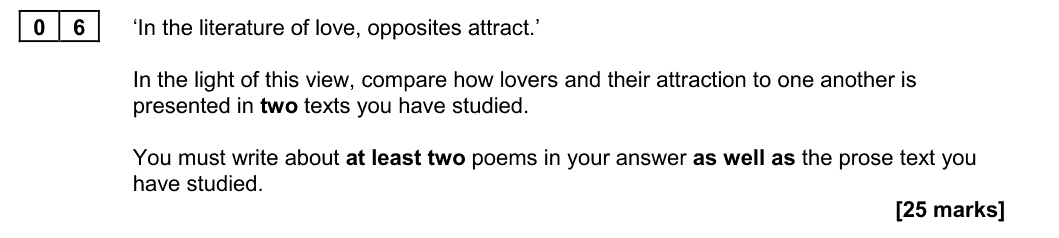
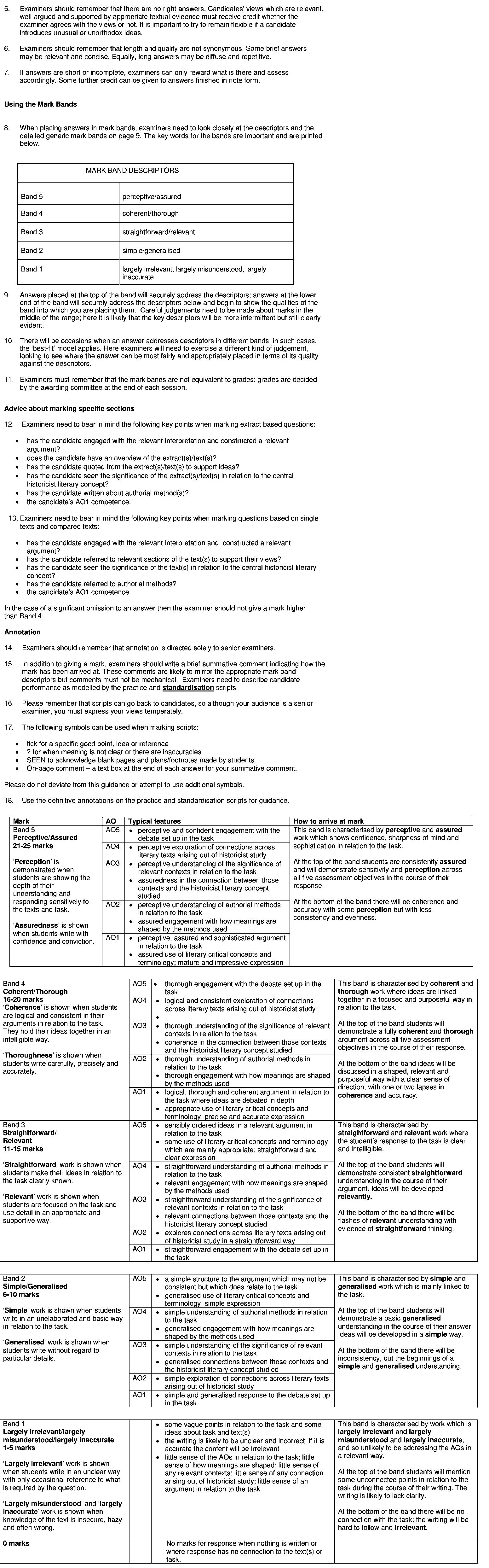
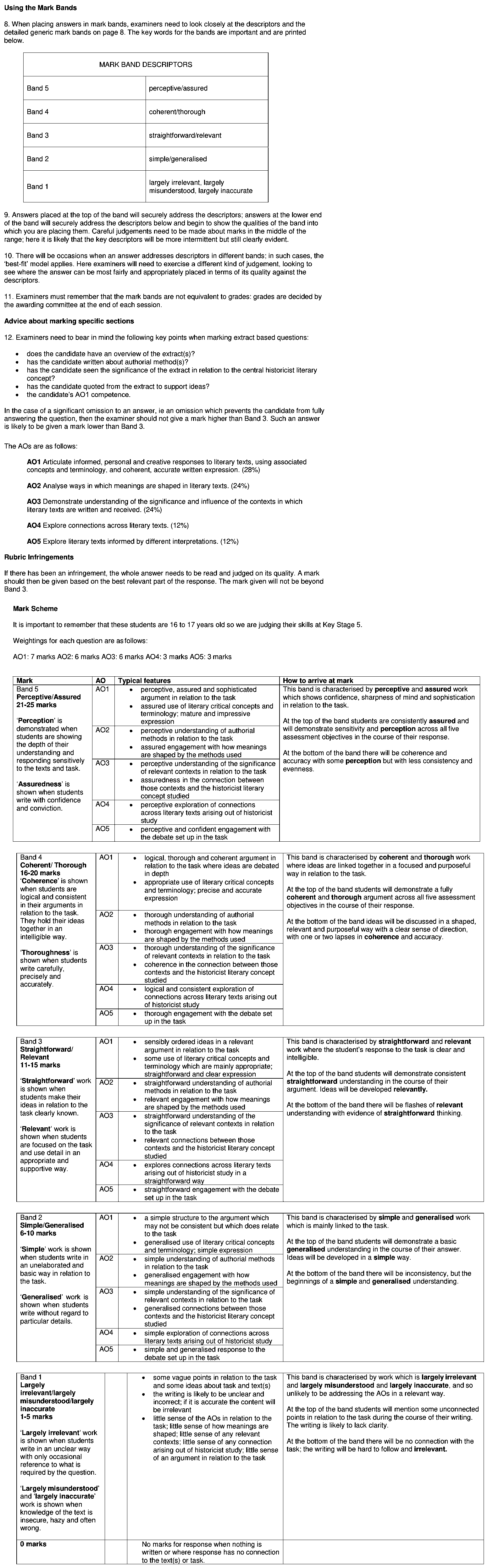
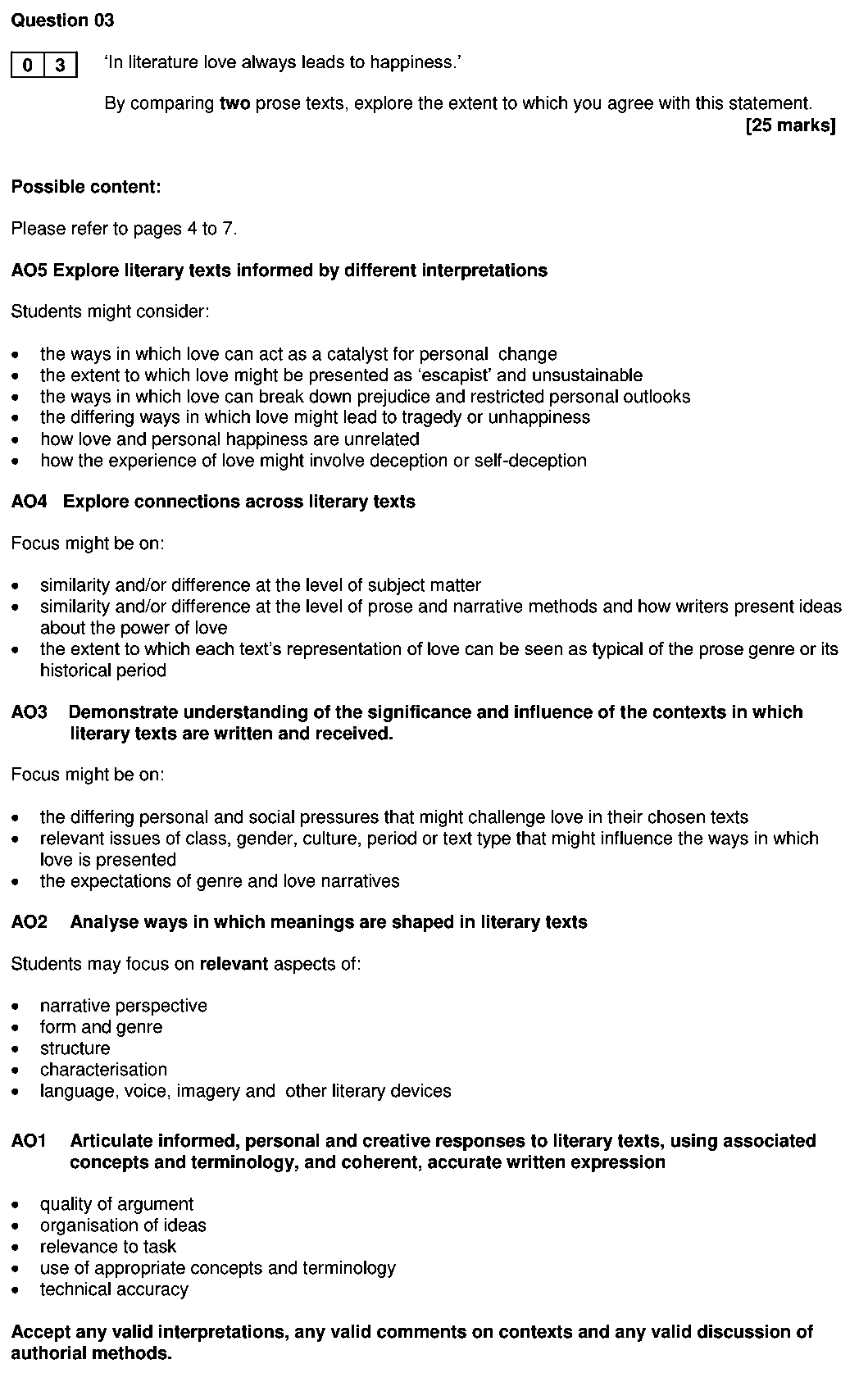
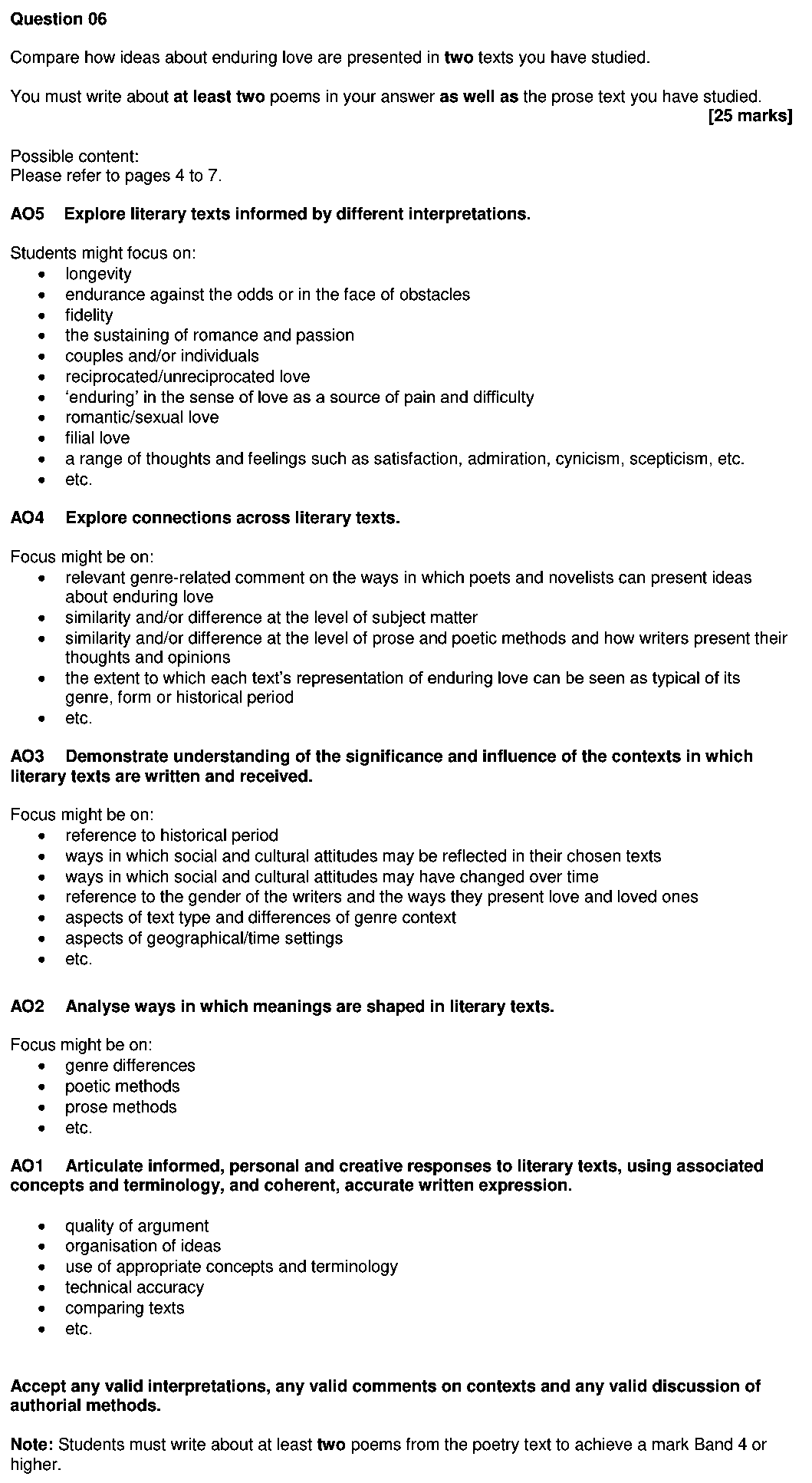
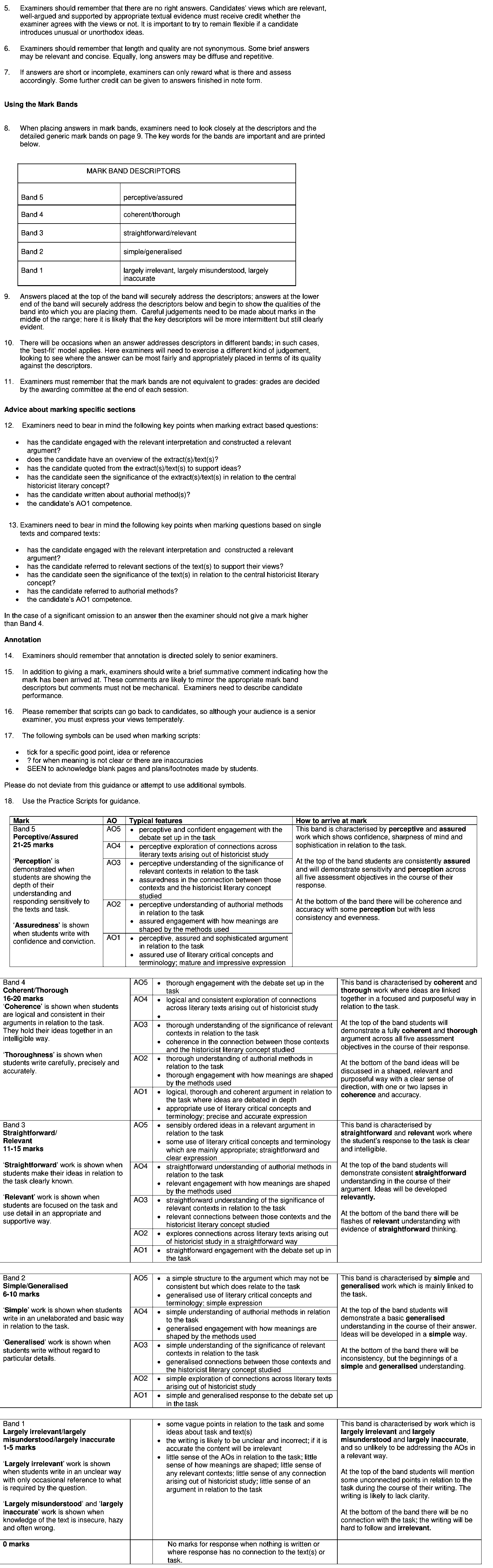
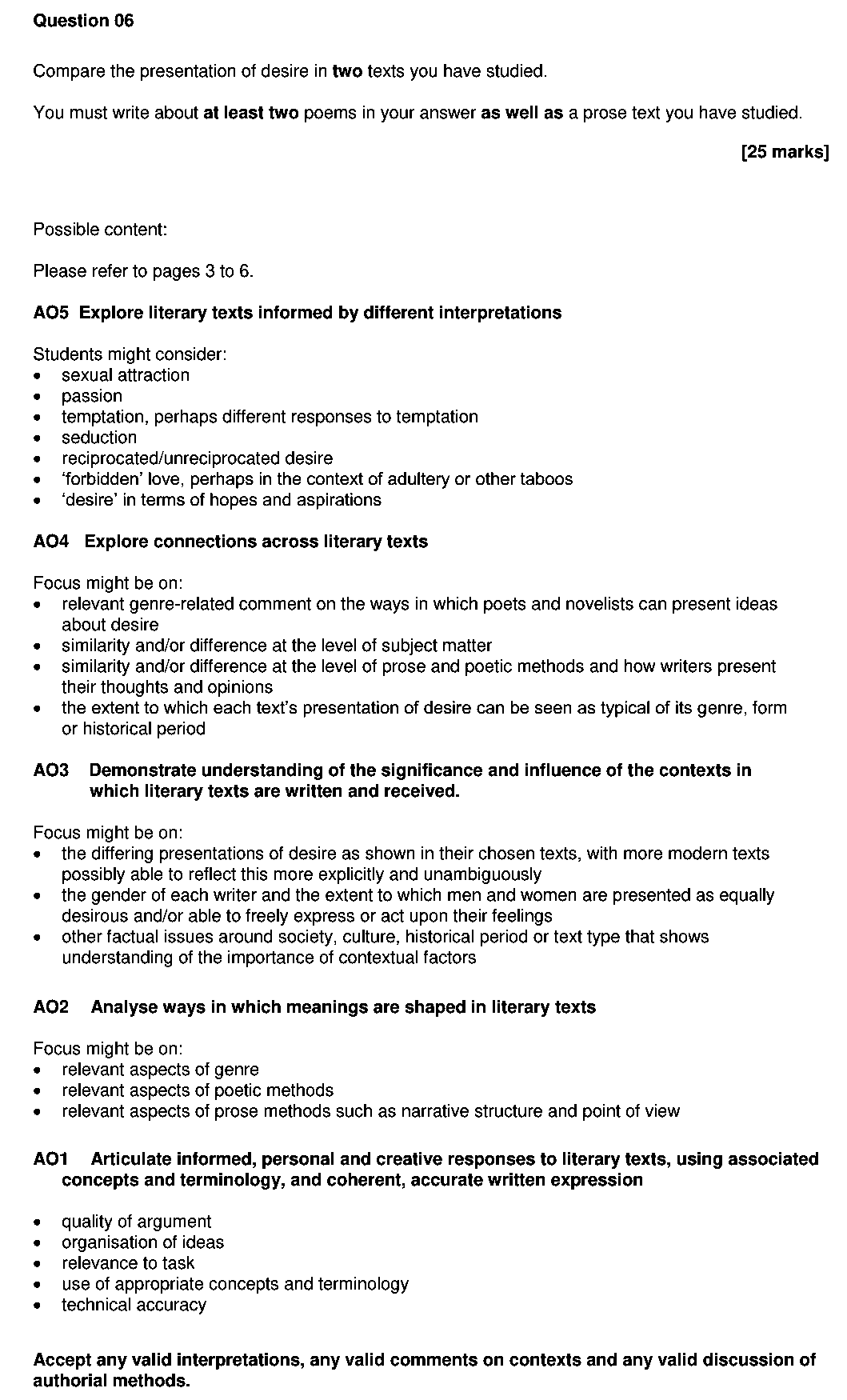
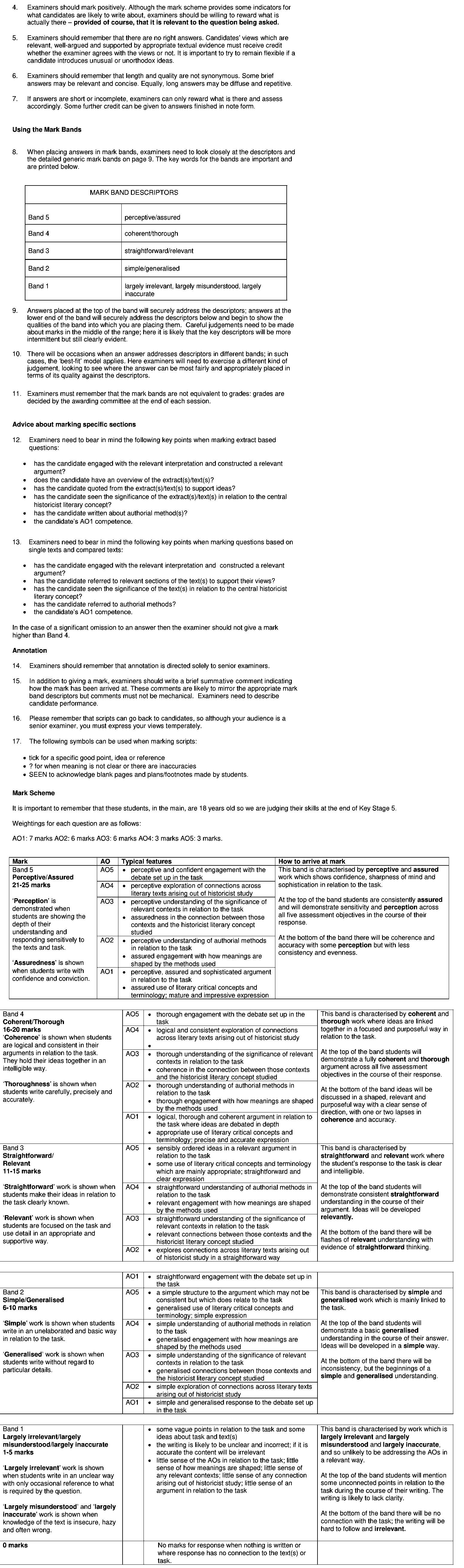
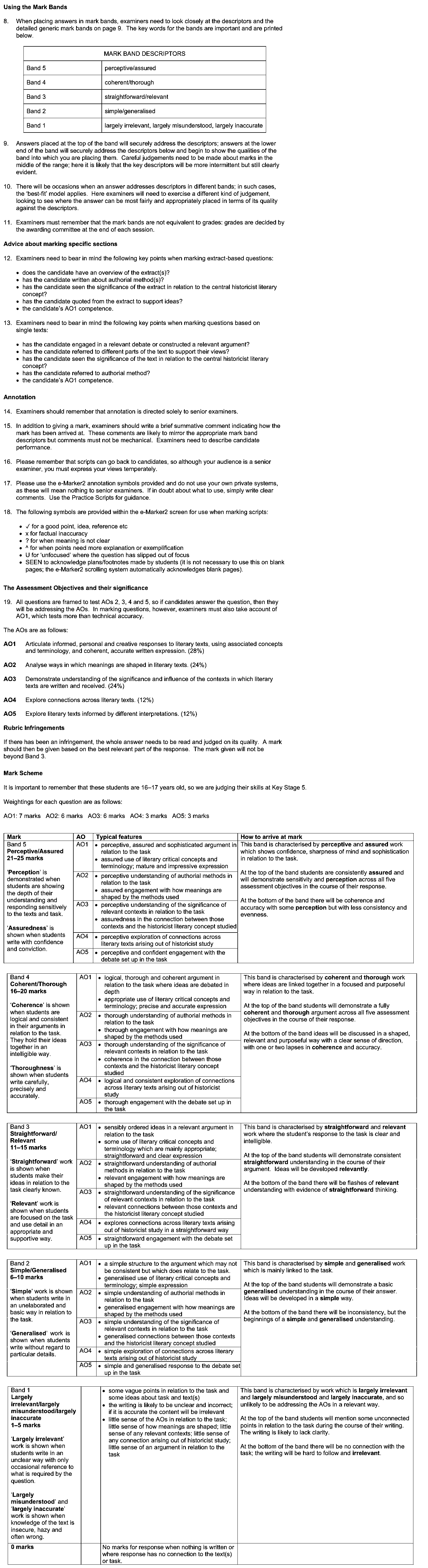
The general mark scheme (assessment objectives and bands)
Examiner's comment
‘In literature, women are often presented as passive lovers who rarely take charge.’ By comparing two prose texts, explore the extent to which you agree with this statement. What students did well • planned their response • could differentiate between passive women and passive lovers. • compared the function of unreliable narrators. • dealt with all the key words in the question. • were equally well-prepared on both prose texts. • writing a conceptualised and nuanced argument. • closely analysed authorial methods. • wrote about characters’ arc and development through a prose text and used this as a way into writing about structure. • understood that characters are constructs of a writer. • understood ‘agency’ and wrote about it accurately. Common misunderstandings • neglecting to address both parts of the question and either focused on women who are presented as ‘passive lovers’ or women who ‘rarely take charge’. • focused on passive female characters instead of women who are passive lovers • attempting to enforce a context or not having a deep enough understanding of the social and historical contexts. • looked too much at how texts differ overlooking what connects them. Unhelpful comparison with poetry and drama texts when the focus of the paper is prose. • lacked awareness of authorial methods - particularly free indirect discourse • did not plan their response. • did not write equally about the texts. • wrote very generally about the texts without fully engaging with the question.
Notes from the mark scheme and report
- Focus: character: women as passive lovers
- Open book, no extract
- open book
- compare two prose set texts
- address both 'passive lovers' and 'rarely take charge' (passive lovers, not just passive women)
- credited: agency, unreliable narrators, character arcs as structure, passivity as resilience, passive men
- weaker answers forced context, only contrasted texts, brought in poetry or drama, missed free indirect discourse or wrote unequally on the texts