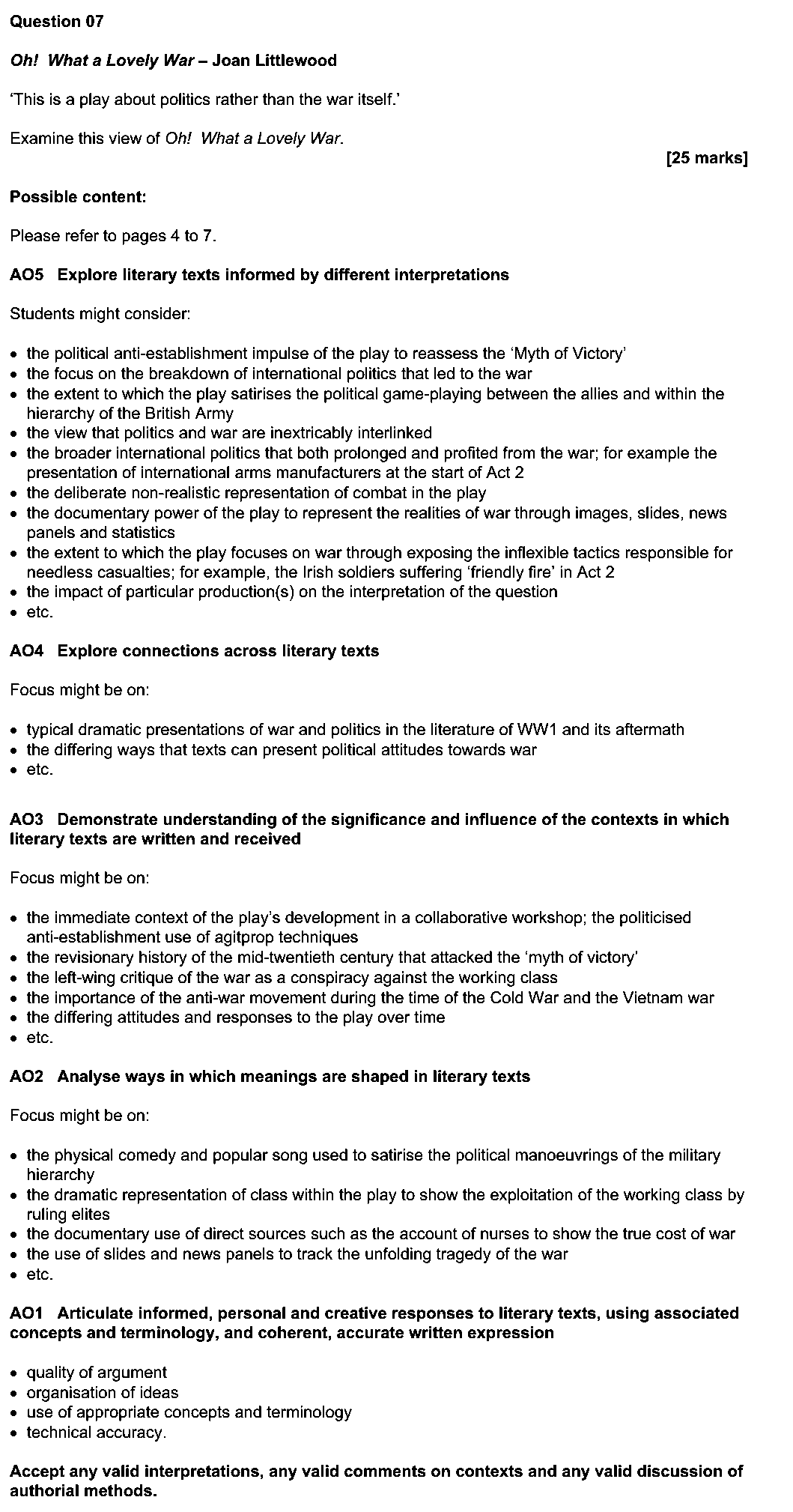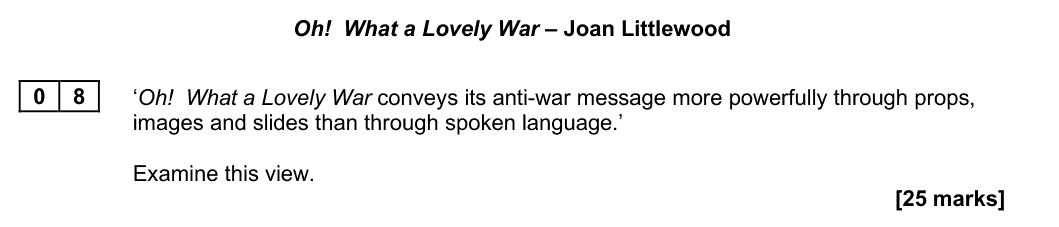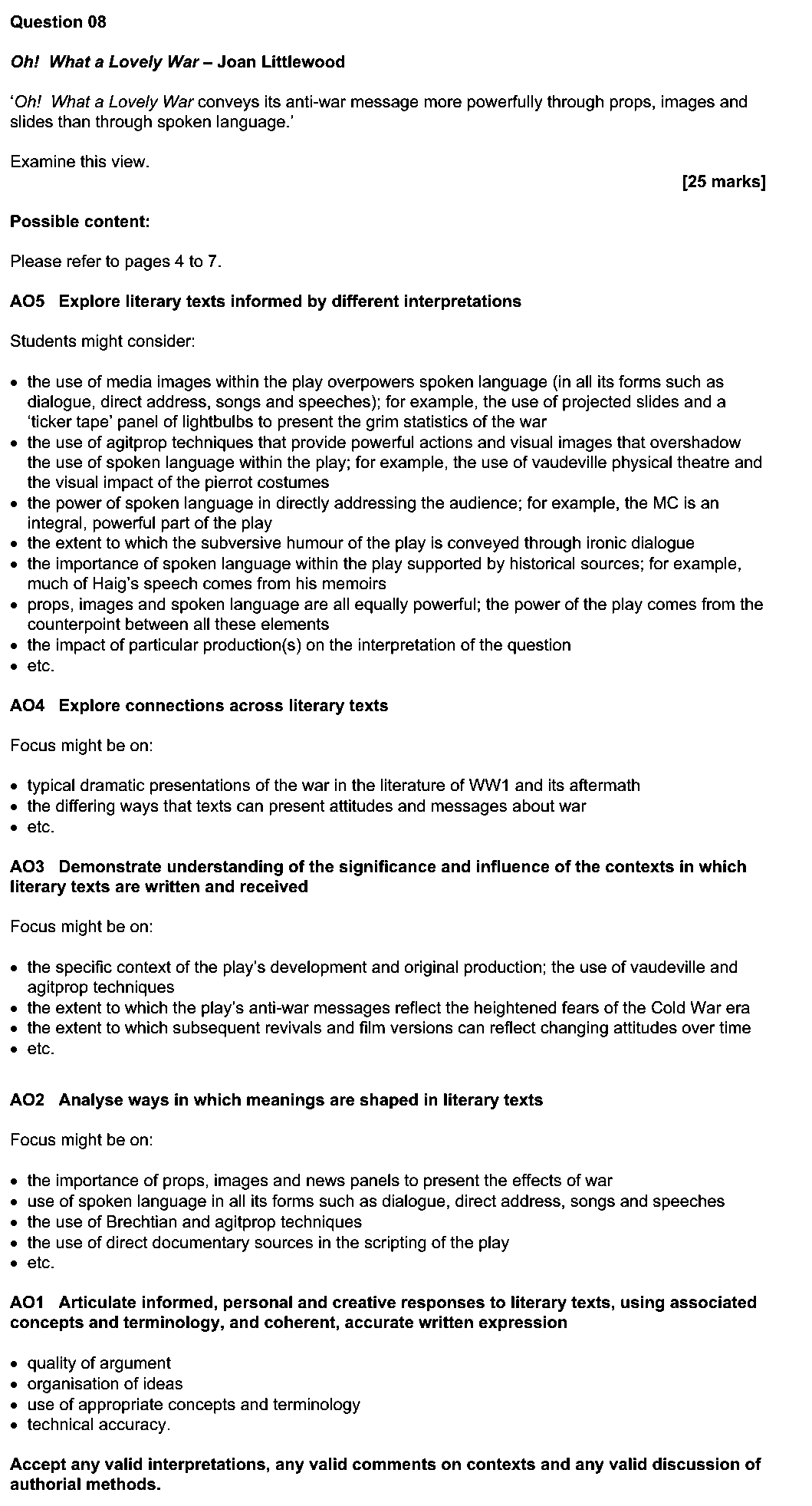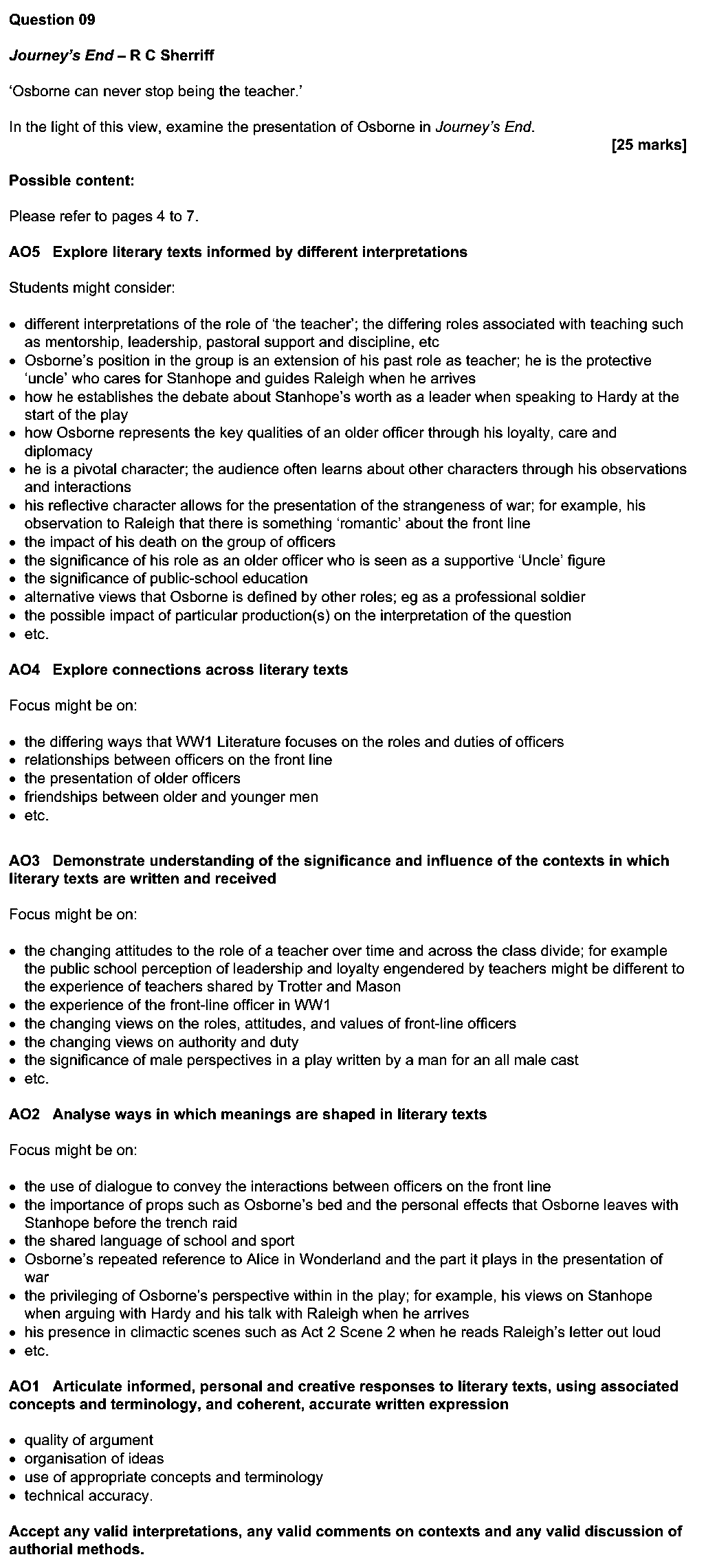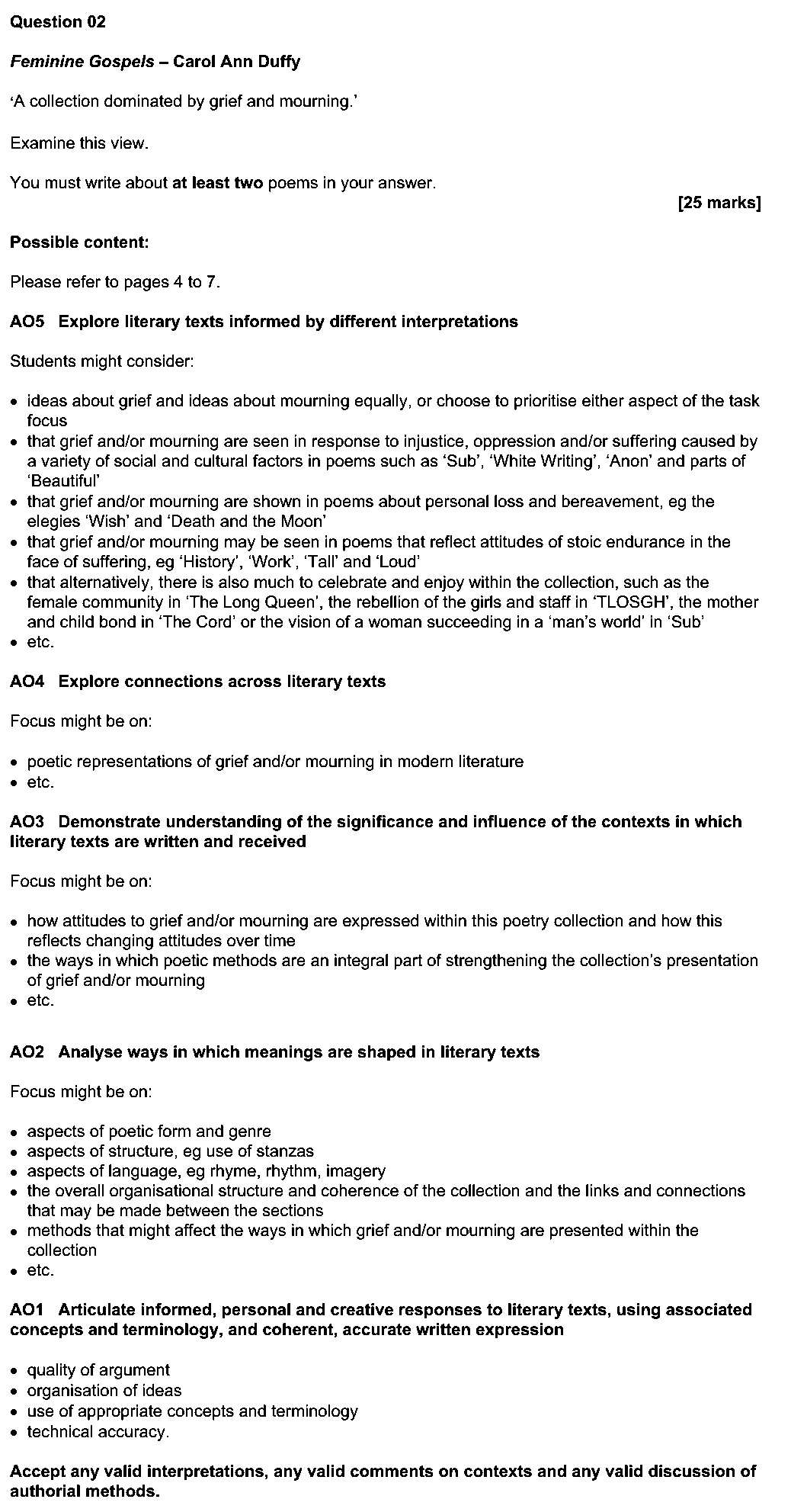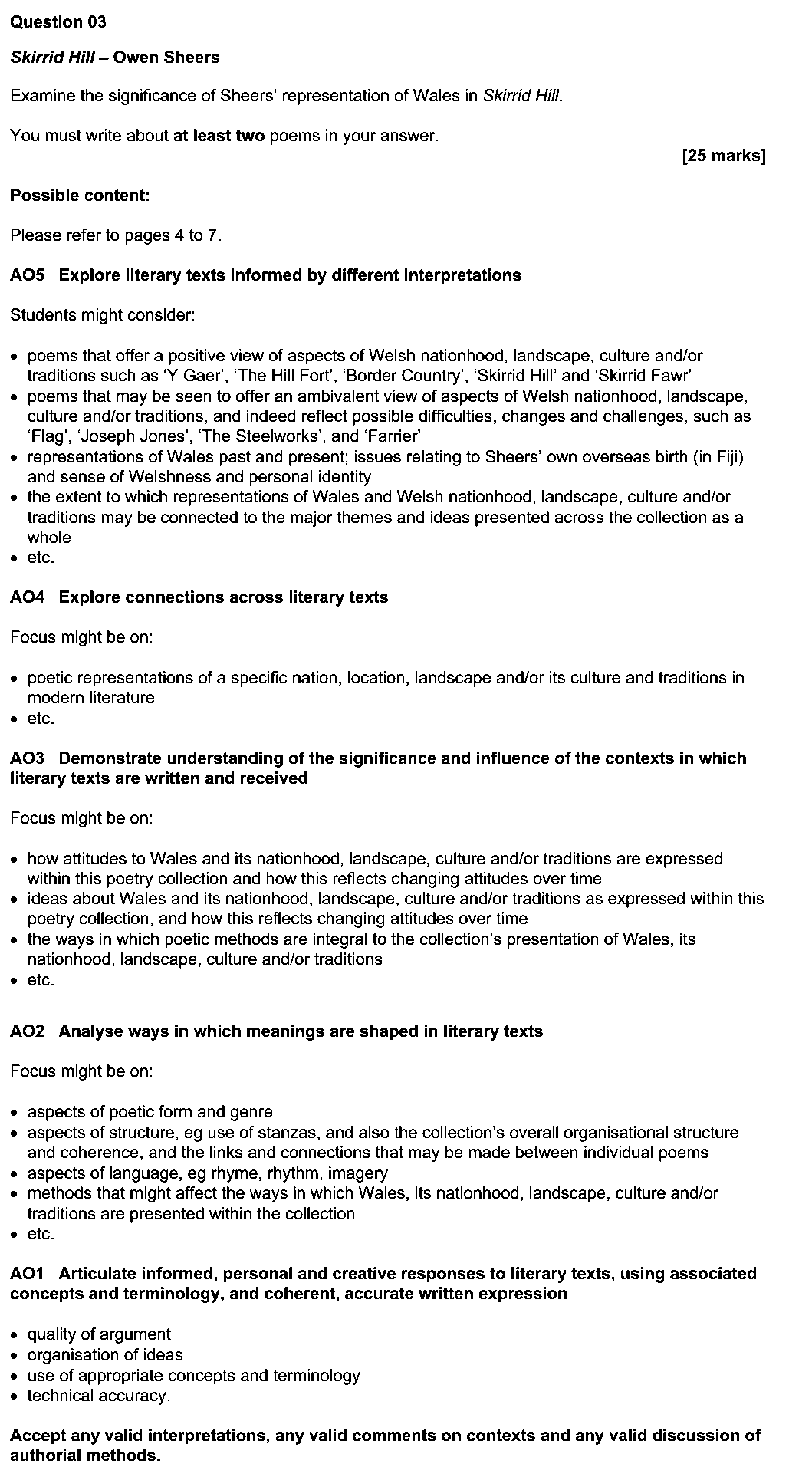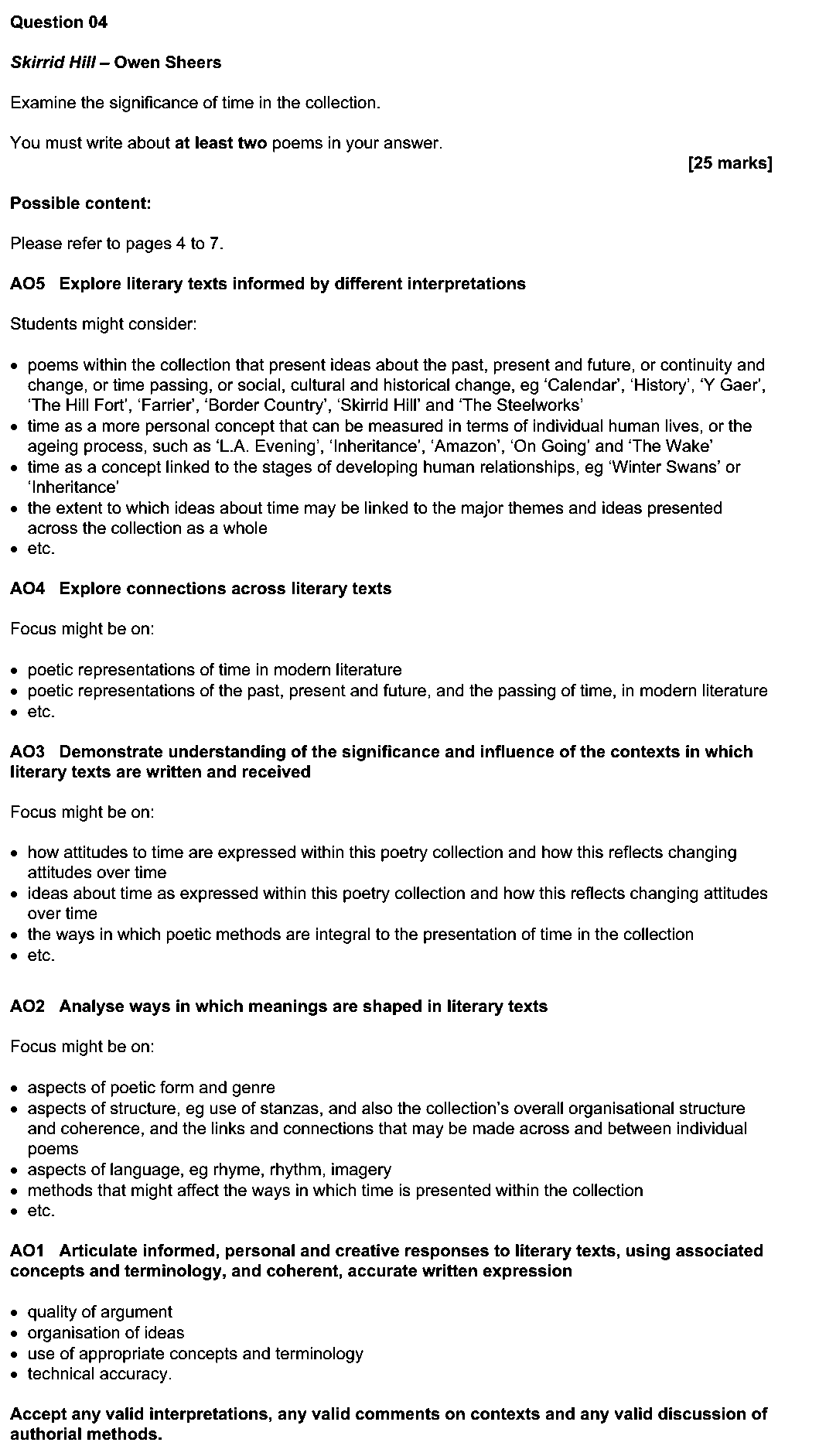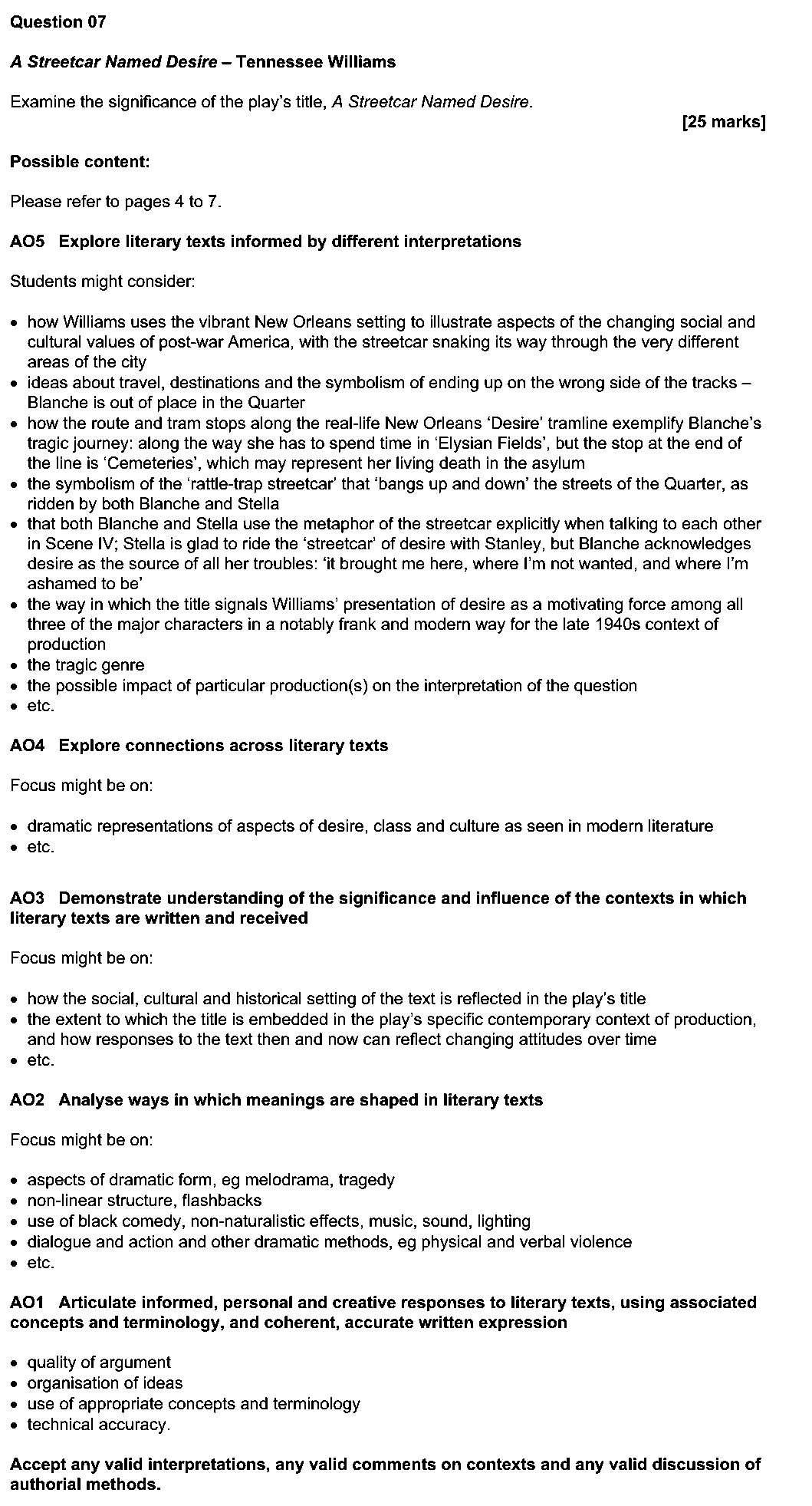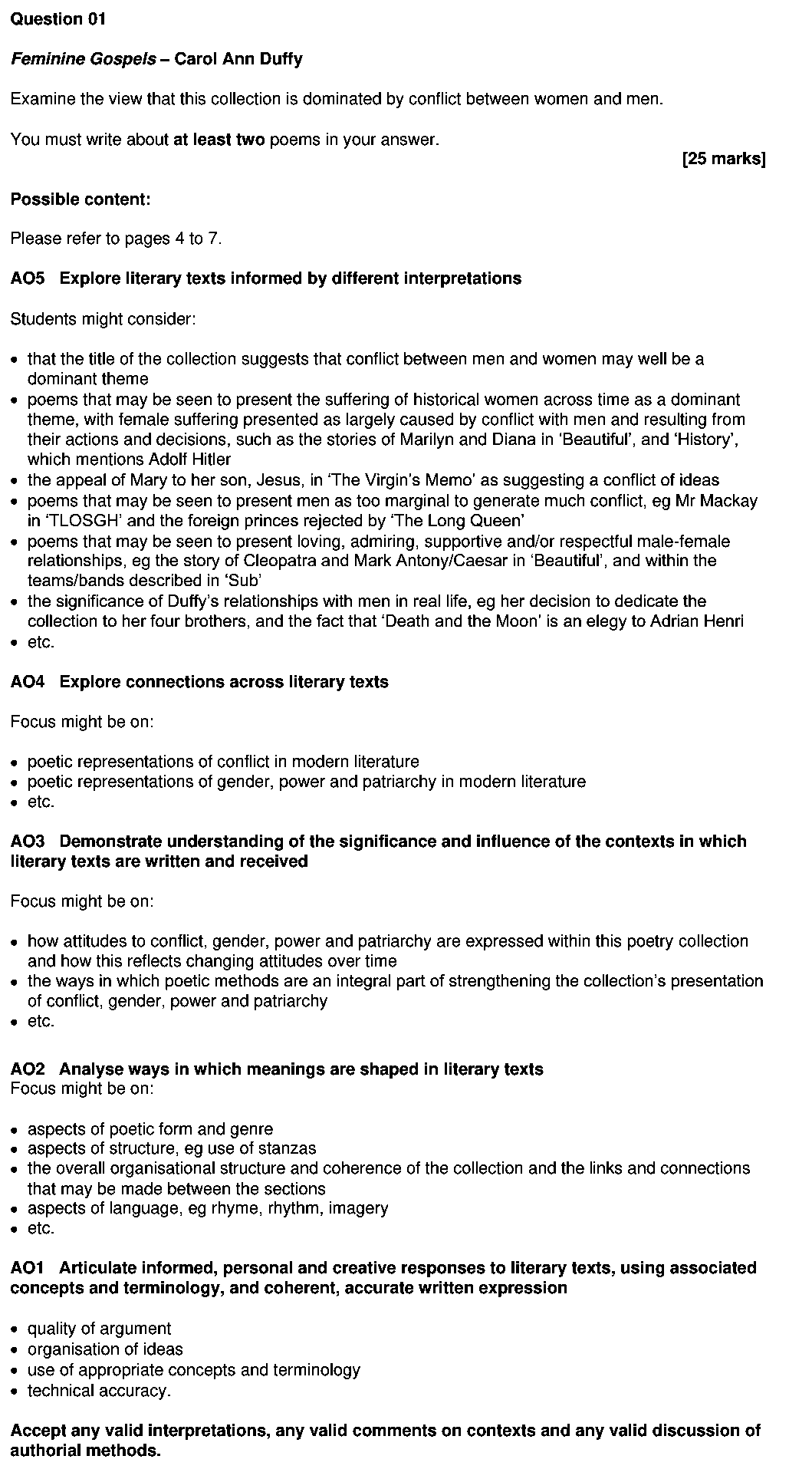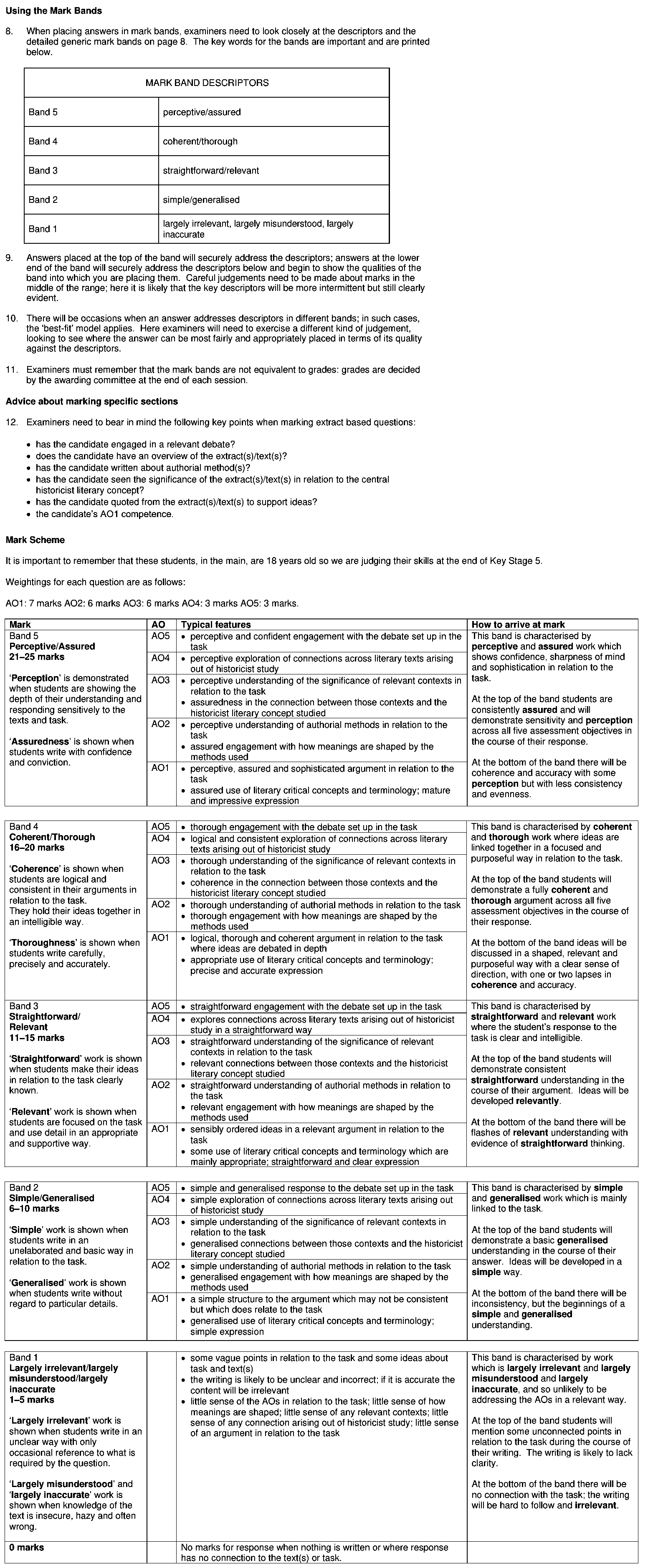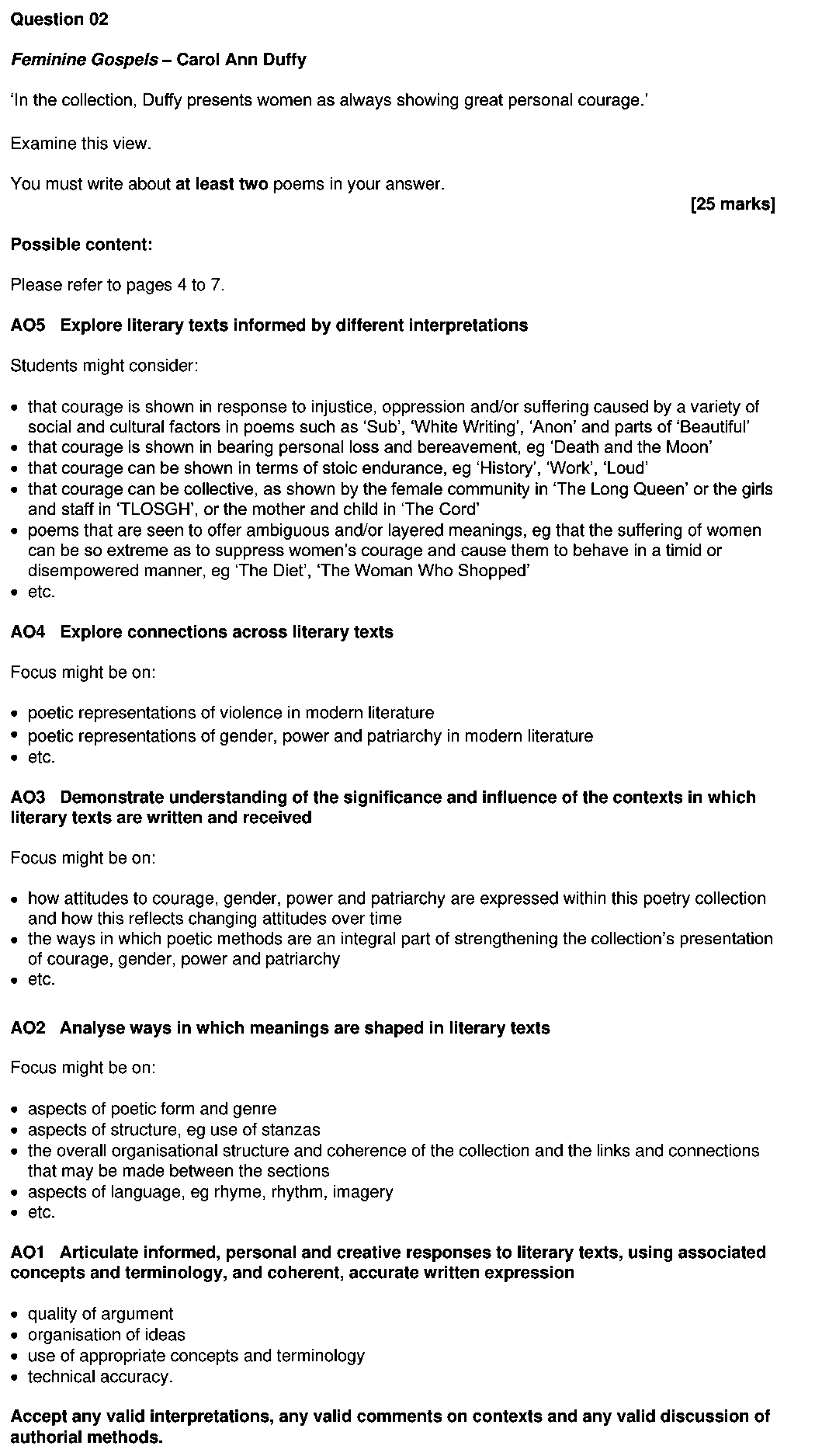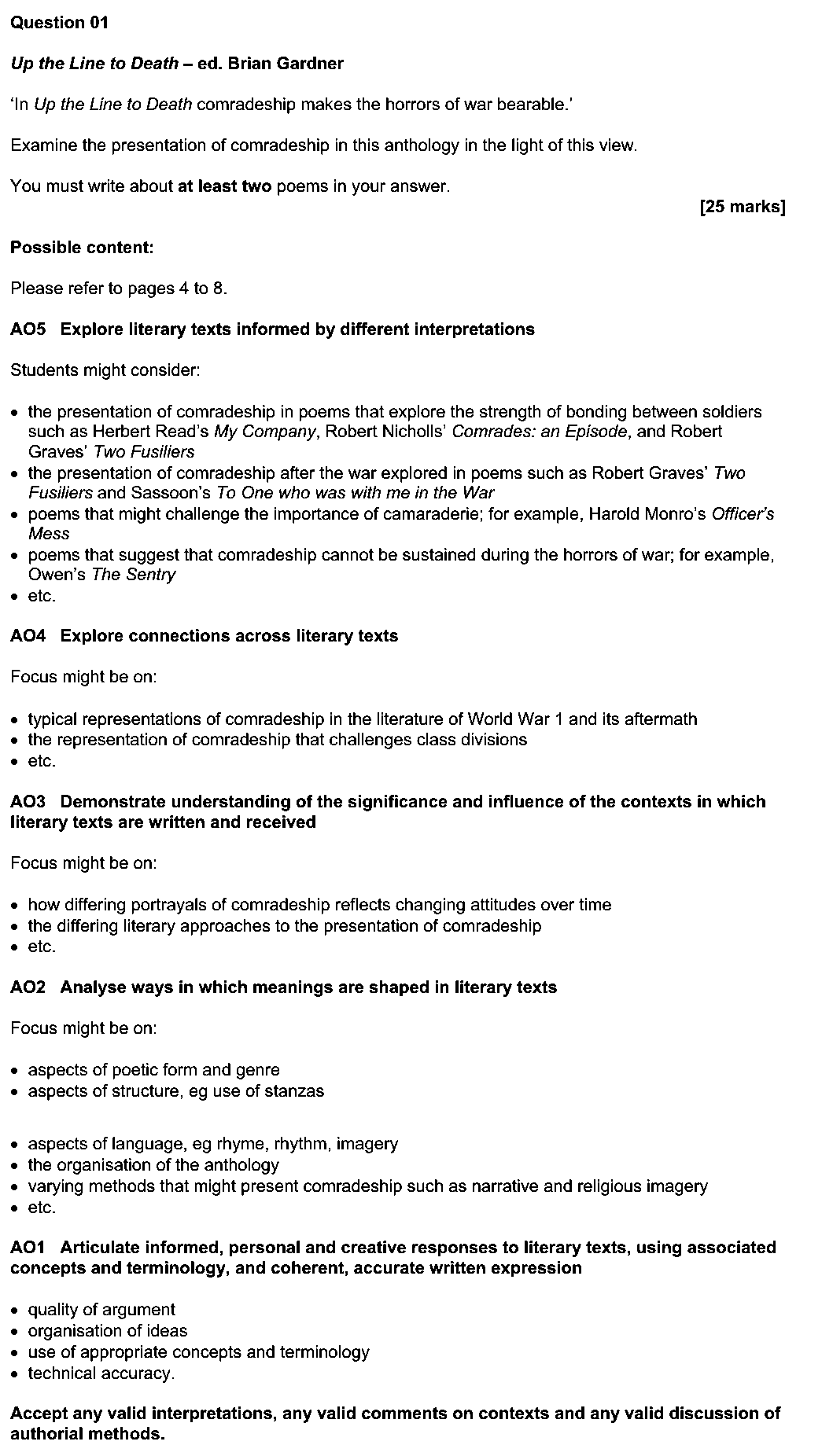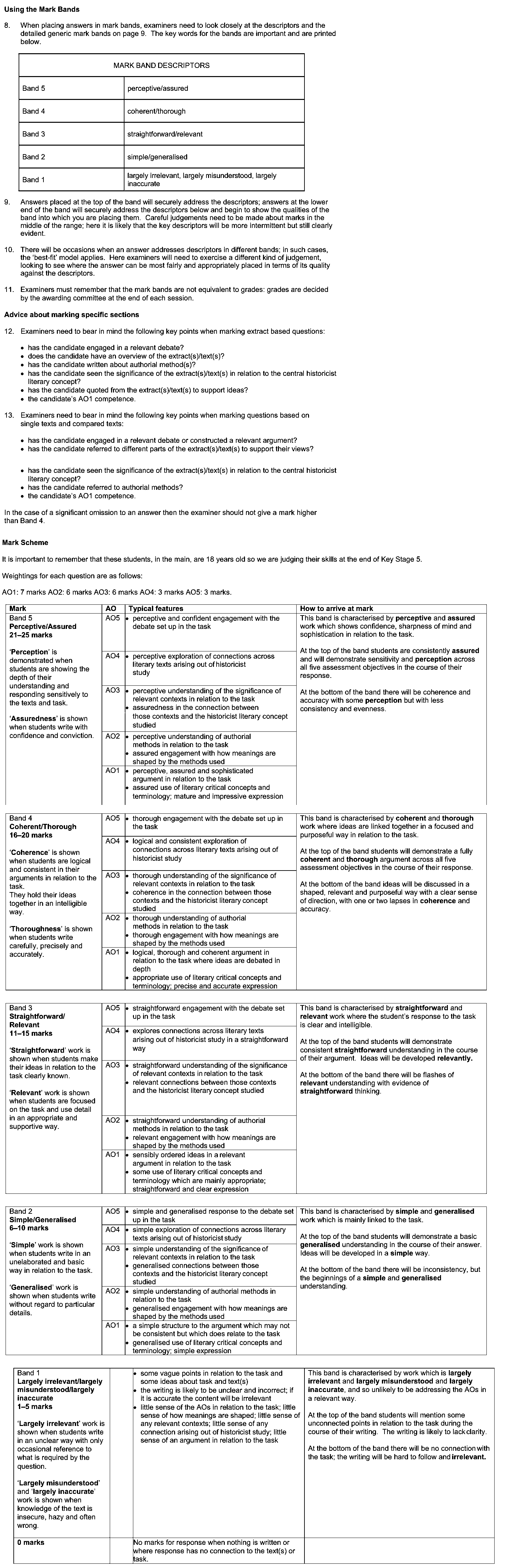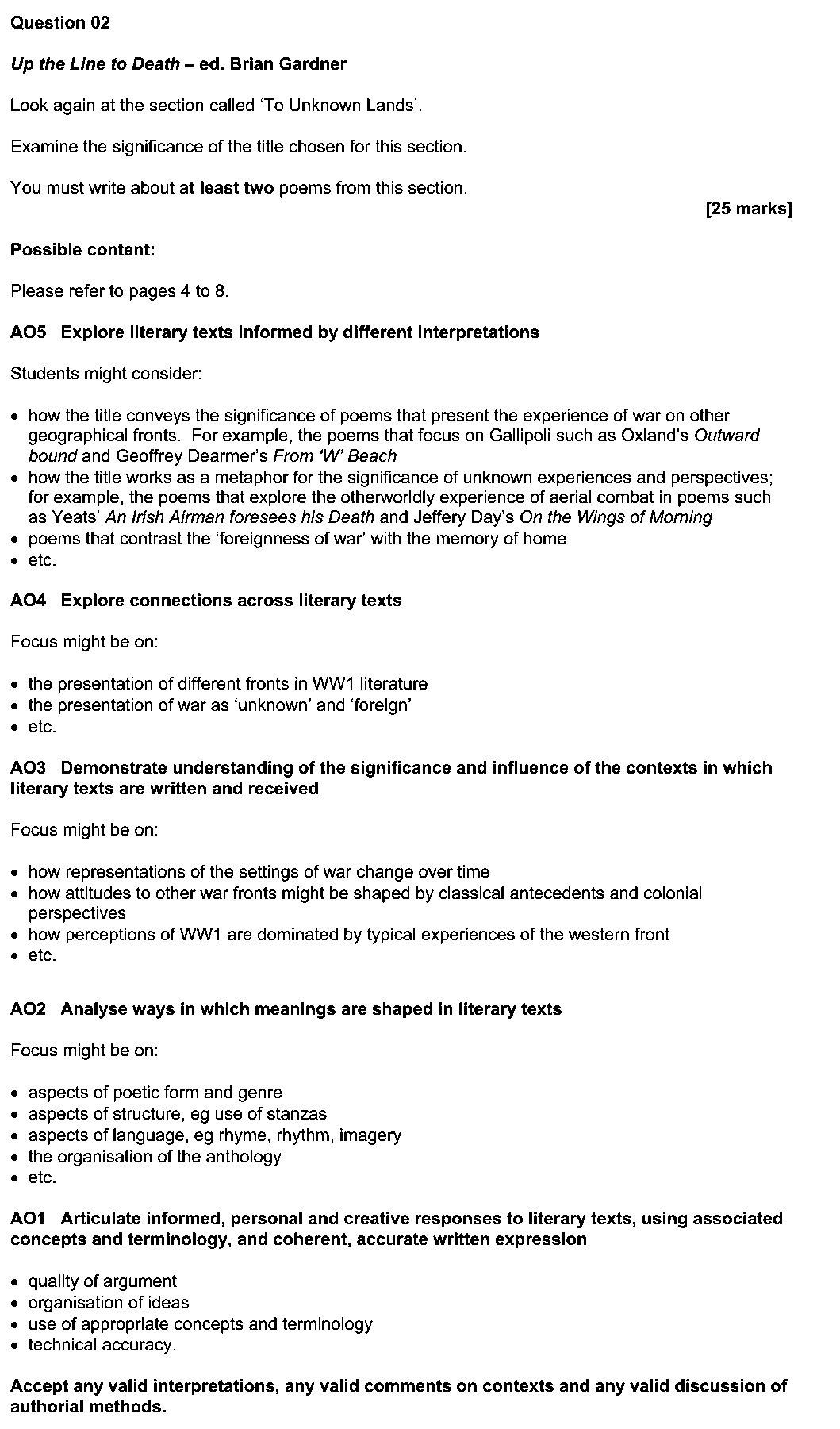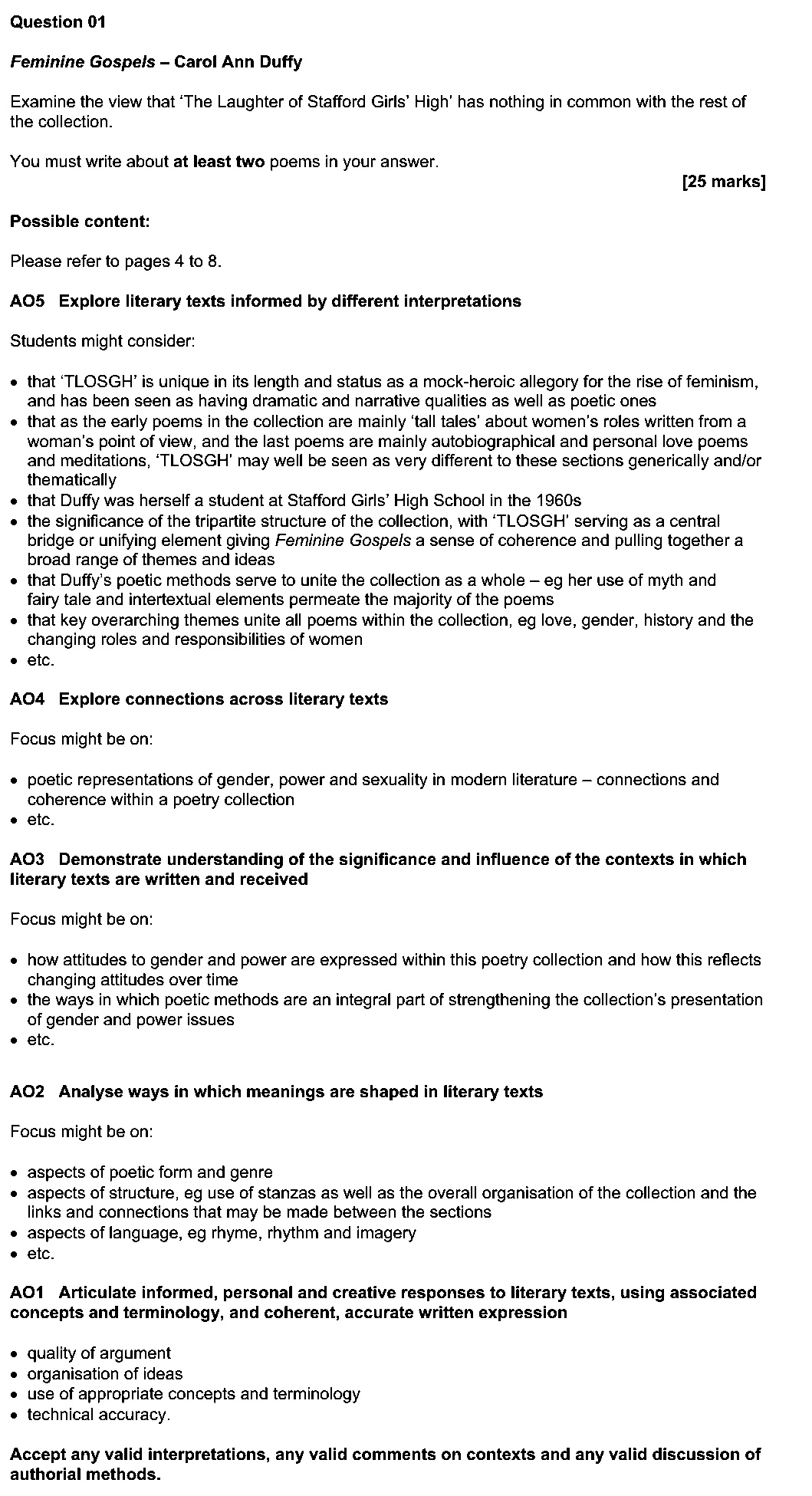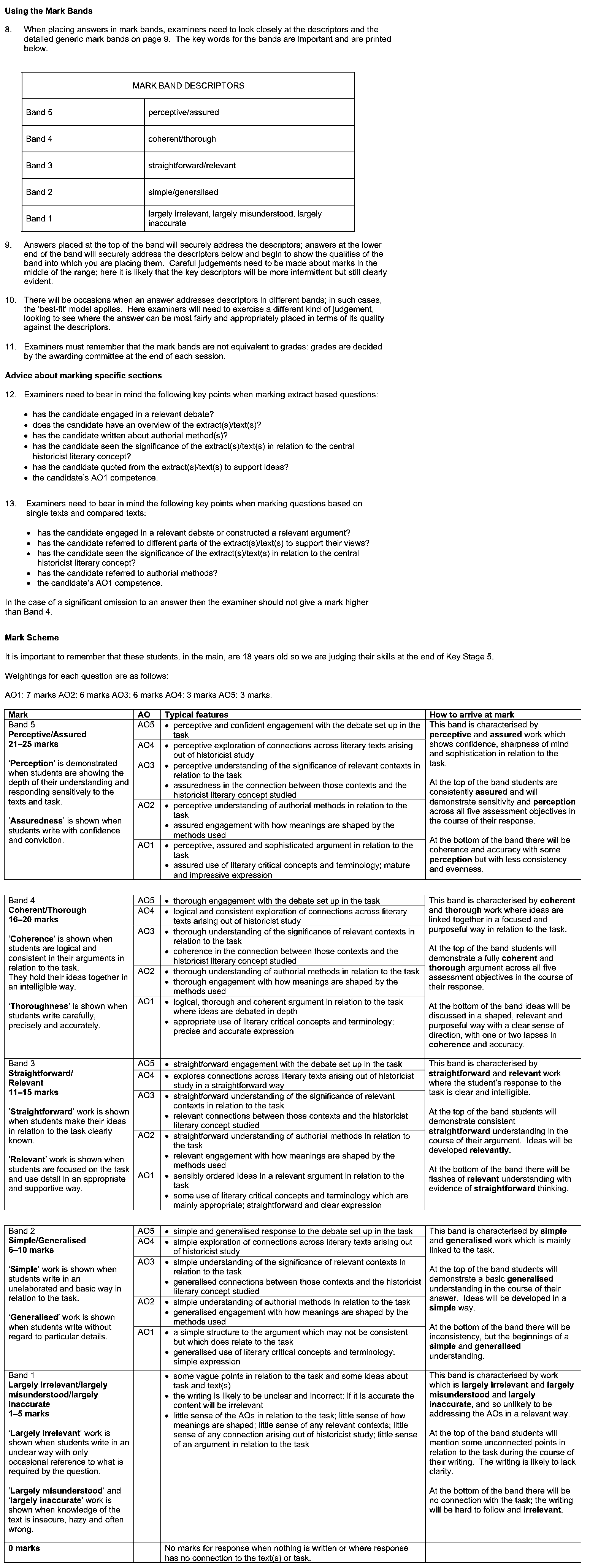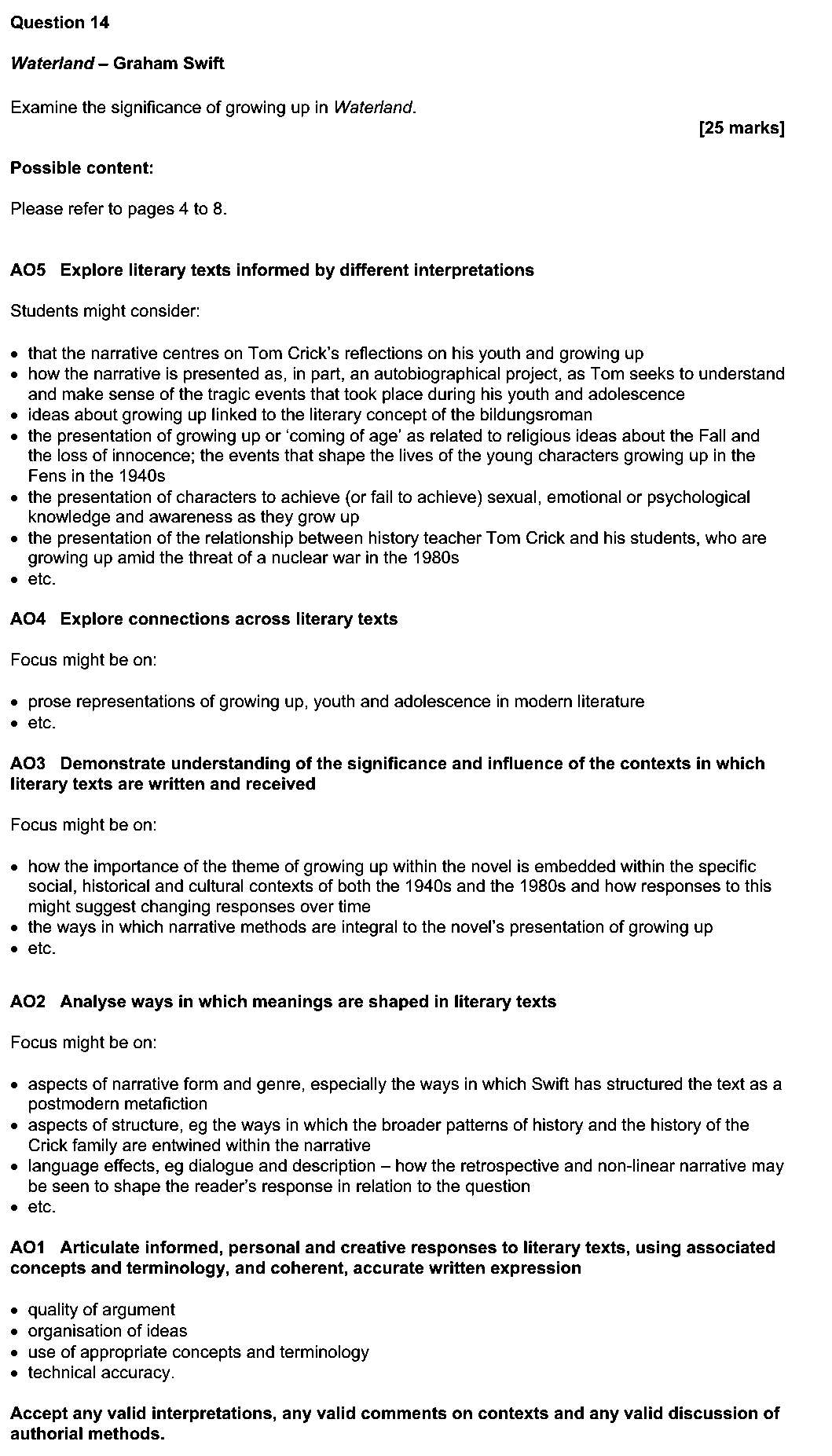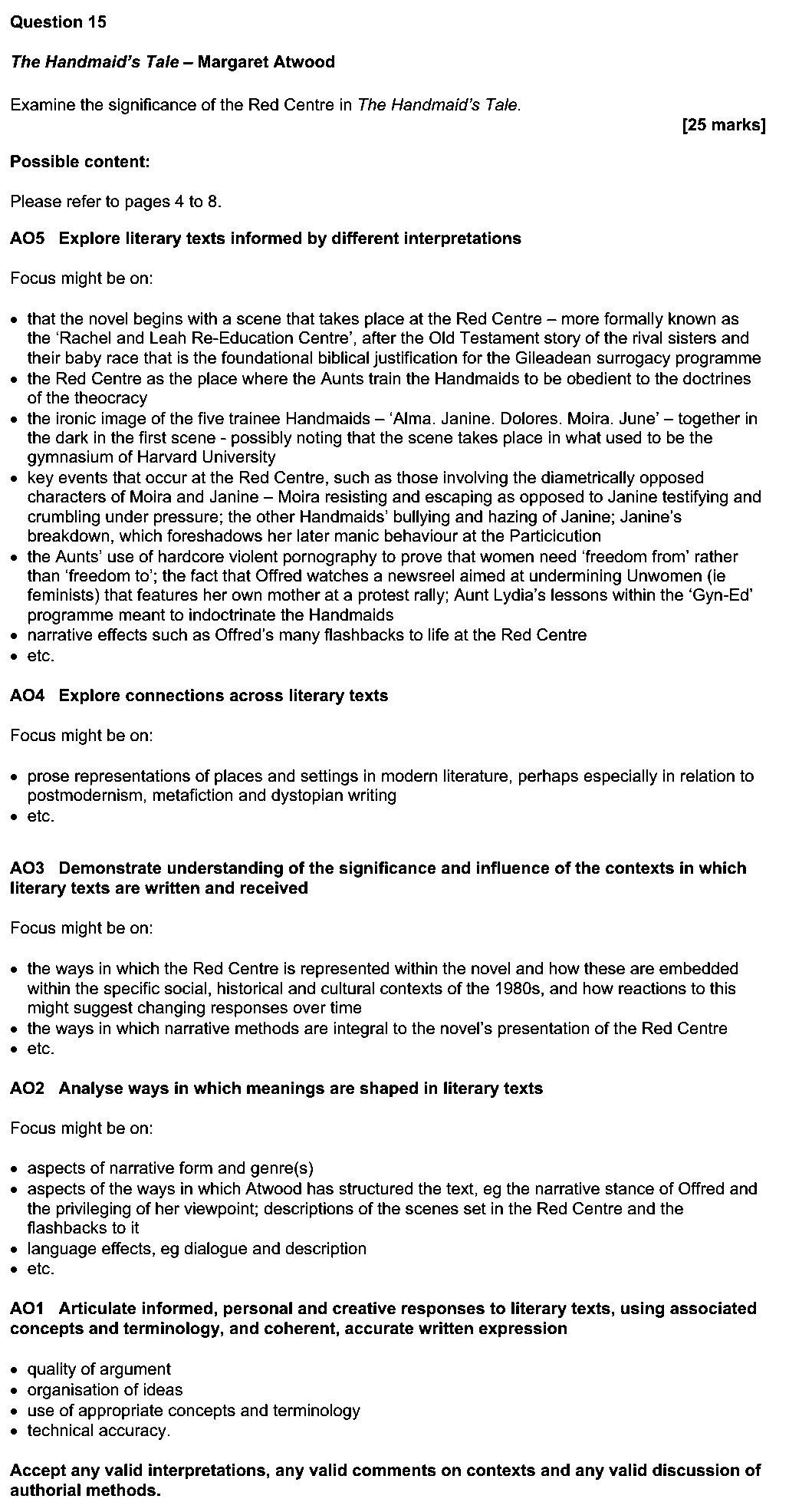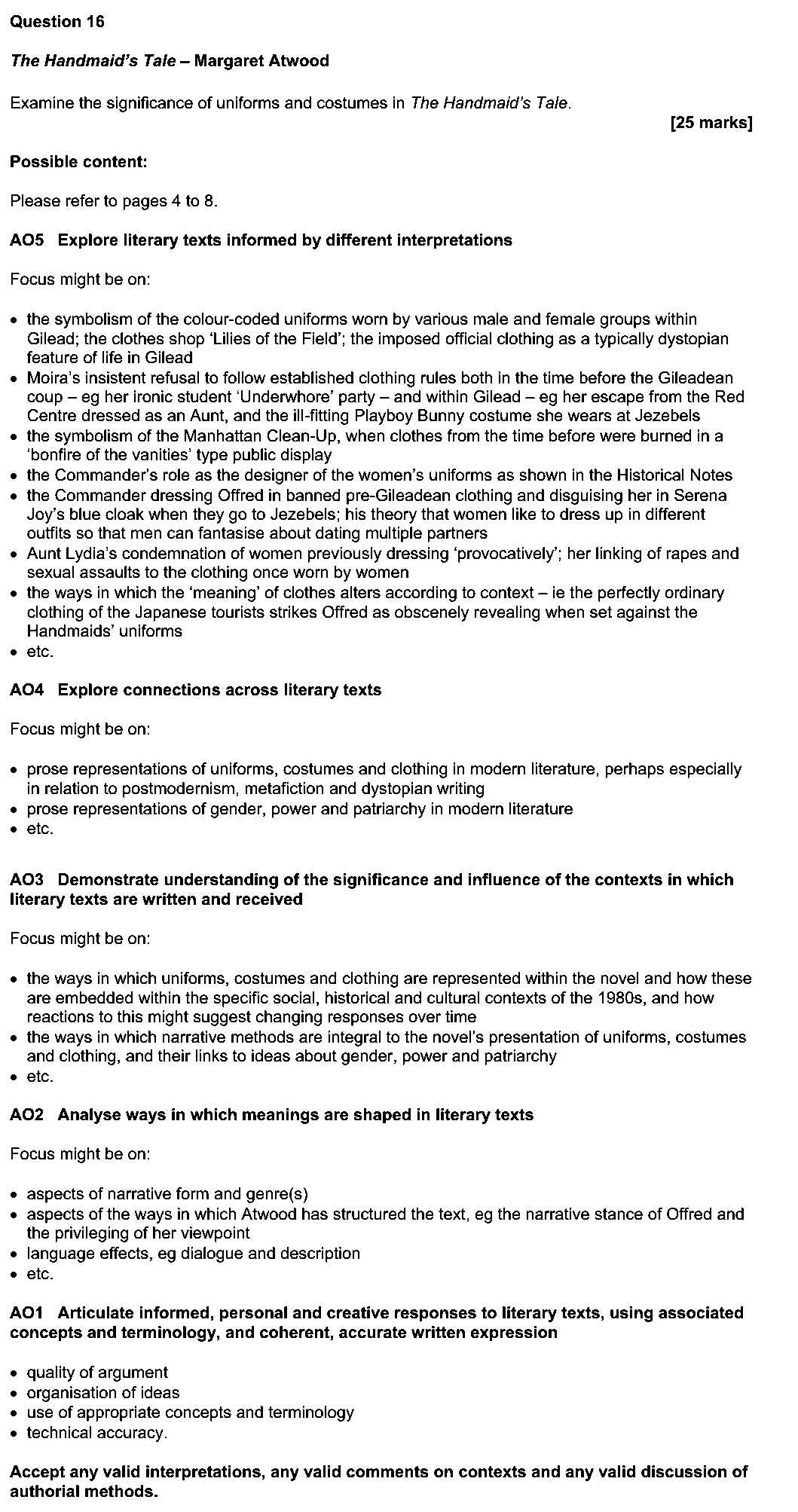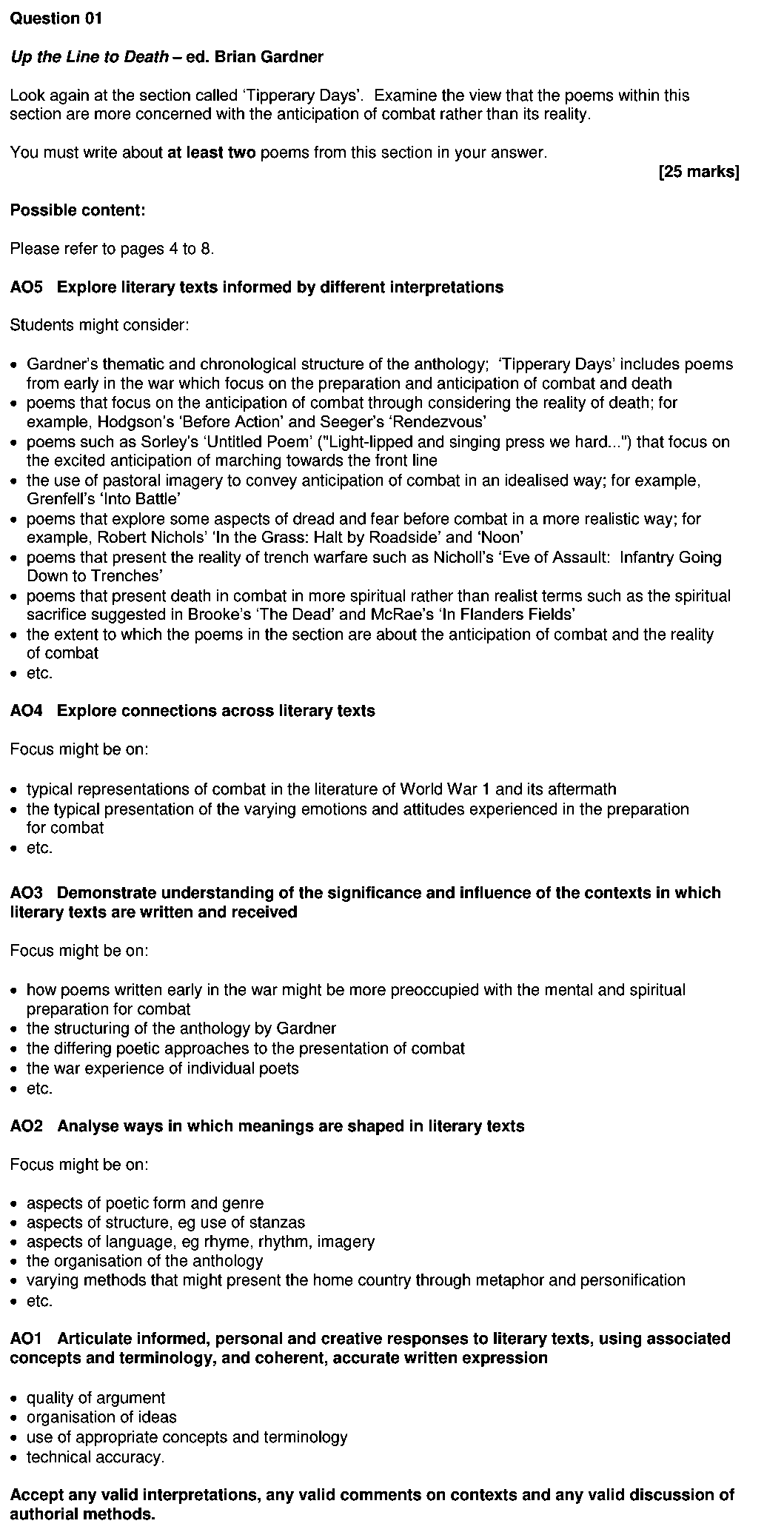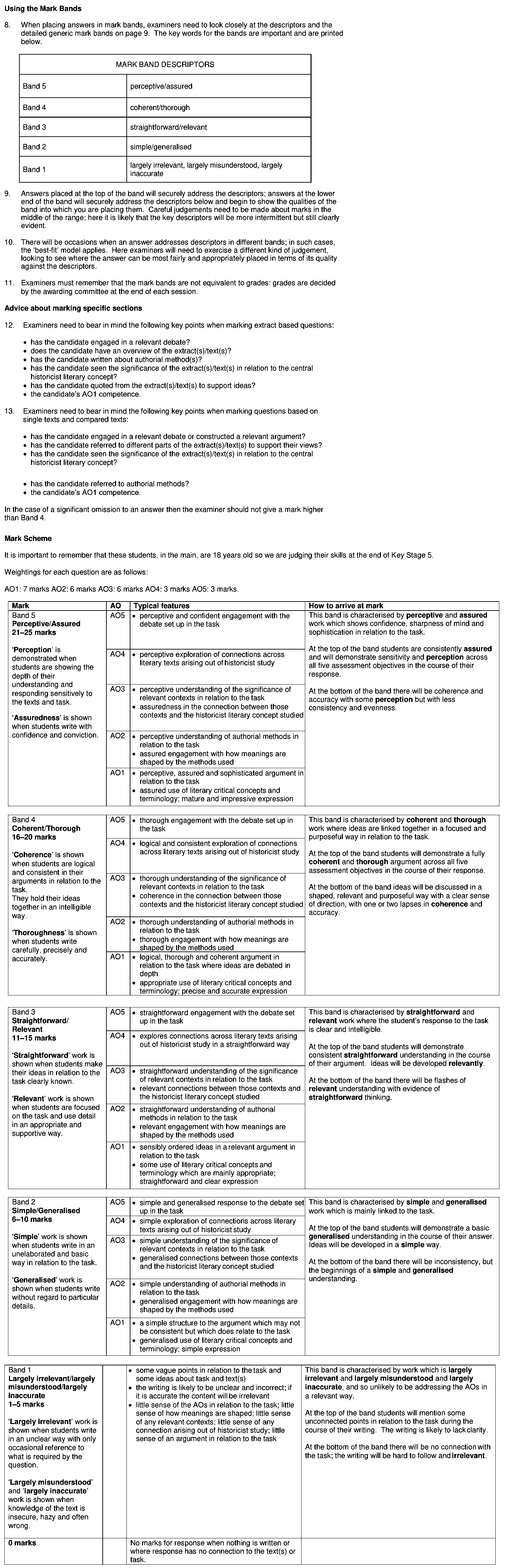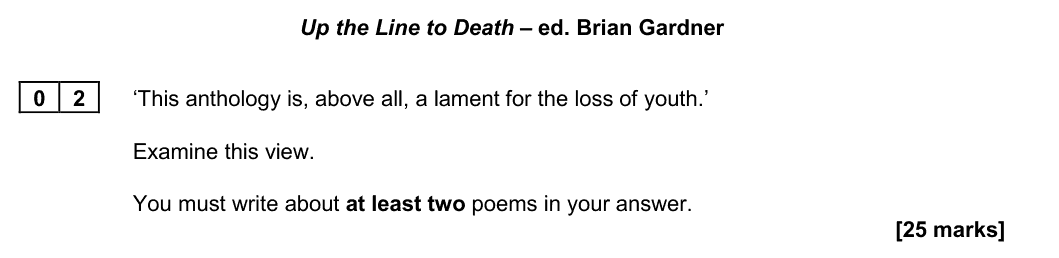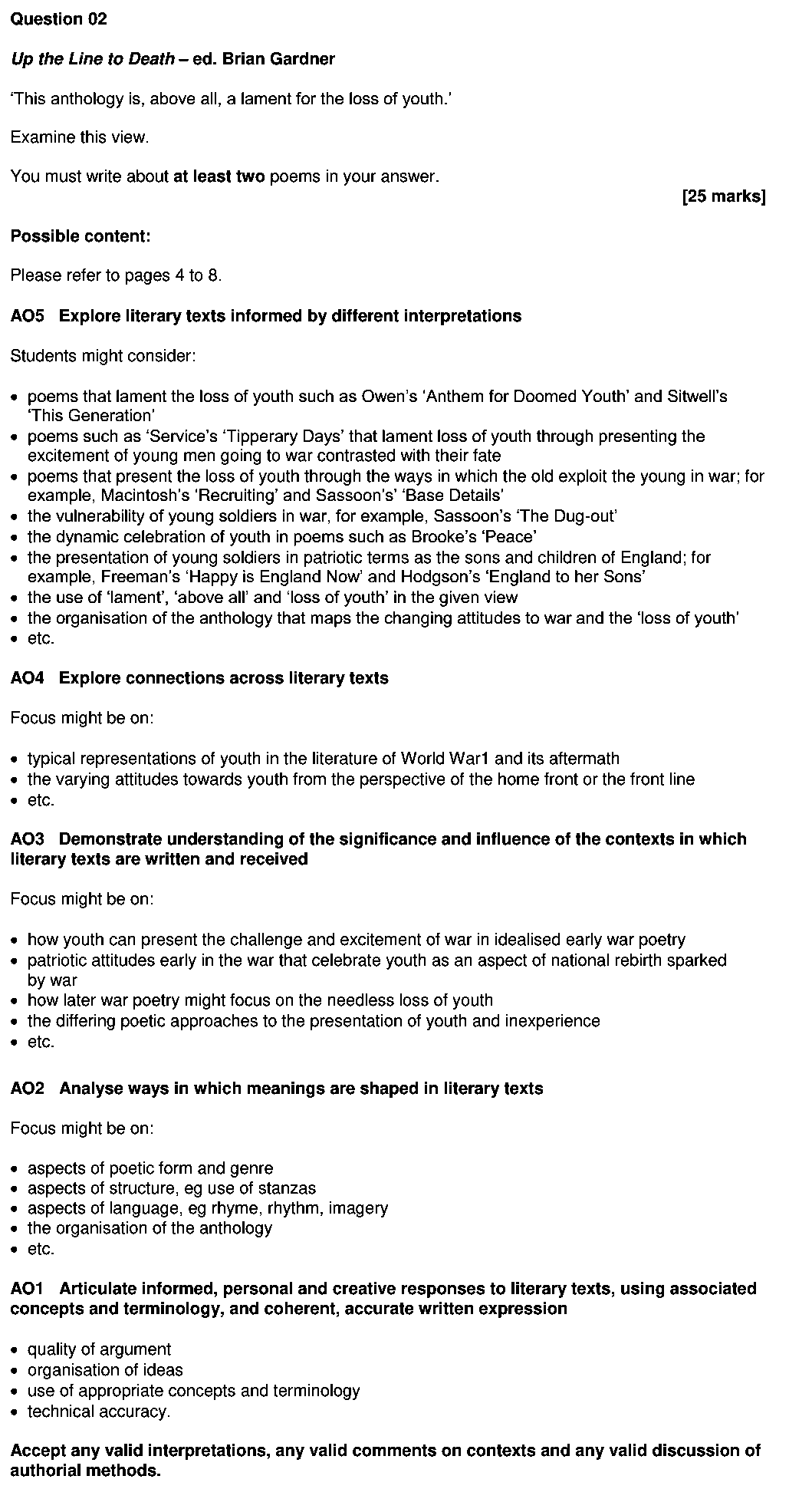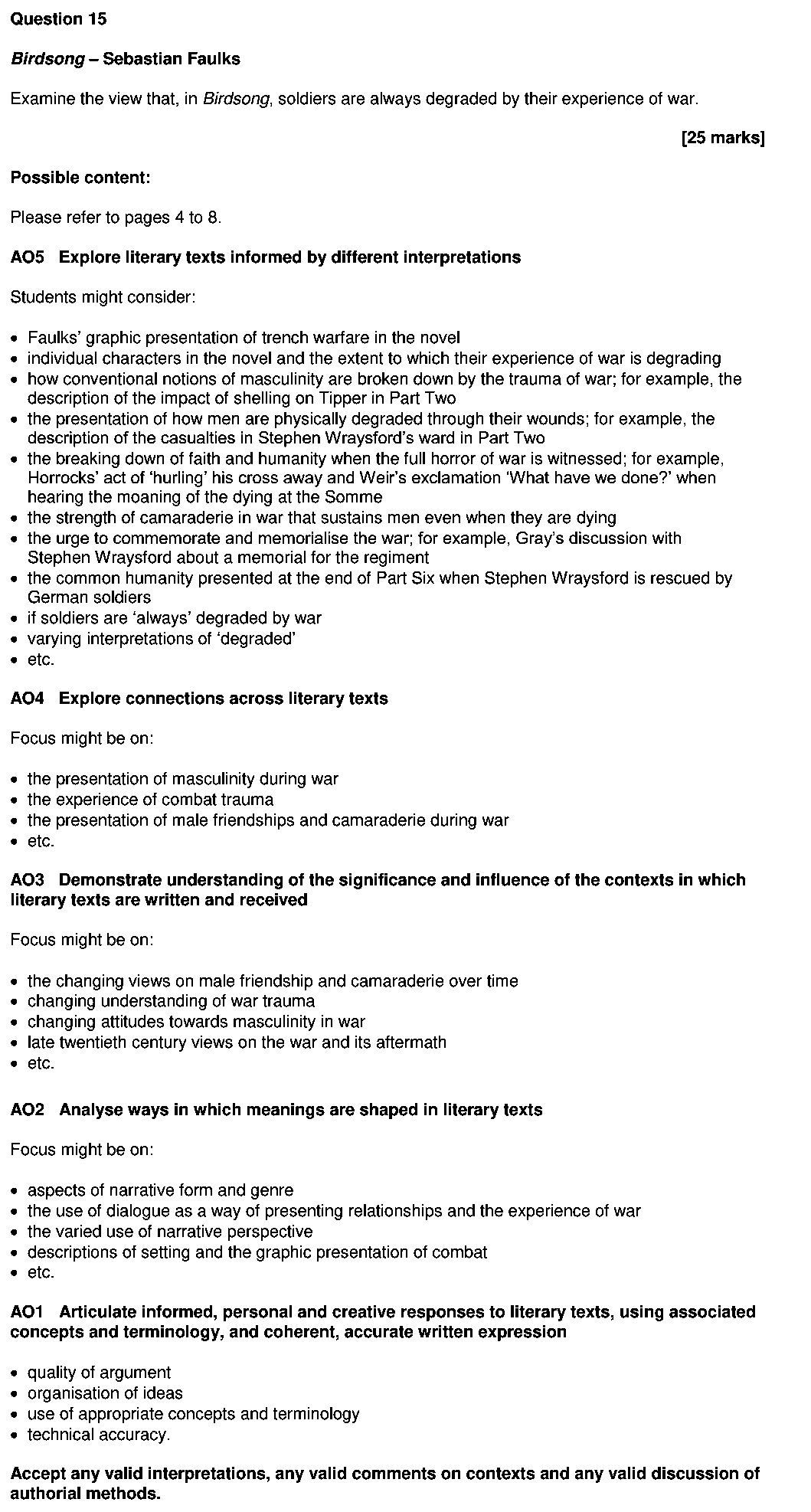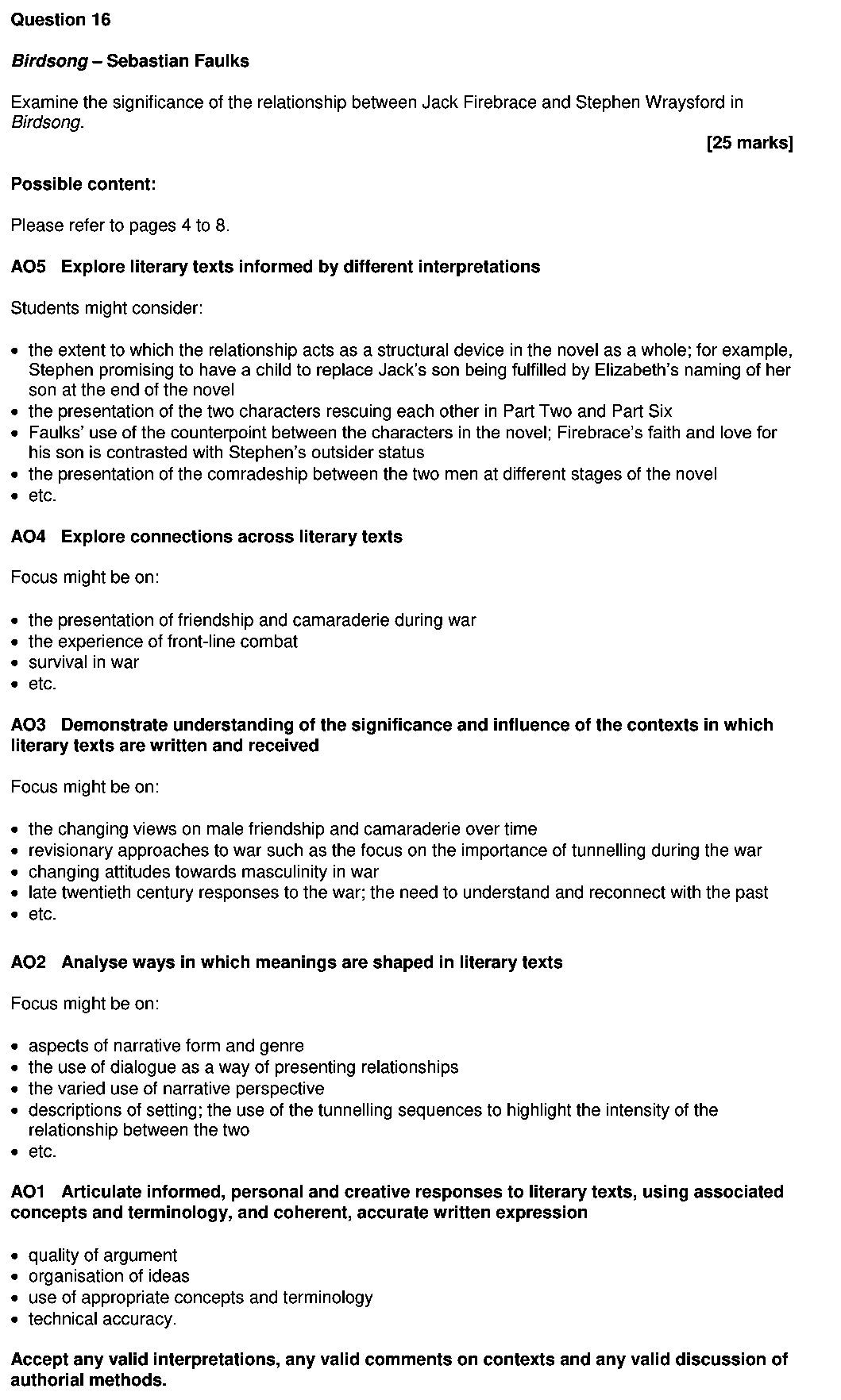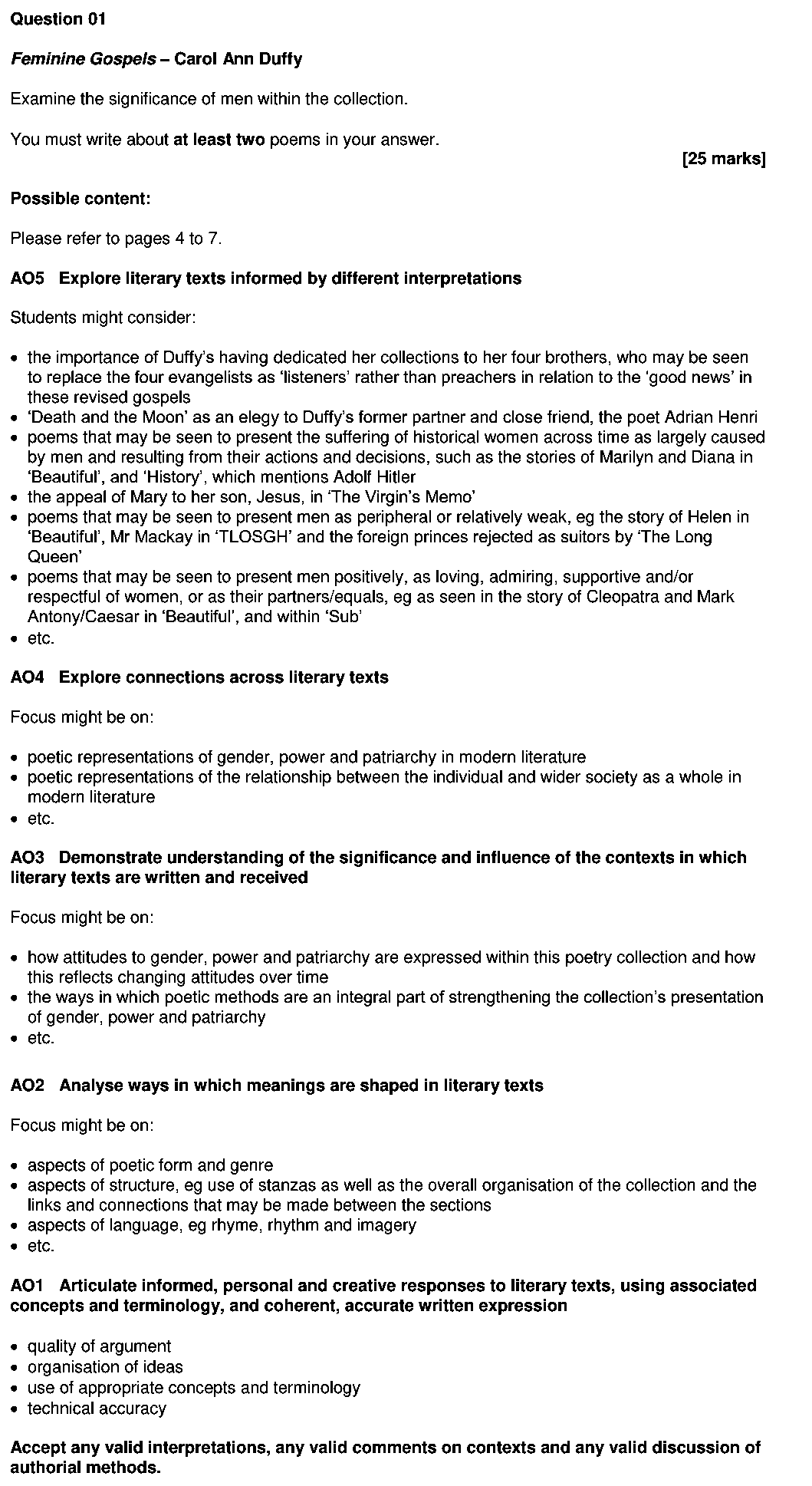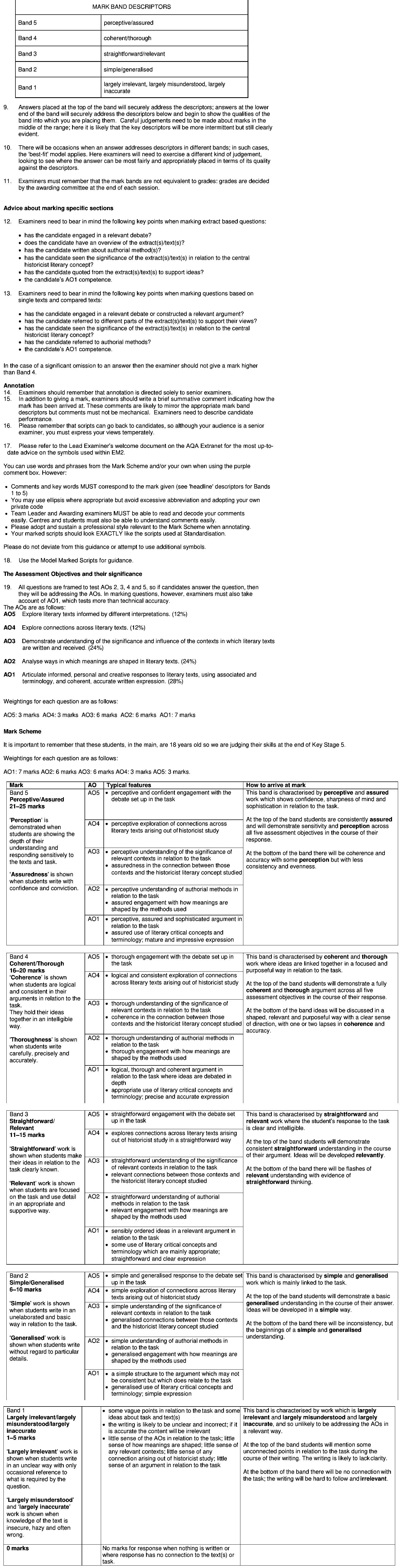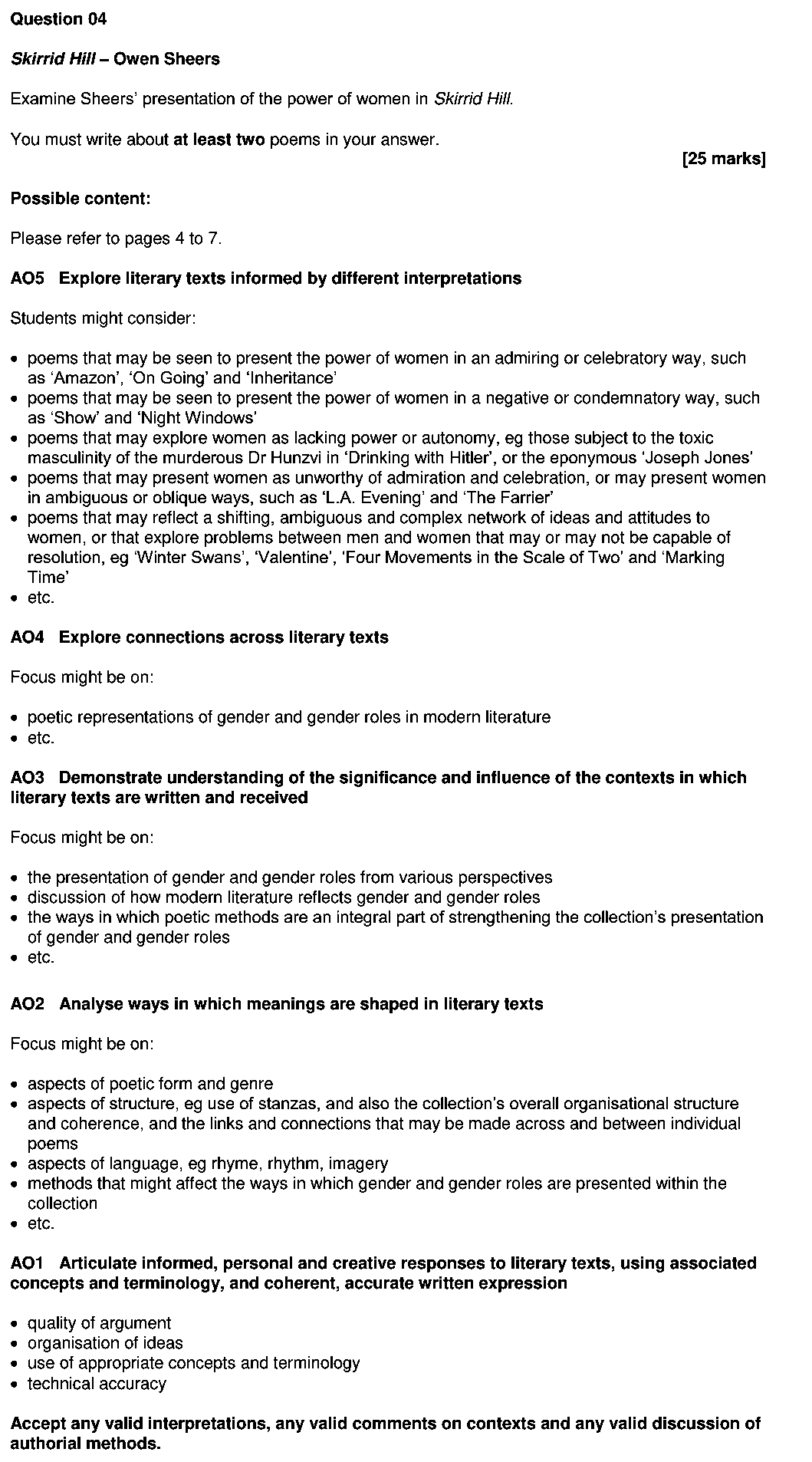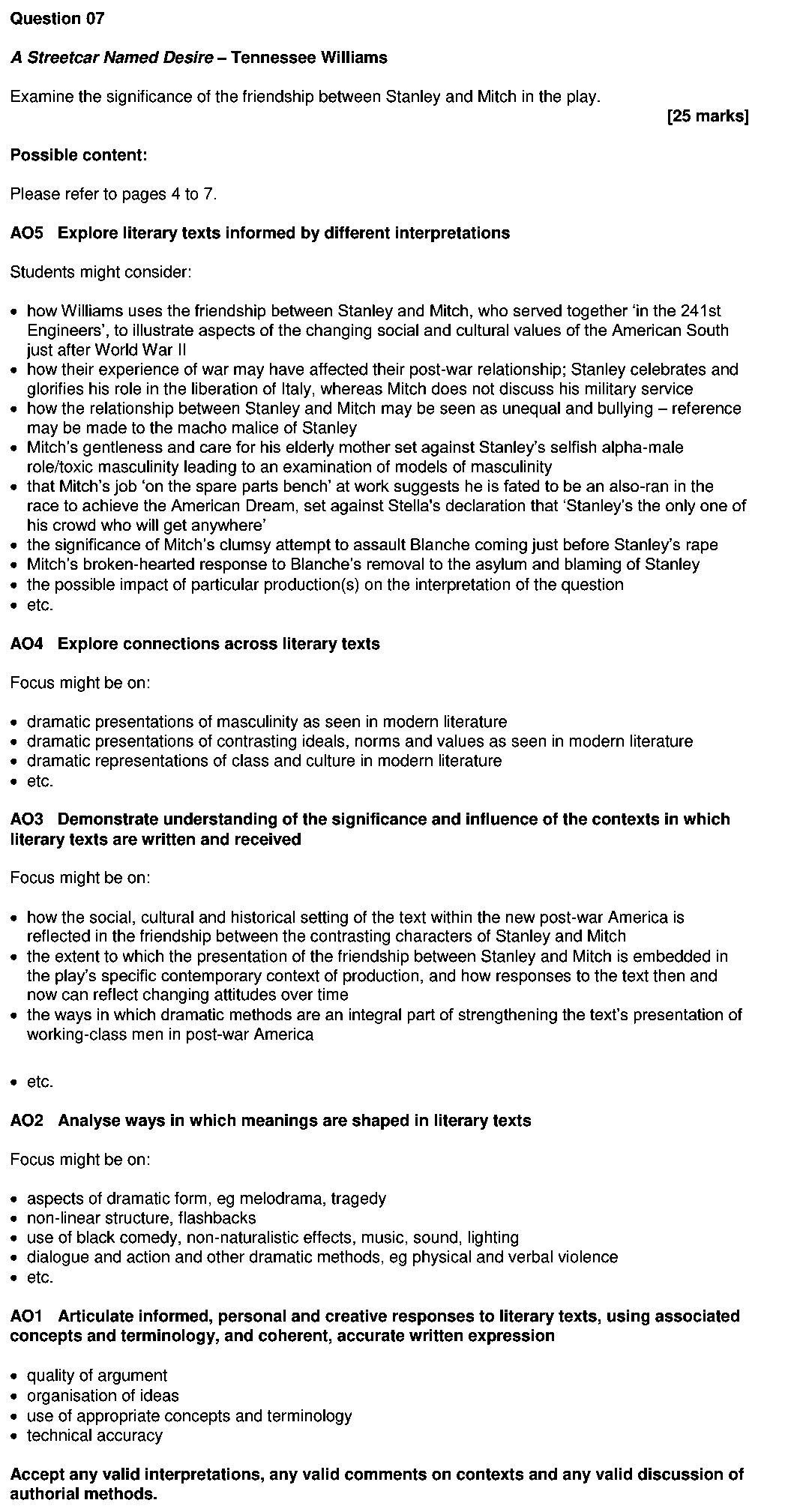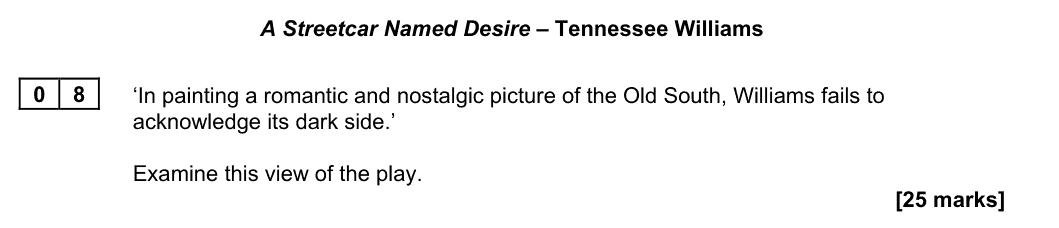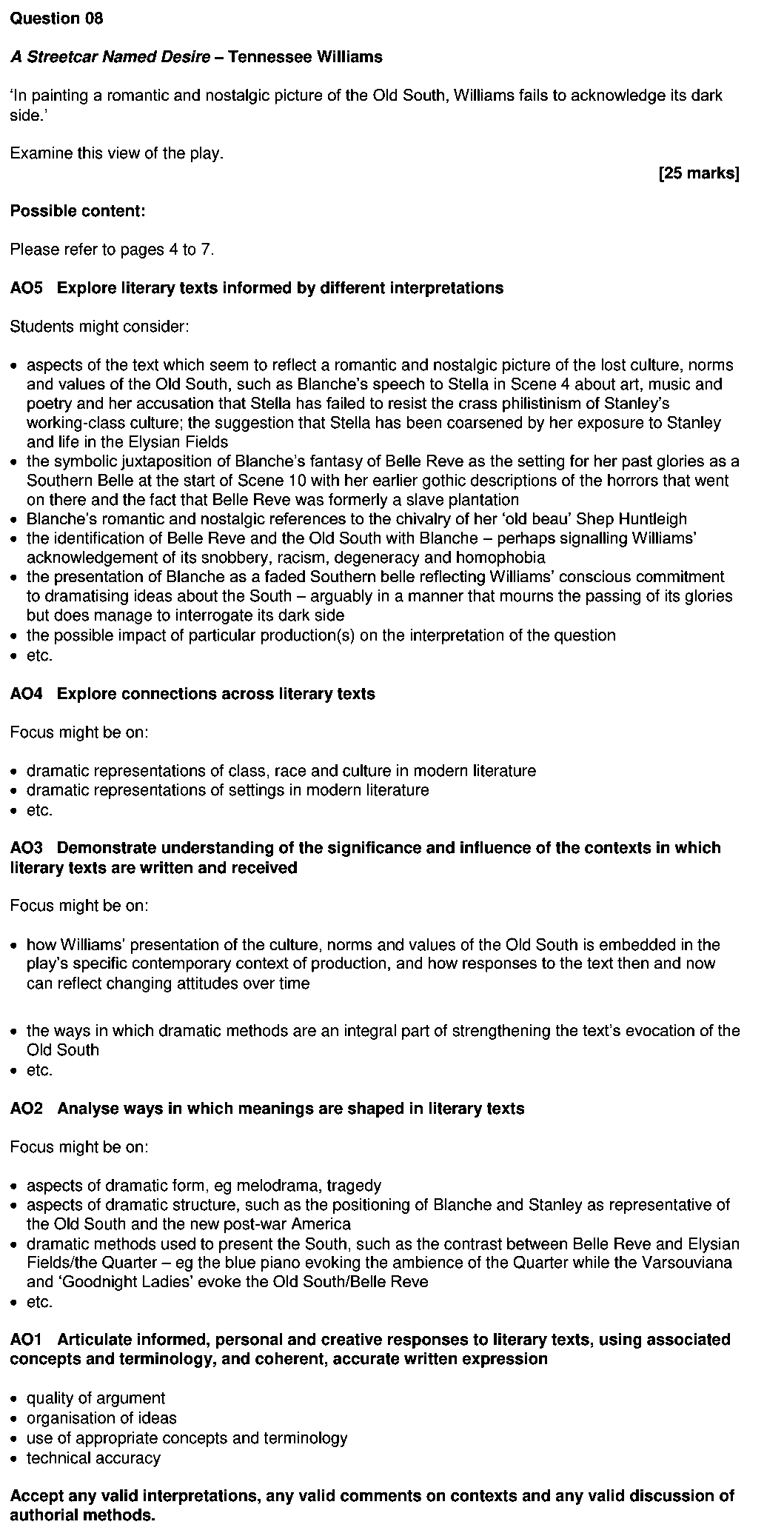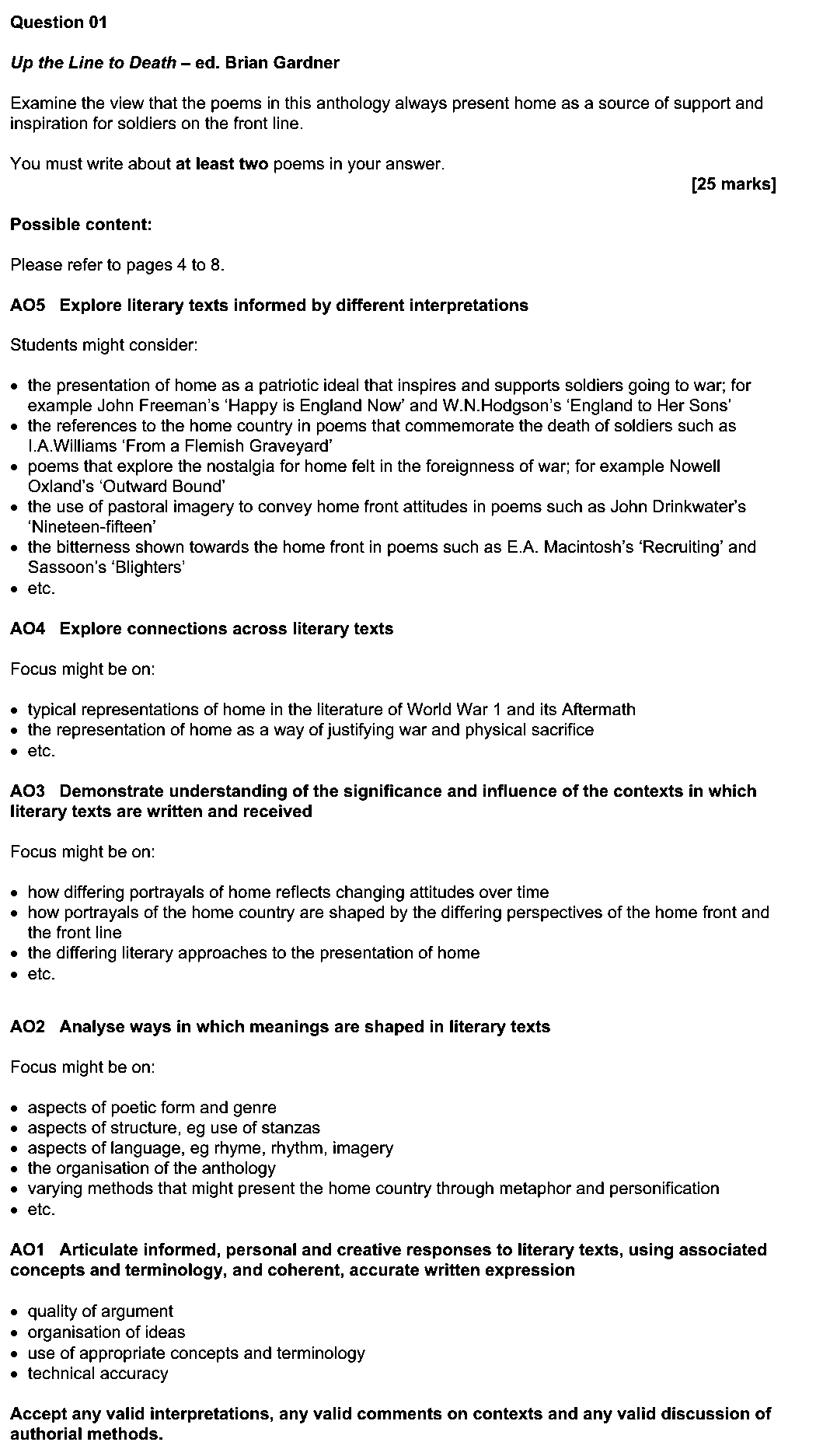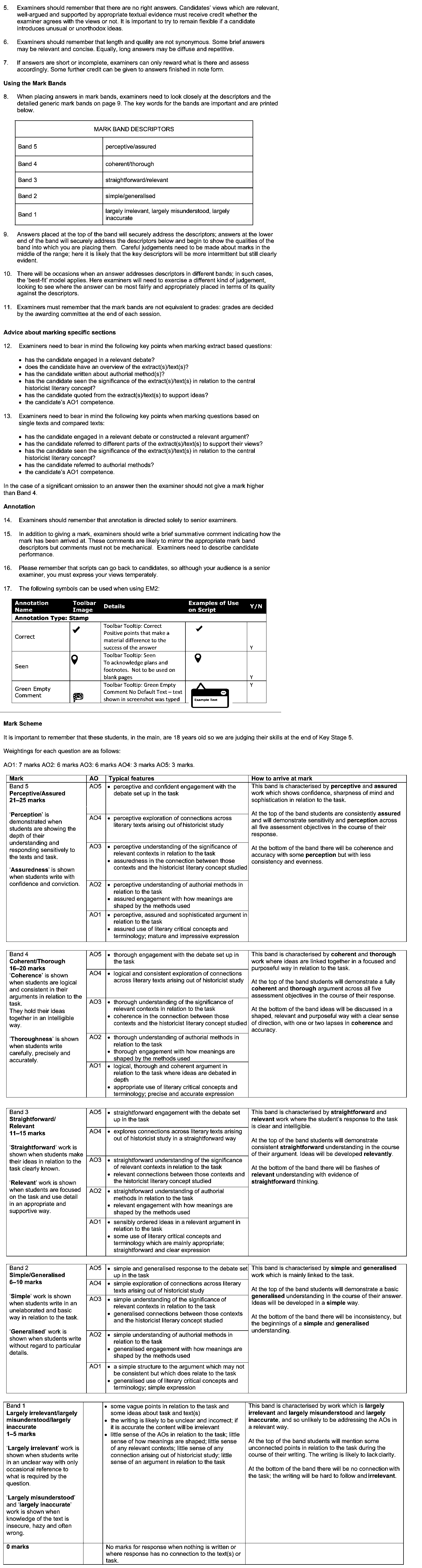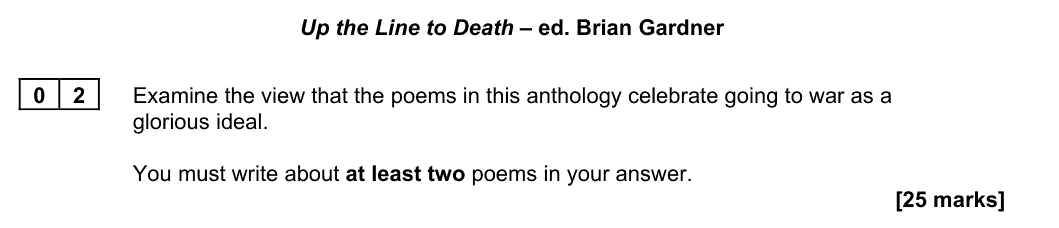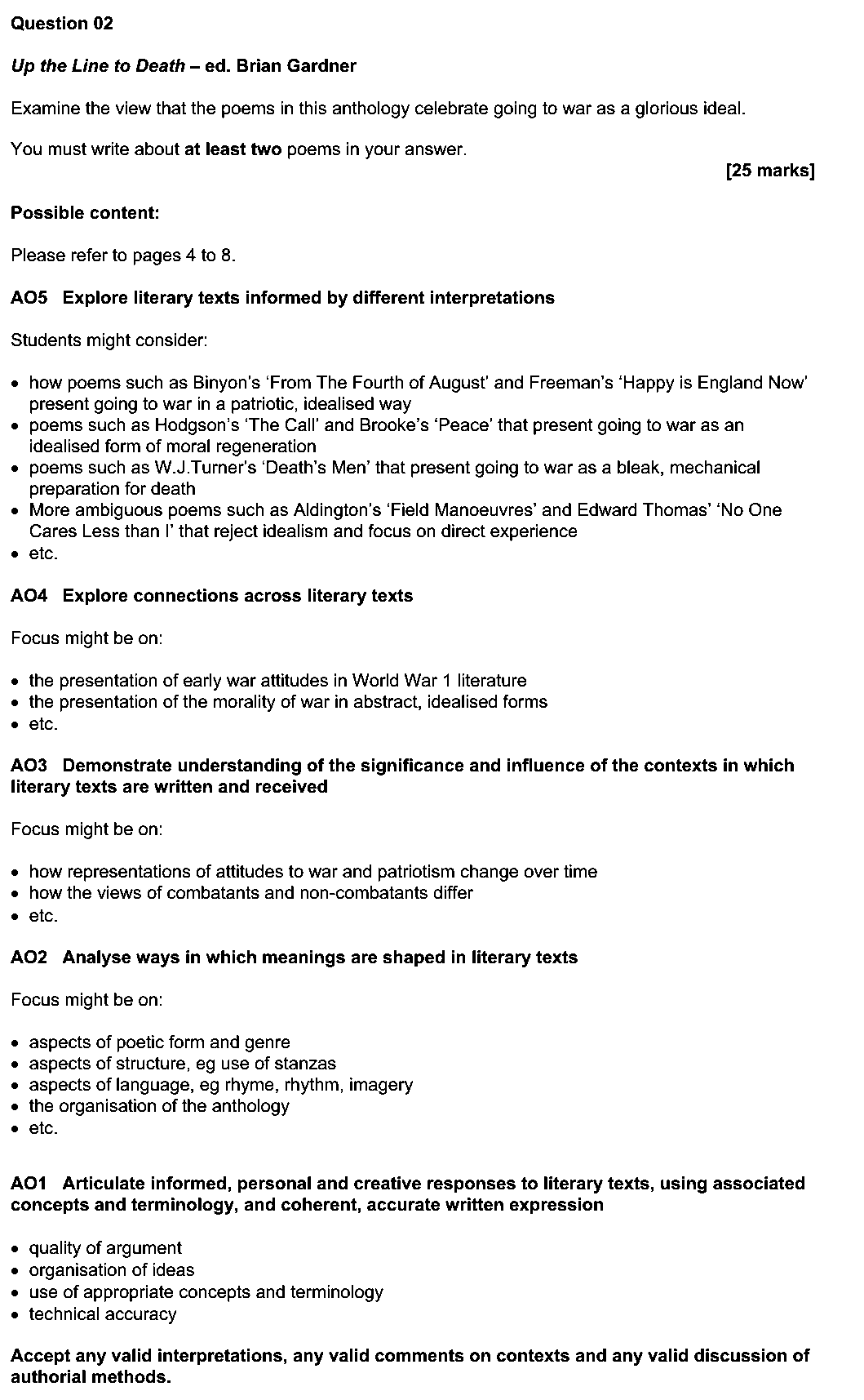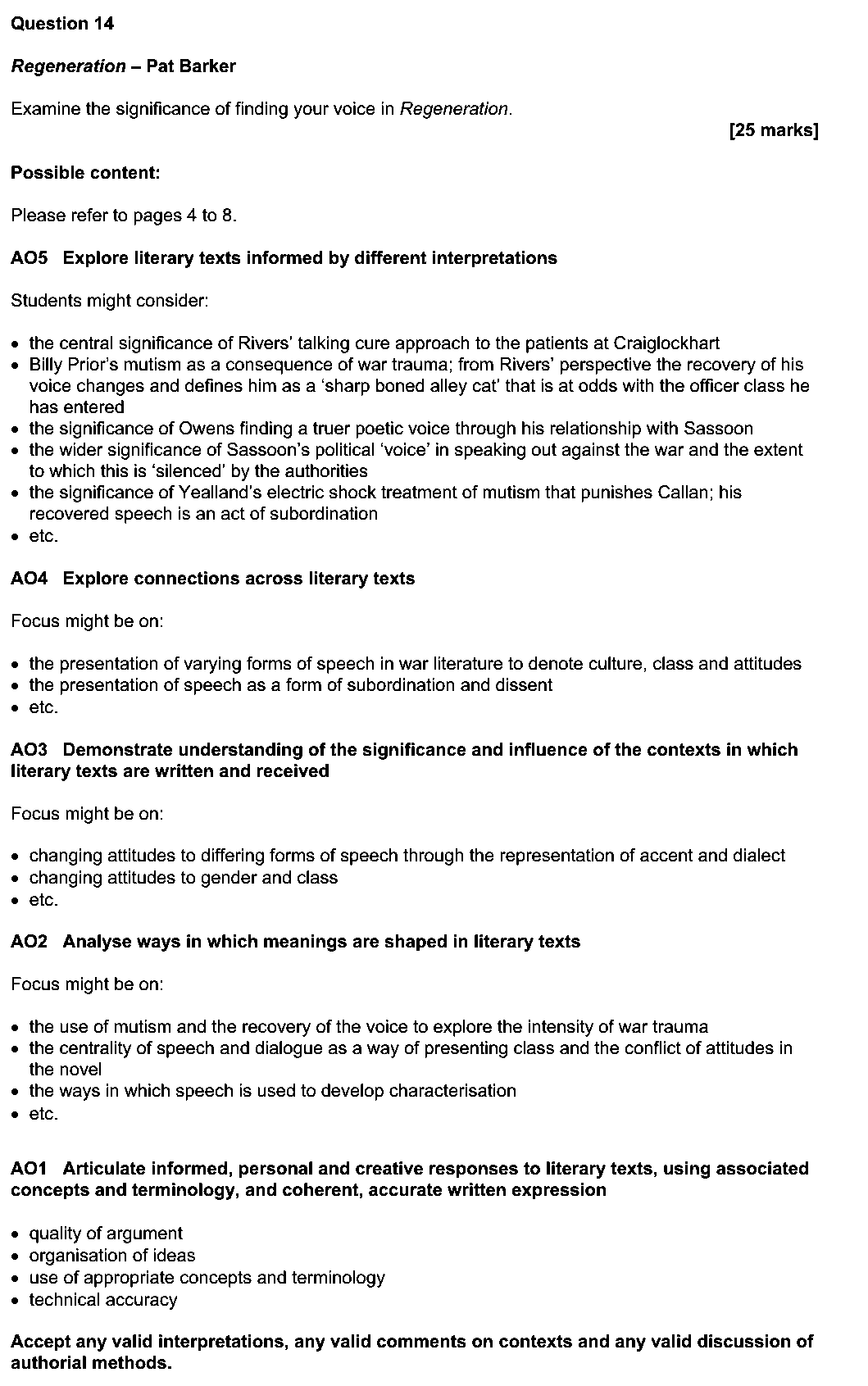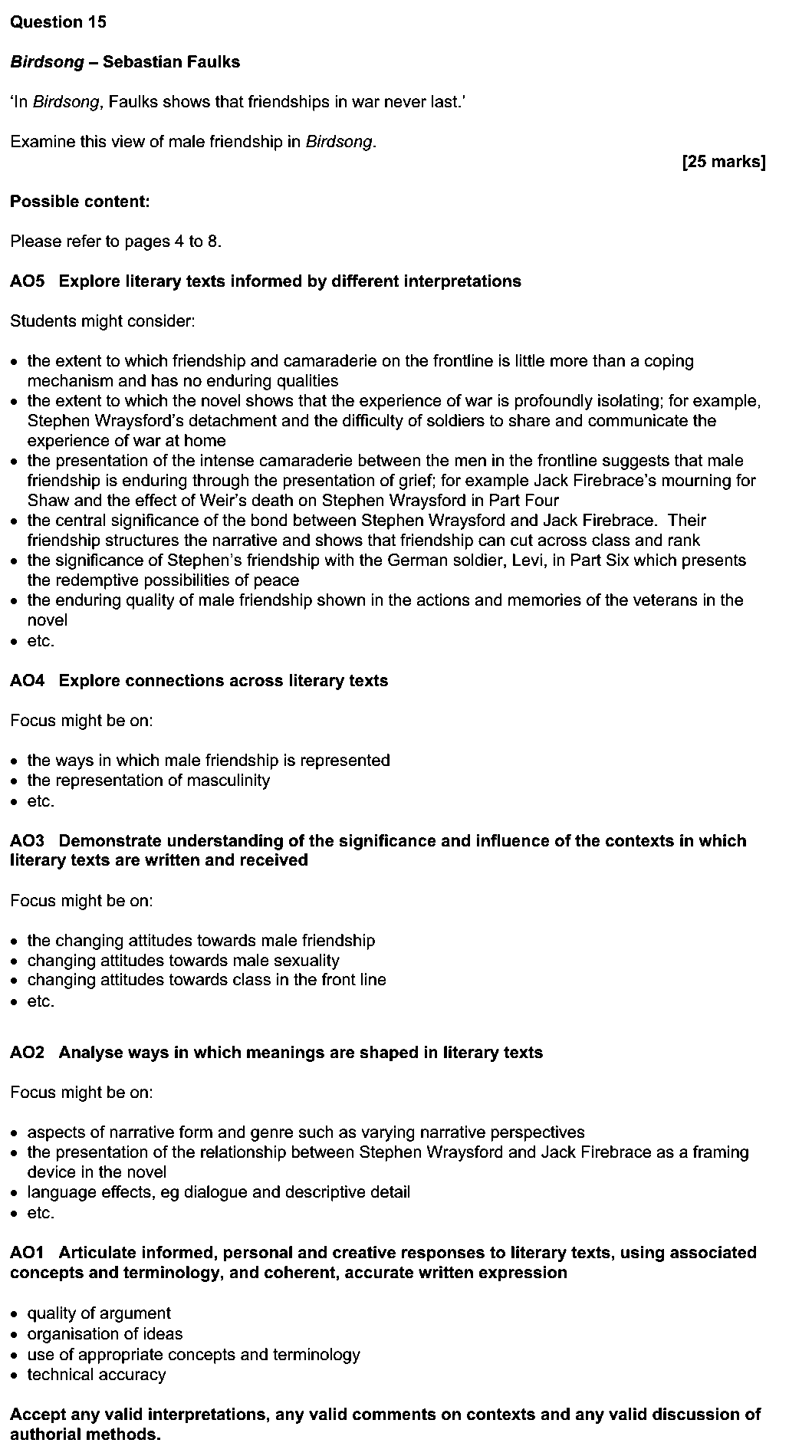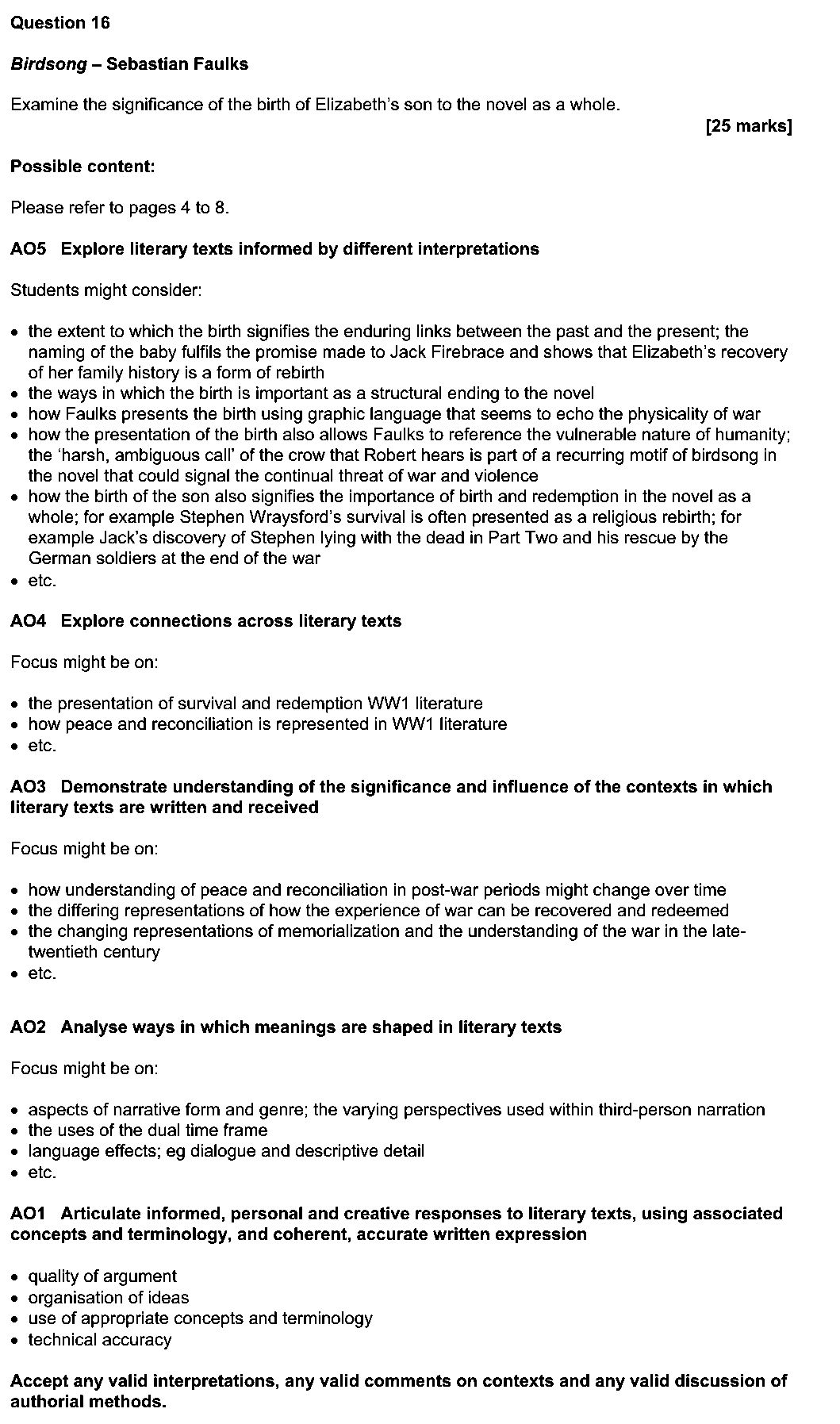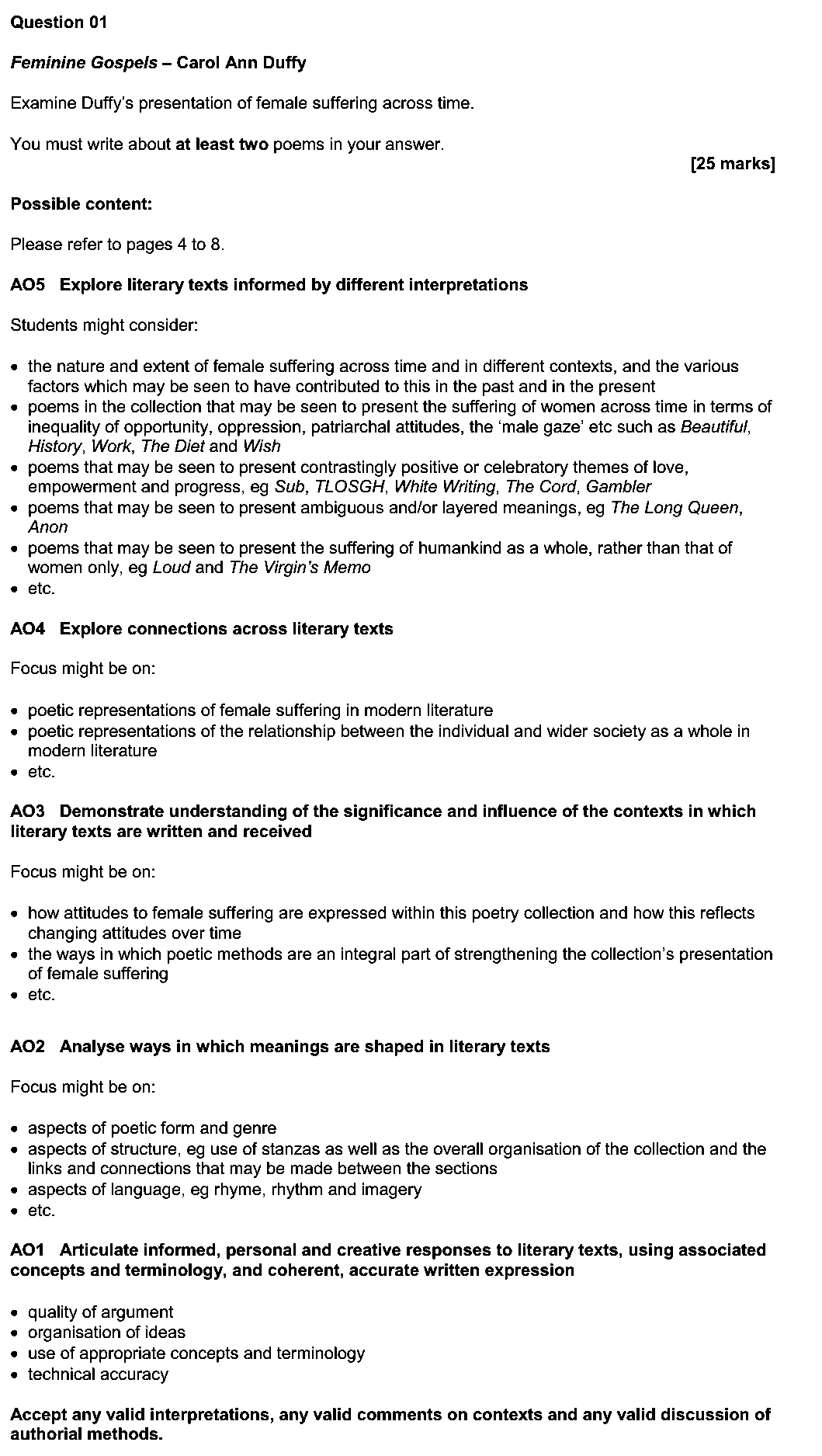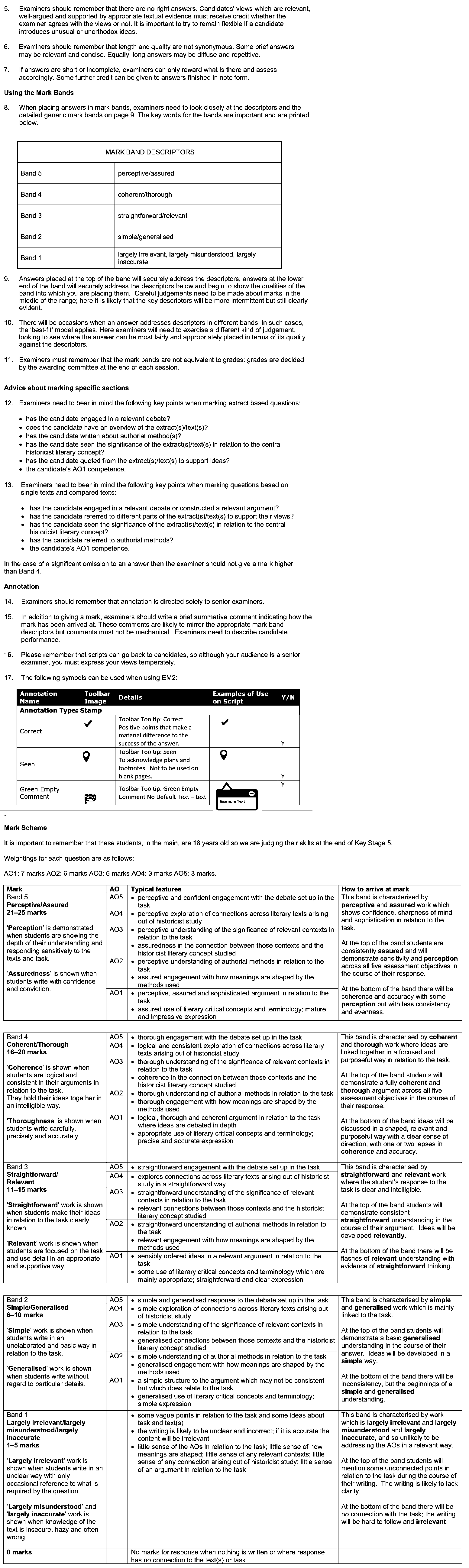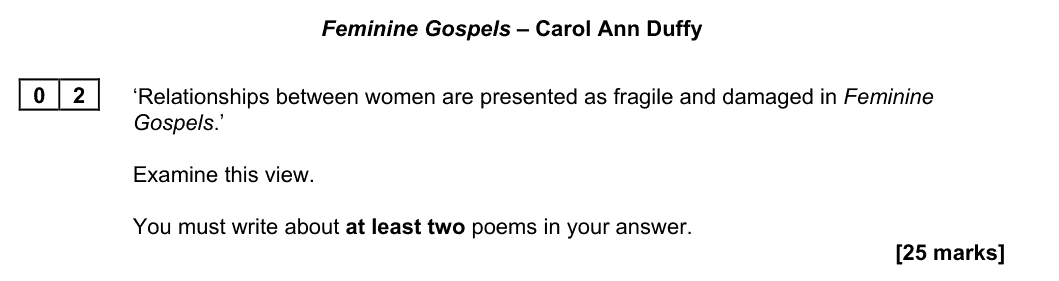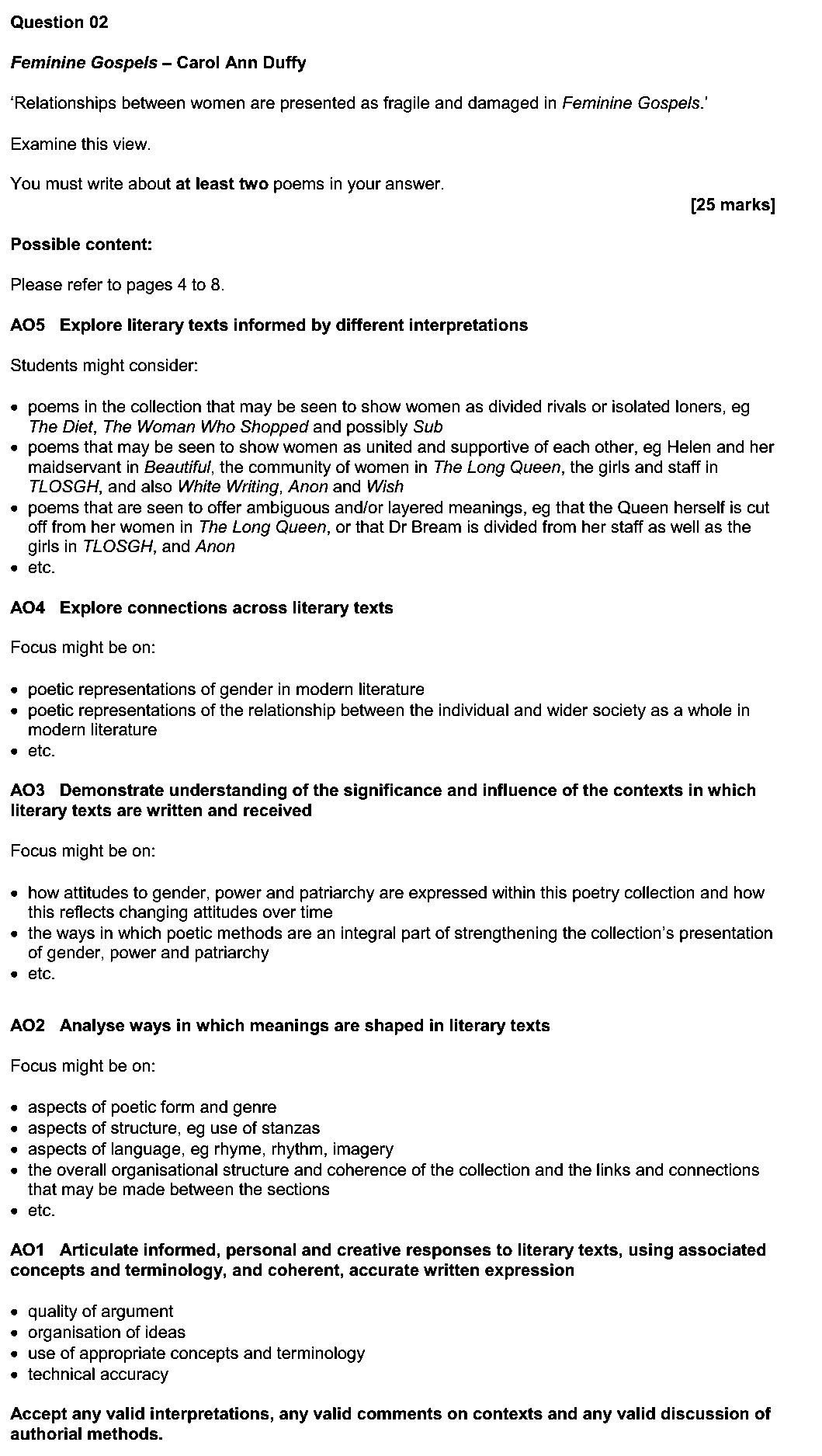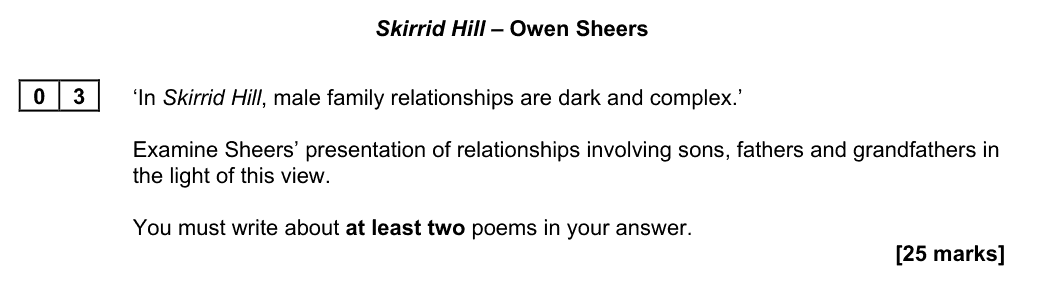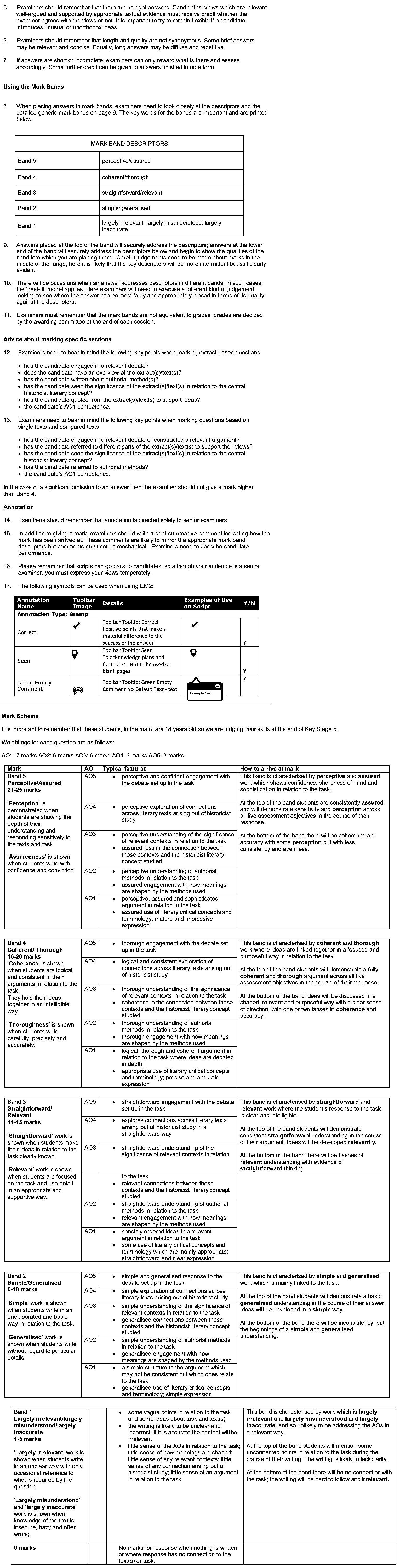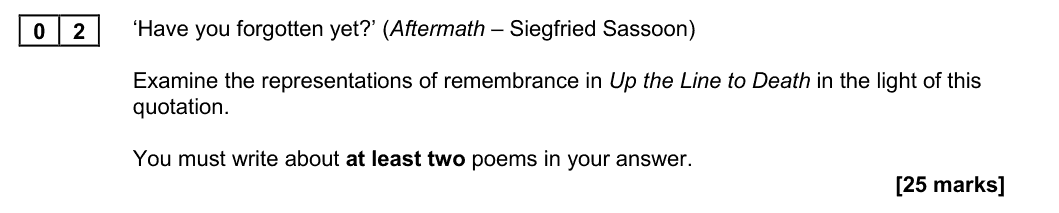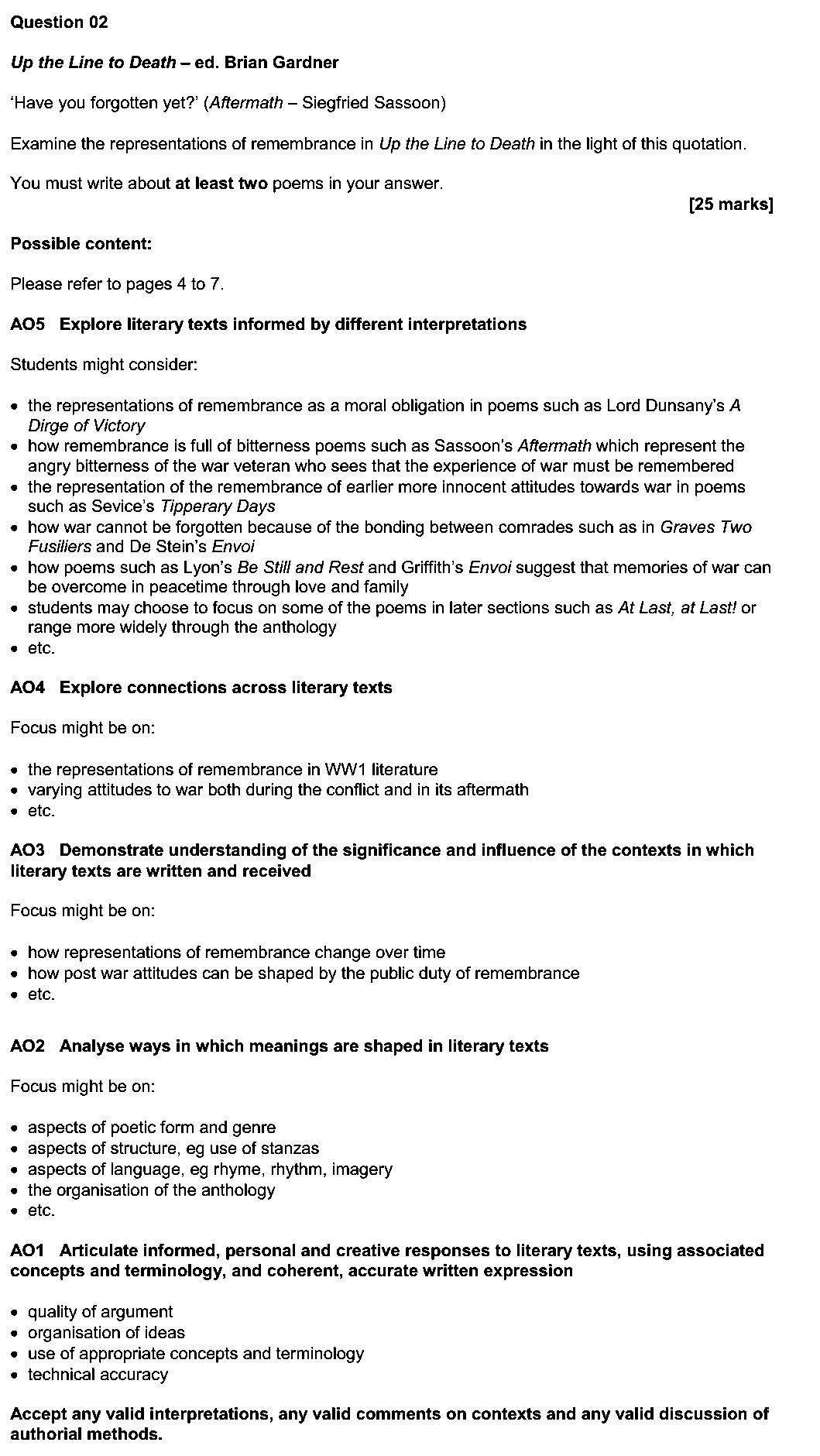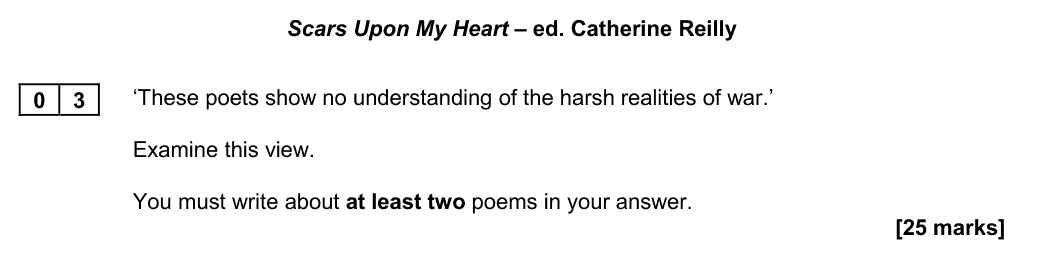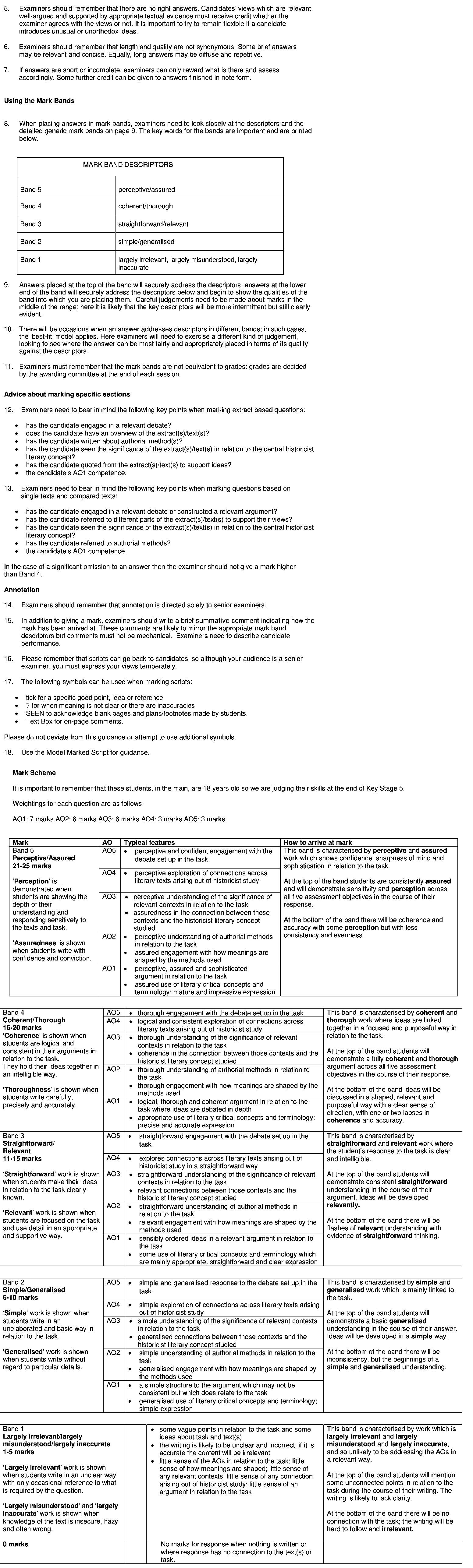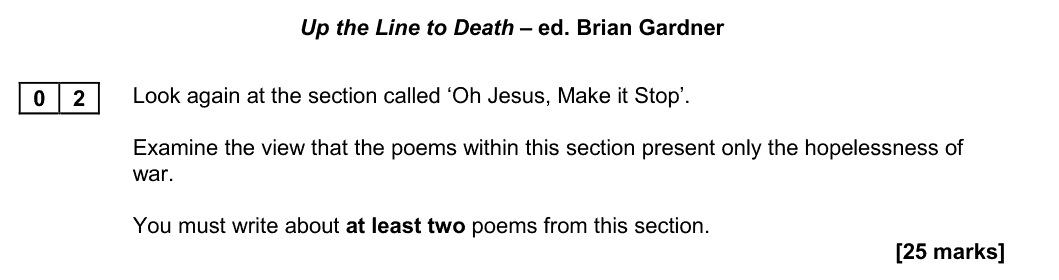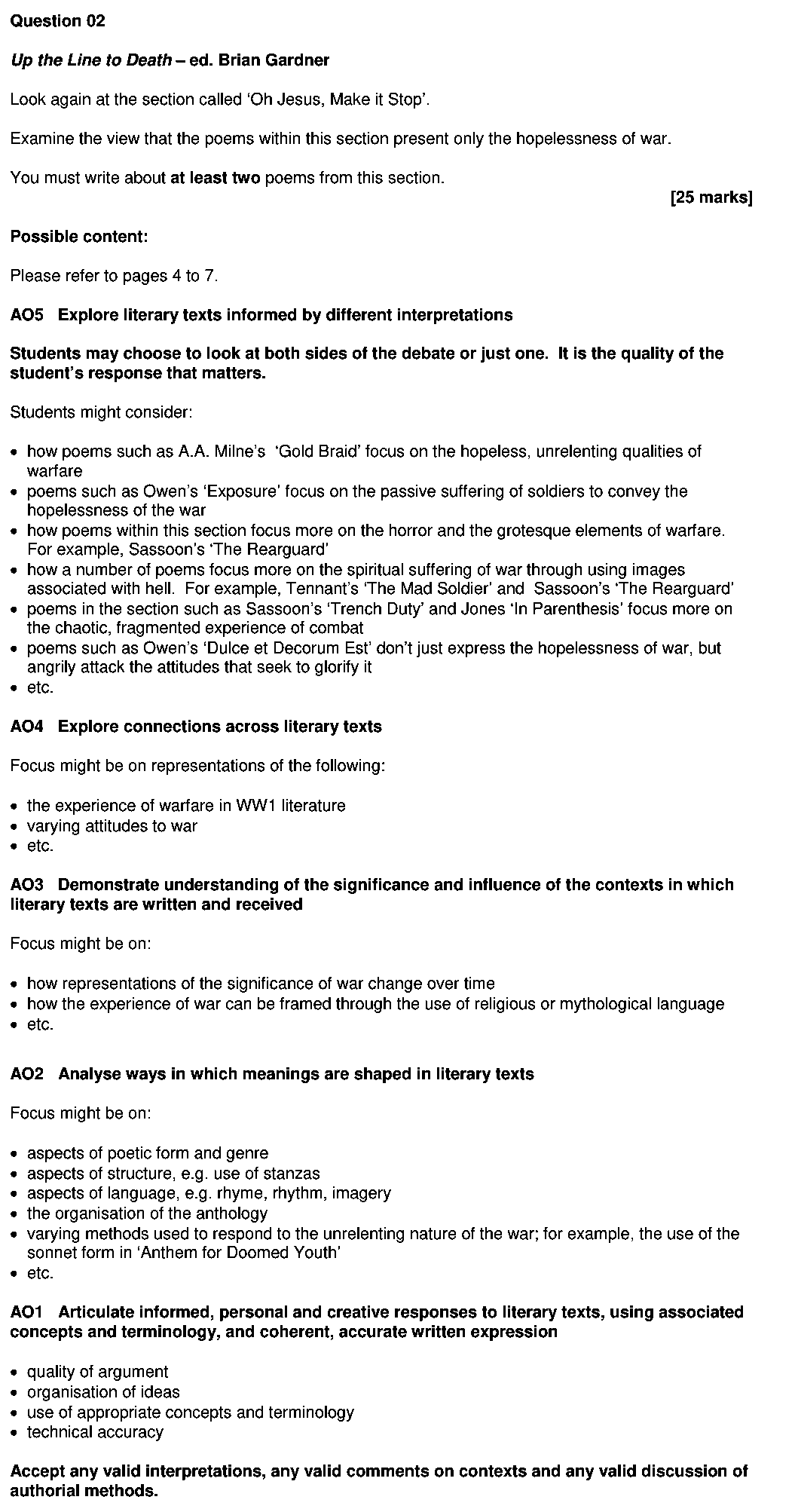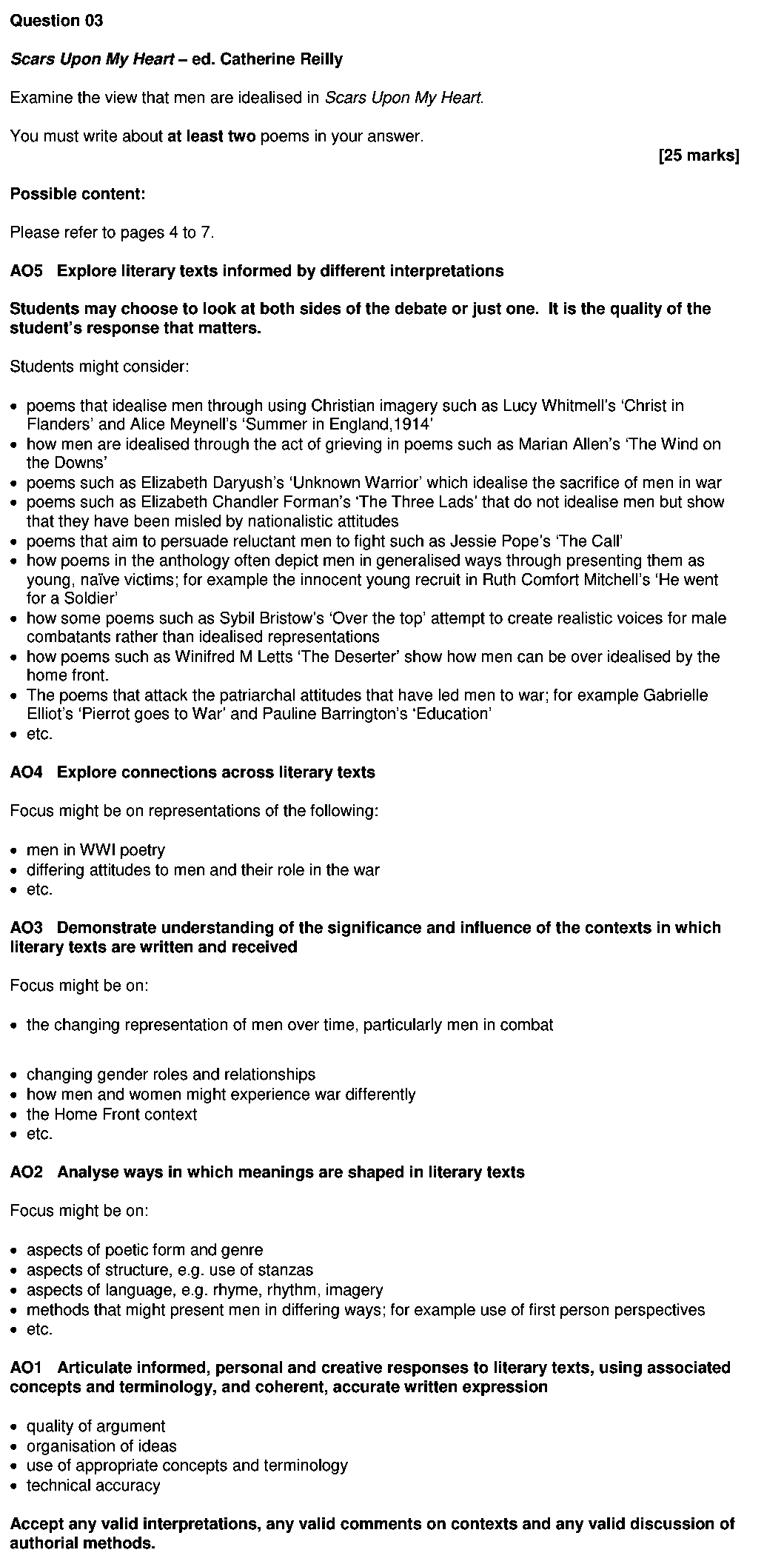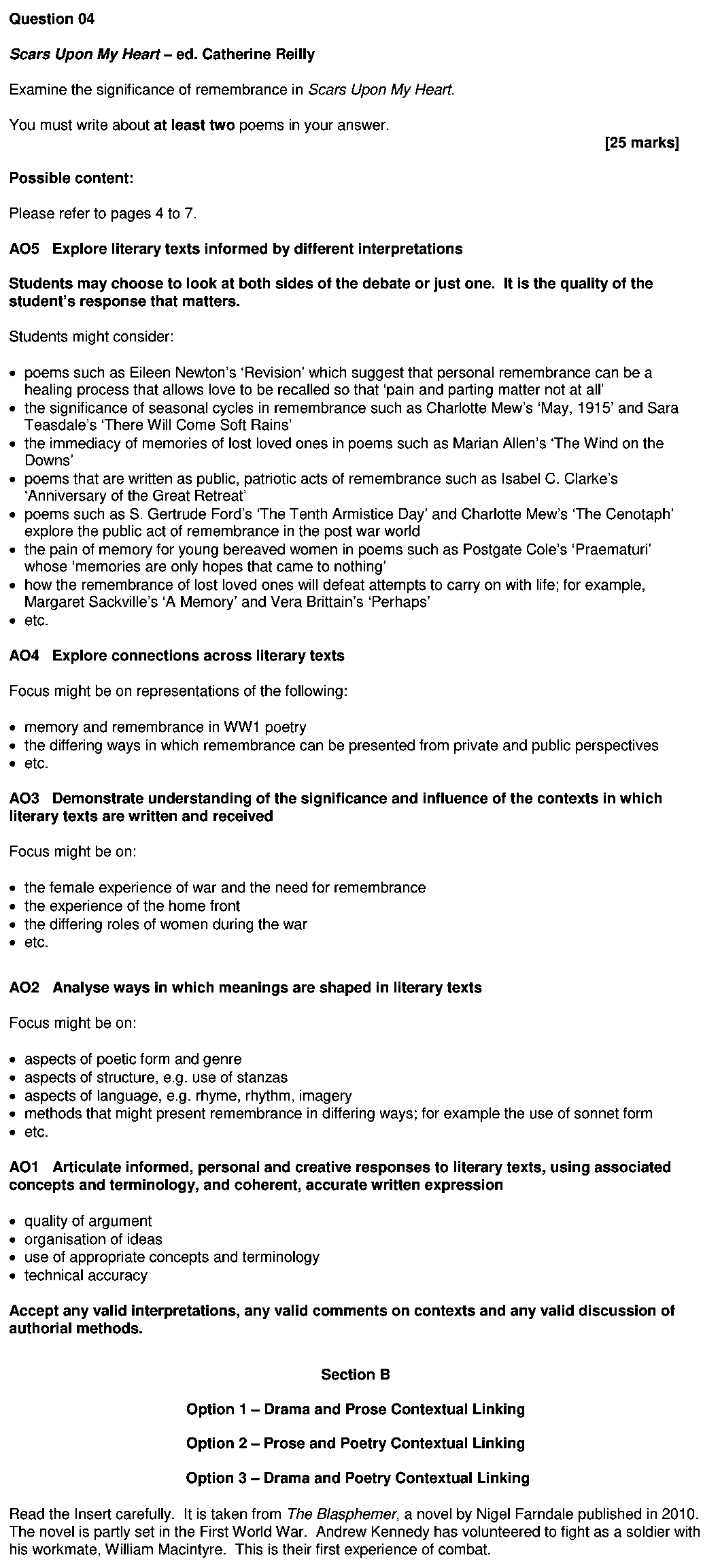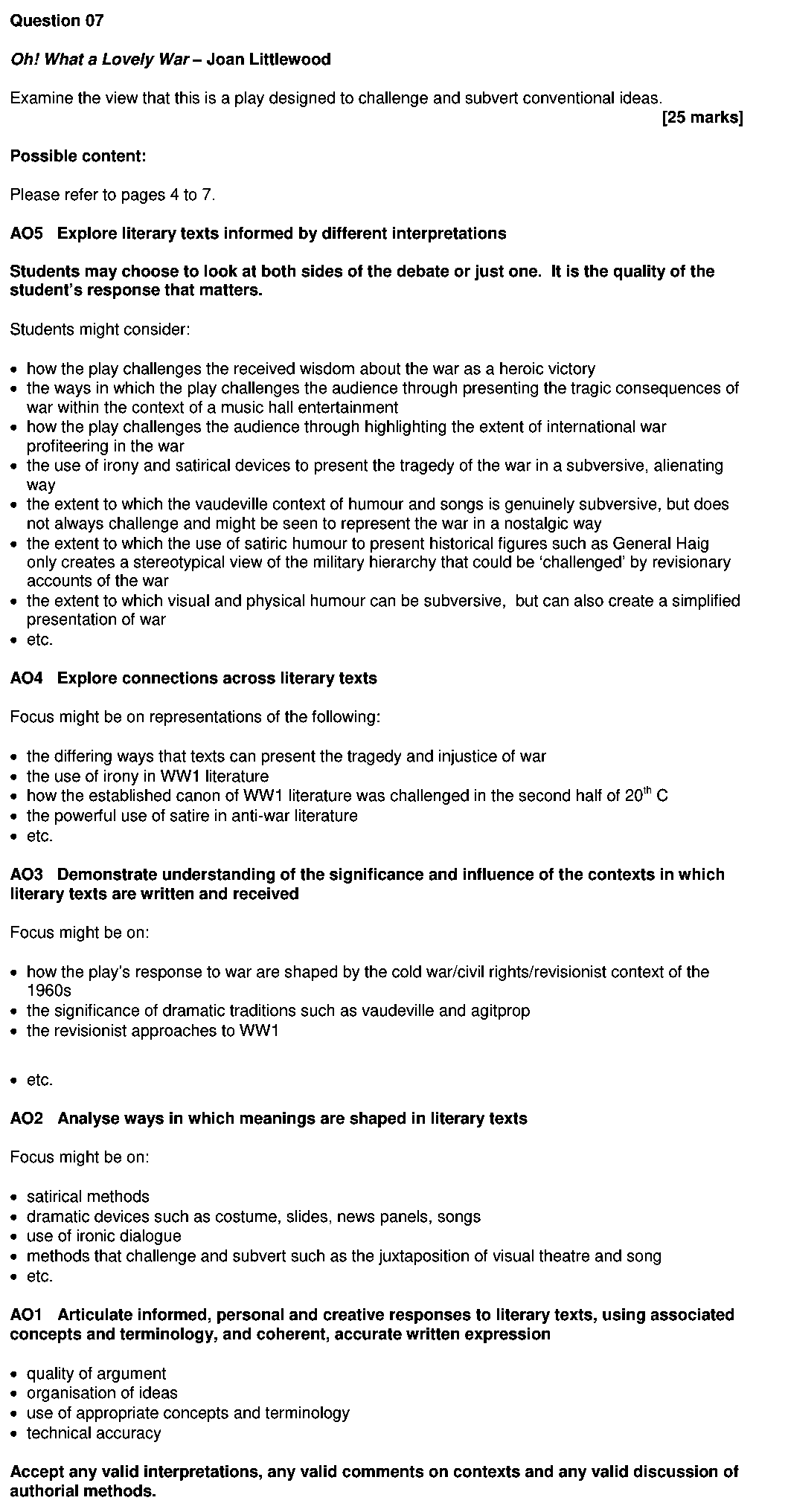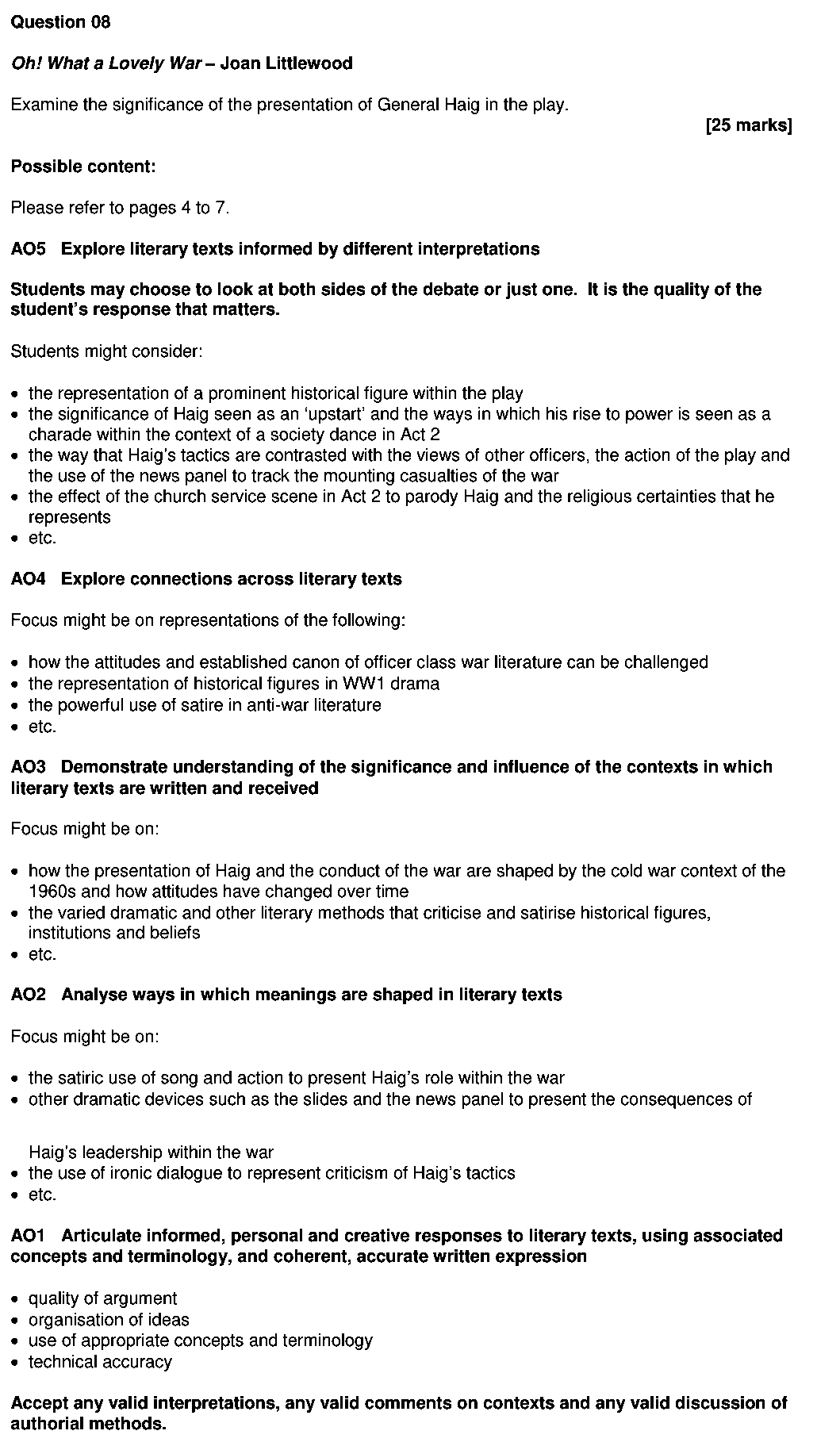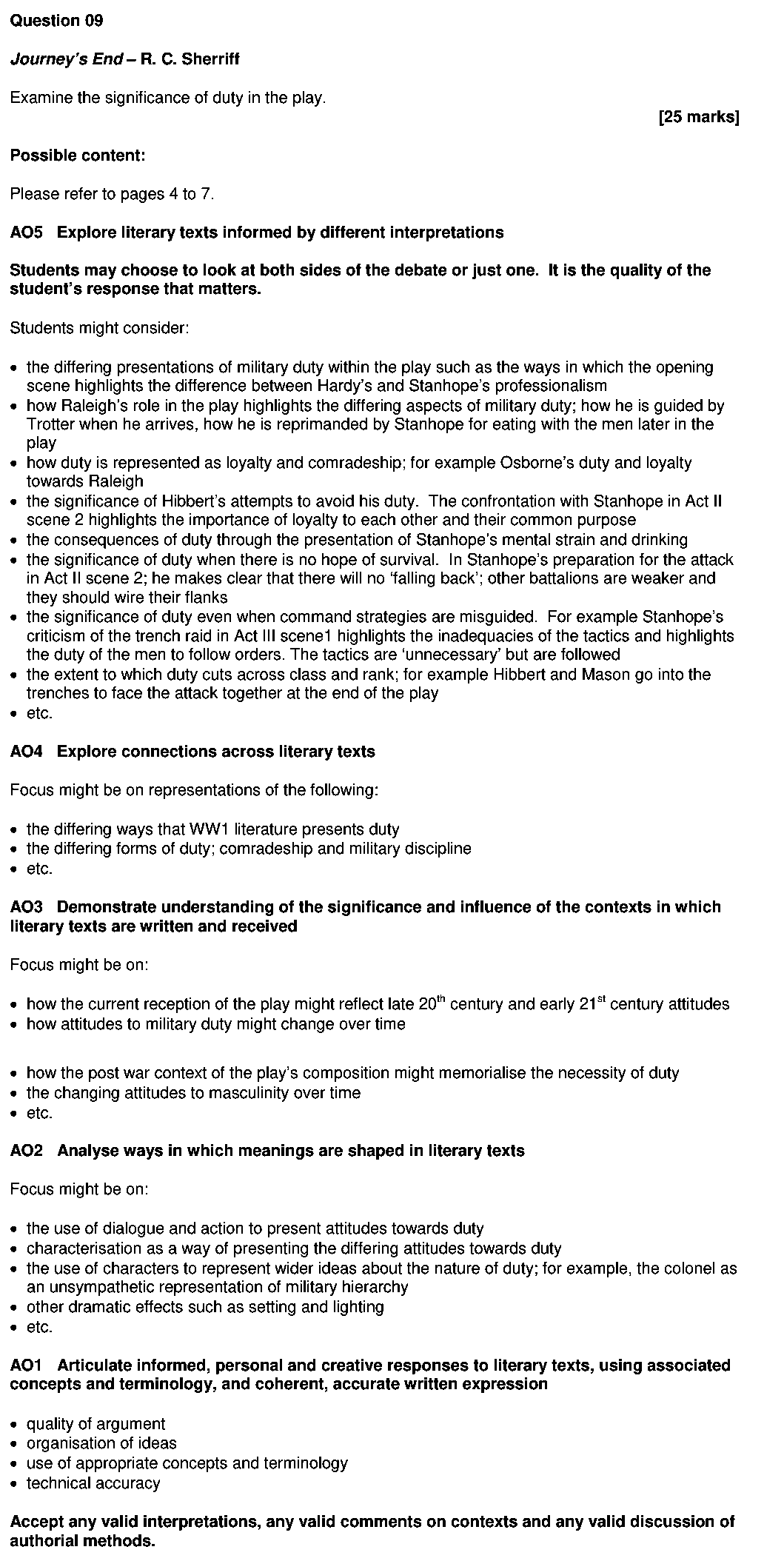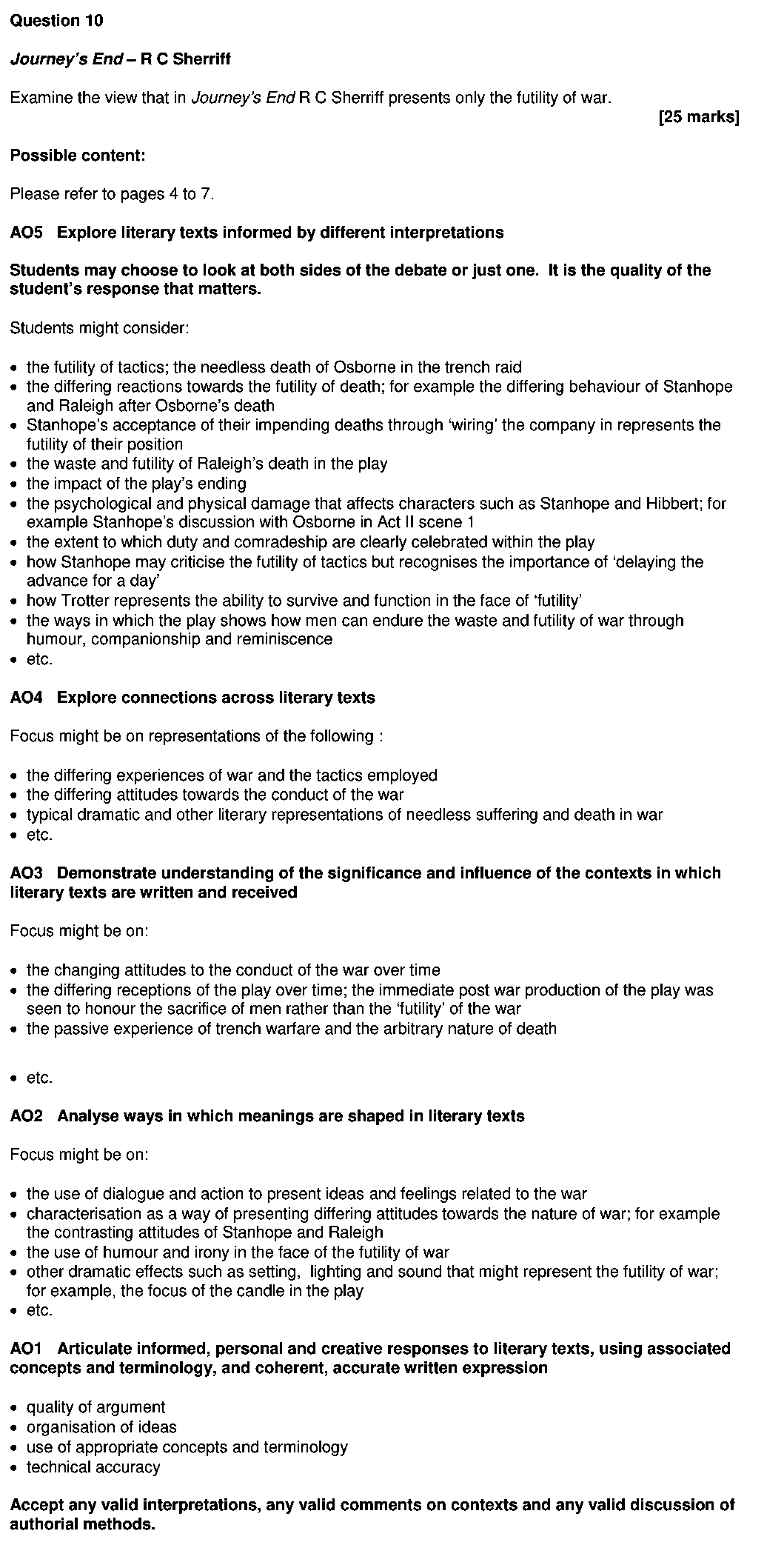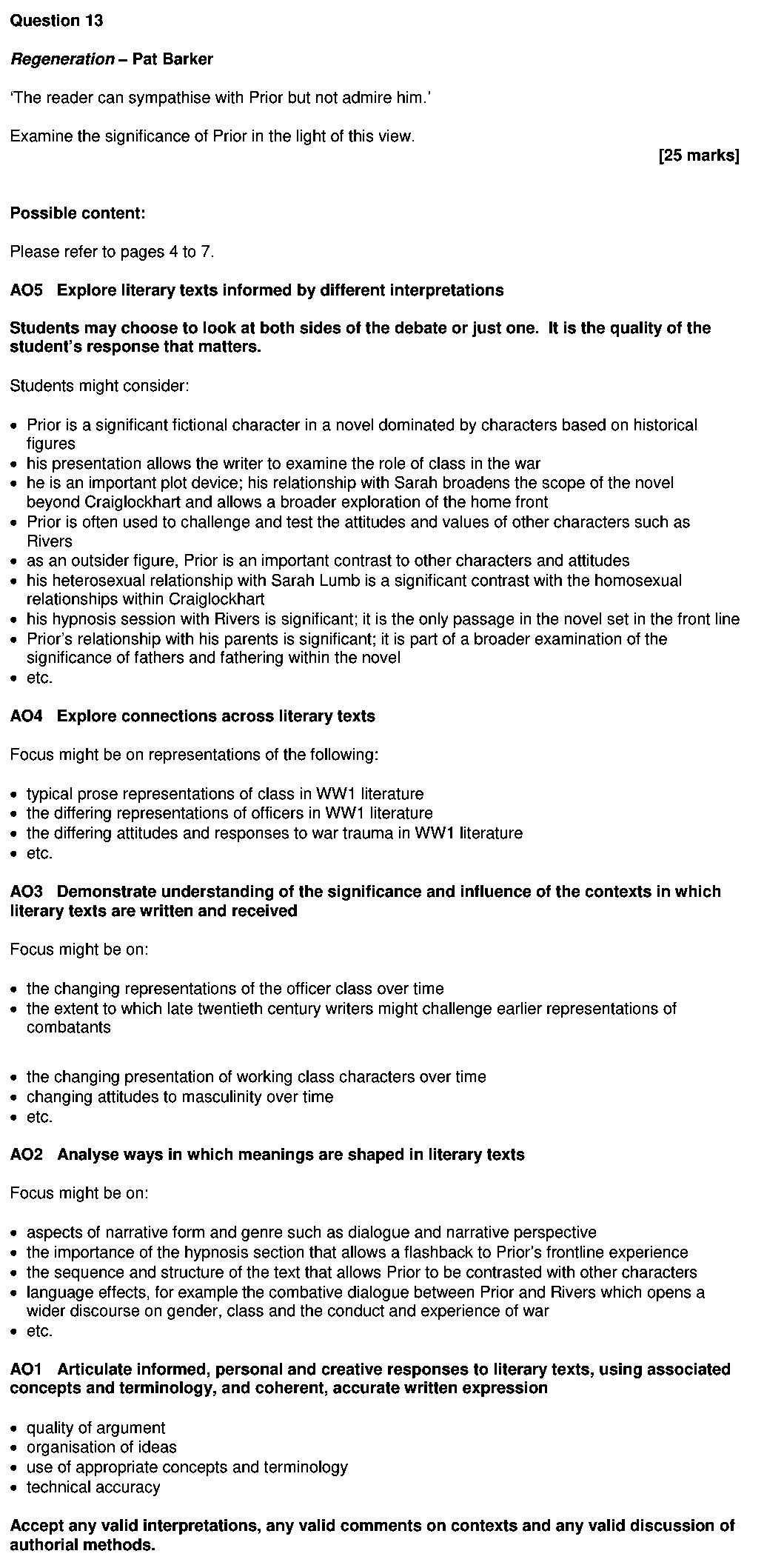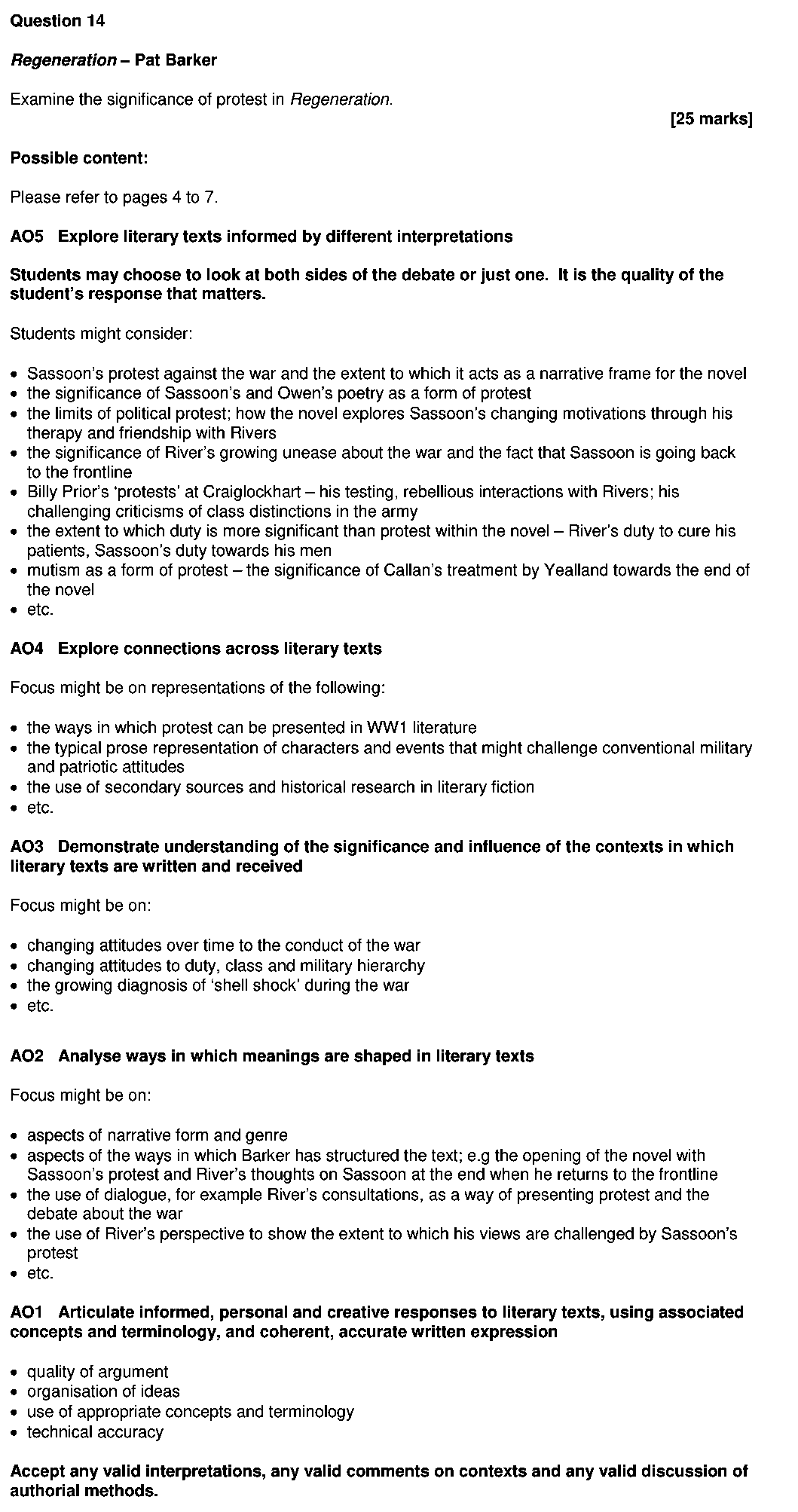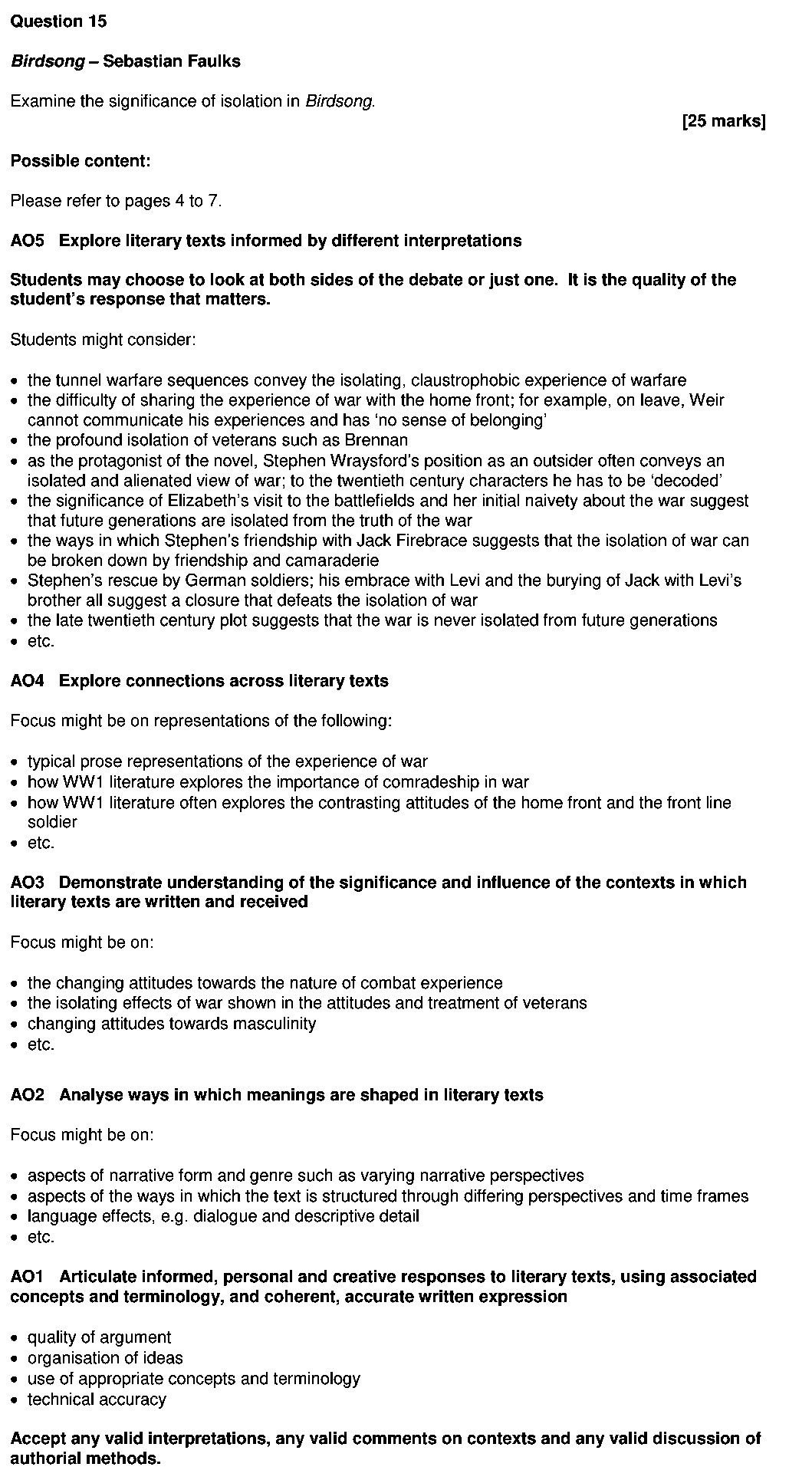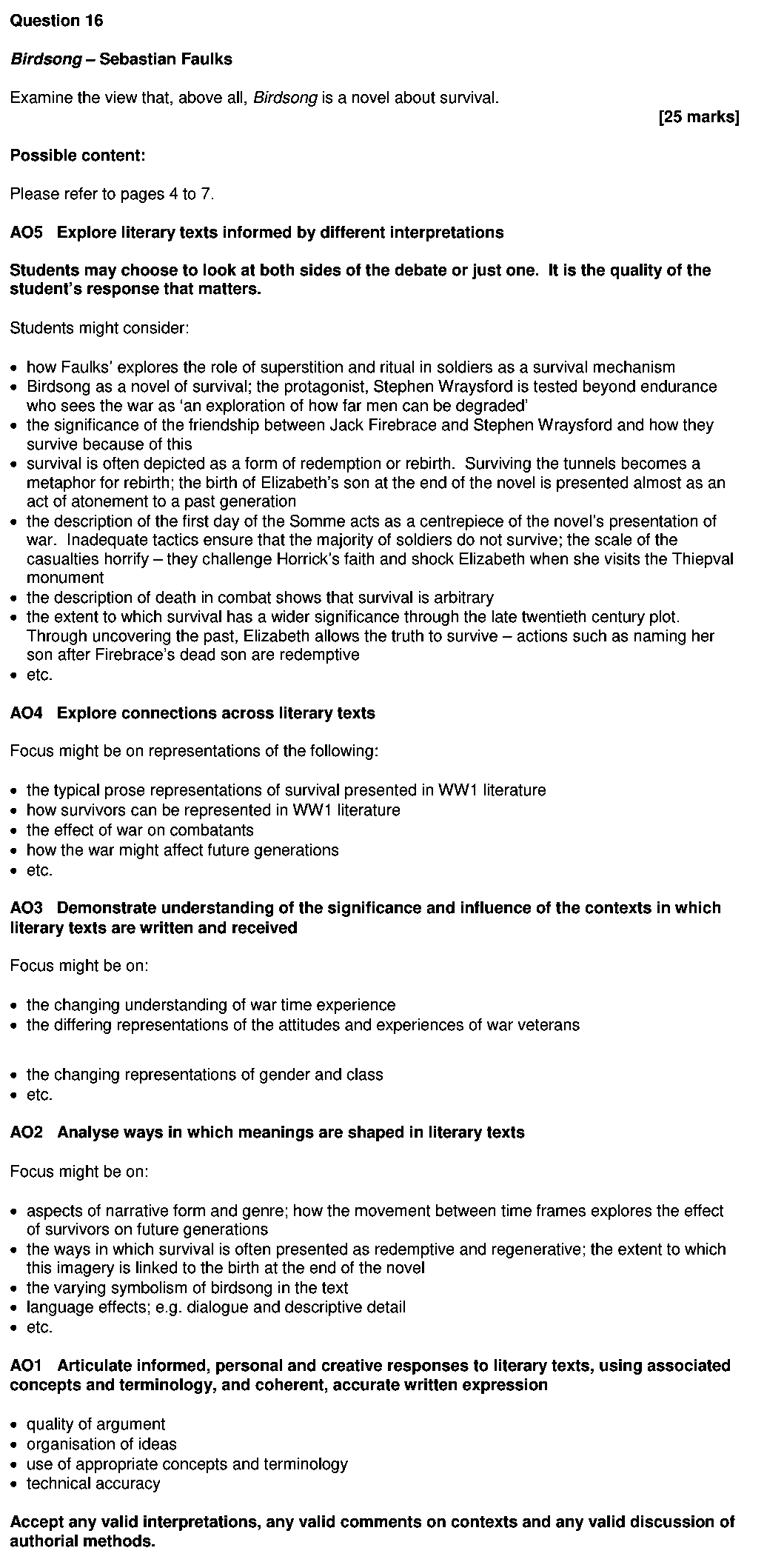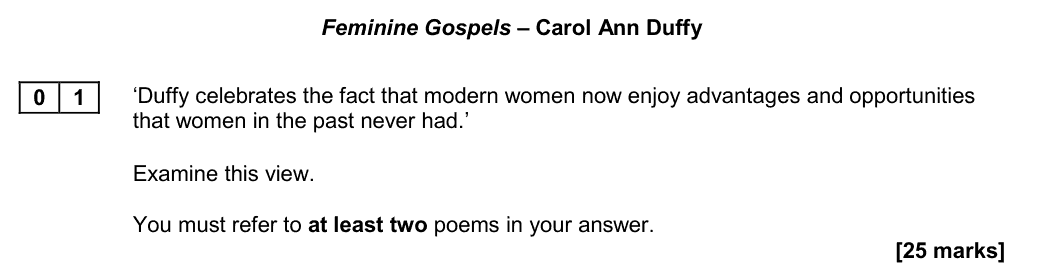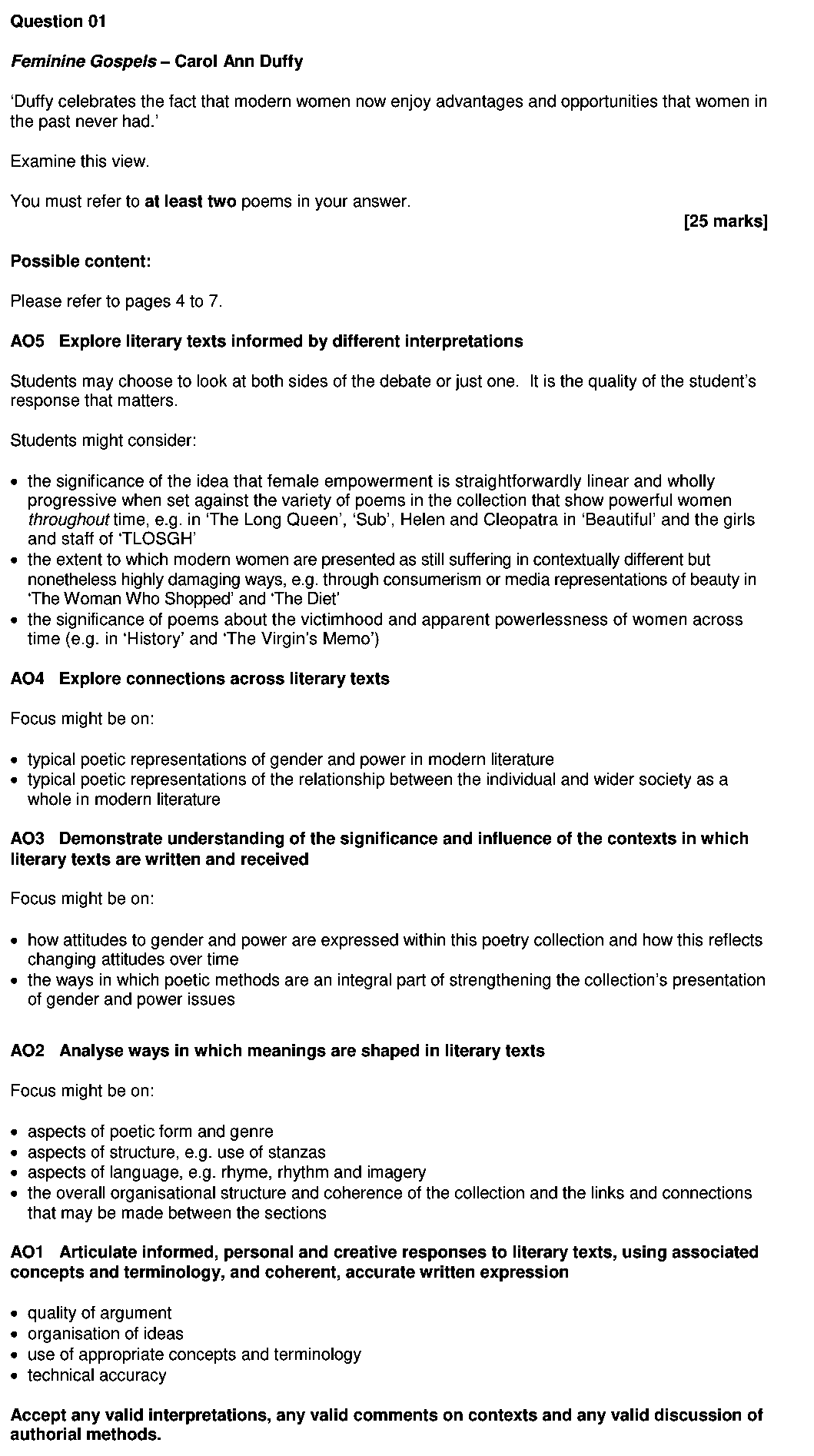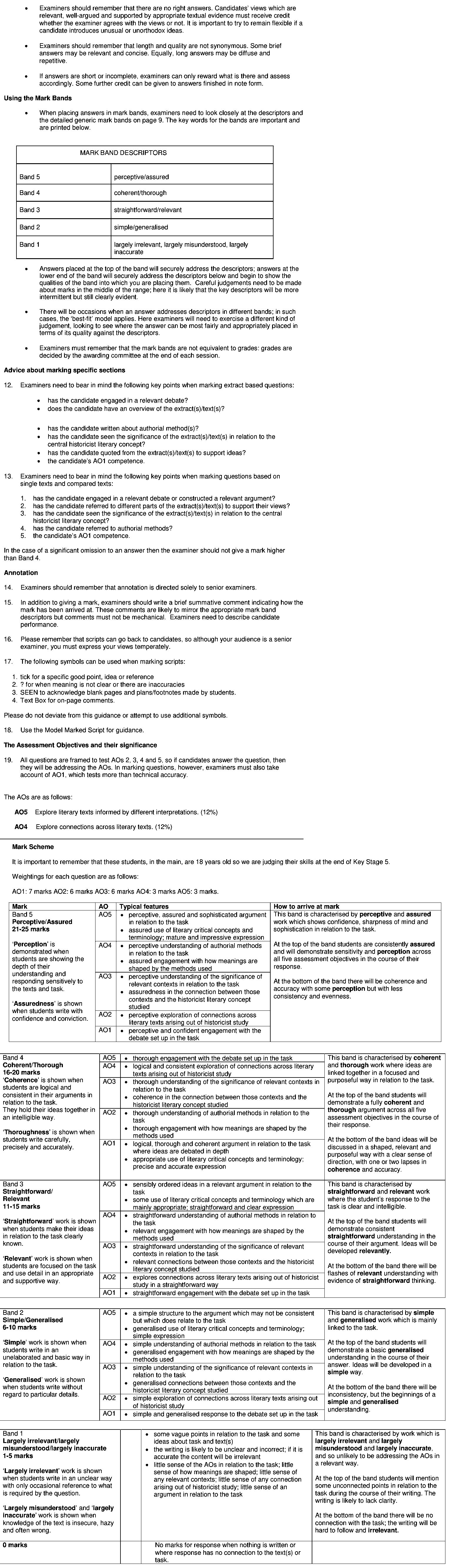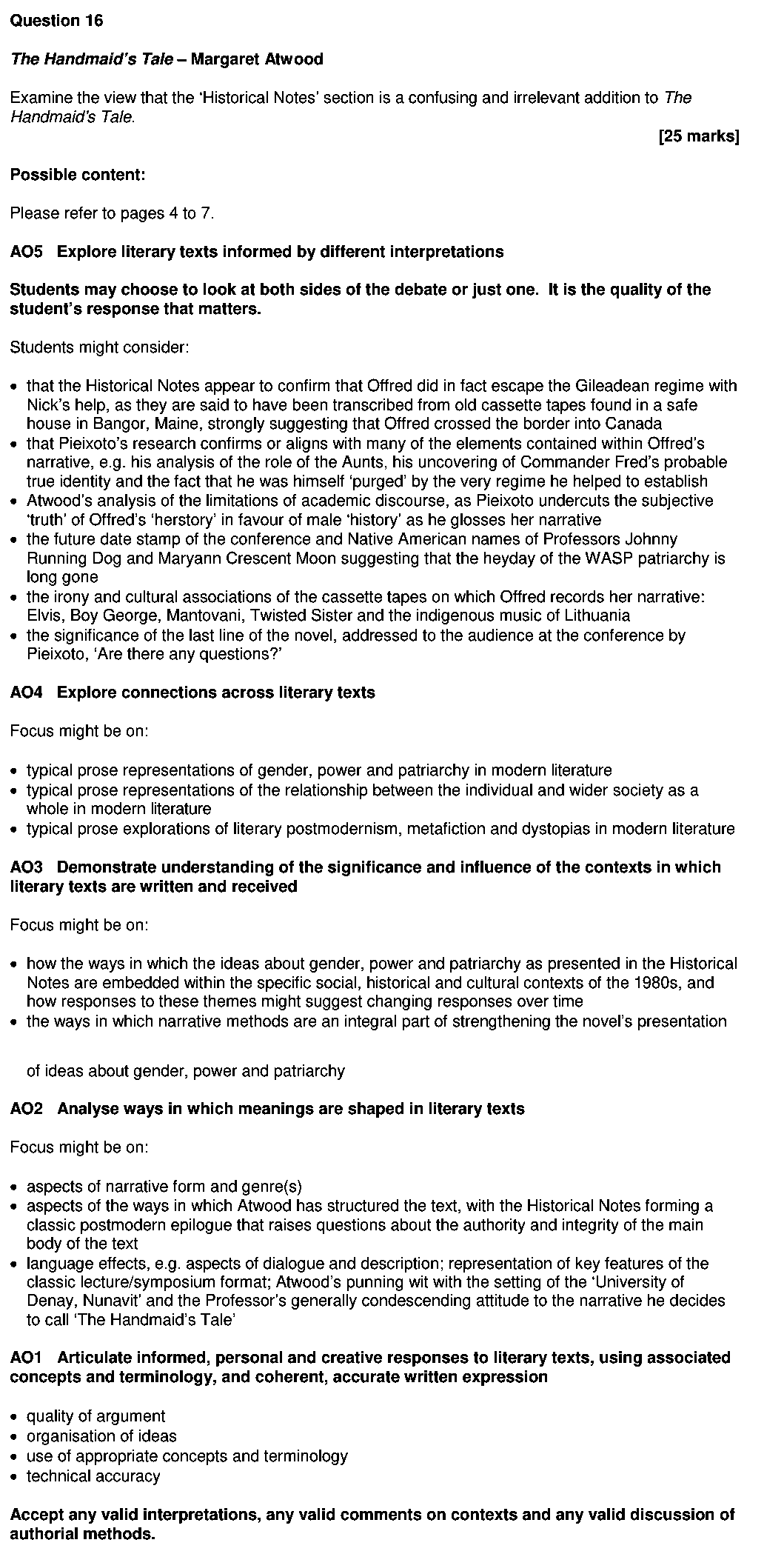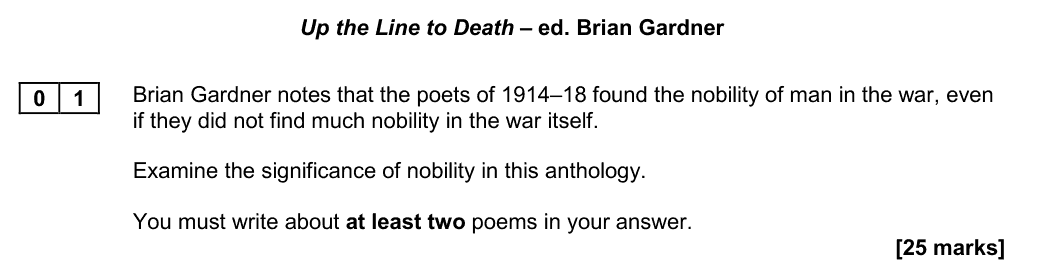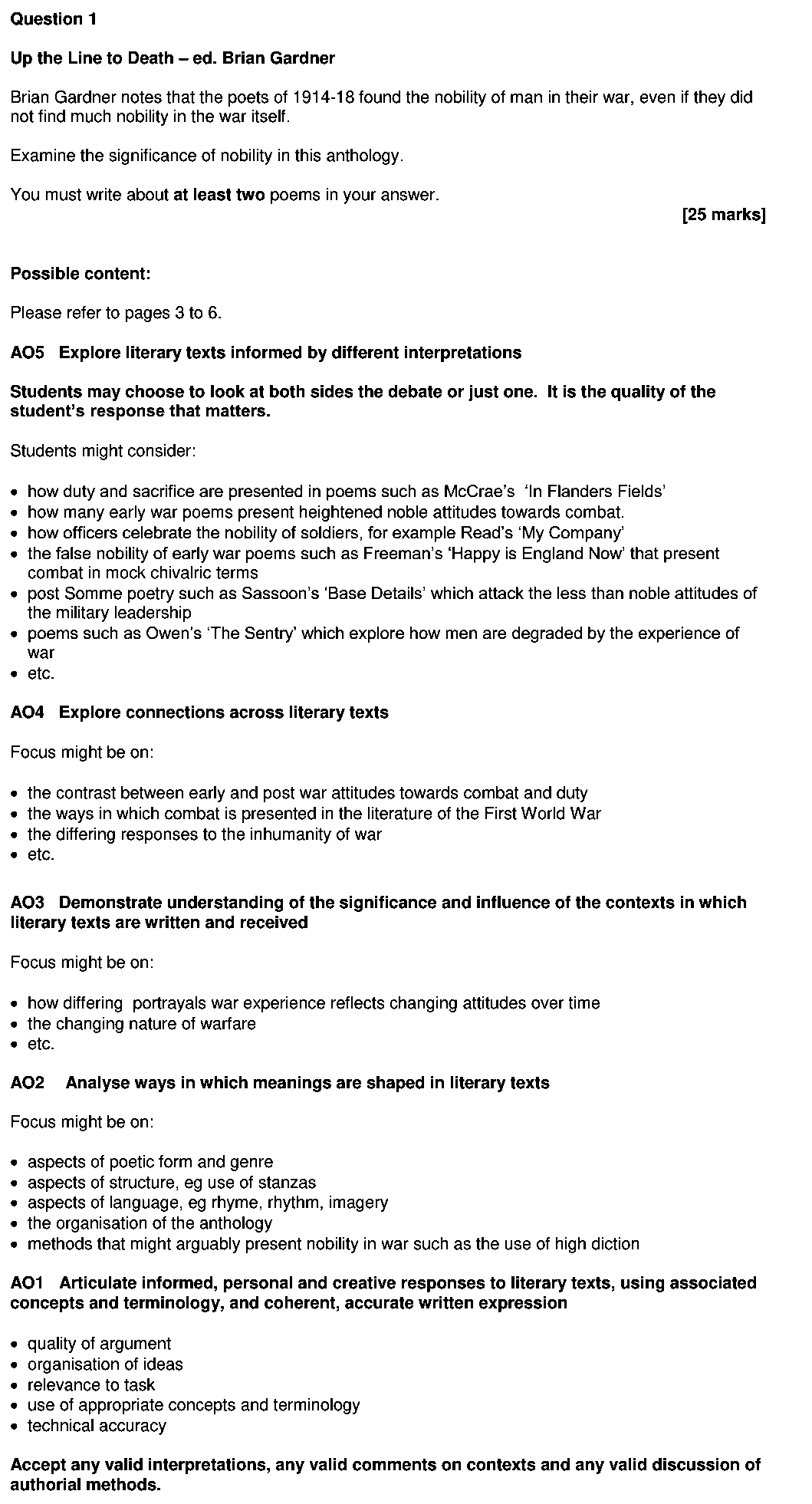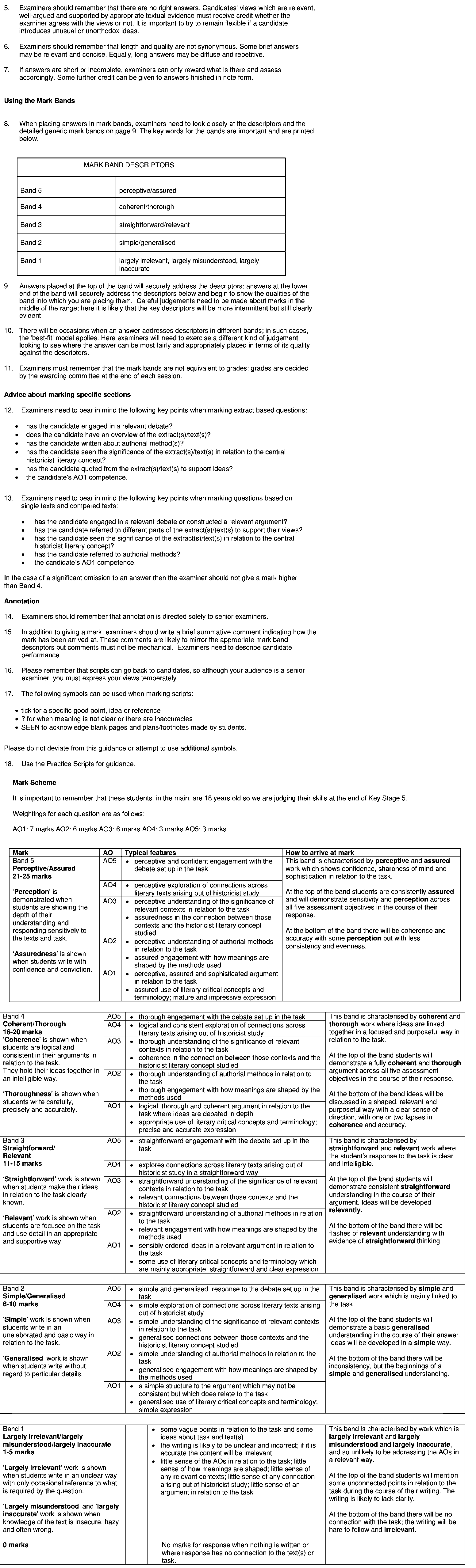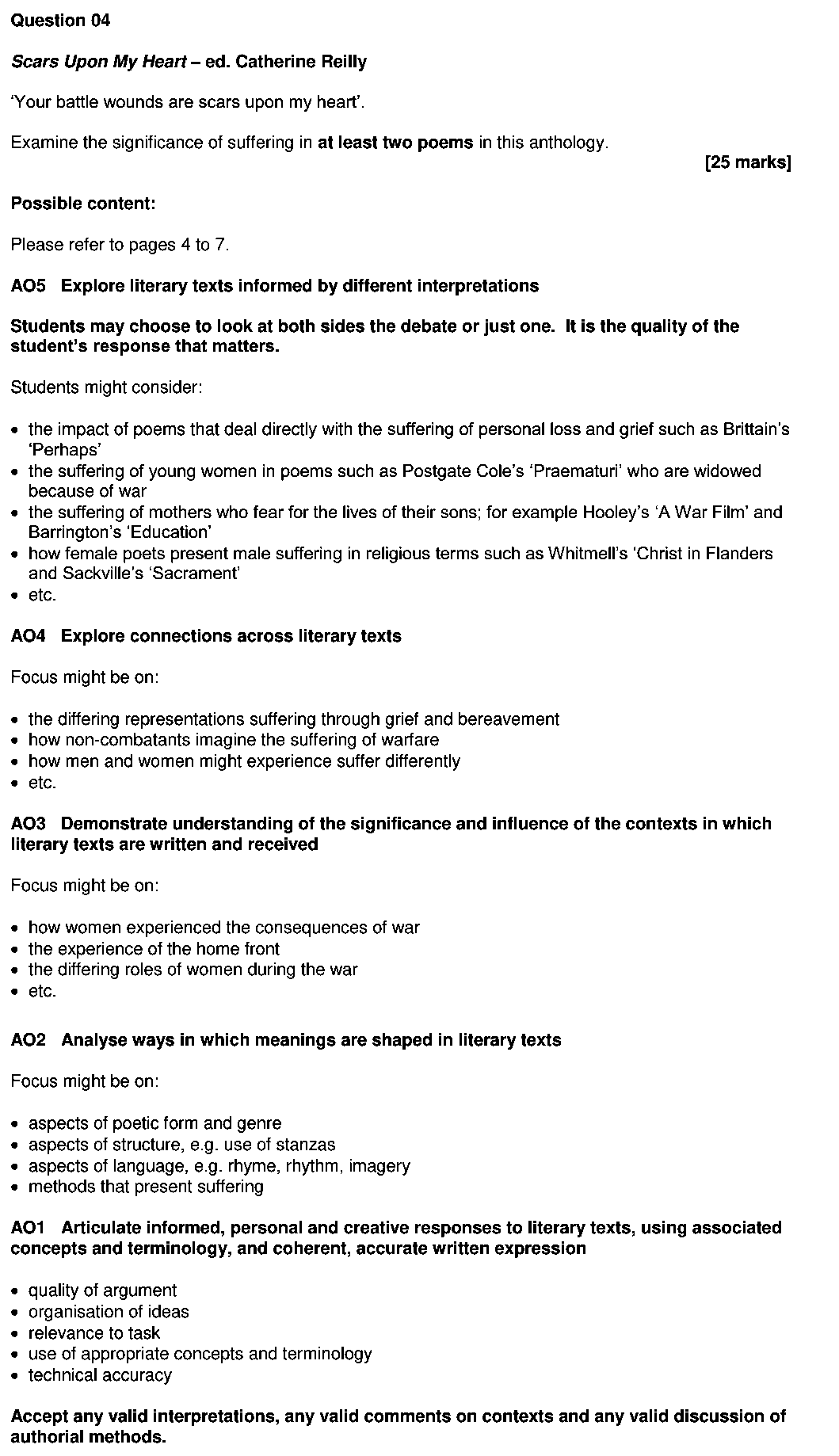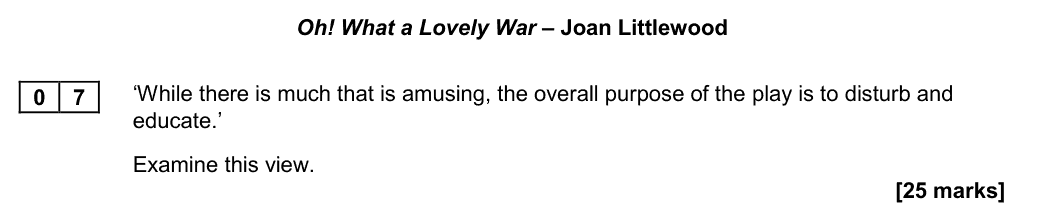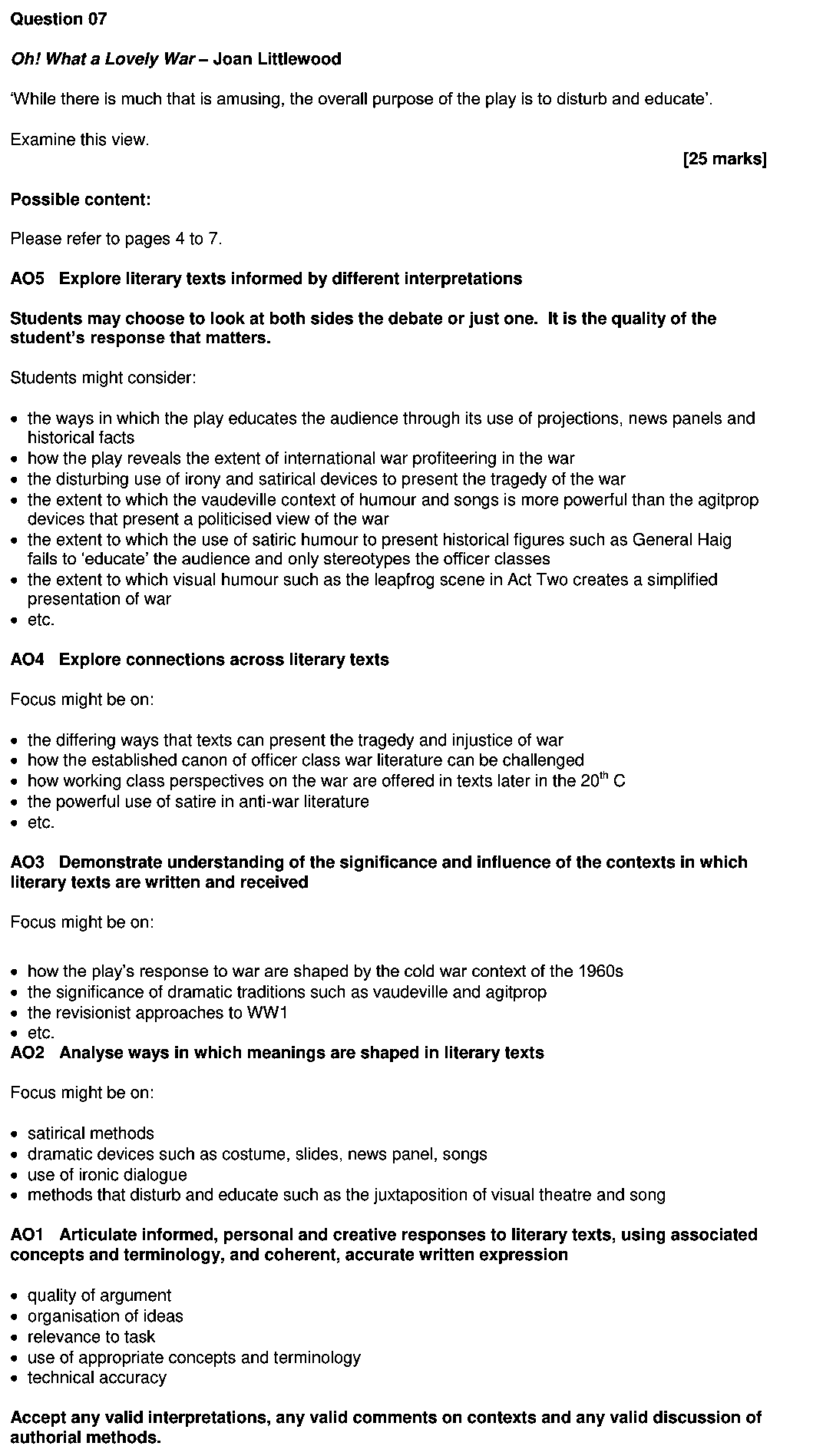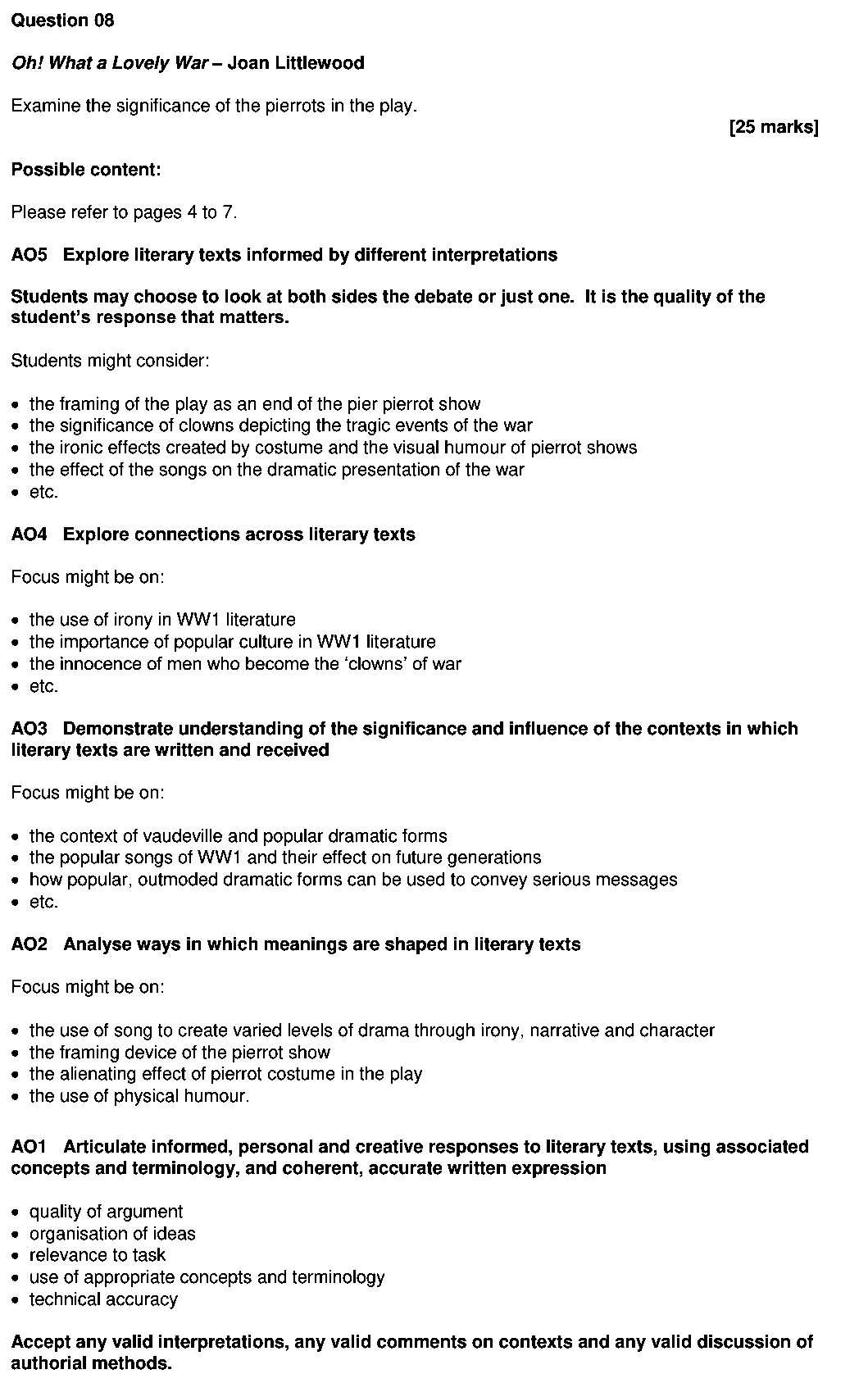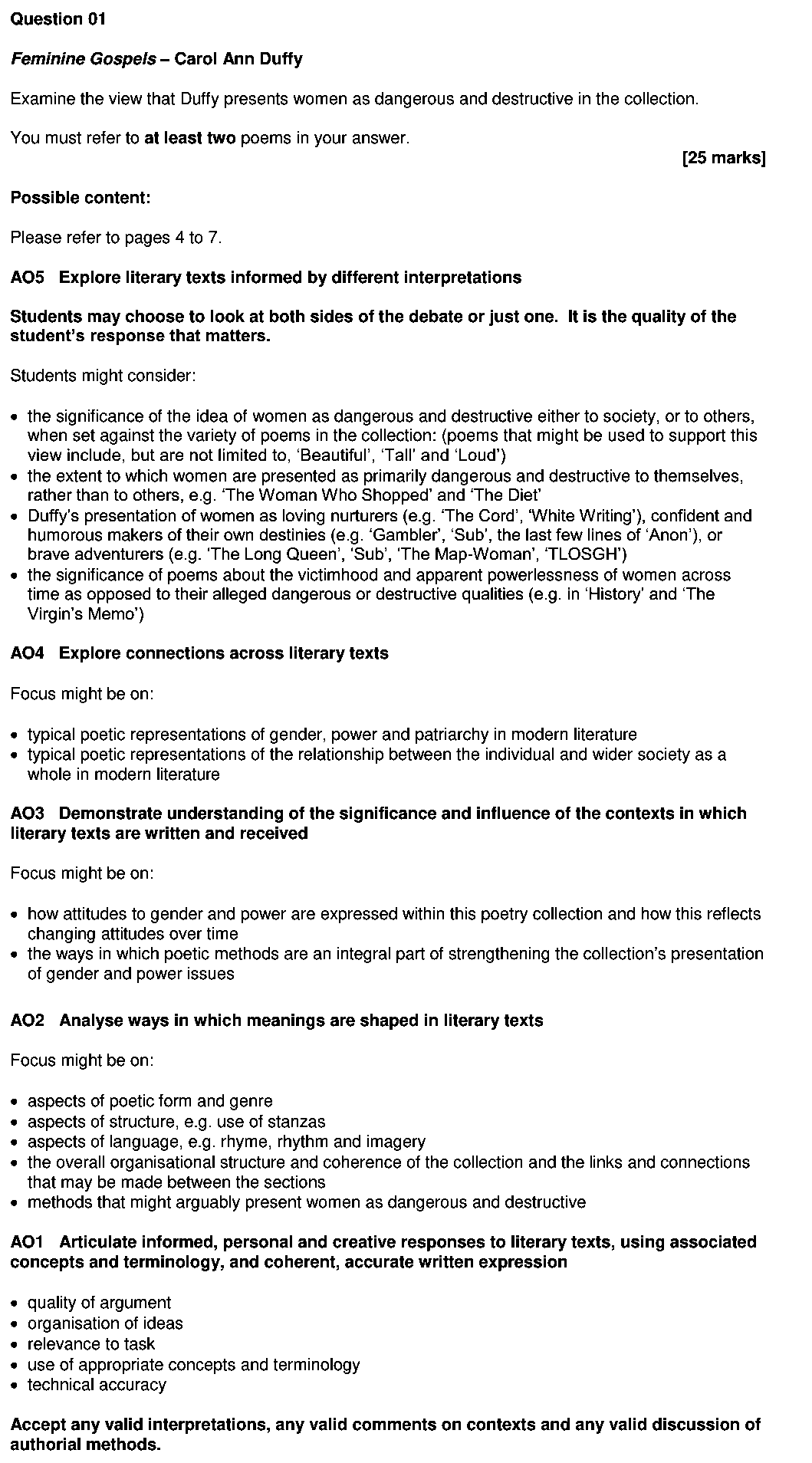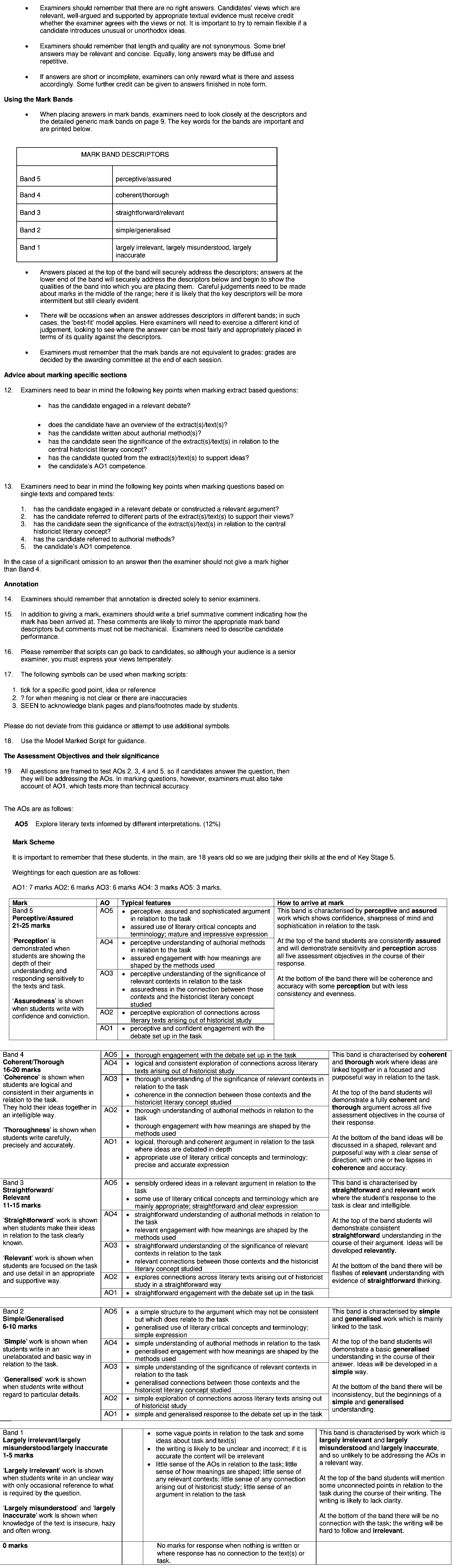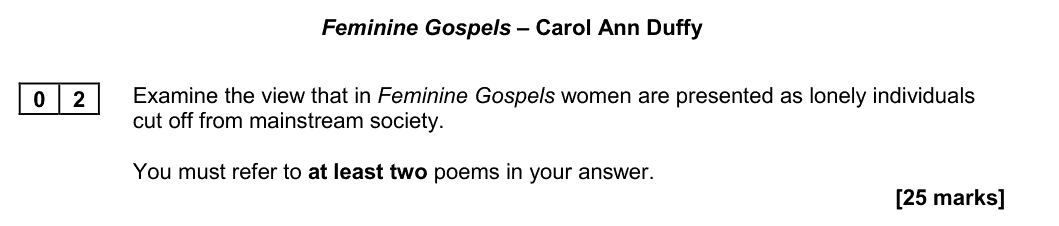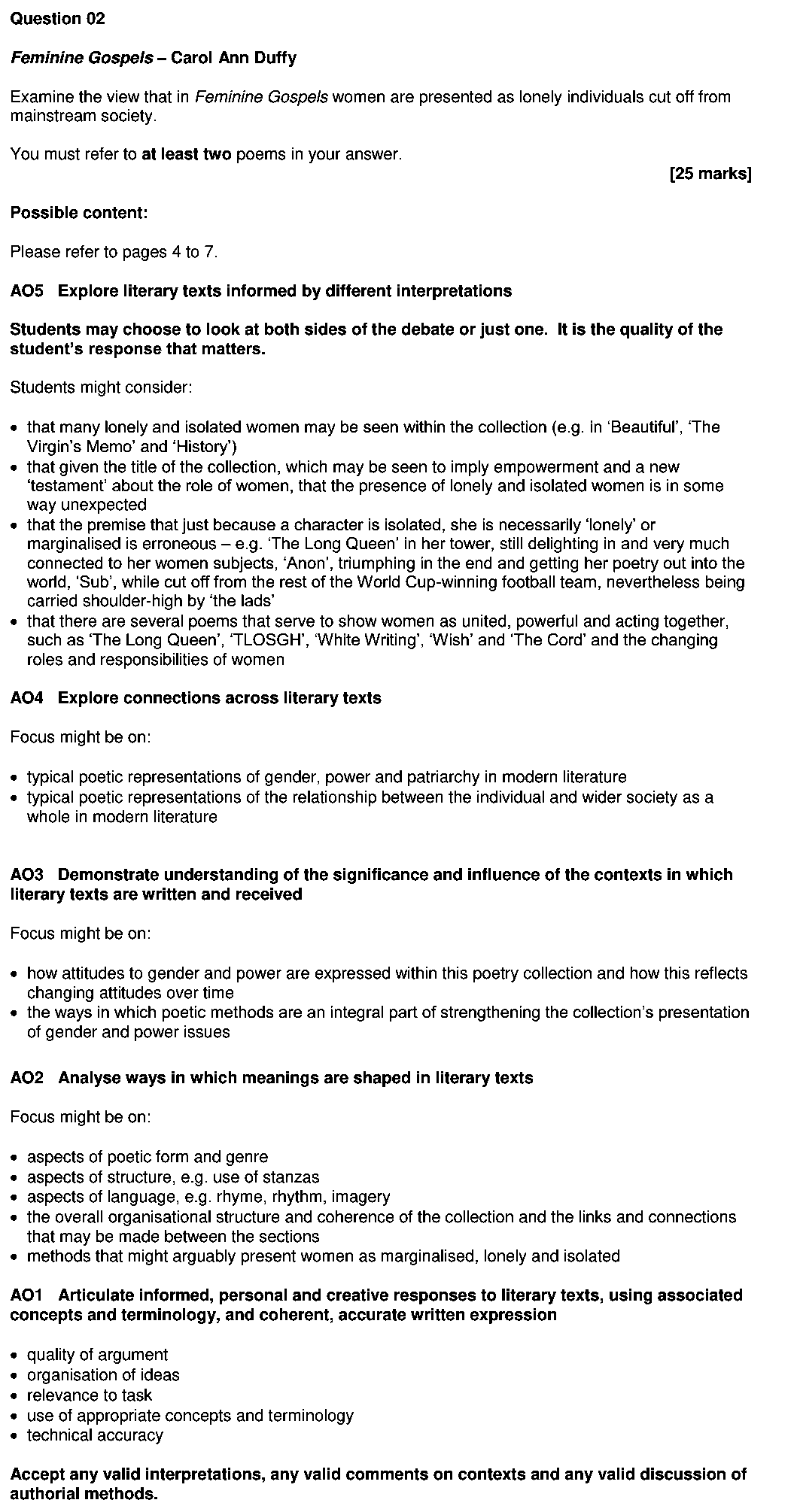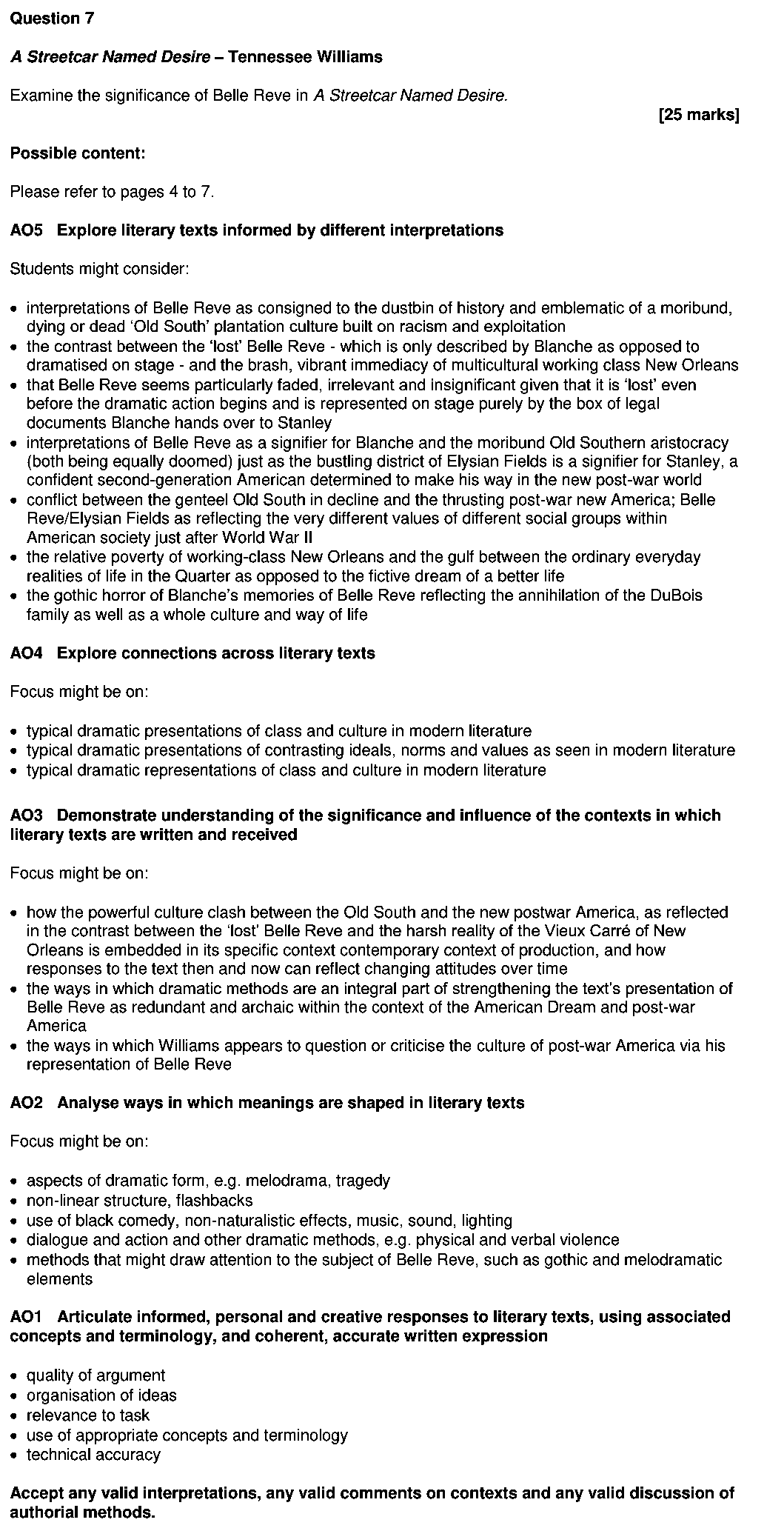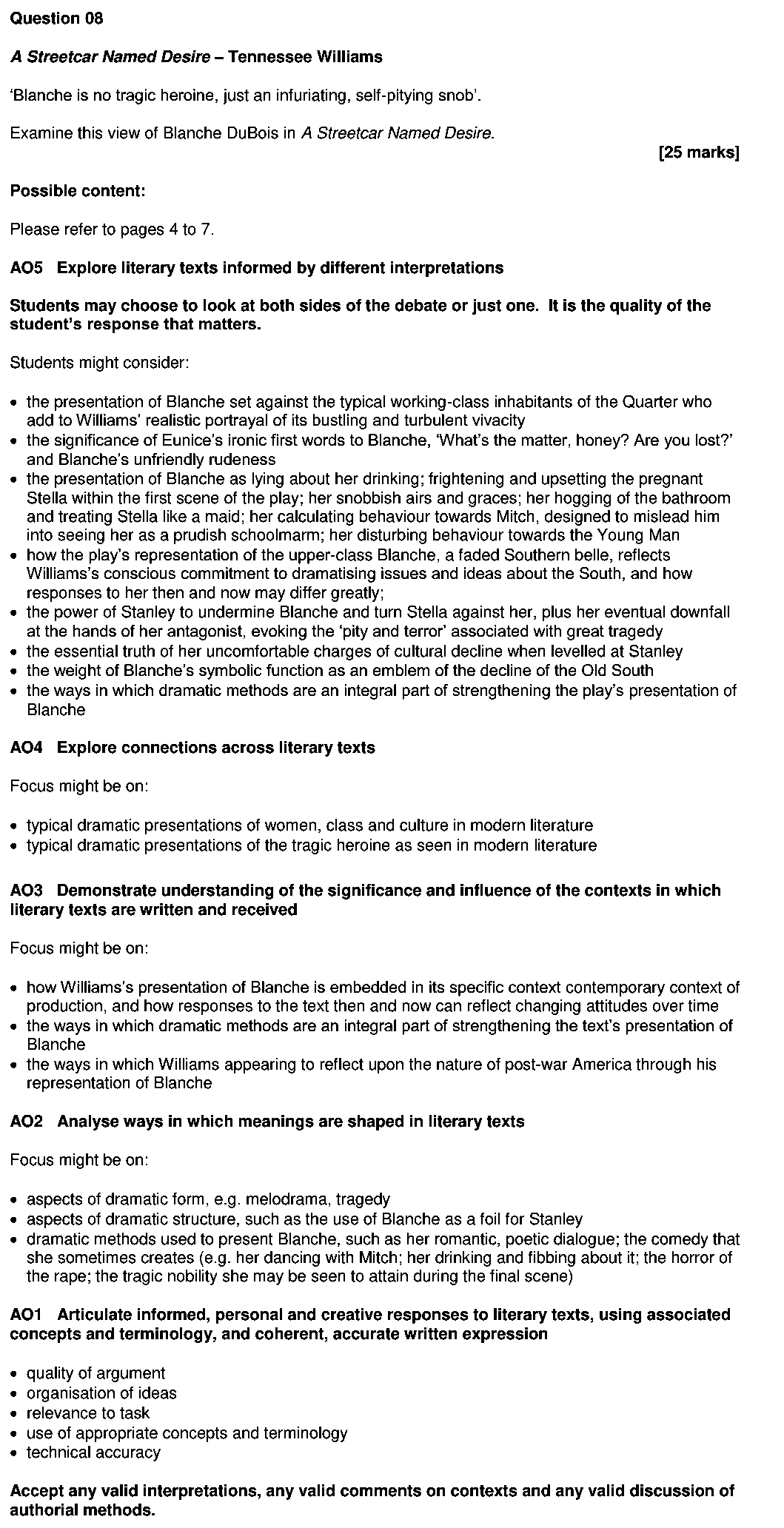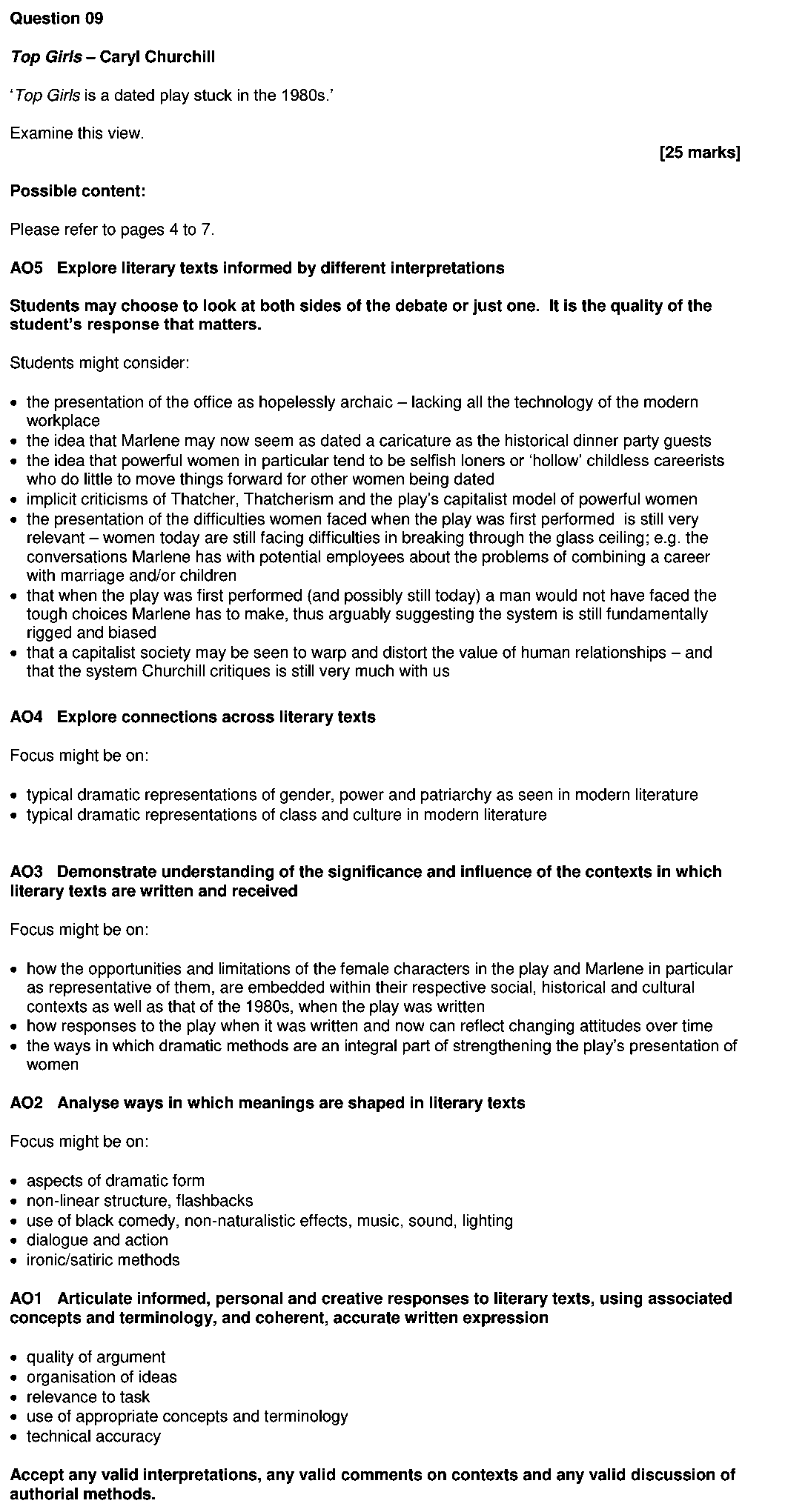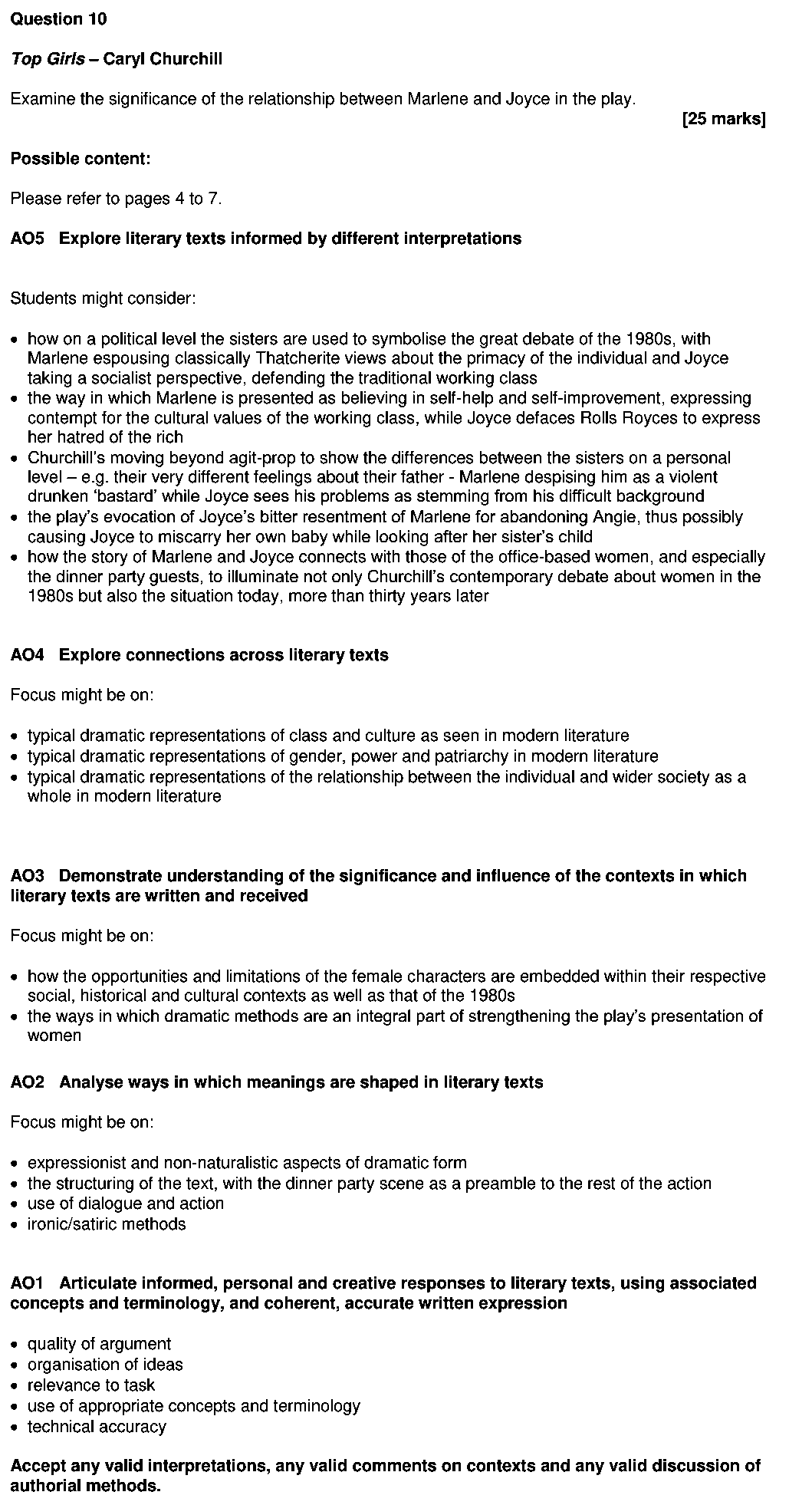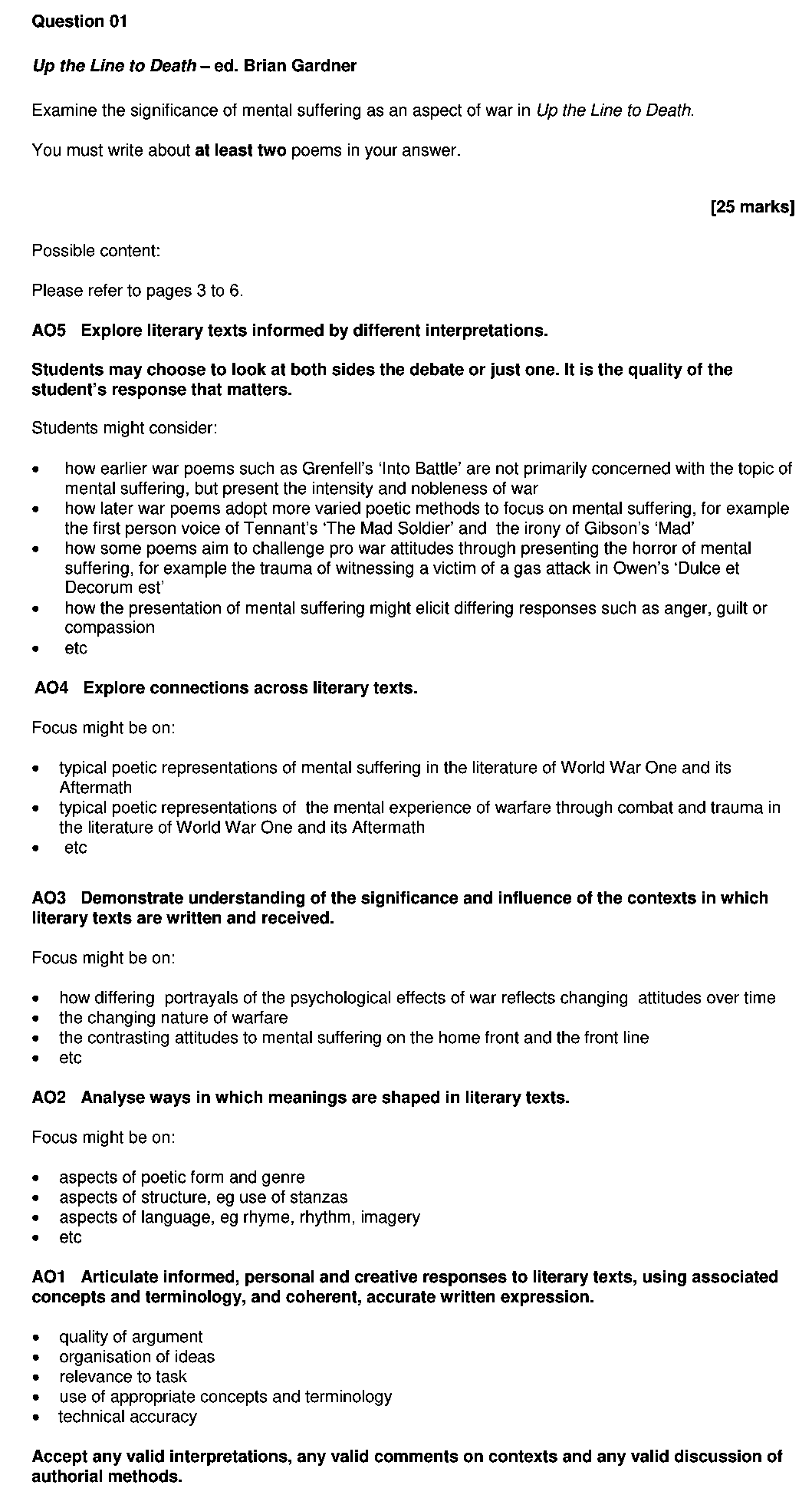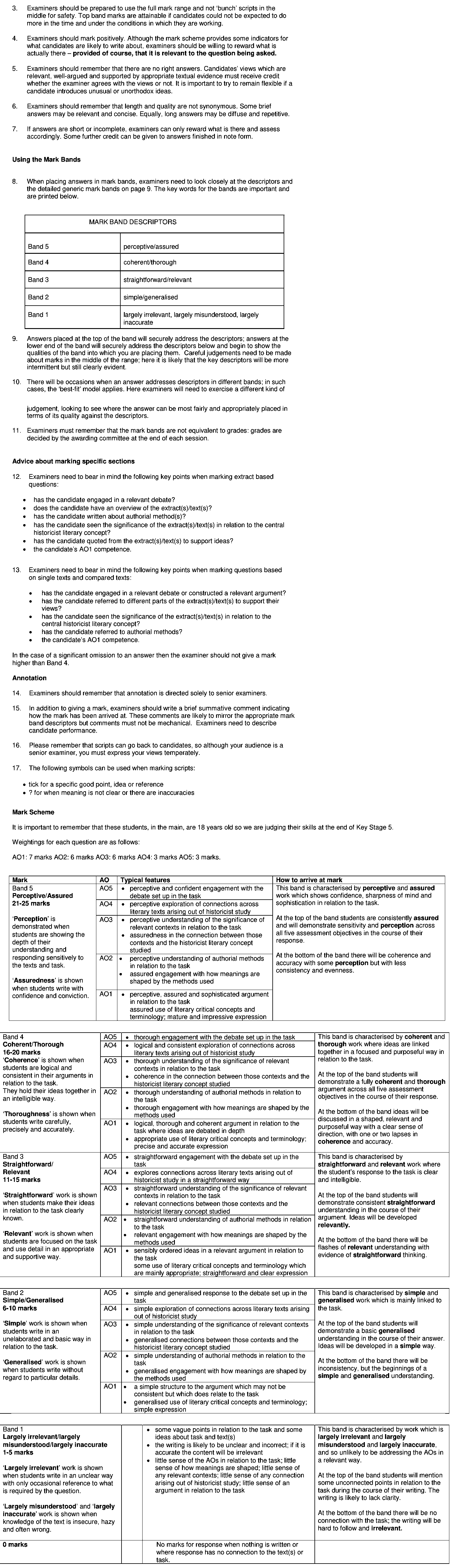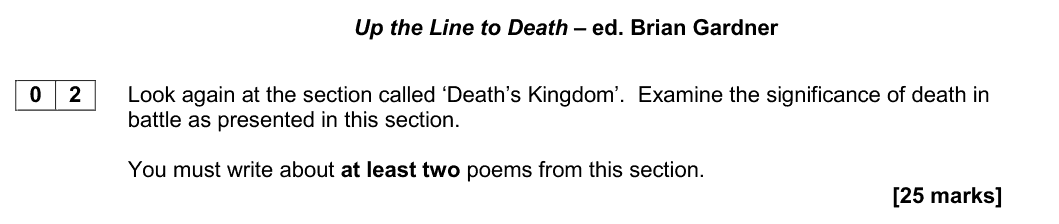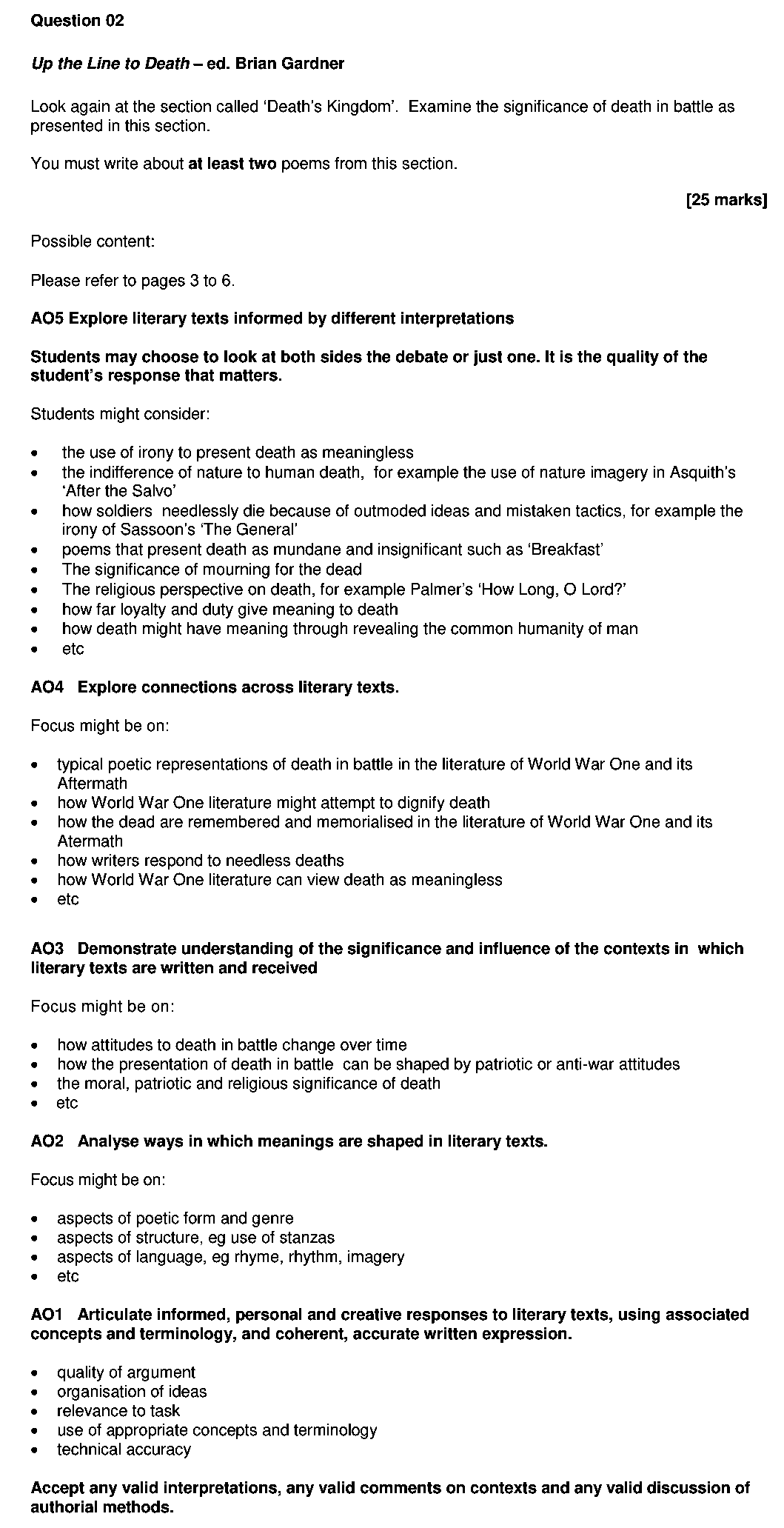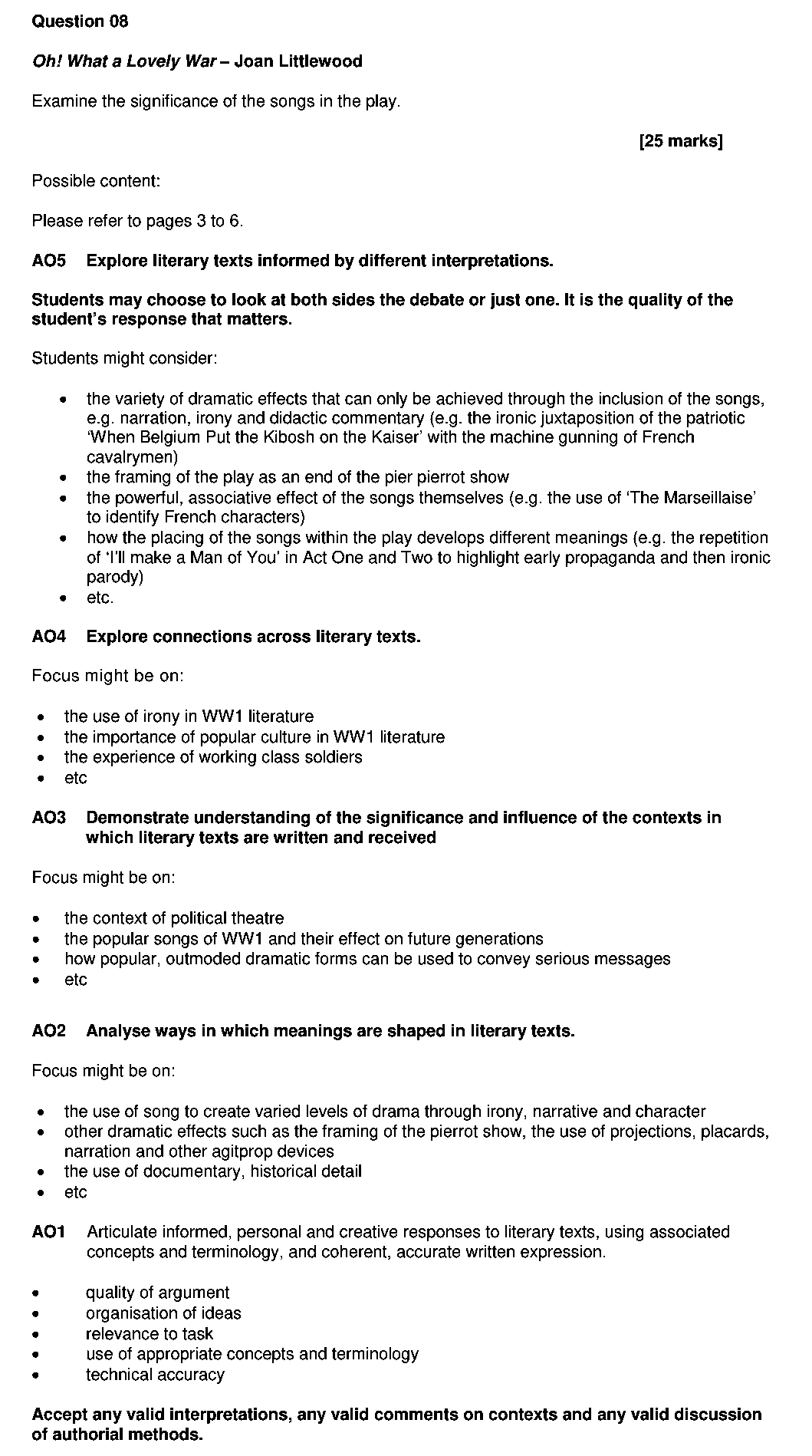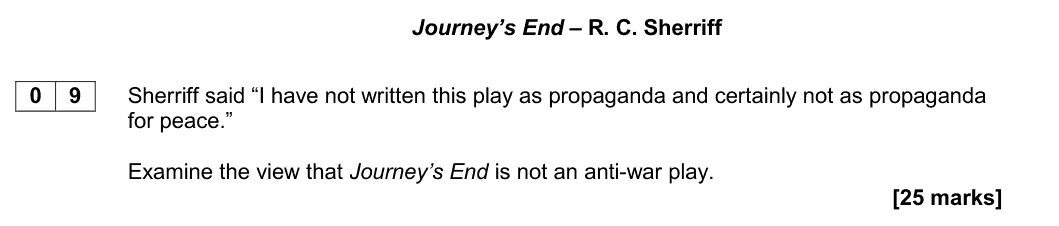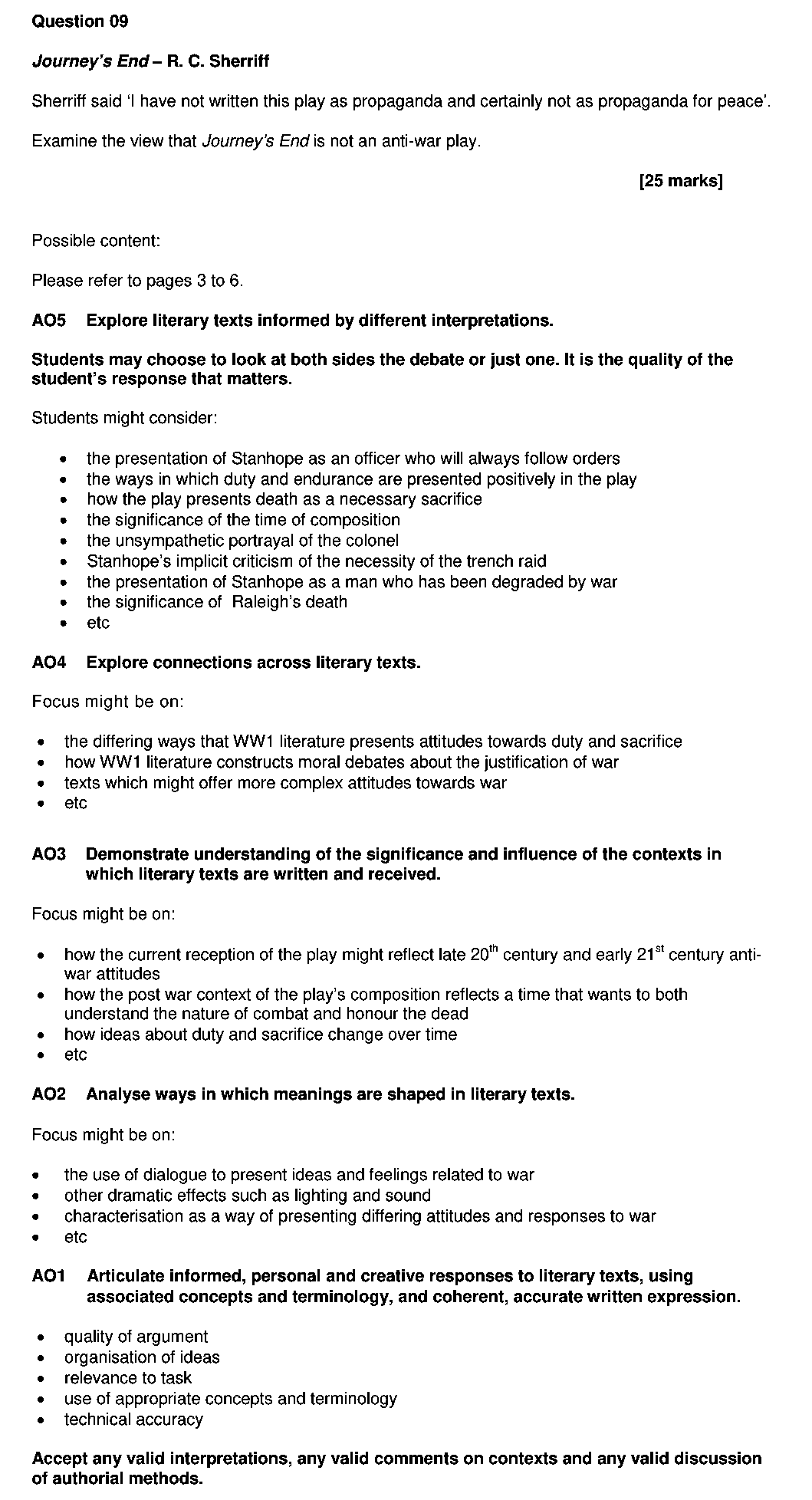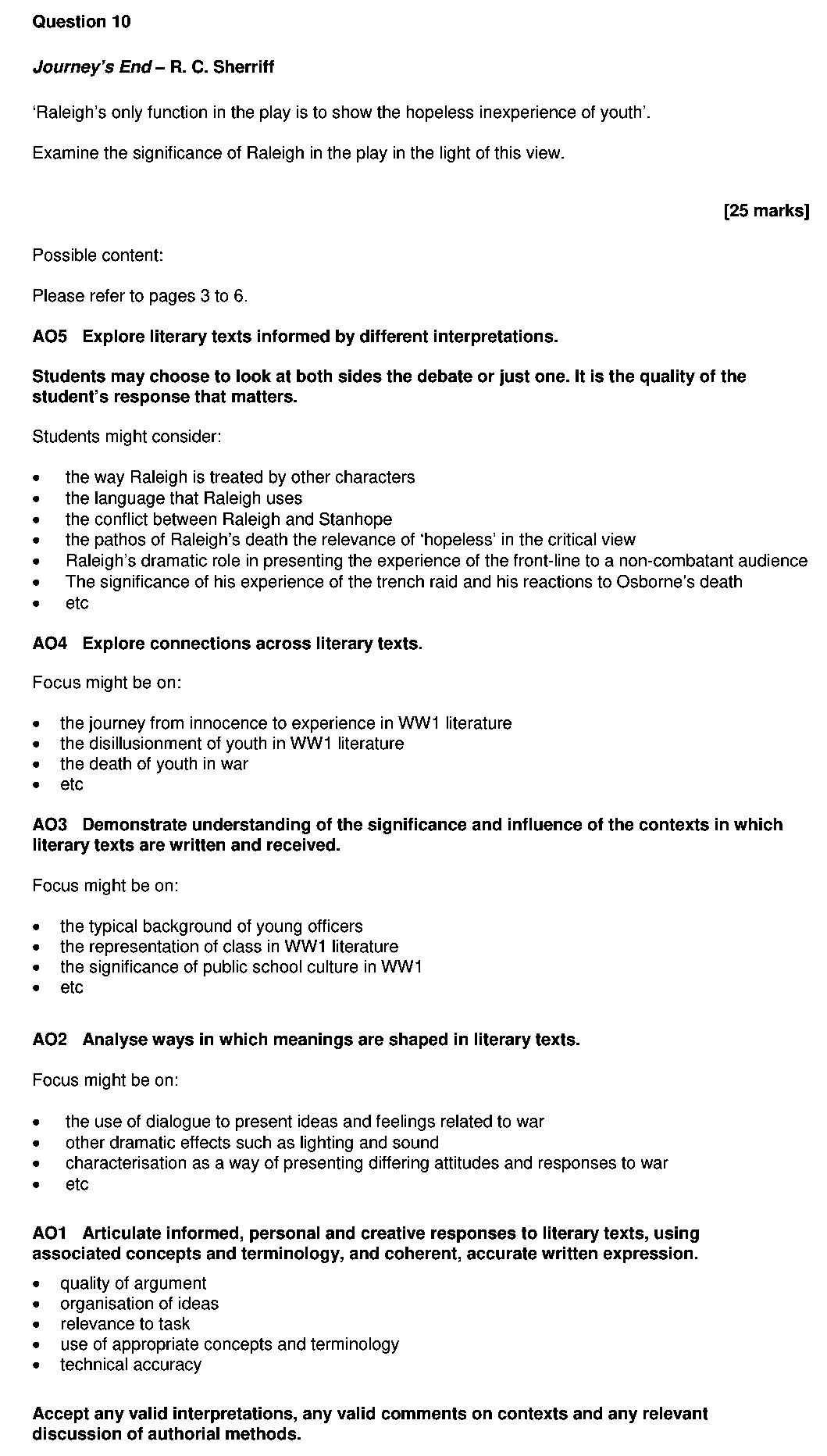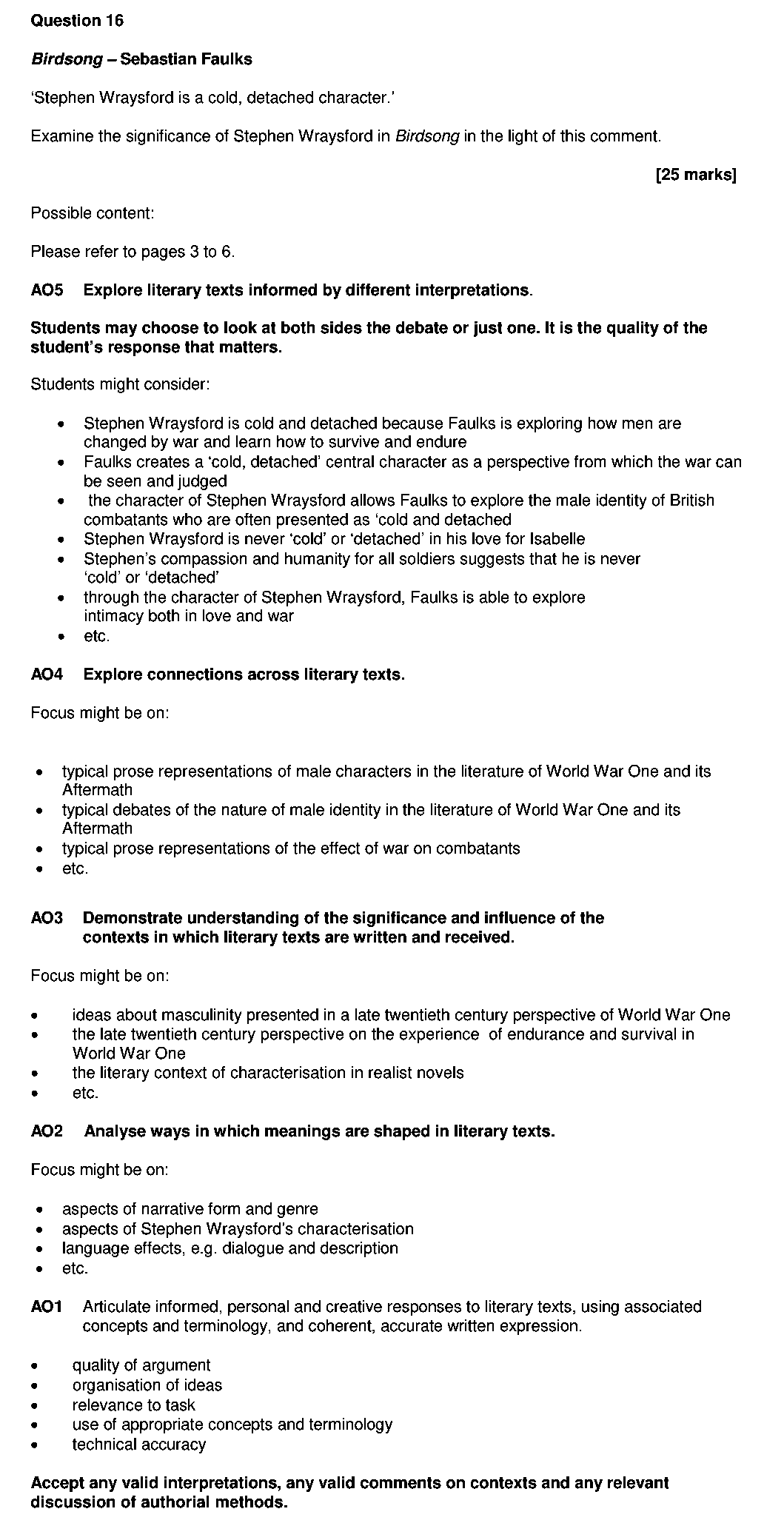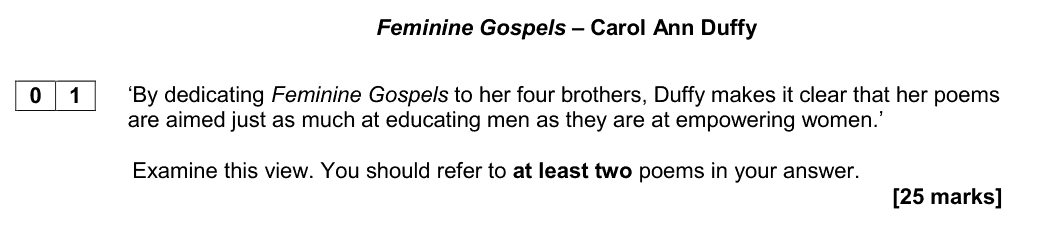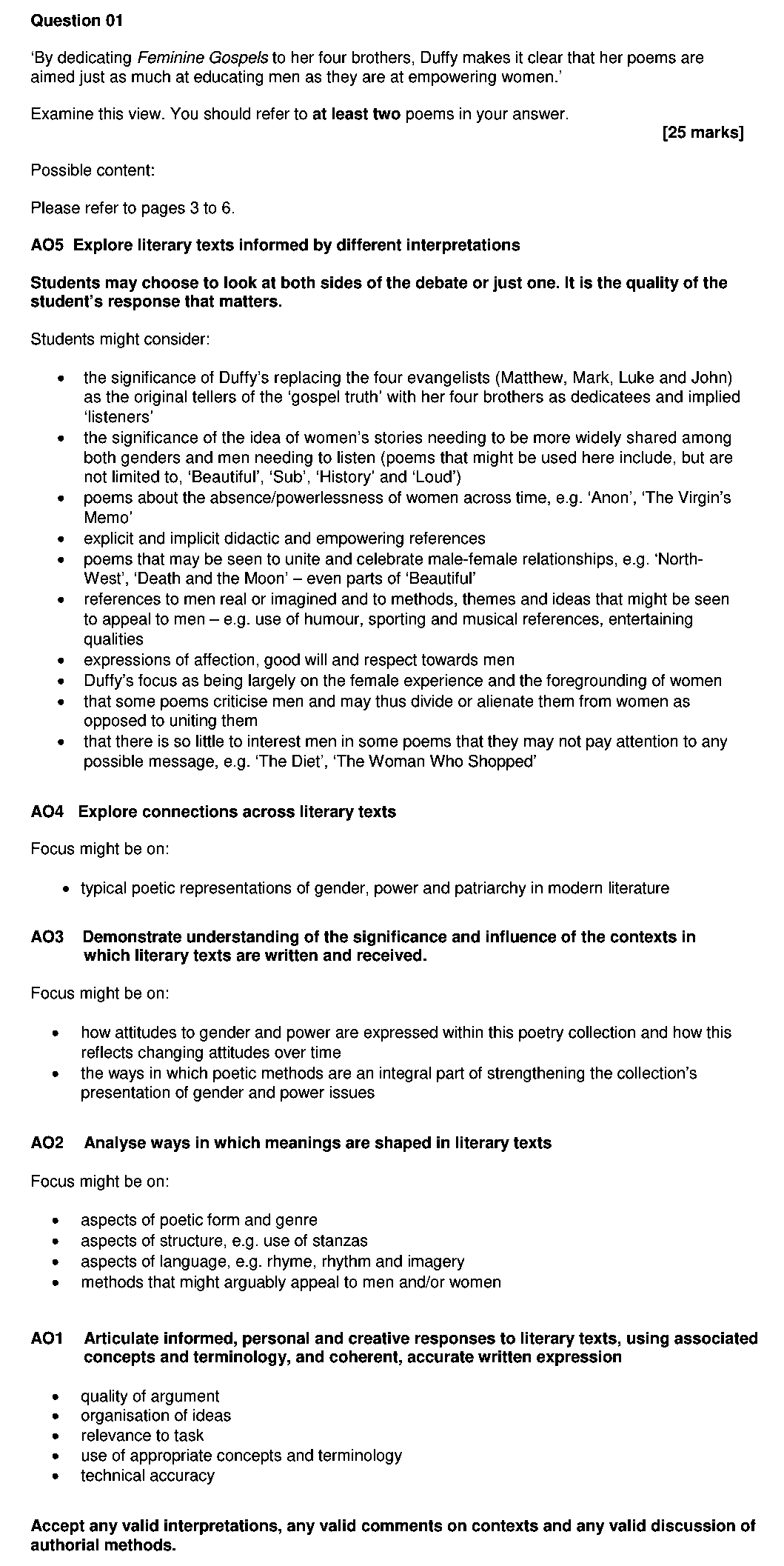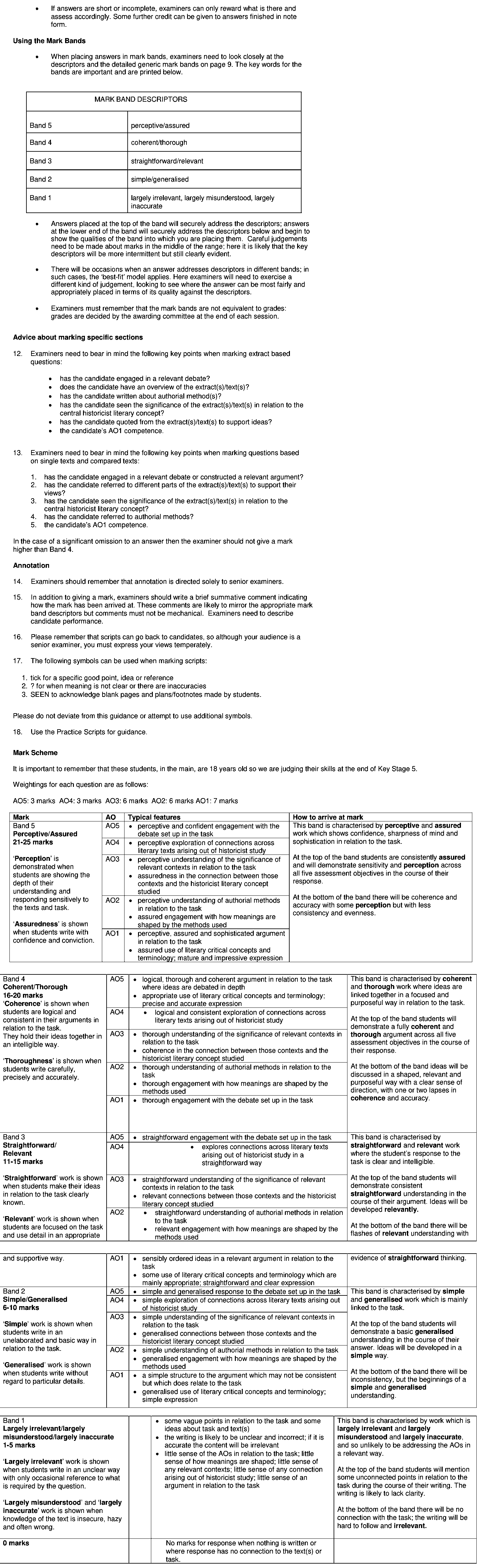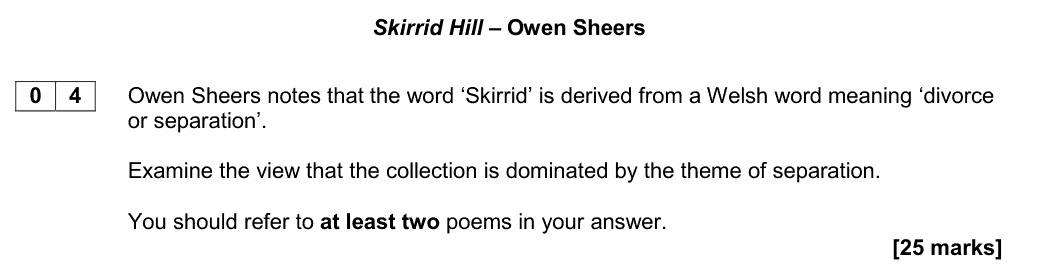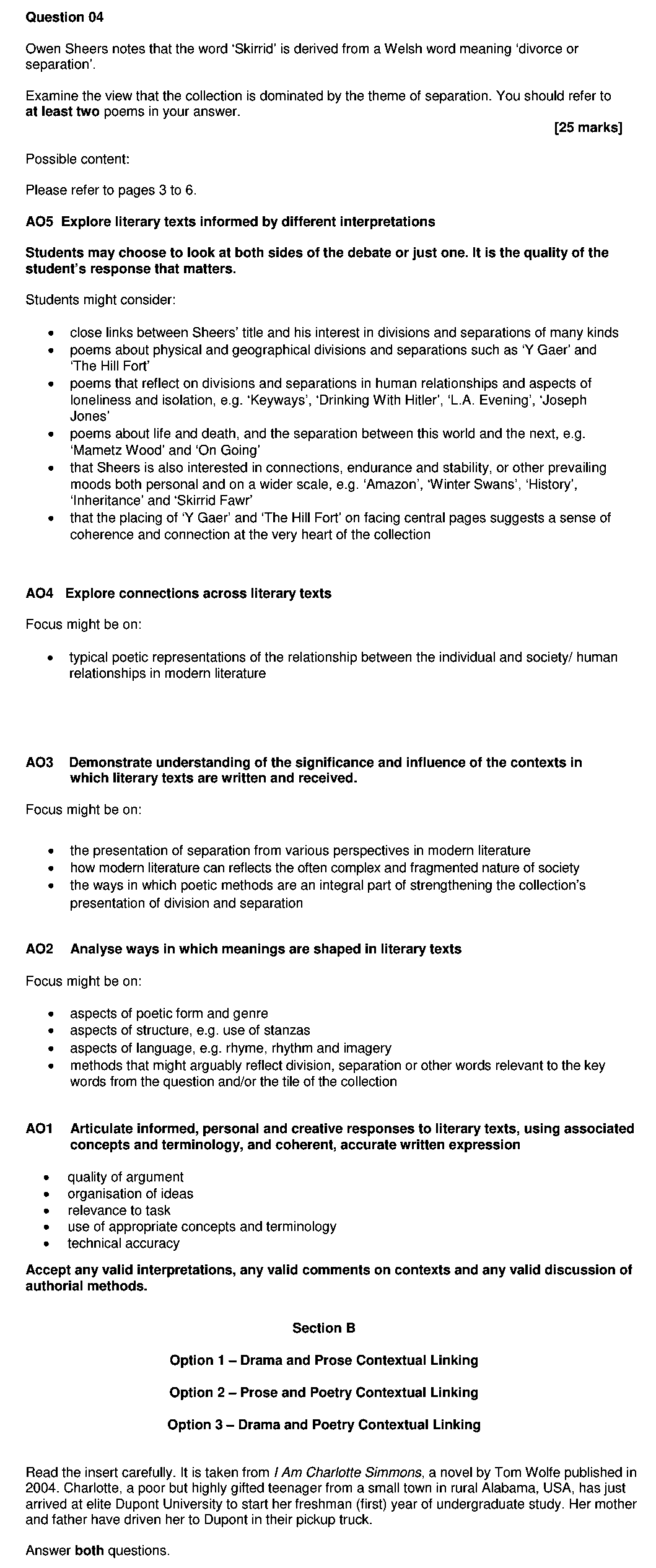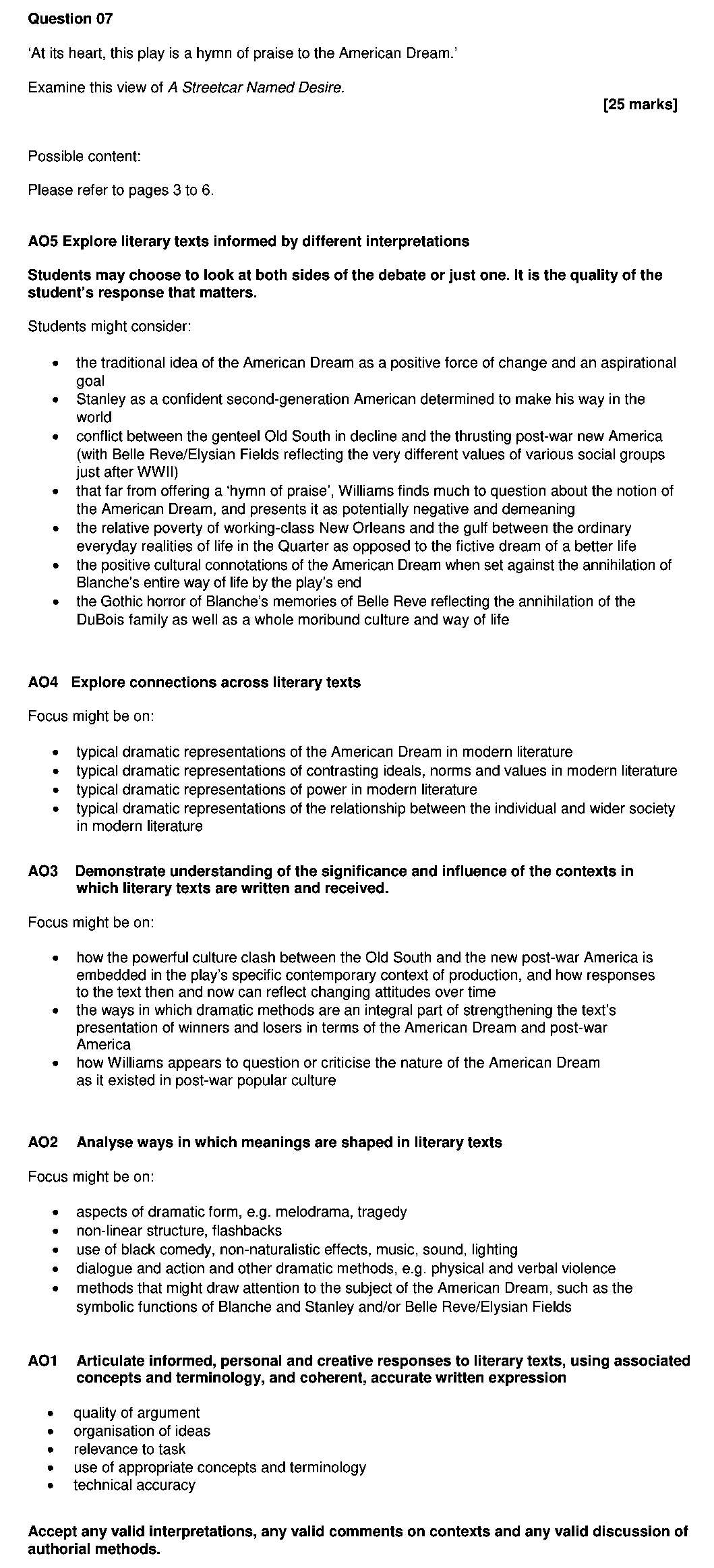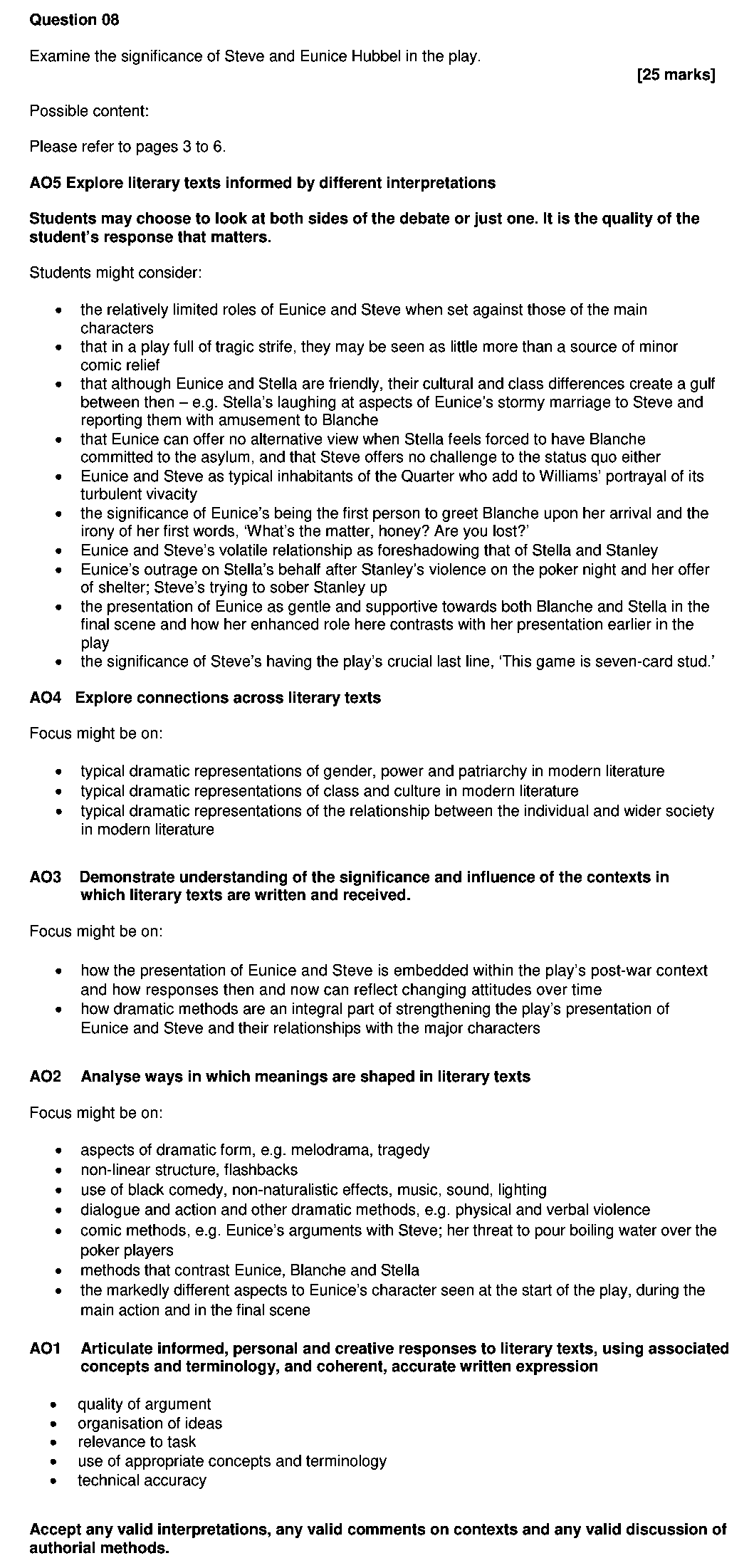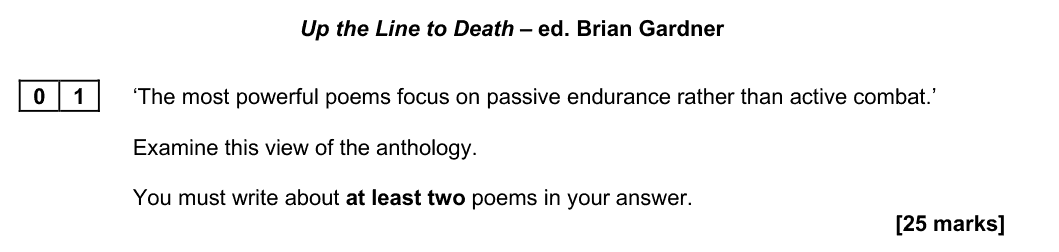
Mark scheme, including the levels and indicative content
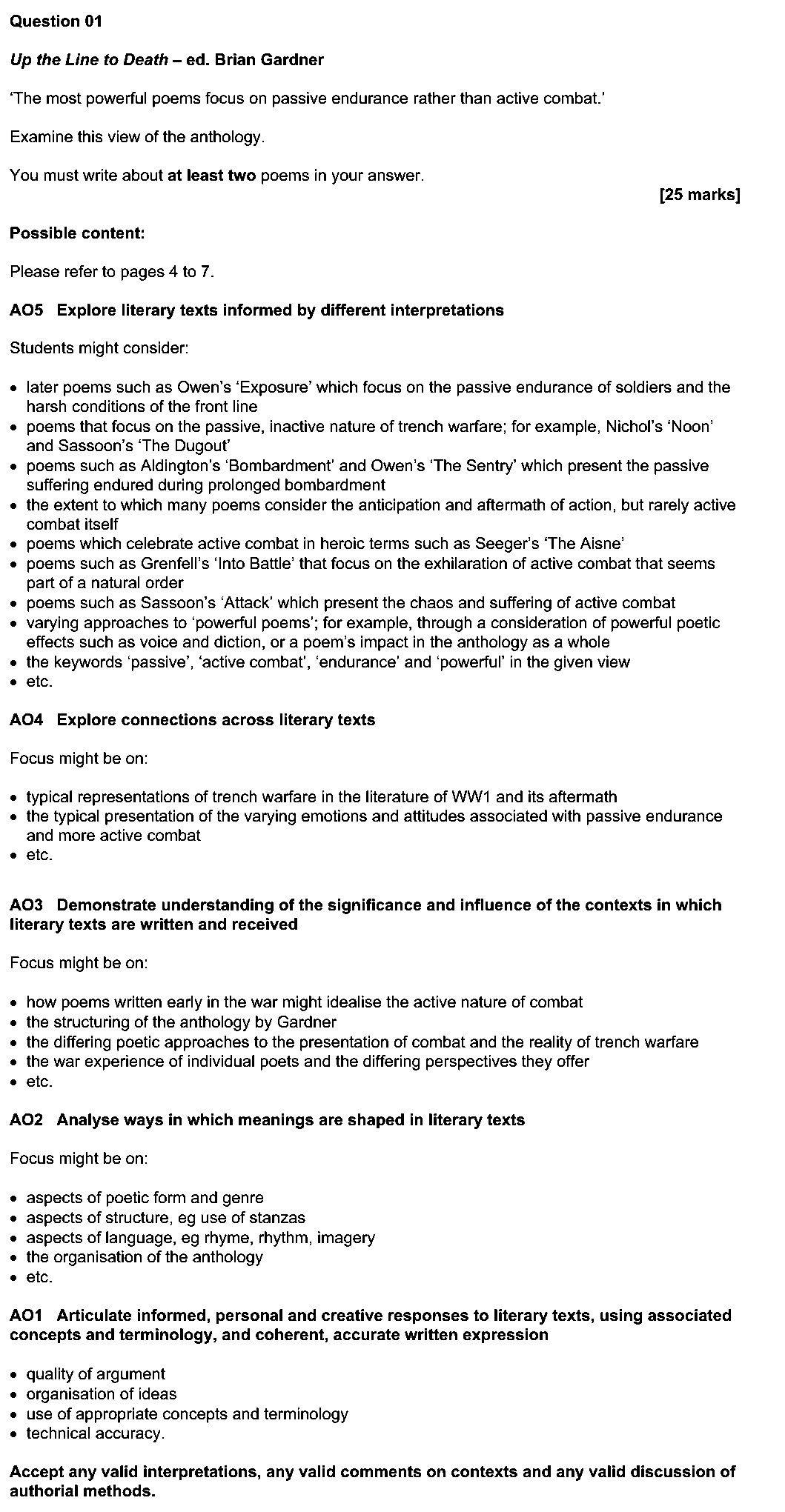
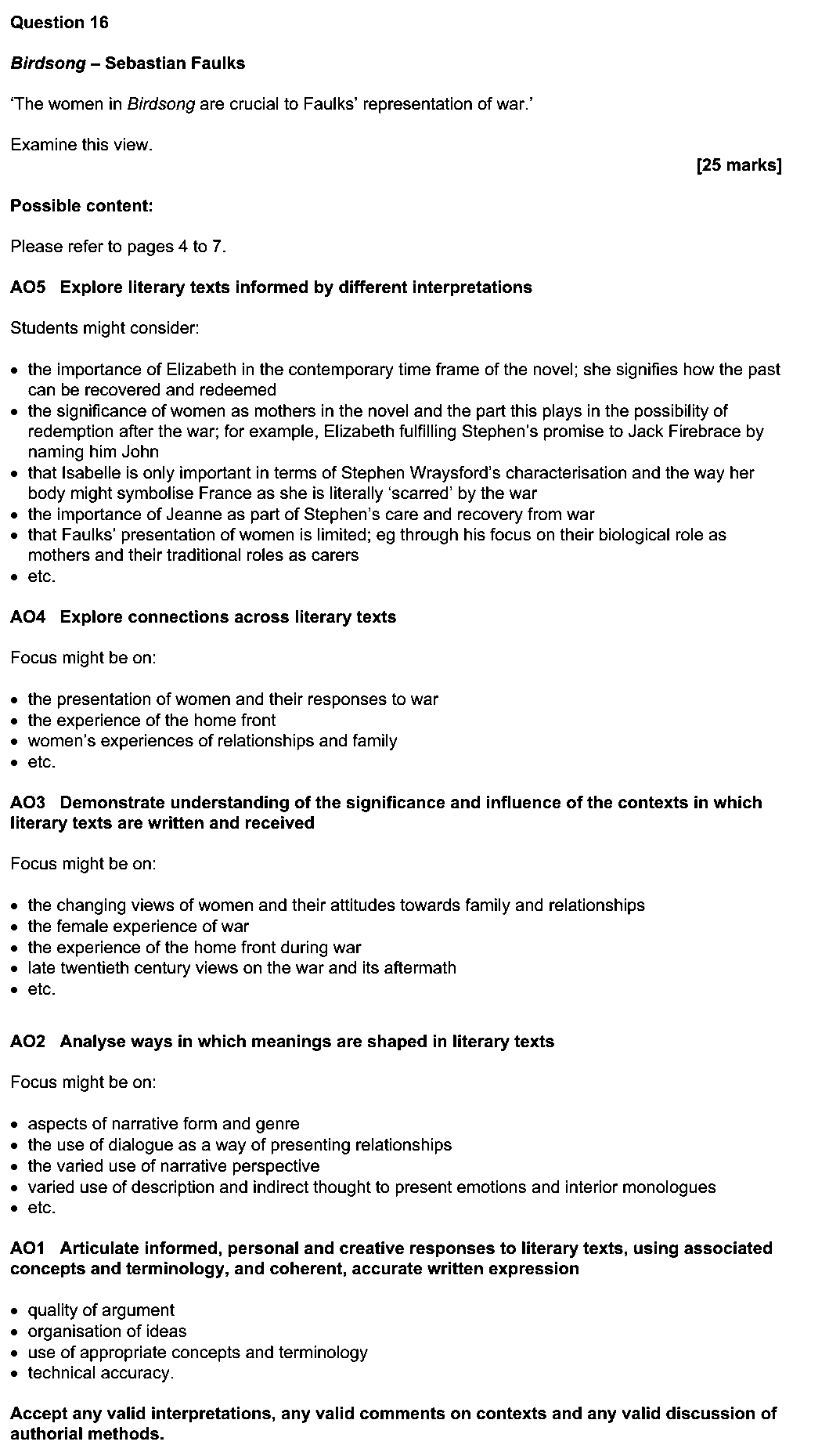
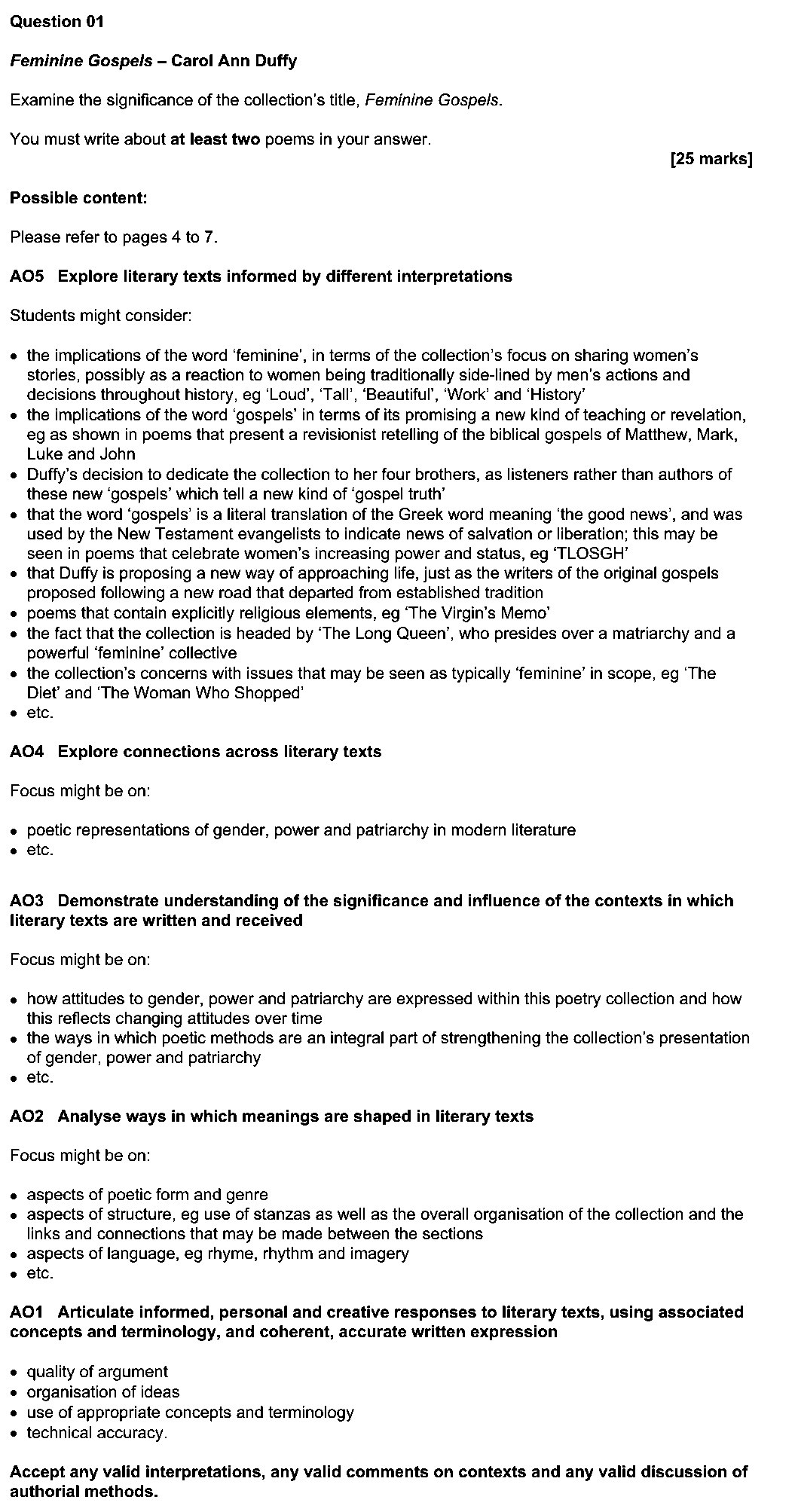
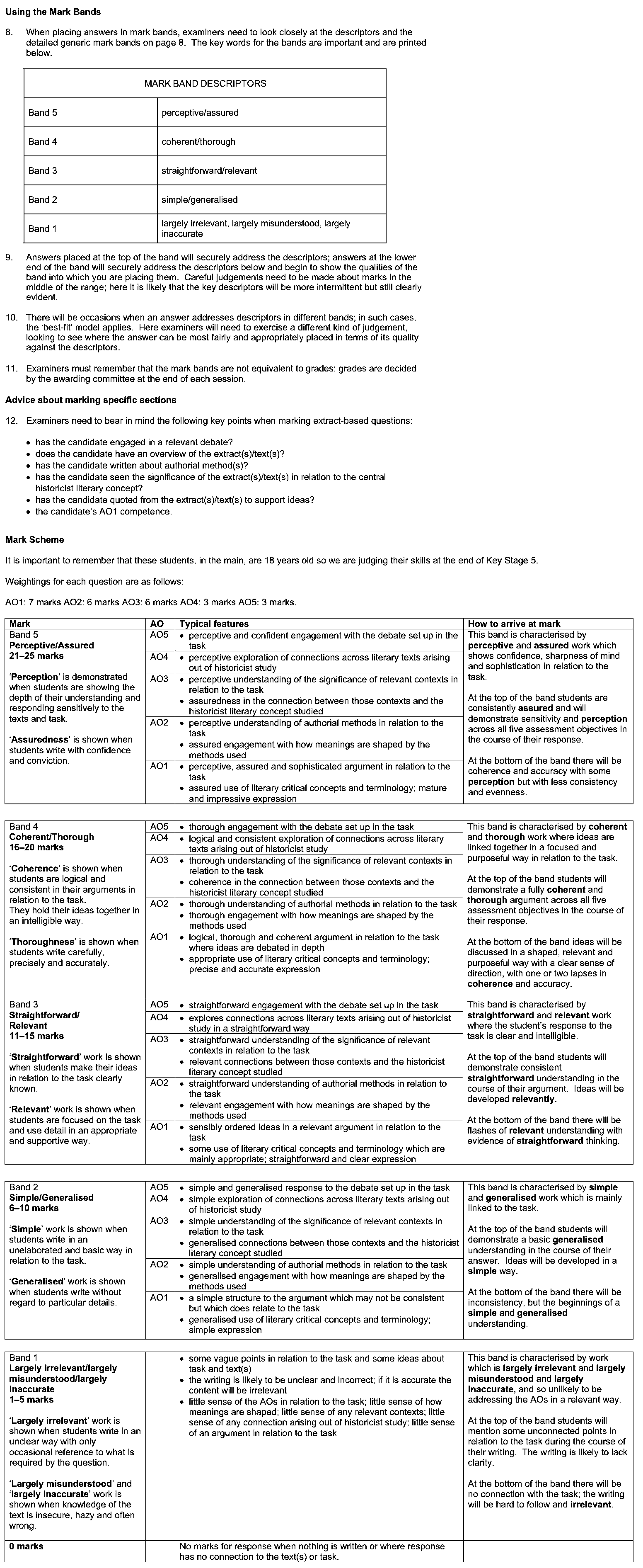
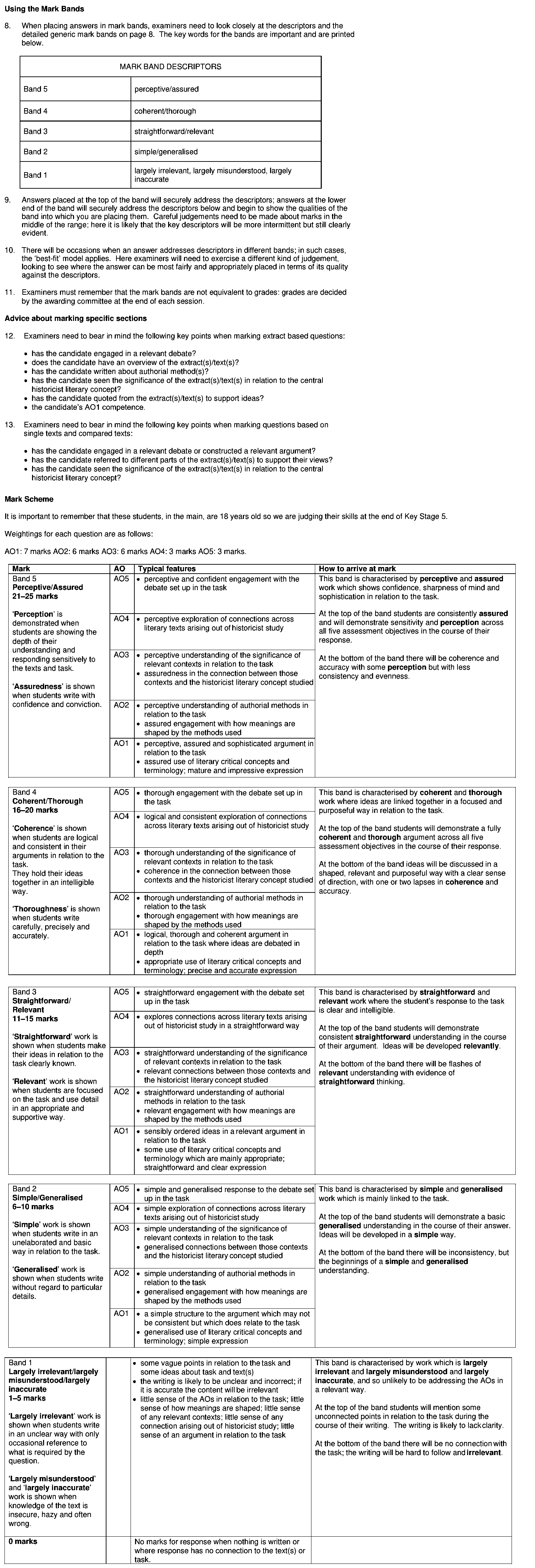
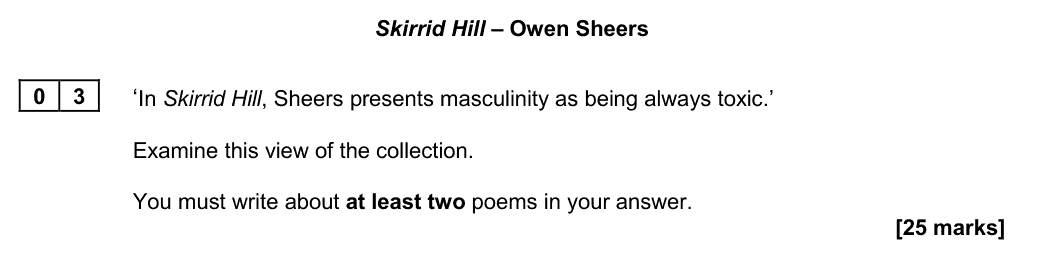
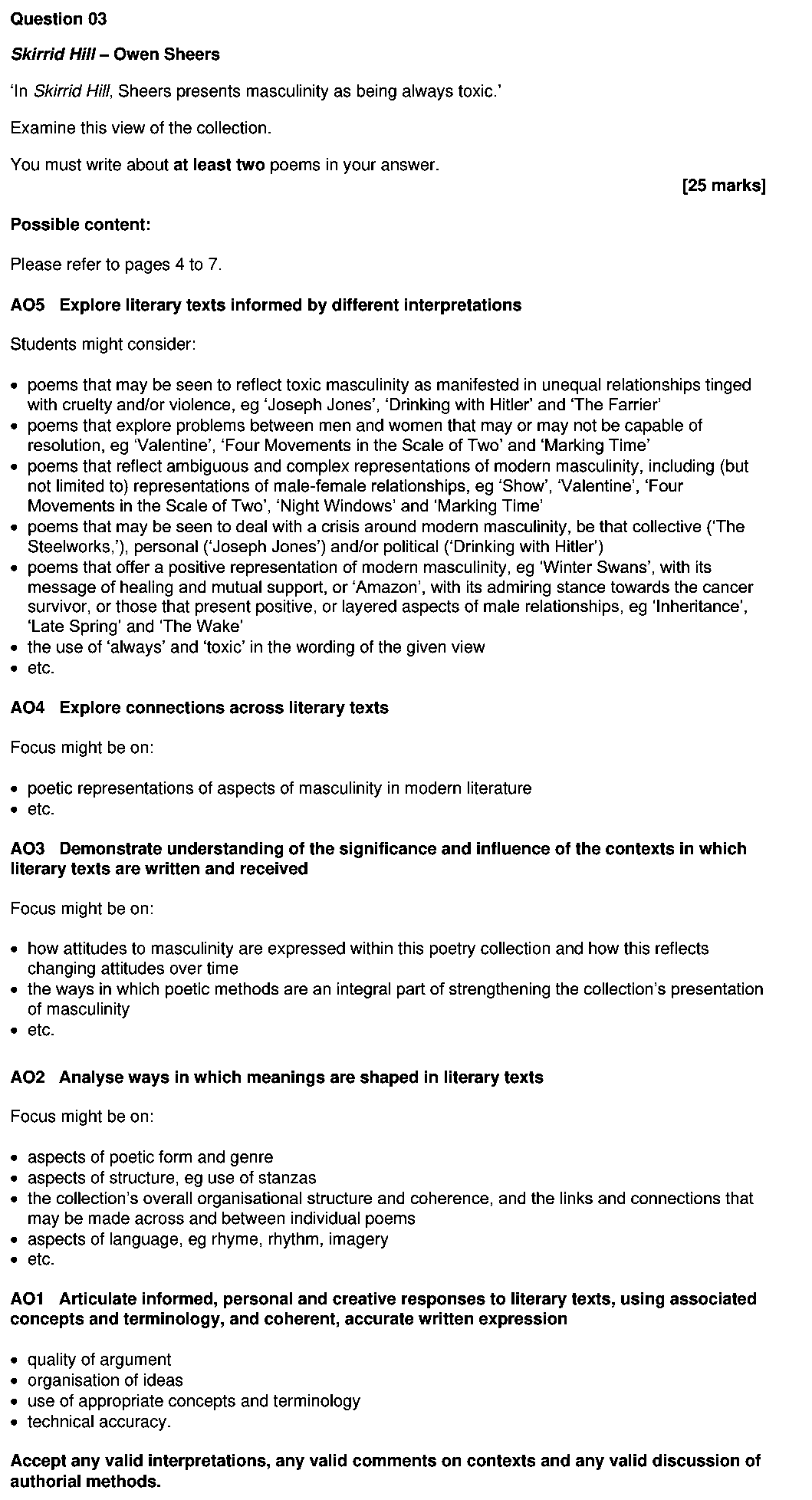
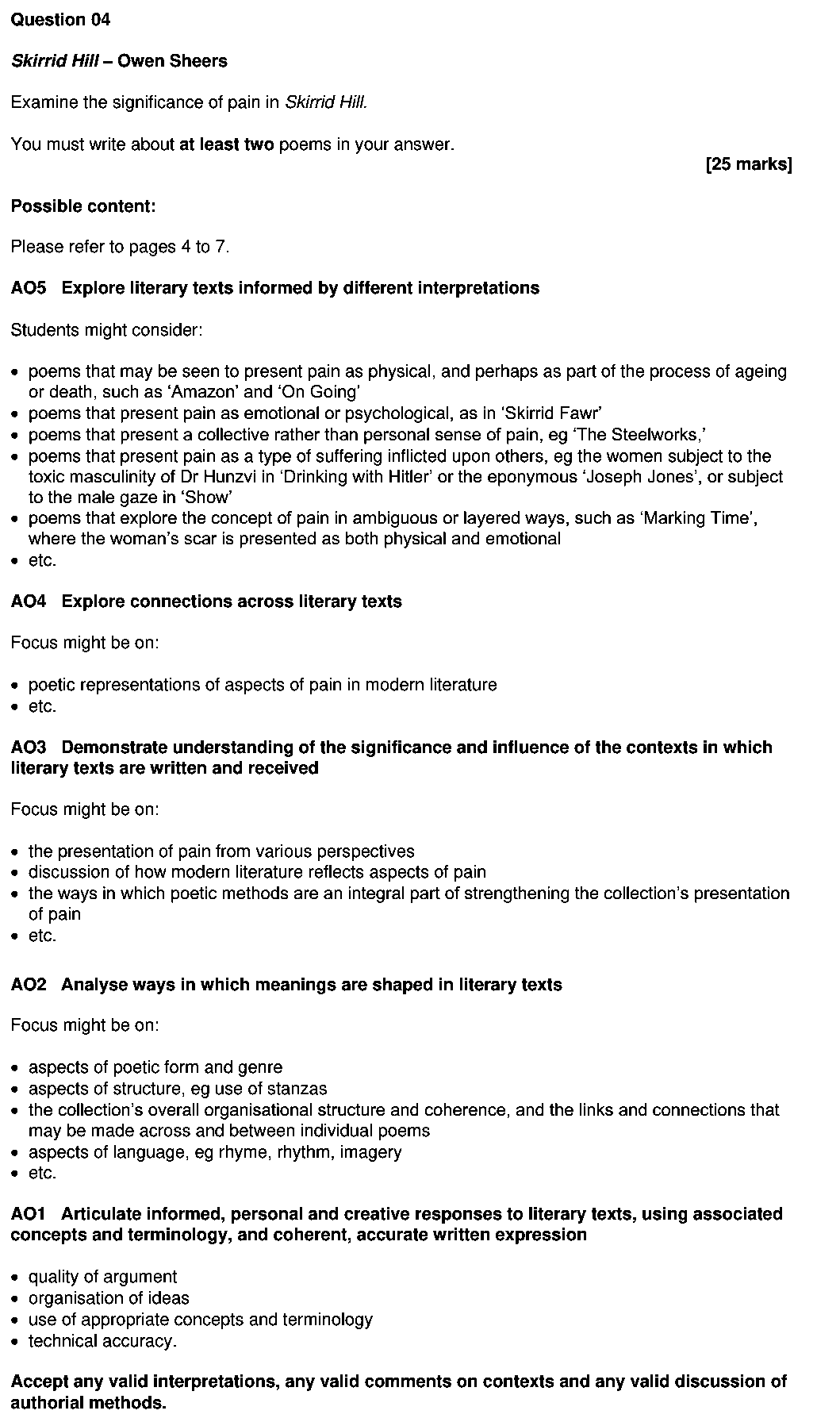
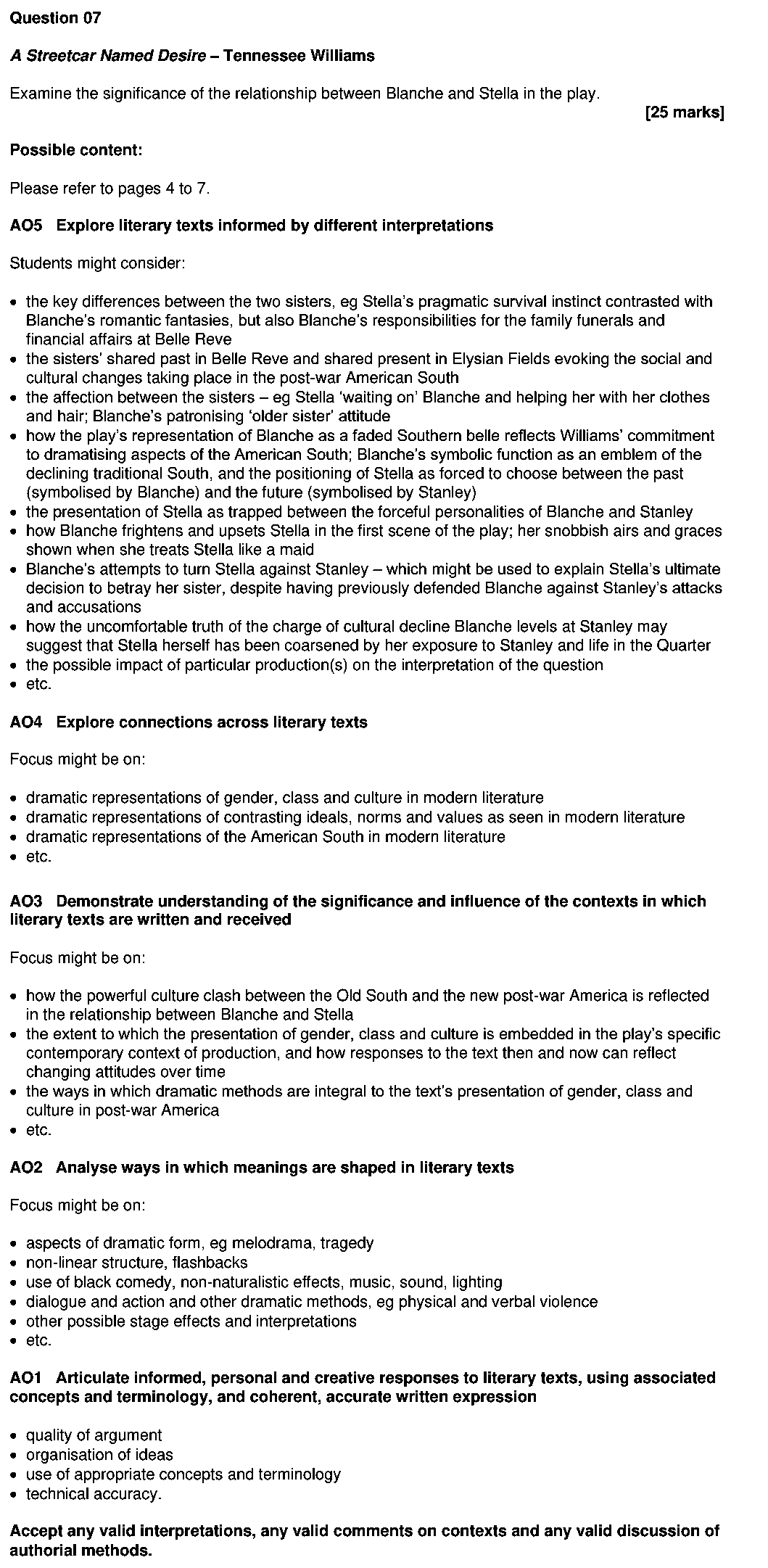
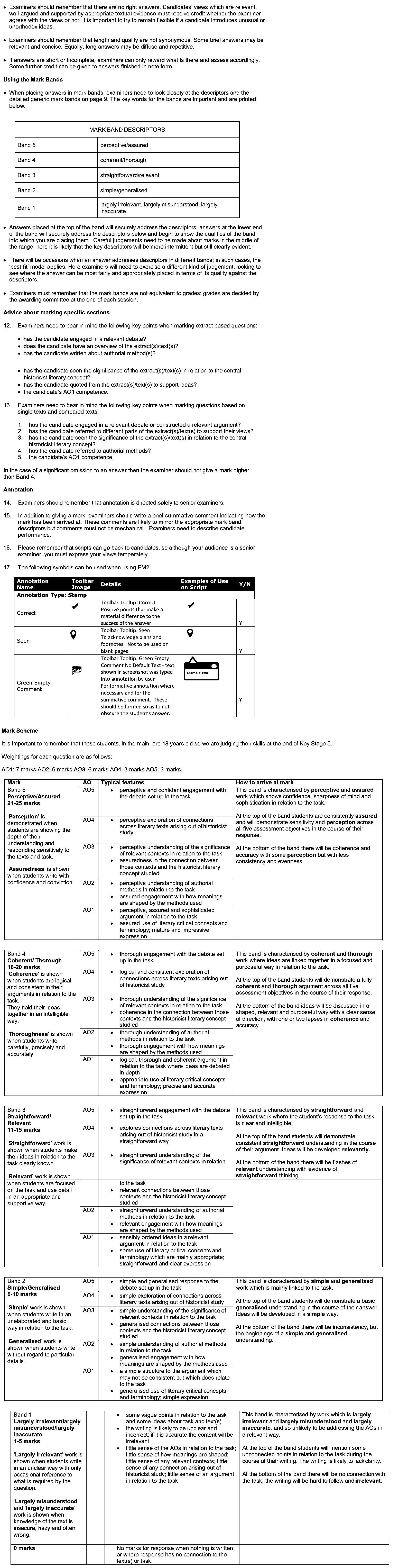
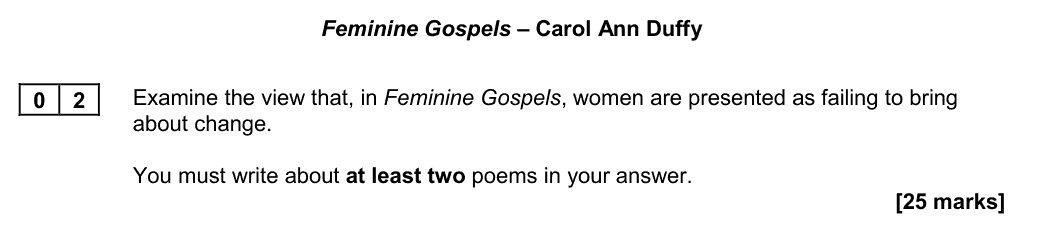
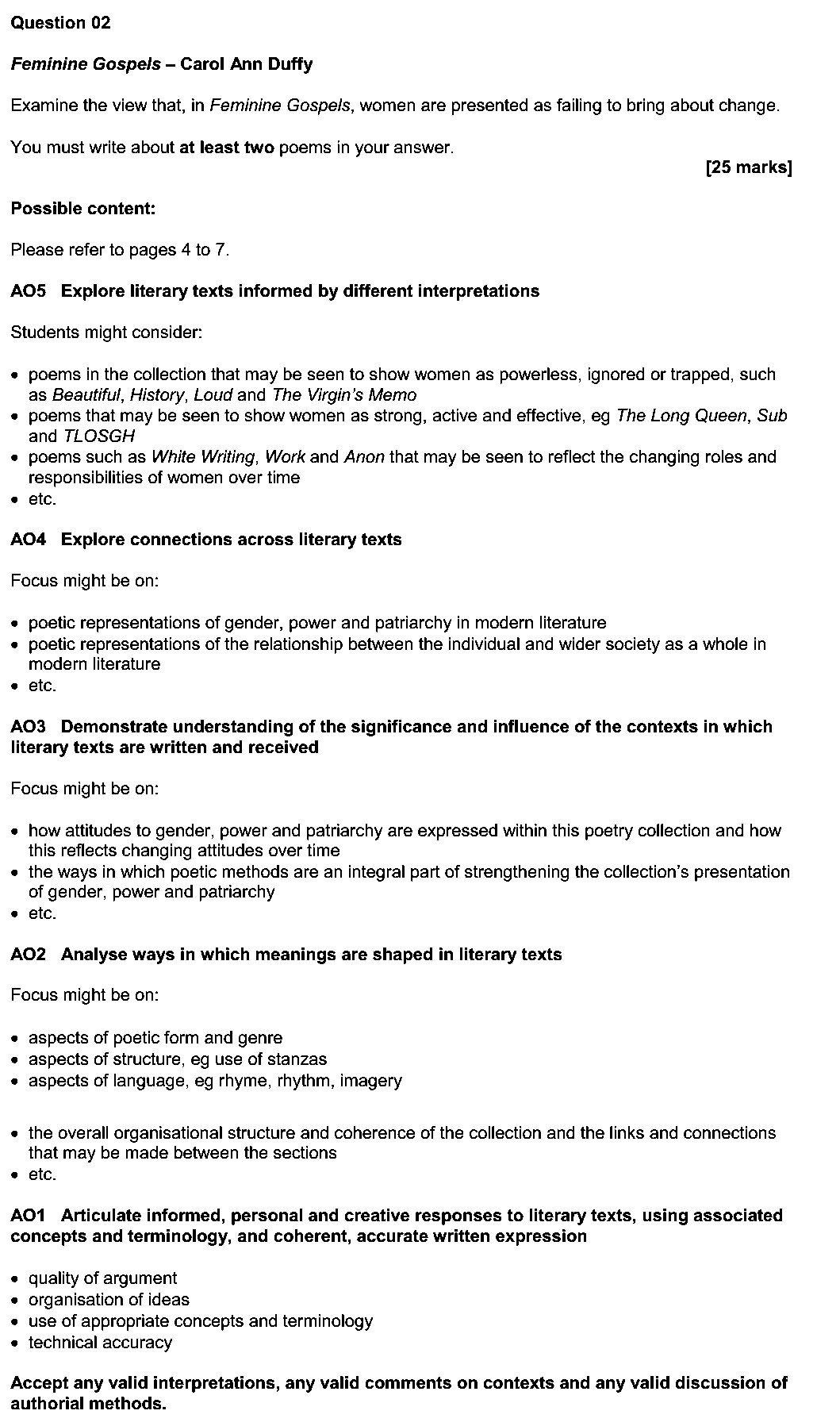
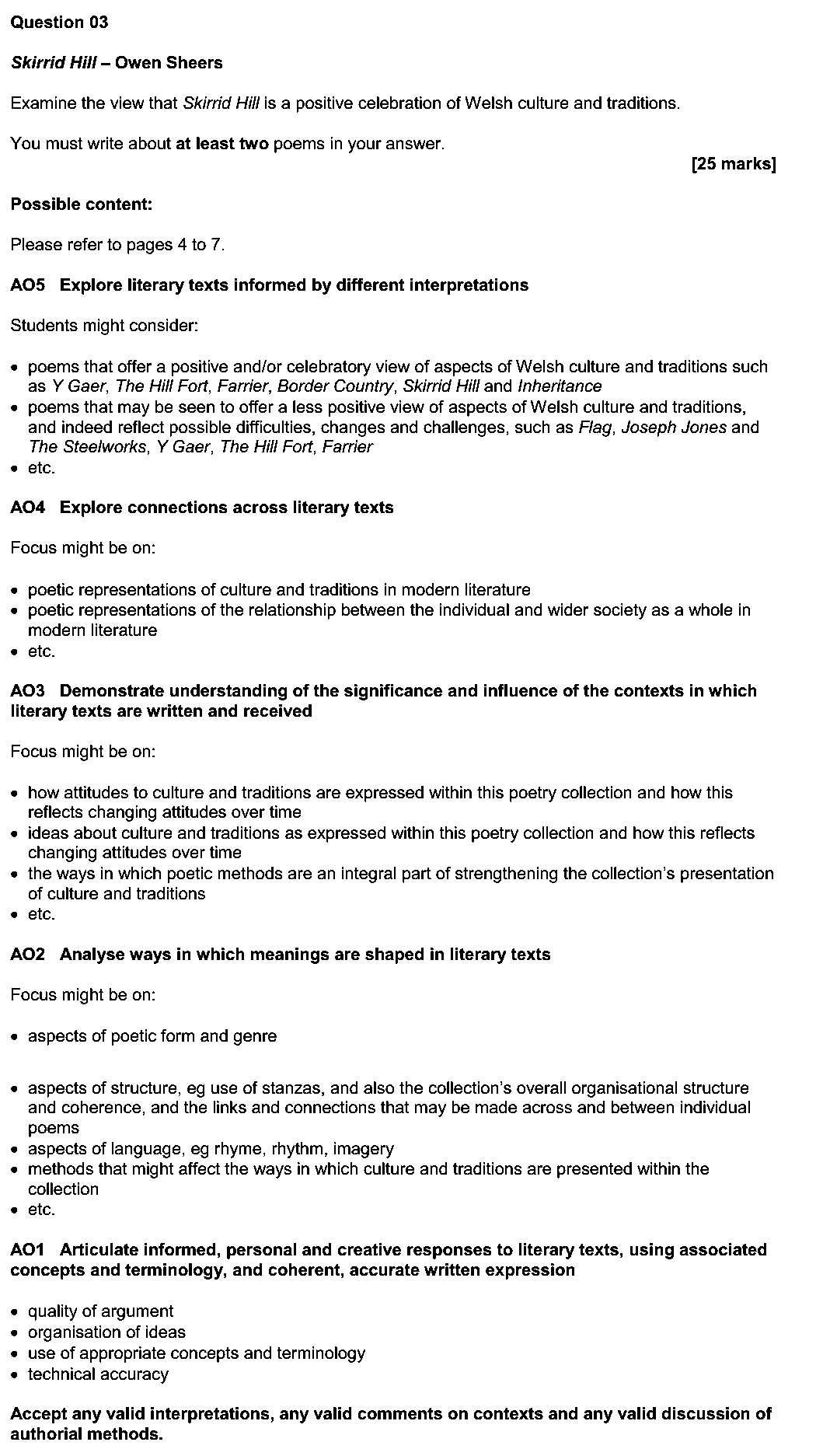
The general mark scheme (assessment objectives and bands)
Examiner's comment
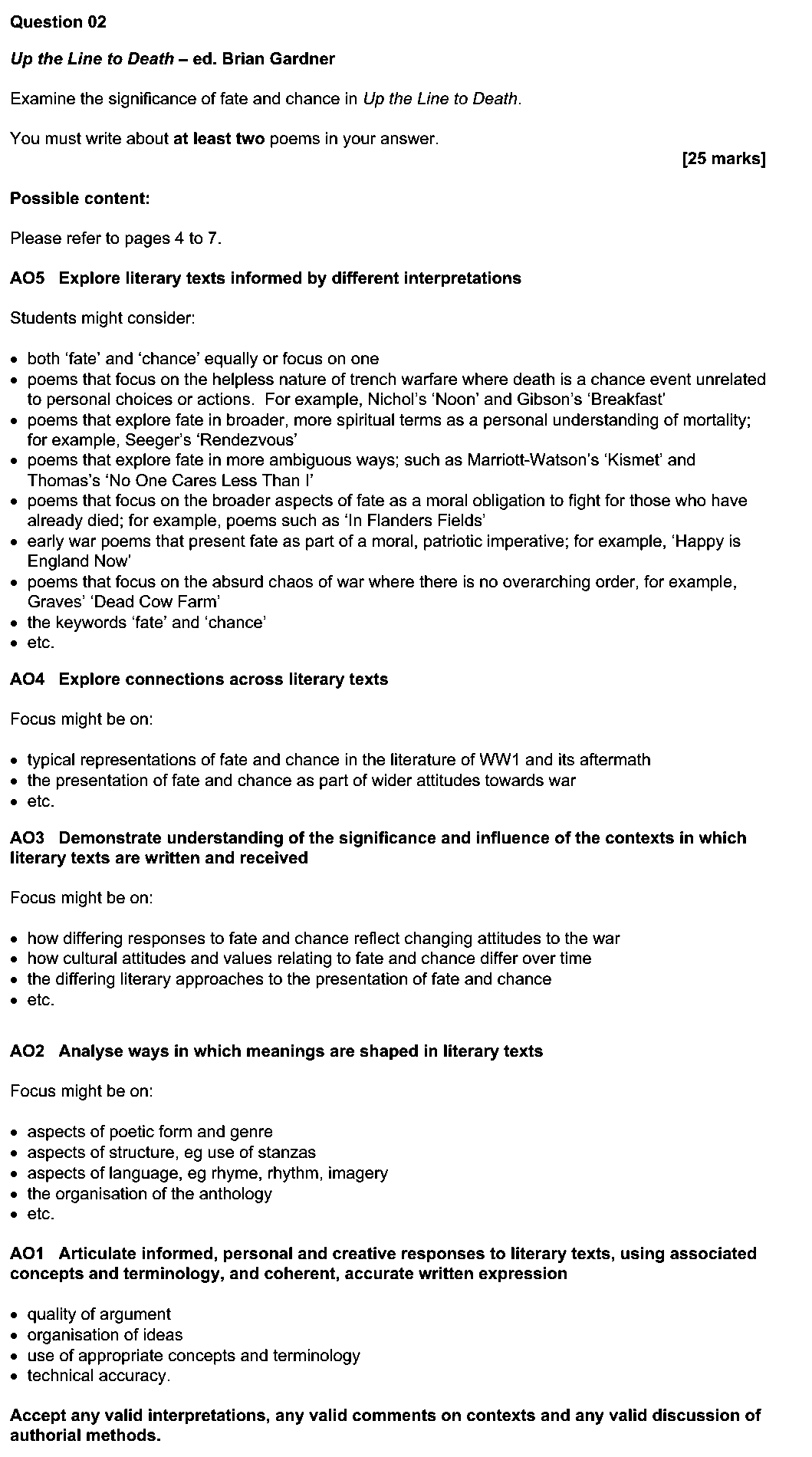
Better answers: • engaged purposefully with the keywords ‘powerful’, ‘passive endurance’ and ‘active combat’ • considered the context of time relevantly though considering how later war poetry often focused more powerfully on ‘passive endurance’ • purposefully considered ‘powerful poetry’ through well selected analysis of poetic methods • fully debated and challenged the given view through considering varying ways in which ‘active combat’ is presented • demonstrated an accurate understanding of Gardner’s selection and organisation of the anthology. Less effective answers: • only had a superficial grasp of the keywords of the given view and tended to resort to pre-planned material that compared early and post-Somme poetry a broad way • did not select appropriate poems and often over-relied on predictable, heavily rehearsed readings of Dulce et Decorum Est • tended to unload comments on poetic methods rather than considering how these techniques shape meaning • used context in a generalised way rather than using it as a relevant literary tool to explore meaning.
Notes from the mark scheme and report
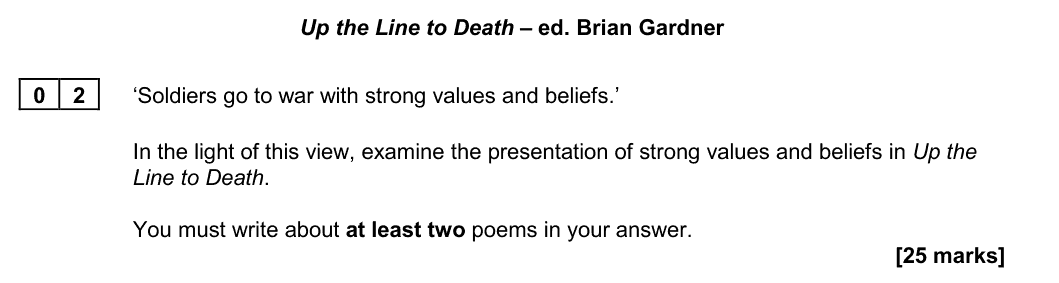
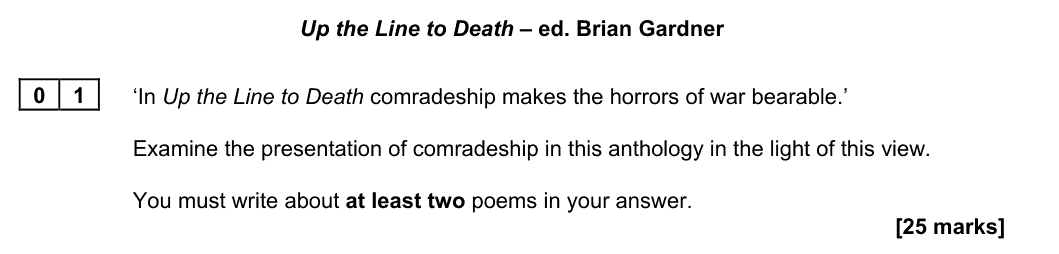
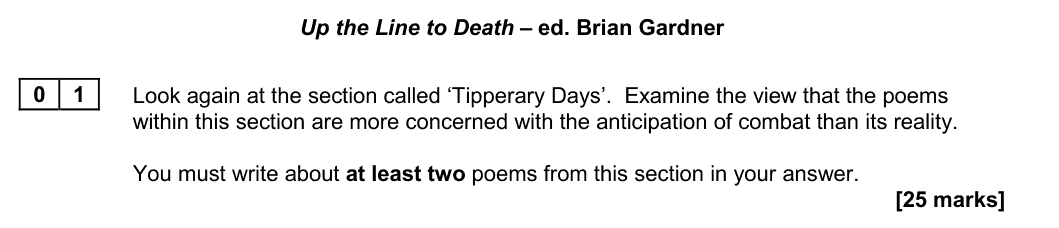
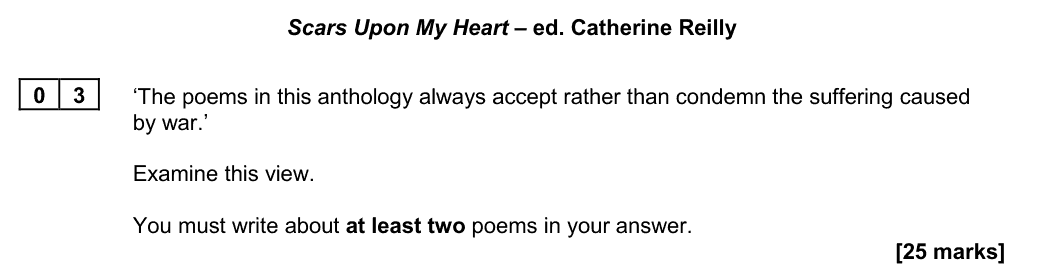
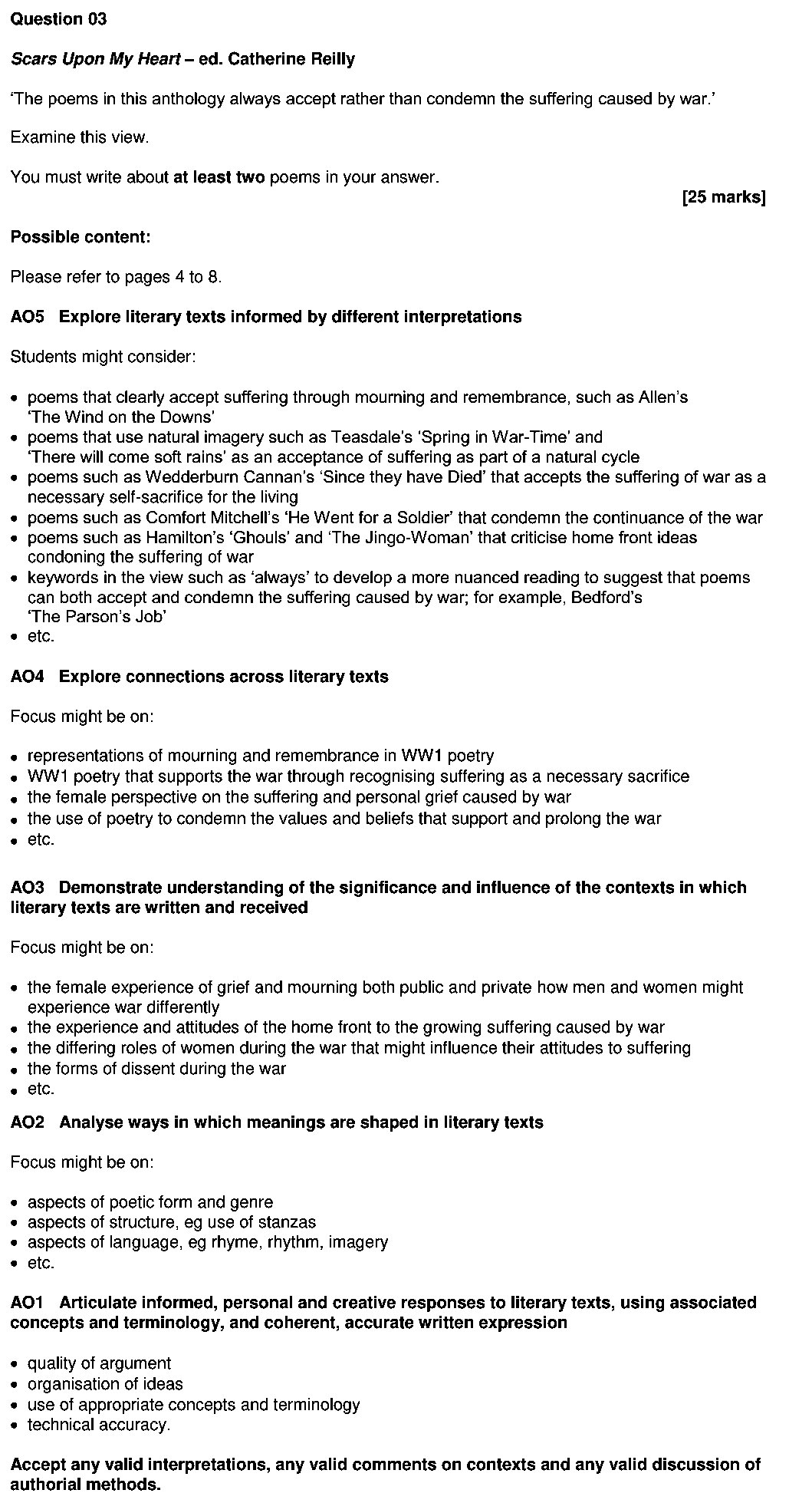
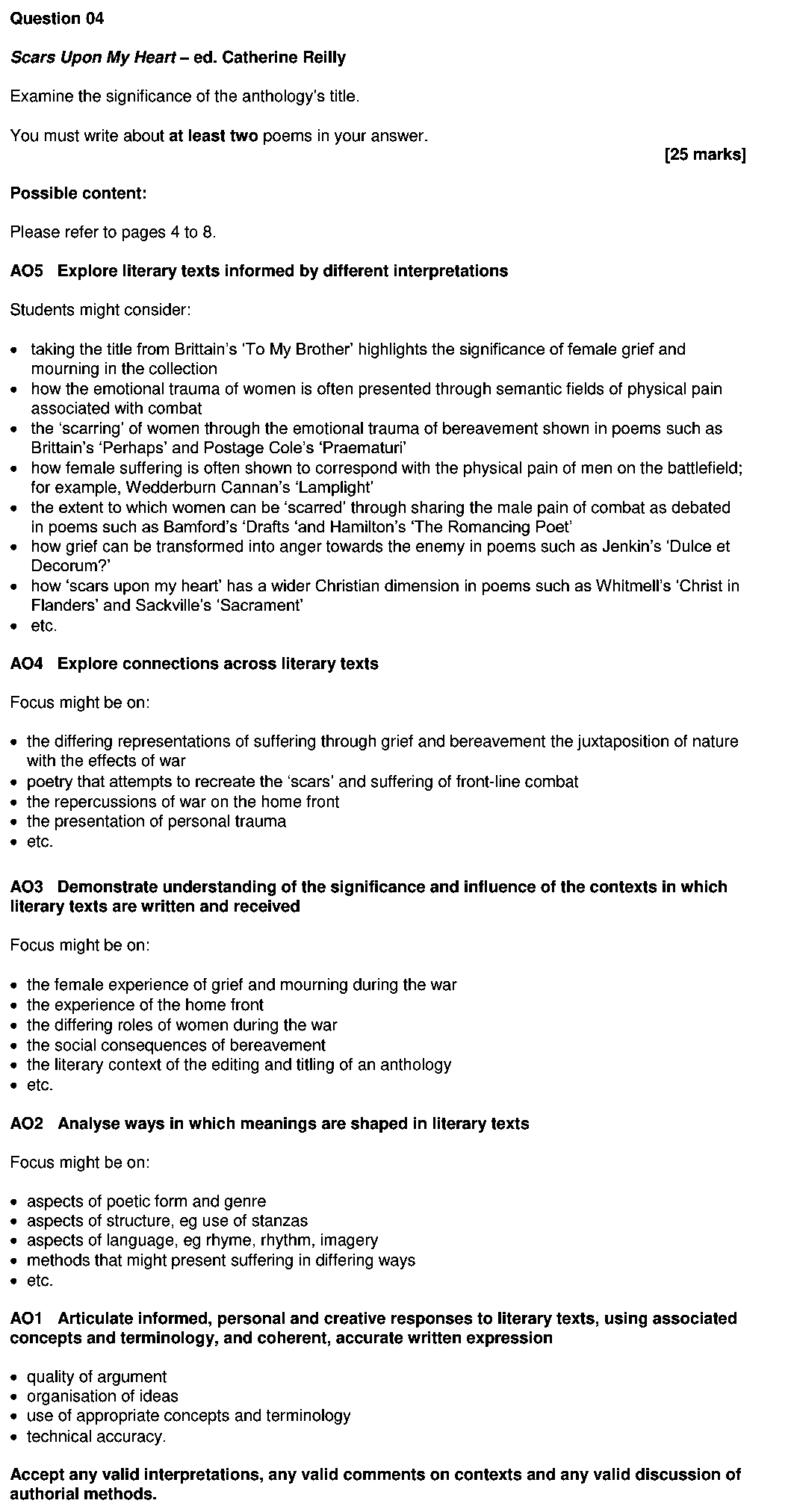
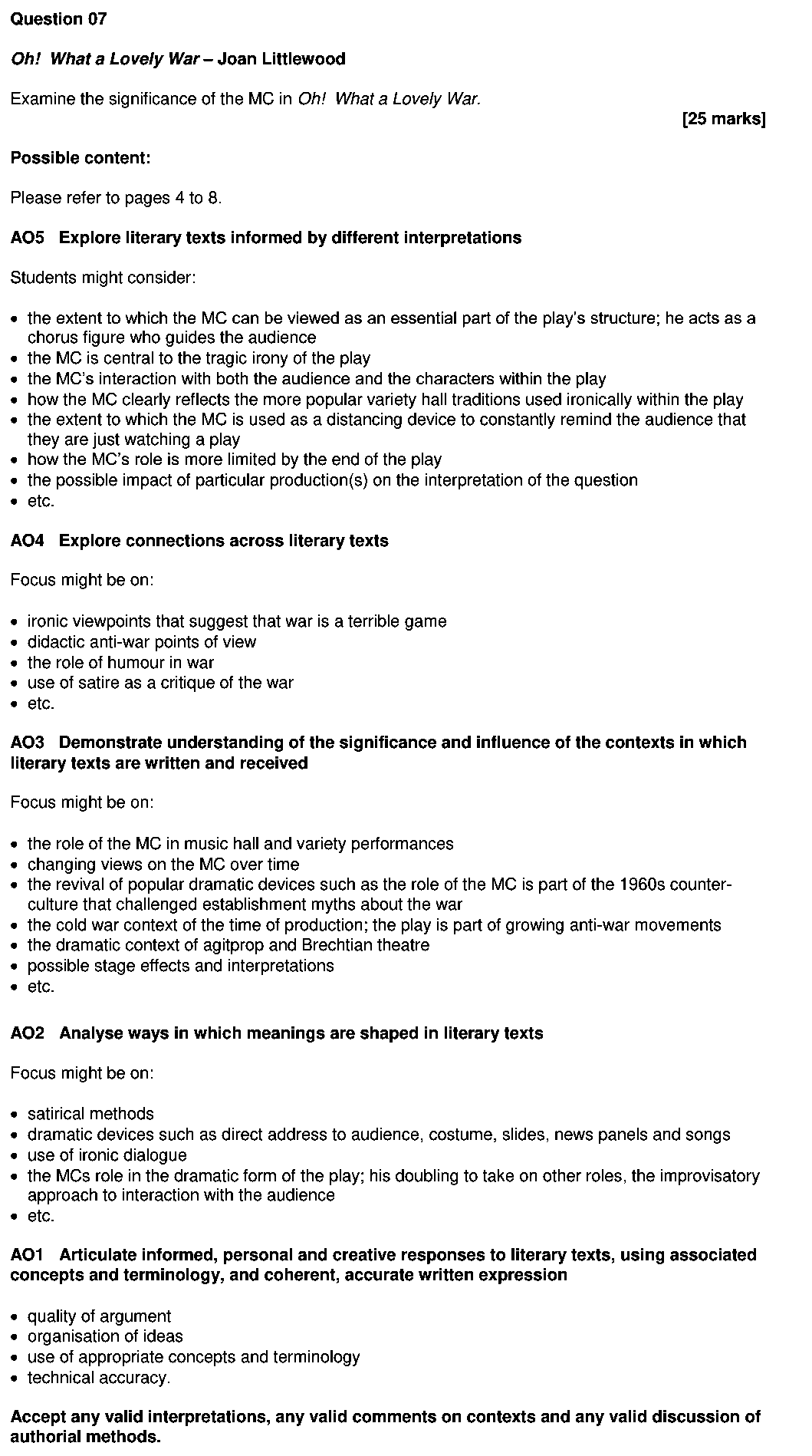
- Focus: theme: passive endurance vs active combat
- Open book, no extract
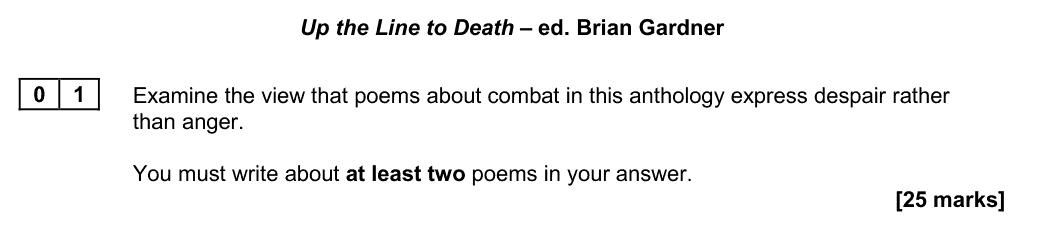
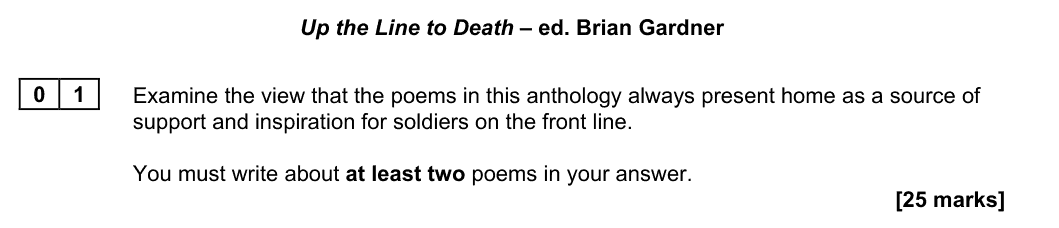
- at least two poems
- engage with 'powerful', 'passive endurance' and 'active combat' and challenge the view
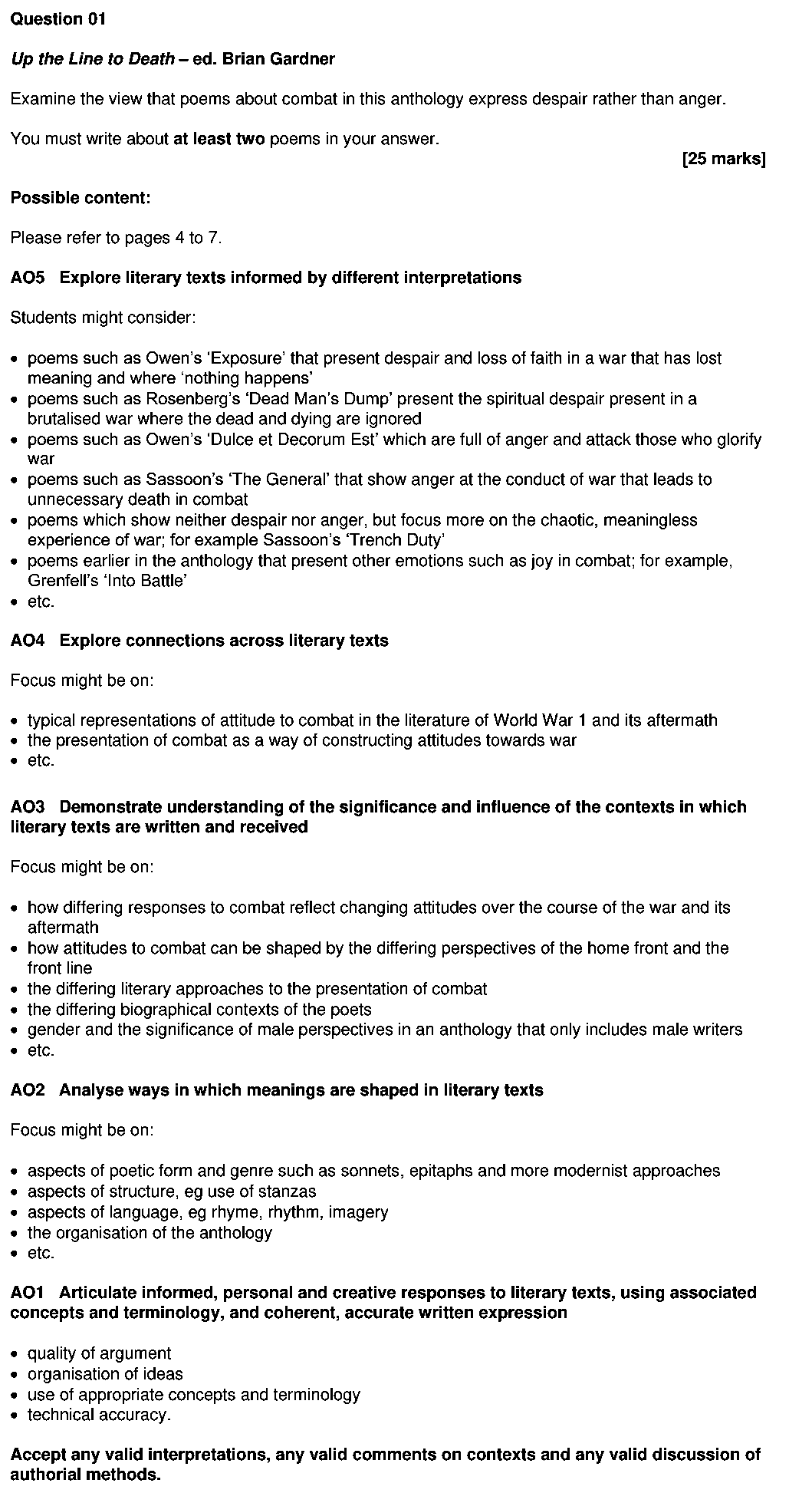
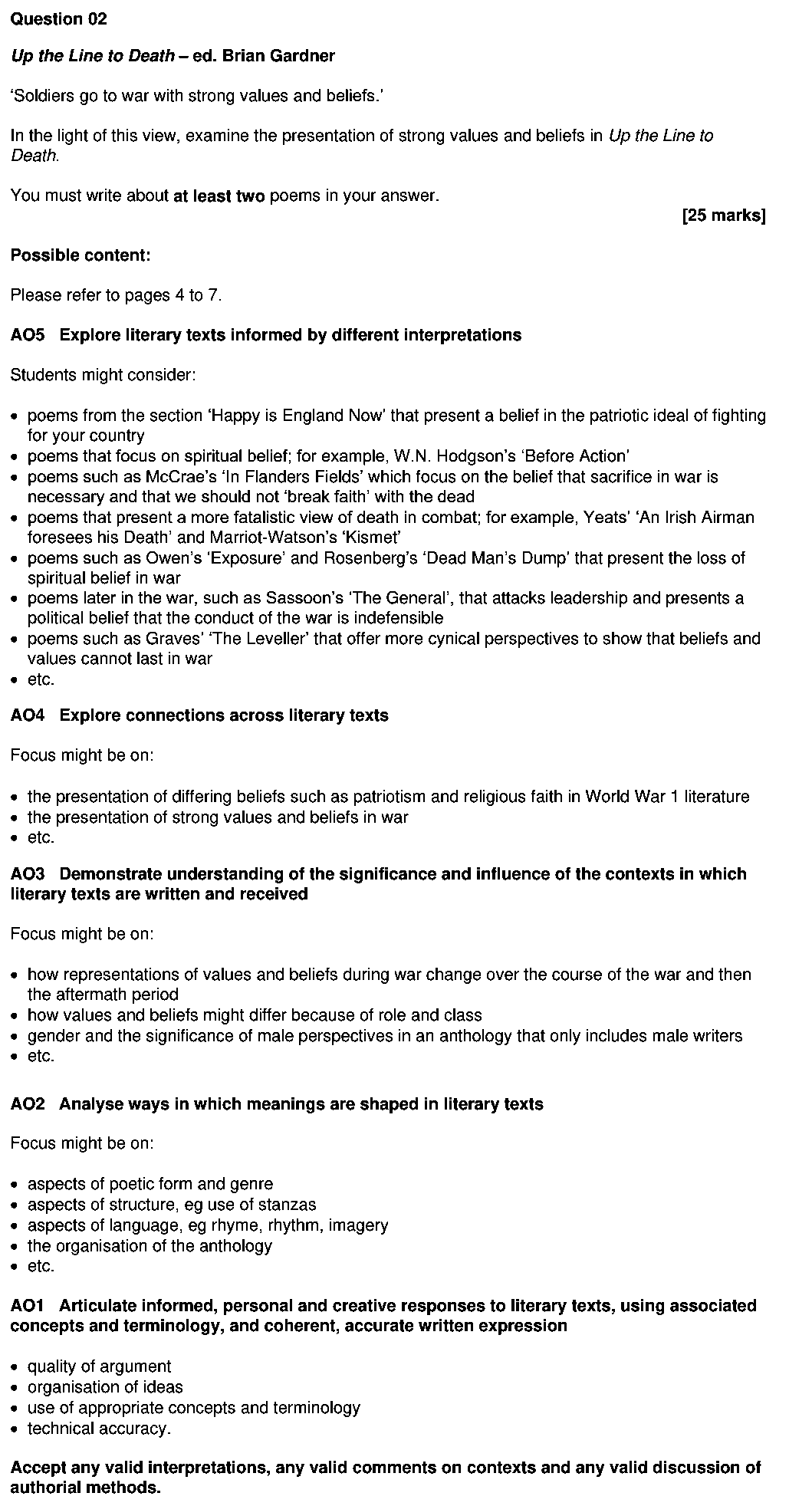
- credited: Owen 'Exposure' and 'The Sentry', Nichols 'Noon', Sassoon 'The Dug-Out', Aldington 'Bombardment' vs Seeger 'The Aisne', Grenfell 'Into Battle', Sassoon 'Attack', later poems' focus on endurance, Gardner's organisation
- weaker answers used rehearsed early-vs-post-Somme material, over-relied on 'Dulce et Decorum Est' or listed poetic methods