Examiner's comment
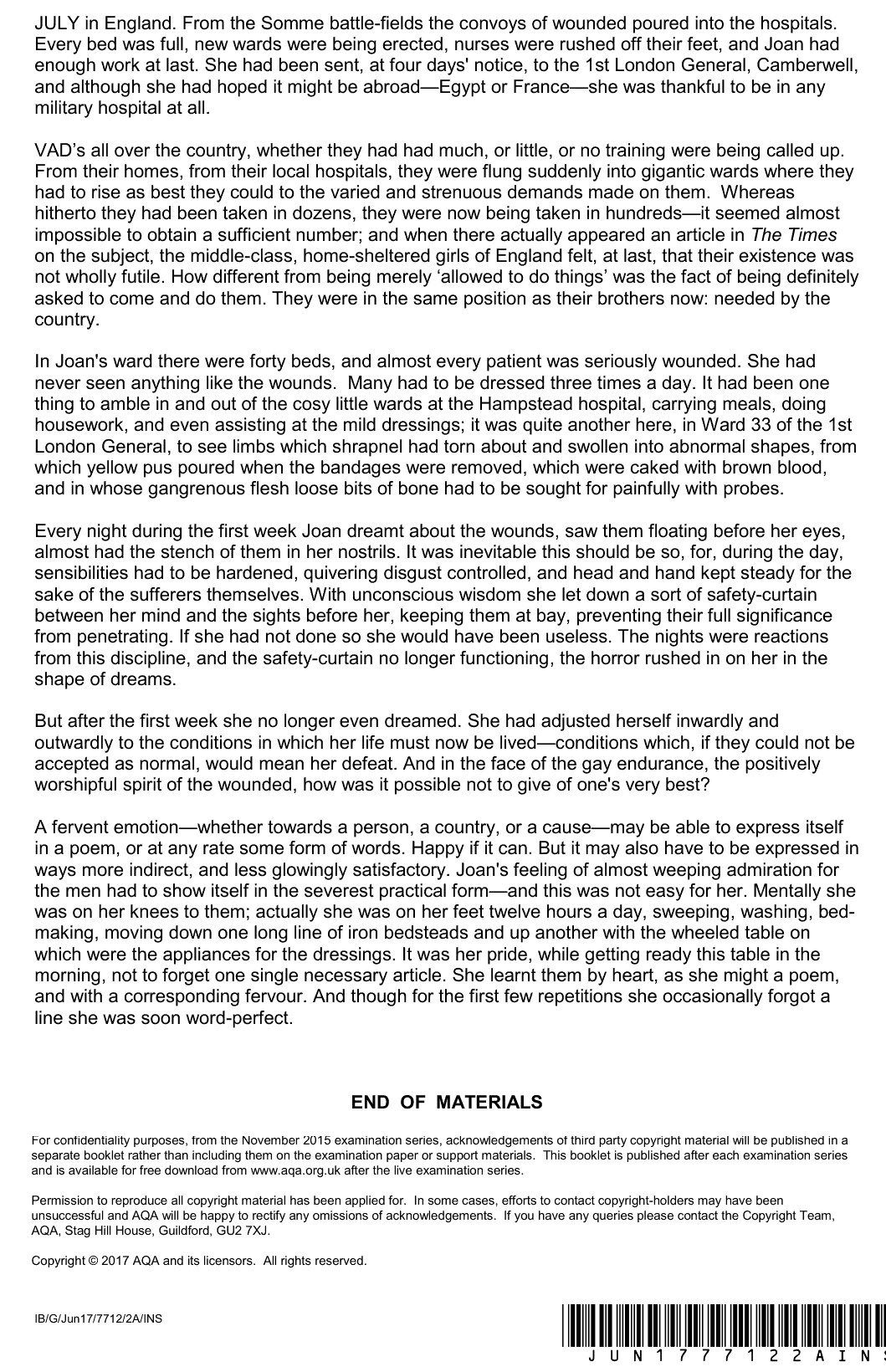
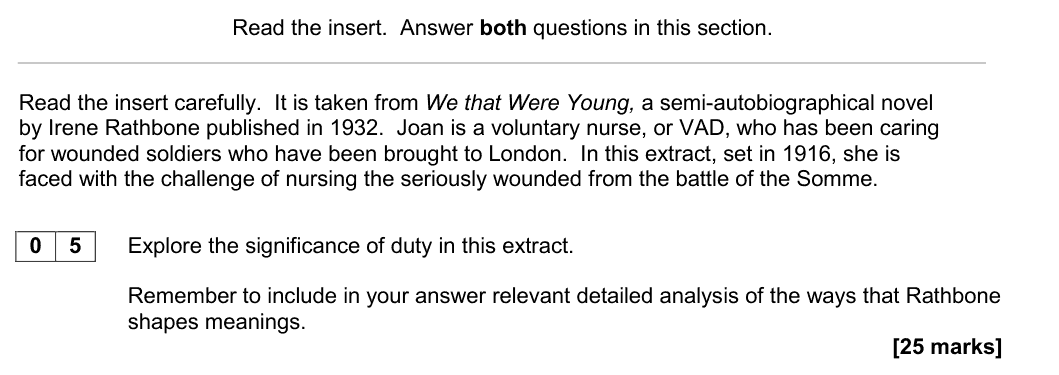
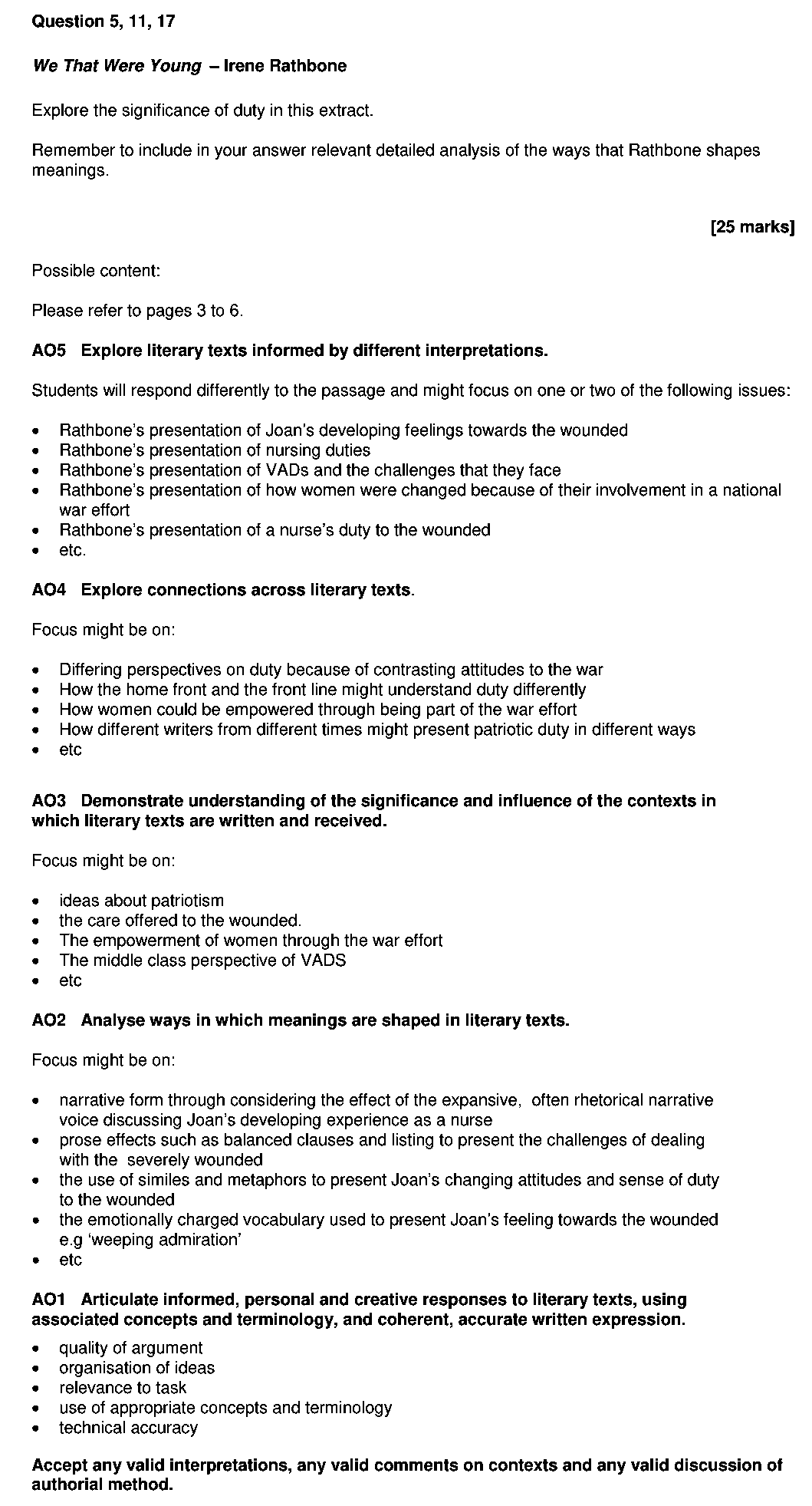
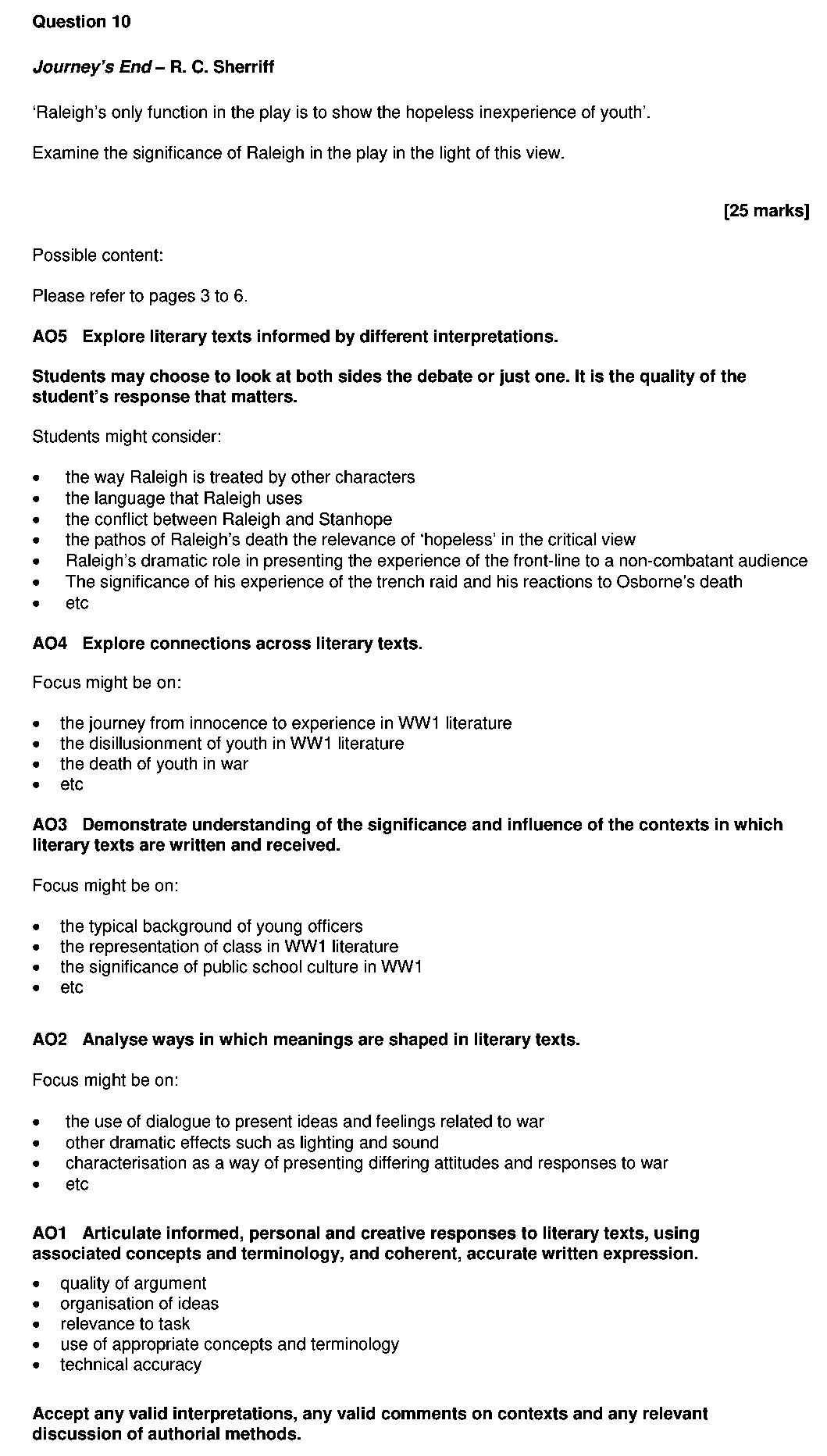
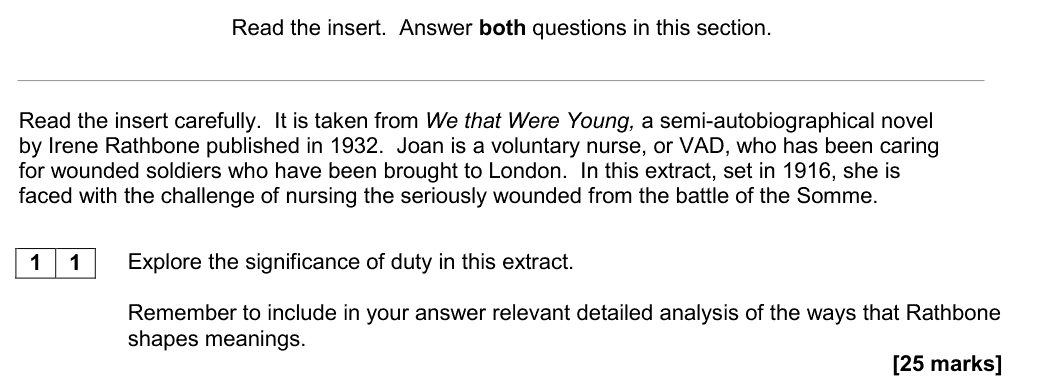
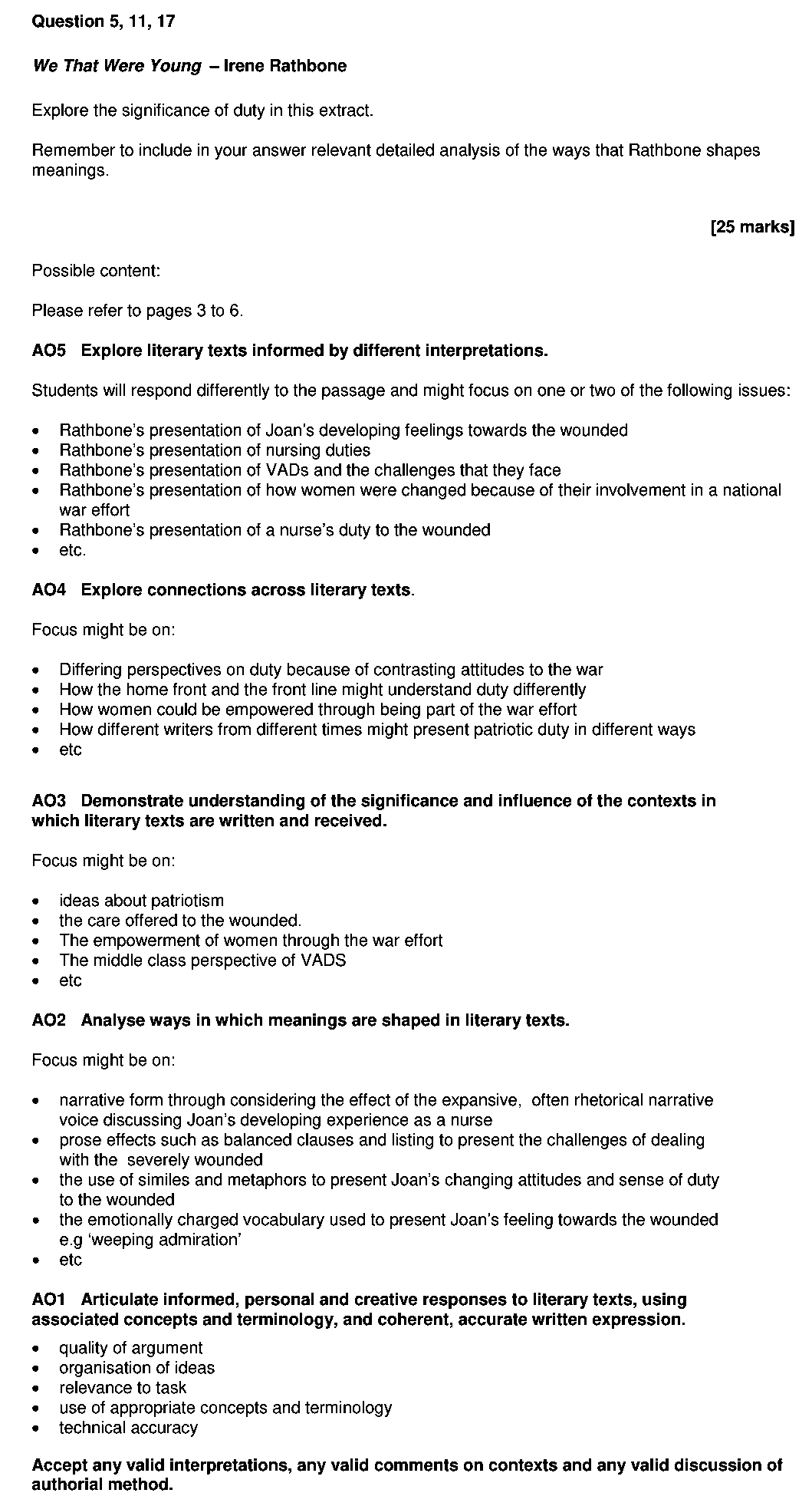
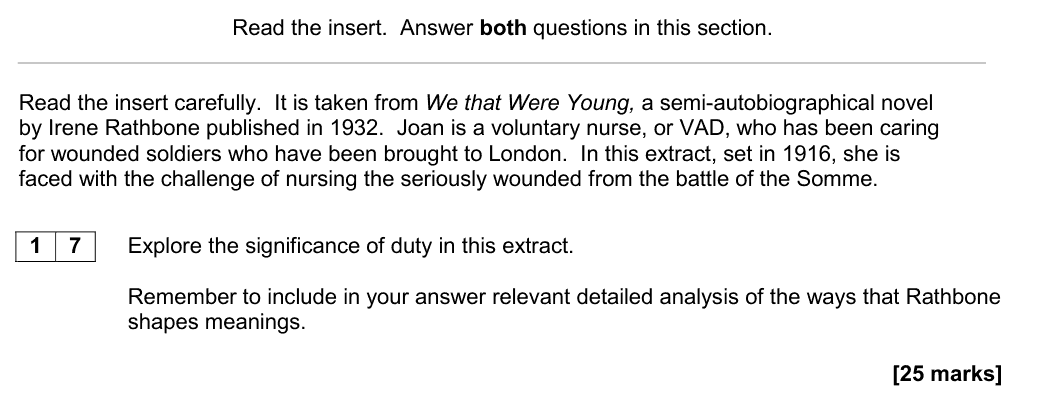
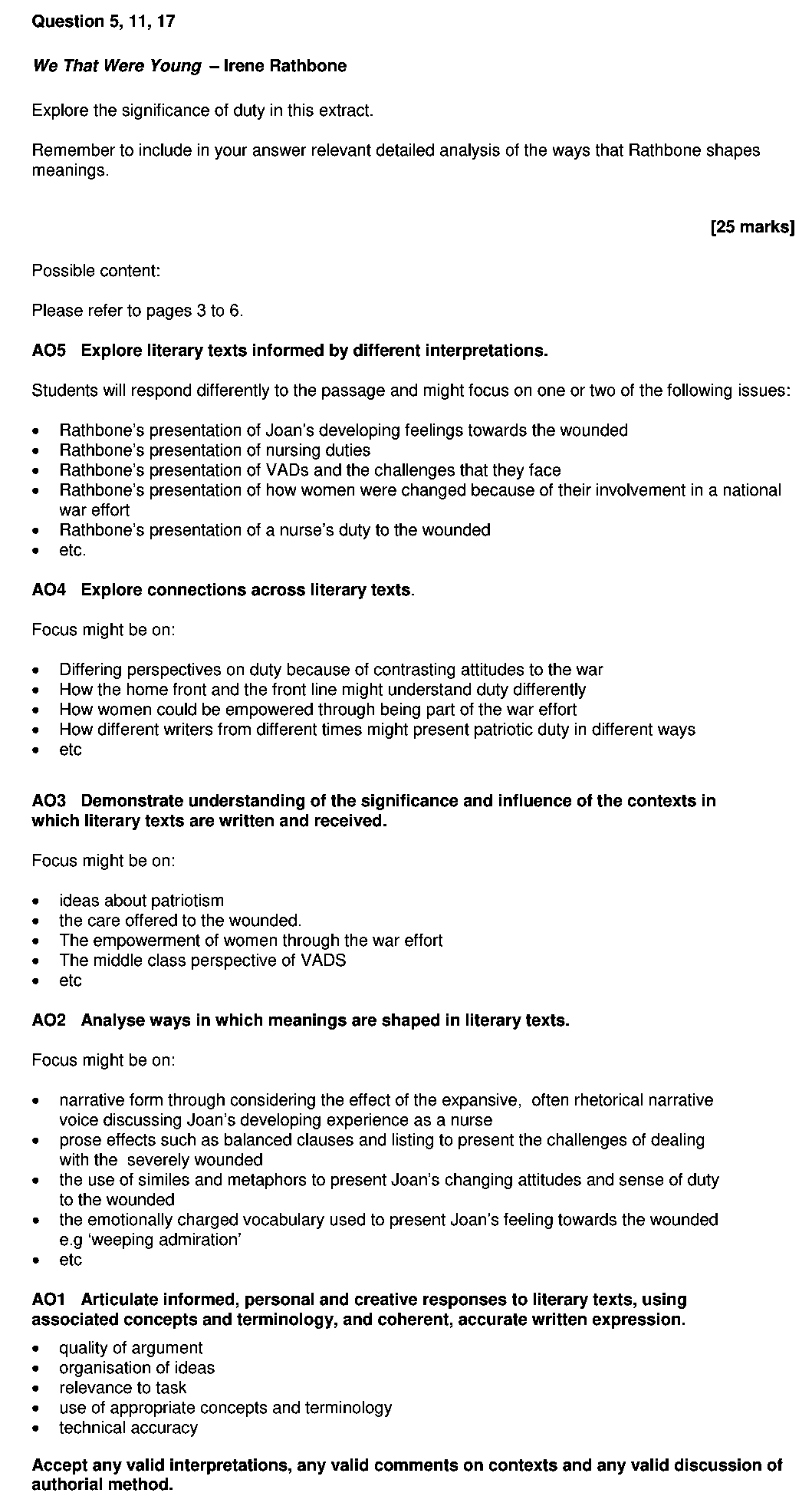
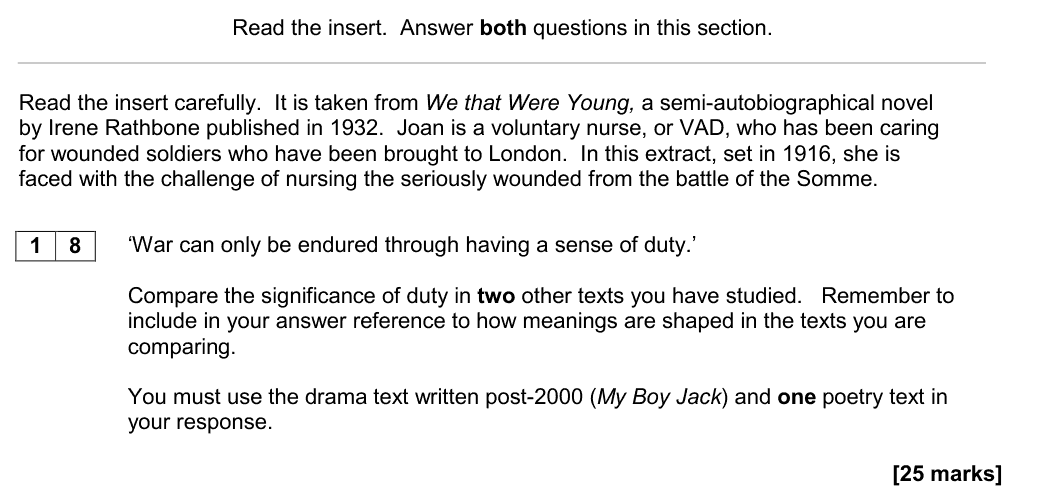
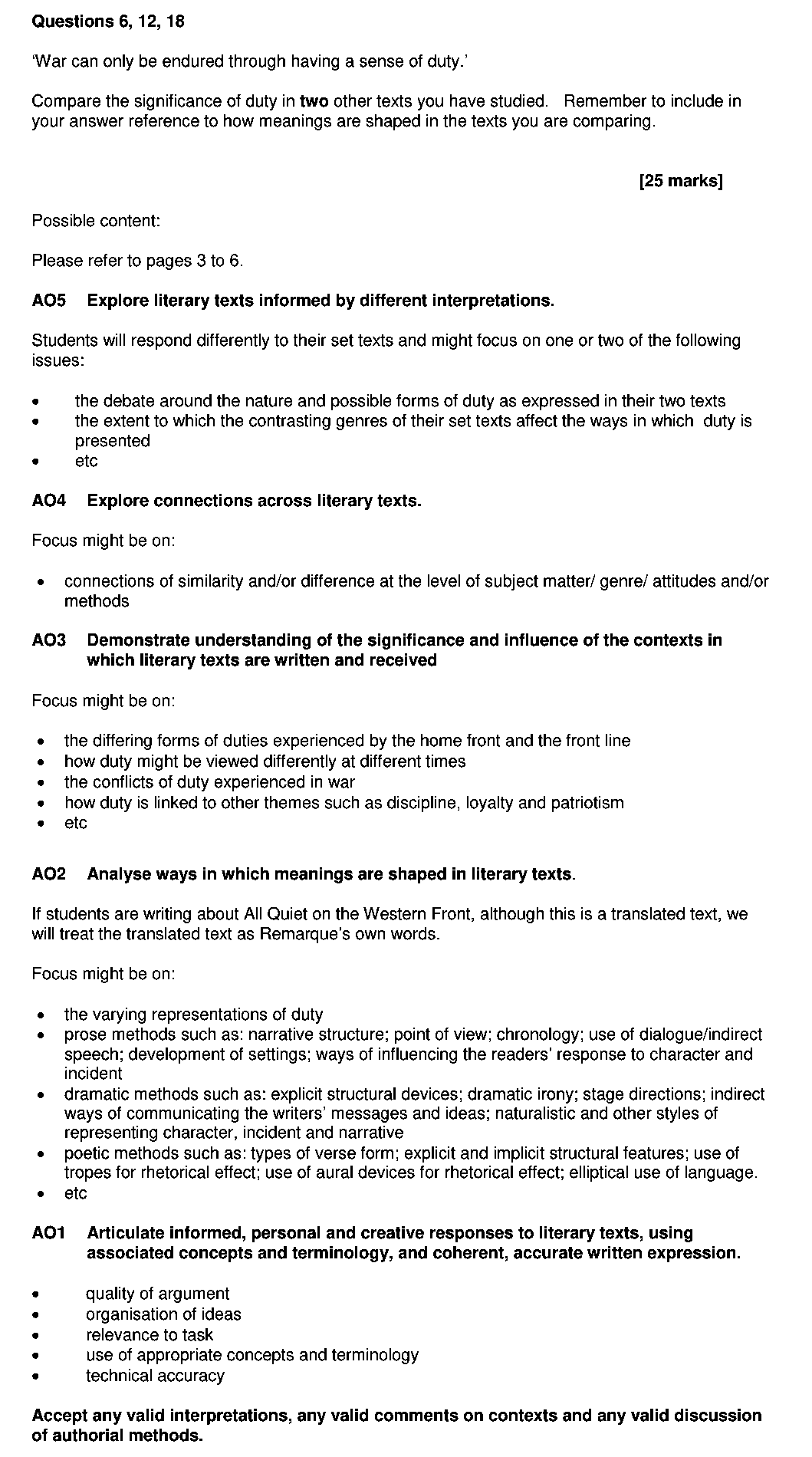
The extract proved to be accessible to the majority of candidates. Again the simple requirement to ‘answer the question’ allowed many to produce successful responses by exploring the nature of duty ‘in this extract’ rather than diverting attention to other texts and making digressive comments on generalised context. The majority of candidates were able to develop ‘relevant detailed analysis’ of Rathbone’s methods, but could not always show how this ‘shapes meaning’. Although specialist terminology is welcomed it should always be appropriate; labelling features such as ‘asyndetic listing’ or ‘lexical fields’ is limited if it does not allow a discussion of how meaning is created. Labelling the text as modernist was also misguided and suggested that too many students understood such terms as a measure of time rather than a stylistic choice. Many examiners also noted that weaker students often focused on word level analysis without having a secure enough grasp of the text as a whole. This type of response could have been improved through more thoughtful planning before writing rather than just ‘going through’ the extract in a commentary type approach. Stronger students, however, fully engaged with the writer’s methods in relation to the task. These students were able to explore duty through considering the ways the extract contrasts the active work of the nurses with the passive suffering of the soldiers. Many students were also alert to the fact that duty was significant because it highlighted changing gender roles and relevantly used context to discuss the ways the nurses ‘were in the same position as their brothers now’. The strongest work was able to develop sophisticated debates on ‘duty’ through exploring the language of the extract with the ‘detailed analysis’ requested by the task. There was some confident work on the language of war used to present the nurse’s duty in more masculine terms suggesting growing equality. Confident candidates were also able to explore the metaphor of ‘the ‘safety curtain’ through considering the mental ‘distancing’ necessary because of ‘duty’. The very best responses, however, noted that the extract also reinforced the more traditional ‘duty’ women feel towards men through exploring the ‘weeping admiration’ Joan feels towards the wounded and exploring the full significance of ‘mentally she was on her knees to them.’ More successful prose unseen answers read the extract carefully and made good use of planning before writing thoughtfully explored prose methods in relation to the significance of ‘duty’ selected and discussed textual material as a way of developing the debate on ‘duty’ thoughtfully integrated contextual discussion into their answer always kept the extract in focus and only used context and connected texts as ‘tools’ for analysis and debate. Less successful prose unseen answers were not well prepared and reflected superficial, rushed reading tended to ‘feature spot’ largely ‘went through’ the extract, creating a commentary rather than an argument used context as a way of moving away from the focus of the extract often digressed to other texts as a way of using rehearsed material.