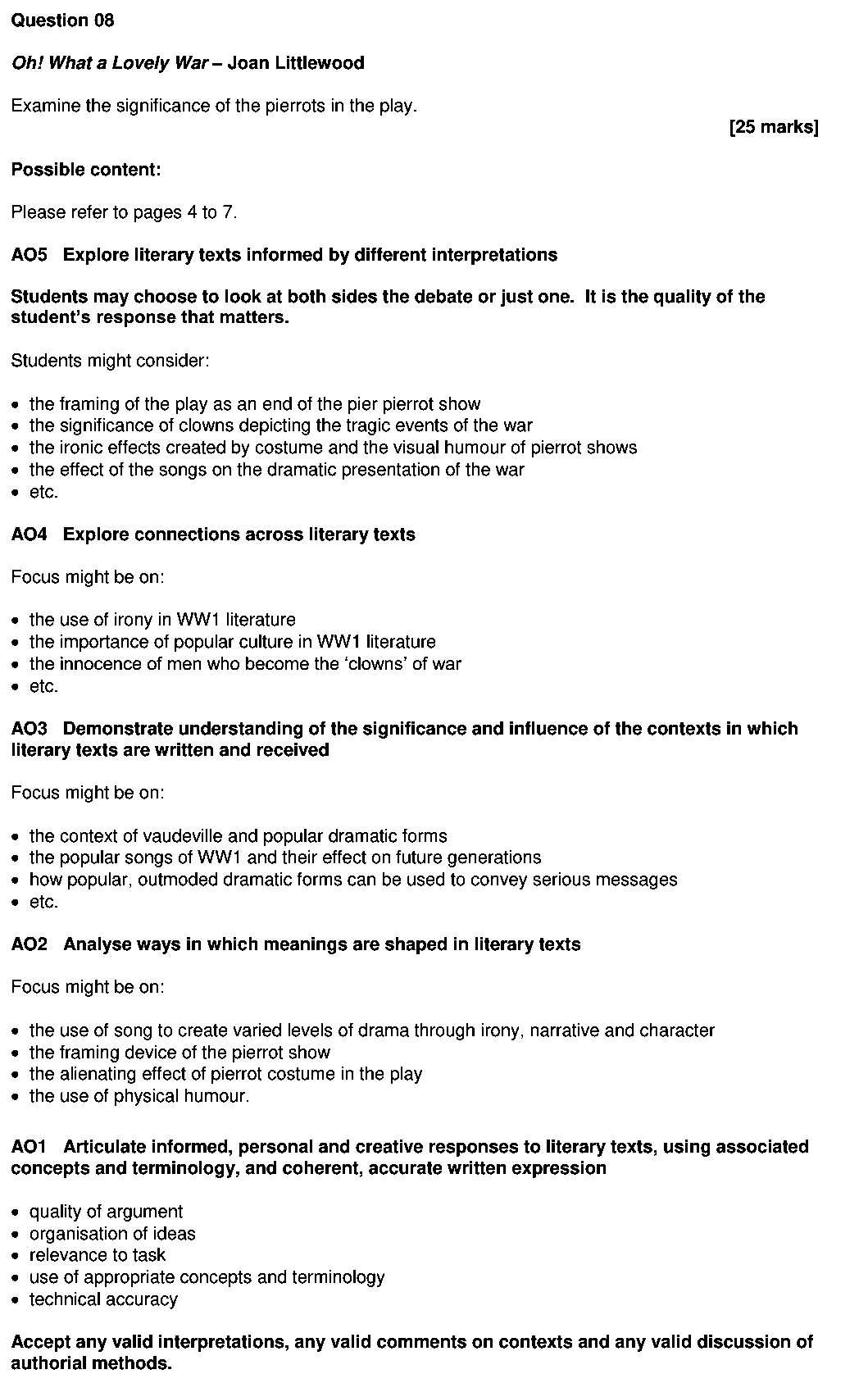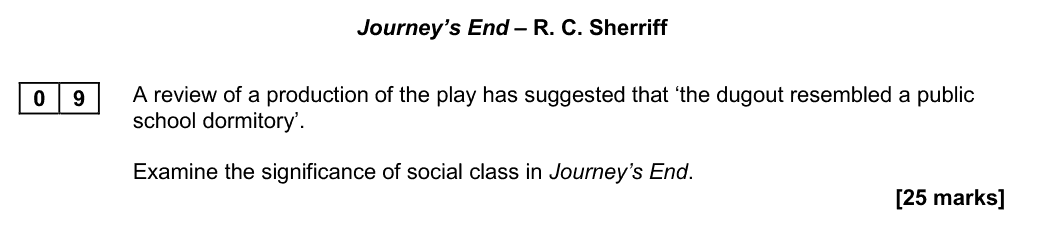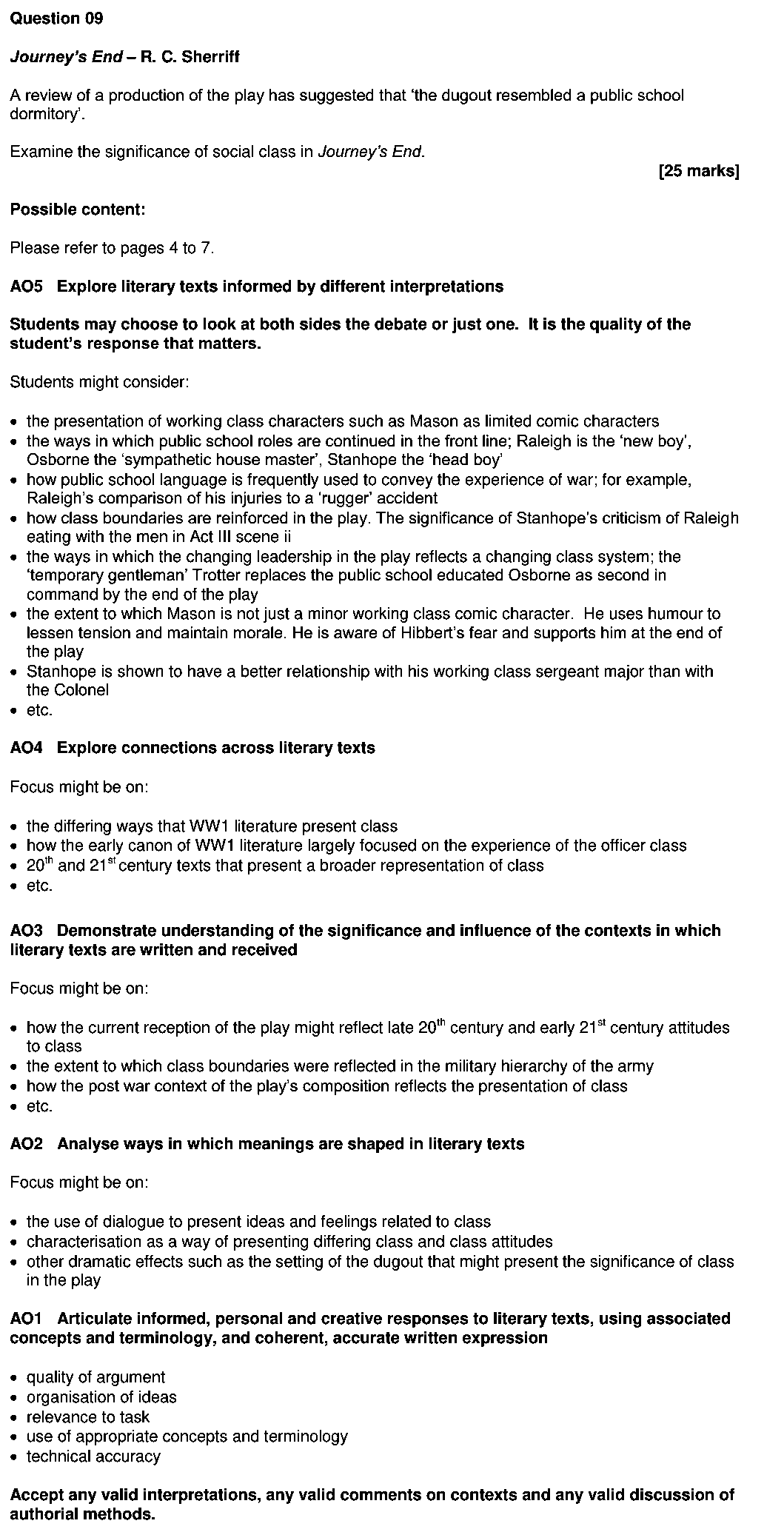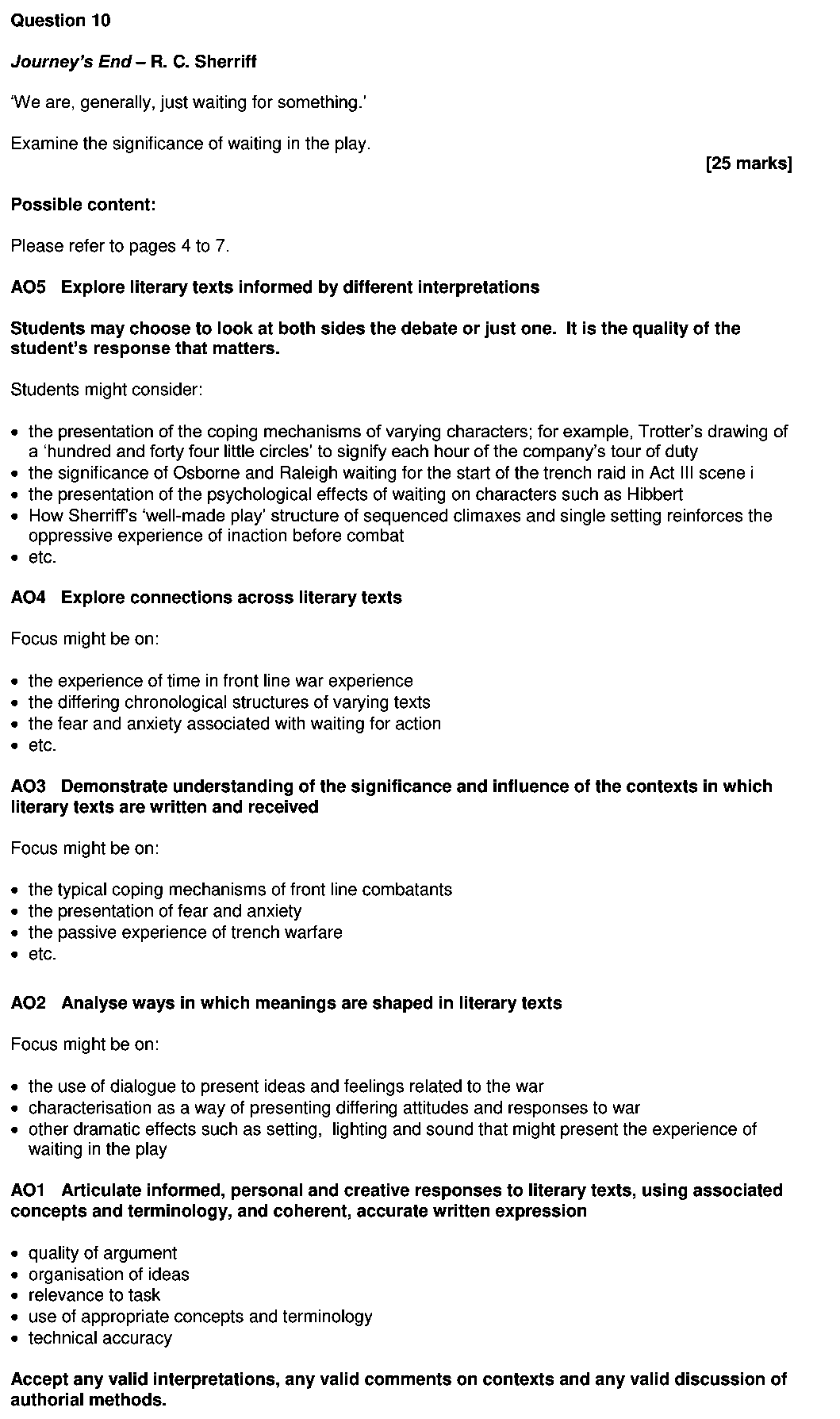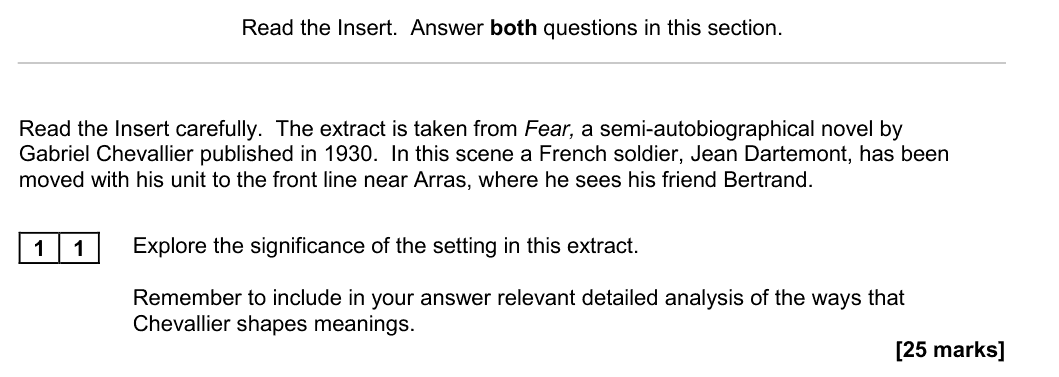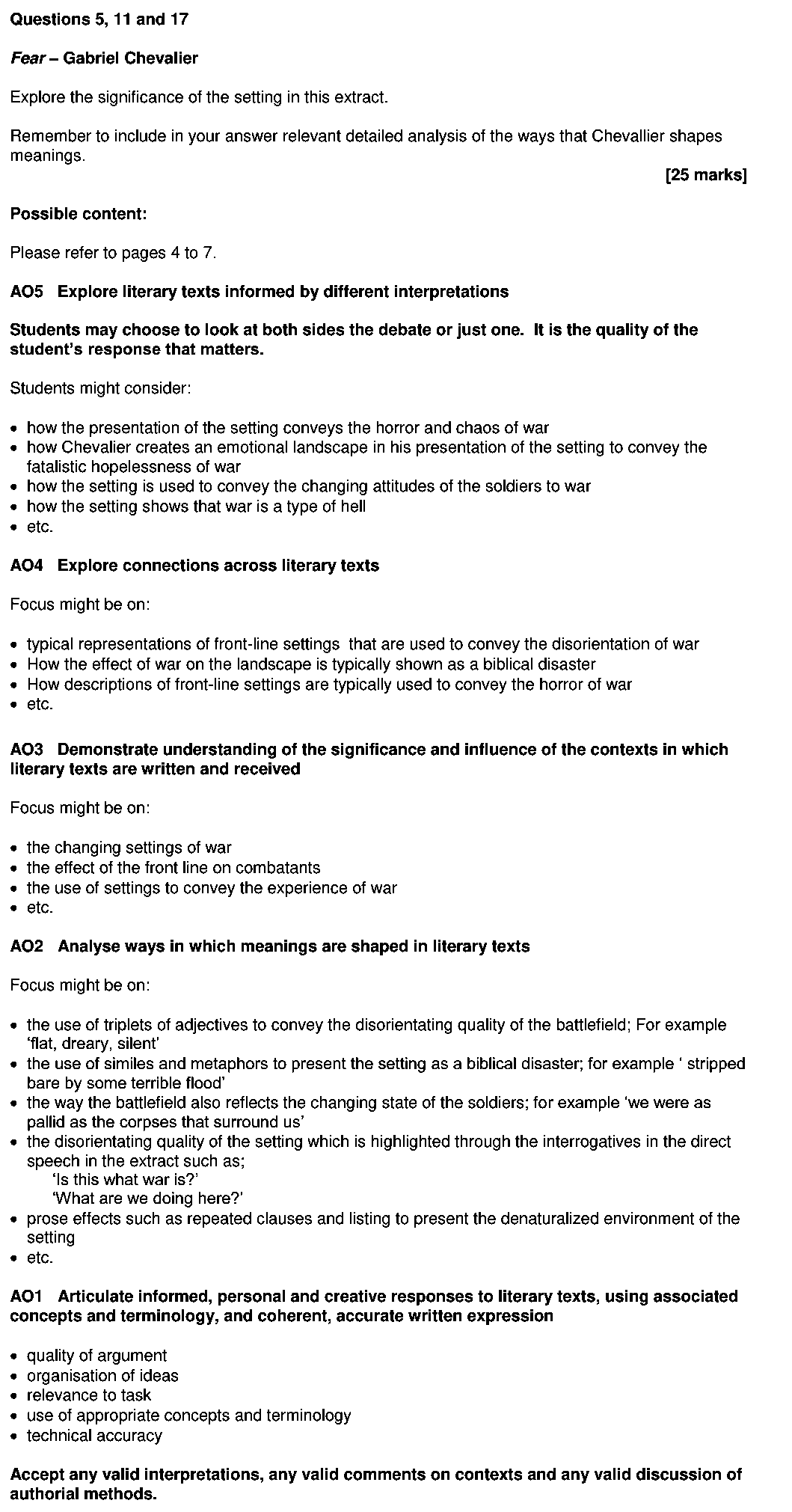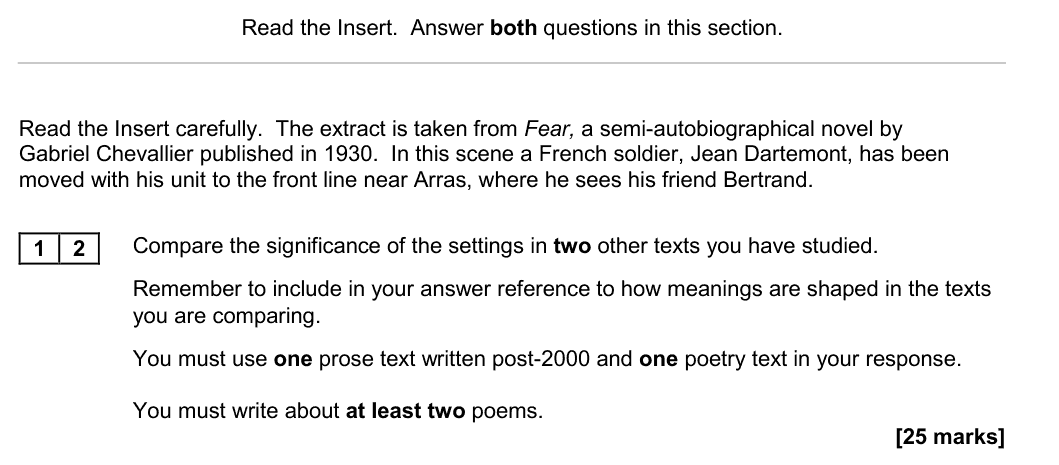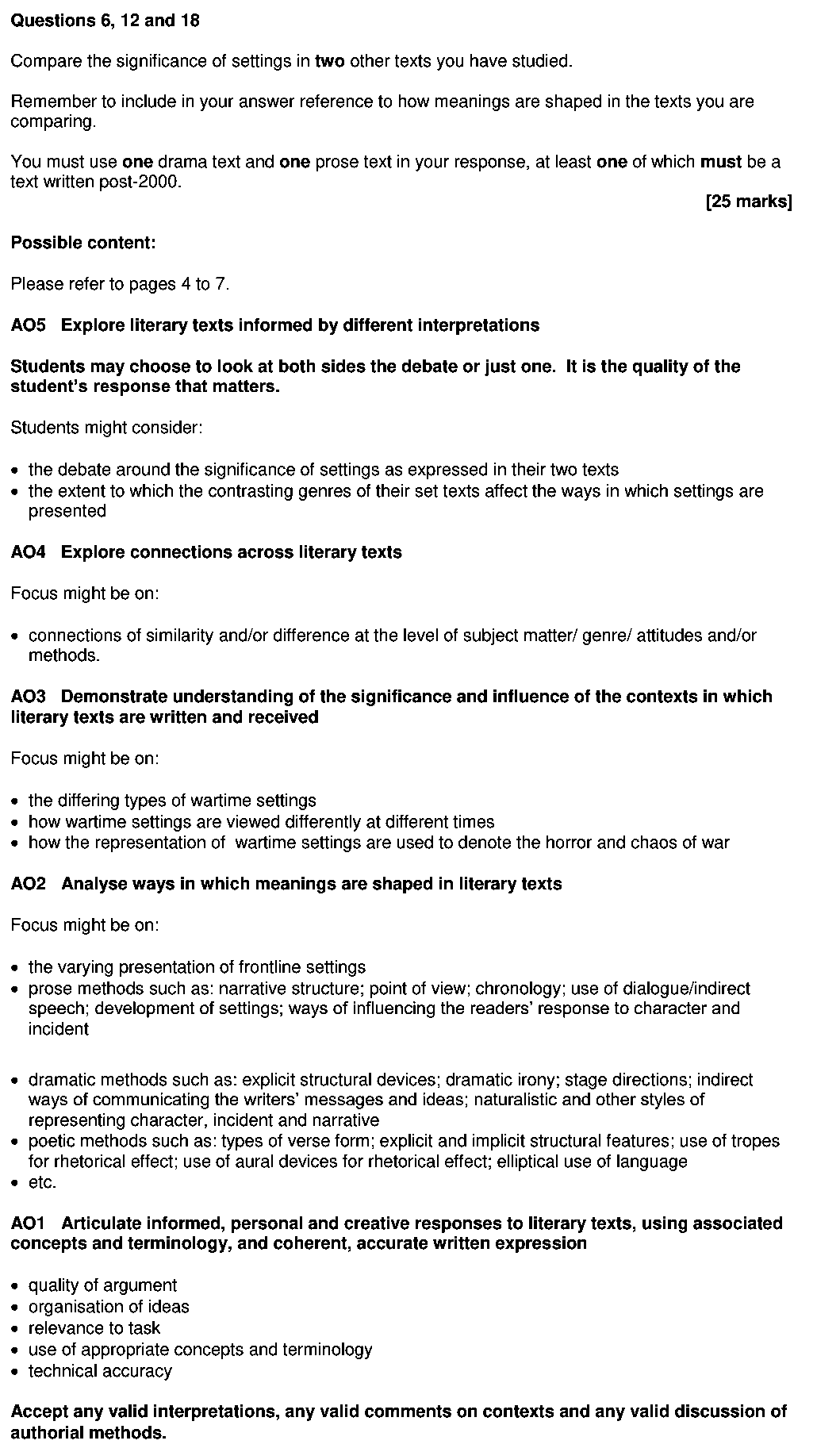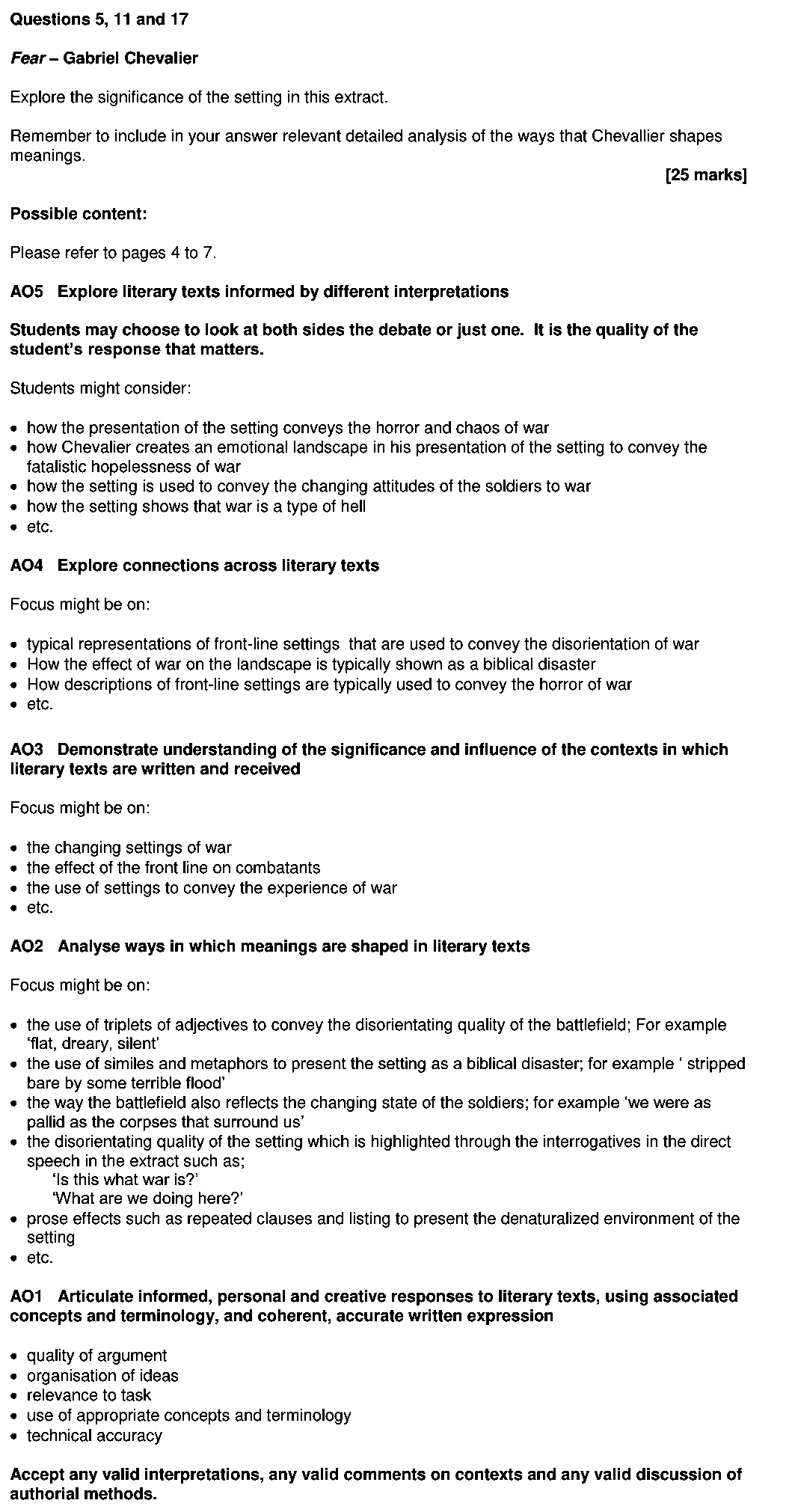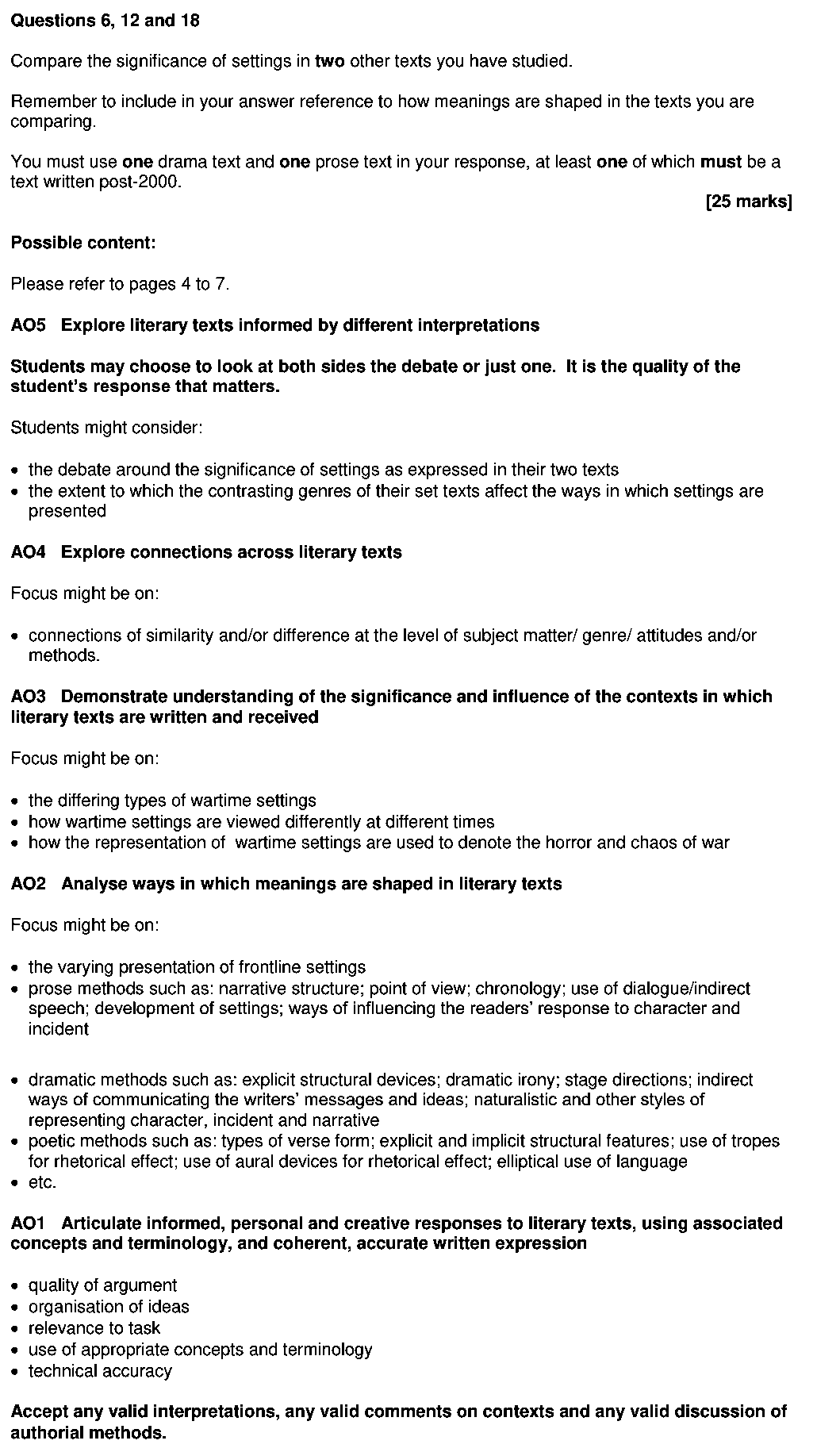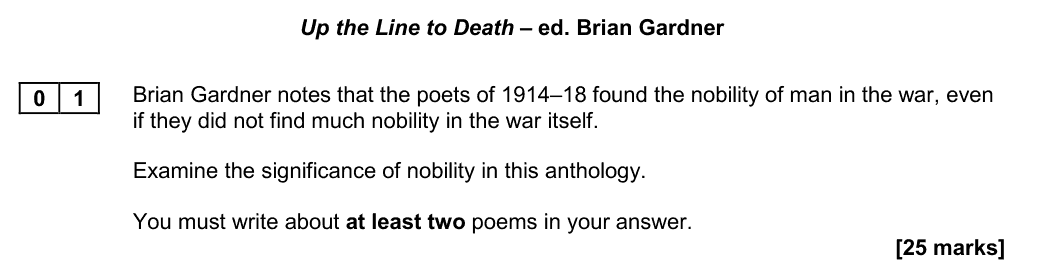
Mark scheme, including the levels and indicative content
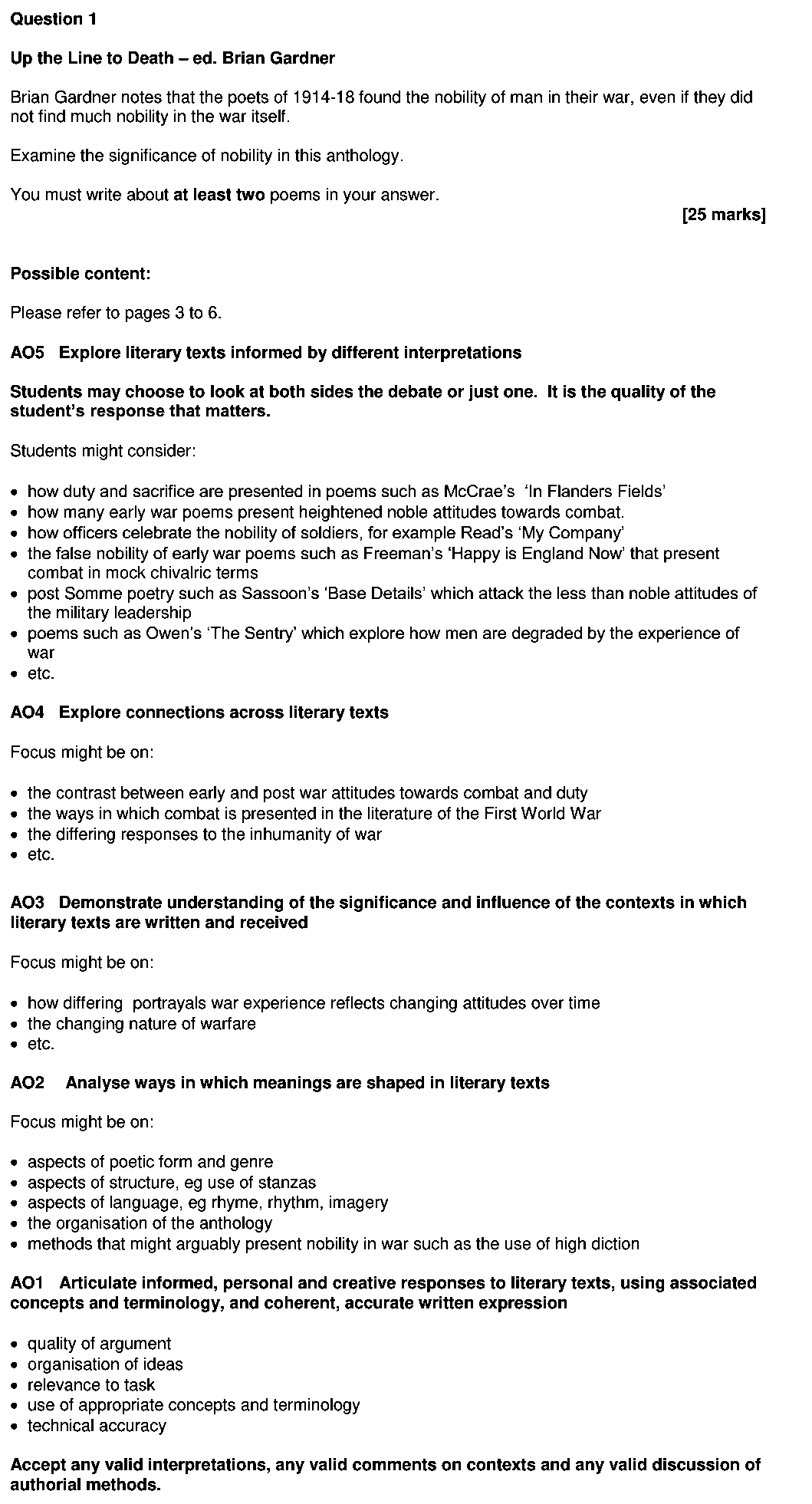
The general mark scheme (assessment objectives and bands)
Examiner's comment
The majority of students were able to engage with the debate about nobility in war. The best responses set an agenda about nobility that didn’t just consider bravery, but also explored more precise discussion of qualities such as comradeship, self-sacrifice and stoicism. Stronger answers often considered Gardner’s view in full and were able to explore the lack of nobility in war to develop the debate. Many students purposefully chose to compare early and late war poems; most popular choices were early poems such as ‘England to Her Sons’ or ‘Peace’ compared with ‘Dulce et Decorum est’ or ‘Base Details’. Many students were able to choose appropriate poems to compare, but sometimes fell into an over-rehearsed debate about early war patriotism as opposed to the anger and cynicism of poems from later in the war. The best responses were able discuss the significance of nobility through using appropriate literary and cultural contexts such as Georgian poetry and muscular Christianity. Sophisticated responses also considered the importance of Gardner as a ‘curator’ of the poems and the significance of their placement within the anthology to trace a journey from innocence to experience. One outstanding response challenged the integrity of Gardner’s selection through arguing that several poems had been misplaced chronologically in order to support contemporary anti-war attitudes.
Notes from the mark scheme and report
- Focus: theme: nobility
- Open book, no extract
- at least two poems
- Gardner's view that poets found nobility of man but not of war
- MS: McCrae 'In Flanders Fields', Read 'My Company', Freeman 'Happy is England Now' mock chivalry, Sassoon 'Base Details', Owen 'The Sentry'
- ER: best defined nobility precisely (comradeship, self-sacrifice, stoicism), used Georgian poetry and muscular Christianity, and considered Gardner as curator
- weaker fell into a rehearsed early-patriotism vs late-anger debate