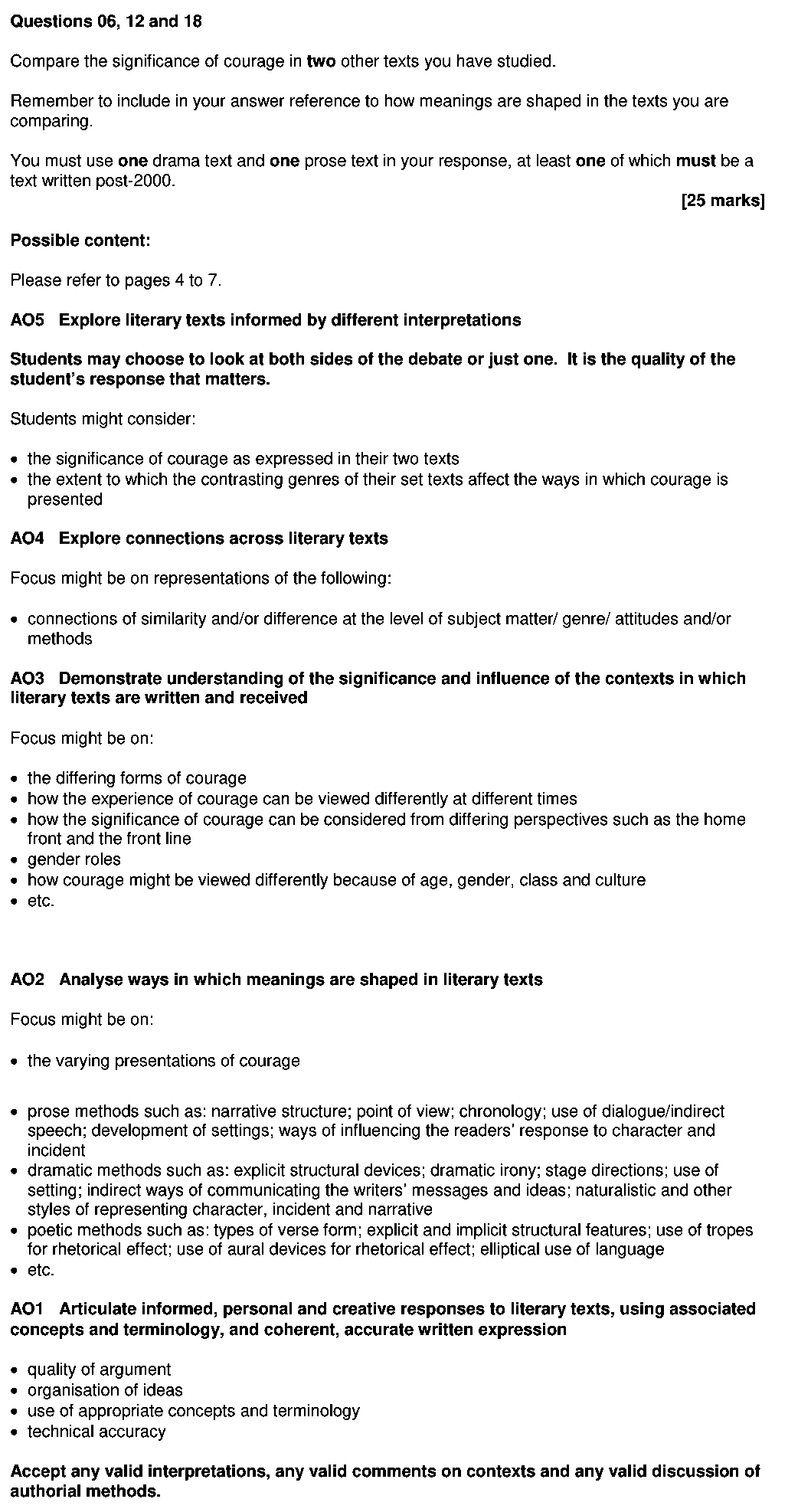
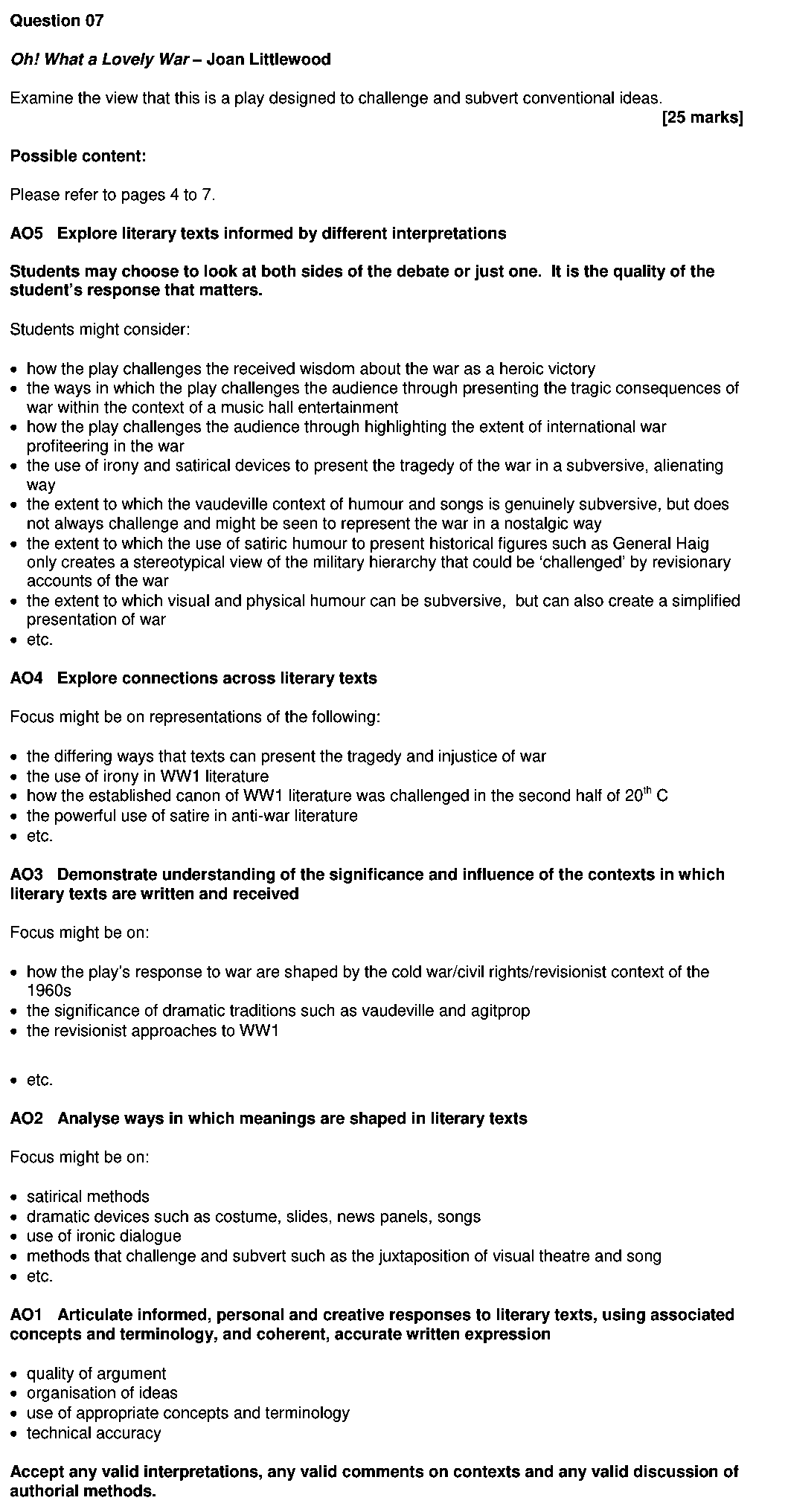
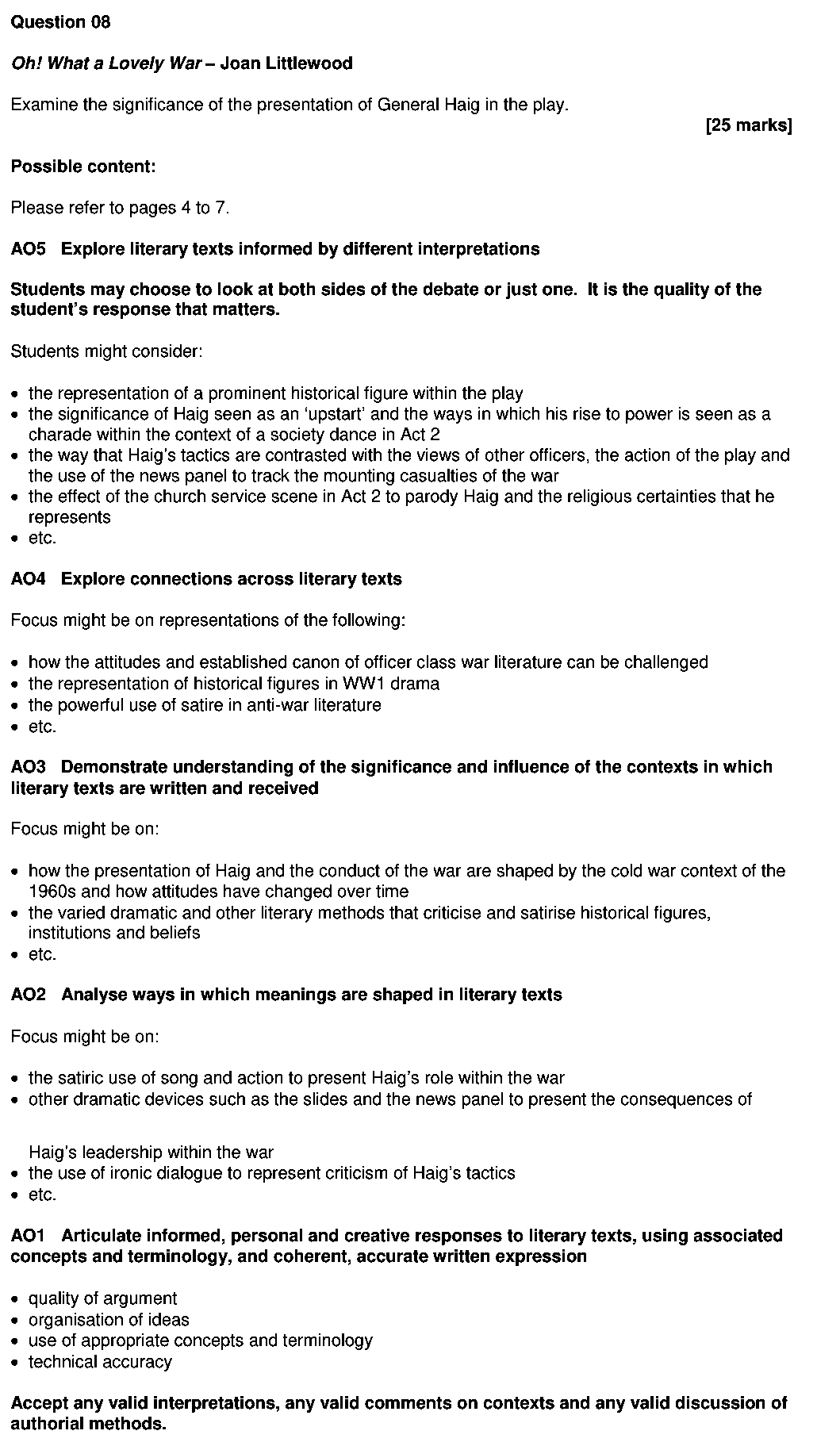
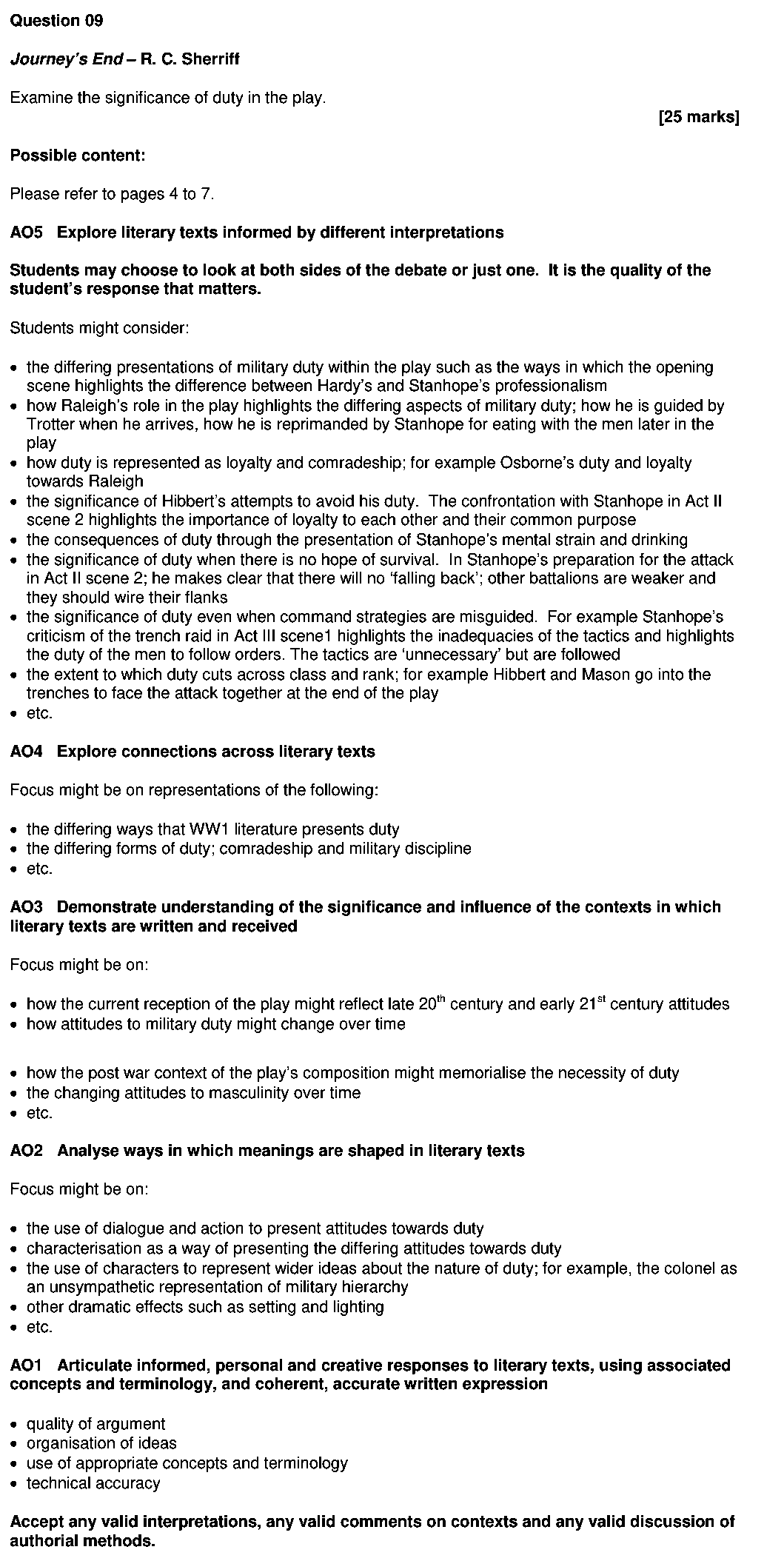
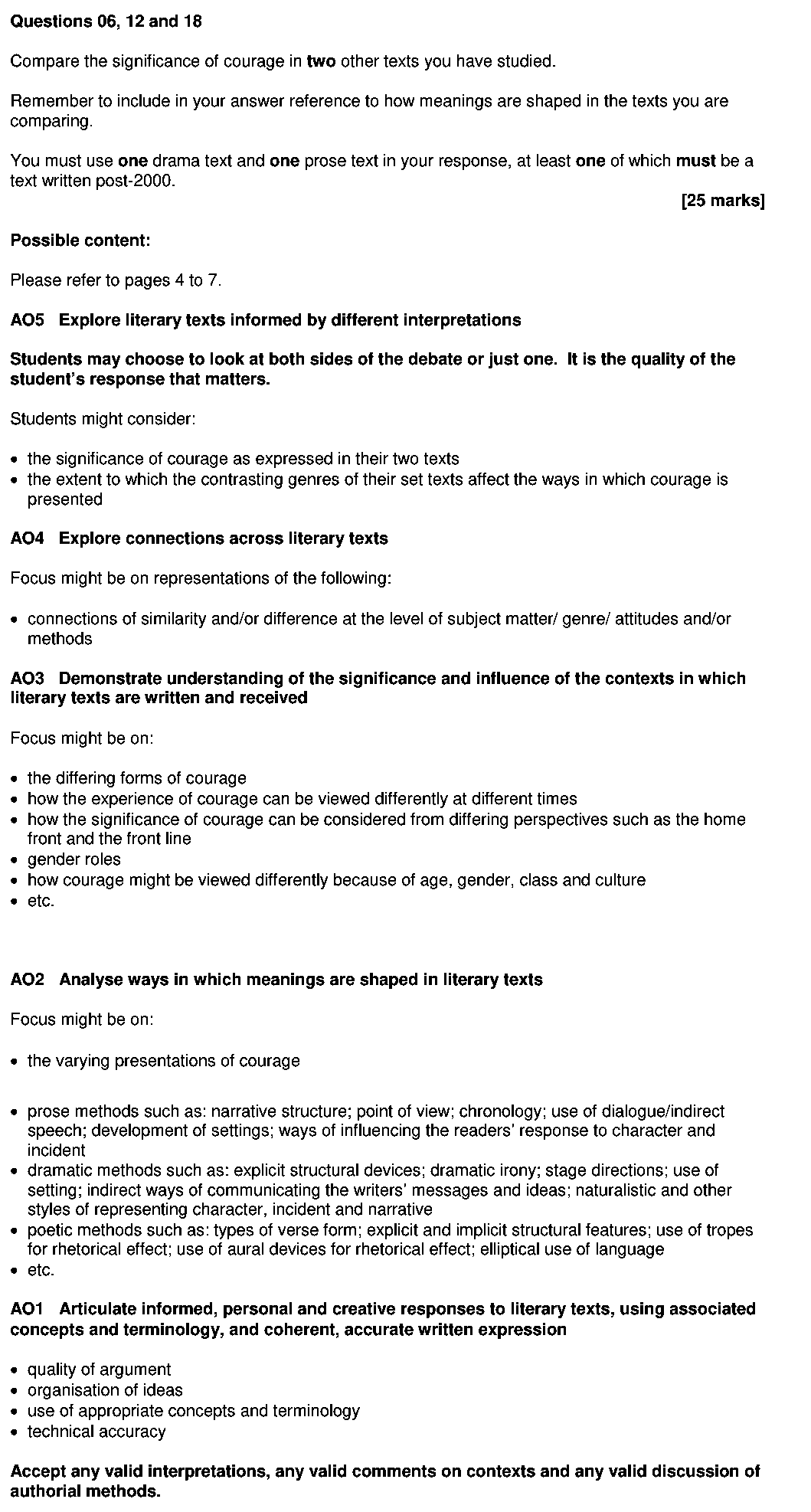
Mark scheme, including the levels and indicative content
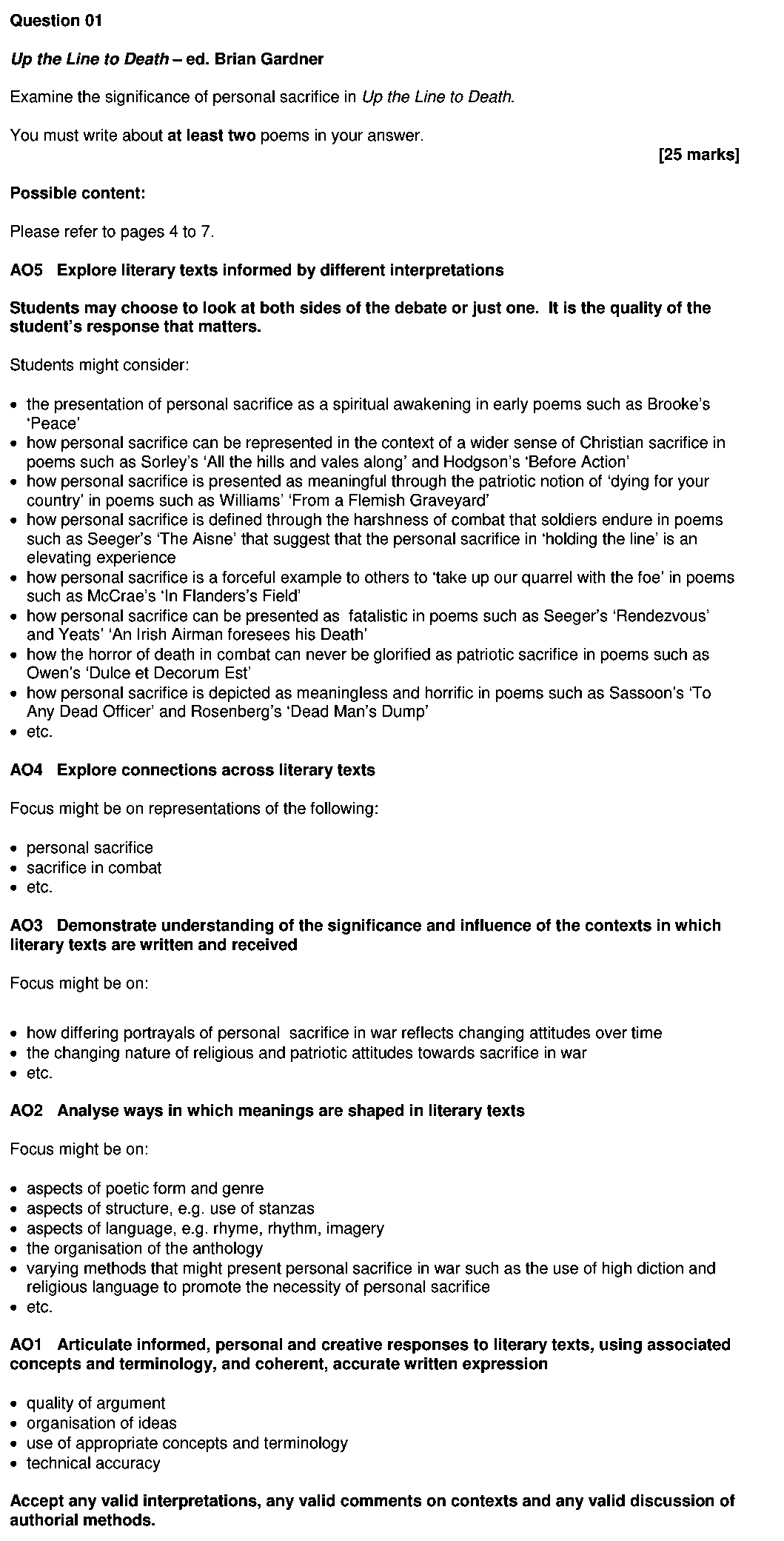
The general mark scheme (assessment objectives and bands)
Examiner's comment
This question elicited some illuminating responses from students who were prepared to explore all aspects of the debate through close consideration of the key words in the question. These responses clearly focused on the significance of ‘personal sacrifice’ and avoided more generalised discussion of the loss of life in war. Many responses confidently explored the spiritual nature of personal sacrifice in early war poems such as Brooke’s ‘Peace’ and were able to purposefully consider the imagery of personal sacrifice through considering poems such as McCrae’s ‘In Flanders Fields’. Successful responses were able to consider cultural and literary contexts such as muscular Christianity and Georgian Poetry to develop confident readings. Less effective responses tended to rely on rehearsed ideas that led to more generalised comparisons of early and late war poetry without exploring the ways in which personal sacrifice is signified. These responses failed to engage with ‘personal sacrifice’ in a detailed way and largely focused on the losses of the war.
Notes from the mark scheme and report
- Focus: theme: personal sacrifice
- Open book, no extract
- at least two poems
- MS: Brooke 'Peace', Sorley 'All the hills and vales along', Hodgson 'Before Action', McCrae 'In Flanders Fields', Seeger 'Rendezvous', Yeats 'An Irish Airman', Owen 'Dulce et Decorum Est', Sassoon 'To Any Dead Officer', Rosenberg 'Dead Man's Dump'
- ER: best focused on 'personal sacrifice' not general loss of life, used muscular Christianity and Georgian poetry
- weaker made rehearsed early vs late war comparisons