Examiner's comment
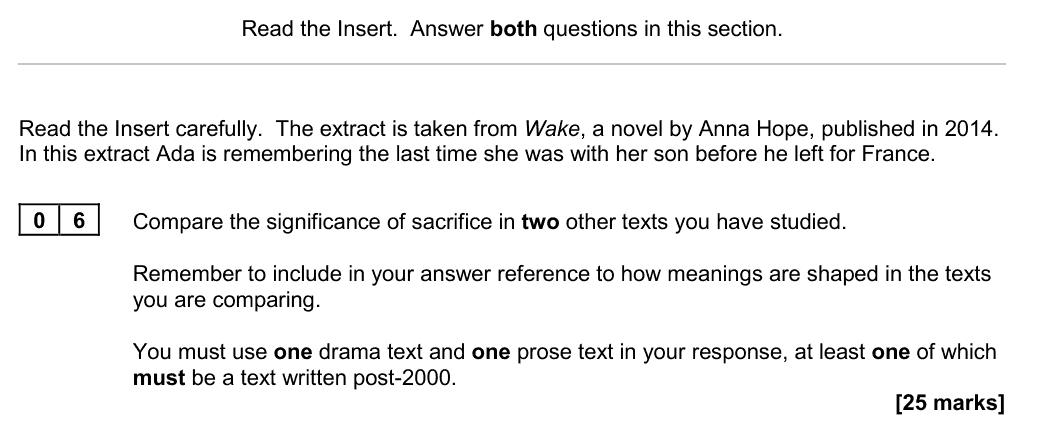
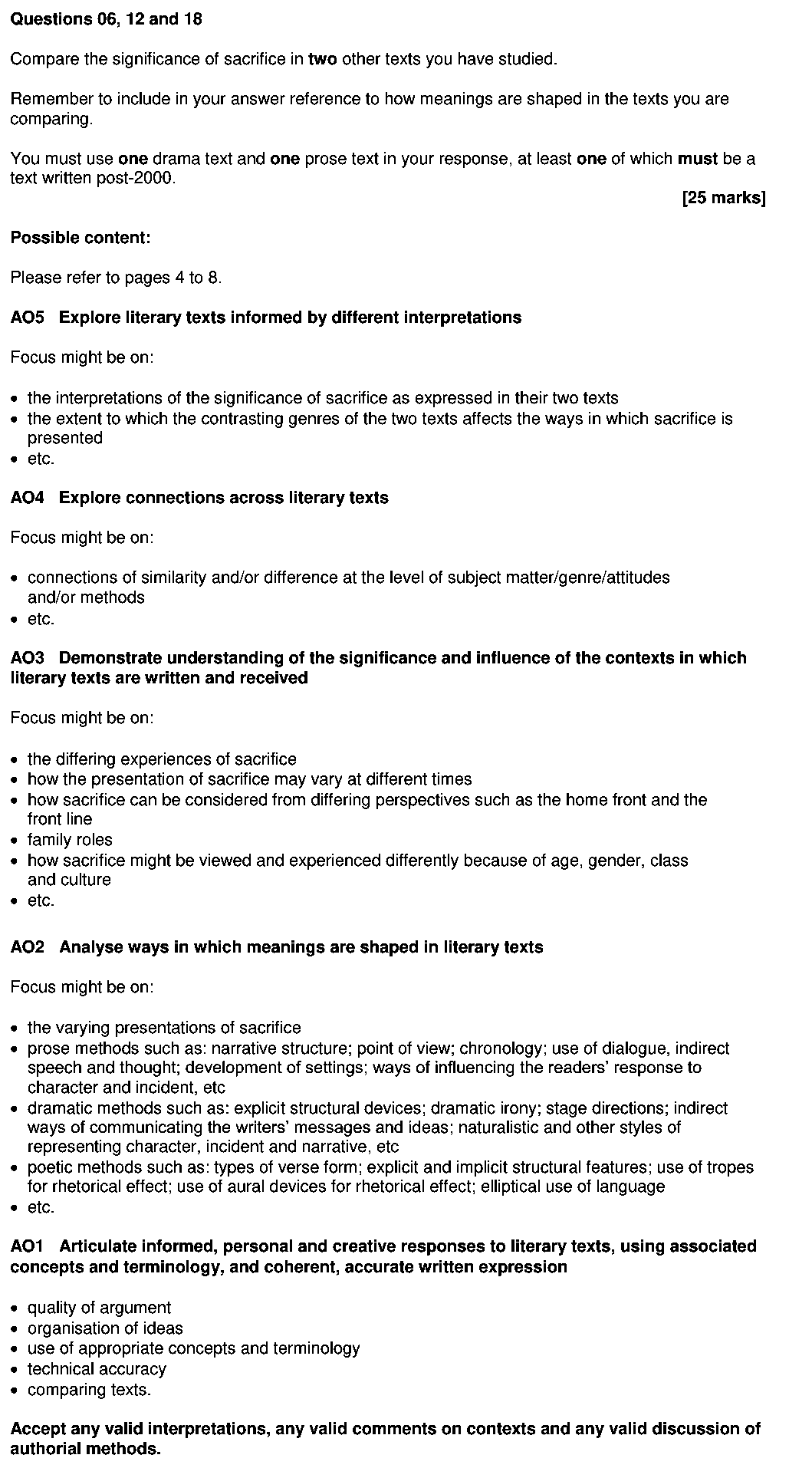
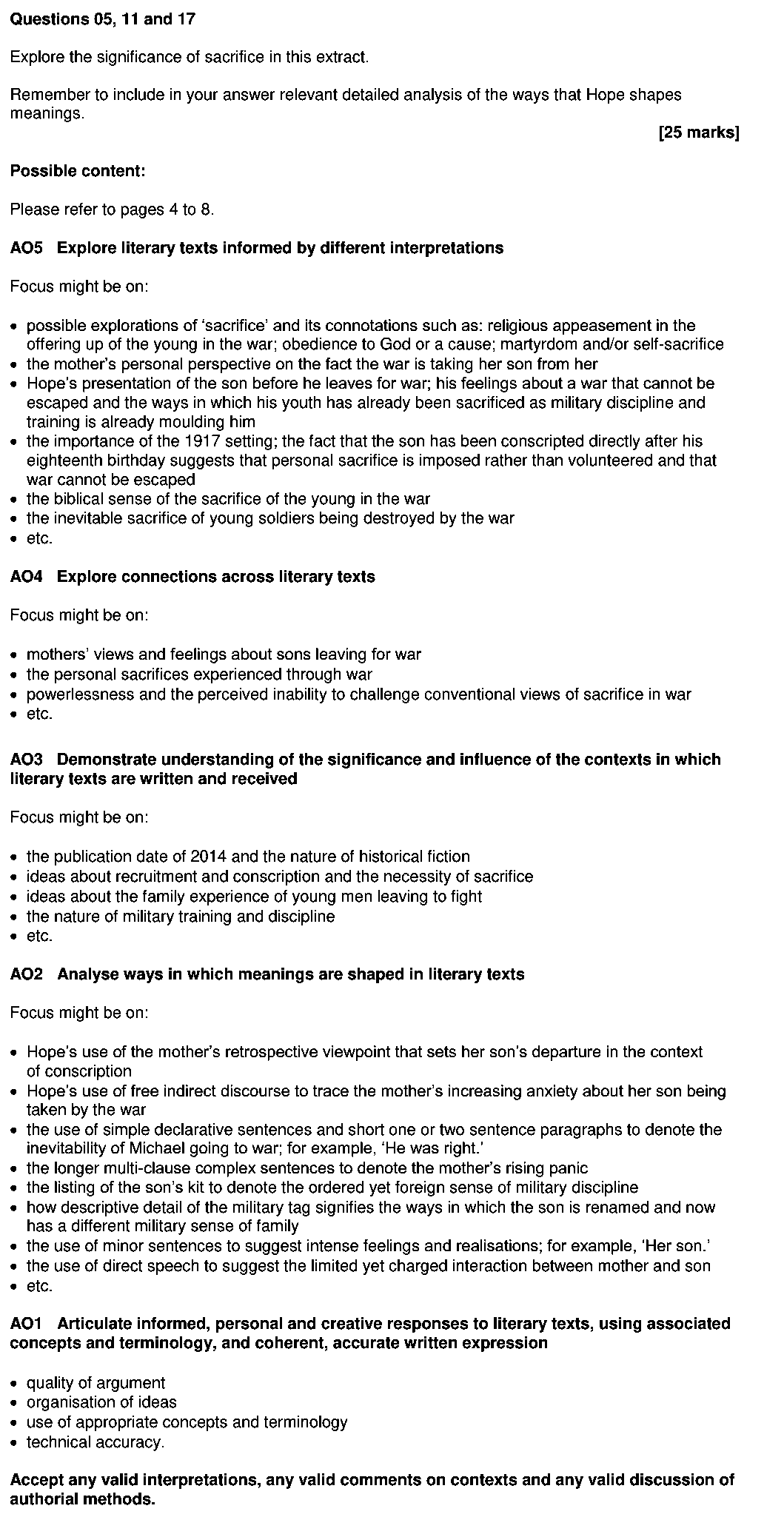
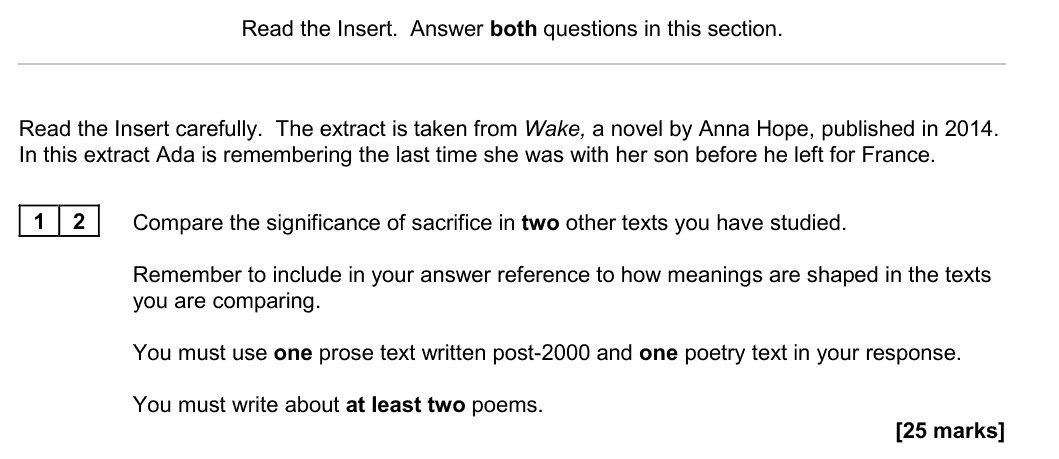
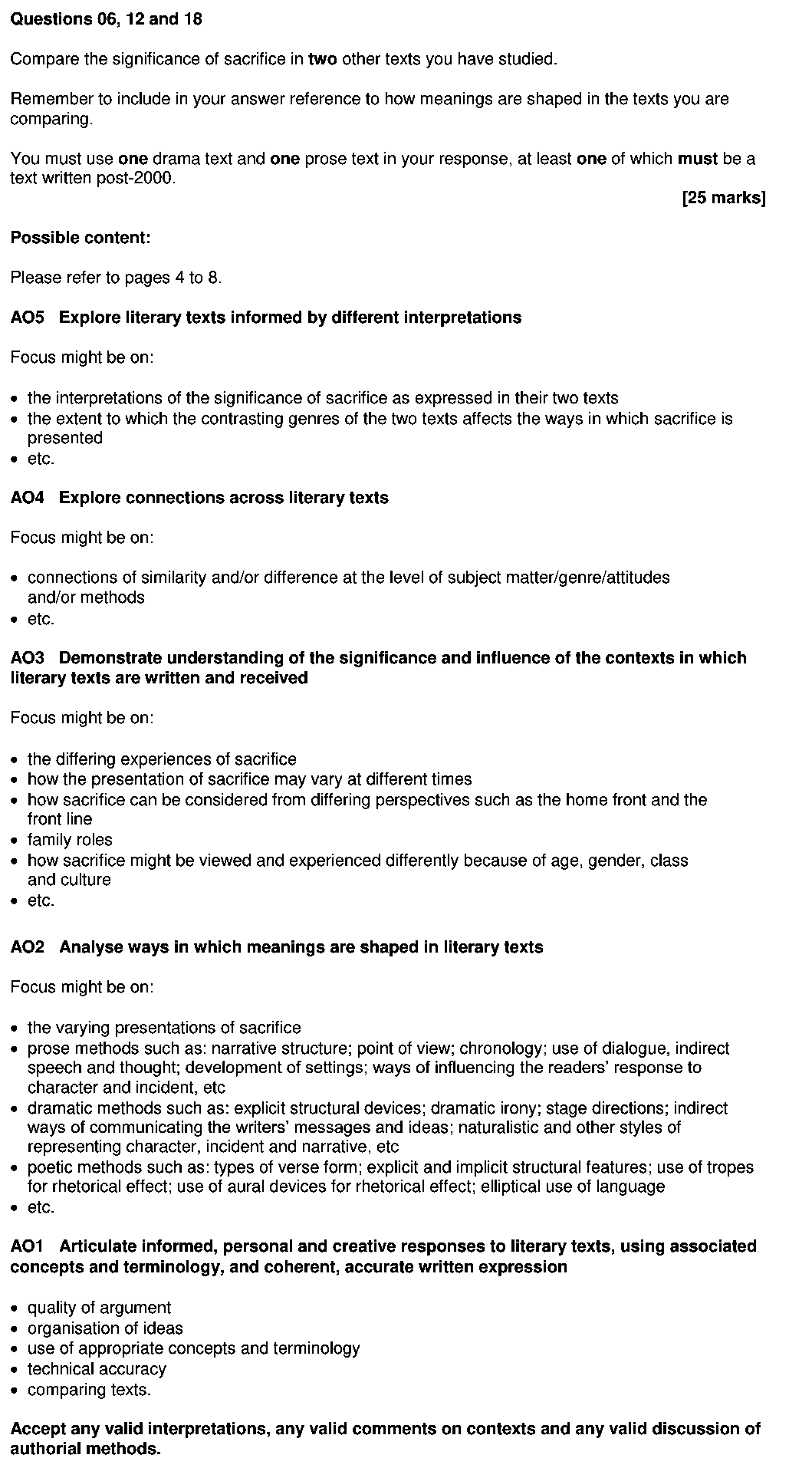
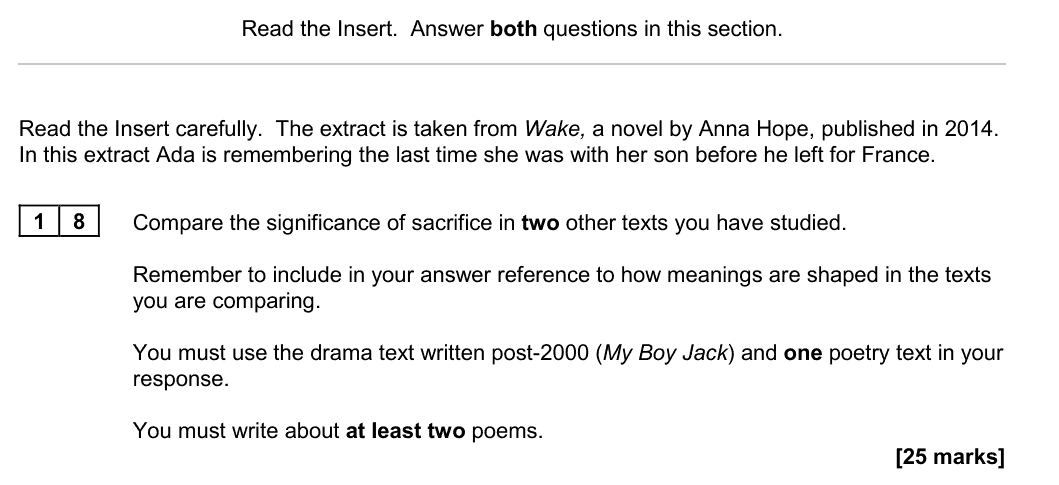
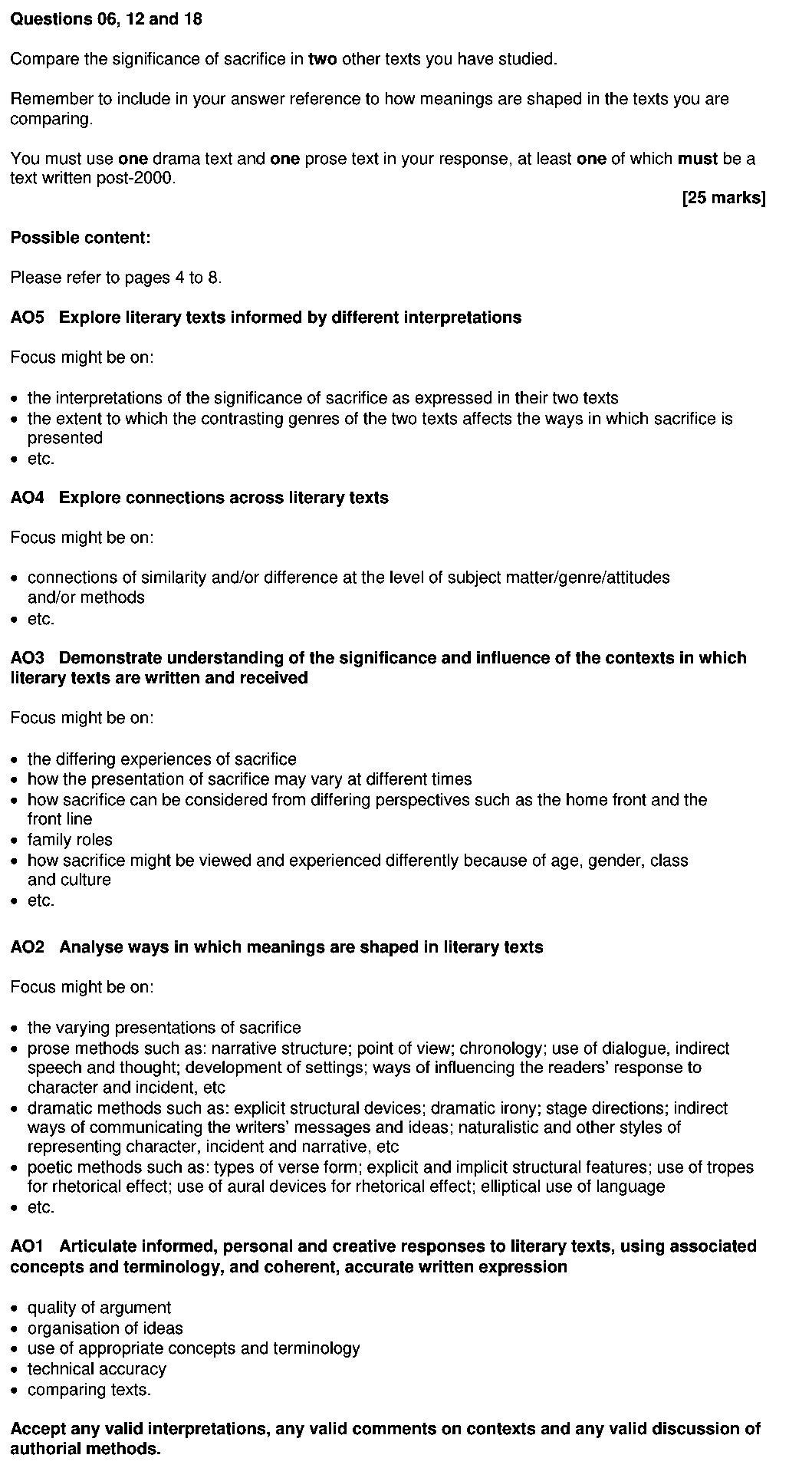
Students who wrote successful responses compared their chosen texts to consider the presentation of sacrifice in a variety of ways. Secure textual knowledge was key here; students who knew their texts well were able to move confidently between texts and could consider telling differences rather than just a broad account of similarities. The best responses explored comparisons that always considered the presentation of sacrifice rather than just a thematic approach to their chosen texts which grouped together linked examples of sacrifice with little analysis. The most successful responses were able to explore the significance of sacrifice through pursuing perceptive links built on close consideration of literary methods. Such work, for example, was able to explore the ways in which Barry’s presentation of Jessie Kirwan’s political sacrifice can be linked to the sacrifices presented in Brooke’s war poetry. To make these more assured links, students often used their understanding of context as a useful tool for literary analysis. The consideration of war trauma, for example, allowed many students to explore the true nature of the sacrifices that soldiers make in war. One student was able to perceptively compare the presentation of Bowe in My Boy Jack and the speaker in Owens’s Dulce et Decorum Est from the perspective of survivors who are traumatised by their experiences of war that need to be shared with others. Less successful answers often adopted a more schematic approach that focused on the difference between early and later war attitudes or the difference between home-front and front-line experience without a clear examination of the presentation of sacrifice in their chosen texts. Successful students were able to develop comparative responses that explicitly considered literary methods through the presentation of sacrifice. Through considering the presentation of mothers in My Boy Jack and Scars Upon My Heart, for example, some students were able to compare dramatic and poetic methods as a way of considering the female experience of sacrifice. Many examiners noted, however, that consideration of prose methods is often much less developed and often limited to word level analysis which was often flawed because of misunderstood grammatical terminology. Less successful responses were poorly planned and were written before the student had a secure enough understanding of ‘sacrifice’. In these rushed responses, the thinking was generalised and sacrifice was largely considered in its euphemistic sense as death in combat. Unfocused responses also strayed from their chosen texts to consider other texts as a way of considering context and typicality. Such work was often digressive and often considered texts out of the time frame of the component, such as Tennyson’s ‘The Charge of the Light Brigade’. These students would have benefited from exploring the idealistic presentation of ‘sacrifice’ within their chosen texts. More successful comparative responses: • did not just focus on similarities, but considered the differences between texts • built well supported links between the two texts • established a clear thesis on the significance of sacrifice and developed this throughout the response • purposefully considered the differences between genres • wrote succinctly. Less successful comparative responses: • struggled to compare and could only consider the similarities between texts at a narrative level • developed assertive readings in an attempt to answer the question • tended to resort to paraphrase rather than analyse literary methods when discussing prose texts • unloaded poetic analysis which was often irrelevant to the topic • used contextual knowledge as a ‘bolt on’ rather than integrating it into literary analysis • wrote at length, paraphrasing content rather than debating and analysing the presentation of sacrifice.