Examiner's comment
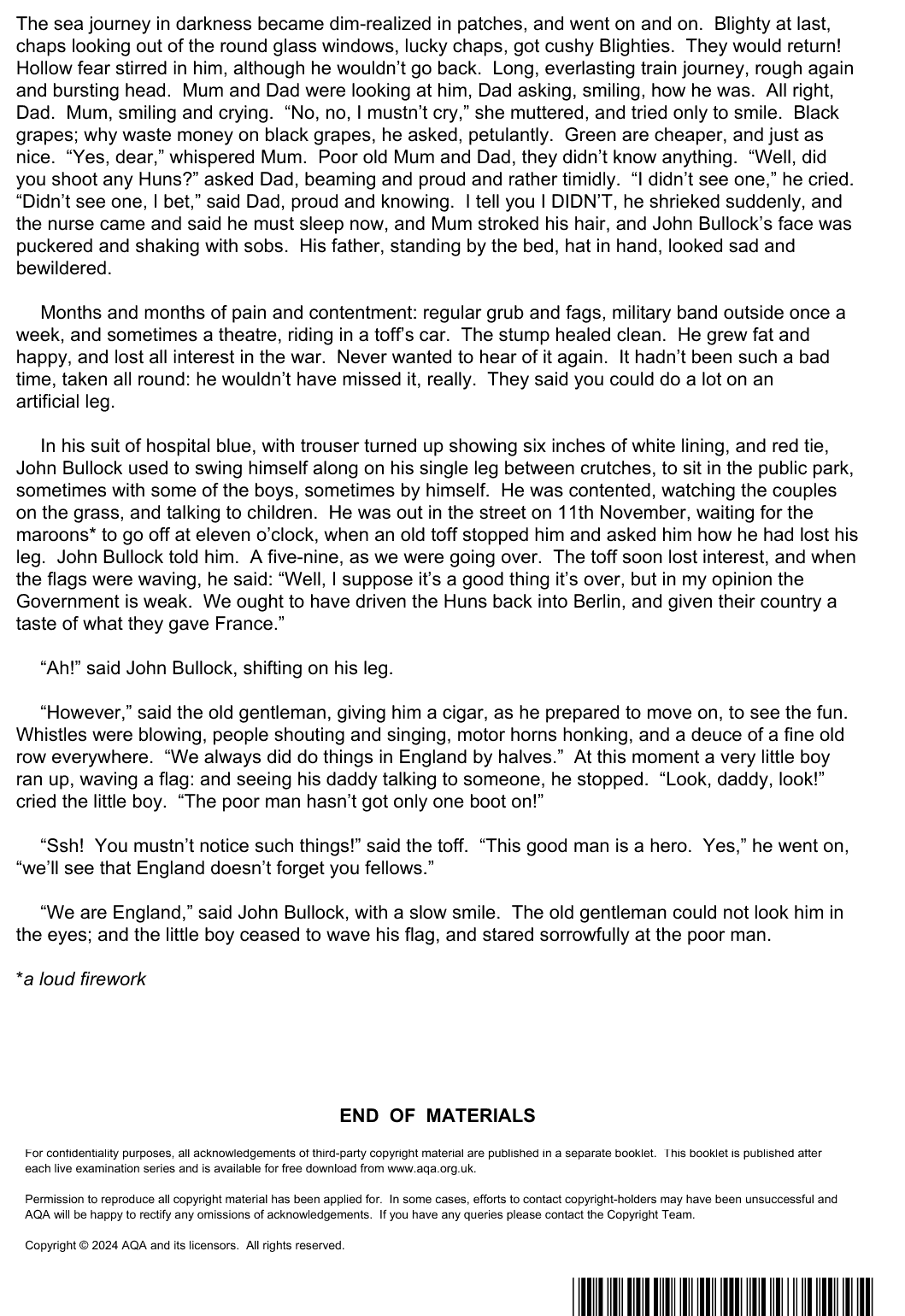
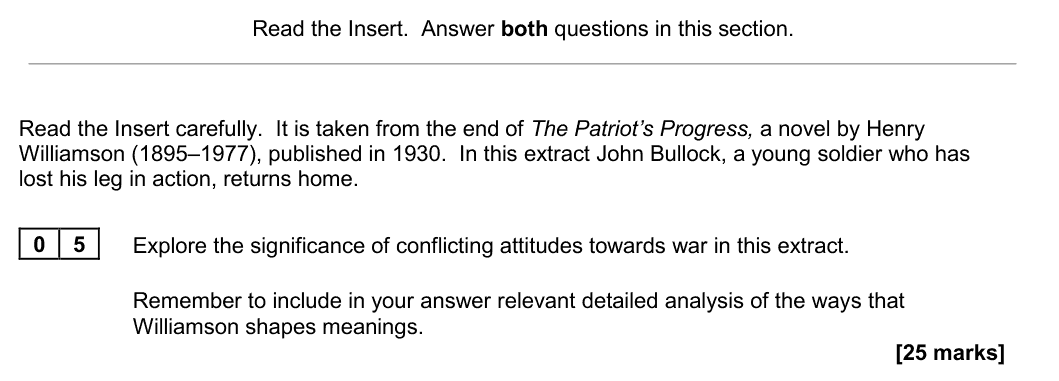
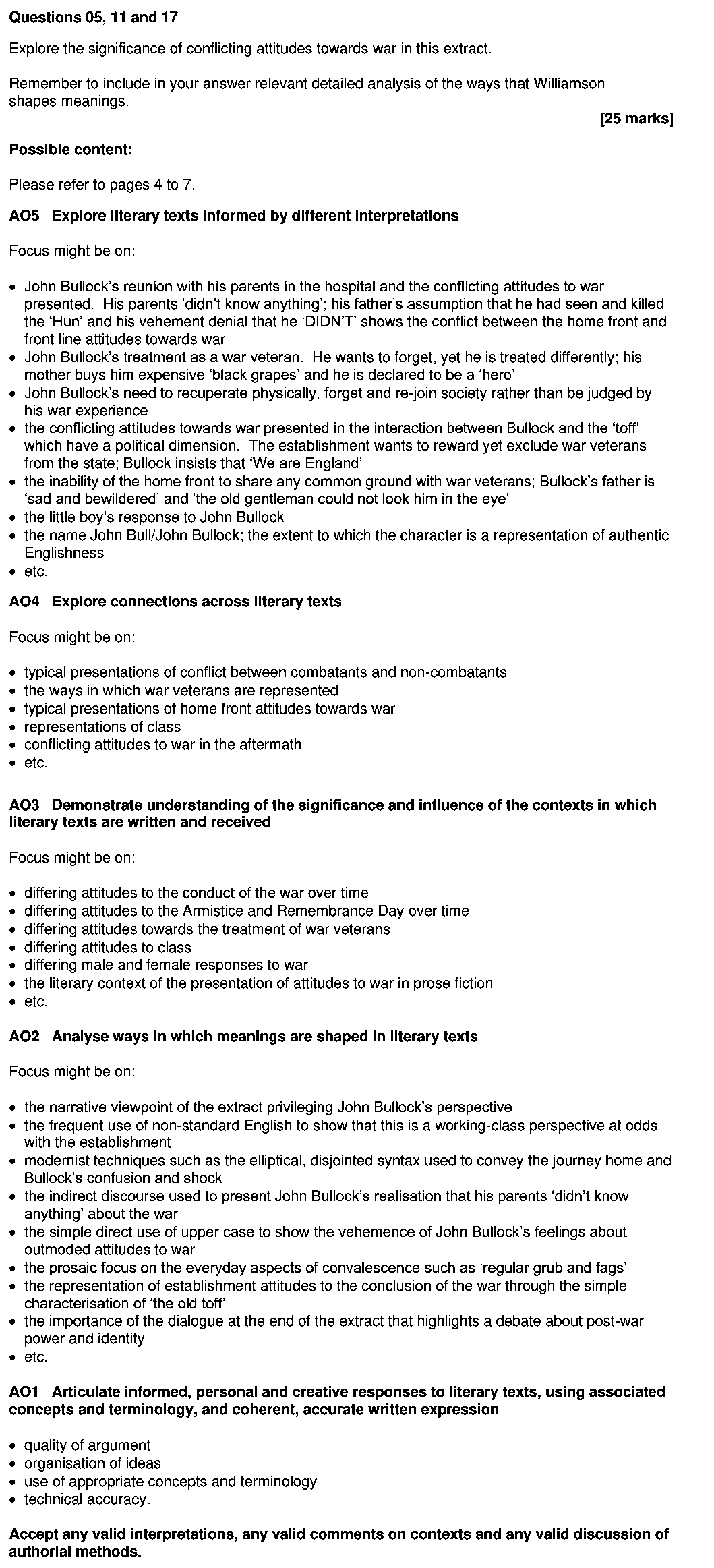
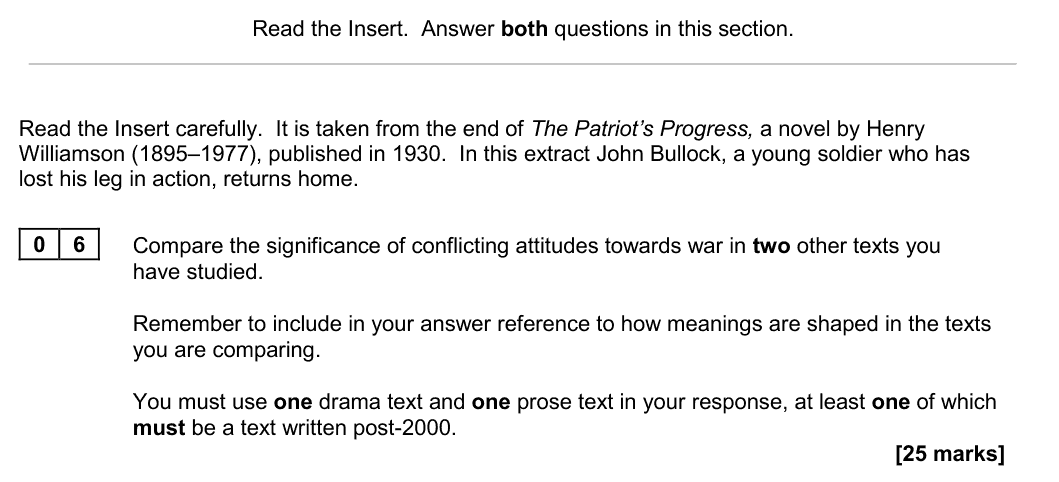
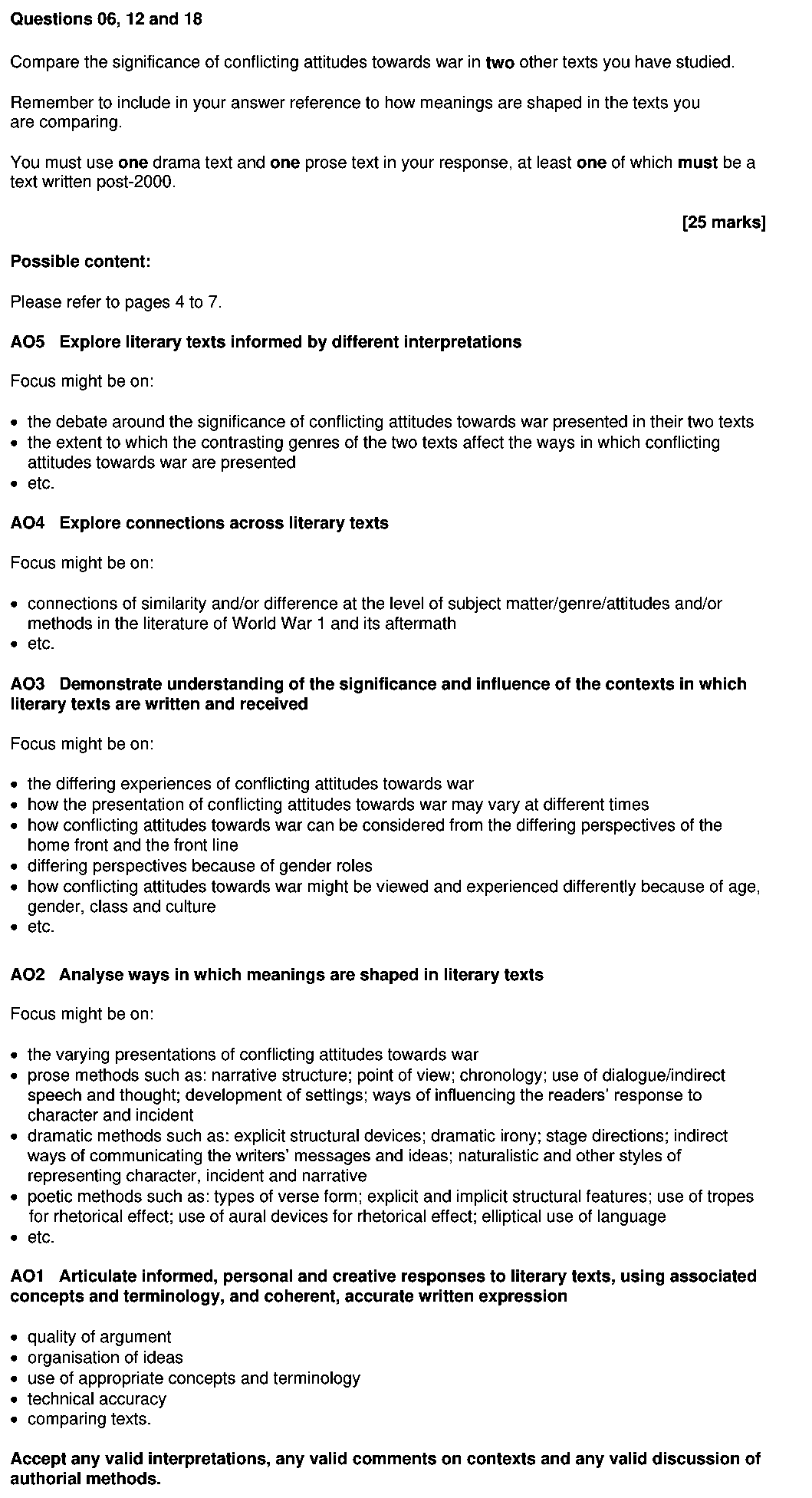
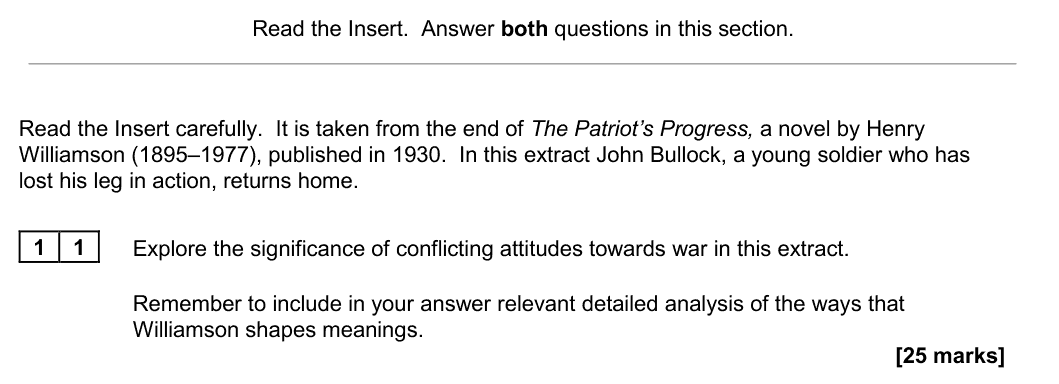
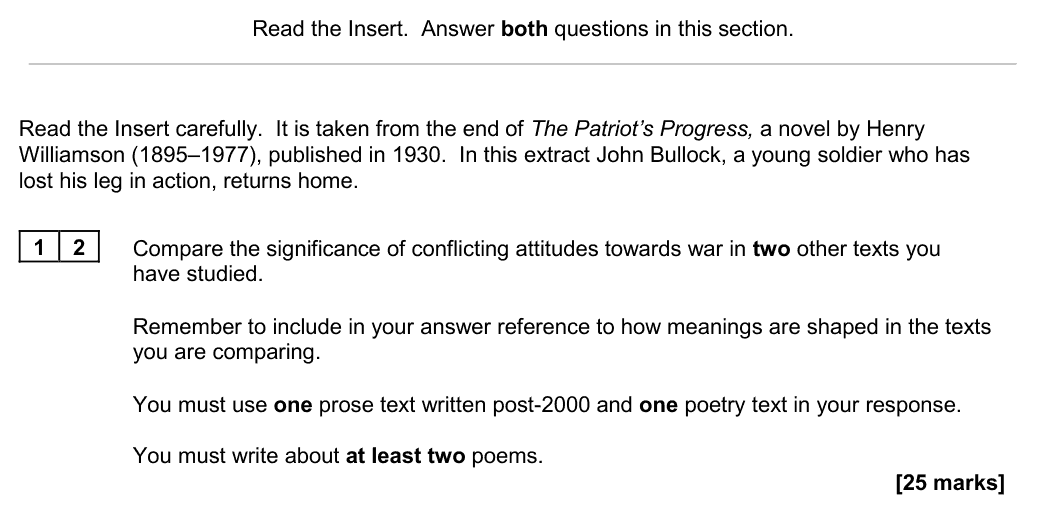
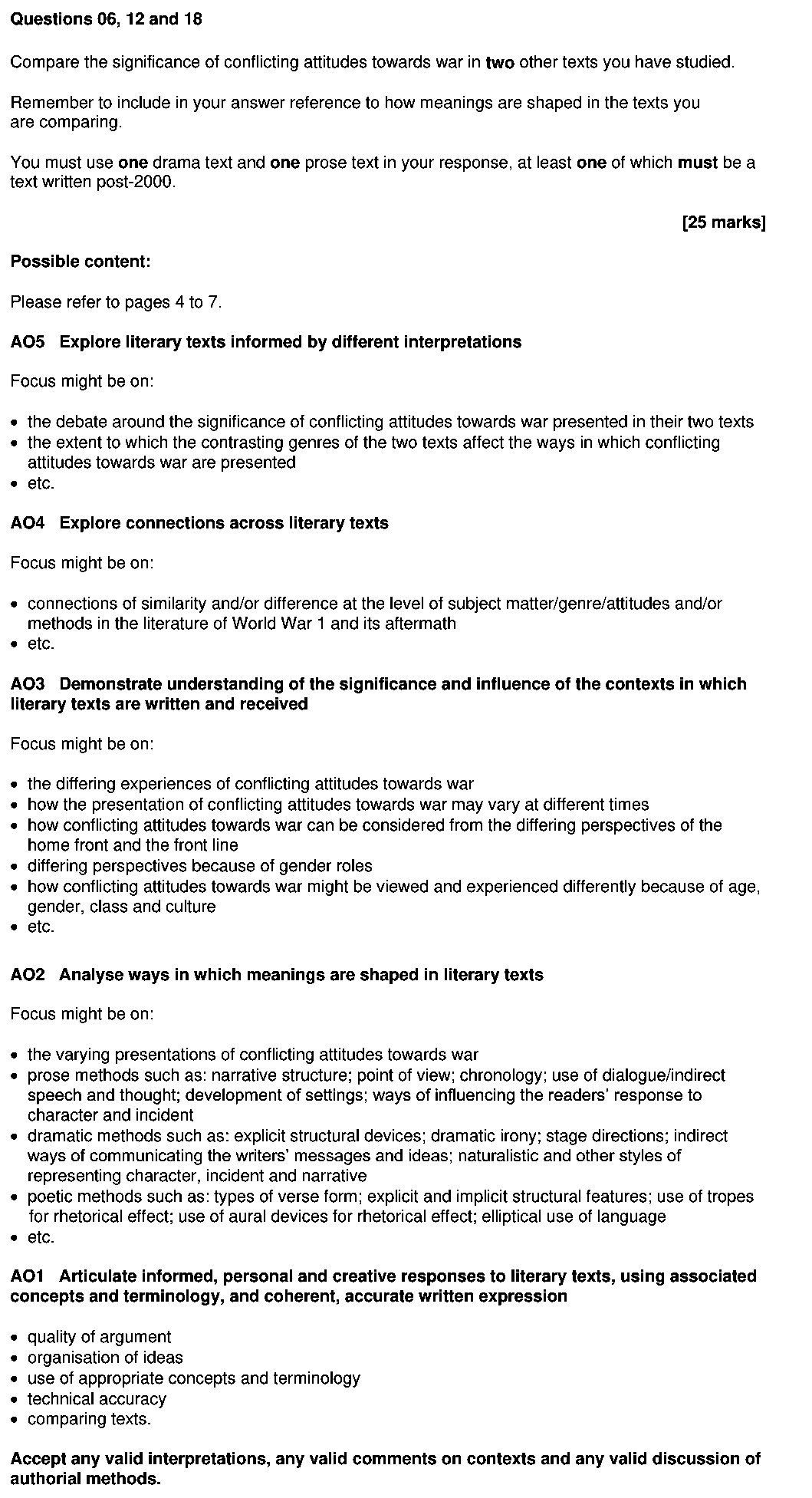
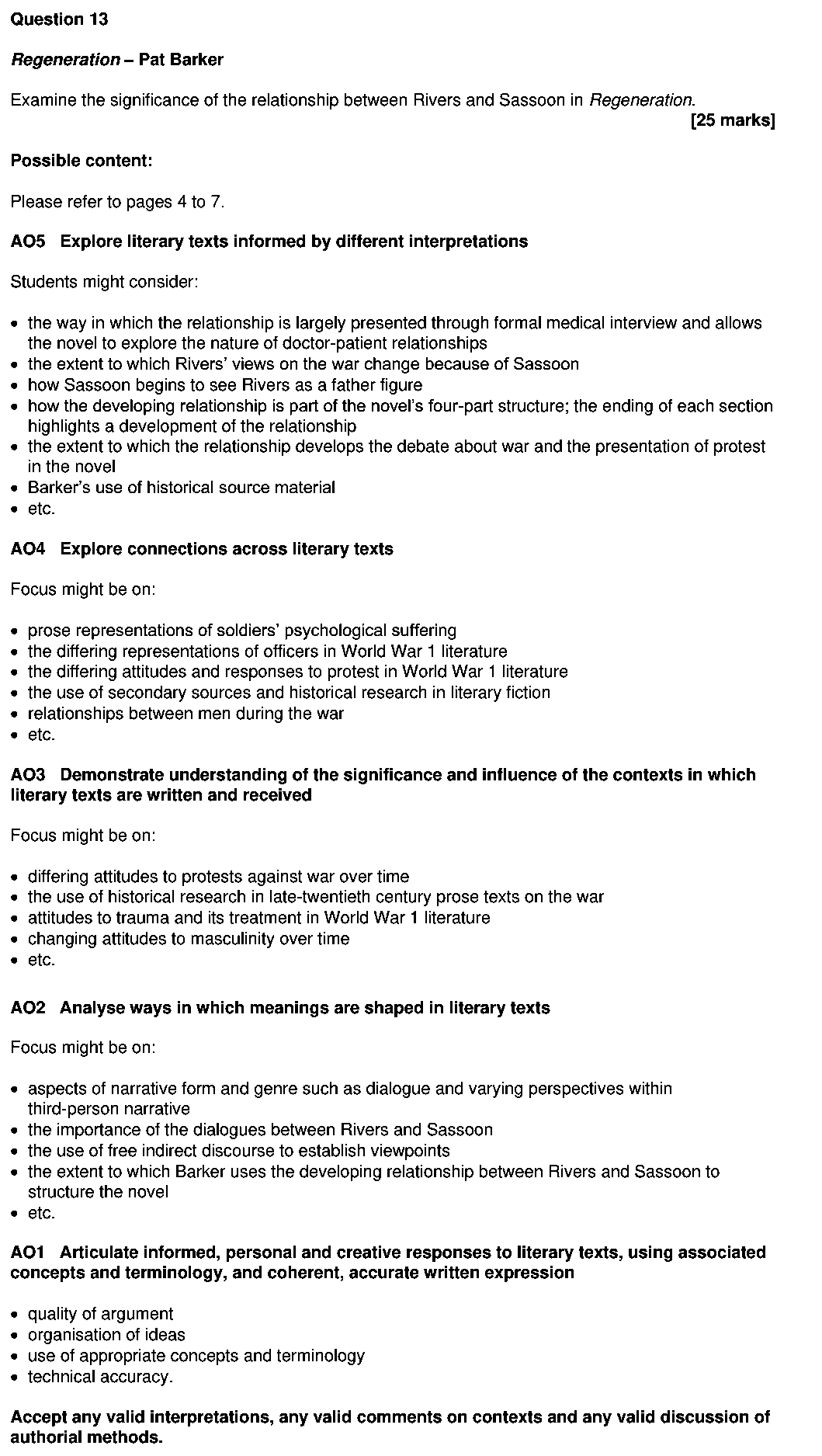
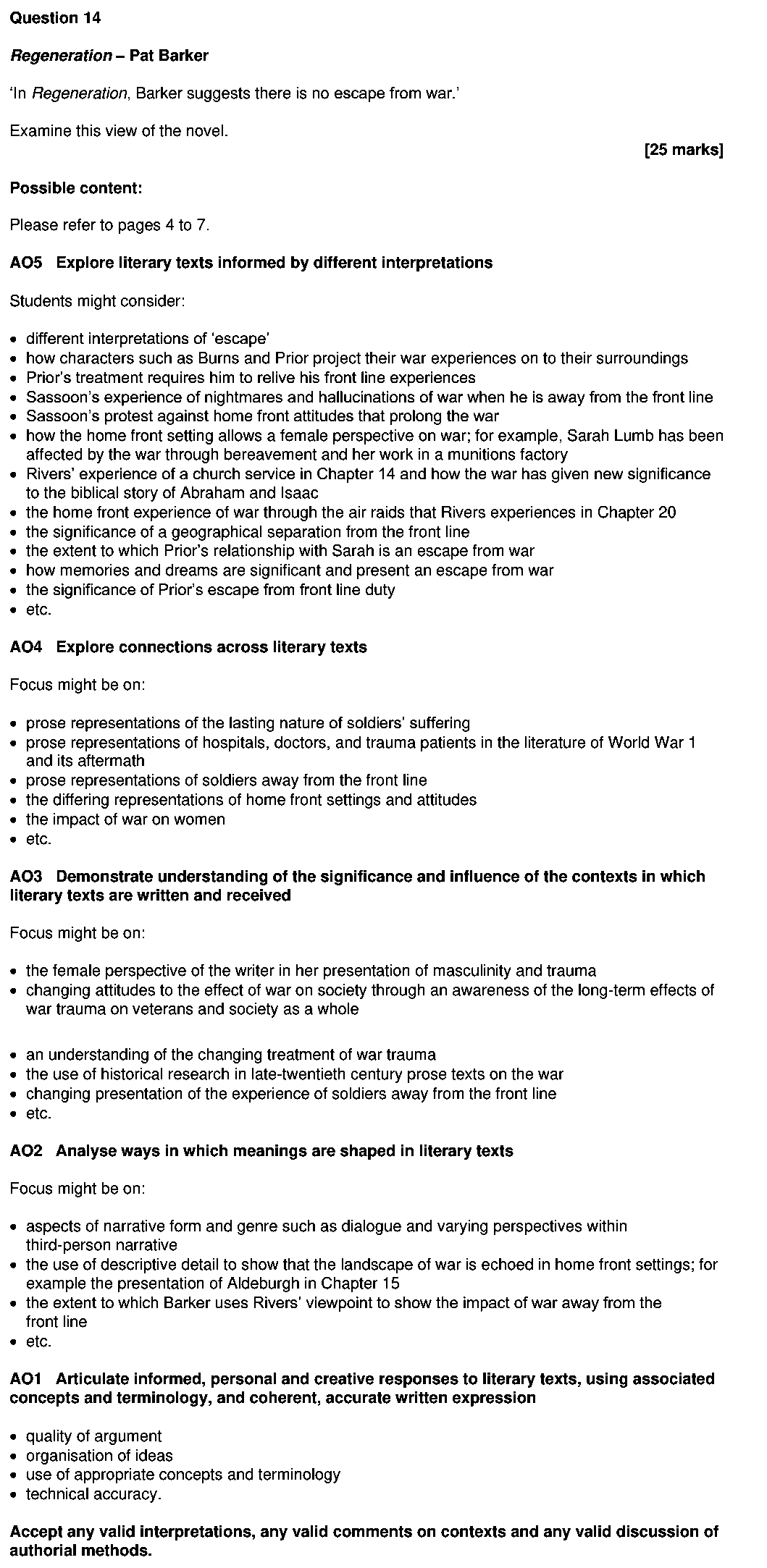
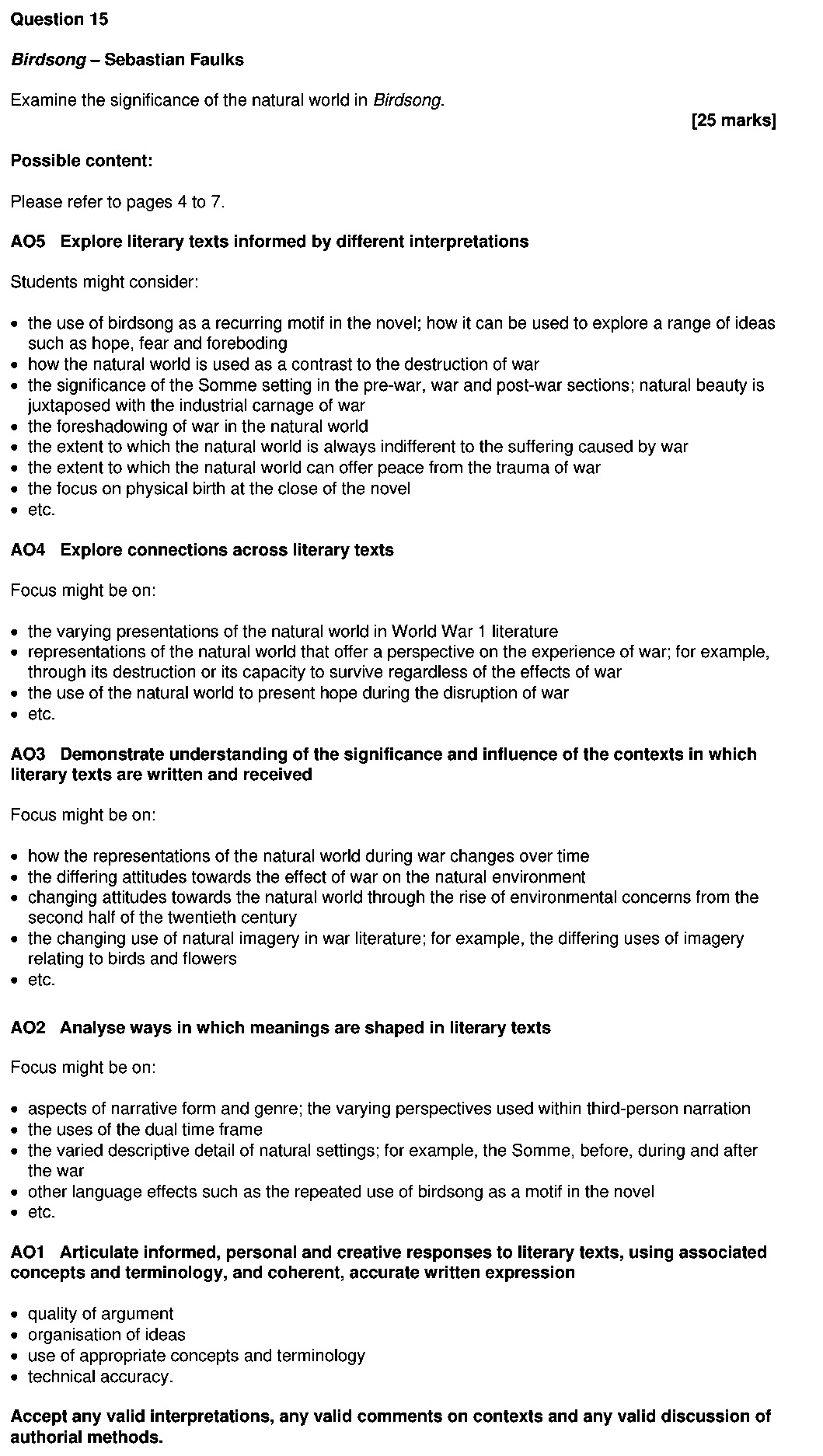
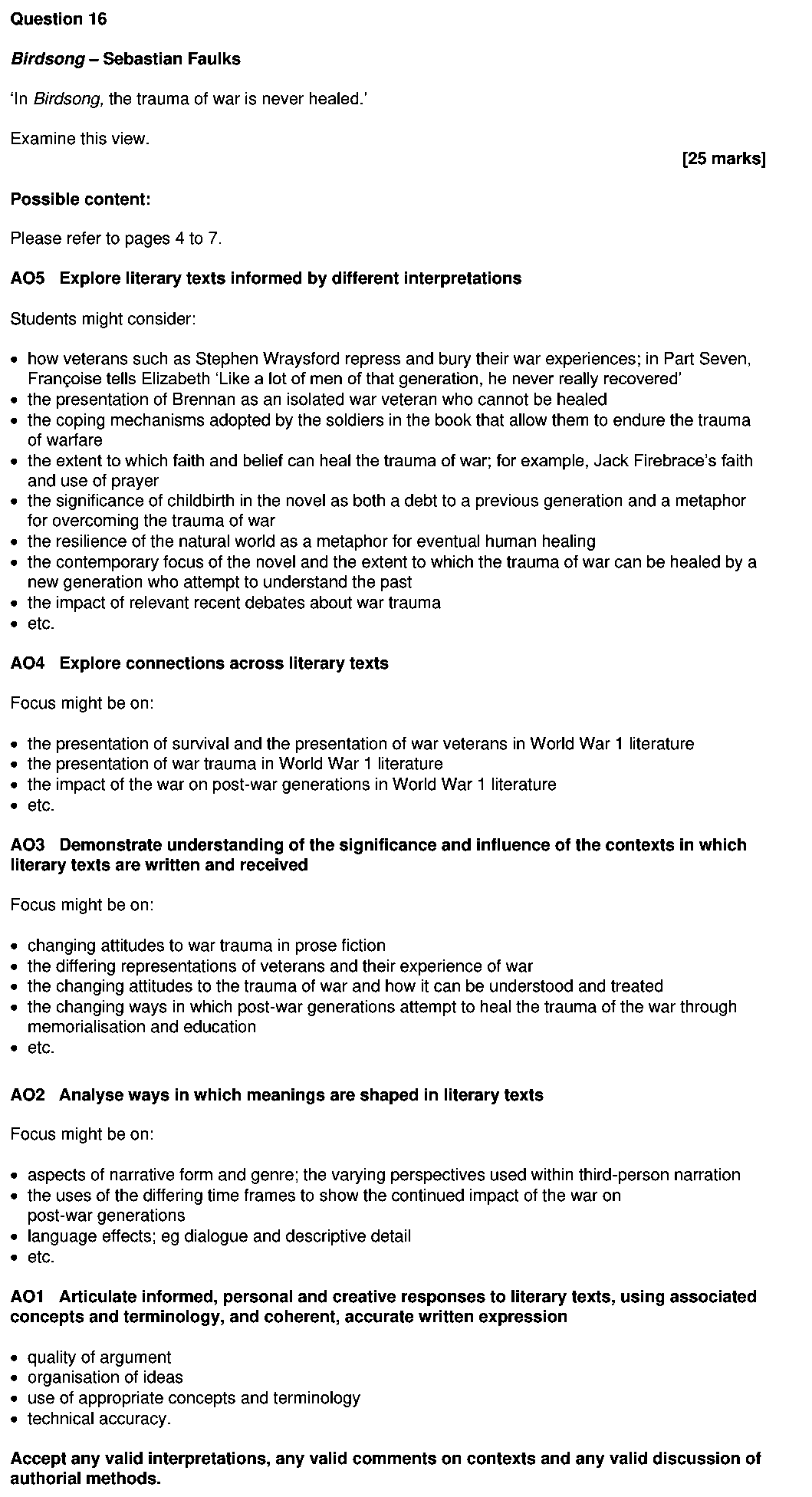
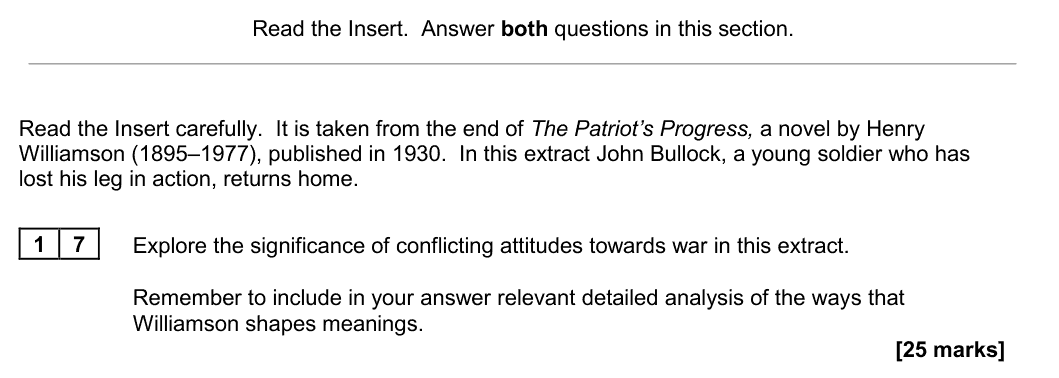
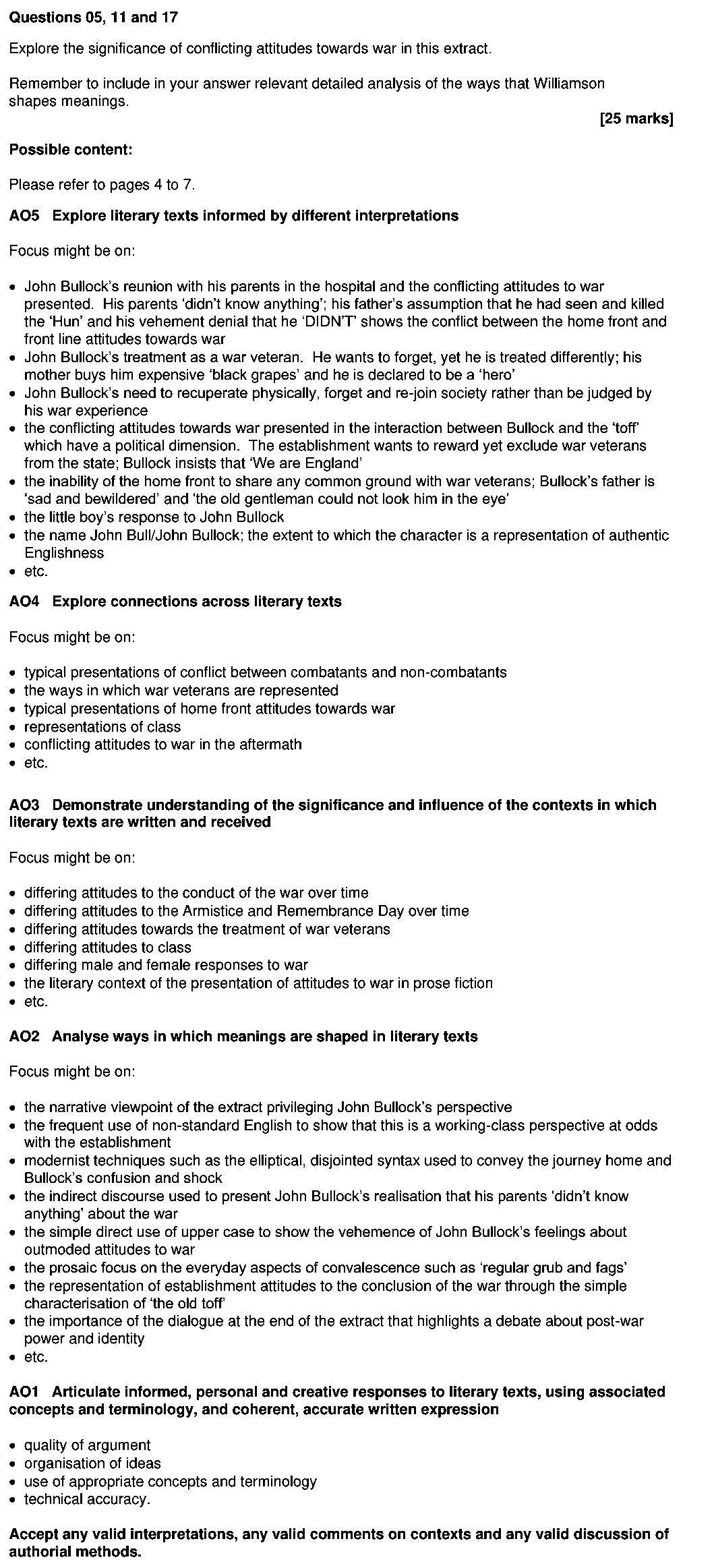
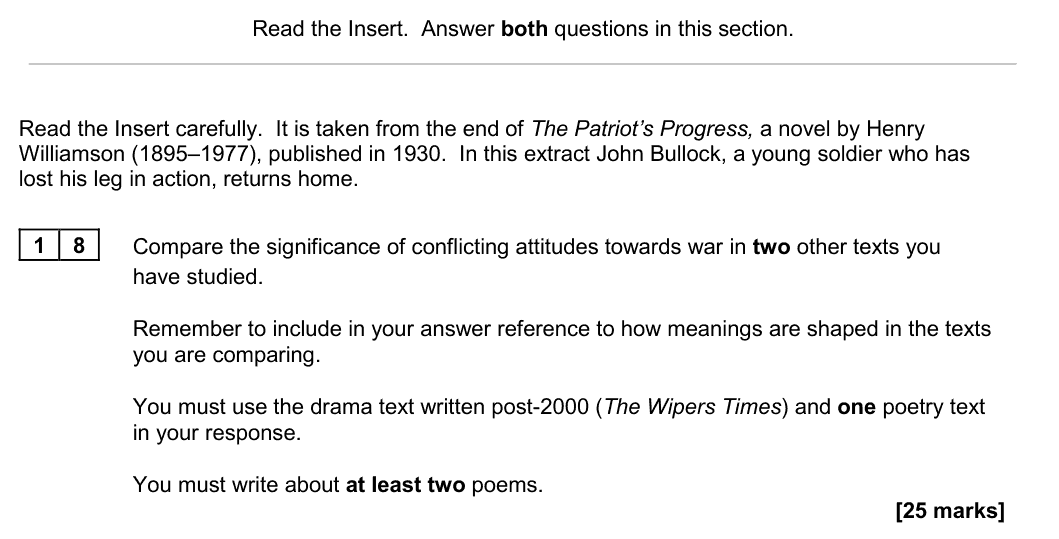
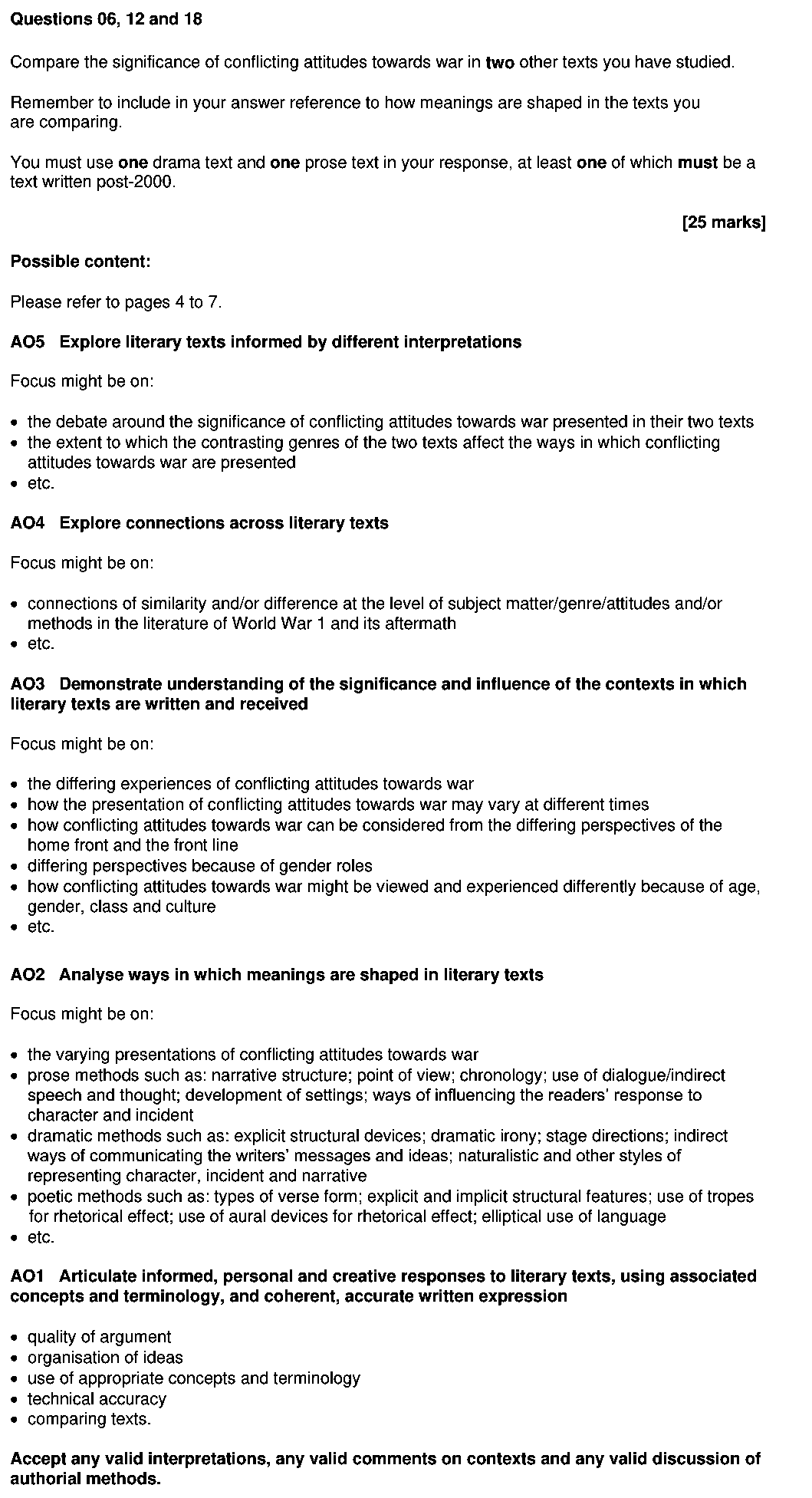
In Paper 1, two out of three tasks involve explicit comparison. In Papers 2A and 2B, one out of three tasks is explicitly comparative. The NEA task is also explicitly comparative. In stark contrast, Specification B never asks students to compare one text with another. There are other kinds of comparison involved in Specification A tasks too, of course, such as explicit or implicit comparison within the shared contexts to establish typicality or atypicality. Successful work always compared texts through close consideration of ‘the significance of conflicting attitudes’. Close attention to all the keywords is crucial for success here; for example, more successful work didn’t just discuss different attitudes, but had full focus on ‘conflicting’ and discussed how the conflict was presented. Less effective responses glossed over this keyword and often seemed to just consider contrasting attitudes. The best responses fully engaged with ‘significance’ through focusing on the differing ways in which ‘conflicting attitudes to war’ can be presented through close consideration of varying contexts, literary methods and genre. Importantly, successful comparisons were focused on exploring difference rather than similarity. Successful responses did not over rely on content and narrative paraphrase, but focused primarily on how ‘conflicting attitudes to war’ are presented. The task is focused on paired texts from differing genres; successful work wholeheartedly explored this, and formed thorough comparative links that focused on the varying literary methods of differing genres. Weaker responses focused more on similarities of content and often treated plays as another form of narrative fiction. Students who fully grasp the notion of ‘significance’ clearly grasp the differing ways in which writers can shape meaning through the differing possibilities of poetry, drama and prose and have a precise literary register that allows them to discuss these differing methods. Too often less successful work resorted to world level analysis and misapplied poetic terminology to drama and prose texts. Less successful students focused more on demonstrating their knowledge and understanding of their chosen texts rather than more thoughtful selection of material relevant to the chosen theme. This approach involved lengthy consideration of individual texts prefaced by token discourse markers such as ‘on the other hand’, rather than fluently moving between texts through effective selection of textual detail. To move up the mark scheme, students must demonstrate that their comparison has a momentum that allows them to choose comparative links and textual detail with thoughtful precision rather than attempting to prove that they ‘know’ their texts through lengthy, sometimes digressive responses. The focus of ‘conflicting attitudes towards war’ was genuinely enabling for the majority of students. Those who focused on all aspects of the theme were able explore how plays such as Journey’s End and The Wipers Times dramatized the conflict between differing attitudes through considering character, relationships and attitudes to military authority and hierarchy. Careful selection of textual detail also allowed for focused analysis of the naïve attitudes of young soldiers and how they might conflict with those who are more experienced. Examiners noted, for example, thoughtful work that compared A Long Long Way with Journey’s End through considering the presentation of Willie Dunne and Raleigh and how the naivety of their attitudes often set in focus the more disturbing truths of war. Students also explored how ‘conflicting attitudes towards war’ differ because of time and considered early and later war poetry through a comparison with characters such as Raleigh or Stanhope from Journey’s End, and Burns and Sassoon from Regeneration. Students also focused on the differing attitudes of the home front and the frontline and how the conflict of these attitudes are presented. Again, students who focused on differing genre methods were most successful; one exceptional response considered the dialogue between Sassoon and Rivers in Regeneration as an over-arching part of the novel’s structure and compared this with the framing device of Roberts’ dialogue with the deputy editor in The Wipers Times. Successful work always demonstrates close literary study. Knowledge of varying contexts should be used a literary tool to explore meaning in a precise, subtle way. There is still a tendency for many students to impose context in a way that leads them away from their chosen texts. When considering home front attitudes, for example, discussion of propaganda and jingoism is often ‘bolted on’ rather than exploring how these tropes might be presented in the paired texts. Unfortunately, less successful students attempt to demonstrate ‘close literary study’ through a reductive word level approach which might, for example, attempt to apply poetic analysis on a drama text. Such work often attempts to unpack meaning without considering the wider aspects of form and structure. Misguided and often inaccurate linguistic analysis is employed without a clear understanding of how this might shape meaning. AQA’s Teaching Guide to AO2 offers a much more productive way into thinking about the different ways in which meaning is constructed through the three different genres. https://www.aqa.org.uk/resources/english/as-and-a-level/english-literature-a/teach/teaching-guide-ao2 It goes without saying that secure AO1 is crucial in a task that involves a comparison of two texts through a central, overarching argument. Students who were able to use the following AO1 tools often produced more successful responses: • clear introductions and conclusions that focus on the keywords and frame the response • clear paragraphing to build structured comparison • purposeful discourse markers to highlight comparative thinking • clear succinct expression that avoids imprecise, overlong sentences • clear use of topic sentences to guide a purposeful argument. In Option 2 there were many fruitful ways in which ‘conflicting attitudes to war could be compared. Students studying Regeneration, for example, could explore the given theme through considering the relationship between Sassoon and Rivers or just focusing on the changing attitudes of Rivers towards war. Apt links were made with relevant poems. Again ‘Dulce et Decorum est’ was a popular choice, but often led to over generalised discussion of the horror of war. More successful responses focused on how the poem embodies conflict with pro war attitudes, through considering the second person address and the effect of the Latin line from Horace. Better comparative set text answers • were fully focused on all keywords of the given theme and used them as a framework for comparison and debate • constructed sustained comparisons that moved fluently between the paired texts • were able to compare through considering differences rather than just similarities • could compare the varying literary methods of different genres rather than just focusing on content • used literary analysis appropriately as a way of exploring meaning rather than just labelling features • confidently understood the varying literary methods of poetry, drama and prose • used context as a literary tool to explore meaning rather than a digression from the text • demonstrated a confident grasp of typicality grounded in thorough reading of texts from WW1 and its aftermath. Less successful comparative set text answers: • ignored or lost sight of the given theme • tended to describe and paraphrase rather than compare and analyse • unloaded textual knowledge in an irrelevant way • tended to work through each text in isolation rather than building a more focused comparison that moves fluently between the texts • developed responses that only considered the similarities between texts • did not recognise the differences between genres • used analysis only to label features rather than to consider how meaning is shaped • imposed contextual knowledge in a sweeping, generalised way.