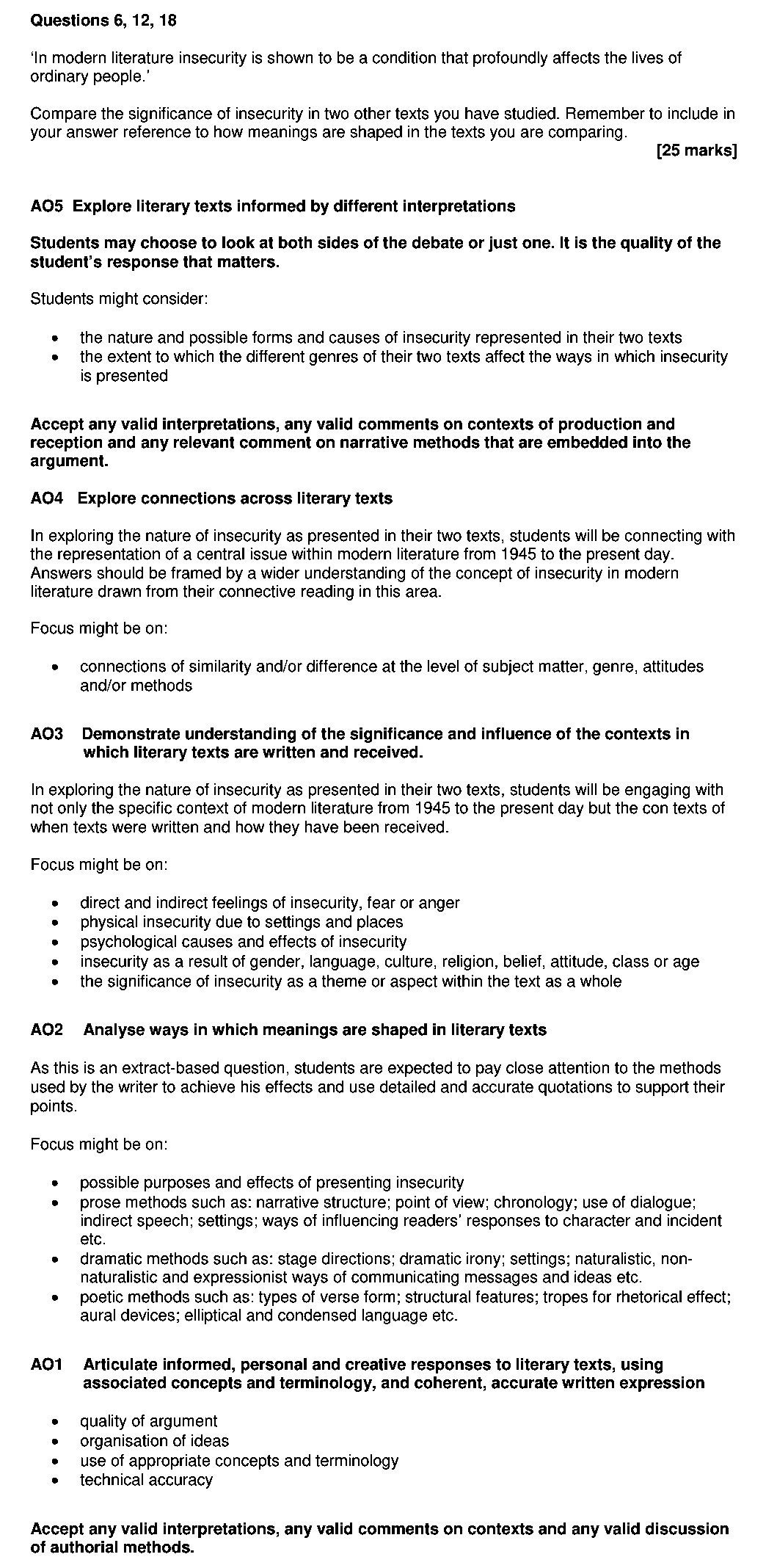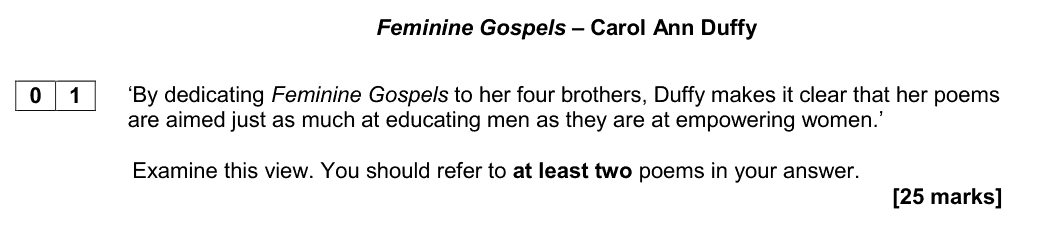
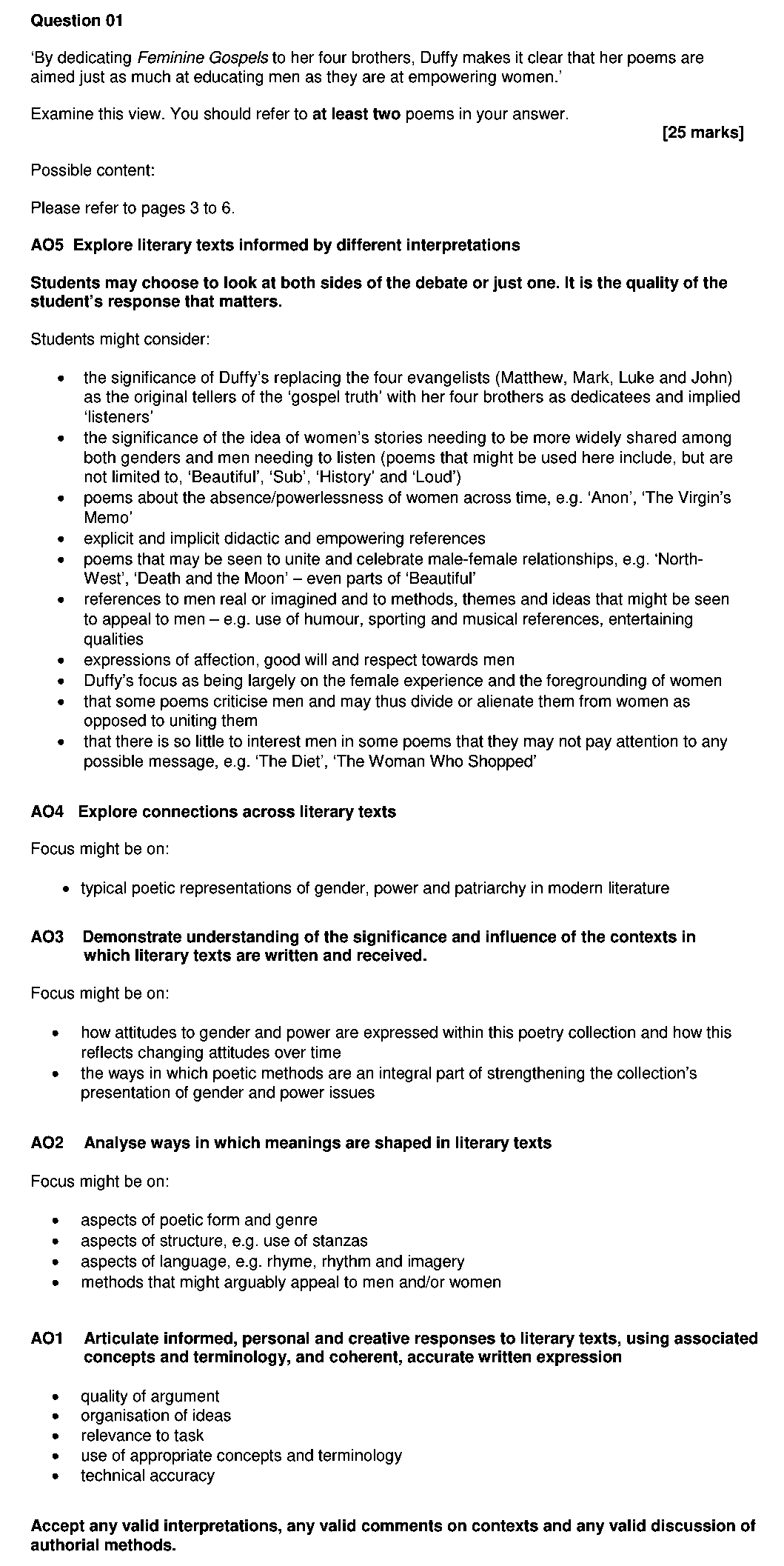
Mark scheme, including the levels and indicative content
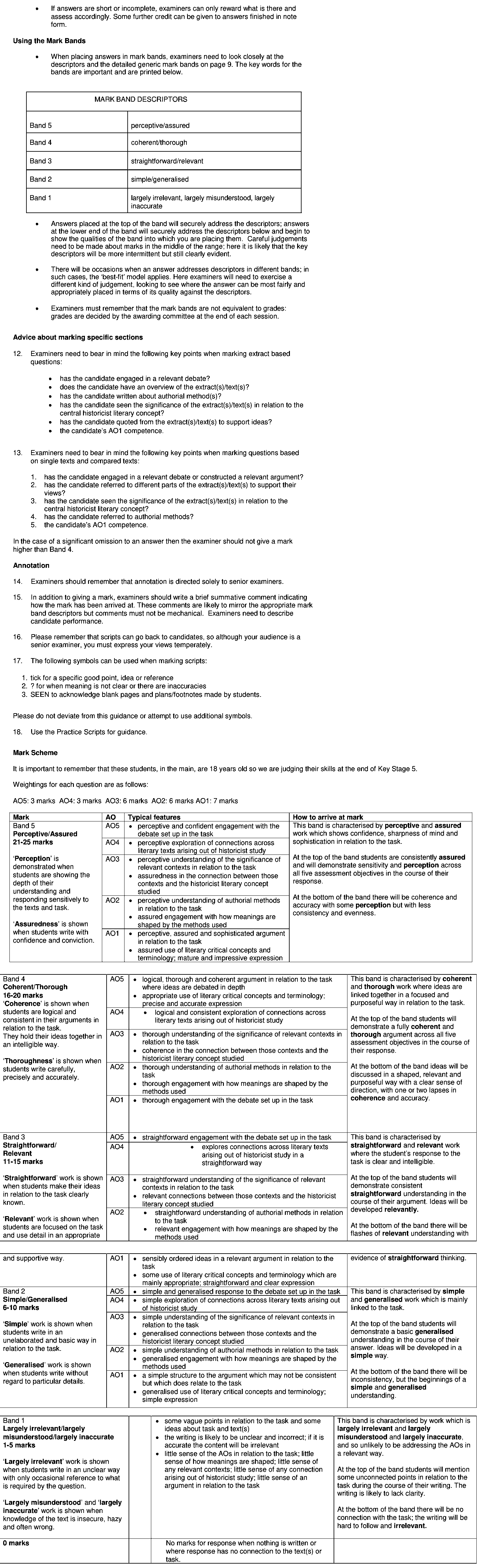
The general mark scheme (assessment objectives and bands)
Examiner's comment
This question was by far the more popular and usually elicited relevant debate – although some weaker students seemed to assume that the two possible aims stated were identical. The best answers saw the significance of Duffy’s replacing the four evangelists with her brothers as implied ‘listeners’ and engaged well with the idea of women’s stories needing to be shared among both genders. A range of relevant ideas were covered, such as the absence/powerlessness of women across time, explicit and implicit didactic and empowering references, poems that may be seen to unite and celebrate male-female relationships, references to men real or imagined, and to methods, themes and ideas that might be seen to appeal to them, such as the use of humour or sporting, cultural and musical references. Expressions of affection, good will and respect towards men were also noted. Other students argued strongly that as Duffy’s work foregrounds the female experience and can be critical of men, it may alienate them from women as opposed to uniting them. Both approaches were equally valid.
Notes from the mark scheme and report
- Focus: theme: educating men vs empowering women
- Open book, no extract
- at least two poems
- dedication to Duffy's four brothers replaces the four evangelists as implied 'listeners'
- credited: women's stories shared with both genders, absence/powerlessness of women ('Anon', 'The Virgin's Memo'), poems celebrating male-female relationships, humour and sporting/musical references, or the counter-view that foregrounding women and criticising men alienates them
- weaker students assumed the two aims were identical