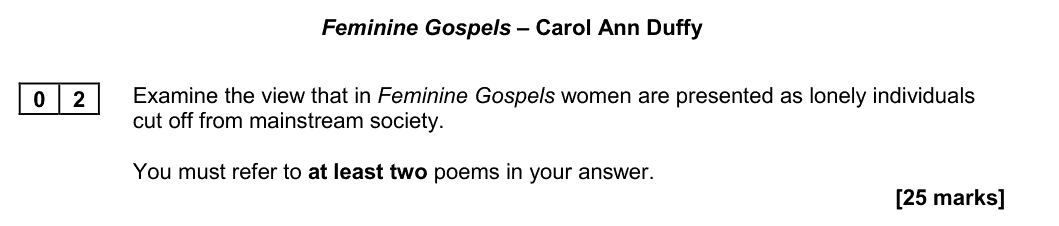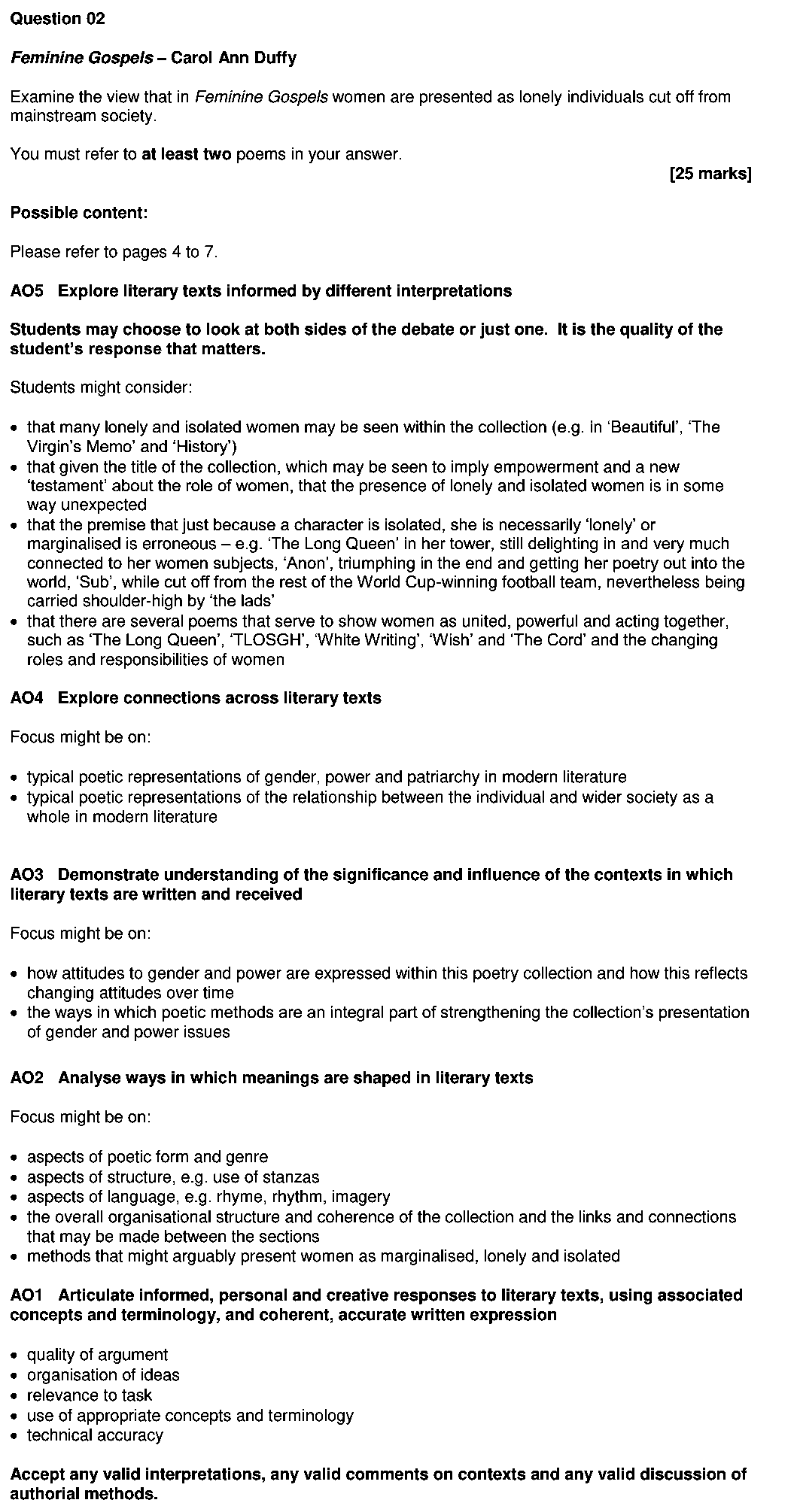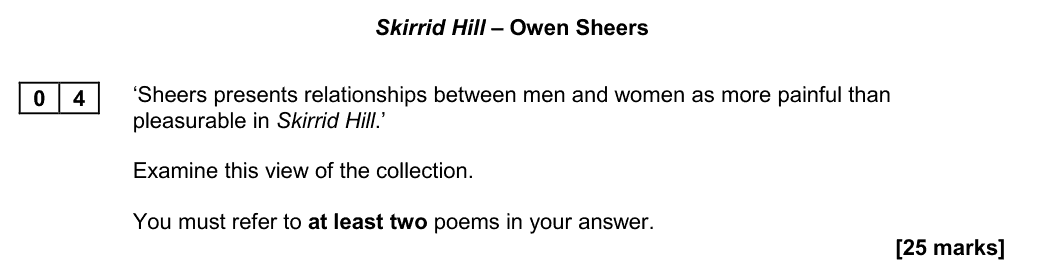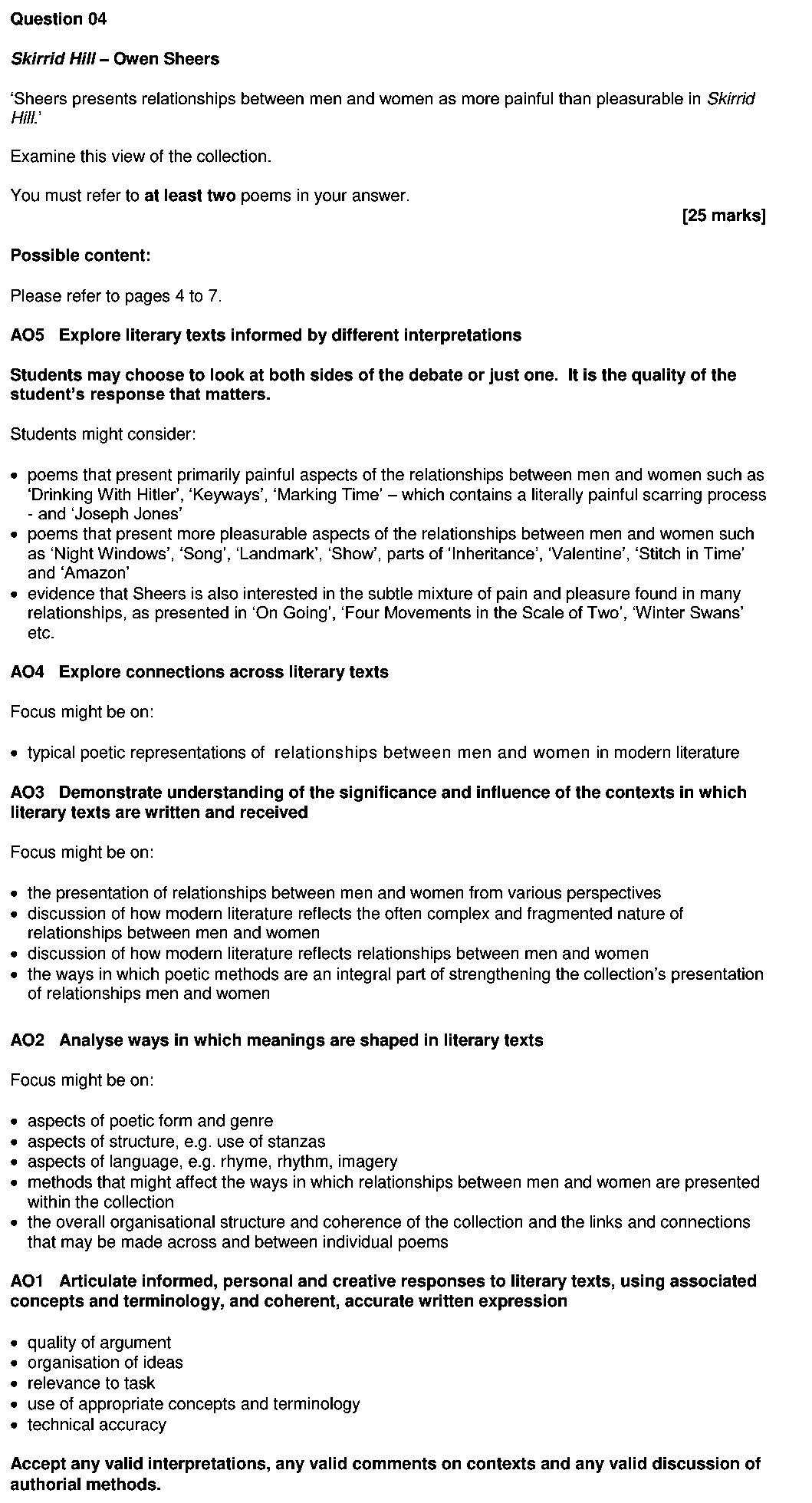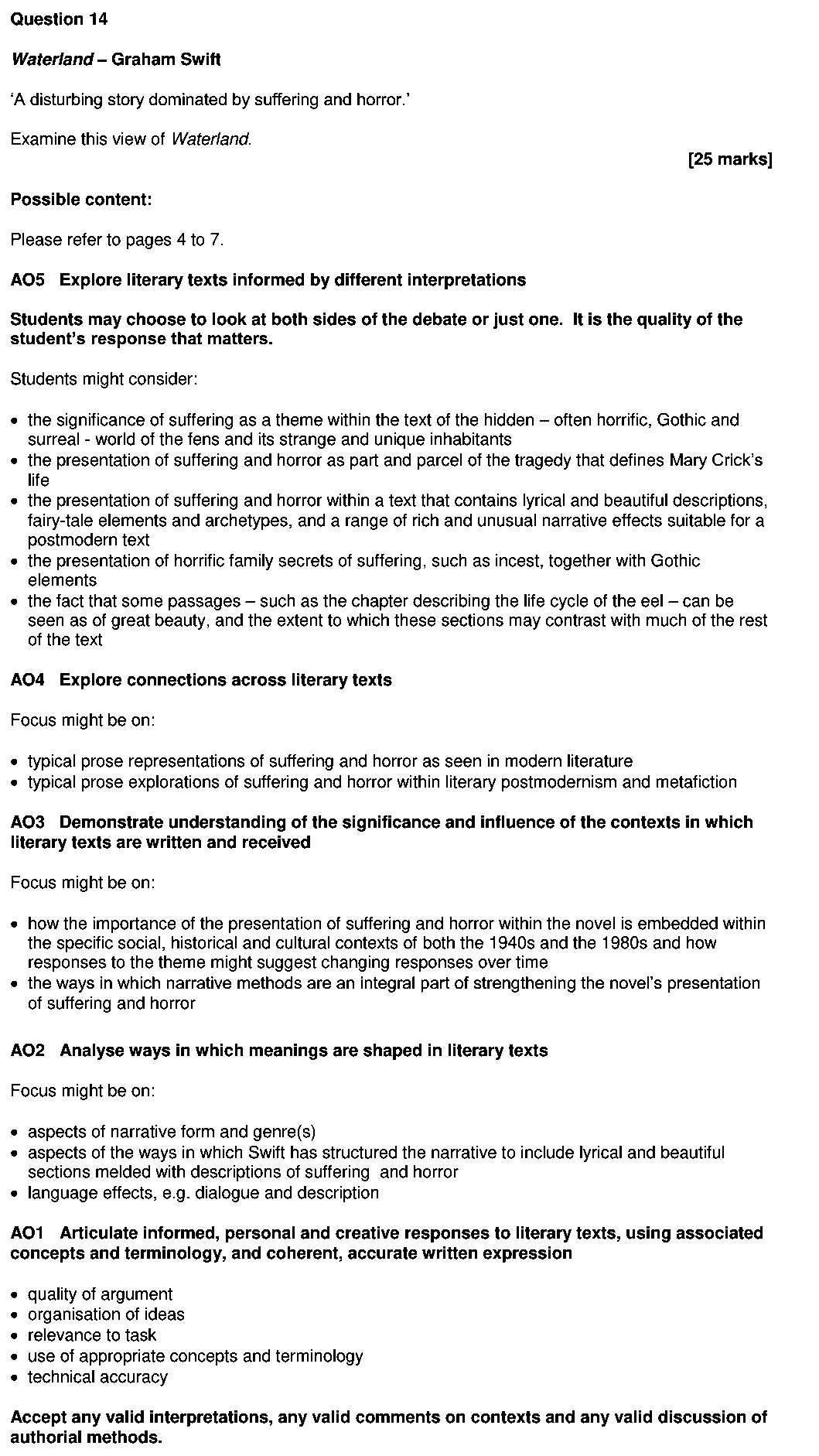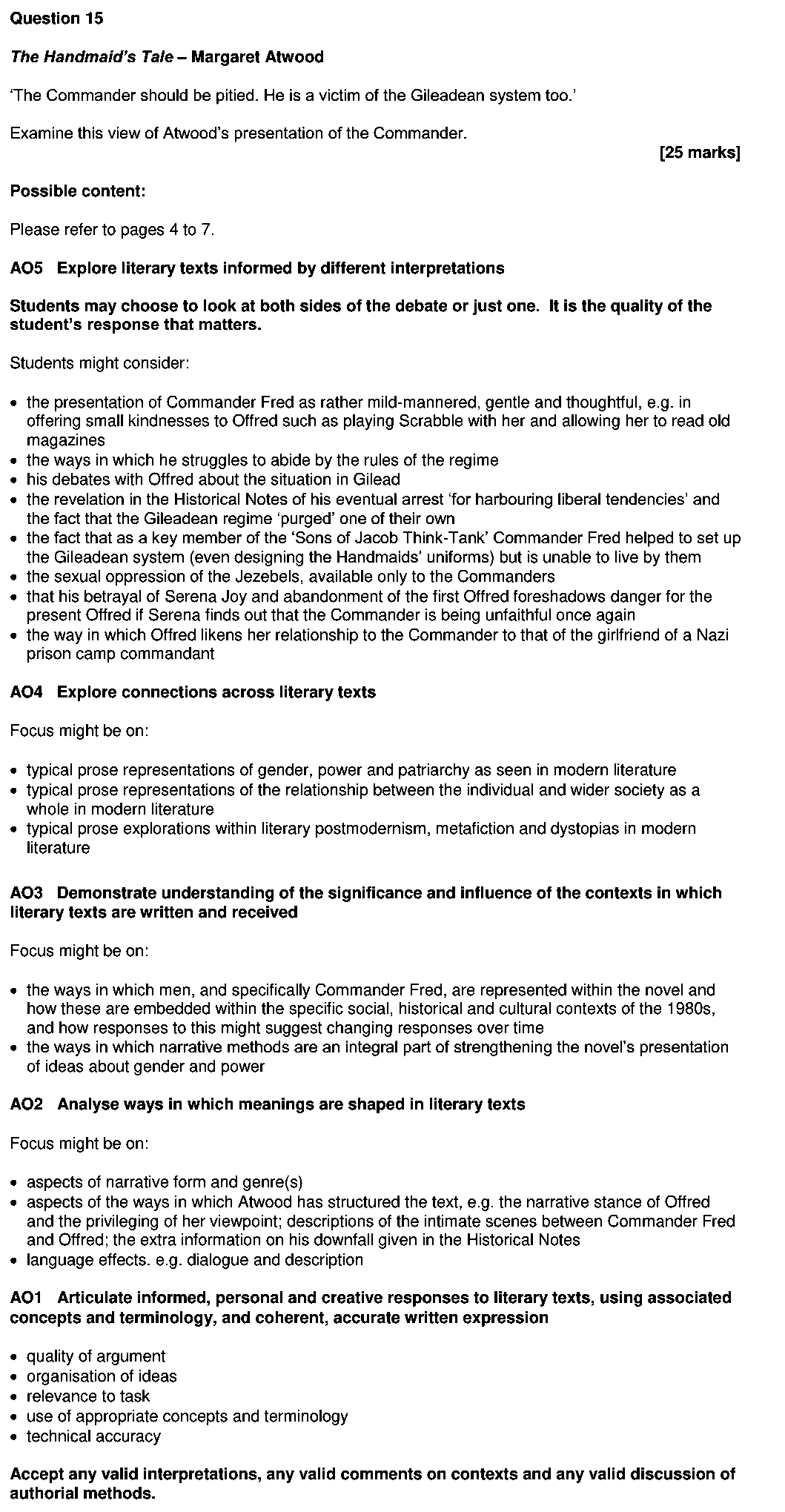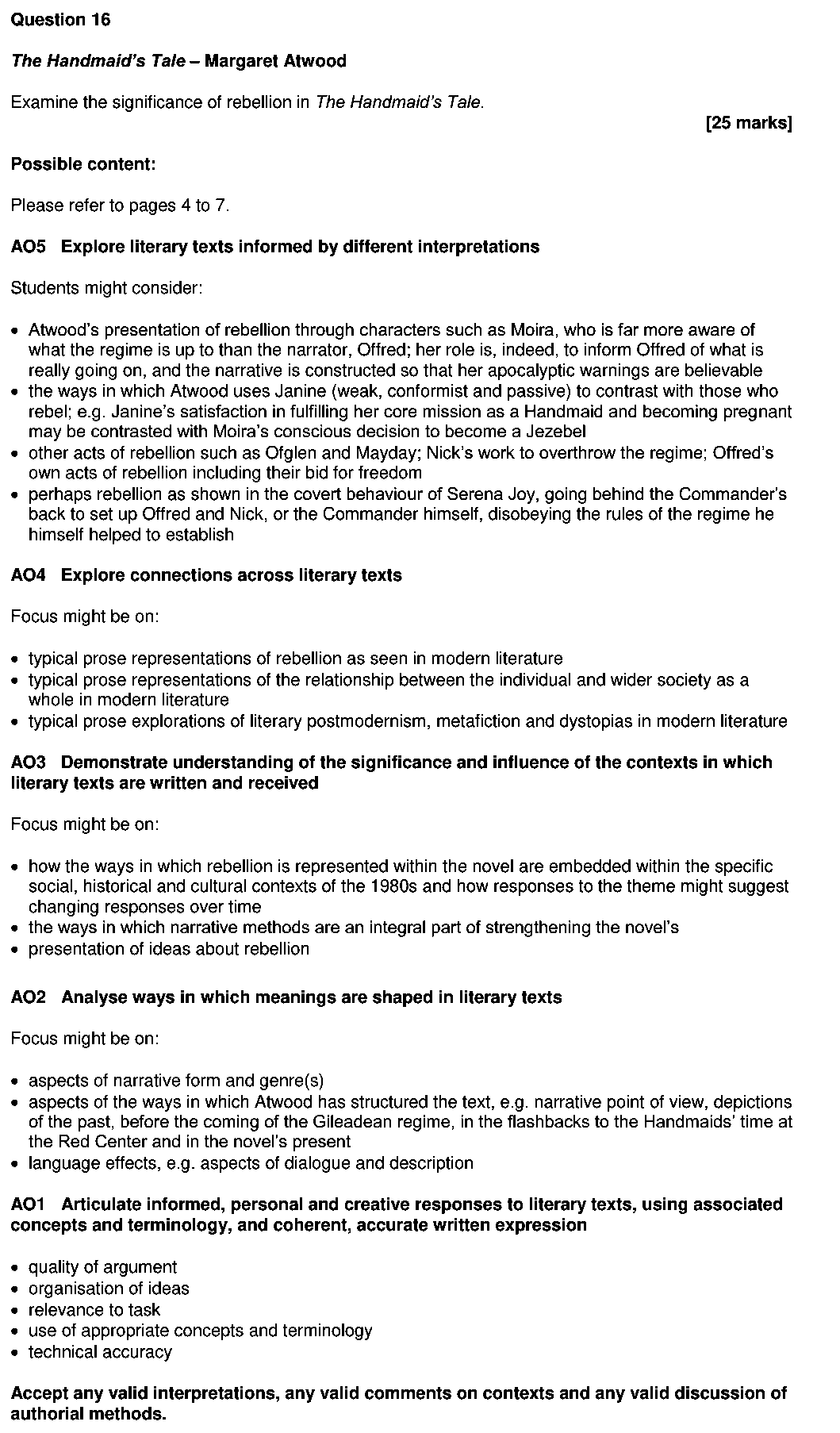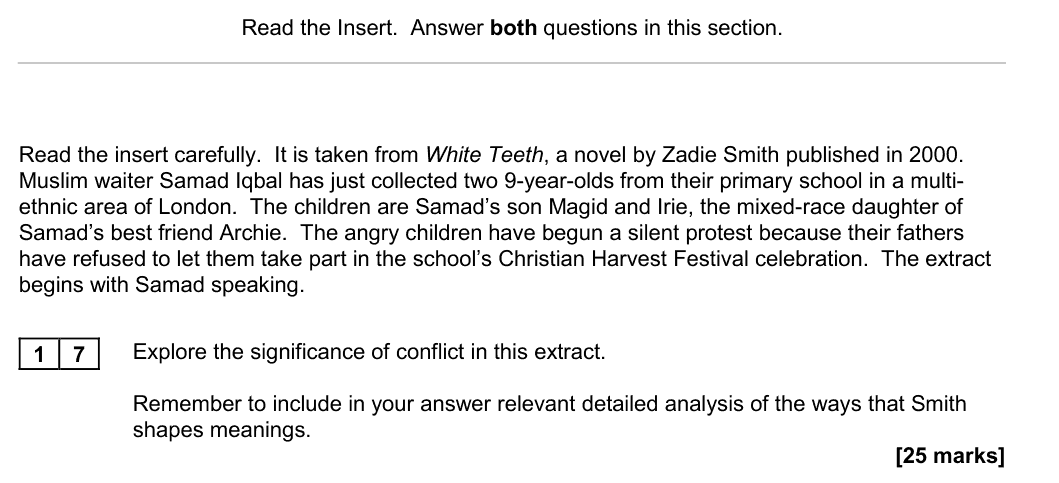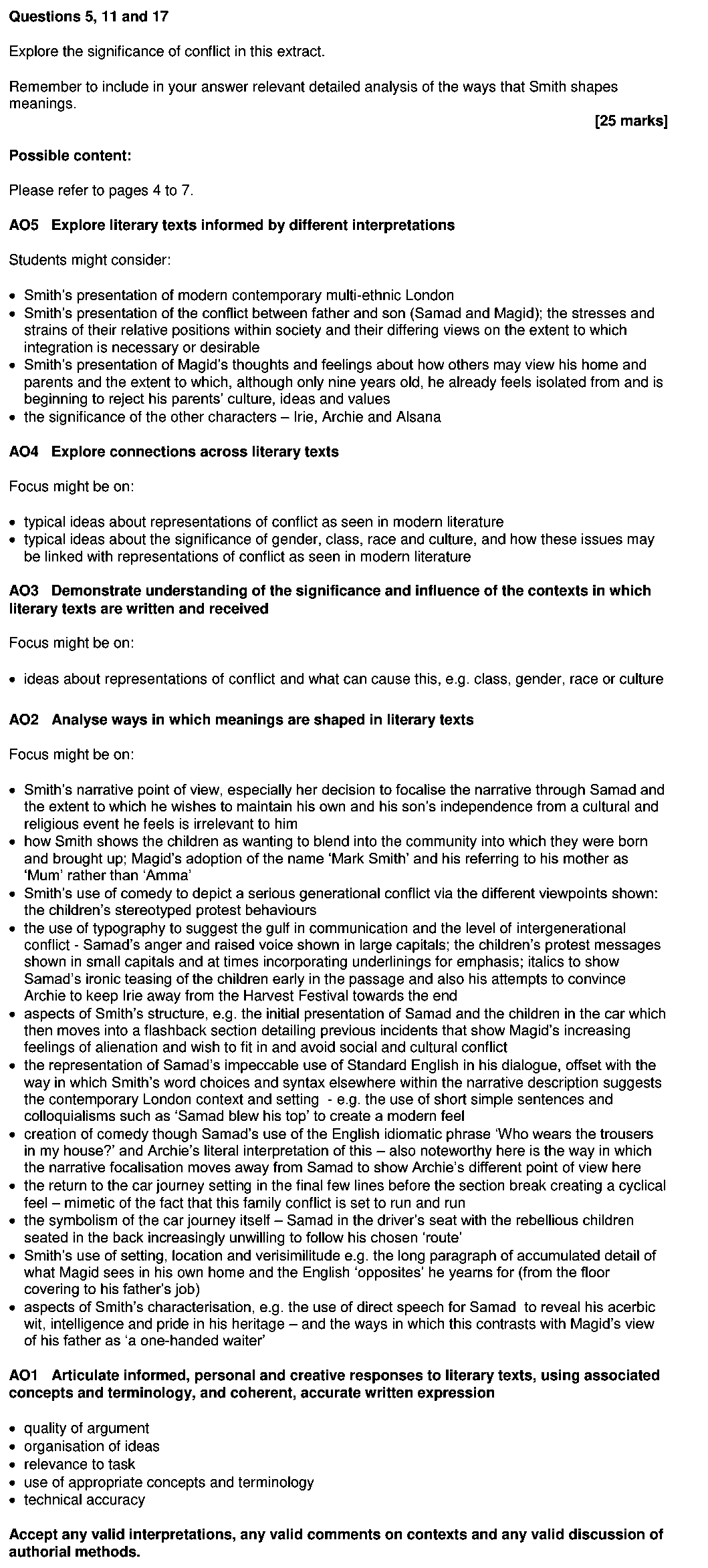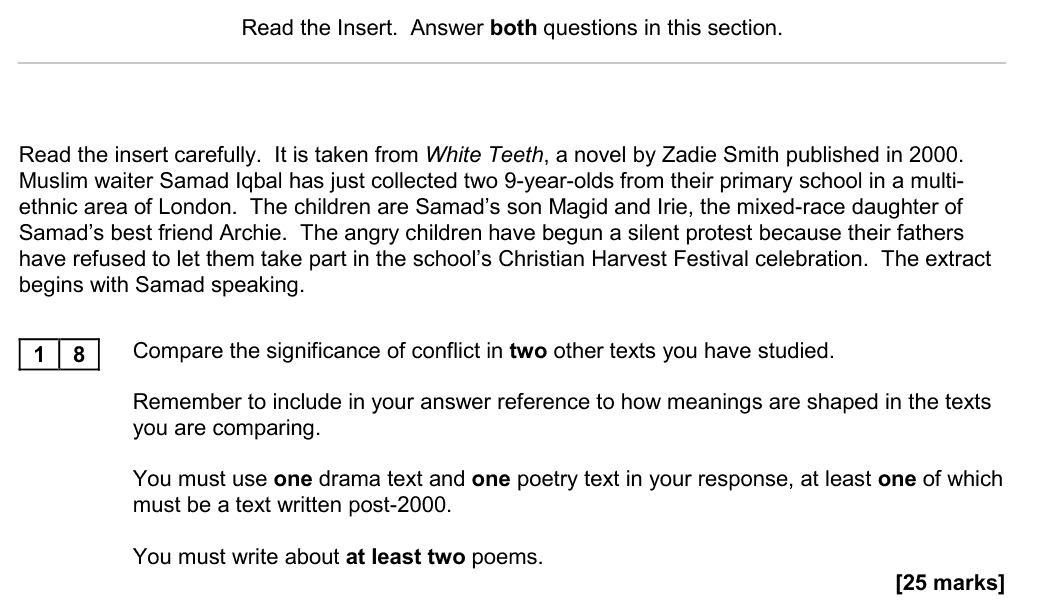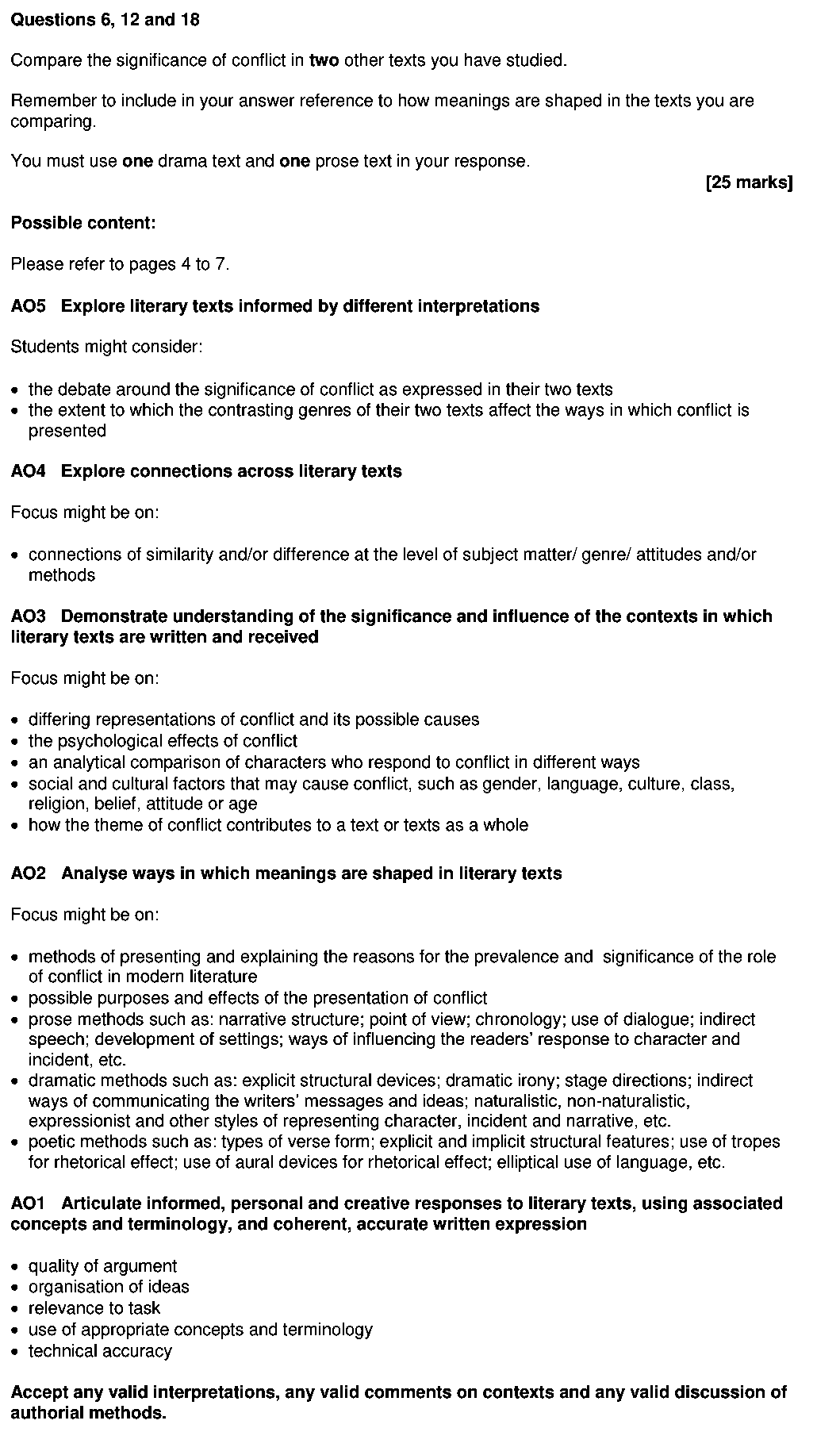
Mark scheme, including the levels and indicative content
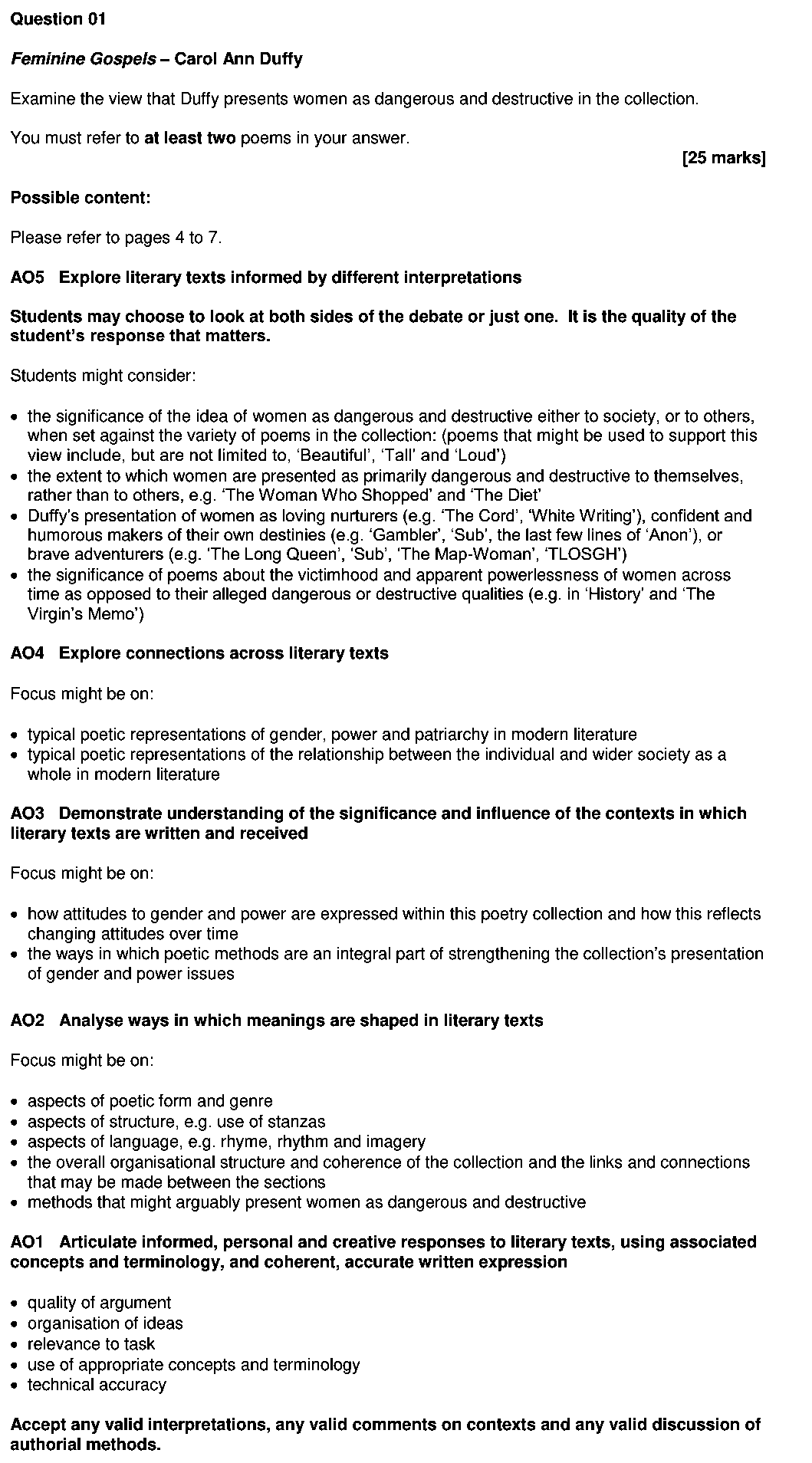
The general mark scheme (assessment objectives and bands)
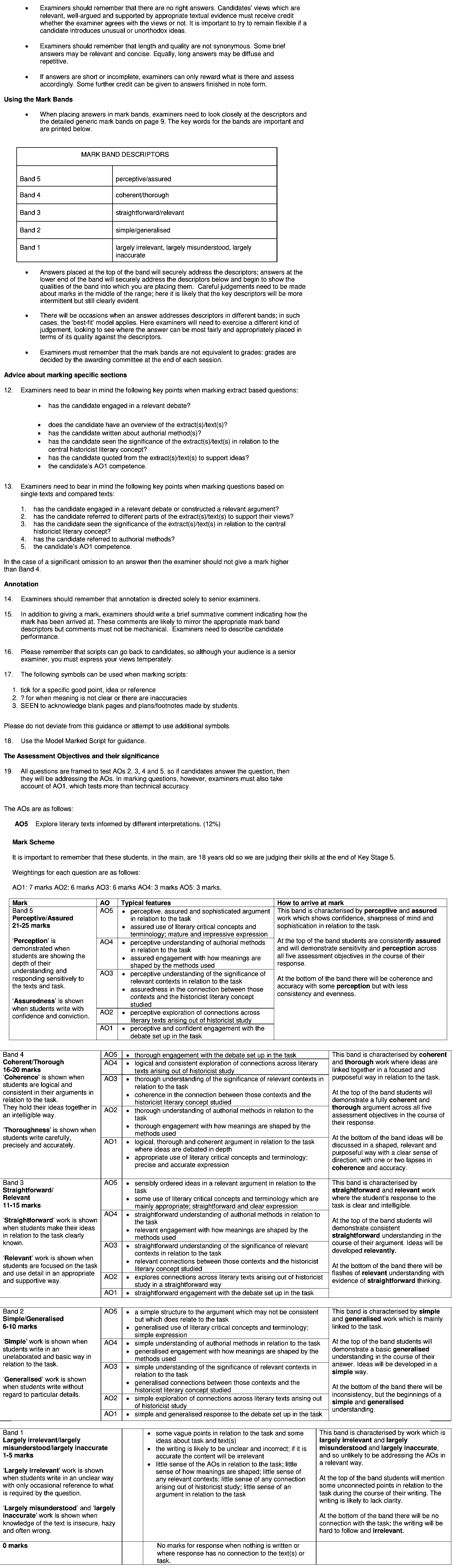
Examiner's comment
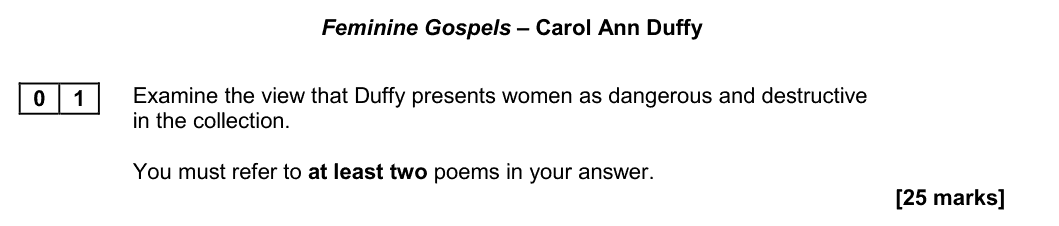
The central premise of this question elicited some high quality responses that challenged the terms of the debate with gusto. The best answers looked at poems that seem to suggest that Duffy indeed presents women who can be seen as dangerous and destructive either to society or to themselves, while also acknowledging the extent to which Duffy presents women as loving nurturers, confident and humorous makers of their own destinies and/or brave adventurers. In terms of methods, the best answers looked at broader issues of genre and structure and showed a conceptualised understanding of the collection as a whole. Less effective answers tended to ‘go through’ a checklist of minor lexical and even grammatical points that were unconvincingly linked to the actual question set. Generically assertive and bland claims about commas, lists and/or enjambment ‘speeding up’ or ‘slowing down’ the pace of a poem should be discouraged. Locating the nub of the given view and assessing the extent to which it can be helpfully applied to the whole collection is a far more productive approach.
Notes from the mark scheme and report
- Focus: theme: women as dangerous and destructive
- Open book, no extract
- at least two poems
- women as dangerous and destructive to society, others or themselves ('Beautiful', 'Tall', 'Loud', 'The Woman Who Shopped', 'The Diet') vs women as loving nurturers ('The Cord', 'White Writing'), confident makers of their own destinies ('Gambler', 'Sub') or brave adventurers ('The Long Queen', 'The Map-Woman'), and as victims ('History', 'The Virgin's Memo')
- best answers considered genre, structure and the whole collection
- weaker answers ticked off minor lexical points and bland claims about commas or enjambment changing pace